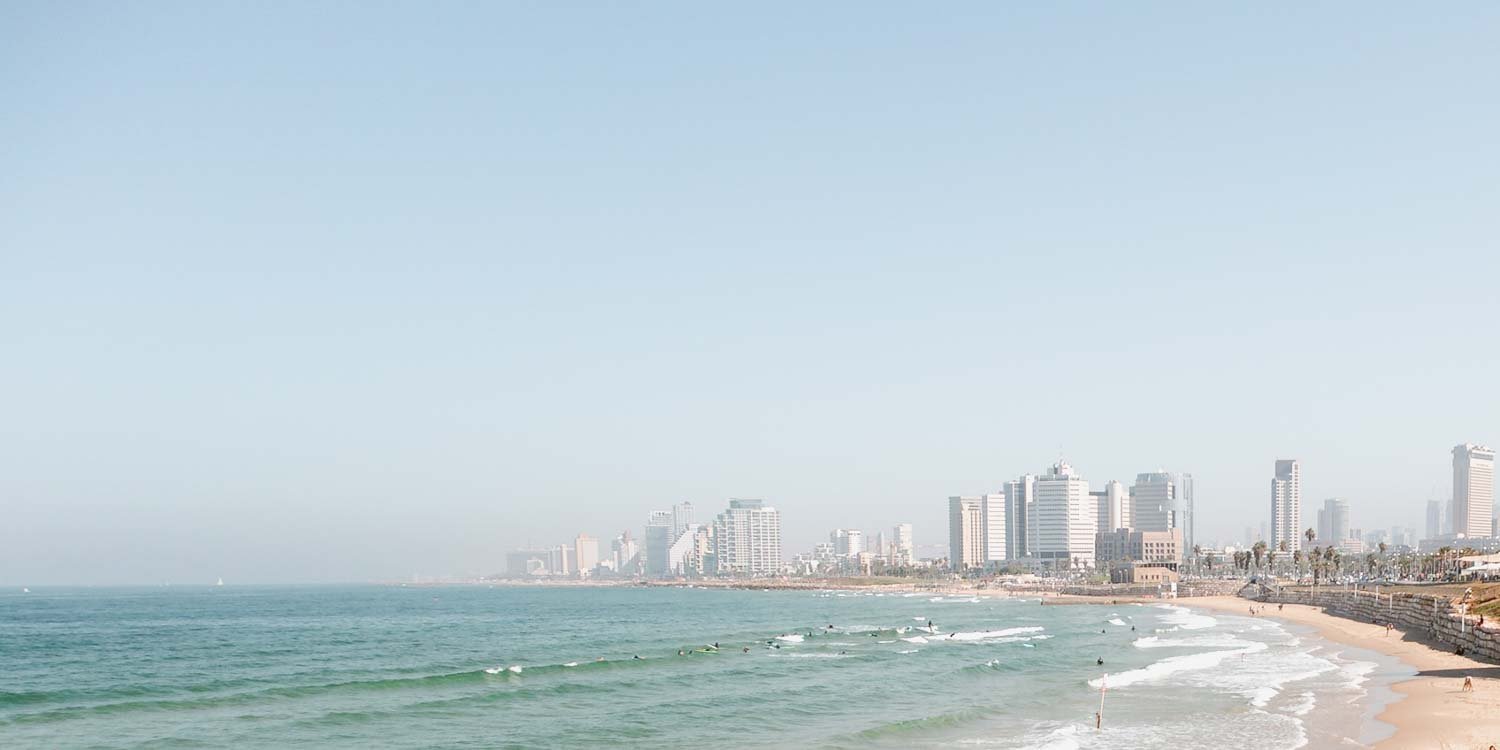
Israel Travel Guide
Things to Do & Planning Tips & Itinerary
Israel: Know Before You Go
Situated in the Middle East, Israel is a country on the eastern coast of the Mediterranean Sea, connecting this region with Asia. It borders Lebanon, Syria, Jordan, Egypt, and the Mediterranean Sea. Most international visitors traditionally arrive by plane through Ben Gurion International Airport (TLV), near Tel Aviv. Other entry points include Ramon Airport near Eilat and land border crossings with Jordan and Egypt.
Israel is known for its remarkable historical and religious heritage, diverse landscapes, Mediterranean beaches, ancient archaeological sites, and desert scenery. It is home to some of the world's most important religious sites, alongside modern cities, busy markets, and unique natural attractions such as the Dead Sea. Popular destinations include Jerusalem, Tel Aviv, Haifa, Nazareth, the Sea of Galilee, Masada, and Eilat.
The official currency is the New Israeli Shekel (NIS or ILS). The population is approximately 10.2 million, and the country covers around 22,000 square kilometers. Israel has a diverse population with Jewish, Arab, Christian, Druze, and other communities contributing to its cultural identity.
The official language is Hebrew, while Arabic also has a special legal status. English is widely understood, particularly in tourist areas, making communication relatively easy for international visitors. We learned “Shalom” (hello) and “Toda” (thank you) before the trip. Israel uses Israel Standard Time (IST, UTC+2) in winter and Israel Daylight Time (IDT, UTC+3) during summer. Electrical outlets are primarily type H, with some type C plugs also compatible, and the standard voltage is 230V.
Practical Information
Visiting Israel can be a fascinating but overwhelming experience, especially if it's your first time in the country. From security checks and what to wear to religious holidays and local customs, there are plenty of things to know before visiting Israel. We were in the same boat and weren't entirely sure what to expect. Let's start with the essentials.
Get Around the Country
Thanks to its network of buses, trains, shared taxis, private transportation, and well-maintained roads, getting around Israel is relatively straightforward. We think Israel is best explored on a road trip, but in reality we used almost every available mode of transportation because it simply made the most sense.
To sum it up, we took a bus from Ben Gurion Airport to Tel Aviv, a train to Jerusalem, used public transportation in both cities, rented a car to explore the countryside, joined a tour to the West Bank, and finally took a taxi back to the airport.
As I mentioned, renting a car is a great option for exploring destinations such as the Negev Desert, the Dead Sea, Masada, and the Sea of Galilee. From our experience, driving around Israel was surprisingly easy, with the exception of larger cities, where heavy traffic and limited parking could make things a bit more challenging.
Distances are relatively short, so many attractions can be reached within a few hours. The roads were generally in good condition, and road signs were also available in English.
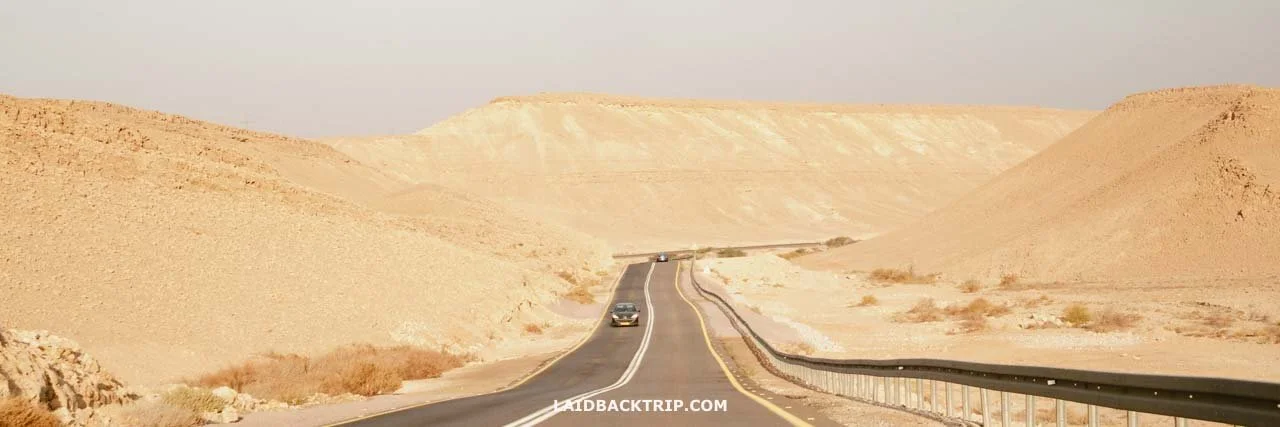
Road 40 in Negev Desert.
Buses are the main form of public transportation, connecting major cities, smaller towns, and many tourist attractions. Trains operate primarily along the coastal corridor and link destinations such as Tel Aviv, Haifa, Jerusalem, and Ben Gurion Airport.
Also, getting from Ben Gurion Airport to either Tel Aviv or Jerusalem is straightforward regardless of which mode of transportation you choose. We used both the bus and train and found them reliable and easy to navigate, although our bus was delayed due to heavy traffic.
Within the cities, local buses and light rail systems make getting around easy. Tel Aviv and Jerusalem both have extensive public transportation networks, while taxis and shared minibuses known as sheruts provide additional flexibility.
The Rav-Kav travel card is commonly used across the public transportation system, and several mobile apps make planning journeys straightforward. We found Jerusalem's light rail especially convenient and used it frequently to get around the city.
Where to Stay
Israel offers a wide range of accommodation options for almost every type of traveler. During our trip, we stayed in a mix of hotels, hostels, kibbutz guesthouses, rental apartments, and even a glamping tent. This gave us the flexibility to choose places with good reviews while also keeping our costs somewhat under control.
The quality varied significantly. Some places were modern and comfortable, while others felt old, shabby, and a bit run-down. One thing they all had in common, however, was that accommodation in Israel was not particularly cheap. We often had to balance quality and price, which wasn't always easy, as even some of the more expensive accommodations, especially in larger cities, were not that nice. You can search for accommodation in Israel using the search box below.
In major cities such as Tel Aviv and Jerusalem, you'll find the widest selection of accommodation. We stayed in central locations because it made sightseeing much easier, especially since we were relying on public transportation rather than a rental car at that stage of the trip. Prices were generally higher in the city centers, but we were within walking distance of most major attractions.
Outside the main cities, accommodation becomes more varied. Around the Dead Sea, you'll find large resort hotels, while the Negev Desert is known for its luxury eco-resorts and desert camps. In northern Israel and around the Sea of Galilee, there are numerous small hotels, kibbutz guesthouses, and vacation rentals.
Prices increase significantly during religious holidays and school vacation periods, so booking well in advance is highly recommended. That was another reason why we deliberately avoided traveling on those dates. We also booked flexible rates whenever possible, as the security situation in the region can change unexpectedly.
Beyond the usual things like good reviews and a convenient location, we always tried to find accommodation with on-site parking once we picked up the rental car, especially in towns and cities where parking was often limited and difficult to find.
When to Visit
The best time to visit Israel is generally during spring (March to May) and autumn (September to November), when temperatures are pleasant and conditions are ideal for sightseeing, outdoor activities, and exploring historical sites. These months offer comfortable weather without the intense summer heat. We traveled around Israel in November, and while temperatures were still fairly warm, the weather was excellent and we didn't encounter any rain.
Spring is particularly beautiful, with green landscapes, colorful wildflowers, and mild temperatures. It's an excellent time to visit Jerusalem, the Sea of Galilee, and the Negev Desert. However, Easter and Passover can bring larger crowds and higher accommodation prices.
Autumn is another great time to visit, offering warm days, cooler evenings, and excellent sightseeing conditions. September and October are especially suitable for exploring Tel Aviv, relaxing on Mediterranean beaches, and visiting archaeological sites. Several important Jewish holidays also take place during this period, including Rosh Hashanah, Yom Kippur, and Sukkot, which can affect transportation and opening hours.
Summer (June to August) is hot and dry, with temperatures often exceeding 30°C, particularly in the desert and around the Dead Sea. Coastal areas tend to be more humid but are well suited for beach holidays. We deliberately avoided visiting during summer because of the extreme heat, as our main focus was sightseeing rather than spending time on the beach.
Winter (December to February) is generally mild, although Jerusalem and the northern parts of the country can experience cooler temperatures and rainy weather. Eilat remains relatively warm and is a popular destination for winter sunshine. We were somewhat concerned about rain affecting our plans, which is one of the reasons we decided not to visit during winter.
As I already briefly touched on, weather wasn't the only thing we had to take into account when planning our Israel trip. We also wanted to avoid major religious holidays that can bring public transportation shutdowns, business closures, and larger crowds.
Shabbat was another thing we had to keep in mind. Since it happens every week from Friday sundown to Saturday sundown, there was really no way to avoid it completely. Public transportation stops in most cities, and many businesses close, so it's important to plan accordingly. Fortunately, the impact tends to be less noticeable in more secular areas.
Currency, ATMs & Payments Methods
The official currency in Israel is the New Israeli Shekel (NIS or ILS), commonly called the shekel (₪). One shekel is divided into 100 agorot. Banknotes are available in denominations of 20, 50, 100, and 200 shekels, while coins range from 10 agorot to 10 shekels. Foreign currencies such as euros and U.S. dollars are generally not accepted for everyday purchases.
Israel is a largely cashless country, and credit and debit cards, particularly Visa and Mastercard, are widely accepted in hotels, restaurants, supermarkets, and shops. Contactless payments and mobile wallets are also common. When paying by card, choose to be charged in shekels rather than your home currency to avoid unfavorable exchange rates.
Throughout the trip, we paid for almost everything by card, whether it was accommodation, the rental car, parking, entrance fees, or food, with only a few exceptions. For example, we used cash when buying fruit at a local market and when leaving a deposit for snorkeling gear. We also carried some cash for emergencies.
ATMs are widely available in major cities, shopping centers, and tourist areas. We only withdrew money twice during the trip, and always used bank-operated ATMs. Exchanging money is possible at banks, exchange offices, and the airport, although the rates there are usually less favorable. We never had to use exchange services, as paying by card was enough for almost everything.
On this topic, we have two more tips. First, traveling around Israel on a budget can be challenging, as it's an expensive destination. That said, there are still plenty of ways to save money during your trip. Second, Israel is home to dozens of national parks and nature reserves, and the Israel Pass can help you save money on entrance
Staying Safe
When things are relatively quiet, Israel can be a fairly safe country to visit. That said, safety conditions can vary significantly depending on the region and the current political situation. Before traveling, it's important to stay informed about regional tensions, security incidents, and any travel advisories, and to check official government travel advice before departure.
Keep your identification documents accessible, and consider making digital copies as a backup. It's also important to ensure that your travel insurance covers all the destinations and activities you plan to undertake. For example, because we wanted to join a tour to the West Bank, we made sure to check whether our insurance was valid there and what conditions applied.
No part of Israel is completely immune to security threats. And staying safe in Israel requires understanding a few basics. Rocket attacks, missile alerts, terrorism, and occasional security incidents can occur even during relatively quiet periods.
Just a few days after our visit, there were stabbing and shooting incidents in Jerusalem in areas where we had walked ourselves. Border regions near Lebanon, Syria, and Gaza are particularly sensitive and may be subject to travel restrictions or changing security conditions.
Once in Israel, monitor local news, follow official instructions, and familiarize yourself with the location of nearby shelters. If an air-raid siren sounds, seek shelter immediately and follow local guidance. It's also advisable to avoid military installations, demonstrations, border areas, and large political gatherings.
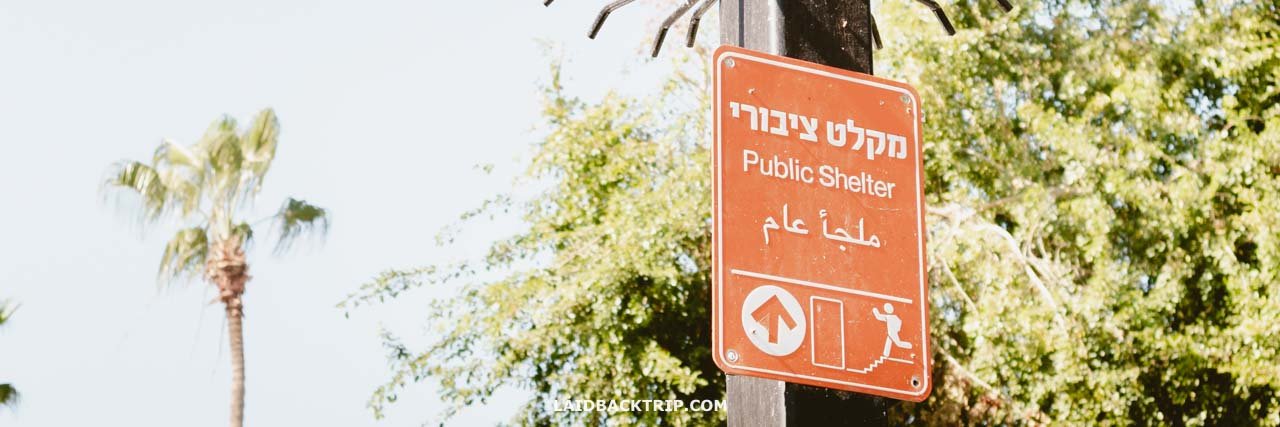
Public shelter sign in Tel Aviv.
During our trip, we checked the news every day to stay informed about the current situation, and that proved sufficient. When it comes to finding shelter in unfamiliar places, a common recommendation is to follow the actions of locals, though fortunately we never found ourselves in that situation.
Petty crime is relatively uncommon in many tourist areas, but normal precautions against pickpocketing and theft are still advisable. Even in crowded places, Israel felt safer to us in this regard than many popular European tourist destinations.
For safety reasons, we deliberately chose to visit Israel during one of the quieter periods. Once there, we quickly discovered that we felt very safe in all the places we visited, and the biggest surprise was how normal everything felt and that Israel felt much safer than we had expected. That said, all the risks associated with traveling in Israel were still there, so staying informed about the current situation remained important throughout the trip.
Israel: Itinerary & Must-Sees
Israel is one of the most fascinating countries in the world. It's a place of immense beauty that offers thousands of years of history to anyone interested in exploring it. The Holy Land, most of which is located within modern-day Israel, is also central to the three major Abrahamic religions: Judaism, Christianity, and Islam.
It's a country that sparks strong emotions, but that's also part of what makes it so compelling for travelers and history lovers. It's simply one of those places that everyone should visit at least once in their lifetime. With so many places to see across Israel, planning an itinerary can quickly become overwhelming. Hopefully, our 2-week Israel itinerary will help you figure out what to visit, what to skip, and how to make the most of your time in the country
In just a few hours, you can visit the cosmopolitan city of Tel Aviv, explore historic Jerusalem, experience modern Haifa, or wander through the Crusader city of Acre. Later, you can hike in the Golan Heights, explore the Sea of Galilee, drive across the Negev Desert, snorkel in the Red Sea, or float in the Dead Sea. And, of course, don't forget to visit the fascinating West Bank. Simply put, there's so much to see and do in Israel that you'll enjoy every minute of your trip.

Tel Aviv
Discover Israel's vibrant Mediterranean metropolis.

Jerusalem
Explore the heart of the Holy Land.

Akko
Visit the Crusader city by the Mediterranean sea.

Sea of Galilee
Experience the heart of biblical Galilee.

Dead Sea
Float in the world's saltiest sea.

Negev Desert
Road-trip through the Israel's desert landscapes.
Jerusalem: What to See in the Holy City
Before your visit, make sure to read our in-depth Jerusalem guide. It will help you plan your trip, choose where to stay, figure out how to get around, and discover the city's top attractions and experiences. Jerusalem is an incredible place full of ancient history, fascinating sights, and unique atmosphere, and we loved every minute of our time there.
Visiting the iconic Dome of the Rock and Temple Mount is one of the highlights of any trip to Jerusalem. However, there are a few important things you should know before your visit, including what to wear, how to reach the entrance, and the best ways to avoid the crowds.
Also known as the Wailing Wall, the Western Wall is one of the holiest sites in Judaism and one of Jerusalem's most important landmarks. As one of the remaining structures associated with the Second Temple, it holds immense religious and historical significance. No trip to Jerusalem would be complete without visiting this sacred place.
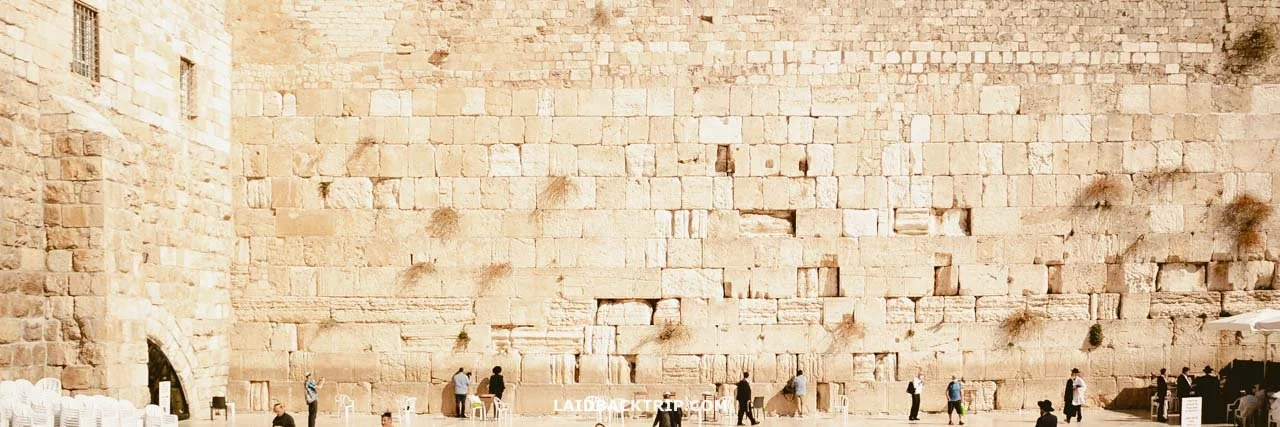
The Western Wall in Jerusalem.
Not only the Mount of Olives offers stunning views of Jerusalem, but it also has a huge Jewish cemetery with thousands and thousands of graves and several other attractions.
Before his crucifixion, Jesus had to walk Via Dolorosa while carrying a heavy wooden cross. Walking this route is an intense experience not only for Christian pilgrims.
The last stop of Via Dolorosa is the Church of the Holy Sepulchre, which also contains Christ's Tomb. We don't have to emphasize that this is one of the most important Christian structures in the world.
The entire Old City is encircled by massive medieval walls, and you can easily explore the city from above on Ramparts Walk.
If you're looking for a memorable day trip from Jerusalem, look no further than the West Bank Tour, including Jericho, Ramallah, or Bethlehem!
Mediterranean Coast
Tel Aviv is not like any other place in Israel. It has sandy beaches, a cosmopolitan character, rich nightlife, and diverse cuisine. There are so many things to see and do in Tel Aviv that you will need at least a few days for this amazing city.
Built in the 1st century BCE and located on the azure shores of the Mediterranean Sea, Caesarea National Park is a must-visit place in Israel.
Despite the fact that Haifa might not be the most popular city among international visitors, it's definitely a fascinating place to visit.
For many travelers, the main reason to visit Haifa is Bahai Gardens, a UNESCO site that can be found on the slopes of Mount Carmel.
Only a short drive from Haifa, Beit Shearim National Park is a Jewish necropolis and UNESCO World Heritage Site known for rock-cut tombs.
One of the most important cities during the Crusades, today's historical center of Akko is a truly captivating place to visit and burial cave systems that you can explore on foot.
Also known as the Hospitaller Fortress, Knights' Halls in Akko is hands down the best place in Israel to learn more about Crusaders and the religious wars between Christians and Muslims in the Holy Land.
Located in the northwesternmost point of Israel at the borders Lebanese borders, Rosh HaNikra Grottoes combine white-chalk cliffs, sea caves, and a historic cable car.
Dead Sea
The lowest point on Earth, the Dead Sea, is a fascinating and unique place to visit. And there are not many travelers who wouldn't have this area featuring a hypersaline lake located below sea level on their itinerary.
As hinted above, there are plenty of interesting things to know about the Dead Sea apart from the elevation and salinity.
Due to the lake's salinity, swimming in the Dead Sea is not like any other swimming experience in any other water body. No splashing and jumping into the water this time.
One of the most visited places in Israel, the fortress of Masada tells a story of a Roman siege and Jewish resistance. This UNESCO site is not only about history but also features one of the best views in Israel.
The resort town of Ein Bokek is a gateway to the Dead Sea on the Israeli side. While the accommodation in Ein Bokek is on the expensive side, its beaches are free and offer one of the safest swimming experiences.
When driving along the barren and arid area of the Dead Sea, you probably wouldn't guess to find a place such as Ein Gedi Nature Reserve here. Expect the year-round stream hidden in a groove, waterfalls, and ibexes.
As we love hiking, we believe the moderately-difficult Snake Path Trail is the best way to reach Masada Fortress. Start early to avoid the heat and bring plenty of water with you.
Galilee
Located on the west shore of the Sea of Galilee, Tiberias is one of the most polarizing cities in Israel. Even though its concrete architecture might not be exactly attractive, it's hard to overlook the fact that Tiberias is a perfect gateway to the Galilee Region.
If you've come to Israel to search for Biblical places, the Sea of Galilee must be on your travel itinerary. Fed by the Jordan River and also known as Tiberias Lake or Lake Kinneret, this important water body witnessed some of the best-known miracles from Jesus.
Sitting on the northern shores of the Sea of Galilee, Capernaum was the first home of adult Jesus. There he lived, taught, prayed, and performed his miracles.
Located halfway between Haifa and Tiberias, Nazareth is a bustling city and a place where Jesus spent his childhood. Due to its large Muslim and Christian communities, Nazareth is also a popular place to visit on Shabbat.
If you love mosaics and Roman ruins, there is not a better place to visit in Israel than Tzipori National Park. This lovely site is only a few kilometers from Nazareth, and it truly has the best mosaics in Israel.
If you're still not tired of Roman ruins in Israel, the Beit Shean National Park should be on your list as well. Not only does it have some unique structures, but the history of this place also dates back to 5000 BCE.
An iconic Biblical place, Mount Tabor, is one of the most important pilgrimage sites in Israel. While you can easily drive to the top of the hill, hiking one of the designated trails is also an option.
One of the smallest national parks we visited in Israel, Beit Alfa Synagogue, tells the story of Jewish history while featuring charming mosaics.
Negev Desert
Often overlooked by international visitors, the Negev Desert is a place that caught us by surprise. Despite its looks, there are plenty of things to do in the Negev Desert.
Located in Negev Highlands and created by erosion Makhtesh Ramon is one of the most extraordinary places not only in Israel but on Earth.
One of the best-preserved stops on the ancient Incense Route, Avdat National Park is full of Nabatean, Roman, and Byzantine history.
Negev Desert is full of surprises. And Ein Avdat National Park, a stunning canyon in Tzin Valley with a year-round freshwater spring, is one of them.
If you want to learn about the man after whom the main international airport and many other places in Israel were named, you should visit Ben-Gurion's Tomb and the nearby Sde Boker kibbutz.
After you cross the entire Negev Desert, you will arrive in Eilat, Israel's most popular resort town. And while the city itself is far from pretty, its beaches, mountains, and coral reefs are worth exploring.
The Red Sea is known for excellent snorkeling opportunities, and Coral Beach Nature Reserve near Eilat is a perfect place for this activity, even for beginners.
Even though lying on a beach in Eilat is fun, we fully recommend you to visit Timna Park, known for stunning rock formations, epic scenery, and thousand years of history.
Alternatively, you can visit Red Canyon from Eilat and save on the entrance fee. We don't have to emphasize that the scenery of the Eilat Mountains is absolutely breathtaking.
Northern Israel
One of the four holy cities in Israel, Safed is one of the most captivating places to visit in the Northern District.
One of the main reasons why to travel so far up north is the Nimrod Fortress, built by the Ayyubid sultan for protection against Crusaders.
Hermon Stream is a lovely nature reserve with Banias Falls, the most beautiful waterfall in Israel. Moreover, it's a nice place for hiking and you can also e more Roman ruins here.
If you're looking for a place to relax on your vacation, Rosh Pinna might not be the most obvious option at first. Still, this charming village is one of the most popular places to unwind while in Israel.
One of the most inconspicuous national parks in Israel, Tel Hazor, is full of surprises. Due to its significant historical meaning, this former capital city of the Canaanite Kingdom has been listed as a UNESCO site.
Do you want more info? Check out all our articles on Israel.