How to Visit Kvernufoss Waterfall

The view of Kvernufoss from the hidden cavern behind the falling water was simply spectacular.
Kvernufoss was the second waterfall of the day we could walk behind. So did we enjoy the experience? Let’s find out!
We love waterfalls, and over the years we've seen tons of them, but it was really Iceland that showed us how many waterfalls a person can see in one day. Just this morning alone, we stopped at Gluggafoss, Seljalandsfoss, and Skógafoss, where we walked the Waterfall Way, which, as the name suggests, was full of waterfalls (as was basically the whole drive between these sites). And only a two‑minute drive from Skógafoss was Kvernufoss, one of Iceland's hidden gems. It's not like it's completely unknown, but it's hugely overshadowed by its much more famous neighbor.
This incredible waterfall is often overlooked simply because most visitors prefer to see Skógafoss and Waterfall Way and don't set aside enough time for this one, or want to see some other popular sights on the South Coast. And as we know ourselves, it's not possible to see them all, right?
We kept running into this "problem" quite often in Iceland and had to make plenty of compromises during our two-week trip. But in this case, we had some extra time, so we decided that Kvernufoss would be our next stop. It turned out to be not just a strikingly beautiful waterfall but also one with a trail that let us walk behind it. How could we say no to that little adventure?
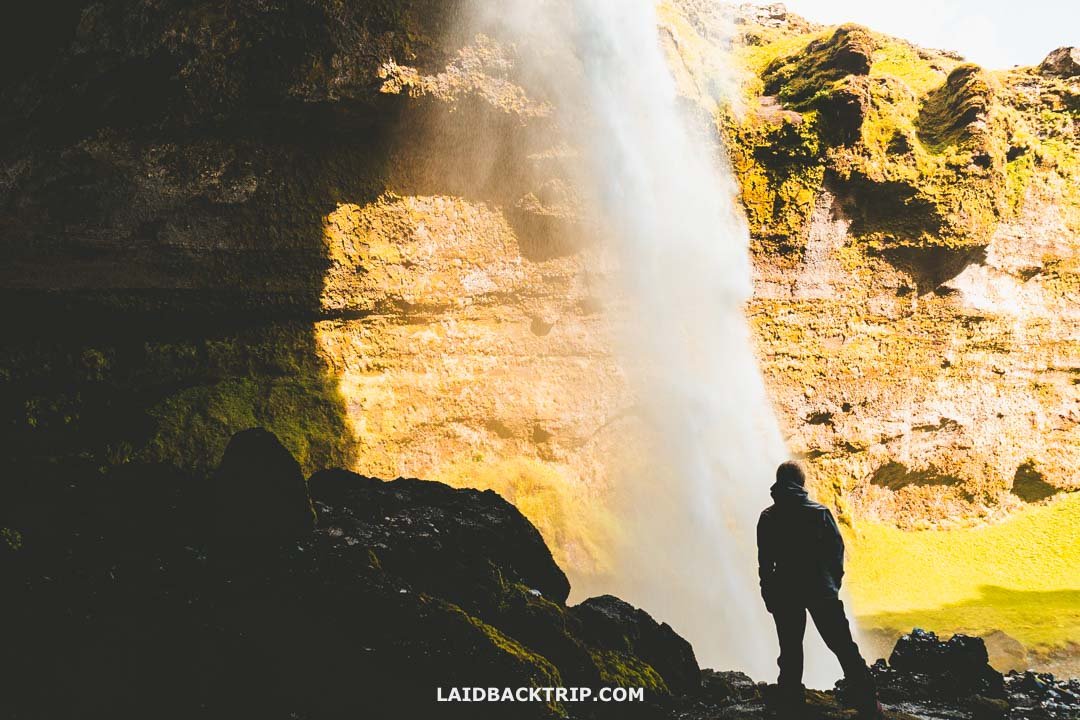
And standing directly under Kvernufoss felt even more unreal.
With every visit to a big attraction full of bus tours, we also wanted to get off the beaten path and enjoy the scenery without tons of people around. And Kvernufoss was one of those places that let us do exactly that. While we managed to see Skógafoss on a relatively quiet day, walking to Kvernufoss felt like we arrived in a different part of Iceland. The fact that there was an endless stream of amazing sites that were still easy to reach but had barely any people around was one of my favorite things about Iceland.
The funny part was that we would have most likely missed it if I hadn't checked the map the night before for driving directions and spotted it right next to Skógafoss. I had never heard about it, but when I showed one of the photos from behind with the Kverna River dropping from the basalt cliff, Lucie agreed that we should give it a try. So we did.
How to Get to Kvernufoss
Kvernufoss sits just off the Ring Road, about two and a half hours from Reykjavik, so driving there was as easy as it could be. But we didn't travel directly to Kvernufoss since there was a lot to see along the way, like the whole Golden Circle or Reykjadalur Hot Springs (and tons of other places we stopped at). So we drove from closer Selfoss, which is under 90 minutes from here, but again, our route took much longer because of all the stops and detours we made.

The parking lot for Kvernufoss is located right next to the Skógar Museum, where we paid the fee.
Once we reached the turnoff for Kvernufoss, we turned left onto Skógar Road and first went to see Skógafoss. After we were done there, we returned on Skógar Road, turned left, took the next right, and continued straight to the Kvernufoss parking lot. It was a quick drive since both sites are less than two kilometers apart. If you're coming to Kvernufoss first, follow Skógar Road a bit farther, then turn right onto Safnavegur, or just follow the Skógar Museum signs since they share the same parking area.
Even without a car, it's possible to see Kvernufoss. Bus 52, which travels from Reykjavik along the South Coast, stops in the village of Skógar before continuing to Vík í Mýrdal. The bus stops near Hotel Skógarfoss, which is about 1.3 kilometers from the Kvernufoss trailhead, so you'd need to walk this stretch, but since it's only about 15 minutes, it's easily doable.
Kvernufoss Tours
When it comes to tours that take you to Kvernufoss, the situation is trickier. Pretty much every tour that travels this part of Iceland stops at Skógafoss, but only as a quick 15‑minute photo stop. They simply don't have time for Kvernufoss because they rush to Reynisfjara Beach or Jökulsárlón Glacier Lagoon.
This actually worked in our favor because, as I said, the trail was much quieter without the big groups. But if we weren't driving and had to rely on a tour, we'd feel differently. From what I found, the only real option would be some kind of private tour that travels the South Coast and lets you adjust the itinerary.
Parking Is Paid at Kvernufoss
We had to pay 500 ISK for parking at Kvernufoss per car. The only difference was that we paid inside the museum (by credit card), but now it should be possible to do it through the Parka app. We visited Kvernufoss when the nearby Skógafoss parking area was still free, but that's no longer the case, so anyone arriving by car now has to practically pay twice to see both waterfalls.
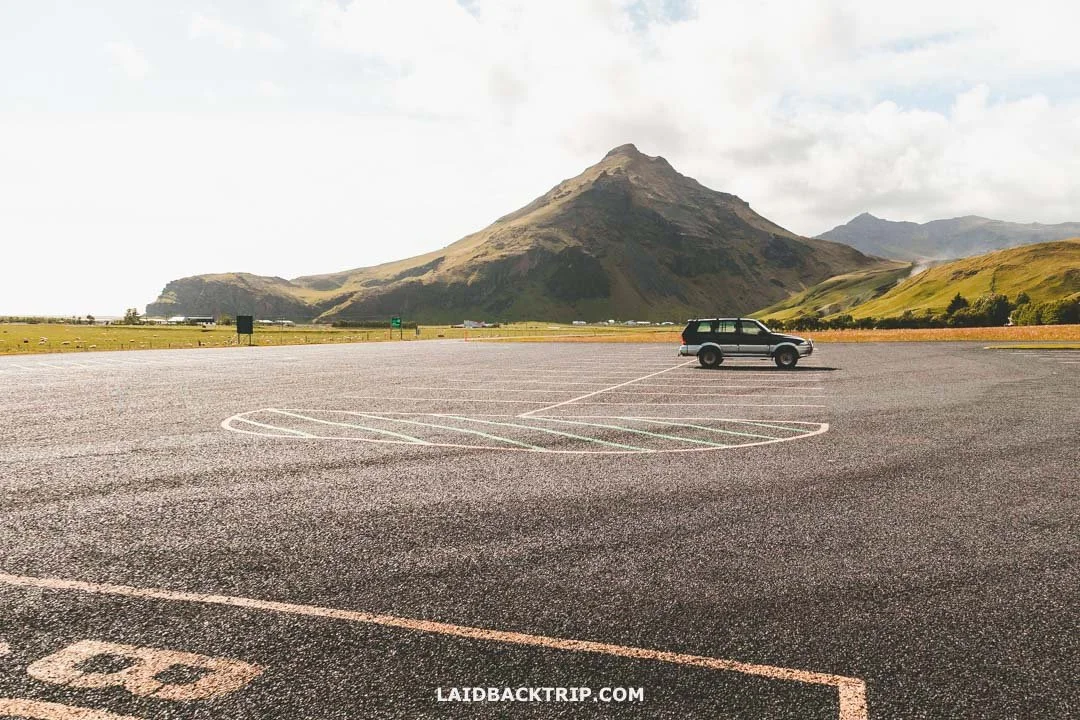
We visited Kvernufoss on a really quiet evening, and even the parking lot was empty.
Since the parking lots are under two kilometers apart, my budget tip would be to pay at the cheaper one (in this case, Kvernufoss) and walk between the two sites. But since the walk alone would take about 40 minutes, which we'd rather spend hiking the Waterfall Way or doing something else, I think it's better to save time and pay at each site.
There's No Entry Fee to Kvernufoss
While Kvernufoss was technically free to visit, we paid for the parking, which made it feel like we paid to see the waterfall. At the beginning of this post, I said we saw a lot of waterfalls that day. Like, a lot. Some sites were free, some weren't. But we could always decide which ones we wanted to see and which ones to skip, especially since we tried to keep our Iceland budget at bay.
In the case of Kvernufoss, we didn't mind covering the fee because the waterfall looked too interesting to pass up. Unfortunately, this isn't as true anymore, since many of Iceland's attractions now have paid parking too (like Geysir, Dynjandi, etc.).
Hiking the Kvernufoss Trail
The starting point for the Kvernufoss trail was right next to the Skógar Museum. We parked beside the museum (which is another thing you can do here) and walked to the end of the parking lot, where we found the trailhead. The Kvernufoss trail was well marked, about 700 meters one way, mostly flat, and suitable for everyone. On paper, it sounded really easy, and it really was. Compared to the Waterfall Way we did earlier, this was as easy a hike as it could get.

We had to climb over this stile before we could start the hike to Kvernufoss.
While the morning was cloudy and the afternoon was a mix of dark gray clouds and sun, the evening turned into blue skies. Thanks to the midnight sun, it almost felt like we were here at noon, even though it was after 7 PM. Despite the sunny conditions, it was still cold because of the wind, so we kept our rain jackets on, and Lucie even put her rain pants on. They helped not just with the wind but also with the spray.
The first section of the trail led through private property, so we had to cross a stile over the fence to get onto the official trail. From there, we continued toward the Kverna River. The first few minutes of the trail weren't that interesting, and what stood out more was that we still couldn't see the waterfall. The path here was a classic hard‑packed trail that was super easy to walk on. After a small bend, we had to make a short and easy climb to bypass a steeper slope above the Kverna River.
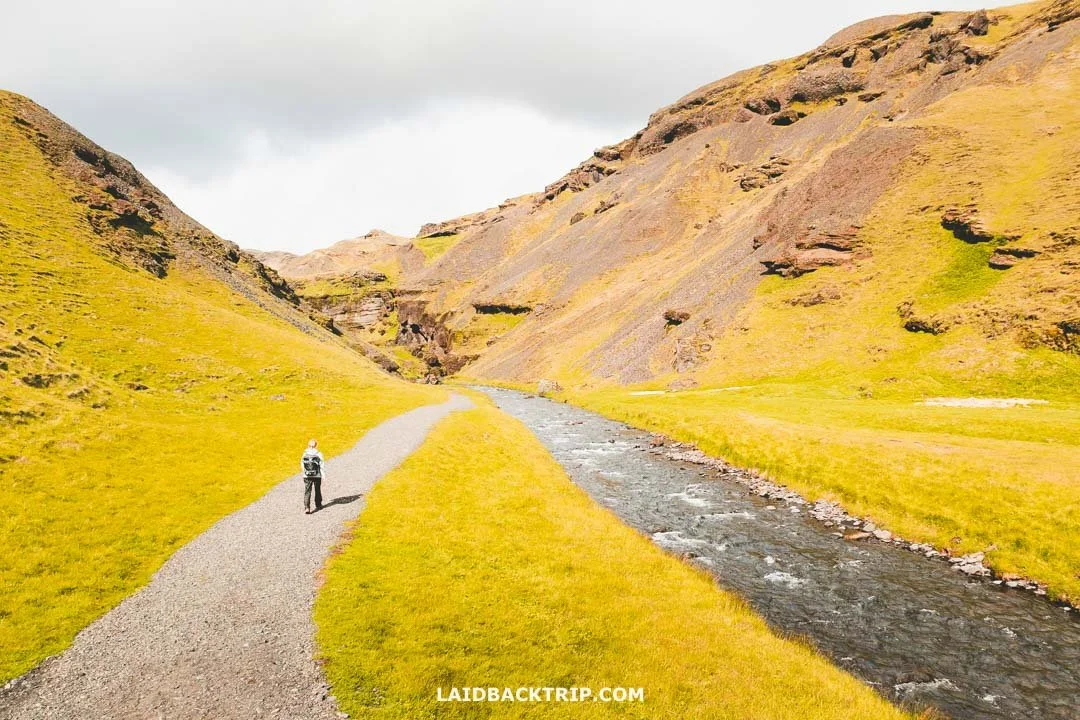
The first few hundred meters was simply walking along a flat trail.
Here, the path turned into a dirt trail, but it was mostly dry, so nothing changed in our pace. From this slightly elevated ground, we could finally spot Kvernufoss for the first time. When I checked the last time, the trail had been improved and is now hard‑packed all the way to the waterfall, so the hike is easier and more accessible than ever. It probably also means it's more popular now.
We enjoyed the view of the waterfall, river, and canyon, took a few photos, and kept walking. The view was great, but the best part was still ahead. From a distance, Kvernufoss looked beautiful, but it wasn't until we reached its base that we realized how impressive it really was. The Kverna River (also known as Kvernuhólsá) that feeds it dropping from 30 meters was an incredible sight. It was time to walk behind it.
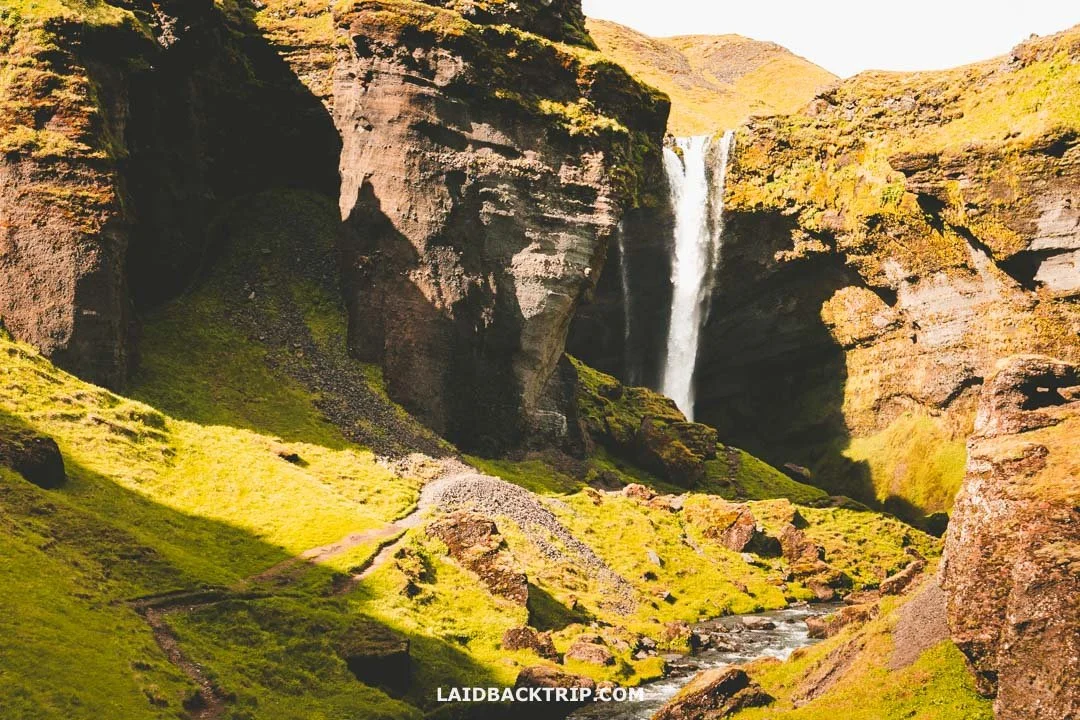
Finally, the canyon opened up and we spotted Kvernufoss in the distance.
Looking at all the loose rocks around, my first step was a bit less confident than I expected. But once we walked into the hollowed‑out cave, I stopped thinking about it. Almost. The danger of falling rocks when you get too close to the waterfall is real, so walking behind it might not be worth the risk for everyone. Other than that, the trail looked very safe except for this section.
World Nomads provides travel insurance for travelers to cover their trip essentials, including sports and adventure activities.
SafetyWing is affordable travel insurance for backpackers, long-term travelers, and digital nomads.
We enjoyed a good amount of spray as we walked behind the waterfall, but once inside the cave, it protected us enough that we stayed relatively dry. We weren't sure what to expect, but once we were behind the waterfall, we realized it wasn't possible to make a full loop behind Kvernufoss.

Standing behind Kvernufoss was an incredible moment, even if it felt a bit frightening.
The trail simply ended in the cave, unlike at Seljalandsfoss, where we could appear on the other side. Here we could walk maybe three-quarters of the way and then had to return the same way. It didn't matter at all. Standing under this huge volcanic cliff and watching the Kverna River plunge from 30 meters into the pool below was incredible. And slightly scary.
Kvernufoss in Summer Was Beautiful
We happened to arrive at Kvernufoss at the beginning of summer, and while the weather all day was unpredictable, by the time we reached the waterfall, it turned into a beautiful evening with clear skies. We were there late in the day and had the trail almost entirely to ourselves. The waterfall, fed by meltwaters of Eyjafjallajökull and Mýrdalsjökull glaciers, was at full strength around this time of year, but it still wasn't nearly as powerful as nearby Skógafoss. But that's not really the point with this one.

The trail leading to Kvernufoss was simple to follow and clearly marked.
As I said, the trail was fine, and since they improved it, it's most likely even safer now in conditions that weren't as ideal as we had. It's possible to walk to Kvernufoss all year round, even in winter, and from what I found, it seems they don't close the trail during icy or snowy conditions as they do at Seljalandsfoss. At least microspikes would really come in handy when the trail becomes icy and slippery.
Obviously, the walk behind the waterfall can be dangerous during this period, since it's not just loose rocks but also ice that can fall from the overhang, so it might be a better idea to enjoy the views from a safe distance.
How Much Time We Spent at Kvernufoss
All in all, we spent about 40 minutes at Kvernufoss. It took us under 15 minutes to reach the waterfall, including a few photo stops. Then we spent another 15 minutes at the waterfall itself, a good portion of that time behind it. We did the walk back a bit quicker, so I think it didn't take us more than 10 minutes. Practically anything between 30 and 60 minutes works for Kvernufoss.
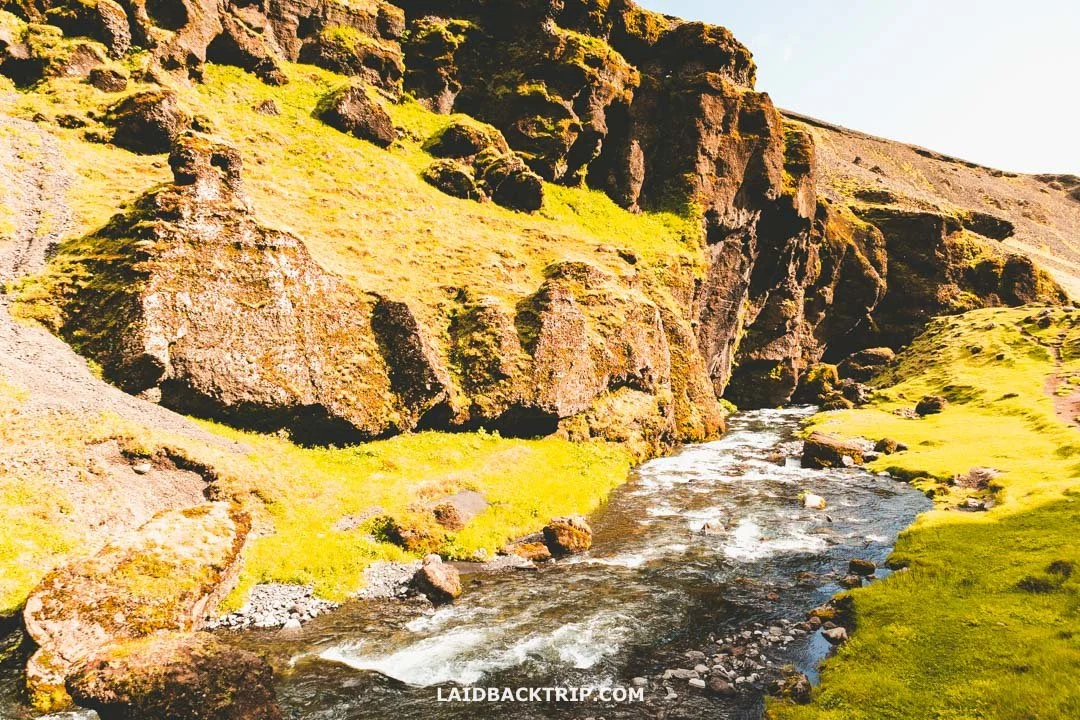
If we hadn't stopped for photos, we would've reached Kvernufoss in under 10 minutes.
The narrow canyon around the waterfall and the not‑so‑wide trail had this effect on me that it wasn't really the kind of place where I'd want to sit and enjoy the view. Unlike at Skógafoss, there wasn't any real spot to sit in front of it, and hanging out behind the waterfall longer than necessary didn't feel like the smartest idea either. It's not that you can't do it, but Skógafoss was definitely better for that.
Was the Kvernufoss Hike Worth Doing?
We really enjoyed this little hike, as well as the fact that we could walk behind the waterfall, because that's quite an unusual experience. Another huge thing was that we had the trail pretty much to ourselves. And if you're heading to Skógafoss, which I feel is what almost every first‑timer in Iceland would do, then seeing Kvernufoss just makes sense. The trail was easy, the waterfall was stunning, what else do you need?

Kvernufoss was beautiful and absolutely worth seeing, even if we hadn't walked behind it.
If you have time, of course. Earlier, I said that we had to make compromises, and Kvernufoss was a great example of what I meant. Because we wanted to see this waterfall (and the Waterfall Way), we had to skip Gljúfrabúi, which is a hidden waterfall only a short walk from Seljalandsfoss. Looking back, it was pretty much the same situation. But as I said, we couldn't see all the waterfalls. And this time we picked Kvernufoss. And we didn't regret it.
Staying at Kvernufoss
While the blue sky and shining sun didn't really show it, by the time we got back and I checked the time, I realized it was getting late. Since it was already evening, we thought about staying here, but then decided we still had some energy left and had the idea to finish our day either at Dyrhólaey or Reynisfjara Beach. I mean, both Kvernufoss and Skógafoss must be amazing around sunset, but Lucie said she'd rather see it on the beach. So that was settled.
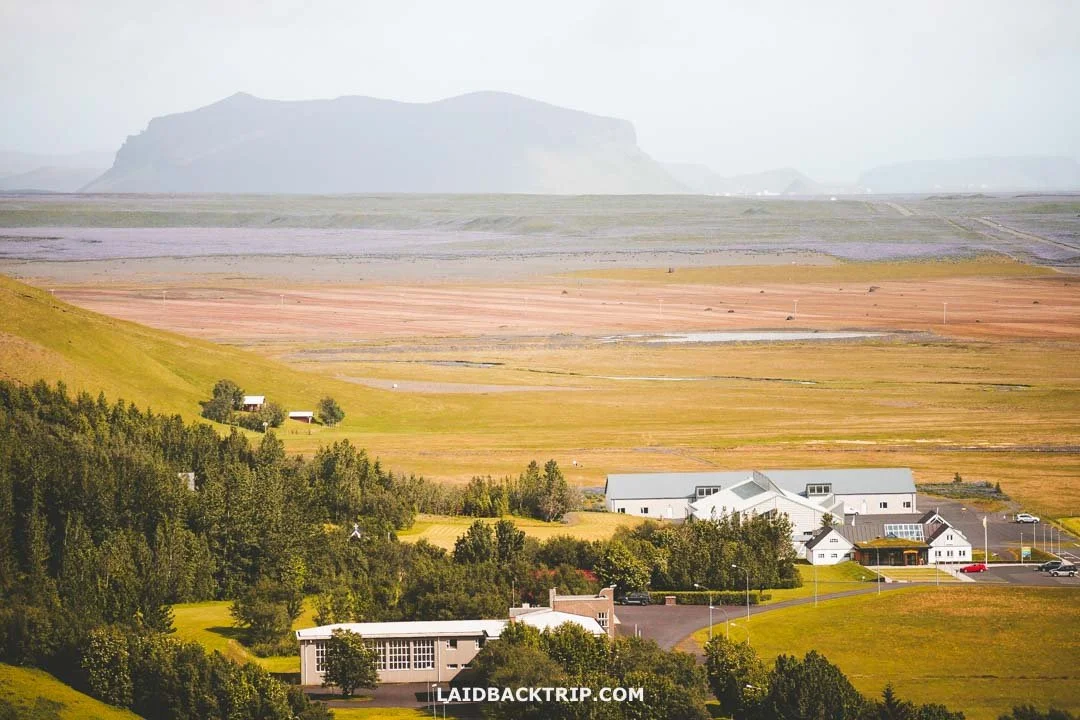
The small village of Skógar had a few accommodations, but we decided to stay elsewhere.
Had we stayed here, Skógar had a very basic campground, which, from what we saw, was just another parking lot next to the one for Skógafoss (with toilets, of course). There were also a couple of hotels, Hótel Skógafoss and Hotel Skógá, as well as a cheaper hostel. But the place we decided to spend the night, Vík í Mýrdal, less than a 30‑minute drive from here, had all these facilities as well. So we obviously stayed in the campground, but there was also Hotel Vík í Mýrdal if you'd prefer something more comfortable.
On the way out, once we were back on the Ring Road, we could see Kvernufoss one last time. It looked so tiny and timid from here, so we gave it a final goodbye and finally headed toward Dyrhólaey to catch that sunset. But since that wouldn't happen for a few more hours, and with that much time on our hands, we realized we actually had enough time to walk to the Sólheimasandur Plane Wreck. So that's where we headed next.
Travel Resources
Here you can find links to all the travel resources we use and which you might find helpful when planning your next holiday.
Accommodation: When looking for accommodation, we usually search hotels via Booking.com or Hostelworld.
Tours: Although we love to travel independently, some places are better to visit with a guided tour.
We prefer GetYourGuide for its easy-to-use interface and solid reputation. Another great alternative is Viator.
Rental Cars: When going on a road trip, we always use Rentalcars.com, a reliable site for booking a rental car in advance.
Flight Tickets: When looking for flight tickets, you can search Skyscanner to find the best price.
Travel Insurance: World Nomads and SafetyWing cover against risks of travel.
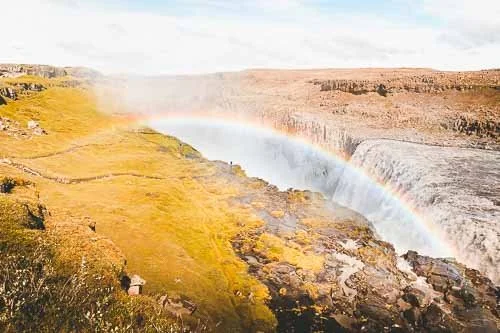
Visit Hverfjall in North Iceland with our guide, including how to reach the crater, a full description of the hiking trail around its rim, what to expect, and the best times to visit for ideal conditions.