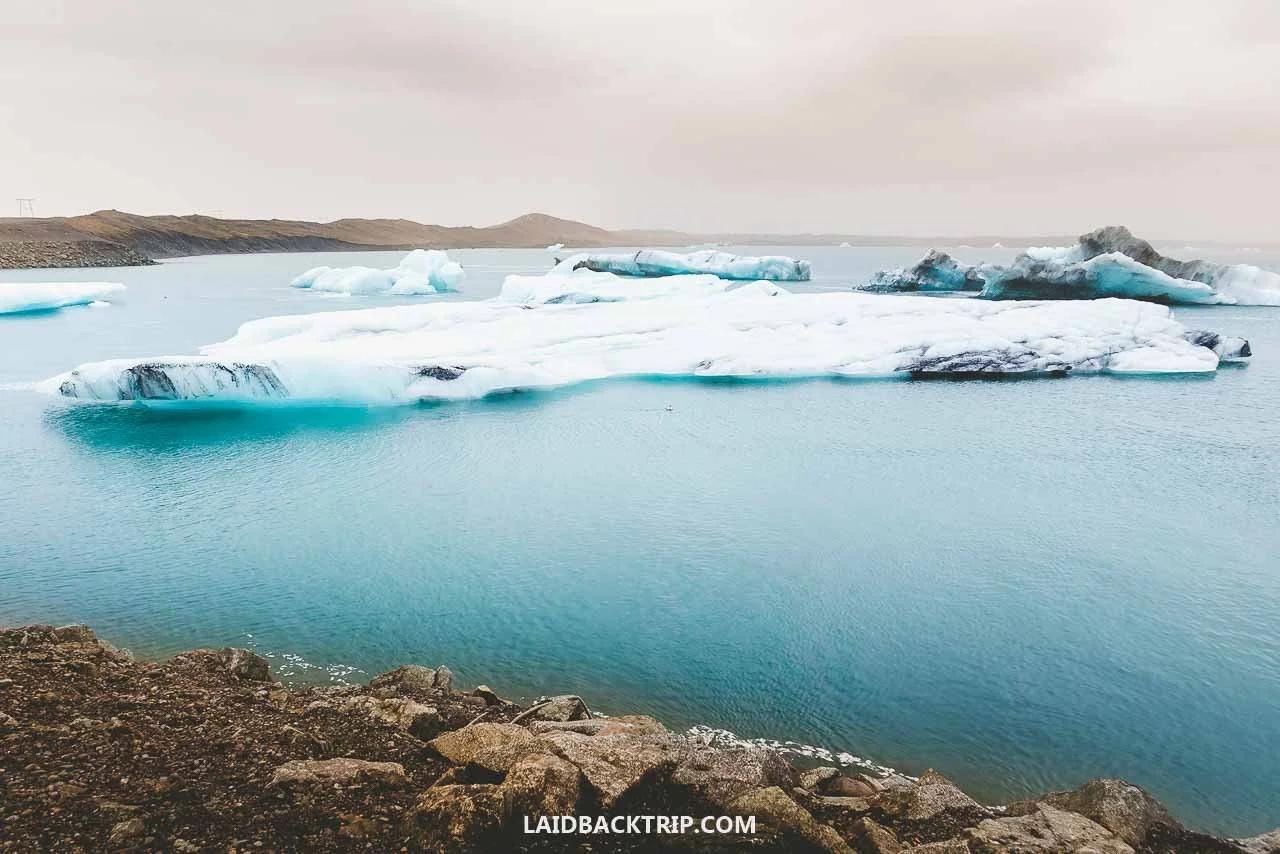
Jökulsárlón is Iceland's most famous glacier lagoon. So how did our visit go, and was this natural wonder actually worth seeing? Let’s find out!
There weren't that many places we were really excited to see before our Iceland trip like the famous Jokulsarlon Glacier Lagoon. Just the name sounded too cool, and the photos we saw were really like out of this world. Once we saw the floating icebergs during sunset, we knew that this would be the time when we wanted to see the lagoon too (or sunrise).
The glacial lake was right there on the Ring Road, so we wouldn't have to make any big detours, but the best part was that it actually fitted our Iceland itinerary so we could really come here for the sunrise. The only thing we would have to do was to actually wake up early. And we really did, just not in the way we intended.
Located in Vatnajokull National Park, Jokulsarlon is a large lagoon known for its huge blocks of icebergs slowly drifting into the Atlantic Ocean. This is Iceland's deepest glacial lake, and it also has Breidamerkurjokull glacier in the backdrop, so the scenery could not be more dramatic. But that's not all.
Just across the road is the Diamond Beach, where the icebergs are often washed up back on the shore. Jokulsarlon is simply one of the most popular stops and main attractions on Iceland's South Coast, and I have to admit that we couldn't wait to visit. The description of this place was about as exciting as it gets.
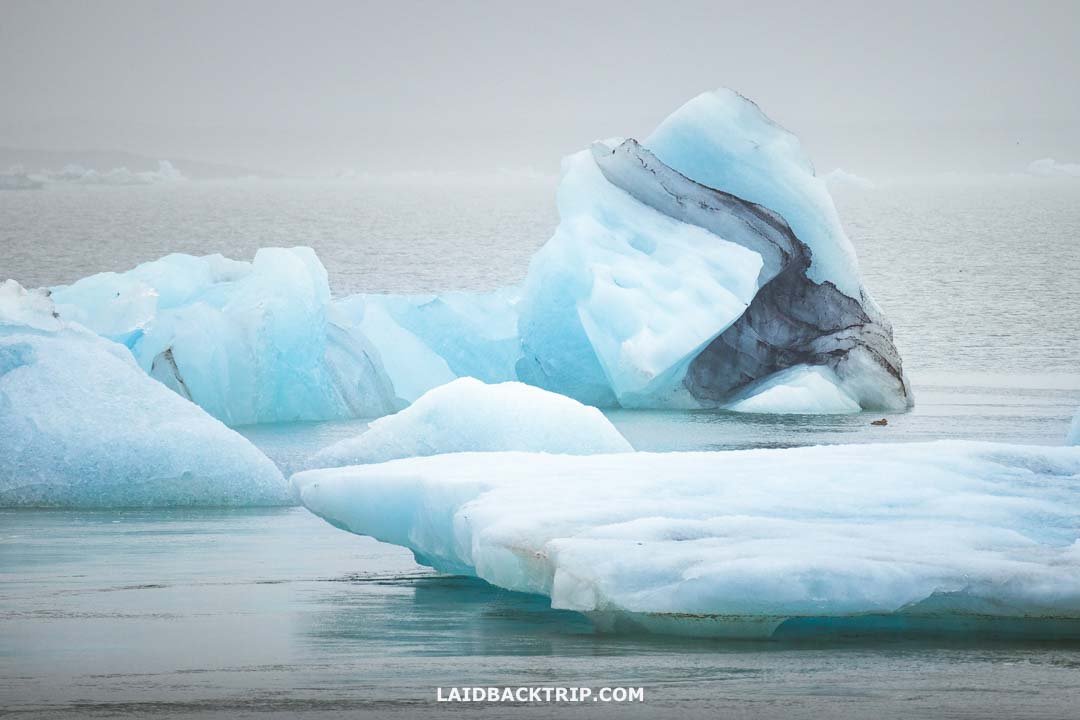
Jökulsárlón is really all about floating icebergs and one massive glacier.
The only thing we had no idea about was what Jokulsarlon would actually be like at the beginning of the summer season. Would we really see the icebergs? How close would we be to the glacier? How about those cute seals?
Both Lucie and I had lots of questions. However, the biggest one was what the weather would be like because while the first three days surprised us with nice weather, the evening before rain arrived and the forecast promised lots of precipitation for tomorrow when we wanted to see the lagoon.
Our only chance to see Jokulsarlon without rain was getting up at 4:30 AM and hoping the forecast was right about a 4-hour window with no precipitation. As I said, it looked like we'd actually be there early, but there wouldn't be a sunrise. We also knew the chance was slim since the South Coast is especially known for changing weather.
Still, it was the only plan we had. Before Jokulsarlon, we also planned a stop at Fjallsarlon, another glacier lagoon, and then head to its more famous counterpart. Once that was settled, we hit the road.
Getting to Jokulsarlon Lagoon
Jokulsarlon was located just off Ring Road, and it was really impossible to miss as we had to cross that bridge over the narrow channel with icebergs just before the turn-off. We initially started in Reykjavik, which meant Jokulsarlon we were looking into a 400-kilometer drive toward the east.
By Car
However, it took us more than two days to actually reach the lake, as we first did the Golden Circle and then drove through the South Coast, which was so incredibly scenic and full of amazing stops that we simply took full days to reach it. And had we had more time, we would definitely spend even more on this route. The morning we left from the Skaftafell area, the journey was just 50 kilometers or so.
After we were done here, we traveled to Djupivogur, 160 kilometers away, and ultimately we continued toward Egilsstadir, which was almost 250 kilometers northeast of Jokulsarlon. And that was only if we followed the quicker path, which we didn't, as it was less scenic, so we drove over 300 kilometers.
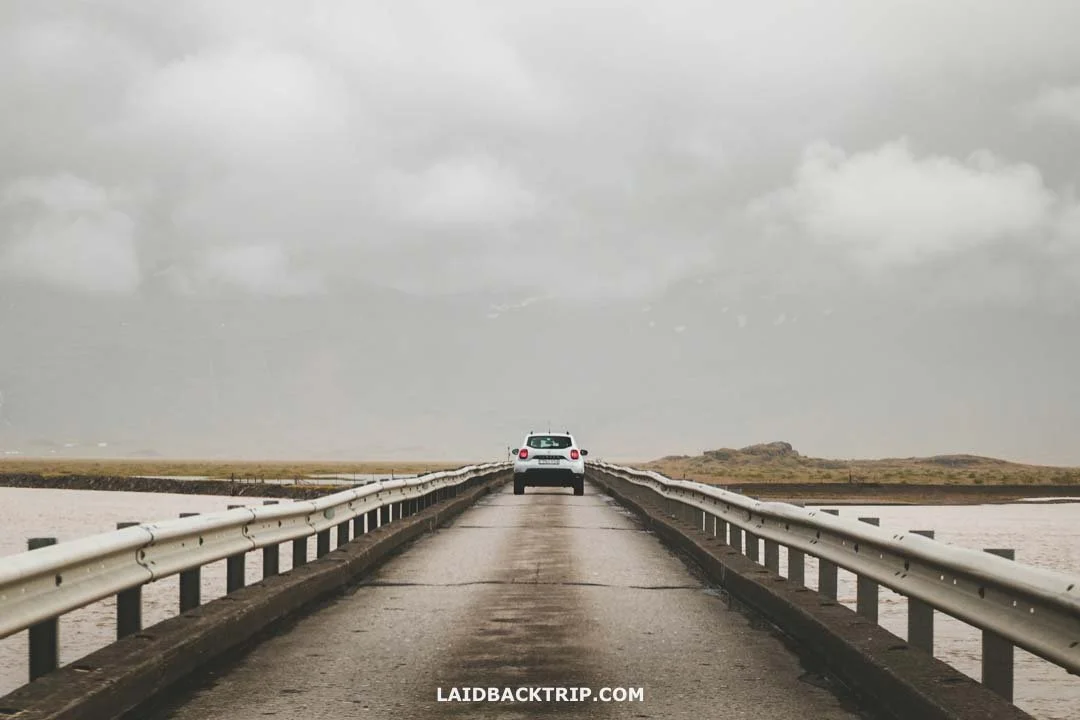
The drive to Jökulsárlón was one of the most scenic stretches on the entire Ring Road.
These distances didn't look too great (not like when we were driving to Kata Tjuta, let's say), and normally, on a highway in Bavaria, it would have been just over a two-hour drive, but the drive through the East Fjords took us a full day as it did basically the journey to Djupivogur. Again, we could have spent more time in this area, too.
We drove to Jokulsarlon in a rented 2WD campervan, and it was as easy as it could get. It was summer, Ring Road was paved, and the parking lot was just 200 meters from the turnoff (also paved road). Here you can check out rental car prices.
We actually made a quick stop at Fjallsarlon Lagoon first, which was another beautiful lagoon just 11 kilometers west of Jokulsarlon. That one was accessible by a 500-meter drive off the Ring Road (also paved). Since Jokulsarlon is basically on the Ring Road, it shouldn't be that difficult to reach in winter, but we would probably rent 4WD instead.
By Bus
There was a bus stop at Jokulsarlon, right on the main parking lot, only a short walk to the lake. Bus 52 connected the lagoon with Reykjavik, as well as some other popular stops we visited along the way so far, like Skogafoss or Vik (a gateway to Reynisfjara and Dyrholaey).
Jokulsarlon Tours
Had we not driven, it would definitely be an option to consider, but we would probably still take one of the Jokulsarlon tours instead (had we wanted to visit on a day trip, of course, otherwise, we would opt for public transport). Because Reykjavik is so far, be prepared that it will be a long day, and you will spend most of the time on the road.
Parking at Jokulsarlon
Jokulsarlon had a fairly big parking lot just 200 meters off the Ring Road, practically right by the shore of the lagoon. Since we were there early, it was pretty much empty, and therefore we didn't have any problem with finding an empty spot (as it might have been during the day, if it had been a sunny one).
The parking back then was free, but it's now paid. They charge 1000 ISK per car. It's not a lot, but since the same happened at most popular sites, whether it's Gullfoss or Dynjandi, it's another expense to your Iceland budget.
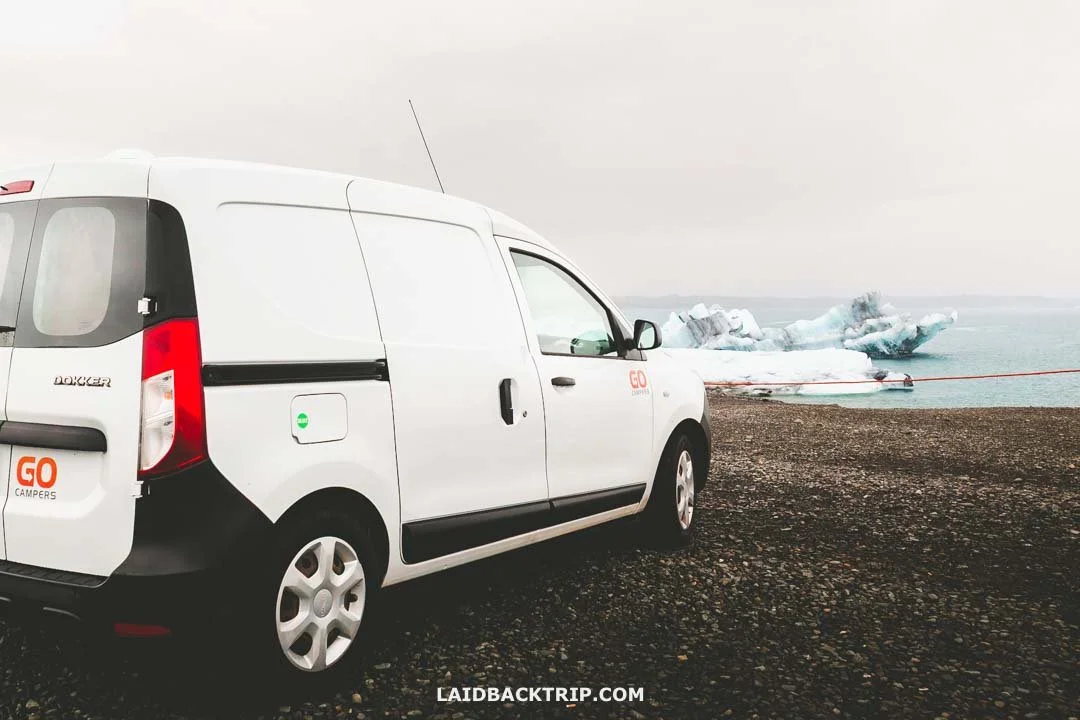
We could see the icebergs on the lagoon right from Jökulsárlón's parking area.
So first, we left our car at the main parking area by Jokulsarlon. Then we drove to Diamond Beach, which had a parking lot on each side of the channel. The reason we drove to both, I'll explain in a minute in the section about Diamond Beach. Anyway, both parking areas were pretty big, used to be free, but now they're paid, also 1000 ISK per car, like the one at Jokulsarlon.
Either way, there's so much parking available at Jokulsarlon that you should be able to find a spot here easily even on the busiest days. And finally, remember that while it might be tempting, overnight parking is not allowed at Jokulsarlon.
No Camping at Jokulsarlon
The night before we visited Jokulsarlon, we stayed in Svinafell Campground simply because that was where we had driven that day. Had the lagoon had a campground, we would definitely have preferred to stay there. But since it didn't, we stayed where we stayed. Not that it was a bad campground, quite the contrary, but having the floating icebergs for a view would make for a more dramatic setting (like we saw earlier at Skogafoss Waterfall).
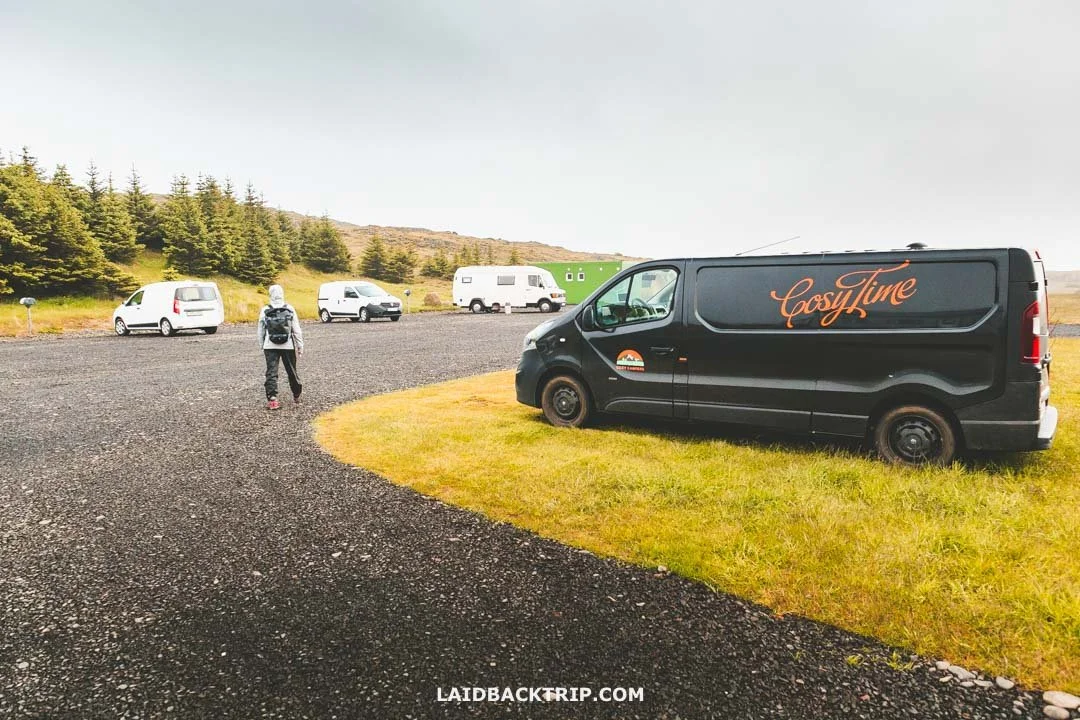
We eventually made it to Djúpivogur, where we found a nice little campground.
And for this very reason, I think it's a shame there's no campground at Jokulsarlon, but I guess it's for the better. The night after the visit, we camped at Djupivogur. It was a long rainy day, and this small coastal village had a nice campground that had everything we needed.
Hotels Near Jokulsarlon Glacier Lagoon
As I said, we stayed the night before just outside Skaftafell and ended in Djupivogur. We had a campervan so we camped in Iceland, but we also saved some hotels in case something went wrong or the weather became really bad, and we got soaked to the bone.
There was no hotel directly at Jokulsarlon, but the whole drive between Skaftafell, Hofn, and Djupivogur was dotted with hotels and guesthouses.
Both Hotel Jokulsarlon and Fosshotel Glacier Lagoon were within a short drive and looked amazing, but they were super pricey. So we looked into guesthouses like Vikingcafe or Lilja Guesthouse, and they were cheaper but really not by that much.
Visiting Jokulsarlon in Summer
Since Jokulsarlon was a natural site opened 24/7, we were able to arrive at the lagoon in the early morning. The whole place couldn't have been quieter. We arrived there at the turn of June and July, which was Iceland's peak season, and there was pretty much no one around.
We hoped to see Jokulsarlon without crowds, and waking up at 4:30 AM paid off. It was pretty serene. Normally, this would have been pretty great, but it wasn't that simple. As I said, we got there early. My watch still had that big four when we woke up, but the bigger reason was that the weather was far from idyllic.
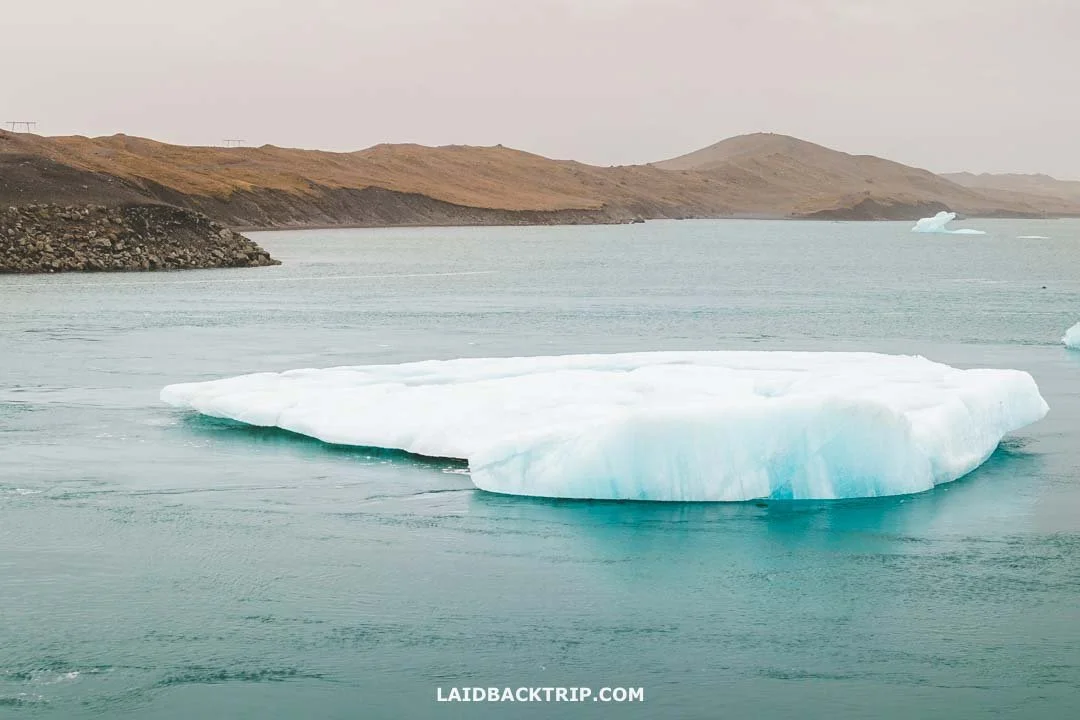
At the start of summer, Jökulsárlón had fewer icebergs than we thought it would.
So far, we had great weather, but the evening before we reached Jokulsarlon, rain arrived. We were already caught in a downpour on the hike in Skaftafell, and it rained throughout the night. In the morning, the weather forecast showed a short window where the precipitation chances got pretty low.
After a quick talk, it convinced us to get up and try our luck. If there was a time to see Jokulsarlon without rain, it was this early in the morning. I wasn't that convinced at first, because getting up so early didn't sound like fun, but Lucie was adamant.
We knew that you can visit the Jokulsarlon Glacier Lagoon all year round and at any time of the day, at least as we did plan to enjoy the scenery from the shore and didn't worry about the schedules of tour operators. But the day we went, it looked nothing like summer.
The weather was just bad. It was cloudy, the glacier was hiding in a fog, and the temperature felt a lot lower than what the weather app showed us (not that it was some particularly high number anyway). At least Lucie's guess that it wouldn't rain at this early hour was correct. The dark rolling clouds were full of rain, but for some reason, they held up for a big part of our visit.
What to See and Do at Jokulsarlon
We arrived at Jokulsarlon with a pretty simple plan. We wanted to see a glacier, some big floating icebergs, and maybe spot a seal or two. Besides the obvious, there were a few more things you can do at Jokulsarlon, like joining boat or glacier tours, and walking over to Diamond Beach to look for, well, icy diamonds.
As we found out ourselves, wildlife, weather, and drifting icebergs are unpredictable, so be ready for an experience that might be totally different from ours. So now we'll take a closer look at all of that!
Watching the Floating Icebergs of Jokulsarlon
So from the parking lot, we headed toward the lake. Since the parking lot was empty and we could park as close as we could, it was like a 20-meter walk. It was really not a walk, but we just moved our feet a bit and were standing on the lagoon shore.
The first impression of Jokulsarlon was kind of underwhelming as the big lagoon looked a bit empty. We came to Jokulsarlon to see the floating icebergs, and while we were there at the turn of June and July, which was supposed to be an ideal time to visit, there were far fewer of them than we expected.
It was not like the lagoon had none, but we hoped to see more. Lucie asked me if it was because of the big rain from yesterday and the stormy conditions of this morning, but I didn't know. Perhaps?

We could've watched the floating icebergs drift across Jökulsárlón for hours.
Nevertheless, we still spent a good amount of time watching those huge blocks of ice floating on the lake that were near us. They came from the head of the Breidamerkurjokull glacier, which we practically couldn't see because of those clouds or fog or whatever it was, and also because it was much farther away than Fjallsjokull.
We didn't plan on taking any of the tours that would take us closer to Breidamerkurjokull, and we already saw some glaciers yesterday and this morning, so it wasn't that big of a deal for us.
Because it was so early and we hadn't eaten yet, we figured this wasn't a bad spot for an early breakfast, which ended up being some bread with cheese and a bit of muesli. We sat on the rocks and watched the icebergs drift slowly toward the channel.
A few had seabirds perched on them, and we kept an eye out for seals but didn't see any that morning. The icebergs came in all kinds of shapes, some long and flat, some conical with jagged edges, some white with dark streaks, and some with that striking blue color that only glaciers create.
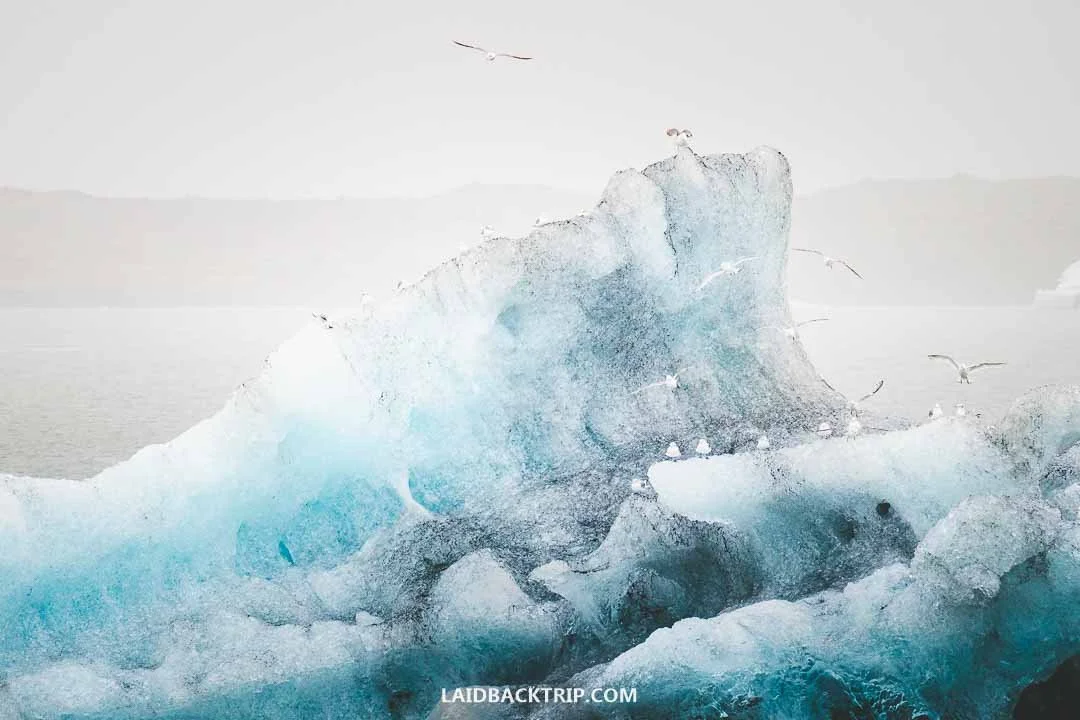
We didn't see any seals that morning, but we did spot a few gulls perched on the icebergs using them as a temporary refuge.
I wished we'd come here on a clear day outside summer so we could watch the sunrise at Jokulsarlon, but because of the midnight sun, and also because there really wasn't any sun at all this morning, we watched the whole scene against the backdrop of a cloudy day. At least we watched all this beauty all alone.
Yesterday and the day before that, we'd been to some busy sites like Gullfoss or Seljalandsfoss, and being in such a popular place with no people around was pretty surreal. The tours usually run between 9 AM to 7 PM in the peak season (10 AM to 5 PM in the shoulder months), so being here so early was a great avoid the big groups and crowds Jokulsarlon attracts each day.
You can visit the Jokulsarlon Glacier Lagoon all day long if you plan to observe the lake from the shore. While a big part of visiting Jokulsarlon is watching the floating icebergs, which occurs during warmer months when the glacier starts to melt, I have a feeling that this place would also be pretty cool to visit in winter to see the Ice Cave and enjoy the Northern Lights if the conditions are on your side.
Walking Along Jokulsarlon
As we reached Jokulsarlon's shores basically right away, it was time to explore the lagoon a bit more. We headed north first. The trail brought us along the lake's shore but was not really that interesting because the further we went, the fewer icebergs we could see. So after some time, we simply said to ourselves that there was no point in continuing and headed back.
Had it been a sunny day, we would probably just enjoy being outside, but this cold morning we were starting to be more worried about the rain. And we already spent more time watching those icebergs than we probably should have.
The trail was rocky, clearly visible, well-maintained, and pretty much flat. The area by the parking lot had some info panels which covered some info about Jokulsarlon, but these were really just basics. I think we walked for about 500 meters at most before returning, because that's where the trail sort of ended.
Packing Tips for Jokulsarlon
It was a cold and windy morning, and since we really didn't do much walking but rather lingered by the shore, we didn't take any chances and put on as many layers as we could. Lucie was wearing even her down jacket under the windproof rain jacket, and judging by the look on her face, she was pretty happy with her choice.
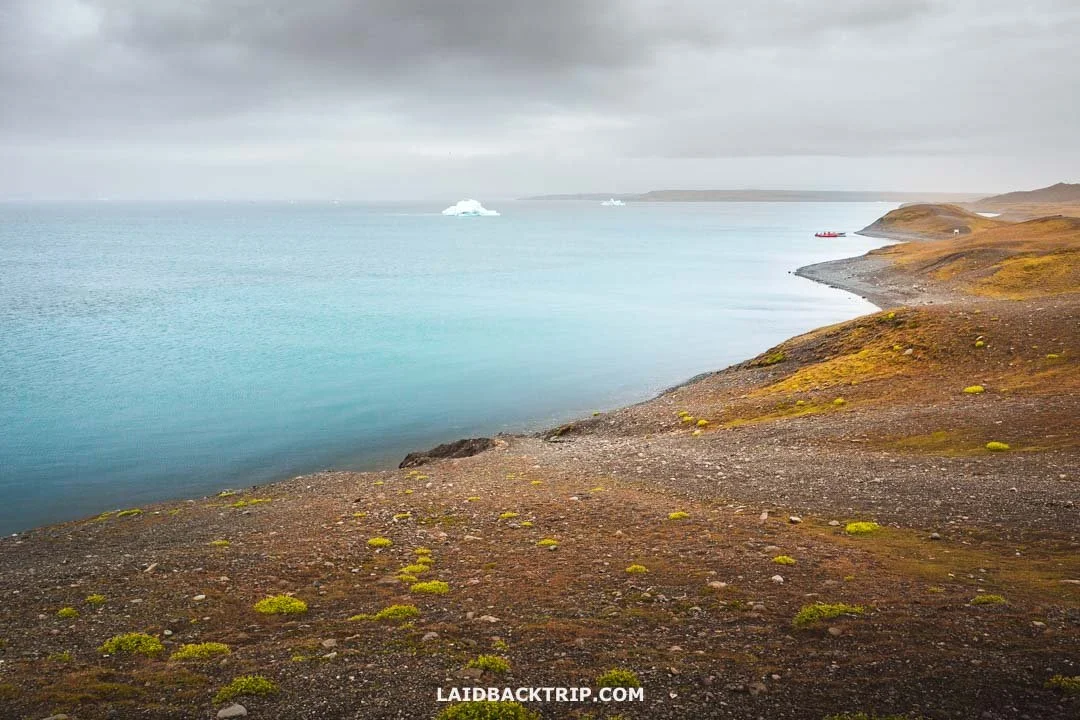
The farther the trail along Jökulsárlón took us, the fewer icebergs we found by the shore.
It was really the wind that made the feel-like temperature so low (though it was not as bad as in the Westfjords later). I had just two fleece jackets and a rain jacket, and at times was thinking that I should have gone with the down jacket too. On a normal day, regular sneakers would be fine, but we put on our trusty hiking boots so our feet stayed dry and warm (check out our Iceland packing list.
No Entry Fee to Jokulsarlon
When we visited, Jokulsarlon was free to explore, and it still is! But now that they charge for parking, it's not really free anymore, is it? For people like us who drove to Jokulsarlon, it definitely feels that way. I already covered this in the parking section, so there's not much more for me to add here. If you ask whether it's worth it, I'd say yes, especially if you visit on a day with tons of icebergs.
Jokulsarlon Lagoon's History
As we were watching Jokulsarlon, it was pretty mind-boggling that the lagoon is just over 100 years old. Yes, it's not some ancient lake but rather a recent one. Around 19th century, Breidamerkurjokull, an outlet of the massive Vatnajokull Glacier, started to melt and by the 1930s created this lake.
Many other glacier lagoons in the area have a very similar origin story. As the glacier is retreating, Jokulsarlon gets bigger each year. And the glacier smaller. We've already seen something similar in Franz Josef Glacier or Aletsch Glacier, and each time it was really sad to think about how fast it's happening. When we were there, Breidamerkurjokull was about five kilometers away. Now it's even farther.
In Icelandic, Jokulsarlon literally means glacier's river lagoon, and honestly, locals couldn't have picked a more fitting name. It was also one of the few names I could pronounce and remember even after we got home, because some others were real tongue twisters (especially my favorites Kolugljufur and Kirkjufellsfoss).
For most of the trip, I didn't have to call it that lagoon with icebergs as we did with lots of other places (like a waterfall you can walk behind aka Kvernufoss or that puffin sanctuary aka Hafnarholmi). When I mentioned hard to pronounce names and cute puffins, this whole area is part of the huge outwash plain known as Breidamerkursandur, a roughly 25‑kilometer‑wide stretch that also serves as an important bird habitat during the summer months.
Jokulsarlon Tours
Before we turned back, we passed a small pier with zodiac boats. Normally, they're used to get closer to Breidamerkurjokull and explore the lagoon's icebergs, but this early they were just sitting there waiting for tourists. Since the weather was bad and got even worse by the time the boat tours were supposed to start, I had a feeling they were canceled that day.
It would've been nice to take the tour, but it didn't fit our plans anyway. Just keep in mind that boat tours don't run on Jokulsarlon between November and April when the lagoon mostly freezes. We also saw the bigger amphibian boat that takes you from the land right onto the lake.

The amphibian boat that usually carries tourists toward Breiðamerkurjökull was still sitting on dry land at Jökulsárlón.
Had we had more time (and were in the mood for some adventure), we would probably have wanted to do the kayaking tour instead as they looked like a more fun way to explore Jokulsarlon (though you don't get that close to the glacier itself obviously).
Some of these tours also allow you to actually hike on the Vatnajokull Glacier. And this was the activity we would have been most interested in, and even probably book it, but they run only in winter when the glaciers and ice caves are safe enough for exploration. So that one is still on our bucket list.
Visiting Diamond Beach
When we got back to the parking lot, we continued walking toward the bridge. Normally, we would have just walked those 500 meters between Jokulsarlon and Diamond Beach, especially since the trail led under the bridge so we would avoid any traffic, not that there was any at this early hour,.
But then Lucie got really curious about that other side of the beach and really insisted that we should pay it a visit. And because it was a kilometer walk one-way during which we would have to cross twice that narrow bridge over the water channel, we simply hopped into the car and drove there. Yes, we had to retrace our steps a bit, and it would make sense to stop here first, but we sort of came up with the plan as we were watching the lagoon.
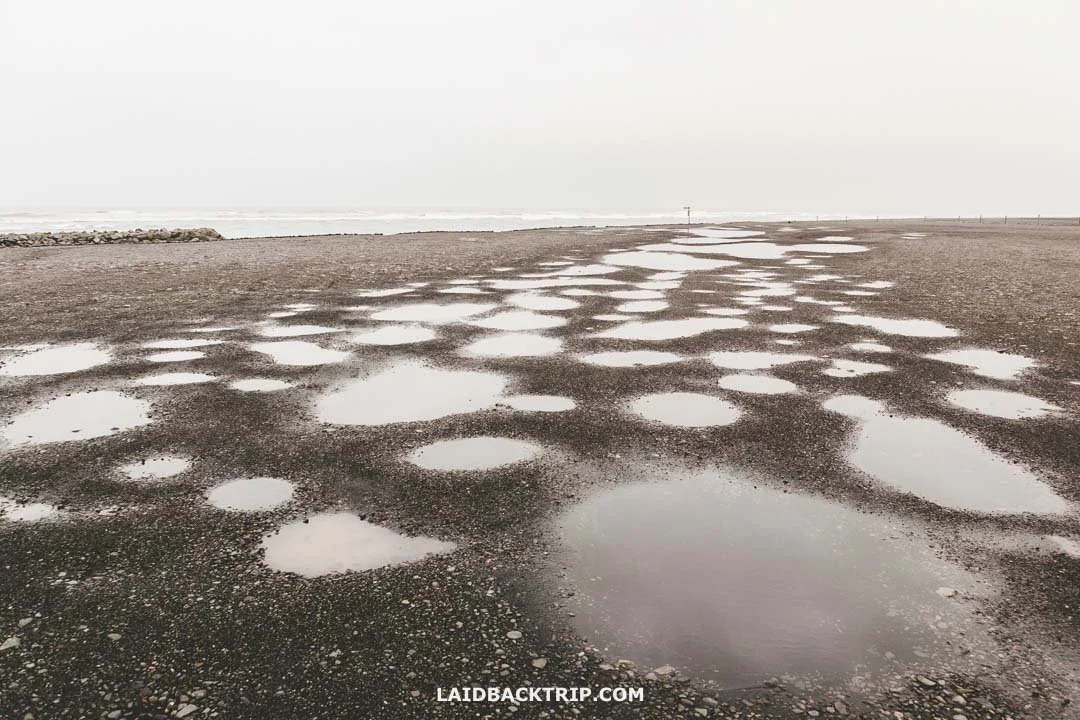
The parking at Diamond Beach used to be just gravel lot with plenty of potholes, but it has been paved since our visit.
It was a short, less than two-minute drive. The parking was right by the beach, which in Icelandic carries the name Breidamerkursandur, so we could start exploring right away. As I said earlier, the parking was free when we were there, but that's no longer the case. At least the Diamond Beach itself remains free to explore.
On this side, the beach stretched to the west as far as we could see, and the waves made it as dark as the sand with volcanic origin could get. It was hauntingly beautiful. Here, we were alone, which added to the atmosphere, though we could see a lonely photographer across the channel.
Now it was time to find some diamonds. We looked around and realized that there really were just a few of them. There were a couple of small icebergs on the beach washed by the waves, which I went to take some photos of while Lucie went looking for the crystal-clear glacial ice chunks, but as I said, we found very few.

These beautiful icebergs washed up on the shore were one of the few we found on Diamond Beach.
But even those few glittering pieces of ice lying on jet-black volcanic sand were pretty incredible after we took a closer look at them. After some walking and enjoying the views, we decided to try our luck on the other side of the channel. So we hopped in the car, drove across the bridge for the third time, and in a couple of minutes, we were pulling into the eastern parking lot.
Once we got out of the car, we headed first to the info panels that explained more about Diamond Beach and the Jokulsarlon area. There were almost twenty of them, with a circular layout, and a few were in the middle, so it looked like a pretty cool outdoor exhibition, and the black rocks, dark clouds, and big power lines in the backdrop gave it almost that industrial feel we saw around Blue Lagoon or Myvatn Lake.
After a bit of reading (there were also some cool photos on each panel), we continued to the beach. This side also didn't have many icebergs, but at least we found some really cool ice chunks. If you're wondering where Diamond Beach got its name, then it's basically a name made up by tourists who compared small and large gleaming ice pieces sitting on black sand to diamonds.

We even found some icy diamonds on Diamond Beach!
During the trip, we saw some beautiful black sand beaches, like the ones at Reykjanes Peninsula or Solheimasandur Trail, but none of them was as dramatic as Diamond Beach (okay, Fauskasandur with that big basalt monolith and huge waves was). Surprisingly, the waves were not that huge, but rather ominous, as were the dark clouds above us.
And as we were looking for more diamonds, it started to rain. First, it was just a few drops, but then steady drizzle filled the air. We hurried toward the car as we didn't want to get wet. We made it just in time. Then it started to rain properly and practically continued raining, with a few breaks, well into the evening.
How Much Time to Set Aside for Jokulsarlon
Despite the fact that our experience was pretty basic and included just walking around the area and a trip to nearby Diamond Beach, we still spent almost two hours at Jokulsarlon. And since we had already been to Fjallsarlon, that practically added another hour to this little adventure.
Despite the cold and the fact that there were fewer icebergs, we still spent a lot of time watching the whole spectacle. There really wasn't that much happening, but it was a mesmerizing scene. It was like watching Strokkur erupt, though a lot less dramatic.
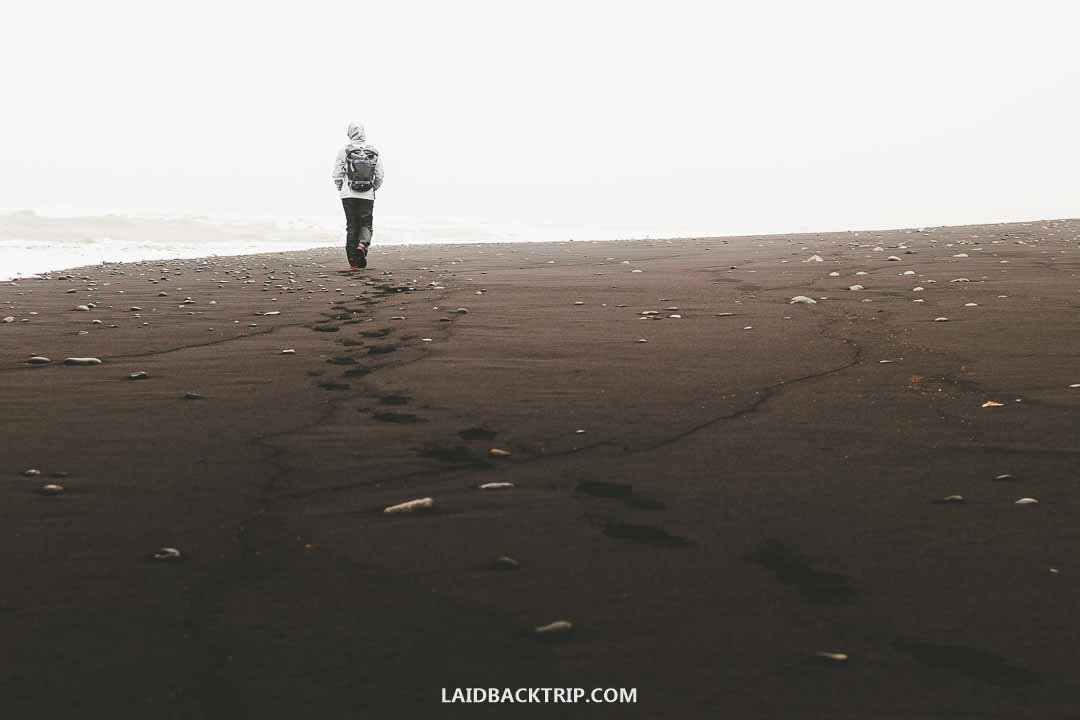
Since we explored both Jökulsárlón and Diamond Beach, we ended up spending almost two hours here.
Had we booked any of the tours, we would need to set aside significantly more time for Jokulsarlon as the boat tours took between forty minutes and one hour, and the glacier tours usually four to six hours. If this is just a quick photo stop, then 15-20 minutes for Jokulsarlon and an additional 15 minutes for Diamond Beach should be enough. You probably can skip Fjallsarlon entirely if time is pressing.
Is Jokulsarlon Worth Visiting?
As we drove out of the parking lot and the rain started battering our car, we had a moment to think about how much we enjoyed Jokulsarlon. And it was the first place on the trip where we left with kind of mixed feelings. Our plan was to see floating icebergs, which we did, at least partly, and see Breidamerkurjokull, which we didn't because it was hidden in fog (and even without the fog, it would probably be too far from the trail).
Because of our itinerary and the poor weather, we didn't book any boat or kayak trips, and the ice cave tour wasn't available in summer. As for wildlife, we saw some sea birds but no seals. Diamond Beach was nice, but again, we already saw a few. It just felt that the whole Jokulsarlon experience was highly random.

Even with fewer icebergs and rough weather, Jökulsárlón was still a pretty nice place to explore.
So even though our personal experience wasn't as mind-blowing as we expected from the photos or from places visited before like Patagonia's Perito Moreno or Grey Glacier, we still enjoyed the stop. And we can't deny that Jokulsarlon was as dramatic as any other place in Iceland. We just arrived on a not-so-ideal day.
Still, watching the few icebergs drift out of the lagoon toward the ocean through that narrow channel and under the bridge was fun, and walking on the black sand beach was too.
Another thing we loved about our visit to Jokulsarlon was avoiding the big crowds that show up every day, but that was only because we arrived early (same trick we used at Reykjadalur Thermal River or Latrabjarg Cliffs). And since the lagoon is so easy to reach, sitting basically right off Route 1, it didn't make any sense to skip it, even if it had been just a quick stop.


Discover Grjotagja, a tiny lava cave hiding a geothermal pool and the filming location of Jon and Ygritte's famous Game of Thrones scene.