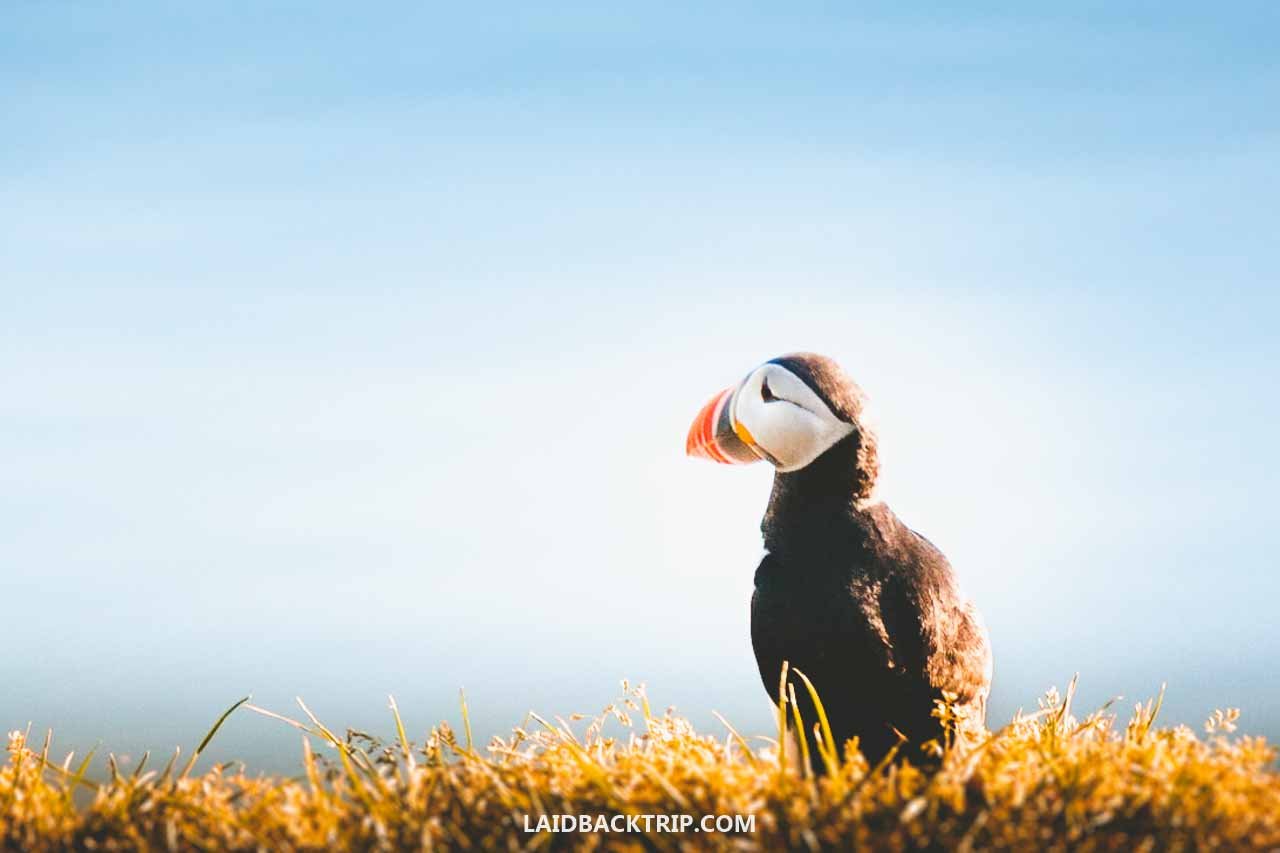
Heading to Borgarfjörður eystri on a beautiful summer evening just to watch puffins was one of our favorite moments of the whole East Iceland road trip.
We had a pretty eventful day behind us, and we were still not done with exploring the East Fjords. Not by far. We had one more scenic drive ahead of us and one last fjord to visit. We were heading to Borgarfjordur eystri, one of the most beautiful places in all of Austurland.
But this time, we had one more reason to visit beyond the amazing scenery. We finally wanted to see puffins up close. We'd already spotted them earlier, but mostly just in flight or from a distance. The small islet of Hafnarholmi promised a trail with a boardwalk through their nesting colony.
We didn't mind that Borgarfjordur eystri was quite remote and a detour off the well‑traveled Ring Road, because it was supposed to be one of the best places to see puffins in Iceland. During the nesting season, the fjord was home to about 10,000 pairs of puffins. And because we traveled during the nesting season, our chances to spot them were basically guaranteed.
We also knew this fjord was a great place for hiking without crowds, but we simply didn't have time for that, point proving the point by our own packed Iceland itinerary. I wished we'd had more time for it since we love hiking, but for our first visit to Iceland, we had to do with puffin watching. And, as I said, one incredibly scenic drive.
How to Get to Borgarfjörður eystri
After returning from Hengifoss Trail to Egilsstadir (for the second time this day), it was time to head north. To reach Borgarfjordur eystri, we had about 75 kilometers of driving ahead of us along Road 94. We'd heard the road was supposed to be quite scenic, but for the first 40 kilometers or so it wasn't actually that interesting.
We were still in the East Fjords, so we could see mountains on both sides, but they were fairly distant, and since we were surrounded mostly by plains, the scenery wasn't that dramatic, especially after driving to Seydisfjordur earlier that day.

In Borgarfjörður eystri we ended up finding more than puffins as the scenery was absolutely breathtaking.
We still stopped a few times to snap photos of Icelandic horses grazing, and thanks to my telephoto lens, I could still get some really nice shots of the mountains in the distance, so take everything I said with a grain of salt.
What didn't help was that this stretch of road was mostly unpaved, though still suitable for our small 2WD rental campervan. It was classic washboard, so while we didn't drive as slowly as we did to Fjadrargljufur Canyon, it was a bumpy ride.
There was ongoing construction to improve the road, which means the whole stretch between Egilsstadir and Borgarfjordur eystri is paved now, so no more dirt roads. It definitely made the area more accessible, but it also lost a bit of that adventurous feel.
Up to this point, the road was pretty much straight, but once it abruptly turned right, the drive got more interesting. Now the mountains were ahead of us, directly in our way to Borgarfjordur eystri. After a while, we crossed the Selfljot River and the road began climbing toward Vatnsskard pass. Since we were almost at sea level, we had more than 400 meters of climbing ahead. The way up was unpaved but in as good condition as a remote dirt road could be.
When we reached the pass, we had to stop for the views. Everywhere we looked was breathtaking. Behind us stretched the 25‑kilometer Heradssandur beach, a huge delta plain with the Jokulsa a Bru and Lagarfljot rivers and Heradsfloi bay.
The whole area was covered in sea fog or sand haze, with occasional sun piercing through the thick layer of high clouds. It was an incredible sight. The funny part was that the view ahead toward the coastal valley of Njardvik was just as spectacular.

Crossing Vatnsskarð pass on Road 94 gave us amazing views over the Njarðvík glacial valley.
Even better, the road ahead was finally paved. It looked newly built, still missing the center line. After endless minutes on washboard gravel, this felt like driving on a cloud. The road wound down with switchbacks that made it feel like we were somewhere in the Swiss Alps.
When we reached the sea, the road still had no barriers, but since the weather was great, staying on the tarmac wasn't difficult. Then the Borgarfjordur eystri fjord opened up, and once again, the views were incredible. In a few minutes, we arrived in Bakkagerdi, with about 100 inhabitants, the largest village in the fjord where we planned to spend the night.
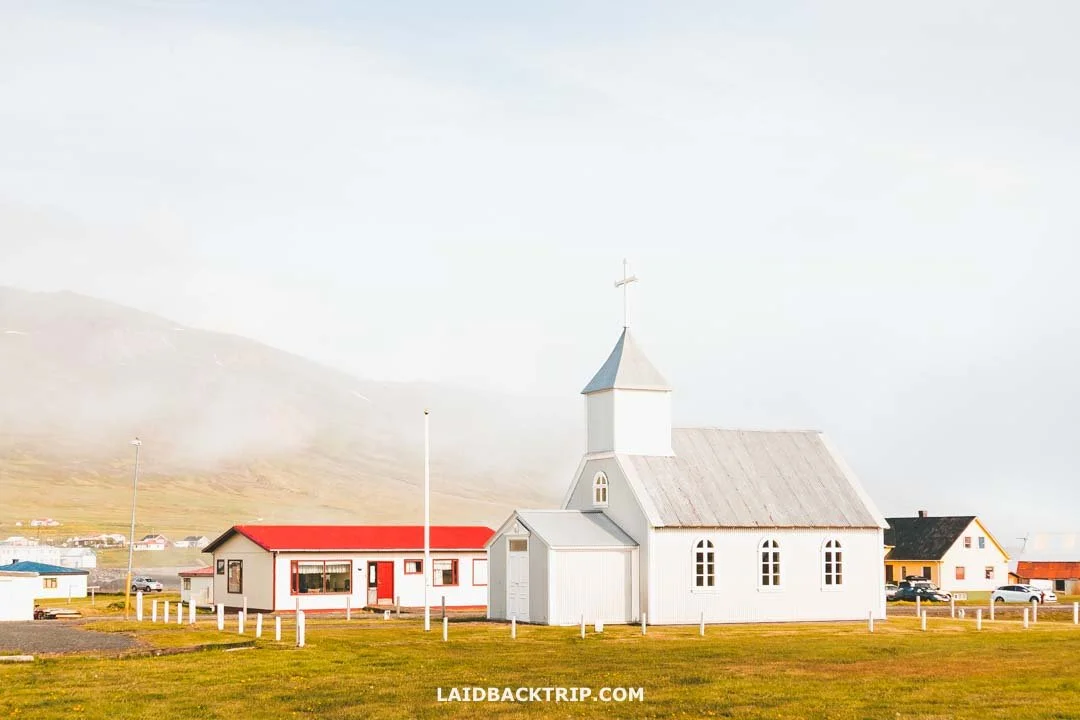
Once we reached Bakkagerði, Hafnarhólmi was only a few minutes' drive away.
But we didn't stop, because first we wanted to see the puffins at Hafnarholmi. From Bakkagerdi, we still had just over 5 kilometers to go. We passed the Fjardara River, which we found amusing since we'd already seen a river with the same name earlier that day at Gufufoss Waterfall. But that was in a completely different fjord.
In Icelandic, it simply means fjord river, and since there are so many fjords, there are multiple rivers with this name. In just a few minutes, we finally arrived at Hafnarholmi. We had a stunning journey behind us, and even if we weren't here to see puffins, the drive alone would've been worth it.
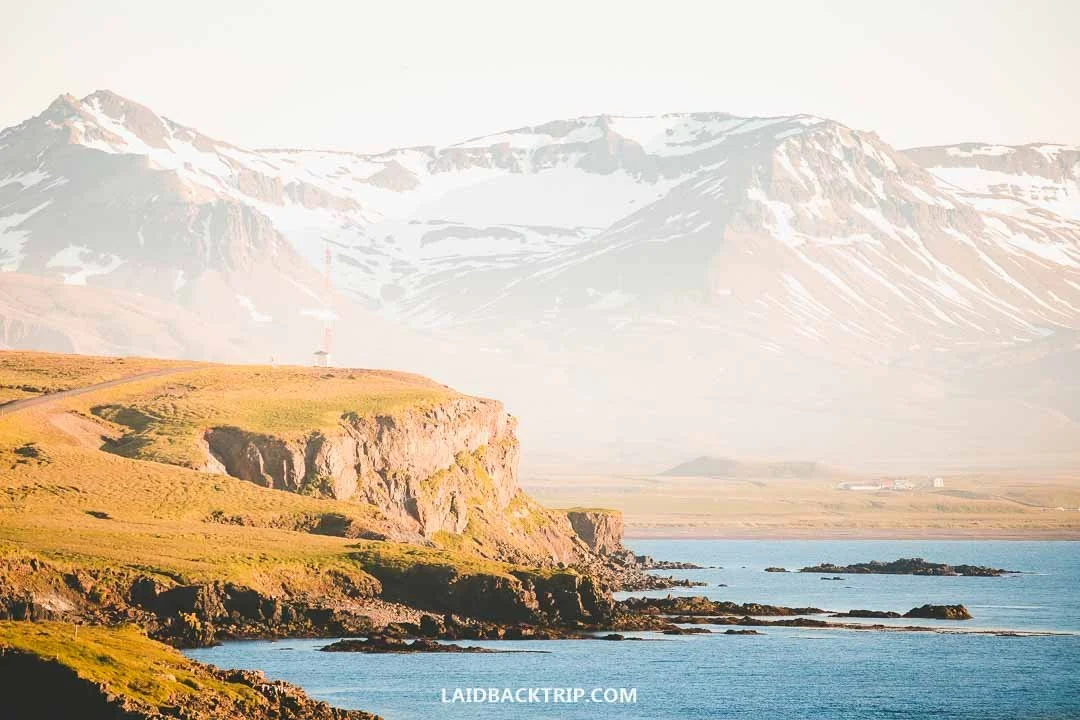
Driving to Borgarfjörður eystri in summer was really easy, and the scenery along the way made the whole effort feel more than worth it.
The whole journey from Egilsstadir to Borgarfjordur eystri took us just over two hours, even though it was only 75 kilometers. I know more than half the road was unpaved, but that wasn't really the reason. Like other scenic drives, whether it was Reykjanes Peninsula, Diamond Circle, or this one, it simply took us way longer than the navigation suggested.
In summer, the whole drive was easy to tackle, even with the unpaved sections. Now that it's paved the whole way, traveling to Hafnarhólmi is easier than ever. That said, I can imagine driving across Vatnsskard pass in winter would be a real challenge due to ice and snow. The road can also close during severe weather, so we'd always check current conditions before heading out. Check out rental car prices here.
Bus to Borgarfjordur eystri
There was a leaflet in the campground mentioning that during the nesting season, between April and August, there was supposed to be at least one bus per day connecting Egilsstadir and Borgarfjordur eystri, which could come in handy if you're not driving. However, there wasn't any info on departure or arrival times, so I'm not sure how local that bus really was. Either way, it wouldn't be something I'd personally want to count on.
Tours to Borgarfjordur eystri
Had we traveled without a car and still wanted to see Borgarfjörður eystri, we would probably have gone for a tour, simply because the public transport option would've been way too time‑consuming.
The only problem is that most tours with Borgarfjordur eystri on their itinerary tend to be multi‑day ones, like this one, for instance, just because the fjord is too far from Reykjavik or Akureyri. Interestingly, the most popular day trip to Borgarfjordur eystri now runs from Seydisfjordur, which gets a lot of cruise ships these days.
How to See Puffins at Hafnarhólmi
Once we parked, we could see Hafnarholmi ahead. The first thing that surprised us was how tiny the puffin site was, much smaller than we expected. Like, a lot smaller. We exchanged a look with Lucie, wondering whether this whole detour had been a good idea. Sure, the drive itself was an experience, but it took time, and we could've probably come up with something better. Still, we knew better than to judge too quickly. We still had to explore the islet. Then we'd know.
Parking at Hafnarholmi
Because we arrived quite late, the parking lot was pretty empty. We found a spot a bit farther from the trail, and since we weren't in a hurry, we made some tea and enjoyed the evening views over the fjord. Parking was free when we visited, but now they've started charging 1000 ISK per car. This didn't just happen at Hafnarholmi, but also at places like Reynisfjara Beach or Dynjandi Waterfall.
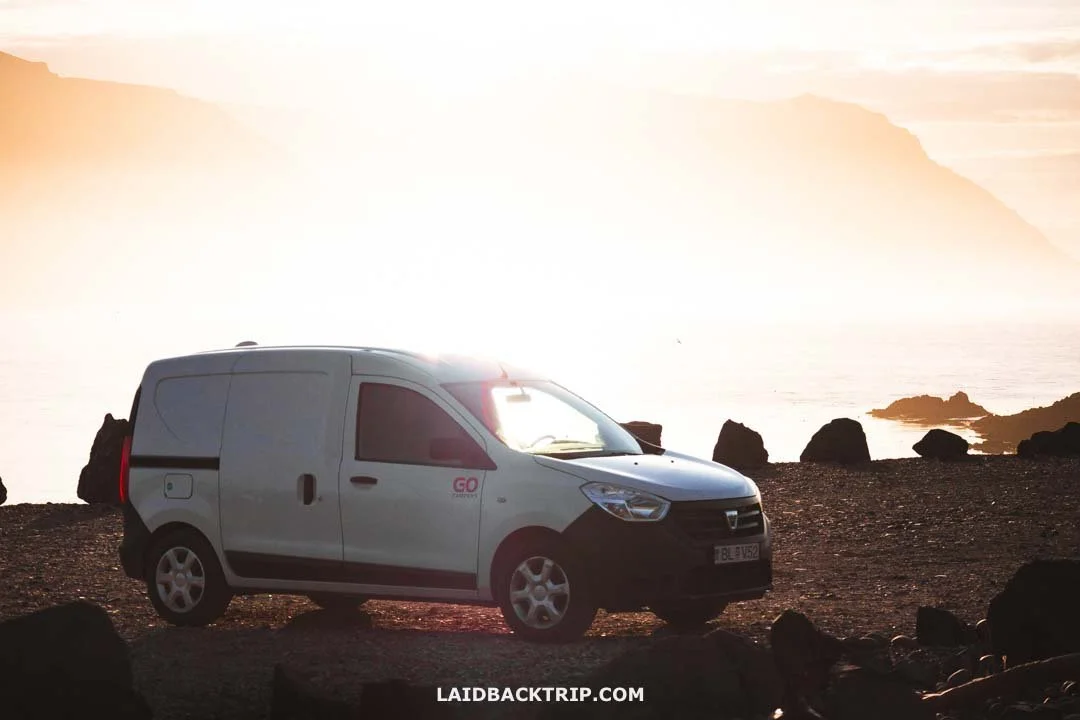
Parking was about a three‑minute walk from the Hafnarhólmi puffin colony.
Entry Fee to Hafnarholmi
The puffin sanctuary at Hafnarholmi is free to explore, but as I said, with the parking fee introduced, the visit wouldn't feel completely free anymore. Even so, we'd still consider the puffin colony worth seeing. And even though puffin watching in Borgarfjordur eystri is free, you can donate if you want to support the site.
Hafnarholmi Islet
As we looked toward Hafnarholmi again, it really did appear tiny. Between us and the islet was a small marina with a man‑made causeway on its northeast side. That meant we could reach the islet with dry feet, which was great since the sea temperature was nothing like the Blue Lagoon's.
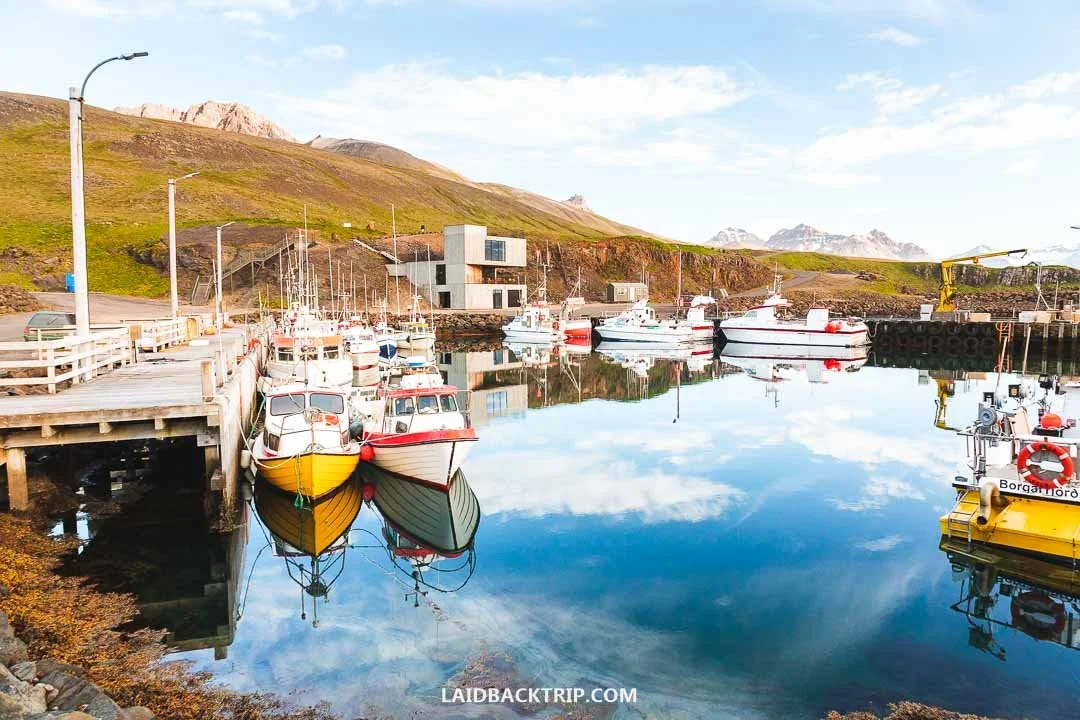
On the way to the puffin colony, we walked past this little fishing harbor.
The islet seemed to have three sections, and as we later found out, the accessible one, the part with the boardwalk, was only the small section closest to the harbor. The rocky hill was maybe 20 meters high, so the whole walk was super easy.
By the way, we found this birdwatching spot listed under several names, like Borgarfjardarhofn or Hafnarholmi Marina, but the official name really is Hafnarholmi.
Exploring Hafnarholmi Puffin Colony
Once we were ready, we set off. After about 50 meters, we passed Hafnarhus Cafe, which was already closed (open daily from 10 AM to 4 PM). Since we were traveling around Iceland on a budget, we wouldn't have gone inside anyway, so it didn't bother us.
Instead, we turned our attention to the charming marina, which was really quiet at this hour. The small fishing boats in the soft evening light with the fjord scenery in the backdrop were something else. After about 250 meters from the parking lot, we reached Hafnarhólmi's trailhead.

The trail through Hafnarhólmi's puffin colony was basically just this wooden boardwalk.
From here, it was just an easy walk along a wooden boardwalk. Lucie said it was a good sign because it meant we'd most likely be able to see puffins up close. She wasn't guessing this time. She was ahead of me and already saw some of the first ones in their burrows right at the start of the trail. The path began with a few steps, but those first meters already took us at least 10 minutes instead of a few seconds. And that was just the beginning of the trail.
After tackling the first set of stairs, we reached the only junction on the trail. There was a wooden bird‑watching shelter about 20 meters to our left and another set of stairs straight ahead. It looked like it didn't matter where we went next (and it really didn't), so we headed for the shelter. Along this path, there were more puffins. In fact, they were everywhere. When we first saw Hafnarholmi, it looked tiny, and we weren't sure how many puffins we'd actually see. The answer was a lot more than we expected.
When to See Puffins at Borgarfjordur eystri
We were there at the ideal time and season. Puffins nest in Iceland from April to August, which fit perfectly into our plans since we were visiting Borgarfjordur eystri in summer. We visited Hafnarholmi at the turn of June and July, which was the peak season for the puffin colonies. At this time of year, they were here in their biggest numbers and the most active, constantly flying back and forth with fish to feed their chicks.
We knew they were best observed either in the morning (roughly 6 AM to 10 AM) or in the evening (roughly 6 PM to 10 PM), which meant Hafnarholmi was one of the places we had to time our visit more carefully than, let's say, Thingvellir National Park or Skogafoss Waterfall.
We arrived in the fjord after 9 PM, and the timing couldn't have been better because of the number of birds and the soft light. If you arrive outside these periods, it doesn't mean you won't see a single bird. But the truth is, puffins spend most of the day out at sea hunting, and those protecting their eggs are usually hidden in their nests.
We did see puffins in other locations even during the day, but they were mostly out at sea, meaning they were simply too far away to watch without binoculars. That's why we planned our visit for the evening, which was when we finally reached Borgarfjordur eystri.
Since we camped in Bakkagerdi, we also had the chance to see them in the morning in case of bad weather or something unexpected, but we arrived on a beautiful summer evening with almost clear skies, and the evening visit was more than enough.
What to Pack
As I said, the weather was great, the wind was surprisingly mild, and rain was nowhere to be seen. But it was still cold, at least for puffin watching, which involved very little walking and mostly just standing around. We wore a down jacket with a windbreaker on top, and that was in summer. I could imagine that had we arrived at Hafnarholmi on a day with less‑than‑ideal conditions, we'd need an extra layer (or two).
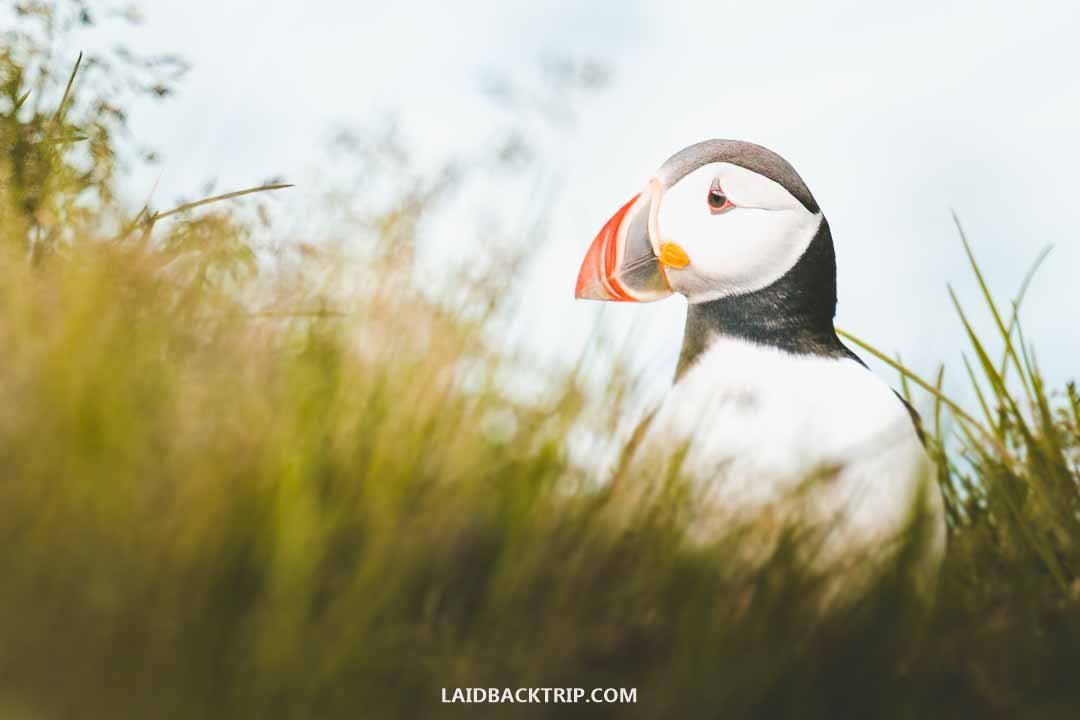
At Hafnarhólmi the puffins were so close to the trail that it felt almost unreal.
The trail let us get as close to the puffins as we could realistically be, but I couldn't take any decent photos without a proper telephoto lens. Even at close range, it made a huge difference. Because of the telephoto lens and simply because the puffins were so close, we didn't bring binoculars here.
But I remember bringing them for the Black Sun tour on our trip around Denmark, and they were great for watching birds in flight. It would've been the same at Hafnarholmi too, since the puffins put on a spectacular show above the sea.
Bird-watching Shelter
There were a few more steps on the way to the bird‑watching shelter, and a lot more puffins. Again, it was no more than 20 meters, but we spent a good amount of time watching puffin life go by. The shelter itself was small but cozy, and surprisingly there wasn't much to see from inside. Since it had a few chairs, we spent some time there, watching Hafnarholmi through the windows. But because it was such a beautiful day, we didn't find any real purpose for being inside other than taking a short rest.
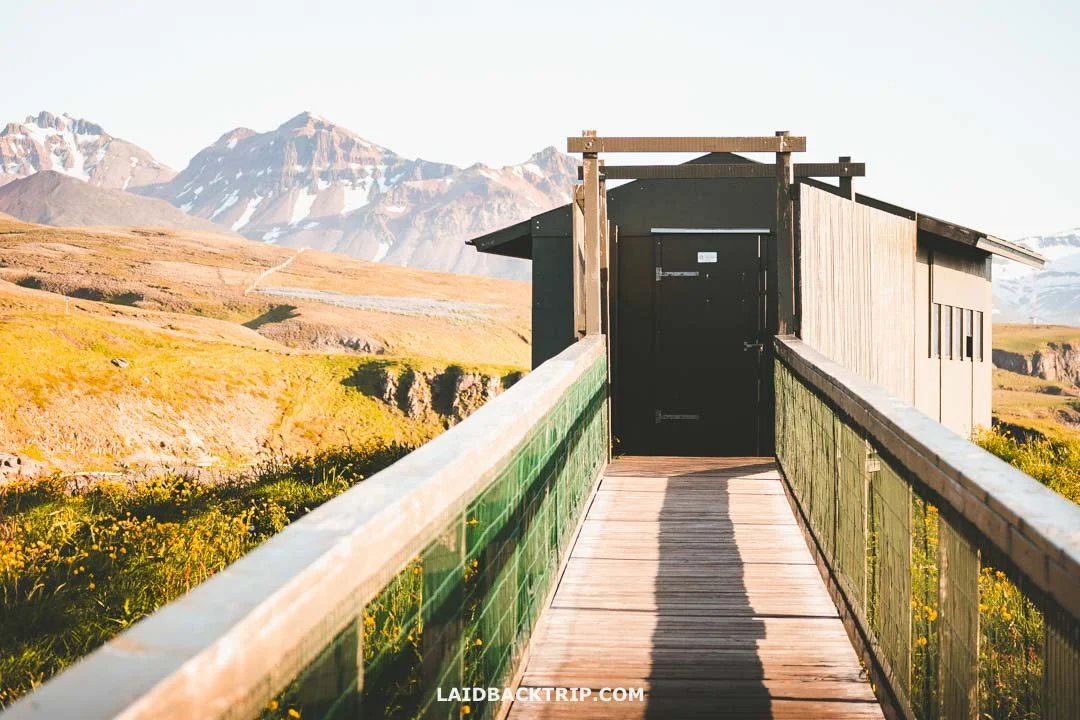
The shelter is perfect for windy or rainy days, but the evening at Hafnarhólmi was so gorgeous that we preferred being outside the whole time.
I could imagine that had we visited Hafnarhólmi on a rainy day as we had while hiking in Skaftafell or on our last day before leaving Reykjavik, we'd get good use out of the shelter. But today, it felt almost wrong to be stuck inside. After a few windy days on the South Coast, we could finally enjoy an evening without too much wind. It wasn't completely calm, but given we were in Iceland, it almost felt that way.
Another interesting thing about the shelter was that there weren't many puffins around it, so we mostly watched other seabirds using the islet as their home. It's not just puffins who nest at Hafnarhólmi, but black‑legged kittiwakes, common eiders, and northern fulmars too. There were also panels outside with more information about the birds living here. Once we'd had enough, we returned to the junction and turned left.
Watching Puffins
From here, we had to take a few more steps to reach the top of the small hill. This was easily my favorite spot on the trail, because from up here we could enjoy not just the puffins but the whole Borgarfjörður eystri. It was almost 11 PM when we finally reached the end of the trail, and the midnight sun was just getting started.
Since we spent a lot of time along the way, we could really enjoy some quiet moments here and even had the trail to ourselves from time to time. A few people arrived while we were there, but they usually left after a few minutes, so the islet stayed incredibly quiet.
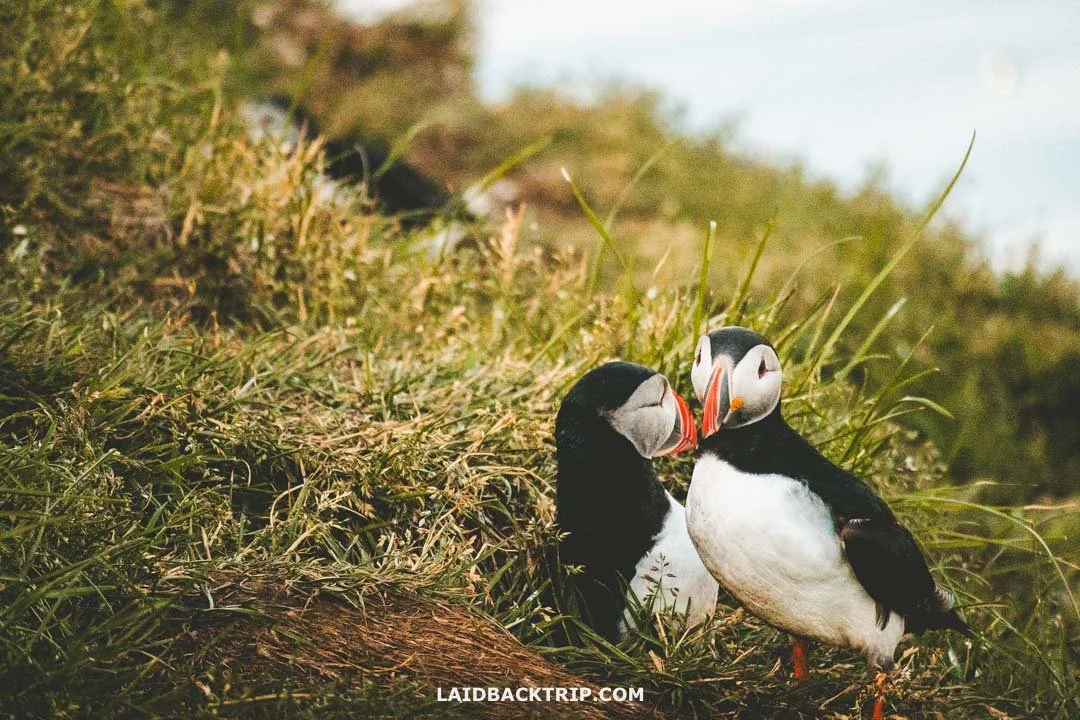
Seeing the puffins at Hafnarhólmi was easily one of our favorite moments of the entire Iceland trip.
The weather was gorgeous, and watching the puffins, their nesting habits, and their hunting routine was incredibly interesting. From time to time, we retraced our steps to find a new group of puffins and watched their routine all over again. The most fascinating part for me was seeing puffins fly out to the sea and return with fish in their beaks. It was an incredible spectacle.
And the time just flew by. We could've stayed here for hours. It was like waiting for another Strokkur eruption or watching another Jokulsarlon iceberg drift toward the sea. But the puffins were alive, as was the whole scene. And it wasn't just visual, because the colony had its own specific bird smell and the puffins made funny noises.
Facts About Atlantic Puffins
On the trail, we also learned some pretty interesting facts about Hafnarholmi's puffins. Puffins are small, cute birds, usually around 26-29 cm tall, weighing up to 500 grams, and their wingspan can reach about 65 cm. They live across the North Atlantic, and you can watch them not only in Iceland but also in Greenland, the Faroe Islands, Ireland, or Norway, just to name a few places. The total population is around 14 million, and the largest colony lives on Iceland's Westman Islands.
What's interesting about the Atlantic puffin is that it's not a rare species, yet it's still one of the most stunning and beautiful birds in the world. Thanks to its coloring, white head, black back and wings, white belly, and an orange-red-colored narrow beak, this bird is incredibly attractive for birdwatchers, photographers, and regular travelers who enjoy nature at its best.

This little puffin returned from its sea hunt with several small fish in its beak.
We knew puffins hunt out on the sea, but they're also exceptional divers, something we wouldn't have guessed. The fun fact was that they can dive as deep as 60 meters, even more than the blue‑footed boobies we saw in the Galapagos Islands. We saw this more closely later on our whale‑watching in Husavik, where a flock of puffins followed us and kept diving frequently.
When the breeding season comes, puffins seek places like Borgarfjordur eystri, where they find protection on grassy cliffs above the sea. The female usually lays a single egg and keeps it warm (together with her partner) for about 42 days. It's also pretty interesting that the distinctive orange-red bill appears only during the nesting season, and later in the year the color fades to dull shades.
Don't Disturb Puffins
Because the boardwalk had handrails, there was a kind of safe space between the puffins and us, so we didn't disturb them. Since Hafnarholmi is normally visited by a lot of people each day, it looked like the puffins were extremely used to our presence. And had it not been for the boardwalk with wooden handrails and a few slats that basically served as a corridor keeping tourists away from the puffins, it almost felt like we were back in the Galapagos.
Some of the puffins dug their burrows practically right next to the boardwalk, and a handful were nesting even under it. It felt almost strange to be that close, so we usually waited for them to leave before practically walking over their home.
Being quiet and respectful is one of the reasons places like this can exist, so we tried to do our best. It should go without saying that it's forbidden to touch puffins or feed them. One of Iceland's existing laws even protects birds during the breeding season, since they were hunted for eggs and meat in the past.
Is Hafnarholmi Worth Visiting?
We'd already been to other puffin spots like Dyrholaey Peninsula, so we knew they were here in big numbers, but it wasn't until Hafnarholmi that we could see them from so up close. Hafnarholmi was small, even tiny, but I guess we saw the most puffins here of all the places, at least per square meter. In summer, there were tons of them.
Because of the way they nest (in burrows or rock crevices), the puffin colony wasn't as condensed as, let's say, the gannets we saw at Cape Kidnappers, but there were still plenty nevertheless. And unlike Latrabjarg Cliffs, which we hiked later and which stretches for several kilometers, Hafnarholmi was the easiest way to see puffins. We didn't need a tour or a boat trip as we did for whale watching, and the colony was practically just a few steps from the parking lot.
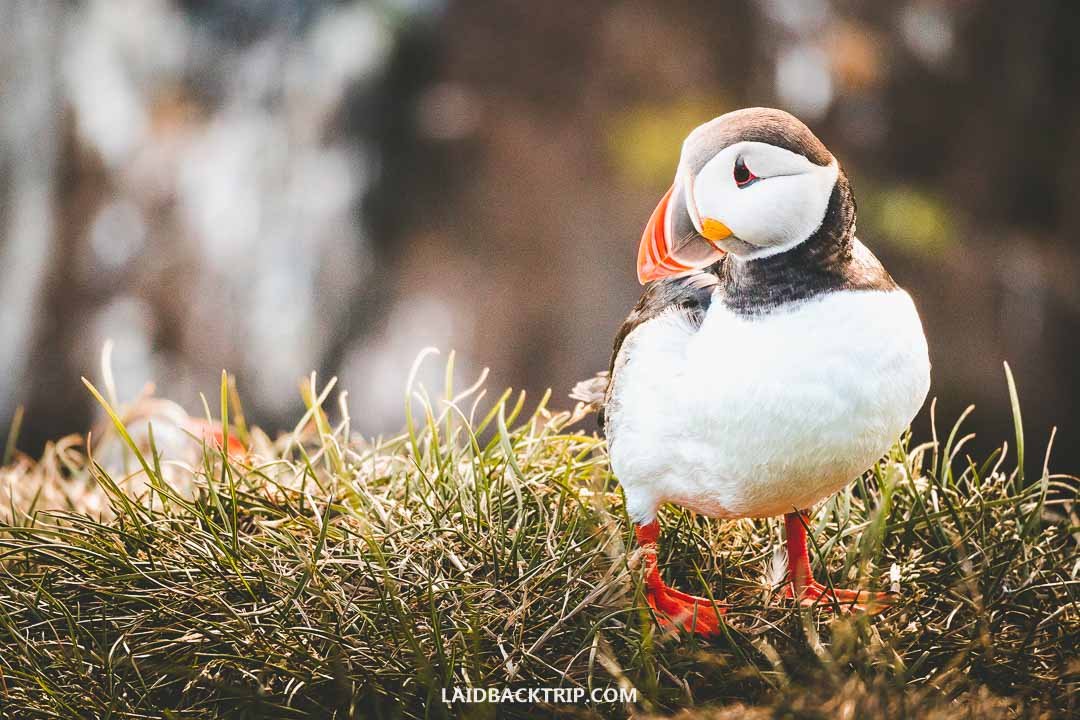
We headed to Hafnarhólmi right at the start of summer, hoping to catch the nesting puffins in their peak season.
Had we arrived in Iceland outside the puffin nesting season, Hafnarholmi wouldn't be worth seeing simply because there'd be no puffins. But if you asked us about Borgarfjordur eystri, we'd give you a very different answer.
The whole fjord was stunning, and besides the puffins, there were some great trails to explore, with the most popular ones being Dyrfjoll and Storurd. Unfortunately, we didn't have time for them because we had to make it to Myvatn Lake the next day, but if we return to Iceland one day, hiking in Borgarfjordur eystri is on our list.
There were only a few people around, so Hafnarholmi was as quiet as it could be. With the paved road all the way to the fjord and increased tours from Seydisfjordur's cruise ships, I can only imagine the site isn't as quiet as it used to be. And because the trail is very short, I can also imagine that arriving at the same time as one of the big tour buses might make the experience a lot less enjoyable.
How Much Time to Spend at Hafnarholmi Puffins' Colony
As we've already mentioned, the site was quite small, but there were so many puffins that we spent over two hours at Hafnarholmi. While the whole trail could be walked in five minutes, that wasn't really the point of our visit. At this point in the day, we'd already seen everything we wanted and could spend as much time here as we liked, so we really took advantage of that.
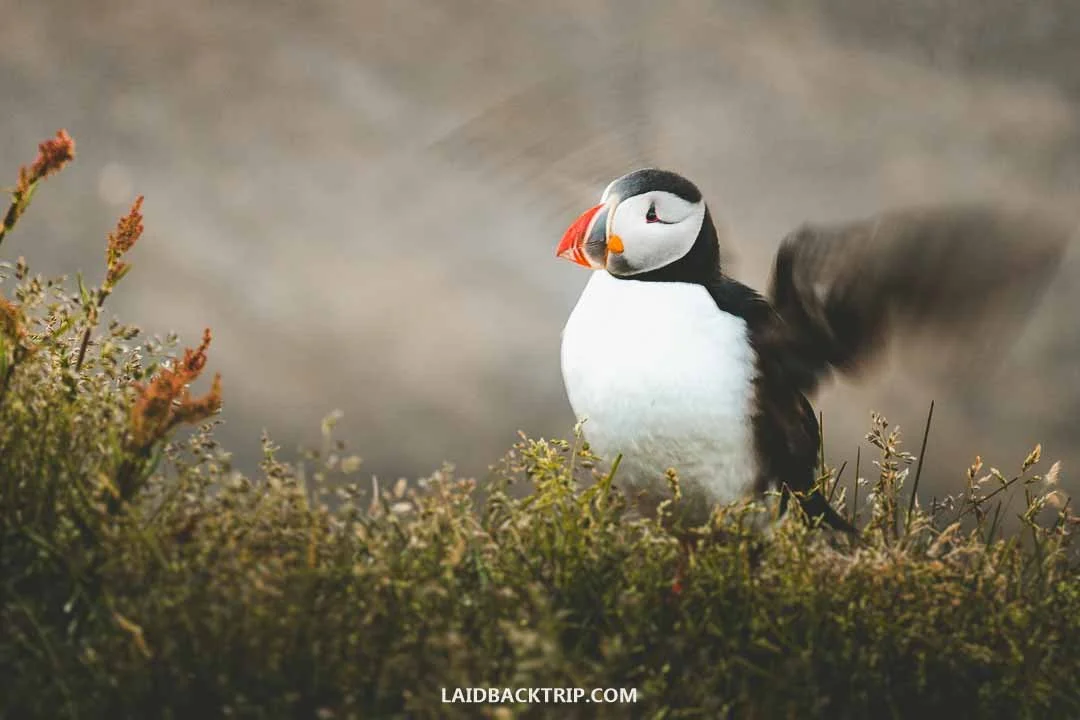
Watching the puffins in their natural habitat was such a wonderful experience that we stayed at Hafnarhólmi for more than two hours.
We watched and watched the puffins, all their habits and routines, with undying curiosity. I can imagine that had we arrived at Hafnarhólmi in the morning and still had all our plans ahead of us, we'd probably spend something between 30 minutes and an hour here. But that's just my hypothetical guess, since we might've been enticed by this incredible site and stayed just as long.
Where to Stay at Borgarfjordur eystri
After we were done with Hafnarhólmi, we headed back to Bakkagerdi. The village was tiny, so it wasn't hard to find Alfaborg, the only campground in Borgarfjordur eystri. It cost 2000 ISK per person. Since it was already late, we just found a campsite, took a hot shower, had a light snack in the kitchen, and enjoyed the last views of the day.
We'd stayed in some really nice locations by this point in our trip, but this one was probably my favorite. A big part of that was the weather. Unlike Skaftafell, where it rained, the views from our campervan were simply incredible. We really didn't need to go anywhere.
Then we went to bed. It had been a long day, and we both fell asleep right after putting on our sleep masks. The shower cost 500 ISK and was coin‑operated, so we had to change coins with the lady who worked there (so we could actually take a shower, unlike at the campground after Reynisfjara Beach). But now they've changed it, and you can pay by credit card like everything else.
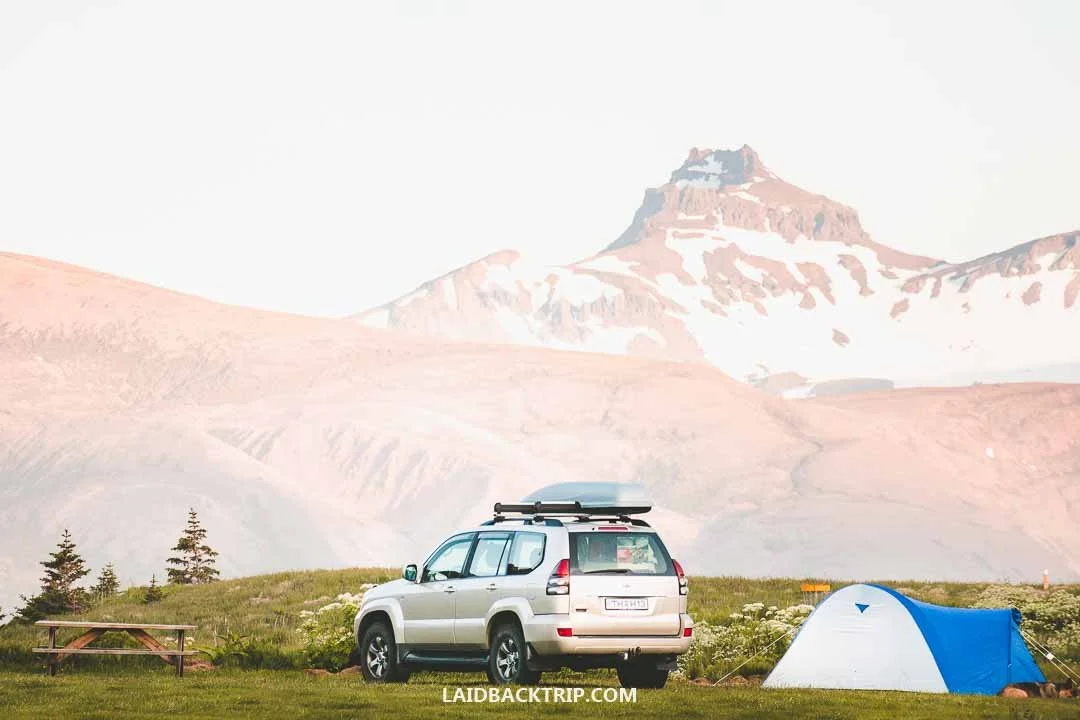
When we finally reached the campground in Bakkagerði, we just sat in our campervan and enjoyed the sunset with the mountains glowing in the background.
Bakkagerði was a small village with not many accommodation options beyond the campground. We stuck to camping in Iceland but always had backups in case the weather didn't cooperate, and Borgarfjordur eystri was no exception. There were basically just two other places: Blabjorg Resort and Alfheimar Hotel. Obviously, we could've driven back to Egilsstadir, where there was another campground and more hotels (like Hotel Valaskjalf and Hotel Hallormsstadur), but we found Borgarfjordur eystri too beautiful to leave so soon.

Discover Grjotagja, a tiny lava cave hiding a geothermal pool and the filming location of Jon and Ygritte's famous Game of Thrones scene.