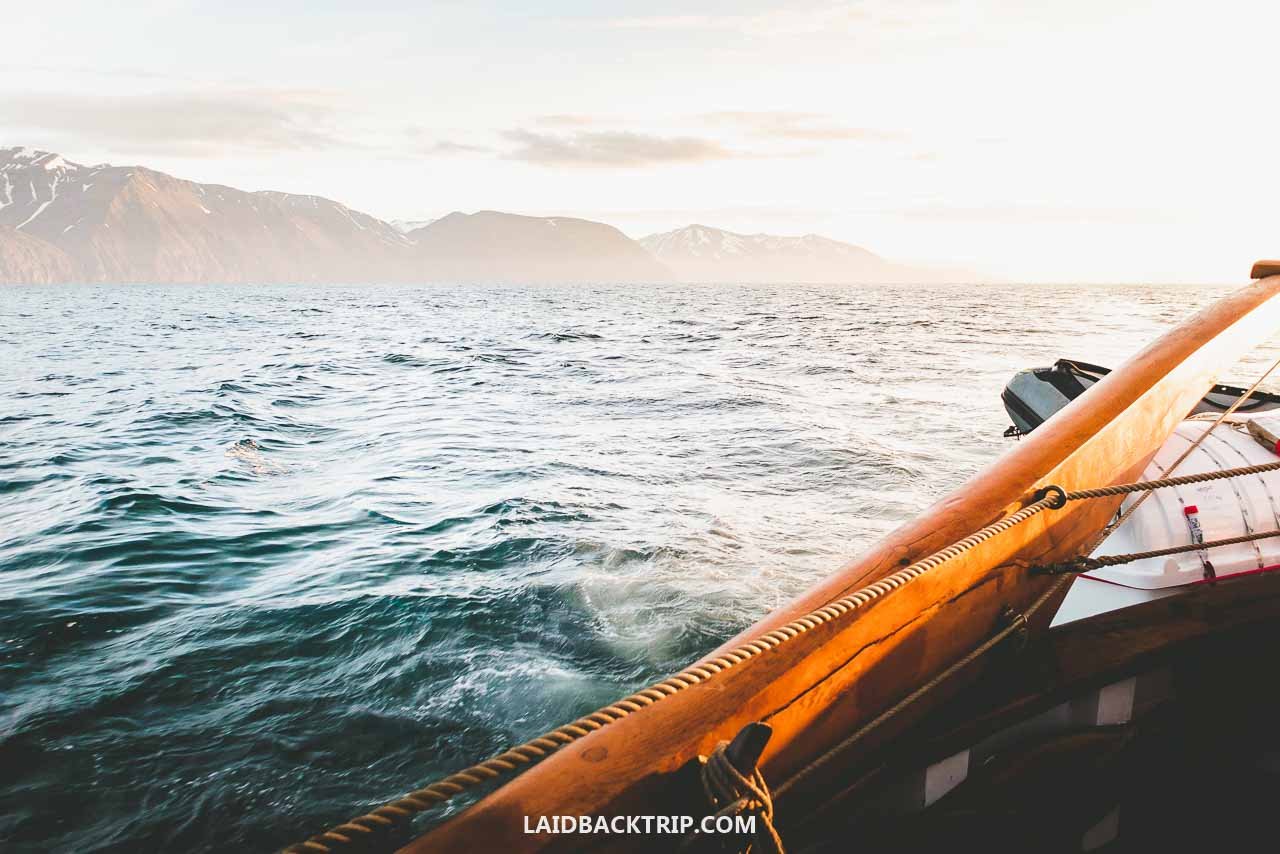
Taking a whale‑watching tour had been on our bucket list for years, and in Húsavík we finally checked it off. Was it worth it?
Since our trip to Iceland was a spontaneous decision, we only had a rough idea of what we could actually see there. Besides the geysers, fjords, and glaciers, we knew this might finally be our chance to go on the whale‑watching adventure we had wanted to do for years. Iceland seemed like the perfect place to spot these gentle giants in their natural habitat. We just didn't know where we should depart from.
As I mentioned, we had been wanting to take a whale‑watching tour for years, but something always got in the way. On our Costa Rica trip, it was out of our budget, and when we were leaving Vancouver for the Canadian Rockies, it simply didn't fit our plans. For years, these marine mammals stayed elusive. But deep down, we knew it would happen someday. When we finally arrived in Iceland for the first time, we felt like the moment had come.
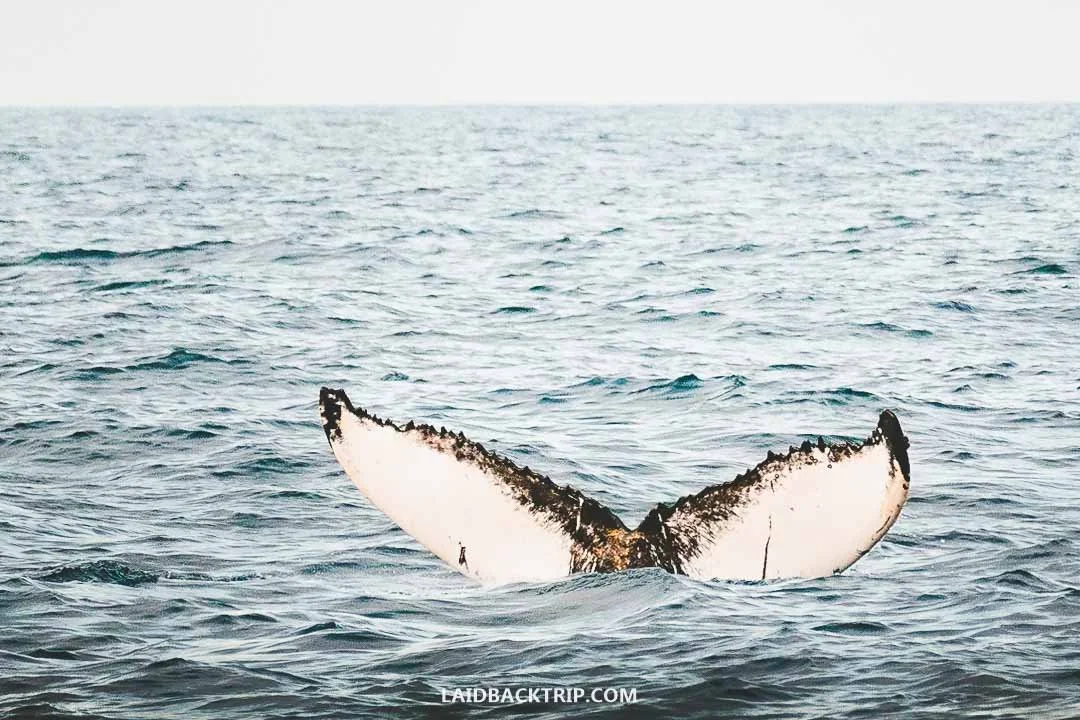
Because Húsavík is known as one of the best places in Iceland for watching whales, it was a big reason we chose to take the tour there.
When we looked up Iceland's best whale‑watching locations, we could choose between Reykjavik, Akureyri, Snaefellsnes Peninsula, or Husavik. Lucie and I talked about it a lot because we had a few days to decide and ended up with two favorites. I leaned toward Snaefellsnes, where there were probably better chances to spot orcas, while Lucie was set on Husavik, which had the highest chance to see whales. That's why Husavik is called the whale capital of Iceland!
For the first couple of days, we stayed undecided, weighing each option. But as we got closer to North Iceland, it looked like Husavik's whale‑watching schedule and location would fit our Iceland itinerary almost perfectly, and we knew it was time to choose. Once that was settled, we booked the tour and hoped we would finally see whales. There was just one small problem when we reached the Diamond Circle. The weather was playing tricks on us. And as we drove along the foggy road to Húsavík in the evening, we started to worry that this might not have been the best idea after all.
Getting to Husavik
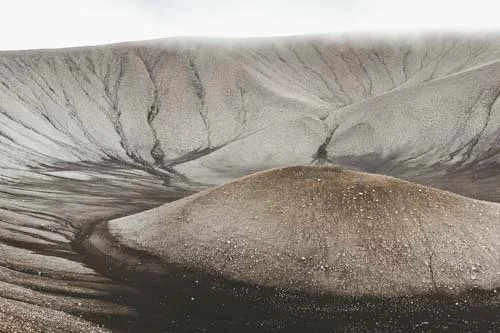
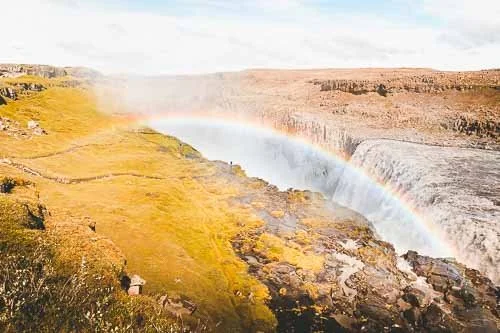
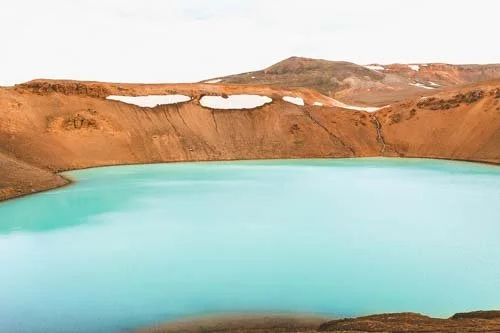
Our journey to Husavik was pretty straightforward. We started the day in the East Fjords, specifically in Borgarfjordur eystri (because we wanted to see there the big puffin colony), and from there crossed into North Iceland. We had just over 300 kilometers ahead of us, and since Husavik was our final stop of the day, we had the chance to explore places like mighty Dettifoss Waterfall, beautiful Viti Crater, and the smelly Hverir Geothermal Area along the way.
By Car
The journey was as scenic as it could be, though very different from what we had seen so far, whether in South Iceland or the Golden Circle. Even though it looked like we had fewer highlights planned on this route, it still took us almost the whole day to cover the distance. And keep in mind, we were driving on paved roads the entire time (so no problem for our small 2WD rental campervan).
The weather kept changing throughout the day. It stayed mostly cloudy, and while it never actually rained, it looked like it could start at any moment. When we reached Lake Myvatn, we stopped only briefly since we knew we'd return the next day. Just past Fosshotel Myvatn, we left Ring Road and headed north on Road 87.
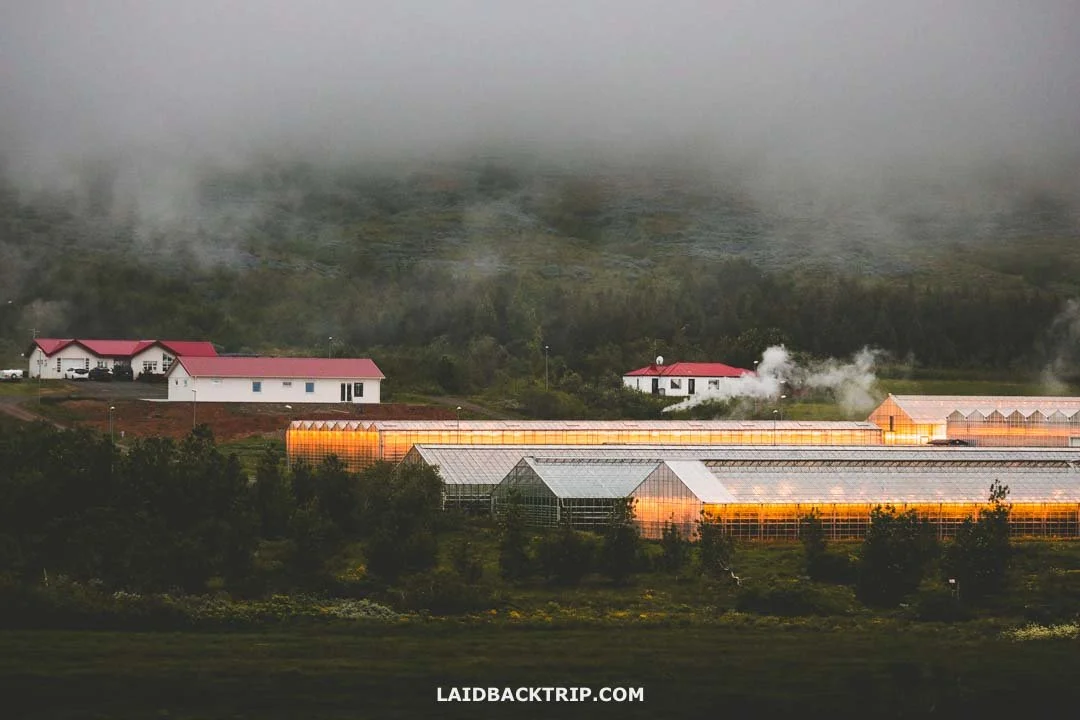
On our way to Húsavík, we passed several glowing greenhouses powered by geothermal energy.
From that junction, it was just over 50 kilometers to Husavik. This was when the weather really turned. We passed through farmland, but the clouds swallowed everything above it. Even though it was summer and the midnight sun was still affecting the days, it got surprisingly dark here, at least darker than anything we had experienced so far.
Fog settled on the road, and with almost no traffic, we felt even more remote than in the Westfjords. We passed a few lit greenhouses powered by geothermal energy, but the idea of fresh salad with cucumbers and tomatoes was the last thing on our mind. With the weather worsening, we were more worried about how rough the sea would be. After 40 kilometers, we turned right onto Road 85, which took us straight to Husavik. Here you can check out rental car prices.
By Bus
Without a car, Husavik can be reached by bus 79 from Akureyri. It's a reliable service that runs two or three times a day between the towns. It's definitely an option for travelers who aren't driving, but I have to admit that, budget aside, reaching Husavik by car was much easier and more comfortable. We also noticed that Husavik has an airport, but these days it's used only for non‑commercial flights.
Parking in Husavik
Finally, we saw the sea, and within a few minutes, we rolled into Husavik. All we needed to do now was find a place to leave the car. Since we arrived on a pretty quiet evening, we found a spot right in Husavik's harbor, directly in front of the office that served as our meeting point. Back then, parking here was free. But now they've introduced fees for parking in the town center and the harbor, so you can still park there, just not without paying.
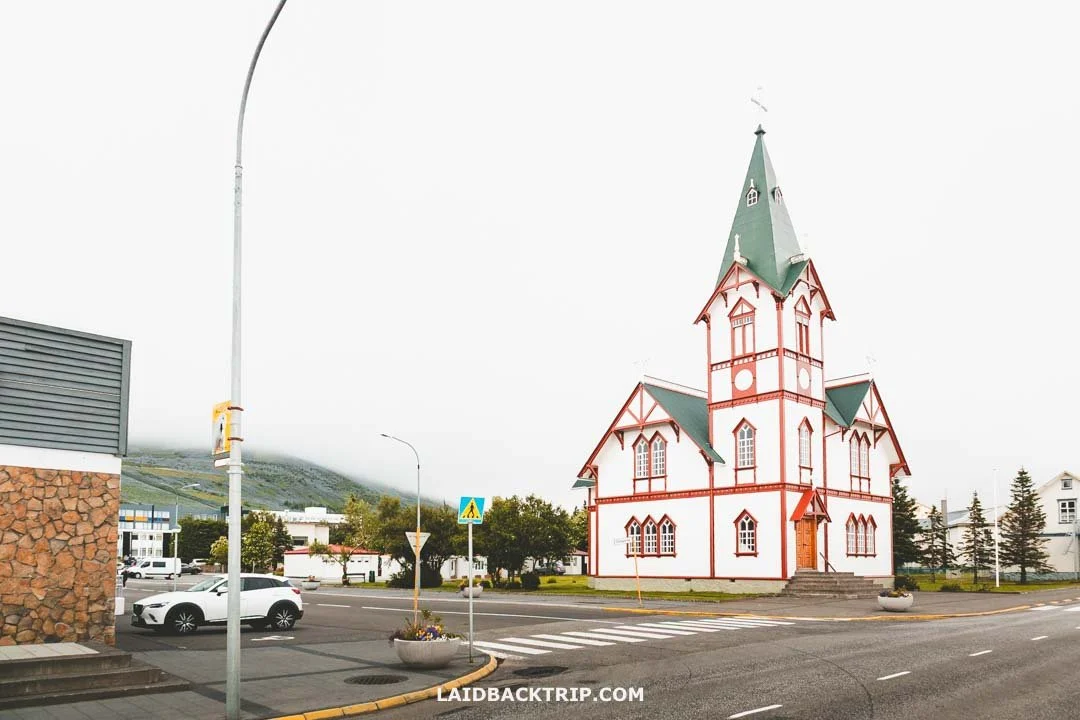
The Húsavík church was one of the most picturesque buildings we found in the town’s tiny center.
There are large free parking lots only a short walk from the center, so if we visited today, we'd leave the car there instead to save a bit of money. The biggest one sits just south of the harbor, about 300 meters away, at these coordinates: 66.04387, -17.34317, and there are a few more near the elementary school or along Storigardur street, again, within a short walk.
How to Take a Whale Watching Tour in Husavik
Since we parked right next to the North Sailing office, all we had to do was walk a few meters to check in, pick up our tickets, and get a quick rundown of what would happen next. Inside the small office, we got the basics, but the main point was simple: be back here 30 minutes before departure. With some time to spare, we headed back to the car and drove to the gas station to fill up the tank so we wouldn't have to deal with it the next morning.
Because our tour left at 9:00 PM (it was one of the midnight sun tours), there wasn't much else to do in Husavik. The Husavik Whale Museum was only a short walk away, but it had already closed. It looked fascinating, especially the full‑sized whale skeletons, and if we had arrived during its opening hours (9 AM to 6 PM), we would have gone in (ticket was 2,650 ISK). The GeoSea Baths were also an option, open from 10 AM to 10 PM, and soaking in geothermal seawater sounded amazing, but again, we were too late. Ticket was 7,490 ISK.

The town of Húsavík is often called the whale capital of Iceland.
We headed back, made some tea, and mentally prepared for the trip. As we stood in the parking lot, Lucie asked if we were actually going to see whales. I joked that with our luck, I wouldn't bet too much on it. But deep down, I knew we'd have to be very unlucky not to see anything. The whale‑watching season in Husavik runs from April to October, and we were visiting at the turn of June and July, right in the middle of it.
North Sailing's website also mentioned their success rate was over 97 percent (and some operators even claim up to 99 percent, depending on the tour). That sounded like a huge number. Still, like with any wildlife experience, we kept our expectations in check. We reminded ourselves that three out of a hundred don't get to see whales, so we stuck to the mantra that wildlife is never guaranteed (like we learned at Pacaya Samiria years ago).
Which Whale Watching Tour to Choose?
There were several companies running whale‑watching tours in Husavik, and from what we gathered, they all offered a very similar experience. There were two main companies, North Sailing and Gentle Giants, and of course some smaller ones like Friends of Moby Dick or Husavik Adventures. We checked the reviews and found pretty much only positive ones for every single company.
What swayed us toward North Sailing was that they had the electric boats, Opal and Andvari (they use a kind of hybrid engine, but during the journey we sailed only on electric power), and we wanted to try that. This option was more expensive, and we weren't sure whether it was a good idea, but the moment we set sail, we knew it was a great decision. The boat cut through the sea like a knife through butter, without the sound of roaring engines.
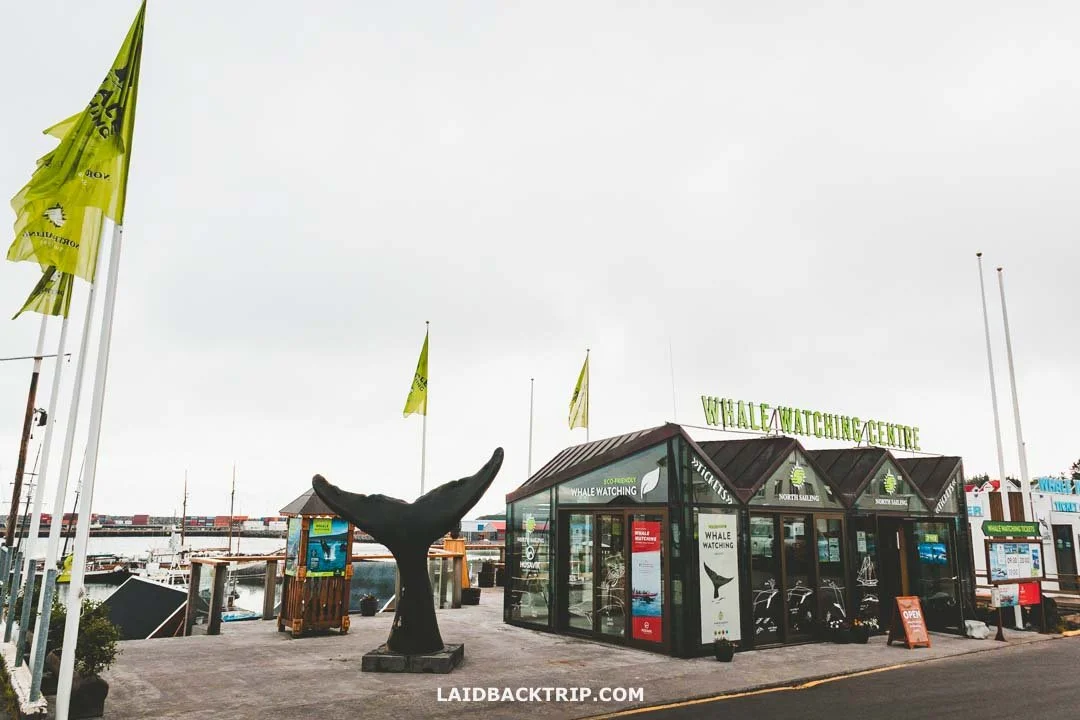
We found the North Sailing ticket office right by Húsavík harbor.
All the companies should follow the guidelines for responsible whale watching (how to search for them, how to approach them, etc.), and from what we experienced, the electric boats were perfect for this job, as they made none of the distressing sounds diesel engines normally would.
We were also curious about the RIB speedboat tours, which are done on rigid inflatable boats (hence the acronym) and are supposed to offer a more adventurous way to see the whales. It was a tempting option, mostly because these boats carry only 12 passengers, while the Opal we took carries around 45 (and Andvari about 75). But in the end, we went for the silent sailing.
Booking Whale Watching Tour in Advance
We were checking the availability of whale‑watching tours departing from Husavik from the moment we landed in Keflavik Airport. We were there at the end of June, meaning the tours were departing frequently throughout the day. Because we didn't know exactly when we would arrive in Husavik, we left it for later. At the time, they still had plenty of open slots, and we hadn't yet figured out which tour we would take.
About two days before we were supposed to arrive in North Iceland, when we finally settled on the Silent Sailing, we booked the tour. They offered free cancellation up to 24 hours before departure, which sounded fair, but we luckily had no issues arriving on time.
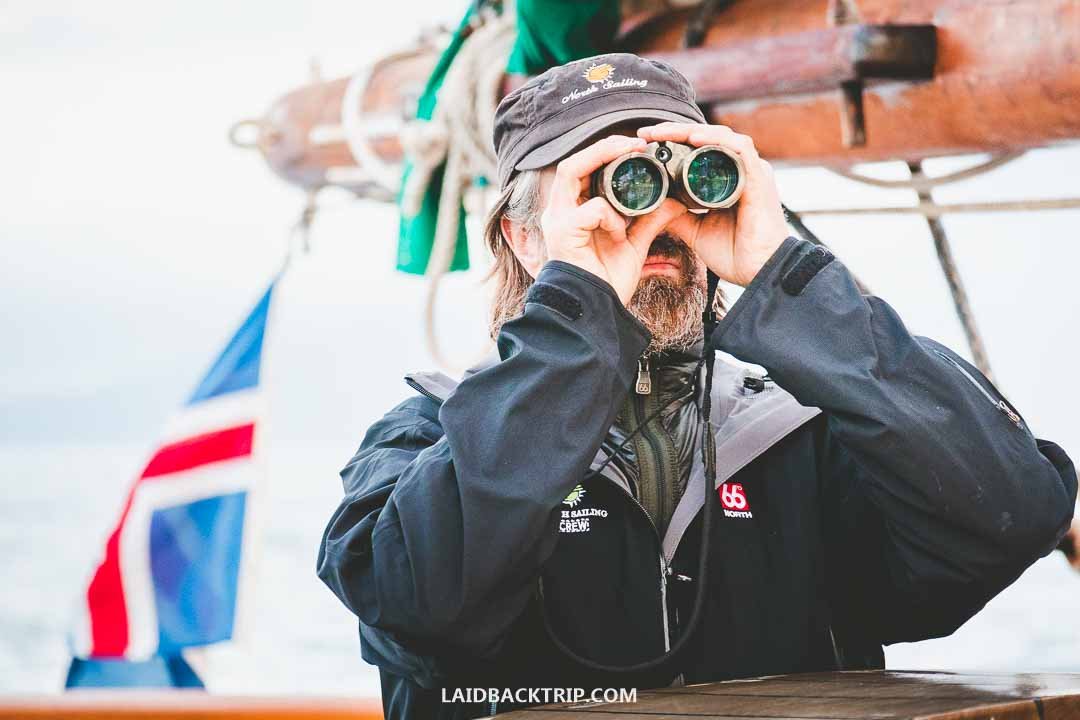
We were lucky to have fantastic guides on our sailing trip, and their knowledge of whales made the whole experience even better.
The whale‑watching tours in Husavik cost from 12,990 ISK to 16,490 ISK, with the electric boats being on the more expensive side as well as those traveling to puffin island. We traveled around Iceland on a budget, and the whale‑watching adventure was the only time (okay, we also went to Blue Lagoon and Myvatn Baths) we splurged a bit. Needless to say, we loved the experience and think it was money well spent.
What to Wear for Whale Watching Tour
Our next question was what we should actually wear for the whale‑watching tour. It was summer, but the evening wasn't exactly warm. They told us we'd get a thermal overall, but it's better to dress warmly underneath, so that's exactly what we did.
We layered up with leggings under travel pants, warm socks, hiking boots, a long‑sleeved t‑shirt, a down jacket, beanie, and gloves. And on top of all that, we put on the thermal overalls they provided. Since we were supposed to be out at sea for hours, we didn't take any chances.
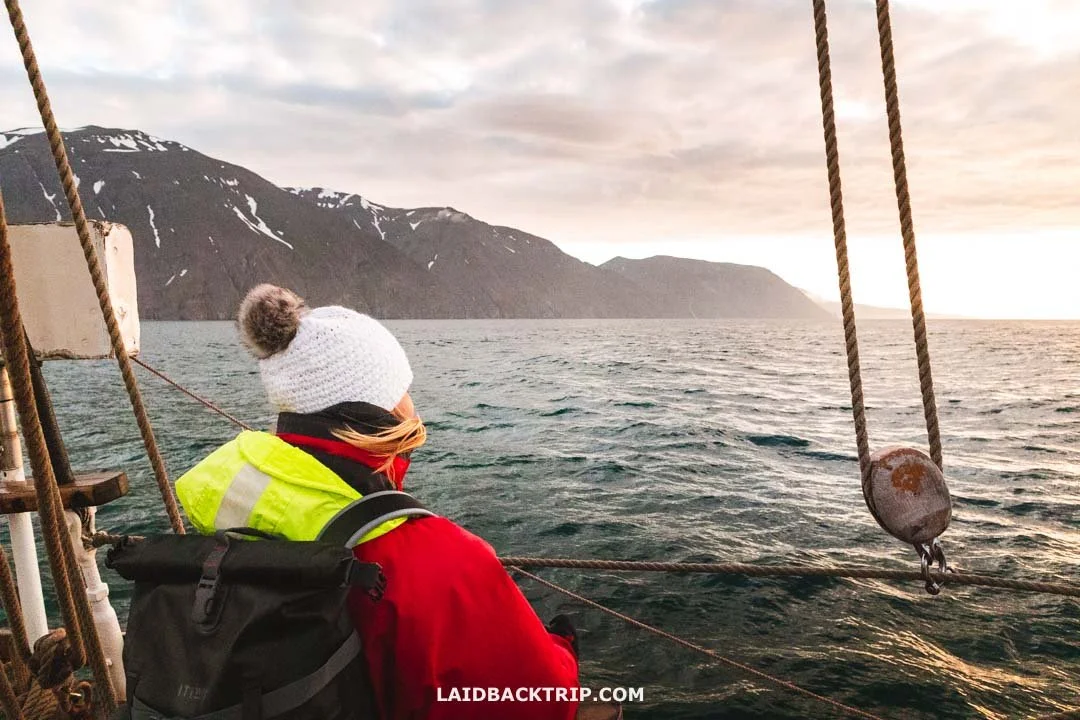
We spent four hours out on the open sea, and those warm overalls really came in handy.
We already knew how cold it could get by the ocean at Diamond Beach or Reynisfjara Beach. Watching us pile on all those layers, I wondered if we were overdoing it. But trust me, we felt perfectly comfortable and warm the entire time. And not once did I question Lucie's idea to wear the down jackets too. And that was on a nice day, at least by Icelandic standards. Really, don't underestimate the cold winds on the open sea.
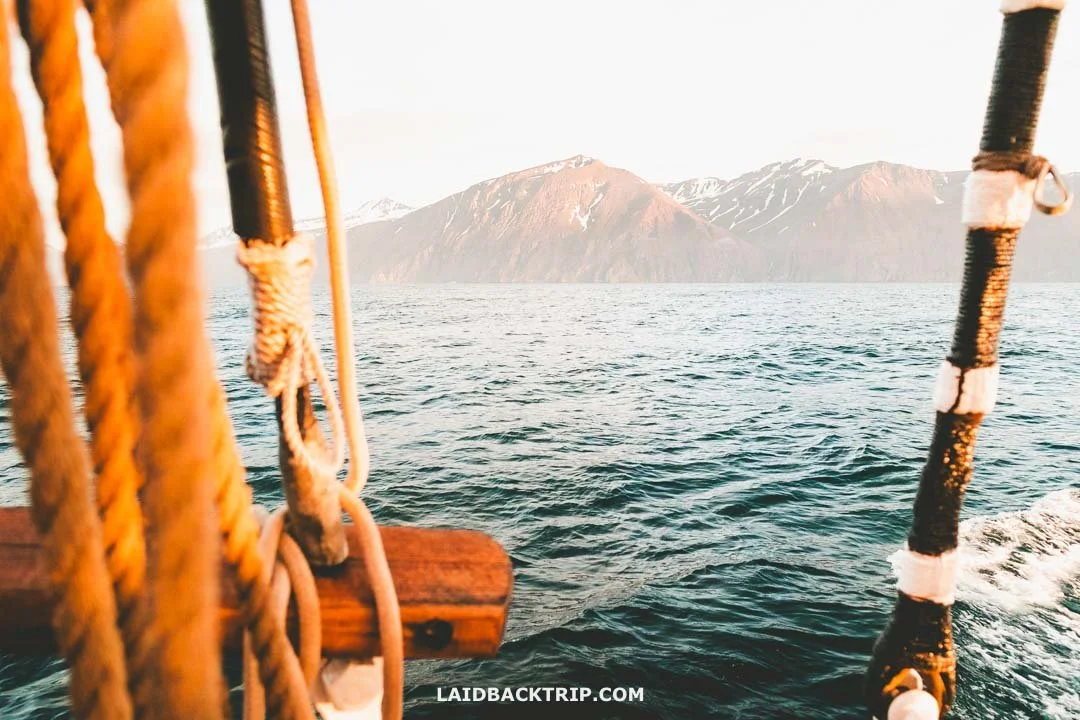
Luckily the waters of Skjálfandi Bay were incredibly calm on the day of our whale watching tour.
I also brought dry bag to keep the camera and valuables safe, and packed my compact camera with a telephoto lens. I had the small Canon 55-210mm lens. I wished I could bring something longer, we were traveling light in Iceland and had to stick with this one.
We also brought motion sickness pills because we're usually seasick just by looking at the ocean (as we learned on the Galapagos cruise). We'd heard stories of people getting really seasick when the sea was rough, but luckily, we visited on a very calm day.
About thirty minutes before the official start of the trip, everyone gathered in front of the North Sailing office. We followed our guide to a changing room where we picked up the thermal overall. Before putting it on, I already felt like a stuffed snowman, but with that extra thick layer, it was a whole new level. I also felt warm, really warm. Then we walked to our ship and waited for the captain to let us board.
Whale Watching on the Electric Boat
As we've mentioned before, we opted for the Opal boat (now the tour is on Andvari). It was our first experience with an electric ship, and at the beginning, we couldn't believe the vessel would be that silent the entire time.
In the past, we'd done many boat trips, and quite often the boats made deafening noises the whole journey. Not this time. We kept waiting to hear the roar of the motor, but it never came. The boat was about half full, so we had more than enough space, though it looked like even at full capacity everyone could easily enjoy the views.
The beginning of our journey was very peaceful, but that's what we expected. Despite the cloudy conditions, the sea outside the harbor looked really calm. Only our minds were restless. As we moved away from the shore, the clouds finally gave way to some light. We still had no idea how the whole trip would turn out, but that little detail lifted our spirits.
The evening light was soft, we could see the mountains around, and Skjalfandi Bay was starting to open up. The scenery was as dramatic as in any other part of Iceland. Time slowly passed, and we entertained ourselves by watching puffins and other sea birds hunting for food. We also got live commentary from our guide, who appeared knowledgeable (yet casual) and passionate about marine life.
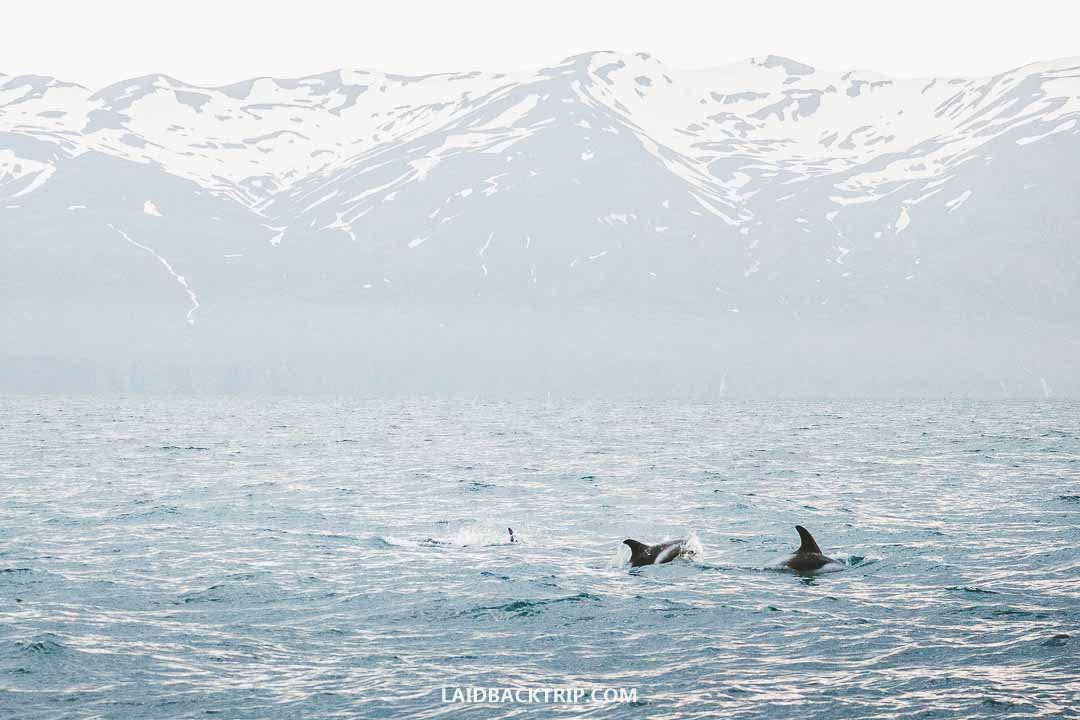
After an hour or so of sailing across Skjálfandi Bay, we spotted dolphins.
After some time, we spotted dolphins, and we could feel the rush of excitement on board. They swam playfully with us for a while until they got bored of our company and disappeared. Normally, we would have been overwhelmed, but this time we came to see a species of one of the largest mammals in the world. And they were simply nowhere to be seen.

Everyone on the boat, including us, was quietly hoping we'd finally see the whales.
One hour passed, then almost two, and we still had no luck. We could see that the crew was working really hard to make our day special. Even though no one wanted to admit it, the mood on board slightly shifted from super‑excited to wondering whether we really wouldn't see whales in Husavik.
The guide continued to tell us more about these gigantic mammals, but one can only hear so many stories about whales, right? "What were the chances, Lucie? Two or three out of a hundred don't get to see them? It's gonna be us, right?"
Watching Humpback Whales in Skjalfandi Bay
And then, one of the guides finally spotted whales in the distance. The mood on board changed instantly. Everyone jumped with excitement and pointed toward where the whales were supposed to be (which meant a few different directions).
We couldn't see anything yet because we didn't have binoculars, and my telephoto lens wasn't helping either. I didn't mind. I wanted the first sight to be with my own eyes, not through a camera. The boat moved toward them quietly, almost as if it wasn't sharing our excitement.

After two long hours out on Skjálfandi Bay, we finally saw humpback whales!
Once the rest of the crew confirmed what he saw, it became clear that a pod of humpback whales was swimming out there. We were getting closer. Maybe they were even heading toward us. And suddenly, we saw them. They were still a bit farther away, but it really looked like they were coming in our direction. The boat drifted silently. Then we heard the unmistakable sound of a blowhole releasing a huge cloud of mist and air, and a whale broke the surface. It was incredible. Then it happened again. Again. And again.
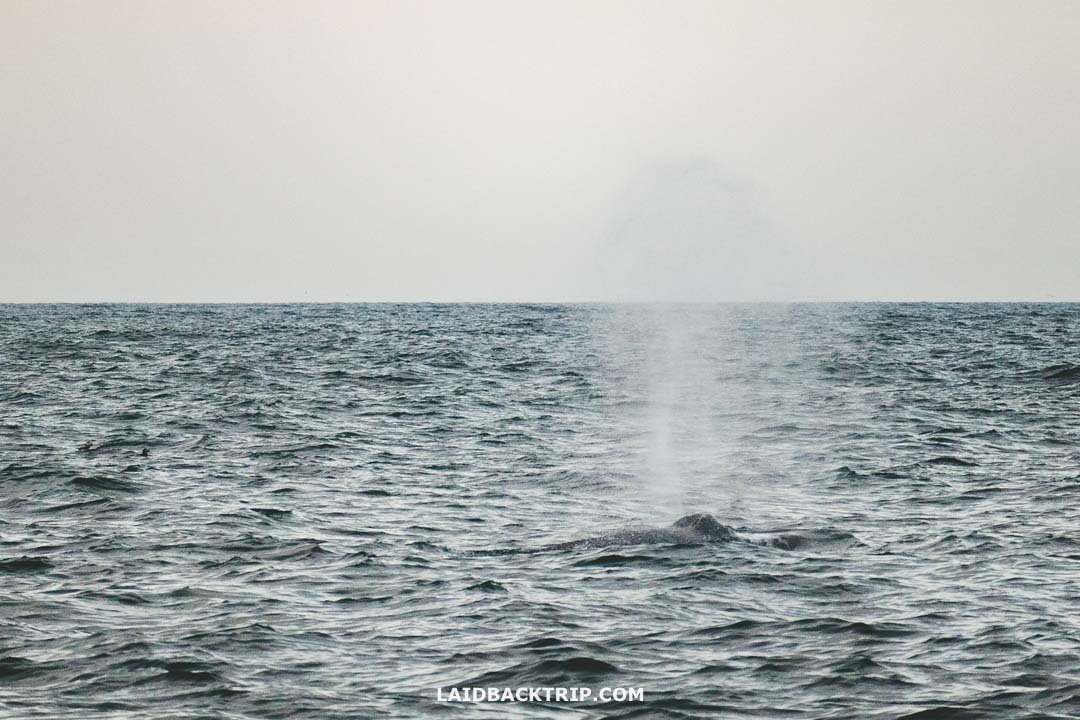
A humpback whale blasting warm, wet air through two blowholes upon surfacing, creating a visible mist.
Every time a whale exhaled, or a fluke appeared, or someone spotted a dorsal fin, you could hear excited whispers and frantic camera clicks. The ship floated quietly, and the whales kept coming closer. Since we were the only boat around, the whole experience felt calm and intimate, and we hoped the whales felt the same. Because suddenly, they were right next to us. I never imagined we'd see them that close.
I don't know how long it lasted, maybe thirty minutes or so. It's impossible to tell because we were completely absorbed in the moment. All we know is that we watched these majestic animals in awe, and time flew by. Earlier, time dragged like a long workday, but now it was racing ahead like there was no tomorrow.
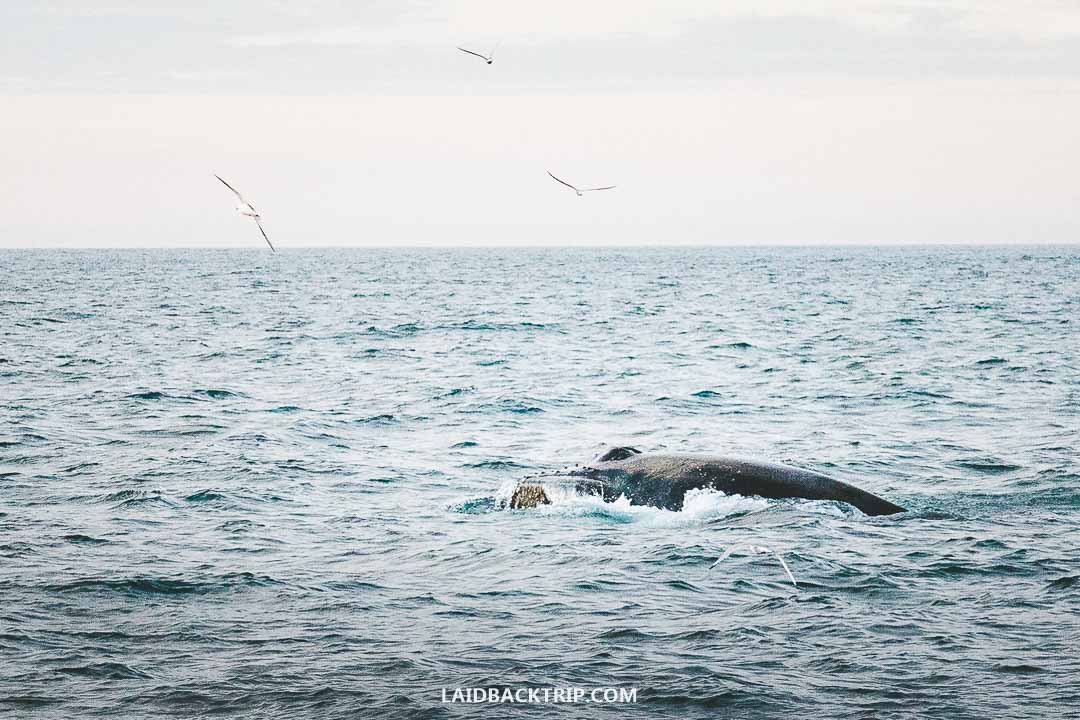
Another humpback whale we spotted during our whale watching trip.
In my head, I kept repeating the guide's line: "The humpback whale is a large marine mammal known for its long pectoral fins," but seeing them right beside us gave that sentence a whole new meaning. Some were massive, and even the smaller ones weren't exactly small. It was an incredible sight. The guide also mentioned that humpbacks come to Skjálfandi Bay to feed on krill and small fish, and they're known for their complex songs, breaching, and tail‑slapping.
Eventually, it was time to return to Husavik. We sailed farther than usual, but we didn't mind. We'd had plenty of time with the whales, plus a hot chocolate and a cinnamon bun from the crew. The whales were gone, but the scenery remained. The sea stayed calm, making the ride smooth. The sun finally broke through the clouds, giving everything a soft, relaxed glow. It was a beautiful evening and an unforgettable experience.
Just when we thought the show was over, a humpback whale far in the distance breached and landed with a massive splash. Then it did it again. It felt like a proper goodbye. After that, it was just our boat and the sea. Everyone stayed quiet, watching the sun that seemed like it would never drop below the horizon. Until Iceland, we'd never seen anything like that.

On the way back to Húsavík, we could enjoy the sun setting over the Atlantic Ocean.
Even on the way to the campground, we kept replaying everything that had happened. It had been quite an eventful journey. We saw "only" humpback whales, but it's not unusual to spot orcas, blue whales, minke whales, and other species in Husavik. I hoped for orcas, but maybe next time.
Back at the office, they told us the whale‑watching tour usually lasts about three hours. But since it took longer to find them, we spent about four hours out on the water. We had no plans afterward, so we didn't mind. And with such a calm evening and smooth sea, we were happy to spend extra time sailing across Skjalfandi Bay.
When we got back to Húsavík, it was already 1 AM. It was almost as bright as when we left, the only difference being a few lights turned on and some locals heading home after a fruitful evening at the pub.
Where to Stay in Husavik
When we were finally back sitting in our car, we had two choices. First, we could just drive to the nearby Husavik Campground. It was a sensible choice, since we were once again on our feet since early morning and the campground was located just over 500 meters from the town center. Normally, we would have gone for this option, but since we planned to continue farther along Road 85 to eventually reach Asbyrgi Canyon, we decided that we would stay elsewhere.
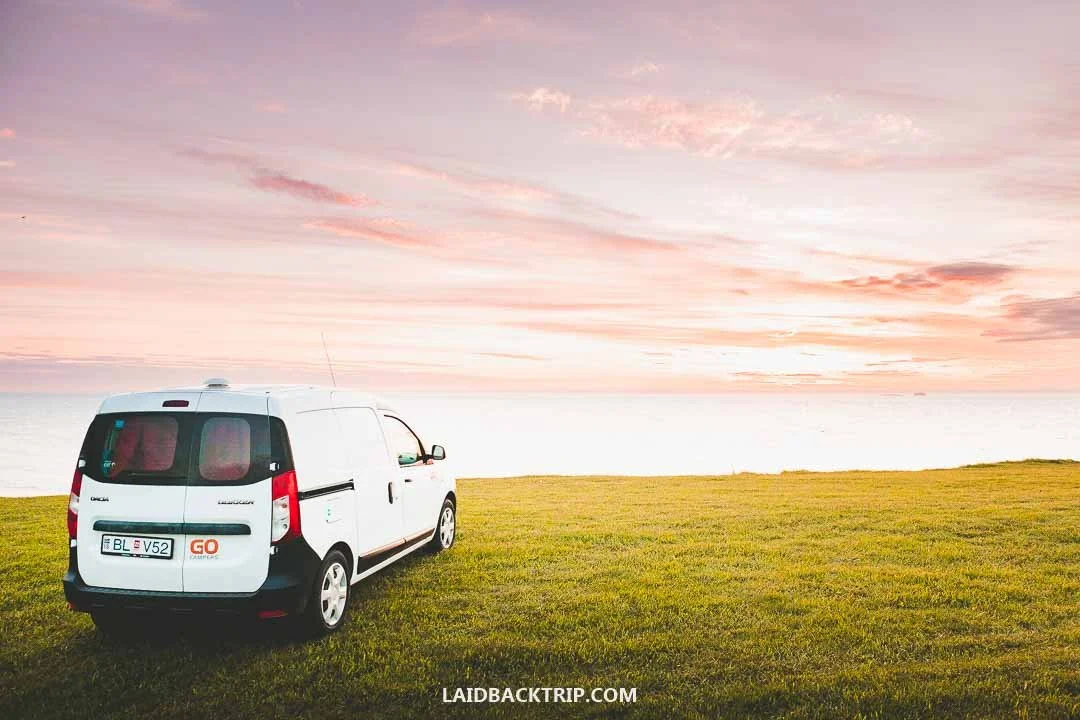
After we got back, we drove to a small campground north of Húsavík, and there, at last, we watched the sunset.
That elsewhere was about 20 kilometers north, where we found a charming campground called Camping 66.12 North. It had regular (clean) facilities, cost 2000 ISK per person, but our favorite part was that it was located right by the sea.And because we arrived way after midnight, we were about to catch a sunset there, at around 2 AM. There were just three other campervans parked, and the campground felt incredibly quiet. And the sun was finally about to dip below the horizon.
Obviously, Húsavík, being a popular tourist town, had some nice hotels like Hotel Husavik and the beautiful Fosshotel Husavik, and we also drove past some lovely guesthouses outside town like Tungulending Guesthouse. But we were really focused on camping in Iceland and saved the hotels only in case something went wrong. And since everything went according to plan while we were in Húsavík, we could enjoy the camping experience.

Discover Grjotagja, a tiny lava cave hiding a geothermal pool and the filming location of Jon and Ygritte's famous Game of Thrones scene.