How to Visit Hverfjall
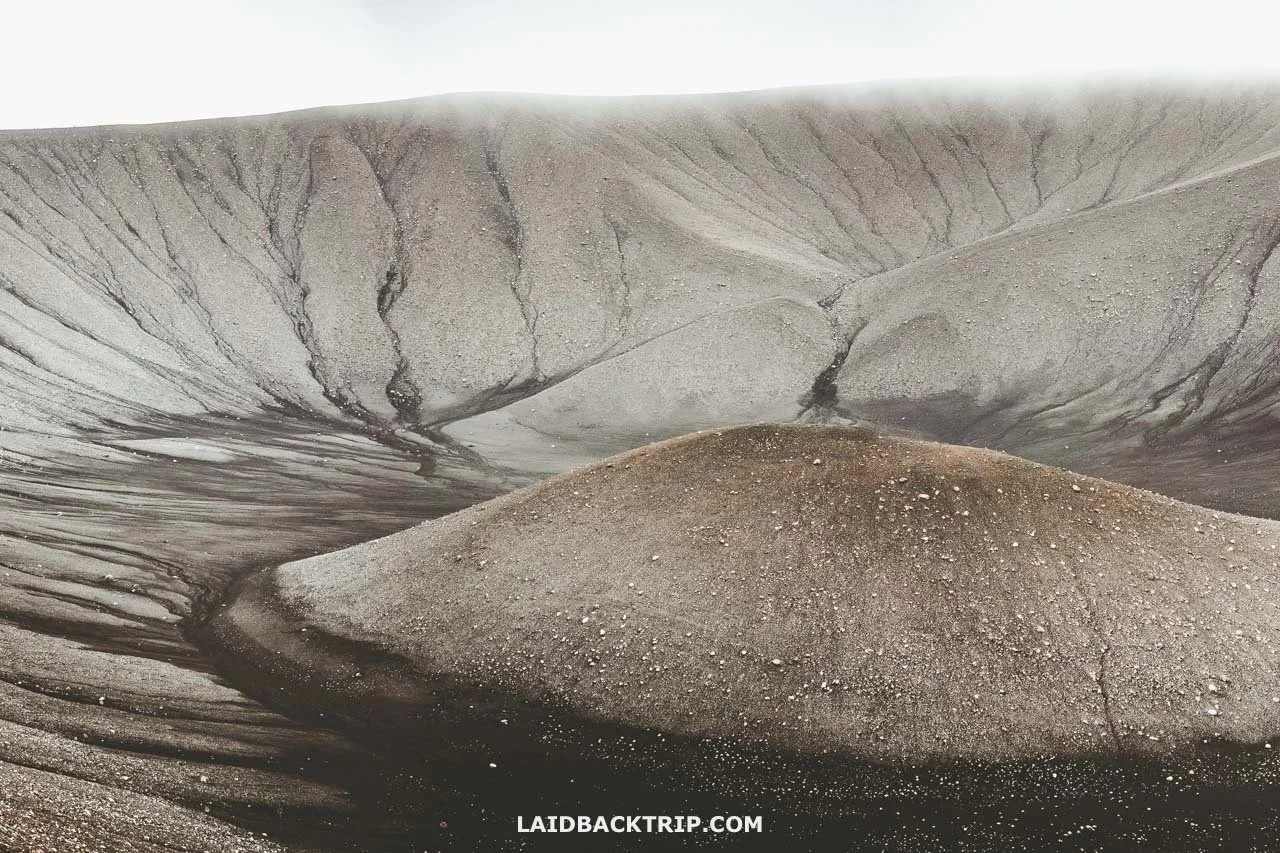
Hverfjall is a beautifully symmetrical tephra cone just east of Mývatn.
Hverfjall is one of the lesser‑known spots in North Iceland, but we stopped here anyway because the idea of hiking its crater rim trail sounded too good to skip.
By the time we reached Hverfjall, the weather had gotten worse. Way worse. When we pulled into the empty parking lot, we could see that the crater rim was almost swallowed by low clouds, and to make things even more fun, it started to drizzle. And from drizzle, rain's never too far. Mentioning that it was also pretty windy at this point of our Iceland trip felt like stating the obvious. And we simply weren't sure if hiking Hverfjall in these conditions would be worth it.
Less than 10 minutes earlier we were hiding inside Grjótagjá Cave, but here the trail we saw from the car looked completely exposed to the elements. We were still pretty dry, and the idea of getting soaked didn't sound too exciting. But we were already there, sitting in our campervan, itching for a bit of walking. And I have to admit that with the gloomy weather, the contrast of gray clouds against the black volcanic landscape looked spectacular.
Even though we weren't sure this was a great idea, we decided to at least climb Hverfjall and see if it really was the most beautiful tephra crater in Iceland. As for the crater loop, we'd decide later. We didn't just want to see the volcano up close, but also get a better view of the Mývatn area. And we also had a feeling that since Hverfjall was a bit off the beaten path, we wouldn't run into any crowds and could enjoy some quiet moments on the trail.
Hiking the Hverfjall Trail
With about 500 meters one way and an elevation gain of just under 100 meters on the HV1 trail, getting to the top of Hverfjall looked like a pretty easy task. We also thought about doing the optional 3.2‑kilometer loop around the crater rim, but with the clouds hanging low, we left that decision for when we reached the HV2 trail. Either way, from the parking lot there was only one direction to go, and that was up.
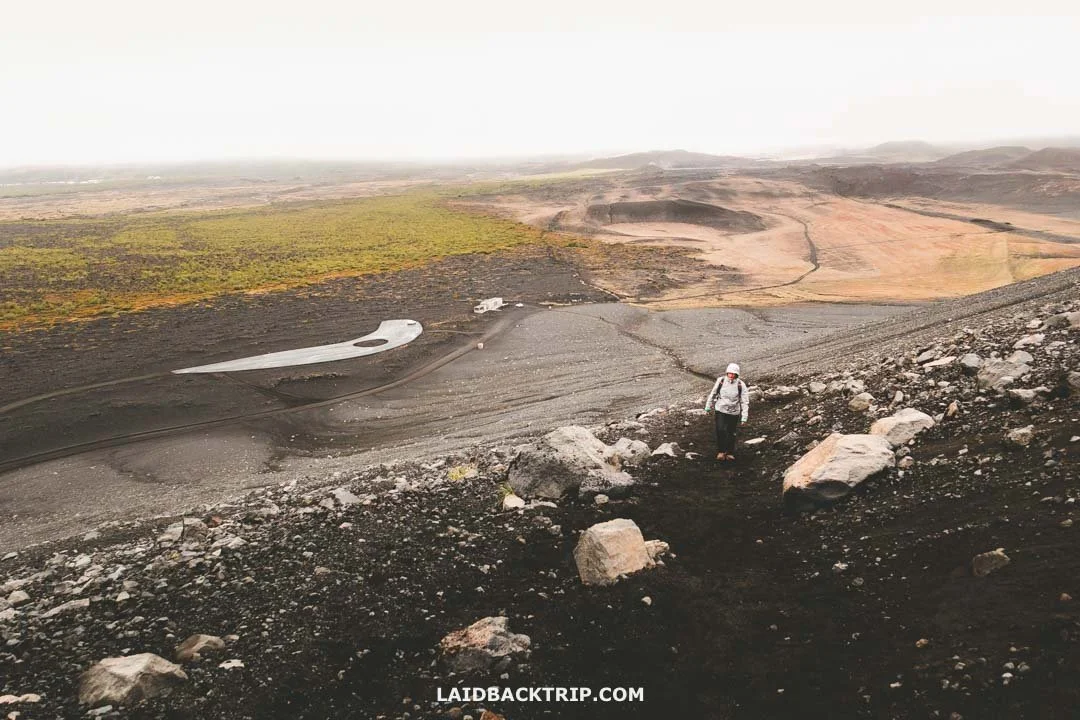
Hiking to the top of Hverfjall was fairly easy.
With our rain jackets on, we started climbing. The trail was easy to follow, and while the slope was a bit steeper than what we'd hiked so far (like the beautiful Waterfall Way or Hengifoss Trail), it wasn't anything difficult. And since it really was just a half‑kilometer walk, we reached the top in under ten minutes. We stopped a few times to turn around and enjoy the views, but knowing they'd be even better from the rim, and that we'd have to return the same way, those breaks were short, just enough to satisfy our curiosity.
From up here, we could finally see how huge Hverfjall really was. The crater is about a kilometer in diameter, and to me it looked much larger than I expected. Unlike Víti we visited yesterday or Kerið we saw on Golden Circle, there's no lake inside, so the whole view was as barren as it gets. The only feature that stood out was a mound rising from the center of the crater.
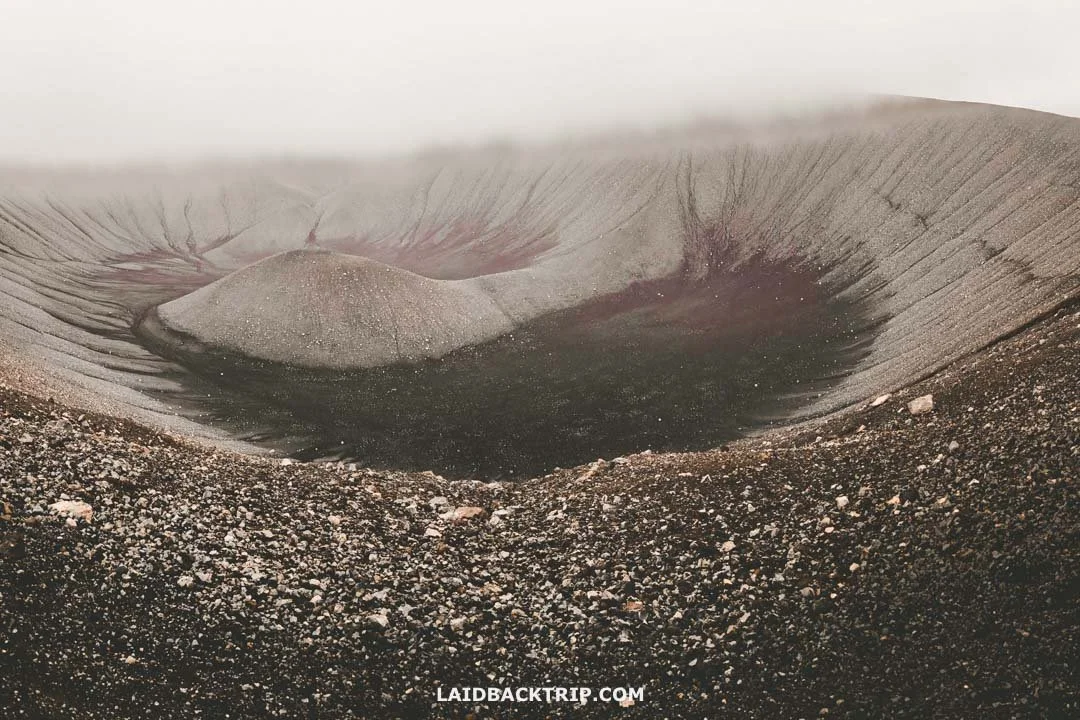
Once we reached the top of Hverfjall, we could finally see just how massive the crater actually was.
Hverfjall turned out to be one of the most straightforward lollipop trails we've ever done. With the first part behind us, all we had to do was follow the rim. We could go left or right, but it didn't seem like much of a difference. We chose clockwise simply because the trail continued upward in that direction and we hoped for better views. There's no official trail down into the crater, but even if there were, we would've stayed on the rim for the scenery alone.
We continued walking through this desolate landscape, heading straight toward the clouds. The walk was incredibly monotonous, but the views were worth it. We'd already hiked across Sólheimasandur, but that was a flat plain. Here, we were about 180 meters above Mývatn. Looking north, we could see Mývatn Baths (a good alternative to the famous Blue Lagoon), which we planned to visit later that day, and to the right was Námafjall Hverir, where we'd hiked yesterday.
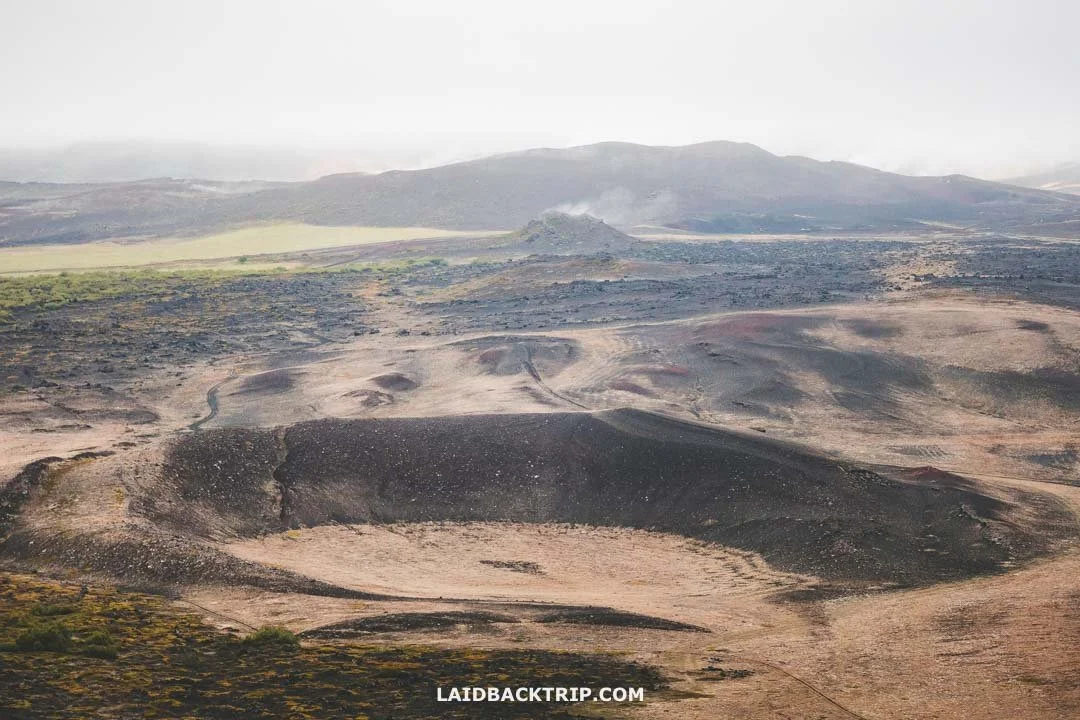
From the top of Hverfjall, the views over the Mývatn Basin were pretty spectacular.
Hverfjall formed roughly 2,500 years ago during a violent phreatomagmatic eruption in the Krafla Volcanic System. Rising basaltic magma met shallow lake water and groundwater near Mývatn, triggering explosive steam‑driven blasts. These shattered the magma into fine ash and rock fragments called tephra, which quickly piled up around the erupting fissure, creating the massive, nearly symmetrical tuff cone we see today. The symmetry was one of my favorite parts, although you can only really appreciate it from above. Today, Hverfjall is considered dormant.
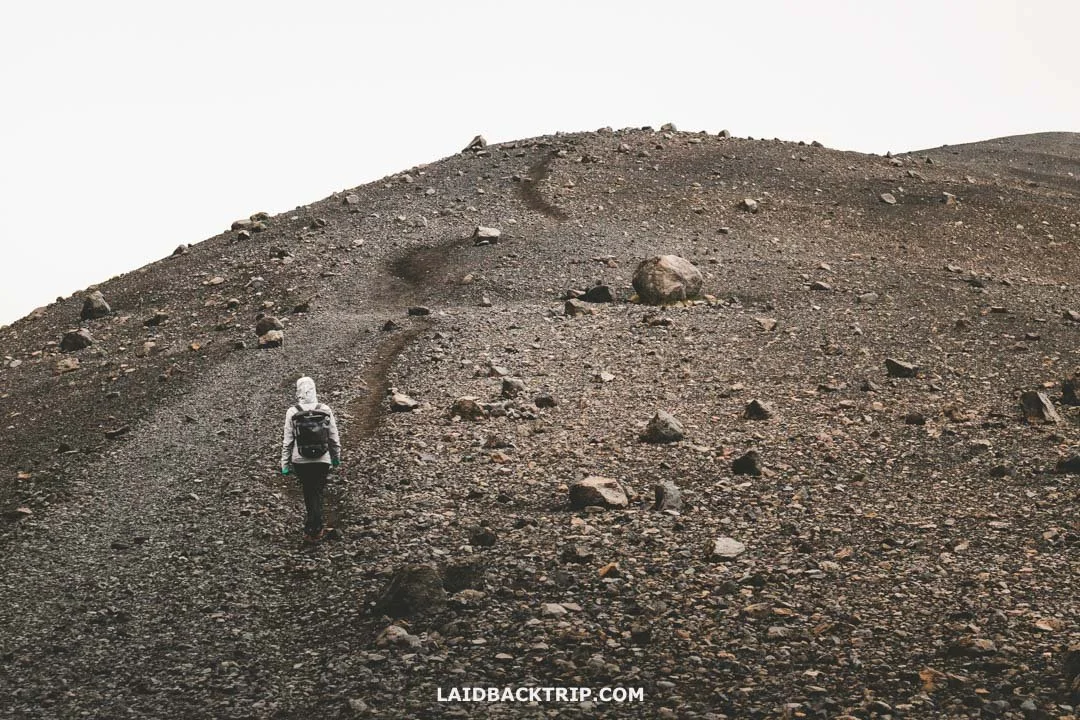
The Hverfjall crater trail was really easy to follow the whole way.
On the far side of the crater, visibility dropped and the wind picked up. We were pretty exposed up here (a good windproof gear was essential on this trip), and while it wasn't as bad as the South Coast or the Westfjords, the wind made walking harder. The good thing was that the trail was wide and easy to see, even without markers.
So walking around the crater felt safe as long as the gusts weren't strong enough to push us off balance, which, when we were there, weren't.
World Nomads provides travel insurance for travelers to cover their trip essentials, including sports and adventure activities.
SafetyWing is affordable travel insurance for backpackers, long-term travelers, and digital nomads.
When we came out of the clouds on the southern side, we could see Dimmuborgir not too far away. From up here, the lava field didn't look particularly interesting, but as we learned an hour later, hiking through it was a completely different story (as was Eldhraun trail we did earlier). Since it was already later in the day and we still had plans, we picked up the pace and enjoyed the views without too many stops.
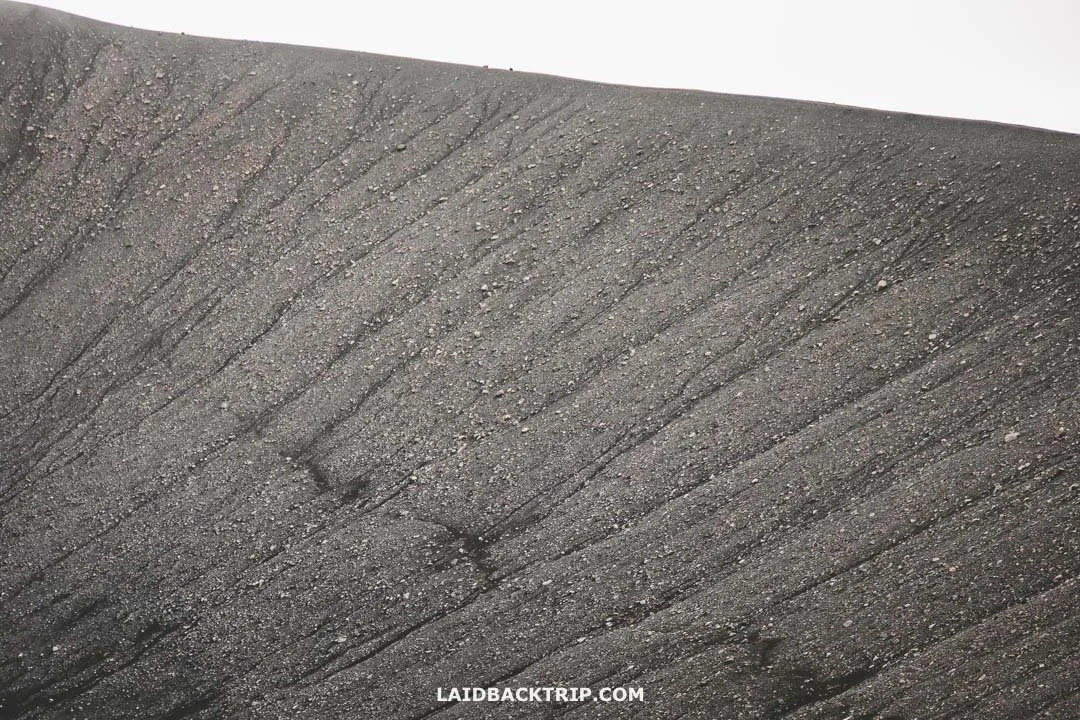
On the second half of the Hverfjall loop, the trail was mostly downhill.
On the southern side of the crater was also the turnoff for the HV3 trail, the south access point to Hverfjall. This 600‑meter route climbs about 130 meters and is supposed to be steeper and more challenging because of loose terrain. From that parking lot, a 1.7‑kilometer flat trail continues across the lava field to Dimmuborgir (M3 trail). We briefly thought about combining both places in one go, but since we'd have to walk back the same way, we decided to visit them separately.
In about 45 minutes, we completed the loop and, after one last look into the crater, headed back to the car. The descent took just over five minutes since we'd already enjoyed the views from above and didn't need extra stops. All in all, it took us just over an hour to climb Hverfjall and walk the rim, including quick photo breaks. We walked faster than usual while the conditions were still fairly good. On a sunny, windless day, I can imagine we'd have spent a bit more time up there, like we did at Dettifoss.
When to Visit Hverfjall
We visited Hverfjall in summer, at the end of June, on a day with what I'd describe as not‑the‑most‑inviting weather. It was cold, windy, cloudy, and it rained from time to time (luckily not as hard as at Skaftafell). And with Hverfjall simply not being as popular as some of the other sights in the area, it meant we pretty much had the crater to ourselves.
I have to admit that hiking through this lunar‑like scenery without anyone around felt almost eerie, and while coming here on a warm(ish) summer day would've probably been better, we still thoroughly enjoyed the whole Hverfjall experience.
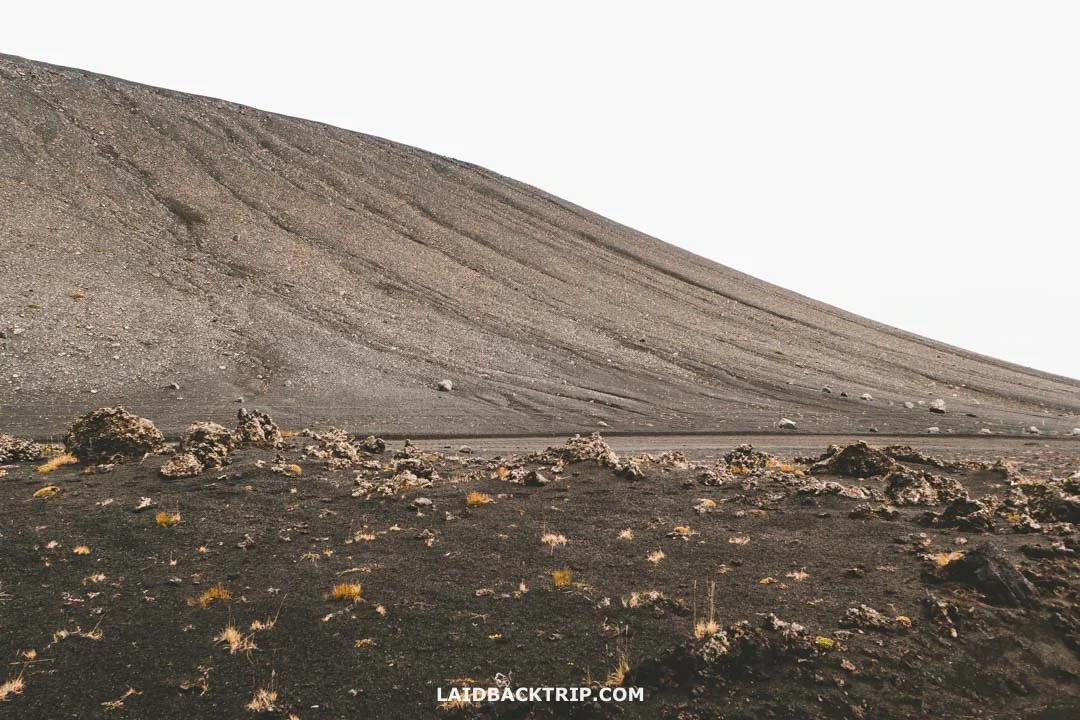
Even though we showed up on a cloudy rainy day, we ended up really enjoying the Hverfjall trail anyway.
I could imagine that because of the great views, Hverfjall would also be a great place to catch a sunset or sunrise. In summer, though, that would mean coming here around midnight. We did something similar at Reynisfjara and Gullfoss and it was great, especially for avoiding crowds, which in this case wasn't really needed. On the day we went, however, there was no sunset because of the clouds (and we were still early in the day anyway).
I've seen some winter photos with Hverfjall covered in snow, which means the crater walk is doable even in those conditions, but obviously not without proper winter gear (and a 4x4 car just to reach the trailhead). I have to say that the black‑colored volcano with a white blanket looked unreal.
Getting to Hverfjall
Because Hverfjall was located in the North Iceland region, it actually took us seven days to get there from Reykjavík. Via the route we followed, it was about 800 kilometers, though traveling through Akureyri would've been just under 500 kilometers. There was simply so much to see along the way. The day before, we did the Diamond Circle loop and finished well after midnight in a small campground north of Húsavík, about 60 kilometers from here, after taking a whale‑watching tour from town.
Since Hverfjall was a detour from the Ring Road, we first had to drive through Reykjahlíð, about 6 kilometers away. Before that, we stopped at Grjótagjá, which added about five kilometers to the journey.
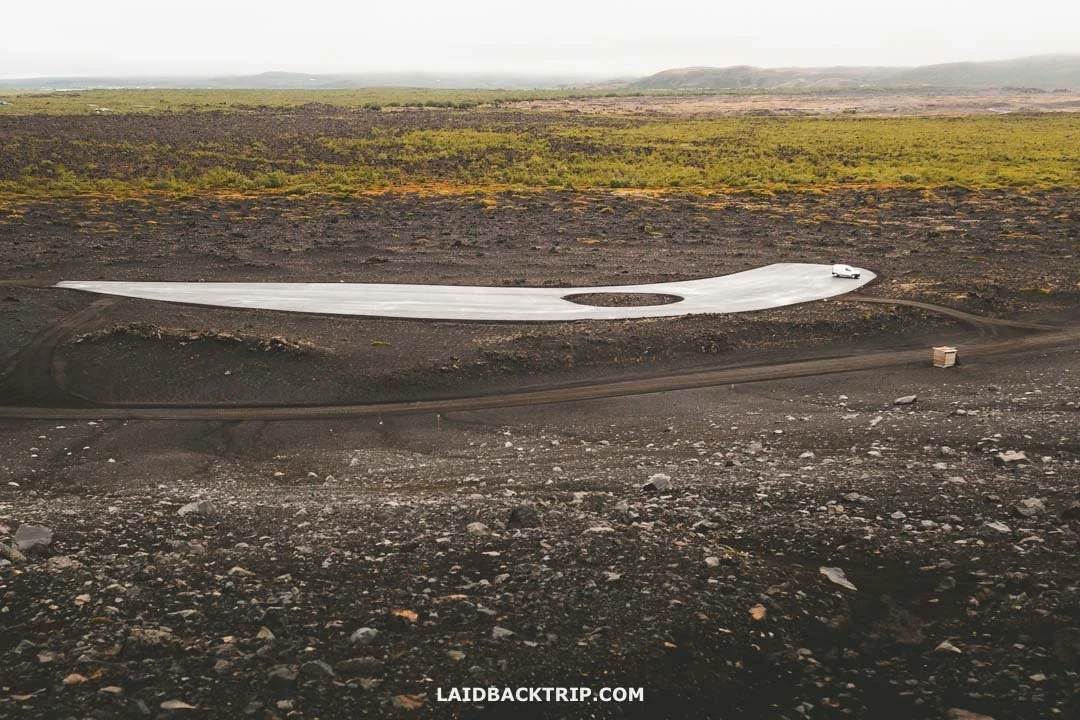
Even though the access roads were gravel, the parking itself was nicely paved.
Road 848, which goes around the southern side of Lake Mývatn, was paved, but once we turned onto the access road to Hverfjall, those last 2 kilometers or so were on gravel. It was in fairly good shape and easy to drive even in our small 2WD campervan, especially since we were there in summer with no ice or snow (this was also true for places like Fjaðrárgljúfur or Dyrhólaey).
Parking at Hverfjall
The main parking at Hverfjall, located on the northwest side of the crater, now costs 1200 ISK per car, paid either through the Parka app or by scanning a QR code. It's no longer free like it was when we visited. I know Hverfjall itself remains free to explore, so it's really just this fee, but I have to admit that it's a fee nevertheless.
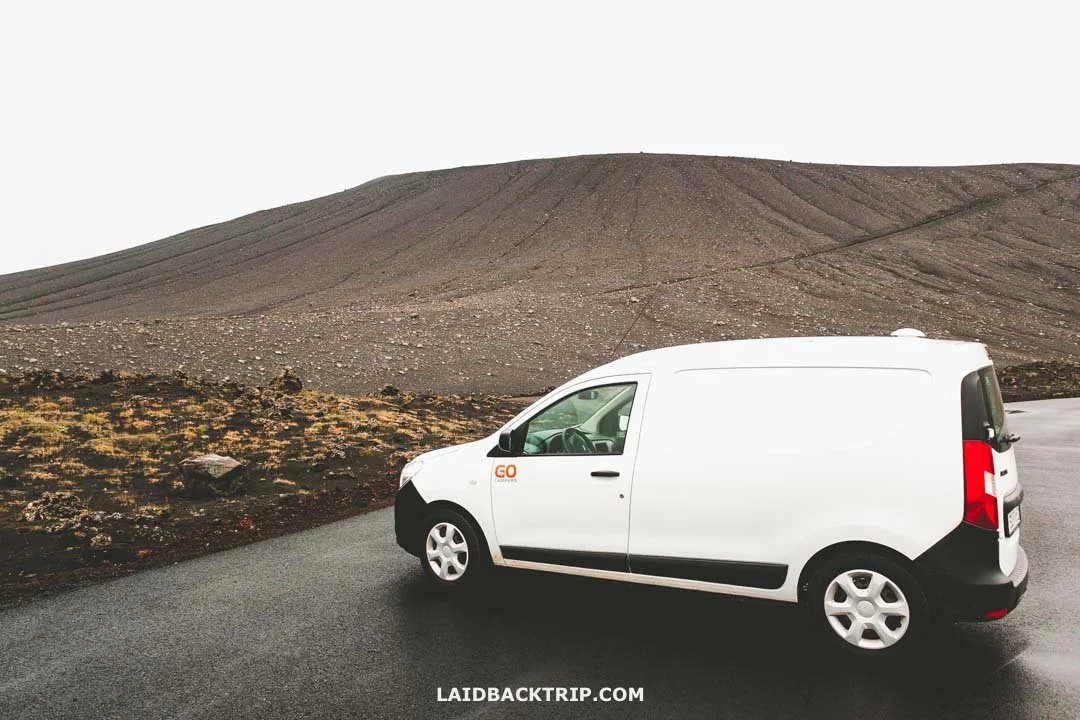
When we pulled in, our car was the only one at the Hverfjall parking.
There's also a second, less popular parking area on the southwest side of Hverfjall, which is supposed to still be free. As I already mentioned, the trail starting from there is more challenging, but it could be a good trade‑off for skipping the parking fee. I'd be more concerned, however, about what condition that access road would be in.
Staying Near Hverfjall
After we got back in the car, it was still early in the day, so we kept traveling and explored Dimmuborgir first and then soaked in the Mývatn Baths. Once we were done there, we thought about staying in Reykjahlíð, which with its big campground and a few nice hotels, like Sel Hotel Mývatn or Fosshotel Mývatn, works well as a base for exploring the whole area.
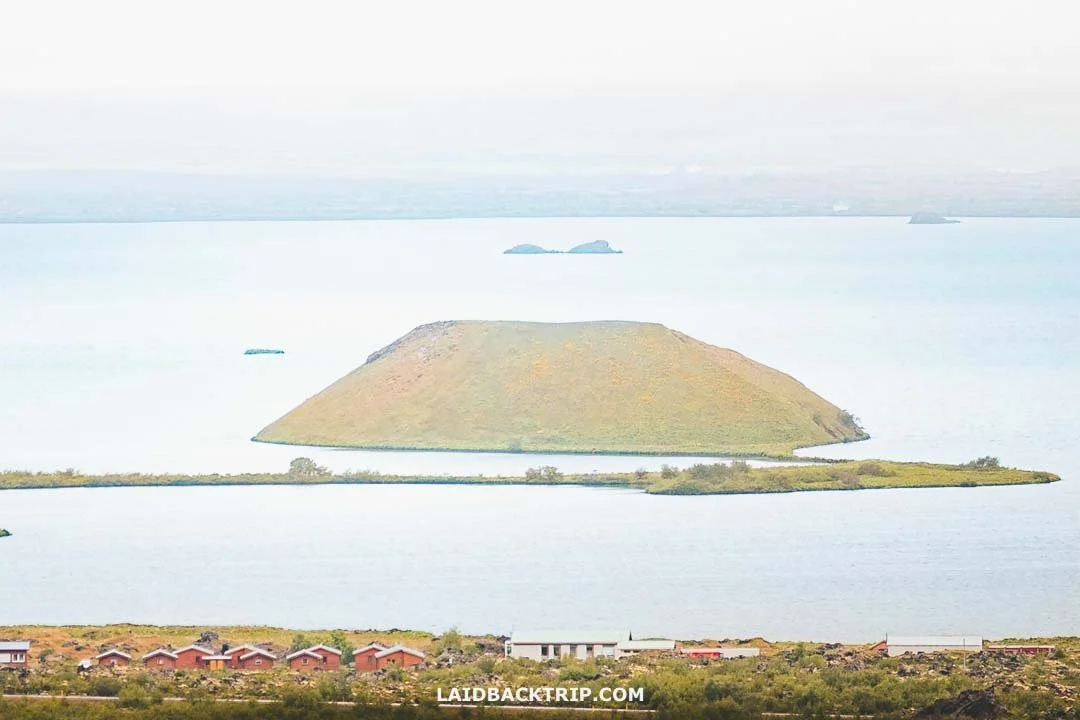
Standing on Hverfjall, we could spot accommodations scattered along the shores of Lake Mývatn.
The idea of camping on the lake shore sounded great, but because we were worried about the midges that often plague the area (bring a bug spray), we decided to stay somewhere else. We felt the same way about staying in Vogar, which was even closer to Hverfjall and also had a campground and and Vogar Guesthouse and Vogafjós Farm Resort.
In the evening, we decided to drive the Ring Road a bit farther to the CJA campground, about 40 kilometers away. It was pretty quiet and also had a nice guesthouse. It was similar to the evening before, when instead of staying in Húsavík, a town with a busy campground and places like Fosshotel Húsavík, we stayed in the quieter campground farther north.
Travel Resources
Here you can find links to all the travel resources we use and which you might find helpful when planning your next holiday.
Accommodation: When looking for accommodation, we usually search hotels via Booking.com or Hostelworld.
Tours: Although we love to travel independently, some places are better to visit with a guided tour.
We prefer GetYourGuide for its easy-to-use interface and solid reputation. Another great alternative is Viator.
Rental Cars: When going on a road trip, we always use Rentalcars.com, a reliable site for booking a rental car in advance.
Flight Tickets: When looking for flight tickets, you can search Skyscanner to find the best price.
Travel Insurance: World Nomads and SafetyWing cover against risks of travel.
Visit Hverfjall in North Iceland with our guide, including how to reach the crater, a full description of the hiking trail around its rim, what to expect, and the best times to visit for ideal conditions.