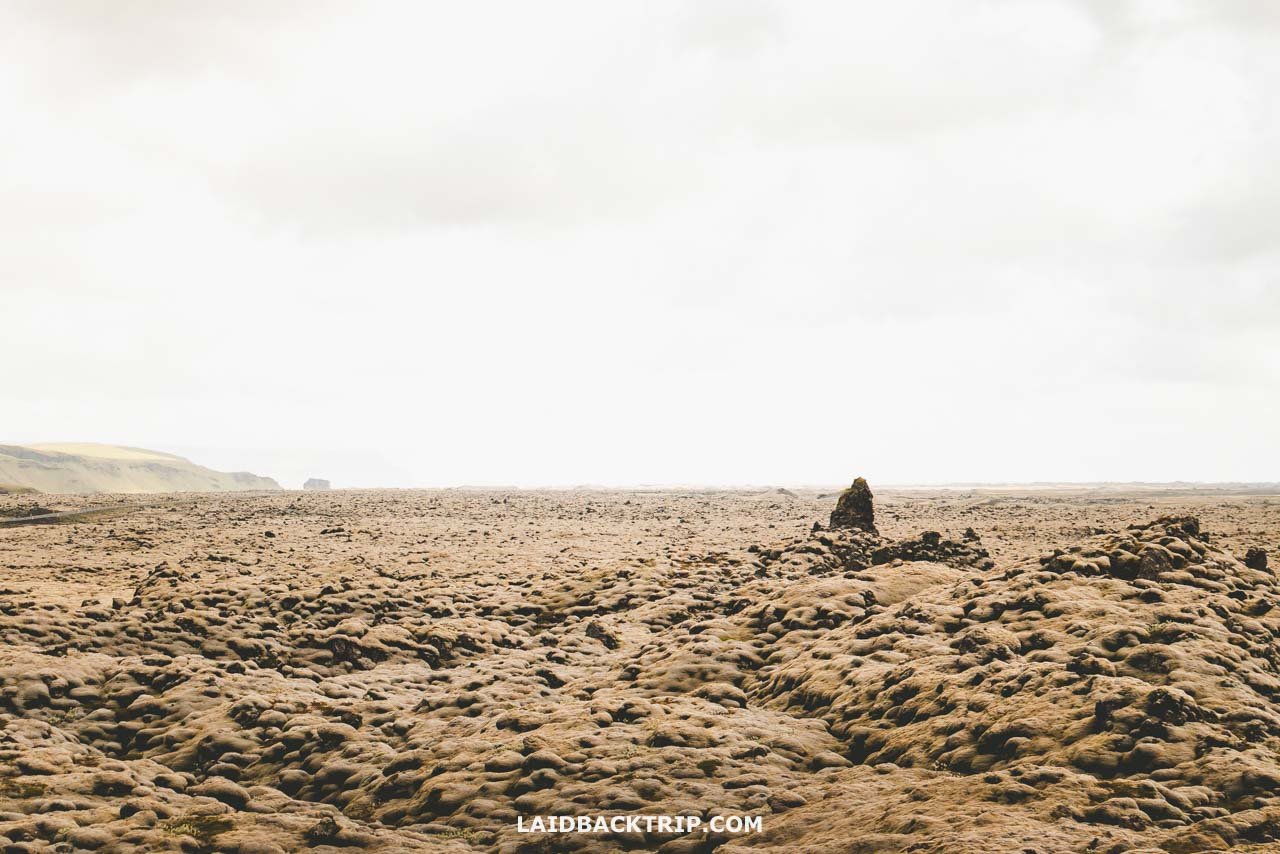
We decided to explore the lava field through the Gönguleið um Eldhraun trail. Here's how it went.
As we were driving along South Iceland, we had already seen tons of examples of its volcanic origin. Everywhere we went, the whole landscape was shaped by huge volcanic activity, giving the island its nickname, the Land of Ice and Fire. But it was places like Gonguleid um Eldhraun that really put things into perspective.
Eldhraun is a gigantic lava field created during the Laki eruption in 1783. It was so powerful that about 15 trillion cubic meters of lava and tephra emerged from the earth, creating one of the biggest lava flows in the world (and biggest in the last two millennia) and covering almost 600 square kilometers of land. And because the Ring Road cuts right through it, we arrived in the middle of it on the early afternoon of our third day of our Iceland road trip.
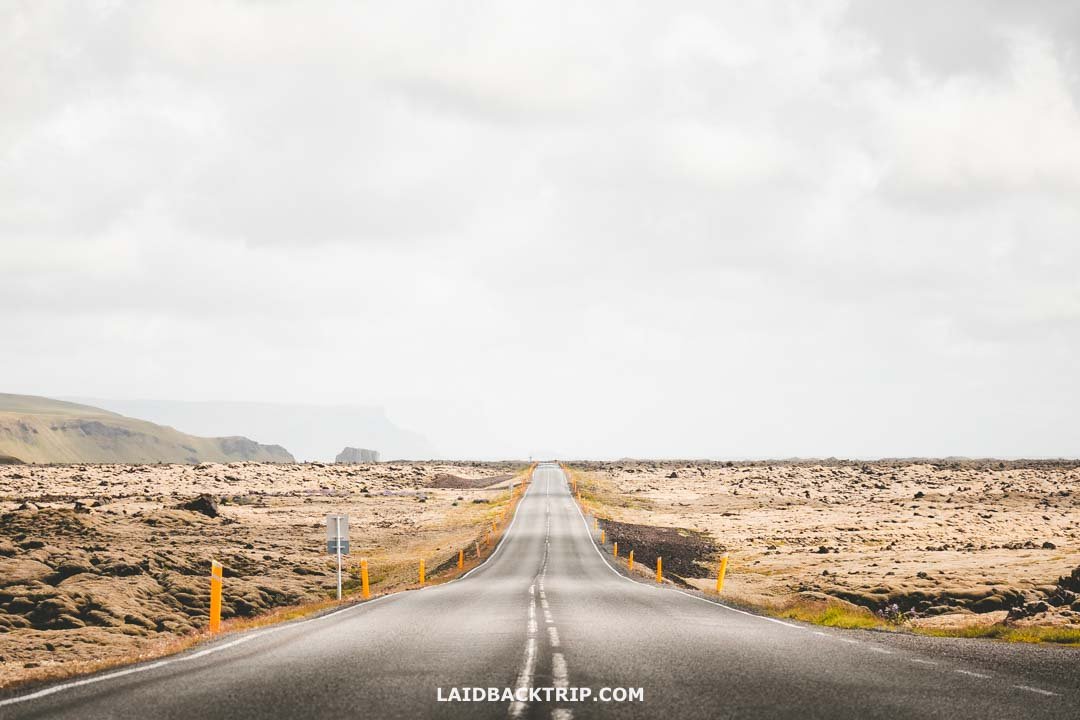
Even just driving through the Eldhraun lava field was an incredible experience.
While pretty much everyone passes through this area since it's directly on Route 1, only a fraction of people stop at Gonguleid um Eldhraun. And we were almost one of them. I added this spot to our itinerary mostly as an optional stop in case we needed a break or a quick lunch.
But we ended up stopping not for either of those, but simply to take in the scenery. For several kilometers, we had been driving through what felt like moss country. I think I can call it that, because everywhere we looked, we were surrounded by vast moss heath covering this whole volcanic spectacle.
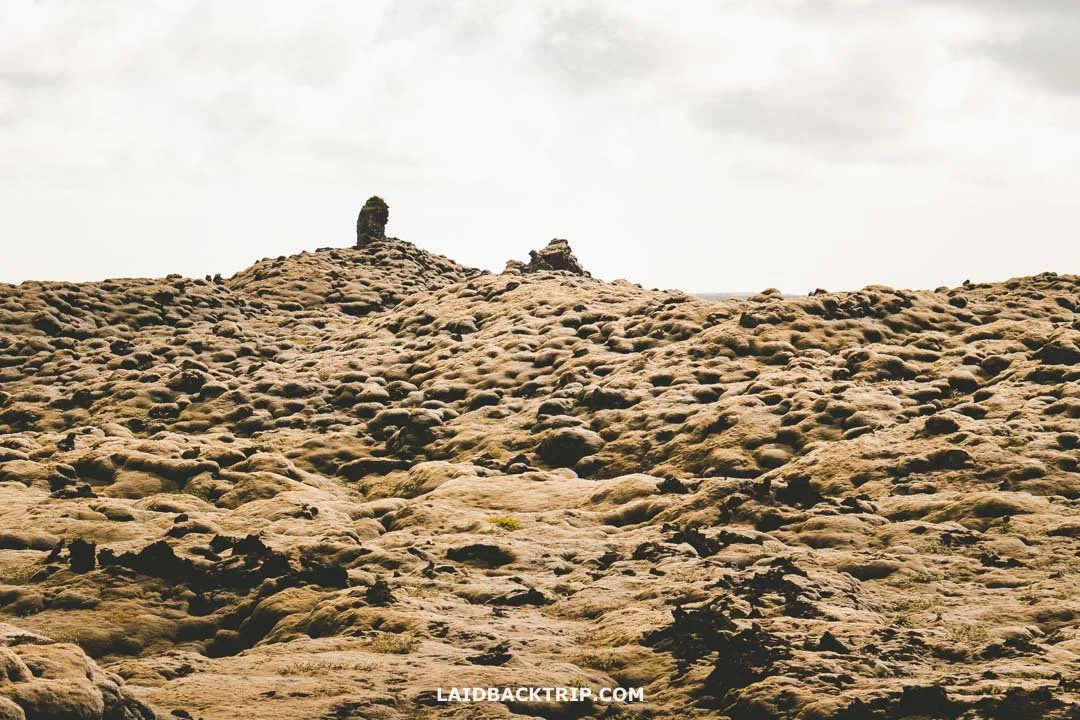
Nowadays, this enormous lava field at Eldhraun is covered with a thick layer of moss.
The views of this sparse landscape, replacing the endless lupin fields, were pretty incredible even from the car, but we had a feeling that seeing it up close would be a completely different experience. So as we entered this enormous lava field, we decided it would really be worth pulling over somewhere to explore this unique land on foot. Luckily, the short walking trail called Gonguleid um Eldhraun was perfect for that.
Hiking the Gonguleid um Eldhraun
With about 150 meters in length and no elevation gain, Gonguleid um Eldhraun was easily the shortest hike we did in Iceland. But even though it took us just under 15 minutes and had no climbs or steep sections, the trail wasn't as easy as it looked on paper. The reason I'm calling this little adventure a hike and not a walk is because the trail was pretty rugged. And I really mean that.
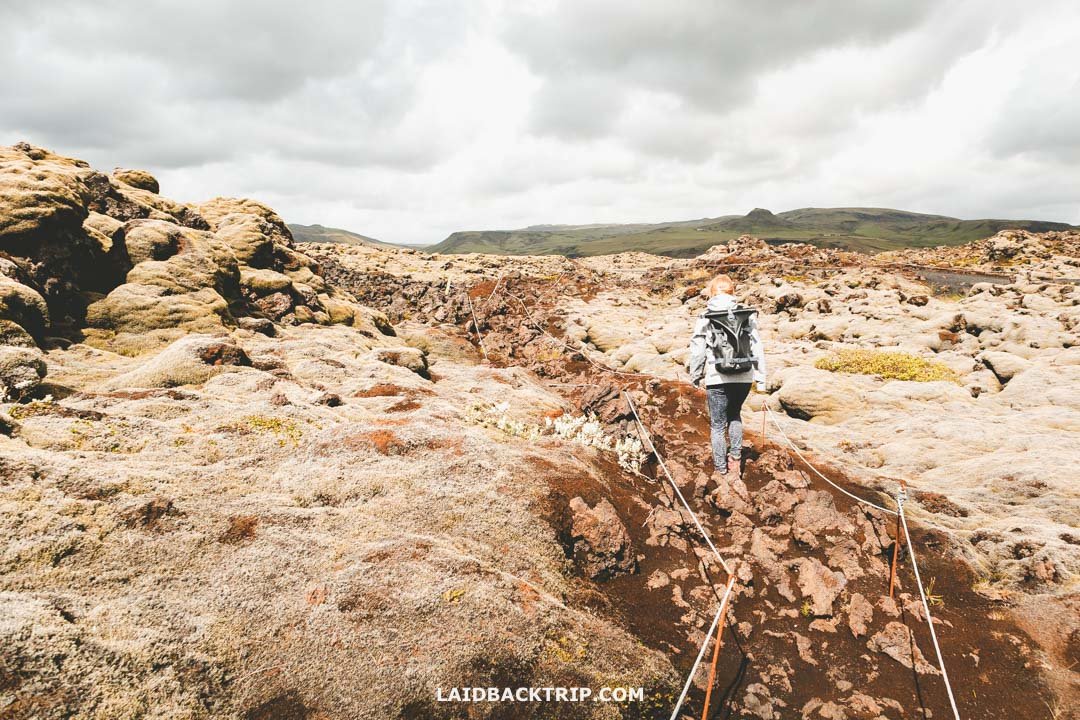
The lava trail at Gönguleið um Eldhraun was definitely more rugged than we expected.
The uneven terrain made of hard volcanic rock actually required a good amount of balancing and paying attention to where we stepped. This wasn't like Gullfoss or Kvernufoss, where the trail was smooth like butter, at least the second part after the big viewpoint.
It was still very easy, though probably not ideal for people with mobility issues, especially the second half beyond the viewpoint. Luckily, we traveled to Iceland in summer, so there was no ice on the trail, which would make the whole walk even more challenging.
As we slowly followed the roped‑off path, Gonguleid um Eldhraun reminded me a lot of Solheimasandur Trail, which we did just a day earlier. No, this place didn't have a plane wreck, but it had an endless volcanic plain, too.
The one at Solheimasandur was made of pitch‑black sand, while this one was covered in moss. I know the scenery of these two places didn't look alike at all, but it was the feeling of what they were that connected them in my mind.
Iceland had this effect on us, where no matter where we went, whether it was the remote West Fjords or the busy Golden Circle, we always felt far from civilization. And here, we actually were.
The traffic on the Ring Road, which we could still see from the trail, gave us an almost false sense that we weren't alone. But when we looked away from the main road and out across this forever‑stretching plain, it really felt like we were.
Moss Heath at Eldhraun
According to the info panel, which we read before starting the walk to learn where we actually were, the most common species we could see was the woolly fringe‑moss. One of the coolest things we learned was that the moss carpet covering Eldhraun was about 40 to 60 centimeters thick, because from a distance it sure didn't look like it.
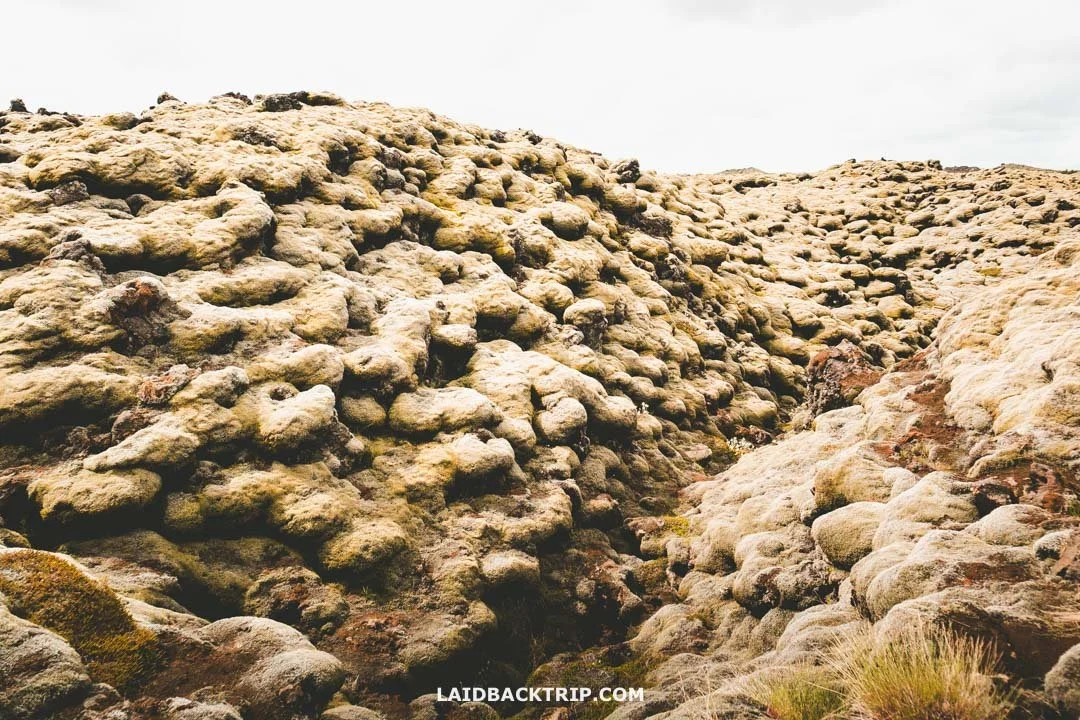
At some spots, the moss carpet at Eldhraun was about half a meter thick.
Another fun fact was that the moss turns vivid green after rain as it soaks up water, and shifts to gray during dry spells. It's no wonder the trail is also known as the green lava walk, though when we were there it hadn't rained for a few days and the moss at Eldhraun was less vivid than it would be in wet conditions.
The last thing we learned was that it's incredibly fragile and takes years to grow, which means everyone should stay on the designated trail and avoid stepping on the moss heath.
Laki Eruption of 1783
Another thing we learned about the Laki eruption, beyond what I already mentioned, was that along with the lava that initially shot up to heights of 800 to 1,400 meters, a massive amount of volcanic ash was released into the air. Air currents carried it to altitudes of almost 16 kilometers, filling the whole sky. Most of it stayed over Iceland, but it also spread across Europe and eventually the entire Northern Hemisphere.
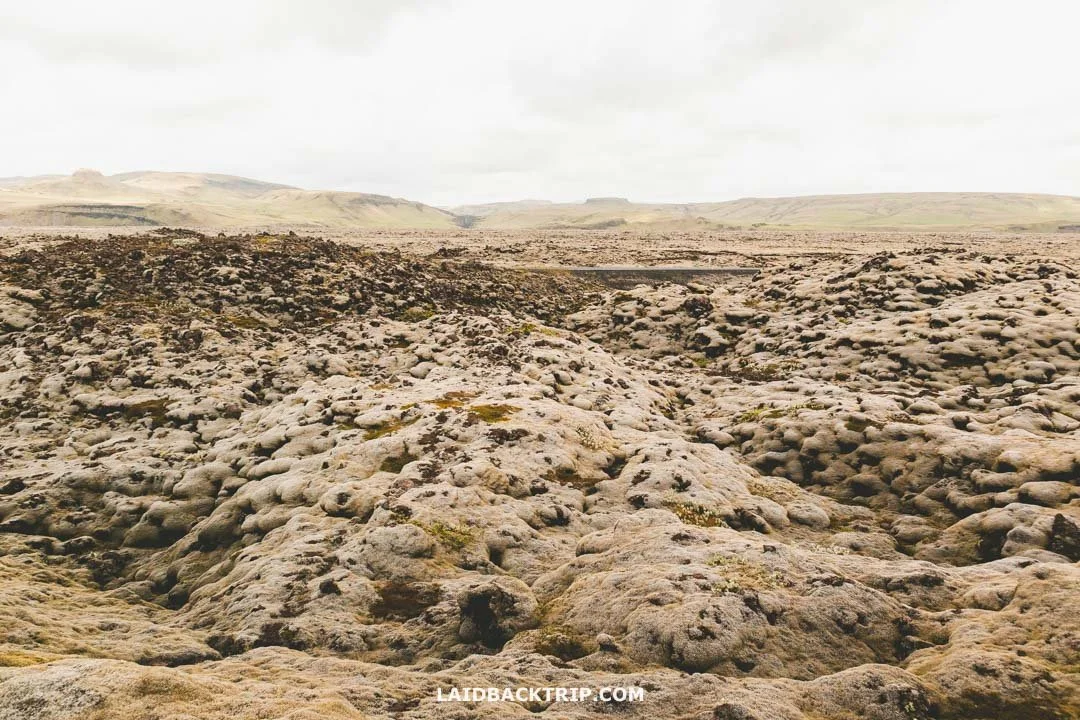
Somewhere in this direction, about 35 kilometers away as the crow flies, was the Laki volcano.
That same year, Iceland was hit by famine, and crop failures affected almost all of Europe. The eruption changed the global climate for several years, bringing harsh winters, cold summers, and drought.
Since we live in Prague, it was also fascinating to learn that one of the consequences the following year was major floods that damaged the famous Charles Bridge. It's pretty incredible to think that even though our country, Czechia, doesn't have these extreme natural disasters, we're still affected by them, even when they happen thousands of kilometers away.
Gonguleid um Eldhraun Was Worth a Quick Stop
For us, stops like Gonguleid um Eldhraun were one of the reasons we enjoyed South Iceland so much. Sure, all the big highlights like Skogafoss or Seljalandsfoss were amazing, but they were also pretty busy. And being able to get off the beaten path at places like Eldhraun, even if it was only for a brief moment, was something we really appreciated. I'm not saying this little trail is one of Iceland's must‑sees, but for us, it was definitely worth a quick visit.
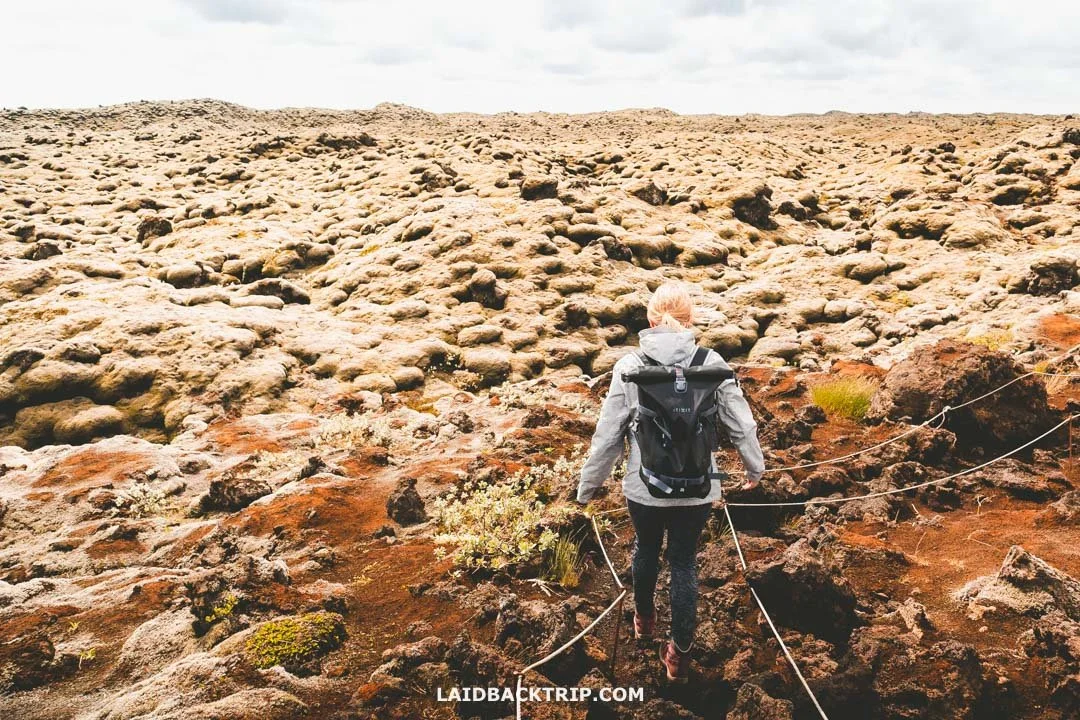
My favorite part was that we had the Gönguleið um Eldhraun trail to ourselves.
Gonguleid um Eldhraun Is Free to Explore
When we were there, Gonguleid um Eldhraun was free to visit. And it still is. Unlike many places that started charging for parking, like Geysir or Hverir, this one hasn't. And I don't think it ever will, because it's really just a quick stop, and the whole moss‑covered volcanic plain is visible right from the car, so I guess not many people would feel the need to pull over here if that changed.
Getting to Gonguleid um Eldhraun
As I said earlier, Gonguleid um Eldhraun was just off the Ring Road, about 10 kilometers west of Kirkjubaejarklaustur. Unlike some of the more famous spots, parking here was free. We spent the night in Vik i Myrdal, which we used as a base for visiting Dyrholaey and Reynisfjara before continuing toward the East Fjords.
Because we were all about camping in Iceland, we stayed in the village's only campground, but there were also nice places to stay like Hotel Vik i Myrdal. The whole 60‑kilometer drive took us about an hour since we made several photo stops along the way.
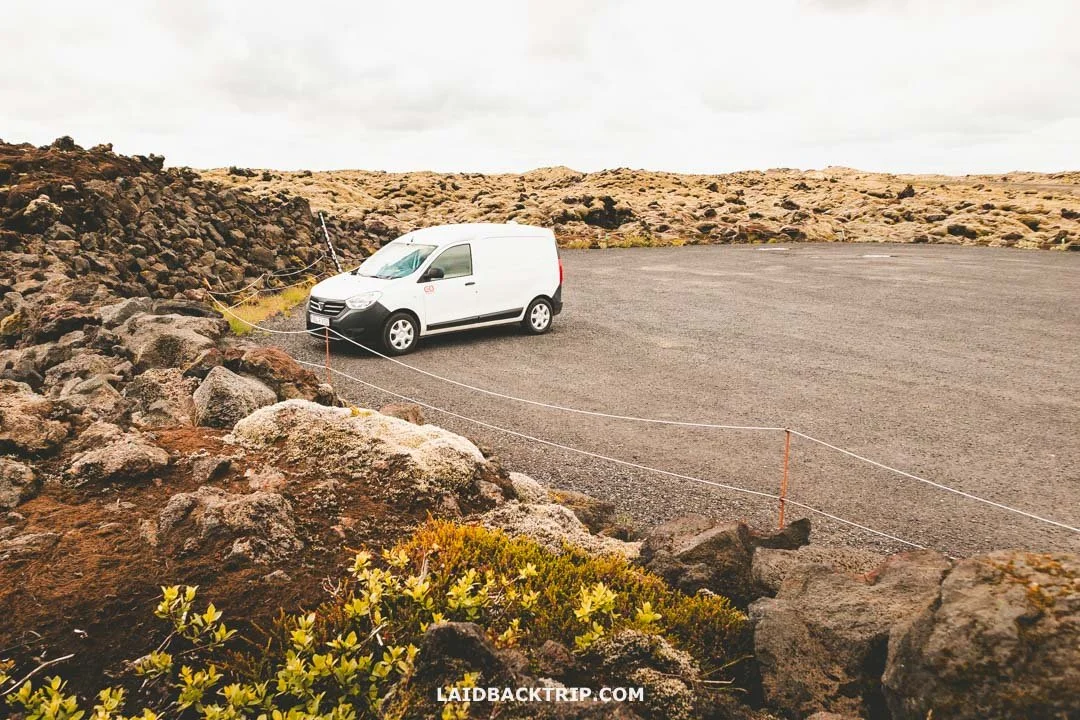
The parking lot wasn't big, but because it was empty, it didn't matter.
After Gonguleid um Eldhraun, we headed to nearby Fjadrargljufur, a beautiful canyon that once had to deal with mass tourism and sits just before Kirkjubaejarklaustur, only six kilometers from where we were. Our final stop of the day was Skaftafell in Vatnajokull National Park, where we also found a nice campground for the night.
And if you want to stay close to the Eldhraun lava field, Kirkjubaejarklaustur has also a basic campground and several good accommodations like Hotel Klaustur.
Discover Grjotagja, a tiny lava cave hiding a geothermal pool and the filming location of Jon and Ygritte's famous Game of Thrones scene.