Prague Guide for First-Time Visitors: Essential Tips from a Local
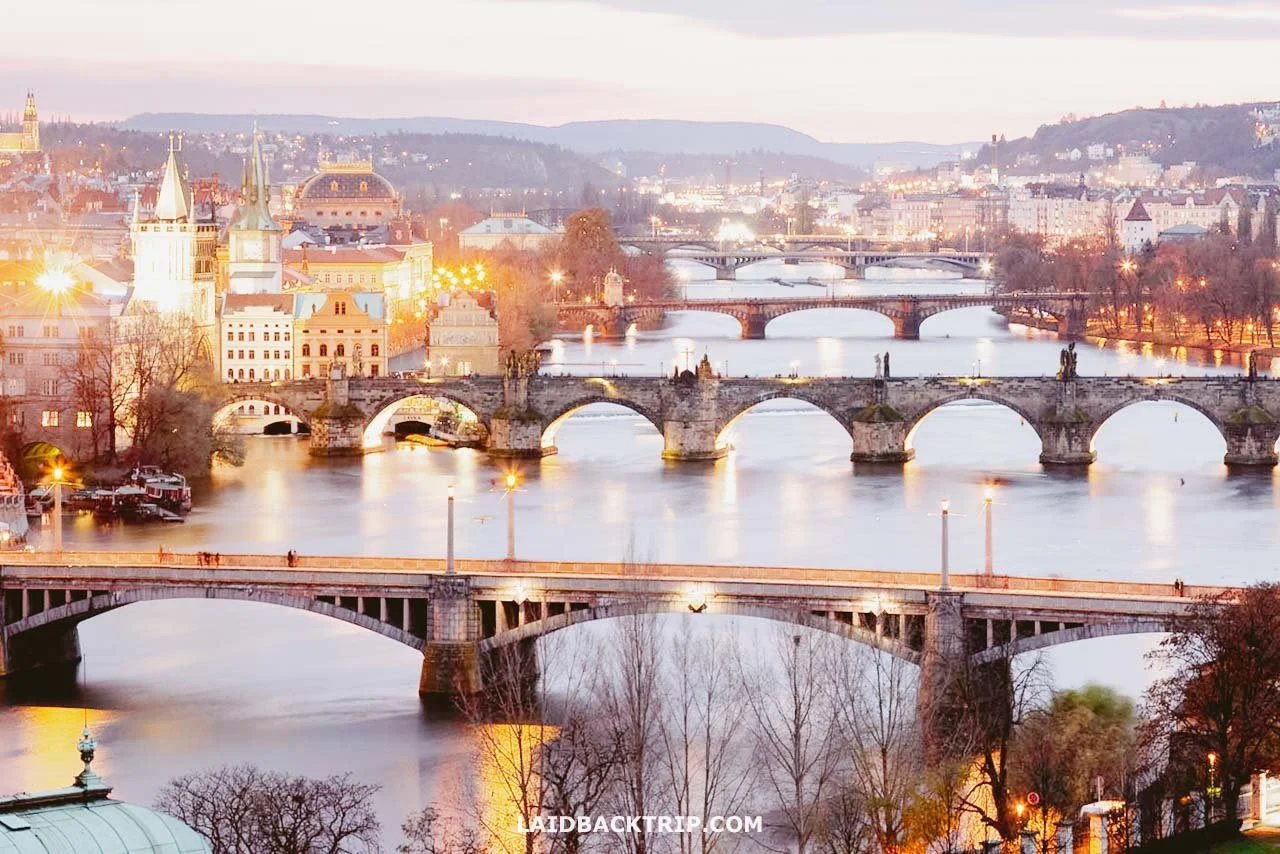
Here we pulled together all the essential tips you need for a smooth first trip to Prague, the amazing place we call home.
Medieval Prague is one of the most popular tourist destinations in Europe, and we are incredibly proud to call this city our home. We've been living here on and off since our college days, and although we had a few breaks over the years, mostly because of long-term trips abroad, there was always something about the City of a Hundred Spires that pulled us back. Prague holds a place in our hearts like no other city in the world.
After spending so many years here, we feel confident saying we've explored all the major attractions, along with plenty of hidden spots that most first-time visitors would probably miss. Still, Prague is constantly changing, and we love using our free time to wander and rediscover our own city. No matter which neighborhood we end up in, we always find something new, whether it's a recently opened pub, a fascinating piece of history, or even the occasional tourist scam.
Prague truly offers so much in terms of architecture and culture that travelers from all over the world often plan their European itineraries around a stop here. During our travels over the past few years, we've met countless people who asked where we're from. When we said the Czech Republic, or Czechia, we often got confused looks. Eventually, we started simply saying Prague, and that worked much better. As it turned out, Prague's reputation as a medieval gem really is that big.
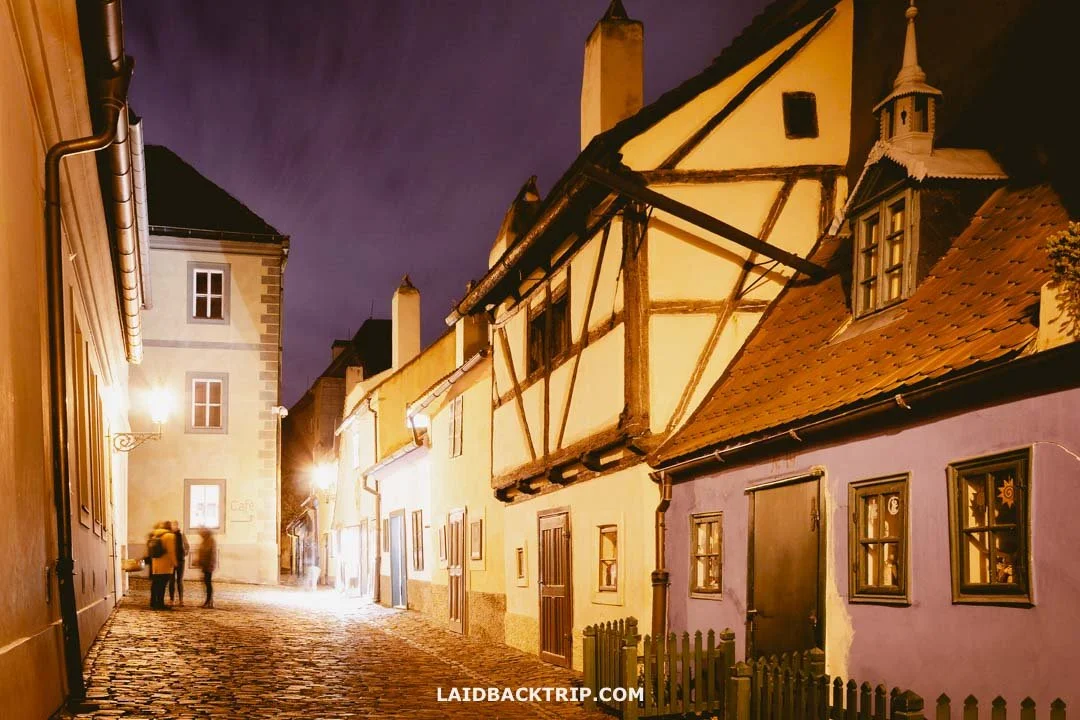
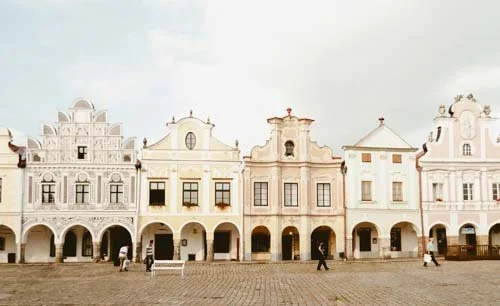
Prague is one of the best preserved medieval cities in the world.
If you've never been to Europe and choose Prague as your first destination on the Old Continent, I really feel that you could not make a better choice. I hope this guide feels different from the many Prague travel posts out there because it was written by Lucie and me, two people who actually live here, not someone who spent a quick weekend in the city without digging a little deeper. My goal is that, beyond helpful tips for planning your trip, you'll also learn a bit about us Czechs along the way.
Even though Prague is hugely popular today, many people still are not sure what to expect when visiting for the first time, especially if they have never been to Europe before. That is exactly why we decided to put together this guide on the things every traveler should know before visiting Prague in Czechia, so hopefully, nothing catches you off guard. Most of all, we want to share how we personally see Prague and what kind of experiences you can realistically expect when you come here.
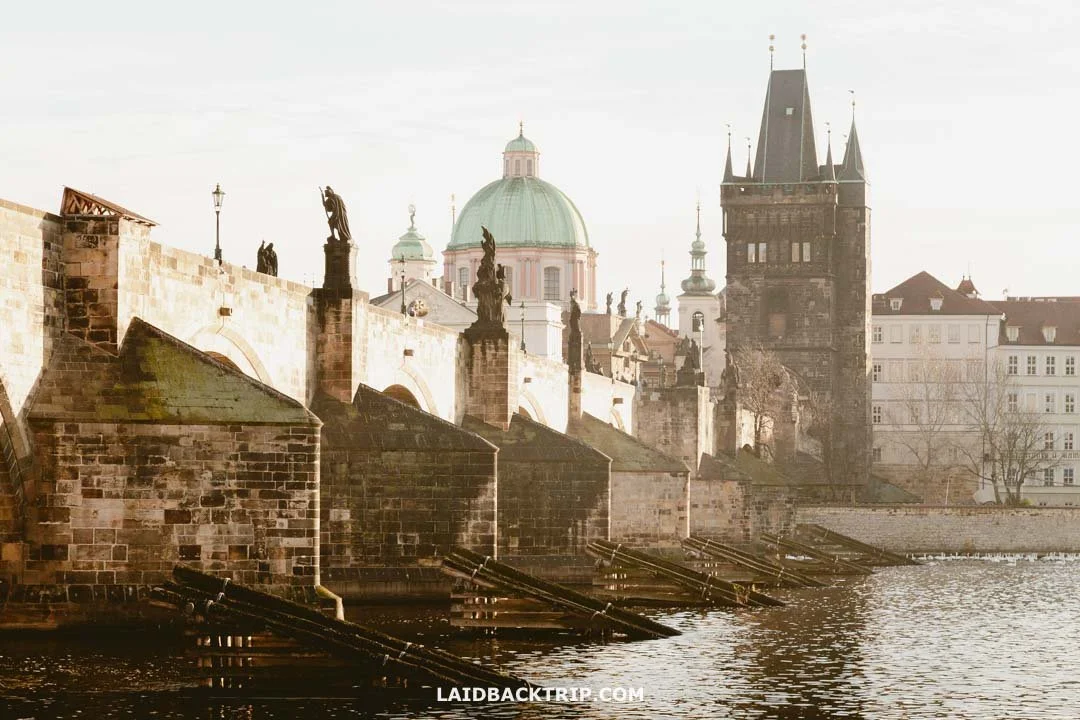
With views like this, we get why Prague became one of the most popular destinations in Europe.
First Time in Prague, Czechia
Before we dive in, I want to share a few thoughts not only about Prague but also about Czechia, so you have a clearer idea of what to expect on your first trip and pick up a few practical tips along the way. To start, Prague is the largest city in the Czech Republic and, for most travelers, the main stop on their itinerary.
When it comes to the name of our country, we honestly do not mind whether you call it Czechia or the Czech Republic. Just please do not call us Prague or Czech. What we are a bit sensitive about, though, is our geographical location. We are in Central Europe. Period. I will write a separate post about the country soon and go into much more detail, so stay tuned for that.
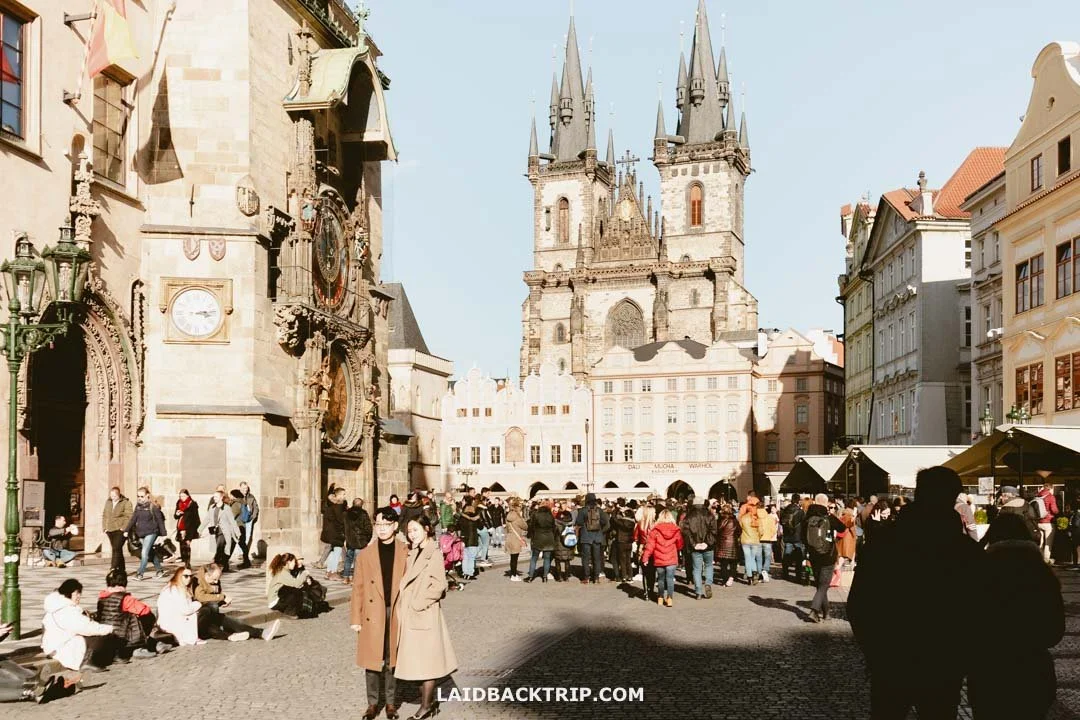
Sitting in the heart of Europe, Prague is the capital city of Czechia.
If you are planning a bigger European trip and arrive in Prague, you might be surprised that, unlike many of our neighboring countries, we still use our own currency, the Czech crown (CZK). We are not quite as cashless as Iceland yet, but paying by credit card in Prague is possible in almost every reputable shop, restaurant, hotel, or attraction. And if a place does not accept cards, take that as a small warning sign and stay alert, especially in touristy restaurants or market stalls.
In most tourist-oriented places, you will be perfectly fine using English, and Prague is where you will meet the highest number of English speakers in the country. There is really no need to memorize Czech phrases before your trip. That said, if you say děkuji, which means thank you, or dobrý den, meaning good day, when speaking with locals, we will definitely notice. Personally, any time I hear someone say a few words in Czech to me, I'll for sure try to chat them up, even if it's a brief encounter.
Skip Trdelník, Try Kremrole Instead
We hate to break it to you, but trdelnik, the sweet pastry you see everywhere in Prague, is not actually Czech, even though it is often presented as a traditional local treat. Its roots trace back to the Kingdom of Hungary, and it only showed up in Prague in the early 2000s when tourism really started booming.
Prague may have perfected the marketing, but at the end of the day, it is still a dessert made for tourists. Neither Lucie nor I know anyone who has ever baked it at home, which says a lot. And to be honest, for the prices they charge in the city center, we consider it one of Prague's biggest tourist traps (Martin even says it's just a regular scam).
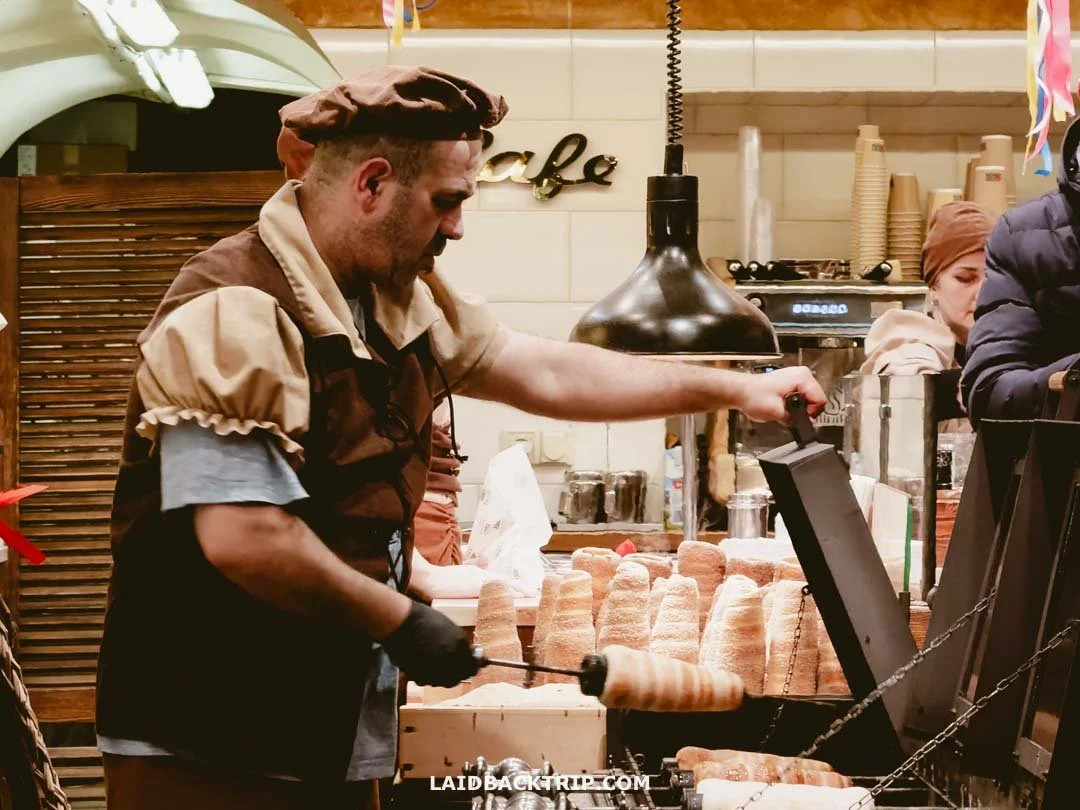
Trdelník is crazy popular with tourists, but most locals like us pretty much ignore it.
Watching tourists line up and take Instagram selfies with their so-called traditional trdelnik is something we find more amusing than anything else. What truly surprises us, though, is how much people are willing to pay for what is essentially rolled dough coated in sugar and cinnamon. And now there is the new trend of trdelnik filled with cream, ice cream, or pretty much any topping you can imagine, which makes it even pricier than ever.
We are not saying you should not try it, because to be fair, it does taste good. But since you will see vendors selling it on nearly every corner in the city center, we think it is only fair to tell you that this is not a typical Czech treat. For the same price, you can often buy a delicious handmade Czech dessert like větrník or špička, sometimes even more than one, in one of the many local pastry shops.
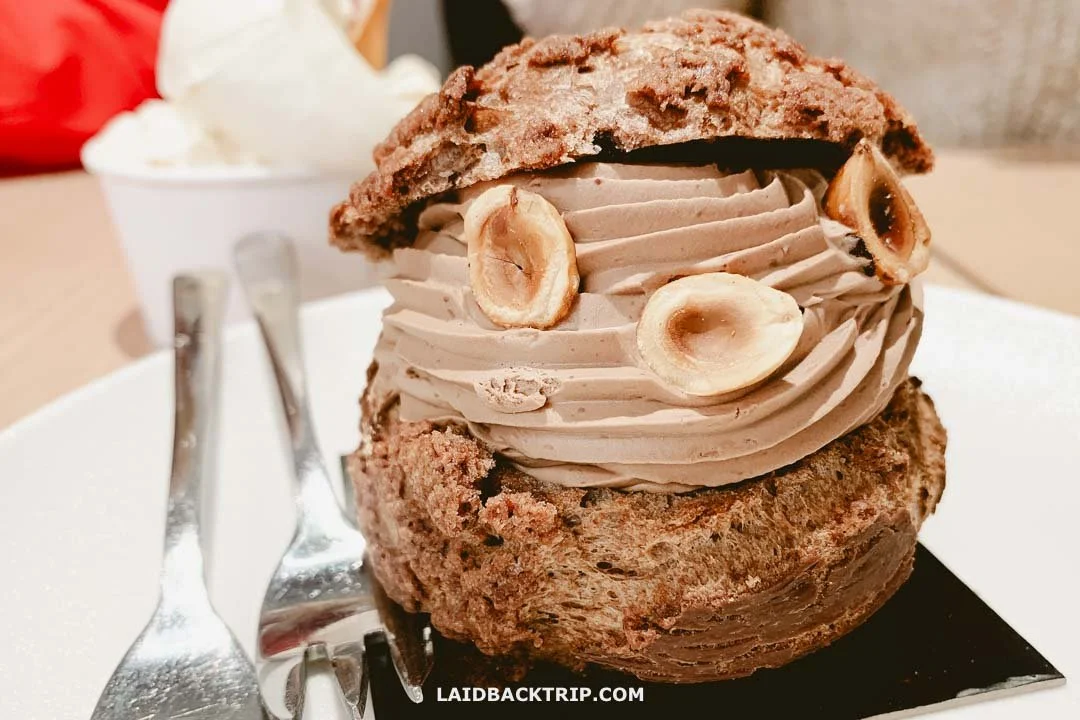
One of the most beloved Czech desserts is větrník, and the one I had was the chocolate version.
If you still want to try something similar, go for kremrole instead. It has a somewhat similar vibe, and while it is not purely Czech in origin either, it is far more traditional here. Another classic Czech dessert is koláč, a soft yeast pastry topped generously with fruit. Lucie loves the apple-topped ones most, but I really don't believe you can top that curd cheese and plum jam combo.
Prague Has Beatiful Parks, Too
Prague has a reputation as a European gem full of cobblestone streets, old churches, and medieval history, which we completely agree with. But it is not just Gothic churches and old lanes you will find here. The city is also home to many beautiful parks. Some we absolutely love and visit often, especially because on hot summer days, when the city center feels like an oven, these green patches are our only go-to escape.
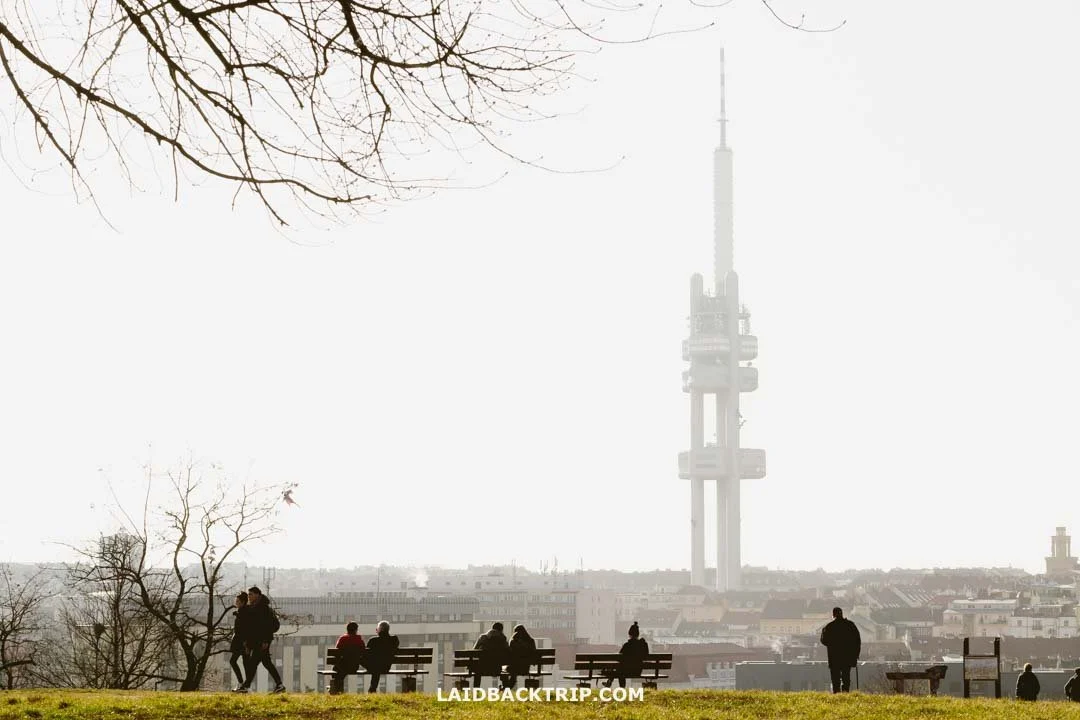
Parukářka is our favorite park in the Žižkov district.
This is not a complete list of Prague parks, just the ones we personally like the most. I will start with Petřín and Letná. Not only are they fantastic, but they offer some of the best views in the city, and they are very central, so they are easy to visit. Letná has that iconic view of Prague's bridges, yes, I used that photo as the cover for this post, and Petřín is simply Petřín. Another hidden gem is Waldstein Garden (Valdštejnská zahrada). It is more of an enclosed Baroque garden with peacocks and grottoes than a typical open park, but it is free to enter and especially beautiful in summer.
Our all-time favorite, though, is Grébovka. We have spent countless summer afternoons there and logged many runs over the years. It is not huge, and since it sits on a hillside, the few flat areas can get crowded on warm days. But we honestly do not mind. If anything, we enjoy the atmosphere. Another park we love is Vyšehrad. It has become more touristy over time, so we do not visit as often as we used to, but it is still special to us.
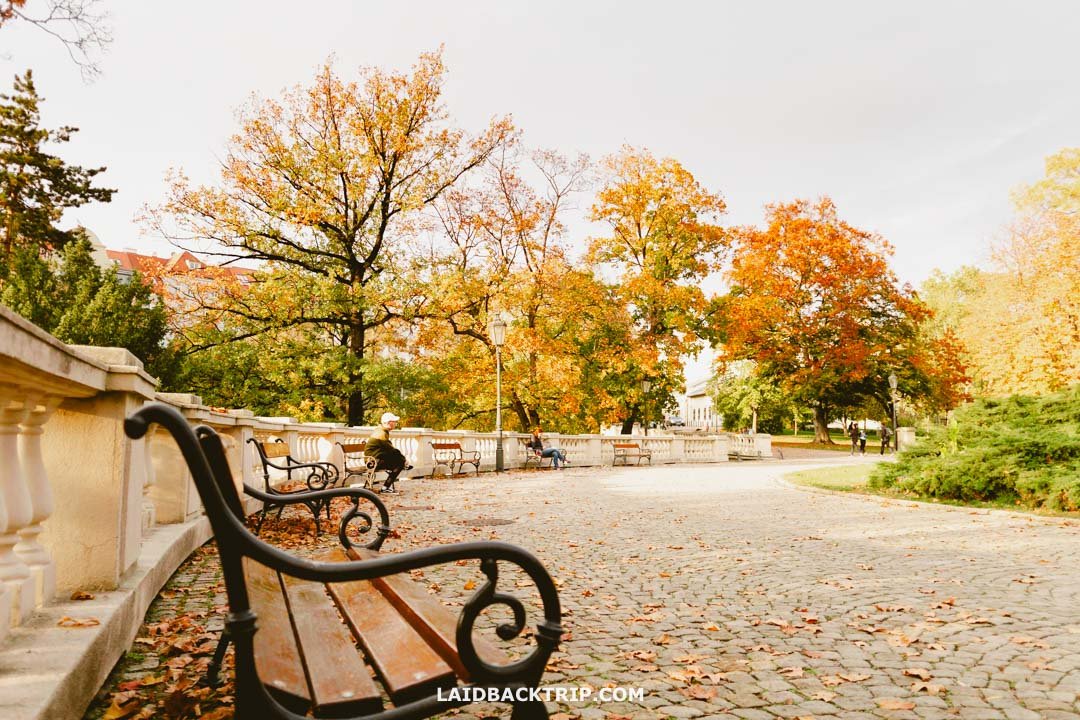
Grébovka is our favorite park in Prague and one we visit all the time.
Stromovka and Ladronka are great for long walks, jogging, or inline skating. These are the parks we would usually visit when we planned to stay for a few hours (usually to do some sports), since they are farther from wherever we happened to live at the time. For more local vibes, Folimanka is a fun one :)
Now that we are working full-time, we do not explore the parks as much as we did during our college years, which is a bit of a shame, but that is life. Still, if you ever feel tired after a long day in the city center, take a break in one of the many parks nearby or head to a quieter neighborhood that has parks most tourists never reach.
Parks are ideal for relaxing, enjoying a picnic, diving into a book (Meyrink's Golem and Kafka's The Trial are our favorite Prague classics), or simply watching local life go by, and the ones here in Prague are no exceptions.
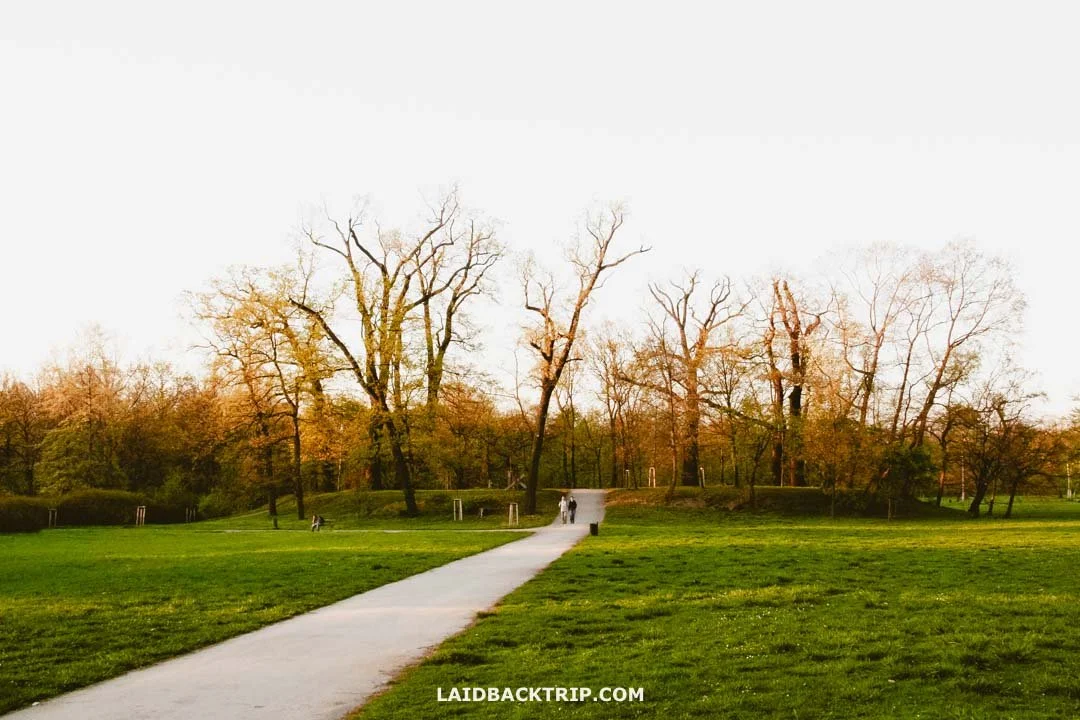
We love visiting Stromovka in spring since it's beautiful and still not that busy.
The only park we would personally avoid is Vrchlického sady, which we Czechs call Sherwood. It has a reputation for homelessness and drug activity, and unfortunately, it is the first thing you see (and, unfortunately, walk through) if you arrive by train, since it sits right next to Prague's Main Train Station (Praha hlavní nádraží). Another park that is not our favorite is Charles Square (Karlovo náměstí). I pass through it often on my commute. It is not as rough as Sherwood, but it can feel quite bleak, especially during the colder months.
Prague Is About as Safe as a Big City Can Be
One of the reasons we love living in Prague is how safe it feels. It consistently ranks as one of the safest cities in the world, and the likelihood of experiencing serious crime here is extremely low. I understand that when locals describe their city as safe, it can sound biased. We once met someone who insisted Rio de Janeiro was perfectly safe, and he said it without blinking. So I get the skepticism. And yes, we know which spots to be cautious about. But Prague really is different in this respect. There are practically zero places you would actually need to stay away from.
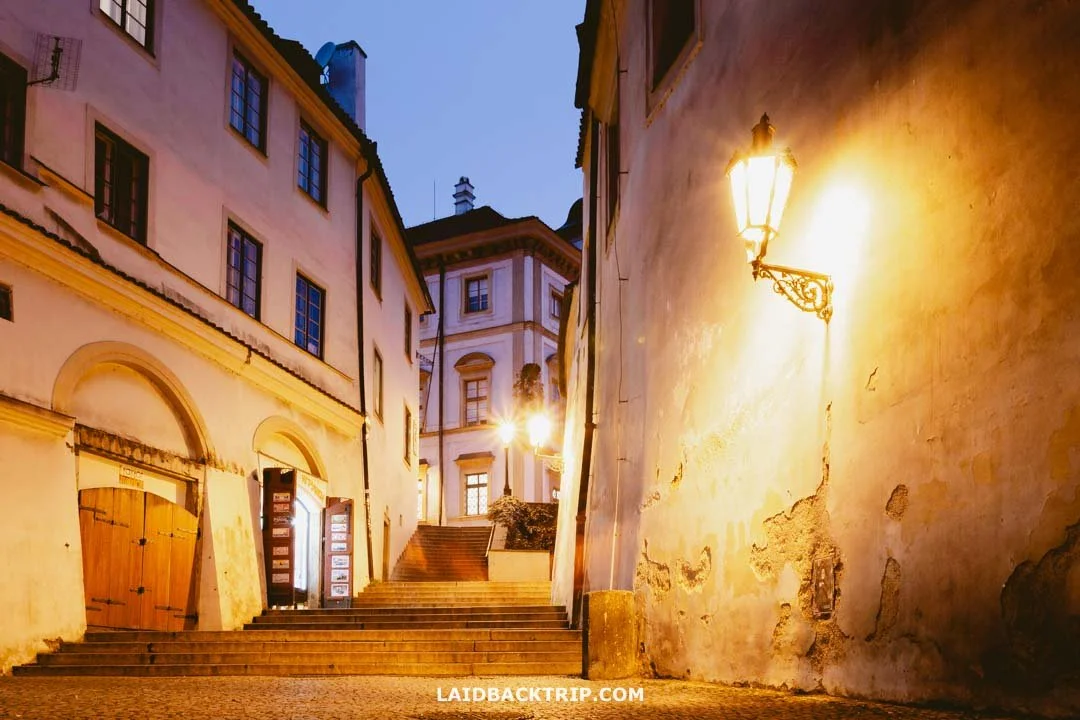
I honestly consider Prague one of the safest cities in the world.
Over the years, Lucie and I have walked around Prague a lot. And I mean a lot. During the day, late at night, on weekdays, and on weekends. I also did tons of night photography in pretty much all of its neighborhoods. Honestly, I have never found an area where I felt unsafe. When I asked Lucie if there was any place she did not like walking alone, she mentioned Vrchlického sady, the same park I talked about earlier.
Even there, though, most of the questionable activity stays among the people involved. Of course, there are a few specific corners, buildings, bars, or other spots with a worse reputation, but they are usually isolated pockets within otherwise safe neighborhoods.
World Nomads provides travel insurance for travelers to cover their trip essentials, including sports and adventure activities.
SafetyWing is affordable travel insurance for backpackers, long-term travelers, and digital nomads.
Of course, that does not mean you should forget basic precautions. Use common sense, especially late at night. If you leave a bar at night and feel unsure about the area (Anděl, I am talking about you), just take a taxi. There is nothing wrong with that. Prague is very safe overall, but no place is flawless (and we will talk more about taxis in a moment).
For tourists, the most common issue is pickpocketing. Pickpockets usually target busy tourist spots and public transportation, often working in organized groups. It is the same story in cities like Rome or Paris, as tourist crowds create opportunities. Whenever I see someone riding the tram with their phone sticking out of their back pocket, I cannot help but shake my head. That is a level of "confidence" I personally do not have.
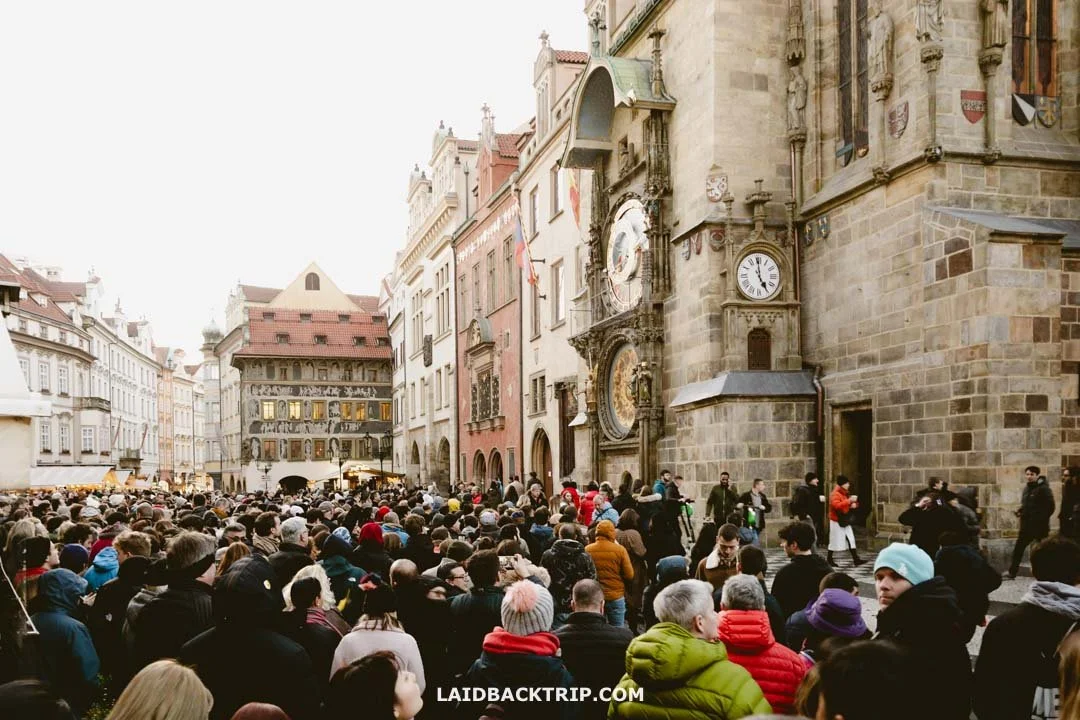
Even as locals, we always watch out for pickpockets when visiting Prague's prime tourist spots like Old Town Square.
Are Prague Taxis Still Bad?
There was a time when Prague taxi drivers had a pretty bad reputation, especially those waiting around major tourist spots. From our travels around the world, whether in Ecuador or Malaysia, we know Prague was far from the only city dealing with this kind of problem. Still, it never felt great to hear stories about scams happening in our own city.
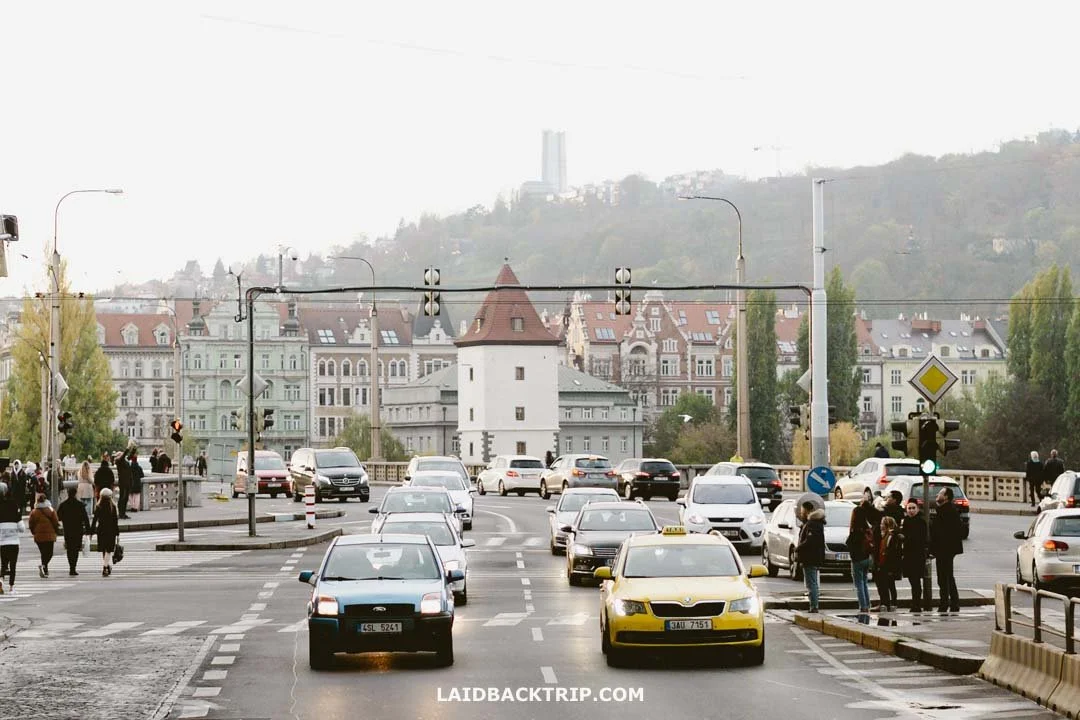
For getting around Prague by taxi, using the taxi apps is definitely the way to go.
Thankfully, things have changed. It is not like every dishonest driver suddenly became honest overnight, but the arrival of taxi apps made a huge difference. Today, you can use apps that clearly show available drivers and upfront prices. In Prague, that means services like Liftago, Uber, or Bolt. Use them. They offer very similar services, and while there are small differences between them, the important part is that you see the price before the ride even starts.
To be honest, we rarely take taxis in Prague ourselves. Between how walkable the city is, how reliable the public transportation system is, and the fact that we have a car, we simply do not need them. So for us, this was never a huge personal issue. But we are genuinely glad that visitors no longer have to worry about being overcharged like they once did, because the apps have solved most of those problems. That said, if you ever choose to flag down a random taxi in the busy tourist center, though, it is still smart to stay super cautious.
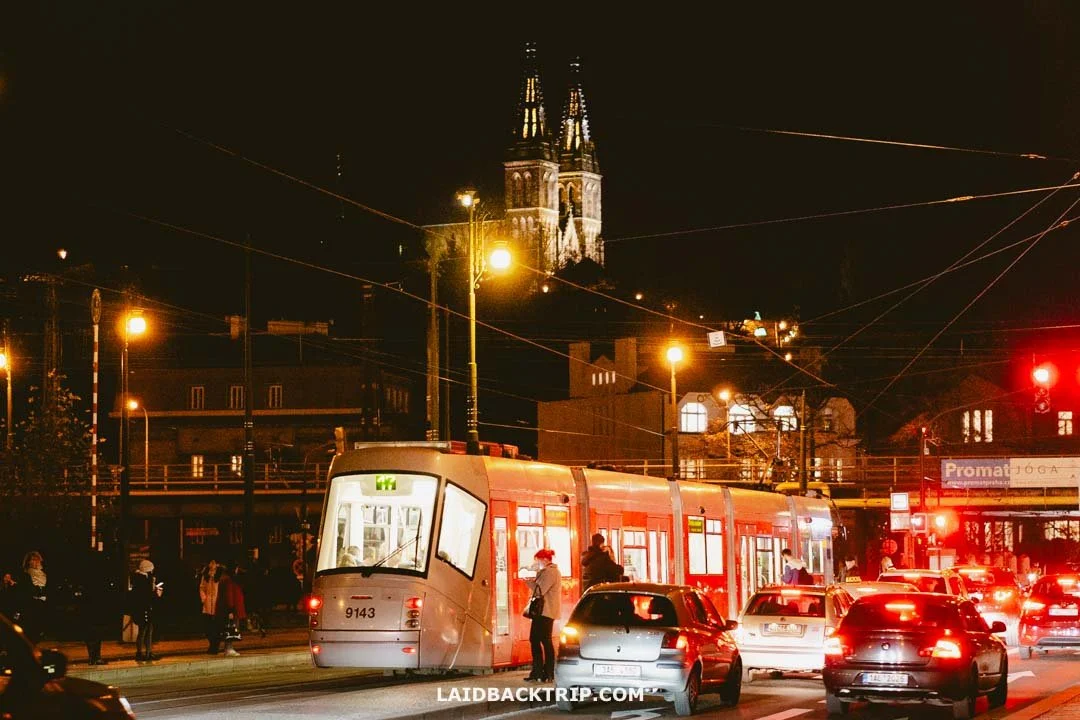
Since Prague's public transport is so good, we almost never bother with taxis.
Common Scams in Prague
Like every major city in the world, Prague has its share of scams you should know about so you do not fall for them too easily. The good news is that in Prague, most scams are actually pretty easy to avoid. In most cases, all you really need is to know about them or use common sense.
Still, getting targeted by a scammer is never a pleasant experience. I remember arriving in Paris and Lucie getting aggressively approached by the bracelet people near Sacré-Cœur barely 15 minutes into our exploring. It wasn't the welcome we hoped for, but at least we knew about it, so we didn't fall for it.

The trick with Prague ham is that it seems "cheap" at first, but that's just the price for 100 grams.
One of the most frustrating scams in Prague, at least in my opinion, is the so-called pay by weight trick. The city center is full of stalls selling different foods, often at outrageous prices. The most famous example is the so-called traditional Prague ham, but I have also seen it with fruit, candy, and other food. The trick is simple. The listed price is per 100 grams, and they load your plate with way more than you would ever normally order.
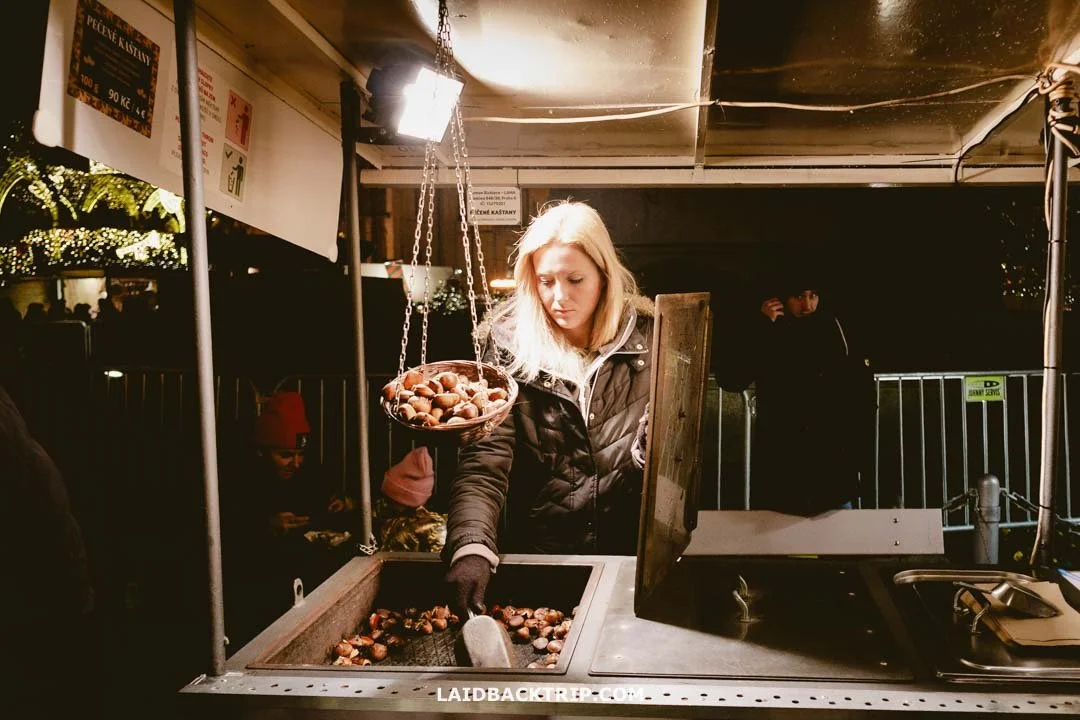
It's not just the Prague ham, but even these roasted chestnuts are sold per 100 grams, which makes them ridiculously overpriced.
The ham itself is nothing special. You can buy it in any grocery store for a third or even a quarter of the price. But before you know it, you are holding a huge portion you cannot possibly finish and paying around €50 for it. It is honestly absurd. The fried spiral potato on a stick falls into the same category. It might look cool for a photo, but the price compared to what you actually get is hard to justify.
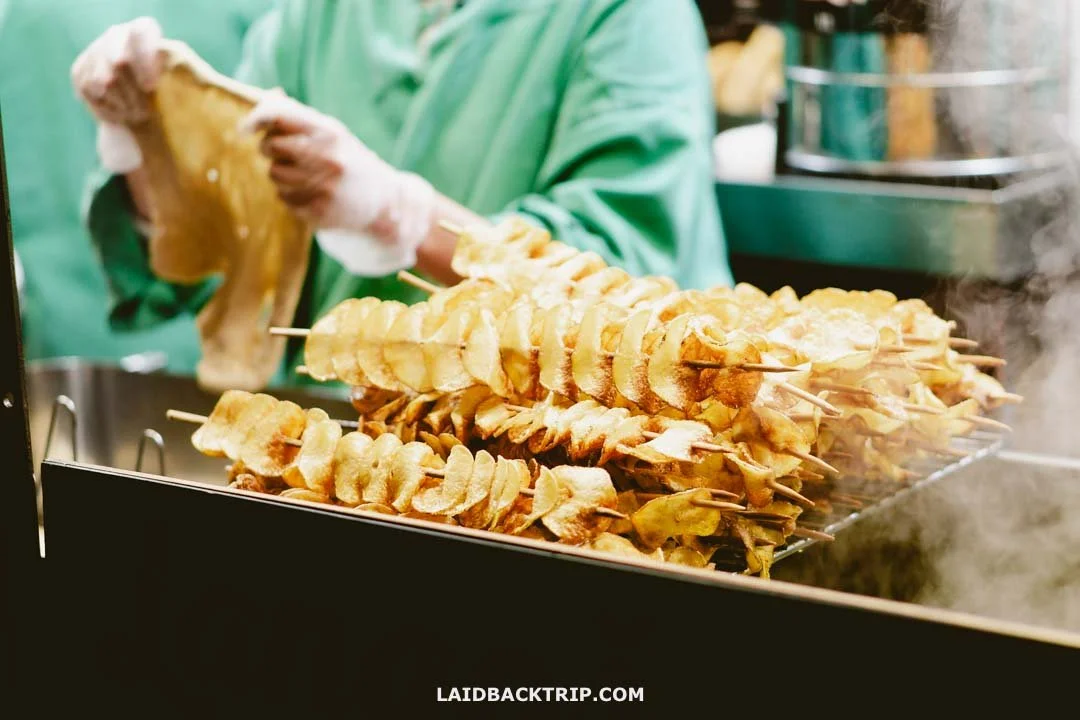
Spiral fried potato on a stick is another tourist food we would never buy.
Another thing that annoys me is the wave of "specialized" shops in the historic center. Every few years, a new trend pops up. First, it was absinthe shops, then CBD stores, and after some time, something else takes over. Most of these places are clearly aimed at tourists and offer overpriced or fake products. The absinthe is usually not absinthe at all, the so-called cannabis products contain no real THC due to our laws, etc. What bothers me the most is not just the scammy aspect, but also the visual clutter these shops bring into the medieval heart of the city.
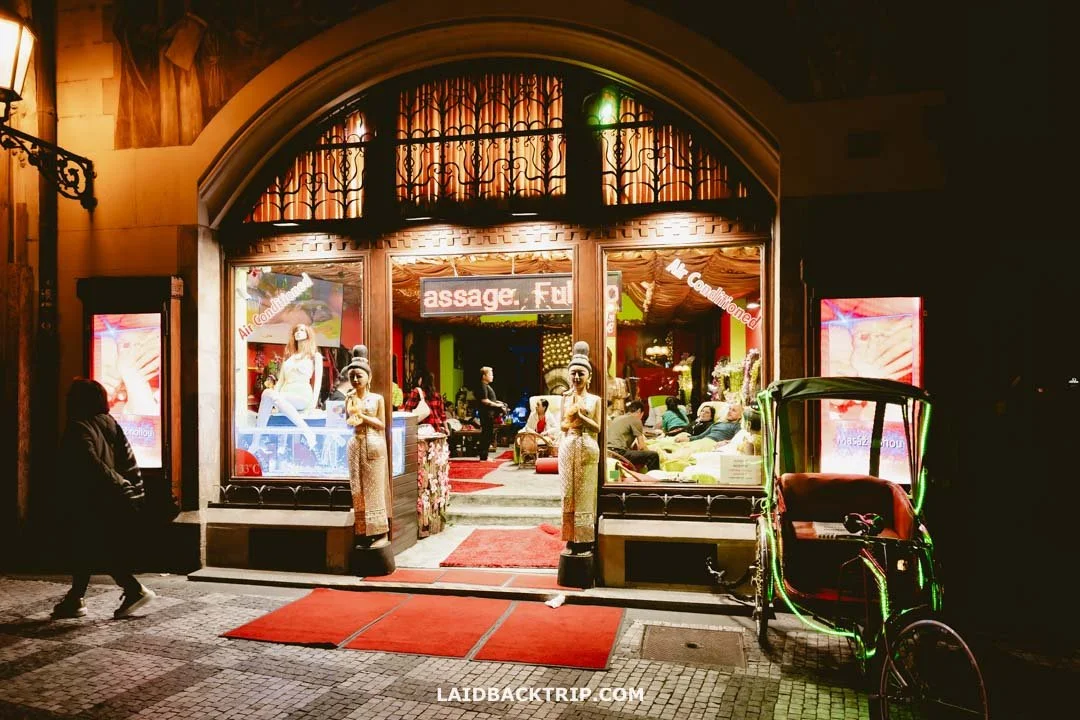
Thai massage and rickshas just aren't things we associate with Prague's medieval center.
Some questionable practices are disguised as sightseeing tours. You might see people with red umbrellas selling overpriced hop-on, hop-off bus tickets under the label of charity. The city tried to ban them, but they keep coming back in slightly different forms. At one point, they started selling newspapers that acted as tickets, claiming the bus ride itself was free. Again, this is easy to avoid. Just pause for a moment and ask yourself if buying a €40 newspaper from a random person on the street that acts as a free bus ticket makes any sense. This is just ridiculous.
One of my more recent "favorites" is the relatively clean(ish)-looking beggars with cute little dogs sitting in prime tourist spots like Karlova Street. To locals, they are easy to spot, but for visitors who are not familiar with the situation, they can seem convincing. They know exactly how to play on emotions. And the small, cute puppy definitely makes the scene more touching. Again, these are organized people running a scam, so do not fall for it.
There are also scams you might recognize from other European cities. The infamous Euronet ATMs come with high fees and terrible exchange rates through dynamic currency conversion. Some exchange offices operate in a similar way. There are occasional fake ticket inspectors on public transport. And yes, some tourist restaurants try to overcharge by adding items you did not order or suggesting that tips are mandatory. They are not. Tipping here is appreciated, but it is never required.
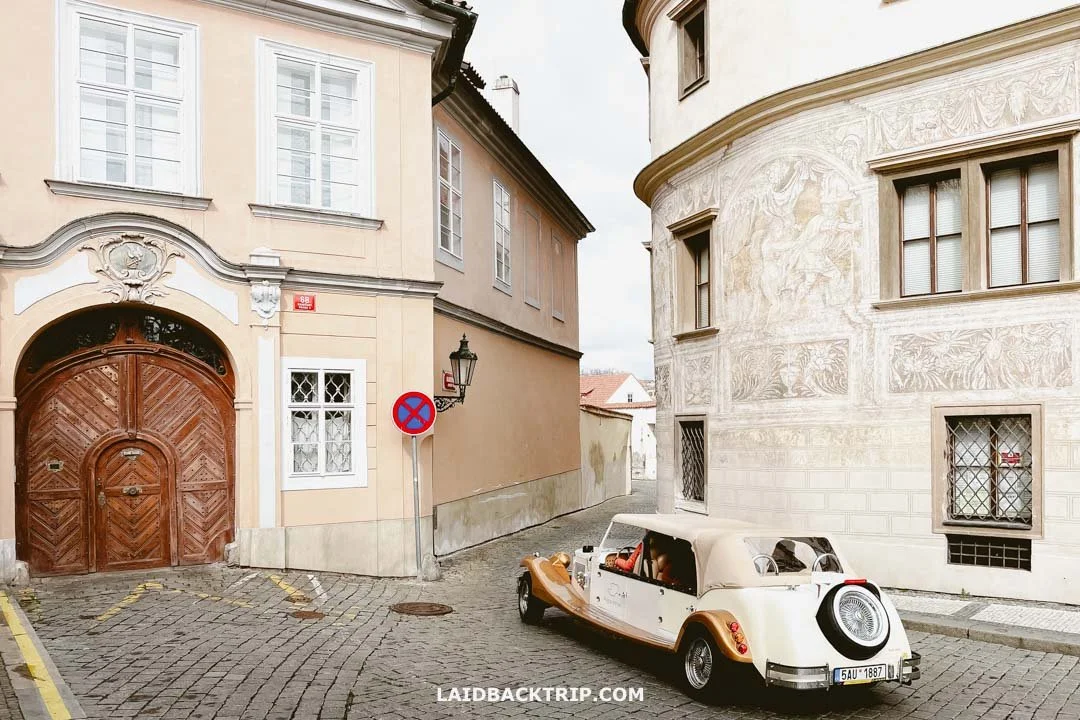
These fake vintage cars are just another classic Prague tourist trap.
Prague also has its fair share of tourist traps like those sex, wax, or torture museums, which no local ever visits. Then there are the "vintage" looking cars that would take you around the historic center no local would ever take. These ones come with even bigger issues, mainly because they aren't registered as taxis, so if you end up in an accident, good luck getting anything from your insurance company.
I heard a few times that even the Prague boat tours are tourist traps, but they are pretty popular among tourists, and since they offer a fairly similar experience to other sightseeing cruises in other European cities, I don't personally mind them. Finally, there are those pubs on Old Town Square which, as a local, I would never go to.
Where to Have a Beer in Prague
The Czech Republic is a beer country, and Prague is an amazing place to get a proper taste of our national treasure. There are beer pubs on practically every corner, and over the years, we have had plenty of chances to explore them. New places open every year, and unfortunately, some close as well, so instead of trying to cover everything, we will focus on our long-time favorites.

Plzeň (Pilsner) is easily the most famous beer in Czechia.
Among the more tourist-friendly spots, we like Lokál Dlouhá for its fantastic Pilsner, even though it is usually packed. BeerGeek is another favorite, but on weekends, it is almost impossible to get a seat without a reservation. Červený Jelen offers three floors dedicated to beer, and Zlý Časy has an incredible selection. All of these places serve genuinely good beer and are centrally located, which makes them easy to include in your itinerary.
Then there are classic Czech pubs like U Zlatého tygra, U Pinkasů, U Hrocha, and U Dvou Slunců. These are some of the most traditional pubs in Prague. Another very famous spot is U Fleků, which has been brewing its dark beer since 1499. While these places have history and character, we personally do not visit them because they feel too touristy for our taste.
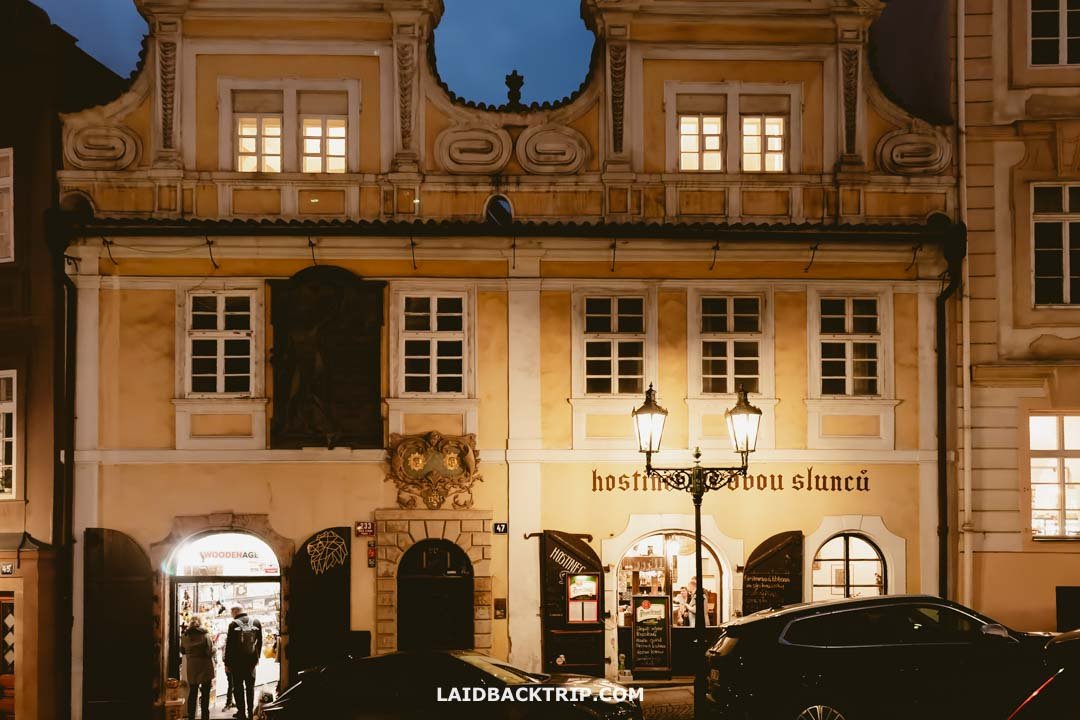
The pubs close to the Prague Castle are too touristy for our taste.
We would rather go somewhere like Pivnice U Sadu, which is also busy but feels more local. Obviously, every pub I mentioned here is already pretty well known. But once you step outside Prague 1, that's when you really start discovering the real gems.
Almost every major Czech brewery runs its own pub concept, and these chains are scattered throughout Prague, too. Places like Kozlovna (Kozel), Bernard Pub (Bernard), or Potrefená Husa (Staropramen) are generally a safe bet. The beer is usually good, but the atmosphere can feel a bit uniform. We tend to choose them for slightly more formal occasions, meaning when we are not planning to spend the whole evening drinking. As with most places, we try to avoid the heavily tourist-oriented branches in the city center, since the service there can sometimes be less attentive, but overall, they are okay.
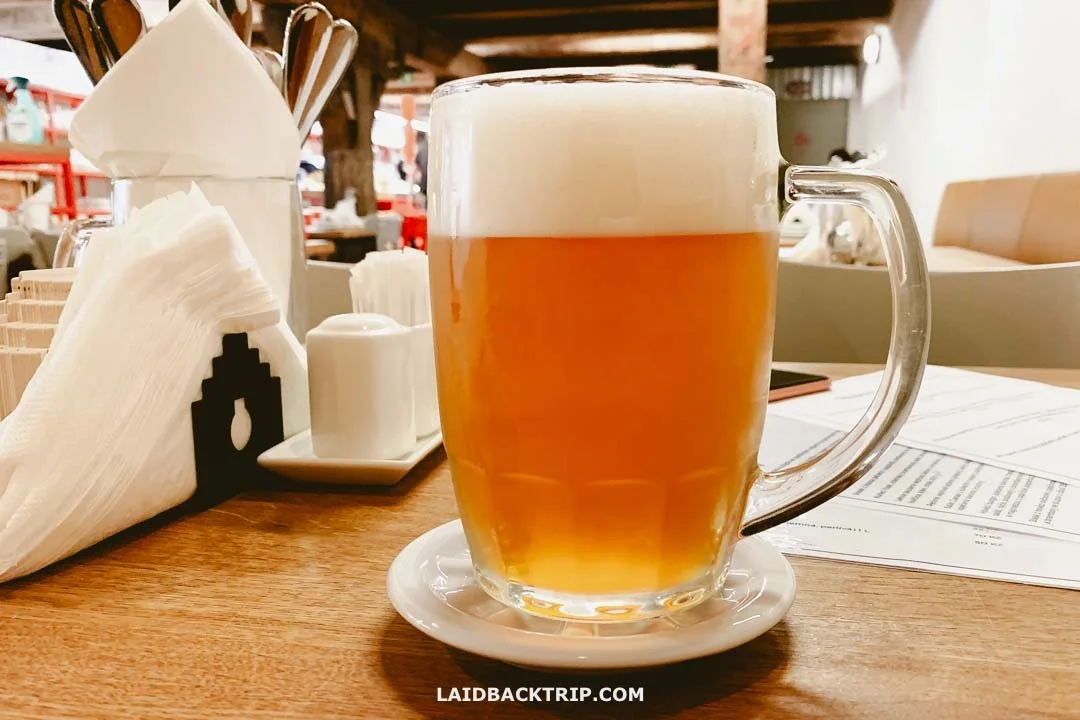
Prague has tons of great beer pubs, but the really good ones are outside the tourist center.
Prague is also home to several larger breweries, the most famous being Staropramen. Visiting the brewery is a good way to see how Czech beer is made and to sample it fresh. It is decent, although I personally prefer other brands. Personally, I prefer smaller breweries like Únětický pivovar or Vinohradský pivovar, which feel more local. If you are looking for a beer-themed experience, Bernard runs a beer spa, and there is also the Pilsner Urquell Experience. Pilsner Urquell is probably the most famous Czech beer, though it is actually brewed in Plzeň, not Prague. These attractions are clearly designed with tourists in mind, so we skip them.
Tipping in Prague
For us, tipping in Prague's restaurants, bars, and pubs, and across the whole of Czechia, is customary, never mandatory. If we are happy with the food, drinks, and service, we usually leave around 5 to 10 percent. But, and this is important, we always adjust the tip based on the quality of service. If the service is lacking, it is completely acceptable not to leave a tip at all. There is no automatic service charge included here, and if someone tries to add one to your bill, that is a clear red flag.
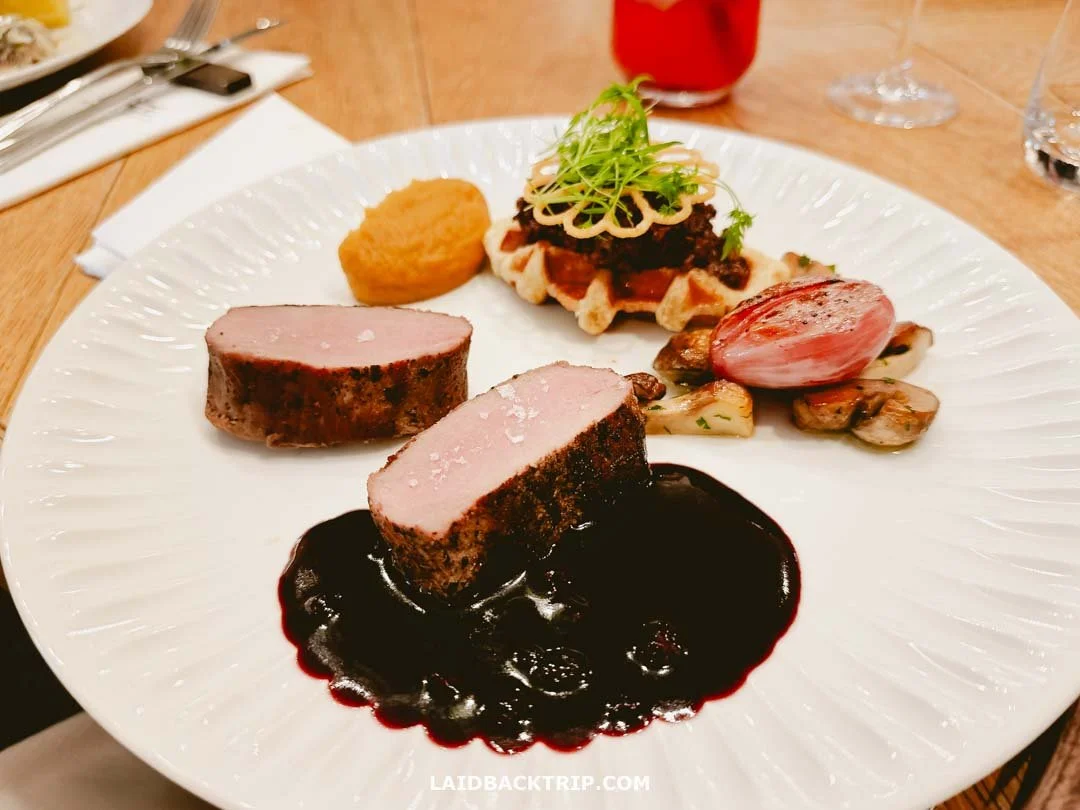
If the food and service are great, 5 to 10 percent is considered a nice tip in Prague.
This might be surprising, especially if you are visiting from the United States, but when the service does not meet our expectations, we simply do not tip. And if someone directly asks for a tip, that is usually another reason not to leave one. It might sound a bit strict, but I am saying this so you do not feel pressured in tourist-heavy restaurants. Do not feel obligated. It is your money and your decision. In Prague and throughout Czechia, tipping is appreciated but never mandatory.
When we order something small, like a coffee or a beer, we usually just round up the bill instead of calculating an exact percentage. For example, if a beer costs 77 CZK, we might leave 80 CZK, especially when paying in cash. It is simple and practical. But again, it is entirely up to you. And just to repeat, these tipping habits apply not only to Prague but to the rest of Czechia as well.
Prague Is Beautiful in Every Season
Prague is a year-round destination, but prices are usually lower in the winter months, except during the Christmas market season, which nowadays basically covers most of December and includes New Year's Eve. Summer, especially July and August, is the best in terms of weather.
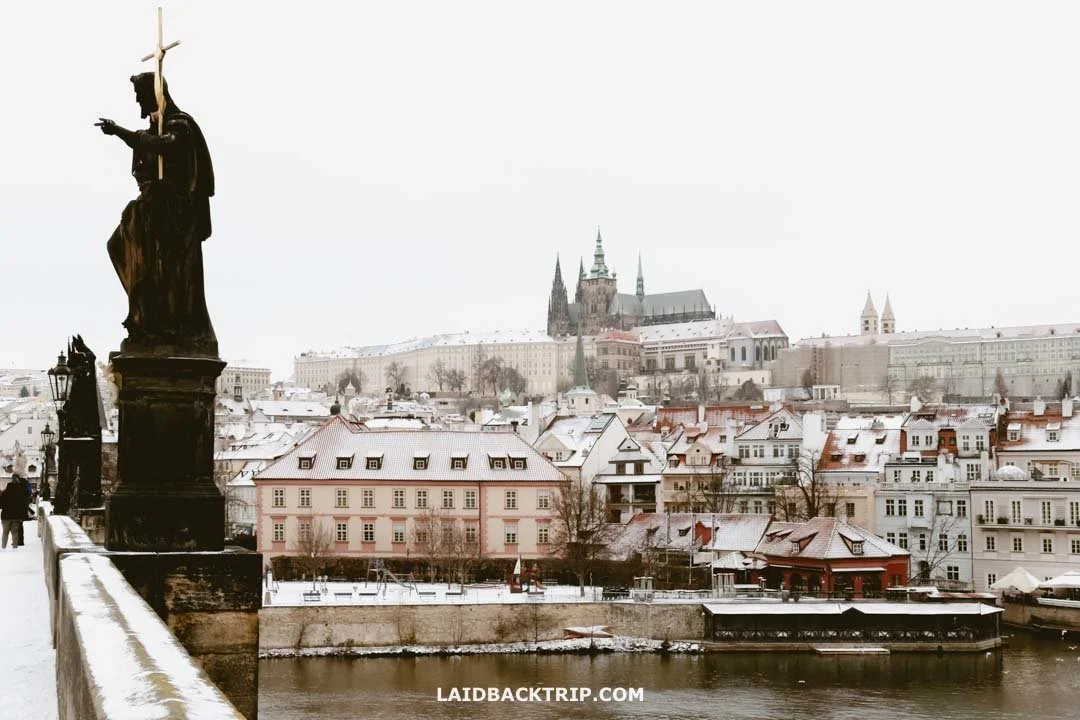
It doesn't snow often in Prague, but when it does, the historic center turns completely magical.
That said, I personally love Prague in the fall, especially in October and even more in November. The days are short, often gray, sometimes rainy, and there is something about that atmosphere that just fits the "medieval" city perfectly. I am not sure I would recommend that season to first-time visitors, but for me, walking through dimly lit cobblestone streets in that moody weather is one of my favorite things to do. There are many places in the world where I would not appreciate this kind of weather, but Prague somehow makes it work.
Lucie feels differently as she prefers spring, and honestly, I cannot argue with her. When April turns into May, Prague becomes incredibly beautiful. June can be even more stunning, though by then, peak season has already begun, and the crowds are noticeable. During this time, we love running along the Vltava River, taking in the views from Vyšehrad, climbing up Petřín, grabbing a cold beer in one of the beer gardens, or simply sitting by the river on Rašínovo nábřeží in the evening.
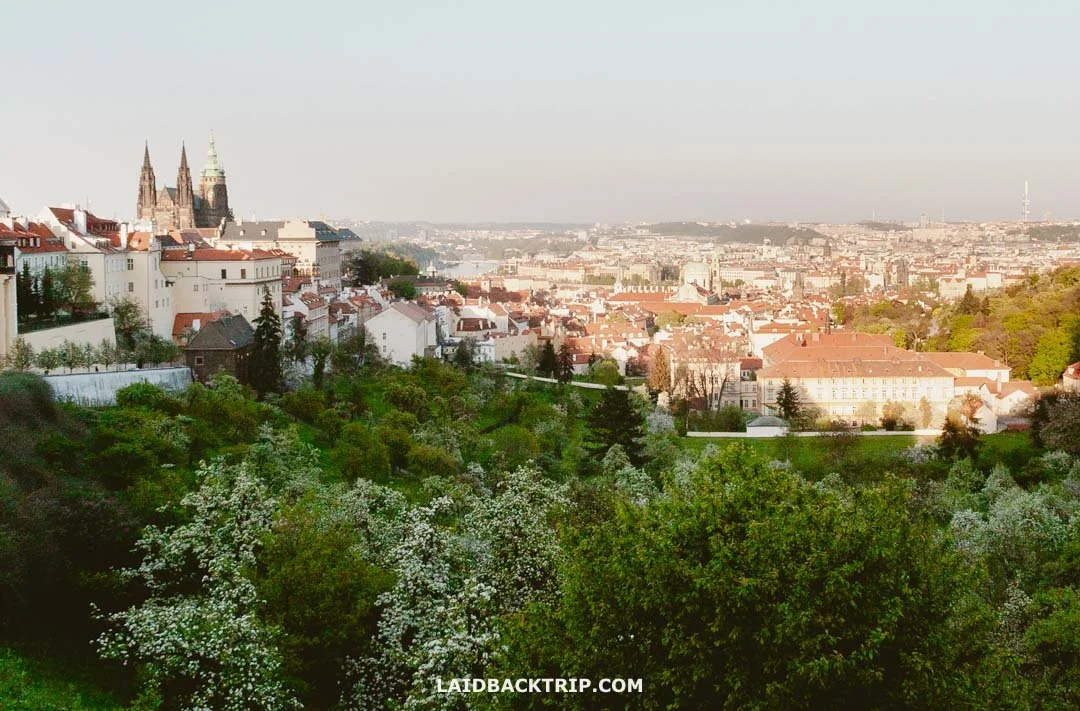
Prague in the spring has to be one of the most beautiful cities in the world.
Over the past few years, Prague has become one of Europe's most popular destinations. In summer, when the chances of warm, sunny days are high, the city often feels close to full capacity. That is why we sometimes avoid the crowded historic center and head instead to places like Divoká Šárka or Hostivař Forest Park for some nature. And when we really need a break, we leave the city altogether and escape to Lipno or the Krkonoše Mountains.
We Avoid Prague Christmas Markets
Now that we have talked about the best time to visit Prague and mentioned that winter is usually pretty quiet, there is one big exception, and that's the Prague Christmas Markets. They have become a major phenomenon of European tourism. It is not just Prague, of course, but we should take a closer look because they attract crowds from all over the world in numbers we honestly still struggle to understand.
Throughout December, Prague's historic center fills up with Christmas markets. While the weeks before Christmas are supposed to feel calm and festive, we think the markets often create the exact opposite atmosphere. They have grown so popular that they now start in late November and run until early January.
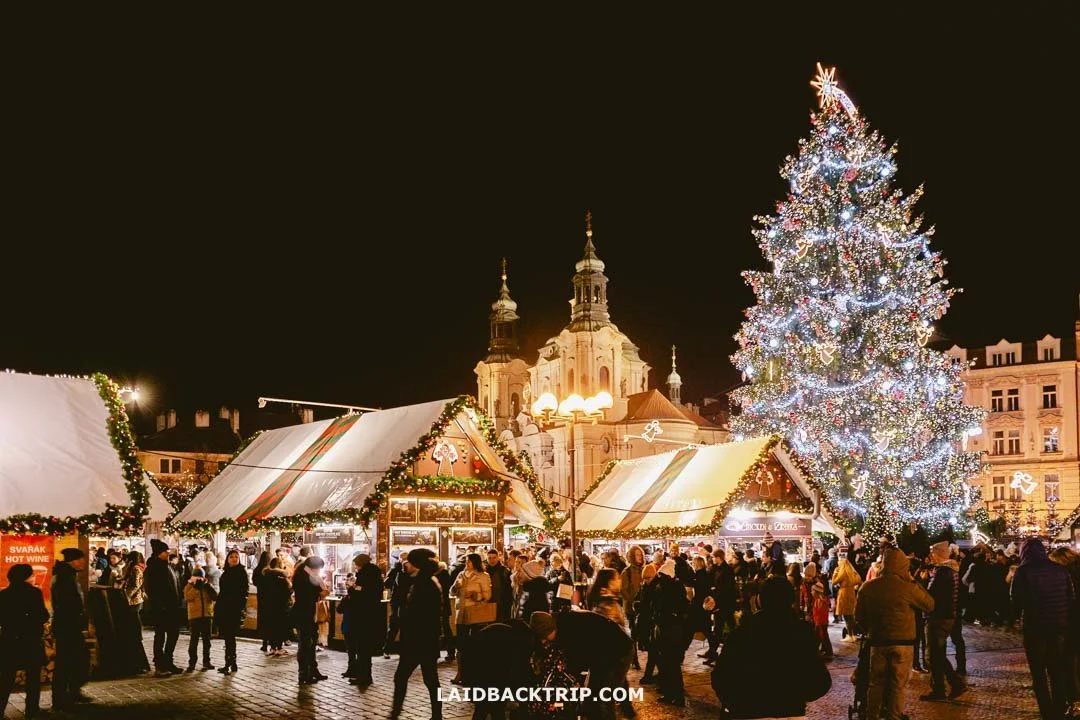
We avoid the Prague Christmas markets because they're just overcrowded tourist traps to us.
For us locals, this is the time of year when we intentionally avoid Old Town Square, where the most famous markets take place. To be honest, Lucie and I tend to skip most of them, even the less touristy ones. Overcrowded squares packed with visitors and stalls selling overpriced mulled wine and mistletoe are just not really our thing.
That said, if seeing the Christmas markets is high on your list, then this is absolutely the time to visit. The markets in Prague are regularly ranked among the best in the world, and many travelers come specifically for them. But if you prefer quiet streets and a more authentic local vibe, consider visiting once the markets wrap up. January and February are much calmer, and the city feels completely different.
Three Days in Prague Sounds About Right
It is always tricky to say how many days you need to see most of Prague's highlights, but as a local, I truly believe that three days is the sweet spot for most visitors. I have noticed that many travelers only plan one day here before moving on to another nearby city like Vienna or Munich. Sure, you can see Prague that way, but I personally prefer the slower option, and I will explain why.
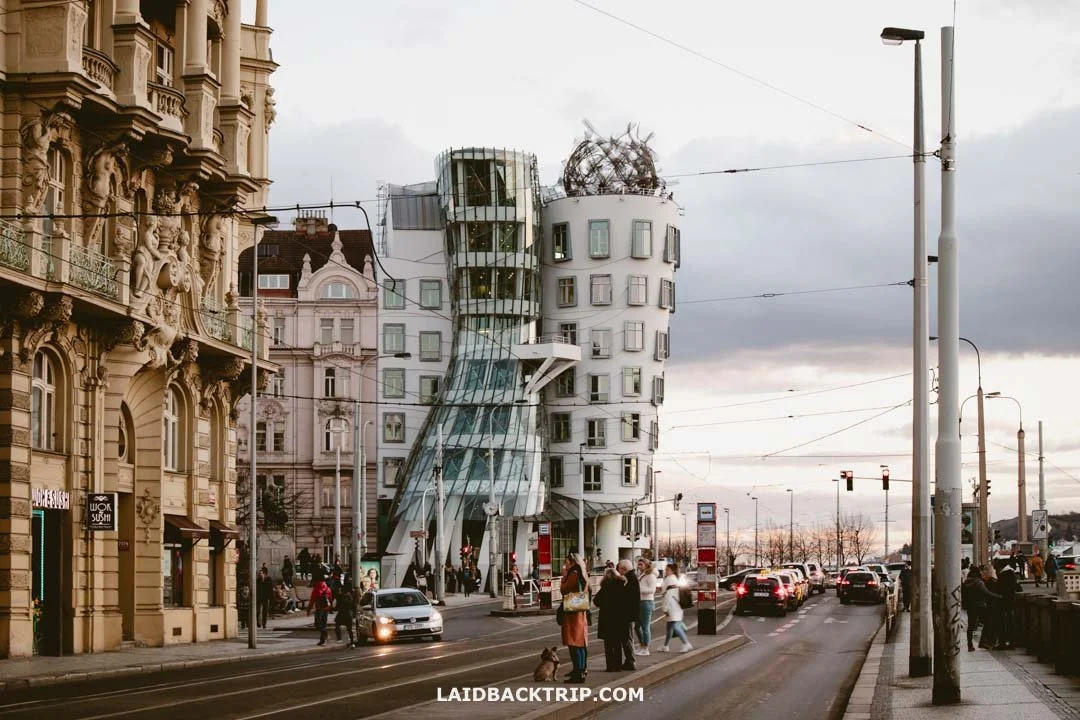
The Dancing House is one of the most interesting spots in Prague outside the historic center.
In three days, you can experience the best of Prague without constantly checking your watch. You can wander through the medieval streets of the Old Town, visit museums such as the National Museum, ride the funicular up to Petřín, try svíčková, enjoy a beer or two, maybe catch Dvořák's Rusalka at the State Opera, and if time allows, even take a trip outside the city to places like Karlštejn or Kutná Hora. and nearby Sedlec Ossuary. For this kind of visit, we put together a detailed 3-day Prague itinerary to help you get a real feel for the city and experience some of the things that make it so special to us.
That said, Prague is compact enough that you can still see a lot in a short time. If you start early and keep going until evening, you could cover the highlights in a single day, at least in theory. We understand that not everyone can stay longer, so we also created a packed 1-day Prague itinerary for those who want to move efficiently through the city without missing the key sights. It can be helpful to compare both versions and adjust them based on how much time you actually have.
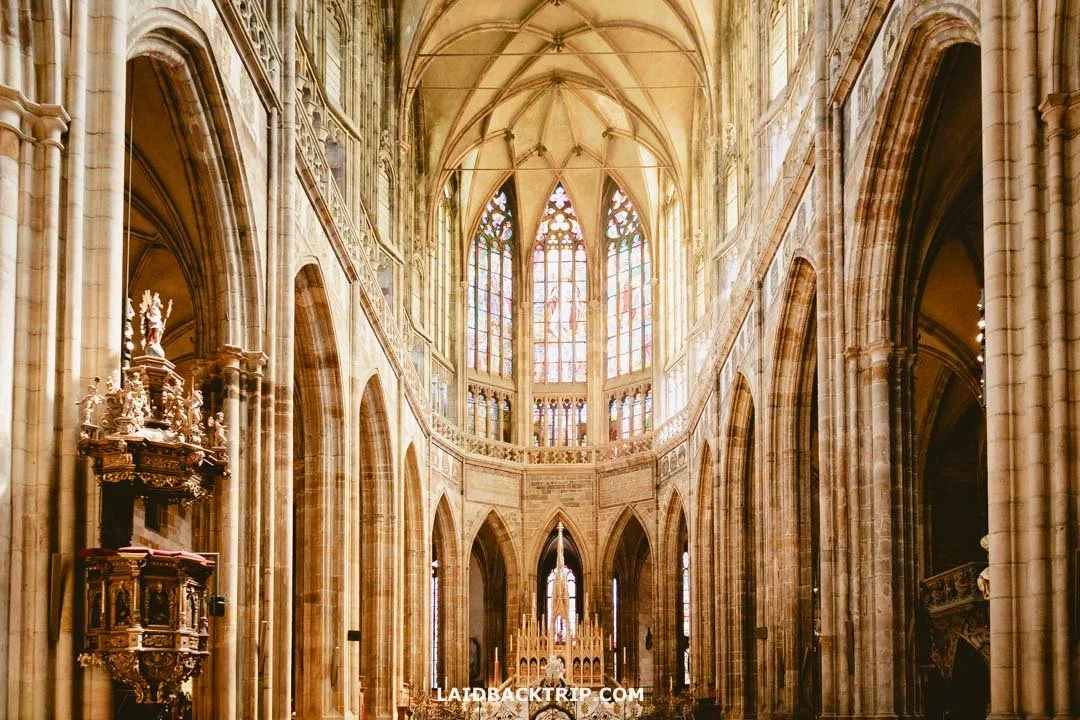
With only one day, you'll see major sights like St. Vitus Cathedral, but you likely won't have time to go inside.
While it is possible to walk through the historic center in one day because everything is close together, splitting your stay into two days already feels much more comfortable. The main reason I encourage adding a third day is that some truly amazing places are located outside Prague.
My personal favorites include Hluboká nad Vltavou Castle, the country's most beautiful castle, and the Terezín Memorial, WW2 site that was once one of the transit camps to Auschwitz. Then there is the Hussite town of Tábor and the elegant spa town of Karlovy Vary. Many travelers also head to another UNESCO gem, Český Krumlov, which is well worth the trip, too.
Prague Must-Sees
Now that we have agreed that three days is the ideal amount of time to spend in Prague, it is time to figure out how to fill them. The most famous attraction in the city is Prague Castle, and without a doubt, it is the top place to visit. What we love most about one of the largest complexes of this kind in the world, besides the castle itself and the incredible views over the city, is that it is also home to St. Vitus Cathedral. The Gothic architecture and stained glass windows of this huge church are truly breathtaking. Even as locals, whenever we are not sure what to do with a free afternoon, walking up to Prague Castle is always a safe bet.
From there, we would head down to the iconic Charles Bridge, a medieval stone masterpiece spanning the Vltava River. We always recommend going early in the morning to avoid the heavy crowds.
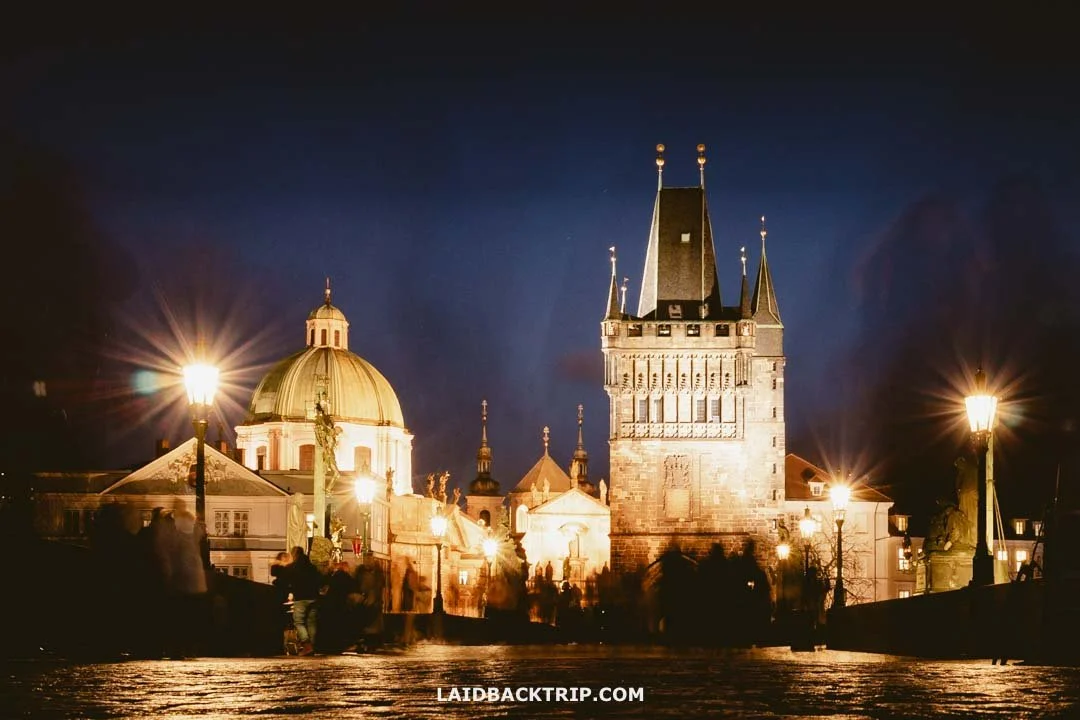
We love visiting the Charles Bridge at night because it's so much less crowded.
After that, we would continue to Old Town Square, surrounded by cobblestone streets and historic buildings, and home to the famous Astronomical Clock, the oldest operating clock of its kind in the world, known for its hourly show. While exploring the Old Town, we would also make time for the Jewish Quarter, with its beautiful synagogues and centuries-old cemetery. This is definitely one of those places that is worth seeing with a knowledgeable guide.
For panoramic views of the city, we would climb Petřín, visit the National Monument at Vítkov, or explore the historic ruins of Vyšehrad, which is one of our personal favorite spots in Prague. On the way to Vyšehrad, we would stop by the Dancing House to see a great example of modern architecture. We would also take a walk along the Vltava riverfront to admire Prague's bridges and the National Theater, and then make our way to Wenceslas Square to soak in the mix of architecture and stop by the National Museum.
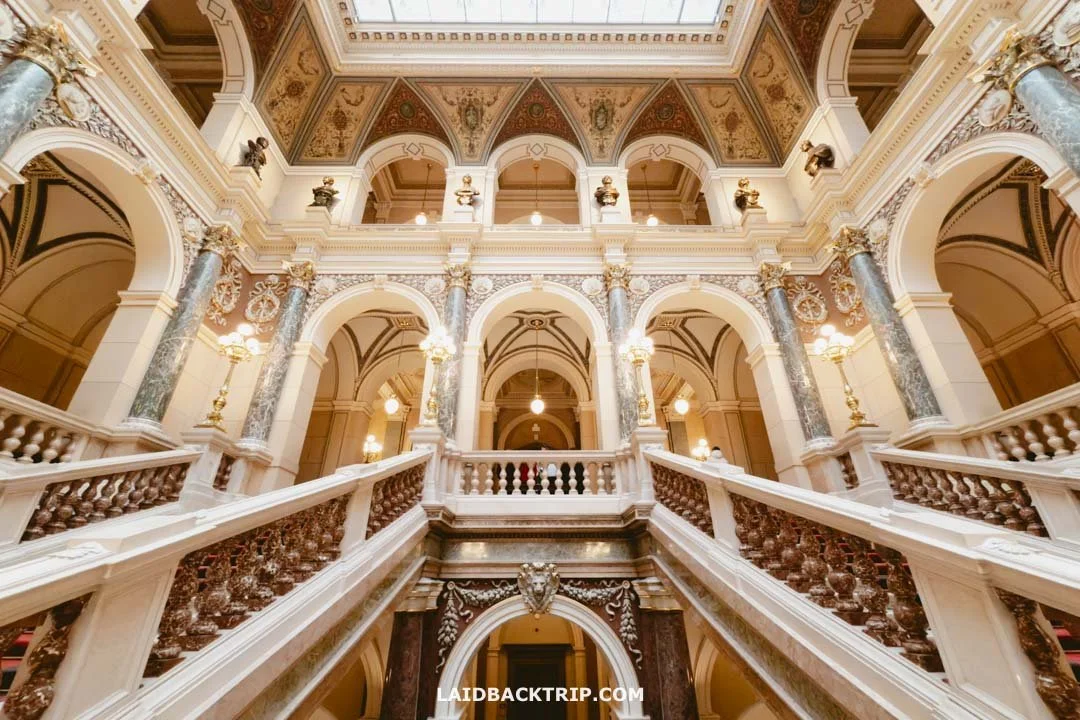
Prague's National Museum is worth a visit not only for the interesting exhibitions but also for the stunning interiors.
Of course, these are just the main highlights. We could easily keep adding more. Municipal House with its beautiful Art Nouveau design, the controversial Žižkov TV Tower, the colorful Lennon Wall, the Memorial to the Heroes of the Heydrich Terror, the Gothic Powder Tower, the rotating Franz Kafka Head, the family friendly Prague Zoo in Troja, the contemporary art center DOX, or the charming Nový Svět neighborhood are all places that deserve your attention too.
What Souvenirs to Buy in Prague
Prague's historic center is packed with souvenir shops selling everything from traditional items like Bohemian crystal to those random matryoshka dolls that have absolutely nothing to do with Czech culture. For us locals, walking along Karlova Street, the one connecting Old Town Square with Charles Bridge, can feel like one long bizzare moment because of all the trinkets marketed as Czech souvenirs, from CBD and absinthe products to Soviet-themed T-shirts and other questionable stuff.
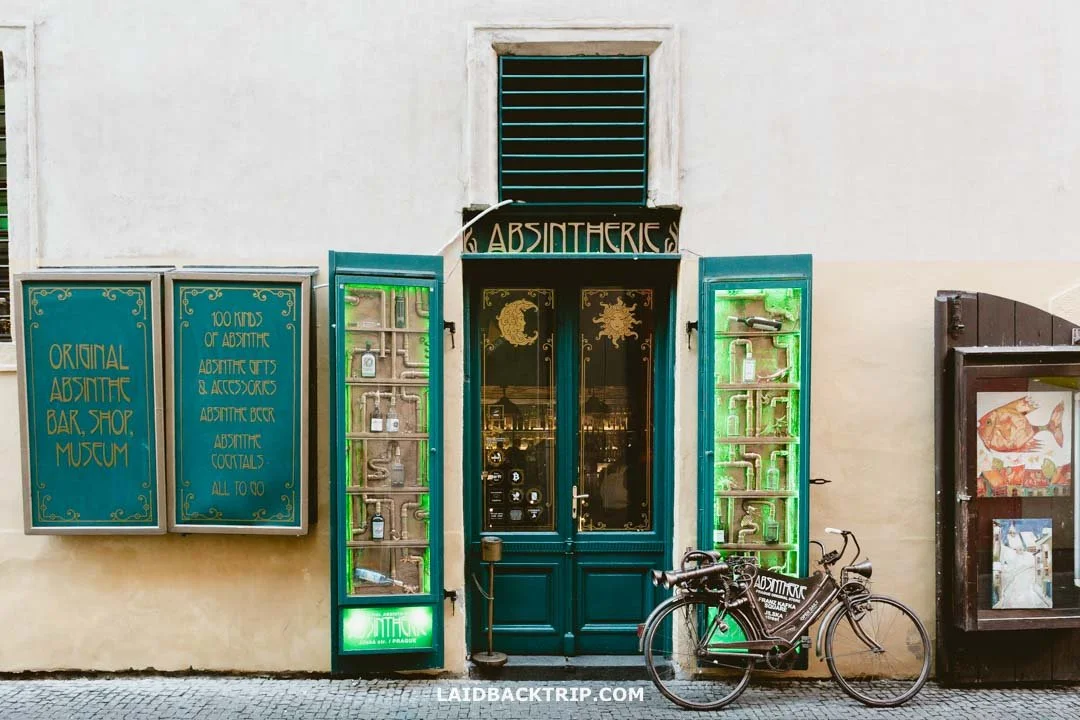
Absinthe is another thing that's popular with tourists but not so much with Czechs.
If you asked me what souvenir to bring home from Prague, I would probably suggest something small and affordable. Local craft beer is always a solid choice, and cans are much easier to transport than bottles. If you prefer something stronger, Becherovka is a classic herbal liqueur that feels very Czech. For kids, a Krteček plush toy is pretty much a must. Wooden marionettes are also traditional and make a more unique gift.
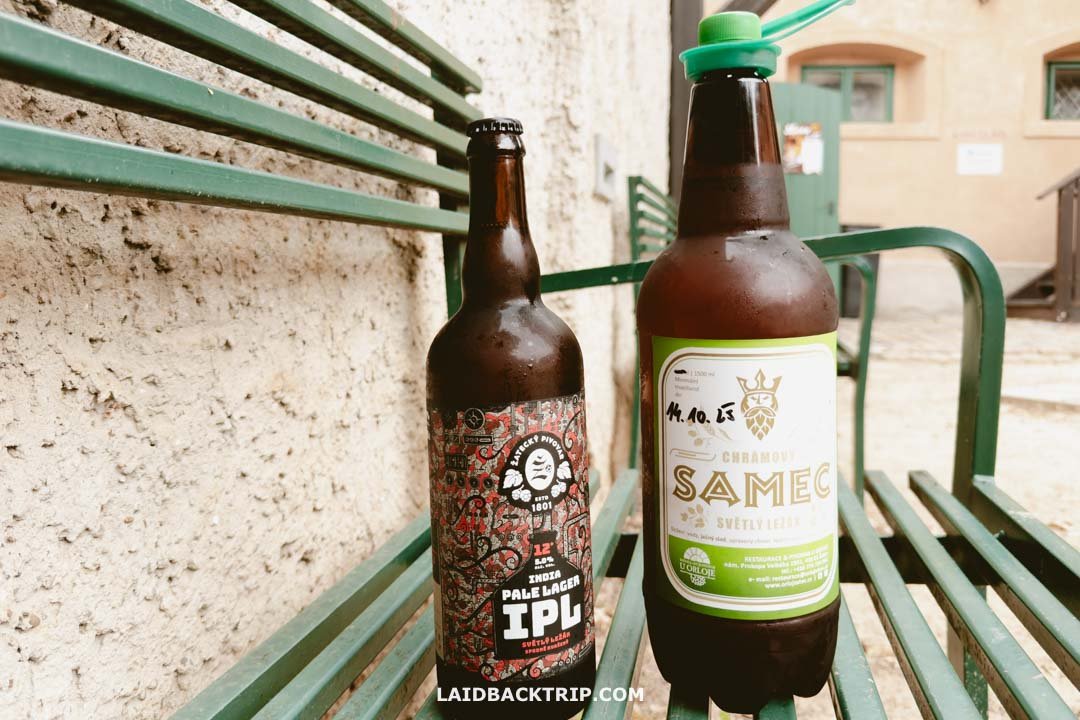
A local craft beer is one of the most traditional souvenirs to bring from Prague.
Bohemian crystal is beautiful, but it can get pricey. Czech porcelain, especially Cibulák (Blue Onion), is usually a bit more practical and something I would personally bring to my parents or grandparents. A traditional beer mug is even more affordable and still very Czech.
If you prefer non-alcoholic souvenirs, my secret tip would be handcrafted honey from one of the farmers' markets (beekeeping is extremely popular in Czechia). Just keep in mind that it is not the easiest thing to pack in your luggage (don't ask me how I know). If you have a sweet tooth, spa wafers are another great option. They are traditionally associated with spa towns like Karlovy Vary or Mariánské Lázně, which are both easy to visit on a day trip, but you can find them in Prague as well.
Prague is Easy to Explore on Foot and by Public Transport
Prague's center is compact, and as locals, we usually do most of our sightseeing on foot. Walking around Prague is honestly one of our favorite things to do, especially on lazy Sundays when we have nothing planned and just wander through our city. Sometimes we revisit corners we have not seen in years, and other times we discover something completely new. There are sidewalks everywhere, so getting around on foot is easy and comfortable.
When we need to get somewhere quickly or commute to work, we hop on the metro or tram. Prague's public transportation system is one of the best in the world, and we are genuinely proud of it. Especially when we compare it to how unreliable public transit can be in other highly developed countries. Every time I think about the buses in Calgary and those painful transfers from one bus to another, I feel very grateful for the system we have here at home.
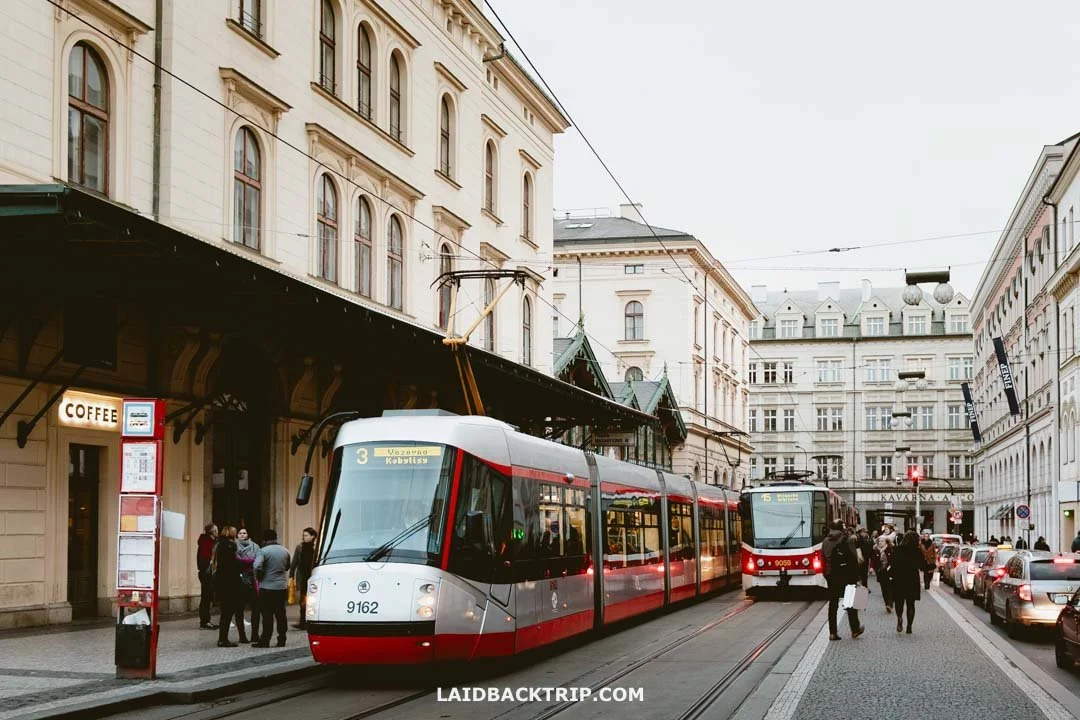
We love public transport in Prague because it's super reliable and still really cheap.
Generally, the main forms of transport we use are buses, trams, and the metro, plus commuter trains from time to time. There are also ferries and a funicular, but those feel more like tourist attractions than something we would use daily. The best part is that using public transportation in Prague is super easy. You simply find the nearest connection, check where it is heading, buy a ticket, and then validate it. Let us start with tickets, because that part is very simple.
Paper and SMS tickets come in two main options. A 30-minute ticket without transfers costs 42 CZK, and a 90-minute ticket with transfers costs 55 CZK. There is also a 24-hour ticket for 150 CZK and a 72-hour ticket for 350 CZK, which can be worth it if you plan on using public transportation frequently. We use an annual pass, of course, but most visitors will not need that.
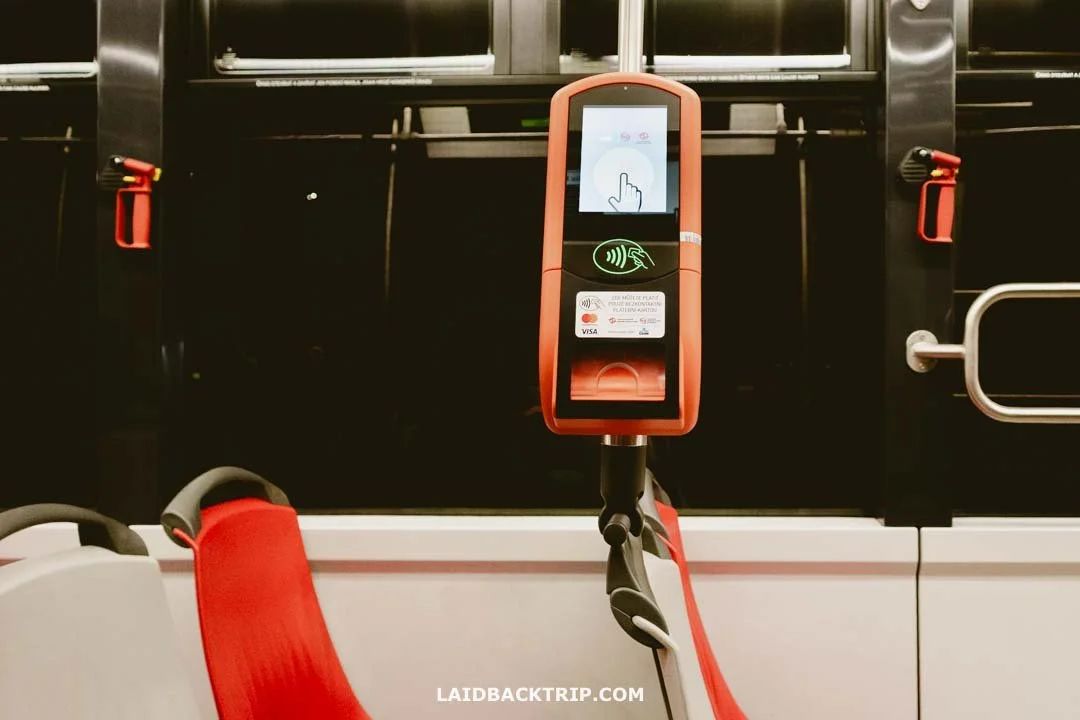
You can also buy a ticket right inside the tram, trolleybus, or bus at the orange ticket machine with a credit card.
To get around Prague like a local, download the PID Lítačka app. It makes everything related to public transport much easier, and tickets purchased through the app are slightly cheaper. The app is not only useful for buying tickets, but also for finding nearby stops, checking schedules, and planning routes.
One last important tip: always validate your paper ticket before entering the restricted metro area or immediately after boarding a bus or tram. If you use an SMS ticket, wait for the confirmation message before traveling. And remember that trams in Prague have the right of way, even at crosswalks, unless traffic lights say otherwise.
Where to Stay in Prague
Over the years, we have stayed in some really nice Prague hotels, mostly during breaks between long-term trips or when we simply wanted to try something new and check out newly opened properties. Since we actually live here most of the time, we never really had a reason to book budget hotels. So in that category, our recommendations are based more on solid research than personal experience.
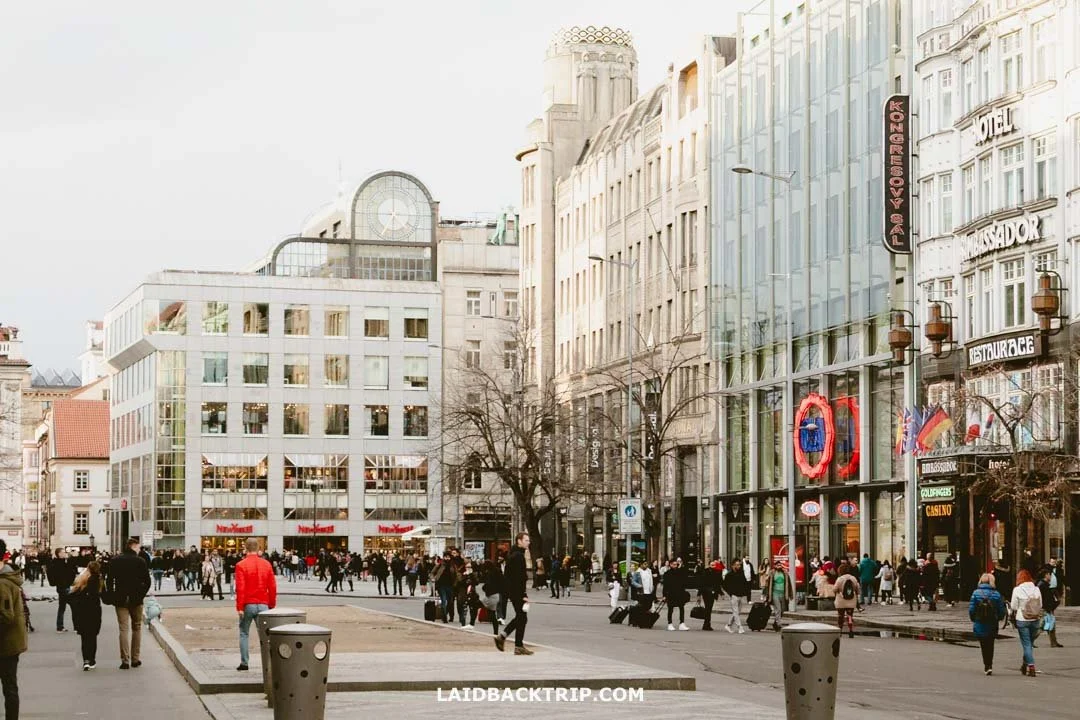
New Town is one of the most popular areas to stay in when you're visiting Prague.
As for neighborhoods, Old Town (Staré Město), is the most central and convenient. You are steps away from major sights, but you also deal with higher prices and constant crowds. It would not be our everyday choice, but for a first visit, it is hard to beat. We personally love Vinohrady because we lived there for years, and it has a relaxed, local feel with beautiful architecture, though Nové Město (New Town), might be slightly more practical overall. Žižkov is ideal if you are here for pub culture, Malá Strana feels intimate and romantic, and Karlín offers a more trendy atmosphere. Any of these neighborhoods works well for a short stay.
If you do not mind staying a bit outside the historic core, our favorite option is the 4-star Stages Hotel. It sits right by the Českomoravská metro station on the B line next to the O2 Arena, the largest multipurpose arena in Prague. We stayed there after a couple of concerts and really liked it. Diplomat Hotel is much closer to Prague Castle and usually offers very reasonable prices for a four-star stay.
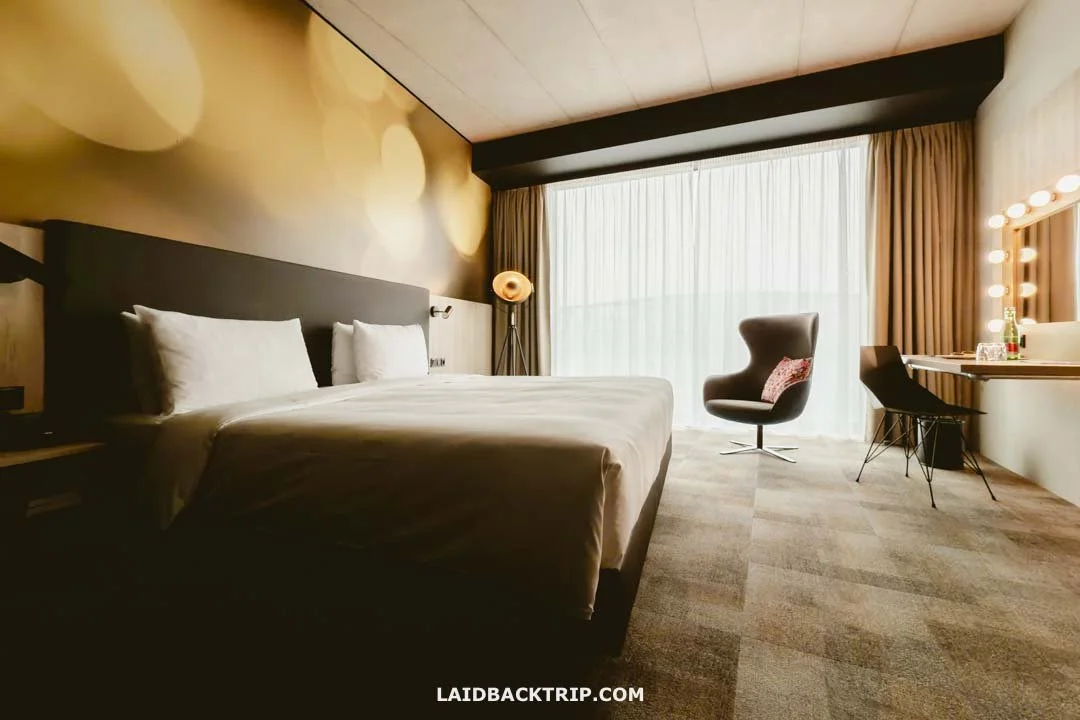
Stages is definitely our favorite place to stay in Prague.
For luxury, our top pick is W Prague on Václavské náměstí. The rooms are beautiful, but what really stood out to me was the spa. And I still think about their shakshuka at breakfast. Augustine is another fantastic option with stunning rooms. Hilton Prague Atrium is centrally located and, although it is a five-star hotel, it often has great deals, especially in the off-season.
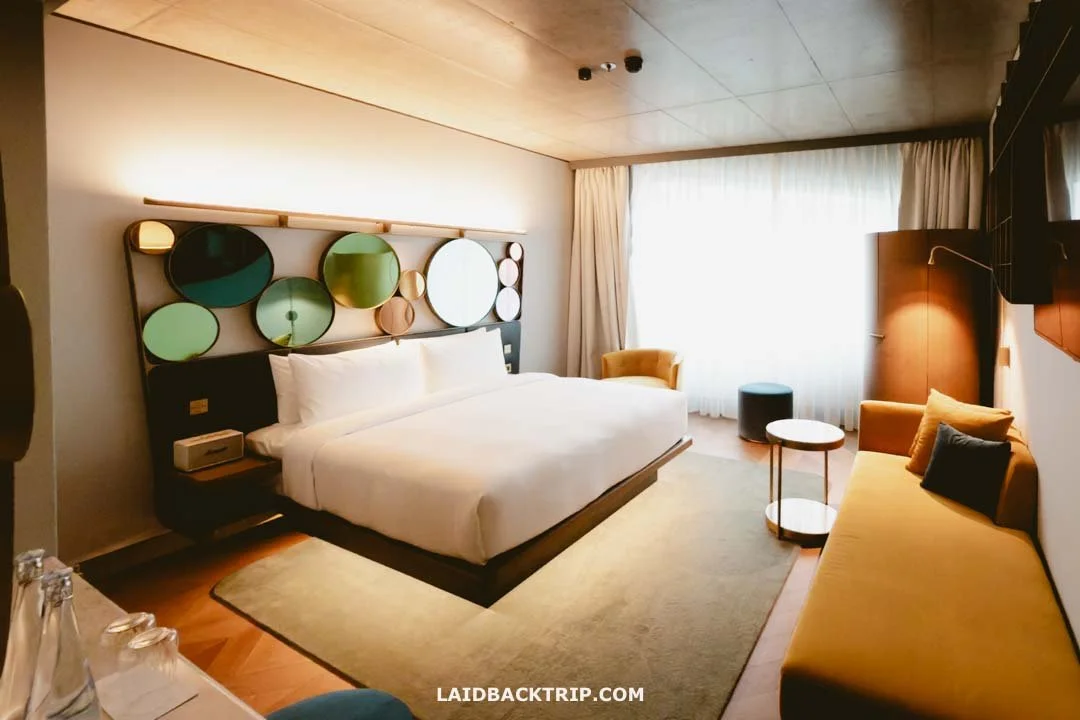
Prague W ended up being one of the best places we've ever stayed in Prague.
Among the three-star options, we like the modern Motel One Prague Florentinum for its central location, and the classic Ibis Praha Malá Strana near Anděl metro station (Ibis hotels in general are one of our go-to choices across Europe). One big advantage of Prague is that accommodation is still more affordable than in many Western European capitals, which makes it a great destination if you want comfort without overspending.
Getting From and To Prague Airport
We use Václav Havel Prague Airport (PRG) for pretty much all our trips abroad, and over the years, we have tried almost every possible way of getting to and from there. The cheapest option (aka Martin's favorite) is simply taking public transport. Right now, the quickest option is a bus and metro combo, or just the airport bus. The city has also been promising a train connection to the airport, but that one will take a few more years. And since we're in Czechia, it will probably be later rather than sooner.
So, when getting from Prague Airport to the city center, our most common route is Bus 59 to Nádraží Veleslavín metro station on the Green Line A. From there, it is just a quick 10-minute metro ride to downtown. There's also Bus 191 that goes to Anděl metro station, which works well if you're staying on the Yellow Line B, but for us it's not a great option because of where we live.
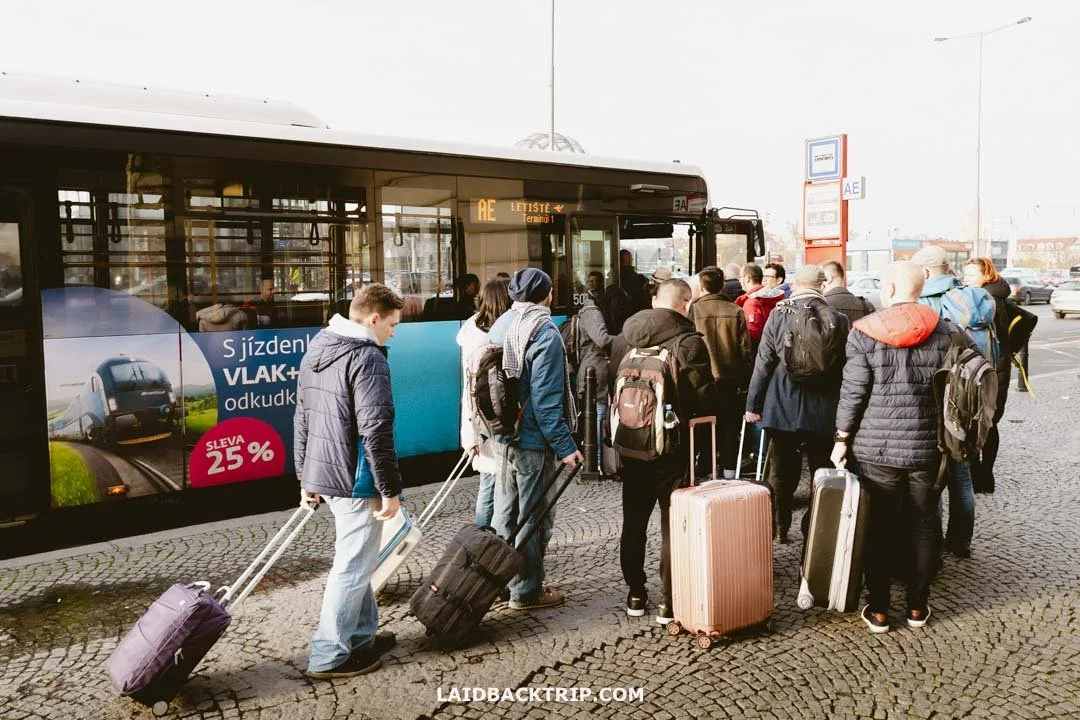
AE bus departing to the airport from the stop right in front of the main railway station.
We have also taken the AE Bus a few times, mostly out of curiosity. It connects the airport directly to Prague Main Railway Station (Hlavní nádraží) and runs every 30 minutes. A single ride costs 100 CZK, which is a very fair price. But since it is not included in Lítačka, there was never much reason for us to pay extra. For tourists without an annual pass though, we think it is a great option.
When it comes to taxis at Prague Airport, the situation has improved a lot over the years. Uber is now the official airport taxi partner, and you can book through the app or at kiosks in the arrivals hall. Liftago and Bolt are also widely available. All of these ridesharing apps show the price upfront, which is super convenient. As of 2026, the price for a regular taxi ride from the airport to the historic center is regulated and should cost around 800 CZK, or about 32 EUR.
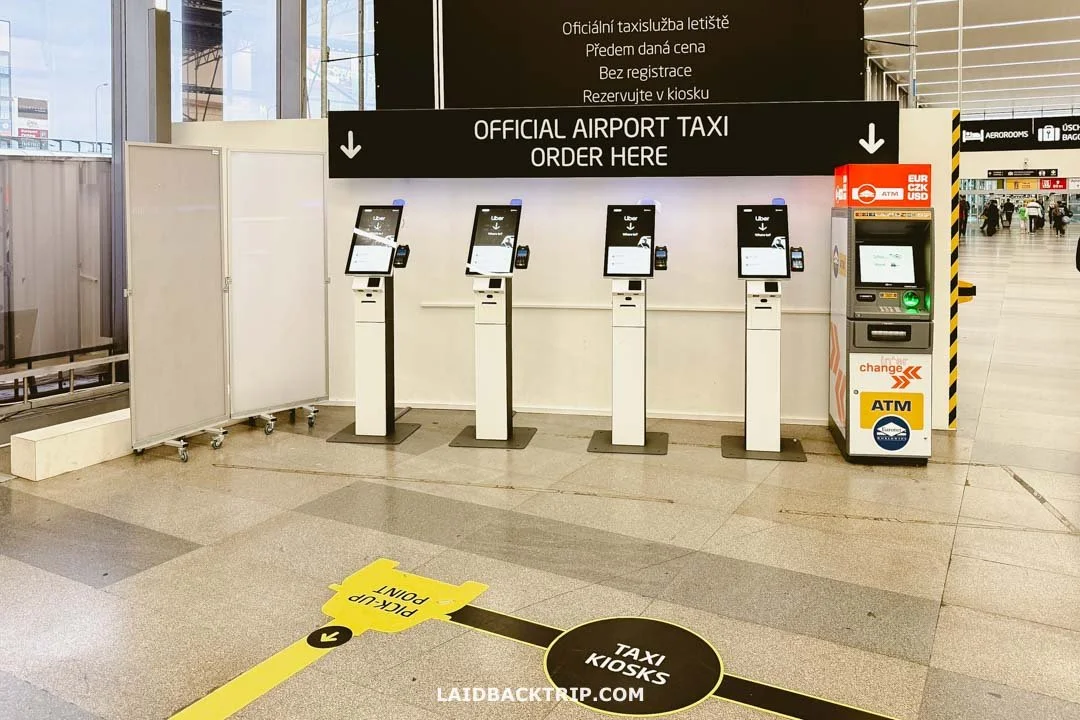
This is what the official taxi stands at Prague Airport look like these days.
Another hugely popular way to reach Prague's center is by using one of the private shuttles. The advantage is that they are affordable and reliable. That said, we would only book through platforms like GetYourGuide and choose services with tons of positive reviews like this one. We have also driven to the airport with our own car a few times, but this only really makes sense if you are planning to explore more of the country beyond Prague.
Prague is the Most Amazing City in Europe
As you have probably noticed by now, we love Prague. We truly believe it is one of the best cities in the world, and we hope you will have an amazing time when you visit. With so many beautiful places to explore and such rich architecture and history, Prague really is something special. Even as locals, we still enjoy wandering through the historic center because it is simply stunning. There is honestly no other place quite like it.
That said, Prague is not perfect. If someone keeps telling you it is a fairy-tale destination, it is easy to build sky-high expectations. And while I am not saying it does not feel magical at times, especially when you experience a sunrise from the Prague Castle, or mist covers the Old Town, I would still recommend keeping your expectations realistic. And, obviously, a little thoughtful planning also goes a long way when visiting Prague.
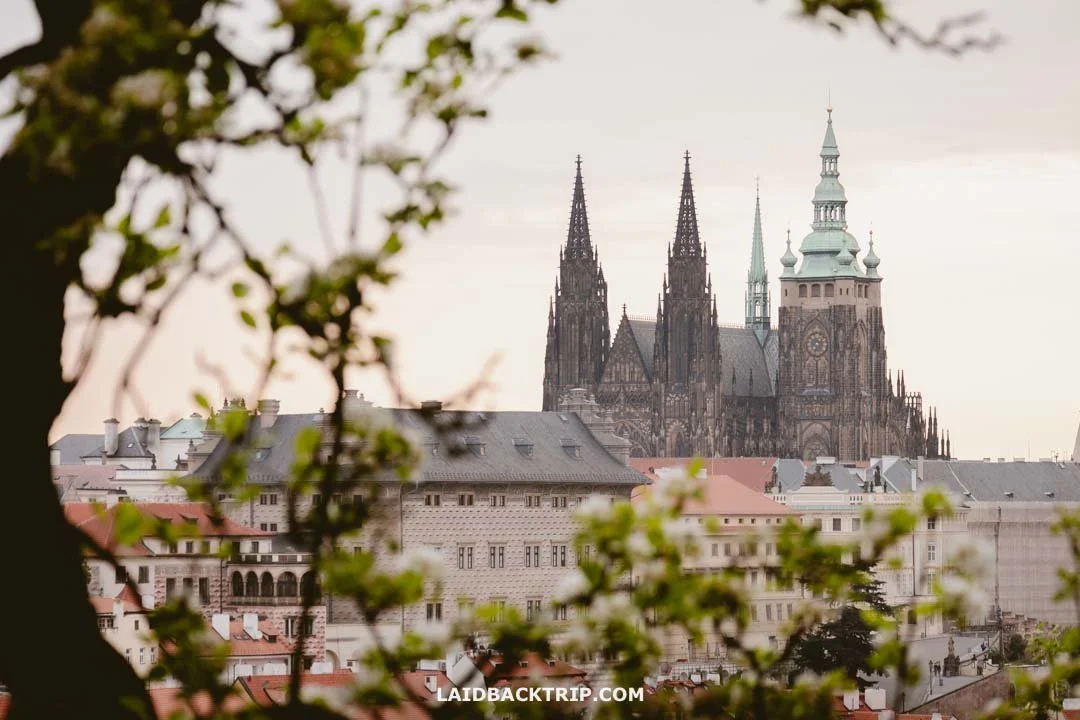
There's so much more to our city than just the Prague Castle.
When we want to see the often overcrowded Charles Bridge, we go early in the morning, so crossing the Vltava River feels peaceful compared to squeezing through midday crowds. We ignore the bizarre souvenir shops that make Karlova Street feel a bit like an amusement park. We walk past stalls selling trdelnik or overpriced Prague ham without a second thought.
If we are going out for beer, we skip Old Town and head to neighborhoods like Holešovice, Nusle, Žižkov, or Smíchov instead. And if we want a walking tour, we book it through a reliable platform or ask at a hotel, rather than joining someone who randomly approaches us near the Astronomical Clock. I could keep going, but I think you get the idea.
And that is it, at least for now. If you have any questions about your trip to Prague, feel free to ask in the comments. We are always happy to help!


Experience Czechia's past and present through engaging exhibitions on history, culture, and nature at Prague's National Museum.