3 Days in Prague: The Perfect Itinerary by a Local
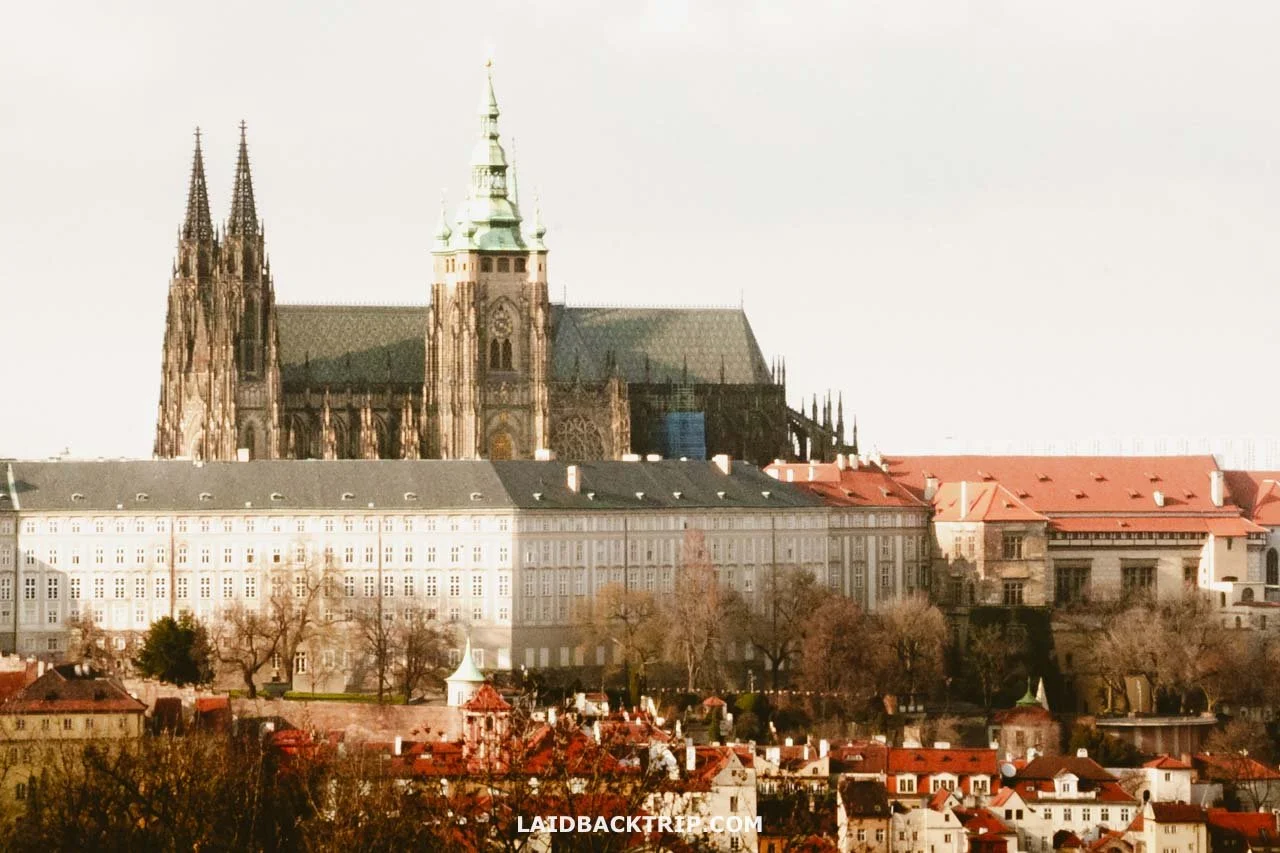
As locals, here we share how to spend three days in Prague!
You cannot expect us to be unbiased when writing about Prague, the capital city of the Czech Republic. Lucie and I have been living here since our college days (with a few breaks for long-term trips, of course), so we have had countless chances to walk every narrow cobblestone street, wander through the center again and again, explore all the must-sees, and dig into the hidden corners.
The city has changed a lot since we first moved in, but the same can be said about the whole of Czechia (yes, even the name of our country is different). And even though the Old Town became insanely touristy, the historical sites and main attractions that have stood here since the Middle Ages (or later eras) remain as beautiful as ever.
And even after all these years and all the hours we spent in the center, we still think Prague is the most beautiful destination you can visit in Europe, if not in the whole world. Sure, this is very subjective, but we really do have a soft spot for this amazing city. And it is not only us who have noticed Prague's magical atmosphere and well-preserved medieval architecture. The city is now at the peak of its popularity, and the number of visitors keeps growing every year.
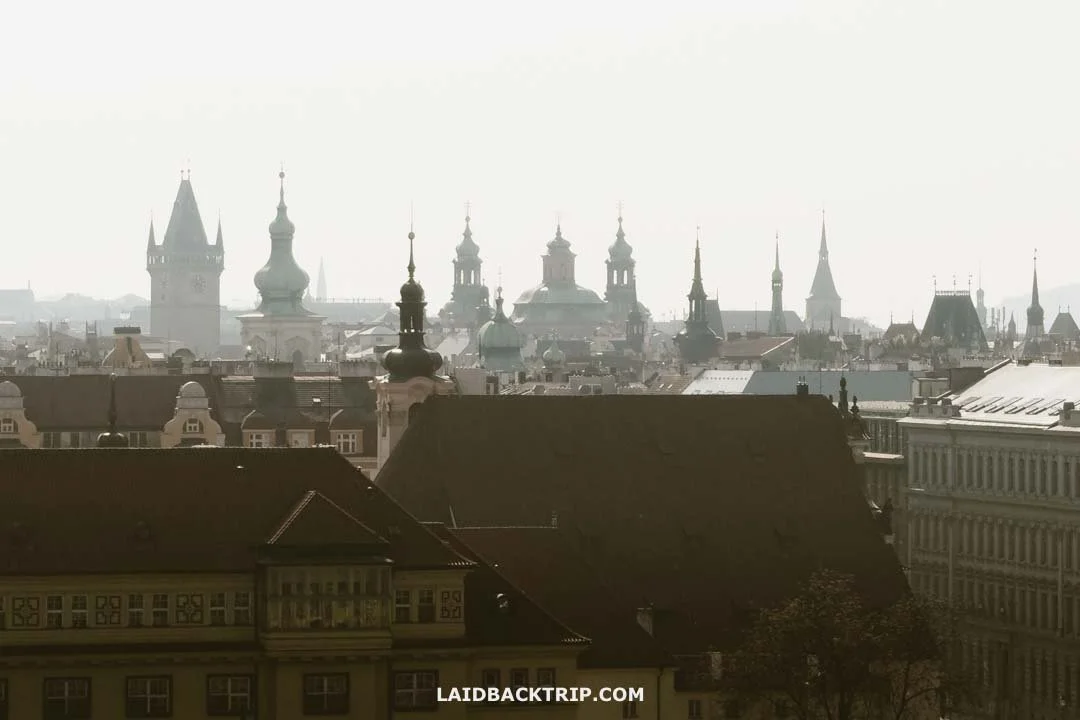
There is a reason they call Prague the City of a Hundred Spires.
So, we have established that the City of Hundreds Spires, as we like to call it, is beautiful. But how much time do you actually need for this trip? That is probably one of your biggest questions when planning your first visit. After a long discussion with Lucie, we compromised and settled on three days, because we agreed this is the sweet spot. One or two days are simply not enough, and when we thought about longer stays, we had to remind ourselves that most visitors will not have the luxury of spending a full week in Prague, since central Europe is packed with amazing places.
As locals, we think three days give you enough time to see most of the best attractions Prague offers, because the city is compact and very walkable, and your visit will not feel rushed. Or at least not as rushed as those who only spend a day or two here, which is just enough to see the highlights and nothing more. Either way, one thing we agreed on right away was that no matter how long you stay in Prague, you will enjoy it.
Our suggested itinerary focuses on the most beautiful places you should not miss on your first visit and is filled with essentials and little details we thought would make it as practical as possible. It might look packed and busy, but it is absolutely doable in three days because we tested it ourselves and walked these routes more times than we can count. Just remember that every extra day you spend in Prague gives you the chance to see more than those who rush through the city before heading to other popular destinations. In any case, feel free to get inspired. We cannot wait to show you around!
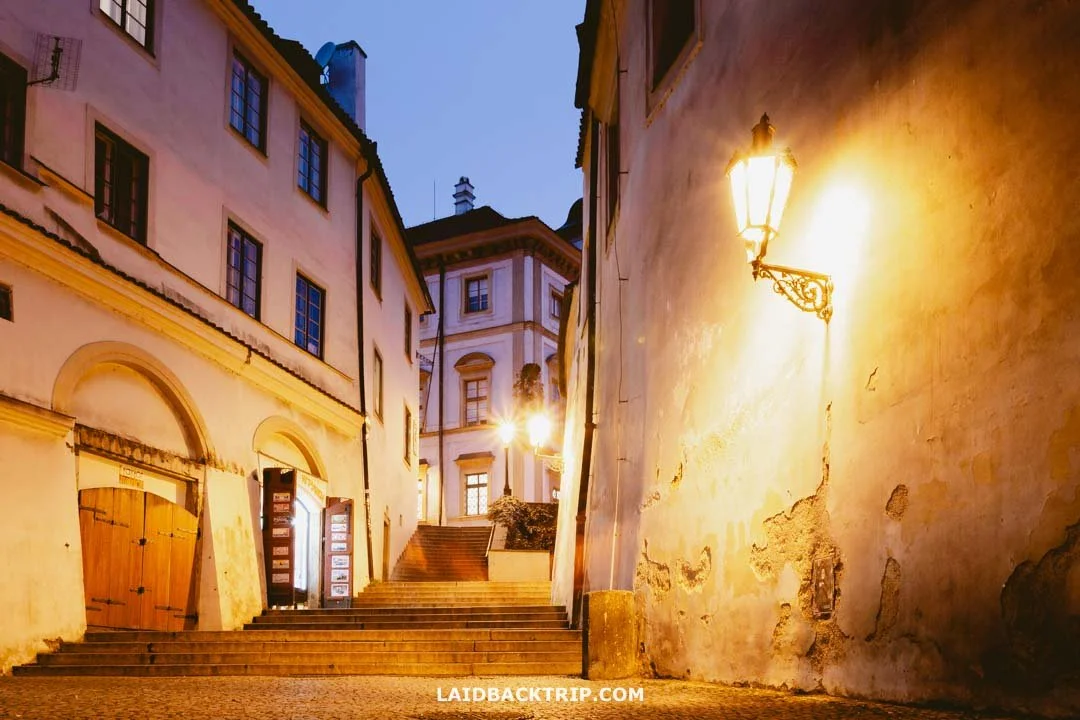
We wanted our Prague itinerary to feel authentic, so we included plenty of places only locals visit.
3-Day Prague Itinerary: What to Expect
Before we share our suggested 3-day route, which has all the must-visit places in Prague, with you, it is necessary to sit down and think about what you expect from our city. Are you visiting Prague for the first time and want to see the top sights and seek the most popular activities that everyone does here? Are you a couple looking for a romantic escape, a family with kids, or retirees who want to enjoy our city at a slow pace? All of this will have a big impact on how you would want to spend your time in Prague (not to mention when you visit), but it's really not in our strength to custom-tailor it for everyone.
So the purpose of our itinerary is to simply show you the Prague's most famous places and activities and explore them in a way we think makes sense. We prefer to stay active whenever we travel, and we followed this mindset even here. Obviously, it's not the only way, as there's always room for adjustments because not everyone is into catching sunrise on the Charles Bridge each morning, tasting our liquid gold each evening, or spending an entire afternoon in the museums. In this case, simply pick from our itinerary the things you think you might like and visit them according to your travel plan and the possibilities you have.
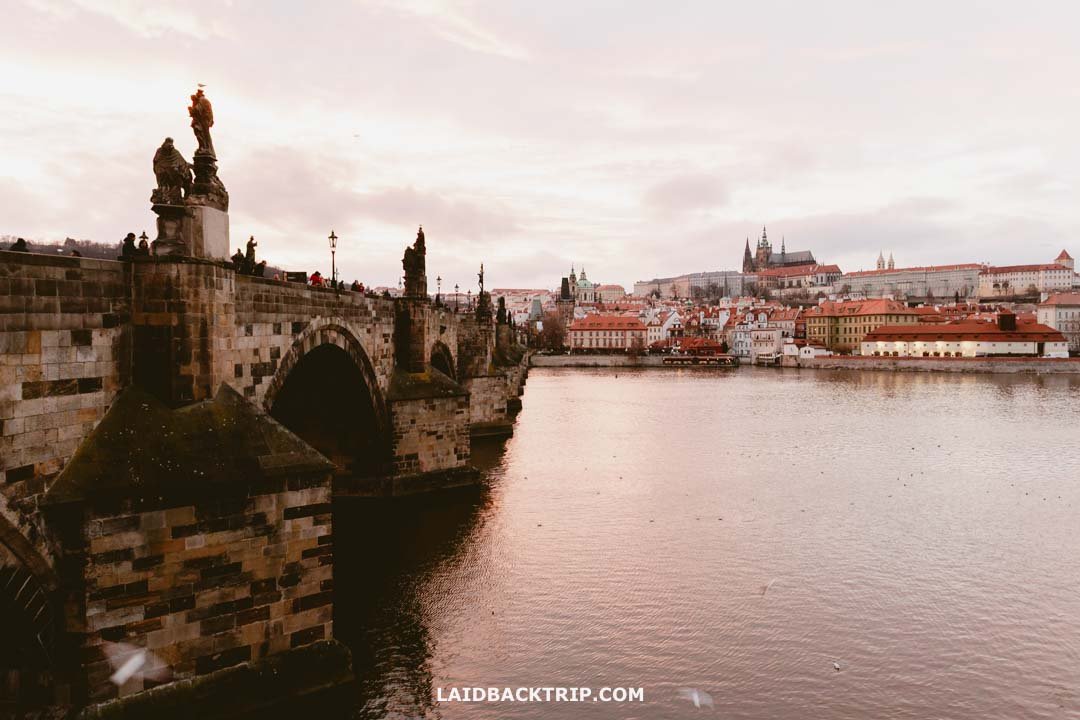
Charles Bridge and Prague Castle are just two highlights of Prague's amazing historic center.
Prague is also a perfect choice if you love museums, theaters, and European culture in general, so we definitely tried to throw a few interesting experiences into the mix. Simply put, the capital of the Czech Republic has a lot to offer, and we believe our itinerary includes alternatives for all of you. As we walk you through some of those places, we try to mention which ones can be skipped and which ones cannot, so you can always have room for improvisation.
Again, just remember that this itinerary is all about the city highlights you should see on your first visit. I won't send you to Jižní Město to look at paneláky, our prefabricated Communist-era blocks, or Černý Most (same but worse), and I won't suggest heading out to Divoká Šárka, one of our beautiful nature parks, because you simply won't have time for it. Lastly, I'd like to say that with only 72 hours in Prague, and by following our itinerary, you won't have time to explore beyond the capital, which is a bit of a shame, as you would find some real gems out there.
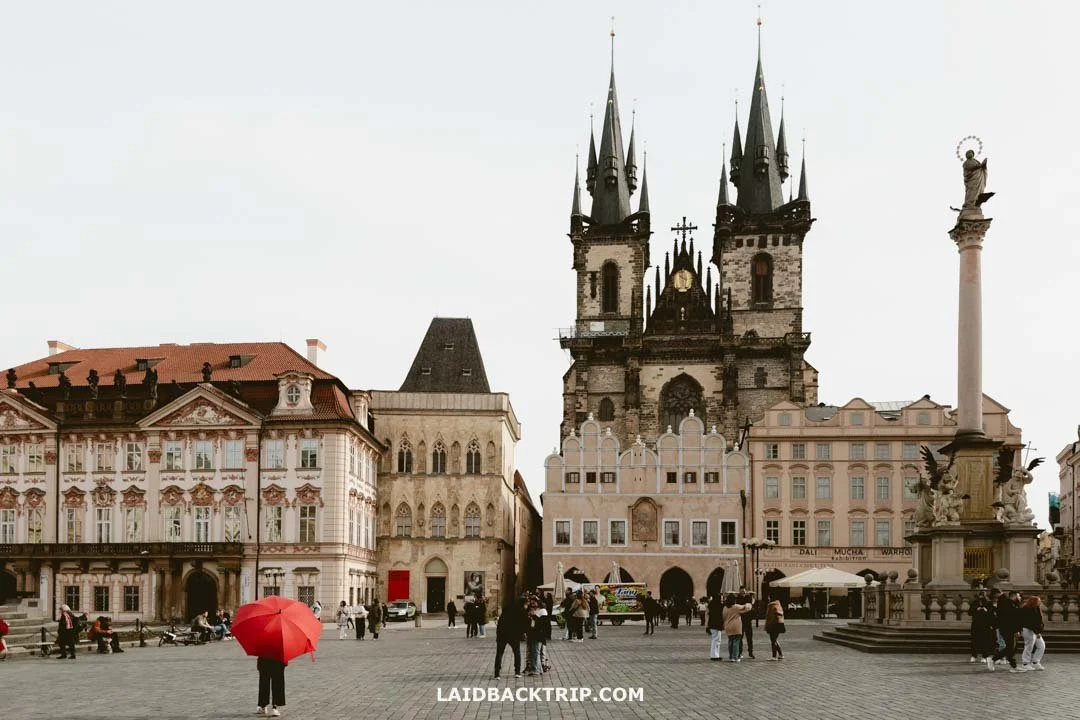
Prague's historic center has been on the UNESCO World Heritage list since 1992.
Essential Prague Tips
I also encourage you to check out our other Prague guides so you can plan your trip even better. Knowing when to visit Prague is crucial to every itinerary, especially if you're more into spending time outdoors or in the museums, and our city is no exception in this regard. In a similar sentiment, it will definitely help knowing what to wear in Prague, as each season brings very different weather to our city.
Prague is a very walkable city, so we planned this itinerary so that you pretty much don't need to learn how to use public transport, but it's still good to know how it works, because it's fantastic and can make your days slightly easier (especially the third one in this case). It's also useful to know how to reach Prague's city center from Prague Airport to avoid being ripped off. We also suggest staying in New Town around Wenceslas Square, but you will definitely get a more detailed look at Prague's accommodations here.
We also wrote a detailed post on staying safe in Prague. Even though our city is considered one of the safest in the world, it's different when you're here as a tourist, since you may not know the common scams or the spots where you should watch out for pickpockets.
World Nomads provides travel insurance for travelers to cover their trip essentials, including sports and adventure activities.
SafetyWing is affordable travel insurance for backpackers, long-term travelers, and digital nomads.
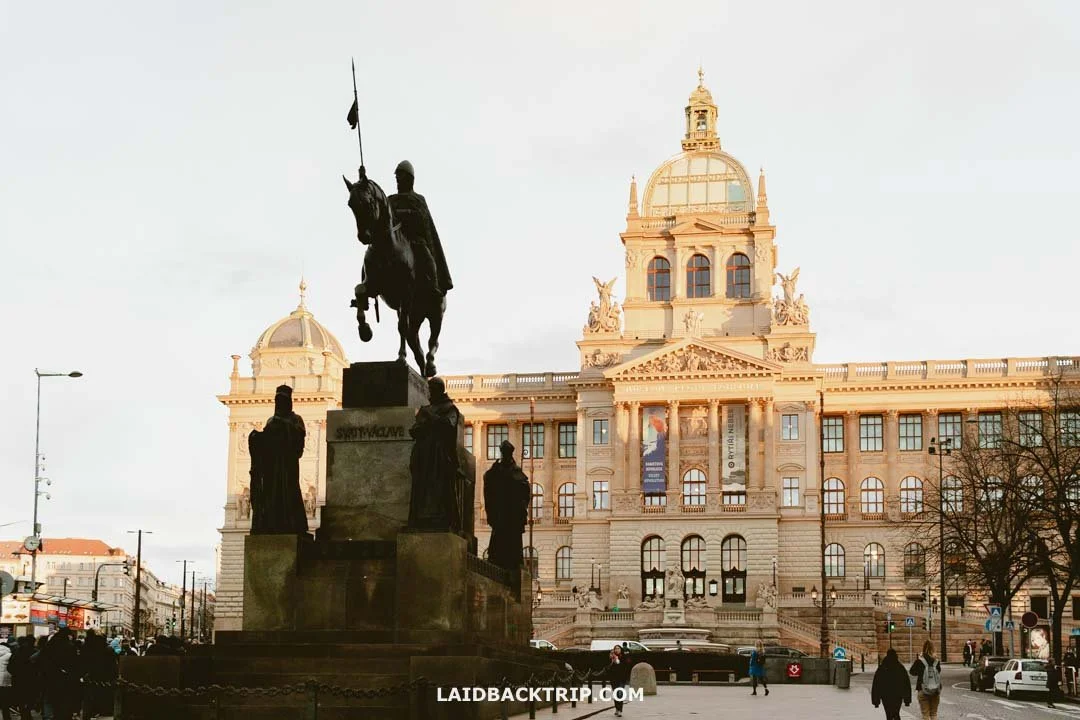
Prague is a very tourist-friendly destination.
Day 1 in Prague: New Town and Old Town
On day one, we believe you are excited and want to see all Prague's highlights, but we really don't need to hit them all at once. So our first advice is that while it's okay to visit the top places, it's also fine to leave some highlights for later. We'll stay within a relatively small area the whole day and will do about five kilometers of walking. It's great if youstart early in the morning (so you can visit a museum or two), but it also works if you don't have a full day.
We start our day on Wenceslas Square, as it's one of the most central places in the capital with tons of history tightly connected to our nation. It's also a great place to base yourself for the next few days, as it has some great hotels like Pytloun Boutique Hotel Prague or W Prague, as well as the NYX Hotel Prague, which is just around the corner.
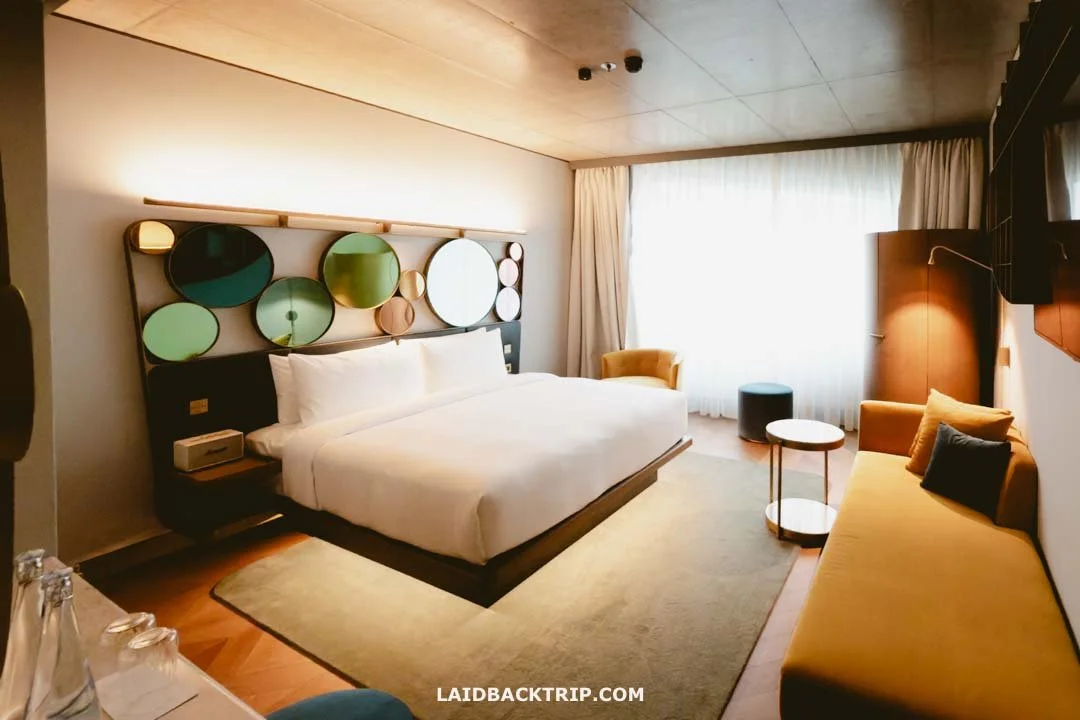
The luxurious W Hotel sits right on Wenceslas Square.
From here, walk via Na Příkopě Street to Powder Tower, Municipal House, and Republic Square. From here, head to Old Town Square via Celetná Street. Once you've soaked in the atmosphere and seen the Astronomical Clock in action, continue via Pařížská Street to Josefov, the old Jewish Quarter, which is worth exploring with a guided tour.
After you're done with a tour, head to Dvořákovo nábřeží to see the Vltava River waterfront. Walk to Rudolfinum, then continue to Clementinum, and all the way to Most Legií, where you'll find the National Theater. On the way, there will be the famous Charles Bridge on your right, so you can definitely make a stop here, but don't worry, we'll be back the next day.
Then continue to Národní třída, which is another place where Czech history was shaped. Here, do not miss the statue of Franz Kafka. Now it really depends on how long this walk took you. If it's still early in the afternoon, we would probably head back to Wenceslas Square to explore the National Museum. If it's already the evening, before heading back, we would take a sightseeing cruise on the Vltava River with a dinner option.
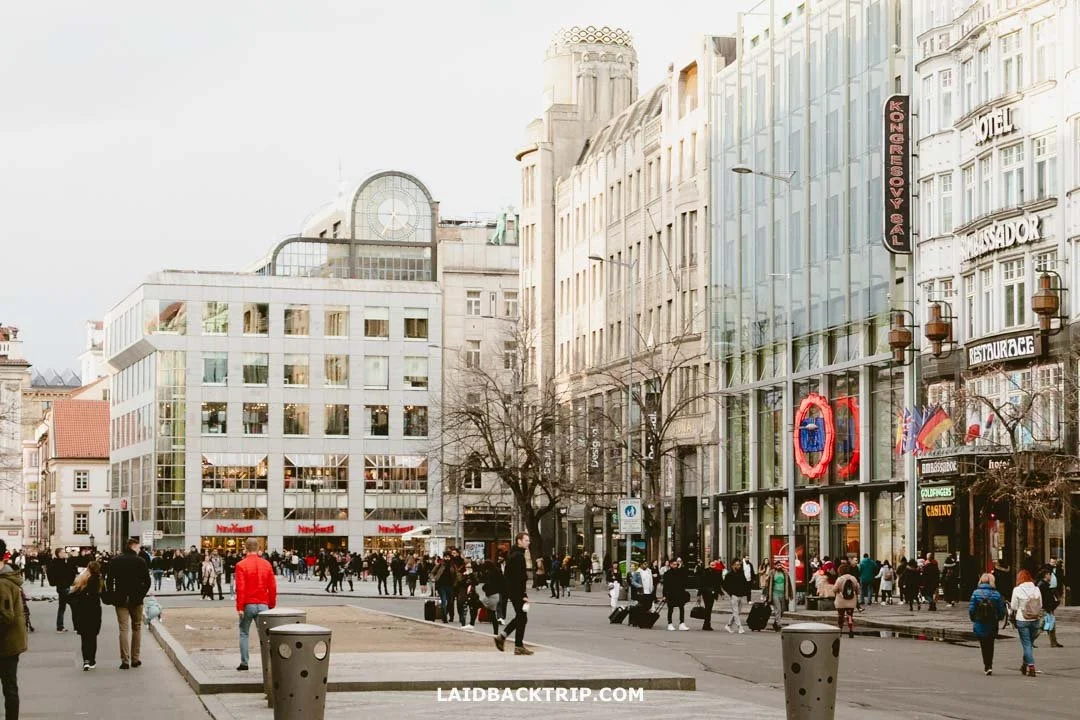
Because of its central location, Wenceslas Square is the ideal starting point for exploring Prague.
Václavské Náměstí (Wenceslas Square): 30-60 Minutes
Wenceslas Square is practically the main square of the Czech Republic, and it's so huge that it's more like a bigboulevard than a regular plaza. It's been hugely upgraded, so it's easier to walk around, there's less traffic, you can seemore trees and more places to sit, and overall, the square is much more inviting and visitor-friendly than it used to be back in the day.
As locals, we like other places on this itinerary a bit better because it's usually too crowded, but this square is a place no traveler can miss, also because it's where big historical events that shaped our modern history happened. Due to proximity to the main train station, there are usually some shady people here (especially in the evening), but they usually mind their own business.
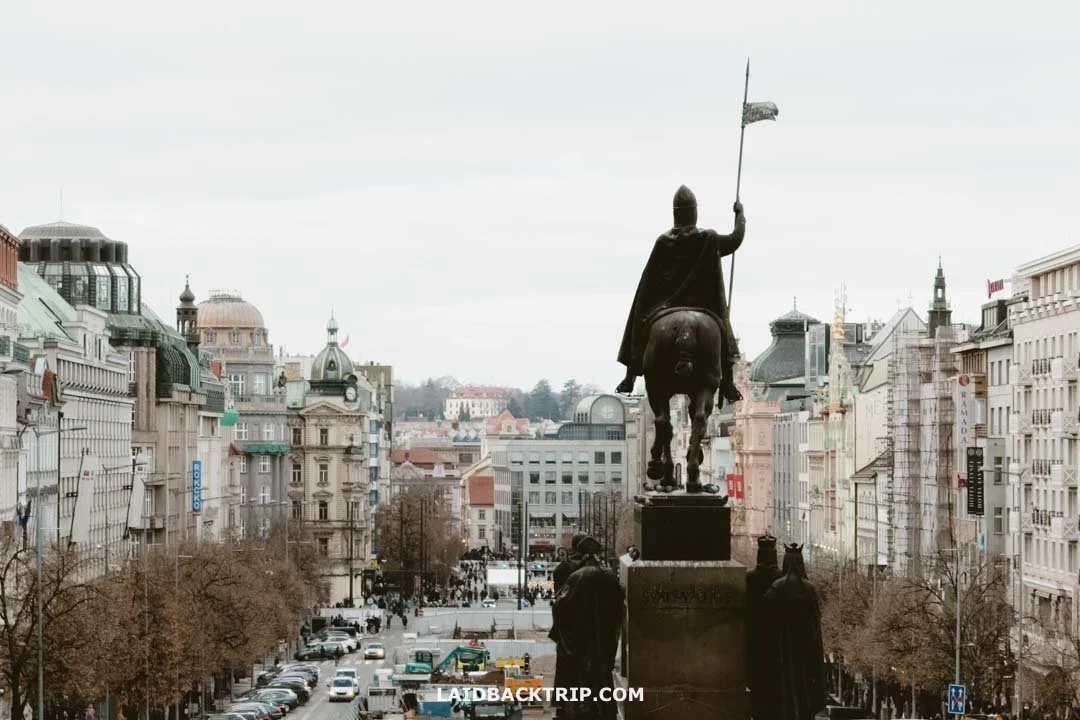
Wenceslas Square is named after Saint Wenceslas, the patron saint of Bohemia.
Lucie thinks that the most beautiful view is from the lower part of the square when looking towards the National Museum and the statue of Saint Wenceslas, patron of Czechia. But I prefer the one from the stairs of the National Museum as it's on higher ground and the statue of Saint Wenceslas appears like it's guarding the whole place. While the whole square looks modern, it has some Art Nouveau gems if you're into architecture.
Many hotels and hostels are within this area, as it is in the real heart of Prague, and we think chances are you will be based here. Besides the hotels that sit directly on the square (another popular one is Jalta Boutique Hotel), I already mentioned, there are also places like MeetMe23 or Grandium Hotel Prague, only a stone's throw from here.
For us, Wenceslas Square is one of the most common meeting points as it's super easy to reach from pretty much any corner of Prague, whether by metro or tram. Muzeum station, the one at the National Museum, is served by A and C metro lines, while Můstek, the one at the lower side, is served by A and B lines. And when I said that the square is huge, it really is, because you can technically take a metro from one end to another. Obviously, the square is also well connected by trams.
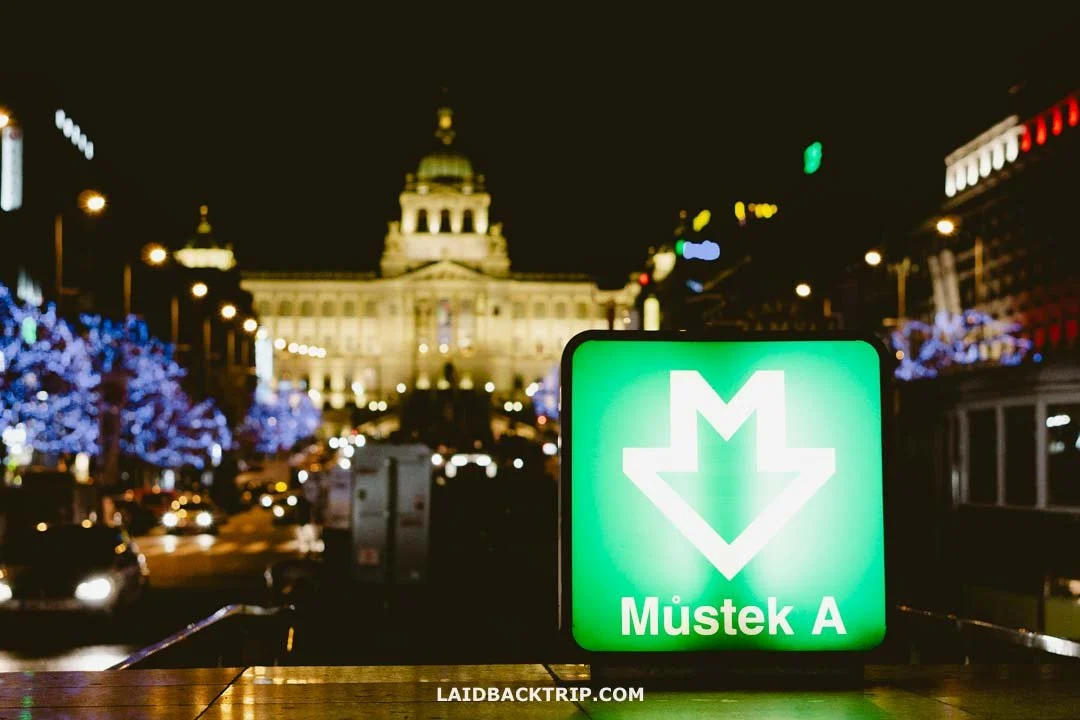
The square also acts as a major transport hub, connected by two metro lines.
Wenceslas Square is also a typical place to start a pub or bar tour and enjoy the night for tourists, but again, as locals, we would definitely head somewhere quieter. We would do the same if we were looking for a place to have dinner, as we would head to more local neighborhoods. It's also a popular shopping area with some normal stores, but we'd stay away from the classic tourist souvenir shops.
Prašná brána (Powder Gate): 10-30 Minutes
We're in the New Town neighborhood, and our aim is to enter the Old Town. And there's really no better place to do it than through the Powder Gate. So once we reach the northwest end of Wenceslas Square, we turn right onto Na Příkopě, one of the most popular shopping streets in Prague (for tourists). Unless you do shopping here, it's less than a 10-minute walk to our next stop, the Prašná brána (Powder Gate).
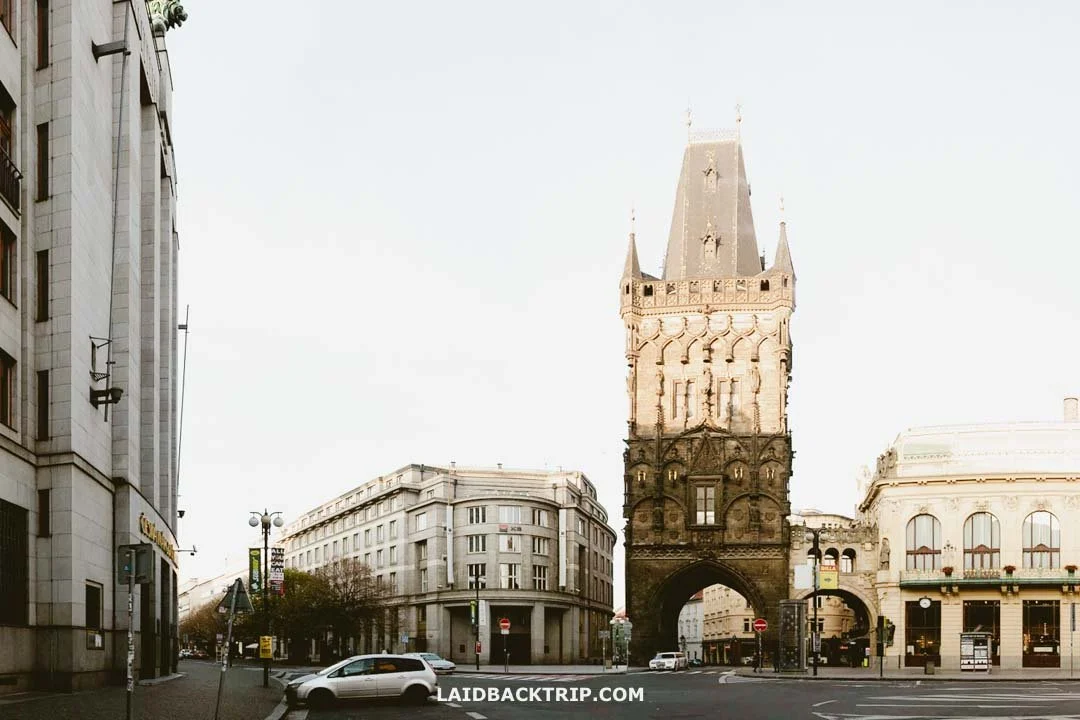
The Powder Tower marks the start of the Royal Route, once traveled by Czech monarchs during ceremonial processions.
This 15th-century Gothic tower is 65 meters tall and was once a gateway for royal coronations, though it got its present name in the 18th century when it served as storage for gunpowder. You can climb its spiral stairs for a stunning bird's-eye view of the city's spires, but we would do it only if you're sure that you will have enough time, because we're still pretty much at the very beginning of the day.
Obecní dům (Municipal House): 10 Minutes to 1 Hour
Only a few meters from here is the famous Municipal House, a masterpiece of Art Nouveau architecture. With its opulent interior decorated by Alfons Mucha, a beautiful cafe (you can have traditional Czech cuisine here if you don't mind paying extra), it's incredibly popular with tourists (so we've been inside just a couple of times). It's also a popular venue for classical music, so if you want to see a concert of Dvořák, Beethoven, Strauss, or Vivaldi, this is one of the places to go.
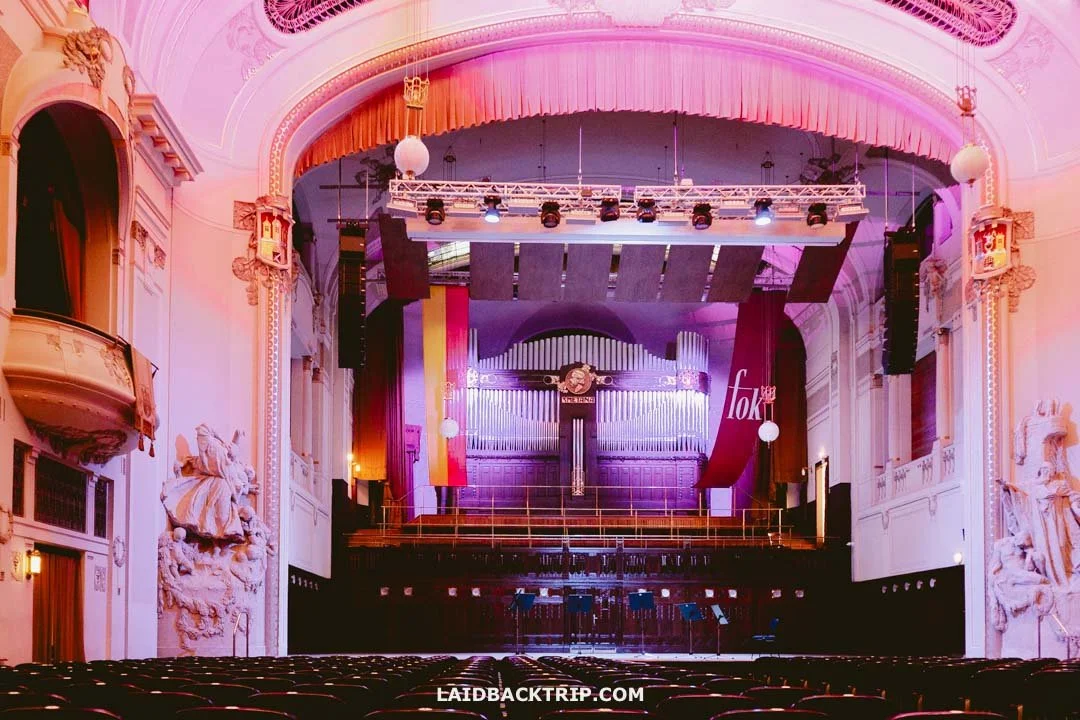
The Municipal House is one of the most famous Art Nouveau buildings in Prague.
Náměstí Republiky (Republic Square): 15 Minutes to Several Hours
If you continue a bit further, you will enter Náměstí Republiky (Republic Square). It's not as charming as other Prague squares, but it's another important transportation hub and home to Palladium, the biggest shopping mall in Prague's city center.
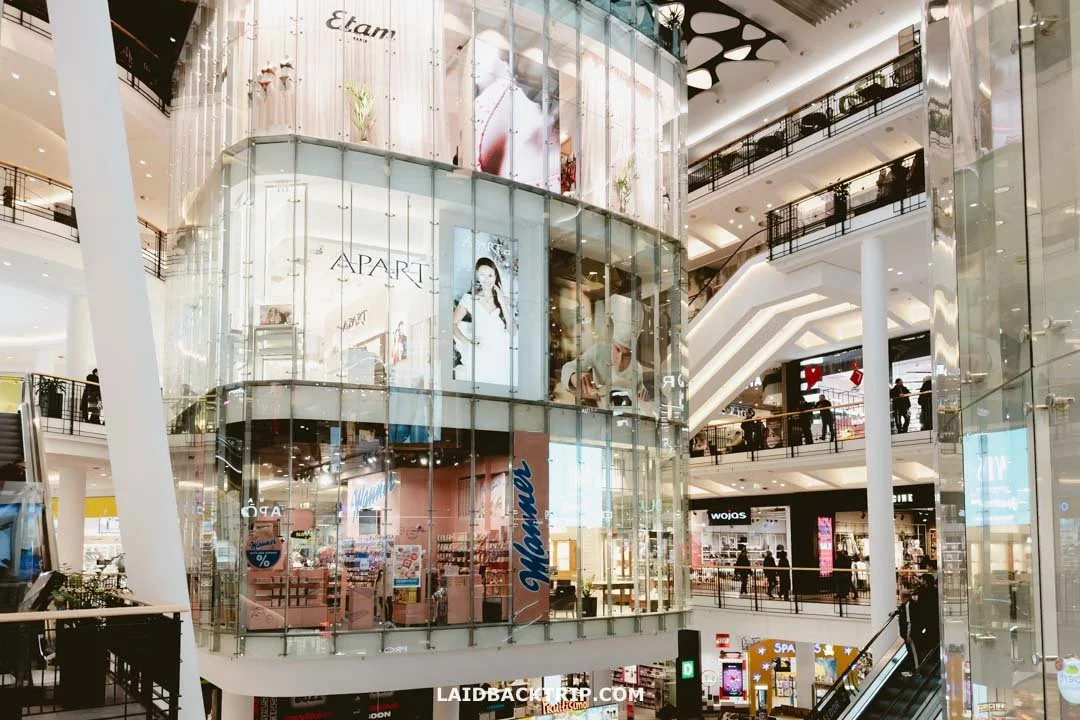
You could easily lose track of time for hours while shopping at Palladium.
It's pretty big (at least for a shopping mall at the heart of a medieval city) and always crowded, especially around Christmas, when we try to stay away from here as much as possible. But that's just because we're locals and we can find the same shopping experience in other Prague shopping centers like Arkády or Chodov. But we won't deny it's pretty easy to spend a few hours shopping if the need arises.
Staroměstské náměstí (Old Town Square): 30-60 Minutes
In the very center of historic Prague, you will find the famous Old Town Square, by many considered the most beautiful square in the world. We definitely think there's a lot of truth to that, despite the fact that we at times don't see it through the rose-colored glasses the tourists do. Nevertheless, Old Town Square is a must-see. And if you follow our route, from Náměstí Republiky via Celetná, it is only 750 meters walking distance from where you are now.
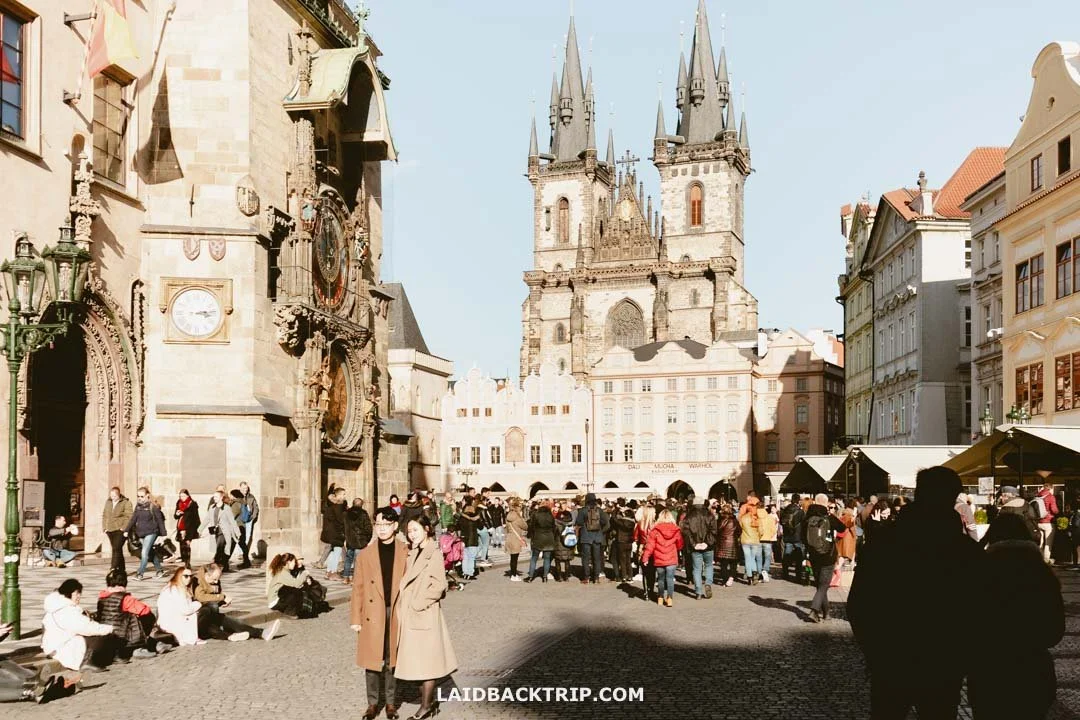
The Old Town Square lies at the very heart of medieval Prague.
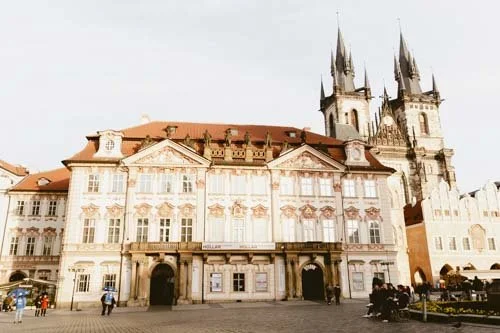
There are many reasons to visit the Old Town Square, like the astronomical clock, Christmas markets, or Gothic architecture, as well as some interesting buildings and monuments. As we enter from Celetná, we'll pass by the Church of Our Lady before Týn, the Gothic masterpiece with famous twin spires, making Prague's skyline so magical. Right next to it is Stone Bell House, a Gothic medieval tower-house identified by the stone bell on its exterior corner. And right next to this one is Rococo Kinský Palace, an elegant pink-and-white palace now housing the National Gallery's impressive graphic art collection.
Right in front of us is the b, a reconstructed (and controversial) 17th-century pillar topped with a golden statue of the Virgin Mary. On the right from here is the Monument of Jan Hus, a massive bronze memorial honoring the religious reformer who became a symbol of Czech identity. Slightly to the left is Old Town Hall, which has the world-famous Astronomical Clock and a tower with panoramic city views (yes, that's another tower you can climb today, which is why I was hesitant with the climb to Powder Gate earlier). Lastly, in the northwest corner is the Baroque gem of St. Nicholas Church.
There's a lot to take in, but don't let your guard down here. Like every super busy touristy place, Old Town Square has its fair share of tourist traps. Never change money here, and even though Prague Ham or roasted chestnuts seem delicious in the stalls, believe us, it is ridiculously overpriced, as all the food here is usually charged by 100 grams. You can have a normal meal for less in almost every restaurant around, with the exception of those that are directly on this beautiful square, as they are, not surprisingly, places only tourists go. And once you want to see the hourly show of the Astronomical Clock, watch out for pickpockets.
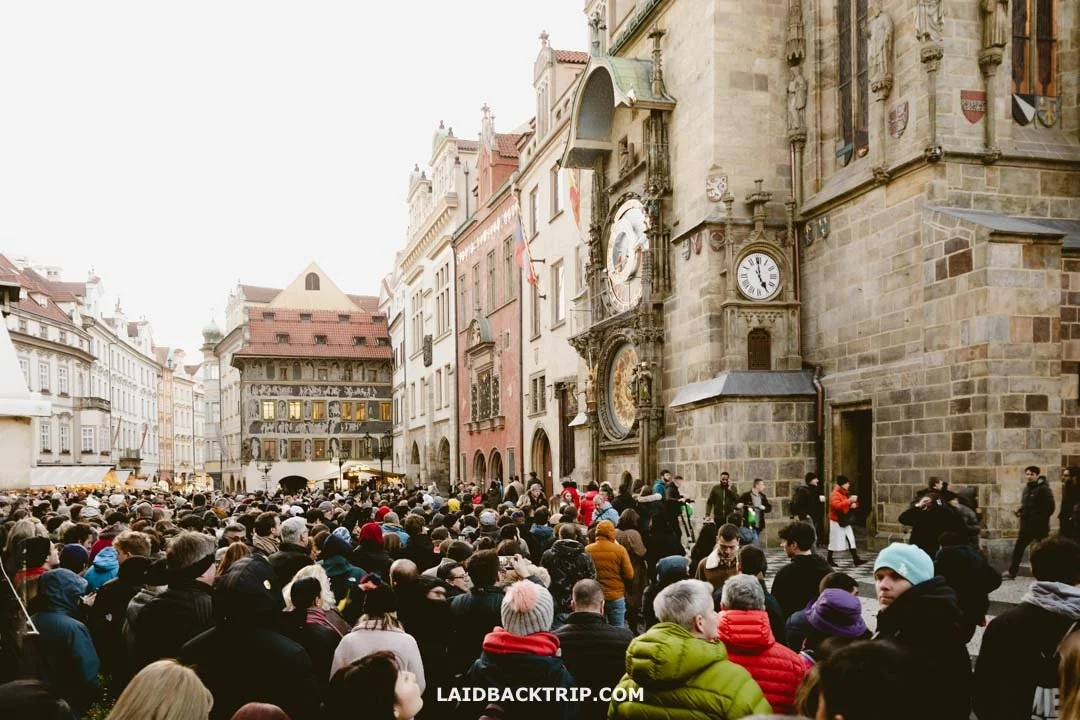
Every hour, a large crowd gathers in the Old Town Square to watch the Apostles' walk on the Orloj.
Despite these common Prague scams that come along with mass tourism and the heavy crowds, Old Town Square is one of our favorite tourist sites in Prague. The architecture is simply stunning, and it is the place where you can hear and see the medieval heart of the city beating.
Pražský Orloj (Prague Astronomical Clock): 10 Minutes
While the Old Town Square is surrounded by stunning old houses and churches, the most famous attraction here is easily the Astronomical Clock, which makes the square like no other (technically, this is not true because we also have an orloj in Olomouc, Žatec, and other places).
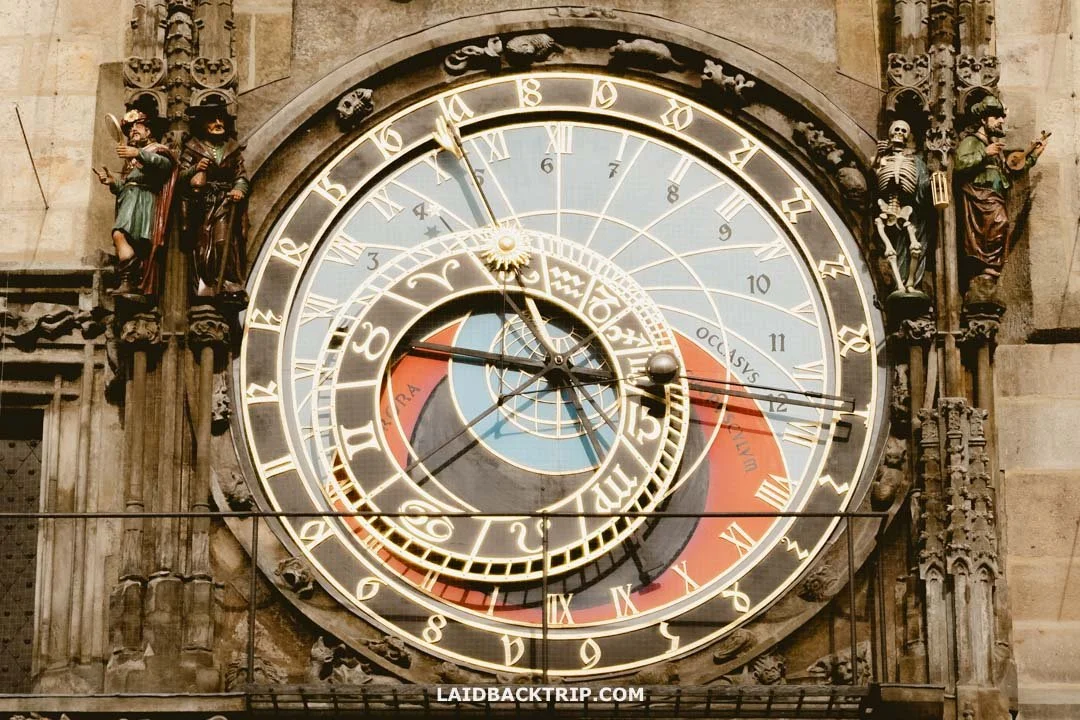
The Prague Astronomical Clock has been part of the Old Town Hall since the early 1400s.
It was constructed in 1410 by Mikuláš z Kadaně and installed on the front facade of Old Town Hall, making it the world's oldest functioning astronomical clock (the story of Mistr Hanuš is just a legend, by the way). Besides that, it is a mechanical marvel of medieval engineering as it tracks far more than just hours and days. It also meticulously charts the sun's path, the moon's changing phases, and celestial cycles, all while marking the traditional feast days of the Christian year. But the best part (the one that leaves many tourists bewildered) is about to come.
Every hour, crowds gather to watch the Walk of the Apostles, where figures emerge from small windows while a skeleton representing Death tolls a bell. Although everything happens in less than one minute, it is a must-see thing when in Prague. Just beware of pickpockets as we already said.
Pařížská Street: 10 Minutes
Pařížská is usually the most expensive street in Prague (it competes with Na Příkopě, which we've already been to earlier), and even in Czechia, where you can find luxurious, high-end boutique shops on a short stretch. Even when you do not feel like shopping or your budget won't allow you to have a peek inside, it is worth walking this street because it's lined with stunning Art Nouveau architecture and offers the easiest way to reach the Jewish Quarter from Old Town Square.
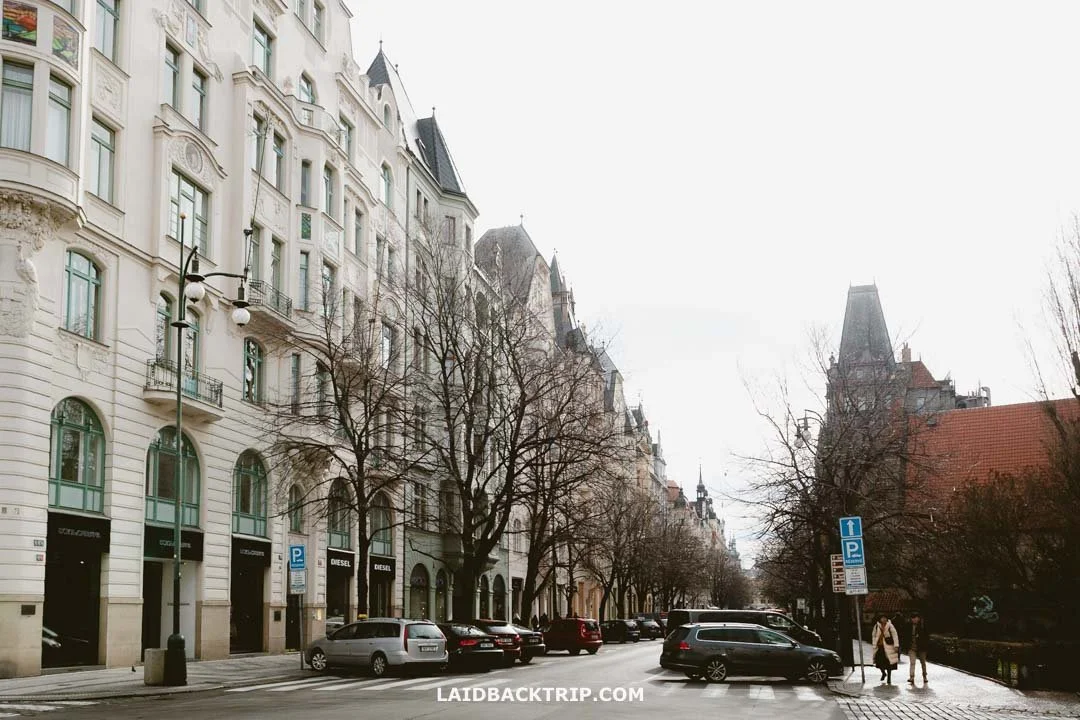
Pařížská is known for luxury shopping.
It was built during the Jewish Quarter's redevelopment (19th and 20th centuries), blending Parisian-style grandeur with the historical heart of the city. We've been to the world's most famous boulevards like Paris's Champs-Élysées or New York's Fifth Avenue, and compared to them, Pařížská is much more intimate, though as it's also much shorter and not really that wide, it definitely has its charm. It also works for us well, as we didn't come here shopping (well, you can if you want to, of course), but to see the Jewish Quarter and eventually the Vltava River.
Pražské Židovské město (Jewish Quarter): 2-3 Hours
By turning onto Pařížská, we entered one of Prague's most interesting neighborhoods, though it's not the luxury shopping that makes it so famous. Today known as Josefov, this Prague's smallest district, which stretches between Old Town Square and the Vltava River, is home to the best-preserved Jewish Quarter in Europe.
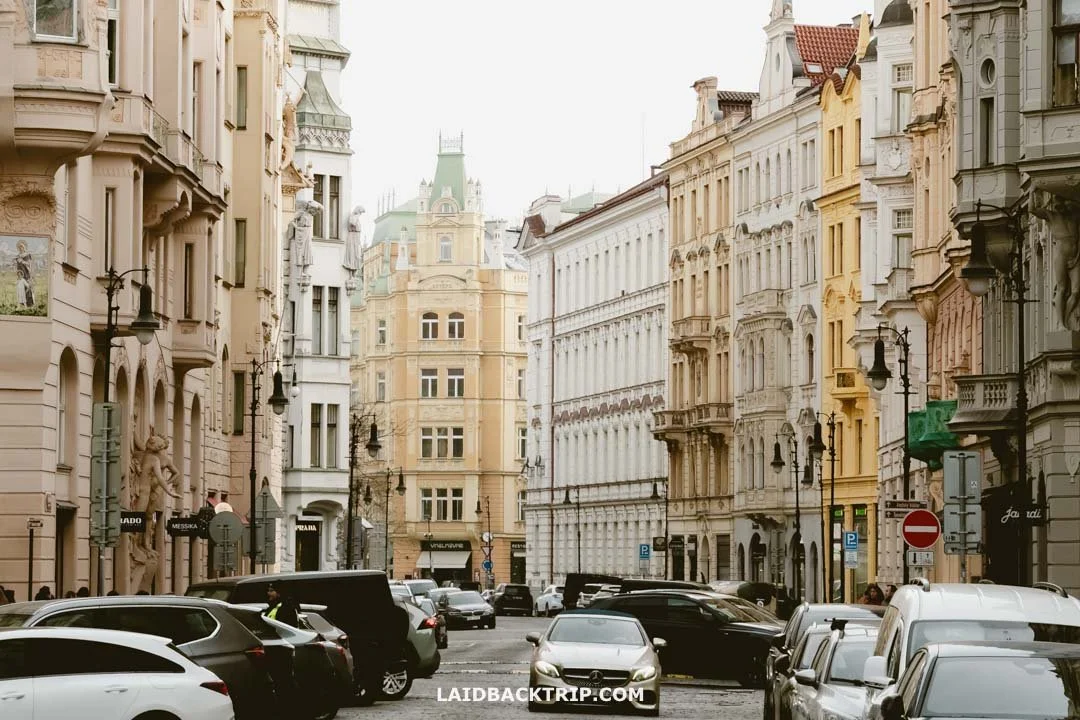
The Jewish Quarter we see today in Prague looks nothing like it did in medieval times.
Its history was formed inmedieval times, roughly between the 10th and 13th centuries, when Jewish people of Prague were not allowed to live anywhere else except for this part of the city. During the centuries, this artificially created ghetto turned into a city within the city, with its own rules and a super interesting, although often very tragic, history filled with fires, pogroms, or horrors of WWII.
Today's Josefov looks nothing like it did in medieval times and the centuries that followed. Until the end of the 19th century, when a huge sanitization project was done, it used to be a cramped, chaotic, and overcrowded ghetto with narrow, dark alleys and thousands of people packed into a small, walled-in area. Today's Josefov, wide and airy, is verydifferent from what it once was, and even with all this, it remains the best-preserved complex of Jewish monuments in Europe, with some really interesting Jewish sights to explore.
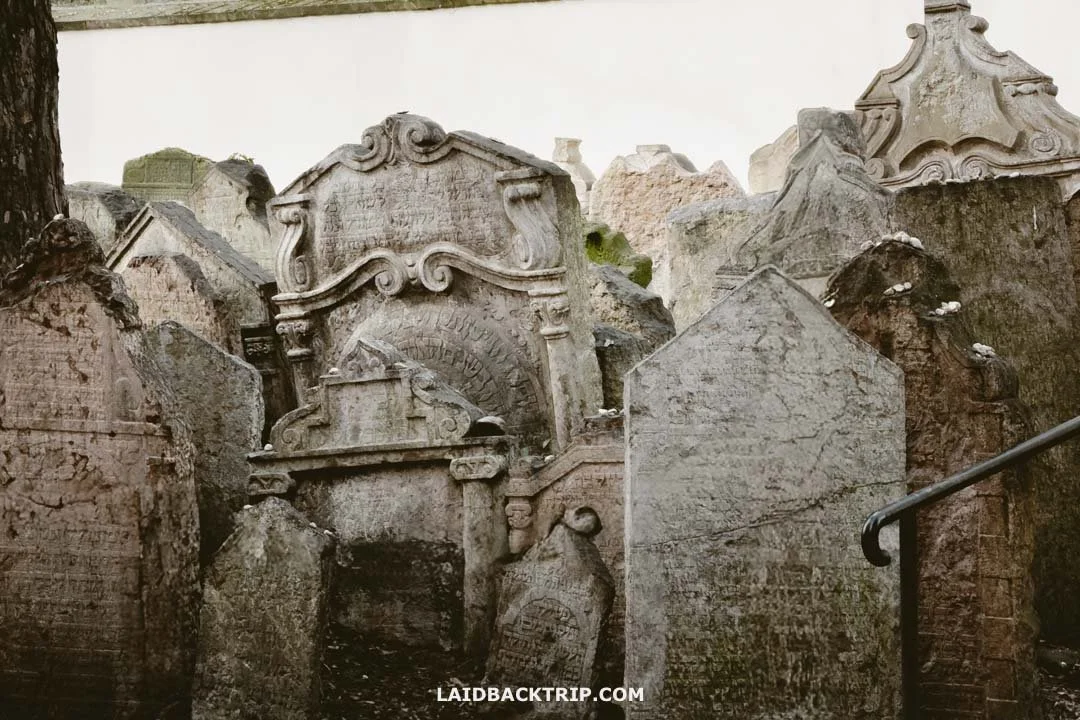
The history of Prague's Old Jewish Cemetery goes back to the 15th century.
The Old-New Synagogue, built in 1270, is the oldest synagogue in Europe and the legendary resting place of the Golem. Nearby, the Pinkas Synagogue serves as a heartbreaking memorial, with 80,000 names of Holocaust victims hand-painted on its walls. The Old Jewish Cemetery, where 12,000 tombstones are densely layered due to space constraints, is believed to have more than 100,000 people buried there. The Spanish Synagogue is widely consideredthe most beautiful synagogue in Prague, frequently described as one of the most beautiful in Europe. There's definitely more to see, so take your time while here.
Prague's Jewish Quarter is not that huge, although you can easily spend a few hours here, and you can explore it on your own. But if there's one place where we would consider taking a guided tour, it's really this one. If you want to know more about the moving history and want to see authentic architectural gems, you can check out this Jewish Quarter Tour.
Rudolfinum: 10 Minutes
From the Jewish Quarter, our goal is to walk to the riverfront and admire the Rudolfinum for a while. We recommend returning to Pařížská and walking all the way to Čechův most to appear by the Fairmont Golden Prague, designed in the brutalist style. It's really very different from everything we saw so far. Here, we turn left onto Dvořákovo nábřeží and continue along the Vltava River while enjoying the stunning views of Prague Castle.
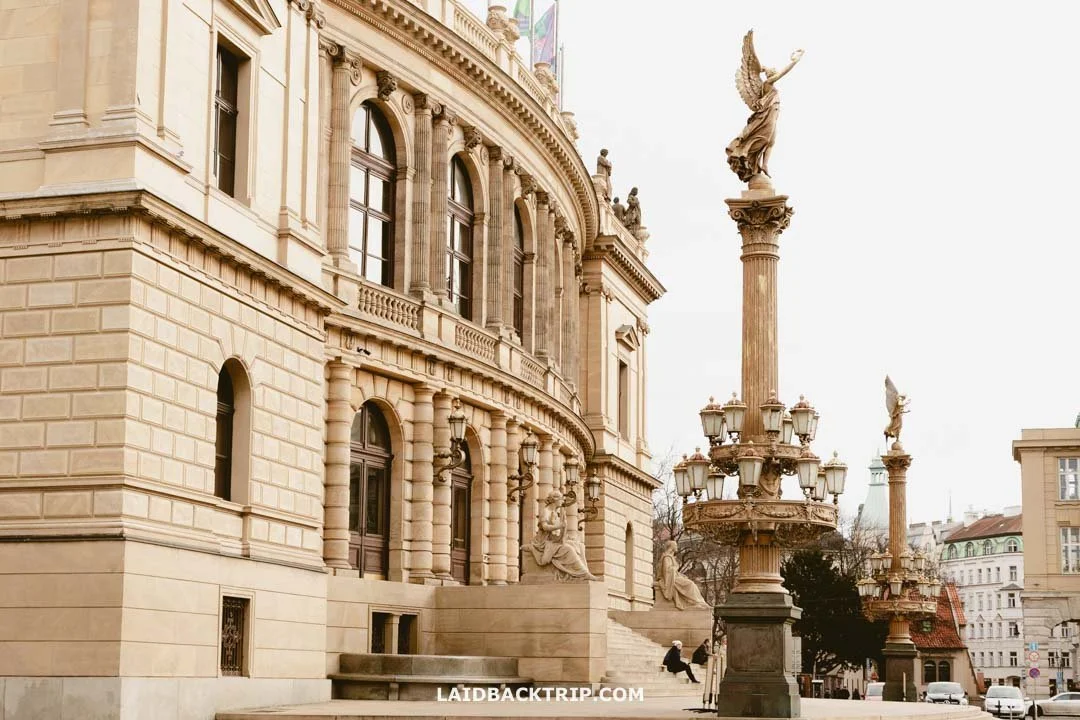
The Rudolfinum is a Neo-Renaissance concert hall that also serves as the seat of the Czech Philharmonic.
In a few minutes, we reach Rudolfinum, a Neo-Renaissance building on Jan Palach Square. It's really beautiful from the outside and worth a short stop, even if you don't plan on attending one of the concerts. The hall has long been associated with music, and many concerts, largely of classical music, take place here. If time allows, check out the program.
We visited a classical music concert in Rudolfinum, and we can only recommend it. The experience that combined Antonín Dvořák's New World Symphony with a stunning Neo-Renaissance interior was one of a kind. Without attending a concert, it's a quick, 10-minute stop. From here, we continue along the Vltava as we have a few optional stops to make.
Optional: Klementinum (Clementinum): 45 Minutes
Once we pass the super luxurious Four Seasons Hotel (most people walk by without even realizing what that big building is), we are getting closer to the famous Charles Bridge. But just before we reach it, there's an option to visit another Prague gem, the Clementinum. This stunning Baroque complex, and former Jesuit college, houses the National Library, known for its beautiful Baroque hall with ornate frescoes and historic globes, making it one of the world's most beautiful libraries.
As our itinerary is packed, Klementinum is only worth seeing if you decide to go inside. You can get a ticket on the spot, but it's usually much safer to just book the tour in advance to secure the tickets. These tours include access not just to the library and its stunning Meridian Hall, but also the Astronomical Tower, which offers beautiful views and the world's longest continuous weather records since 1775.
Whether you decide to visit or not, our next steps will bring us right to the eastern side of Charles Bridge. I know for myself that I wouldn't be able to resist at least taking a peek and a few photos, but at least don't cross it yet to the other side of the river, because it is on our tomorrow's plans. And since this stone bridge is really stunning, I know we would spend more time here than we could allow. Instead, continue walking along Smetanovo nábřeží all the way to Národní divadlo (National Theater).
Národní divadlo (National Theater): 15 Minutes
Our next steps will bring us to one of Czechia's most famous buildings, the National Theater. Everyone, including little kids, knows it because of its moving history (we just call it "Národní"). The pride of the Czech nation had its grand opening in 1881, but only two months later, a huge fire broke out and severely damaged the theater. In less than two months, people collected enough money for reconstruction, and only two years later, the doors to the theater opened once again. It's one of the symbols of the Czech nation, which, back then, was ruled by the Austrian Empire. It was built by the Czech people, for the Czech people.
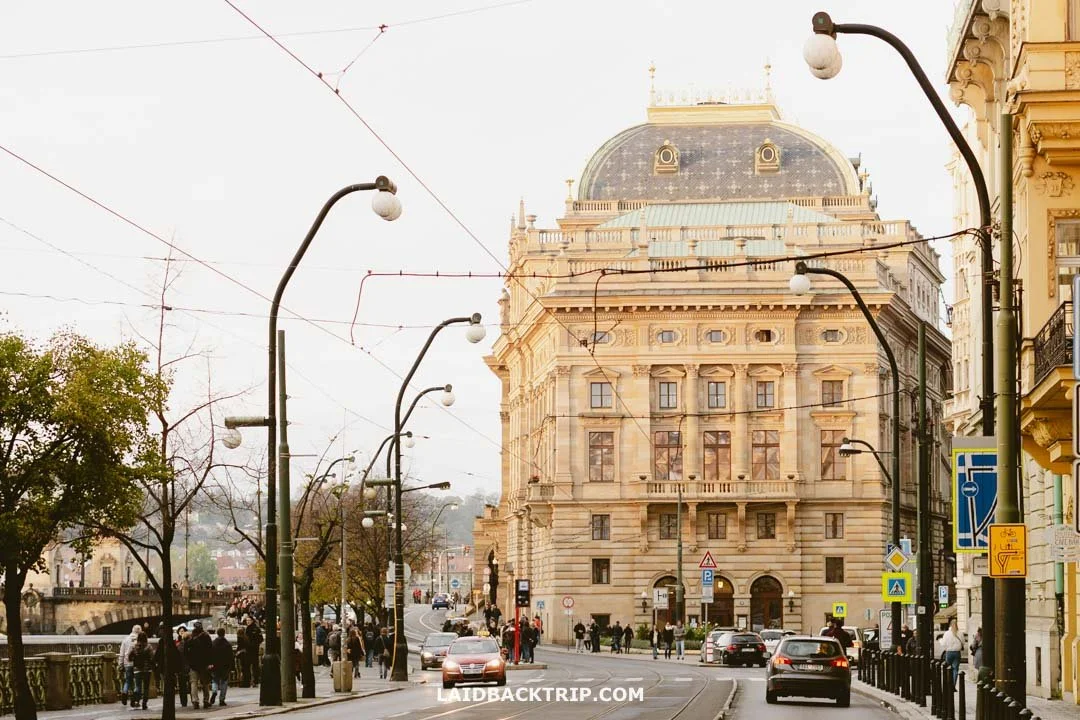
The Neo-Renaissance architecture of the National Theatre in Prague is just stunning.
It's not just a historical symbol, but a stunning Neo-Renaissance building known for its golden roof that can be easily recognized from any viewpoint overlooking the city. The building is exceptional from the outside, but the interior is worth seeing as well because it was decorated by famous Czech artists like Mikoláš Aleš. By the way, right next to it is its modern addition called Nová scéna (New Stage), built in the 1980s in brutalist architecture, and the difference between the two buildings couldn't be more striking.
While we have time now just to admire the National Theater from outside, check out the program, as there's always something going on, like operas or ballet (and obviously Czech plays). By the way, not far from here is the famous U Fleků, a restaurant with traditional Czech cuisine and dark beer made at their brewery. We've been inside only a couple of times because it's way too touristy for our taste (the beer is great, though).
Národní (Národní Street): 20 Minutes
After you're done with the National Theater, we will continue via Národní Street back to Wenceslas Square. This boulevard is not just about shopping, cafes, and restaurants, but also one of the historically most important streets in Prague. On November 17, 1989, a peaceful student march on Národní Street was brutally suppressed by police. It was the pivotal moment that sparked the Velvet Revolution, which eventually led to the collapse of communism in Czechoslovakia.
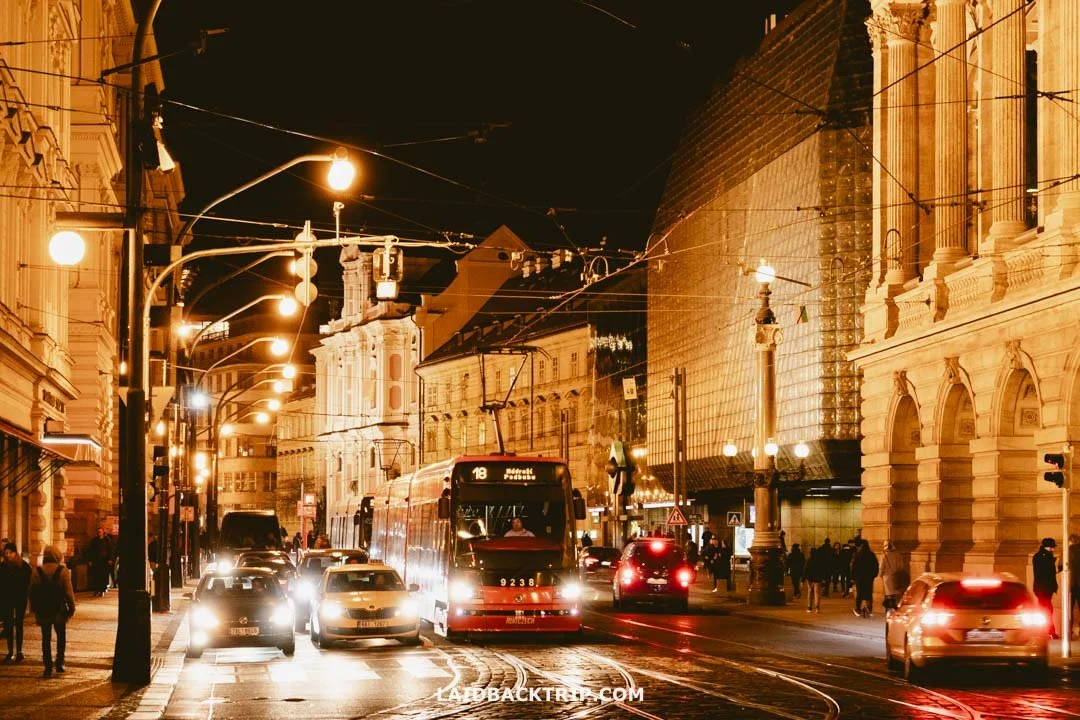
In 1989, Národní Street became the site of massive protests against the Communist Party of Czechoslovakia and its totalitarian regime.
Hlava Franze Kafky (Head of Franz Kafka): 15 Minutes
Once we reach Máj shopping mall, we turn right onto Spálená Street, as we do not want to miss the rotating statue of Franz Kafka. The statue, located behind another shopping mall, Quadrio, was made by a famous Czech artist, David Černý, and is composed of stainless steel with 42 tiers that rotate independently of each other. It's an impressive modern artwork that was installed in Prague's city center only in 2014, but since then, this super modern piece of art has become a must-stop when in this area.
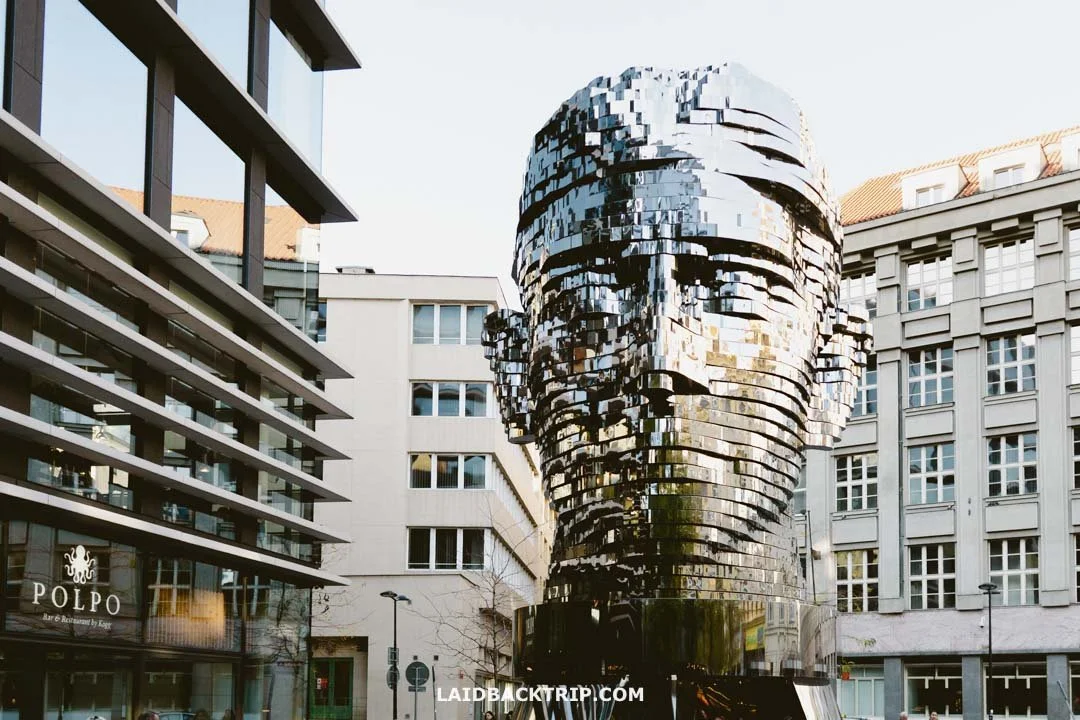
With its rotating layers, the Head of Franz Kafka is easily the most unique statue in all of Prague.
Vltave River Cruise: 1-2 Hours
We planned our first day in Prague as a slow introduction to the city, and there's probably no better way to end the day than by taking the super-popular sightseeing cruise. We've been on our feet since morning and done a good amount of walking, so it's time to relax and soak up some of Prague's beauty in a more relaxed manner.
The Vltava River winds through Prague, and it is impossible not to cross it several times when in the city for three days. The river itself is very photogenic from above, whether from Letná or Vyšehrad, especially when you can see many bridges across the water, but it also offers a great way to see Prague from a different angle. There are tons of cruises every day, and you can choose from a quick 1-hour day cruise, which works great if it's still afternoon, to the most popular dinner cruise, which obviously is a better option in the evening.
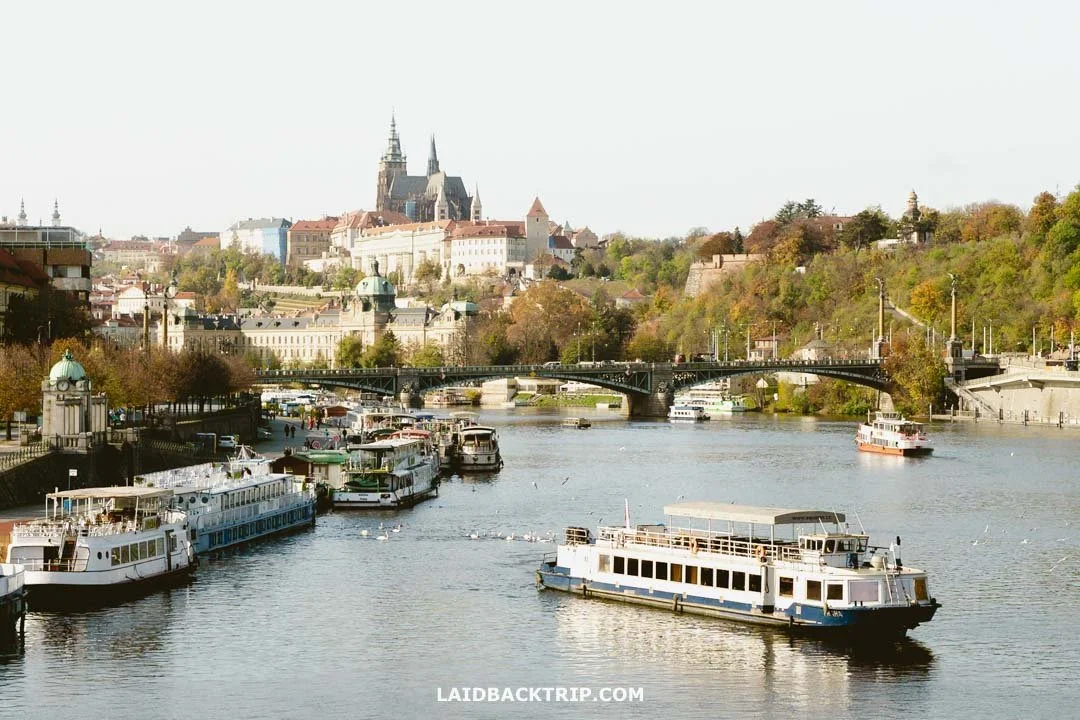
Cruises on the Vltava River are really popular with tourists.
Obviously, taking a sightseeing cruise is not the only way to spend your first evening in Prague. The area around Wenceslas Square is full of museums (I mean the most famous one, the National Museum, is at the upper end of this very square), theaters, and music venues (as I said already, classical concerts are incredibly popular in Prague), so it's easy to find something that interests you to fill your plans for the rest of the day.
Day 2 in Prague: Lesser Town, Prague Castle, Strahov and Petřín
On our second day, we will, as usual, start our day early and head to the Charles Bridge to beat the crowds and take awesome sunrise pictures of one of the most famous Prague sights. After that, we leave the bridge and make a short detour to explore Kampa, an island with a museum, a nice park, the Lennon Wall, and statues of famous Czech artists.
Once we're done here, we will walk back and follow picturesque Nerudova Street to Prague's most well-known sights, Prague Castle and Saint Vitus Cathedral. Our plan is not just to explore the ground but also to go inside the castle and cathedral, so we will spend a good amount of time there, as it really takes time to see the whole complex, including Golden Lane.
After a thorough visit to Prague Castle, we will head a bit further uphill to Strahov Monastery (again, it's possible to go inside), and from here, we take a scenic walk through Petřín, one of Prague's most beautiful parks that offers lovely views of Prague (without the need to climb the Petřín Tower). Then we will walk down either on foot or take the funicular. We can then walk back to Wenceslas Square via Most Legií and Národní or just take a direct tram from Újezd there (the tram stop under Petřín). We'll end the day by going to an opera, so you're not off the hook just yet.
Karlův Most (Charles Bridge): 30-45 Minutes
We start our day with another iconic place in Prague you cannot miss by any means, and that's the famous Charles Bridge connecting the Old Town and Lesser Town. From Wenceslas Square, that's a roughly 10-minute walk, which is really convenient as our goal is to get up early to catch a sunrise here and beat the midday crowds. Most importantly, this early, the super touristy Karlova Street should be fairly quiet too.
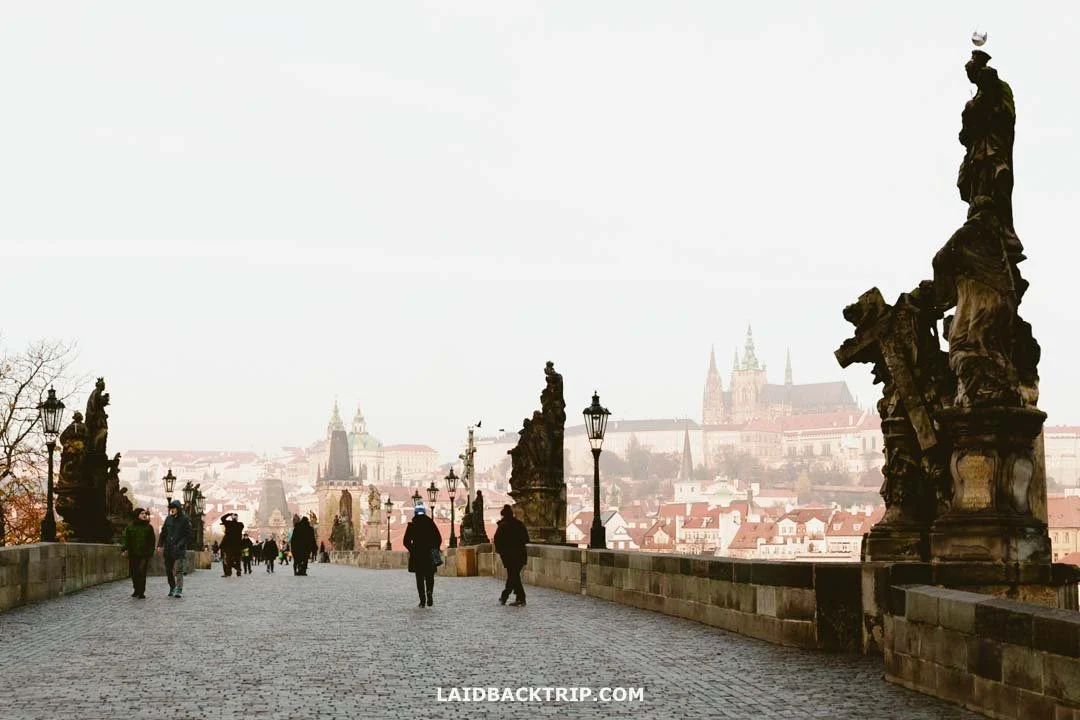
Visit Charles Bridge early in the day so it isn't that packed.
If you ask us, Charles Bridge is among the top three sights in Prague (orloj and castle are the other two if you're curious about that), and we believe that everyone visiting the city will eventually cross this medieval gem, lined with many baroque statues and bookended by two Gothic towers, at least once.
This stone bridge was built in the 14th century by Charles IV, and since then, it has been the pride of the city. Today, it's just for pedestrians, but until 1965, it was also used by cars (with how busy it became, that's just wild to imagine). By the way, even though it's old, it's not the oldest stone bridge we have in Czechia. That title belongs to the one in the charming town of Písek.
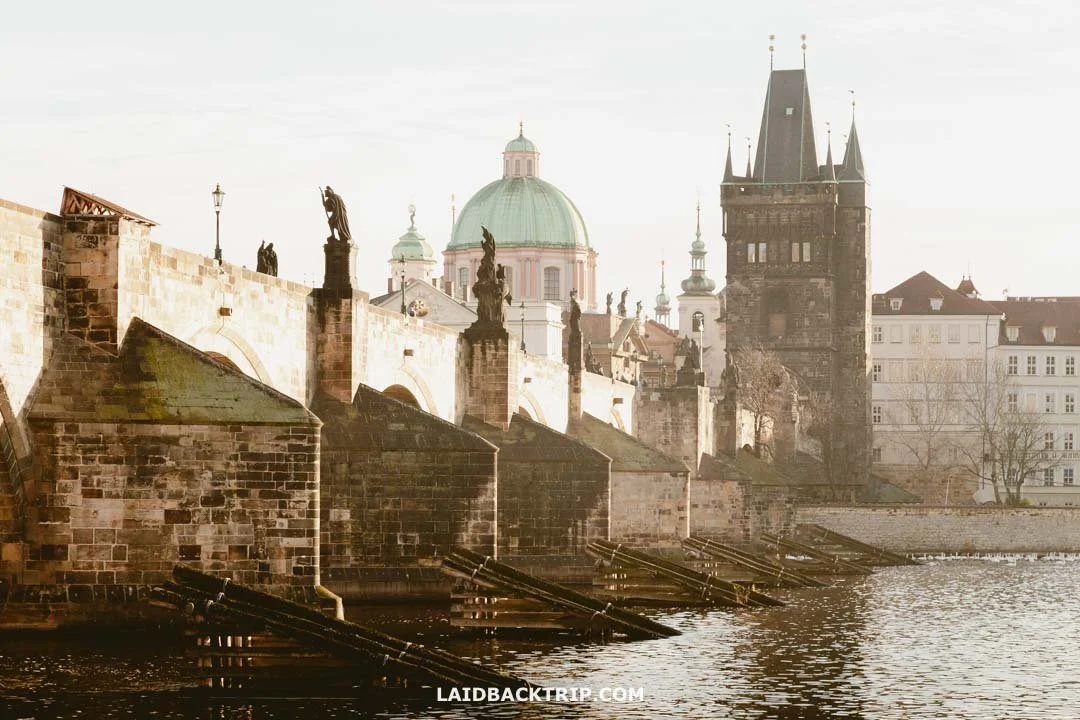
With views like this, it's easy to see why Charles Bridge is Prague's top attraction.
During our college days, it was possible to come here early in the morning, even during the summer, to enjoy it without tons of people, but that's pretty much not possible these days. So when we want to see it in a more peaceful atmosphere, we come here mostly in the winter months, which are definitely when Charles Bridge is least busy. By the way, if you want to see a sunrise from Charles Bridge in summer, that's about 4:50 AM. Despite that, it is an unusual experience and a perfect way to start a day.
Kampa (Kampa Island): 30-60 Minutes
Once we reach the further end of Charles Bridge, we ought to take a short detour to Kampa, an artificial island on the Vltava River between Malá Strana (Lesser Town) and Čertovka (Devil's Stream). Our goal is actually not to follow the bridge all the way to its end, but instead take these inconspicuous stairs (here are the GPS coordinates: 50.08681, 14.40875) to get under the bridge level. By the way, Kampa is by some nicknamed Prague's little Venice, but as a local, I can tell you that's a stretch (like the one we saw in Bamberg).
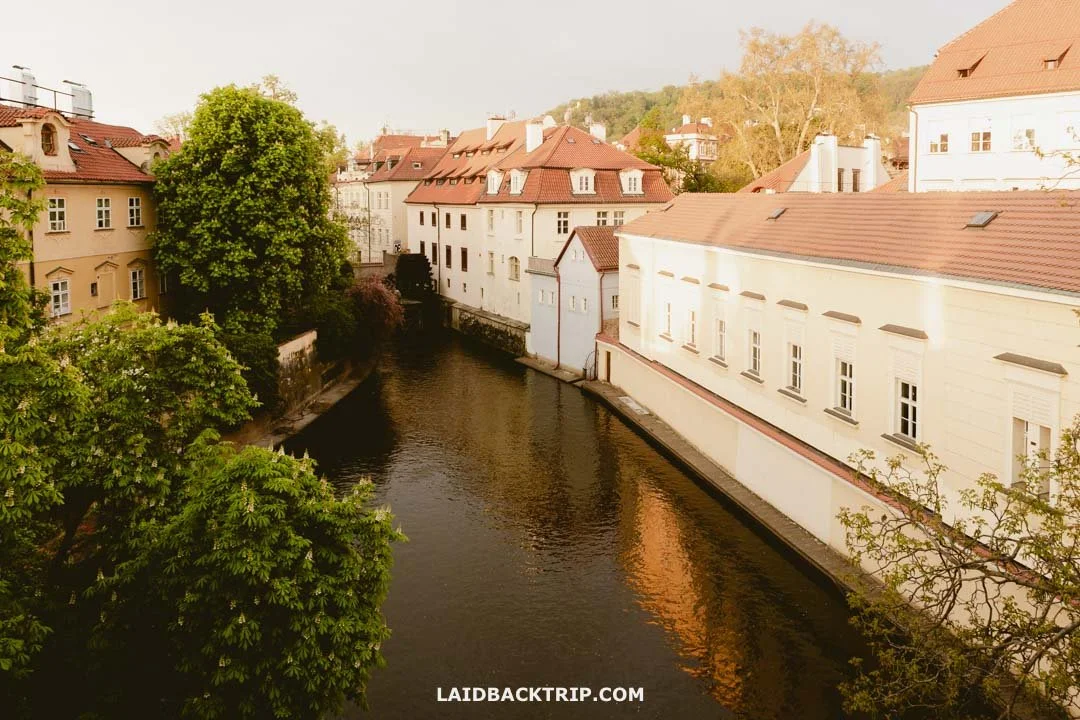
We love visiting Kampa early in the morning because it's still really quiet.
As it's still early in the morning, Kampa should still be quite peaceful. And that's honestly when this otherwise touristy place is best to explore. It was once a quiet place of gardens, mills, and markets. Today, it's mostly visited for Museum Kampa, a modern art gallery housed in a former mill, and the nearby crawling Giant Babies sculptures by David Černý.
The island also features the Lennon Wall, about which I'll talk in a second. Besides all that, there are a few great hotels nearby, like Hotel Kampa Old Armory or Mandarin Oriental, if you think that the New Town area is too hectic for your taste. And if you're not in the mood to explore Kampa right now, don't worry, we'll have a chance to return here at the end of the day.
From Kampa, we can head to nearby Kostel Panny Marie Vítězné (Church of Our Lady Victorious), which has a wooden statue of the Infant Jesus of Prague from the 16th century. In about 5 minutes, we will reach one of the most important pilgrimage sites in Czechia, but this stop is definitely optional.
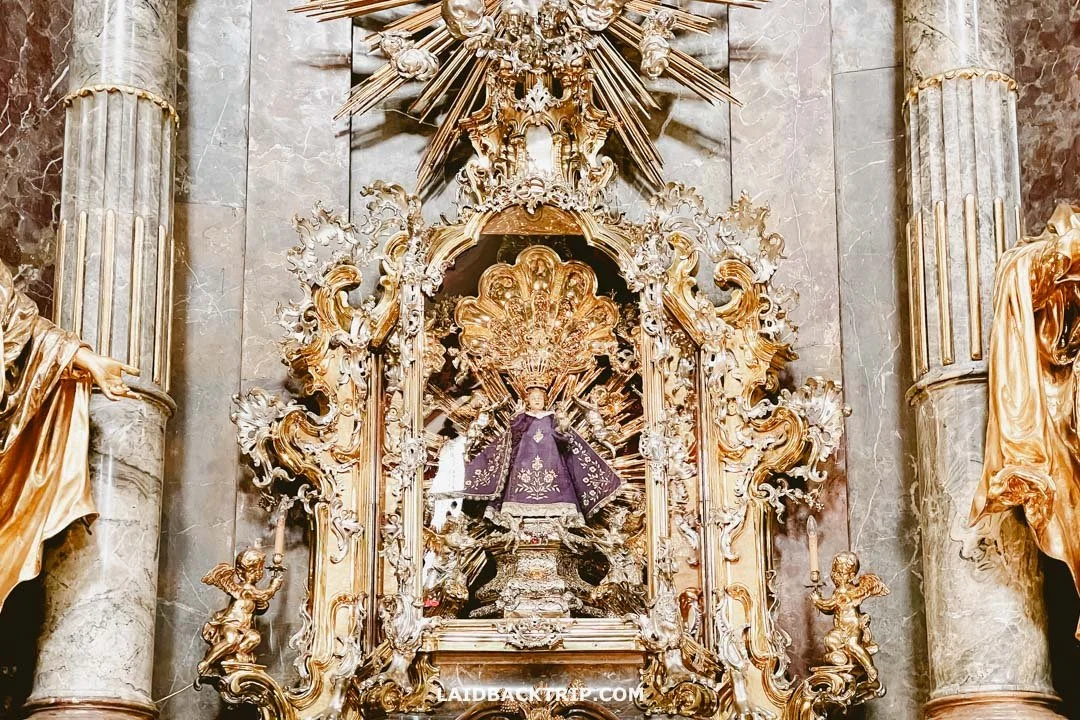
The 47‑centimeter statue of the Infant Jesus of Prague is always dressed in lavish regalia.
The reason is that another 5 minutes from here is Malostranské náměstí with Malostranský chrám sv. Mikuláše (St. Nicholas Church), which, in my opinion, is definitely more interesting to visit for most people. It's one of the most impressive Baroque churches in Prague, full ofstunning frescoes, and while there's an entry fee to enter, it's definitely worth seeing.
Lennonova zeď (Lennon Wall): 5 Minutes
Before we leave Kampa, though, we have to make a stop at the Lennon Wall. Honestly, we don't know why the Lennon Wall is so incredibly popular with foreign tourists, as we do not find it that interesting (or at least now, when it's just a crowded tourist stop), but when you are in the area, you can for sure come and see it and decide whether it's worth it for yourself.
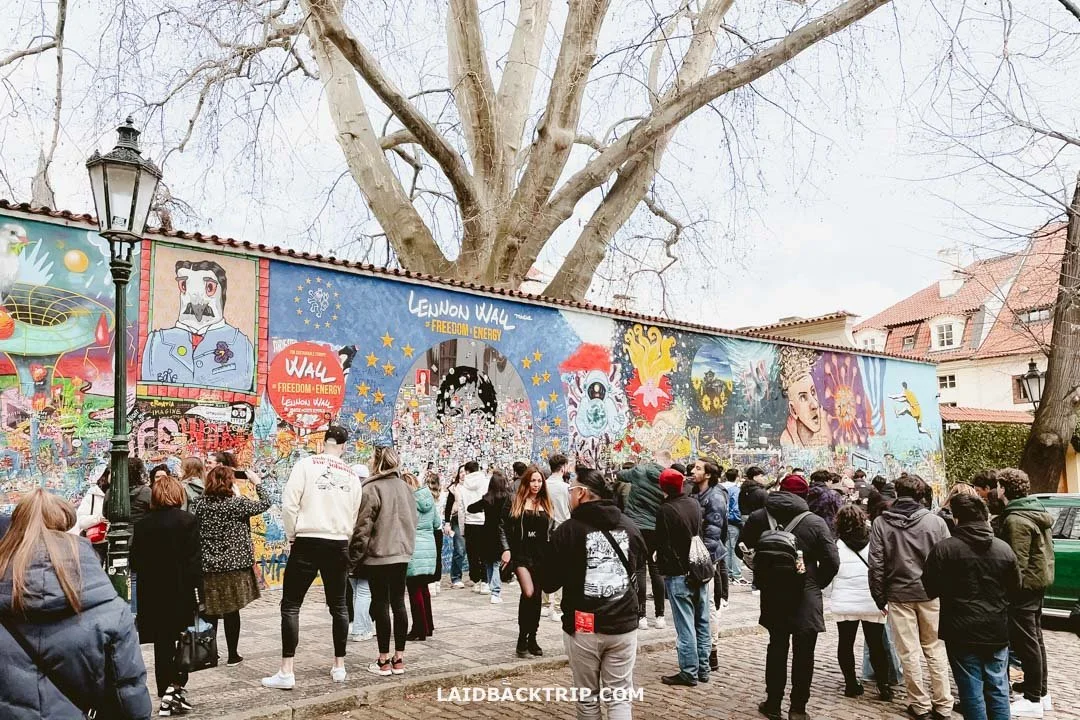
Lennon Wall is always busy.
This wall was originally a symbol of peaceful resistance against communism (back then it was called the Wailing Wall), but in the 1980s, when John Lennon died, it became his symbolic grave, and the wall was then decorated with his graffiti and Beatles lyrics. It was painted over many times, so it looks nowadays nothing like it did back in the day (and from time to time, it changes again, even now). It's still an ever-changing monument to freedom, but as I said, it's mostly a tourist thing now.
Nerudova (Nerudova Street): 15 Minutes
Whether you follow our route through Kampa or get to Lesser Town Square directly from Charles Bridge, the next walk to Prague Castle is uphill. Here we join Nerudova Street, named after the famous Czech writer Jan Neruda, who even lived on this street, particularly in the house with a poetic name, U Dvou Slunců (At the Two Suns). He wrote many books, but his most famous work is called Prague Tales, a collection of short stories set during the 19th century inLesser Town.
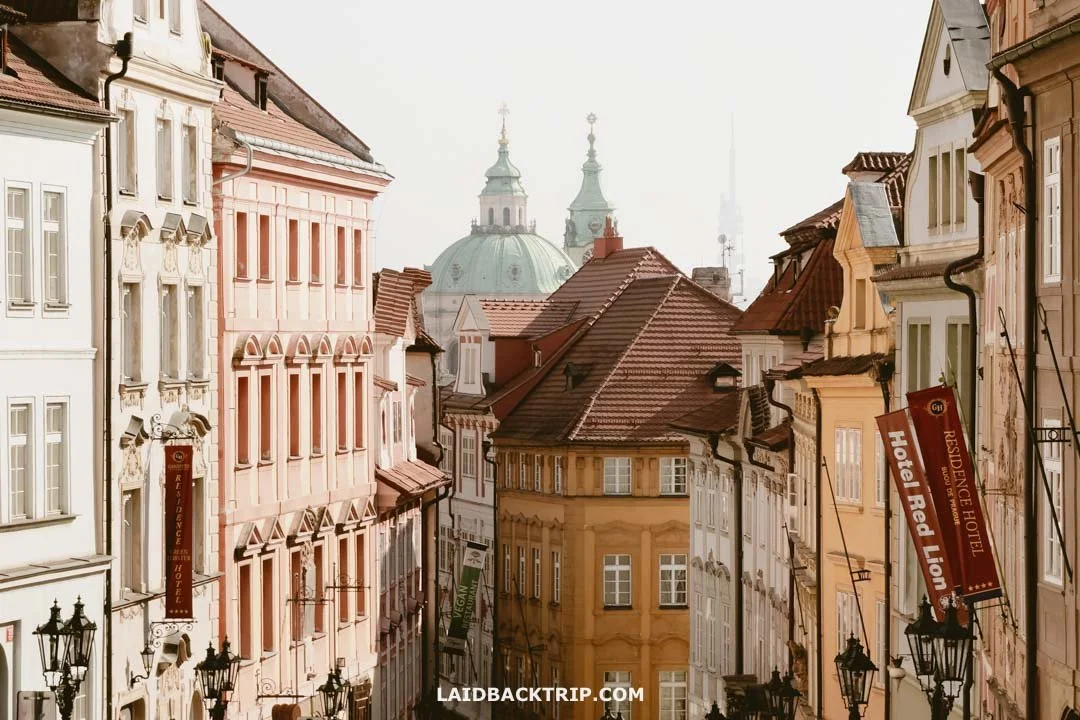
This view from the upper part of Nerudova Street is one of my favorites.
The street is fairly picturesque (I love the view back toward the Lesser Town just before the big U-turn), lined with colorful houses, many restaurants, and souvenir shops. Of course, everything here is super touristy, so just enjoy the views. You can also be a rebel and take Thunovská Street instead, which is also quite picturesque, more pedestrian friendly, and has Zámecké schody.
Pražský hrad (Prague Castle): 3 Hours
It doesn't matter if you plan your itinerary for two, three, or four days, because Prague Castle (and Saint Vitus Cathedral, which is inside the complex) will be for sure on the list even if you're in the city for a couple of hours. No matter how cliché it sounds, no trip to our city is complete without a visit to Prague Castle.
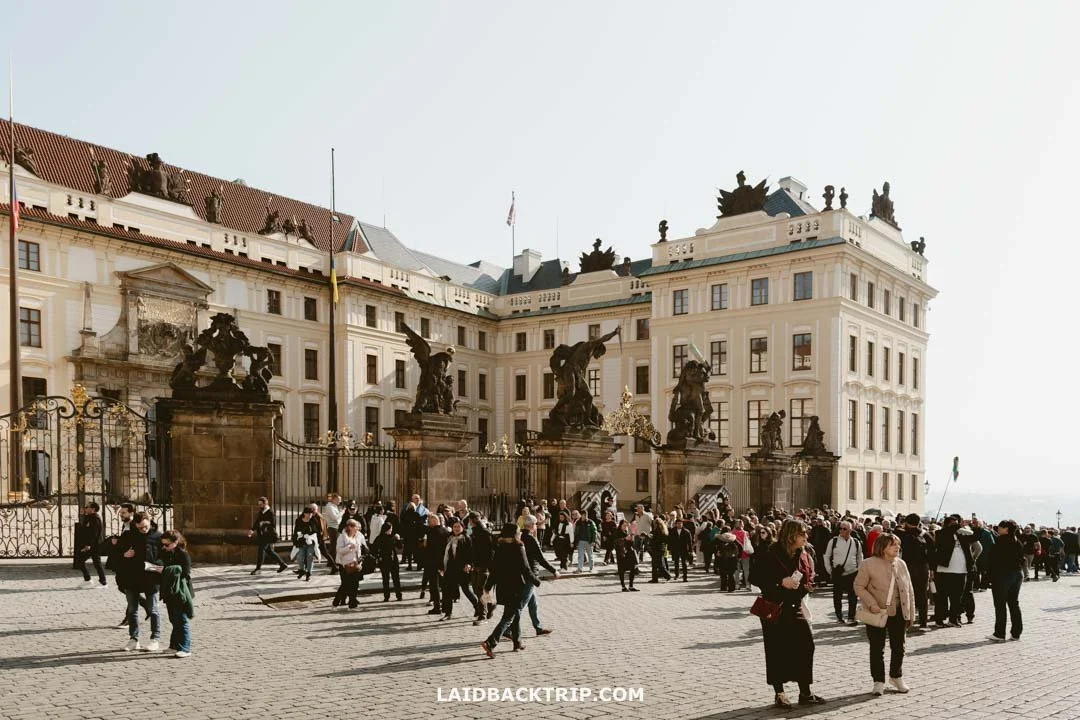
We'll arrive at Prague Castle right at the Matthias Gate.
The castle complex is the main dominant feature of Prague, not only because it is an exceptional architectural feat and has tons of history, but because it is towering on the hill overlooking the city. No Prague panorama is complete without the castle in the backdrop, and quite honestly, you won't find a more famous image of Czechia than with the castle (obviously, the image I'm talking about is actually seen from the shores of the Vltava River, not here).
Founded around 880 by Prince Bořivoj, Prague Castle became over the centuries the largest castle complex in the world, and as such, every traveler wants to see it, so be prepared that you will not have it for yourself. The good thing is that at least the annoying security checks are no longer there, which definitely saves time and makes the visit a bit more relaxed (that doesn't mean that other security measures are not present if you're worried about safety).
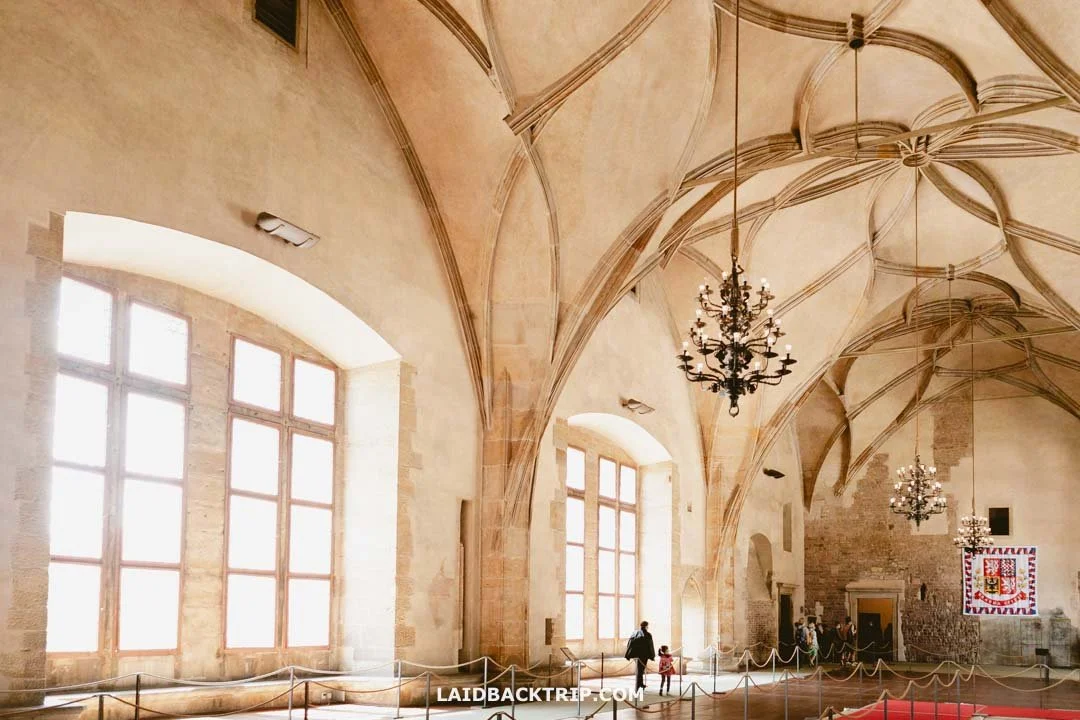
Built in the Middle Ages, Vladislav Hall is one of the highlights of the Old Royal Palace experience.
Inside the complex of Prague Castle, there's a lot to see, so be sure to set aside enough time for it. How much depends just on your preferences. If it were on us, we would want to tour the Old Royal Palace (here you can see Vladislav Hall, famous for its intricate late Gothic vaulted ceiling) and go inside St. Vitus Cathedral (and since we skipped both tower climbs yesterday, we would probably do this one instead). And also, really thoroughly, all the areas within the castle complex, as they are free to wander around (that's definitely one of the reasons why we come here so often).
Since the Main Circuit Ticket also includes the picturesque Golden Lane (a charming row of tiny, colorful houses built directly into the castle fortifications) and St. George's Basilica (the oldest preserved church within the complex), there's really no point in skipping those either (especially since both these additional places don't take too long to explore). Another really cool thing to do at Prague Castle is to see the change of the guard ceremony, which happens every hour, but obviously, that one requires good timing.
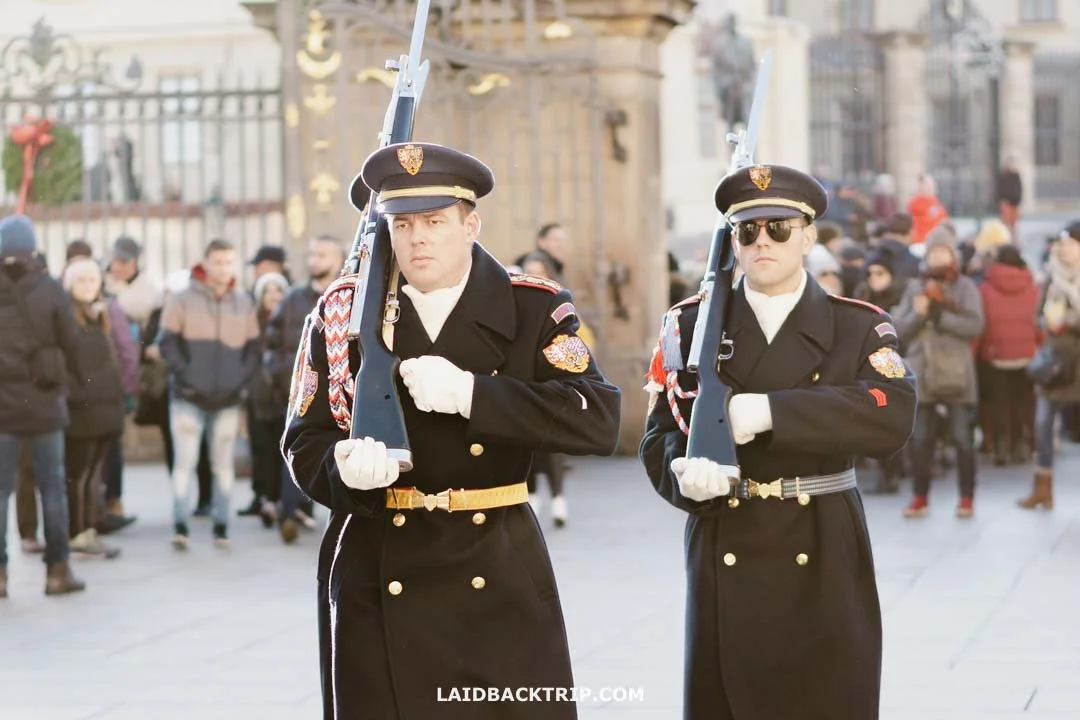
The main Change of the Guard ceremony at Prague Castle takes place at 12 PM, while the smaller ones happen every hour throughout the day.
As I said, it's definitely possible to enjoy Prague Castle and the cathedral from outside, but it is unquestionably worth having a look inside. You can buy a Prague Castle Ticket in advance (or on the spot) and explore on your own (in this case, it might be a good idea to rent an audio guide inside the castle). While it is completely fine to walk around the grounds independently, if you want to learn more or just don't want to navigate this huge complex on your own, there are tons of guided tours of Prague Castle to choose from. Just make sure that they include the Main Circuit Ticket so you'll be able to see all these places I talked about (St. Vitus Cathedral, Old Royal Palace, St. George's Basilica, and Golden Lane).
Before we head into St. Vitus Cathedral, which I had to do as a separate stop, as it's that incredible, I want to tell you that there's still more to explore at Prague Castle. Beyond the core historic sites, there's the Picture Gallery (lots ofpaintings), a National Toy Museum (lots of toys), Schwarzenberg Palace (lots of Baroque art), and the Lobkowicz Palace (lots of art and Beethoven manuscripts). There are also South Gardens, Royal Garden, the Stag Moat, and other interesting spots. But seeing everything here would take at least a full day, which unfortunately, we don't have.
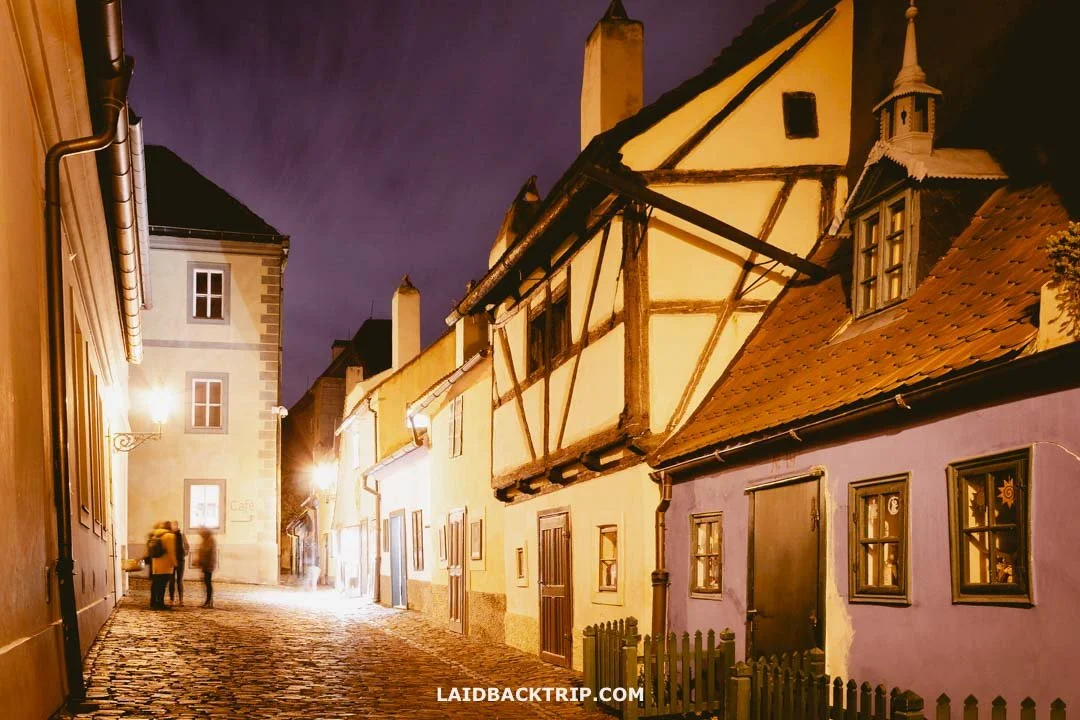
Golden Lane is another popular spot within Prague Castle.
Katedrála sv. Víta (St. Vitus Cathedral): 1-2 Hours
Once we pass through the First and Second courtyards of Prague Castle, there's this awe moment when we appear on the Third one right in front of the 82-meter-tall front towers. Right now, we're so close to the cathedral that the first thing everyone does is look up to admire the front portal and both towers. This is one of my favorite moments of all three days, because it sort of happens without any warning (well, you know it's there, but still).
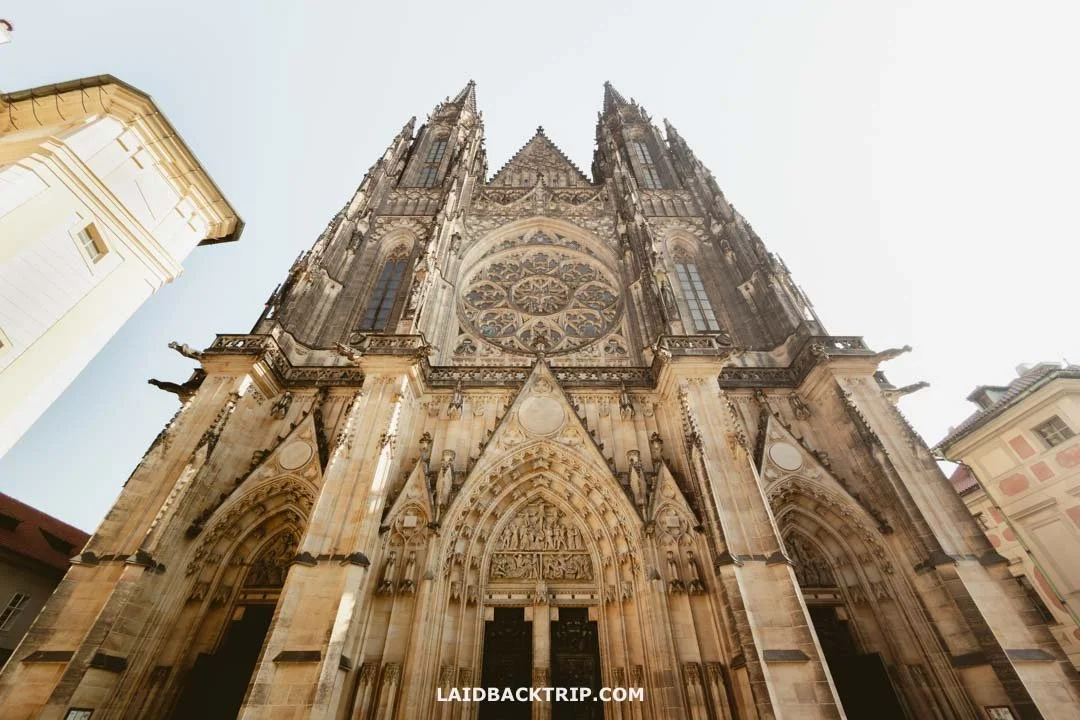
St. Vitus Cathedral is just breathtaking from outside.
We then turn right and walk around the Third courtyard to realize that the main tower is even taller and reaches about 102 meters. It's not as huge as, for instance, Milan Cathedral, which I had a chance to explore just the other day, but it's impressive nevertheless.
St. Vitus isn't just the city's biggest church, but it also contains a lot of Czech history. It's where kings and queens were crowned and where the country's most important figures, from royals and nobles to patron saints, were laid to rest. Construction began in 1344, but the cathedral took nearly 600 years to finish, finally completing in 1929. It's easily Prague's biggest architectural jewel, especially since it's not just a Gothic masterpiece, but also features Renaissance, Baroque, Neo-Gothic, and Art Nouveau elements.
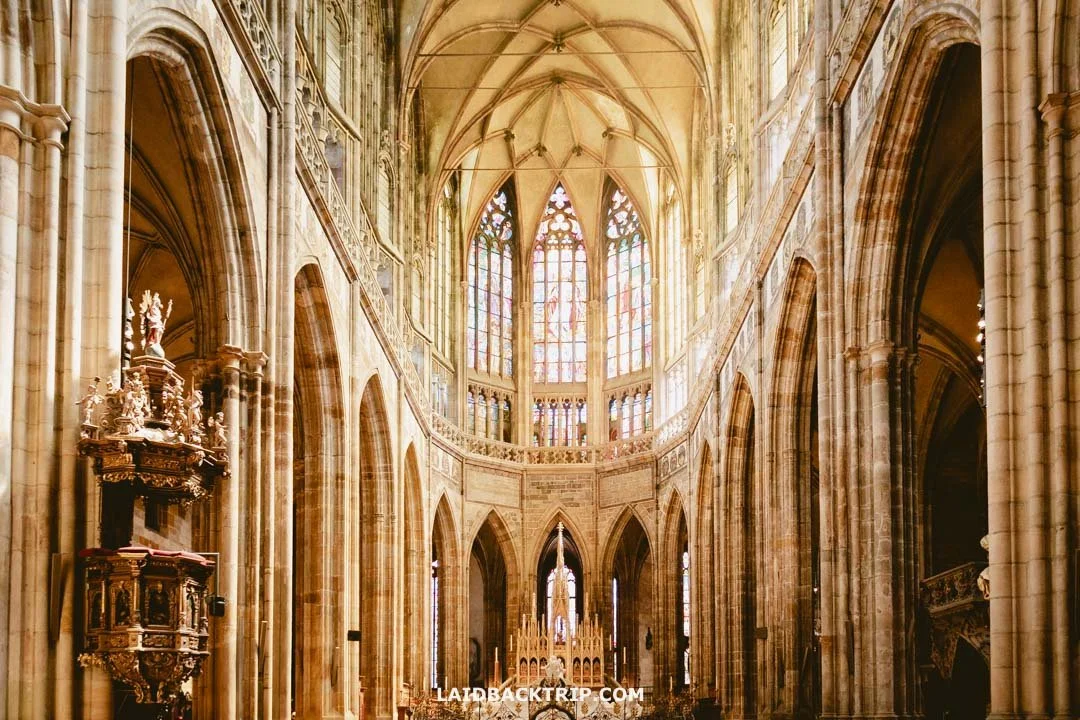
Once you're inside, the Gothic architecture is every bit as impressive.
But we didn't come here just to admire it from outside, which means that our next steps will lead us inside the cathedral. Inside St. Vitus Cathedral, we want to see Alfons Mucha's vibrant Art Nouveau stained glass windows, the beautifully ornate St. Wenceslas Chapel, the Royal Crypt, and of course, the Gothic architecture. I already mentioned it earlier, but I do recommend climbing the South Tower for some of the best views in Prague. By the way, when I talked earlier about that classic view of Hradčany, it's actually St. Vitus Cathedral towering over the castle complex that gives it thatfamous look. So now you get a chance to actually climb the tower, so don't skip it.
Strahovský klášter (Strahov Monastery): 1 Hour
Now that we saw everything at Prague Castle, it would make sense just to leave the complex through the eastern gate at Černá věž and then head to Letná park, catch a sunset there, and call it a day. But we would miss completely the Strahov Monastery, which would be a shame.
So we will head back to Hradčanské náměstí and walk there instead, passing Loreta (known for its Baroque architecture, carillon, and monstrance) and Černínský palác (the largest of theBaroque palaces of Prague and the seat of the Czech foreign ministry) along the way. Without the stops, the monastery is just a 10-minute walk from here.
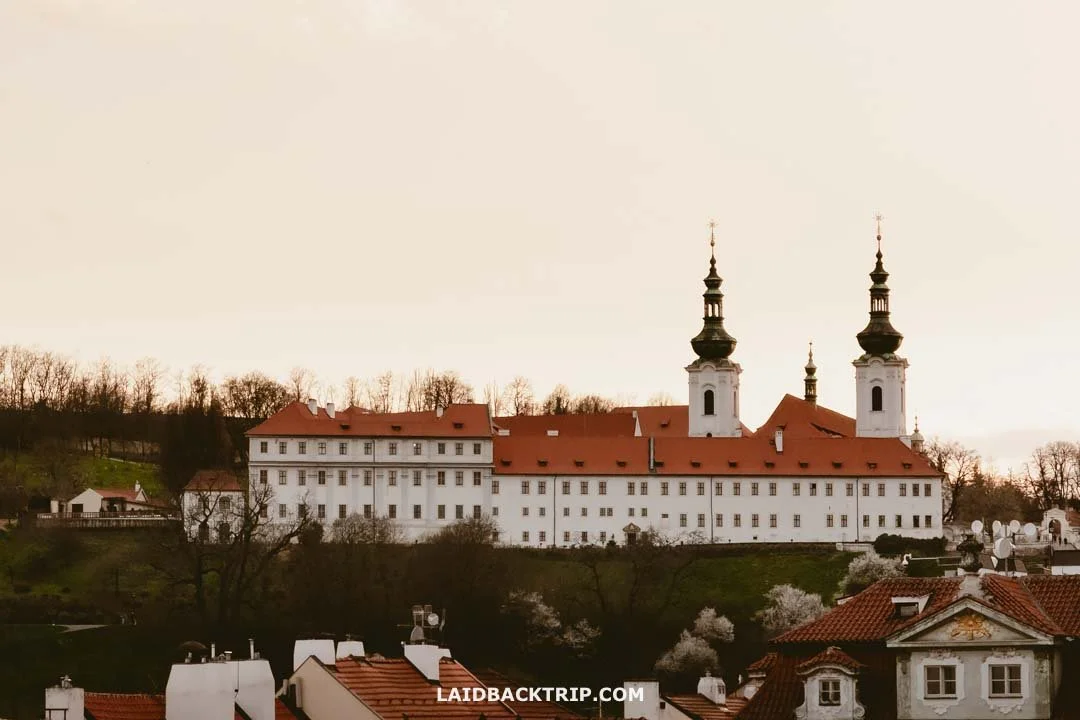
Strahov Monastery is a Premonstratensian abbey that was founded in 1143.
Strahov Monastery was founded in 1143, though the current buildings are the result of major renovations carried out between the 17th and 18th centuries. The reason why I dragged you here is that it's also home to the Theological and Philosophical halls, which are often considered one of the most beautiful historic libraries in the world. Of course, you need to book in advance, so make sure that you can fit it in with the Prague Castle visit.
I also know that you might be craving some more superficial things like food by now (it's been a long day after all), and don't worry, there's a very popular Pivovar Strahov (Strahov Monastery Brewery) just steps from the monastery itself (I love their "tmavé" beer, but the IPA is not bad as well). There's even a Hotel Monastery if you're looking for a quiet location away from the noisy city center. The nearby Lindner Hotel is very popular for the very same reason.
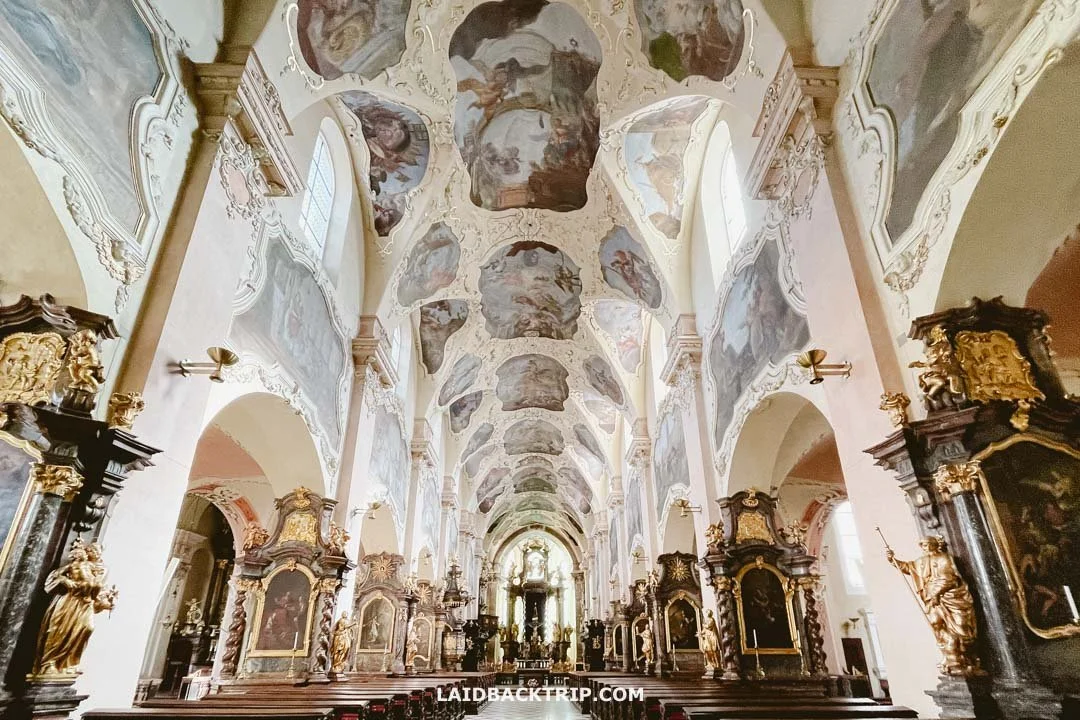
The Basilica of the Assumption of Our Lady is the main cloister church at Strahov Monastery.
Petřín: 1-2 Hours
The next reason why I chose to walk in this direction instead of going to Letná is that from Strahov Monastery, we can get some of my favorite views of Prague (especially stunning in spring), and once we're done here, we can walk from here to Petřín Gardens, our final stop of the day (even more stunning during this time of the year). Like when you visit Petřín in May, it's just really amazing with everything blooming around (no wonder Lucka Bílá, our famous pop singer, set that song about love right here).
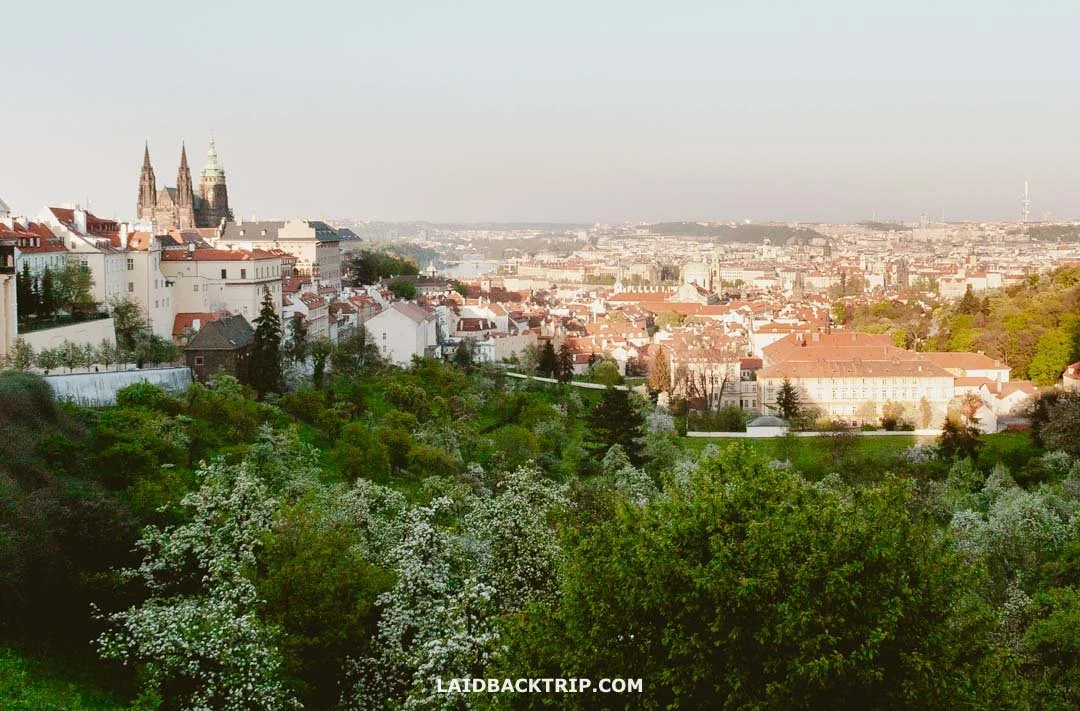
This view of Prague from Strahov Monastery is most beautiful during spring time.
Petřín is a 331-meter-high hill in Prague's city center known for amazing views, lots of greenery, walking paths, a tower that was inspired by the Eiffel Tower, and a funicular. It's one of our favorite parks in Prague simply because it's a great place to just walk around, no matter the time of the year. I've already talked about spring, but when autumn arrives, and the foliage turns yellow and red, and the morning mist covers the winding paths, there aren't many places in Prague I would want to visit more than this one.
Another reason we love Petřín is that while the area above Újezd gets busy, especially around summer, the whole park is really big and there are easy ways to escape the crowds here. Seminářská and Nebozízek Gardens are stunning, but we prefer to walk past the Hladová zeď (Hunger Wall, built as a defensive barrier during the reign of Charles IV) to Kinského zahrada, which is like a whole new place.
Since we've already climbed the tower at St. Vitus, there's really no need to repeat this activity at Petřín Tower unless you really want to do so. If you do, however, then there's a fee to get to the top viewing platform of the 63-meter steel tower, which really does resemble Paris' Eiffel Tower (though it's like five times shorter), and the views from the top are pretty awesome. Right next to it is the Petřín Mirror Maze, but I'm pretty sure you can skip this one without missing out on something.
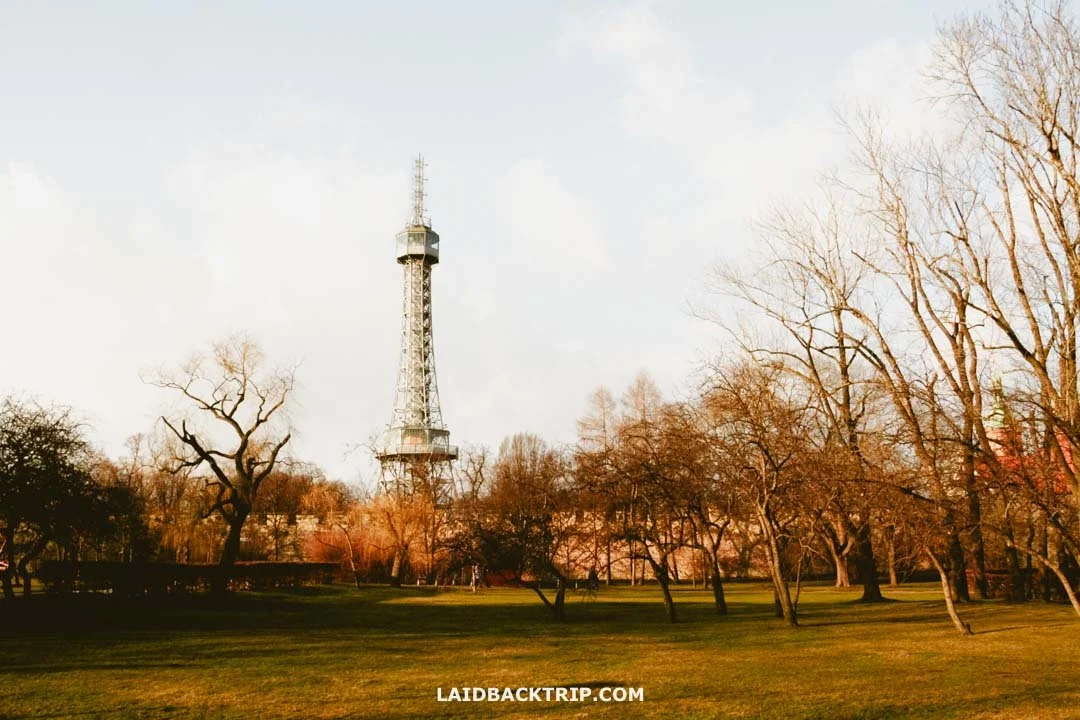
The steel tower inspired by the Eiffel Tower is the dominant of Petřín Hill.
The last thing to do at Petřín is to take the charming funicular. Since we're heading downhill, it won't save you any energy, but this is what the tourists do here. You can buy a ticket on the spot or use the regular one that you would use for public transport, but as of now, only 24-hour and 72-hour tickets work for the funicular.
As I promised earlier, Újezd is just a stone's throw from Kampa, so if you skipped it in the morning, now is the time to tie up that loose end. If it's already dark (winters bring very short days to Prague), that's when Kampa has the most charm. Obviously, you can also see Church of Our Lady Victorious (the one with the Infant Jesus) if you haven't done so in the morning, or you can explore the nearby Střelecký ostrov, which you'll reach from Most Legií. If it were up to me, knowing that we would also have a chance to return here tomorrow, I would have just hopped on the tram and headed back to Wenceslas Square.
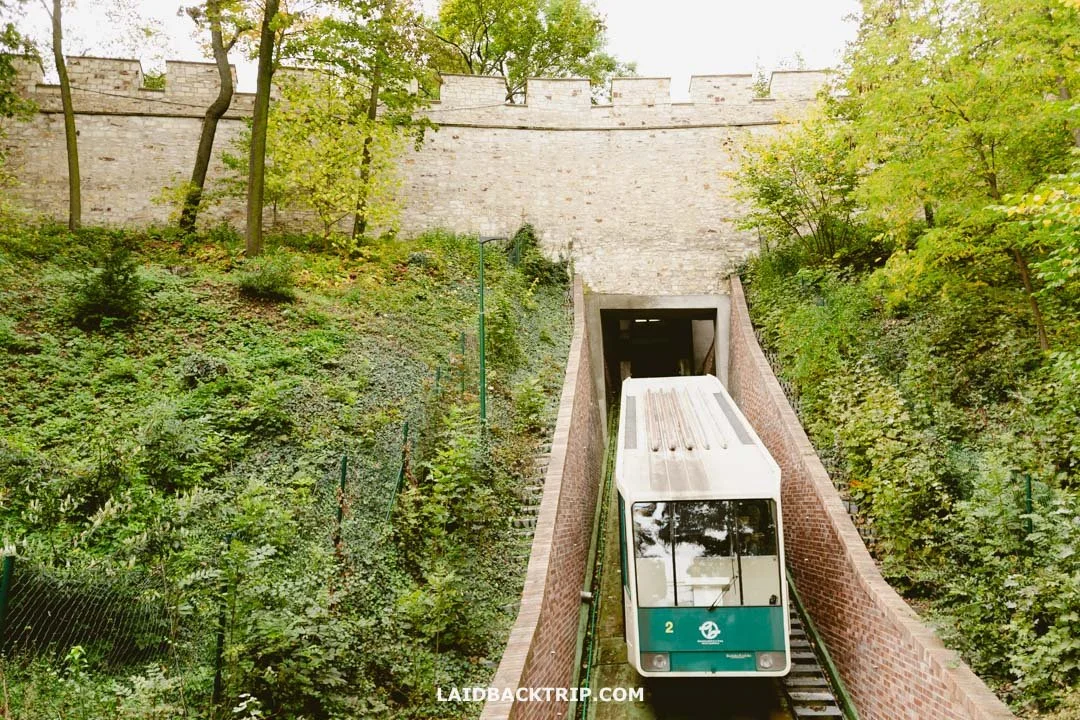
The Petřín funicular climbs 130 meters over a 500‑meter route.
Státní opera (State Opera): 3 Hours
It was a pretty long and tiring day, so now would be the time to take it slowly. You have tons of options for how to spend the second evening in Prague, and exploring the local fine dining scene or just grabbing a beer or two never fails, but I would do something else. Prague, and honestly every big city in Central Europe, like Munich, Salzburg, or Vienna, is an amazing spot to experience one of the classical concerts or ballet shows. And that's what I think would be a fitting end to this day.
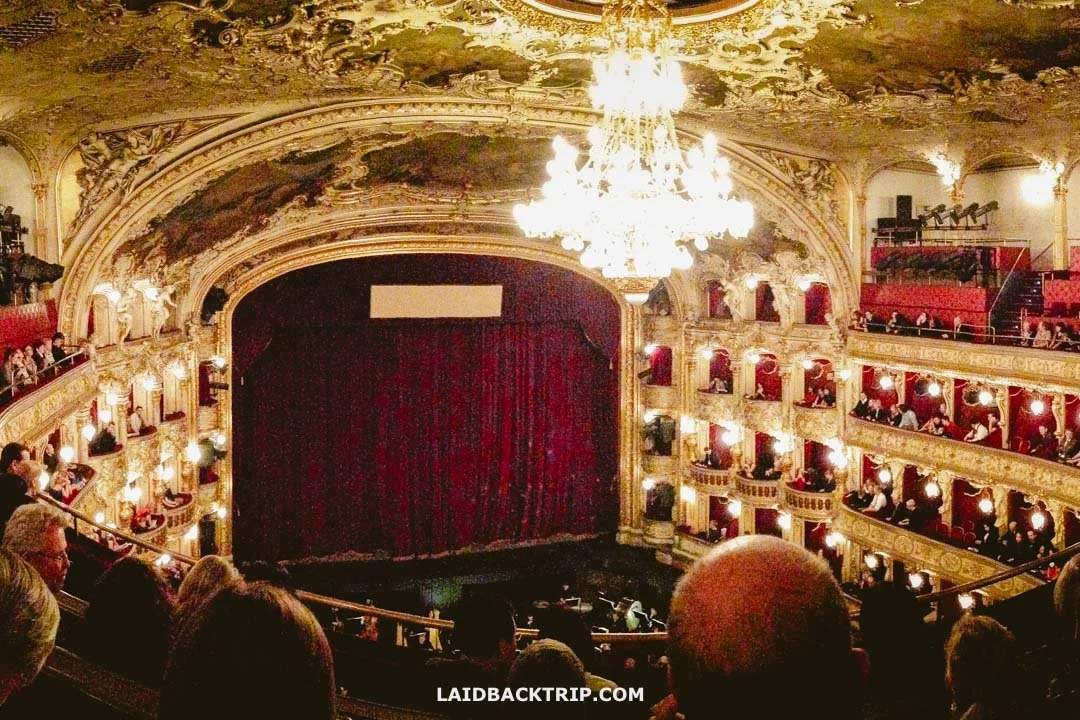
Seeing an opera or ballet performance is one of Prague's top cultural experiences.
Since I suggested taking a tram from Újezd to Wenceslas Square, which takes us to Vodičkova Street, the beautiful building of Prague's State Opera would be just slightly over 500 meters from where we get off. They have concerts at least a few times a week throughout the year, and in June, they have events daily. The most Czech experience would be Rusalka by Antonín Dvořák (and his most successful one), though Swan Lake by Tchaikovsky or Don Giovanni by Mozart would be pretty fantastic too.
Now, to address the dress code. For locals like us, visiting Prague's State Opera is a formal event, so I'll be in a suit, and Lucie will be wearing an elegant dress. We don't expect you to travel with it because we also never do. On the other hand, at least wear something that looks somewhat formal (smart casual would be great). The last time we were there was around Christmas, dressed nicely, and seeing tourists wearing those tacky holiday sweaters with reindeer felt really bizarre.
Day 3 in Prague: Žižkov, Vinohrady, Vyšehrad, Letná and National Museum
I have to say that this is by far my favorite day, and I hope you'll enjoy it too. Today, we'll take advantage of having three full days to explore Prague and head to places not that many tourists visit (at least in comparison with sights you've seen on your first two days). It's not like you will have those places just for yourself, as we have not yet run out of touristy sites, but I'm pretty certain the whole day will feel more relaxed.
I'll take you through some of my favorite neighborhoods (Žižkov, Vinohrady, Nusle, etc) to soak up more local vibes without the need to leave the city center. And we also leave the big crowds of Prague 1 behind.
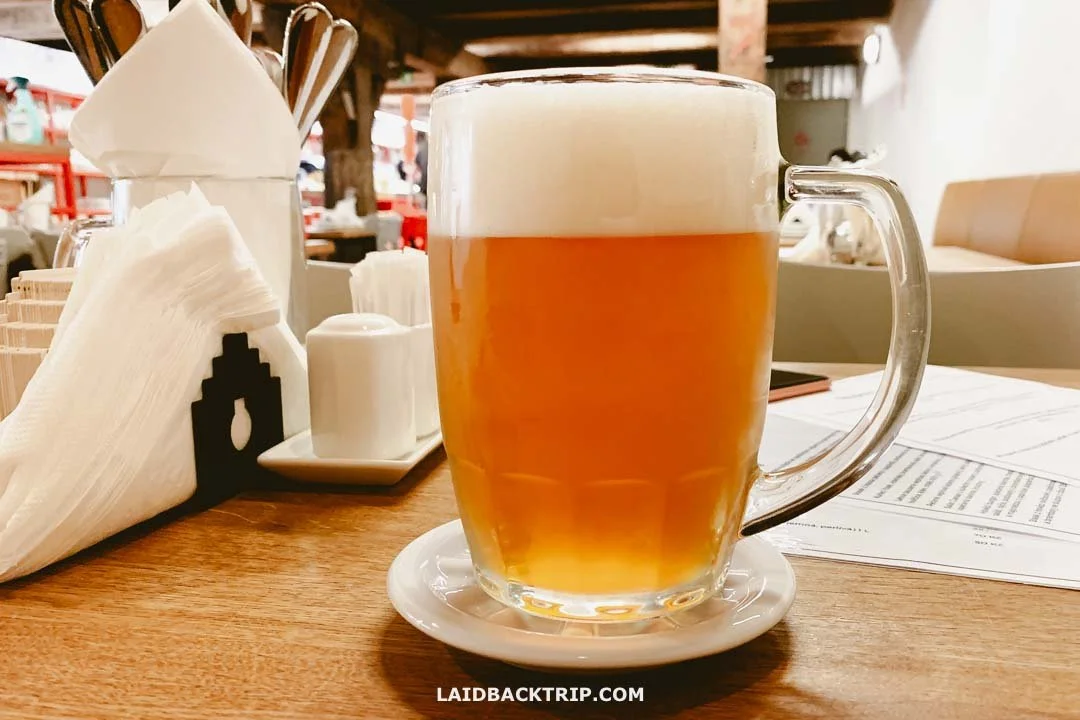
If you want a beer or two, Žižkov is the perfect spot.
I have to admit that I planned this day as I would want to see Prague if it were my first trip to this capital. And as both Lucie and I prefer to stay active on holidays and love walking, you probably know where this is heading. Don't panic just yet. The whole circuit I planned for our third day in Prague would be just about 16-17 kilometers long, which would normally take like four to five hours of walking. There are sections you can skip if you think it's too much walking, or even take a tram to get back from Vyšehrad, but I really like my plan, so I hope you will stick with it.
Most of the day will consist of laid-back sightseeing, walking through charming neighborhoods, and beautiful waterfronts, with an occasional visit to a church, park, or monument, but I did save a visit to the National Museum for the last evening in our city, so the day doesn't feel that monotonous. Obviously, Prague is full of museums, so you can switch that one for a science museum, a modern art museum, or one of those bizarre tourist museums in the Old Town.
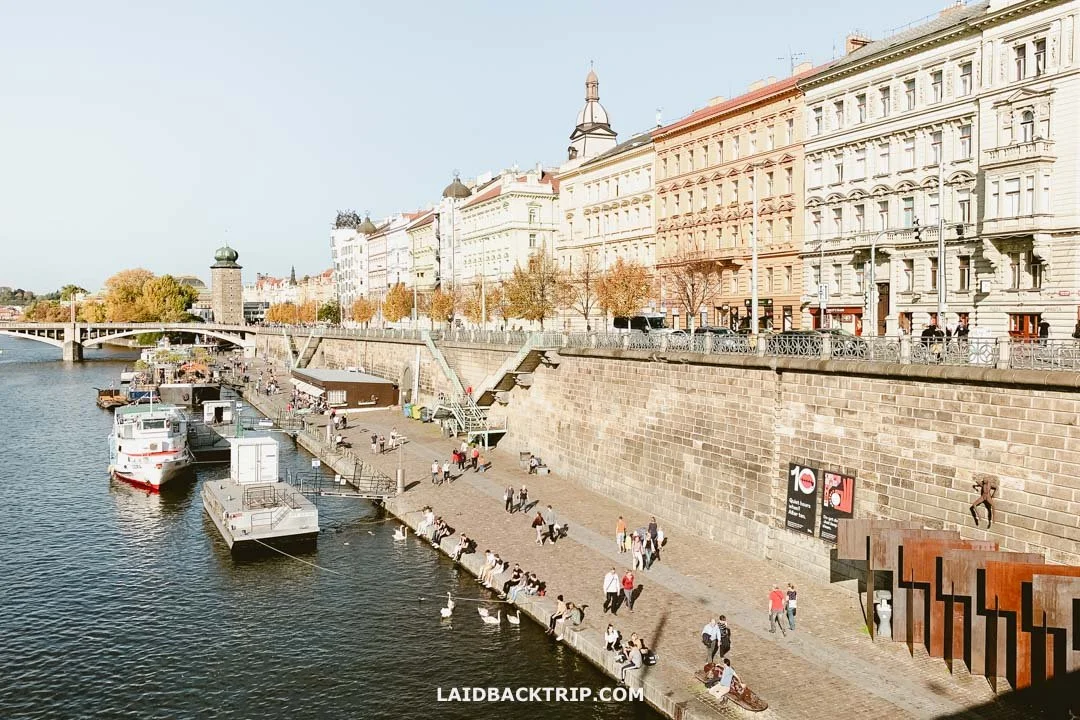
If you need a break from sightseeing, the Prague waterfront is the perfect place to slow down.
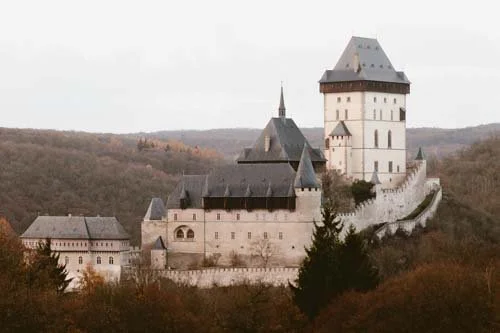
Lastly, this is our last day in Prague. And I planned the first two days so you would see all Prague's top sights. So you basically plan your day however you want. If you want to just explore the museums, go ahead. We do have a big Zoo here if you've come to Prague with kids. You don't even have to spend this day in the city, as I'll suggest some awesome day trips like Terezín Memorial, Karlštejn Castle, or even Český Krumlov. But as I said, this is a Prague itinerary, so I'll focus primarily on what to see in the city.
Our tip: While wandering around Prague on your own is very easy, if you want to know more about the city, its history, or experience it from a different perspective, there are plenty of Prague city tours you can choose from.
Národní památník na Vítkově (National Monument at Vítkov): 1 Hour
As usual, we start at Wenceslas Square, which means that in order to reach Vítkov, about two kilometers away, we follow Jindřišská all the way to Senovážné náměstí and Hybernská. The next couple of hundred meters will definitely not be scenic as we have to walk under the magistrála, a traffic artery that connects Prague's south with north, followed by a railway underpass.
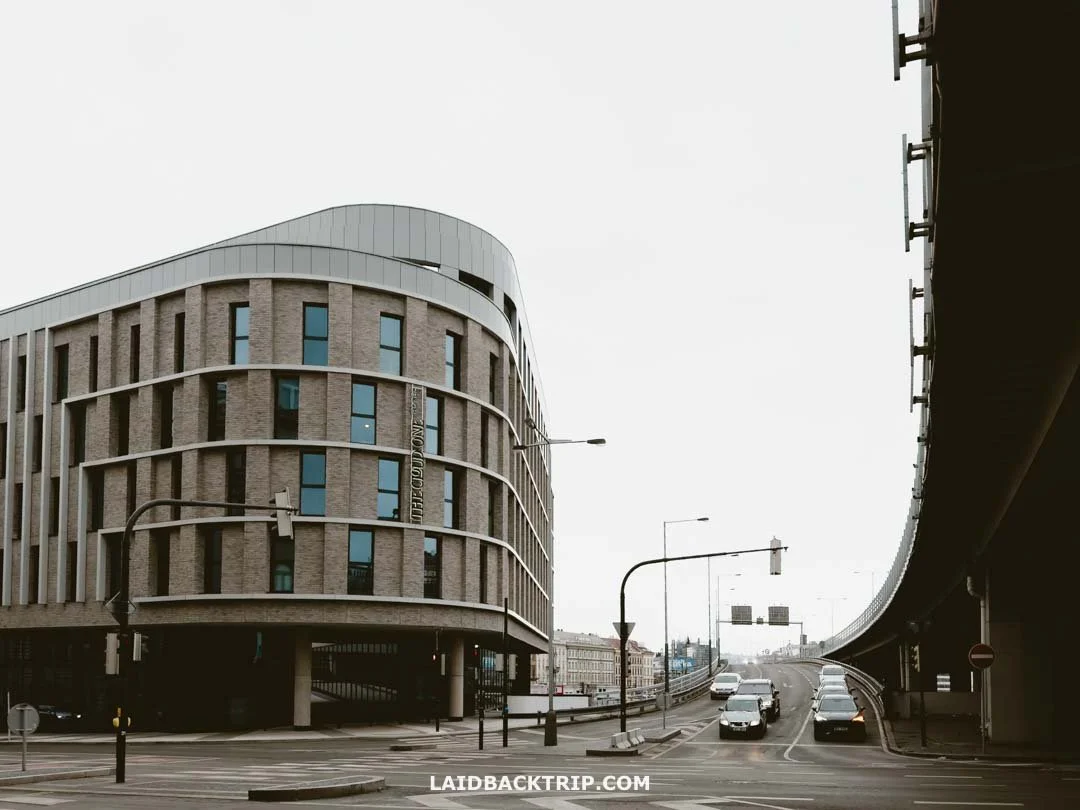
It is not the prettiest walk, but heading under Prague's Magistrála is just part of getting to Vítkov.
For a complete experience of this spot, there's the Cloud One Motel with views of this charming corner. Once on the other side, we turn onto a walking and cycling path (A25) that starts at Příběnická. From here, the route is very straightforward, but be prepared that once you cross Husitská, it's a fairly steep climb up (depending on which trail you take).
By the way, if you're into modern architecture, you could make a detour to Masaryčka (designed by Zaha Hadid), and while this modern building is really cool, the rest of the walk won't be any more scenic. If you're staying somewhere else, then Florenc metro station (B and C lines) is a good starting point for the Vítkov trip. There's no need to take a bus from here to a stop at the hill's base called U Pamatníku.
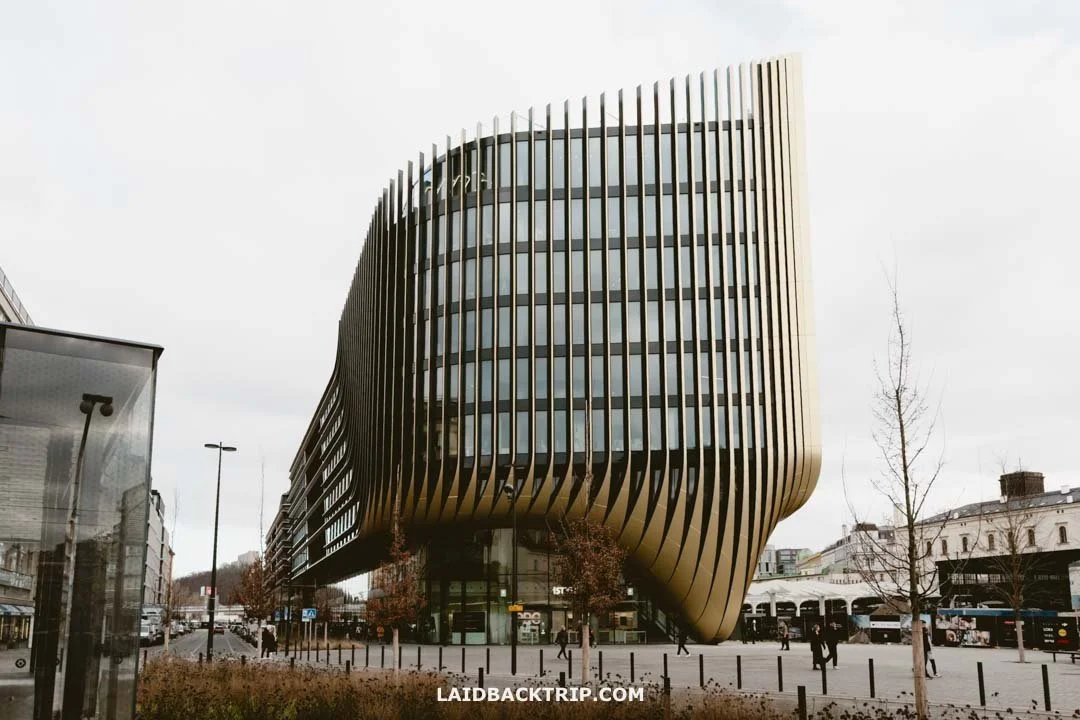
Masaryčka is a great addition to the modern architecture in Prague.
Vítkov separates Karlín from Žižkov, and we love to go here for a couple of reasons. The hill has nice trails, awesome views, and the National Monument at Vítkov. You can also find some interesting Czech history here.
The most famous event that took place here was the Battle of Vítkov Hill. Under the leadership of Jan Žižka of Trocnov, the Hussites on July 14, 1420, defeated the much bigger Crusader army. It was a big military success that made him so famous, and to commemorate his victory, the whole neighborhood was named after him, and atop Vítkov, a big equestrian statue of him was built. The Statue of Jan Žižka is really huge and impressive, as is the national monument behind it.

The National Monument at Vítkov has a statue of Jan Žižka in the front.
The massive concrete monument was originally built between 1928 and 1938 to honor the Czechoslovak legionnaires of WWI, but after 1948, the Communists turned it into a Pantheon for party leaders and the museum of President Klement Gottwald. After 1989, the remains of the former regime's representatives were removed from the memorial. Today, the monument is free to enter, as is the whole Vítkov. It's definitely worth seeing, even if you don't want to go inside.
Žižkovský vysílač (Žižkov Television Tower): 30 Minutes
Since we're on the northern edge of Žižkov, we'll head south now because our next stop is Žižkov Television Tower. Normally, we would leave Vítkov through Tachovské náměstí and head directly there, looking at roughly a 1.5-kilometer walk. But you also have a chance to see more of Žižkov by walking to Parukářka (a lovely park with some really nice views) and even visit Olšanské hřbitovy (a huge old cemetery that looks more like a park).
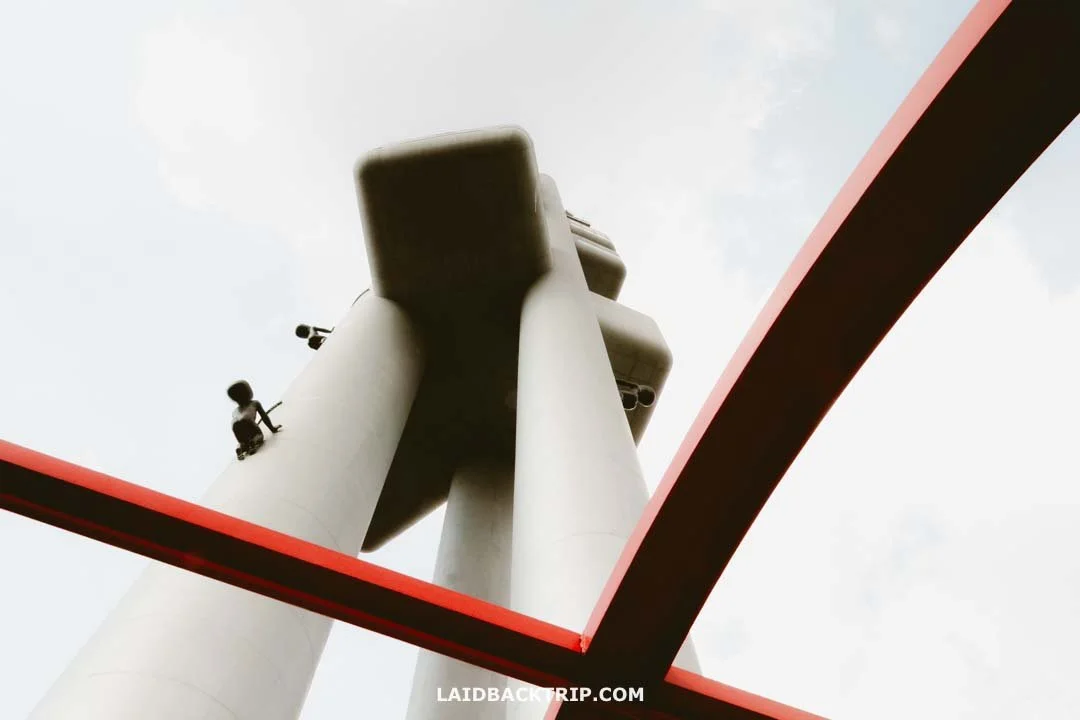
The Žižkov TV Tower is nothing like the medieval sites we saw in the previous days.
No matter which way you choose, we'll eventually reach Žižkov Television Tower, yet another Prague landmark worth visiting. The structure is unconventional, to say it diplomatically, as it's instantly recognizable from all of Prague'svantage points. It was voted the second ugliest building in the world in 2009, which we think is a bit unfair, as it's simply unique.
The Žižkov Television Tower is 216 meters tall, and you can take an elevator to an observatory at a height of 93 meters. No matter what you think of it, when the weather is clear, you will get one of the best views over Prague. There is also a restaurant at 66 meters if you're hungry (we would probably try to grab something to eat on the ground, though), and the Sky Suite Hotel, a single room at 70 meters. What makes the tower interesting are also the statues of babies crawling up and down the tower's pillars, which were made by David Černý (yes, the same guy who made those at Kampa too).
Grébovka and Vinohrady: 2 Hours
From the Žižkov Television Tower, we're heading to Grébovka, our favorite park in Prague. It's less than a two-kilometer walk depending on which route you take. We'd definitely want to see Náměstí Jiřího z Poděbrad, which is just a few hundred meters from the tower. It's a lovely square known for the Church of the Most Sacred Heart of Our Lord, frequent farmers' markets, and a nice place to just sit and watch life go by. Now we're leaving Žižkov and entering Vinohrady. While our ultimate goal here is to reach Grébovka, this whole next walk is mostly about enjoying the journey to it.
When you have three days in Prague, we think you should take the time to explore one of the prettiest neighborhoods the city has, which, at least to us, is Vinohrady. They used to be called with the adjective "královské" (basically it means Royal Vineyards), but today it's just Vinohrady. And since we're taking you to Grébovka, we'll actually see a vineyard.
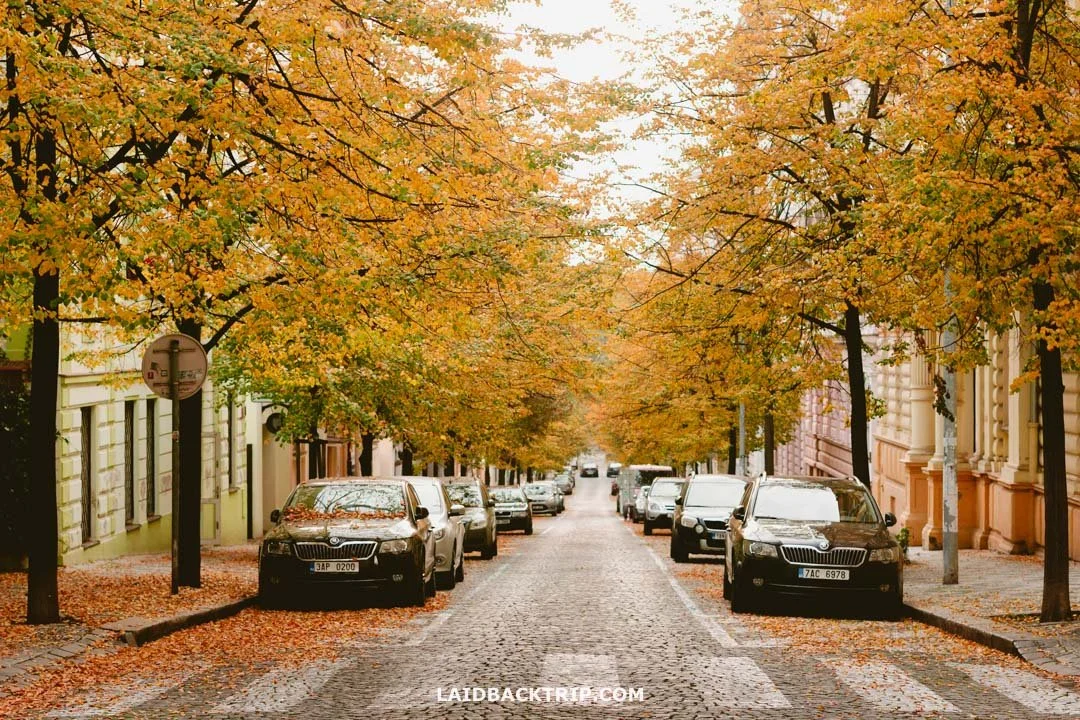
If you ask us, Vinohrady is definitely our favorite neighborhood in all of Prague.
Vinohrady is an elegant residential district with charming streets lined with beautiful Neo Renaissance and Neo Gothic buildings. You can find many cozy cafes, markets, small restaurants, and lots of specialized food shops. There are also several parks where locals go jogging or just hang out, and our favorite is Grébovka (also known as Havlíčkovy sady), with many paths, greenery, and even a small vineyard. We spent a good amount of our lives here, but with the increasing tourism and rising rent prices, living here became too expensive for us.
Anyway, we are still in Vinohrady, because they're simply beautiful. It might be tempting to hop on a tram or metro to save ourselves some walking, but the point of visiting Vinohrady is to enjoy it on foot. We could walk directly from Náměstí Jiřího z Poděbrad to Grébovka, but we think it's definitely worth making a 10-minute detour to nearby Náměstí Míru (Peace Square). It's the central square of Vinohrady with a park and a huge Neo-Gothic Church of Saint Ludmila built in the late 19th century.
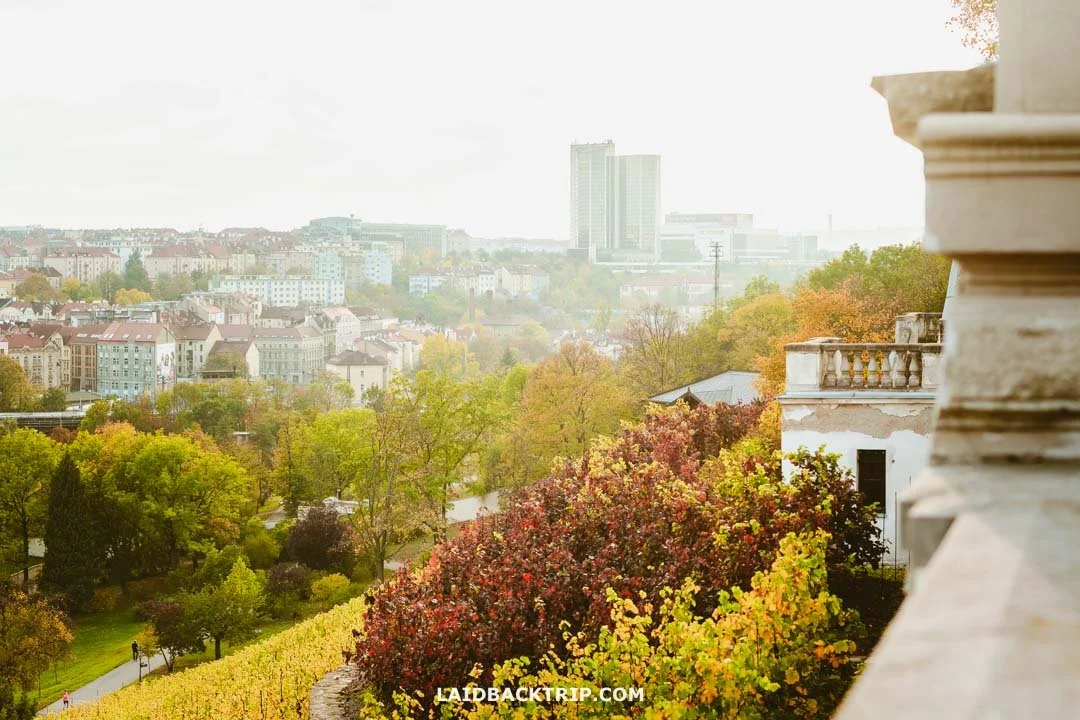
And Grébovka is our favorite park in Prague!
This whole neighborhood is packed with great restaurants serving cuisines from all over the world, so if you're craving Vietnamese (this is where we go to get a pho), French, Italian, Indian (our favorites are those vegetarian buffets), Japanese, or Mexican food, here's a good place to explore Prague's foodie scene. Our next stop is Grébovka, but instead of following Francouzská, it's better to take one of the quieter ones like Americká and Koperníkova.
I hope you're visiting Prague between May and September because this is when Grébovka, a Neo Renaissance park inspired by the Italian countryside, is the most beautiful. It has a terraced vineyard that still produces its own wine today, an artificial limestone cave, a wooden pavilion, and green lawns where we spent a lot of Sundays in the hot summers.
Nusle: 1 Hour
Getting from Grébovka to Vyšehrad is one of my favorite parts of the day simply because we're heading off the beaten path. And we can go through Nusle, another of my favorite neighborhoods in Prague. No matter which way you take, on the roughly 2.5-kilometer walk, you'll meet very few tourists. The walk through Karlov and Albertov (New Town, not Nusle) would be the most scenic, but I'd say the least adventurous because you would miss out on the Nuselský most and one of the most interesting parts of the whole neighborhood.
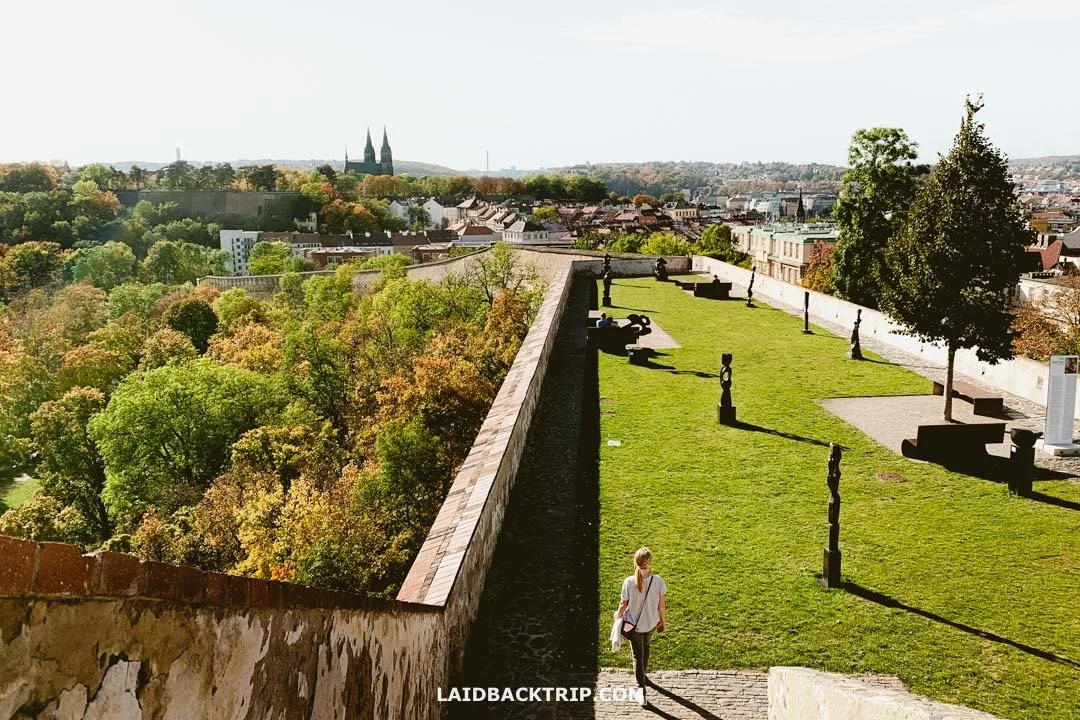
Bastion XXXI is one of those amazing Prague spots that even many locals don’t know about.
So I would instead walk to Otakarova and then to Křesomyslova, which would eventually turn into Jaromírova (just simply follow the tram tracks). This route will allow us to walk under the famous Nuselský most, a 485-meter-long bridge that connects Nusle with the New Town. Remember when the first thing we had to do in the morning was walk under the magistrála? Now we have to do the same thing, but this time the bridge will be more than 40 meters above us.
The concrete monster spanning the Nuselské údolí definitely doesn't make for the best living area, so this area is a bit rougher around the edges, and every time I pass through, I can't help but wonder how beautiful this part of Prague would be without it (never gonna happen because this is the busiest bridge in Czechia and also has a metro). It might be strange, but this area has tons of charm and, interestingly, lots of beautiful buildings.
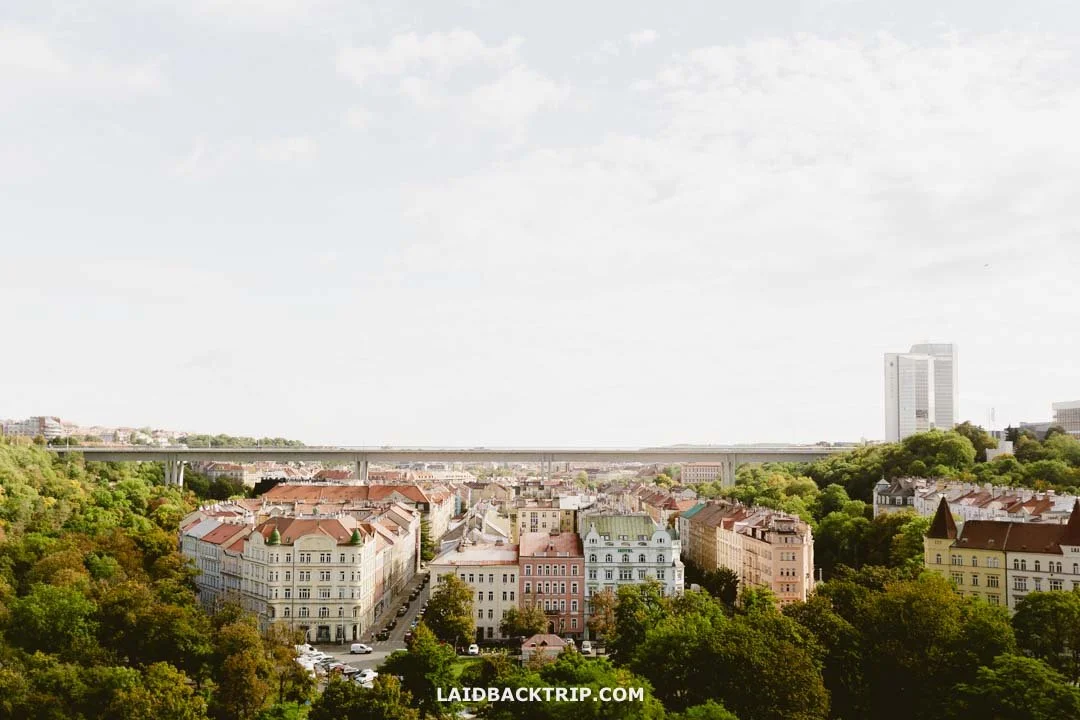
It is pretty wild that part of the Nusle neighborhood sits right under the Nusle Bridge.
If you're not fully committed to this idea, you can still walk under the bridge but bypass this area by walking through Folimanka (to Ostrčilovo náměstí), an oasis of greenery in this old area. Another interesting route to reach Vyšehrad is by taking the stairs under the Nuselský most that will take you to Kongresové centrum (Prague Congress Centre) right next to the 5-star Prague Towers Hotel, which is another iconic building in the city center.
Vyšehrad: 1-2 Hours
Both Lucie and I love Vyšehrad, so it's no wonder we come here often, either for morning runs or just weekend walks. It has beautiful gardens, amazing views, and despite increasing popularity among tourists, it's fairly easy to find a quiet spot here. When climbing up to Vyšehrad from Ostrčilovo náměstí, it doesn't matter whether you enter the complex through Táborská brána or Cihelná brána.
The historic fort of Vyšehrad (Upper Castle) was built on the rocky cliff overlooking the Vltava River in the 10th century, though according to an 8th-century legend, it was the first settlement of Prague. From this place, Princess Libuše (daughter of the mythical Czech Duke Krok) prophesied Prague's future with her famous words: I see a great city whose glory will touch the stars.
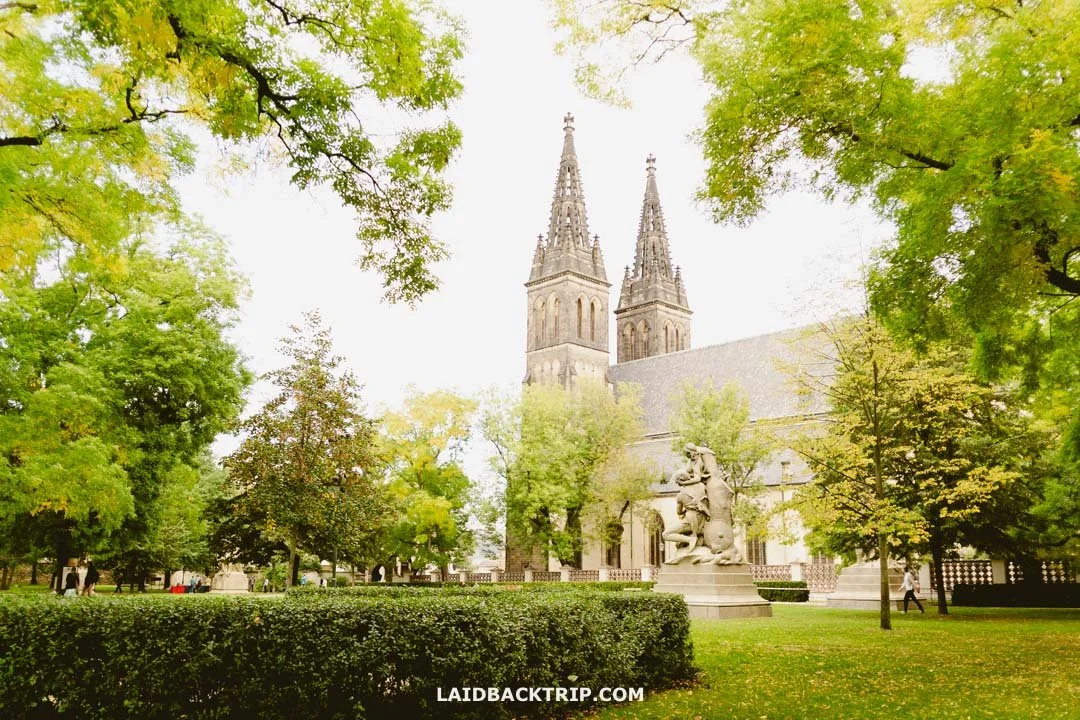
The Basilica of St. Peter and St. Paul at Vyšehrad.
Besides the impressive walls, the main things to see in Vyšehrad is the stunning Basilica of St. Peter and St. Paul, and right next to it ,is the Vyšehrad Cemetery, a resting place for the most famous Czechs like Dvořák, Destinnová, Mácha, or Smetana. Another interesting structure is the 11th-century Rotunda sv. Martina (the oldest surviving rotunda in Prague) and the Casemates, a network of underground tunnels accessible from Cihelná brána.
Our favorite pastime is to simply walk along the ramparts to enjoy the breathtaking views of the Vltava River winding through the city below, and also the Nusle area from which we have just arrived, so make sure to do the whole circuit. Another reason we come here so often is that Vyšehrad is free to visit (here are more tips on free attractions in Prague). There's only a fee to the basilica and casemates (the cemetery is also free of charge).
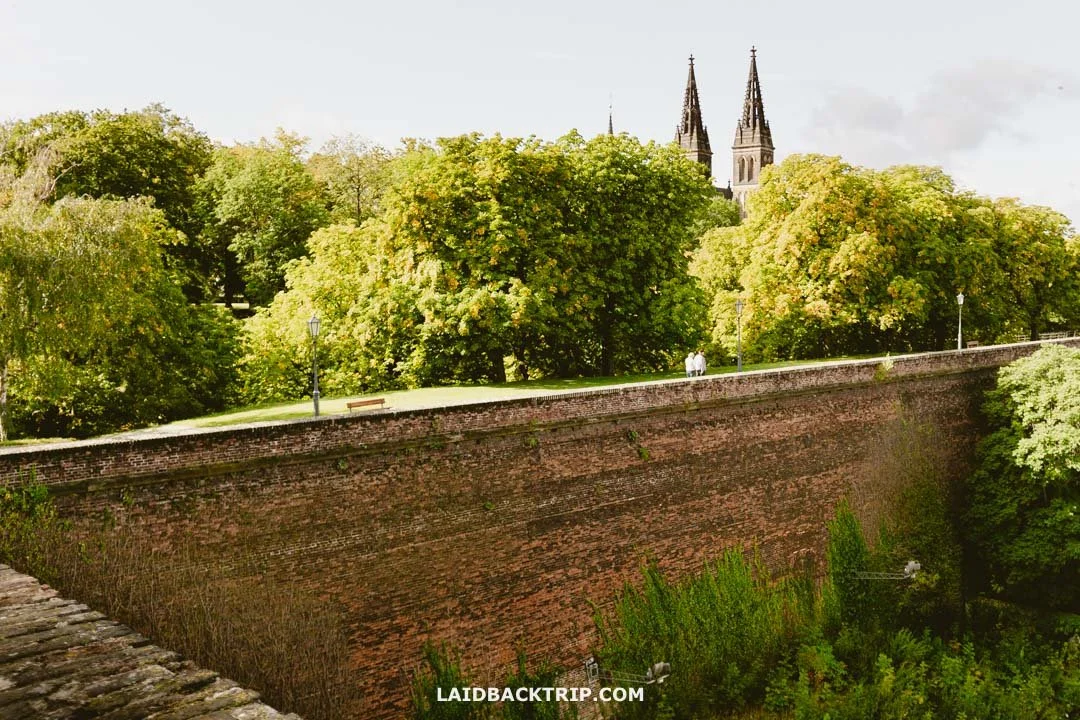
Vyšehrad is one of our favorite spots to hang out in our free time.
We are used to walking (or running) from Grébovka to Vyšehrad, but you can take a direct tram number 7, 14, or 18 from Otakarova to Ostrčilovo náměstí if you're behind schedule. To leave Vyšehrad, we'll take this unmarked exit (GPS coordinates: 50.06490, 14.41679), a simple metal gate in the western wall, only a short walk from the basilica. By descending these stairs, we appear directly at the Rašínovo nábřeží.
Tančící dům (Dancing House): 15 Minutes
We pass under Vyšehradský železniční most (Vyšehrad Railway Bridge) and continue along the waterfront back toward the city center. While most tourists pass by without even noticing, there's a little ferry stop, Výtoň, right by the water. The small boat can take us to Smíchovská náplavka on the other side of the Vltava River, which would mean we would need to walk across either Palackého or Jiráskův bridge to get back on the true right side of the Vltava, as that's where the Dancing House, our next stop, is.
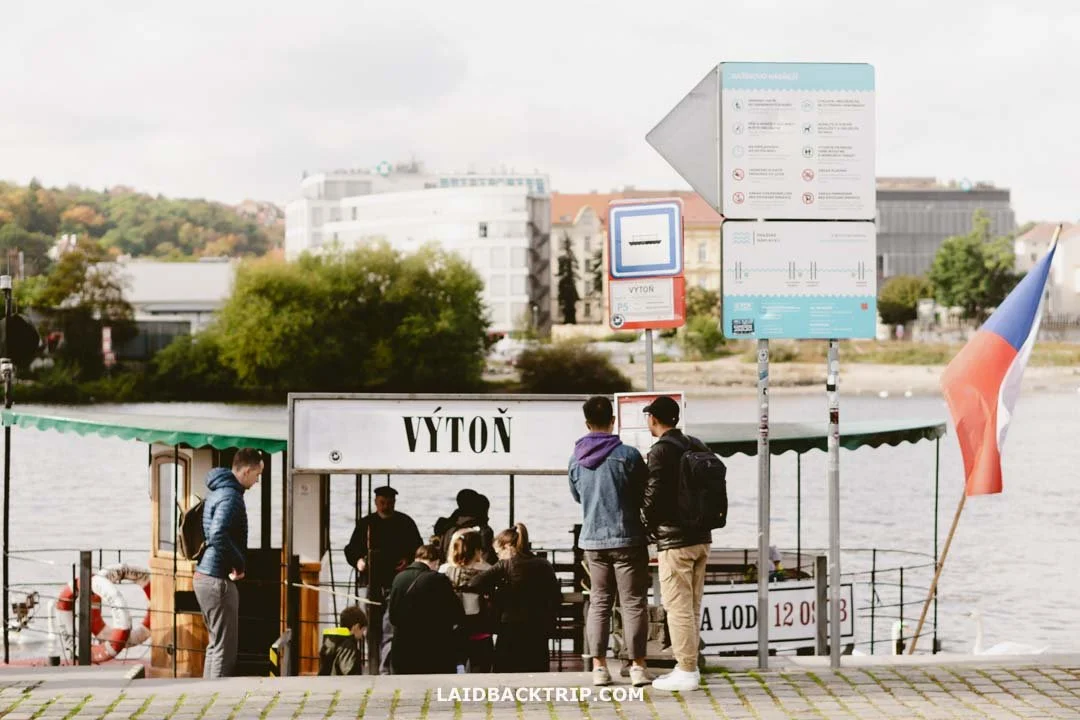
This little ferry will take you from Výtoň to Smíchov.
The Dancing House is a stunning example of deconstructivist architecture designed by Vlado Milunić and Frank Gehry that was built in 1996. We don't have many modern buildings in the center and the city overall, but this building that mimics a dancing couple of Fred Astaire and Ginger Rogers really makes up for that. This building is super photogenic any time of the day, but I love to come here to take photos of the Dancing House at night. You can even visit a restaurant inside the house, which offers a nice view over Prague (and even stay in the Dancing House Hotel).
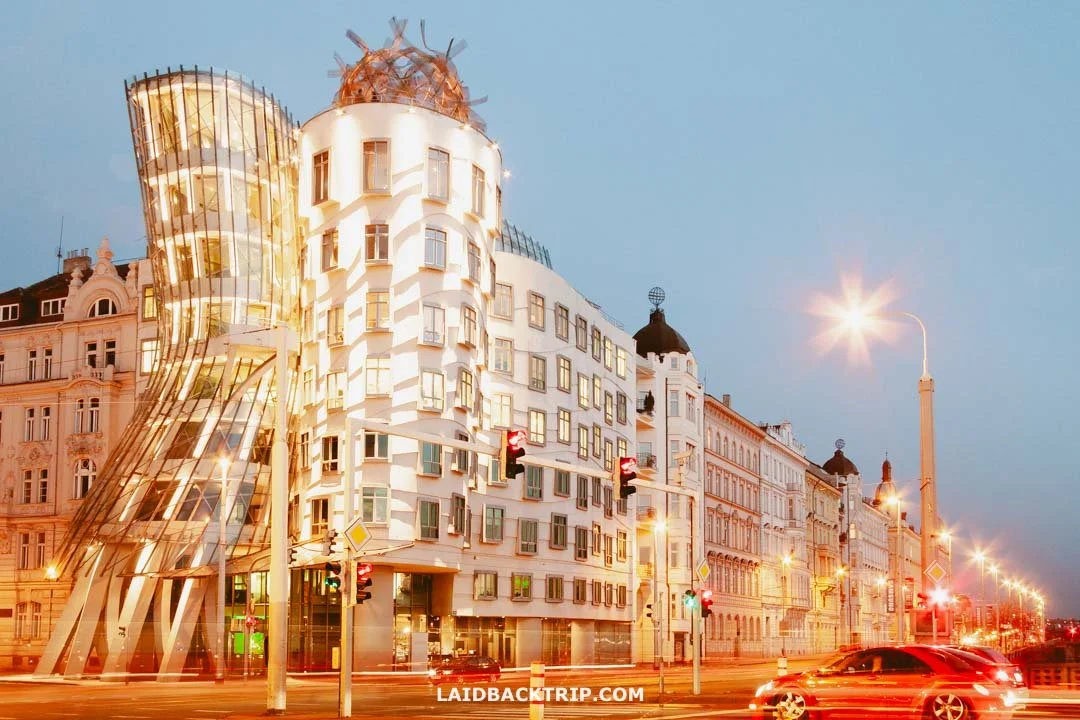
The Dancing House is easily one of Prague's most famous modern-era buildings.
From here, we continue walking the waterfront, passing Slovanský Island and Střelecký Island along the way. Both can be explored on foot if you feel like your trip to Prague won't be complete without a visit to an island. We like Střelecký Island slightly more because it's more romantic (it sure doesn't look like it at first, as it sits under the busy Legion Bridge) and has better views. Our favorite time of the year to visit Střelecký Island is in autumn, when leaves change color and we can observe reflections of buildings lining the Vltava River. From the tip of the island, we love the views of Charles Bridge and of the National Theater.
Letenské sady (Letná Park): 1 Hour
Now that we've explored some of our favorite spots, it's time to visit the final one, because there is still one view left that's worth seeing. Really, we think that visiting Letná Park would be the best way to say goodbye to Prague and our journey together.
So from Dancing House, it's either a 2.5 kilometer walk, with a chance of revisiting some of the places like National Theater or Kampa we saw in the previous days (and exploring new ones like Valdštejnská zahrada), or simply taking a tram to either Čechův most (a direct tram but with a short climb) or Chotkovy Sady (you need to change to another tram but save yourself the walk up).
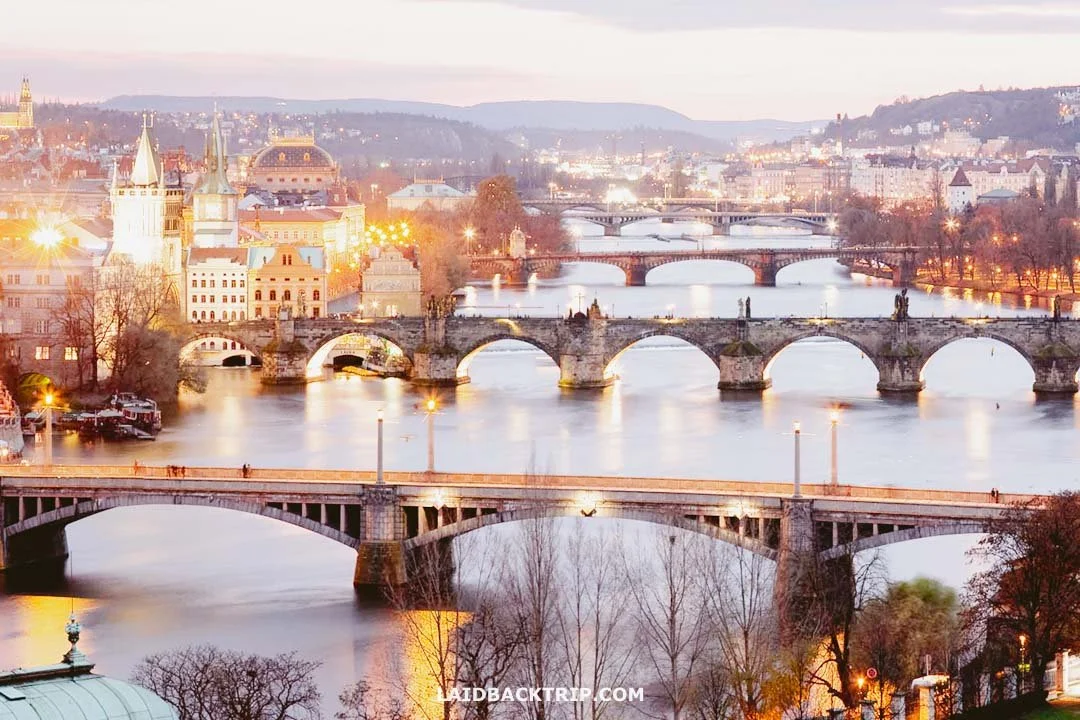
Letná Park offers one of the best views of Prague's bridges and the Vltava River.
Letná is a district in Prague that is getting more and more attention from locals and tourists as it's packed with many hipster cafes and bistros that have grown here lately (similar to the neighboring Holešovice), so it's a great spot to visit if you're hungry or thirsty. But we came here mostly to see Letná Park to enjoy a nice walk and explore some iconic views of Prague from above.
The best view from Letná Park is hands down from Hanavský Pavilon, as from here we can see all the bridges we just passed on our way here. It's an incredible view, and every time I pass by, I definitely stop here to take a quick photo. Our small advice is that we would avoid the restaurant here. By the way, if it's getting late, the nearby Pražský metronom (Prague Metronome) is a great sunset spot with a lot of people hanging out here, especially in the summer months. From here, it's a 20-minute walk back to Wenceslas Square (via Pařížská and Old Town Square).
Národní muzeum (National Museum): 3 Hours
We've already been on a river cruise, attended an opera, and for the last evening I saved a visit to the Národní muzeum (National Museum). Not only is it one of the most famous buildings in Czechia, which we simply call muzeum because everyone knows it's this one we talk about, but it has some really awesome exhibitions. As I tried to make this itinerary also fairly flexible, you can definitely switch things up. If you feel like doing the National Museum on the first day (it actually might even make slightly more sense) and the cruise on your last, then be my guest.
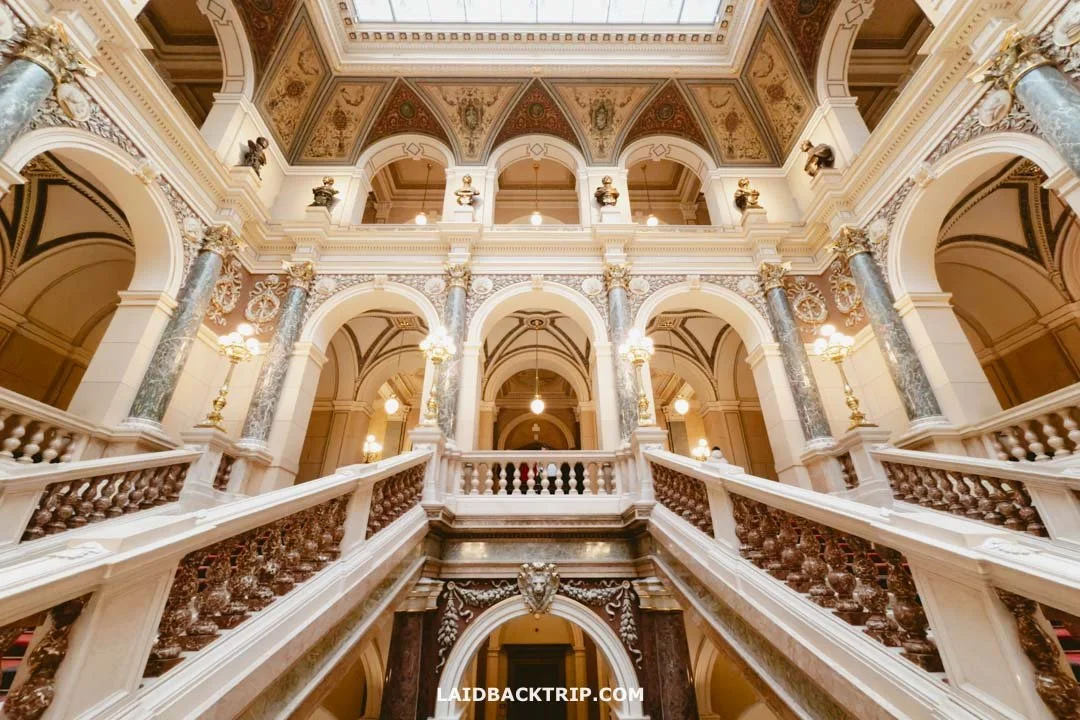
It is worth going inside Prague's National Museum for the interiors alone.
The National Museum, dedicated to natural scientific and historical collections of the Czech Republic, is located directly on Wenceslas Square, which is ideal, as this is the place where we start and end each day. It's Prague's best museum, and as it was beautifully reconstructed, there's no better time to visit than now. There's always something new here (we went to see Lucy and Selam here, for instance), so it's always good to check what's on the calendar before you go, though the permanent exhibitions are great too. And the Neo Renaissance building from the 19th century has stunning interiors, which are worth seeing on their own.
We do have some really interesting museums besides this one, so it's not difficult to pick the one you find more interesting. We quite like the unconventional DOX, a modern art museum in Holešovice (some temporary exhibitions are great, some less, but that's the same everywhere), and Národní technické muzeum at Letná (National Technical Museum), a huge hall filled with vintage cars, planes, and trains.
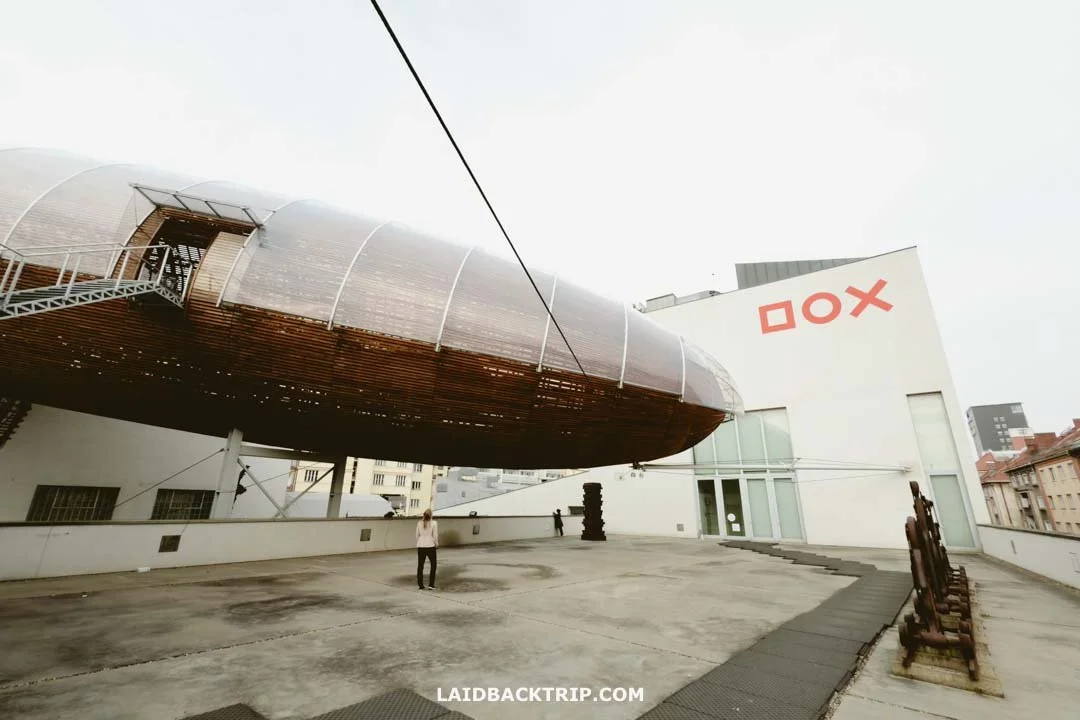
If you're into modern art, you have to see the cool airship at Prague's DOX Museum.
There are tons of other museums like the popular Museum of Communism, Jewish Museum, Franz Kafka Museum, the National Gallery, Kampa Museum, or the Beer Museum. Obviously, some of these are really focused on just tourists, so we would be careful about which ones to visit. We've already been to some museums during the past two days, and when having three full days to explore Prague, you are definitely able to sneak in a few more.
Well, these have been three busy days in Prague, and we hope that we showed the very best of what our city offers and even took a peek at the spots we really love to explore ourselves. And if you did not make it everywhere you wanted, it is at least a great excuse to return to Prague someday in the future. If you have any questions, leave us a comment below.
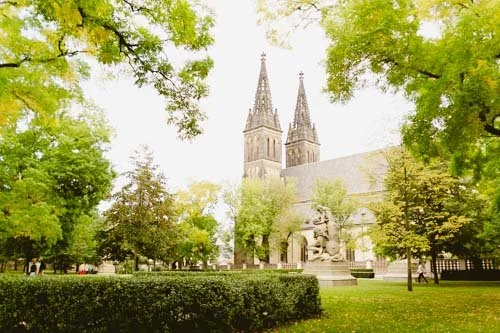
Experience Czechia's past and present through engaging exhibitions on history, culture, and nature at Prague's National Museum.