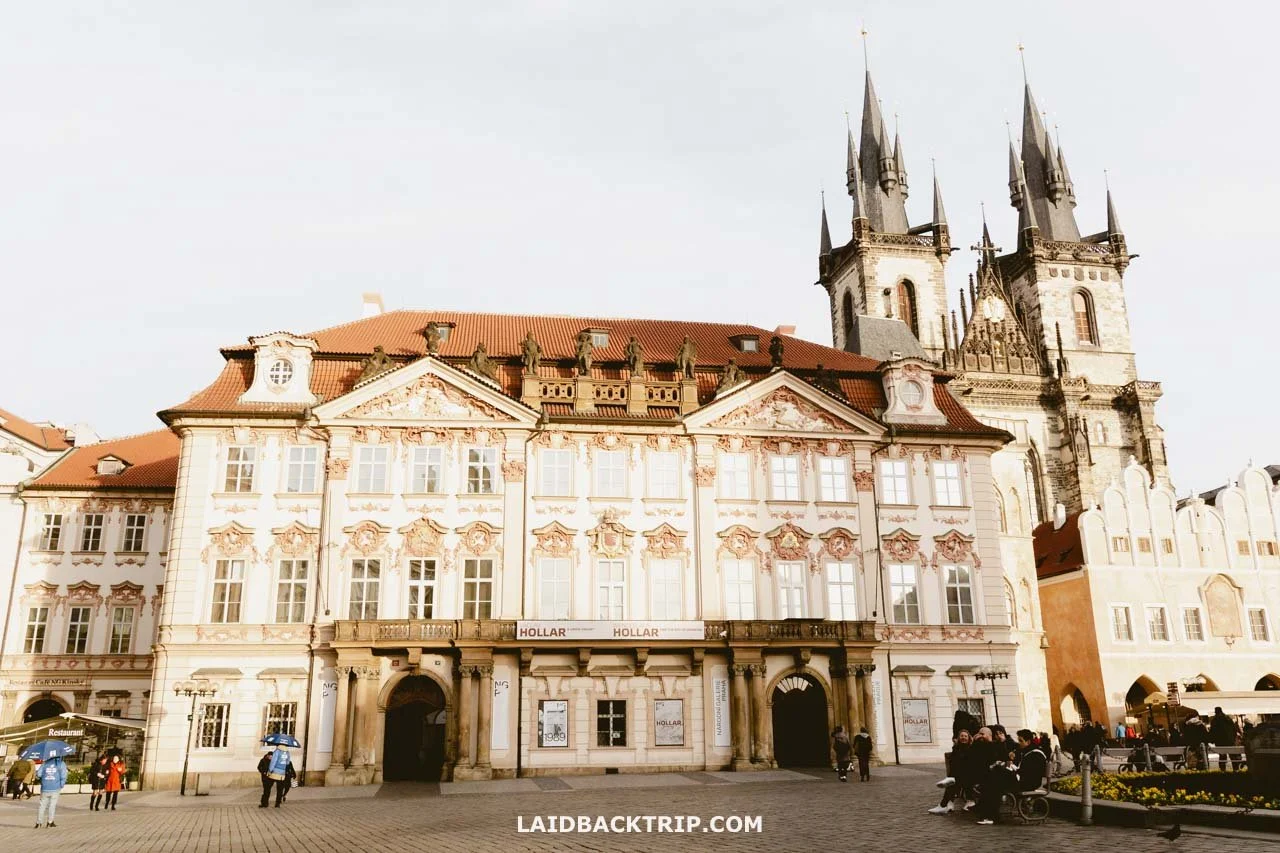
Join us for a walk through Prague's most iconic sights and experience the city in under 24 hours.
We've always known Prague is amazing. After living here for ages and seeing all the major sights and every corner of the historical center, we're still constantly amazed by the beauty of the city of a hundred spires. The combination of medieval history, Gothic architecture, the Vltava River meandering through the city, Baroque churches, cobblestone streets, Prague Castle, Charles Bridge, charming parks, various museums, and great beer is really one of a kind.
There are so many things to do in Prague, and the city is so beautiful that it's easy to spend at least a few days here. But what if you really have only one day in Prague? What if those roughly 24 hours are all you can spend in Czechia's capital? We've talked about this many times with Lucie, and while we still don't think it's a great idea to spend so little time in our city, sometimes that's just how it is. And from our own experience, when we were in similar shoes and simply didn't have as much time for a destination as we wanted, we can definitely relate.
Although having only a single day to explore Prague feels very short to us, it's still possible to visit most of its famous sights. Thankfully, Prague, especially its historical part with all the must‑sees, is very compact and easy to explore on foot. Still, you'll have to make plenty of compromises, but it doesn't mean you won't enjoy the day.
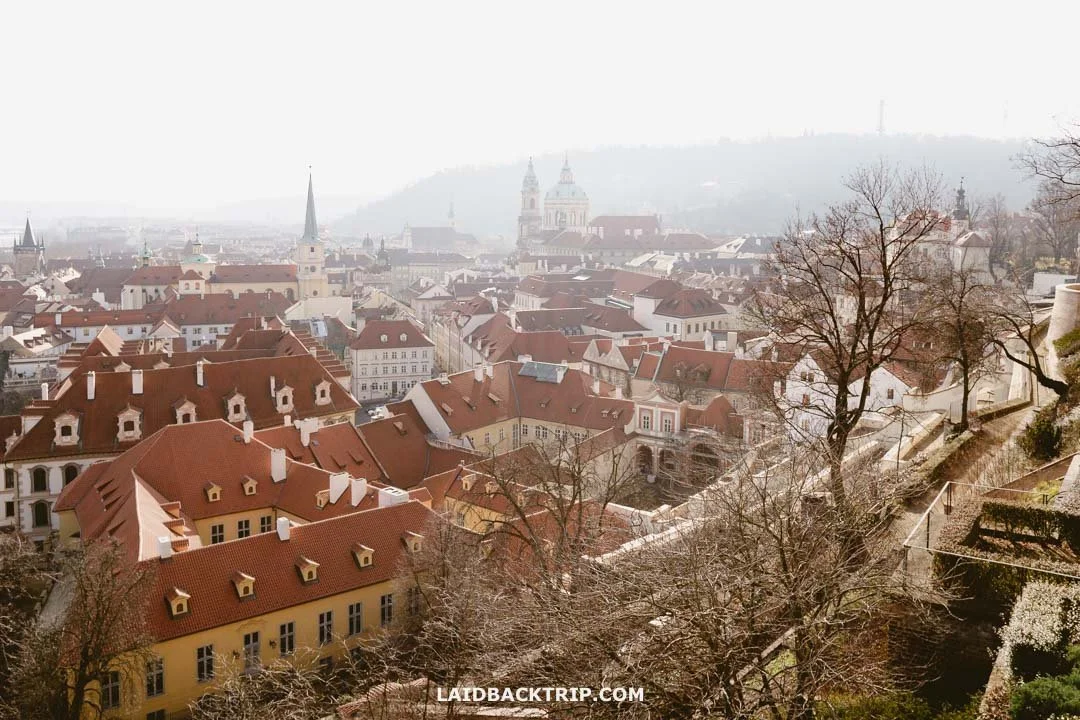
With no time to spare, the best thing you can do is explore Prague's historic center.
We planned this itinerary in a way that makes sense and is realistic, because we often see Prague itineraries that are overly ambitious and, in our eyes, not really enjoyable. With such a short time frame, you simply won't be able to visit two museums, take a tour of Old Town, and then head to Prague Castle. For that, you'd need at least two or, as we said, three days in Prague.
That said, we'll definitely start early in the morning and finish in the evening, because that's how we'd want to visit Prague for the first time ourselves with so little time. To make this itinerary work, we'll start with a few essentials that should help you make the most of the day. Then we'll take you around all of Prague's highlights. So let's dive into it!
Stay in Prague's City Center
But first things first. If we had only one day to explore Prague, we would definitely choose a central accommodation for the night to make the most of our time in the city. Even though Prague has a very reliable public transport system, which we love and use daily, having only 24 hours means one thing, and that's wanting to spend as little time as possible traveling.
As I said, Prague is fairly compact, and staying somewhere central really makes a difference. I still remember when we visited Paris and had to travel back to Montmartre after a long day of sightseeing, and it was nowhere near as comfortable as I had imagined.
So I recommend finding a hostel or hotel in the historic center, or more precisely, in Prague 1. This is where we would want to stay if we had so little time for the city. For the purpose of this short trip, we would look for a place within Old Town, Lesser Town, or New Town.
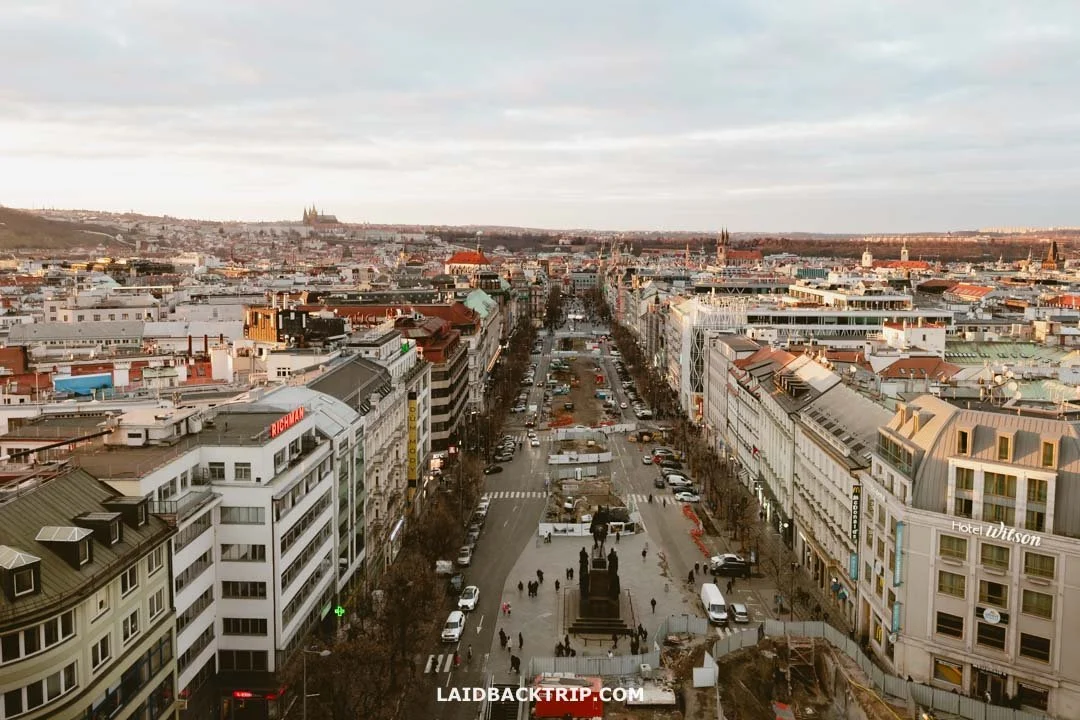
If I had this little time for Prague, I'd prefer to stay somewhere close to Wenceslas Square.
I personally would go for the area around Wenceslas Square, since it's super convenient and close to the main train station (Praha hlavni nadrazi), which is easy to reach from Prague Airport by the direct AE bus, by train from other cities (especially EuroCity trains), or by FlixBus. And it fits perfectly with the way I planned the whole day.
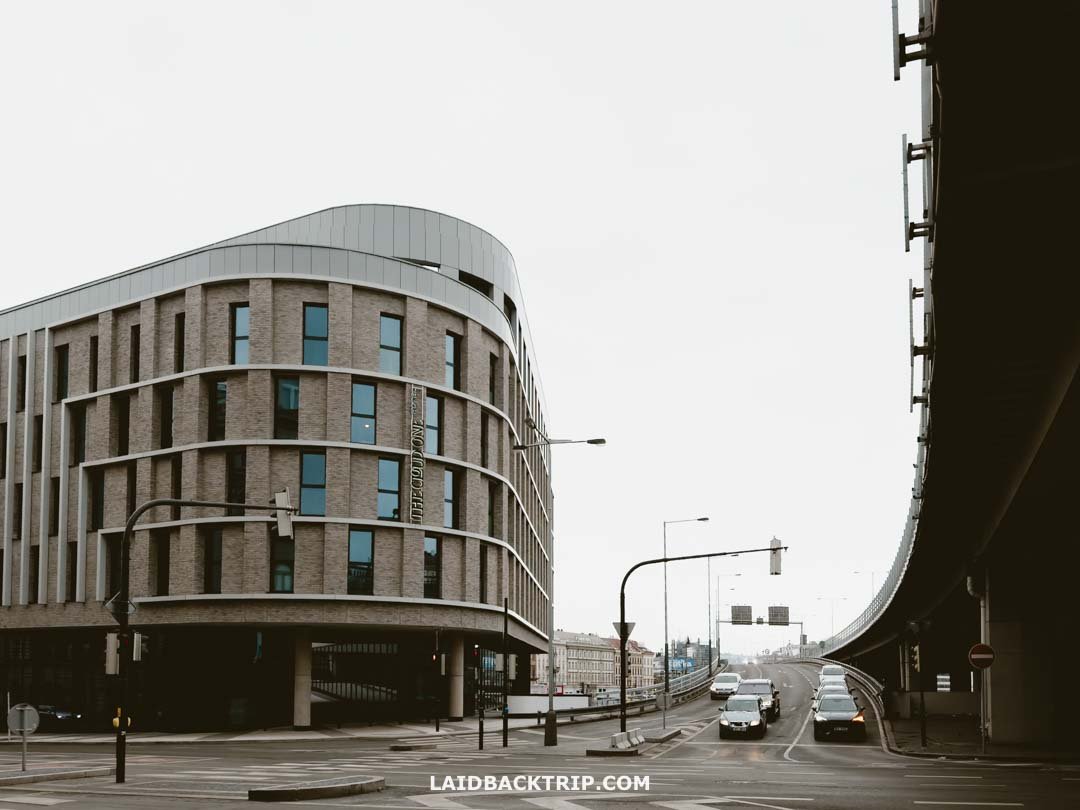
Cloud One is just a short walk from Prague's main train station.
I really like the 4‑star Cloud One Prague because it's modern yet simple and has a great location. Ibis Praha Old Town would probably be my pick if I wanted to keep the budget under control, while Prague Dream works better for backpackers. And for a luxurious stay, I would choose the W Prague. We actually stayed there, and it was genuinely that good, whether it was the room, the food, or their spa.
Miss Sophie's Downtown and the NYX Hotel Prague also look like great choices for anyone who wants a place with a bit more character. Even though this is the most touristy area and hotels are pricier, you can still find something that fits your budget. And as I said, you'll have all the must‑see places within walking distance, which I think is a fair trade‑off.
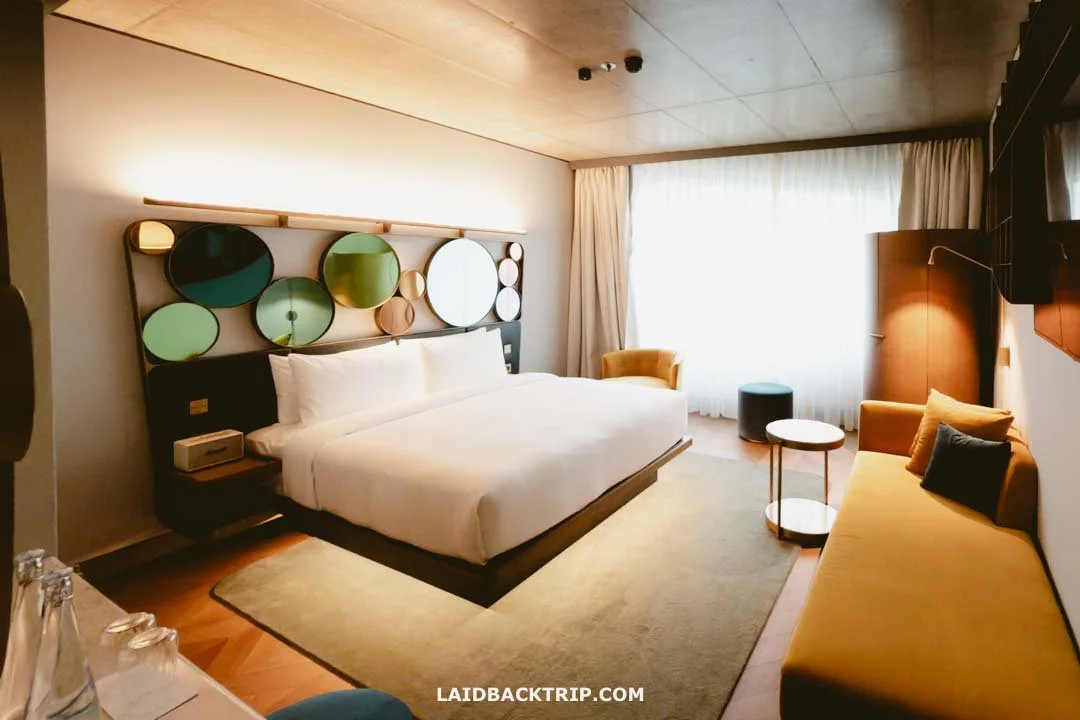
We loved W Prague for its cozy rooms and its fantastic, walk‑everywhere location.
And if you prefer Lucie's idea of staying somewhere quieter, then I would check out the charming Pytloun Kampa Garden or the luxurious Mandarin Oriental in the Lesser Town. Both would be great options, though you would need to adjust this itinerary slightly.
Explore Prague on Foot
Since you only have one day in Prague, you need to manage your time as efficiently as possible, so the way you get around the city will play a big role. It can easily eat up too much of your time. Just a moment ago, we talked about the benefits of staying in the city center, and it really is a huge time‑saver.
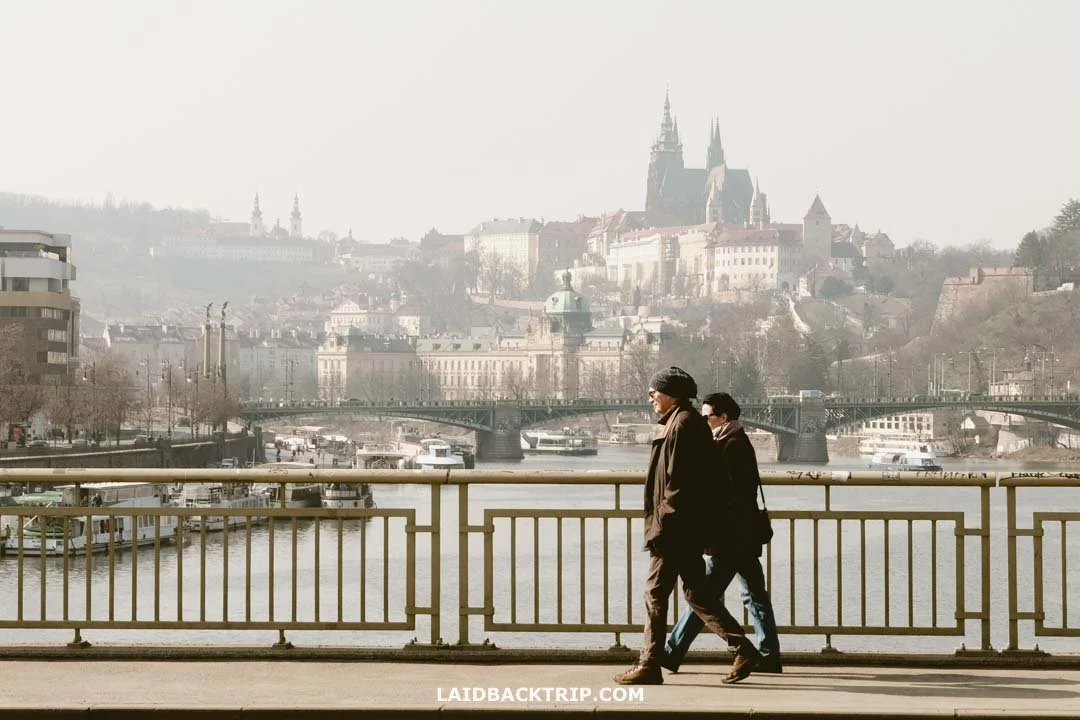
Even with limited time, we'll explore Prague on foot.
The historic part of Prague is compact and easy to explore on foot. And with the way we planned this itinerary, you won't really need public transport anyway, because the distances between the sights aren't that big. The route I planned is just about 9 kilometers long, and you can extend it with a 5‑kilometer walk to Vyšehrad, but only if you want to (or you can take a tram there and back instead). I think that's a very doable distance.
If you decide not to follow our advice about staying in the center, at least choose a place close to a metro station or a tram line. Navigating Prague by public transport is easy and intuitive enough, but with so little time, you want to reach the city center as quickly as possible.
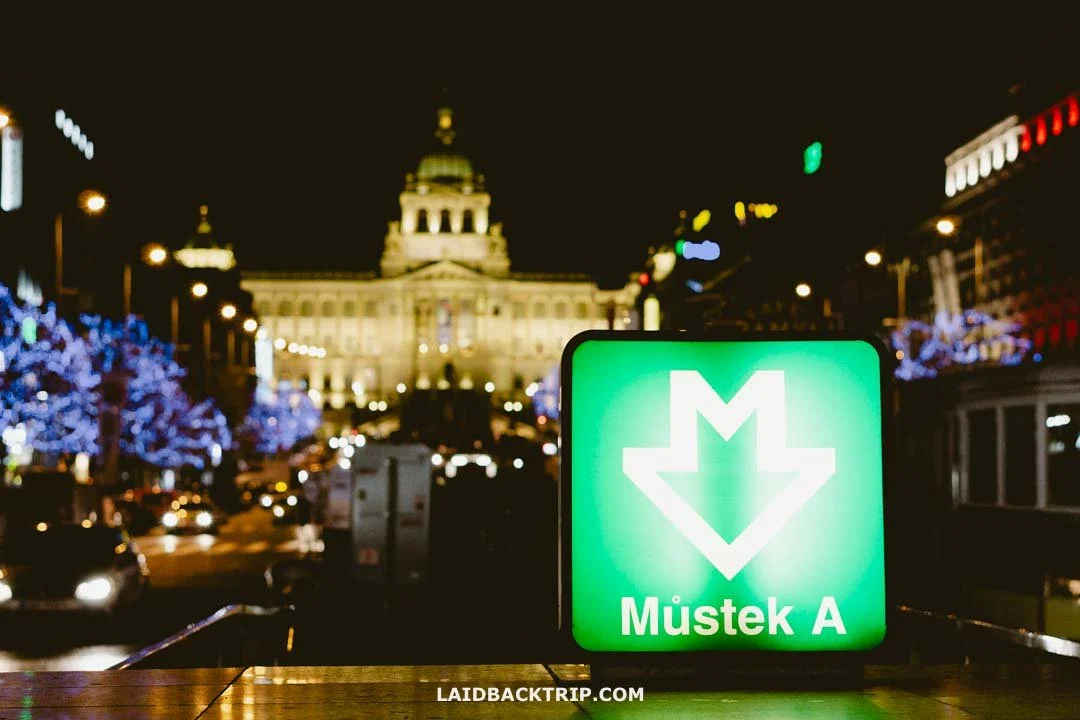
Wenceslas Square is one of the best‑connected spots in the city, with three metro lines passing through.
That's why I picked Wenceslas Square as the starting point for the day. It's easy to reach from anywhere in the city, especially by Prague metro. All three metro lines, A, B, and C, run through this square, and plenty of tram lines do as well. By the way, the most popular tourist tram is number 22, which takes you to many major sights. Just be aware that because it's heavily used by tourists, it's also popular with pickpockets.
Start Your Day in Prague Early
As you have only one day in Prague, get up as early as you can. If you're out between 7 and 8 AM, you'll realistically have a chance to see a lot. The biggest upside of an early start is that you can adjust the itinerary throughout the day. It happens to us all the time that we arrive somewhere and, for whatever reason, enjoy it way more than expected, and having extra time lets us explore it properly.
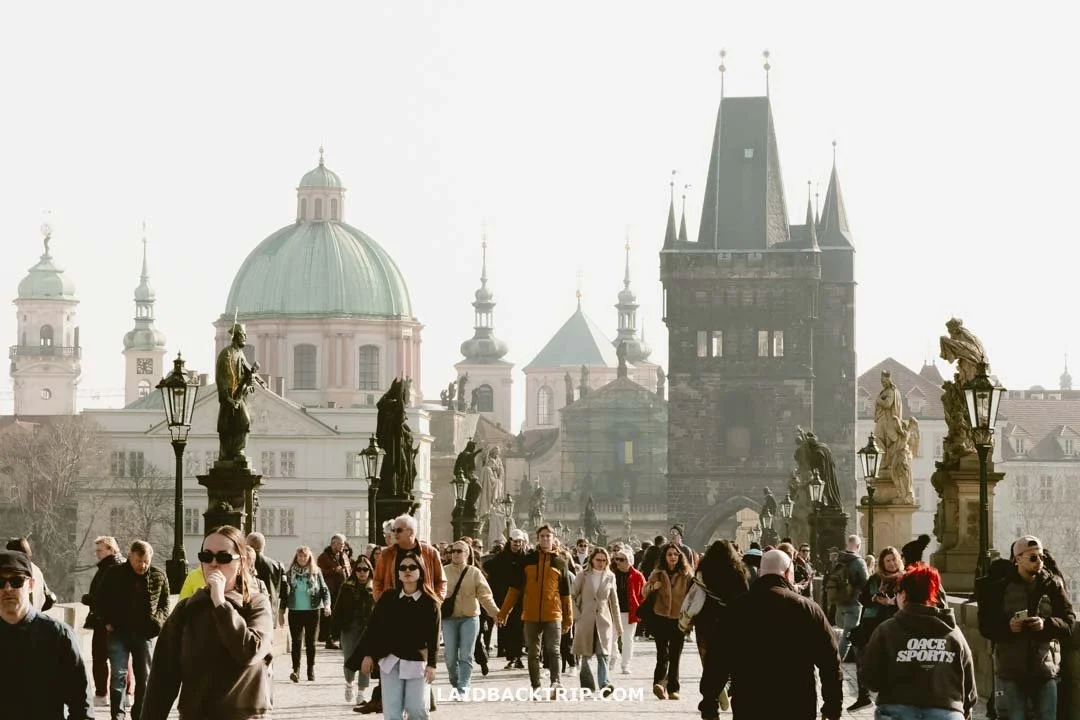
Prague's most famous landmarks, such as Charles Bridge, tend to become crowded very quickly.
Another reason why we would aim for around 7 AM is that the streets are much emptier at this hour, so you can enjoy the early parts of the historic center without the crowds. They will catch up with you eventually, but the early morning is far more relaxing. Starting early also works great if you arrive in Prague by train or even a morning bus from the airport, since you can store your luggage at the main train station and explore the city with just your daypack.
Where to Eat in Prague's Center
If you really plan to start your day around 7 AM, chances are you won't even manage to have breakfast at your hotel unless you're staying somewhere like Grandium Hotel, which starts serving at 6:30 AM. Since not many hotels do that, we would simply ask the front desk the day before if they could prepare a packed breakfast.
And because we recommend staying around Wenceslas Square, there are several grocery stores nearby (Lidl, Albert, Billa, Tesco, etc.) where we would also consider buying some food for the next day. On short trips like this one, we know that sitting down for lunch in a restaurant usually takes more time than we want to spend, so we'd probably rely on something we prepared the night before.

Vepřo knedlo zelo is a traditional Czech dish and a staple on most lunch menus.
The Old Town, where we'd be around lunchtime, has everything from fast food (KFC, Popeyes) and overpriced tourist spots to places serving traditional Czech dishes (Lokal Dlouha and Kozlovna also pour great beer) and even upscale restaurants (La Degustation Boheme Bourgeoise, etc.).
But since fast food isn't really our thing and a proper restaurant meal takes a while, we'd rather grab a snack outside, maybe somewhere along the waterfront with a view of Prague Castle and the Vltava River (this works best on a nice day, of course). For us, it makes more sense to save the restaurant visit for dinner, once we know how the whole day went.
Start Your Day at Wenceslas Square: 30 Minutes
Whether it's 7 or 8 AM, we'll start our day at Wenceslas Square, which is basically the main spot in all of Prague. Surprisingly, it does not look like a typical Czech square with old houses and a church (like the ones you find in Ostrava or Ceske Budejovice). Instead, it's a huge boulevard lined with shops, restaurants, and hotels
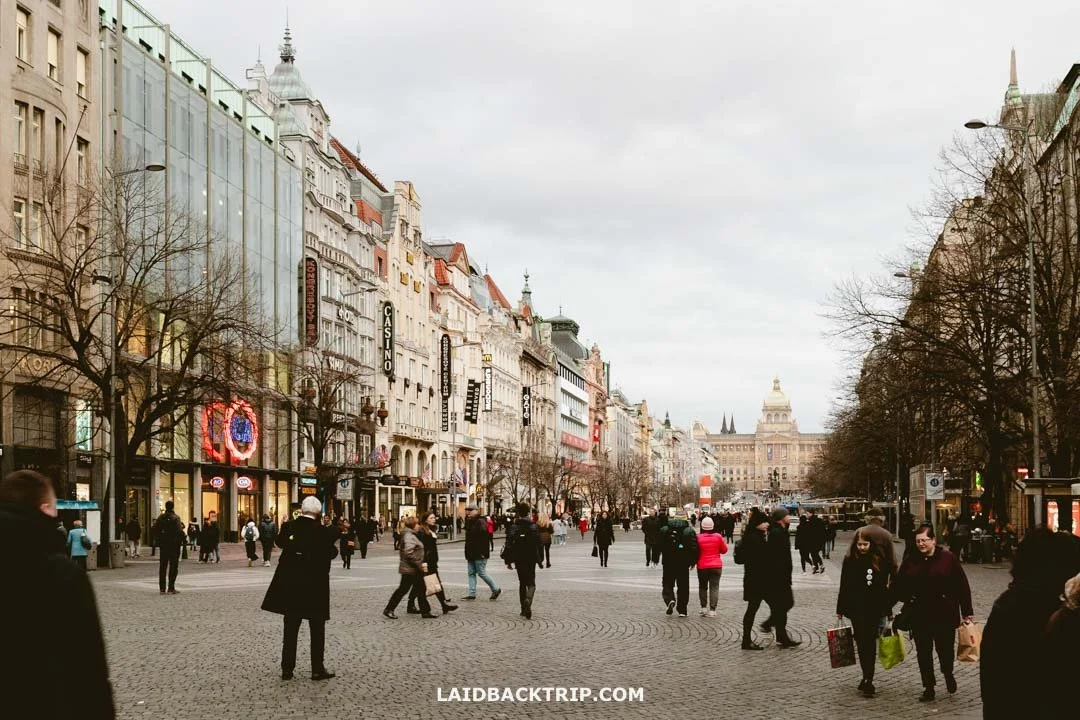
With its central location, Wenceslas Square is the perfect place to start any walk around Prague's historic center.
When I said the square doesn't have old houses or a traditional layout, it doesn't mean it's not interesting. Quite the opposite. It's an eclectic mix of neo‑renaissance, art nouveau, socialist realism, and modern architecture, and it's worth slowing down here to look at the details of the most iconic buildings. My favorite combination is Grand Hotel Europa, the Flow Building, and Hotel Jalta, because together they show exactly what Wenceslas Square is about.
The upper part of Wenceslas Square, between the equestrian statue of St. Wenceslas (the patron of the Czech lands) and the National Museum, is super busy and full of traffic because of Magistrala. You will also see some shady characters around (a mix of people without homes and drug addicts, but they usually mind their own business) due to the proximity to the main train station.
Unfortunately, we won't have time to explore the National Museum, which is a shame, because it has some really interesting exhibitions and stunning interiors. It opens at 10 AM anyway, so it would be closed at this hour. At least you can cross the road and climb the museum stairs to enjoy a great view of the whole square with the St. Wenceslas statue.
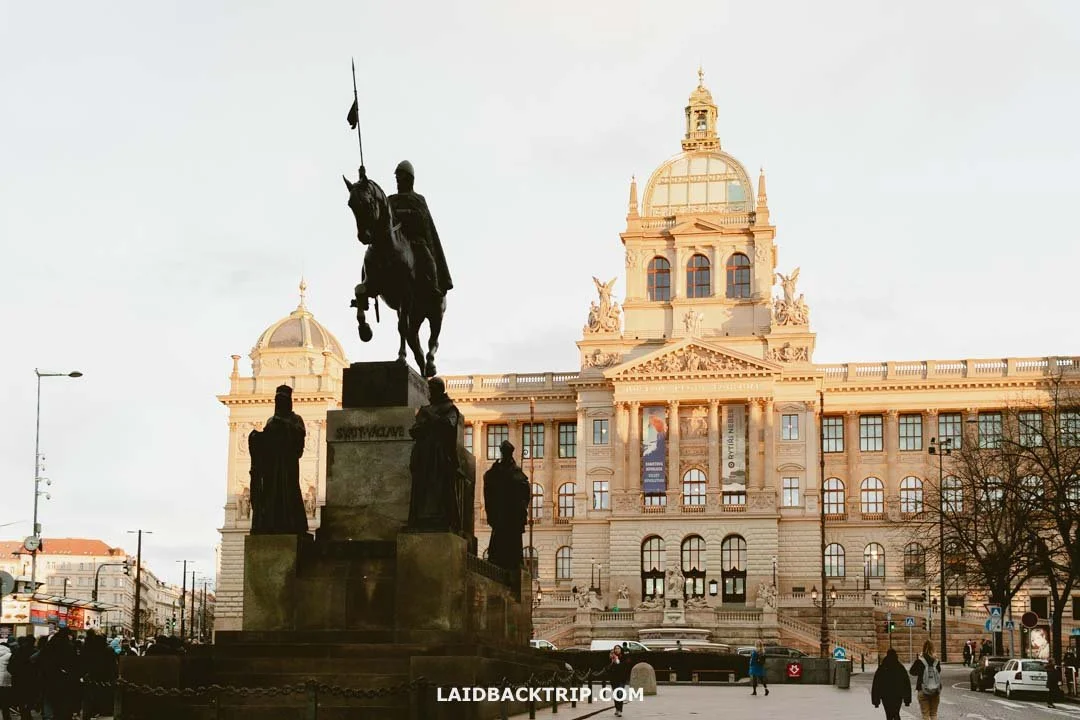
The National Museum with the statue of St. Wenceslas in front.
The lower part of the square is much more relaxed since it's car‑free. Once you're done here, walk to the far end where Mustek is and turn right onto Na prikope Street, which will take you to our next stop, Republic Square.
Walk to Republic Square: 15 Minutes
We'll reach Republic Square from Wenceslas Square via Na prikope Street in just over five minutes, so it's a very short walk. The square is home to several famous attractions, like the Powder Gate, known for its beautiful Gothic architecture and very cool name, and Municipal House, one of the most remarkable examples of Prague's Art Nouveau architecture and a popular concert venue.
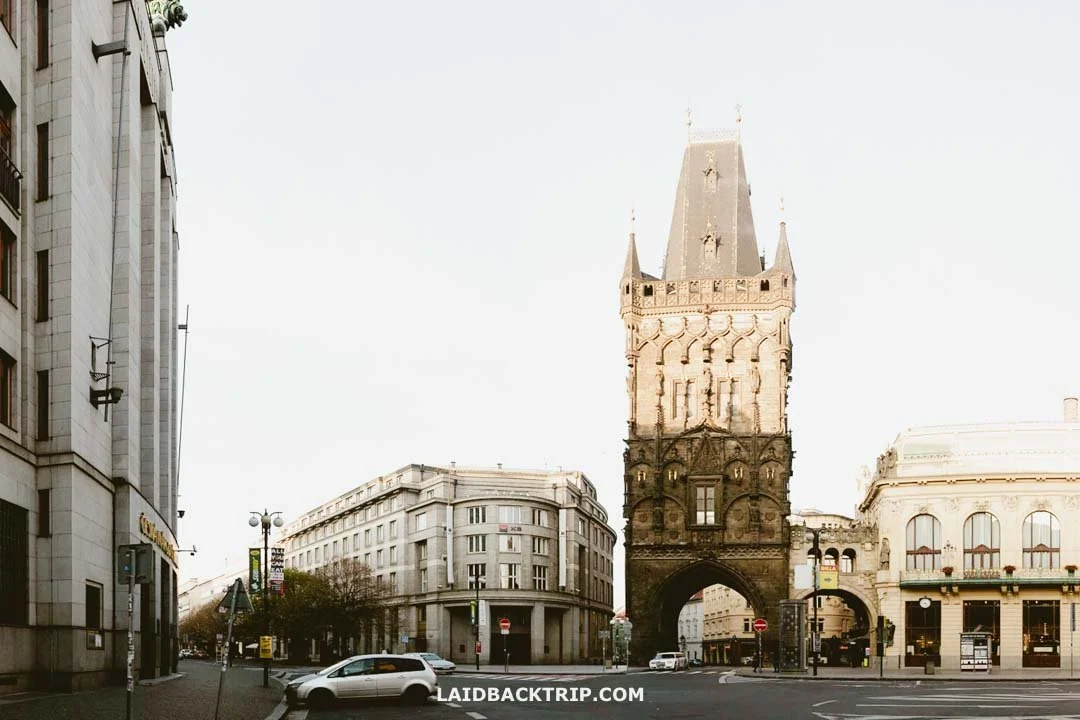
The Powder Gate will be on your left before you just before you reach Peace Square.
You'll also find the building of the Czech National Bank here, as well as Hybernia Theater and Palladium, the shopping mall most tourists end up in. During Easter and Christmas, Republic Square hosts markets, but for us, they're not particularly interesting.
You don't need to spend much time here unless you want to go inside Municipal House to see its amazing interiors or climb the Powder Gate for some really nice views. Both places would probably still be closed at this hour, and we don't really have time for them anyway (unless you're super interested, of course).
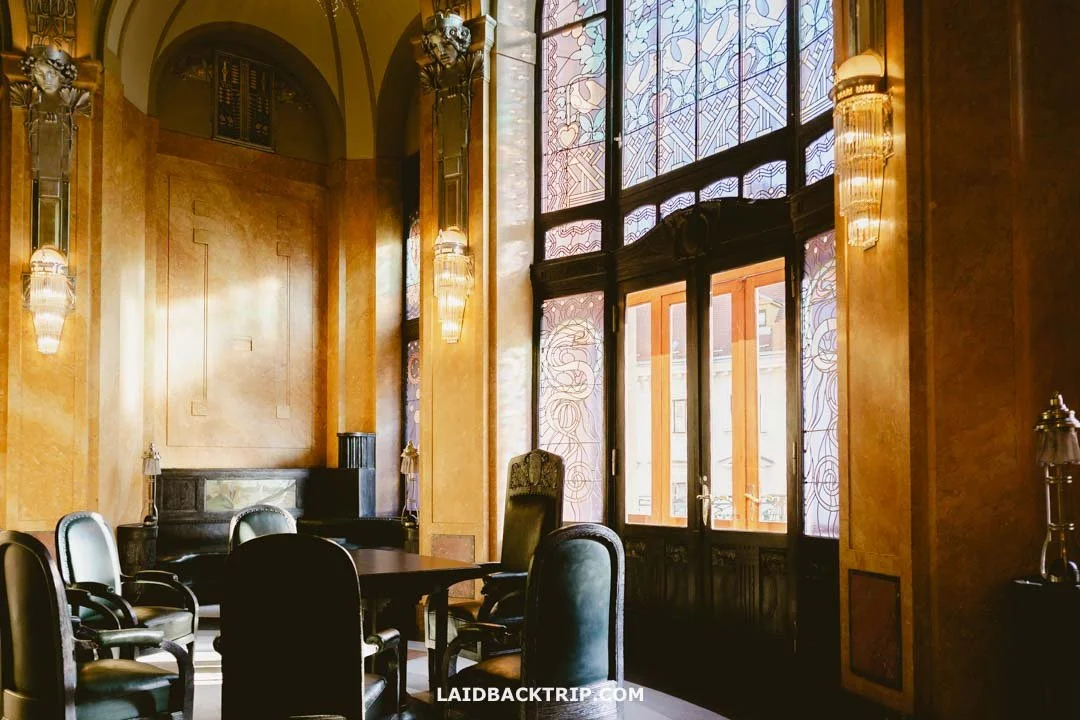
The interiors of Municipal House are definitely worth seeing.
There is a cafe inside Municipal House that opens at 8 AM, which might work if you want a quick look at the beautiful interiors while grabbing a coffee. Just be prepared that it's a very touristy spot, so it's more about the setting than the coffee itself.
So enjoy the architecture from the outside, and once you're done, continue along Celetna Street to Old Town Square, which is another five‑minute walk. By the way, the Royal Route of Prague begins at the Powder Gate. Czech kings walked this route during their coronations, ending at Prague Castle. We'll cover a good portion of its 2.5‑kilometer length today, as it's truly one of the finest city walks in the world.
Admire the Old Town Square: 45 Minutes
Old Town Square is one of Prague's top attractions that you simply have to visit, no matter how much time you have. The square is known for several things, but the most famous is easily the Astronomical Clock. This marvel of medieval engineering is the oldest still‑working astronomical clock in the world and one of the most popular sights in all of Prague's historic center.
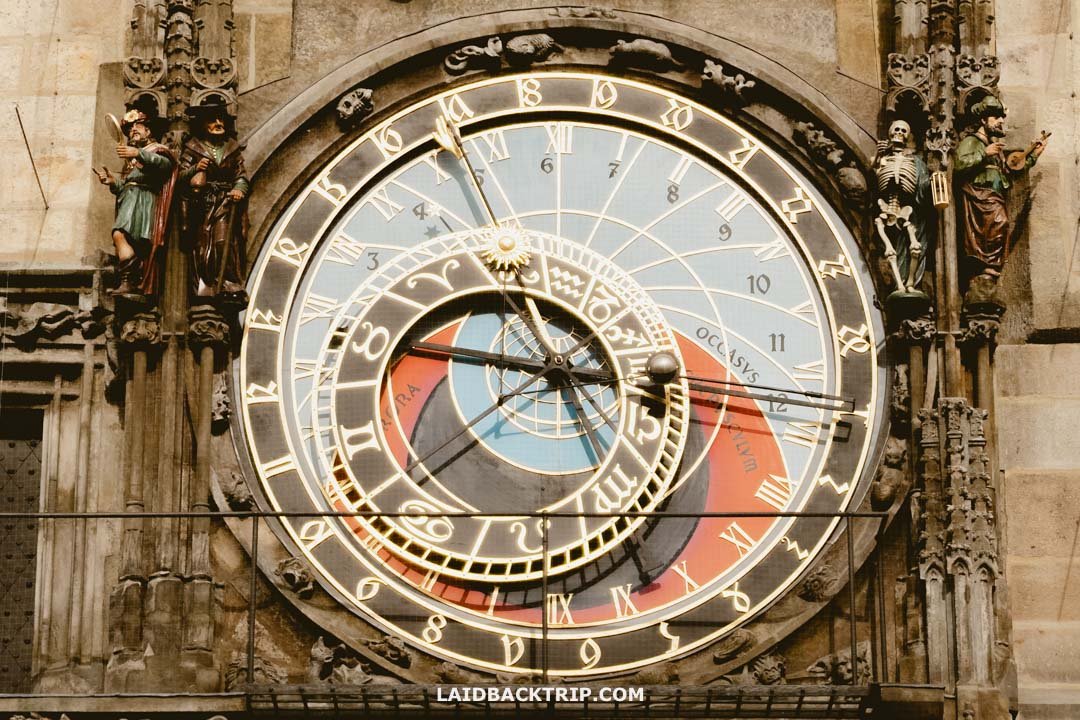
The Astronomical Clock is one of the most visited sights in Prague.
Between 9 AM and 11 PM, every hour on the hour, you can watch the walk of the twelve apostles, which makes the clock even more iconic. It's a quick show, but if you happen to be here at the right time, it's worth seeing. Just remember, Prague is safe, but here, keep an eye on your belongings while looking up, as it gets crowded, and pickpockets never sleep.
Besides the Astronomical Clock, Old Town Square is packed with attractions. While here, don't miss Old Town Hall itself, St. Nicholas Church, the Church of Our Lady Before Tyn, the Jan Hus Memorial, Kinsky Palace, and a few interesting houses like the House at the Minute or the Stone Bell House.
There are several places you can visit inside, but once again, we'd probably enjoy everything from the outside, maybe with a quick peek at one of the churches. Even the Old Town Hall tour takes around one to two hours, which is simply too much when we have such limited time.
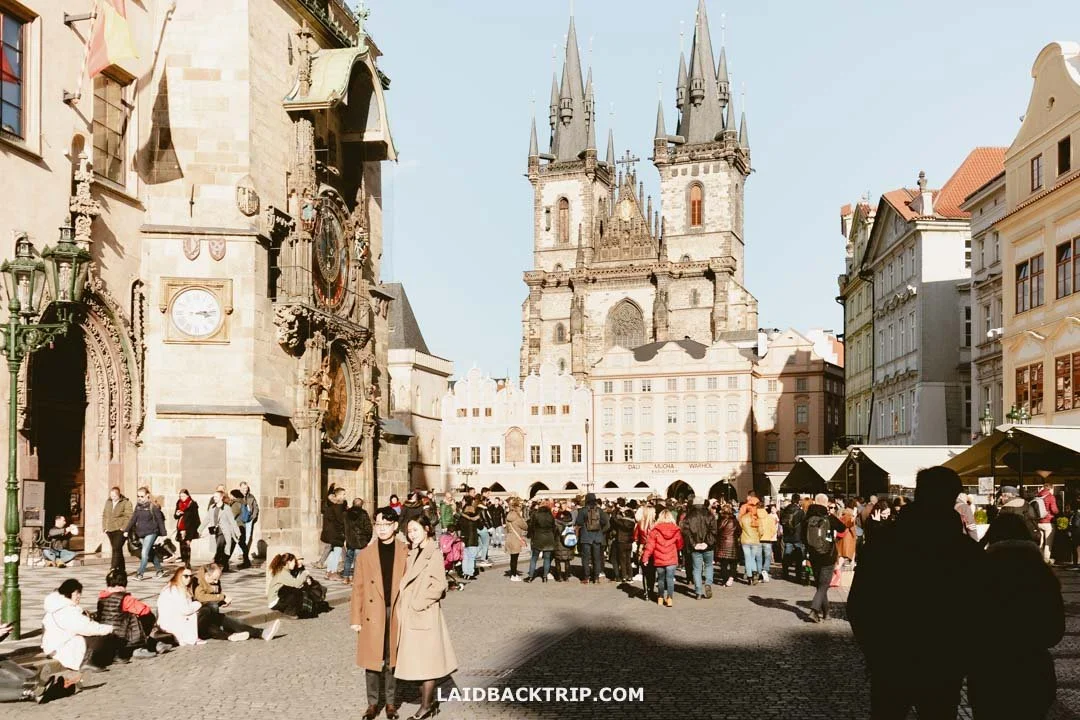
Despite the constant crowds, Old Town Square remains an incredible place to explore.
Old Town Square is also where the famous Prague Christmas Markets take place from late November to early January. As locals, we avoid them as much as possible because they're overpriced tourist traps, but if you're visiting, they do add a certain festive charm. Just be prepared for even bigger crowds than usual. By the time you're done here, it should be somewhere between 9 and 10 AM.
Take a Tour of the Prague Jewish Quarter: 2 Hours
We'll reach the Jewish Quarter from Old Town Square by walking down Parizska Street. While taking Maiselova Street would be a bit shorter and quicker, we want to show you Prague's most expensive street, the famous Parizska. It often competes with Na prikope, which we already walked earlier this morning.
And even though it's Prague's best spot for luxury shopping, we brought you here mainly to admire the beautiful boulevard inspired by its Parisian counterparts, lined with Art Nouveau and Neo‑Baroque buildings. If you're in the mood (and have the budget), you can shop as well.
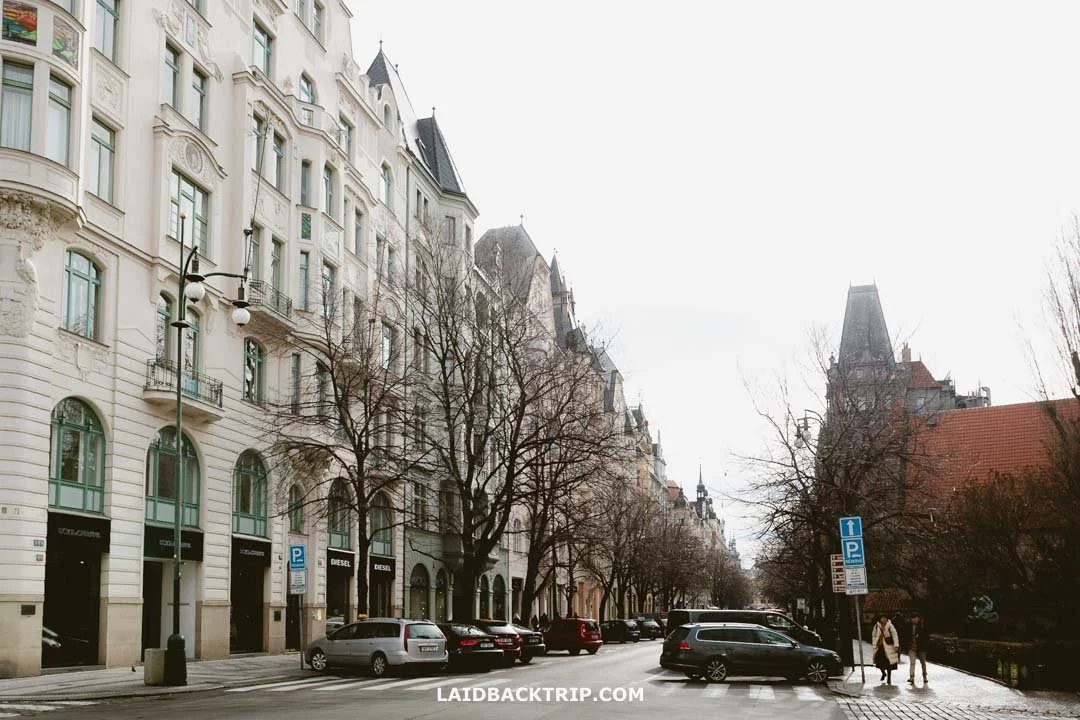
Pařížská, Prague's most expensive street, is full of high‑end boutique stores.
From Parizska, it's only a few steps to the heart of the Jewish Quarter, today known as Josefov. For centuries, roughly between the 13th and 18th centuries, the Jewish community was legally confined to a walled‑in area. It was a city within a city, with its own laws, customs, and extreme overcrowding.
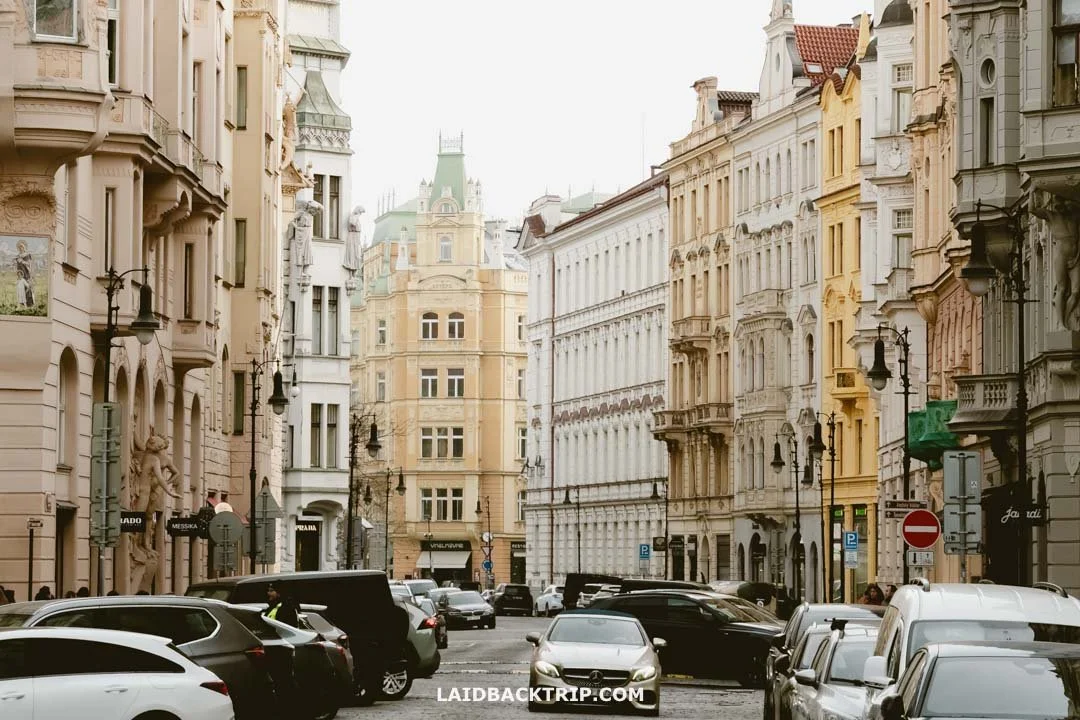
The Jewish Quarter you see today looks nothing like it did in medieval times.
By the late 19th century, city officials labeled the quarter a health hazard and launched a "sanitation" project that tore down the cramped medieval alleys and houses. The old slums were replaced in the early 20th century with the high‑end Art Nouveau and Neo‑Baroque apartment buildings you see today, including those on Parizska, which we just used to get here.
Of all the original structures, six synagogues, the Old Jewish Cemetery, and the Jewish Town Hall were spared because of their historical value. Together, they form one of Prague's most interesting attractions. The ticket to the Jewish Quarter, considered the best‑preserved in Europe, includes four synagogues (Maisel, Pinkas, Old‑New, and the Spanish Synagogue) and the Old Jewish Cemetery. If we came here with such limited time, we'd definitely consider taking a guided Jewish Quarter tour.
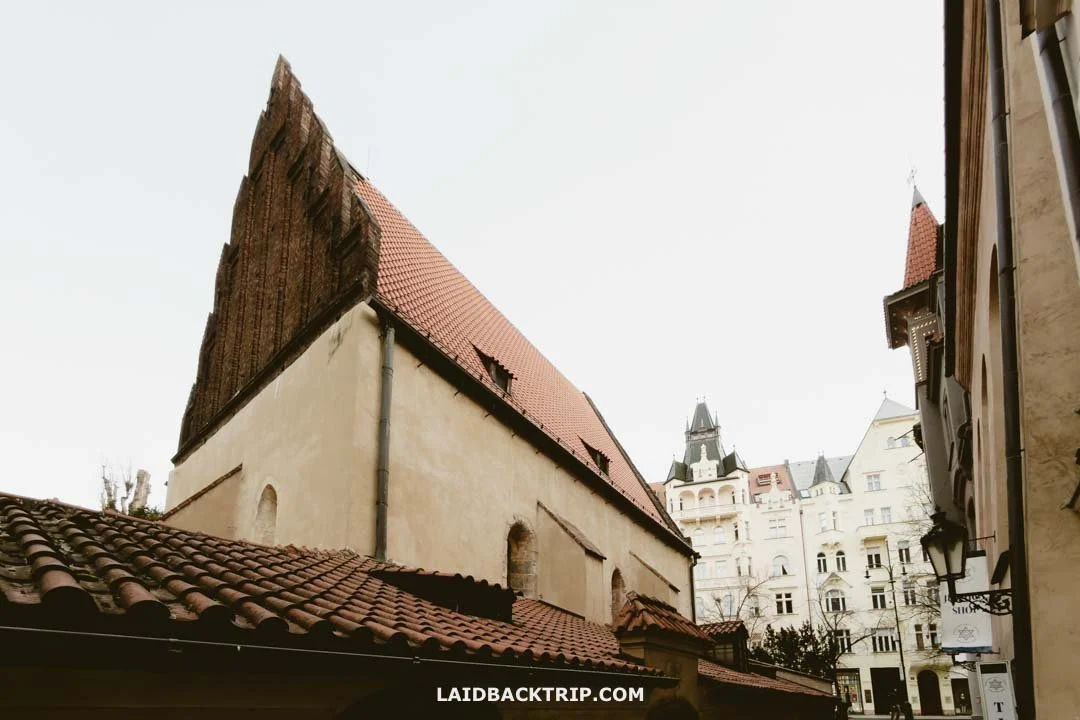
The Old New Synagogue is Europe's oldest active synagogue.
It's easy to spend two to three hours here, which means that by the time you're done, it should be around noon. Since it's lunchtime, you can grab a quick meal in this area if you didn't bring your own food, but be prepared that restaurants here tend to be pricier and more tourist‑oriented.
Walk Across the Charles Bridge: 30 Minutes
From the Jewish Quarter, it's time to head back and rejoin the Royal Route and finally cross the famous Charles Bridge. The first of the two logical options takes you through Marianske namesti and past the Klementinum to Karlova Street. If it were up to us, though, we would continue toward the Rudolfinum.
This beautiful neo‑Renaissance concert hall sits right by Alsovo nabrezí, a waterfront with some of our favorite views of the Vltava River and Prague Castle in the background. No matter which route you choose, it's less than a 10‑minute walk to our next stop, the iconic Charles Bridge.
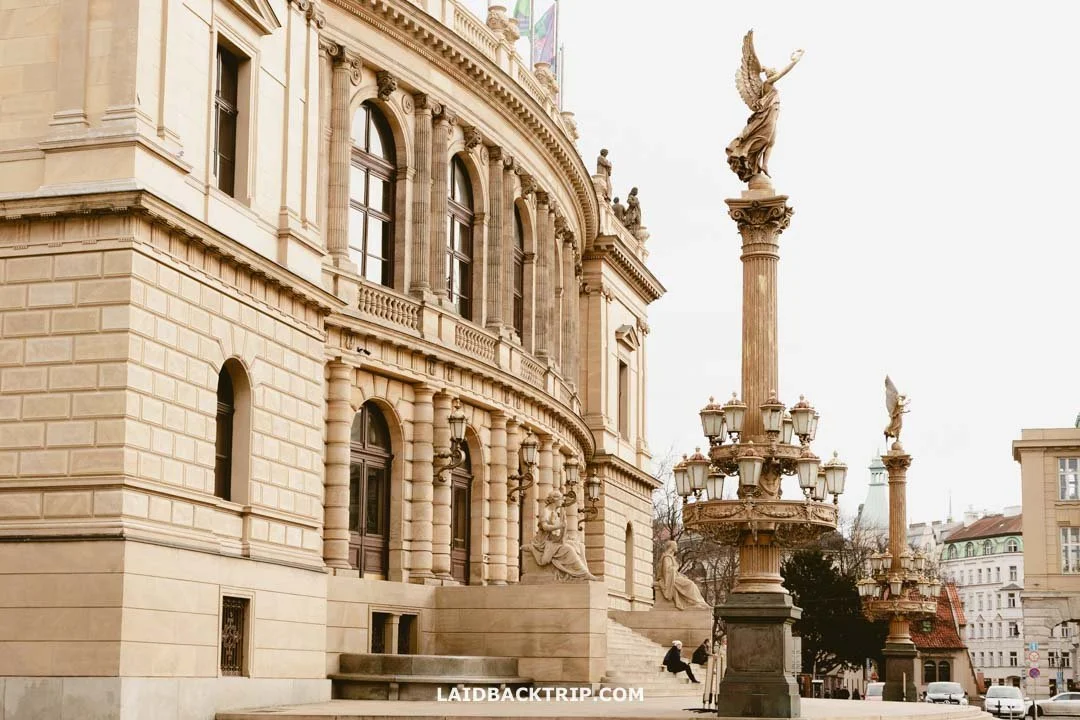
Rudolfinum is not just a beautiful neo‑Renaissance building, but also a concert venue and home of the Czech Philharmonic.
Normally, we would head to Charles Bridge early in the morning to catch the sunrise and avoid the crowds, but today we can't get there any earlier than just after noon, which means it will already be busy. If you don't expect to have this historic landmark to yourself, though, the walk is still very enjoyable as Charles Bridge is simply amazing and one of Prague's crown jewels.
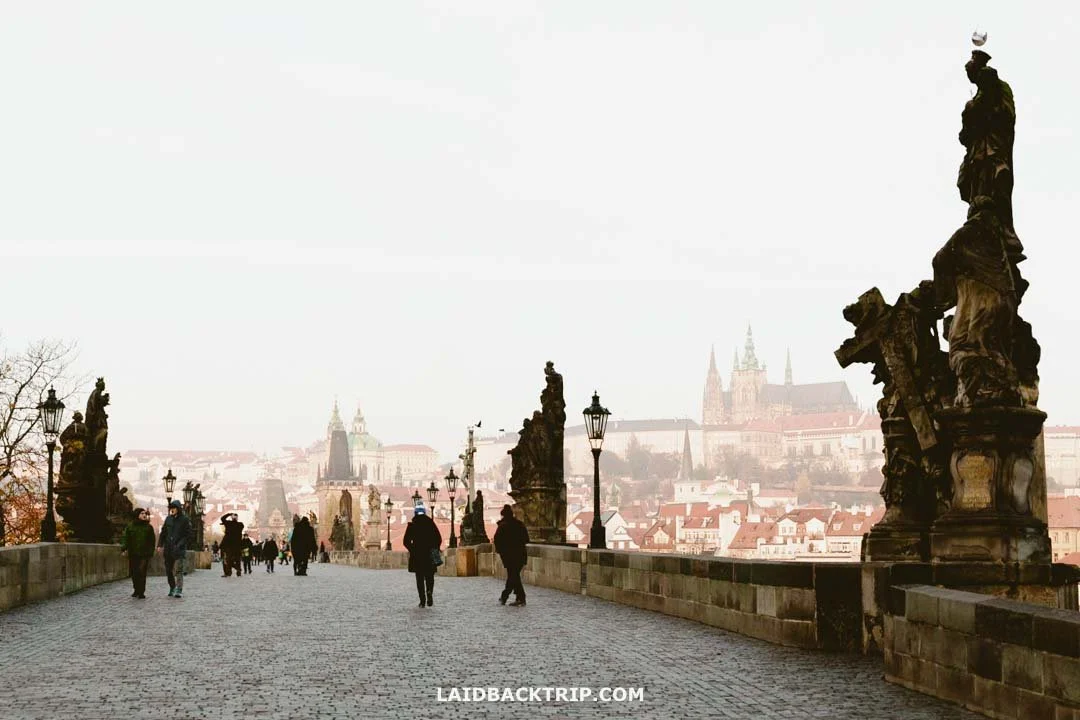
Walking across Charles Bridge feels like stepping straight into medieval Prague.
Commissioned by Charles IV in 1357, the bridge is a masterpiece of medieval engineering that replaced the Romanesque Judith Bridge, which collapsed in a flood. Stretching 516 meters across the Vltava, it has two beautiful Gothic towers at each end and is lined with 30 Baroque statues, the most famous being St. John of Nepomuk. For nearly five centuries, it was the city's only river crossing, surviving wars and floods. Take your time here and enjoy the iconic views of the Vltava River, the Gothic architecture, and Prague Castle perched on the hill.
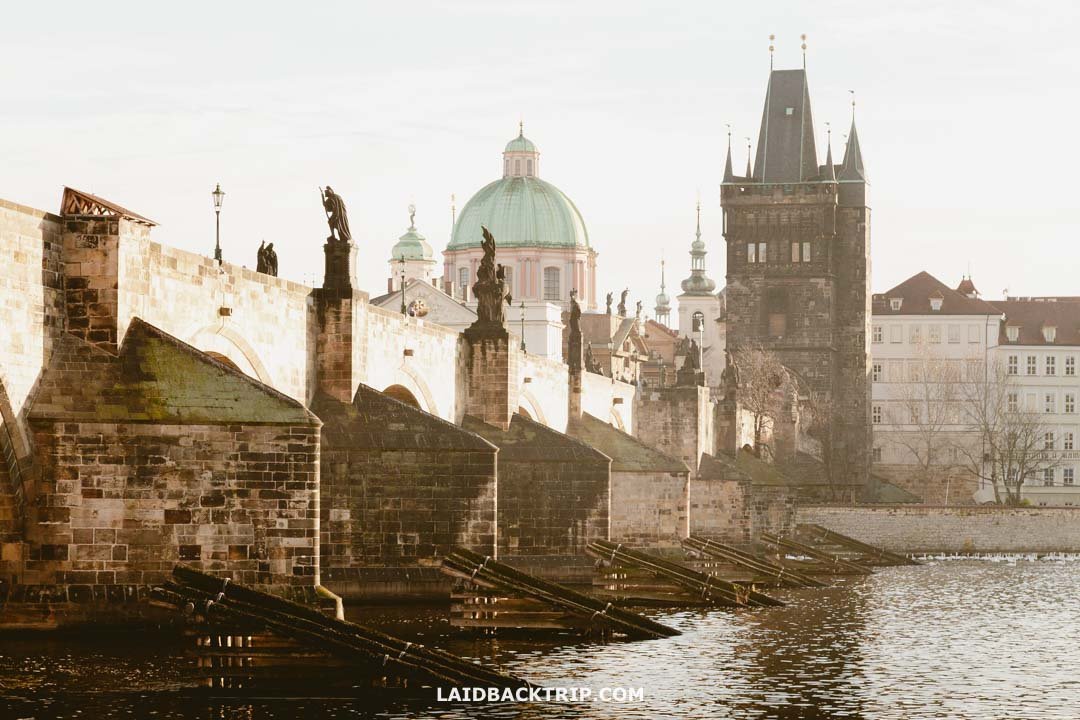
Charles Bridge is beautiful at any time of day.
Explore Prague Castle on Your Own or With a Tour: 3 Hours
From Charles Bridge, we head toward Malostranske namesti, where we can admire St. Nicholas Church from the outside. It has beautiful Baroque interiors and frescoes, and you might be tempted to go in, but since there's an entry fee and we have limited time, we'd probably skip it.
If you're ahead of schedule, you could take a short detour from Charles Bridge to Kampa Island, which has the Great Priory Mill, the John Lennon Wall, the "Babies" sculptures, Museum Kampa, Lichtenstein Palace, and the lovely Kampa Park. As I said, it's a nice place for a walk, but not essential for this itinerary.
Prague Castle is about a kilometer from Charles Bridge, and because it's perched on a hill, a good portion of that 15‑minute walk is uphill. Getting to Prague Castle this way is not difficult, though, and it's actually quite scenic whether you take Nerudova Street or Thunovska Street instead (this one includes the New Castle Stairs). If you decide to make that little side trip to Kampa, you'll walk closer to two kilometers.
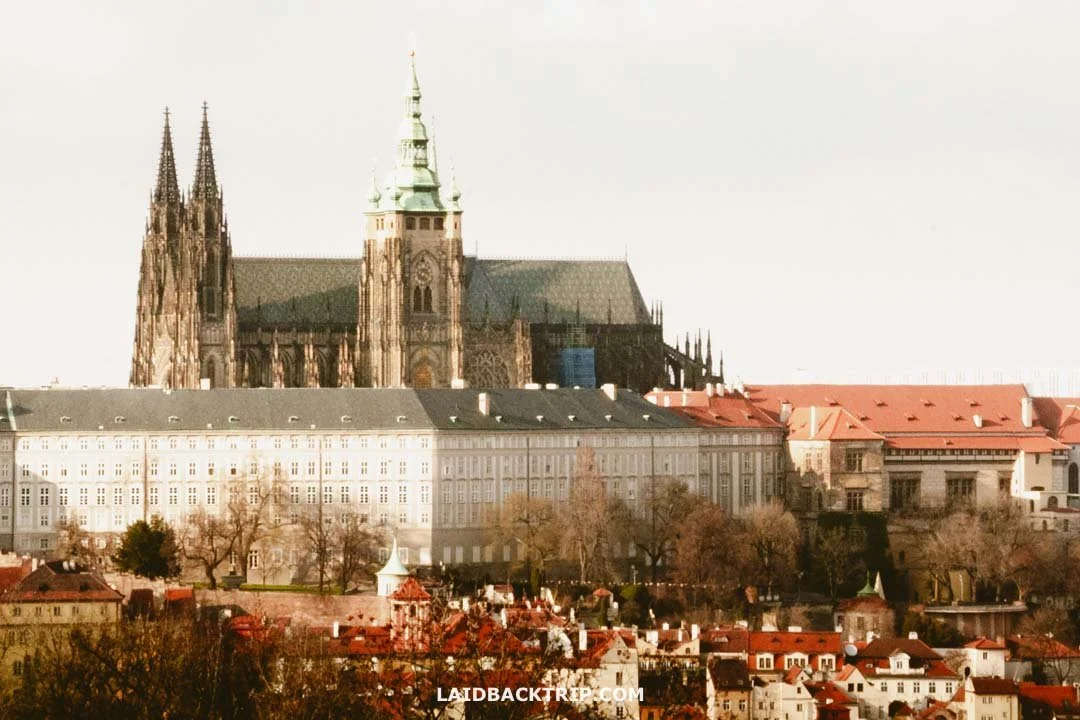
Prague Castle is the most visited attraction in both Prague and the entire Czech Republic.
If you started between 7 and 8 AM and followed our itinerary closely, you should reach the front gate of Prague Castle at around 1 PM. That means you still have plenty of time, which works perfectly, because we're far from done today.
There are many things to do at Prague Castle, since it's one of the largest castle complexes in the world, but in this scenario, we would keep it simple and get the Main Circuit Ticket. It includes all the highlights: the Old Royal Palace, St. George's Basilica, Golden Lane, and St. Vitus Cathedral. From our own experience and many visits, we can tell you it's not difficult to explore Prague Castle on your own, but guided tours are more efficient and stress‑free.
St. Vitus Cathedral
The cathedral interiors are simply a must‑see, and we also love the views of Prague from the Great South Tower (though you need a separate ticket for that). This Gothic masterpiece took nearly 600 years to complete (making it now one of the most interesting Prague's fun facts) and serves as the spiritual heart of the Czech nation. It houses the ornate tomb of St. John of Nepomuk, the breathtaking St. Wenceslas Chapel, and the Czech Crown Jewels.
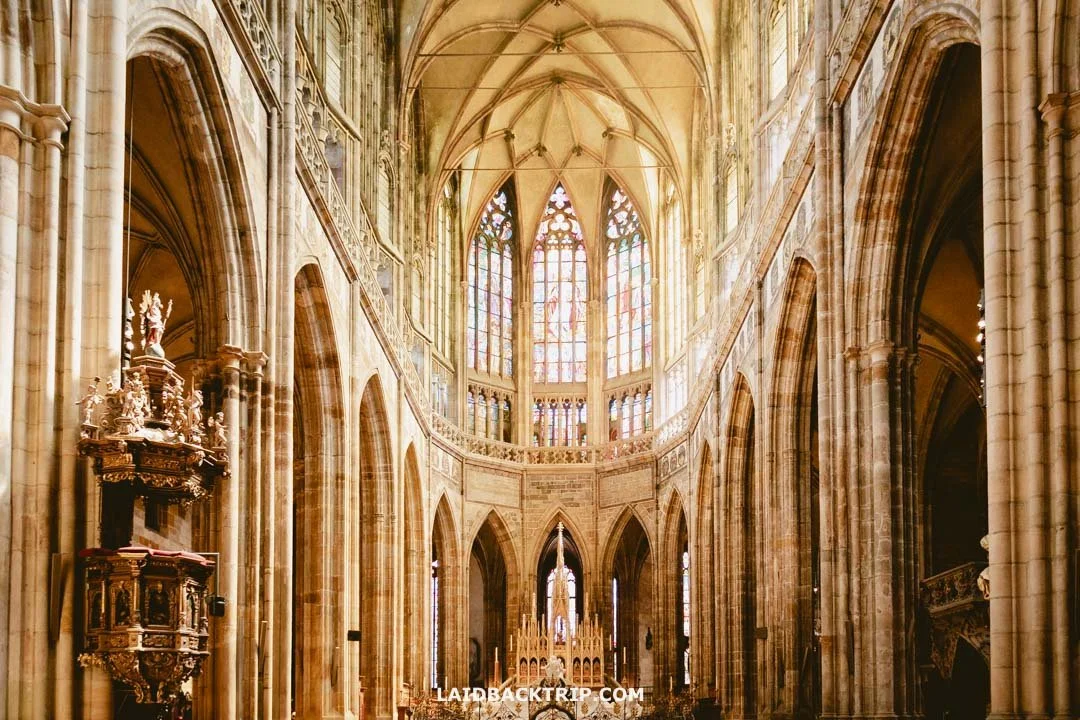
St. Vitus Cathedral is known for its stunning Gothic architecture.
Old Royal Palace
We would head to the Old Royal Palace right after the cathedral, as this is another must‑see within the complex. The original residence of Bohemian kings features the massive Vladislav Hall, famous for its late‑Gothic vaulted ceiling. It was also the site of the 1618 Defenestration of Prague, an event that helped trigger the Thirty Years' War.
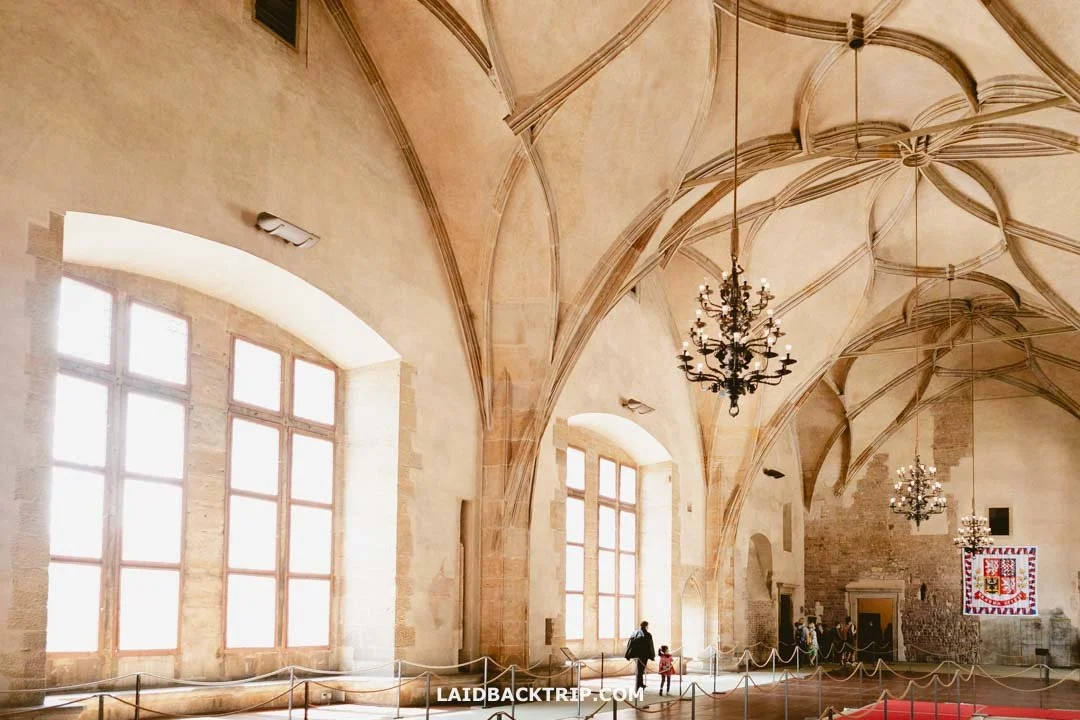
Vladislav Hall, with its Gothic vaulted ceiling, is the most beautiful part of the Old Royal Palace.
St. George's Basilica
This would be our next stop. The basilica is much simpler and smaller than the cathedral and doesn't take long to see, but it's definitely not something we'd skip. Founded around 920, St. George's Basilica is the oldest surviving church building within Prague Castle and a beautiful example of Romanesque architecture. Behind its striking red Baroque facade lies a limestone interior containing the tombs of members of the Premyslid dynasty.
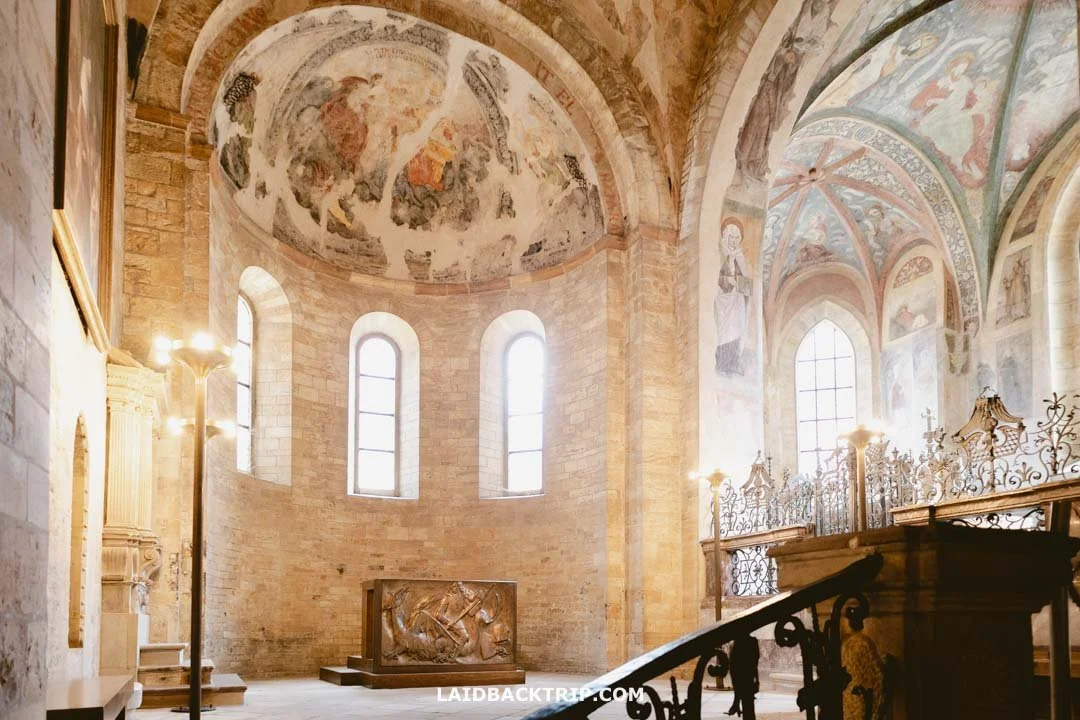
St. George's Basilica is a beautiful example of Romanesque architecture.
Golden Lane
Golden Lane is a picturesque row of tiny, colorful houses originally built in the 16th century to house the castle's royal guards and marksmen. It later became famous for its association with alchemists and residents like Franz Kafka (author of The Trial and The Castle), who lived and wrote in house number 22. We would visit this charming street last, and since it's on the far side of the complex, once you're done here, you'll retrace your steps back to Hradcanske naměsti.
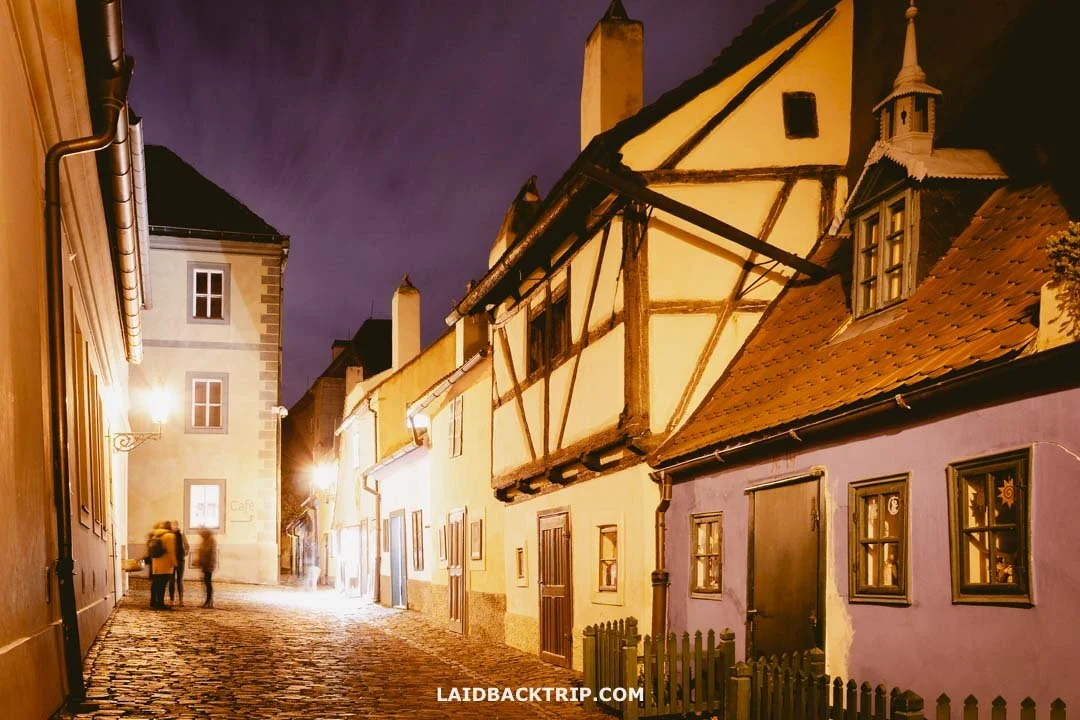
Golden Lane is beautiful during the day, but we love coming here after dark when it's much quieter.
Walk Back to the Vltava River: 30 Minutes to 1 Hour
If everything went according to plan, by the time you finish exploring Prague Castle and reappear at the Giants' Gate, it should be around 4 PM. And I know that after being on your feet since early morning, you'd be tired. So it's really up to you how you want to spend the rest of the day. I also know that both Lucie and I would push the fatigue aside because we'd want to see a bit more. So after visiting Prague Castle, you have a few options.
First, let me mention the options that are really good and would slowly take you back toward the city center, but that I personally wouldn't choose right now. If you're exhausted, instead of heading to Hradcanske namesti, walk to the Prazsky hrad tram stop and take a tram back to the center. It's as easy as that.
Another option is to leave the castle through the eastern entrance and walk down to Malostranska via the Old Castle Stairs. This route also lets you rest in the beautiful Wallenstein Garden before heading back to Old Town (or taking a tram or metro to Wenceslas Square).
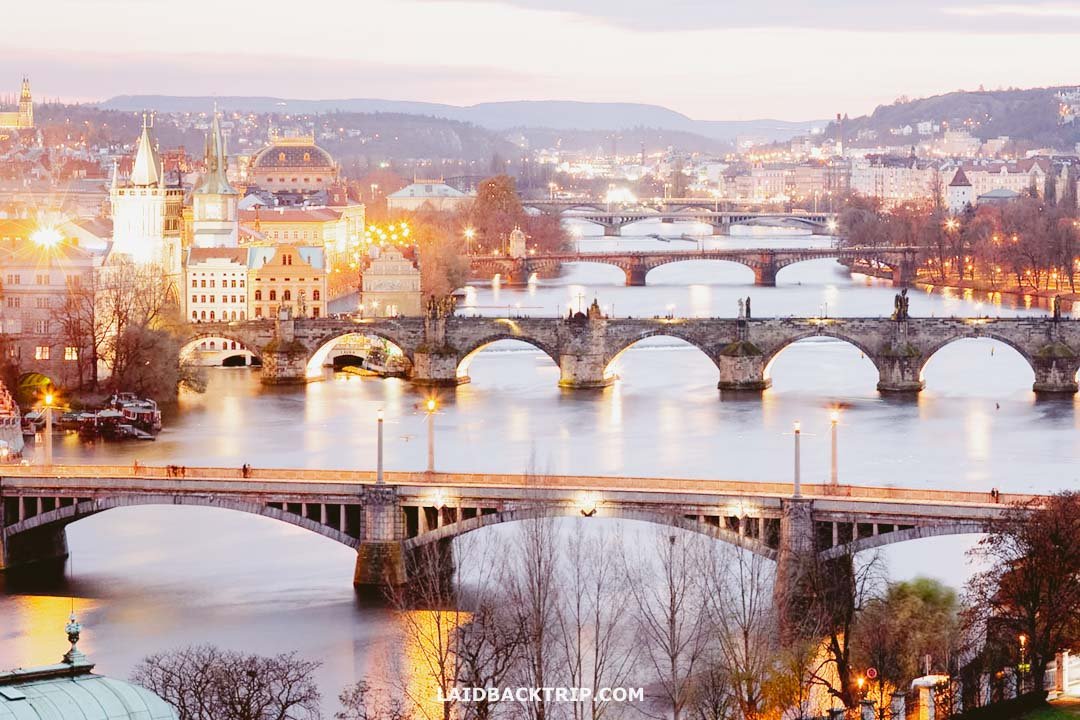
Letná Park has some of my favorite photo spots in all of Prague.
You could also walk through Chotkovy sady to Letná Park, which has some of the best views of Prague. My favorite is the one from Hanavský Pavilon overlooking several of the Vltava's bridges.
Take a Leisure Stroll to Petrin: 1 Hour
While all of these ideas sound great, I would do something different. I would walk toward Strahov Monastery and then continue to nearby Petřín, and only then decide what to do next. The walk from Hradcanske namesti to Strahov Monastery takes no more than 10 minutes.
The monastery itself has a beautiful church and an even more stunning library, but they close at 5 PM, which means you most likely won't be able to see them. What will be open, however, is the monastery pub, where they serve beer from their own brewery. And while it might be tempting to call it a day here, I'd suggest having just one beer and then hitting the road again.
We love visiting Petrin any time of year, but if you come here in spring, the whole park turns green, everything starts to bloom, and the walk becomes pretty amazing. If you're visiting Prague in winter, it would already be dark, so the atmosphere is more moody, and the same goes for a gray autumn day. At the top of the hill stands Petrin Tower, which looks like the famous Eiffel Tower, though it's much smaller, of course.
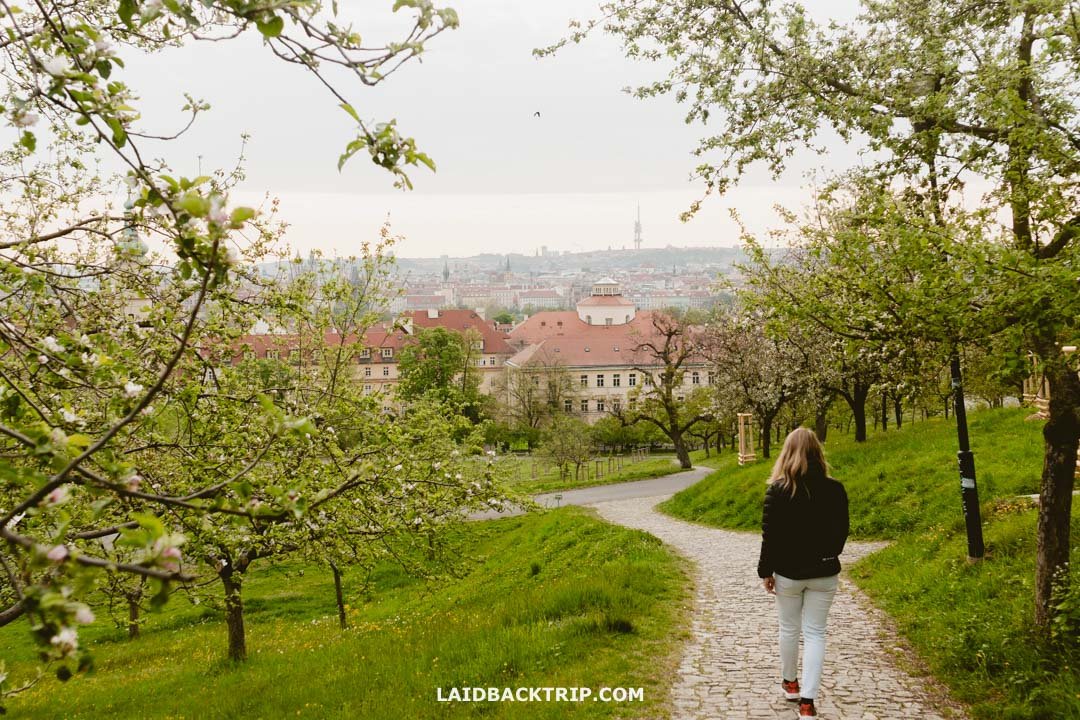
We love walking in Petřín, particularly in spring when the entire hillside is green and in full bloom.
From here, you can either walk down or take the funicular, which is part of Prague's public transport system. It's a fun little adventure and very popular with tourists, so don't skip it. The whole walk from Prague Castle to Ujezd, where we'll leave the park, should take roughly an hour (in a very slow pace), maybe a bit more if you really had that beer at the monastery.
Learn a Bit of Czech History at the National Theater: 15 Minutes
From Ujezd, we will head toward the waterfront (Janackovo nabrezi in this case) and continue walking across Most Legii until we reach the beautiful building of the National Theater in about 10 minutes. It's not just a theater (you can definitely see Czech plays here, though the language barrier would be a problem), but one of the symbols of Czech national identity and cultural independence.
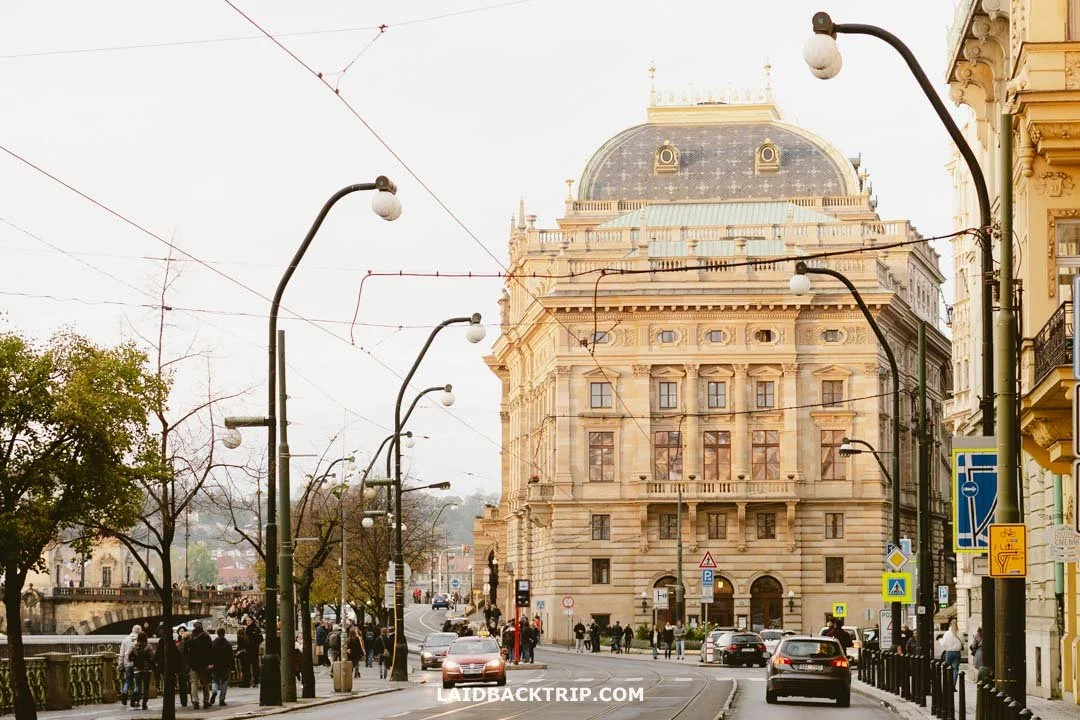
National Theater is the premier stage for Czech opera, drama, and classical ballet performances.
At the time, we were still part of the Austrian Empire, so what's special about its origin is that the construction was mostly funded by small private donations from Czech people who wanted a theater with plays in the Czech language.
After 13 years, the neo-Renaissance theater opened in 1881, but just two months later, a fire broke out and destroyed a good portion of the building. In response, the public raised enough money to rebuild it in just 47 days, allowing the theater to reopen permanently in 1883 with the premiere of Bedřich Smetana's opera Libuše.
Besides the fascinating story, the National Theater is one of the most easily recognizable buildings in Prague thanks to its golden roof, which you can spot from a great distance.
Head Back Through Narodni Street: 30 Minutes
Now it should be after 5 PM, and I have a feeling you already see yourself back in your hotel room (or in a pub with a cold one). From the National Theater, Wenceslas Square is just a 10-minute walk, so your wish can easily be fulfilled. There will definitely be a "but", but (that's not the one), first, we want to finish the day for those who have no energy left. So from the National Theater, just follow Narodni Street until you reach Jungmannovo namesti, which is practically right beside Wenceslas Square.
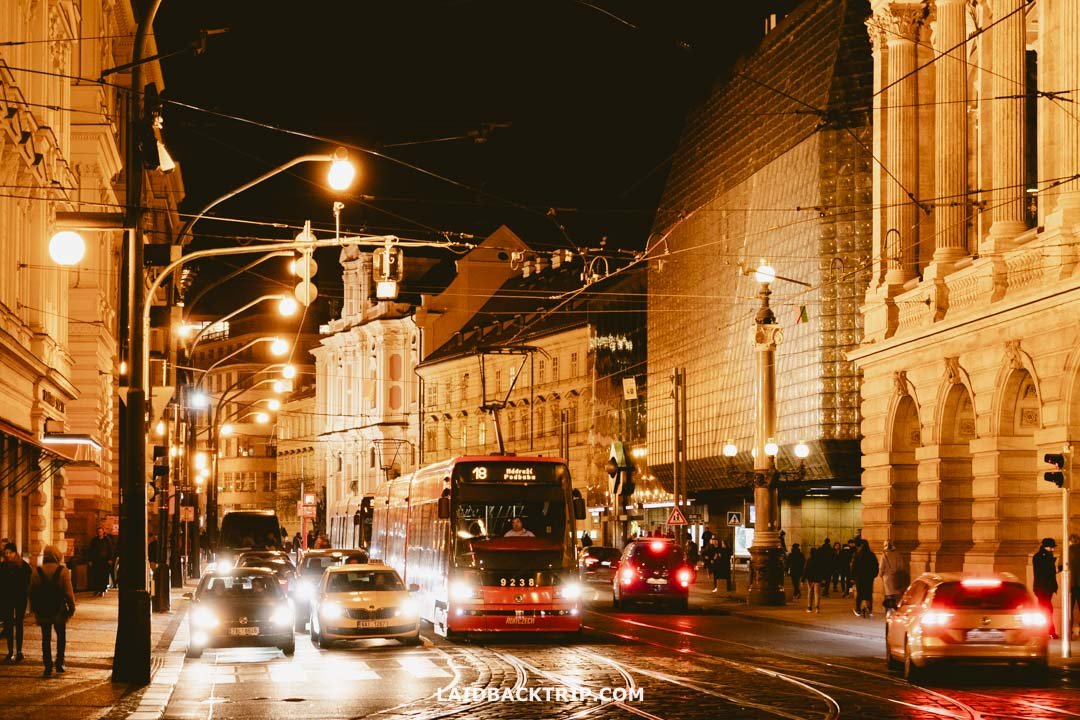
Národní is also the symbolic place where the 1989 Velvet Revolution began.
On the way, we suggest making a final little detour to see the super interesting statue called Head of Franz Kafka. This rotating modern sculpture is easily the most interesting one of its kind in the capital, so it's really worth seeing.
And while walking along Národni, remember that this is the street known for protests against the communist regime in 1989. And now comes the "but" part, where we have two more optional tips for you. Here it goes. It was a beautiful day, but we're not just done yet.
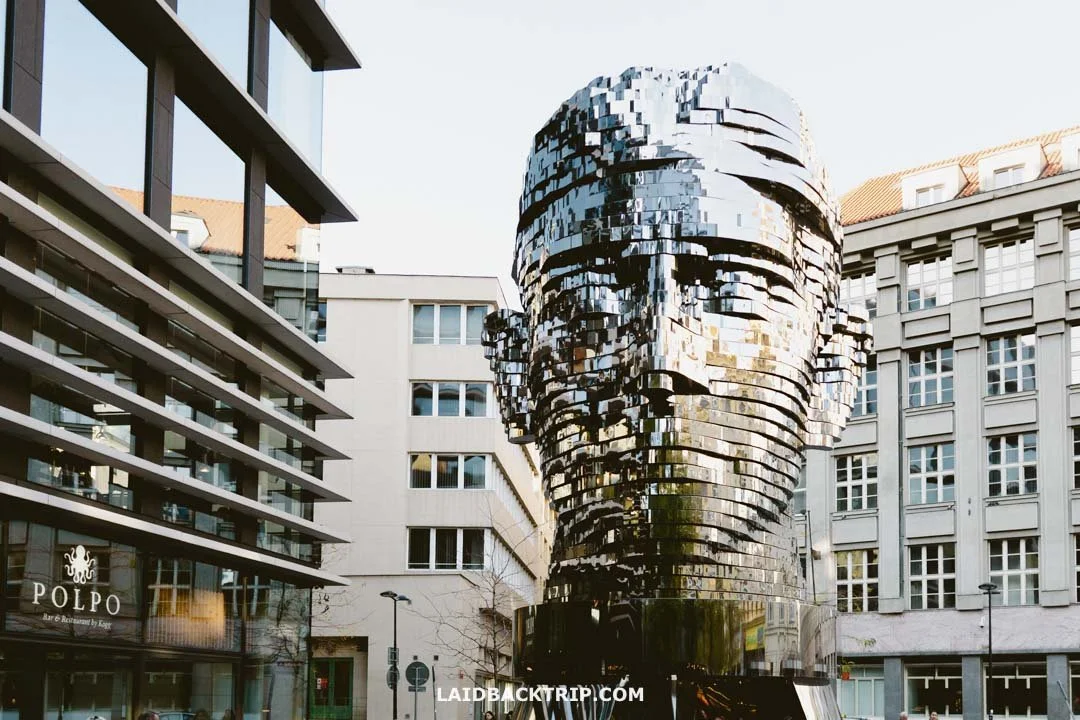
Head of Franz Kafka Statue is a technical marvel.
Optional: Take a Vltava River Cruise: 1 to 3 Hours
The first of our optional tips on how to finish your day in Prague would be taking the super-popular evening Vltava River cruise. Since evening is approaching quickly, this activity fits our itinerary perfectly. The departure point for this tour is near Pravnická fakulta, which you can reach either by a 15-minute walk along the waterfront or by a direct tram from Narodni divadlo (tram line 17, for example).
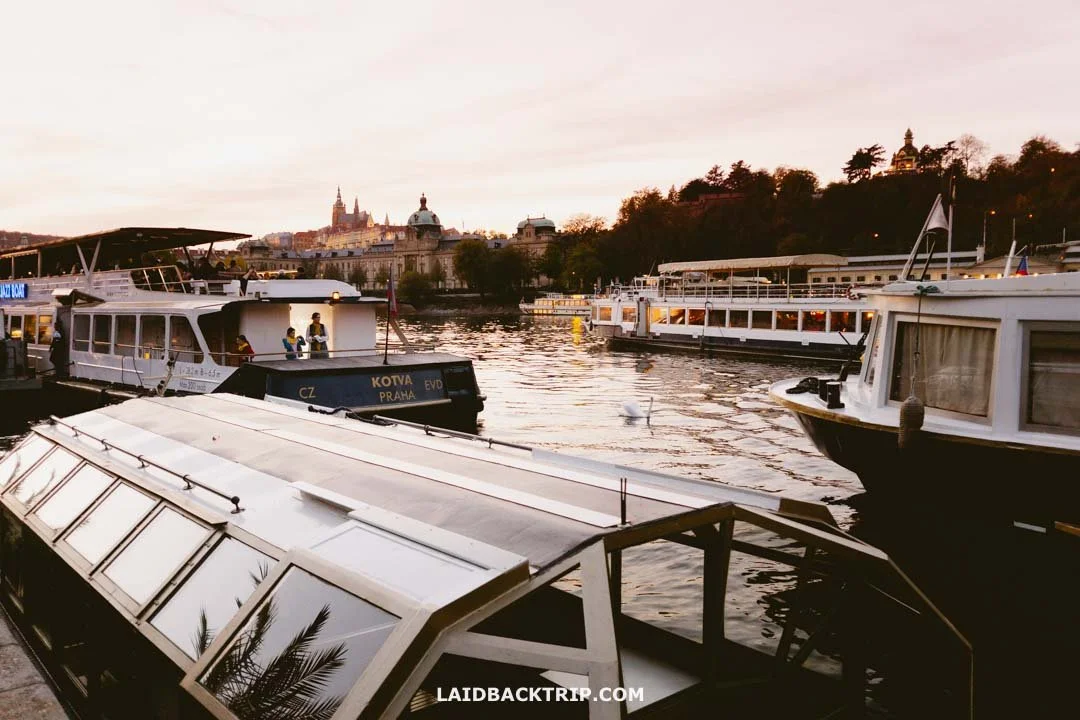
Few activities are as popular as an evening cruise through the heart of historic Prague.
On the cruise, you will have a chance to see the places you explored on foot today, like Charles Bridge, Prague Castle, Kampa Island, and other famous landmarks, but this time from the water. My only advice is to check the current sunset time in Prague, because some departure times mean the whole cruise will still be in daylight rather than in the evening (though you might prefer it that way).
Besides the regular sightseeing cruise, which takes just under an hour, there is also a longer option with a buffet dinner (and usually a classical concert) or a jazz cruise (also with dinner). I would personally get a meal in a normal restaurant, either in the Old or New Town, but I can't argue with the fact that having dinner on board a boat would be really convenient in this case. Either way, boat tours in Prague are very popular and make for a relaxing farewell to this busy day.
Optional: Walk to Vysehrad (2 Hours)
The second tip would be skipping the boat tour and walking to Vysehrad instead, which is something I would personally do, as it's one of our favorite spots in all of Prague. From the National Theater, it's an easy 30-minute walk. You can take a tram all the way there, but since the riverside walk is really amazing, especially at this time of day, we would definitely want to walk the whole stretch.
After about three minutes, we'll pass Slovansky ostrov, which has the beautiful Neo-Renaissance Zofin Palace, a popular cultural venue, but for now, we just enjoy it from the waterfront and keep going. Once we pass the Manes building with the adjacent Sitkov water tower, it might be tempting to walk down to the river, but stay with us on the sidewalk a little longer.
In about two minutes, we'll reach the famous Dancing House, which is easily the coolest building in the city center. It was designed to resemble a pair of dancers, and it really looks like the whole building is moving in a rhythmic dance. It's not just a pretty building, but inside you'll find a gallery, a fancy restaurant, and even a nice hotel with beautiful rooms.
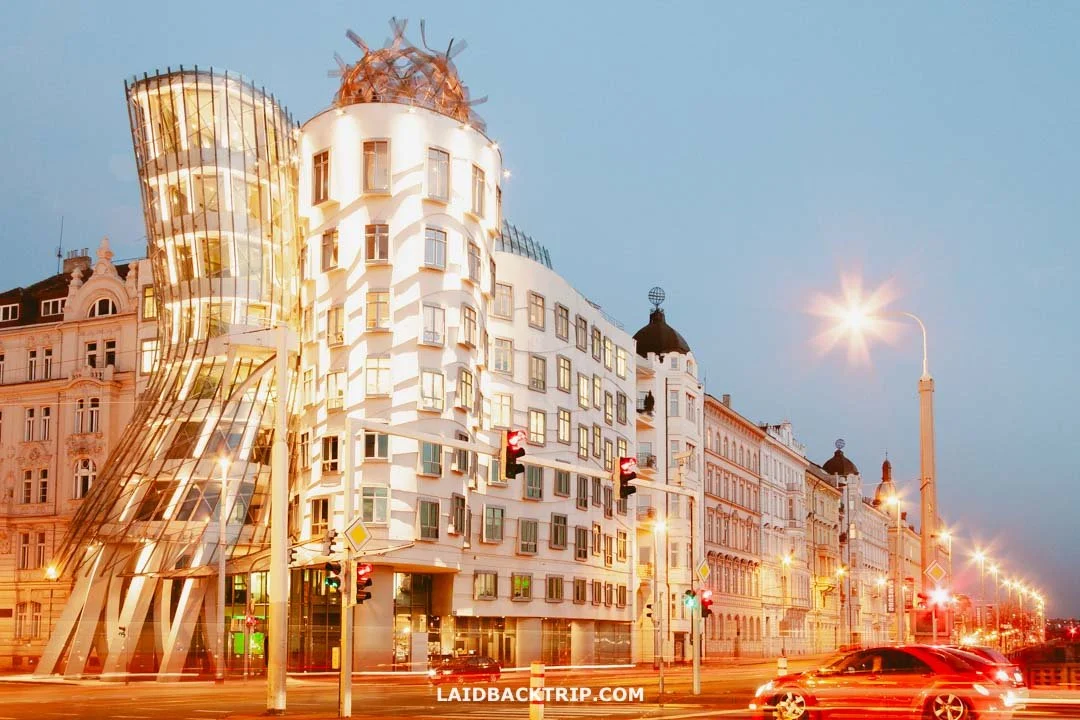
The Dancing House is one of Prague's most famous buildings, instantly recognizable for its unique shape.
Now it's finally time to walk down to the embankment (we simply call this one Naplavka) and continue toward Vysehrad, which we'll reach in about 15 minutes. It's a fortress on a rocky cliff, so the only way from here is up.
Once you pass the Vysehrad Railway Bridge, you can either take Vratislavova Street, which leads to Cihelna brana (Brick Gate), one of the three main entry points, or follow our local tip and use these stairs (GPS for the lower entry: 50.06604, 14.415979), which will take you just a few meters from the Basilica of St. Peter and St. Paul and Vysehrad Cemetery, two of the most famous sites here.
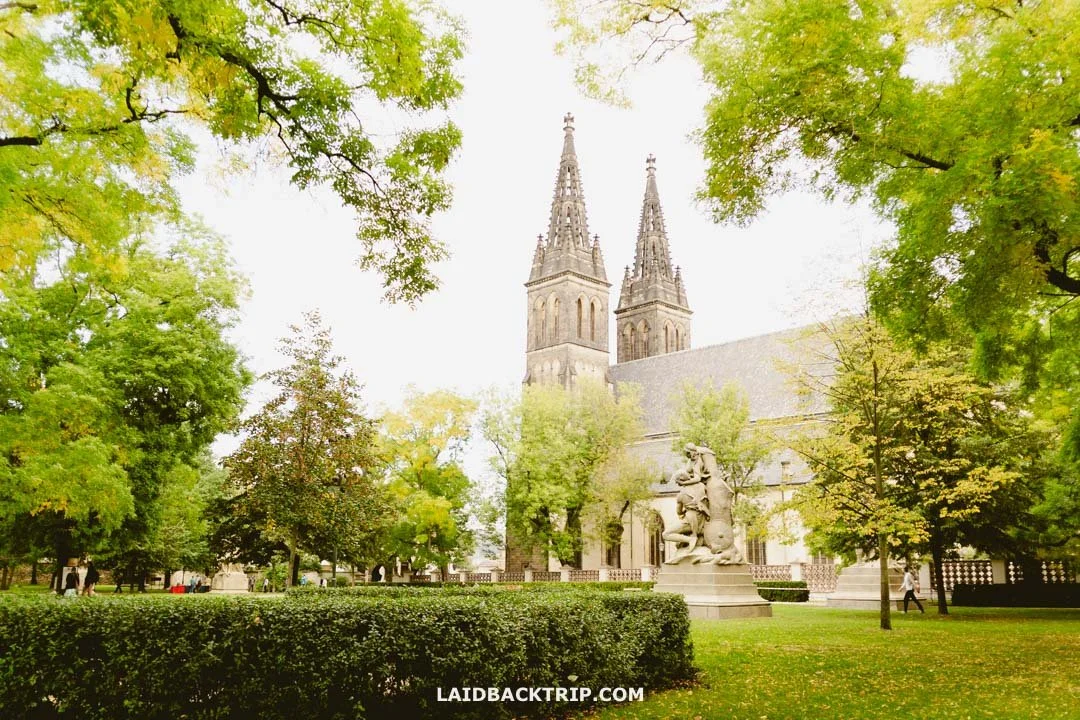
We come to Vyšehrad a lot in our free time, whether for a walk, a jog, or just to enjoy the views.
We love Vysehrad. And because we live nearby and often come here to walk or jog. The former fortress is now mostly a pretty park (at least for us), but there are plenty of other things do at Vysehrad, too. Besides the basilica and cemetery, there are many statues, the very old Rotunda of St. Martin, casemates, and even a vineyard.
And from the high walls, the views of the Vltava River and the surrounding neighborhoods are simply amazing, especially around sunset. Depending on when you visit Prague, you might arrive just in time to catch it.
Vysehrad, like any other park, is ideal to visit on warm summer days when you can sit here, have a picnic, or just relax on a bench with a book, though we love coming even in winter when it's much calmer. I saved the best part for last, which is that there is no entrance fee to Vysehrad (here are more of Prague's free attractions).
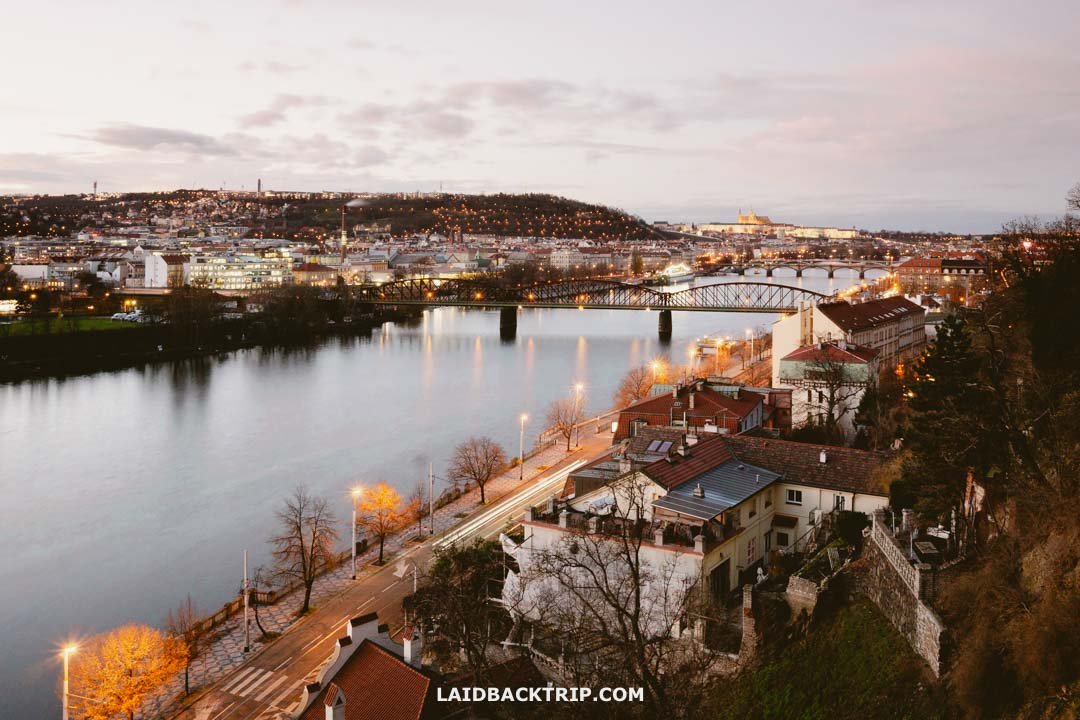
And catching a sunset at Vyšehrad is really the perfect farewell to this amazing day.
Since I talked you into walking here, now you can take a tram back, so you don't have to walk the same route twice, unless you really like it or want to grab a beer on the waterfront or on one of the anchored boats. And if it's still not too late, you might even catch that boat cruise, since some of them run until 10 PM.


Experience Czechia's past and present through engaging exhibitions on history, culture, and nature at Prague's National Museum.