How to Visit Karlštejn Castle (with Local Tips)
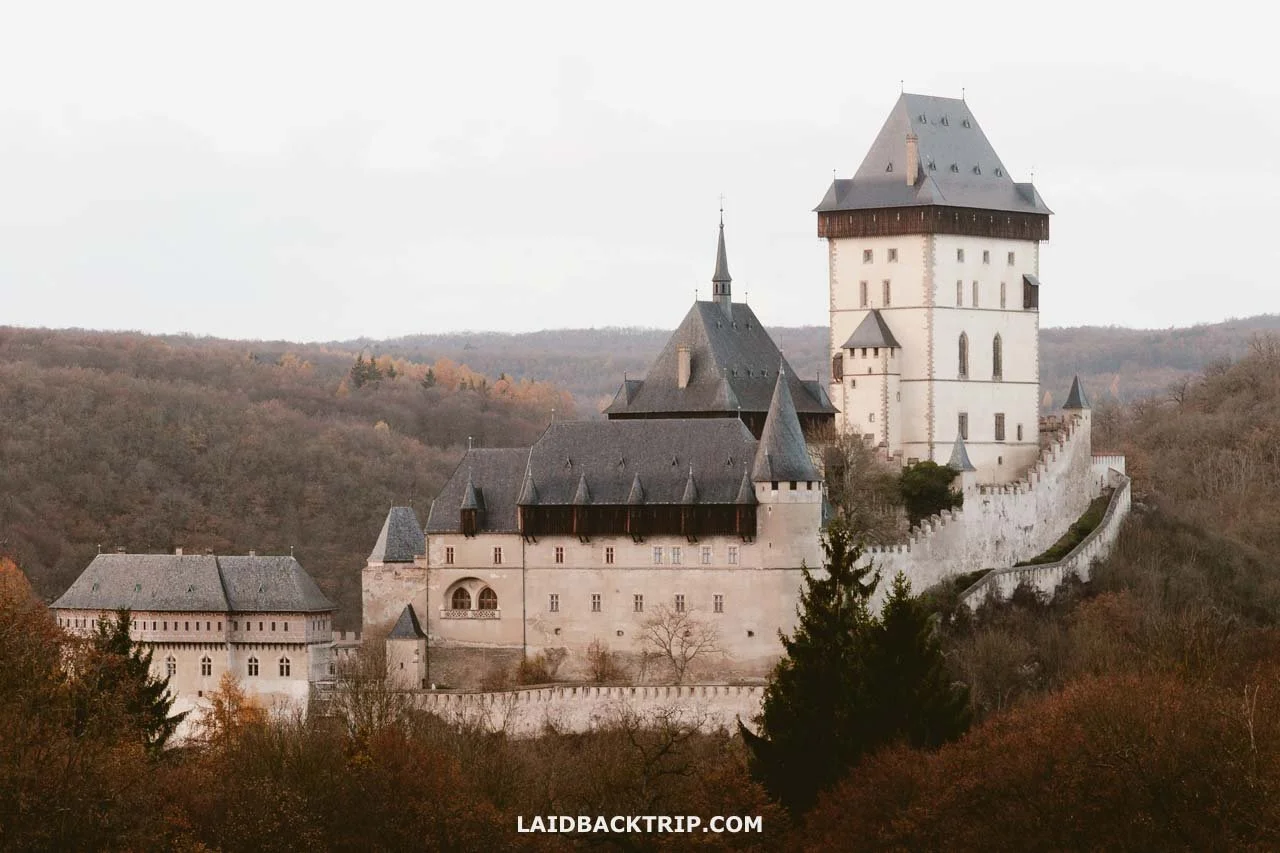
Visiting Karlštejn Castle is easily one of the highlights of any trip to the Czech Republic.
We do have tons of amazing castles in Czechia, but when it comes down to the ones from medieval times, I really do think that Karlštejn is the most beautiful of them all. And it's not just my feeling, because the 14th‑century Gothic fortress built atop a rocky outcrop and surrounded by the beautiful scenery of the Český kras Protected Landscape Area is truly one of the most iconic landmarks in our country.
Karlštejn is one of those places almost every Czech visits at least once in their lifetime, since it's a classic destination for school trips and family outings focused on our Golden Age and Charles IV. Lucie and I both came here as kids, and we've returned several times as adults. And I'm sure it won't be our last visit either, which is probably true for most people. The striking High Gothic architecture, dramatic setting, and rich history make Karlštejn one of Czechia's absolute must‑sees.
Thanks to its location just a 40‑minute train ride from the capital, Karlštejn is also one of the most popular day trips from Prague. Normally, we would start our trip there, but this time we had different plans, visiting Karlštejn as part of a longer road trip around Czechia that included several other famous castles (Křivoklát, Zvíkov, etc.) and a few other interesting stops (Koněprusy Caves, Plasy Monastery, etc.). But here, we'll stick to Karlštejn and everything essential we learned during this visit. Let's dive in.
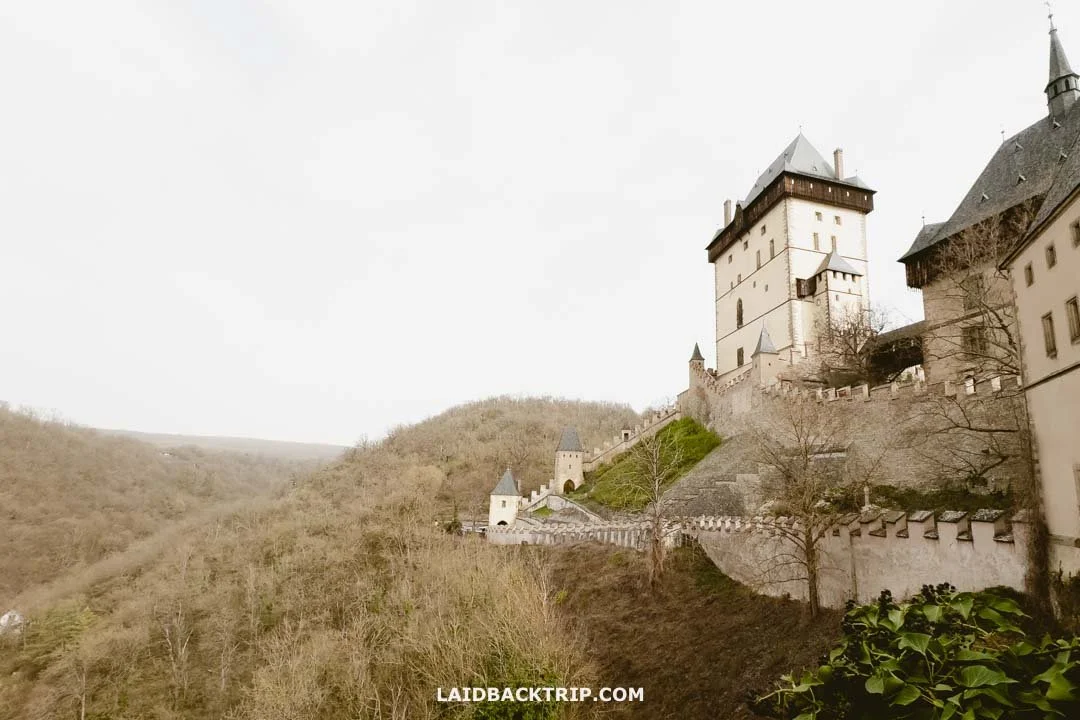
Karlštejn was built in the 14th century by Charles IV, the greatest Czech king.
Karlštejn's History
Before diving into how our trip actually went, I think it's essential to look at the history of this fortress, because it really helps explain what Karlštejn is and why it matters so much to us. It's simply not just a tour of this castle but a genuinely interesting trip into Czechia's history. So if you really want to know more about our country, this is a really great place to do so.
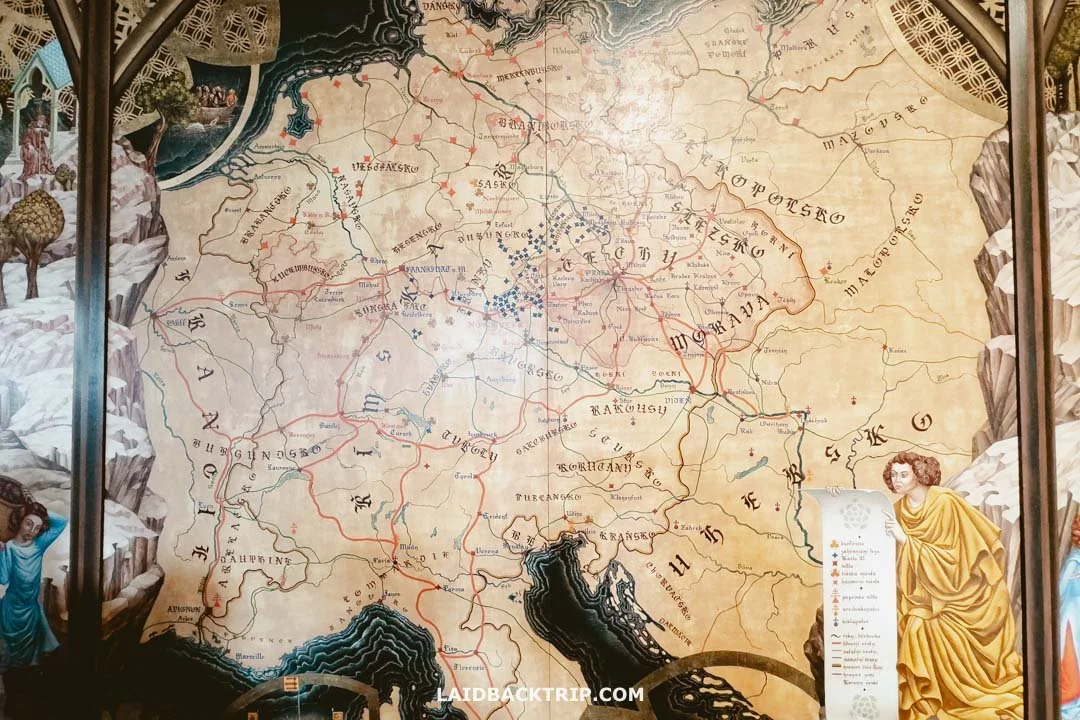
A historical map of the Czech lands from the reign of Charles IV.
Charles IV founded the castle in 1348 to protect the Imperial Crown Jewels. He was the most famous Bohemian king and later became Holy Roman Emperor. By 1365, construction was mostly finished, marked by the consecration of the Chapel of the Holy Cross, the spiritual core of the entire complex.
For more than two centuries, Karlštejn served as the kingdom's main treasury and a fortress that was nearly impossible to breach. The Burgrave's House and the Imperial Palace occupied the lowest level, the Marian Tower rose above them, and the Great Tower dominated the very top. Inside the Great Tower is the Chapel of the Holy Cross, a space so sacred that Charles IV is said to have entered it only barefoot as a gesture of humility.
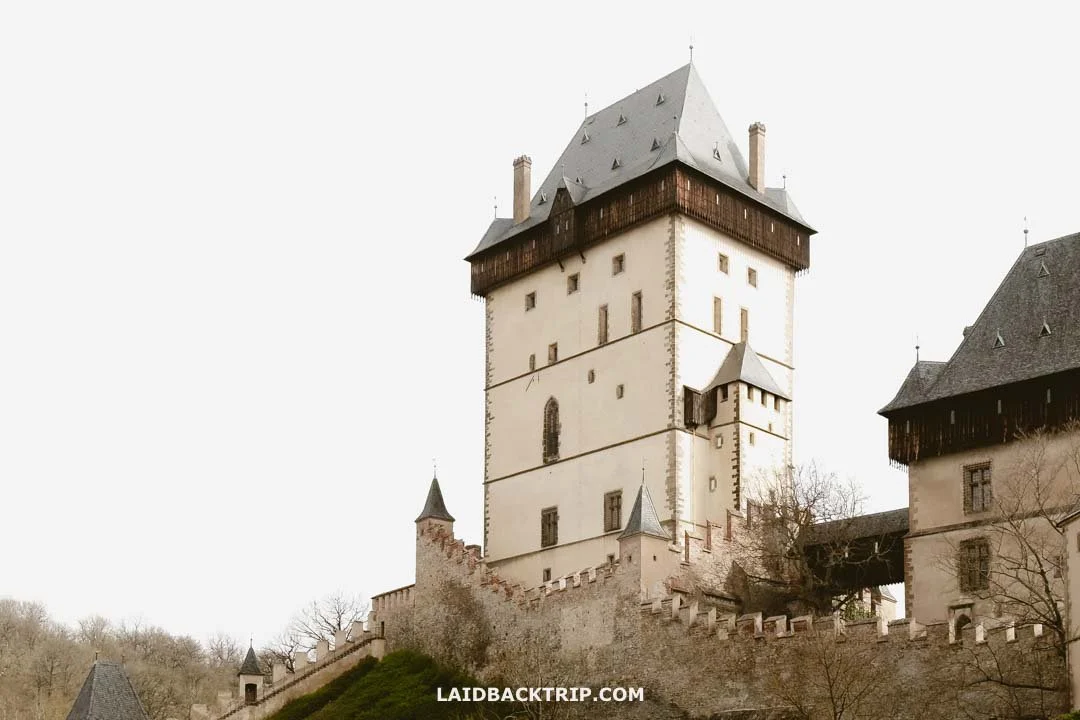
The impenetrable Great Tower has dominated the entire castle ever since it was built.
Karlštejn endured a harsh seven‑month siege by Hussite forces in 1422, when attackers launched stones and even barrels of filth into the courtyards to spread disease. In the late 16th century, it underwent several architectural changes, shifting from Late Gothic to Renaissance styles. Later, the castle survived the Swedish siege of 1648 during the Thirty Years' War, when Swedish troops managed to seize the lower defenses but failed to capture the Great Tower.
During this war, the crown jewels were moved to Vienna for safekeeping, and the castle's strategic role eventually faded. Karlštejn then entered a period of significant decline and physical decay, and by the 18th century, it was largely neglected. Its present look comes mainly from a major 19th‑century restoration led by architect Josef Mocker, who aimed to restore its Gothic look. Today, Karlštejn is a state‑owned national monument and one of the most visited castles in the Czech Republic.
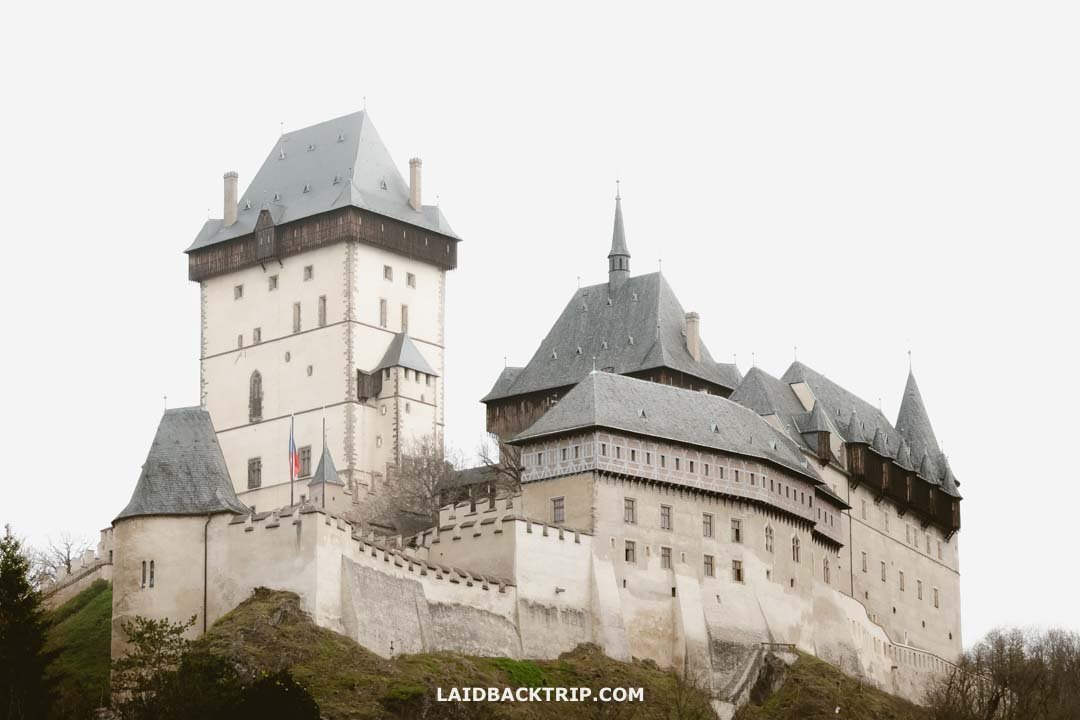
Karlštejn was restored to its original Gothic appearance in the 19th century.
Getting to Karlštejn
For this trip, we simply drove to Karlštejn because it was the most convenient option for us at the moment, especially since we had a longer road trip ahead. We didn't start in Prague this time but in České Budějovice, so the drive would have been about two hours (though we stayed overnight in Písek), which made it a bit shorter. If we had driven from Prague, it would have taken around 45 minutes.
There are several driving routes to Karlštejn, so just follow whatever your GPS recommends. The last time we drove from the capital, we usually took Prague's inner ring to Barrandov and then continued along the narrow-ish regional road near Řeporyje that leads straight to the village.
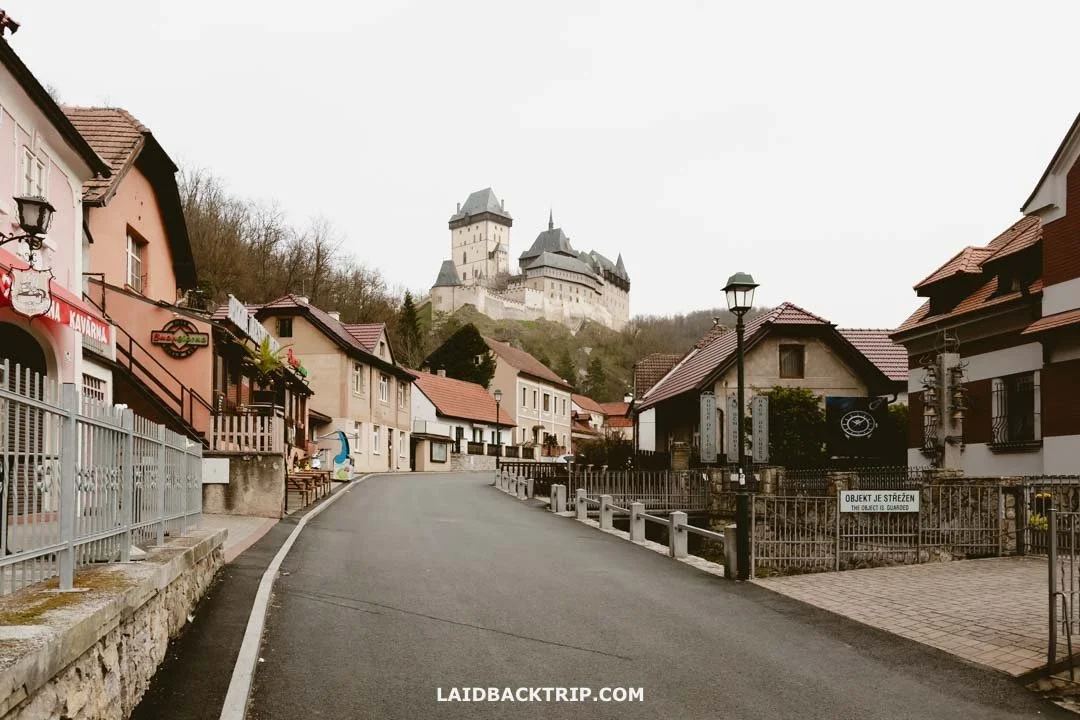
Driving is not allowed in the village, so whether you come by train or by car, you still have to walk the entire stretch up to the castle.
The official parking at Karlštejn is located on the main road (technically in the village, but before the pedestrian zone), about 1.4 kilometers from the castle at these GPS coordinates: 49.93319, 14.18478. The parking lot was fairly spacious, but the 200 CZK fee felt a bit steep. If you arrive by car, this is where you'll need to leave it, since there's no parking closer to the castle and driving through the village isn't allowed.
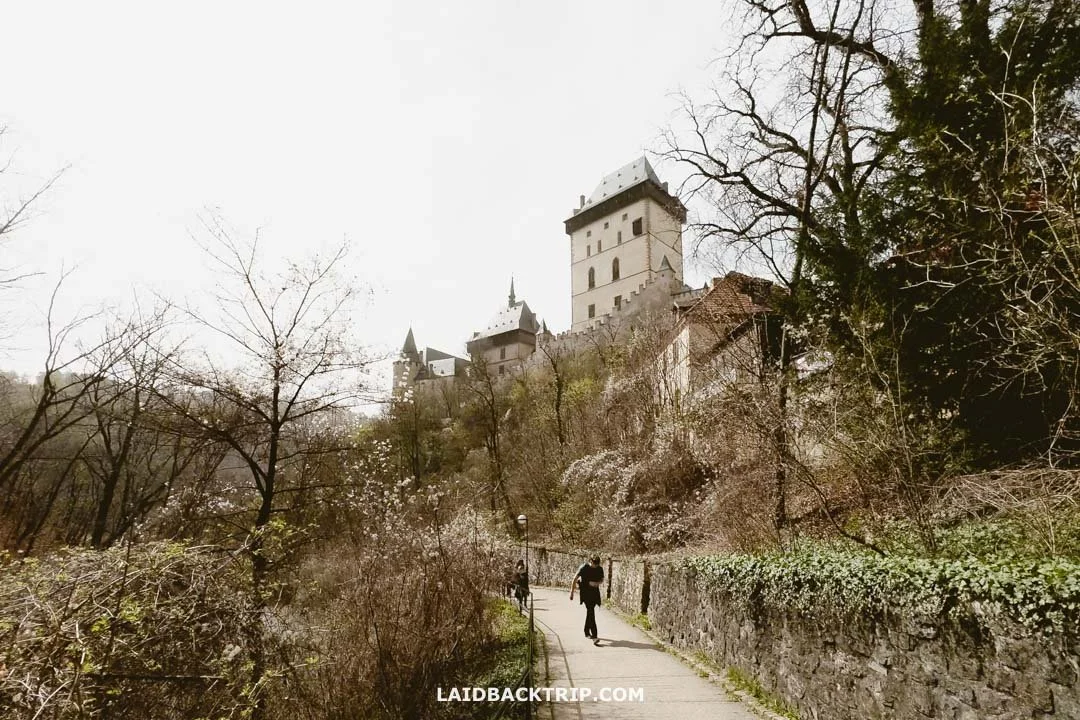
The walk up to Karlštejn is uphill, but it's not difficult.
As I mentioned earlier, we've visited Karlštejn many times over the years. I won't go into the details of the school trips by bus or the childhood visits with our parents, since we didn't plan those ourselves. But I will say that the easiest way to get to Karlštejn is with a tour, which, funnily enough, offers the same level of convenience. And instead of going with a teacher or my parents, you'll have a guide, which I suspect will work better for you.
We've also visited Karlštejn without a car a couple of times. My favorite trip was when we took the train from Prague (Praha hlavní nádraží) to Karlštejn and then walked back along the red trail. That time we didn't even go inside the castle, since it was just one of our days off and we wanted an easy walk near Prague. After covering 17 kilometers, we ended up in Radotín, where we caught the train (and tram) back home. The train ride between Prague and Karlštejn takes about 40 minutes.
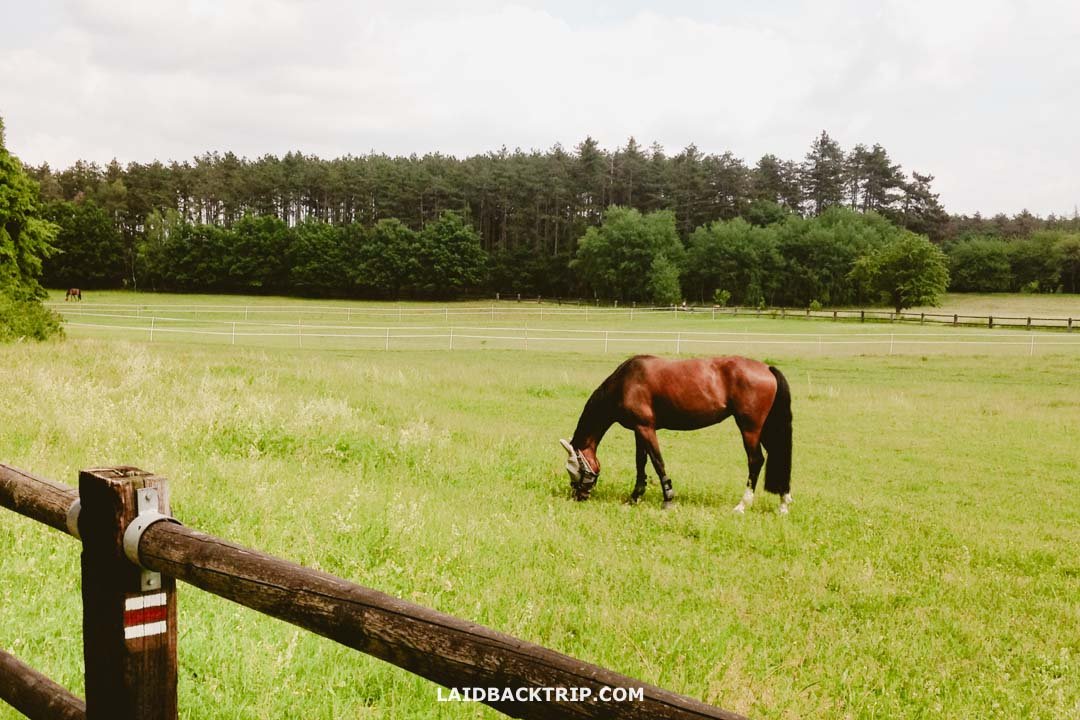
The hike back to Prague via the red trail can be pretty romantic.
Walking through Karlštejn Village
As we were starting at the parking lot on the main road, we had about a 1.4‑kilometer walk ahead of us. It wasn't our first time here, so we already knew where to go. Since we arrived from the D4 (a major highway), the parking was on our left, and the access road to the castle was about 100 meters farther down the road (at these GPS coordinates: 49.9338, 14.18350) on the right. For those arriving by train, the walk is slightly longer, as the station is about two kilometers from the castle. Once you cross the Berounka River, turn right, and the first turnoff is after 100 meters, with the second another 100 meters later (it doesn't matter which one you take).
One thing that really hasn't changed over the years is that the entire stretch through the village still feels like walking through a pretty kitsch tourist trap. The road is lined with a dense mix of souvenir stalls, overpriced restaurants, odd museums, and quirky attractions aimed at the huge crowds that show up here every day. I have to say that even after all these years, the first impression hasn't changed at all, and I don't think it will anytime soon. I do have to admit, though, that this walk is our little guilty pleasure, just to see what kind of tourist stuff can be squeezed onto this one long street.
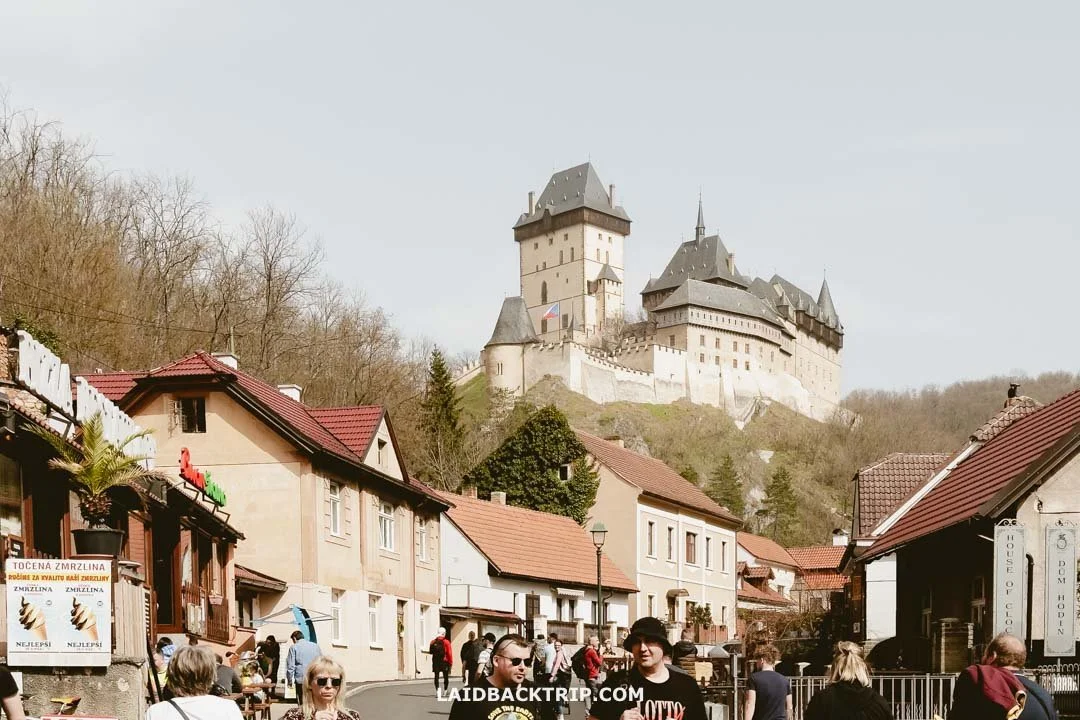
The village is really touristy, but thankfully this view opens up pretty quickly.
The first 250 meters or so are really just about walking as fast as we can, because there's nothing here that interests us. That changes once the street curves slightly to the right and Karlštejn appears in front of you. I have to say that no matter how many times we've been here and even though we know exactly what's coming, seeing Karlštejn perched on the hill is one of those moments that never gets old. Even from here, the view is breathtaking. And it also helps us forget about all the tourist clutter the village is wrapped in.
As a local, I'm probably too harsh, but the village below is as touristy as it gets, and we've never found a reason to stay here longer than necessary. You might feel differently, though. Besides the visual clutter, there are places to eat if you're hungry and even a few museums in case you feel like you can't visit the castle without stopping by the House of Clocks, the Museum of Light Fortification, the Wax Museum, or the Butterfly House.
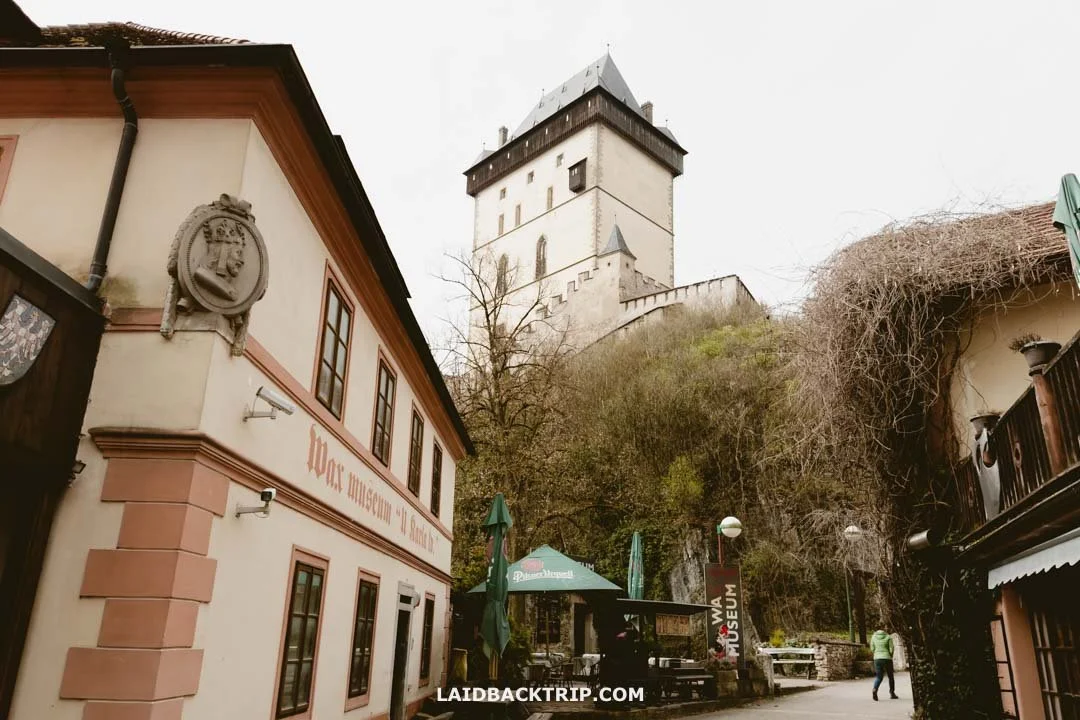
Why anyone would go to a wax museum when Karlštejn is right there is completely beyond me.
The only place I've actually visited in the whole Karlštejn village (a very long time ago) was the Museum of Nativity Scenes, which is probably the only one I'd recommend. It's fairly traditional for our country, and inside you can see the Royal Crèche, with the largest puppet nativity scene in the Czech Republic, covering 80 square meters.
At least this time, we walked through the village just before the castle opened, and everything was still pretty quiet. I have to say the whole walk felt much calmer and more enjoyable than the one back to our car when everything was fully open. The good part was that there were no crowds yet, since it was still early in the season, and even around noon, when we were walking back, it wasn't nearly as packed as it gets in summer. It felt less like an amusement park and more like a normal village.
If you want to enjoy Karlštejn after the day trippers leave, there are some nice accommodations on this street, like Hotel Karlštejn (it has spa and or Hotel Mlýn Karlštejn outside the village.
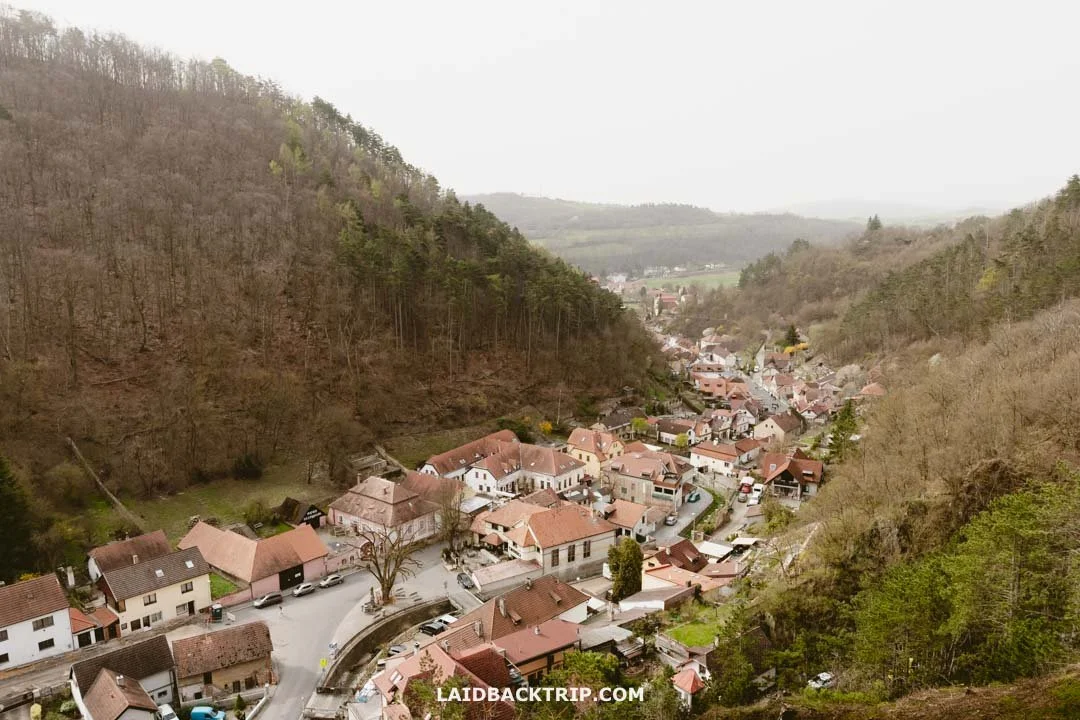
From the castle, the village below looks almost idyllic.
Opening Hours at Karlštejn Castle
We reached the main castle gate right around 9:30 AM (the official opening time), and since it was already open, we headed along the northwestern wall into the main courtyard, which was still pretty quiet at that hour. We visited in March, and Karlštejn was open until 5 PM. The castle follows seasonal hours (in summer it's open from 9:00 to 6 PM), but it stays roughly within this range.
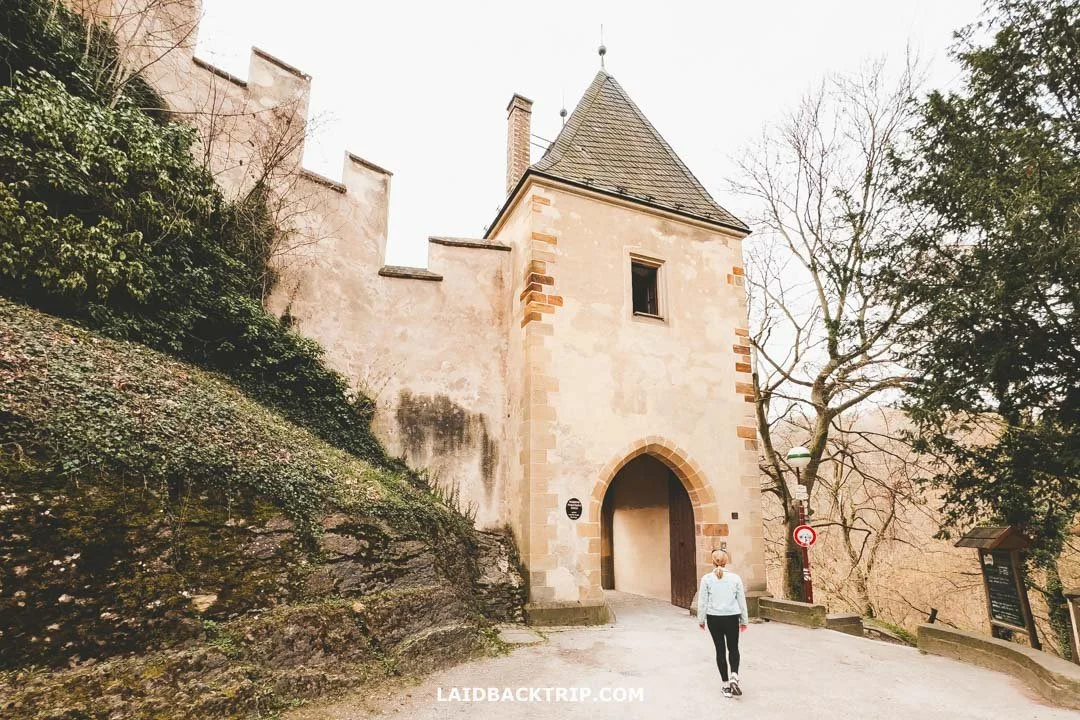
The main entrance gate of the castle was already open when we got there in the morning.
Karlštejn is also open in winter, which isn't always the case, especially with some of the less-visited Czech castles. Just keep in mind that it's usually open from Tuesday to Sunday and closed on Mondays.
Tickets to Karlštejn Castle
Karlštejn can only be visited on a guided tour, so our first stop was the ticket office in the main courtyard. We thought about buying tickets online, but since it was still low season, we decided to get them on the spot. They usually offer three main tours: the 1. Imperial Residence of Charles IV (the basic tour) for 300 CZK, which feels pretty reasonable. Then there's the Castle Chapels (exclusive tour) for 640 CZK, which is pricier but takes you into some of the most valuable parts of the castle. And finally, the Explore Entire Castle (special tour) for 1800 CZK, which is very expensive, but you go in a small group and see almost everything the castle has.
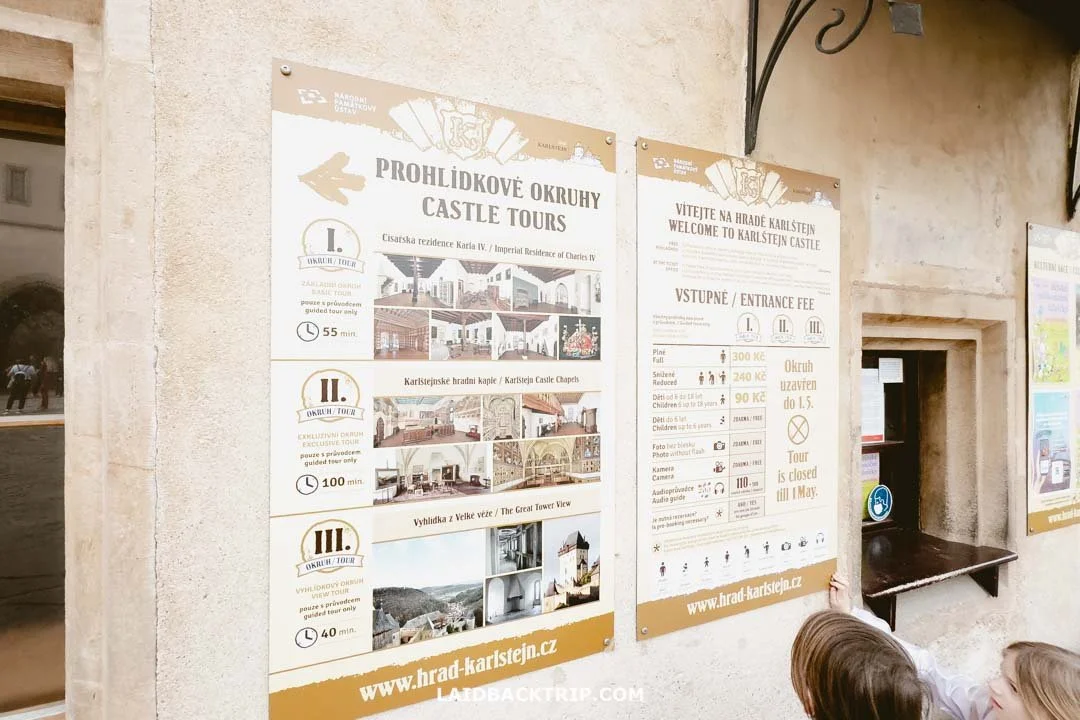
We purchased our tickets in the main courtyard at Karlštejn.
They also offer a few special tours, mostly in summer. The Night Tours looked great, and so did the Coffee with Castellan. But in March, the basic tour was the only one running. If you're interested in the other tours, keep in mind that only the Imperial Residence of Charles IV is usually available on the spot. The others require reservations, and booking online is the easiest way.
Since we visited at the end of March, the only option was the basic tour, the Imperial Residence of Charles IV, because the other tours don't start until May 1. It had been a while since we last took it, so we didn't mind at all, even though we're still hoping to try the more special tours someday. We just haven't found the right moment yet, but we're saving them for a future visit, since this definitely wasn't our last time at Karlštejn.
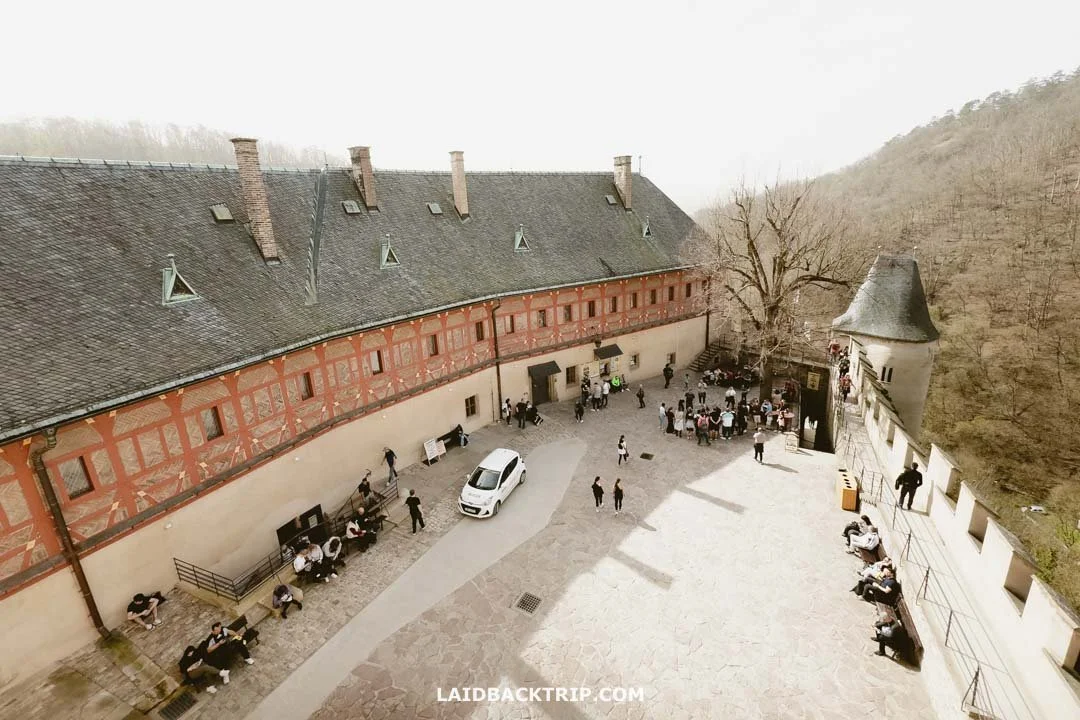
Karlštejn has a surprisingly small courtyard.
We had to wait about 40 minutes for the next tour, which we spent exploring the castle exteriors. We're not big fans of waiting, so being able to fill that time by walking around was perfect. If we were visiting in peak season, we'd definitely consider online tickets. Just remember that the tickets shown online aren't all of them. When we were there, they still had more available on site. So even if the tours look fully booked online, it's still worth trying your luck in person.
Which Karlštejn Tour to Choose
As I already said, we could only join the Imperial Residence of Charles IV because we were still there early in the year. We've both done this tour multiple times and were honestly looking to do the one with the chapels, but it just wasn't meant to happen this time. We could have avoided Karlštejn altogether on this trip, but just decided that we'd go anyway.
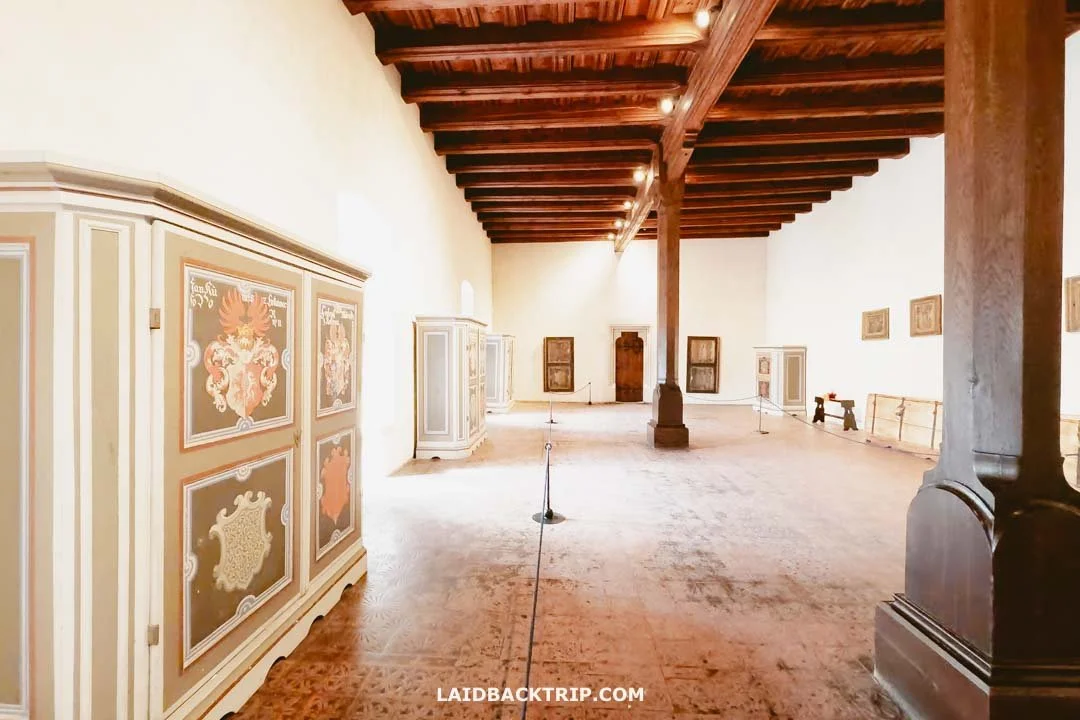
The basic tour is great for first‑timers to Karlštejn.
Both the Imperial Residence of Charles IV and the Castle Chapels are available in English, but obviously, we took the tour in the Czech language. From what I found, the remaining tours were available only in Czech, including the Explore Entire Castle. All three main tours overlap each other, so there's really no need to combine them.
I'd say that the best tour you can choose is the one that takes you into the chapels, as you will see some of Karlštejn's most interesting spaces and still learn a lot about the castle. But as I said, if you end up doing the basic tour, it will still work pretty well. They do also have audio guides for an extra fee in case you speak some other language.
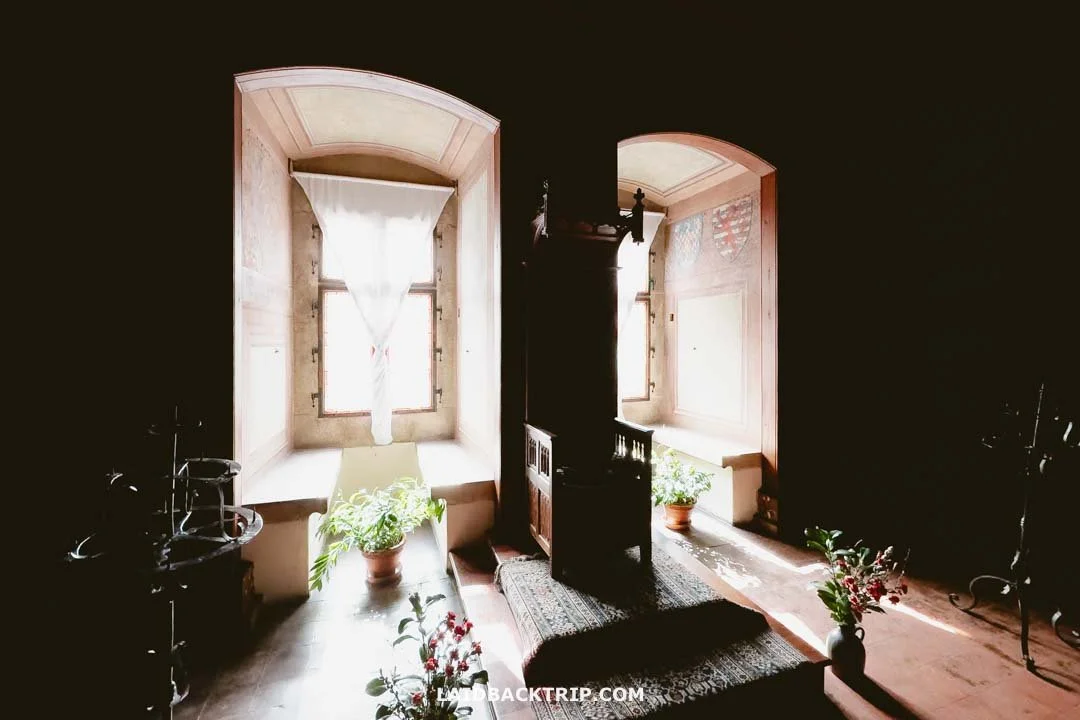
The basic tour also took us to the Audience Room with the emperor's throne.
Touring the Karlštejn Castle with a Guide
Our tour was supposed to start at 10:20, so we had roughly 40 minutes to spare. The whole southwestern part of the castle is accessible without a ticket (yes, it's free to explore), so that's where we headed next. There were two things to do: walk along the ramparts and see the castle well.
First, we started with the ramparts since they were just a few steps from the ticket office. Because the castle isn't very wide at this point and the courtyard is actually quite small, it didn't take long to walk the whole thing. We didn't mind, though, as we enjoyed the spectacular views of the castle and the surrounding hills.
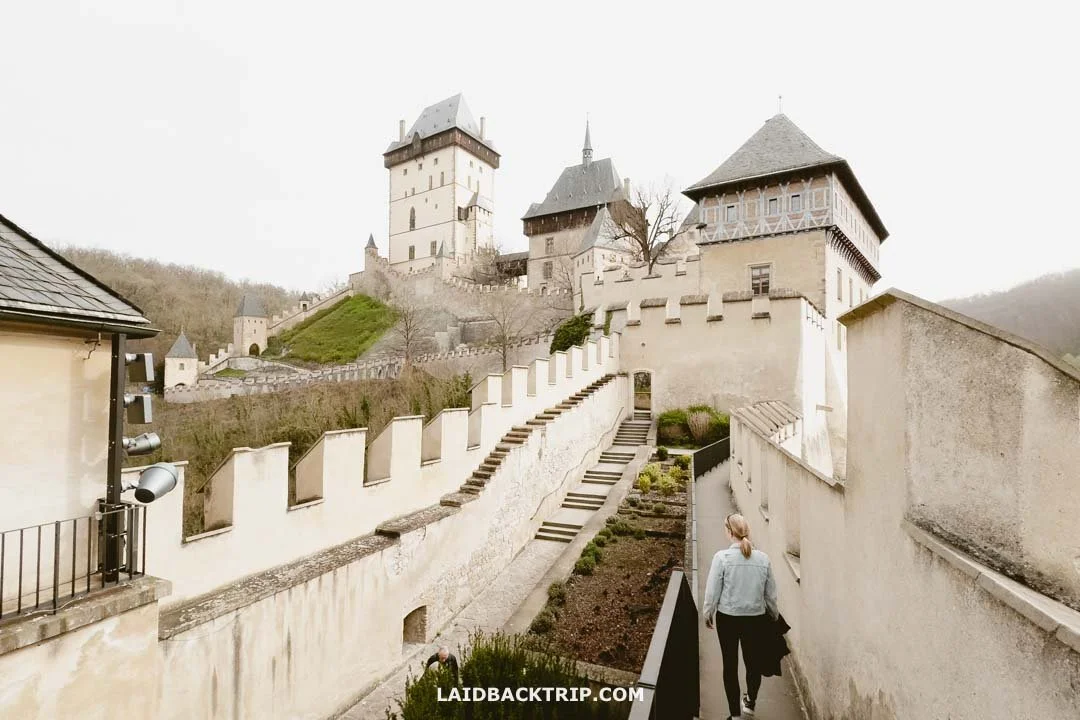
Lucie exploring the ramparts at Karlštejn.
Next, we slowly made our way down to the Well Tower, the lowest point of the castle. The biggest surprise is that it's not actually a well but a water reservoir. When miners from Kutná Hora reached a depth of 78 meters and still hadn't found water, they had to dig a channel and bring water from a nearby creek. Since this was a major weakness for the fortress, the information was a state secret known only to the emperor and the burgrave. According to legend, the miners were killed to keep the secret safe.
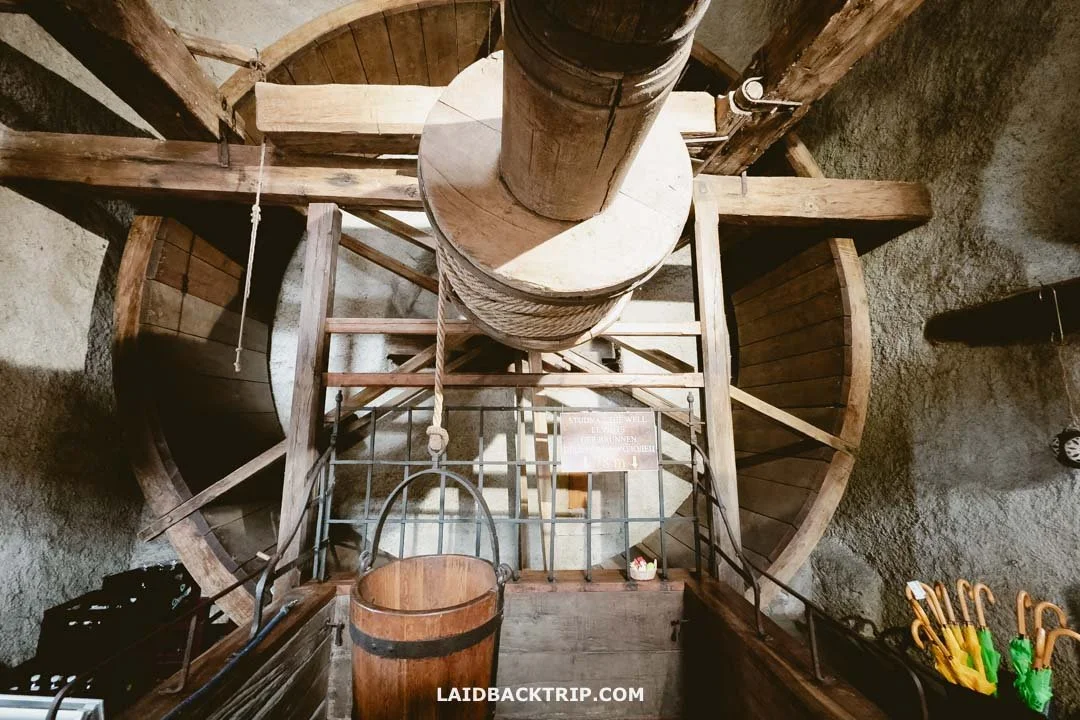
The well at Karlštejn is 78 meters deep.
We went to Nuremberg Castle the following month and, even though the well there wasn’t as deep, a guide gave us a quick explanation and even a demonstration, which made it much more engaging. Here, we had to rely entirely on our imagination. And by the way, the deepest castle well in Czechia is at Zbiroh, reaching more than 160 meters. Besides the well, there was a small souvenir shop. Outside, we also enjoyed some beautiful views of the village, which from above looked almost picturesque.
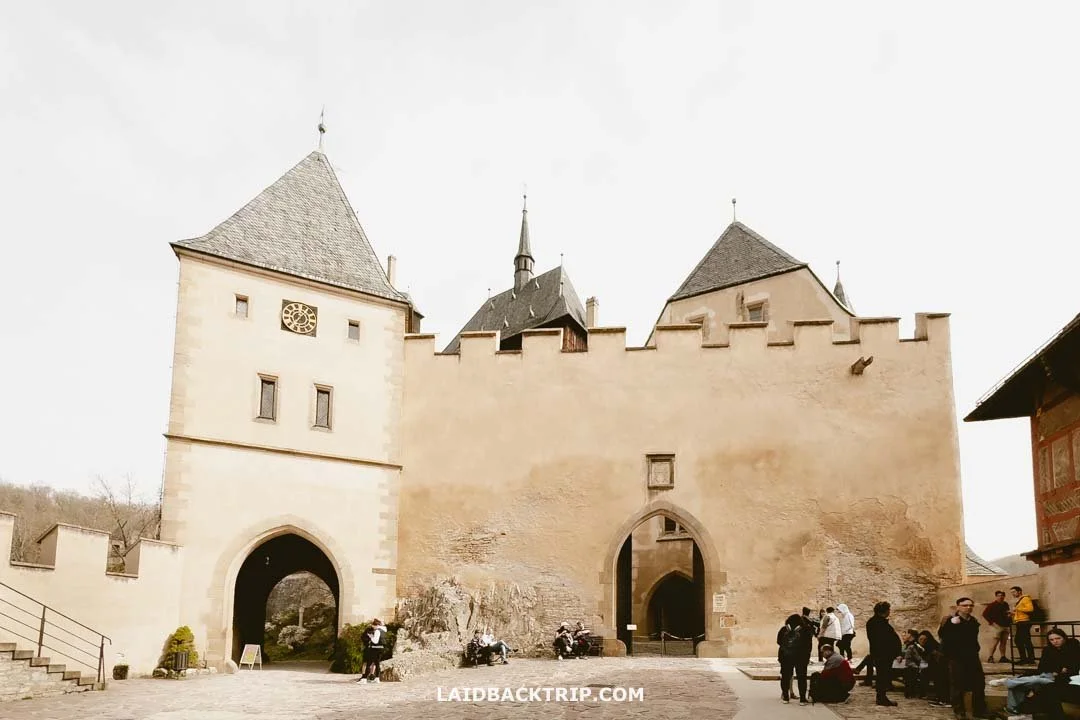
The meeting point for our tour was located directly in the main courtyard.
After half an hour of mostly enjoying the views, we moved back to the main courtyard, which was also the meeting point for the tour. Here we were picked up by a guide and taken into the castle's interiors. When we saw the size of the group, Lucie joked that it looked like we wouldn't be touring the castle alone that morning. I later found out that the maximum group size for this tour is 45 people, and when I checked my photo, it really was about 40 people in our group.
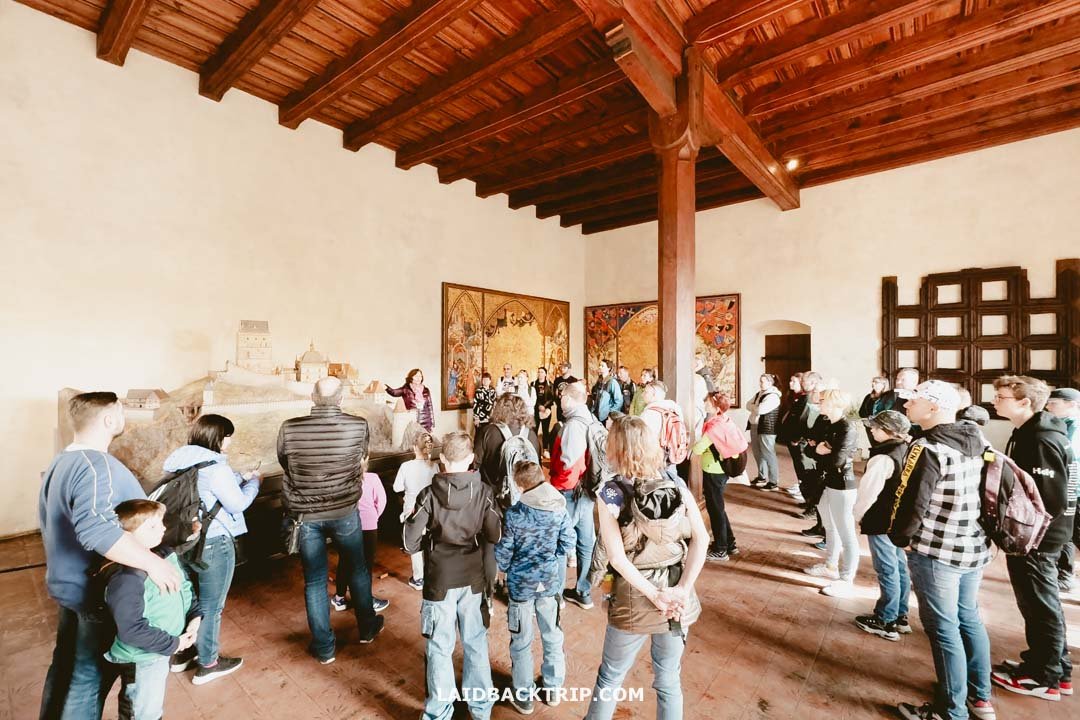
Even with more than 40 people in our group, the tour stayed surprisingly enjoyable.
I have to say that while the group was bigger than we'd prefer, it was still a guided tour with a real person. Earlier that year, we visited Neuschwanstein, where it was just an audio guide with someone walking us through the corridors, which was far from ideal. And while this wasn't perfect either, the experience was still fairly enjoyable, and there was even time for questions.
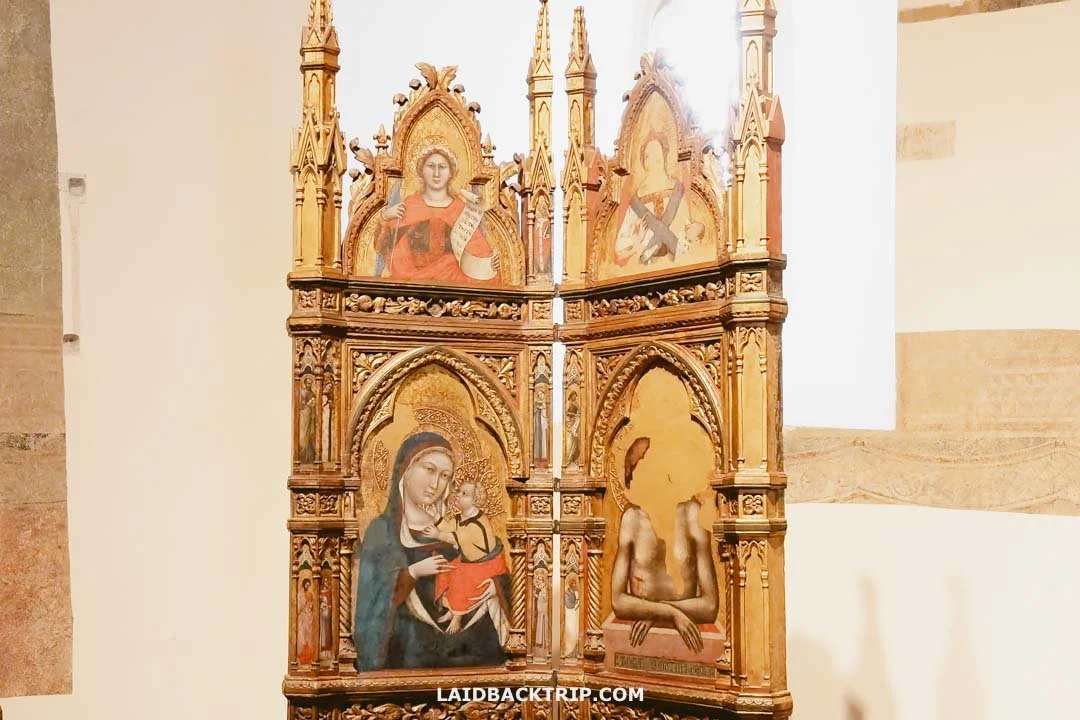
A 14th‑century diptych traditionally attributed to Tomaso da Modena.
As I said, Karlštejn can be explored only with a guide, which really sets the tone of how everyone experiences the interiors. Since we were taking the Imperial Residence of Charles IV, the guide focused on daily life, political status, and the personal residence of the Holy Roman Emperor in the 14th century.
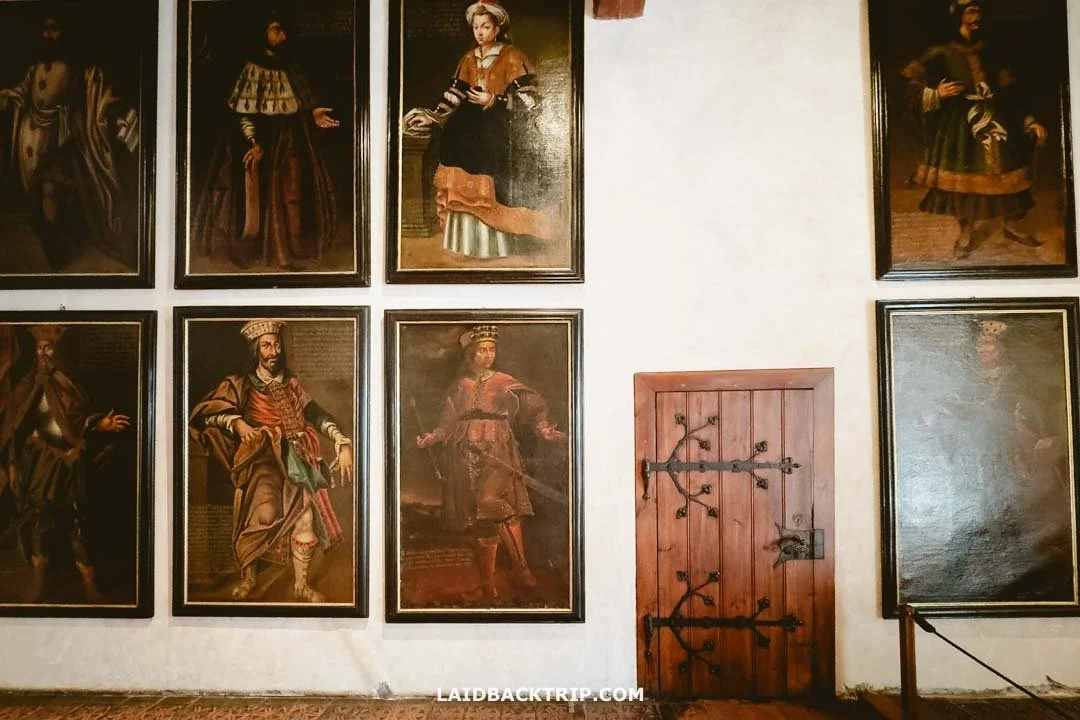
The Royal Hall of Ancestors is a portrait gallery of the Přemyslid dynasty.
Over the next hour, the guide took us through the historic interiors of the 1st and 2nd floors of the Imperial Palace and the 1st floor of the Marian Tower. Since Karlštejn is primarily a medieval fortress, the interiors are quite simple, especially compared to places like Hluboká nad Vltavou or Bouzov. We've been here several times, so we already knew that Karlštejn isn't about opulence but about practicality and medieval function. At least that's true for the Imperial Palace rooms, since the chapels are more richly decorated.
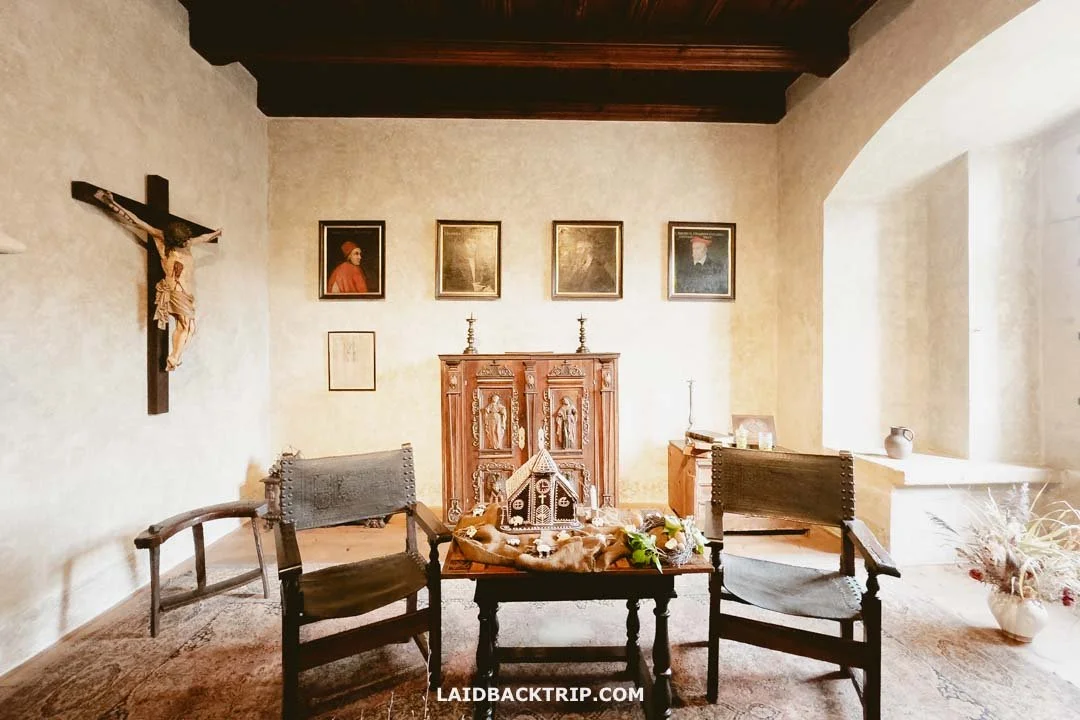
Because Karlštejn was mainly a fortress, all the rooms are decorated very simply.
The imperial residence does contain valuable furnishings, some dating back to the 14th century, but overall, the rooms feel almost austere for a Holy Roman Emperor. Personally, I'm always more impressed by the massive stone walls than the furniture, but Lucie loves those details.
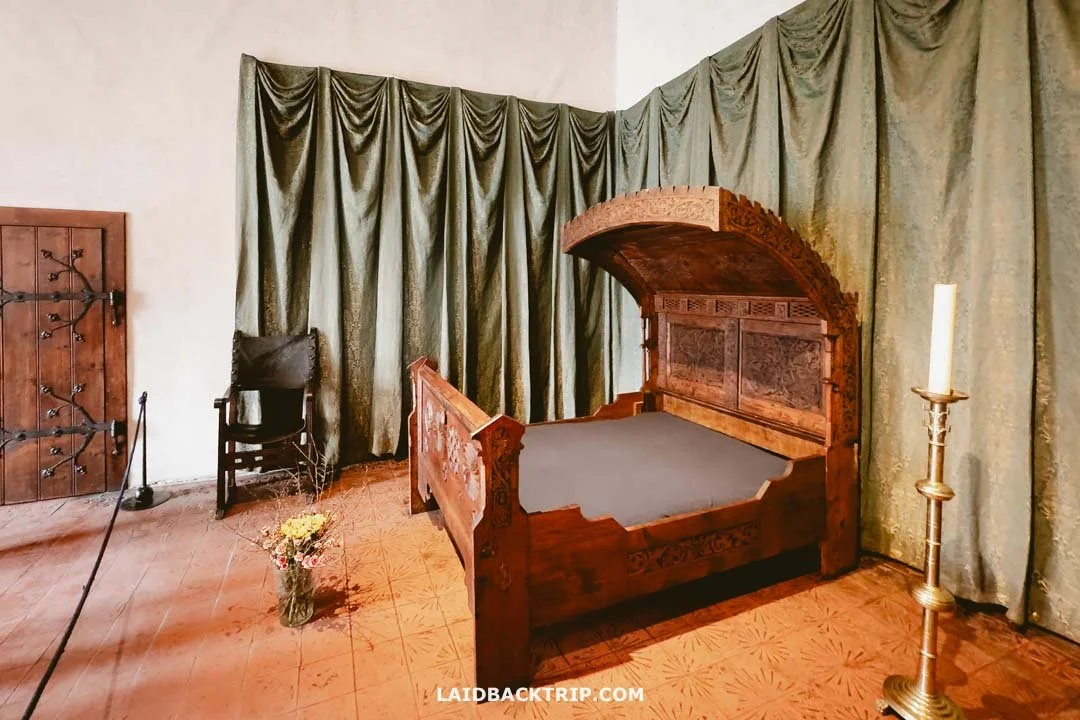
Even the Emperor's Bedchamber was very modest.
In 55 minutes, we saw quite a lot. Some of the highlights included the Courtiers Hall, used for gatherings of nobles and officials, and the Knights Hall with the St. Nicholas Chapel, which served ceremonial and religious purposes. The Marian Tower Courtyard connected different parts of the castle, and the Karlštejn Castle Deanery housed clergy responsible for the castle's spiritual life. The Emperor's Bedchamber with the St. Wenceslas Chapel was where the emperor slept, and the Audience Hall was where he received visitors.
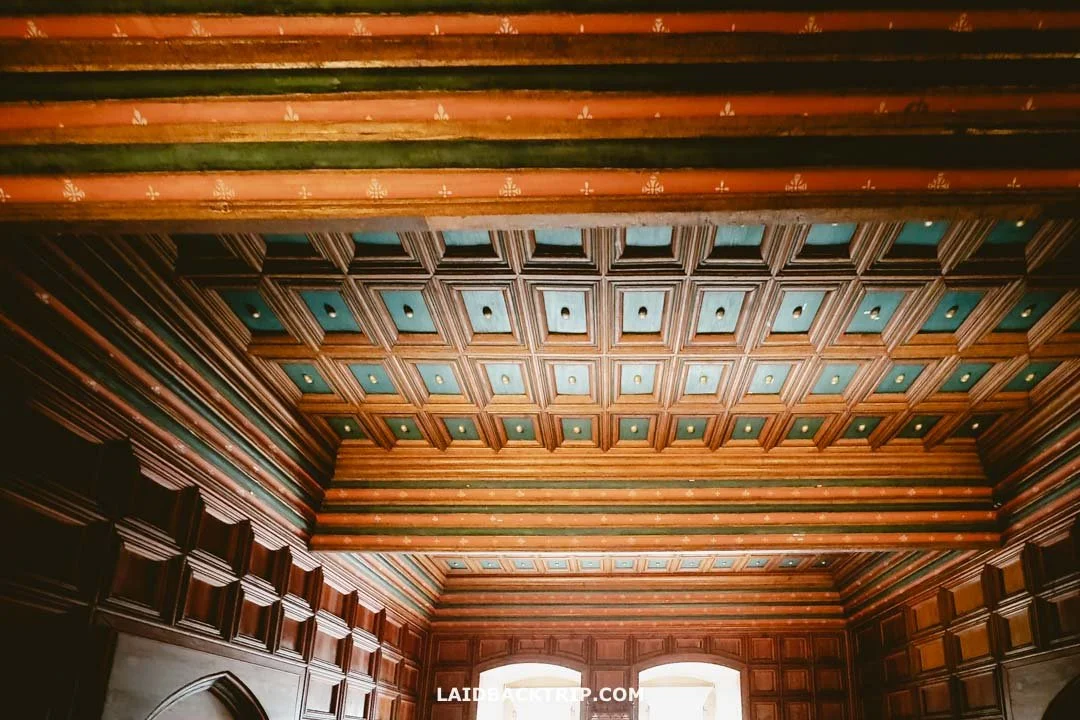
The Audience Hall features a famous dark green coffered ceiling.
The Royal Hall of Ancestors honored the ruling dynasty, while the Banquet Hall hosted feasts and celebrations. The last place worth mentioning is the Castle Treasury, which once protected important royal and religious artifacts. Here we saw St. Wenceslas' Crown, the medieval crown of the Bohemian kings. It's only a replica, of course, since the original is kept in St. Vitus Cathedral.
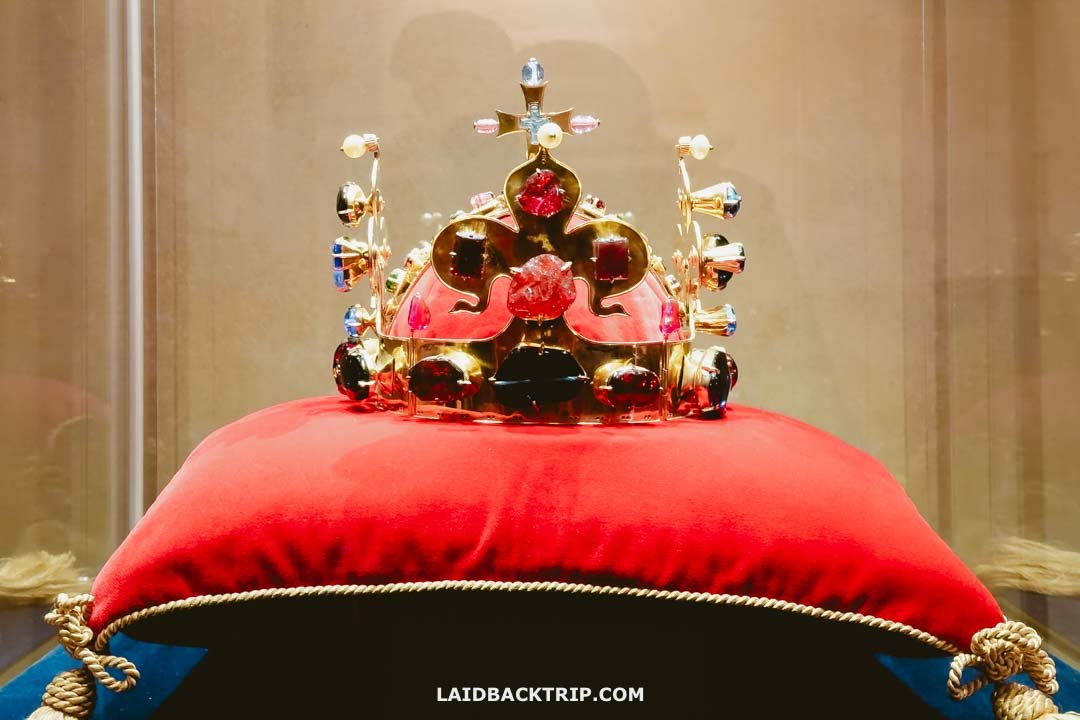
St. Wenceslas' Crown is only a copy, but it's a beautiful one.
The tour was supposed to take 55 minutes, and it roughly did. By the way, photography inside is allowed at Karlštejn, which is great. Just the day before, we visited Orlík, where photos weren't permitted, so this was a nice change.
My Favorite View of Karlštejn
After touring the interiors, we stepped back outside and slowly made our way to the main courtyard. We sat for a bit, enjoyed the warm spring day, and planned our next move as we still wanted to see Koněprusy Caves and Křivoklát. After a while, we decided it was time to walk back to our car. We didn't complicate things and followed the same route we took on the way up. But if you have time, we do have one more tip for you.
While the castle is impressive even from the village, the best viewpoint of Karlštejn is actually from nearby Císařská louka. It's one of my favorite photo spots in all of Czechia, because the view of the medieval castle from here is simply breathtaking, no matter the time of day.
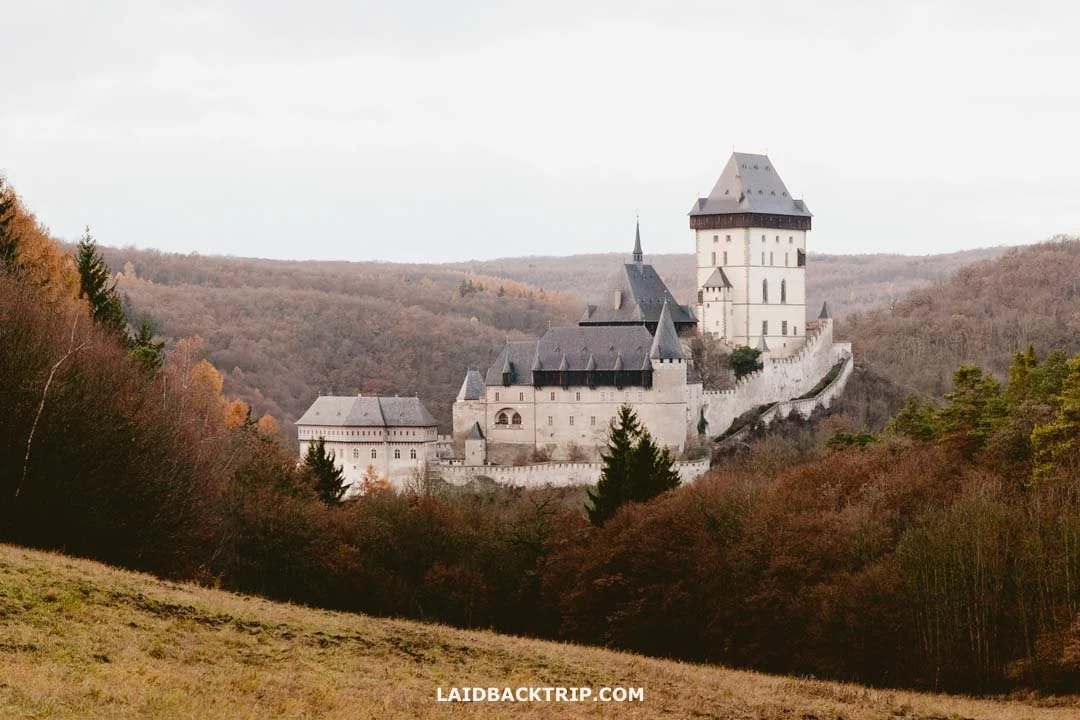
It's a short climb to Císařská louka, but for a view like this it's so worth the effort.
You can reach the viewpoint by a short uphill walk along the yellow hiking trail once you get to the Karlštejn - pod hradem signpost. We didn't go there this time, partly because we've already been a few times and partly because we had to keep moving, as we had stayed at the castle longer than planned.
The castle can also be viewed from other nearby hills or vantage points, but since this is a protected landscape area and no official trails lead to them, access is prohibited in most cases, or the views aren't that interesting. If you're driving or don't mind a 900‑meter walk from the village, there's a nice viewpoint at GPS 49.92949, 14.17808.
World Nomads provides travel insurance for travelers to cover their trip essentials, including sports and adventure activities.
SafetyWing is affordable travel insurance for backpackers, long-term travelers, and digital nomads.
How Long Does It Take to See Karlštejn
All in all, we spent almost three hours at Karlštejn. The guided tour took a little over an hour, and exploring the castle exteriors with a bit of waiting time took slightly more. We did the walk up to the castle and back in just over 30 minutes, and we also spent some time after the tour sitting in the courtyard, enjoying the beautiful day.
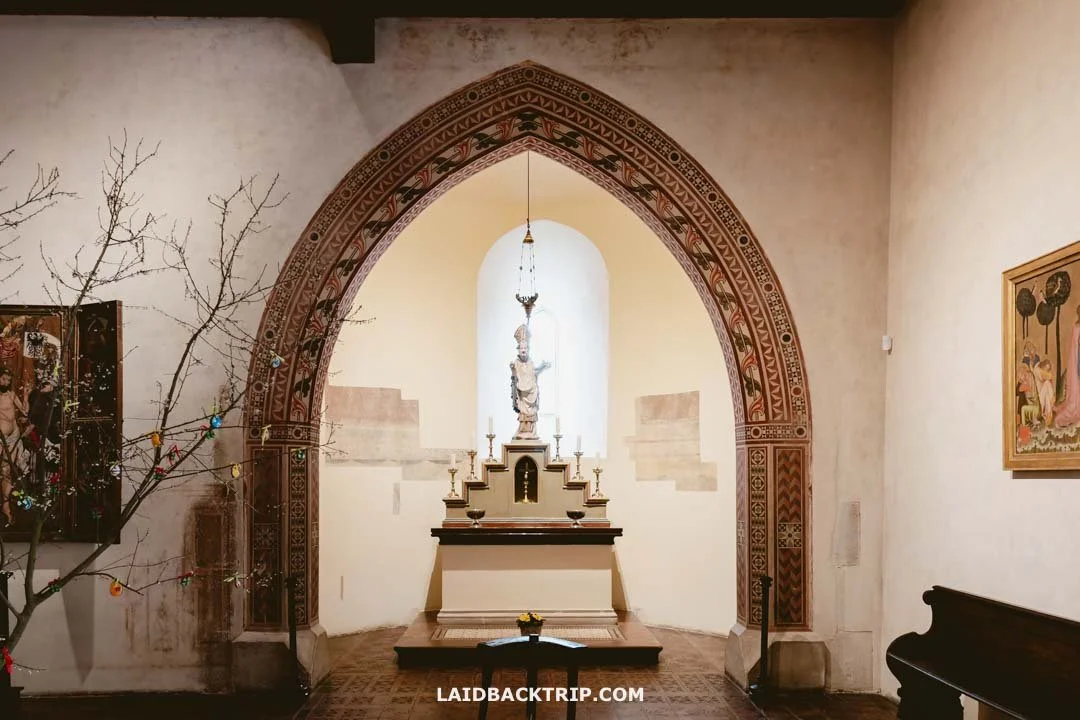
The basic tour at Karlštejn officially lasts 55 minutes.
I'd say those three hours sound fairly realistic for most visitors, give or take about half an hour. We really enjoyed the pace of our visit to Karlštejn, as we walked slowly, took our time, and even chilled on a bench, which isn't something we can always do when traveling abroad.
Of course, if you do the full castle tour, which should take 180 minutes, then you'll spend that much time just doing the tour. But as I said, the more realistic scenario for you would be the tour that takes you into the castle chapels, which adds another 35 minutes (it takes 100 minutes).
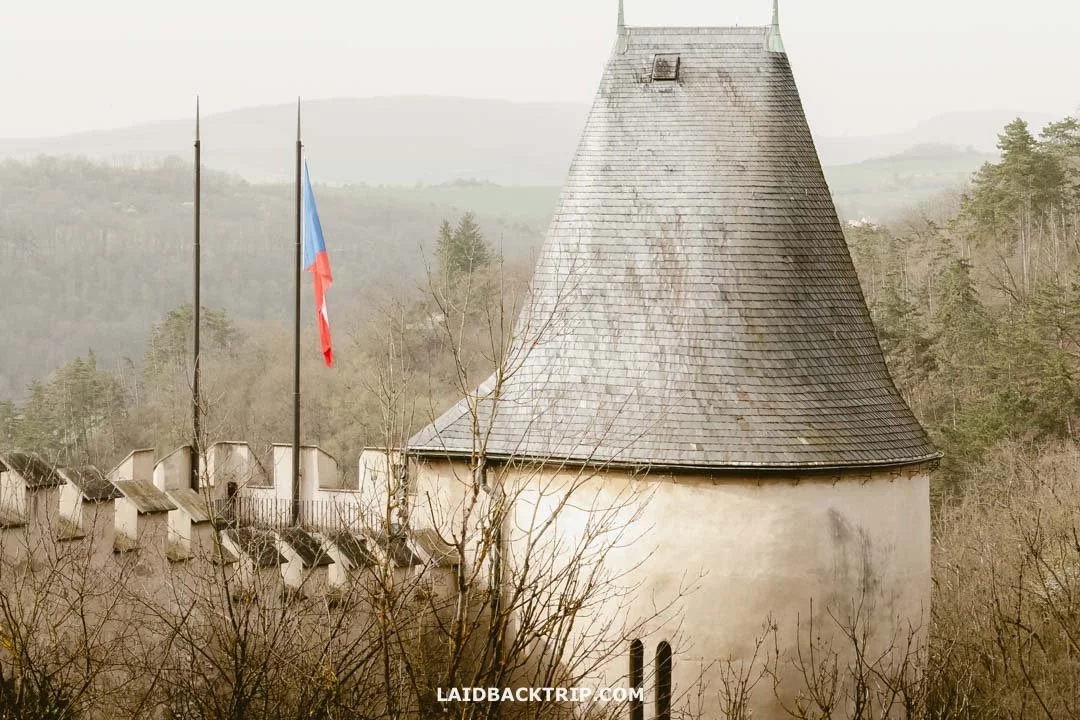
We also took some time to explore the castle grounds, including the Well Tower.
I also mentioned that we didn't spend any time in the village because there was simply nothing to do for us as locals, but for you, this might be different. No matter how much time you spend here or which tour you pick, Karlštejn is definitely worth seeing as the history, architecture, and views are just incredible.
I hope you find this guide helpful, and if you have any questions about Karlštejn, feel free to use the comment section below. And if you're heading back to Prague and still unsure what to do there, we have a quick 1‑day itinerary or, even better, a full 3‑day version ready for you.
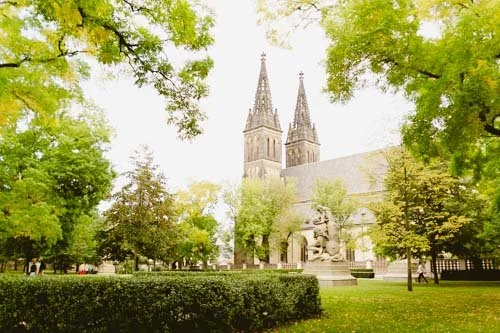
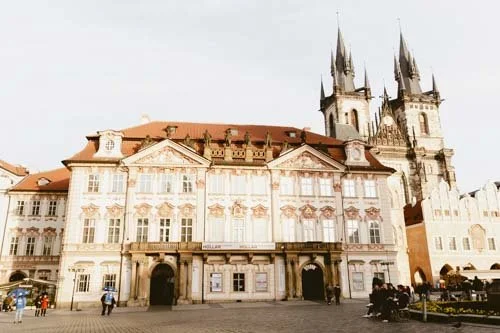
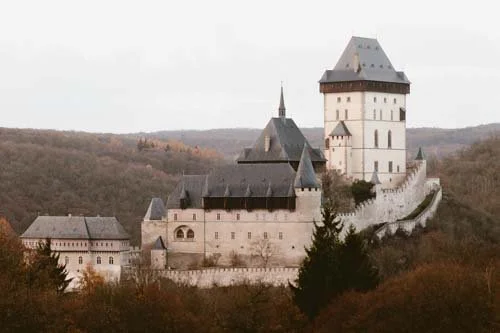

Experience Czechia's past and present through engaging exhibitions on history, culture, and nature at Prague's National Museum.