How to Visit the National Museum in Prague (by a Local)
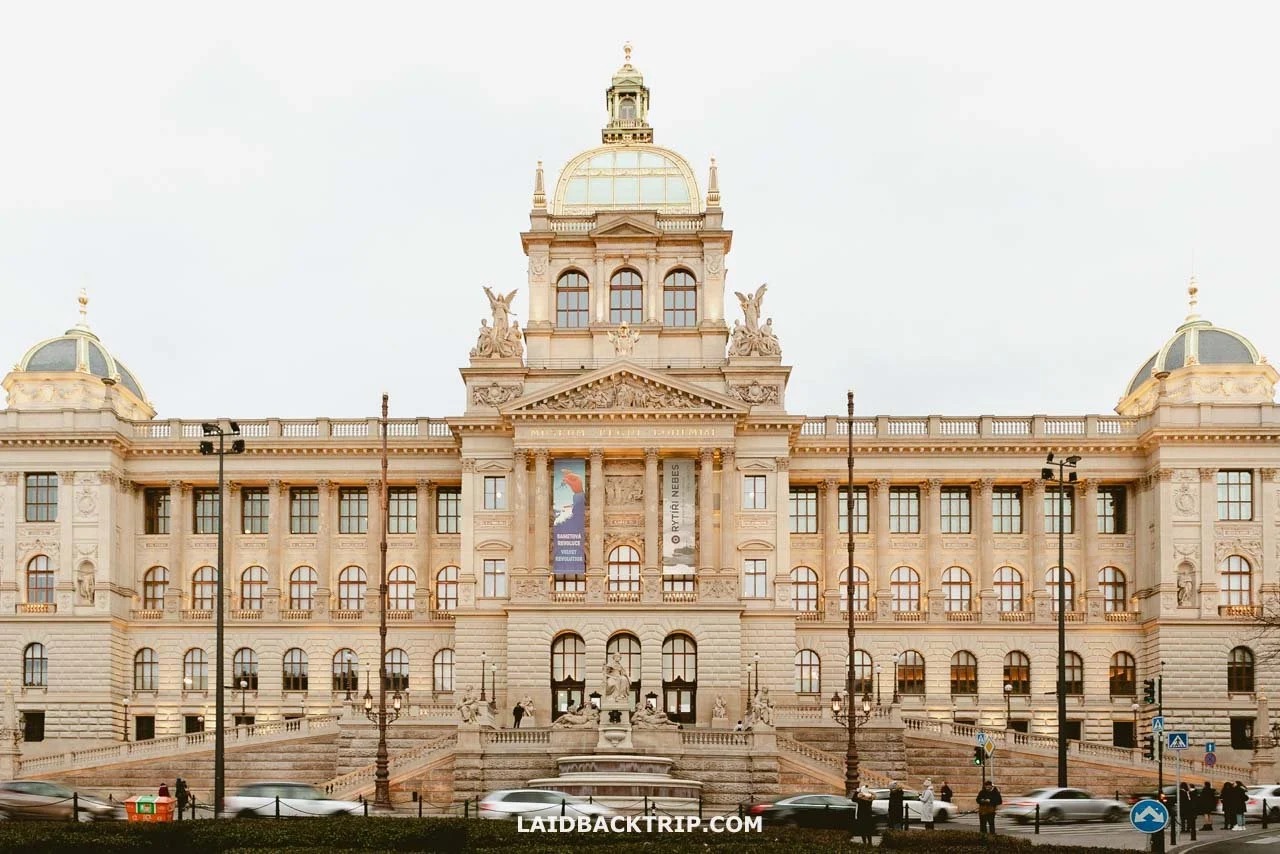
The National Museum is easily Prague's most popular museum.
As locals, we love Prague's National Museum. But is it worth seeing for tourists too? Let's find out!
The National Museum in Prague is one of those places that both Lucie and I have visited many times over the years. Sometimes it was on school trips where we had to fill out those tedious worksheets about rocks, which I still vividly remember to this day (and I had avoided that giant mineral section for years afterward). Other times it was with our parents, or just the two of us, when we could finally wander around at our own pace and check out whatever looked interesting.
And after the huge renovation and grand reopening in 2018, going to the National Museum became something we really look forward to, because it's not just a museum, it's one of the most beautiful buildings in Prague. The interiors are just as stunning as the exterior. And we've noticed that we come here way more often now.
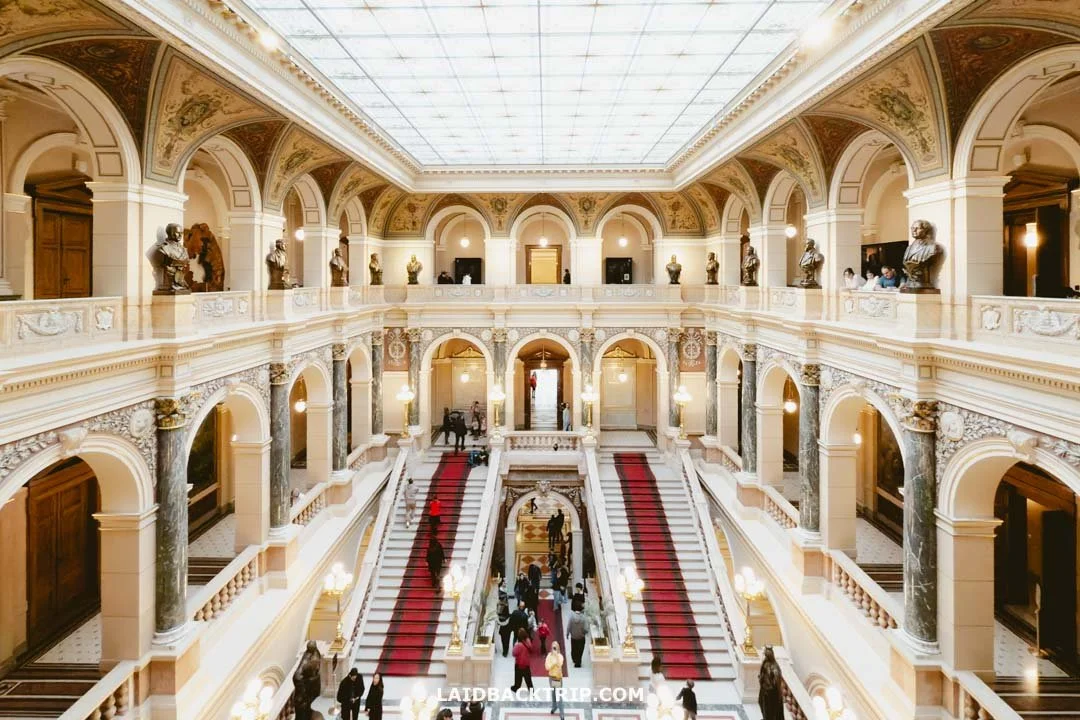
The museum is housed within stunning interiors.
Probably my favorite part about the National Museum is that there's always something new going on. Obviously, we don't go every month, but I'd say we make a trip there once a year. It really depends on what they have. And last year, for instance, we went twice.
At the start of the year, we wanted to see the new exhibition on Smetana's My Country, which was really well done and full of interesting details from his most famous work. Then, just a few months later, they announced a big exhibition on Lucy and Selam in the second half of the year, which we couldn't resist, since it's the kind of event that doesn't happen every year.
Currently, it has a big exhibition called Přemyslids: A Ruling Dynasty and Its Age, which sounds super interesting, though it's obviously more aimed at us locals and the history geeks who are into Czechia's thousand-year story. But as I said, there's always a reason to visit the National Museum.
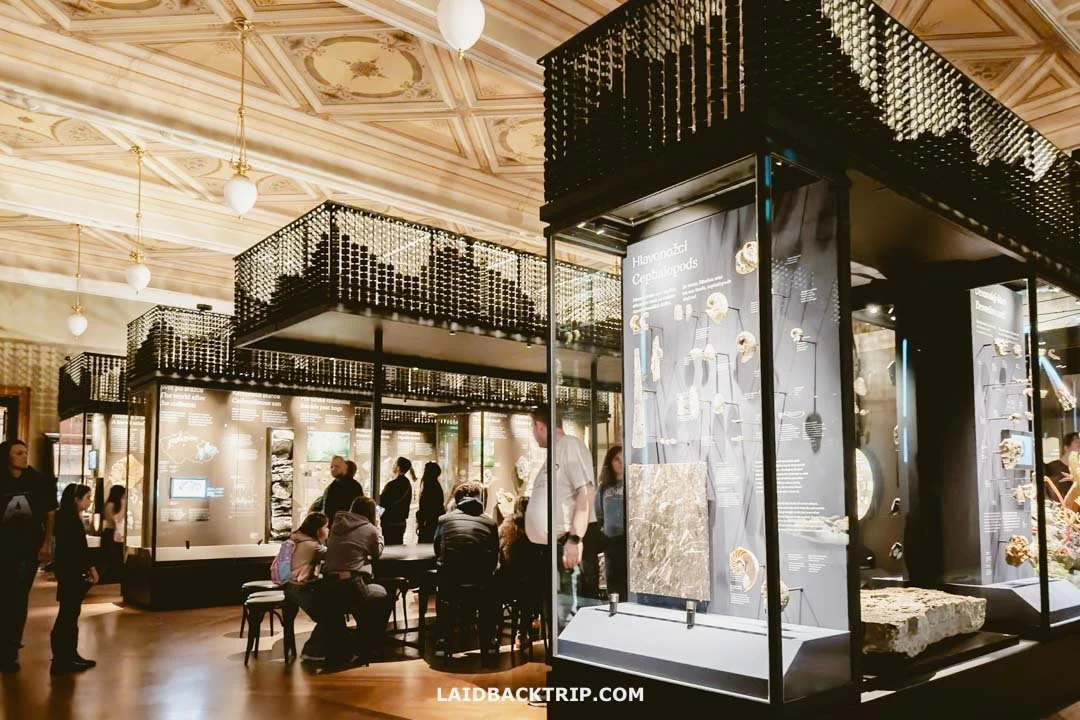
The permanent exhibitions at the National Museum focus on the nature and history of the Czech lands.
A Quick History of the National Museum
I wouldn't write a post on a museum without a quick trip into its history, but don't worry, I won't start with the fossils as the museum does. Instead, let's jump to the 19th century. Prague's National Museum was established in 1818 by Count Kaspar Maria von Sternberg and originally focused on natural science. The interesting part is that the building it's housed in today, and the reason it's so famous, didn't even exist back then.
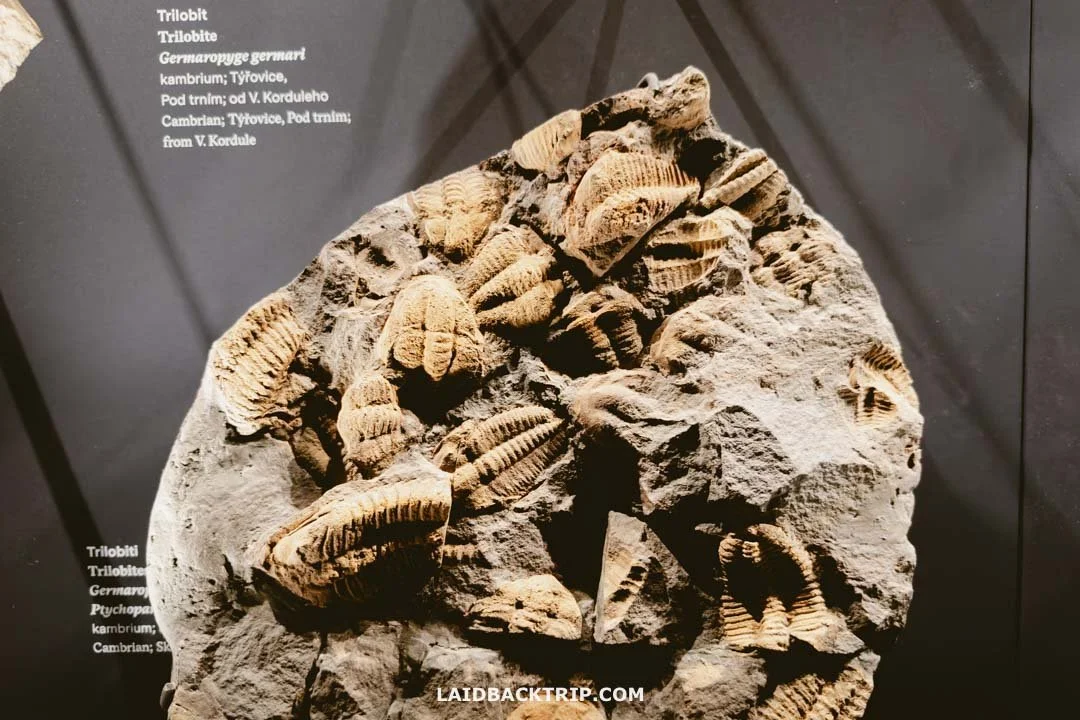
These cute little trilobites lived on the ancient seafloors of this region a hundred million years before the museum was built.
The museum was first located in the Sternberg Palace, right beside Prague Castle, which today houses the National Gallery Prague. It quickly became too small, as did the Nostitz Palace in the Lesser Town, where the museum moved next. The museum's scope expanded significantly during the 19th-century Czech National Revival, not only in the size of its collections but also in its role as a symbol of Czech identity and intellectual heritage.
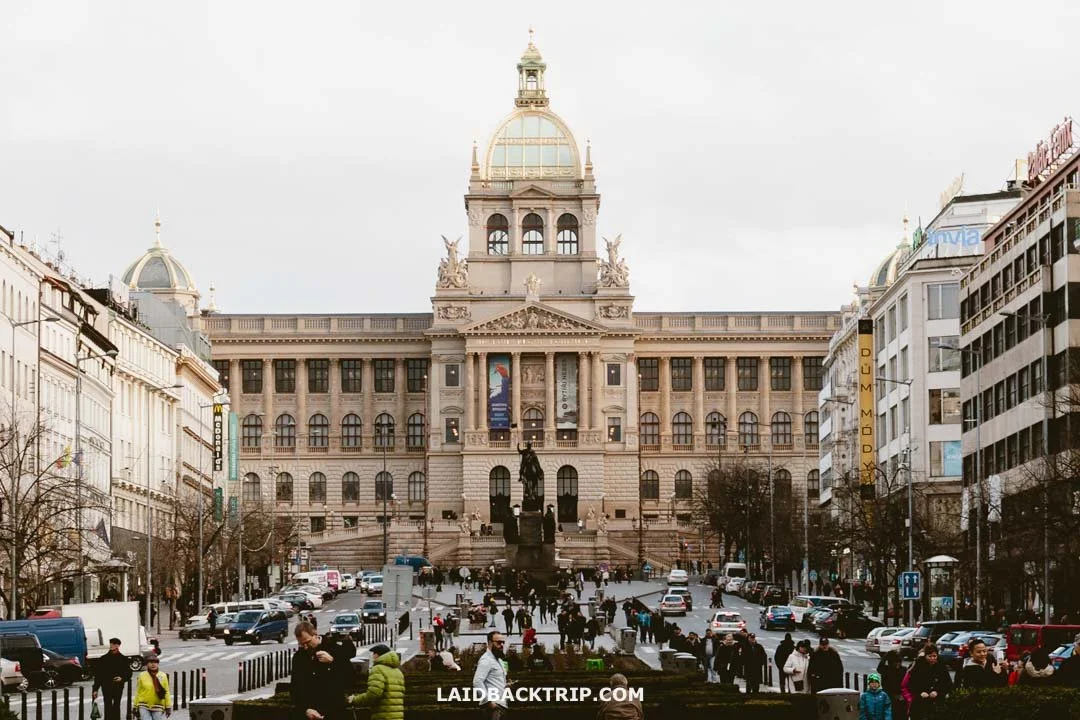
The Neo‑Renaissance building of the National Museum was built at the end of the 19th century.
To house the growing collection, it was eventually decided to build a new building in the upper part of Wenceslas Square. Designed by Josef Schulz in the Neo-Renaissance style, it was completed in 1891. Its majestic dome, ornate facade, and collections survived the turmoil of the 20th century, including a bombing during WWII and the shooting in 1968 during the Warsaw Pact invasion. Today, it's called the Main Building of the National Museum, or sometimes the Historical Building.
Because right next to it stands the New Building of the National Museum. This more modern building was originally constructed to house the Prague Stock Exchange in 1937 and was expanded between 1968 and 1973 for meetings of the Federal Assembly.
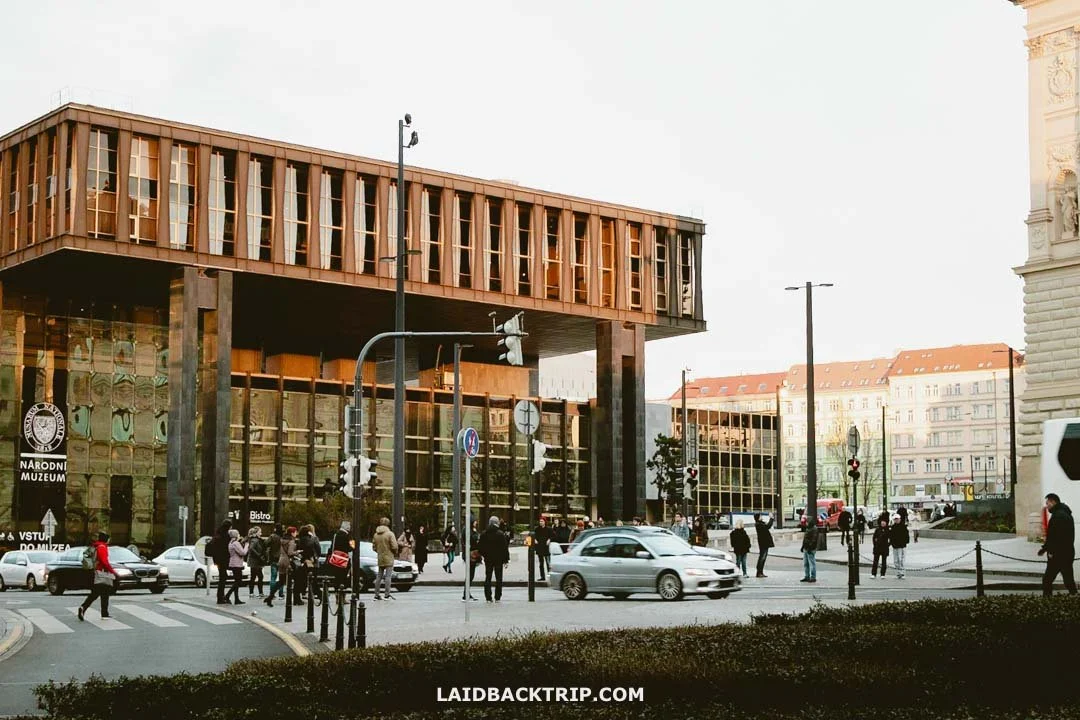
The New Museum with its brutalist architecture creates a striking contrast to the Neo‑Renaissance historic building.
After the Velvet Revolution, it was used by Radio Free Europe, and in 2009, the building was assigned to the National Museum as a permanent extension. It's used for short-term exhibitions and additional space for the ever-growing collection. During the major reconstruction, both buildings were connected through an underground tunnel. And thanks to its brutalist design, I always think it's one of the most interesting buildings in the whole city.
In the 2010s, the museum's historical building underwent a huge renovation and was closed for years. It was ceremonially reopened on October 28, 2018, on the 100th anniversary of the founding of Czechoslovakia, though the permanent exhibitions didn't open to the public until 2020. And even after that, it took a couple of years before all the permanent exhibitions returned and the collections were fully restored. That first year or two, the experience wasn't ideal because some sections were still empty, but now that everything is back in place, that's no longer an issue.
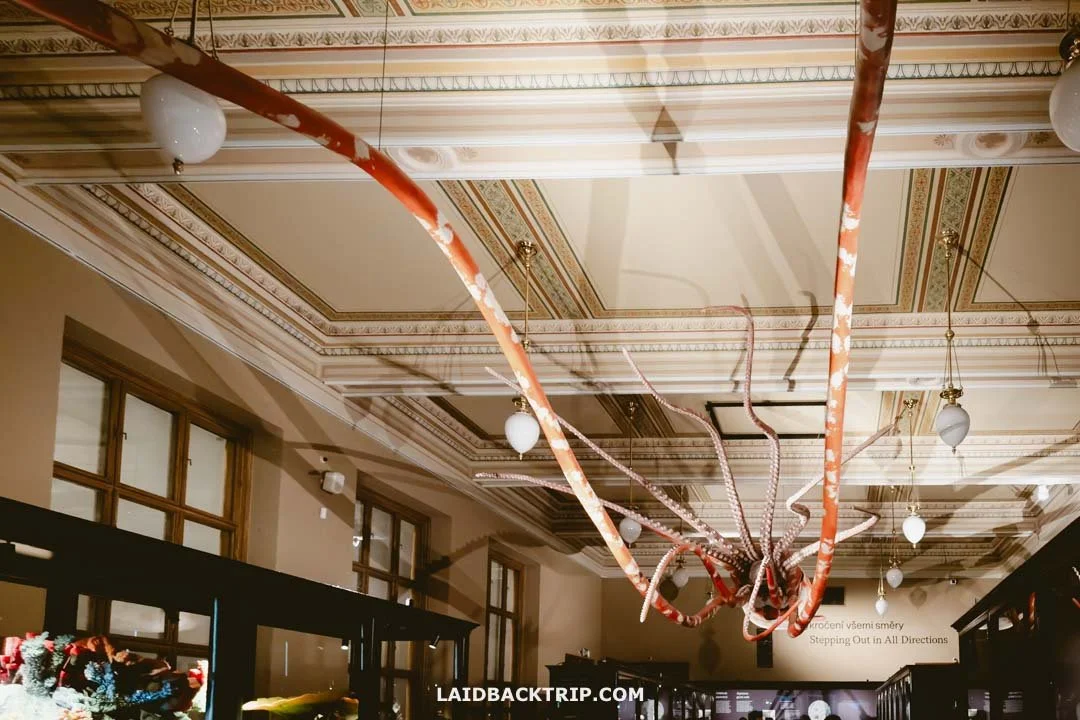
The 17‑meter‑long model of a giant squid in Miracles of Evolution is really cool.
Opening Hours
The National Museum is open daily from 10 AM to 6 PM. In case the maximum capacity is reached, you'll have to wait before you can get inside. I checked the official website, and they say it could be anywhere between 30 and 45 minutes on the busiest days, like national holidays. This has never happened to us, but we also don't go during peak times or high season simply because we can visit during quieter periods of the year.
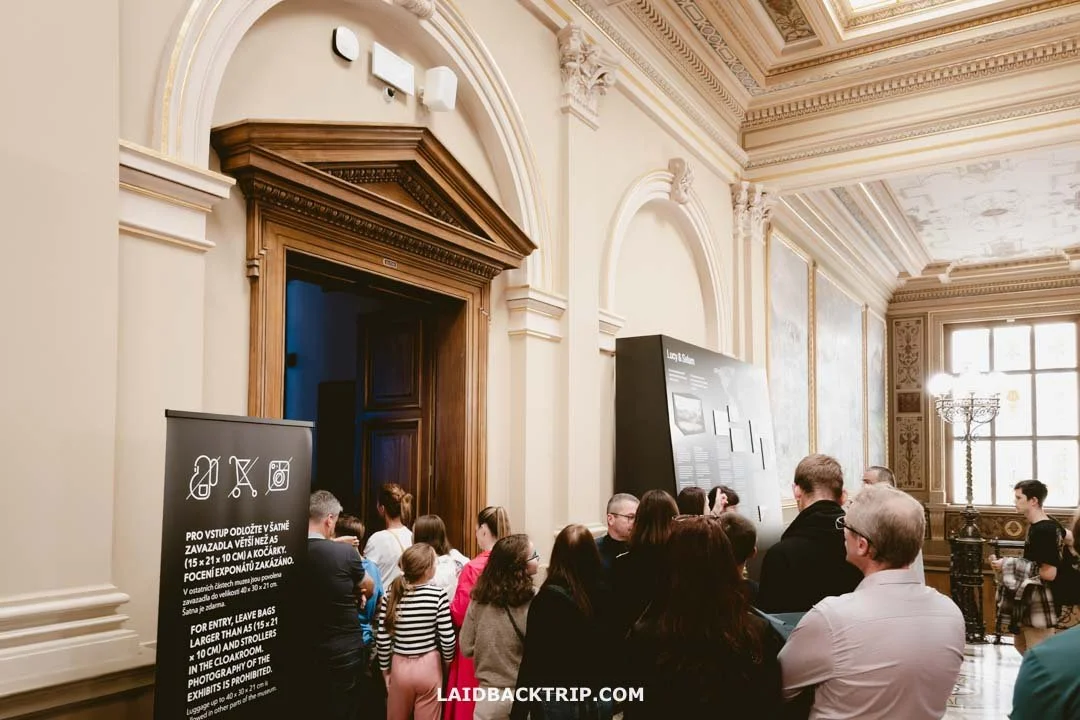
The only time we had to queue was for the Lucy and Selam exhibition.
The only time we had to wait was when we went to see Lucy and Selam for about an hour, but as I said, that was because it was a special event, and with the way the exhibition was set up, some queuing was inevitable. If possible, we try to visit in winter and come in the afternoon when the National Museum becomes less busy, timing it so we leave at closing time. The last 60-90 minutes before closing are usually our favorite time in the museum, as the less popular sections (often in the New Building) are very quiet.
Entry Fee to National Museums
The ticket to the National Museum is 360 CZK per person. If it's low season, we just get a ticket on the spot, but more often we buy the ticket online because it's more convenient and we don't have to worry about queues if we go at a busy time. This is the museum's official site, and they also sell tickets through GetYourGuide if you prefer that platform.
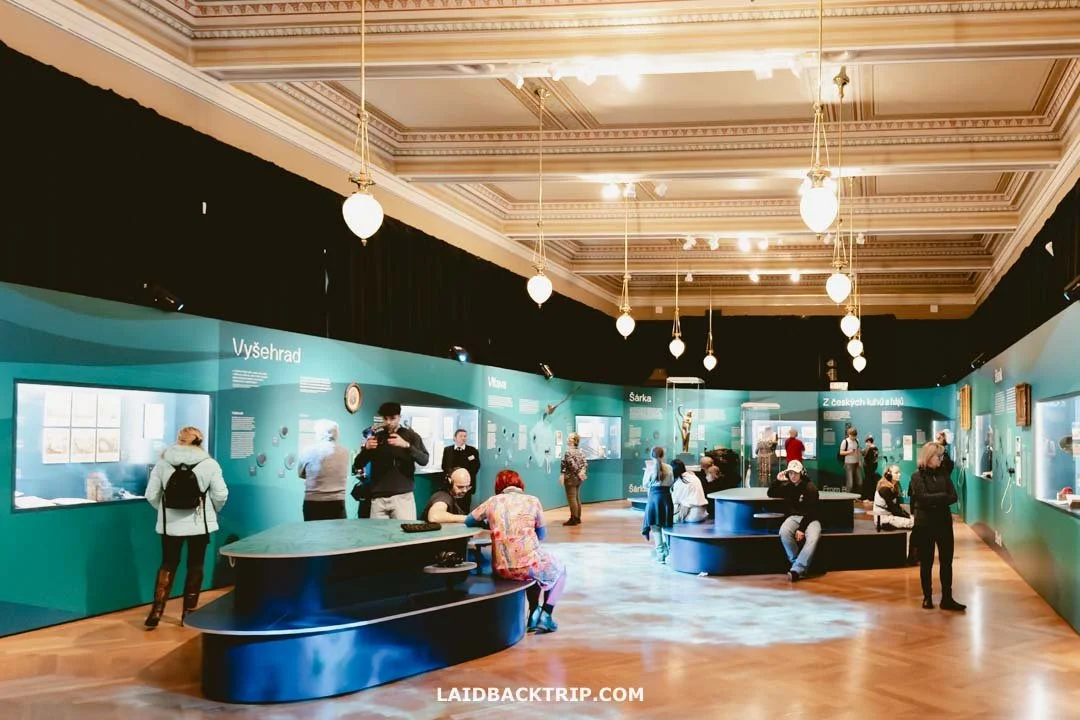
A ticket to the National Museum also normally includes temporary exhibitions like the one about Smetana's My Country.
The interesting part is that the online tickets are valid for a one-time entry within 30 days from the date of purchase, which can be convenient for anyone who wants to keep their itinerary flexible. Had we come to Prague for a few days and known this, we would definitely have planned the visit for whenever we were in the mood. If it were a sunny day, we'd want to be outside, maybe visit Vyšehrad or Petřín, and save the museum for the next day when the forecast promised clouds and rain.
During the reservation process, double-check that you've clicked on the Museum Complex of the National Museum, because they sell tickets to almost a dozen other museums on the same page (since the National Museum manages them). I mean, that regional puppet museum in Prachatice looks interesting too, but it's a bit out of the way. The last time we went, we had to book a special ticket with timed entry to see Lucy and Selam (the exhibition was called People and Their Ancestors), but that was because it was a super rare event.
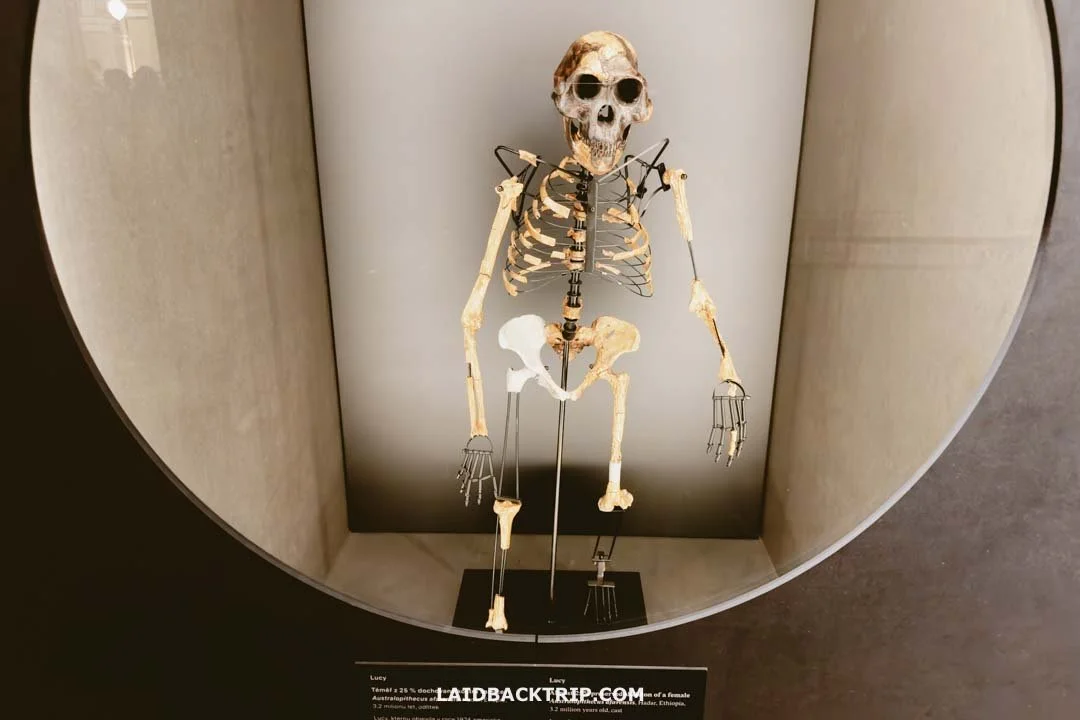
For the Lucy exhibition we had to book a special ticket.
What to See in Prague's National Museum
The complex is now split between the historic Main Building and a modern New Building connected by an underground multimedia tunnel. As a first-time visitor, I'd focus on the Main Building, since this is where you'll find all its staple collections and the stunning interiors. I'm not saying you shouldn't make a trip to the adjacent New Building, too, but I'd say it's not essential to the visit.
What I think is worth a few minutes of your time is stepping back and enjoying both buildings from the outside. Obviously, the Neo-Renaissance architecture of the old building is more striking, and the view with the Statue of Saint Wenceslas is one of my favorites in all of Prague (I always pretend that Magistrála, that busy highway, isn't there).
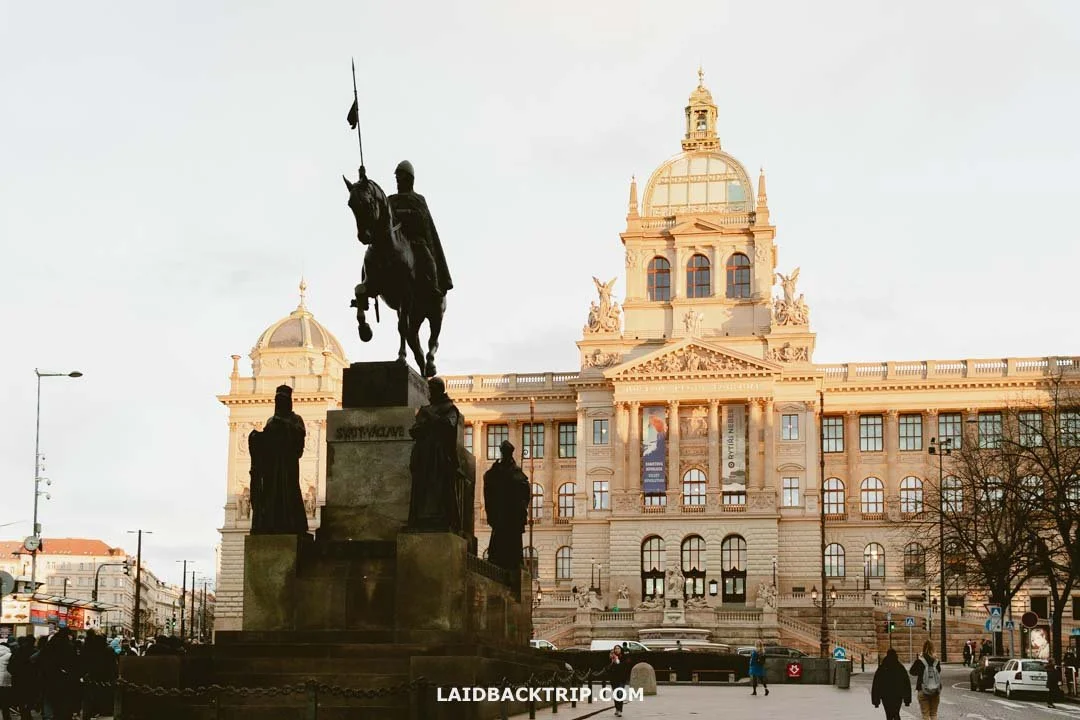
St. Wenceslas's statue and the National Museum create one of Prague's most iconic views.
The same goes for the view from the stairs right before you enter the building. Here, don't forget to turn around and enjoy the view of Wenceslas Square with the very same statue from behind.
This upper section of Wenceslas Square has, besides tourists, some sketchy characters, though they usually keep to themselves. And while it's also not as crowded as the spot in front of the Astronomical Clock, stay vigilant for pickpockets.
World Nomads provides travel insurance for travelers to cover their trip essentials, including sports and adventure activities.
SafetyWing is affordable travel insurance for backpackers, long-term travelers, and digital nomads.
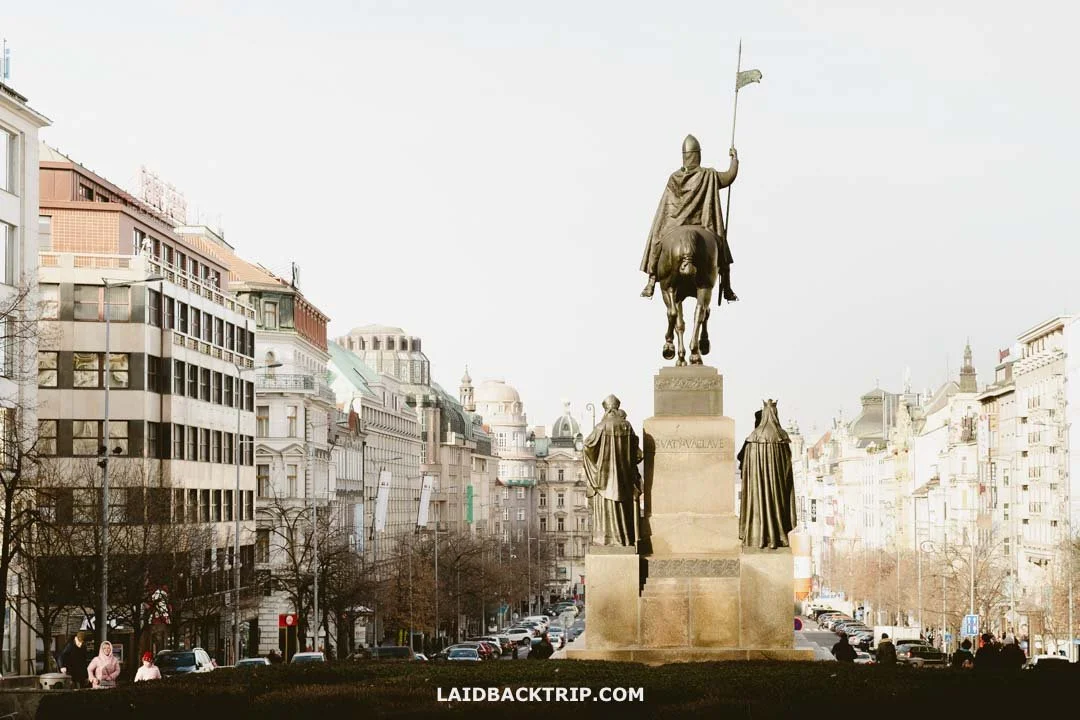
The view of Wenceslas Square from the museum is pretty cool too.
And as I mentioned earlier, the New Building might look almost ugly at first sight (okay, maybe at the second and third too), but the longer I stare at it when passing by, the more it fascinates me.
It always seemed to me that the museum was meant to be explored on your own, but since they created the interactive app National Museum in Your Pocket, which basically walks you through the museum, it's even easier for first-time visitors. It has the museum map, the option to buy tickets, and tons of other useful features, as well as hours of narration.
I do have to say that while the app is great, and that augmented reality animation of the Fin Whale is amazing, I still prefer the regular experience of exploring the museum without a phone in my hand. By the way, the museum has free Wi-Fi in case you forgot to download the app.
Another useful tip I want to share is that the museum has lockers (we never used them, but according to the museum's rules, they won't let you in with a bulky backpack) and a cloakroom (which we used in winter to leave our coats).
The last thing worth mentioning is that the museum has two entrances, one for each building. But as I already said, I'd just go for the main entrance to the Main Building, which is through the doors at the center of the building, once you climb the stairs beside the fountain.
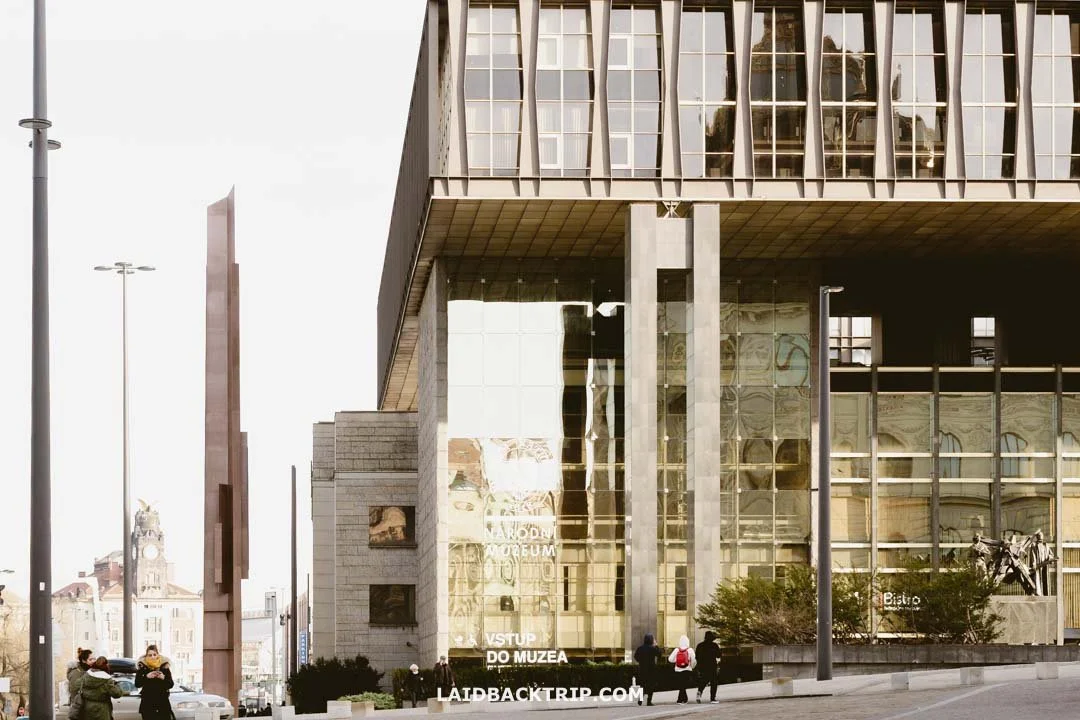
The entrance to the New Building is about 100 meters to the left of the entrance to the historic building.
Interior Architecture
Once inside, the first thing I'd do is postpone the museum experience for a moment and just focus on the stunning interiors. I have to say that after the renovations, it really does feel like you're stepping into a palace rather than a museum. The interiors are filled with columns, statues, busts, lights, stuccos, frescoes, paintings, glass ceilings, and tons of other little details. But the main highlights to focus on here are the Main Staircase, the Pantheon, and the Cupola.
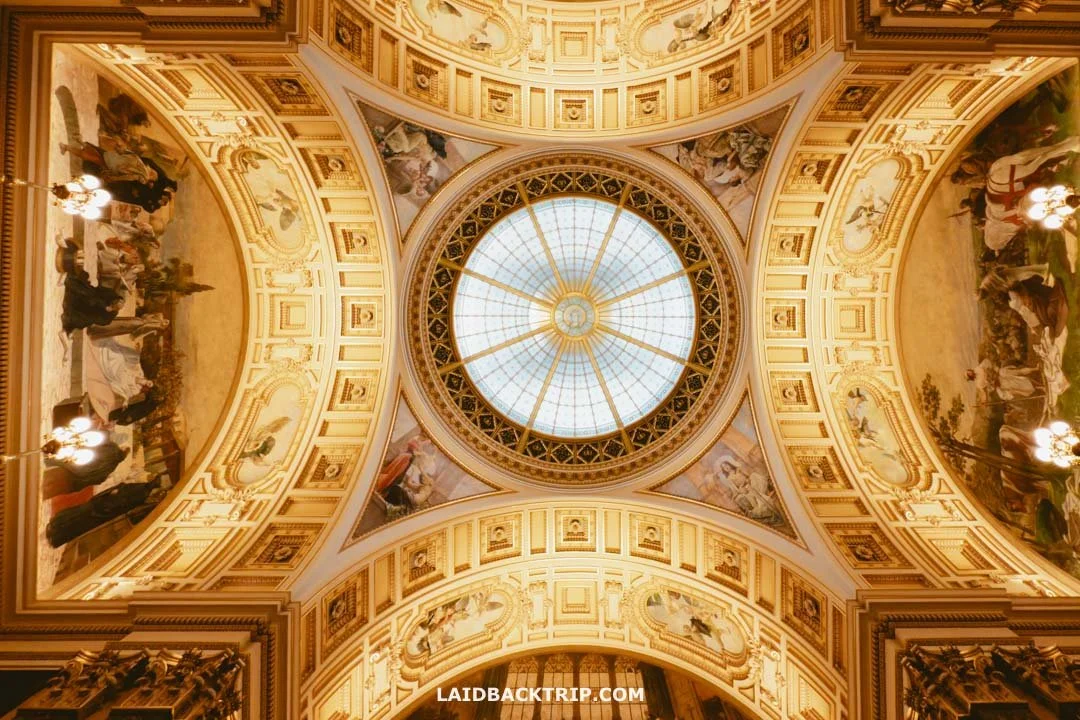
The dome of the National Museum is just stunning.
The Main Staircase
The monumental central staircase is a masterpiece of Neo-Renaissance design, featuring intricate frescoes and gilded details. It's the first thing almost every visitor sees, since it's right past the ticket check. Just a moment earlier, I listed all the decorative features within the museum, and pretty much all of them can be seen right in this area. It's simply one of those sections where everyone stops and takes photos.
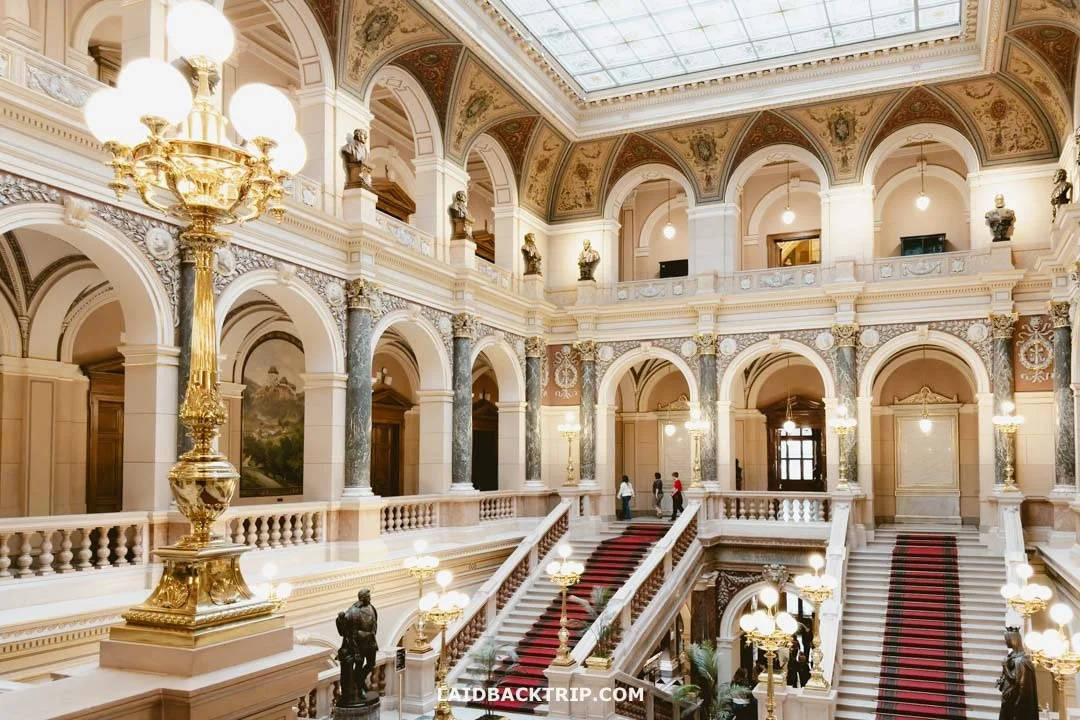
Taking the main staircase always makes me wonder if I'm still in a museum or in a beautiful palace.
The Pantheon
Located under the central dome, this is the museum's most prestigious space. It's decorated with statues and busts of prominent figures from Czech history and science. It's very different from the ancient Pantheon we've seen in Rome, because this is mostly a ceremonial hall, but it has one feature the Italian one doesn't have. You can actually climb to the cupola above it.
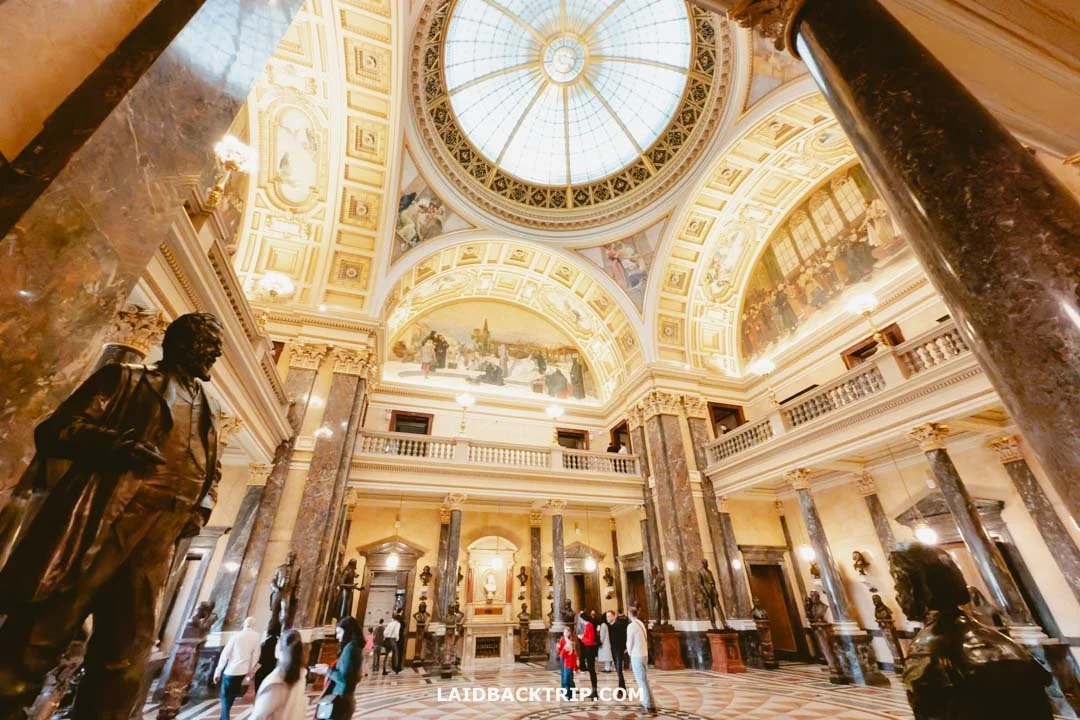
I'm definitely not the only one who thinks the Pantheon is the museum's most beautiful area.
The Cupola
Yes, that wasn't always the case, but after the renovations, you can walk up into the glass dome for one of the best panoramic views of Wenceslas Square and the Prague skyline. I have to say this is another highlight of the museum. The last time we were there, we visited on a mostly cloudy winter day and managed to climb up around sunset. It was perfect timing, because the sun appeared for its final moments of the day and beautifully lit everything around us. Prague has some amazing sunset spots, and this one is definitely one of them.
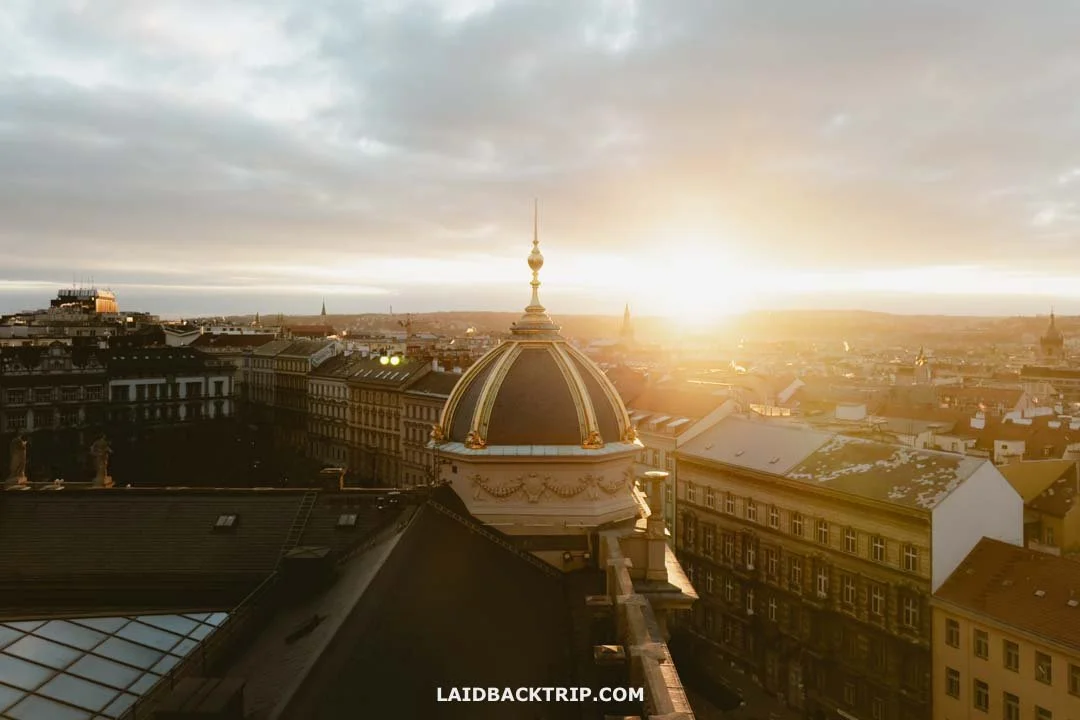
We timed our visit to the museum's cupola so we could catch the sunset.
Natural History and Czech History Exhibitions
Now it's time to explore the collections that make this building the National Museum. The museum houses millions of items ranging from mineralogy and paleontology to historical artifacts, serving as a chronicle of the Czech lands. I know this description doesn't sound as exciting as it probably should, but if you want to learn more about Czechia, this is a great place to start.
Miracles of Evolution
This is one of the most modern and popular sections, holding a large collection of animal specimens, including the museum's famous 22-meter-long Fin Whale skeleton suspended from the ceiling. Obviously, the main highlight is the big whale (and the second largest animal species on Earth), but the whole section is really interesting, and I like returning here even though we've been several times. I also think the way the exhibition is done is great for families with kids, as it has lots of interactive elements.
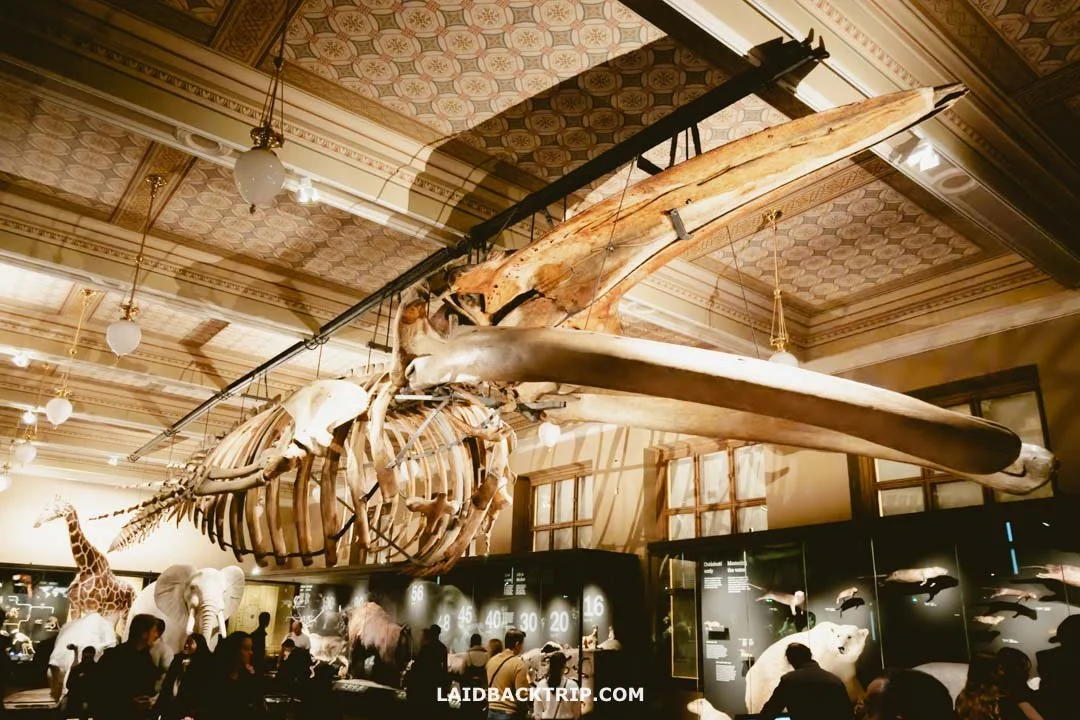
The Fin Whale skeleton hanging from the museum's ceiling is more than 22 meters long.
Windows into Prehistory
This area covers life from the Paleozoic era to the Quaternary. Notable exhibits include the Burianosaurus, the only dinosaur species found in the Czech Republic, and 430‑million‑year‑old plant fossils. And I have to admit that this section is, at least for me, a bit harder to sell to people who aren't really into prehistoric times.
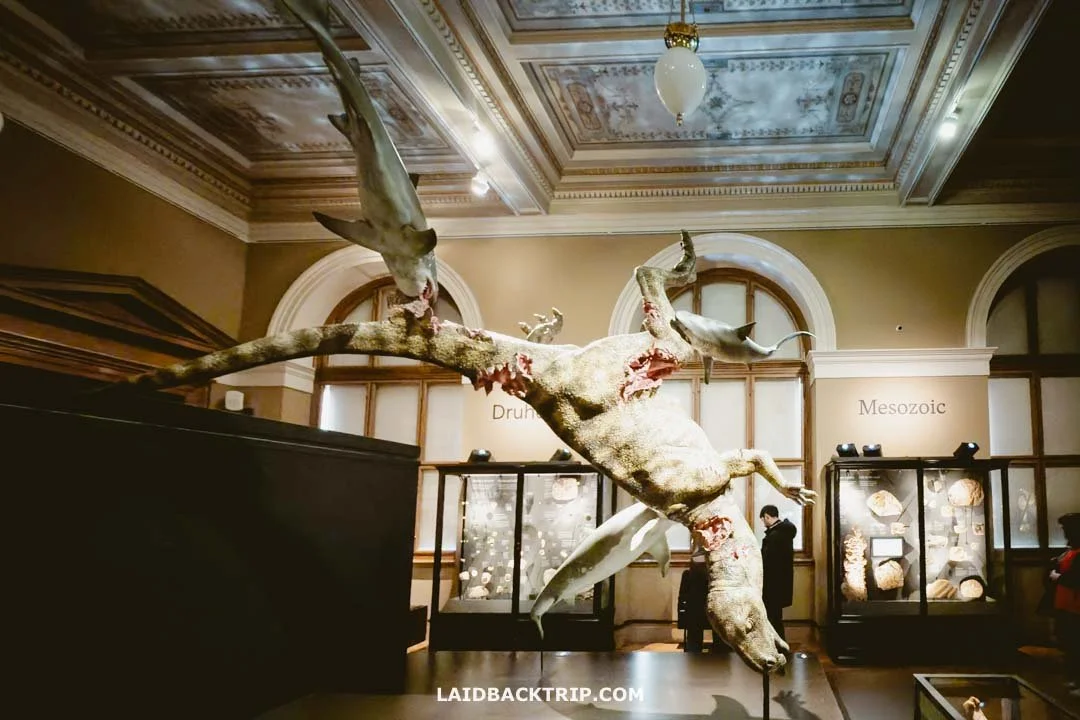
Burianosaurus augustai is the only dinosaur ever discovered in the Czech Republic.
But even though it might seem like more general information, the exhibition is designed to focus on the area that covers today's Czechia. Take the plant I just mentioned. It's the world's oldest plant macrofossil and was found just outside Prague (not that far from the famous Karlštejn, by the way). The trilobites and tons of other fossils discovered by Joachim Barrande are from creatures that lived in the seas that once covered Prague.
Hall of Minerals
This is a remarkable room containing over 4,000 minerals from around the world, displayed in original 19th‑century wooden showcases. I have to admit that when I was a kid, this was the most boring room in the world, but now that I'm older (and wiser), I find it honestly quite fascinating.
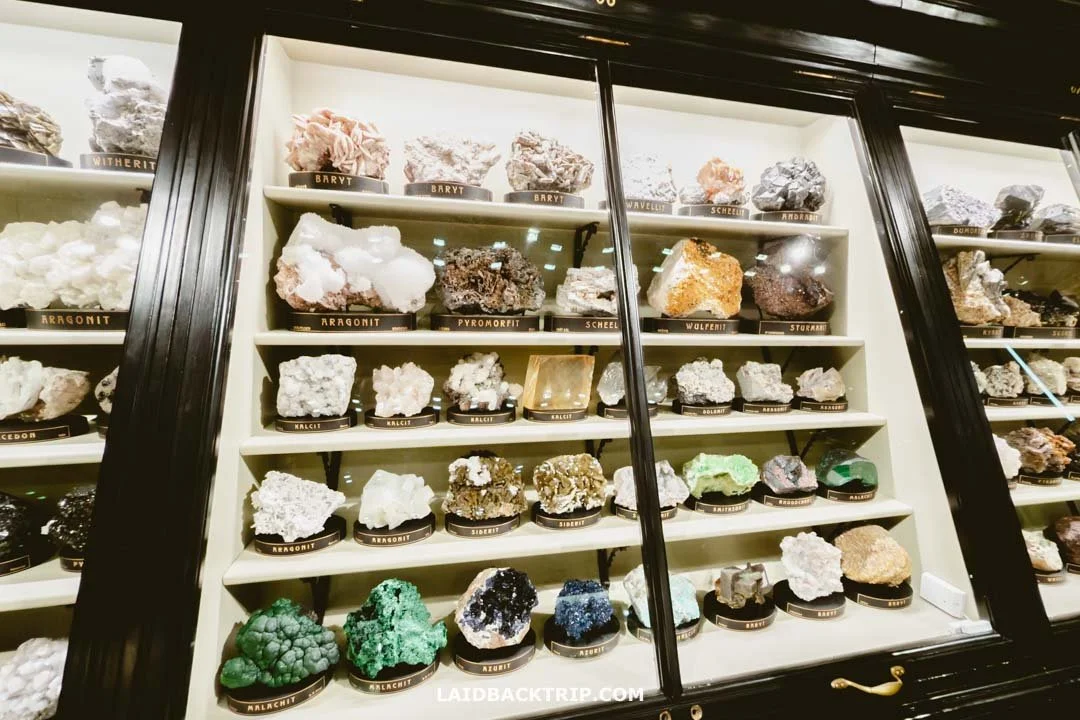
The Hall of Minerals is probably the most extraordinary room in the entire museum.
No, really, seeing so many amazing minerals in one place is one of the museum's highlights. And the fun fact is that the museum has more than 100,000 minerals in its collection, but only a fraction of them are actually displayed.
History of the Czech Lands
This section spans the history of the Czech lands from the 8th century to the outbreak of World War I. The highlights here are jewelry from the Great Moravian Empire, 15th‑century Hussite weapons, and an 18th‑century archbishop's carriage. And obviously tons of information on Czech history.
Whenever I'm here, I always have to admit how much history I've forgotten, and this is one of the best ways to refresh all that high‑school knowledge. And if you're coming from an English‑speaking country, pay attention, because you'll learn some really cool details, like the fact that the word howitzer comes from the Czech word houfnice, used a lot by the Hussites.
Moments of History
In the underground corridor connecting the two buildings, there's a 56‑meter‑long multimedia projection that illustrates the history of Wenceslas Square and the museum over the last century. For my taste, the whole corridor is a bit too heavy on the multimedia side, as I'd probably prefer some good old info panels, but obviously that's just me (and probably really is, because Lucie really liked it).
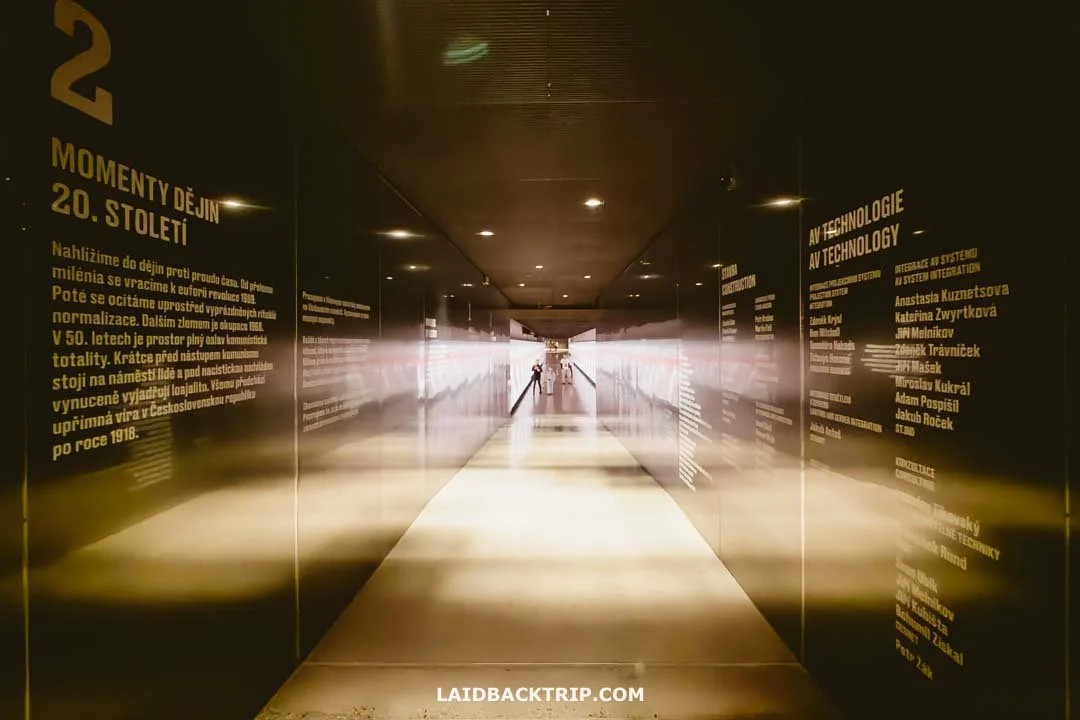
Both the historic and modern museum buildings are connected by this underground passage.
History of the 20th Century
Located in the New Building, this covers the more modern, often turbulent history of the Czech Republic (it was obviously Czechoslovakia in this period), including the World Wars and the communist era. When we were here last time, this section was so quiet compared to the Main Building that I enjoyed the atmosphere more than the exhibition itself.
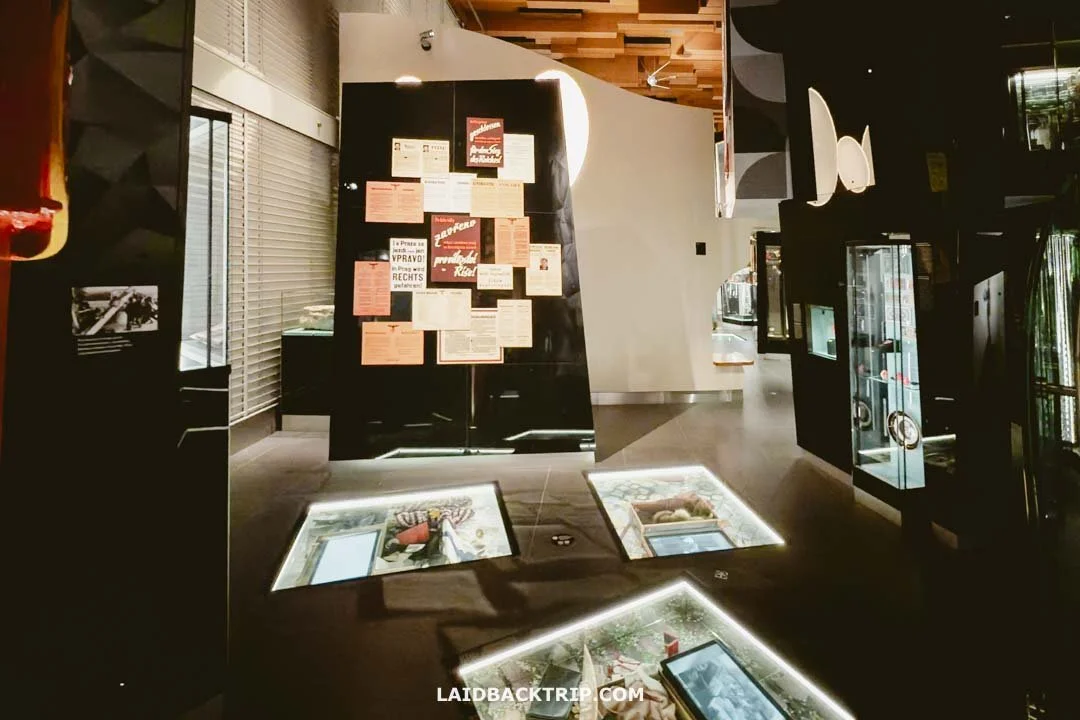
The New Building covers the history of the Czech Republic throughout the 20th century.
Which is really not fair to say, because it's done very differently from the classic exhibitions, as it's more like a walk‑through gallery rather than the traditional museum rooms of the historical building. And if you want to learn more about our more recent history, this is a really interesting way to see it.
Children's Museum
The 2nd floor of the New Building has a permanent space for children, combining interactive methods with authentic collection items. Topics include the Paleozoic Sea, Mammoth Hunters, the Middle Ages, and Discovering Nature's Secrets. I have to admit that we haven't visited this section for obvious reasons, but if you bring your kids along (it's aimed at younger kids than Miracles of Evolution), this is definitely the place I'd check out.
How Much Time to Set Aside for the National Museum
So, last year, we went twice, and both times we spent just over three hours in the National Museum. The important part was that both times we went with a clear idea of what we wanted to see. And both times we wished we could stay longer. And I'm saying that with the notion that we didn't come here to see the permanent exhibitions, though each time we took a quick peek into one of those sections, too.
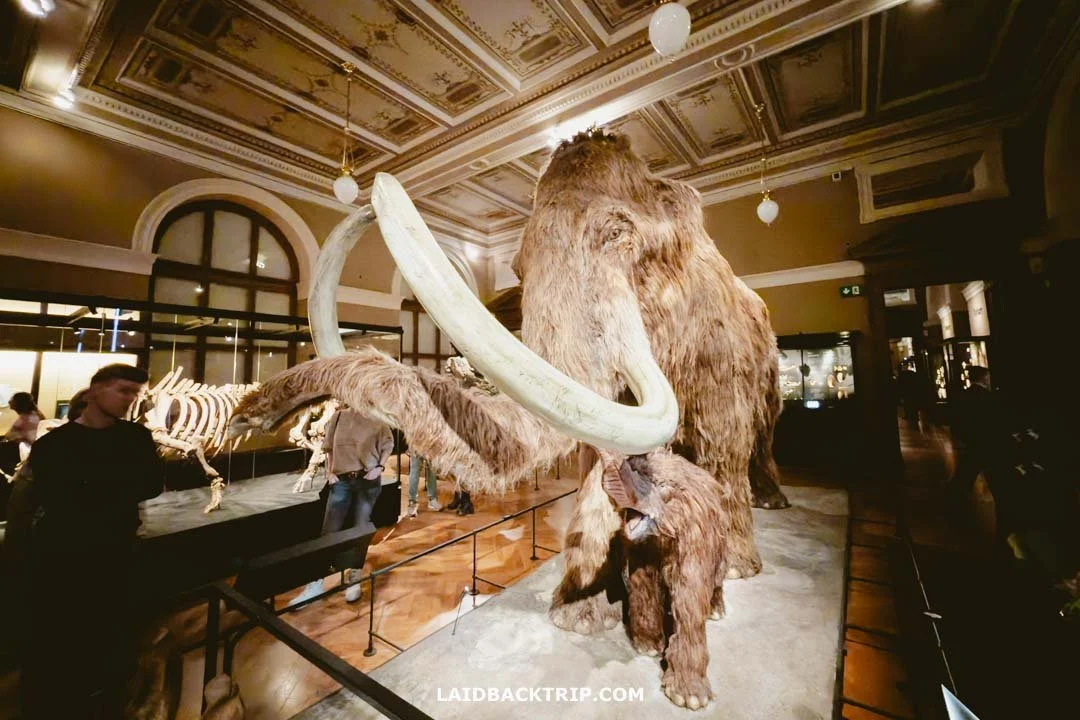
The permanent exhibition Windows into Prehistory shows that Czechia had a big population of mammoths during the Ice Age.
The National Museum is the biggest museum not just in Prague but in all of Czechia, and had we come here for the first time, we would definitely set aside more than those three hours. I'd say four to six hours sounds like a much more realistic plan, as we'd also want to fit in something like a 30‑minute break to get a snack and take a moment to regain some energy. I know this might seem like too much, but I do think that this amount of time would allow you to see the museum in a fairly relaxed way.
I can easily imagine that it's possible to stay a full day in the National Museum, but from my own experience, I know that this probably wouldn't be very enjoyable for me. But since I live in Prague, it's easier for me to say that, because I can come back anytime I want. So if you're really into museums, then feel free to spend as much time here as you need.
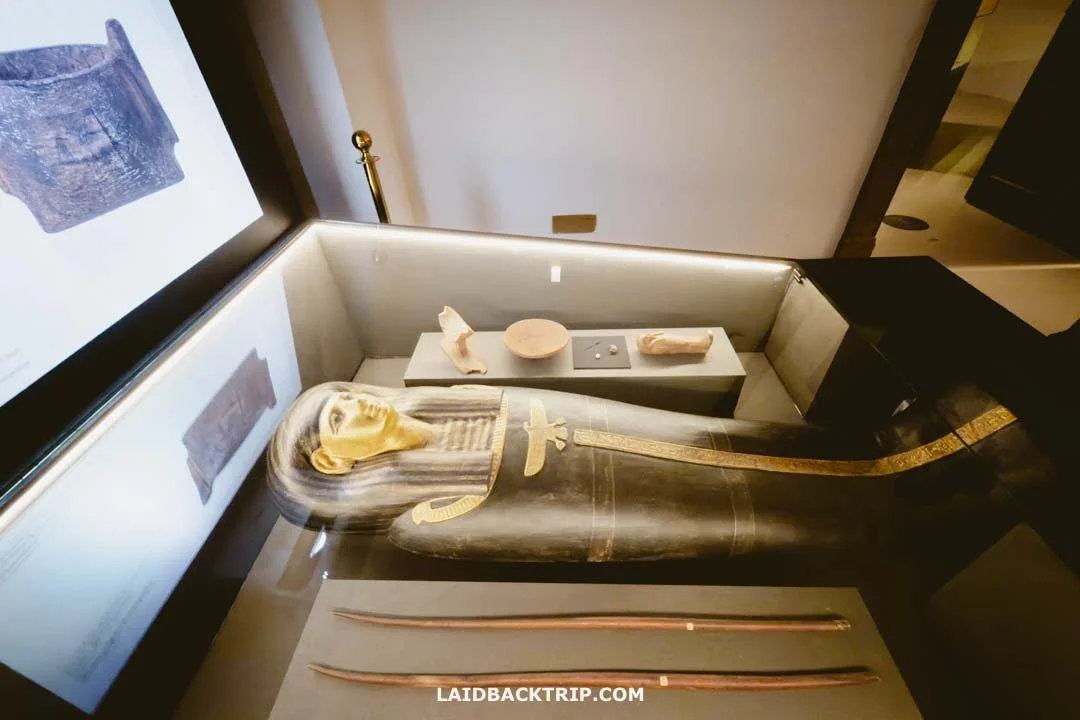
We really love coming here for temporary exhibitions like the one about Mysterious Nubia.
So as I said, anything between three and six hours should work for the National Museum. Now the big question remains whether it's worth going inside if you have less time, and that's something I really can't answer, because it depends on what you want to see. If it's an exhibition like the one on Smetana or Lucy and Selam, then it's doable, but if you're coming for a general visit, it's simply not enough. I'm not saying you won't be able to see something interesting in an hour or two, but the visit would be too hectic for my taste.
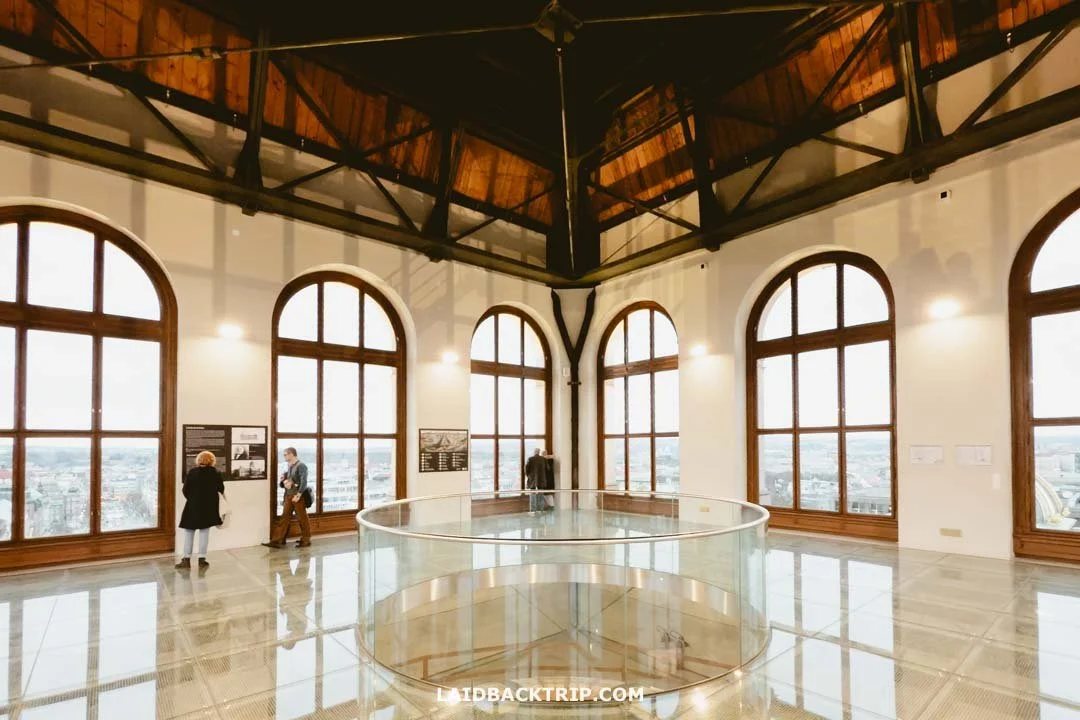
Make sure to climb to the cupola for some really beautiful views.
The same year, we went to the Louvre and the Vatican Museums, which were, unsurprisingly, given that they're among the most famous museums in the world, just amazing. Prague's National Museum is definitely not as renowned and much smaller, but it's also not as overwhelming.
I have to say that I found the whole experience much more relaxing. It has some really interesting exhibits, it's way less crowded, and my favorite part is that, unlike those two, it doesn't have that sense of urgency to see the "main highlights" like we felt when visiting the big ones. Here you can just pick what interests you most without feeling like you're missing out on something, which I found almost soothing.
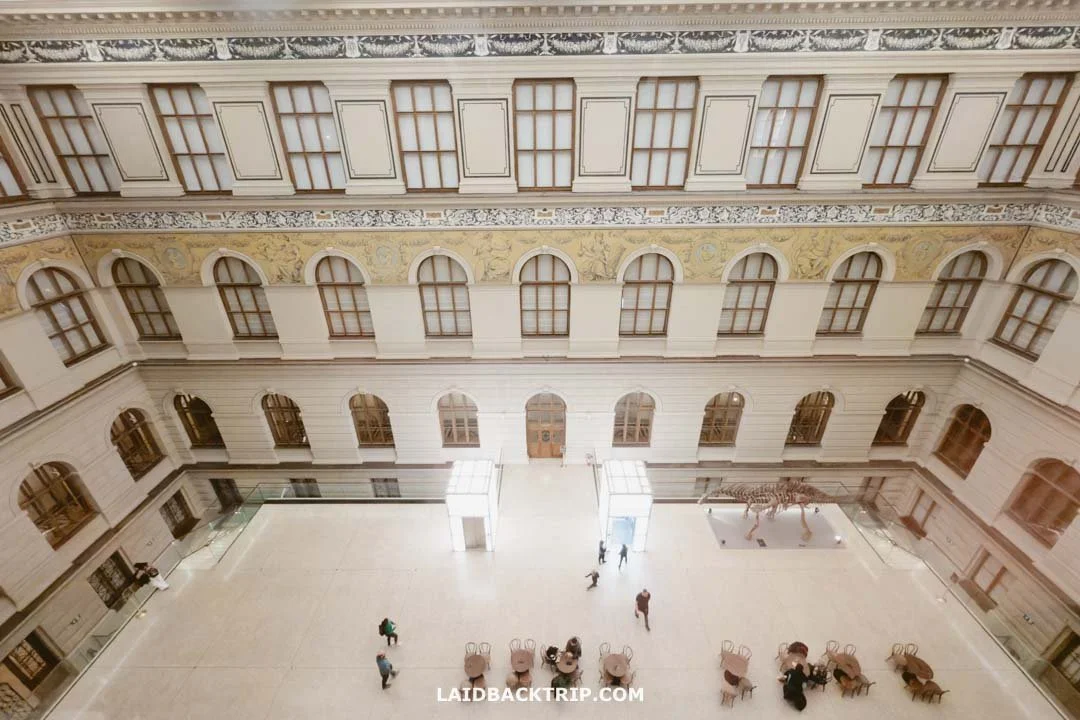
The historic building has a bistro with seating in this courtyard if you get hungry.
Getting to the National Museum
Getting to the National Museum couldn't be easier, as it's located right in the city center, at the upper end of Wenceslas Square. The building itself practically sits above a metro station fittingly called Muzeum, served by both the A and C lines, and just a few hundred meters down the square is Můstek station, which is also connected by the B line. Muzeum is also the name of the tram stop located right beside the historic building.
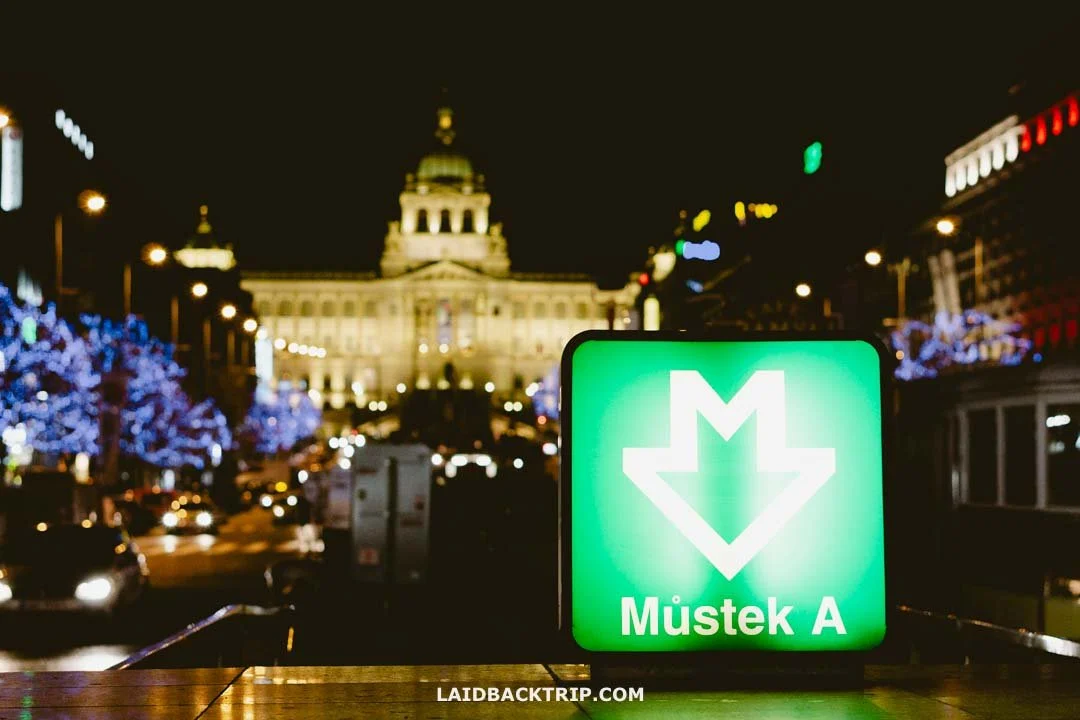
The National Museum sits on Wenceslas Square and is very easy to reach by one of the three metro lines.
But since this is basically Prague's main square, which I have a feeling most tourists will want to see anyway, even just to admire the museum's exterior, it's really easy to forget about public transport and simply walk to the museum.
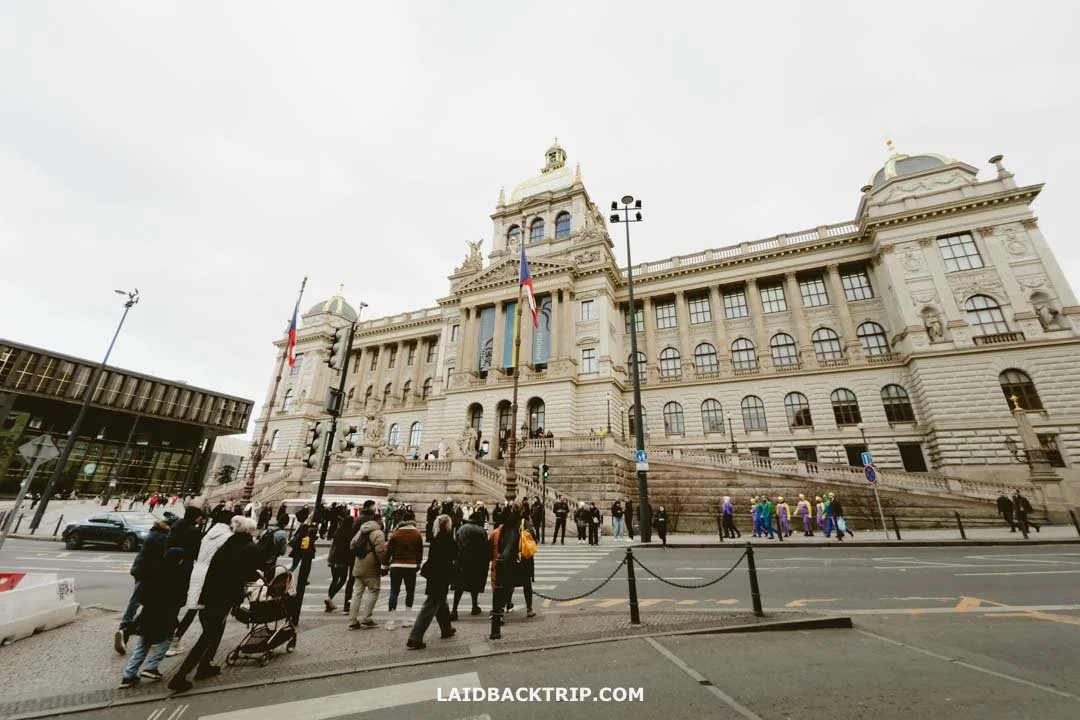
The National Museum is also really easy to reach on foot.
I've already said many times that the area around Wenceslas Square has some great hotels for all budgets, like NYX Hotel and Miss Sophie's Downtown, and an incredibly convenient location, not only for visiting the National Museum but also for quick access to places like Old Town Square and other Prague highlights. And if you base yourself here, you can reach all these places just by walking.
Travel Resources
Here you can find links to all the travel resources we use and which you might find helpful when planning your next holiday.
Accommodation: When looking for accommodation, we usually search hotels via Booking.com or Hostelworld.
Tours: Although we love to travel independently, some places are better to visit with a guided tour.
We prefer GetYourGuide for its easy-to-use interface and solid reputation. Another great alternative is Viator.
Rental Cars: When going on a road trip, we always use Rentalcars.com, a reliable site for booking a rental car in advance.
Flight Tickets: When looking for flight tickets, you can search Skyscanner to find the best price.
Travel Insurance: World Nomads and SafetyWing cover against risks of travel.
Visiting the National Museum in Prague? This guide covers everything you need to know, including what to see inside the museum, opening hours, ticket prices, how to get there, and our favorite exhibitions.