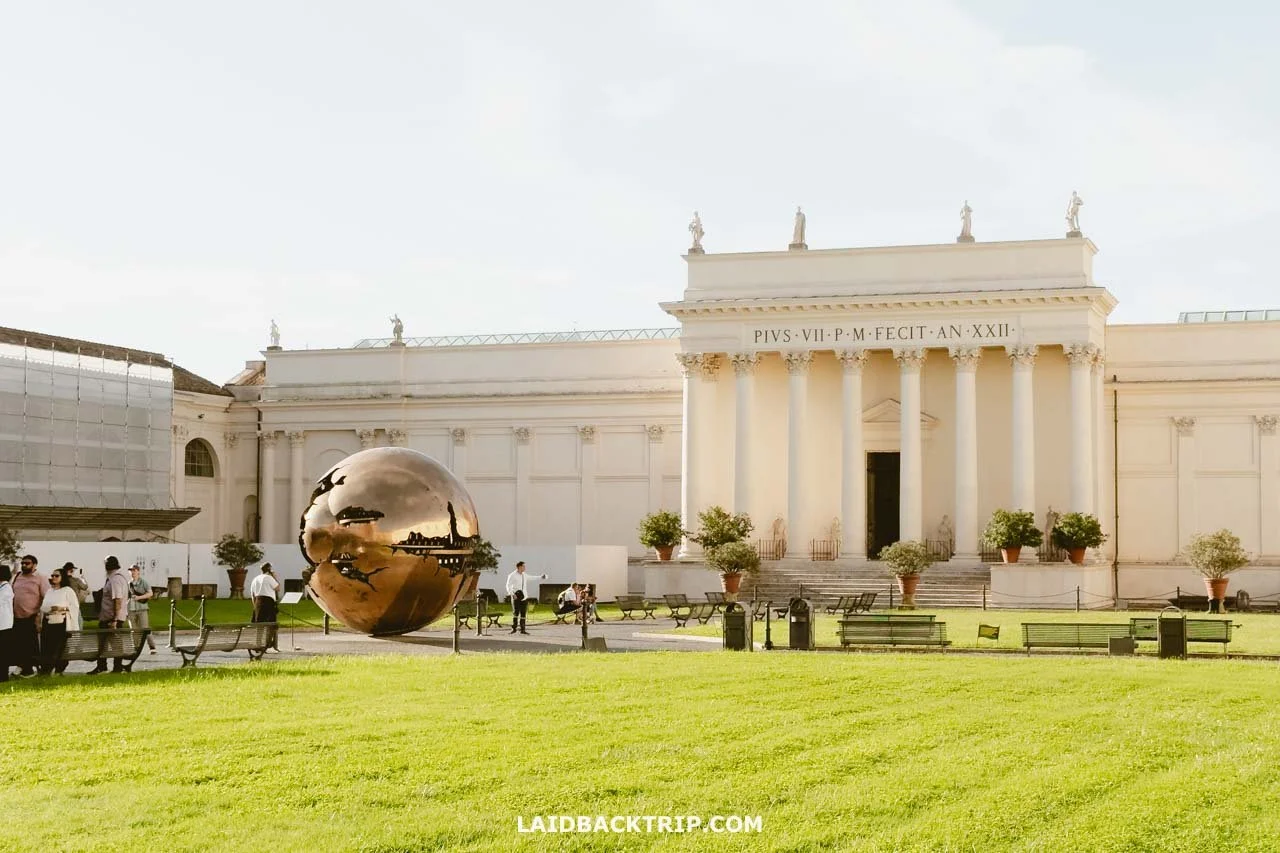
We started our day in Vatican City by exploring the Vatican Museums. This is exactly how our visit went.
I believe I can speak for Lucie and myself when saying that visiting the Vatican Museums was meant to be for us one of the highlights of our trip to Rome. We were far from the only people thinking this, because this museum complex, technically located in Vatican City, not actually in the Eternal City, contains one of the most extraordinary art collections in the world. It is also home to the Sistine Chapel, which hosts papal conclaves and features Michelangelo's Genesis ceiling, the powerful Last Judgment, and Renaissance wall frescoes from across Europe and beyond.
The Vatican Museums, one of the largest museum complexes in the world, are without question one of Rome's must-see attractions. We were truly excited to experience them and planned our visit as early as possible. Naturally, we wanted to start with the Colosseum and the Roman Forum, but the following day was reserved entirely for the Vatican Museums and St. Peter's Basilica.
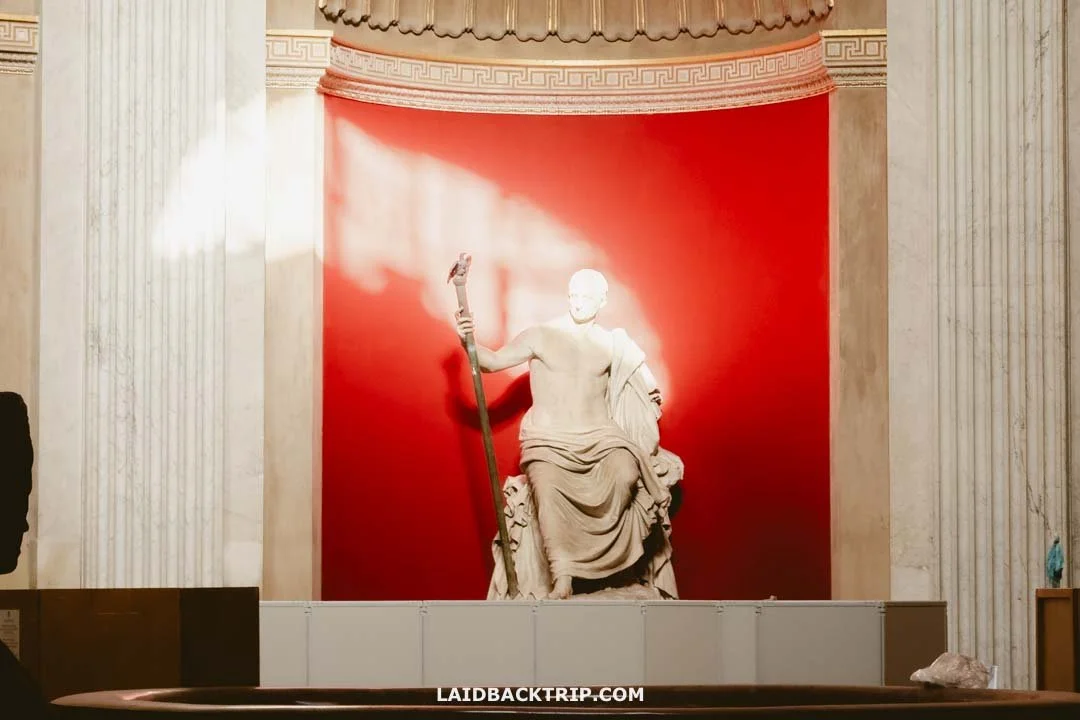
We expected a very memorable experience from our visit to the Vatican Museums.
That said, once we began planning our day in Vatican City, we discovered that securing museum tickets might be more complicated than expected, which quickly took some of the excitement out of the moment. Fortunately, everything turned out fine, and we will go over all the details surrounding the ticket situation shortly, so stay tuned.
Interestingly enough, we had visited the Louvre earlier this year, which is technically the largest museum in the world, so we were especially curious to see how the two experiences would differ. Immediately, two big differences became clear. The most significant one was that we did not have a full day to explore the Vatican Museums as we did with the Louvre, mainly because we also planned to visit St. Peter's Basilica and St. Peter's Square that same day. The second difference was that this time we were visiting with a guide, as it was the only ticket option still available. This alone promised an experience quite different from what we are normally used to. So, let us dive in.
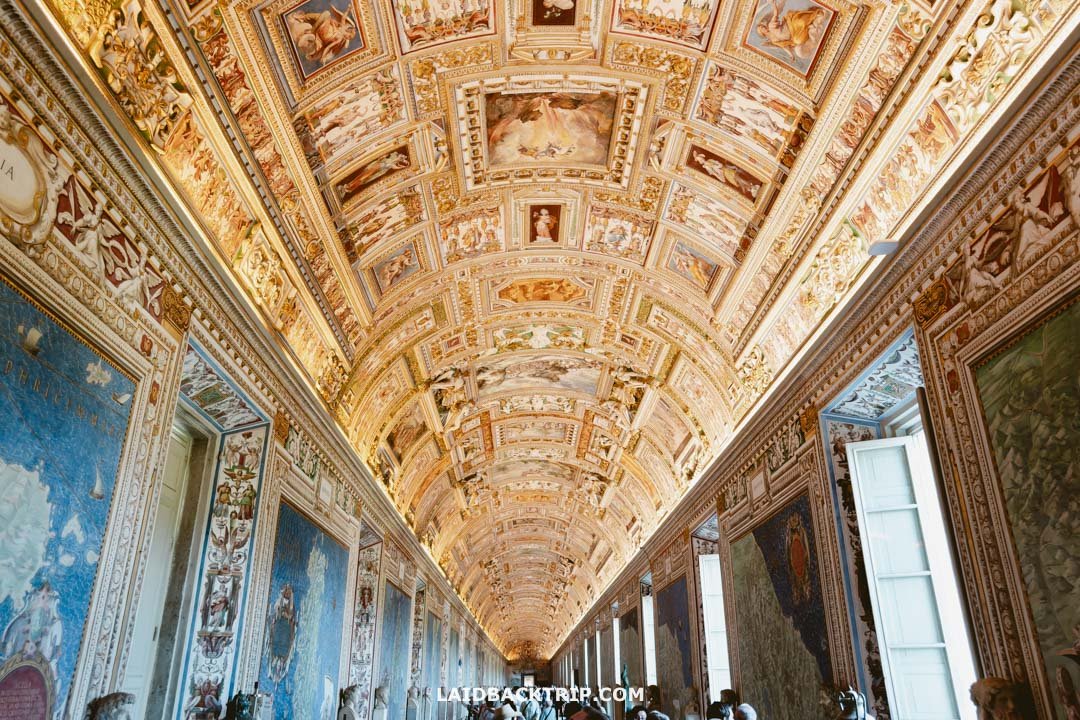
Vatican Museums combined ancient art with beautifully decorated rooms.
Tickets to the Vatican Museums
Our trip to Rome was practically a last-minute decision, which meant we had only a very small window to book everything in advance, including tickets to the Vatican Museums. When we checked the official website, Musei Vaticani, about two days before our flight, we realized that standard tickets to the Vatican Museums, which included the Sistine Chapel and did not involve a guide, were sold out.
We did not totally panic, but there was definitely a pause where we had a moment of doubt about whether we would be able to visit at all. Luckily, the more expensive tickets that included a guided tour of the Vatican Museums and access to the Sistine Chapel were still available, so we did not hesitate and booked them right away.
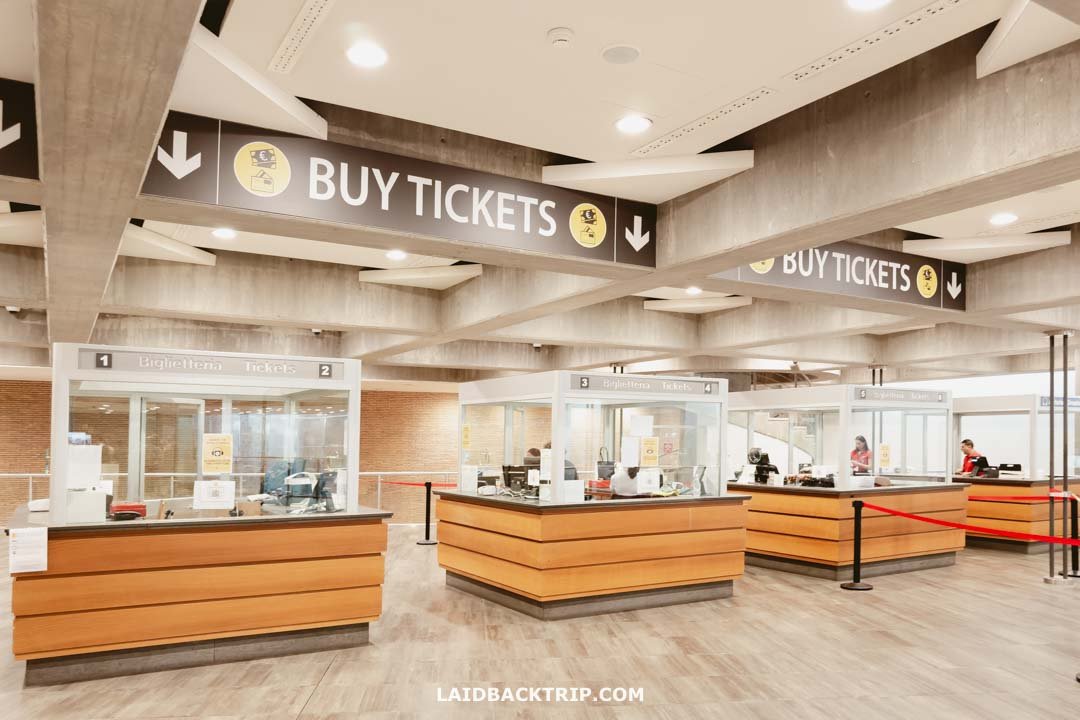
We purchased our tickets online, though there was still an option to get them on the spot.
Of course, paying more than twice the original price was not ideal, but there was really no alternative. Visiting Vatican City without seeing the museums and the Sistine Chapel was simply not an option, no matter how cliché it sounds. Together with the Colosseum and the Roman Forum, it was one of the few attractions we booked before even boarding our flight.
If you ever find yourself wanting to visit the Vatican Museums without a prebooked ticket, there is technically a possibility to buy one on the spot. However, based on every resource we consulted, we do not recommend it, as you could easily spend several hours waiting just to get inside, something most of us would rather avoid while on vacation. Interestingly, we visited in September on a weekday, and the line for visitors without tickets was not excessively long. We only waited a few minutes ourselves, just before opening.
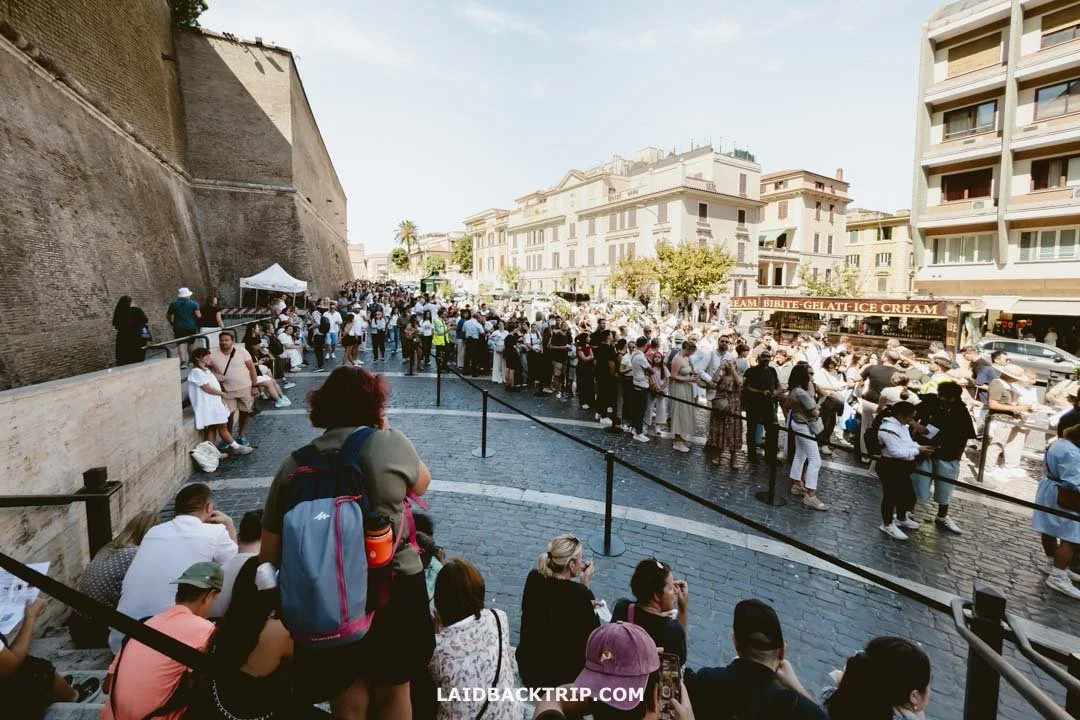
The waiting lines can get pretty long at the Vatican Museums.
I honestly cannot say how long it took visitors without a ticket to get inside, because that was not the reason we were there, right? When we left the museum around noon, the line was roughly the same in length as it had been earlier that morning. In this case, it did not seem especially dramatic. I have seen photos of queues running along the walls for tens, even hundreds of meters, but on the day we went, the situation looked manageable. The problem is that you never know what the situation will be like on the day of your visit, so booking the tickets ahead of time is always recommended.
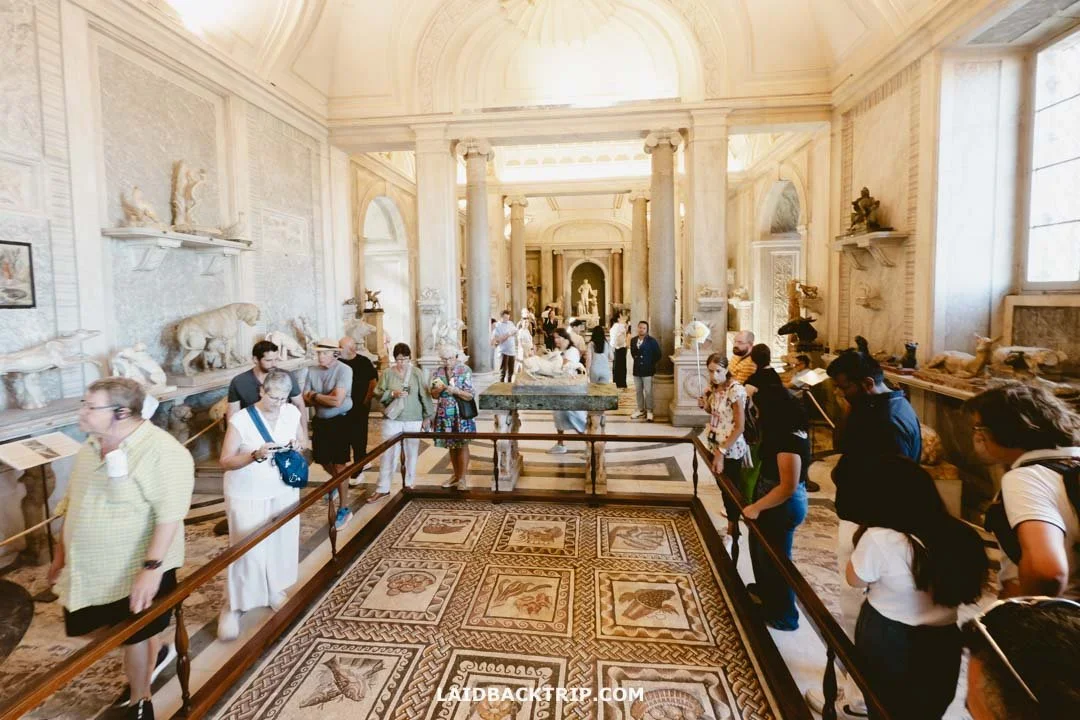
Vatican Museums was one of the few places in Rome where we actually booked our tickets in advance.
To avoid scams and excessive markups, we booked through the official Vatican Museums website and suggest doing the same whenever possible. We came across many third-party sites selling heavily overpriced tickets, some of them almost absurdly so. Lucie and I are very skeptical of those platforms and generally avoid them. We also checked GetYourGuide for the official ticket option. It was slightly more expensive and something we would have considered, but unfortunately, it was also unavailable. In the end, we booked the guided tour directly through the official site.
The only minor issue we had with the Vatican Museums website was that it felt less intuitive than expected for such a popular attraction. Hopefully, this improves in the future, making the booking process more user-friendly.
Some tickets, like the ones for the gardens, were unfortunately already sold out.
Entry Fee to the Vatican Museums
At the time we were there, the general admission ticket to the Vatican Museums cost €20 per adult on the spot, but if booked online, which is the way to avoid the huge lines, there was a €5 booking fee, which meant the final price would be €25 per adult.
However, in our case, this type of ticket was sold out, so we had to purchase the guided tour ticket for individuals, and that was €40 per person. It was almost double the price (interestingly, it did not include the booking fee), but we did not have any other choice this time. Either way, we saw quite a few museums in Rome, such as the Stadium of Domitian and Palazzo Massimo, and the Vatican Museums ended up being the most expensive of all.
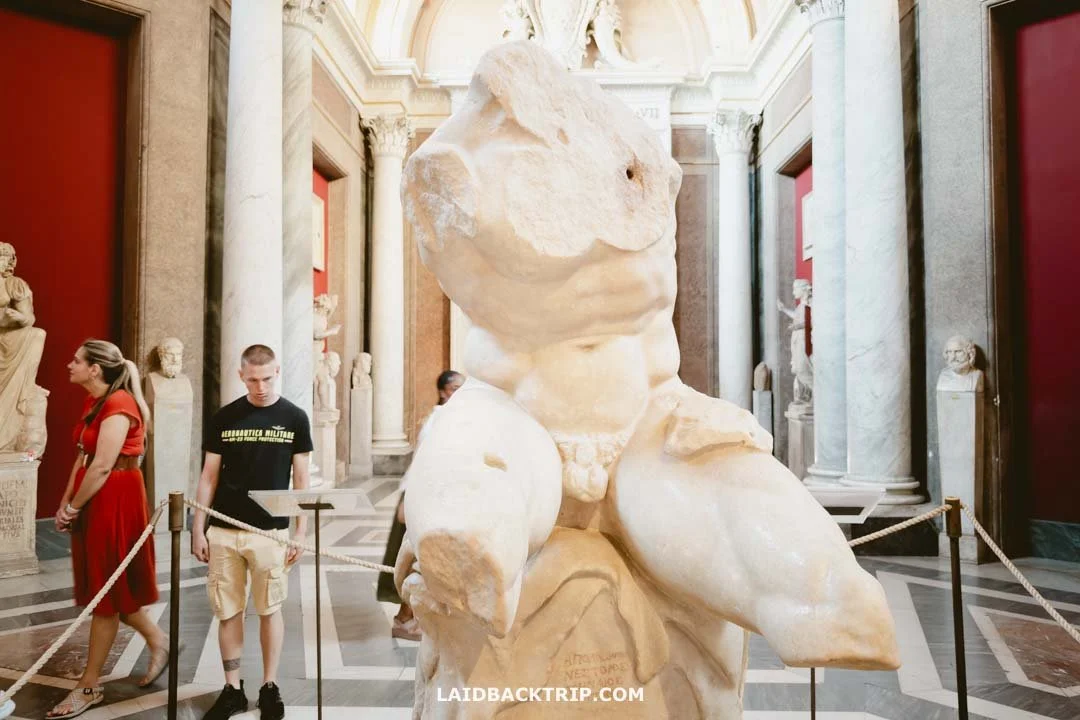
The Belvedere Torso is a marble sculpture that dates back to the 1st century BCE.
Ticket to the Vatican Gardens
When we were in the middle of purchasing our tickets to the Vatican Museums, we discovered that there was a slightly more expensive option for €45 that would, along with the guided tour through the museum, allow us to visit the Vatican Gardens.
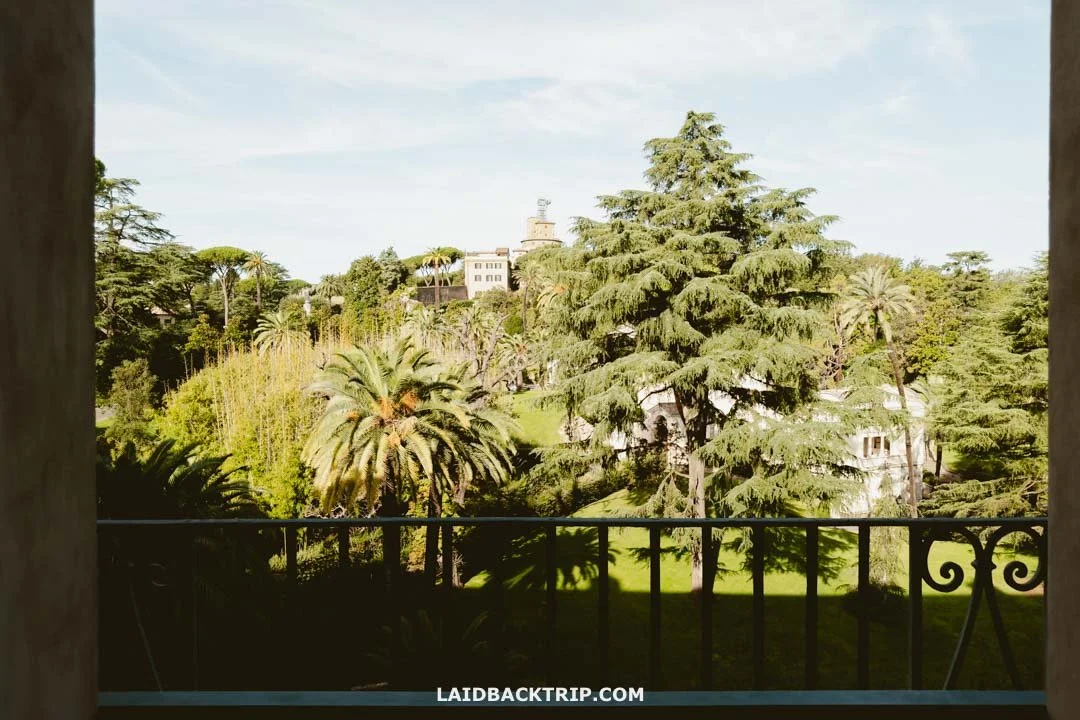
Since they cover half of the entire Vatican City and include the Pope's residence, Lucie became excited because she thought the gardens would certainly be interesting, but that excitement did not last long once we realized that these tickets were sold out as well. Still, even though we did not get to walk through them, we were able to enjoy a small glimpse of them through one of the museum windows during the tour, and later that day, we had an amazing view of them from the top of the St. Peter's dome.
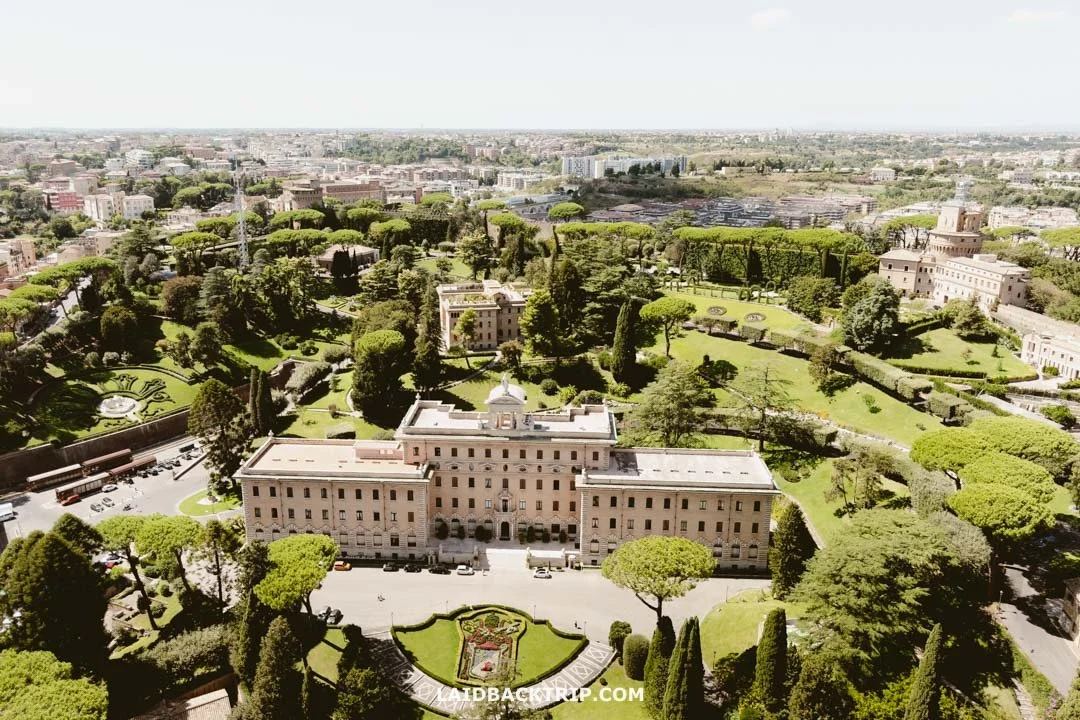
We saw the Vatican Gardens displayed in all their grandeur from the top of St Peter's Basilica dome later that day.
Hidden Sections Ticket
There were a few more types of special tickets that allowed access to parts of the Vatican Museums normally closed to visitors. These included the Bramante Staircase, the Chapel of Nicholas V, and the Cabinet of the Masks.
There were also different educational tickets, pilgrimage tickets, workshops, and other options, but because we were not interested in them, we decided to skip them. Even so, it is helpful to know that the standard admission tickets are not your only option for visiting the Vatican Museums.
Getting to the Vatican Museums
Since the Vatican Museums were located just around 2.5 kilometers from our accommodation near Piazza Navona, we decided to get there on foot. With a pleasant 30-minute walk through the historic center of Rome ahead of us, we did not even consider taking another mode of transportation, especially since the walk itself promised to be quite scenic.
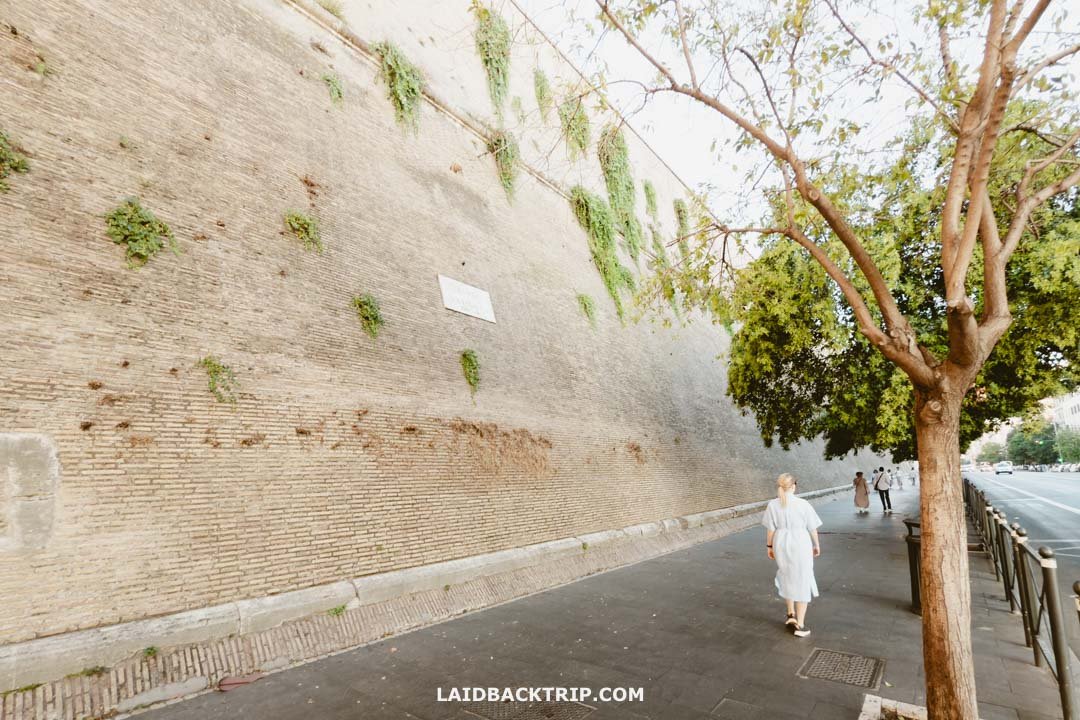
We walked along the impressive Vatican Walls on our way to the museum.
Instead of following the most direct route, we chose to take a small but very picturesque detour across Ponte Sant'Angelo to Castel Sant'Angelo. Crossing this iconic bridge early in the morning, we almost had it entirely to ourselves, which was a welcome contrast to how crowded it becomes later in the day. It was not only the bridge that felt super quiet. Piazza Navona, Via della Conciliazione, and even St. Peter's Square, all places we passed on our way to the museum entrance, were nearly empty as well.
If you are staying in the Centro Storico area like we were, walking is truly the best way to reach the Vatican Museums. For those staying farther away, the Ottaviano metro station on Line A is located about 500 meters from the entrance, and the V.Le Vaticano Musei Vaticani bus stop is also conveniently close to the museum.
Where is the Entrance to the Vatican Museums
It took me a while to figure out that the actual entrance to the Vatican Museums is not inside Vatican City but on Viale Vaticano in Rome. The GPS coordinates for the Vatican Museums are 41.90693, 12.45373. Reaching it was incredibly easy, because once we arrived at St. Peter's Square, we simply turned right and followed the huge Vatican Walls until we reached the entrance.
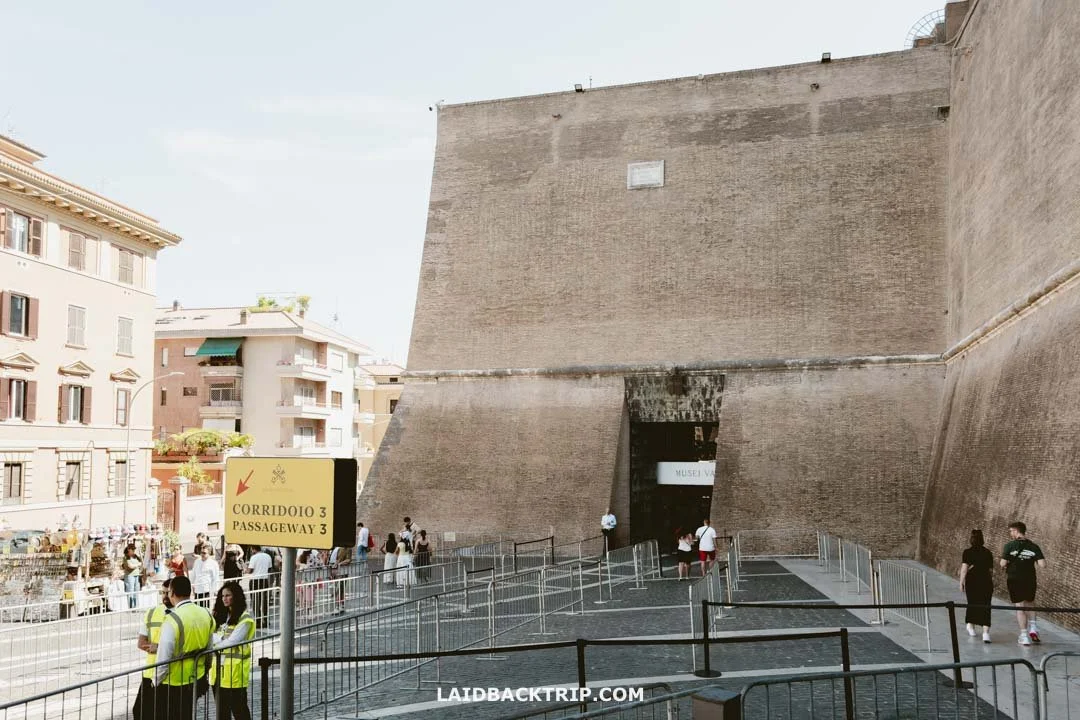
This is the entrance we used to enter the Vatican Museums.
Waiting in Line for the Vatican Museums
I am pretty confident in saying that almost every visit to the Vatican Museums starts with some time spent waiting in line, and our experience was no different. The big question is how long that wait will be, and that mostly depends on whether you booked your ticket online or not. We did, so we simply followed the instructions and showed up about 30 minutes before our scheduled entry.
When we arrived early in the morning, we realized there were already quite a few people waiting. There were three separate lines. The one on the left was for visitors with regular tickets, the middle one was for those joining a guided tour of the Vatican Museums, and the right one was for people planning to buy tickets on the spot.
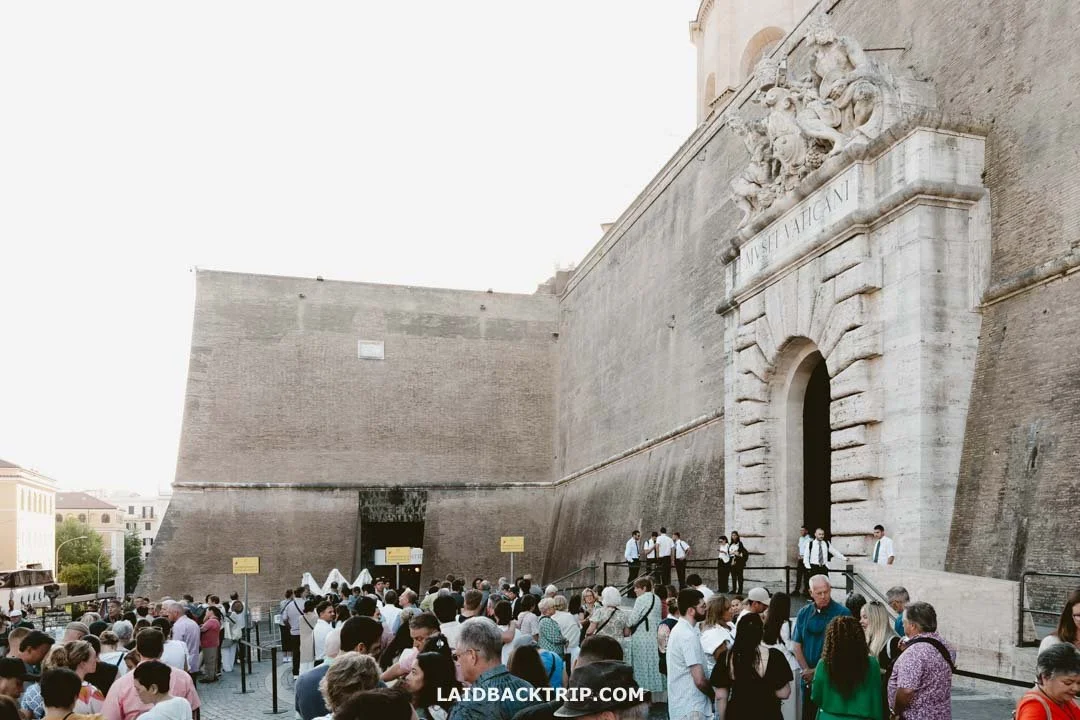
Given that we went with a guided tour, we waited about 15 minutes to get inside the Vatican Museums.
Because we had a timed ticket for guided tours, we, obviously, joined the line designated for visitors with that type of entry, which happened to be the middle line. There was no clear signage indicating which line was which, which made the whole situation slightly confusing. Fortunately, staff members were walking back and forth along the lines and doing their best to organize people, even if the process felt a bit chaotic at times. A clearly marked sign for each line would have helped a lot (those yellow Corridoio 1,2,3 signs didn't help at all).
Opening Hours to the Vatican Museums
To summarize, we booked the 8 AM guided tour and arrived at the Vatican Museums almost exactly 30 minutes before it began. After waiting for about 15 minutes, we were let inside, which put the time at around 7:45 AM. Another 15 minutes were then spent preparing for the tour by meeting the guide, picking up the headphones, learning the rules, and understanding how everything would work once inside.
Vatican Museums are open Monday through Saturday from 8 AM to 8 PM, with final entry allowed two hours before closing. They also open on the last Sunday of every month. There are additionally many dates when the museums close, not counting occasional temporary closures during significant events.
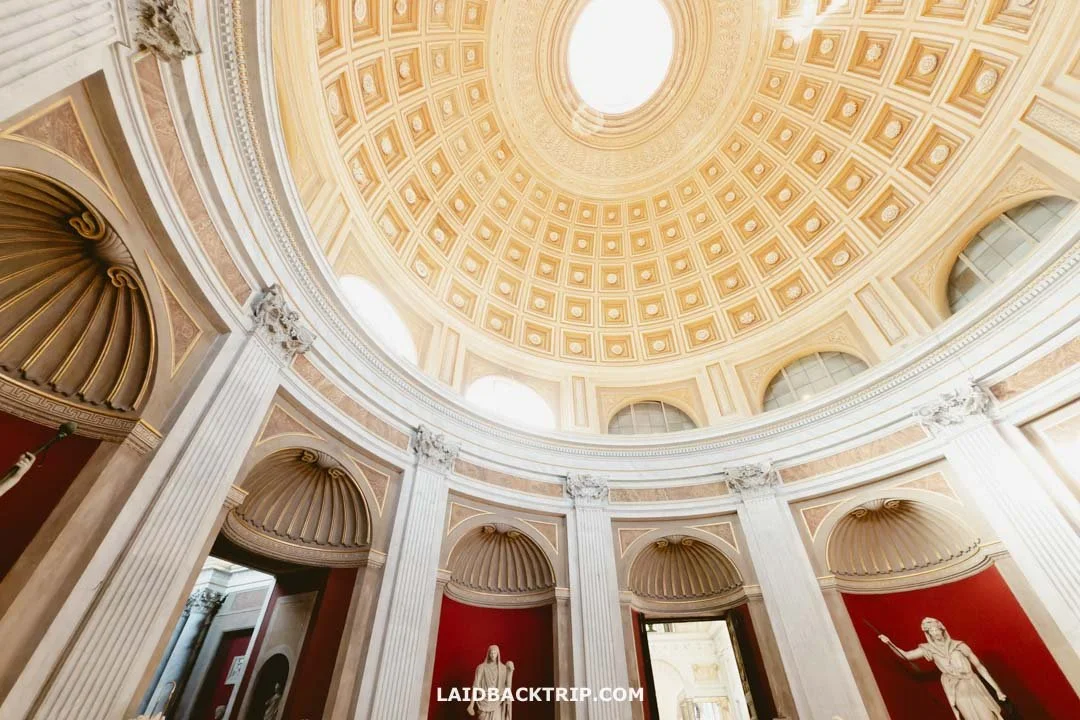
Pretty much everything was open when we visited the Vatican Museums.
Meeting Point of the Guided Tours
After entering the Vatican Museums, we walked past the ticket office and went straight to a small stall labeled Meeting Point C, which was mentioned in the email we received along with our tickets. This is where we met our guide and were each handed a headset. This setup was very helpful, as the museum hallways and galleries were already crowded, and it meant we did not have to worry about missing the guide's commentary.
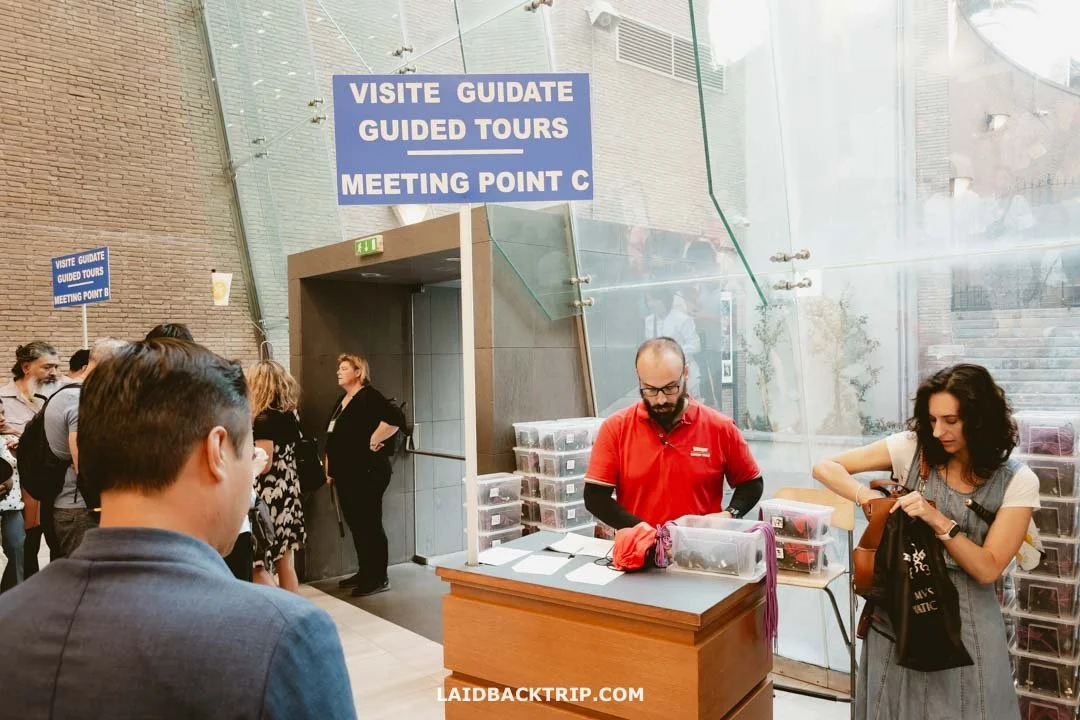
Here we met our guide and picked up our headsets.
It was not perfect, though, as my headset had broken volume buttons and was not as loud as I needed it to be. I had to hold it close to my ear just to hear everything clearly. Lucie's headset worked without any issues. It reminded me of our visit to the Hans Christian Andersen Museum, where my headphones stopped working entirely by the end of the tour. Maybe it's just my luck.
The tour started with the guide covering some basic information, after which we moved on to a digital information panel. There, she gave us a detailed overview of the Sistine Chapel. Although the chapel was the final stop of the tour, we would be visiting it on our own, since guided tours are not permitted inside, not even the official ones. We will cover the Sistine Chapel in more detail later in the post and explain the reasoning behind this, so stay tuned.
Crowds in the Vatican Museums
The Vatican Museums are without a doubt one of the most popular attractions in Rome, which means that almost everyone wants to visit them. Naturally, this leads to large crowds. We already mentioned the ticket situation, which was far from ideal due to high demand, but that did not come as a surprise. It was also no surprise that the museum itself was quite crowded. Numerous guided tours and individual visitors were moving through the spaces at the same time, making some areas busier than we would have liked. Even so, the overall experience was still manageable.
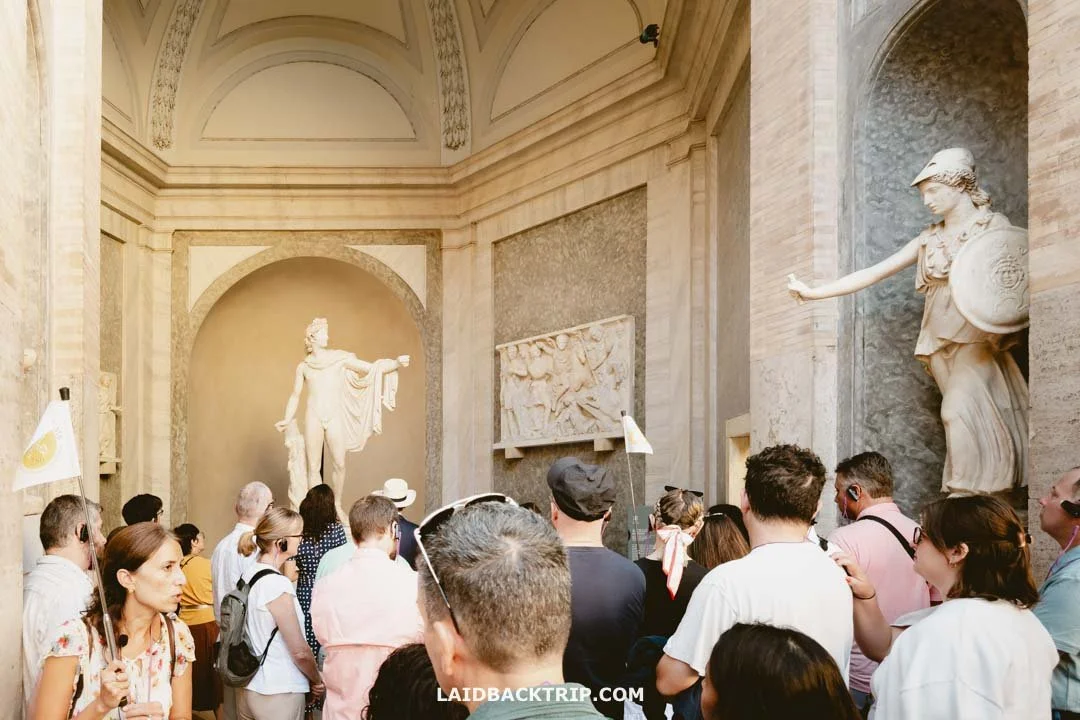
Some sections, like the Pio Clementino Museum, were definitely quite crowded during our visit.
Earlier this year, we traveled to Paris, and the experience at the Palace of Versailles was far more overwhelming in comparison. Later during our Rome trip, we visited the Capitoline Museums, which are the largest museums in the city, and yet there were hardly any visitors there at all. Smaller museums like Trajan's Market were even quieter, to the point where we almost had them to ourselves. Seen in that context, the Vatican Museums were clearly among the most crowded places we visited in Rome. The only place that rivaled them in terms of density was the Borghese Gallery and Trevi Fountain due to their limited space.
Naturally, there were also quieter sections within the Vatican Museums, but since we were part of a guided tour and focused mainly on the highlights, we did not have much opportunity to explore those areas, except for one small moment near the end. In any case, we were prepared for the crowds and did not expect a solitary museum experience. As in every crowded museum, we definitely watched out for pickpockets.
World Nomads provides travel insurance for travelers to cover their trip essentials, including sports and adventure activities.
SafetyWing is affordable travel insurance for backpackers, long-term travelers, and digital nomads.
What's There to See in the Vatican Museums
Since we were visiting the Vatican Museums with a guide, it was fairly clear from the start what we would be seeing. And because this was a standard group tour rather than a private one, there was not much flexibility when it came to changing the route. We simply followed the guide along her classic itinerary, which included the Pio Clementino Museum, the Gallery of the Tapestries, the Gallery of the Geographical Maps, the Raphael Rooms, the Borgia Apartment, and the Sistine Chapel, while also passing through a few additional sections such as the Chiaramonti Museum.
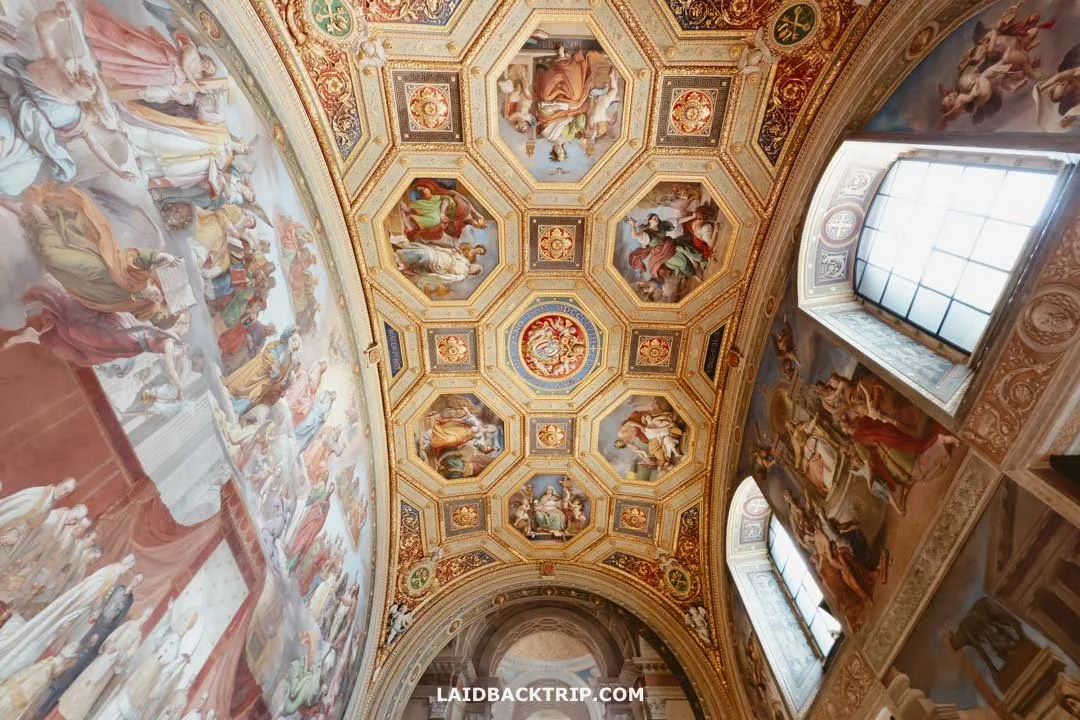
The frescoes in the Raphael Rooms were simply incredible.
The idea was to show us some of the most well known highlights of the Vatican Museums, so we did not mind this approach at all. On the contrary, we were genuinely curious about the experience, as visiting a museum with a guide is something we do not do very often.
I honestly cannot recall the last time we explored a museum in this way, aside from places like Linderhof Palace or Neuschwanstein Castle, which can only be visited with a guide. Those locations, however, are not really museums in the traditional sense, so I think it is fair to say they do not fully count. The tour was scheduled to last around two hours, and the program itself was quite straightforward. Looking back on it now, it feels like we managed to cover a surprising amount in that time.
I later checked that the Vatican Museums include roughly 30 different sections, and we visited about one-third of them. Of course, the Pio Clementino section is much larger than something like the Room of the Immaculate Conception, so it is not a perfectly fair comparison. Still, it gives a good sense of how packed the tour was. We clearly did not have time to see everything. There were two sections in particular, the Gregorian Etruscan Museum and the Gregorian Egyptian Museum, that I wish we had been able to explore, but there was simply not enough time.
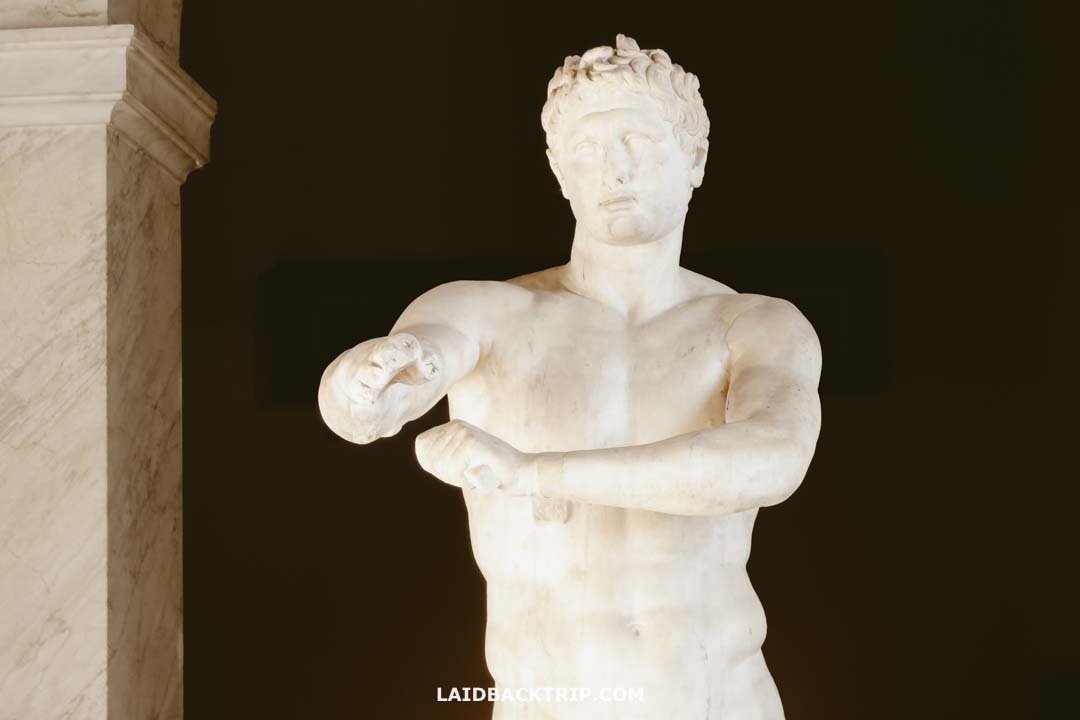
We passed by the statue of the athlete Apoxyomenos in the vestibule just before we finally entered the Pio Clementine Museums.
In the following sections, we will walk you through what we saw during the official Vatican Museums tour. I will briefly touch on each area we visited and then explore the Sistine Chapel in more detail. If you visit with a private guide, your route might differ slightly, but I imagine most of the tour will remain similar, especially if you are visiting for the first time.
Courtyard of the Pinacoteca
We began the tour by visiting three courtyards, starting with the Courtyard of the Pinacoteca. It is an elegant area that functions as the entrance to the Vatican's Art Gallery (Vatican Pinacoteca), surrounded by neoclassical architecture.
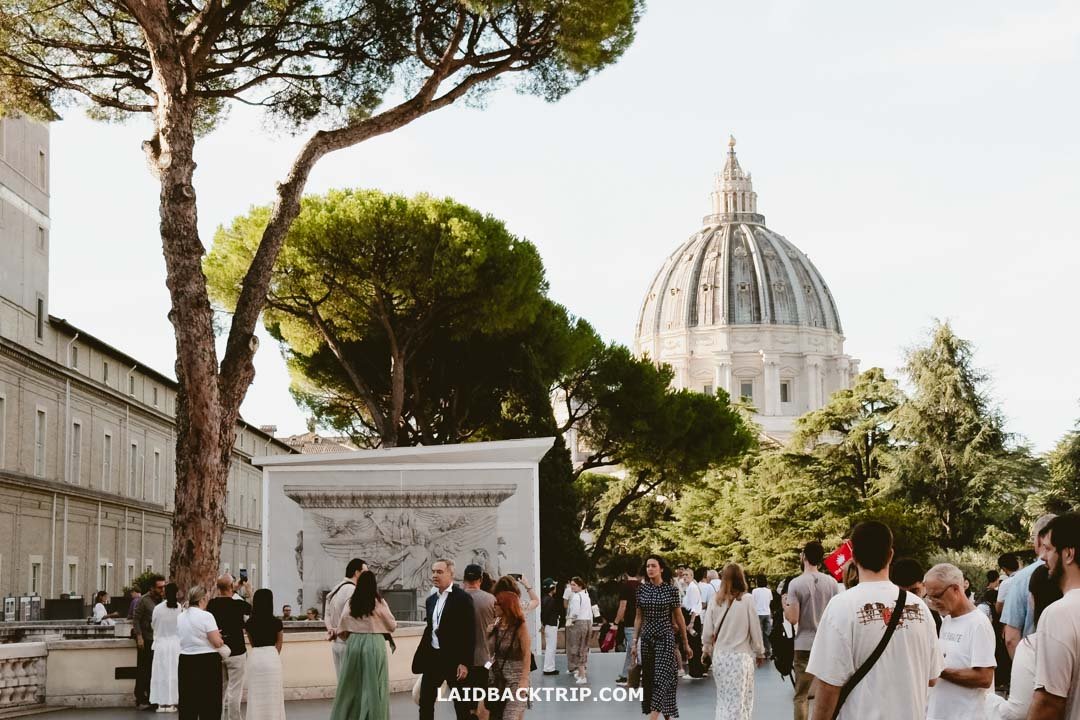
The view of St. Peter's Basilica's dome from Courtyard of the Pinacoteca was one of my favorites.
I loved how the pine trees contrasted with the massive dome of St. Peter's Basilica rising behind them. And although there was no art to see there, I still enjoyed the space thanks to its truly beautiful view.
Pinecone Courtyard
Then we moved on to the Pinecone Courtyard, which was designed by Bramante and named after its massive 1st‑century Roman bronze pinecone that once stood near the Pantheon. The courtyard itself was quite large and showcased beautiful Renaissance architecture.
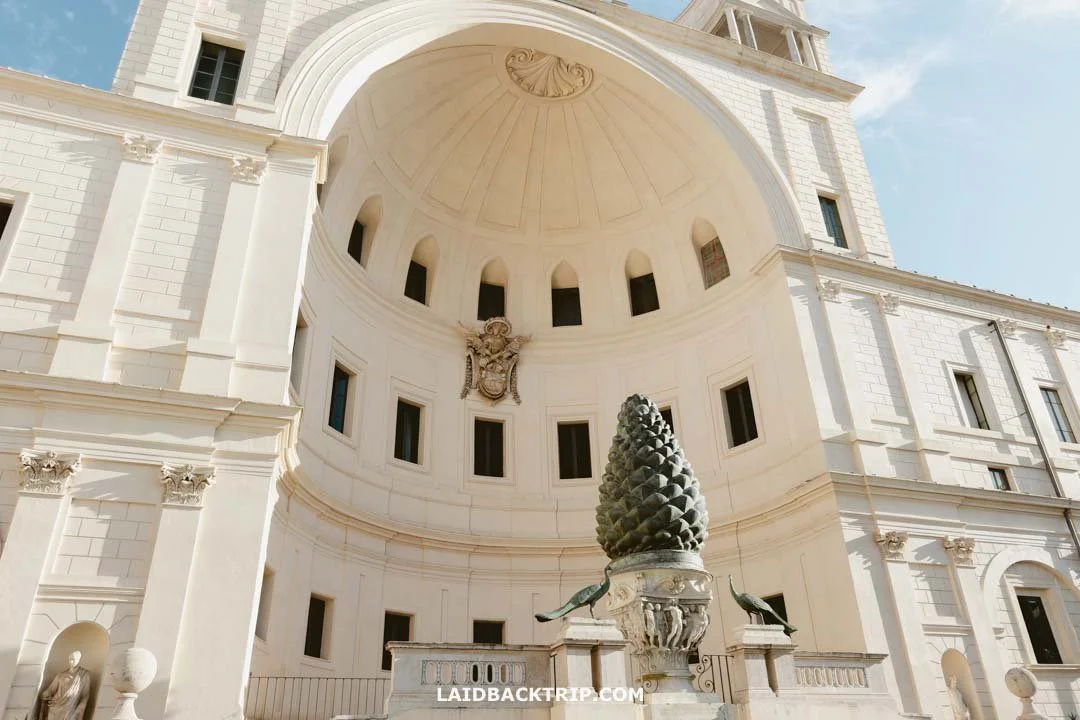
The ancient Roman pinecone statue that gave this courtyard its name.
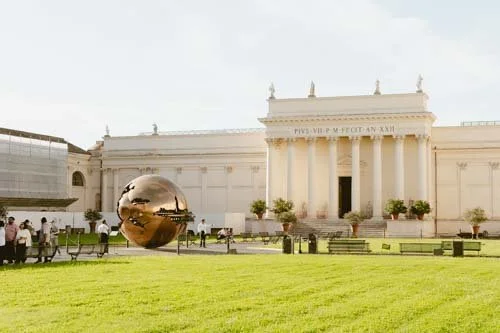
Alongside all that history, there was also a modern element represented by the rotating Sphere Within Sphere sculpture. These sculptures appear in several other cities, including Milan and Tel Aviv, and we had already seen one in Dublin when we were touring Trinity College.
Chiaramonti Museum
We then took a quick peek into the Chiaramonti Museum, which was a really long gallery that displays approximately 1,000 ancient sculptures and busts. I have to admit that seeing such a huge number of Roman portrait busts gathered in one place was pretty impressive. Some of the most notable art pieces in the Chiaramonti Museum were the statues of Heracles with infant Telephos and the Gradiva relief.
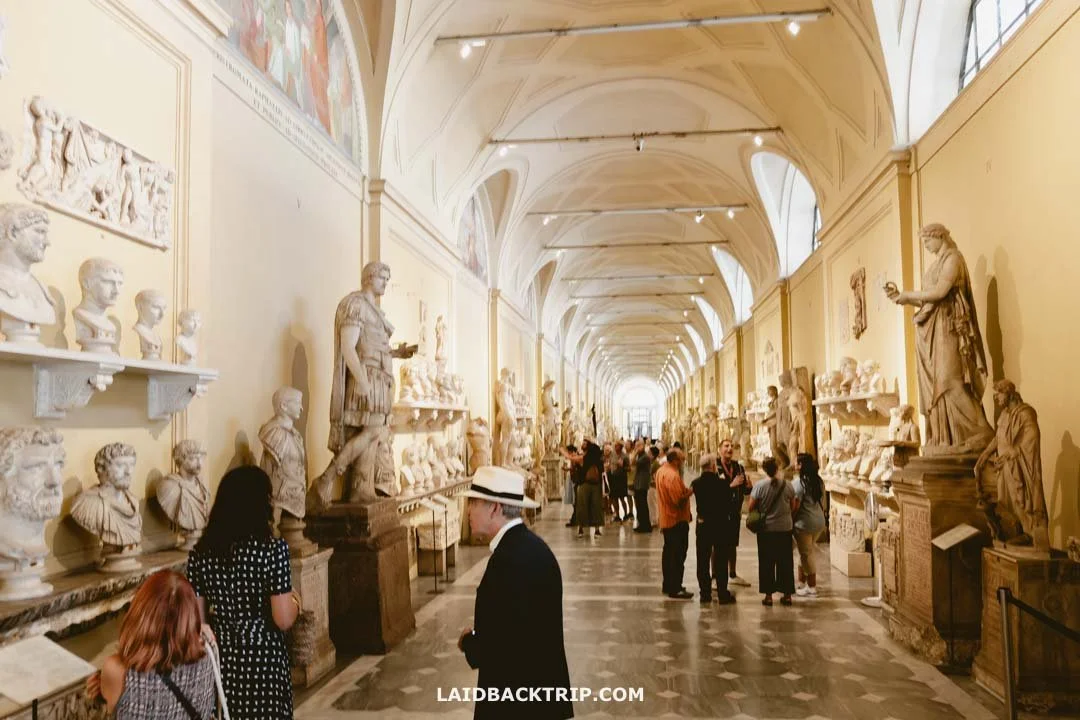
Seeing all those 1000 Roman busts in Chiaramonti Museum would definitely take a lot of time.
This was one of the sections where I was glad we visited with a guide, because if it were just us, it would be just an overwhelming experience. While the Chiaramonti Museum might not be as famous as other parts of the Vatican Museums, it's a great reminder that you could easily spend a full day exploring all those 1,000 busts and appreciating how much history is packed into one corridor.
Octagonal Courtyard
The last of the three was the Octagonal Courtyard, which was part of the famous Pio Clementino Museum. And when it comes to the art, this one was the most interesting one, even though it was by far the smallest. This small(ish) space houses some of the Vatican's most famous sculptures, like the Laocoön and the Apollo Belvedere, which have inspired artists for centuries.
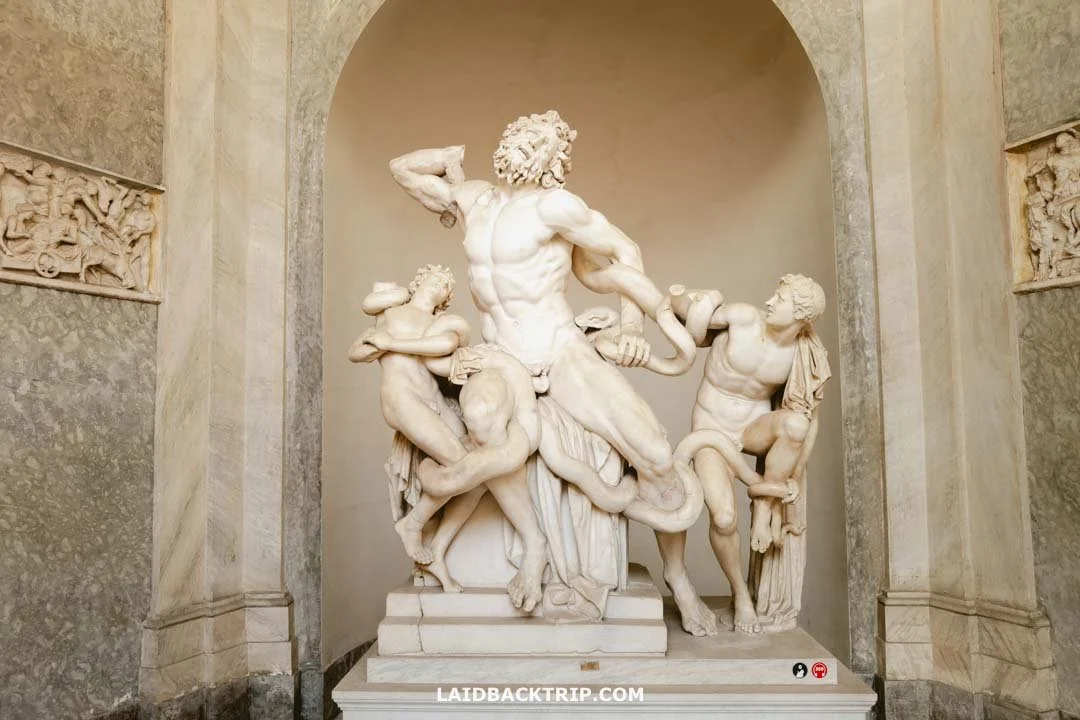
One of the most famous ancient sculptures portrays the Trojan priest Laocoön and his sons as they are attacked by sea serpents.
As the courtyard was quite small, it was really packed, so it was great that we were here on a tour. We could just listen to what we were seeing and focus on why these sculptures became symbols of the Renaissance rediscovery of antiquity.
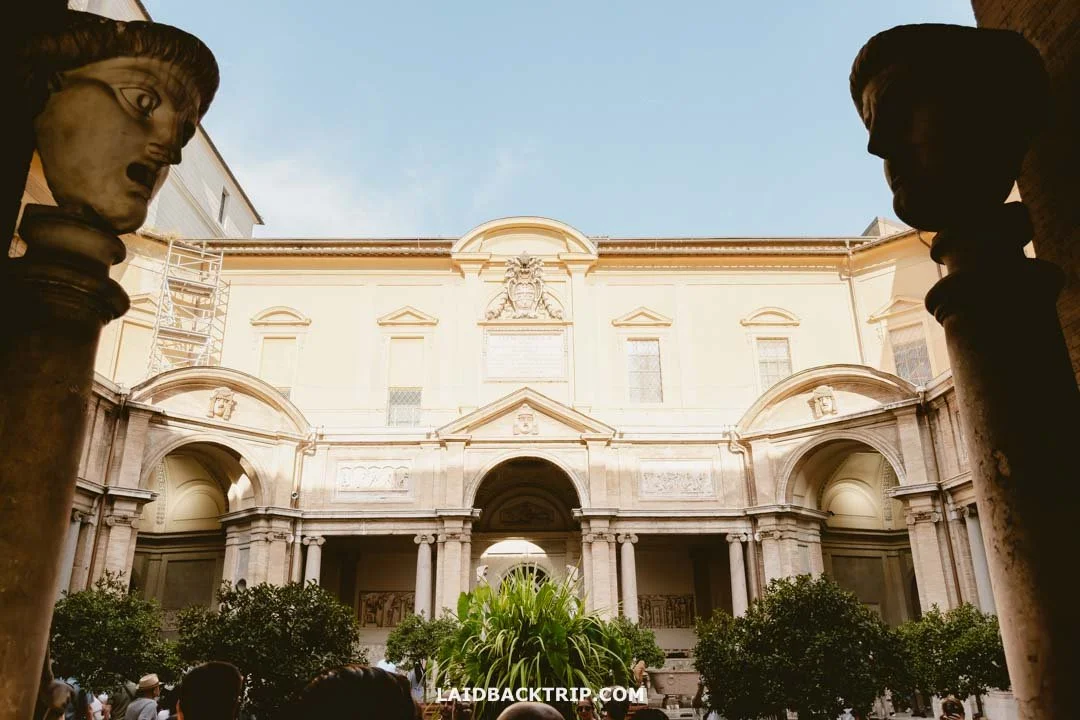
Octagonal Courtyard was very charming and filled with ancient sculptures.
Pio Clementino Museum
Our next steps brought us inside the Pio Clementino Museum, where the Vatican’s world-class collection of ancient Greek and Roman sculptures was housed. Here, we spent quite some time exploring the Greek and Roman masterpieces, like the Belvedere Torso and the Round Room, which features an enormous, ancient red porphyry basin.
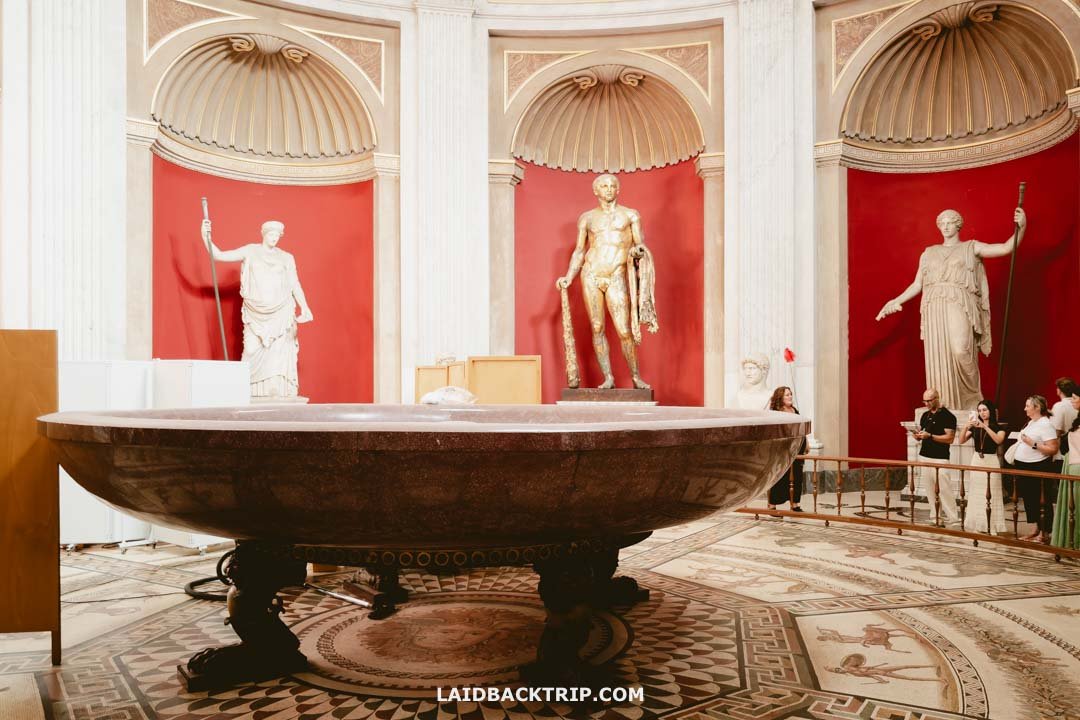
Inspired by the Pantheon, this hall showcases colossal statues, ancient floor mosaics, and a massive porphyry basin dating back to Imperial Rome.
The Pio Clementino Museum consisted of 10 separate sections. So besides the Round Room and Octagonal Courtyard we already mentioned, we had a chance to see the Gallery of the Candelabra, the Greek Cross Hall, the Hall of Animals, or the Hall of the Muses. This museum section also had the Cabinet of Masks, but this one was accessible with a special ticket we didn't have, reminding us how vast the collection was, even when you think you've seen everything.
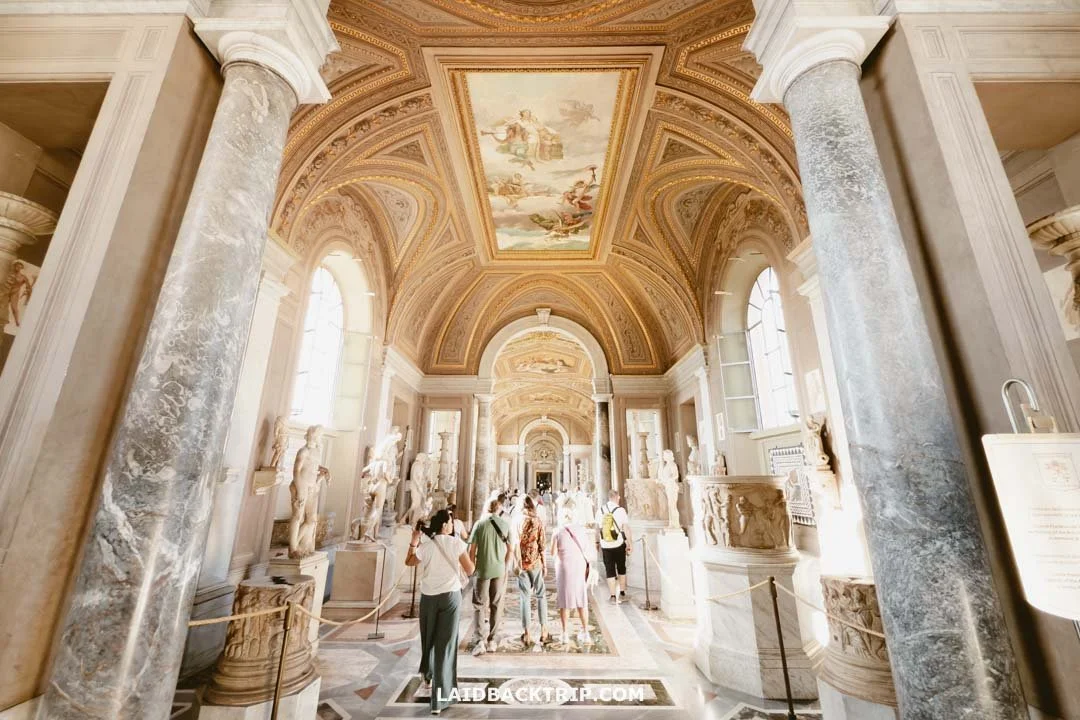
The Gallery of the Candelabra takes its name from the massive marble candelabra and vibrant colored marble columns.
Gallery of the Tapestries
Then we proceeded to the Gallery of the Tapestries, which turned out to be another long corridor. Unlike the first one, which was all about Roman busts, this one was filled with huge intricately woven Flemish tapestries from the 16th and 17th centuries. The tapestries depict scenes from the life of Christ, the apostles, and major biblical events based on Raphael’s designs. Lucie really enjoyed this section, while my favorite part was right next up.
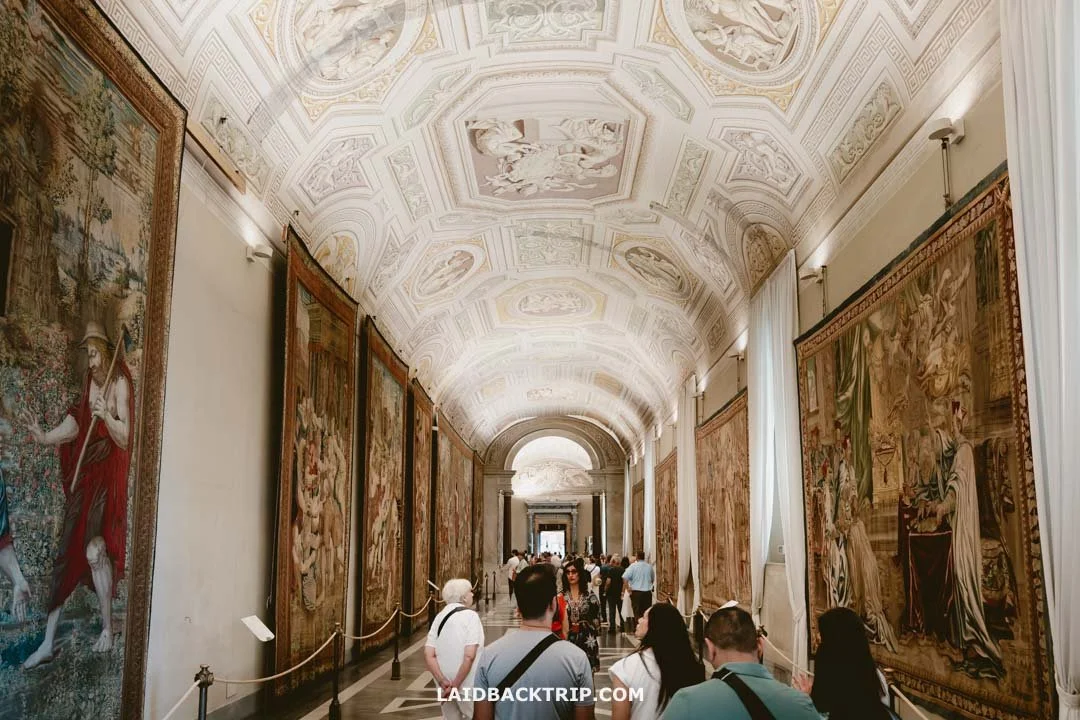
The Gallery of the Tapestries was focused entirely on, unsurprisingly, tapestries.
Gallery of the Geographical Maps
After leaving the Gallery of the Tapestries, we entered another long corridor called the Gallery of the Geographical Maps. As its name implies, this 120-meter-long gallery is adorned with forty enormous topographical frescoes showing the Italian peninsula as it appeared in 1580. The level of detail was astonishing, and we also learned several interesting details about Italy's history during that era.
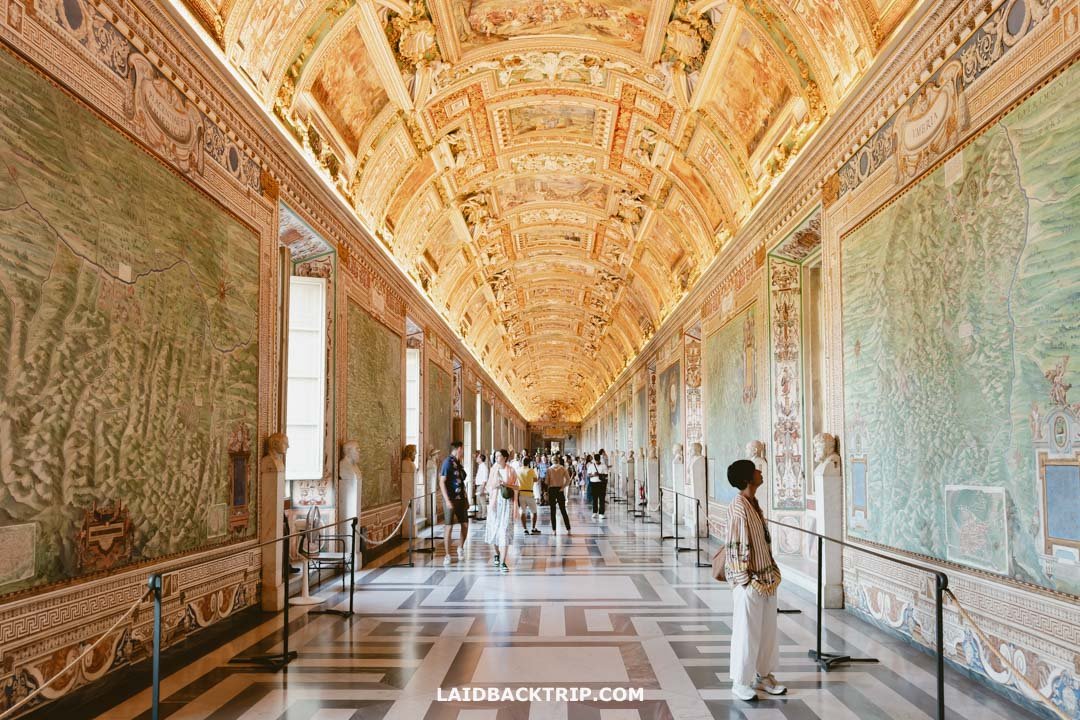
The maps of Italy in the Gallery of the Geographical Maps looked as stunning as the gilded ceiling.
The corridor, however, was not just about the maps themselves. Its richly gilded ceiling was absolutely breathtaking, making it one of the most visually impressive spaces in the entire museum. Walking through it felt more like exploring an opulent palace than a museum.
Room of the Immaculate Conception
Just before reaching the Raphael Rooms, we stepped into a fairly small room known as the Room of the Immaculate Conception. The walls were covered with mid-19th-century frescoes by Francesco Podesti, celebrating the proclamation of the dogma of the Immaculate Conception and depicting religious figures alongside symbolic celestial imagery. In the center of the room stood a bookcase containing translations of the papal bull Ineffabilis Deus, which formally proclaimed the dogma.
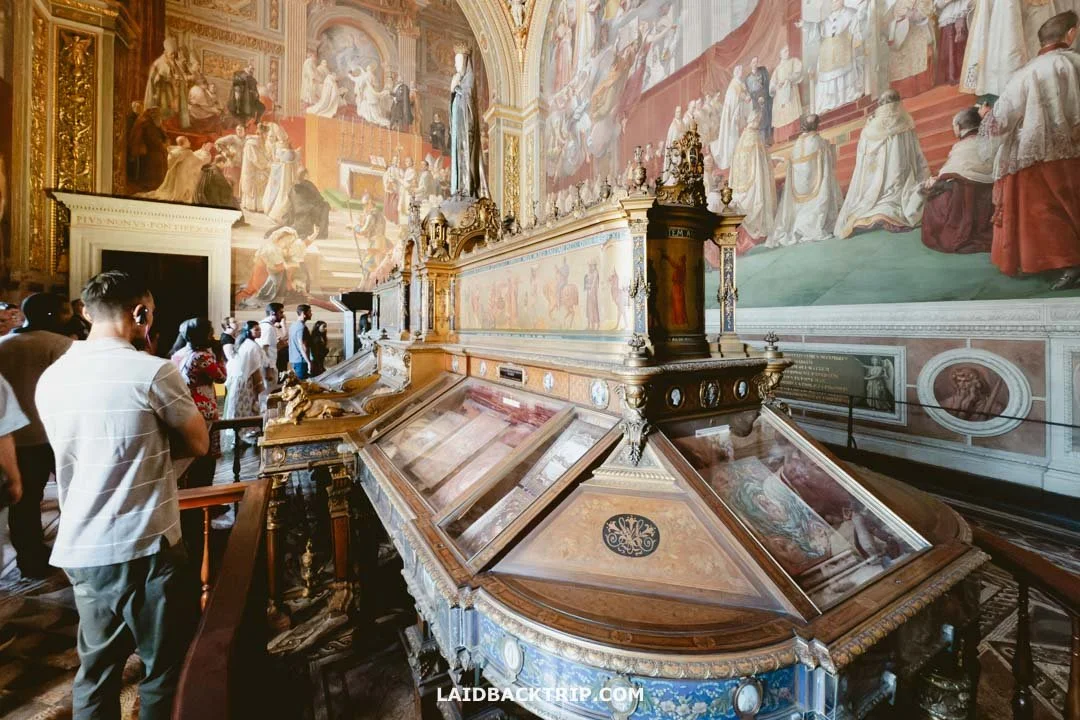
The Room of the Immaculate Conception felt quite small and pretty crowded.
Raphael's Rooms
We then made our way into one of the Vatican Museums' greatest highlights, the Raphael Rooms, which include the Hall of Constantine, the Room of Heliodorus, the Room of the Segnatura, and the Room of the Fire in the Borgo. These four remarkable apartments were painted between 1508 and 1524 by Raphael and his workshop for Pope Julius II. They house some of the finest High Renaissance frescoes ever created, including the iconic masterpiece The School of Athens.

The School of Athens is the most famous fresco in Raphael's rooms.
Borgia Apartment
Formerly the private residence of Pope Alexander VI, the Borgia Apartments are famous for their vibrant frescoes by Pinturicchio. The art combines religious symbolism with Renaissance luxury, reflecting the complex legacy of the Borgia family. That said, we were already very excited to reach the Sistine Chapel, so we passed through these rooms rather quickly.
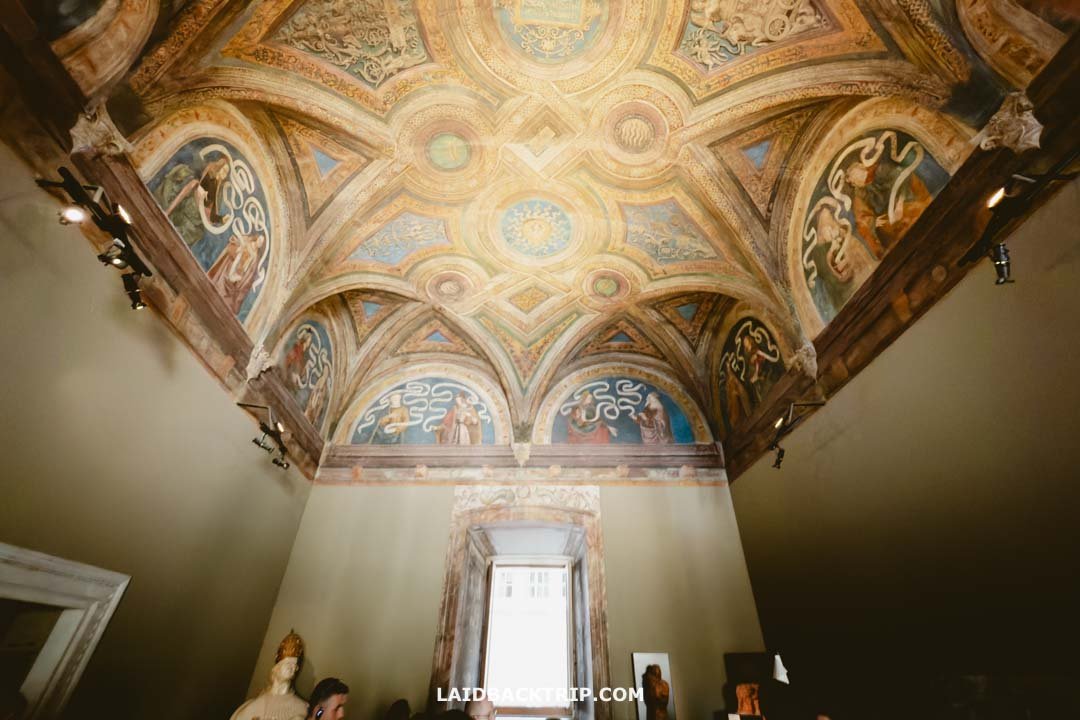
Pinturicchio adorned these opulent private rooms with vibrant frescoes for Pope Alexander VI.
Sistine Chapel
The final section of the Vatican Museums we explored was the Sistine Chapel, which was included in the ticket we purchased. As mentioned earlier, this was the point where we parted ways with the guide and continued on our own. That was not difficult at all, since this final part of the museum follows a mostly one-way route with no real side paths. There was also a restroom located just before the chapel, which was quite convenient, as we had already spent about two hours inside the museum.
We then made our way into the Sistine Chapel, which operates under a specific set of rules. Since these are quite important, we will briefly mention them here. Photography is strictly prohibited (so all the photos you can see of the Sistine Chapel in our post I took from the video terminal at the beginning of the tour). Visitors are required to remain silent. Finally, proper dress is expected, meaning covered shoulders and knees.
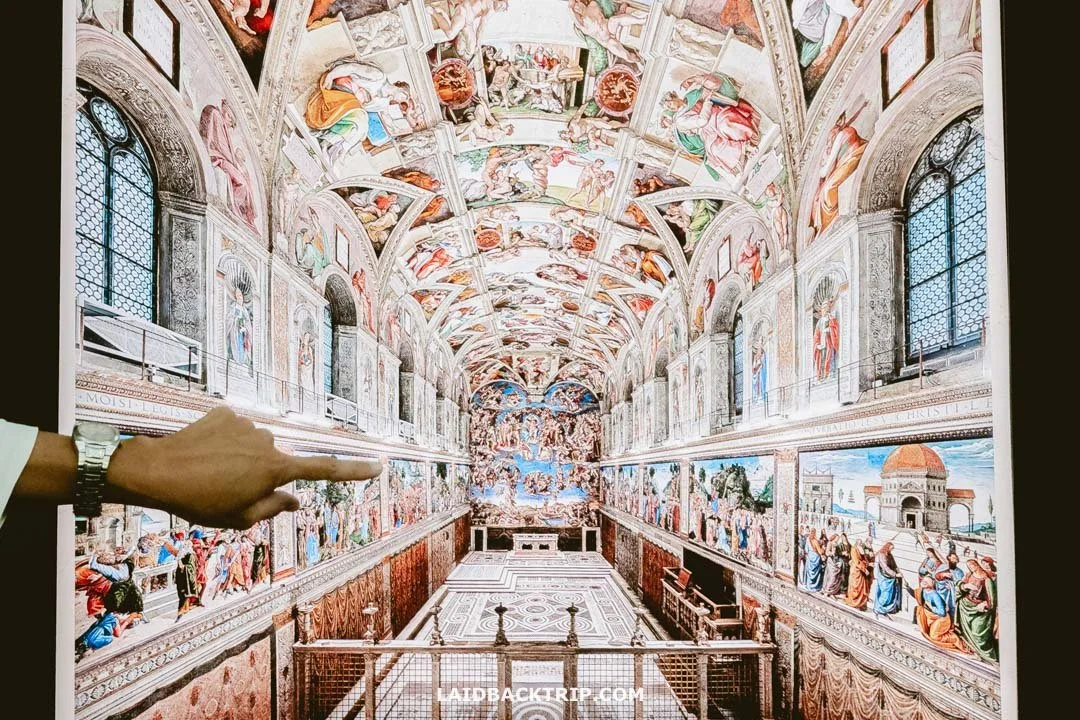
Our guide explained everything about the Sistine Chapel in detail before we went.
Although the chapel is one of the most visited attractions in Rome, it is still a sacred space, so these rules were easy to understand. Museum staff members continuously walked around the chapel to make sure they were respected.
By that point, we had already spent a couple of hours in the Vatican Museums, and while the experience had been pretty special so far, the Sistine Chapel was on an entirely different level. The combination of the sanctity of the space, the near silence created by the rules despite the large crowd, and the extraordinary paintings covering the walls and ceiling was truly overwhelming.
We quickly realized there were two main ways to experience the Sistine Chapel. One option was to stand in the central area, which is designated for visitors who want to admire the artwork while standing. We were, however, drawn to the wooden benches lining the sides of the chapel, which were completely full at first. After a few minutes, several people nearby left, allowing us both to sit down and take in the ceiling in a much more relaxed way.
Standing in the center was not exhausting, but it was quite crowded and noticeably less enjoyable than sitting on a bench. The experience reminded us slightly of seeing the Mona Lisa at the Louvre, although that was far more overwhelming.
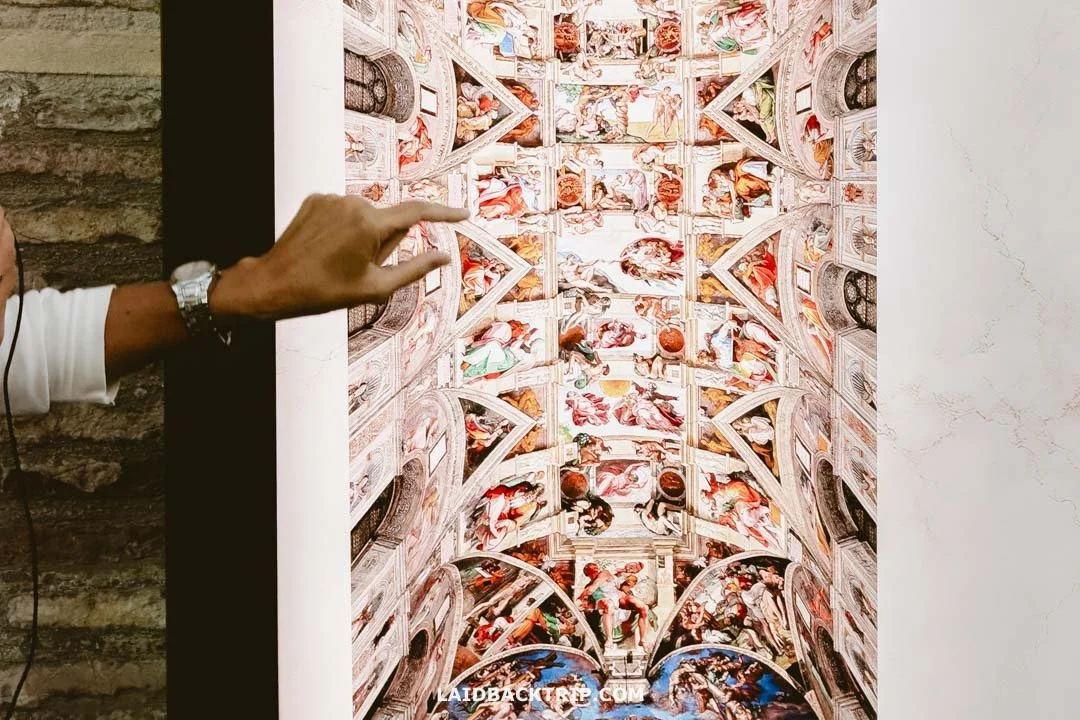
Michelangelo decorated the Sistine Chapel ceiling using nine scenes from the Book of Genesis.
Once seated, we could finally focus on Michelangelo's vast 16th-century frescoes spanning the entire vaulted ceiling. The scene was just incredible. Now, it was time to revisit everything we had learned earlier during the tour. At the center are nine scenes from the Book of Genesis, with the most famous being the Creation of Adam, where the fingers of God and man almost touch. Surrounding these scenes are twelve monumental figures of Old Testament prophets and classical sibyls, along with the Ignudi.
We then turned our attention to the altar wall, which features another of Michelangelo's masterpieces, the Last Judgment, depicting the Second Coming of Christ. Thanks to the guide's earlier explanation, it was easier to understand the roughly 300 figures Michelangelo painted here (ust kidding, it was still a mess), including his self-portrait hidden in the flayed skin held by Saint Bartholomew. We also examined the 15th-century frescoes by masters such as Botticelli and Perugino, depicting scenes from the lives of Moses and Christ that cover the side walls.
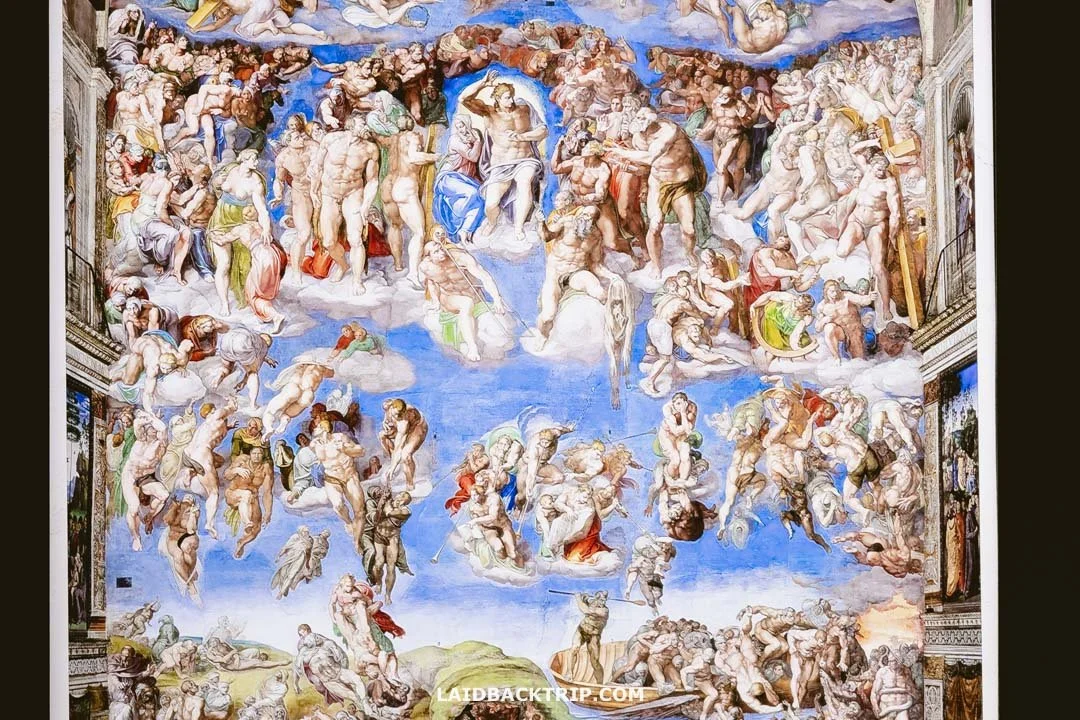
The Last Judgment is one of Michelangelo's greatest masterpieces.
New Wing
And that was it. We then slowly made our way through the adjacent halls back toward the starting point. After leaving the Sistine Chapel, we continued through the Lapidary Gallery into the New Wing, which eventually brought us to the Giardino Quadrato.
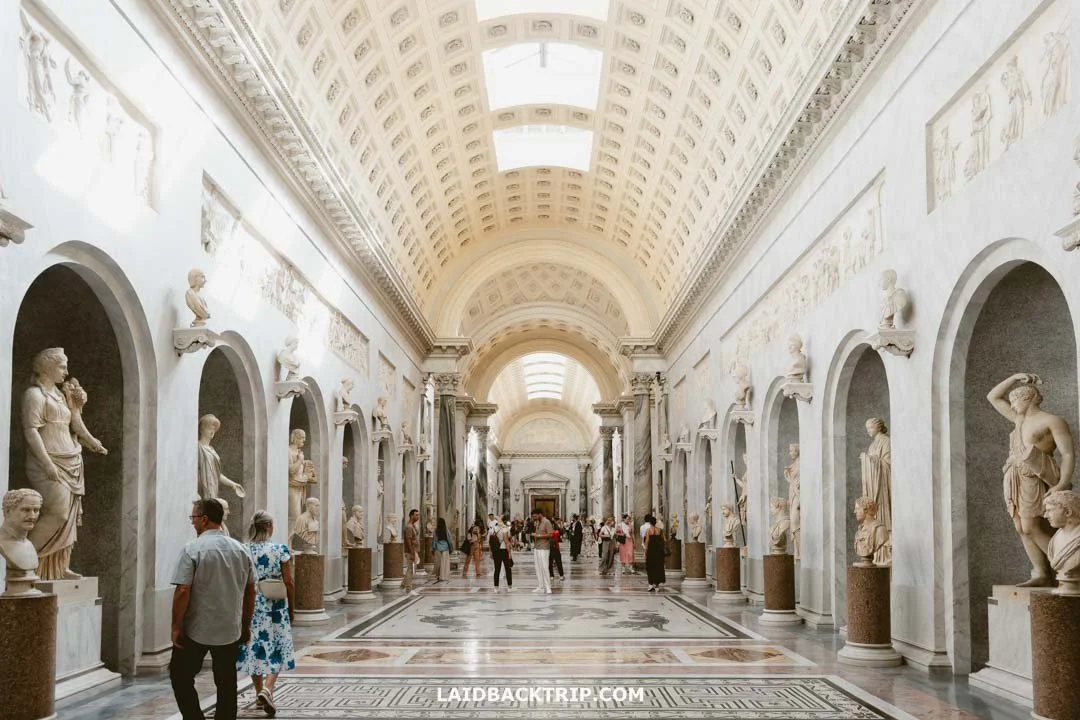
New Wing was the final section we saw in the museum.
The most interesting section was the New Wing, designed in neoclassical style. It was filled with some of the finest ancient statues, including the Augustus of Prima Porta, and featured a beautiful barrel-vaulted ceiling and mosaic floors.
Before reaching the main hall with the incredible Bramante Staircase, we stopped at the garden and enjoyed the snack we had brought with us (there was also a cafe if you did not bring your own food).
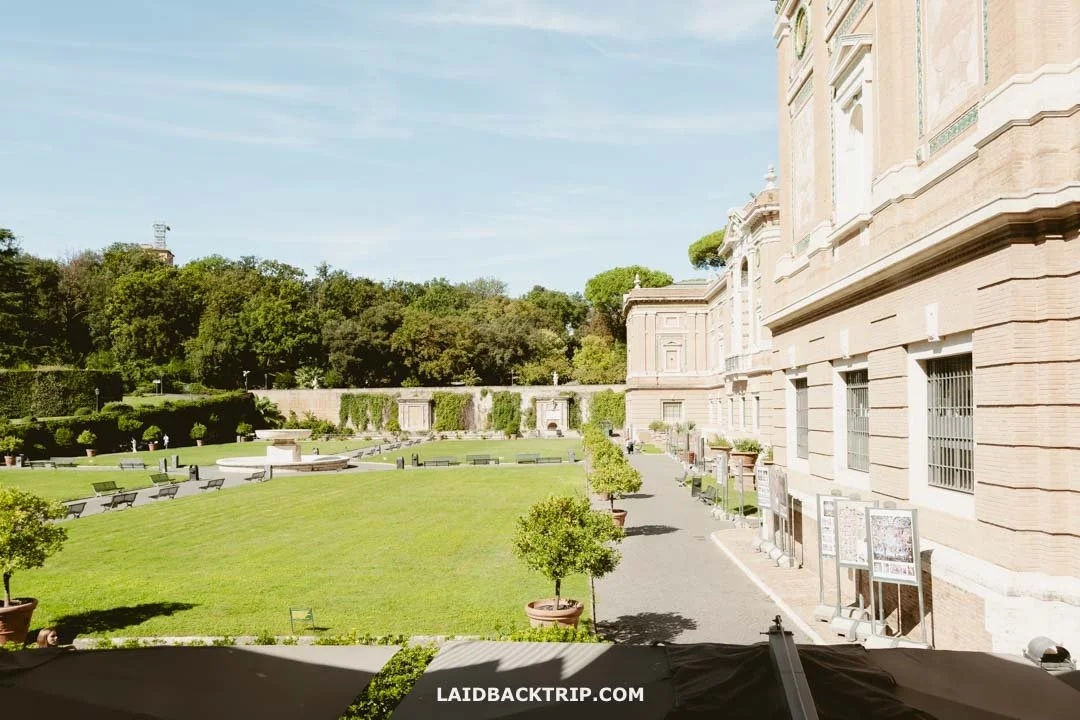
Taking a break at the Giardino Quadrato turned out to be the perfect tour ending.
Is the Vatican Museums Tour Worth It?
It's really hard for me to say what the best way is to experience the Vatican Museum, as we really enjoyed the tour, but I have a feeling that we would feel quite the same had we explored the museums on our own. Probably the best part of the experience was that the tour was really well done for first-time visitors to the Vatican Museums who don't want to spend the whole day in the museums. This time, it worked for us, as we planned to do the whole Vatican City in one day, not just the museums. So here, I can only summarize some of the pros and cons we noticed during the guided tour.
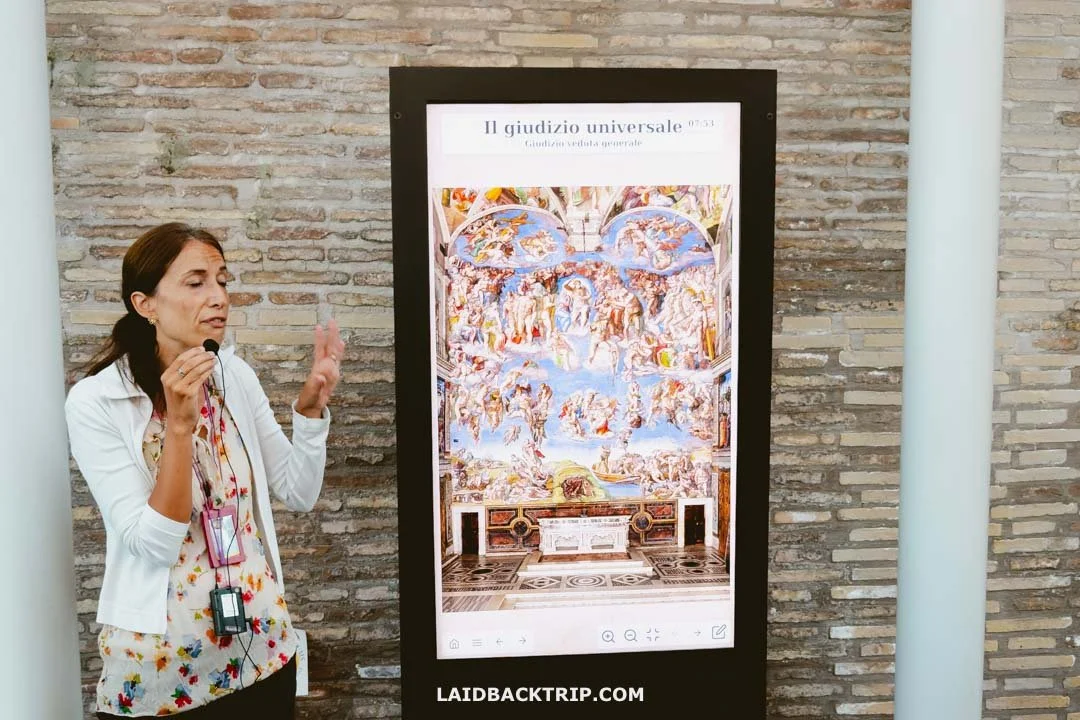
We truly enjoyed exploring the Vatican Museums while taking a guided tour.
I'll start with the most obvious advantage, and that was that as we had roughly two hours for the museum (not including the Sistine Chapel, where we could stay as long as we wanted), we really didn't have much time for idling. And given that the Vatican Museums were so huge, it was really great that the guide navigated us through the museums without losing any precious time by taking wrong turns. This was just perfect, as this was not the only part of the Vatican City we wanted to see, so we couldn't stay in the museums the whole day.
We've been to some huge museums before (Louvre, Metropolitan Museum of Art, Germanisches Nationalmuseum, etc.) without a guide, and we definitely spend a good amount of time figuring out what we want to see next and how we would get there. This time, this wasn't really an issue as the guide led us through the Vatican Museums with a firm hand from one section to another, so everything went without any hiccups.
The slight downside was that there were a few instances where we would love to enjoy some sections and art pieces a bit longer, but that's the problem with every tour, not just this one. To be fair, once we were finished with the tour, we could have revisited all the places we had just seen, as well as seen the museum sections we missed during the tour.
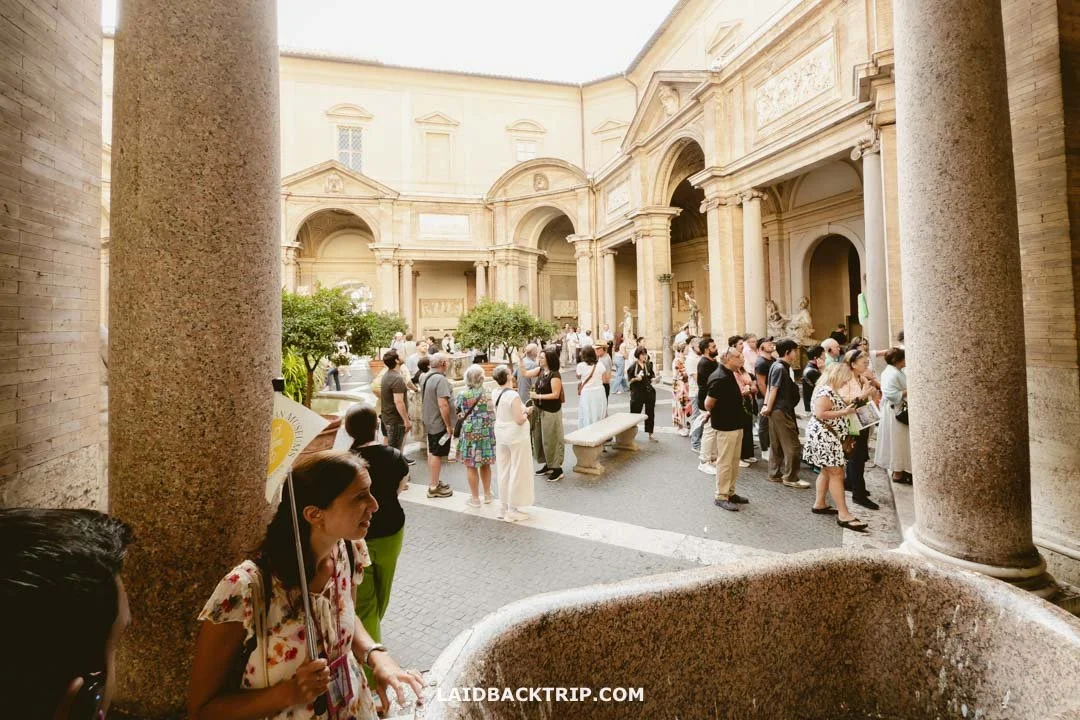
As first‑time visitors, the guided tour showed us the best of the Vatican Museums in just a couple hours.
Another great thing was that we really focused on the biggest highlights of the Vatican Museums collection, with the guide adding a bit of herself into the tour by showing us some of her favorite art pieces, which we would most likely overlook. Obviously, she also gave us a lot of background for each piece and the areas of the museum we were just in. Hearing it from a guide was definitely more digestible than reading it from the information panels in the rooms (the good thing was that they were also in English).
Again, we don't mind reading the information ourselves, but it definitely takes more time. So all in all, this was our first trip to the Vatican Museums, and the guided tour made everything much easier for us, but if the tickets were still available, we would most likely have gone independently.
How Much to Spend in the Vatican Museums
The hardest part was deciding how much time to dedicate to the Vatican Museums, as this is one of those places where it is easy to spend an entire day. Since we joined the official tour, which was supposed to last about two hours, and had to book a timed-entry ticket for St. Peter's Basilica, our schedule was somewhat restricted.
Here, we also made a small planning error by setting aside an additional two and a half hours to explore the museum independently. With roughly four and a half hours before heading to St. Peter's Basilica, where we expected to spend at least two hours (we ended up spending three), we thought it would be enough. The guided tour, however, ran over two hours. We then spent another 45 minutes in the Sistine Chapel and some extra time in the rooms that followed it.
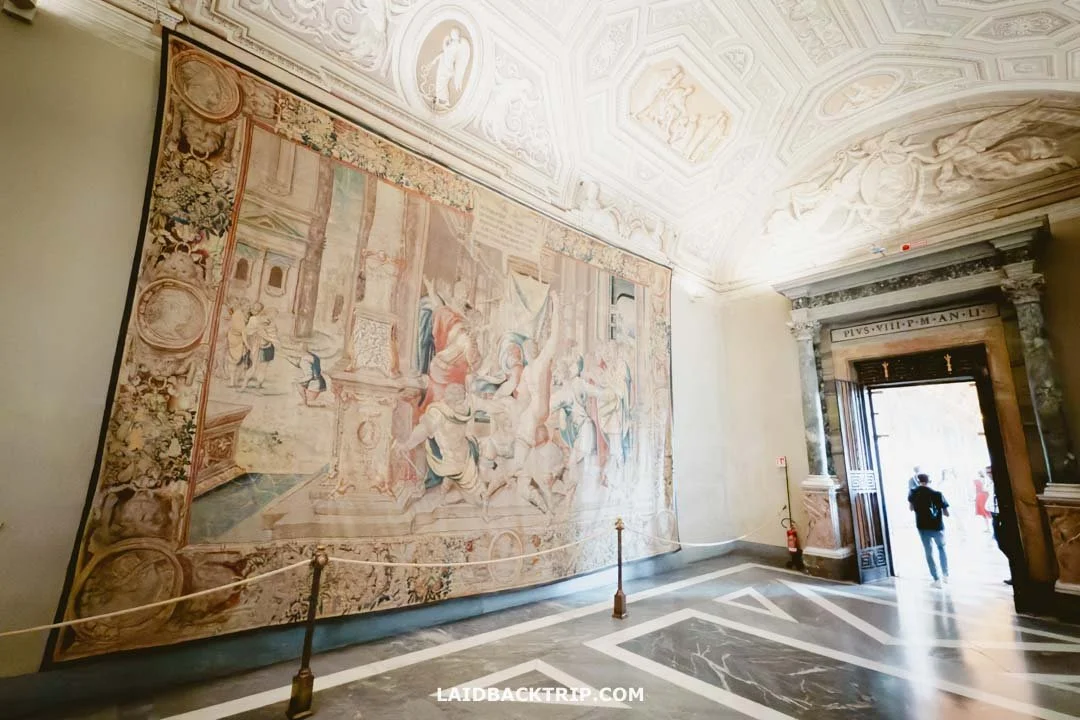
It's easy to spend anywhere from a few hours to a full day inside the Vatican Museums.
All in all, the tour that was planned for two hours stretched to over three hours once everything was included. After a 30-minute break in the garden, we realized we had already been in the Vatican Museums for about four hours, leaving almost no time for exploring on our own.
We still had plenty of energy, but with our scheduled entry to St. Peter's Basilica approaching, we decided not to extend our visit further. Our tour began at 8 AM (though we entered about 15 minutes early), and we exited the Vatican Museums just before noon. Four hours felt like a very reasonable amount of time, considering the guided tour and our time in the Sistine Chapel. Based on our experience, spending longer than four hours in a museum requires a different strategy, as it becomes harder to stay focused.
Afterward, I would say that four to six hours is generally sufficient for most visitors. With St. Peter's Basilica and St. Peter's Square still on the agenda, spending more time in the museums would likely make for a very tiring day. If we were planning to devote a full day to the museums, we would probably schedule the basilica visit for the following day.
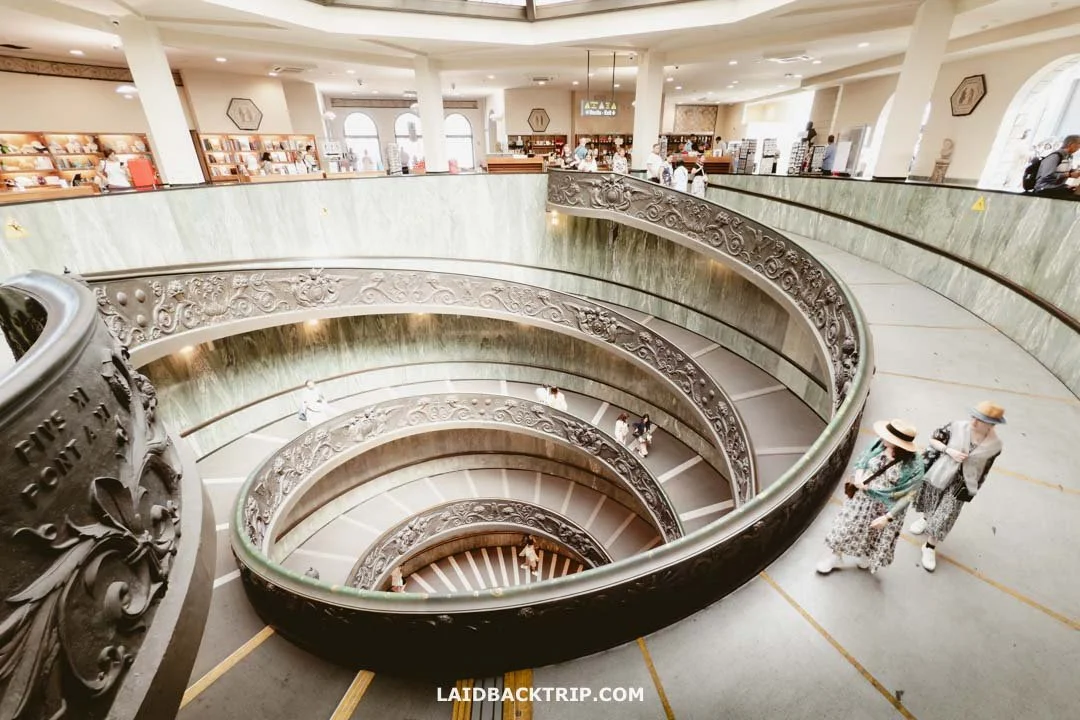
We used the stunning Bramante Staircase as we exited the Vatican Museums.
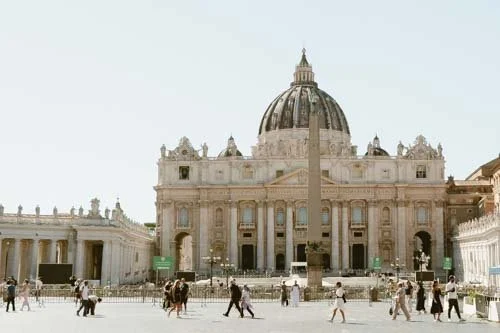
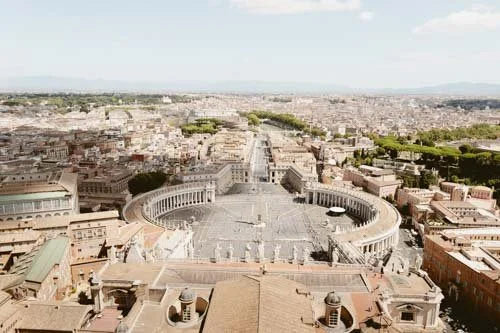

Climb to the top of St. Peter's Basilica's dome for breathtaking panoramic views across Vatican City and the beautiful city of Rome.