Visiting St. Peter's Basilica: Our Experience
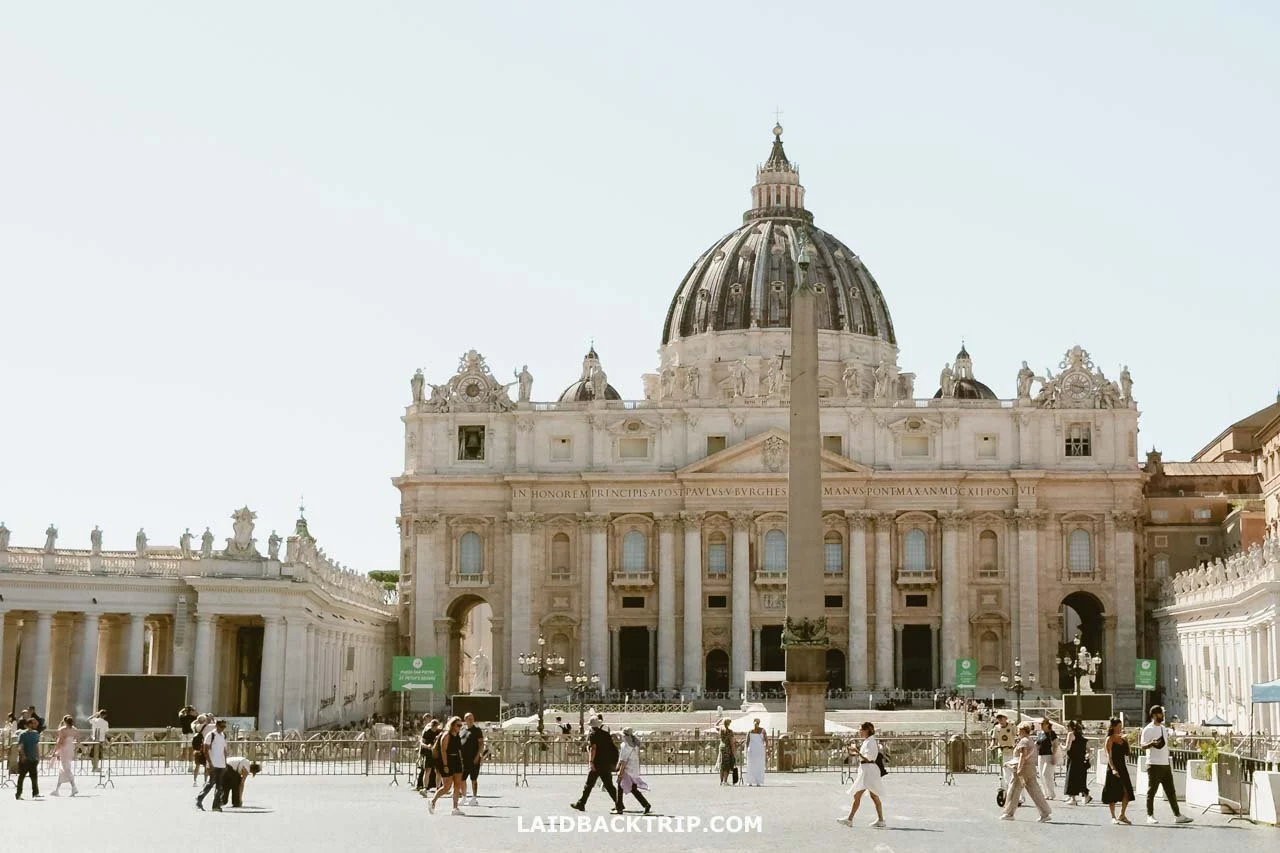
St. Peter's Basilica is without a doubt the most impressive church we have ever visited.
Our next stop in Vatican City was the iconic St. Peter's Basilica. This is exactly how our visit went.
Even though we have already seen countless breathtaking attractions during our travels, only a few have had the same impact on our senses as St. Peter's Basilica in Vatican City. While visiting a church is usually not a big deal for us (we have churches in Czechia everywhere, after all), this is one of those experiences that is completely overwhelming and impossible to forget. Quite honestly, it is also not easy to describe, because this is one of those places you really need to see for yourself to fully understand how enormous and richly decorated it truly is.
St. Peter's Basilica is basically a huge church, but that description alone does not even come close to telling the full story. With a length of 187 meters and a height of 136 meters, St. Peter's Basilica is the largest church in the world. Beyond its size, it is the center of the Catholic Church, built over the burial site of St. Peter, the first pope. As a masterpiece of Renaissance and Baroque architecture, it carries immense spiritual significance and houses world-famous art such as Michelangelo's Pietà. It is simply the most important structure in all of Vatican City.
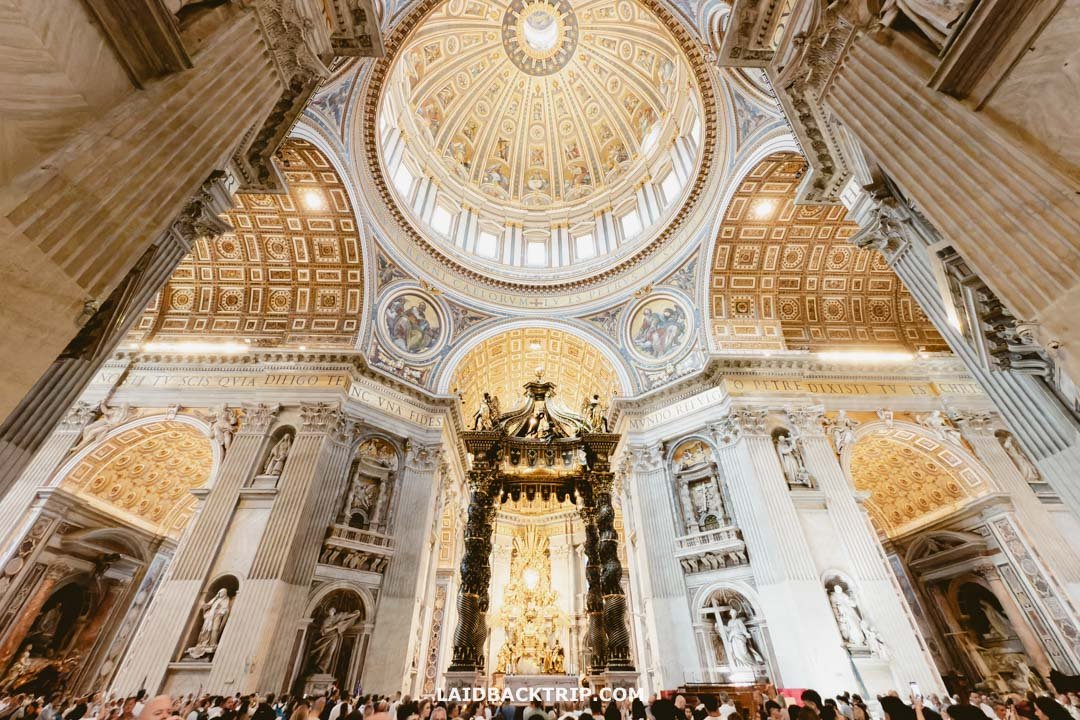
Photos really do not do justice to how it feels to enter St. Peter's Basilica in person.
Since we were spending nine days in Rome, it was easy for us to dedicate a full day to Vatican City in our itinerary. Even though we did not visit the Vatican for religious reasons but rather as regular travelers, we were still incredibly excited to finally see St. Peter's Basilica. Unlike Lucie, I had already been there as a kid, but that was so long ago that I only remembered small fragments of the visit. One thing had not changed, though. I could not wait to climb to the top of the dome and enjoy views of the Vatican and Rome, views you simply cannot find anywhere else.
Getting to St. Peter's Basilica
From our hotel near Piazza Navona, St. Peter's Basilica was less than two kilometers away, which meant we could easily get there on foot. Early in the morning, we passed through the quiet Piazza Navona, walked across the Centro Storico, and made a short detour to Ponte Sant'Angelo, which Lucie really wanted to see this early in the day.
After crossing the Tiber River and arriving in front of Castel Sant'Angelo, we simply turned left and followed Via della Conciliazione all the way to Vatican City. Once we left the old castle behind and continued along Via della Conciliazione, St. Peter's Basilica stayed right in front of us the entire time, so there was really no way to get lost.
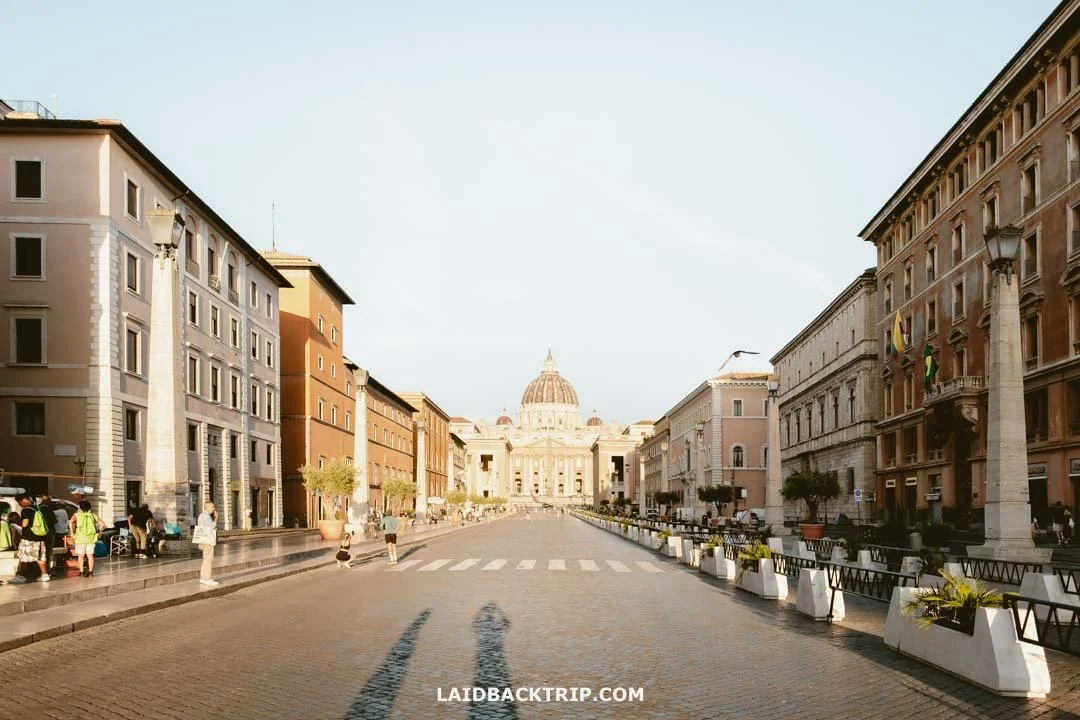
Once we turned onto Via della Conciliazione, we simply walked straight ahead all the way to the Vatican.
Just before reaching St. Peter's Square, we officially left Rome and entered Vatican City, although there is technically no formal border control. With the basilica still ahead of us, we took our time enjoying the views and the calm morning atmosphere of St. Peter's Square.
St. Peter's Basilica Entrance
On the day of our visit, we found the main entrance to St. Peter's Basilica on the right-hand side when facing the church, which in our case was the line for visitors with prebooked tickets. This entrance was located just past the Vatican Colonnade.
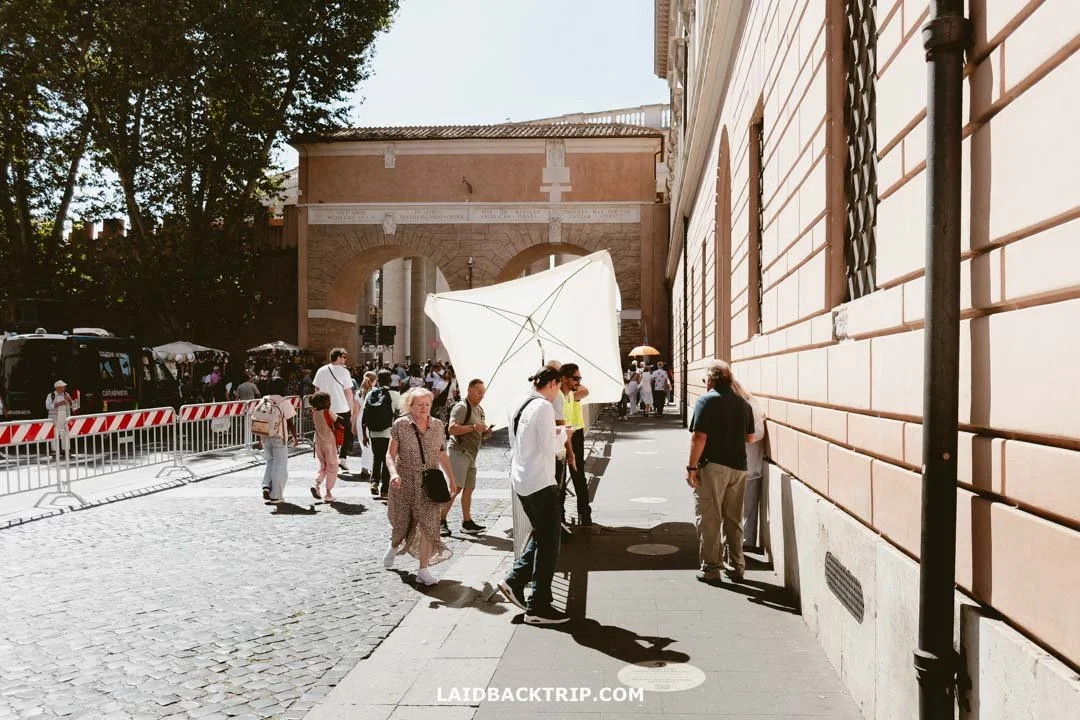
Here at Porta Angelica, we joined the right line, which took us straight to the entrance of St. Peter's Basilica.
The access line technically began near the Vatican Walls at Porta Angelica, where Largo del Colonnato and Via di Porta Angelica meet. The exact GPS coordinates are 41.90343, 12.45761. Since we planned to visit the Vatican Museums first, we continued walking along the Vatican Walls until we reached their entrance.
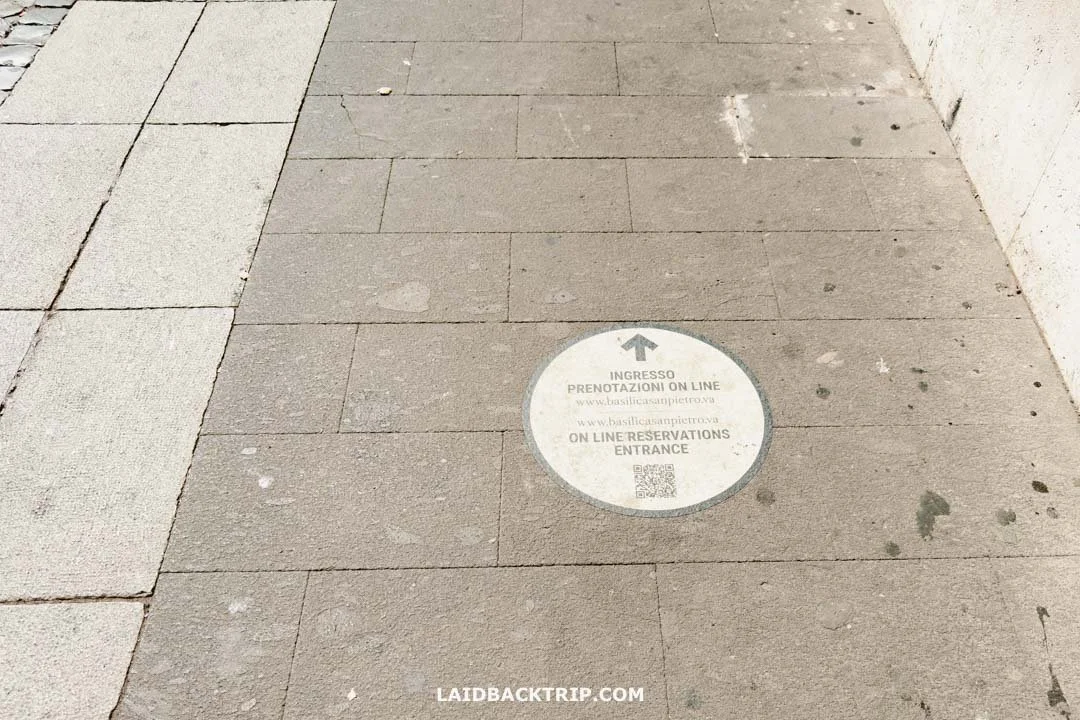
We also followed the signs on the sidewalk meant for visitors with tickets.
After finishing our visit to the museums, we simply retraced our steps and joined the entry line to St. Peter's Basilica back at Porta Angelica. Because we had booked our tickets online, we took the access line on the right, which followed closely along the building, as the left line was for visitors without prebooked tickets. The total wait, including the security check, took about 15 minutes. After that, we entered St. Peter's Basilica and found ourselves in the Papal Grottoes.
St. Peter's Basilica Entry Fee and Tickets
Despite being one of the most famous churches in the world, we were surprised to learn that St. Peter's Basilica is technically free to enter. The only requirement is to join the line designated for visitors without tickets. On the day we visited, this line also started at Porta Angelica, with the only difference being that it was the line on the left. This option was definitely tempting, because who would not want to visit such an iconic attraction for free, but it came with one major downside, which we will talk about in a moment.
While browsing the official website, we also noticed an option to purchase a 'Basilica' ticket for 7€, which included an audio guide and access through a timed entry. This is where things can get a bit tricky, since every visit is different. The main benefit of this ticket is not having to worry about how long the line for visitors without tickets might be. On some days, that line can actually be longer, while on others, it might be shorter. To explain this better, let us share our own experience.
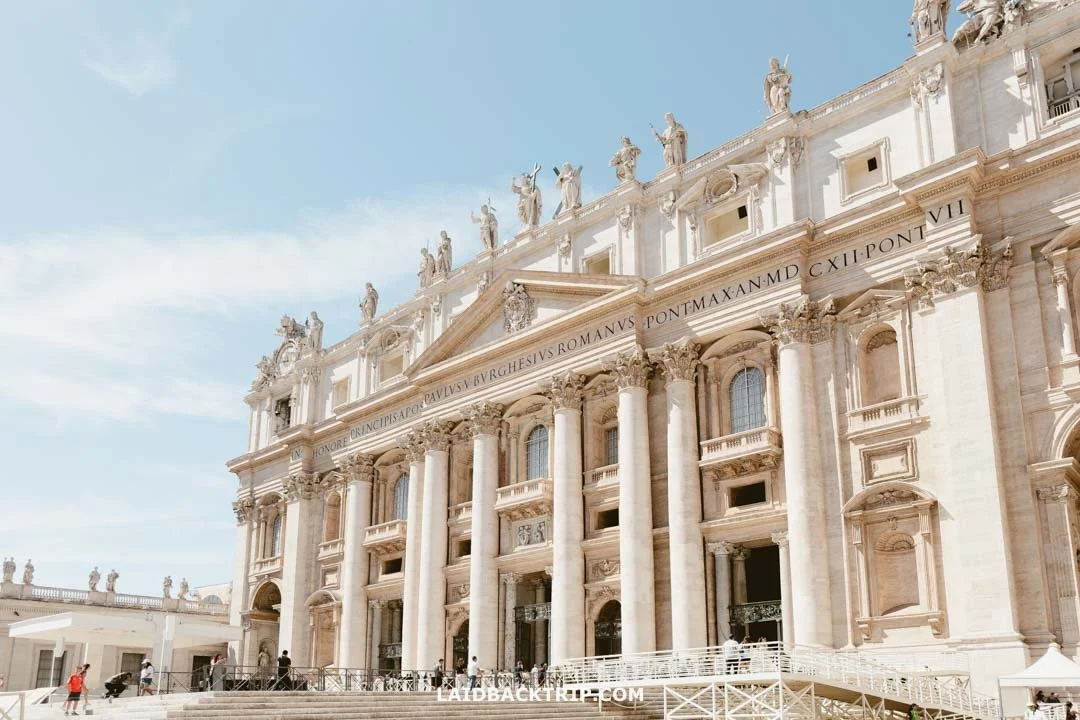
St. Peter's Basilica is free to enter, but you have to pay to climb the dome.
In the end, we went with the third option, which was the 'Dome' ticket for €17. Like the previous option, it included access to St. Peter's Basilica, a digital audio guide, and a timed entry. The key difference was that this ticket also allowed us to visit St. Peter's Dome, which was something we really wanted to do. Climbing to the top level of the dome turned out to be one of the highlights of our entire day in Vatican City. While this ticket was definitely on the expensive side, we felt it was absolutely worth it.
There was also a more expensive version of this ticket available for €22, with the main difference being that the first section of the dome climb could be done by lift. We did not feel this was necessary and chose to save €5 each. Of course, this option can be very helpful for visitors with mobility issues. Just keep in mind that there is no elevator for the second part of the climb. We will explain why as we talk about the dome climb in more detail later in the post, so stay tuned.
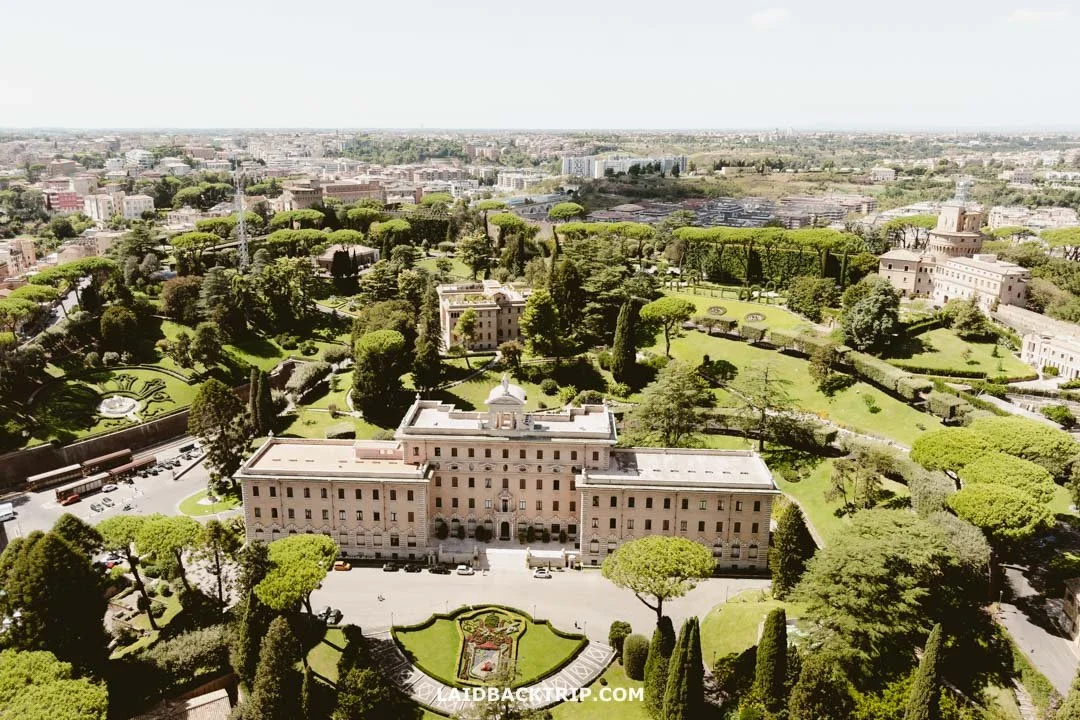
The views of Vatican City from the top were definitely worth the money.
Once inside, we noticed a kiosk where it was also possible to purchase a €10 'Dome climb only' ticket. If we had decided to enter St. Peter's Basilica for free, this option could have saved us some money. However, we would not have had timed entry or an audio guide, both of which we found extremely useful.
The official website also offered tickets for special areas, such as the Necropolis and the Treasury Museum. The former required a reservation request, and the latter was closed at the time of our visit, so we did not seriously consider either option.
One important thing to keep in mind is that there are many resellers offering tickets to St. Peter's Basilica, often at highly inflated prices. They frequently make these tickets appear official or suggest that a ticket is required to enter, which is not the case. Because of this, we are always cautious and generally avoid using them. If the official website had been sold out, we probably would have looked at platforms like GetYourGuide, which at least offer some really popular guided tours with verified reviews like this one.
The last thing worth mentioning when it comes to St. Peter's Basilica is the idea of 'skip-the-line tickets', because they do not really exist. While we had a reserved-entry ticket that allowed us to bypass the public line and use a faster, dedicated entrance, we still had to go through the mandatory security check. Even on a relatively quiet day, this process took just over 15 minutes. The security check applies to everyone, regardless of whether you have a ticket or not.
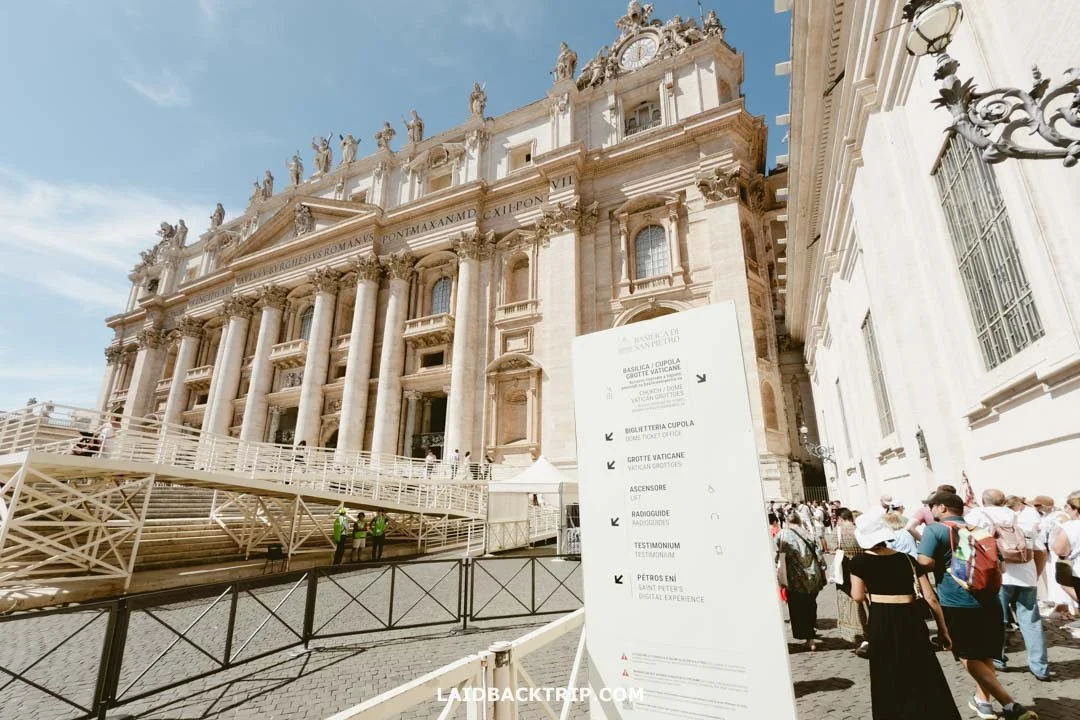
No matter if you have a ticket or not, there is always a line for the security check.
As mentioned earlier, if we had not planned to visit the dome, we likely would have entered the basilica for free. Still, this can be a bit of a risk, since without timed entry, you may end up waiting in line. The tricky part is that there is simply no way to predict what the situation will be like on the day of your visit.
Opening Hours at St. Peter's Basilica
St. Peter's Basilica is open daily from 7 AM to 7:10 PM, although it may close a bit earlier at 6:30 PM between October and March. The Dome, also called the Cupola, closes earlier as well, usually around 5 PM or 6 PM. We arrived at St. Peter's Basilica in the early afternoon, so timing was not really a concern for us.

We arrived at St. Peter's Square early in the morning, and it was incredibly quiet.
Some specific areas, such as the Sacrament of Reconciliation for confessions, the Blessed Sacrament Chapel, and Saint Peter's Digital Experience, have their own opening hours. It is also worth keeping in mind that the basilica may operate on a modified schedule during papal events, especially on Wednesday mornings.
Papal Grottoes
Once we reached the basilica, we walked straight ahead and entered the underground area known as the Papal Grottoes, sometimes simply referred to as the Vatican Grottoes. We accessed them from outside through a vault-like glass door, although there is also another entrance from within the basilica itself.
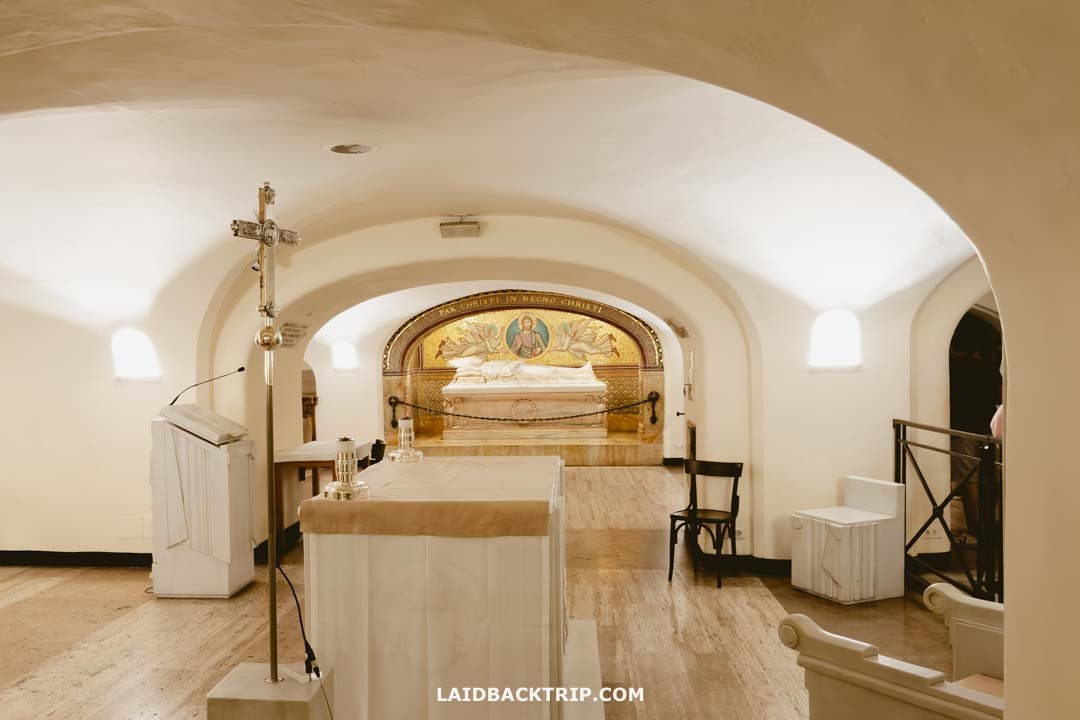
More than 90 popes are buried in Saint Peter's Basilica and the Vatican Grottoes.
Inside the crypt, we found ourselves in a space dating back to the 16th century, created during the construction of the current basilica. Located just beneath the main floor, this underground level is made up of chapels and corridors and contains the tombs of numerous popes and monarchs connected to the Church.
Even though St. Peter's Basilica is one of the most visited sites in the world and we were far from alone, the Papal Grottoes felt surprisingly quiet. We slowly followed the one-way route, passing the resting places of popes such as John Paul I, Paul VI, and Benedict XVI. At the end of the crypt, we reached the tomb of St. Peter, which marks the traditional burial site of the apostle.
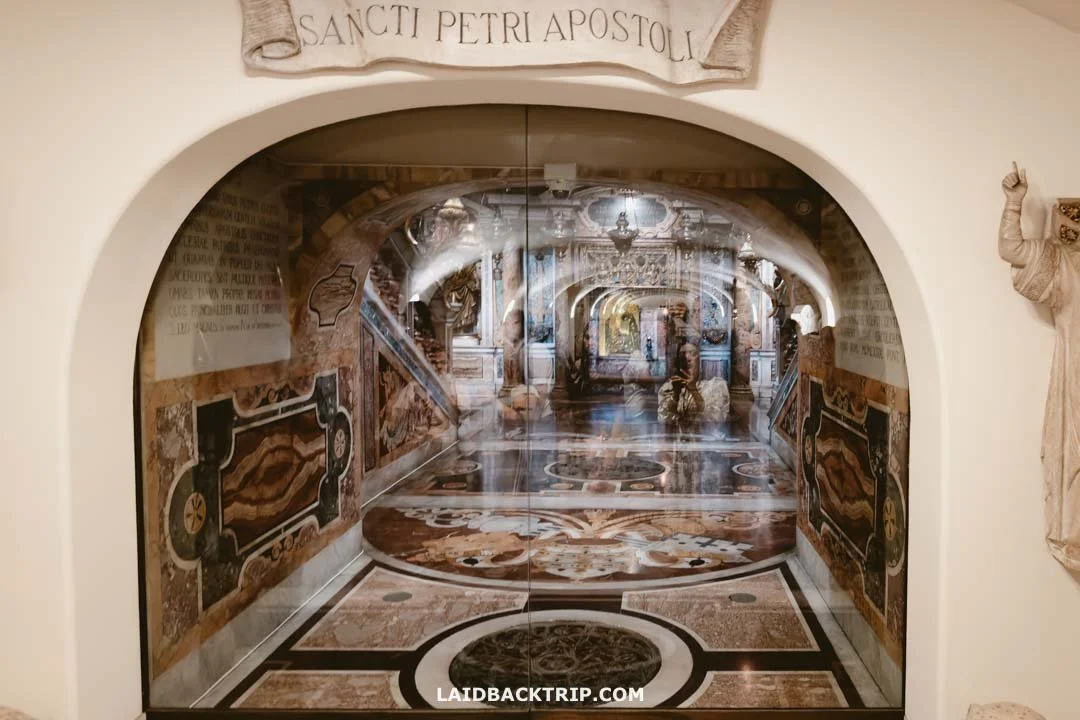
This is the spot that marks St. Peter's grave, which is actually located right below it.
What makes this even more fascinating is that beneath the Papal Grottoes lies the Necropolis, also known as the Scavi. This ancient Roman cemetery is where St. Peter's actual grave is located. Access to this level requires a guided tour that must be booked well in advance. We did not even attempt to book it since our decision to visit Rome was fairly last-minute. If the official site is fully booked, there is still a chance that the Scavi tour might be available on GYG.
Walking through the Papal Grottoes did not take long (about 15 minutes), and before we realized it, we were heading back up to the main level of St. Peter's Basilica. While it was an interesting look into the history of the papacy, the real highlight was still ahead.
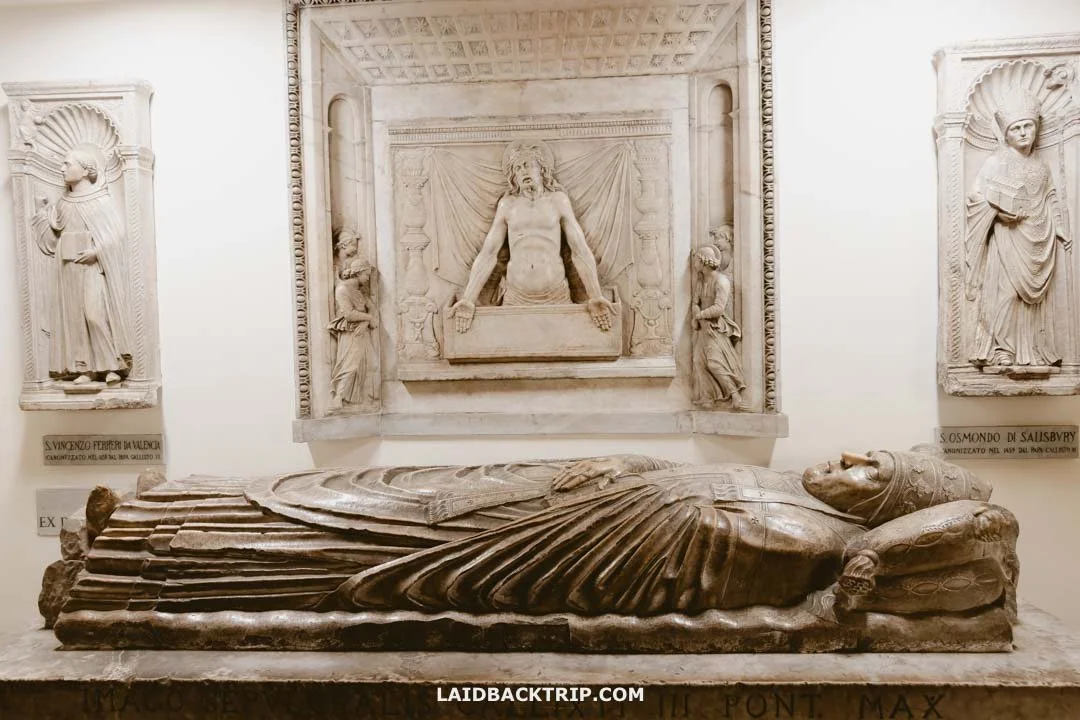
The papal grottoes offered a different perspective on the history of the papacy.
St. Peter's Basilica
Equipped with the digital audio guide included with our ticket, we started our self-guided tour of St. Peter's Basilica, which was expected to take about 60 to 90 minutes. We activated the link we received by email, which led us to a dedicated site highlighting the most important features of the basilica. Following the suggested route, we explored the church at our own pace. The guide was very easy to use and led us through the entire interior.
The only real downside of the audio guide was that it was valid for just 36 hours after activation. This meant we could not revisit it once we got home, since the link expired. For most people, this probably would not matter much, but I would have liked the option to come back to it later and revisit some of the details after the trip.
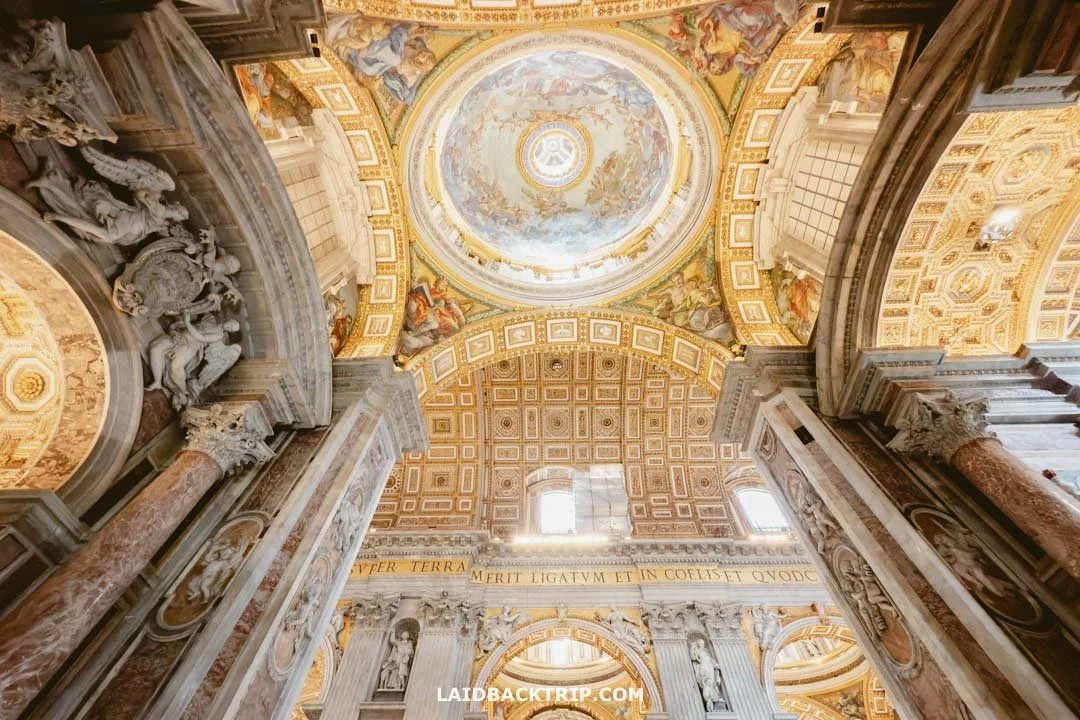
After a while, my neck was sore from looking up at the incredible ceiling inside St. Peter's Basilica.
What is There to See Inside St. Peter's Basilica?
The church features an enormous nave and an even more impressive dome, combining Renaissance and Baroque grandeur throughout. It is filled with chapels, papal tombs, marble sculptures, and stunning mosaic artwork. Interestingly, there were fewer paintings than we expected, as many of them have been replaced by intricate mosaics instead. No matter how it is described, though, the basilica truly feels like no other place. This is the center of the Catholic Church not just on paper, but in atmosphere as well.
St. Peter's Baldachin
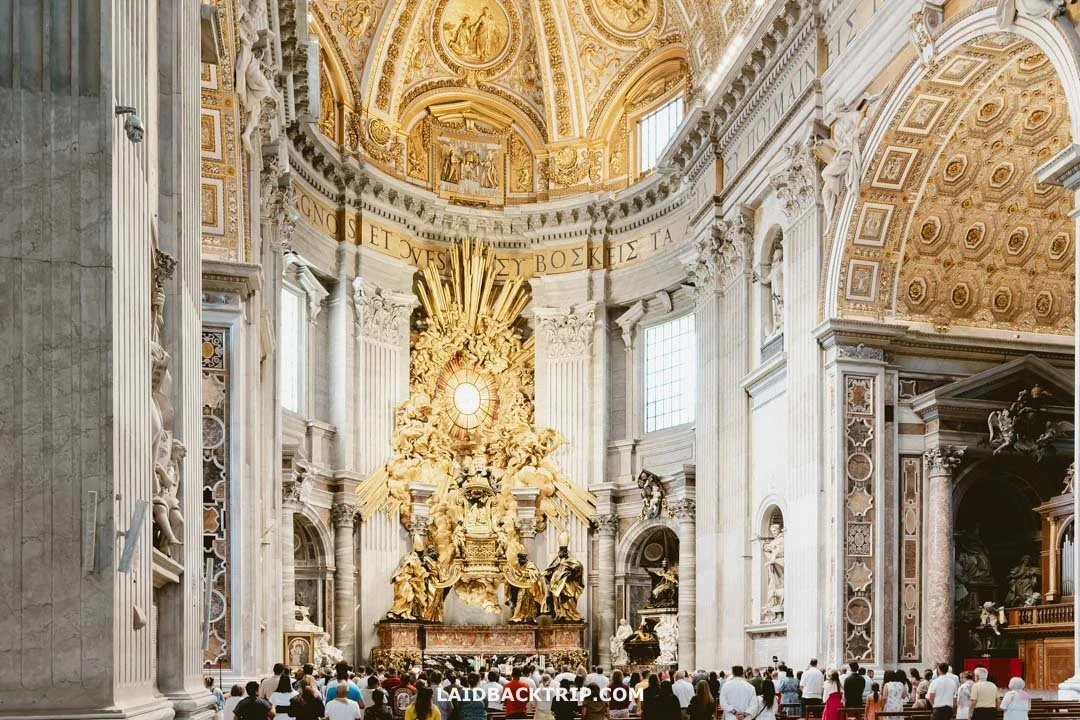
That said, there were a few elements of St. Peter's Basilica that clearly stood out. The first was the monumental St. Peter's Baldachin, positioned directly beneath the great dome. This massive 29-meter bronze canopy, designed by Gian Lorenzo Bernini, stands over the Papal Altar. With its twisting Solomonic columns, it marks the exact spot above St. Peter's tomb. Standing next to it, it was hard to fully grasp just how enormous and majestic it really is.
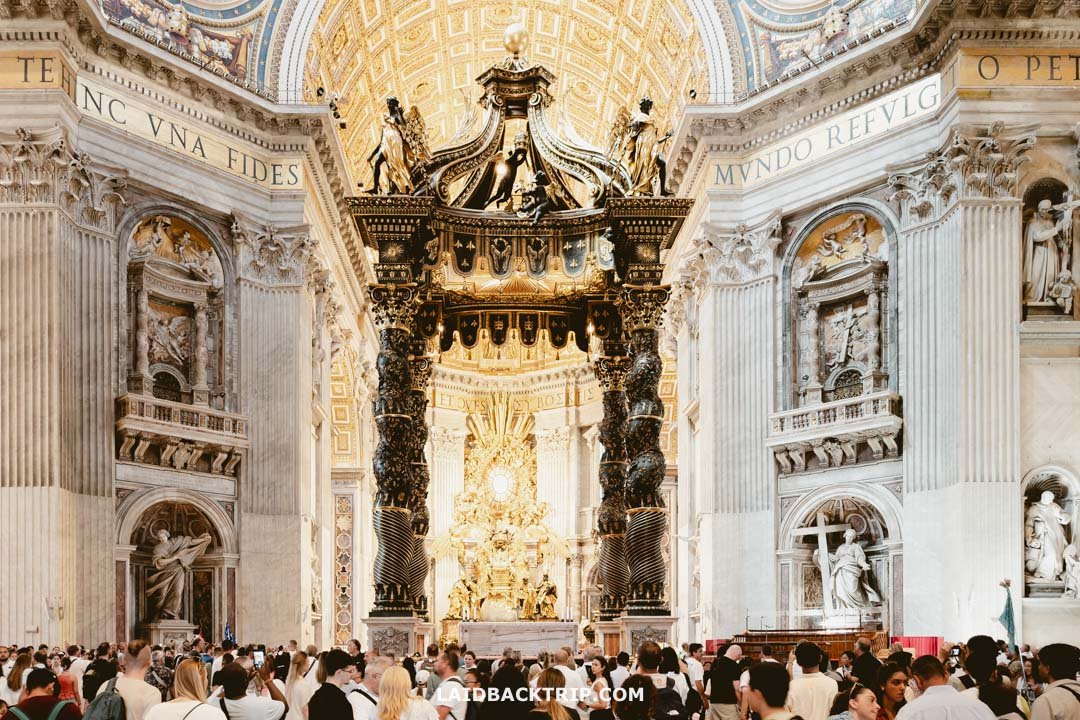
In photos, the size of St. Peter's Baldachin just does not stand out like it did when we saw it in person.
St. Peter's Dome
Directly above it, we could admire the tallest dome in the world. Its interior is richly decorated with massive mosaics, Latin inscriptions, and golden details. I personally loved the simplicity of the Pantheon's dome, which we also visited on this trip, but the sheer opulence of St. Peter's Dome is truly unmatched. Climbing the dome offers one of the best views in Rome, and it was one of those small adventures we simply could not skip. I will talk about that experience in more detail shortly.
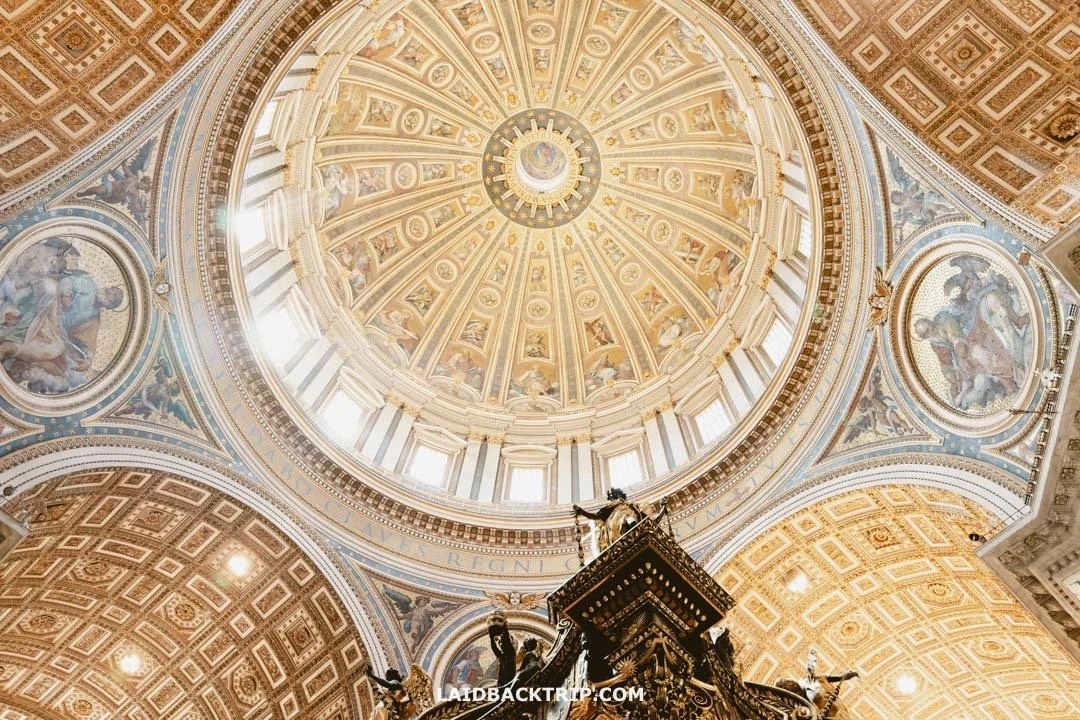
St. Peter's dome as we saw it while standing right next to the St. Peter's Baldachin.
Probably the most mindblowing fact about St. Peter's Basilica we discovered was that with its 136 meter height, it could easily fit inside the 93-meter-tall Statue of Liberty, including the pedestal. All the dimensions are remarkable, but standing inside the basilica really puts things in perspective.
The Holy Door
One of the more unexpected moments during our visit was when the visitor route led us to the far right side of the entrance portico, where we encountered the Holy Door (Porta Sancta). Decorated with bronze panels depicting biblical scenes, these doors are normally sealed and only opened by the Pope during Jubilee years. Without planning it, we happened to be in Rome during one of those years, which meant the doors were open and we could pass through them, just like the pilgrims who come specifically for this moment.
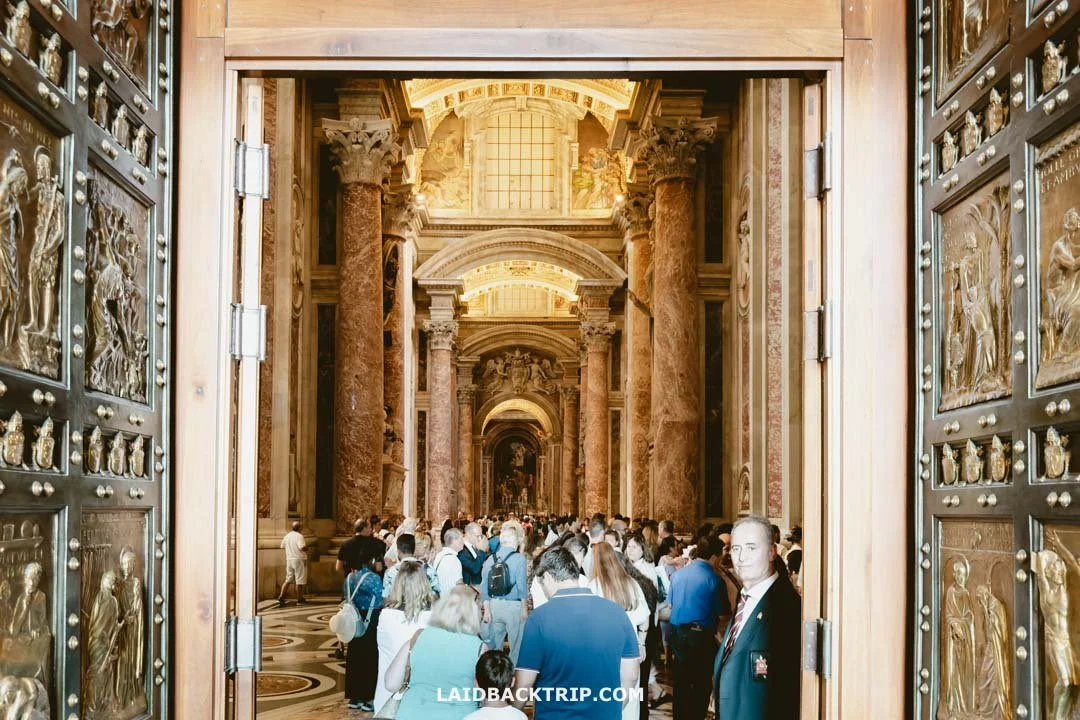
Walking through the Holy Door was only possible since we happened to visit during the Jubilee.
Michelangelo's Pieta
After reentering the basilica, we discovered another highlight. Located in the first chapel on the right, behind protective glass, was Michelangelo's Pieta, one of the most famous sculptures in the world. Michelangelo carved it when he was just 24 years old. The sculpture shows the Virgin Mary holding the body of Jesus after the crucifixion, and we also learned that it is the only work Michelangelo ever signed.
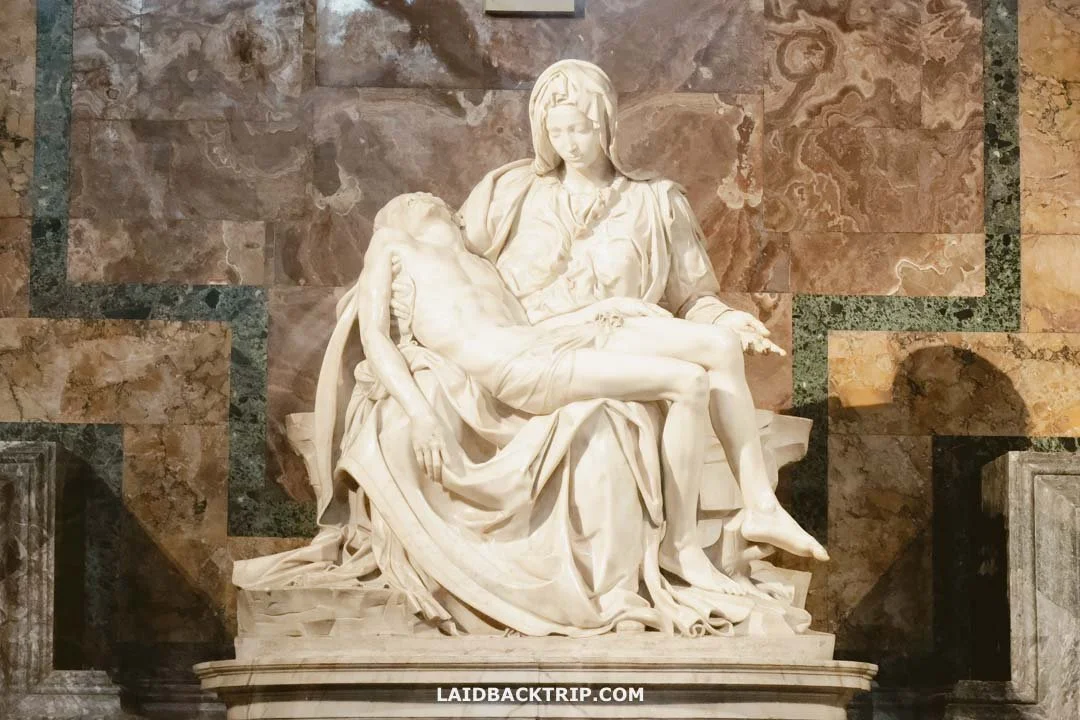
The Pieta is one of Michelangelo's most famous and celebrated works.
Of course, there was much more to see, including the Chapel of the Blessed Sacrament, the monument to Pope Alexander VII, both designed by Bernini, and the tomb of St. John Paul II.
As mentioned earlier, we spent roughly 90 minutes exploring the basilica, following the audio guide stops, taking occasional detours, and even sitting quietly in one of the chapels for a while. We were especially glad we brought our own earbuds, as listening through them was far more convenient and respectful than using the phone speakers.
History of St. Peter's Basilica
One detail that surprised us was that the construction of St. Peter's Basilica did not begin until the 16th century. The current basilica was built between 1506 and 1626, which felt later than expected for the most important church in the Catholic world. It replaced the Old St. Peter's Basilica, which had stood on this site since the 4th century CE, when Emperor Constantine commissioned its construction after converting to Christianity. That original church took about 40 years to complete and grew in importance over the centuries.
A wooden throne that tradition says belonged to the Apostle Saint Peter, leader of the early Christians in Rome and the first pope.
One of my favorite historical details was learning that it was not only used for papal coronations, but also for the coronation of Charlemagne in the year 800, when he was crowned emperor of the Carolingian Empire.
Perhaps the most surprising and slightly confusing fact we learned was that the Archbasilica of St. John Lateran is actually the official cathedral of the Pope as the Bishop of Rome, not St. Peter's Basilica. We visited this church later in the trip on our way to the Baths of Caracalla, and while it was very impressive in its own right, there really is only one St. Peter's Basilica.
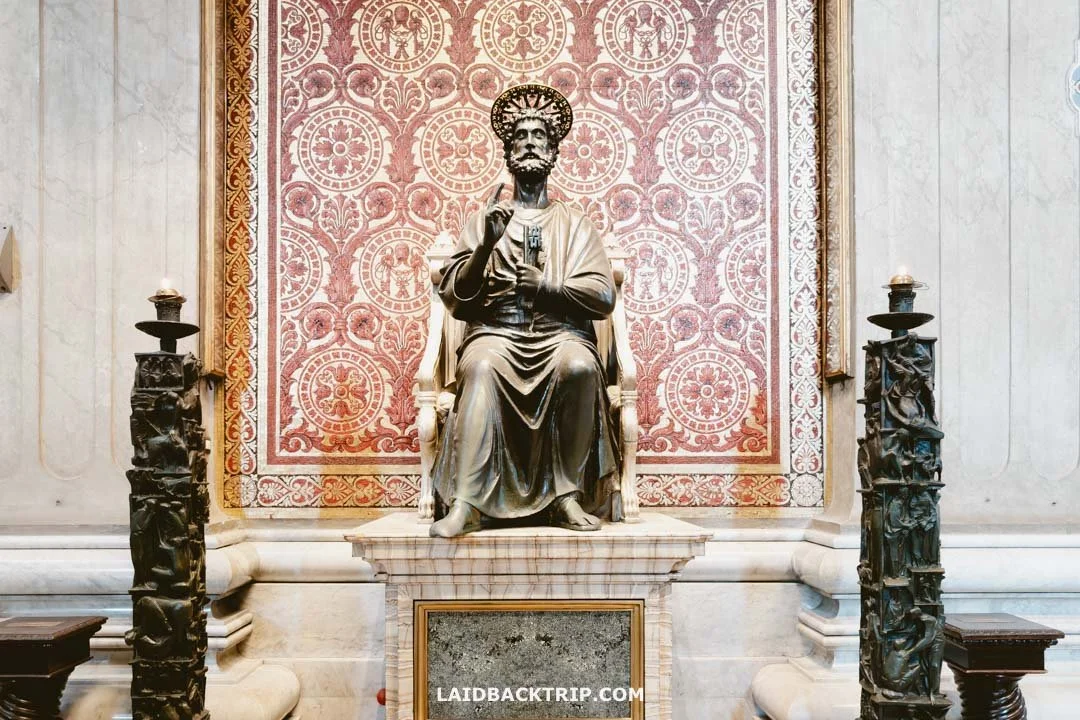
The old bronze statue of St. Peter has a worn‑down foot after centuries of pilgrims touching it.
St. Peter's Basilica is also one of the most important sites in Christianity, and for us, the visit carried another interesting layer. On previous trips, we had visited several major Christian sites in the Holy Land, including the Church of the Holy Sepulchre, the Sea of Galilee, and Nazareth.
Those places reflect the life of Christ itself, while St. Peter's Basilica represents the birth of the Church and the establishment of Rome as the seat of papal authority. Even though our visits were not driven by religious reasons, experiencing these places still felt like a fascinating journey through history.
St. Peter's Dome
After spending a good amount of time exploring the section with the old tombs and the main floor of the basilica, we were more than ready to head up to St. Peter's Dome. We could not wait. Once our assigned time came up, we made our way to the dome entrance, which is located inside the basilica. It was clearly marked and easy to find.
Because we booked the 'Dome with stairs' ticket, we were facing a climb of 551 steps to reach the views at the top. We did not waste any time and started making our way upward. The climb is divided into two main parts. The first section follows a fairly wide staircase that leads to the roof terrace after 231 steps. On the terrace, there is a small souvenir shop, restrooms, a drinking water fountain, and the entrance to the inner balcony. Surprisingly, the views from this terrace are very limited.
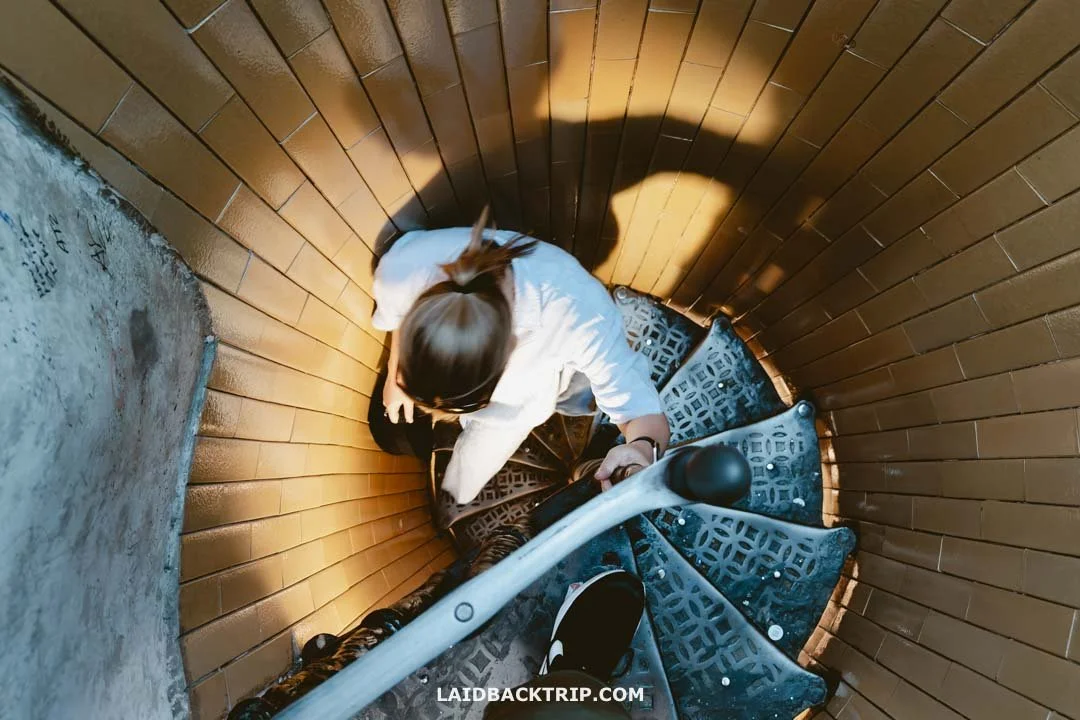
We really enjoyed the climb up to St. Peter's dome.
Before continuing higher, we stepped into the inner gallery of St. Peter's Dome. This gallery is essentially a walkway that circles the inside of the dome, and it was an incredible experience. We were about 45 meters above ground level. Looking down, we could see Bernini's Baldachin, the Papal Altar, and the crowds of visitors below. From that height, everyone looked just so small.
Another fascinating detail was being able to stand right next to the massive mosaics that decorate the inner surface of the dome. These were the mosaics that appeared from the main level like the giant paintings we expected.
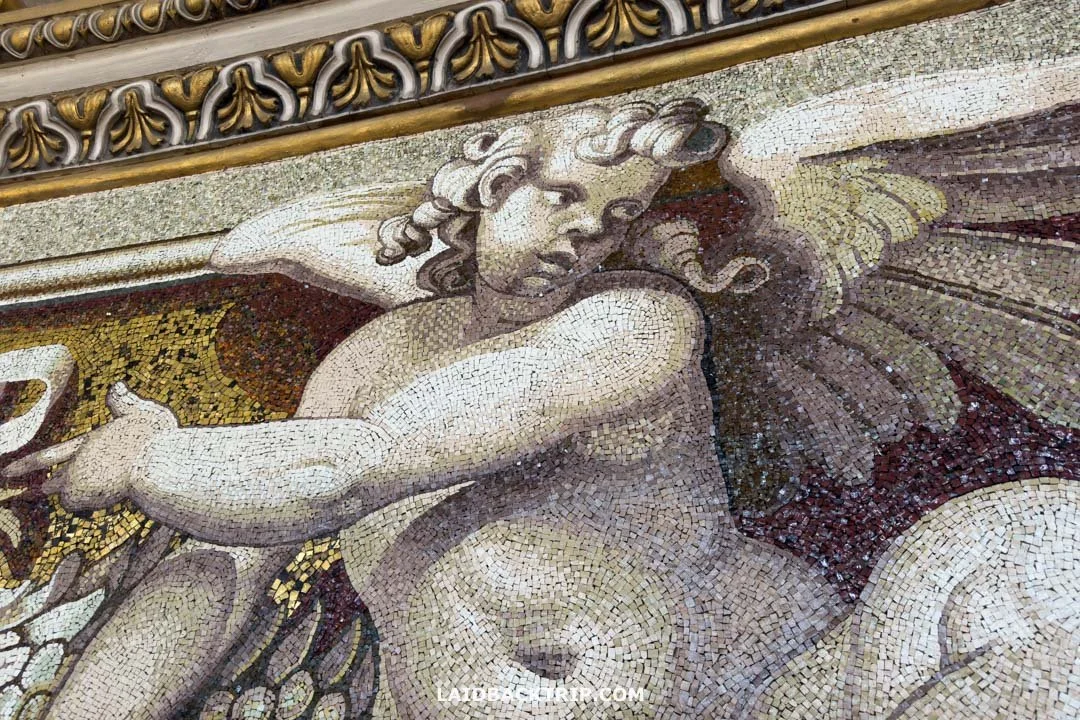
The mosaics decorating the dome were absolutely stunning when seen up close.
From there, another 320 steps remained before reaching the very top. This is where the climb became much more interesting. Up to this point, it felt like a fairly standard climb, similar to many we have done before, with the exception that the steps were a bit shallow.
As we continued, the staircase became much narrower. While walking between the outer and inner shells of the curved dome, we even had to lean inward in some sections. Both Lucie and I really enjoyed this part of the climb, as it felt completely different from anything we had done before (it felt different and brought back memories of the basilica in Quito in some ways).
At the top, we stepped onto a narrow circular walkway that runs around the Lantern, the highest point of the cupola. Because the space is so tight, it was fairly crowded. Still, the 360-degree views over Vatican City and Rome were absolutely stunning and more than worth the effort. At 136 meters tall, St. Peter's Basilica offers one of the best viewpoints in all of Rome. Since the viewing platform sits just below the very top, it is easily the best viewpoint in Vatican City.
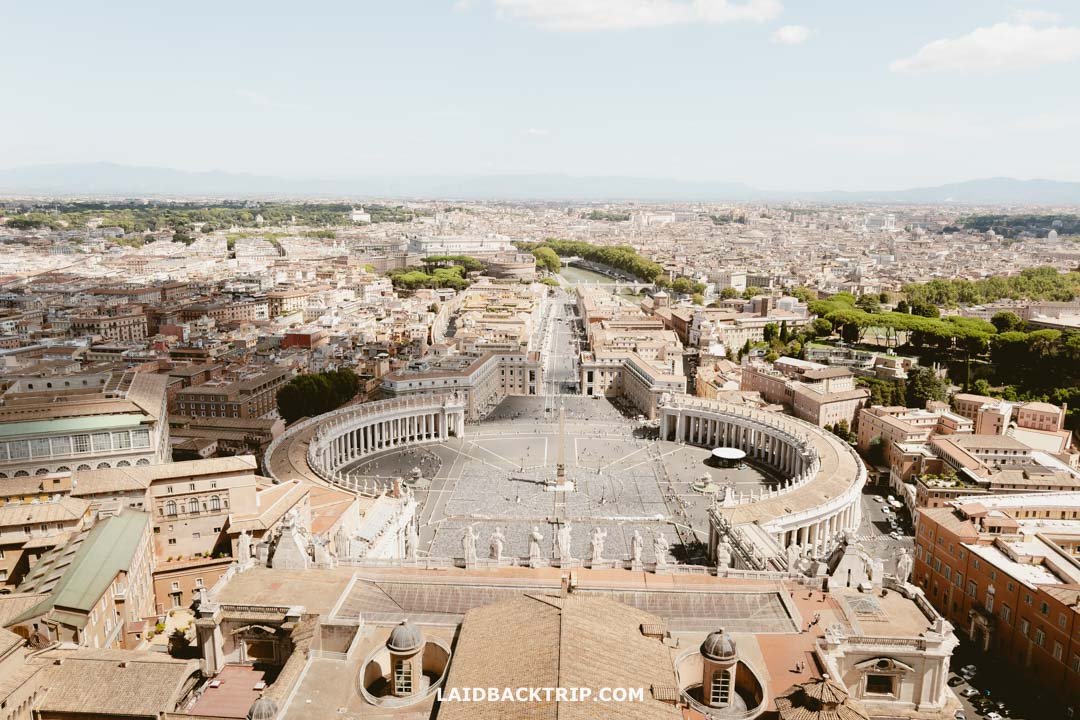
The view of Vatican City from the top of the dome made the climb completely worth it.
How Much Time to Spend in St. Peter's Basilica
As we were leaving, Lucie pointed out that we had spent more than three hours inside St. Peter's Basilica. Considering that we explored the crypts, toured the basilica, and climbed to the top of the dome, we definitely saw a lot. Still, we realized that we had probably never spent that much time inside a single church before, which made it a bit surprising.
We did not mind at all, though. St. Peter's Basilica was incredible. Plus, we could have easily stayed in Vatican City even longer. If things had not worked out as planned, we were fully prepared to return on another day. It was not necessary, but we still came back once more to enjoy St. Peter's Basilica in the evening.
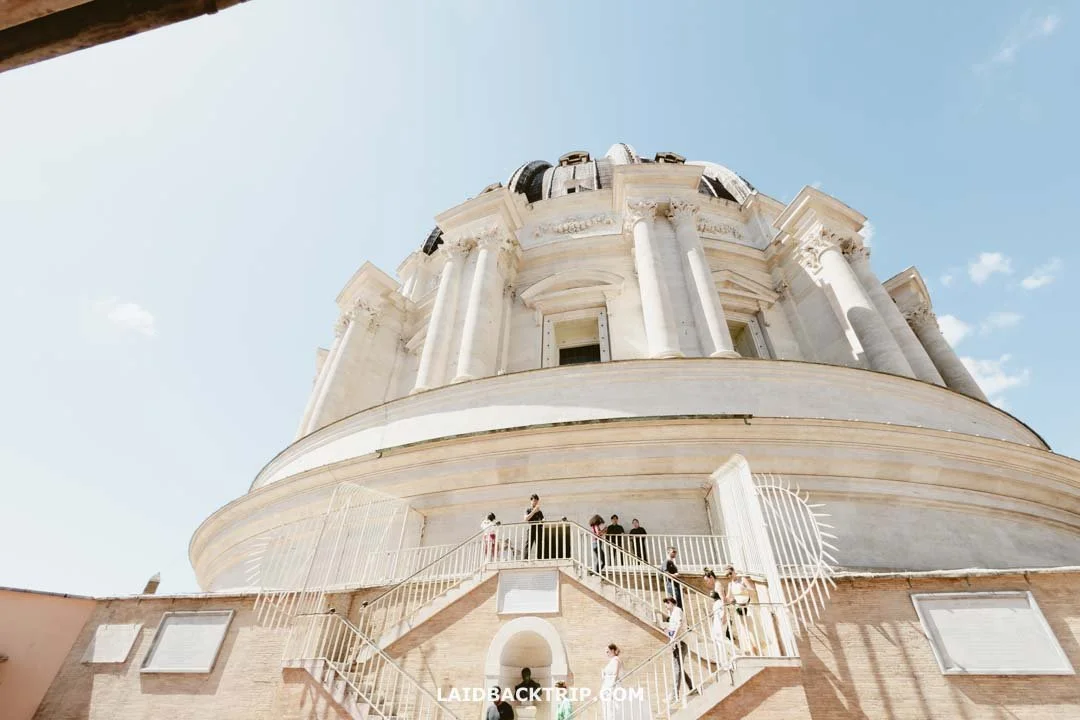
Including the dome climb, we spent three hours exploring St. Peter's Basilica.
All together, we spent roughly 15 minutes in the Papal Grottoes, about 90 minutes inside the basilica itself, and around 75 minutes climbing the dome. As I just said, a few days later, we came back to see St. Peter's Basilica after dark, and it turned out to be another memorable experience. The basilica was beautifully illuminated, St. Peter's Square looked stunning, and the evening atmosphere felt much more laid back than during the day, though this could be said also about places like the Trevi Fountain too.
Visiting St. Peter's Basilica in Summer
We visited St. Peter's Basilica toward the end of August and the beginning of September on a weekday, and we were pleasantly surprised by the crowd levels, especially sine it was the Jubilee year. While the church was certainly not empty, it was not nearly as crowded as we had expected. We joined the entry line in the early afternoon, and although we still had to go through the security check, the wait was shorter than anticipated for such a famous site.
To be fair, other major attractions like the Colosseum and the Roman Forum were also less crowded than we had imagined, so it may have simply been a quieter week in Rome overall.
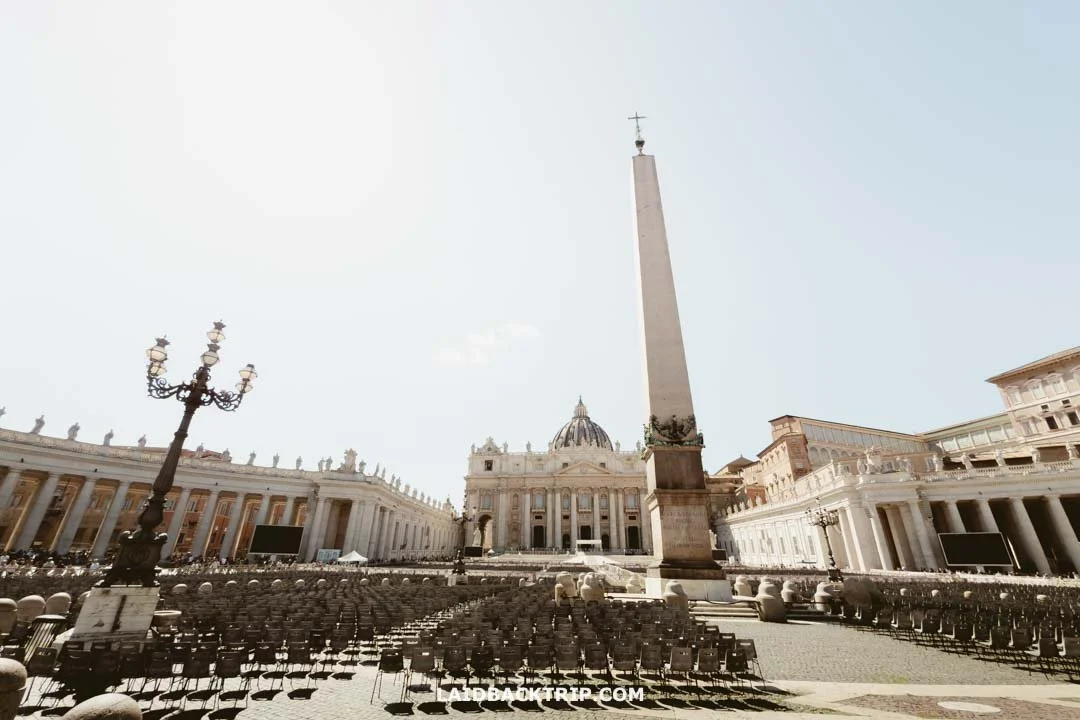
We toured St. Peter's Basilica on an very hot day.
To be clear, St. Peter's Basilica was not quiet, but we had braced ourselves for much heavier crowds. Since that was not the case, we were able to enjoy the visit far more than expected. The most crowded area by far was the upper terrace of St. Peter's Dome. This was mainly because the outer walkway is quite narrow, and the 16th-century architects could not have predicted how popular this viewpoint would eventually become.
That said, midday is still one of the busiest times to visit St. Peter's Basilica. If you are looking for a calmer experience, it is best to arrive early in the morning, right when the basilica opens, or to visit during the off-season, when Vatican City is generally quieter. During winter, another great option could be to time the dome climb for around 4 PM, which would allow you to catch the sunset from the top. The views at that time must have been incredible.
Dress Code at St. Peter's Basilica
St. Peter's Basilica has a strict dress code, which requires that shoulders and knees be covered when entering. The rules are actually quite simple and easy to follow. Keep in mind that the same dress code applies to the Vatican Museums and the Sistine Chapel, not just the basilica itself. Since we visited on a hot summer day, I wore lightweight zip-off pants, while Lucie chose a summer dress with sleeves.
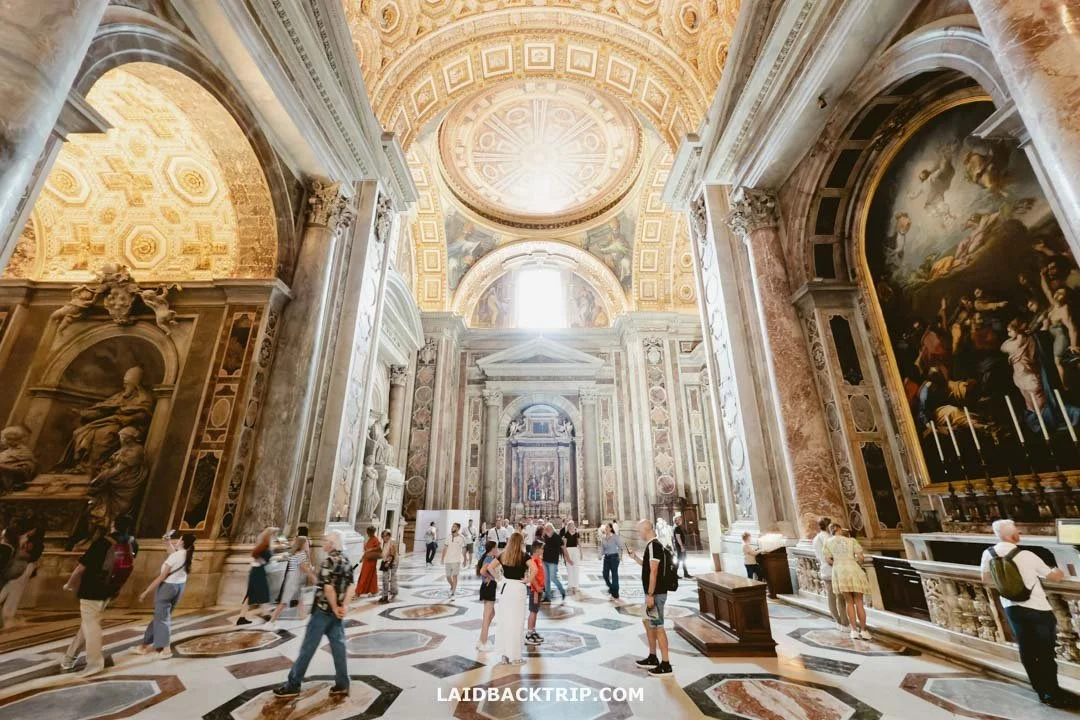
Like many churches, St. Peter's Basilica follows a fairly strict dress code.
I have already mentioned this in another post about the Vatican, but it really comes down to being respectful and avoiding inappropriate clothing inside the church. The same expectations applied to nearly every other church we visited in Rome. Because it is often hard to know how strictly these rules will be enforced at major sites like St. Peter's Basilica, we also always carry a lightweight sarong with us, just in case.
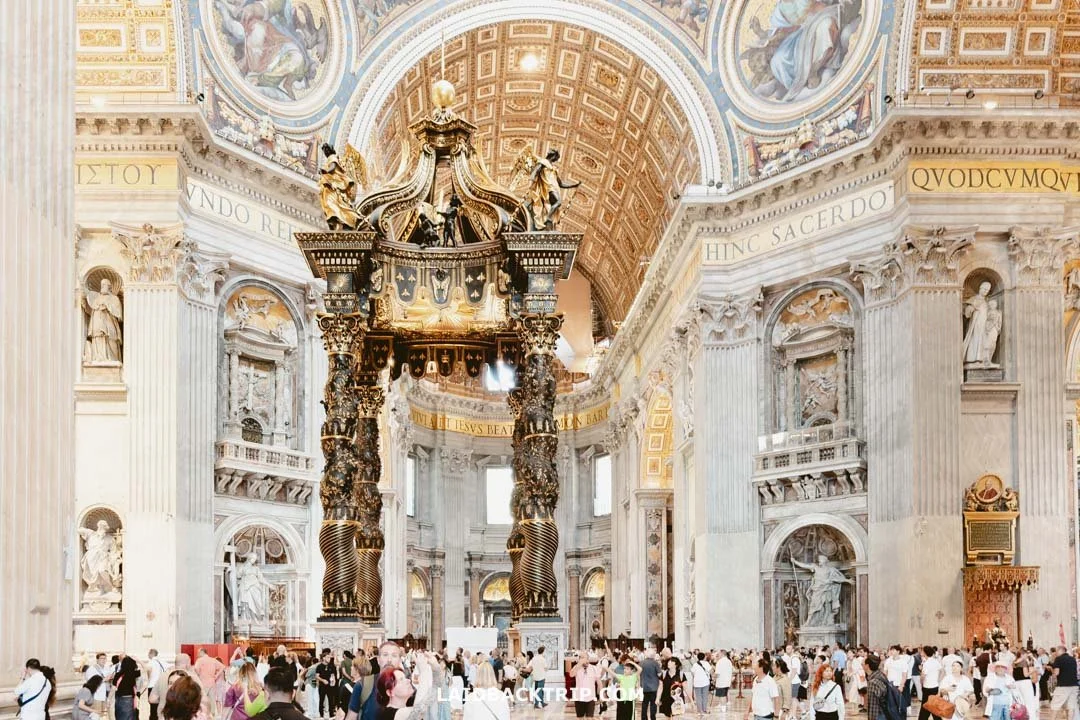
The space in front of St. Peter's Baldachin was definitely very crowded.
One final thing I want to mention is that we carried our trusty small daypack with us, and unlike at the Borghese Gallery we were allowed to keep it, which helped since there is no luggage storage inside.
Having our daypack with us was a helpful way to keep our wallet safe from pickpockets. We stay alert even in a holy spot like St. Peter's Basilica, since the crowds and free entry make it pretty clear why pickpockets might show up here too.
World Nomads provides travel insurance for travelers to cover their trip essentials, including sports and adventure activities.
SafetyWing is affordable travel insurance for backpackers, long-term travelers, and digital nomads.
Travel Resources
Here you can find links to all the travel resources we use and which you might find helpful when planning your next holiday.
Accommodation: When looking for accommodation, we usually search hotels via Booking.com or Hostelworld.
Tours: Although we love to travel independently, some places are better to visit with a guided tour.
We prefer GetYourGuide for its easy-to-use interface and solid reputation. Another great alternative is Viator.
Rental Cars: When going on a road trip, we always use Rentalcars.com, a reliable site for booking a rental car in advance.
Flight Tickets: When looking for flight tickets, you can search Skyscanner to find the best price.
Travel Insurance: World Nomads and SafetyWing cover against risks of travel.
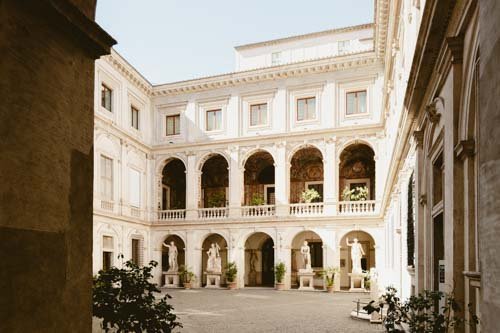
Discover everything you need to know before visiting St. Peter's Basilica in Vatican City, including what to see inside, how to climb the iconic dome, opening hours, ticket prices, guided tours, and the easiest ways to get there.