Visiting the Palazzo Altemps in Rome
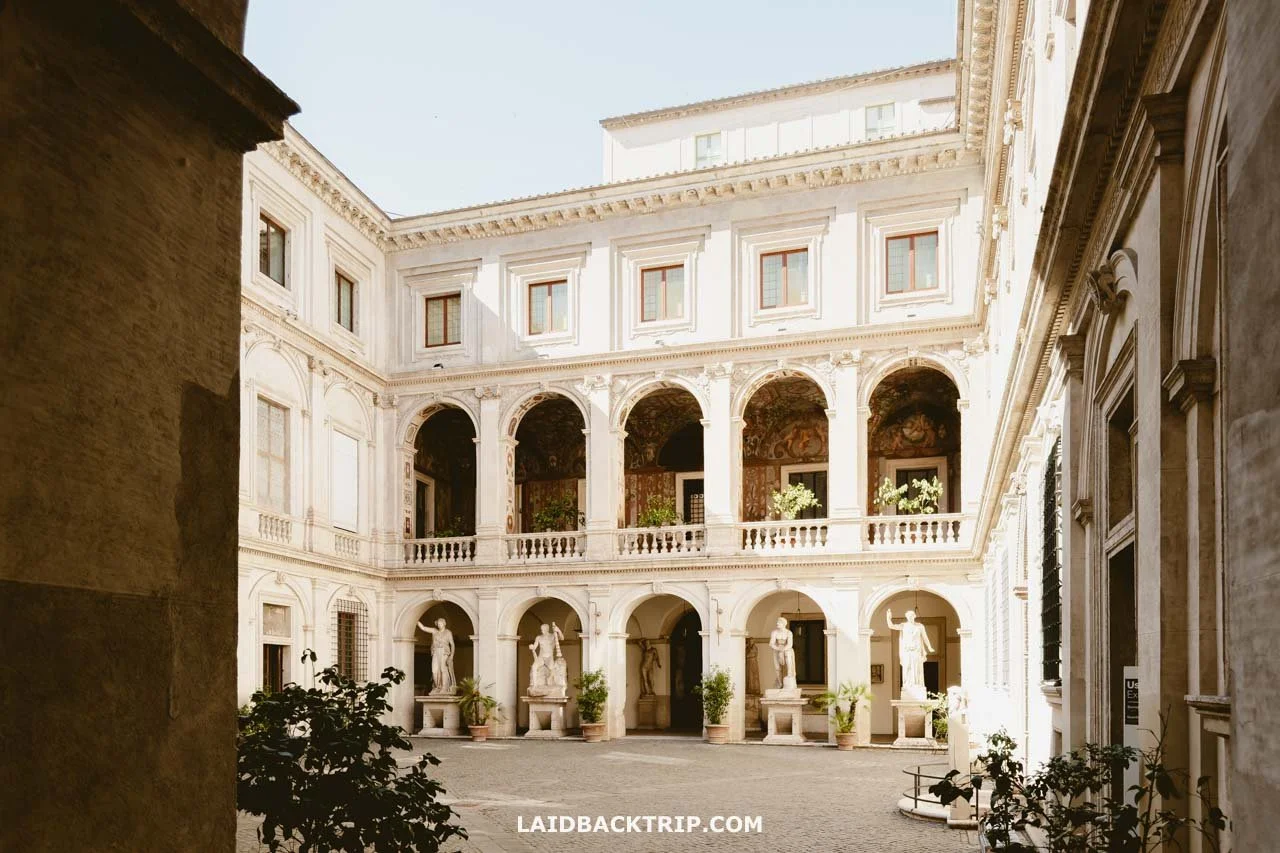
Palazzo Altemps is a quiet museum filled with ancient art from Roman times.
Did we enjoy our visit to Palazzo Altemps, and was it worth it? Let's find out.
Palazzo Altemps is a stunning Renaissance palace in the heart of Rome that features ancient Greek and Roman sculpture collections in its beautifully frescoed rooms. As we were making a list of places we wanted to visit in Rome, this simple description naturally caught our attention. Since we were staying just a five-minute walk away, I pinned it on my map so we could check it out during our trip.
Admittedly, we thought this would be just a charming palace with Renaissance architecture and assumed that seeing it from the outside would be enough. And really, at first, we truly had no intention of going inside. That changed when we visited the Baths of Diocletian, where we found out that the ticket we just bought there included this museum and two other sites as well.
Ultimately, we found that Palazzo Altemps is one of Rome's hidden gems. While the museum did not have the same name name as, for example, the incredible Capitoline Museums, it had a major advantage. There were no crowds at all. Even though other museums were also surprisingly quiet, this one had a small-site atmosphere that made it feel less like a branch of the National Roman Museum (which it is) and more like a regional museum outside Rome.
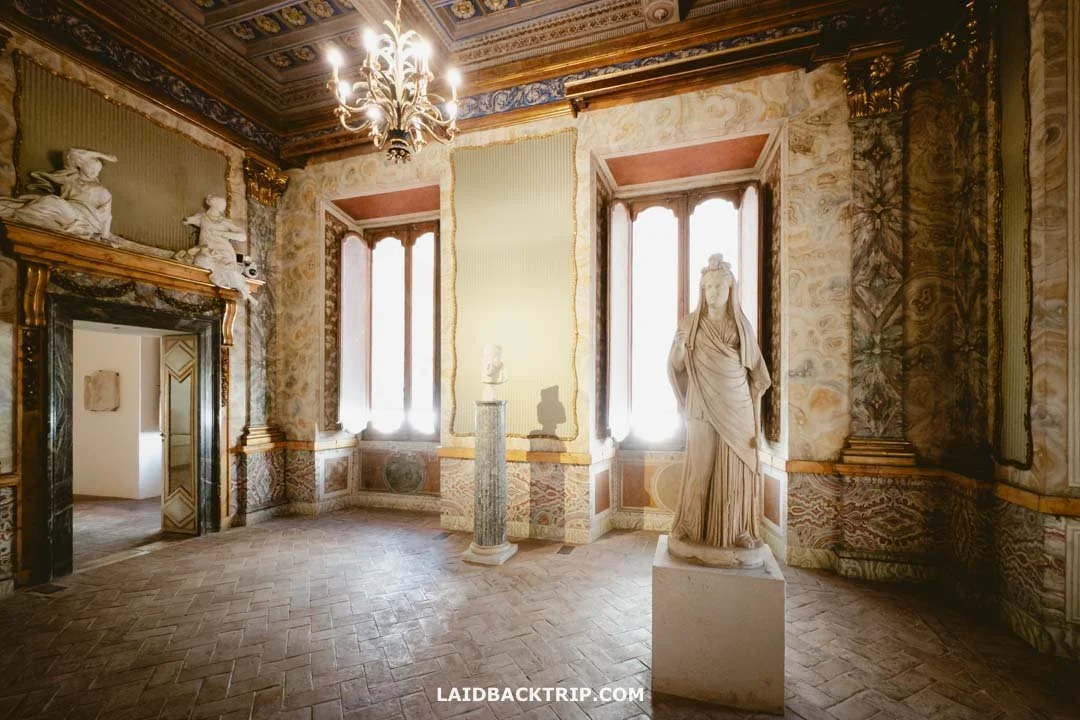
Some rooms in Palazzo Altemps were beautifully decorated.
What to See in Palazzo Altemps
Palazzo Altemps is home to a branch of the National Roman Museum, which focuses on an ancient sculpture collection displayed in an aristocratic mansion from the 15th century. Along with the sculptures, we found sarcophagi, funerary reliefs, bone objects, pottery, bronze figures, and various other archaeological items inside.
While the museum did not exhibit items as renowned as those found in the Capitoline Museums or Vatican Museums, it certainly displayed some impressive works, including the Ludovisi Throne, the Ludovisi Gaul, and the Ludovisi Ares.
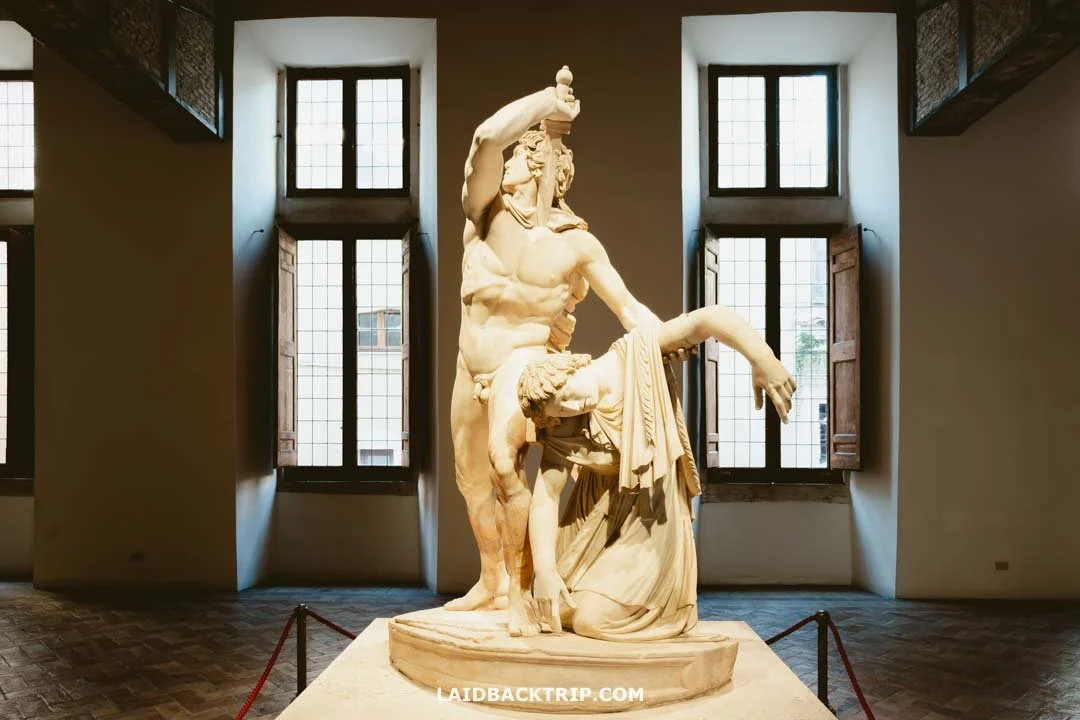
The Ludovisi Gaul statue is unusual because it depicts a defeated warrior, not a victor.
As we entered the palace, Lucie said she was surprised by how ordinary the building seemed from the street. If it were not for the entrance door and the Palazzo Altemps banner on the facade, she would have walked right past it without noticing. And I couldn't agree more with her. It really looked just like any other building in the neighborhood.
It was originally constructed in the late 15th century for Girolamo Riario, nephew of Pope Sixtus IV, then bought and significantly enlarged by Cardinal Marco Sittico Altemps in the second half of the 16th century. For centuries, it served as a grand aristocratic residence for the Altemps family. When we first saw the building from the outside, its simple exterior reminded us of the Borghese Gallery, which also looked plainer than we had imagined. Still, first impressions can be deceiving.
Once we reached the courtyard, we realized that the typical Renaissance architecture (harmony, symmetry, and balance) was much more noticeable in this part of the palace. The palace's courtyard spans three floors, with arches on its northern side displaying four Roman statues from the Altemps collection. It also features a nymphaeum.
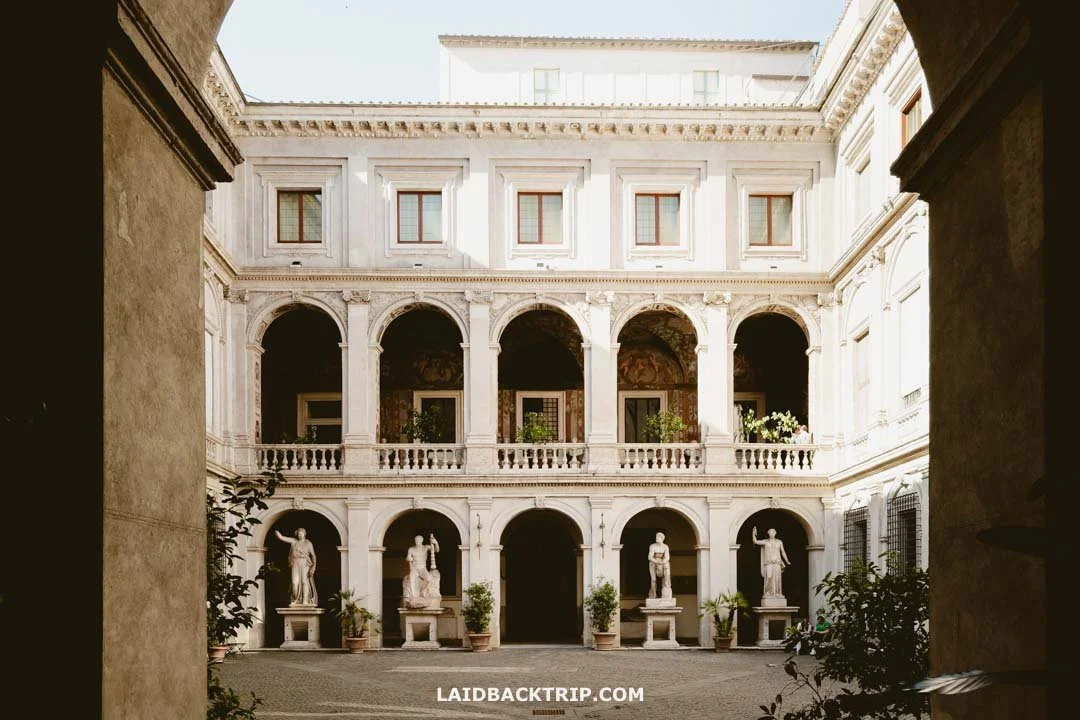
We started our visit to the museum in Palazzo Altemps in the beautiful Renaissance courtyard.
Other than its grandeur, which was missing from the building's outer facade, one of the first things we noticed was how quiet it was. We assumed Palazzo Altemps would not be as popular as the Baths of Caracalla, which we saw that morning, or Castel Sant'Angelo the previous day, but it was still nice to discover there were only a handful of other tourists inside the palace that day.
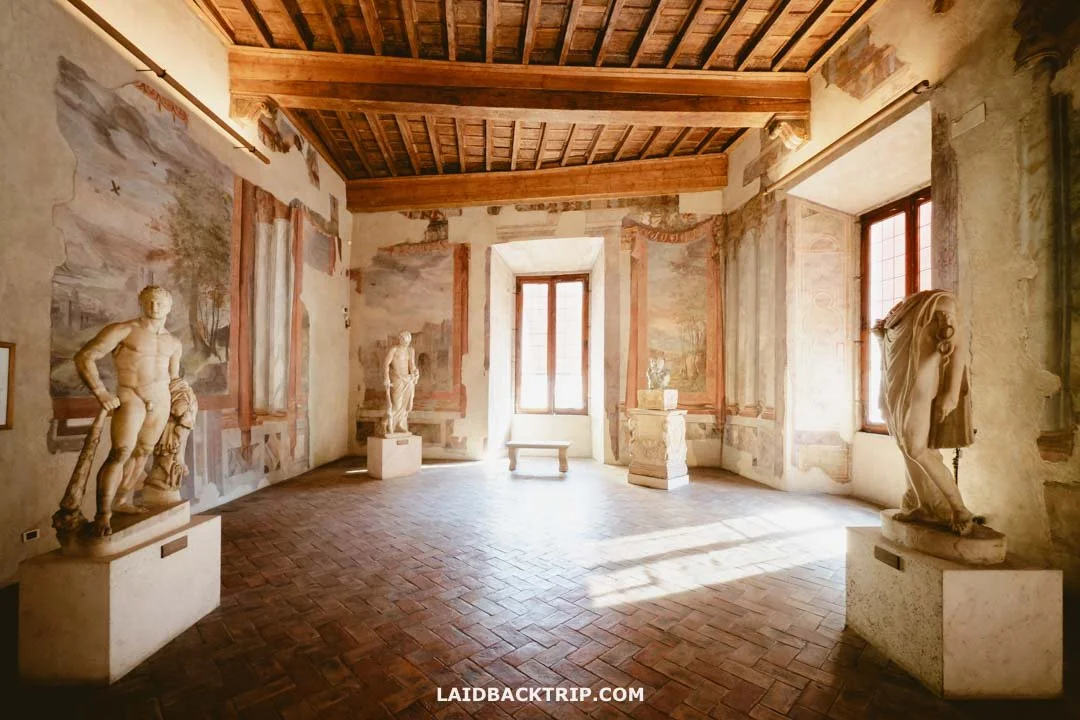
We had most of the rooms in Palazzo Altemps all to ourselves.
Like the other branches of the National Roman Museum, the palace focused on archaeological discoveries from Ancient Rome. The displayed items had been gathered over the centuries by several noble Roman families during the Renaissance and Baroque eras, such as Altemps, Boncompagni Ludovisi, Mattei, and Del Drago.
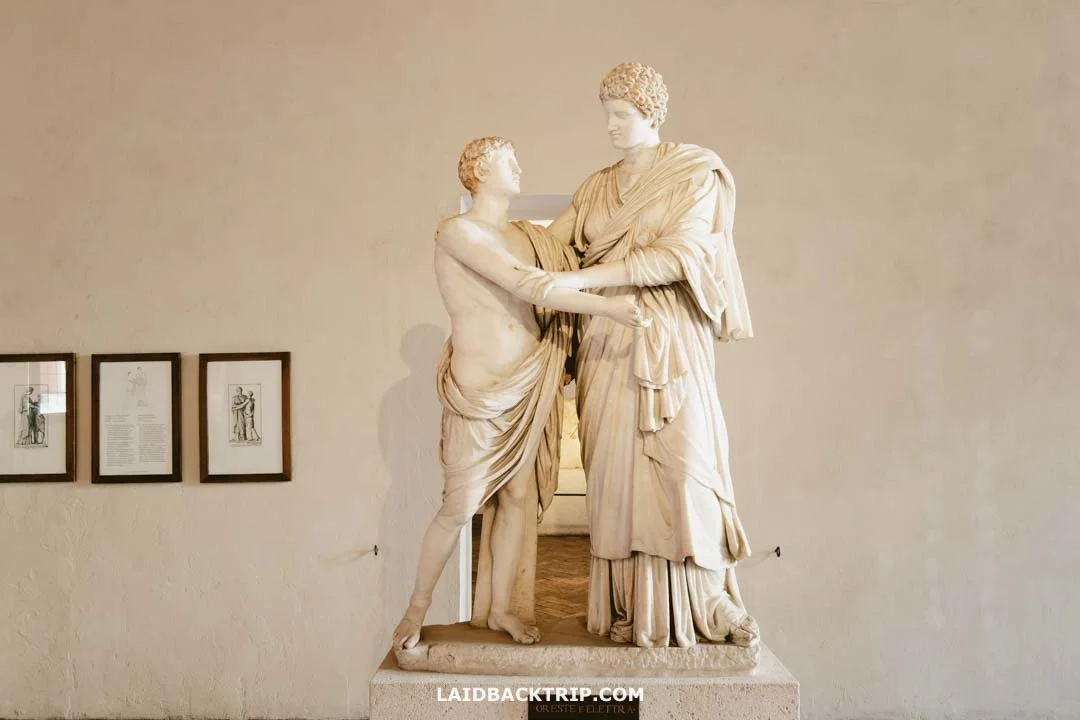
The Statue of Orestes and Electra is part of the Boncompagni Ludovisi collection.
We also found Jandolo, Veneziani, and Brancaccio sculptures inside, along with an intriguing but small Egyptian collection. Aside from Roman antiquities and sculptures, the palace also showcased beautiful frescoes, a small Church of San Aniceto, a theater, and a belvedere tower that we noticed from the main street before entering.
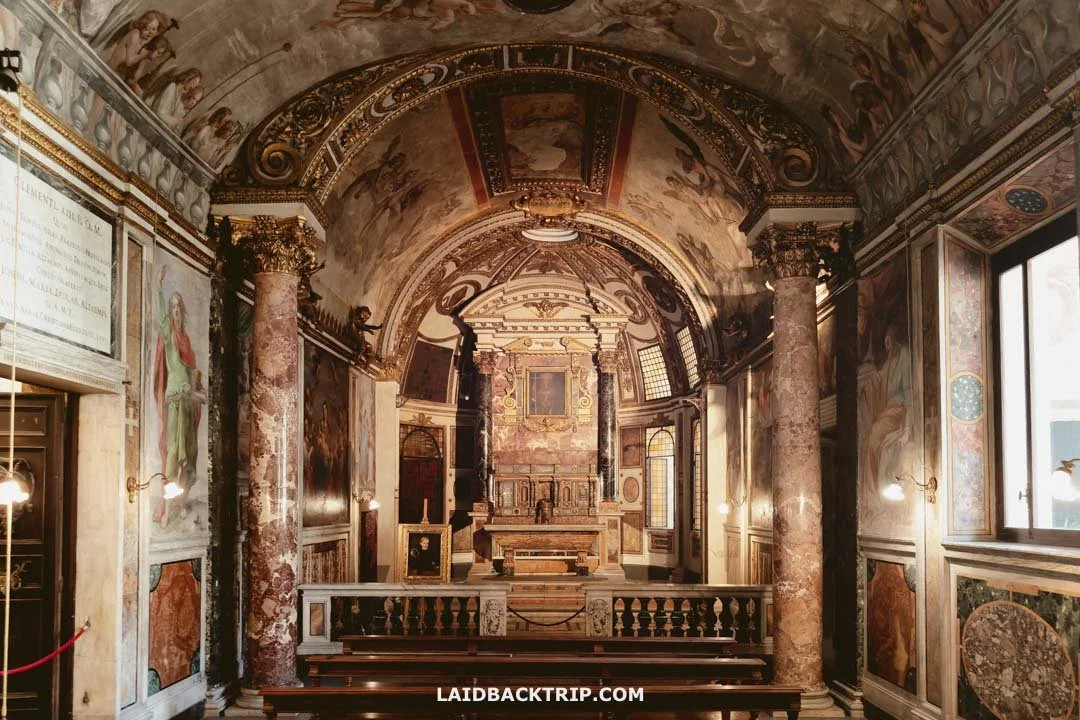
We had no idea that part of Palazzo Altemps houses the Church of San Aniceto.
Our favorite part of Palazzo Altemps was a painted loggia called the Loggia Dipinta, which we discovered on the first floor. The covered walkway was built around 1595 and was adorned with beautiful illusionistic frescoes showing a Garden of Delights, complete with vines, flowers, and exotic animals across the vaults.
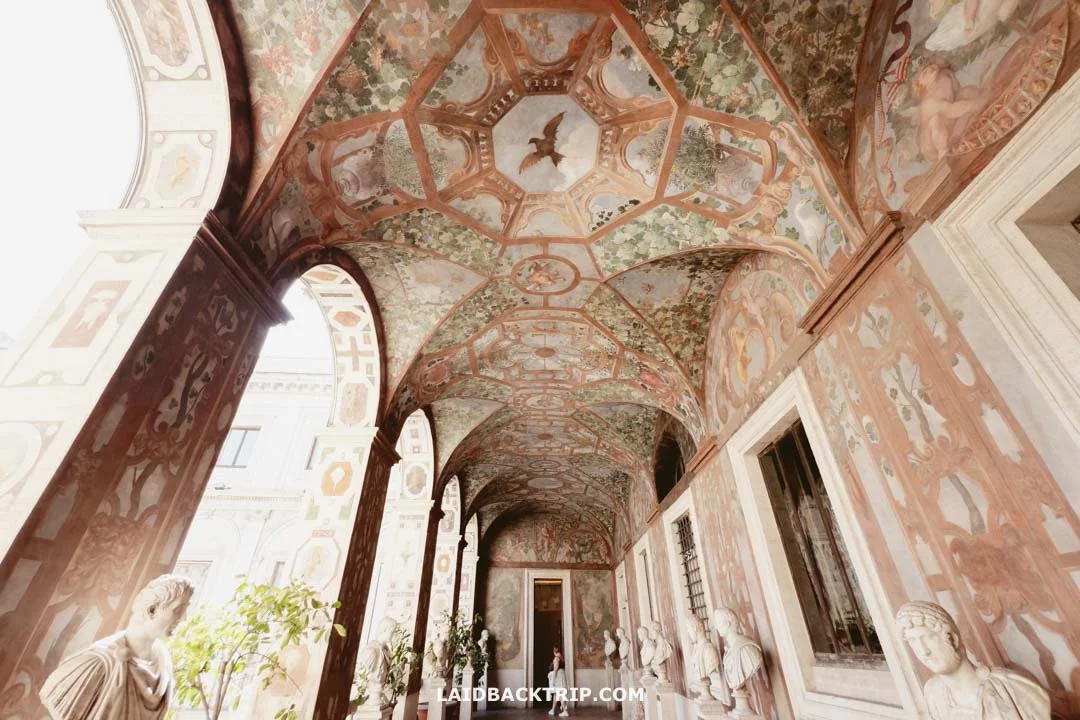
The Painted Loggia was easily our favorite part of Palazzo Altemps.
How Long We Spent in Palazzo Altemps
Overall, we spent about 90 minutes in Palazzo Altemps, though we have to admit there was certainly more art to explore and we absolutely could have stayed longer if we had more time. For us, it was one of those places where we didn't plan to spend as much time as we wanted, but decided an hour and a half would be enough since we had a few more sites to see that day.
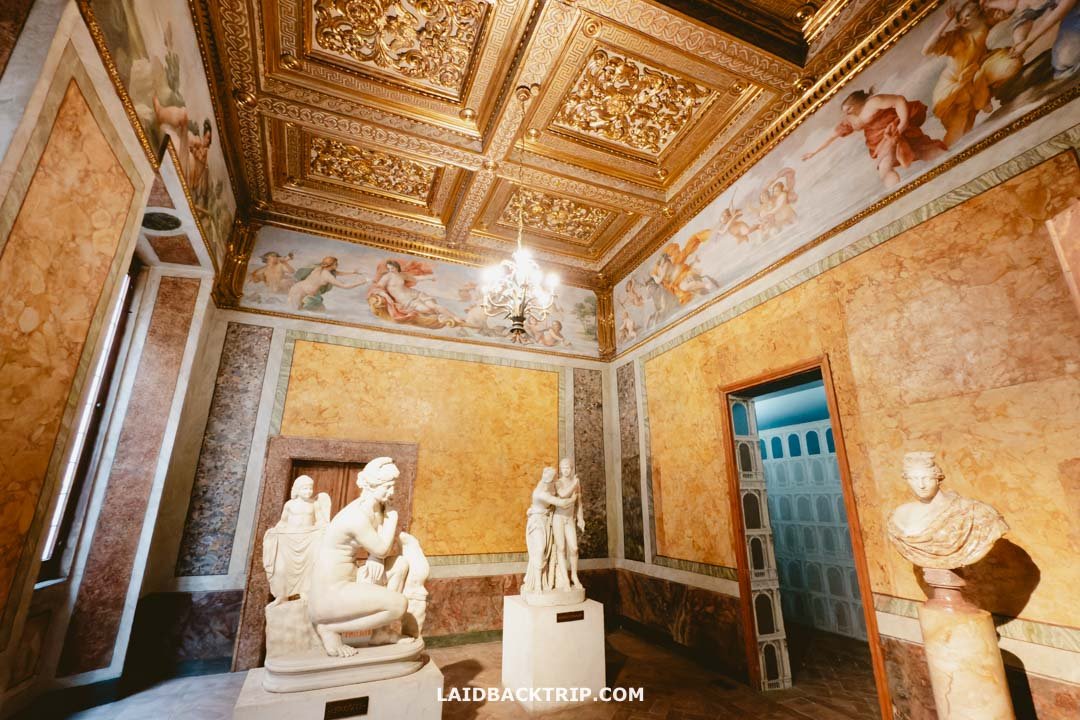
It's easy to spend a few hours exploring the interiors of Palazzo Altemps.
Because Palazzo Altemps was not very large, those 90 minutes ended up being a good amount of time for a solid overview, especially for visitors like us, who came here mainly out of curiosity rather than with a plan to view a specific piece of art. So if you're really interested in art, you will probably need to add a bit of extra time so your visit will not feel rushed.
Buying the Tickets to Palazzo Altemps
Admission to Palazzo Altemps cost €15, but the ticket included entry to three additional sites within seven days from first use. One was the Baths of Diocletian, which we already mentioned, and another was Palazzo Massimo, which showcased ancient art and frescoes. Both museums were excellent. The last site, Aula Ottagona, was a single hall, but we missed it because it was closed when we got there.
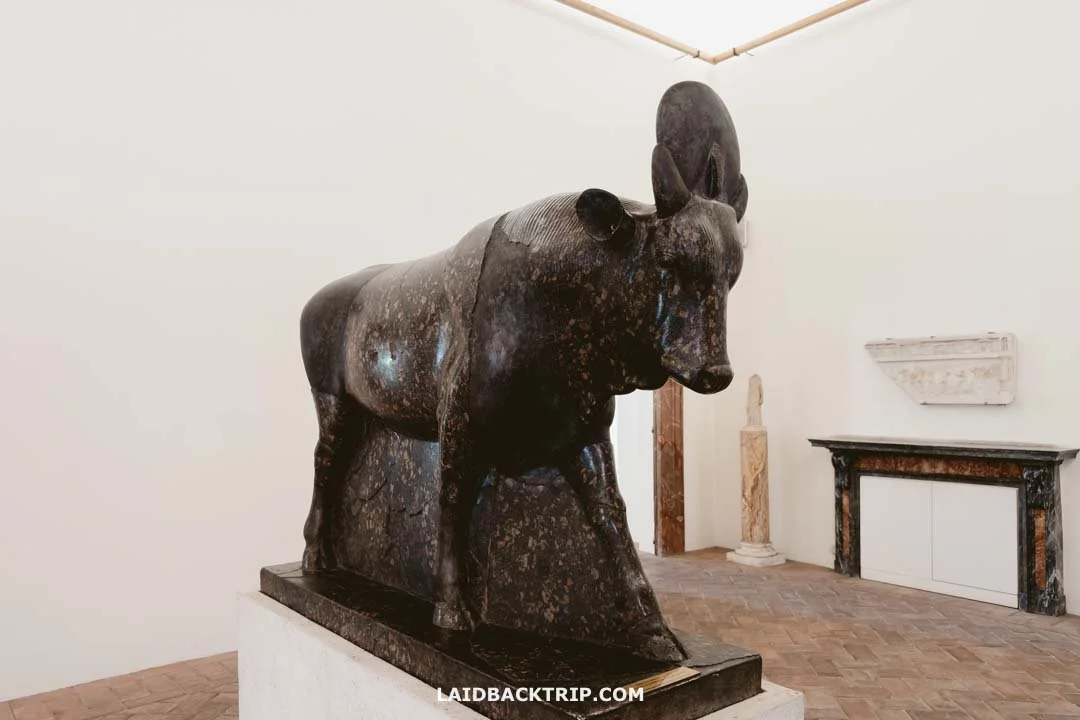
The Egyptian collection includes a Statue of the Bull Apis.
Since Palazzo Altemps is part of the National Roman Museum, all the museums use the same ticketing system. We could buy tickets through the official website Musei Italiani, but we chose to get them on the spot instead. We've been to all three museums, and none of them had a waiting line. We bought our tickets easily from one of the on-site machines, which only accepted credit cards.
Since we ended up visiting all three main sites, we effectively saw Palazzo Altemps for just €5, which, if you ask us, was a pretty great deal. If we had to pay the full price for just this one museum, that would be a different story, so it's worth visiting at least two sites to get the most value.
We also noticed that some resellers were offering a multimedia video and a city map with Palazzo Altemps tickets, but we did not feel it was worth the extra cost.
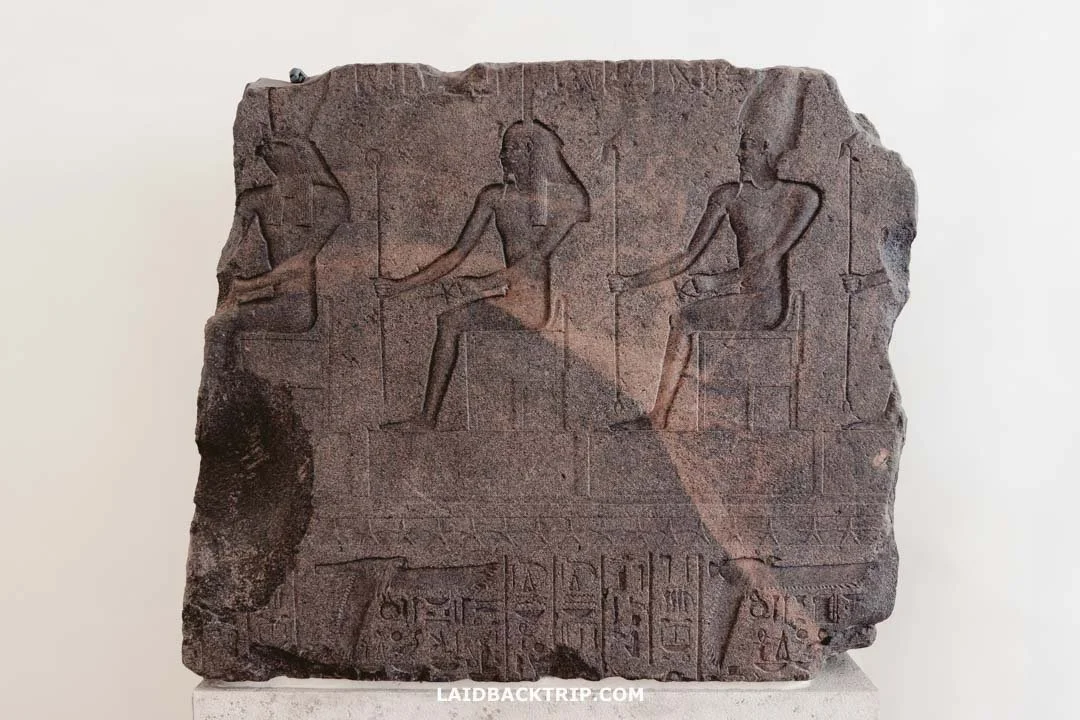
Another item in the Egyptian collection was the Templar relief.
Opening Hours
Palazzo Altemps is open Tuesday through Sunday from 9:30 AM to 7 PM, with last admission one hour before closing. The museum is closed on Mondays. Since all the museums on this ticket are part of the National Roman Museum, they share the same opening hours. We visited on a Thursday, so the schedule didn't affect our plans.
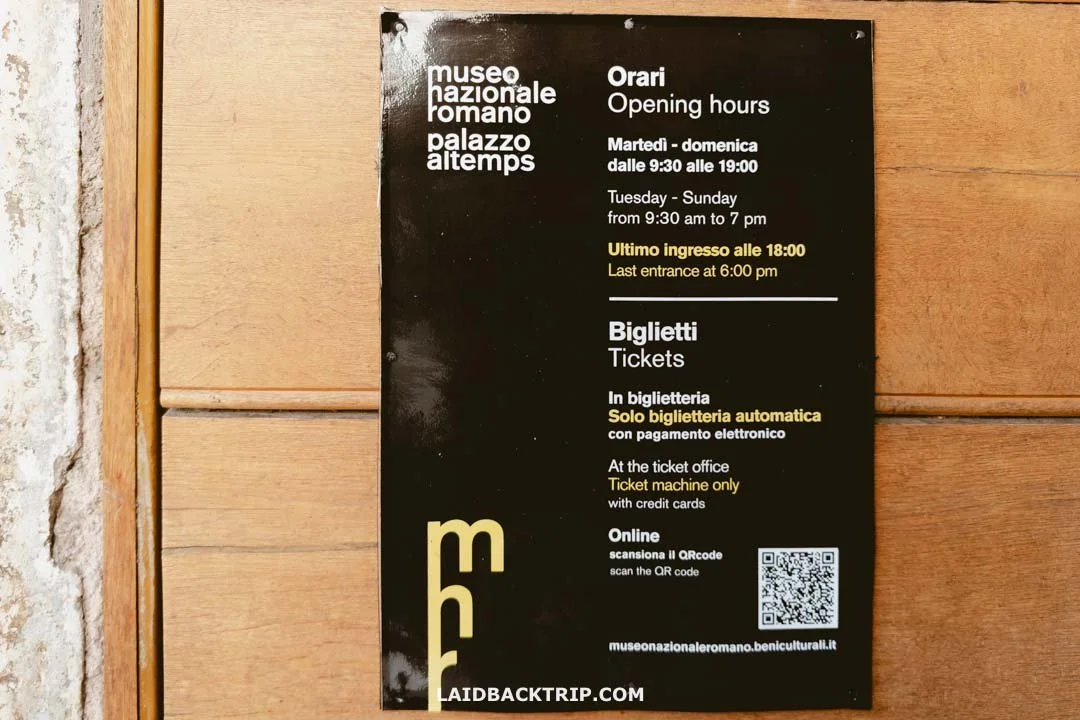
The Palazzo Altemps hours as they were posted during our visit.
Getting to Palazzo Altemps
Palazzo Altemps sits in Rome's Centro Storico, about halfway between Piazza Navona and the River Tiber. At the time, we stayed at Hotel Navona, right next to the famous square, so the museum was just under 500 meters from our hotel. Getting to Palazzo Altemps was easy, since we just walked there in about five minutes. Realistically, it took longer since whenever we crossed Piazza Navona, we couldn't resist a quick stop, no matter how often we passed by.
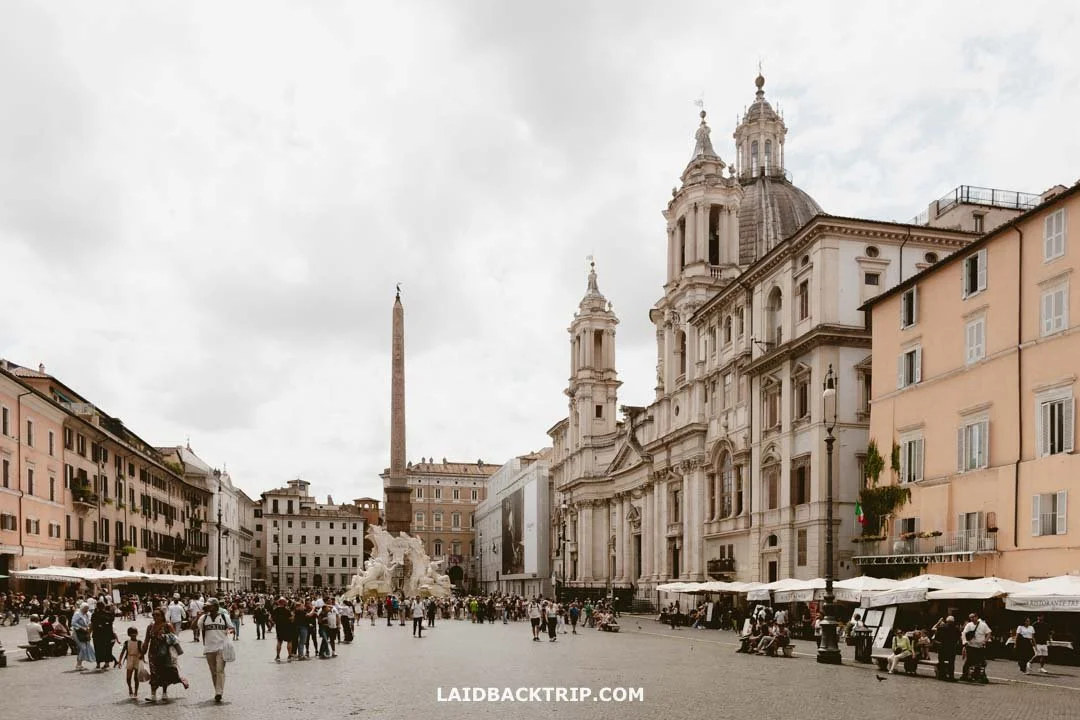
Our walk to Palazzo Altemps took us through the well-known Piazza Navona.
Out Tip: Once you're in Rome's Centro Storico, walking is truly the best way to get to Palazzo Altemps as well as to other spots, like the Stadium of Domitian or Campo de' Fiori.
Spagna is the closest metro station to Palazzo Altemps, located about 1.2 kilometers away. It's an enjoyable walk along Via dei Condotti, or you can detour to the Trevi Fountain or Pantheon. In that case, it may be better to exit at Barberini station. Many bus routes stop at Zanardelli or Senato, both of which are just steps from Palazzo Altemps.
Is Palazzo Altemps Worth a Visit?
Even though Palazzo Altemps was full of incredible art and we truly enjoyed our visit, it was one of those sites we visited mostly because we had eight days in Rome. It was our first visit to the Eternal City together with Lucie, and alongside the must-sees like the Colosseum and Roman Forum, we made time for these smaller sites as well. For a place we didn't expect much from, Palazzo Altemps turned out to be a great spot to explore, especially since it allowed us to escape the crowded streets of Centro Storico.
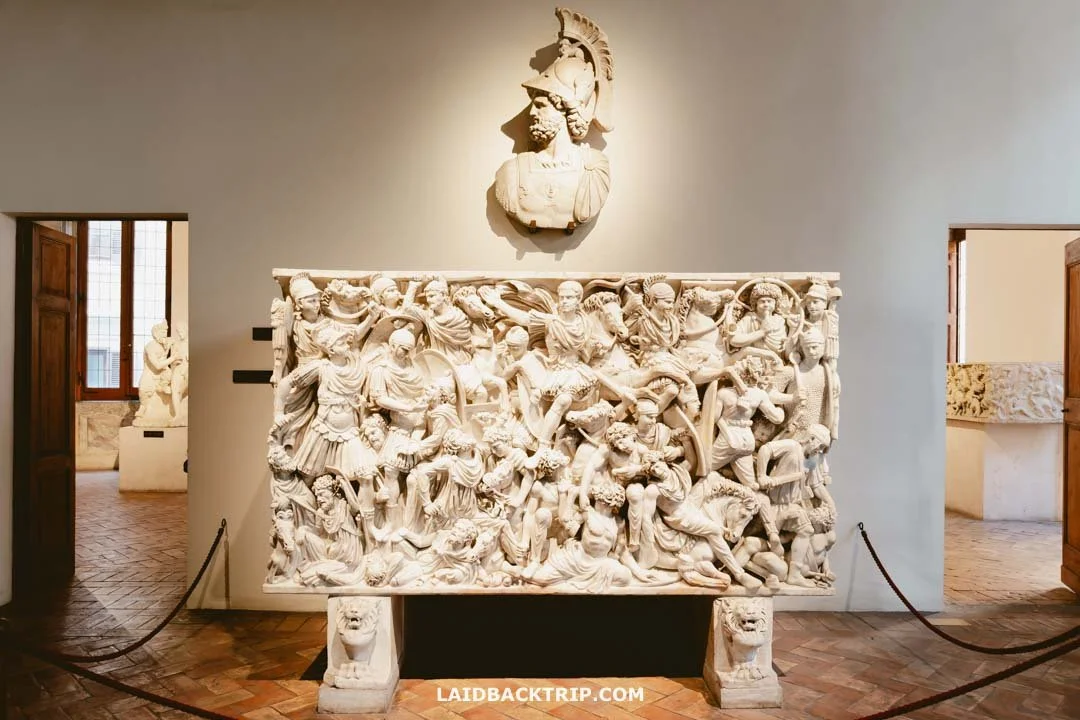
The Great Ludovisi Sarcophagus depicts battle scenes between Romans and Barbarians.
If we had only three days or so, we'd probably skip it simply because that would barely be enough time to see all of Rome's must-sees. So, the answer to this question depends on how much time you have in the city or how interested you are in ancient art. In our case, we had plenty of time, the museum was just around the corner, and we already had a ticket that included it. For us, there really wasn't any reason not to visit Palazzo Altemps, and if you find yourself in a similar situation, we think there's no harm in checking it out too.
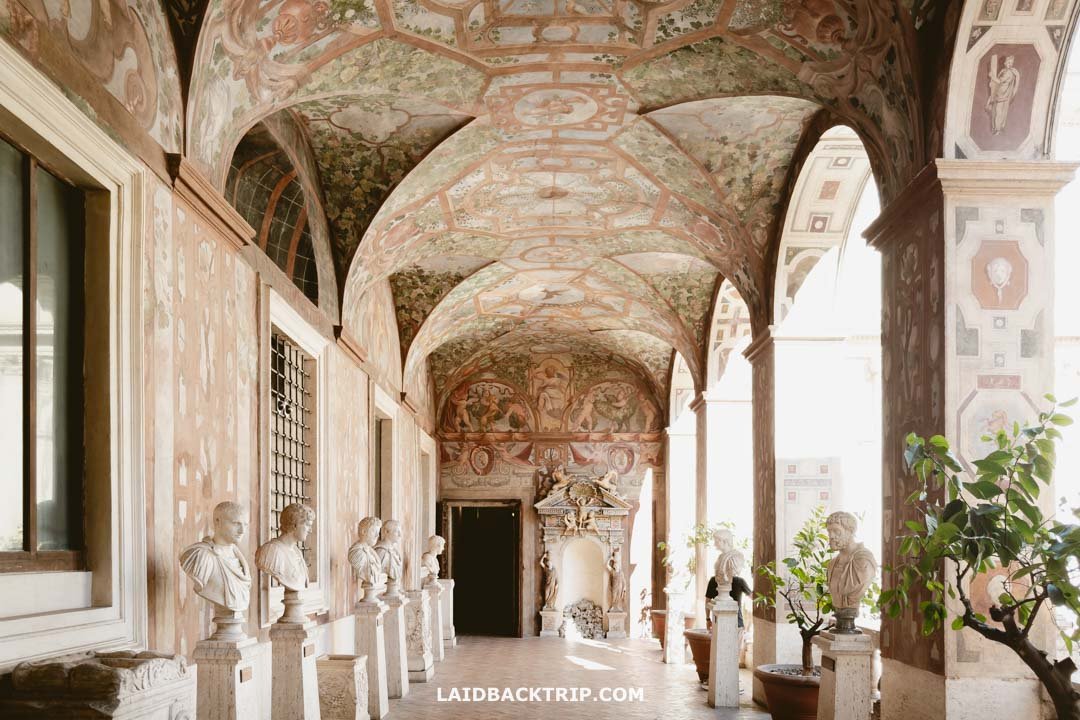
Palazzo Altemps was worth seeing, even if just for the Renaissance frescoes at Loggia Dipinta.
Travel Resources
Here you can find links to all the travel resources we use and which you might find helpful when planning your next holiday.
Accommodation: When looking for accommodation, we usually search hotels via Booking.com or Hostelworld.
Tours: Although we love to travel independently, some places are better to visit with a guided tour.
We prefer GetYourGuide for its easy-to-use interface and solid reputation. Another great alternative is Viator.
Rental Cars: When going on a road trip, we always use Rentalcars.com, a reliable site for booking a rental car in advance.
Flight Tickets: When looking for flight tickets, you can search Skyscanner to find the best price.
Travel Insurance: World Nomads and SafetyWing cover against risks of travel.
Discover everything you need to know before visiting St. Peter's Basilica in Vatican City, including what to see inside, how to climb the iconic dome, opening hours, ticket prices, guided tours, and the easiest ways to get there.