Visiting the Capitoline Museums in Rome
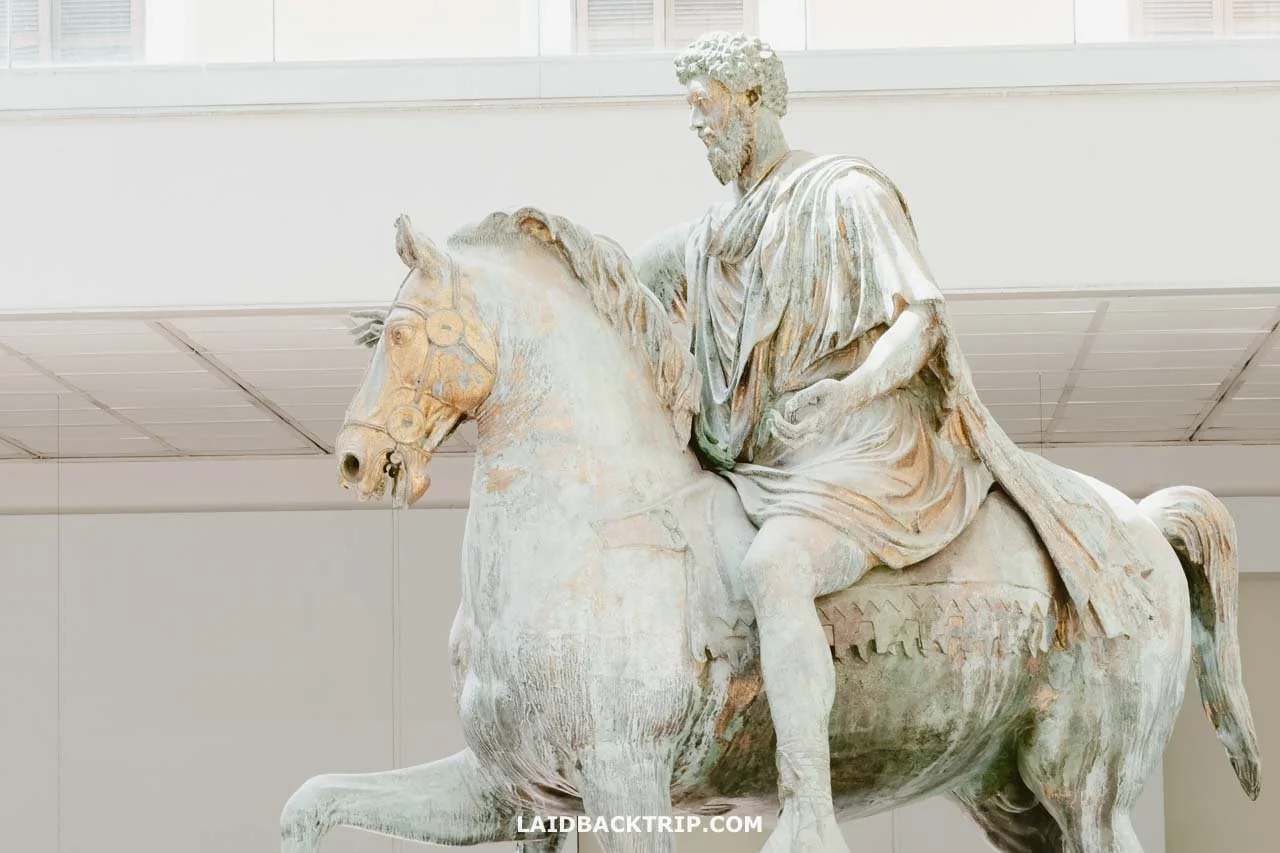
With all the history and impressive art, the Capitoline Museums quickly became one of our favorite places to explore in Rome.
While we were in Rome, the Capitoline Museums totally caught us off guard in the best way. The first clue was that, since it was founded in 1471, this museum is actually considered the oldest in the world. In a small town, that might not be a big deal, but being in Rome, the former heart of the ancient world, it meant a lot more. So, we figured this wouldn't be just another ordinary museum visit. Though, honestly, all of Rome's big museums were really fascinating.
The complex, made up of museum buildings on Rome's Capitoline Hill, is a spot hardly any visitors to the Eternal City skip. But during our visit, we noticed that only a few people who make the climb actually go inside the museum. That was our second clue, and we realized pretty quickly after stepping in that the whole experience would be way more laid-back than we expected.
Before we went, we figured it'd be a pretty simple visit, with some amazing pieces from ancient Rome and a bit of Renaissance art thrown in. Beyond that, we really didn't know what else to expect inside. I've got to say, a few of the discoveries we made in the museum definitely surprised us. For instance, we even got to see two temples, an ancient Roman archive, and some of the most famous art pieces from the ancient world. So, here's how our visit to the Capitoline Museums went.
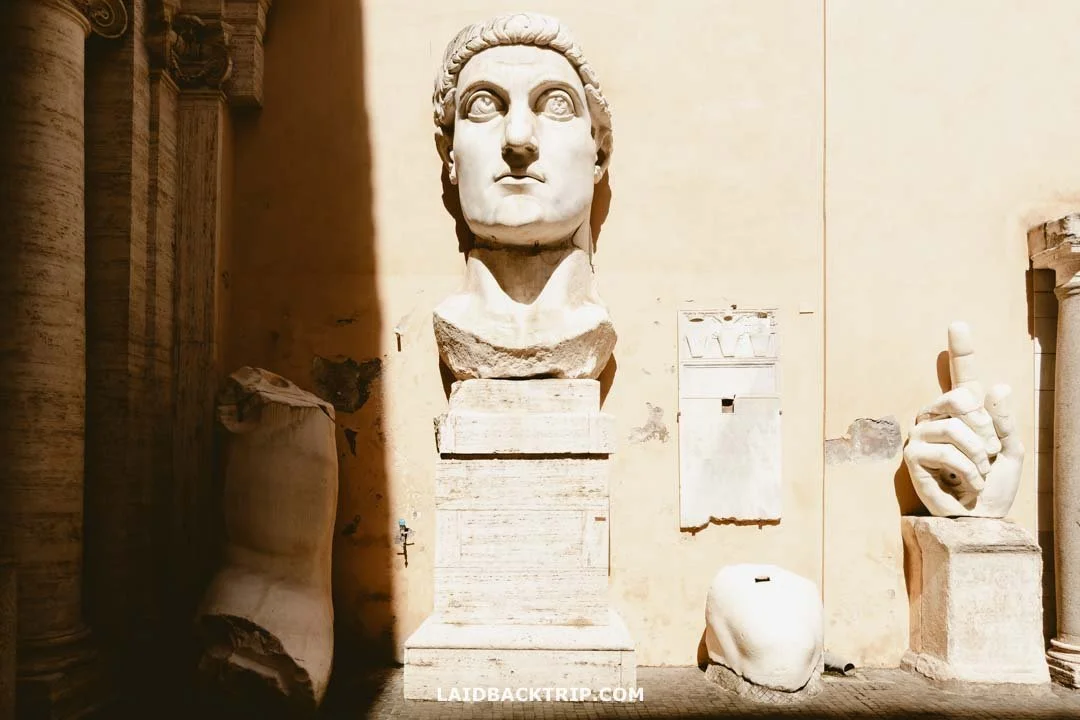
These are the original fragments of the Colossus of Constantine marble statue.
Exploring the Capitoline Museums
Before we went into the Capitoline Museums, there were a few things we wanted to see first. We started by walking up the stairs to Santa Maria in Aracoeli Basilica, which looked amazing. From there, we couldn't get straight to Piazza del Campidoglio, so we went back to the main street and took another set of stairs to finally reach the main square on Capitoline Hill.
When we got there, we made a point to see the small statue of the Capitoline Wolf with Romulus and Remus sitting on a column just left of the Senatorial Palace.
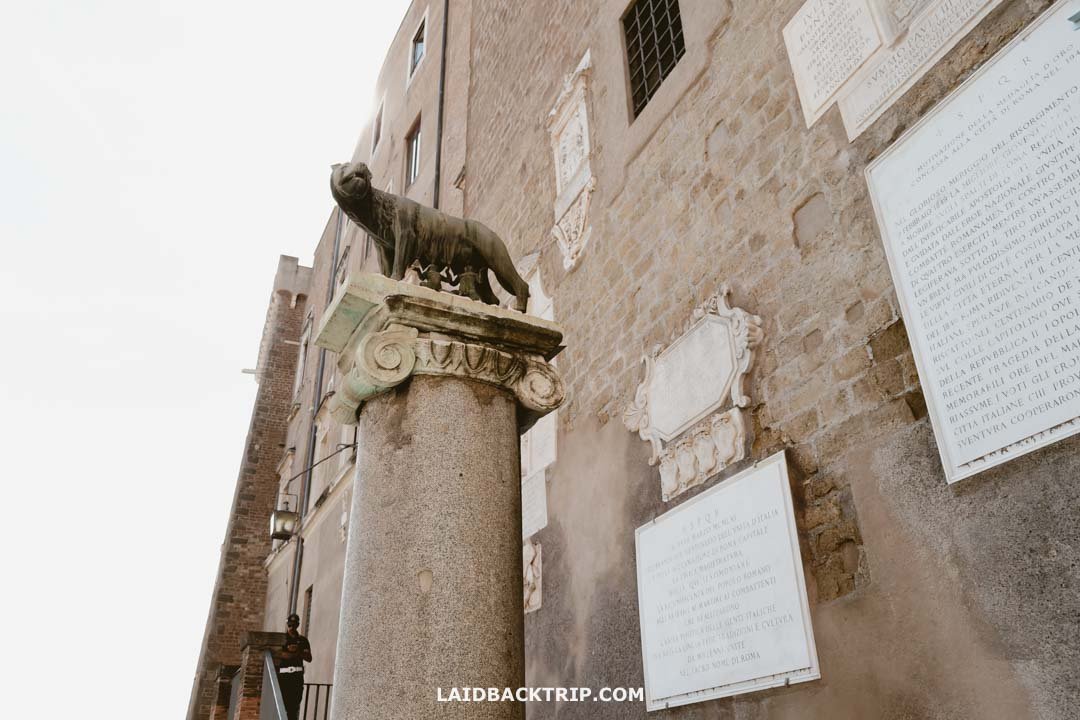
The replica of the Capitoline Wolf with Romulus and Remus is on the left of the Senatorial Palace.
Even though it's just a replica, the memory of this statue stuck with me for over twenty years since my first trip to Rome. So after all that time, it was great to see it again. Plus, now that we were with Lucie and actually going into the museum, I was pretty excited to see the real one on display.
While we were there, we walked another 50 meters down the street from the statue to a small viewing platform that offered another perspective on the Roman Forum. Of course, we ended up getting a much better view of this iconic site from inside the museum, but we hadn't known that yet.

Scaffolding covered the Senatorial Palace at the time of our visit.
Piazza del Campidoglio
Once we were back on the Capitoline Hill, we finally got to take a closer look at the lovely Piazza del Campidoglio, regarded as a gem of Renaissance urban planning. Commissioned by Pope Paul III, the square was completely reworked by Michelangelo Buonarroti beginning in 1538, though it was finished only after his death.
Michelangelo designed the square so it's bordered by three palaces: Palazzo Senatorio in the middle, Palazzo dei Conservatori to the right, and Palazzo Nuovo to the left. These three buildings together are now the Capitoline Museums.
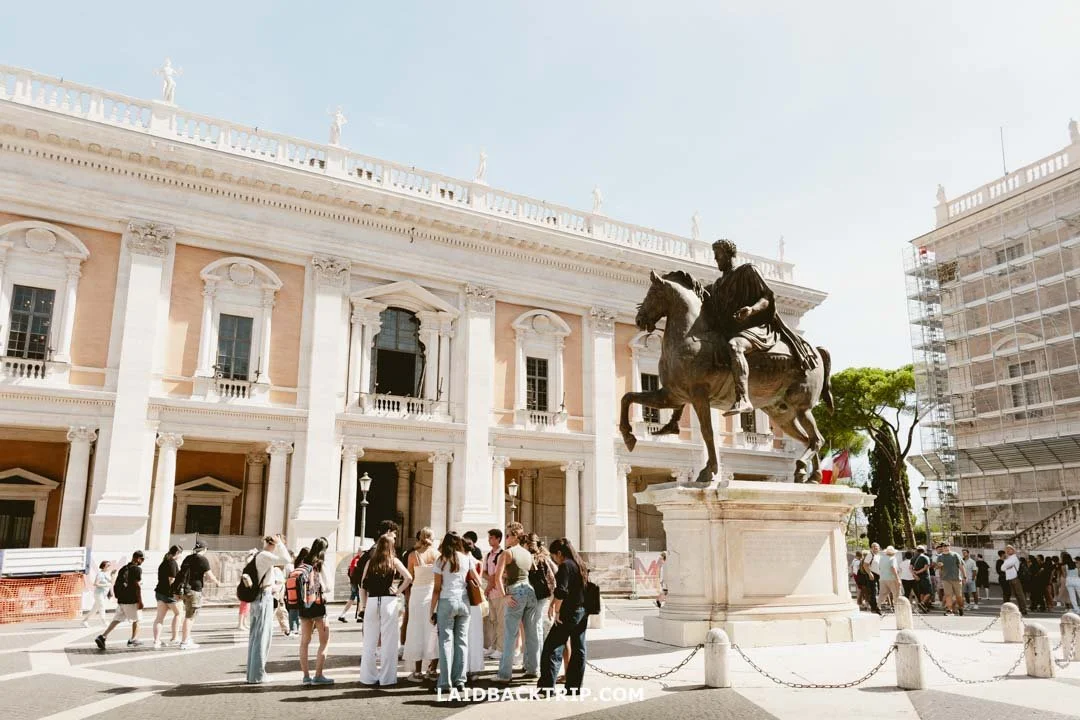
We entered the Capitoline Museums from the Piazza del Campidoglio.
The square is known for the Cordonata staircase and its unique geometric pavement patern design (later, we got a great look at it from one of the museum's windows). Right in the center stands a replica of the equestrian statue of Marcus Aurelius, with the actual original preserved inside the museum.
Funny enough, on the day we visited, our first impression of Piazza del Campidoglio and the Capitoline Museums wasn't nearly as striking as I make it sound. Part of the reason was that two palaces were covered in scaffolding. It was also pretty busy, and all the construction work happening around us made the place feel a lot less charming than we'd pictured.
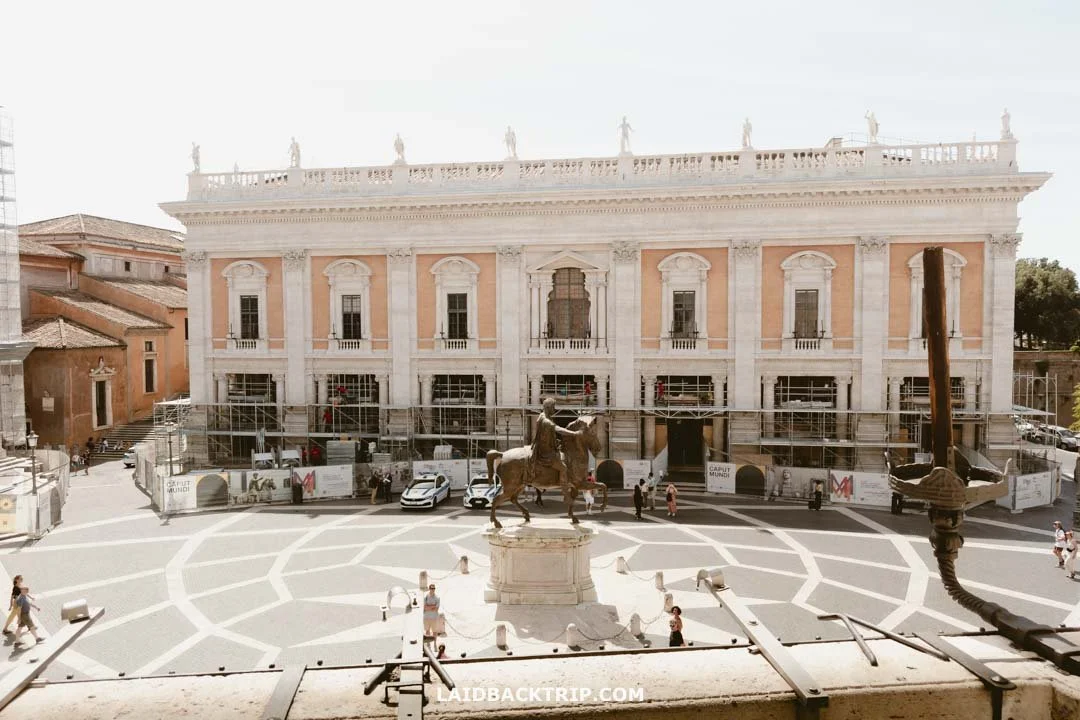
Palazzo dei Conservatori as we saw it from Palazzo Nuovo.
Tickets to the Capitoline Museums
After we spotted the museum's entrance to our right, inside Palazzo dei Conservatori, we walked through a temporary corridor lined with chipboard panels. Once inside, we found the ticket office and bought our tickets for €21 each. At first, I thought the entry fee for the Capitoline Museum was a bit steep. But after the visit, I have to say, even though the tickets cost more than I'd hoped, the museum was amazing, so it didn't feel like we overpaid.
We thought about getting our tickets online at the Musei Capitolini official website, but decided the night before to just buy them on the spot instead. When we got there, there wasn't a line at all, so picking up our tickets only took a few minutes from start to finish.
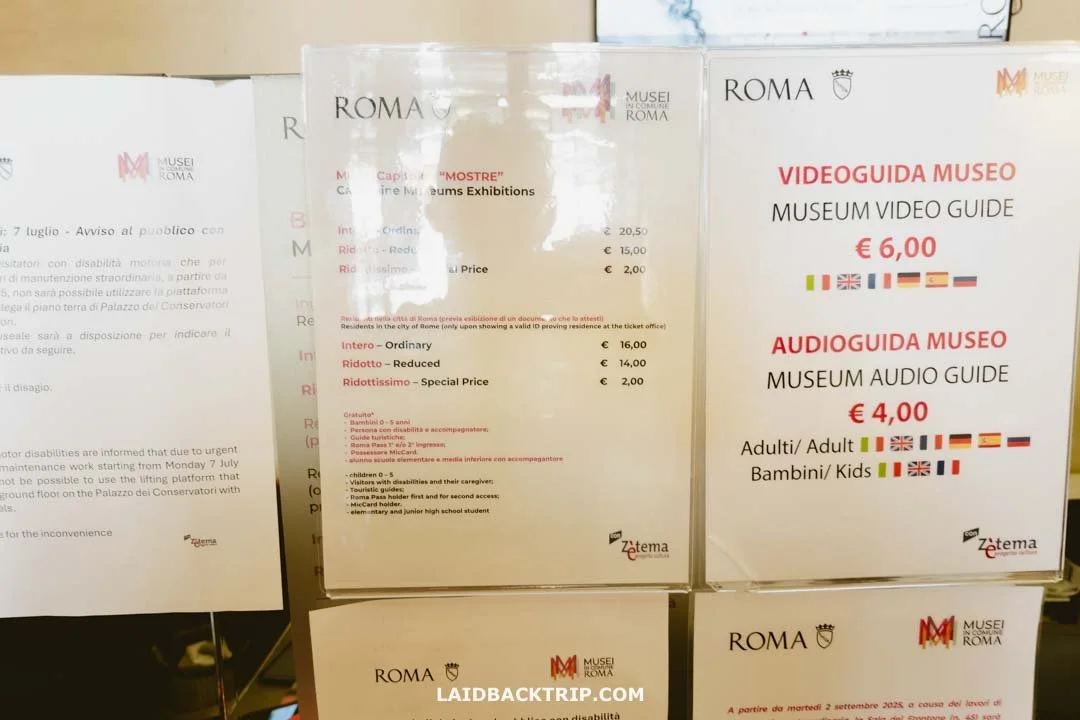
Audio guides at Capitoline Museums were offered for extra fee.
Just like for the Colosseum or the Pantheon, there were a lot of unofficial websites selling tickets for the Capitoline Museums. Some of these sites looked almost official, but they were just resellers charging almost twice the normal price and sometimes making you pick up paper tickets at a random location.
The staff let us know we needed to store our daypack in the lockers, even though ours was small and only had a bottle of water and a couple of bananas inside. We were visiting in late summer when it was over 30 degrees Celsius, so all we left in the cloakroom was the daypack (no coats were needed this time of the year). It was actually one of the few Rome's museums where we had to do this (the Borghese Gallery was another), but at least the lockers were free.
What's There to See in the Capitoline Museums
Simply put, the Capitoline Museums are packed with monumental Roman sculptures, including the original Equestrian Statue of Marcus Aurelius, the iconic Capitoline She-Wolf (Rome's symbol), the Dying Gaul, and the Capitoline Venus. The complex also has pieces of the Colossus of Constantine, busts of emperors and philosophers, and an art gallery featuring works by masters like Caravaggio.
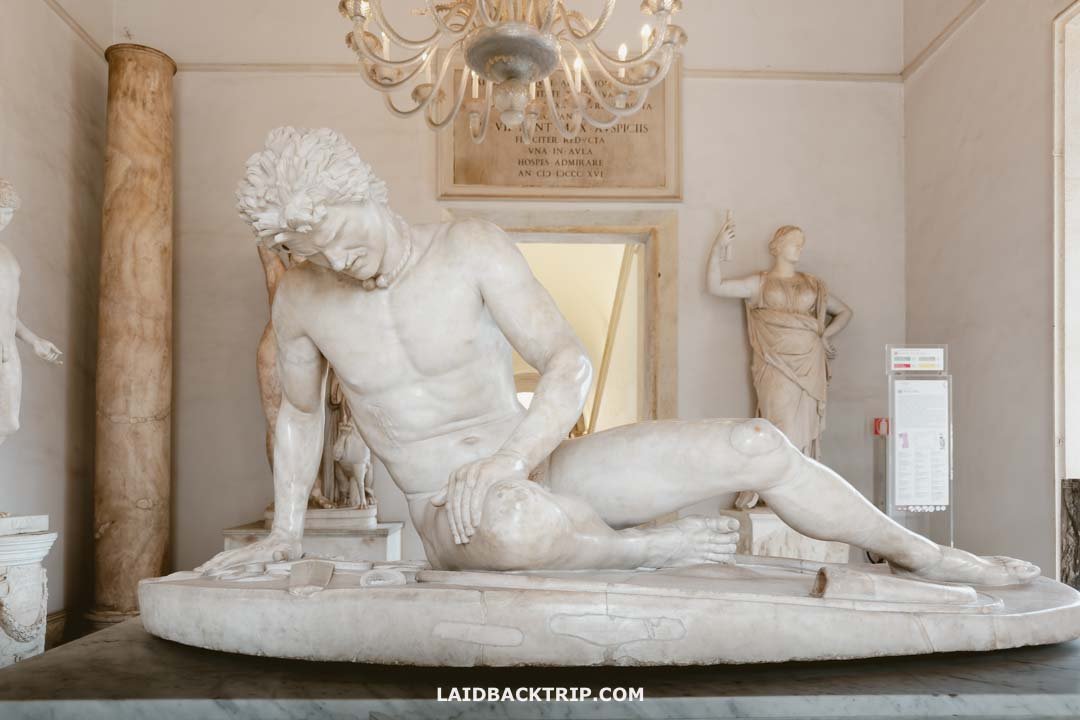
The Dying Gaul is a Roman marble statue made in the 3rd century BCE.
But that sounds more like the official brochure talking than us. The real surprise was that the Capitoline Museums had way more to offer than just ancient art. Besides the typical museum pieces, we also came across two ancient temples inside and even explored former Roman archives.
We also got to enjoy amazing views of the Roman Forum from the Tabularium. Just the day before, we'd been wandering around the ruins outside and had no idea that the massive building in front of us was actually part of the museum. This place really was packed with surprises.
Palazzo dei Conservatori
Like we mentioned earlier, we walked into the Capitoline Museums not really knowing what hidden gems we'd find. But right away, we got a surprise. The first building, Palazzo dei Conservatori, turned out to be home to the gorgeous Conservators' Apartment.
On top of that, the Palazzo dei Conservatori holds the original Equestrian Statue of Marcus Aurelius, the famous Capitoline She-Wolf, and massive pieces of the Colossus of Constantine. It also has the beautifully decorated Conservators' Apartments and the Capitoline Picture Gallery, which includes works by Caravaggio.
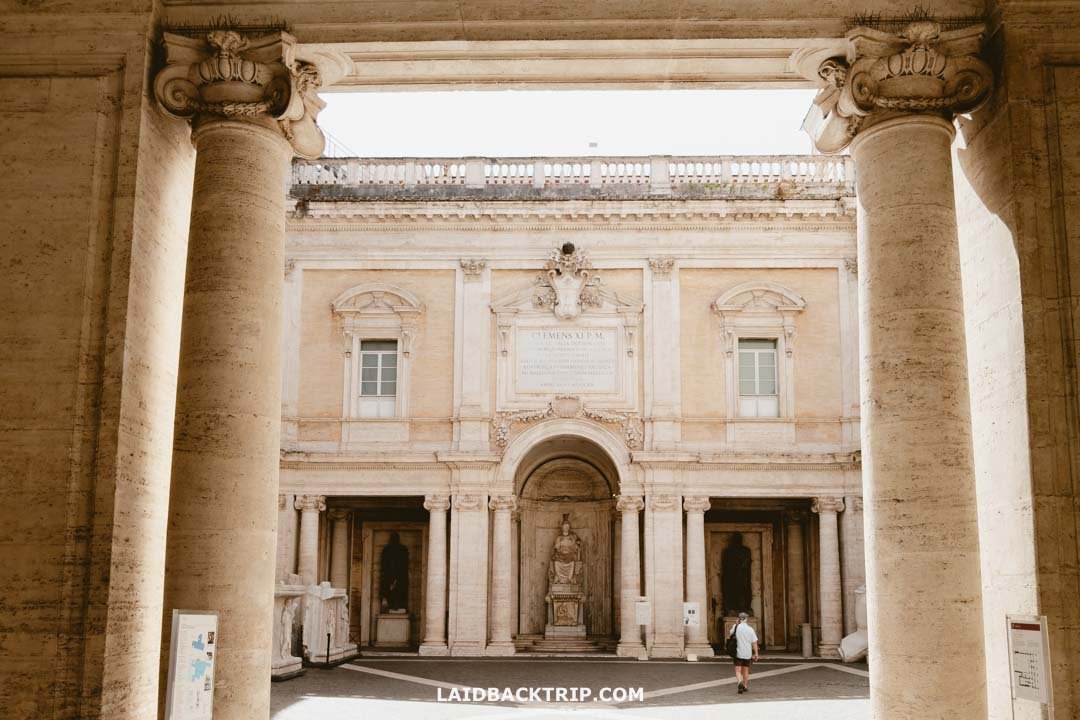
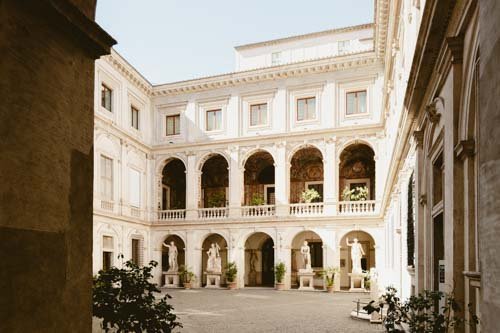
The small courtyard at the Palazzo dei Conservatori.
But before we checked out anything else, we wandered into the small courtyard right behind the ticket office. There were some sculptures, but the coolest thing was definitely the marble fragments of the Colossus of Constantine. Interestingly, that wouldn't be the last time we saw them! Afterward, we went up to the first floor and headed straight for the Conservators' Apartment.
Conservators' Apartment
We found ourselves in the oldest part of the building, originally built in the 15th century to house the public rooms of Rome's city magistrates, who managed the city's administration. It was given a major renovation between 1563 and 1568, with designs from Michelangelo and Giacomo della Porta.
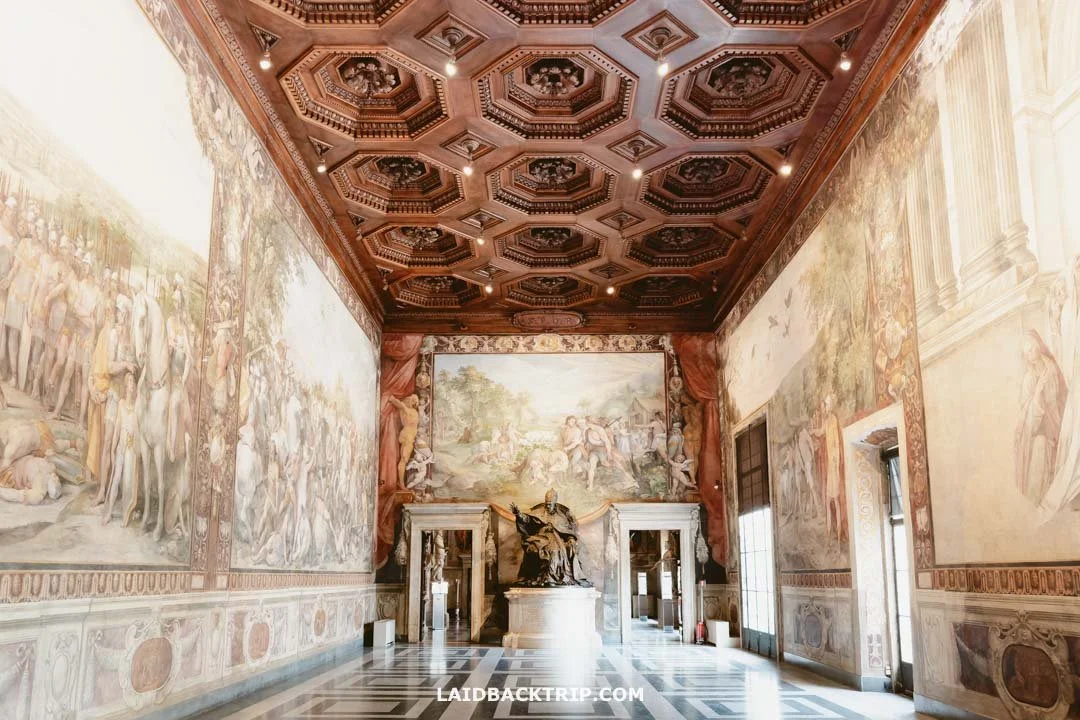
The Conservators' Apartment was simply stunning.
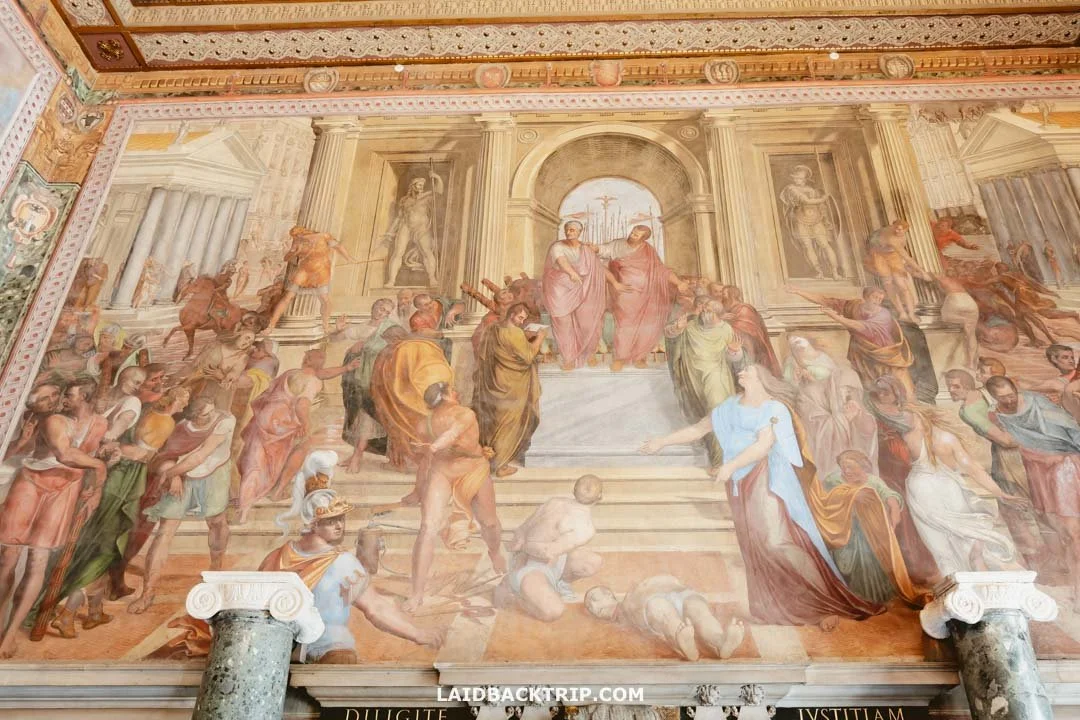
Here, we explored rooms like the Great Hall, Hall of Captains, and Room of the She-Wolf, all of which were decorated with elaborate wooden ceilings, stunning frescoes, detailed carvings, door tapestries, and beautiful marble floors. There was no furniture in these rooms, but some did have sculptures and chandeliers. Seeing rooms this beautiful in the Capitoline Museums was a real surprise, even though we'd already experienced a bit of a similar before.
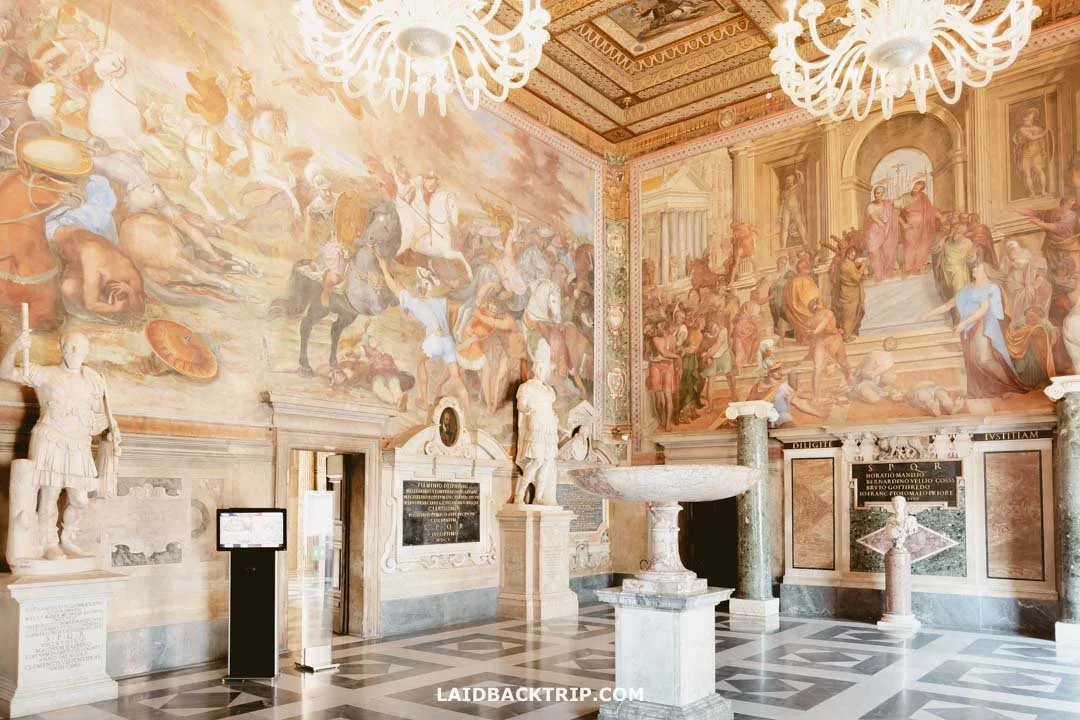
The Hall of Captains was decorated with some truly stunning frescoes.
Another surprise was finding the Room of the She-Wolf without the famous statue inside, which was a bit disappointing. Fortunately, it had just been moved to the main hall, which we were about to visit next.
Marcus Aurelius Exedra (The Glass Hall)
The hall is known as the Marcus Aurelius Exedra since it houses the famous statue of the emperor, though it's also sometimes called the Glass Hall for its architecture. This space was truly stunning and filled with fascinating statues, or at least what's left of them.
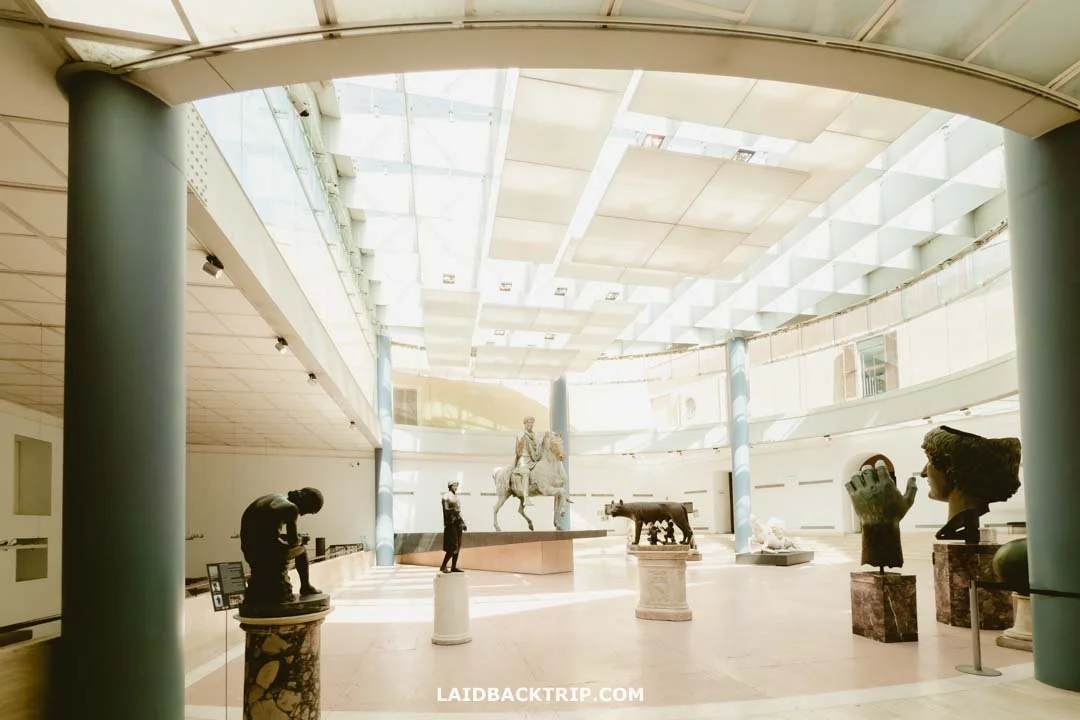
The Marcus Aurelius Exedra had some of the most famous sculptures in the Capitoline Museums.
Some of the most interesting art pieces we saw in this hall were Boy with a Thorn (Spinario), a bronze sculpture of Etruscan origin, The Lion Attacking a Horse, and the Gilded Bronze Hercules. But the real highlights for us were definitely the Capitoline She-Wolf, the fragments of the Bronze Colossus of Constantine, and, of course, the Equestrian Statue of Marcus Aurelius.
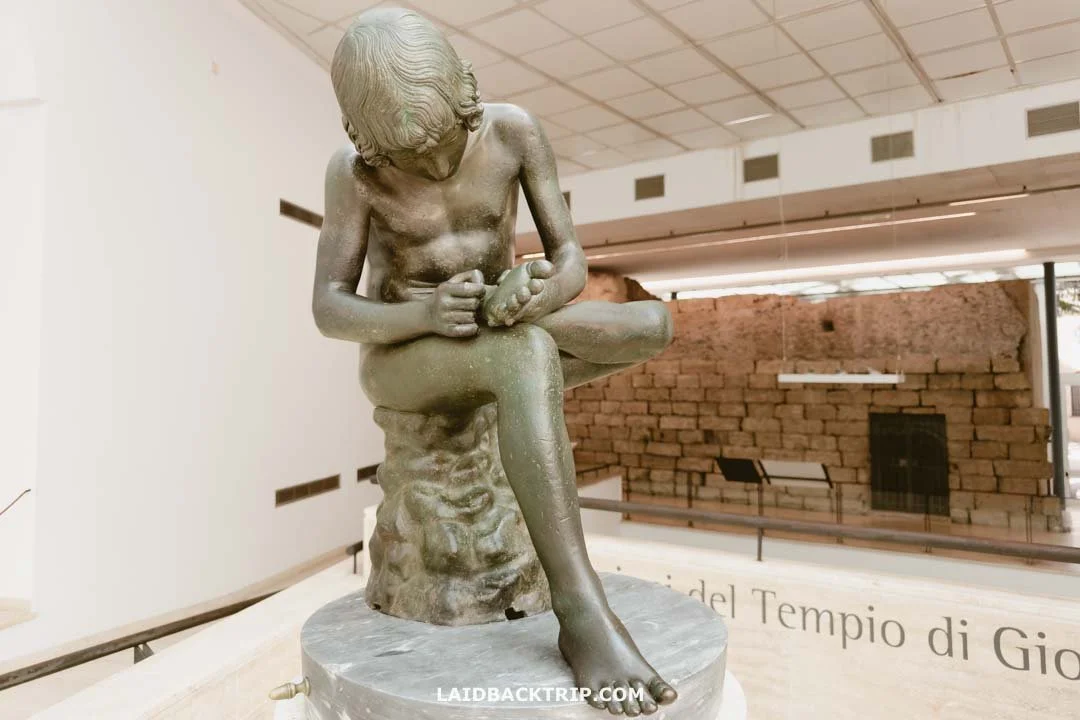
The Boy with Thorn is a Greco-Roman Hellenistic bronze sculpture.
Equestrian Statue of Marcus Aurelius
After leaving the Conservators' Apartment, we made our way to the main hall, where some of the Capitoline Museums' biggest highlights are on display. The first thing we saw was the colossal Equestrian Statue of Marcus Aurelius, which is the only one of its kind to survive from a pre-Christian Roman emperor.
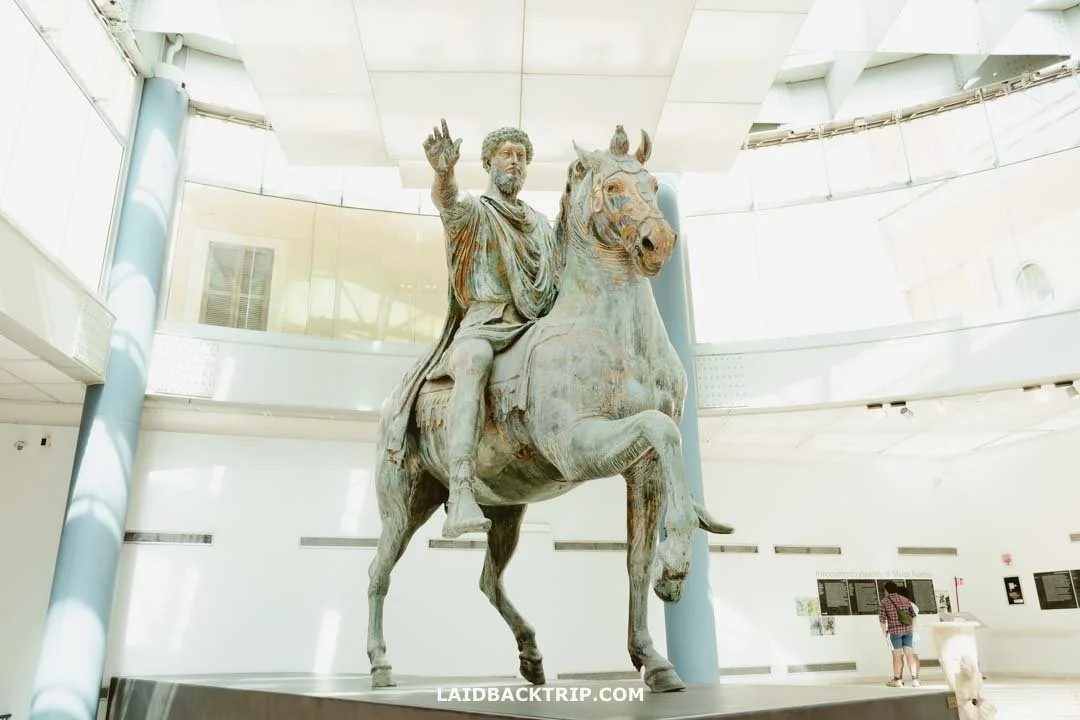
This is the original Equestrian Statue of Marcus Aurelius on display.
People once thought the statue showed the Christian Emperor Constantine instead of Marcus Aurelius, who actually lived in the 2nd century CE. That mix-up is why it survived the Middle Ages, avoiding destruction. The bronze statue stands over 4 meters tall and really dominates the hall. Still, it wasn't the only must-see, as right next to it stood an even more famous statue.
Capitoline She-Wolf
The Capitoline She-Wolf (Lupa Capitolina) is one of Rome's most iconic symbols, and the original statue is kept right here in the Capitoline Museums. The bronze she-wolf was probably crafted by the Etruscans in the 5th century BCE, while the twin infants, Romulus and Remus (legendary founders of Rome), were added in the late 15th century by sculptor Antonio Pollaiolo. It was no surprise that seeing this piece in person was truly incredible.
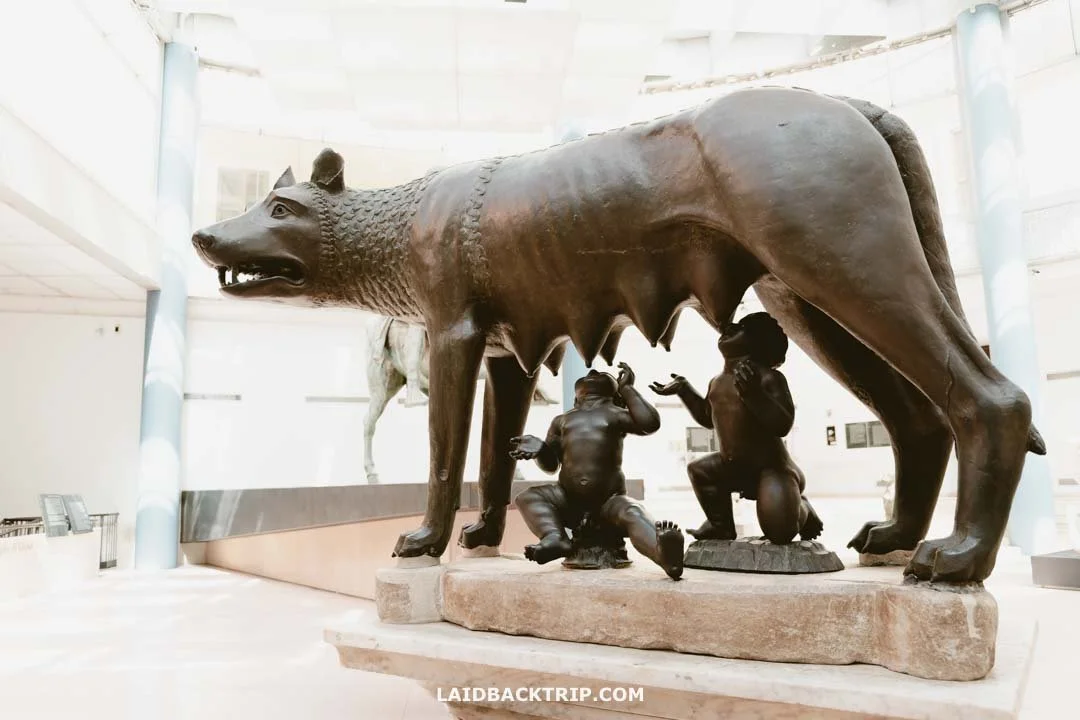
The Capitoline She-Wolf is easily one of the most famous statues in the city of Rome.
Fragments of the Bronze Colossus of Constantine
The last statue that really caught our attention was the original 4th-century CE bronze fragments of the Colossus of Constantine. The statue may have been 10 to 12 meters tall and was probably once displayed at the Lateran Palace. Finding these fragments was pretty special, since most ancient bronzes were melted down.
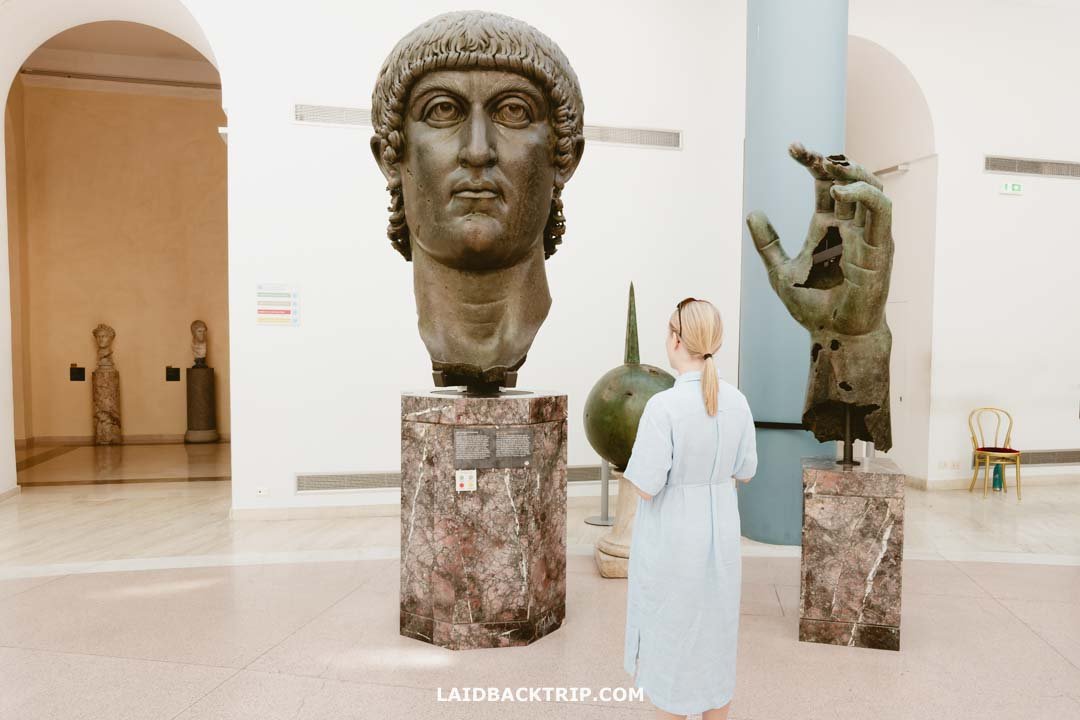
These are the fragments of the Bronze Colossus of Constantine (along with complete Lucie).
What was interesting about the Colossus of Constantine is that we had already seen another set of fragments in the Courtyard of the Palazzo dei Conservatori (the one we mentioned earlier). These were original 4th-century CE fragments of a 12-meter statue, but they were made of marble rather than bronze, and the seated statue once displayed in the Basilica of Maxentius in the Roman Forum. We would encounter the Bronze Colossus of Constantine a third time, but for now, we had a temple to explore. That's right. A temple.
Temple of Jupiter Optimus Maximus
Up to this point, the visit was pretty straightforward. Sure, the Palazzo's Apartments surprised us, but that actually made sense in the context. What truly caught us off guard was discovering the foundations of the Temple of Jupiter Optimus Maximus inside the museum.
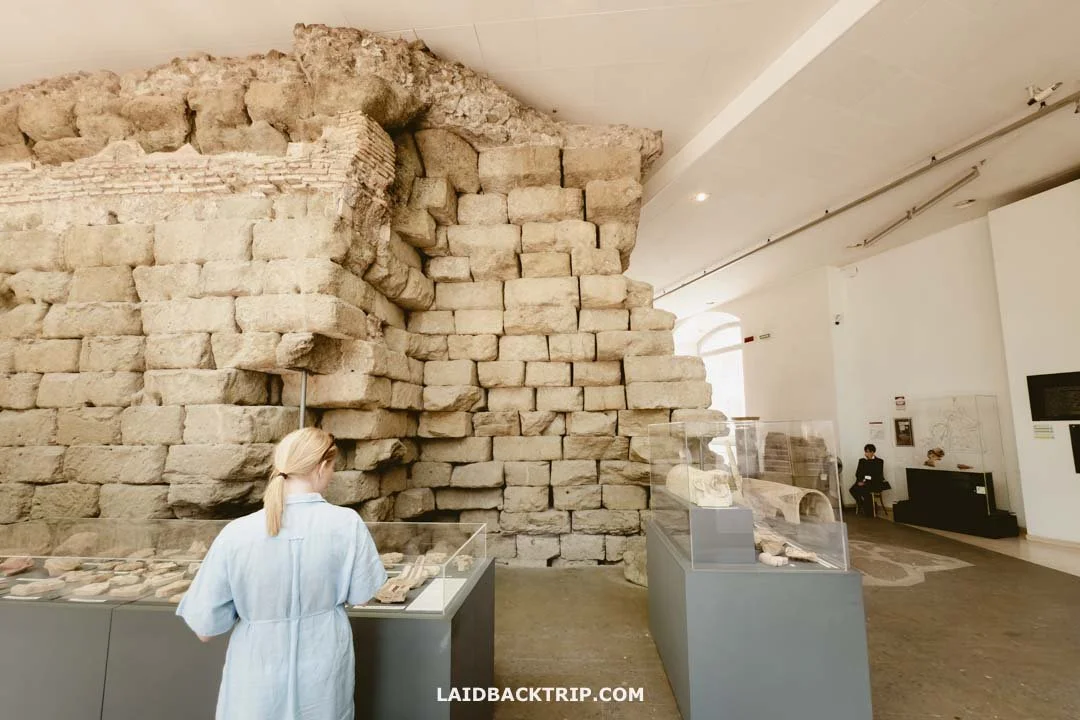
The Temple of Jupiter Optimus Maximus is part of the Capitoline Museums.
On the ground floor, right by the main hall filled with its famous statues, we discovered the archaeological remains of the ancient Temple of Jupiter, constructed atop the Capitoline Hill in the 6th century BCE. Not surprisingly, the story of the Capitoline Hill goes back even earlier, to the Bronze Age (between the 17th and 14th centuries BCE), when pottery was found in the courtyard.
There is not that much left of the original structure today after the temple was destroyed in a fire, rebuilt, and eventually quarried. In the end, only parts of the foundation and the massive base remain, but that is not what matters most, as this is pure history.
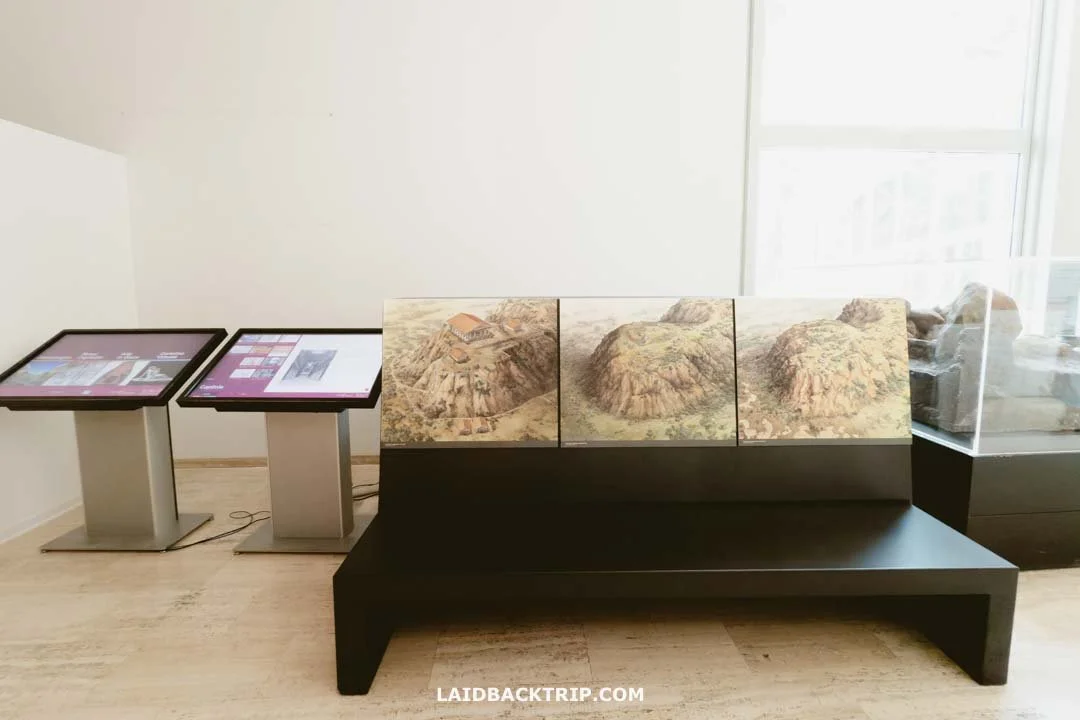
These three images showed how Capitoline Hill evolved after the Bronze Age.
The Garden of Villa Caffarelli
By this point, we had seen a lot, but we were still inside the Palazzo dei Conservatori, the first of the museum's three sections. Our next move was to continue to the next part of the museum complex, but first, we decided to check out the small garden with another statue of the Colossus of Constantine.
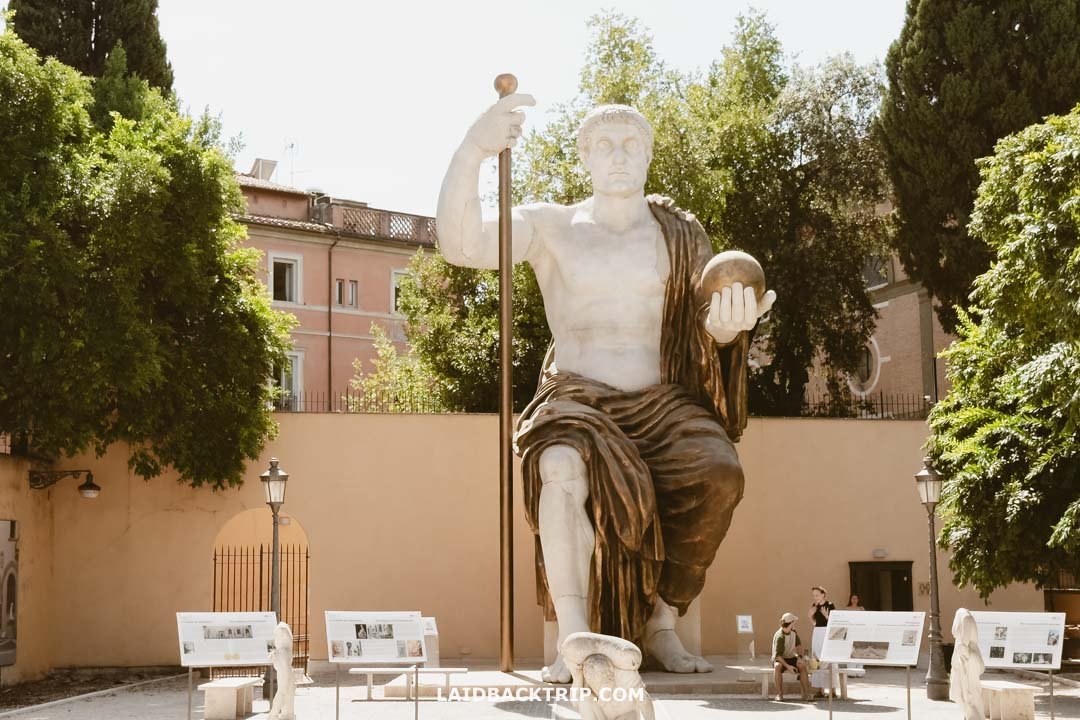
The modern replica of the Colossus of Constantine gives a sense of just how gigantic the statue was.
This time, we saw the Colossus of Constantine in its full glory, although this version was 'just' a modern replica. Still, it was absolutely incredible to see what the statue once looked like, since it was, as the name implies, simply colossal.
The garden itself was pleasant and peaceful, and we even found a bench in the shade of one of the larger trees where we could take a short break. It was also convenient to find restrooms here, just past the statue.
Capitoline Picture Gallery
Once we finished exploring the first floor, we headed up to the second floor and entered the Pinacoteca Capitolina. This area contains one of the world's oldest public painting collections. Even though the gallery features works by artists like Caravaggio, Titian, Guercino, and Rubens, it was extremely quiet.
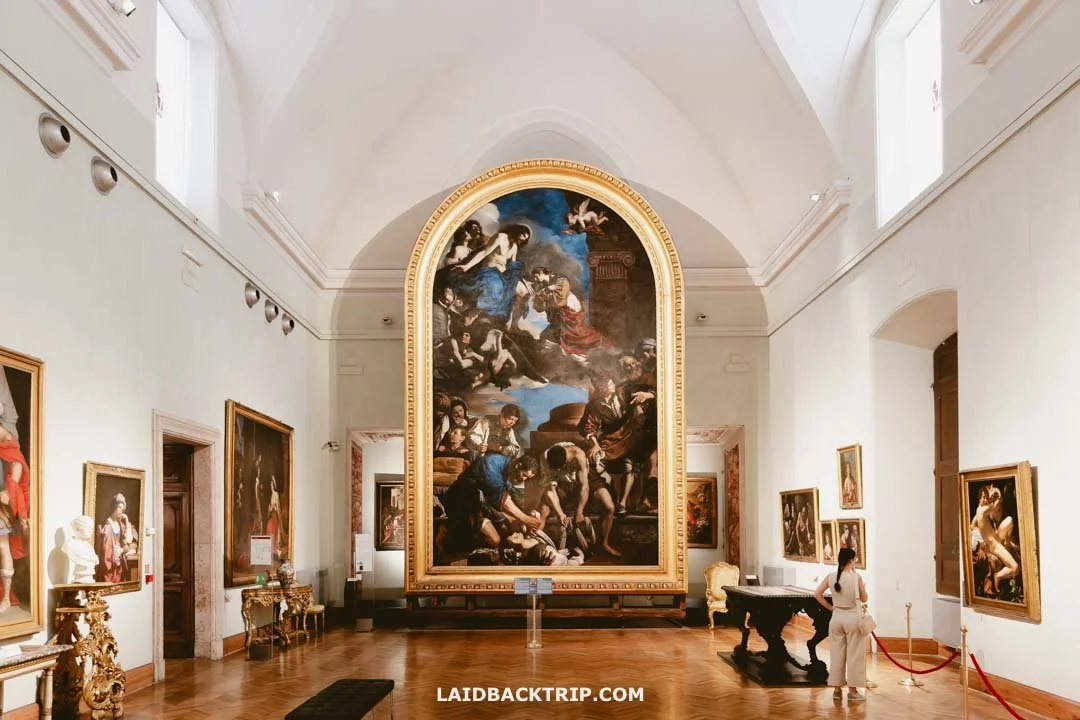
Burial of Saint Petronilla by Guercino.
We slowly made our way through the collection, eventually reaching its main highlights. The first was the altarpiece Burial of Saint Petronilla by Giovanni Francesco Barbieri, known as Guercino. He painted it in 1623 for a chapel in St. Peter's Basilica, after which it was displayed in the Quirinal Palace before being moved to the Capitoline Museum.
For us, the coolest little detail of our entire visit to the Capitoline Museums was finding the famous painting Fortune Teller by Caravaggio in the gallery section. The interesting thing is that Caravaggio actually created two versions of this painting. One is housed here, while the other we saw at the Louvre a few months earlier. This was a fun discovery for us, but, obviously, the painting itself is incredible, no matter the version. We saw more of Caravaggio later at Villa Borghese, which was also a super interesting place to explore.
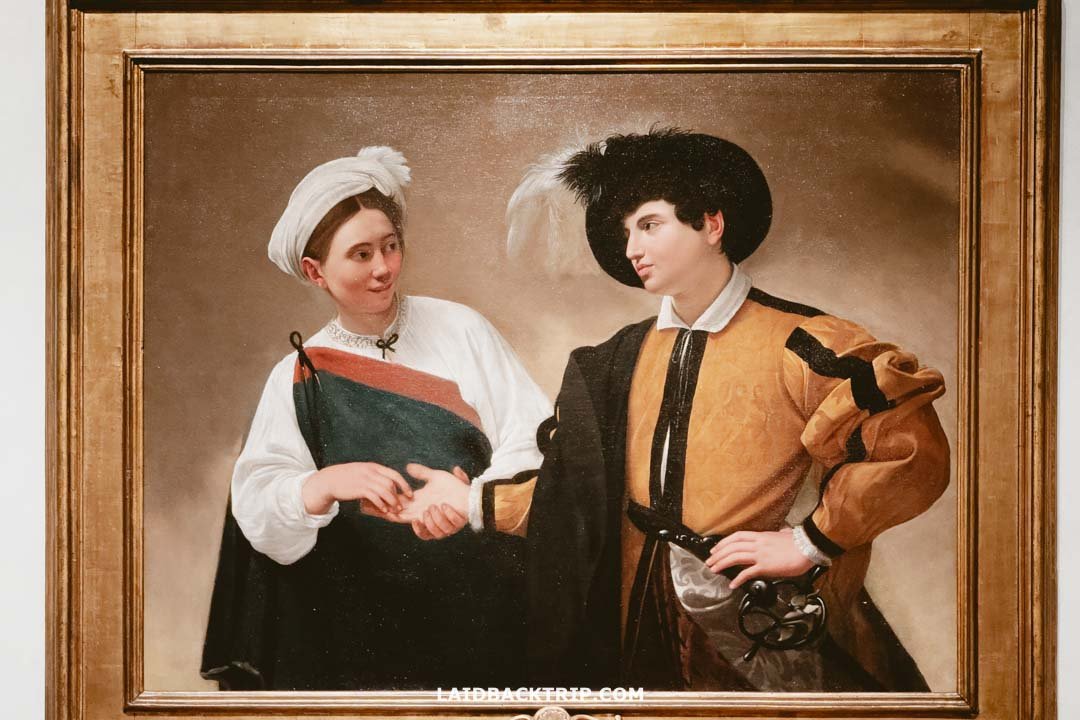
Fortune Teller by Caravaggio.
Palazzo Senatorio
After seeing nearly everything we wanted in Palazzo dei Conservatori, it was time to head to Palazzo Senatorio. Along the way, we discovered another fascinating fact about the Capitoline Museums, though it was a little confusing at first. We assumed Palazzo Senatorio would have some exhibitions as well, but that was not the case.
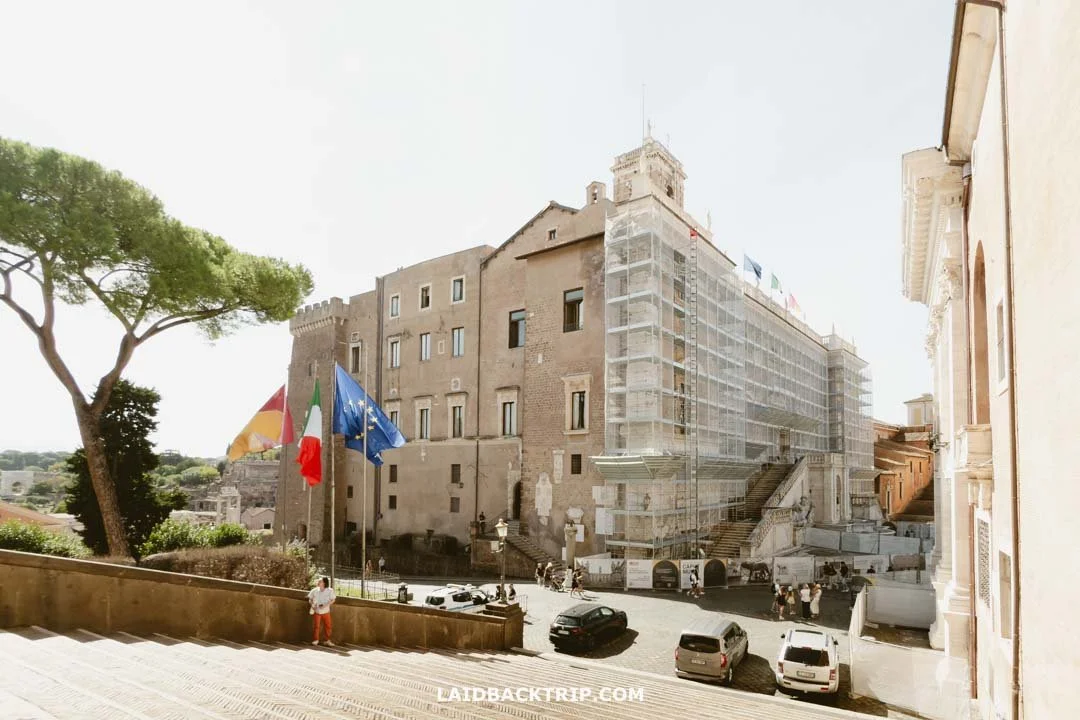
The Senatorial Palace as we saw it from the outside.
Today, Palazzo Senatorio is Rome's City Hall and the seat of the city government. It contains the Mayor's office and the City Council, making it the city's main political and administrative center. The above-ground area is not really open to tourists and is not included in the Capitoline Museums. However, the ancient foundations, called the Tabularium, are a different story.
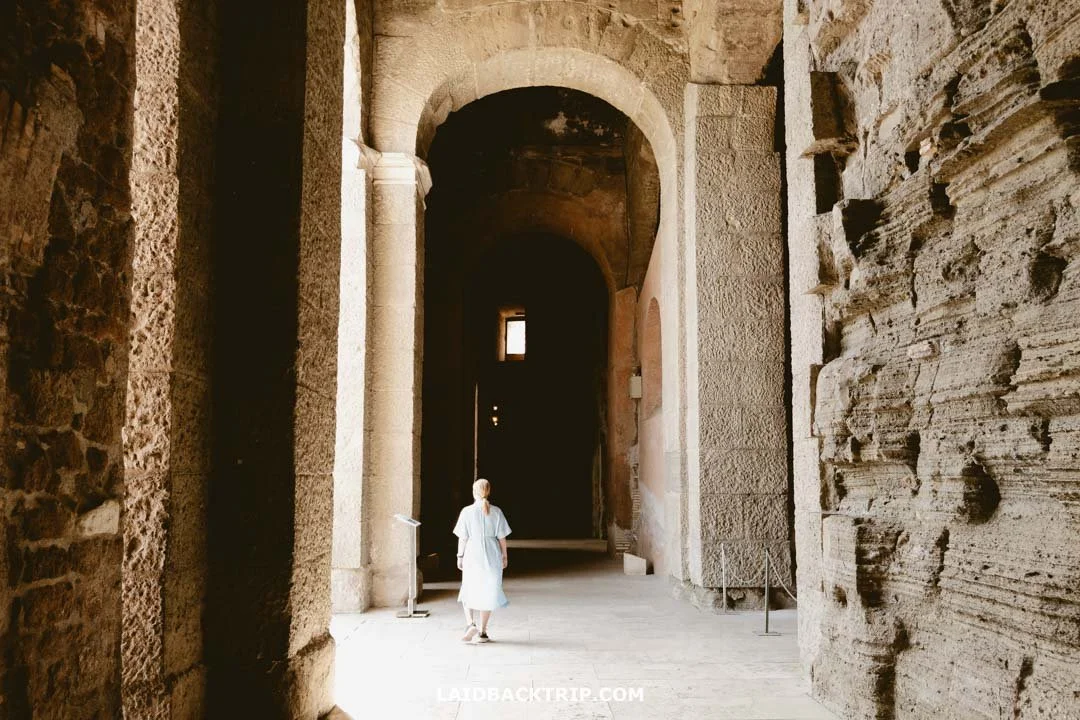
The Romans used the Tabularium to store public records, laws, and official state documents.
Tabularium
After leaving the Palazzo dei Conservatori, we made our way down into the Tabularium, constructed around 78 BCE as ancient Rome's official record archive. Before long, we found ourselves in an underground passage within the vaulted substructure that has lasted for more than 2,000 years, taking us beneath the Piazza del Campidoglio.
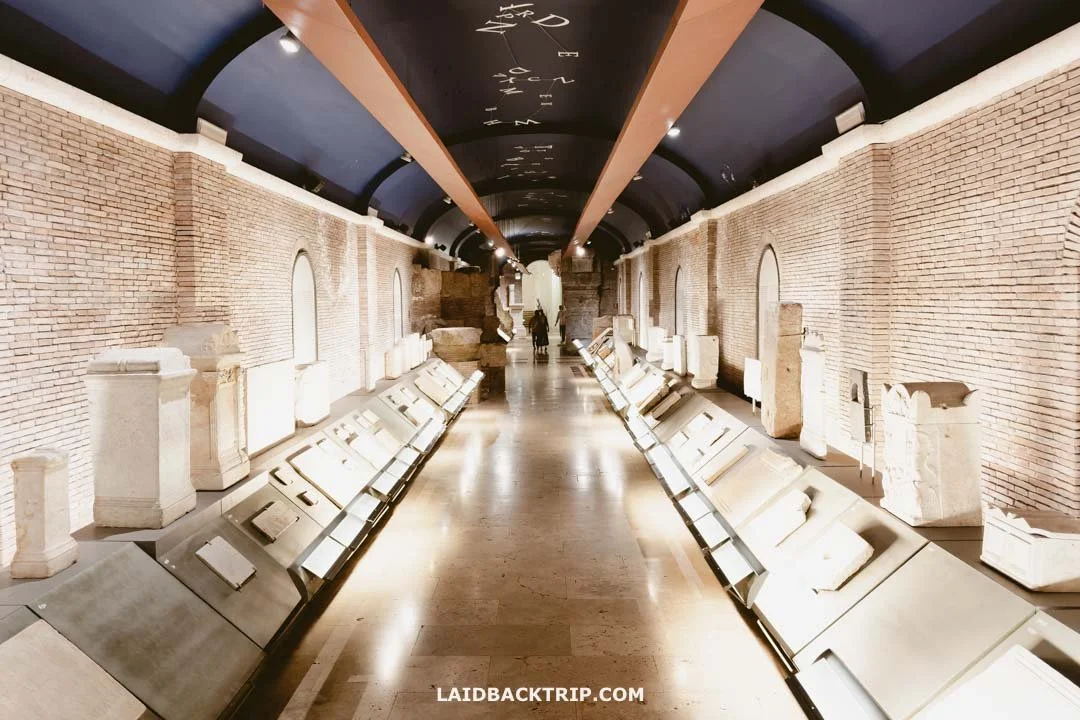
This underground passage through the Tabularium took us from Palazzo dei Conservatori to Palazzo Nuovo.
The corridor was fairly narrow and lined with inscribed tablets and slabs. About halfway through, we turned right and walked toward the most impressive section of the Tabularium.
This portion of the Tabularium's multi-story base was built right into the slope of Capitoline Hill. After a brief walk, we climbed a set of stairs and emerged on the eastern side. The biggest surprise here was the breathtaking view through the ancient arcades, offering a fantastic look down on the Roman Forum and its ruins.
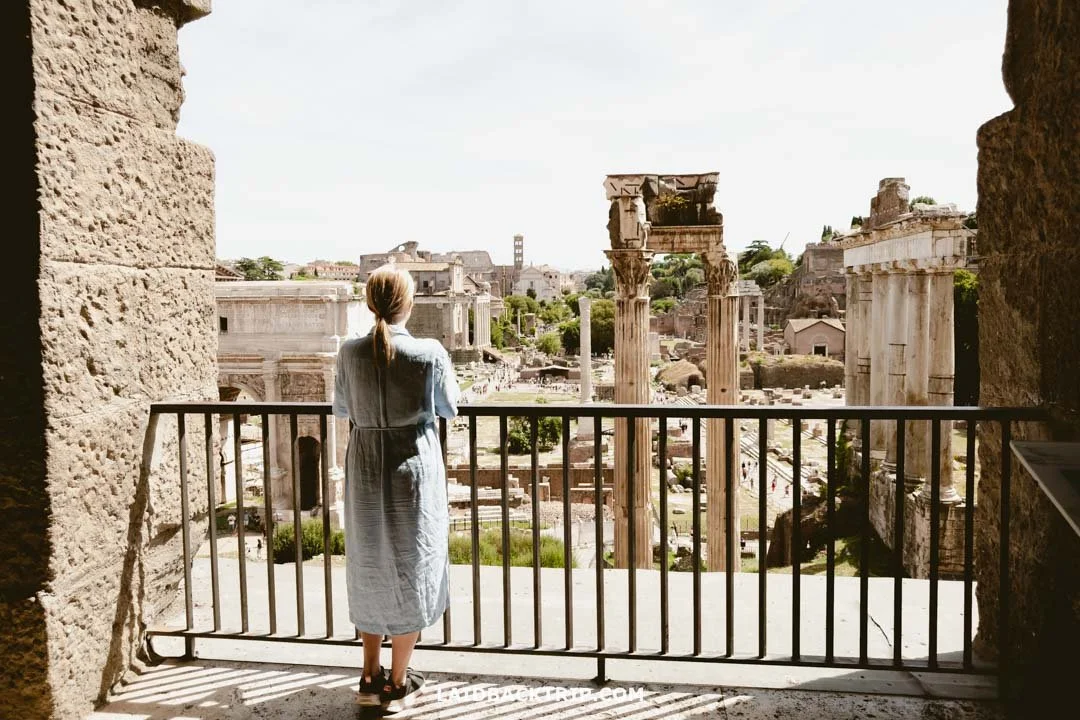
Lucie was really enjoying the views of the Roman Forum from the Tabularium.
A few days earlier, when we were in the Roman Forum, we noticed people up here, having no idea where they were. Now, a few days later, we stood at that exact spot ourselves. We had already seen the Roman Forum from above from the Palatine Hill, so it was great to view the complex from above again, but from a different vantage point.
Temple of Veiovis
While we were here, we learned that the Tabularium contains the Temple of Veiovis. Consecrated in 196 BCE by Consul Lucius Furius Purpurio, this ancient temple was dedicated to Veiovis, an early Roman god often linked to healing or the underworld and associated with a young Jupiter.
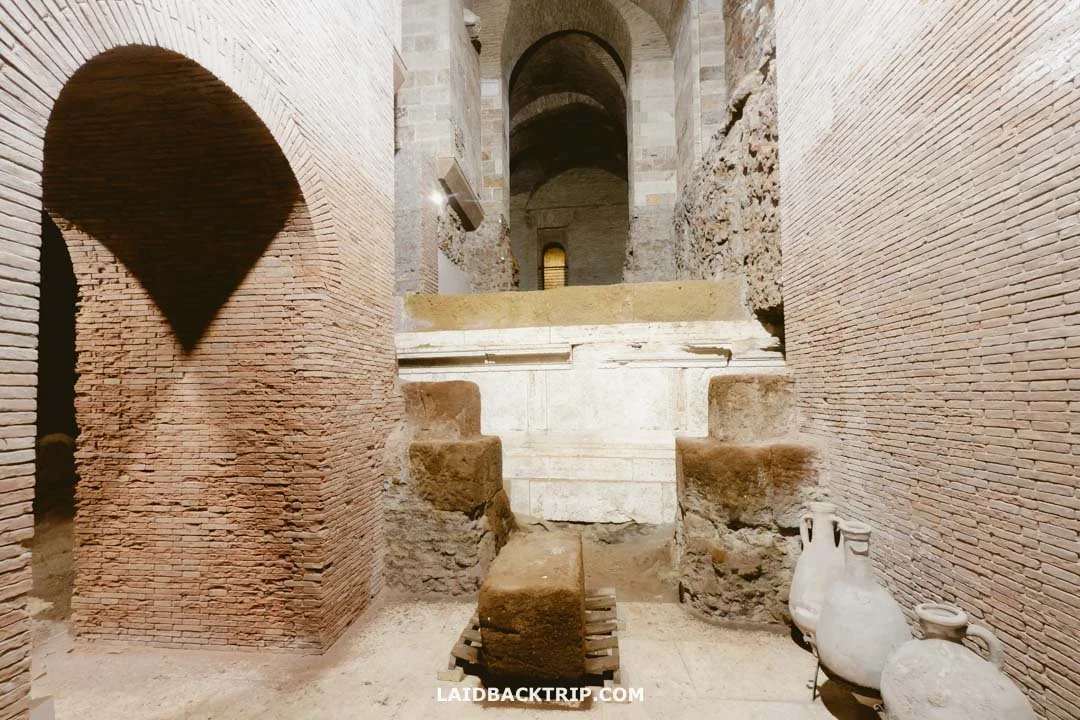
These are the remains of the Temple of Veiovis.
The remains are mainly the temple's podium and foundations, which were incorporated into the grand structure of the Tabularium when it was built in 78 BCE. There was not a lot to see here, but it was an interesting find nevertheless. After we took in the views and read some information about the temple, we returned to the corridor and continued to the Palazzo Nuovo.
Palazzo Nuovo
Finally, we reached the last section of the museum, Palazzo Nuovo, which is the symmetrical twin of the Palazzo dei Conservatori. Here, we continued the classic museum experience, as this part of the complex was filled with sculptures, busts, and beautifully decorated rooms and corridors.
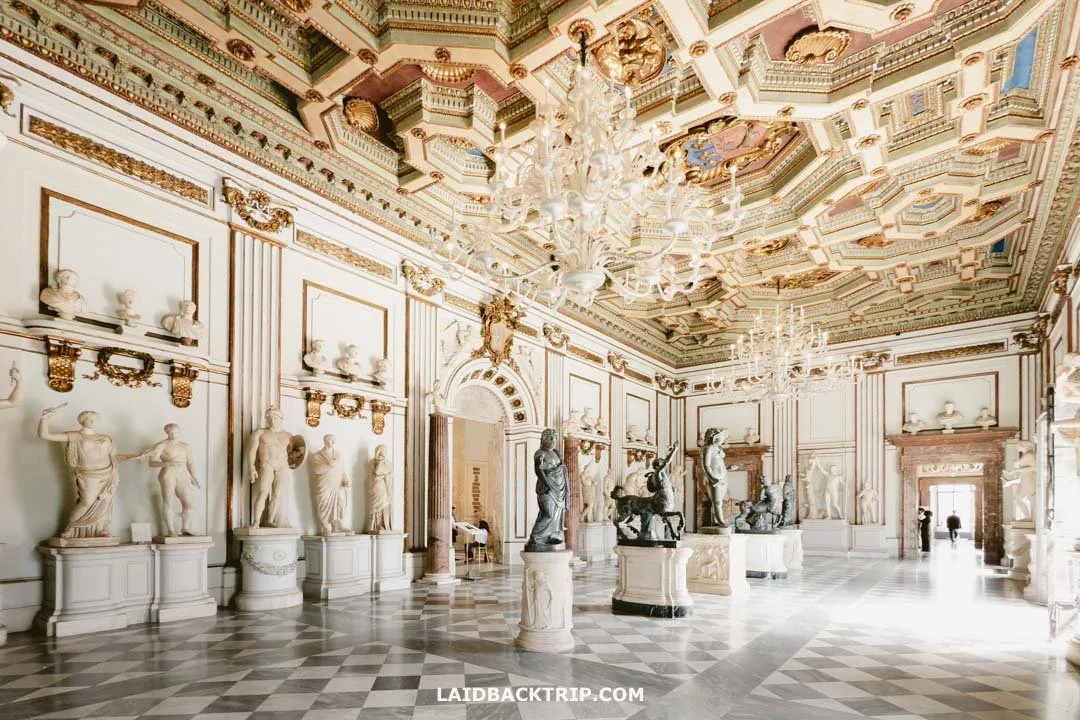
The interiors of Palazzo Nuovo were beautifully done in Baroque style.
The highlights we saw in Palazzo Nuovo included the famous Capitoline Venus, the dramatic Dying Gaul, the Young Centaur, the Old Centaur, the Faun in Rosso Antico, and a vast gallery of imperial busts and philosophers, with the interiors preserving the original 17th-century Baroque display aesthetic.
By this point, we were tired and also behind schedule, as we planned to see the Baths of Diocletian in the afternoon. As a result, we definitely spent less time in Palazzo Nuovo than in the other two sections. So we slowly wandered through the rooms, usually stopping at only those art pieces that truly caught our attention.
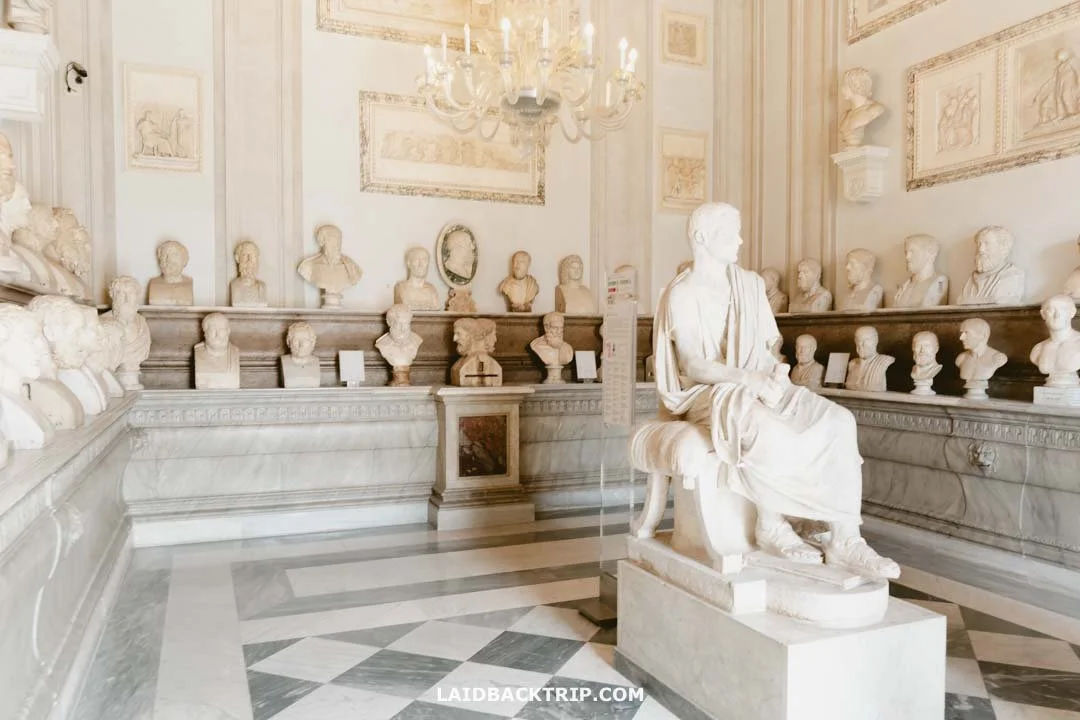
The palazzo had tons of busts on display.
Capitoline Venus
For us, the standout of Palazzo Nuovo was the Capitoline Venus, displayed in a small octagonal room designed to create a stylish backdrop for one of the museum's most famous sculptures.
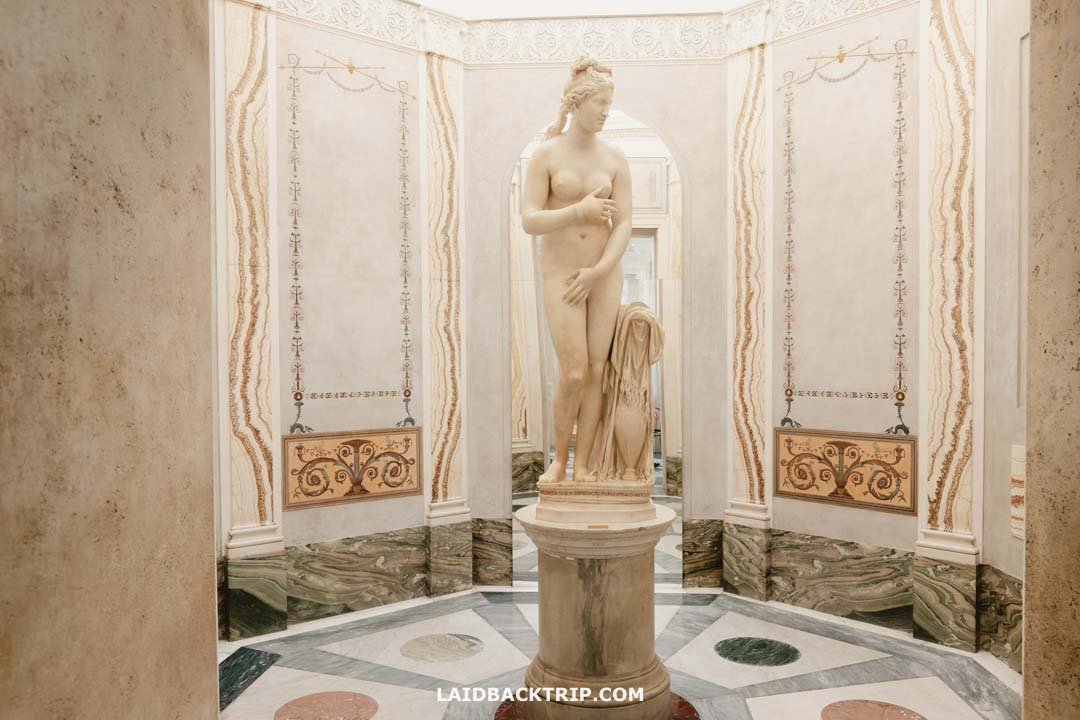
Capitoline Venus is a marble statue that depicts Venus, or Aphrodite in Greek mythology.
This Roman marble copy of a 2nd-century BCE Greek statue portrays Venus (Aphrodite) in the Pudica pose, stepping from her bath and modestly trying to cover herself, a scene that highlights the Roman respect for Hellenistic art.
Beyond the Capitoline Venus, we saw many other sculptures and even a small Egyptian section with statues of baboons and crocodiles (we saw similar themes in Hadrian's Villa or Castel Sant'Angelo). Still, we spent less time here than we would have if our Capitoline Museums experience had started in this palace.
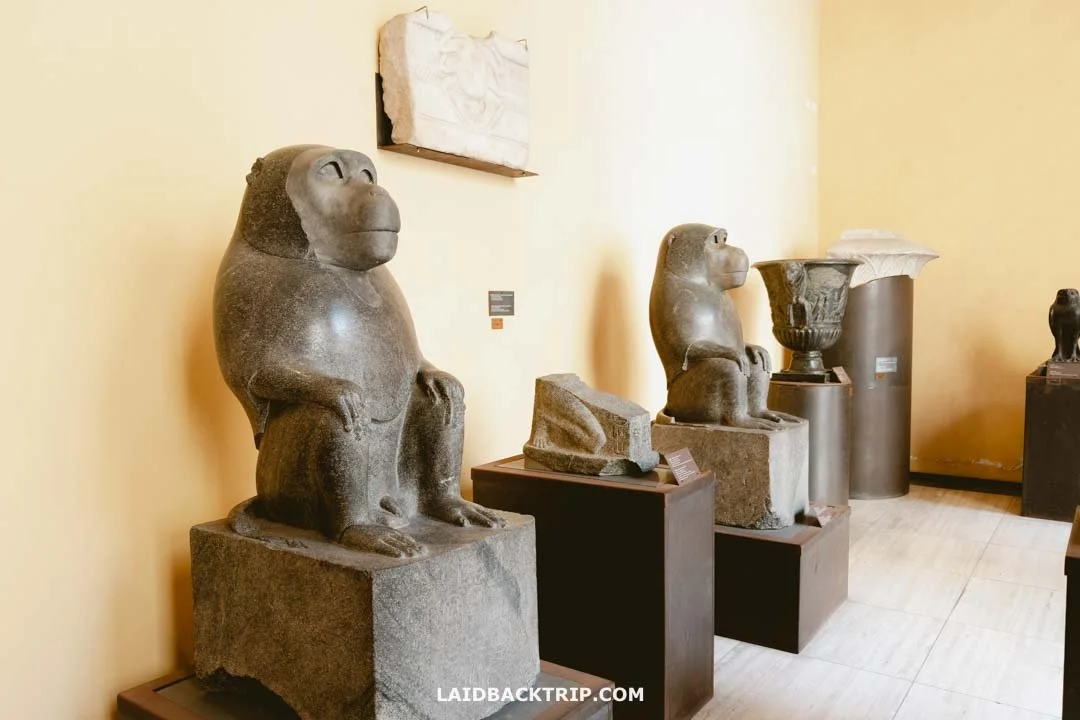
We were even able to visit a small Egyptian section.
At last, from here, we retraced our steps, and after collecting our daypack, we headed straight to our hotel to grab our luggage and check in to the other places we booked for the second half of our Rome vacation.
No Crowds in the Capitoline Museums
Almost immediately after entering the museum, we noticed how quiet it was. We were in one of Rome's most interesting locations, surrounded by landmarks like the Roman Forum and the Monument to Victor Emmanuel II. Outside, tourists gathered in large crowds. Inside, though, the museum felt nearly serene, with only a handful of people around. It really was like entering a different world.

Even in the Marcus Aurelius Exedra, full of the museum's most famous pieces, there were only a few visitors.
We had already visited the Vatican Museums, which were packed. Compared to those, the Capitoline Museums were almost quiet. We had been in Rome for a few days, and this was not the first time we had experienced this. We understood it in places like the Stadium of Domitian or Palazzo Massimo alle Terme, but not in one of Rome's top museums.
And I am not just talking about remote sections or wings with some regional artifacts usually visited by only the most enthusiastic folks. Even the main hall with the famous Equestrian Statue of Marcus Aurelius and the Capitoline She-Wolf was simply quiet.
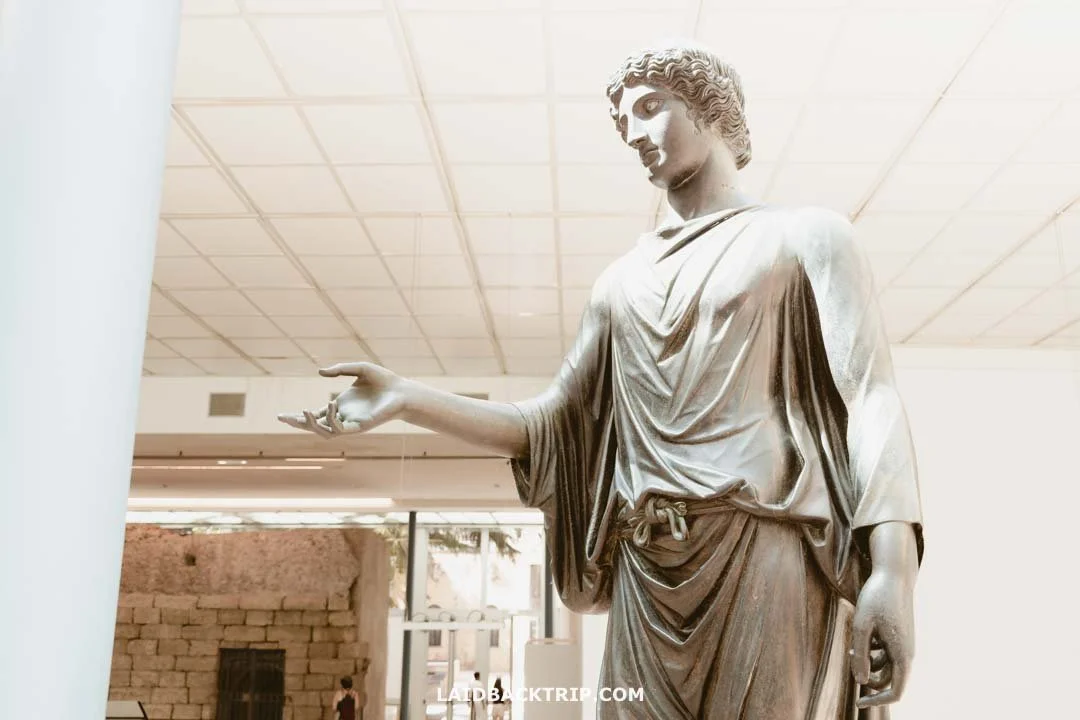
The statue depicts the triumph of Lucius Aemilius Paullus over the Macedonian king, Perseus.
Guided Tour Tips for the Capitoline Museums Rome
The museum was easy to explore by ourselves, and we could take as much time as we wanted. If you are short on time, a guided tour of the Capitoline Museums could be a smart choice, letting you catch all the highlights without missing anything. Either way, it is helpful to know that this option is available.
Is a Visit to Rome's Capitoline Museums Worth It?
We loved our visit to the Capitoline Museums because they offered us a glimpse of both the city's humblest and oldest history during the Iron Age and its later rise to a world-dominating superpower. And through its remarkable collections of artifacts, such as vessels, sculptures, reliefs, architecture, frescoes, and mosaics, we enjoyed a fascinating story of Rome and its art.
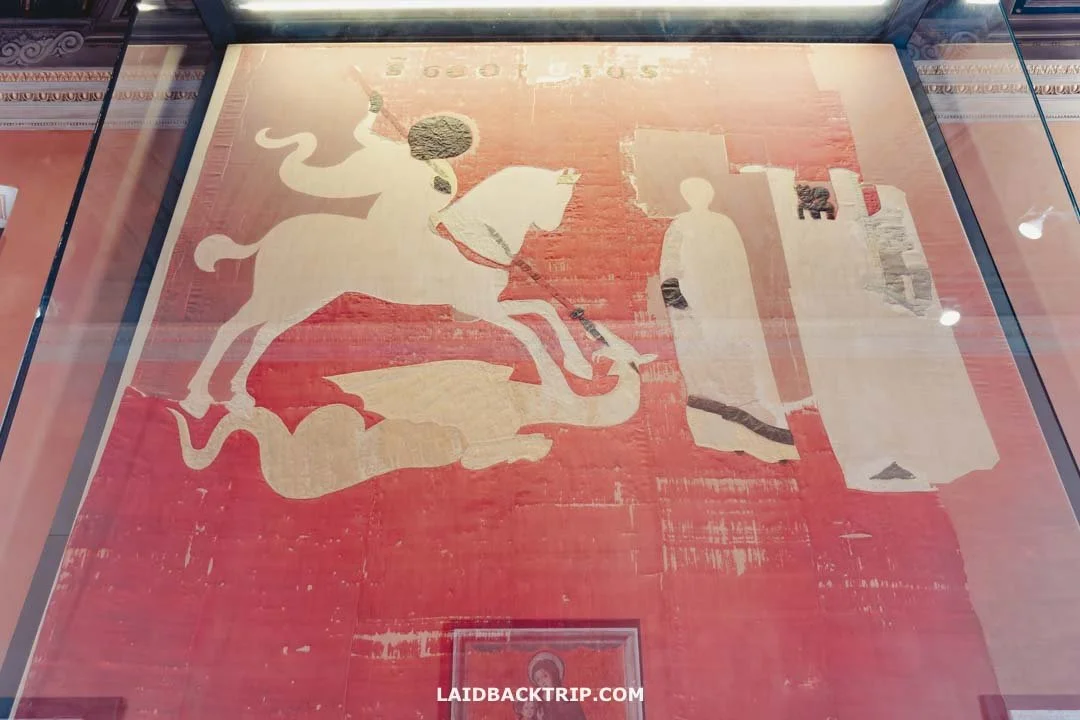
The Banner of St. George represents the oldest example of a flag in Italy.
For a historic museum, it was definitely a fun journey. We were able to discover the origins of the Capitoline Hill, two temples, Roman archives, and enjoy beautiful views of the Roman Forum along the way. These details, some small, some pretty big, really added to the overall experience.
But despite all that grandeur, what we liked best was that the whole experience had a really laidback feel, which we never expected from a major site in central Rome. We have visited many museums in the city, and the Capitoline Museums offered the most complete journey not only into antiquity, but also into the Middle Ages, the Renaissance and Baroque eras. When you add it all up, the Capitoline Museums are absolutely worth seeing.
Getting to the Capitoline Museums
The Capitoline Museums sit atop a small hill beside Piazza Venezia in the heart of Rome. From our hotel near Navona Square, it was about a kilometer to the museums, so we walked there in just over 10 minutes. Later that day, we moved to a hotel closer to Termini, which was roughly a 15-minute walk from the Capitoline Museums, with the train station itself being another 10 minutes away from our new place.
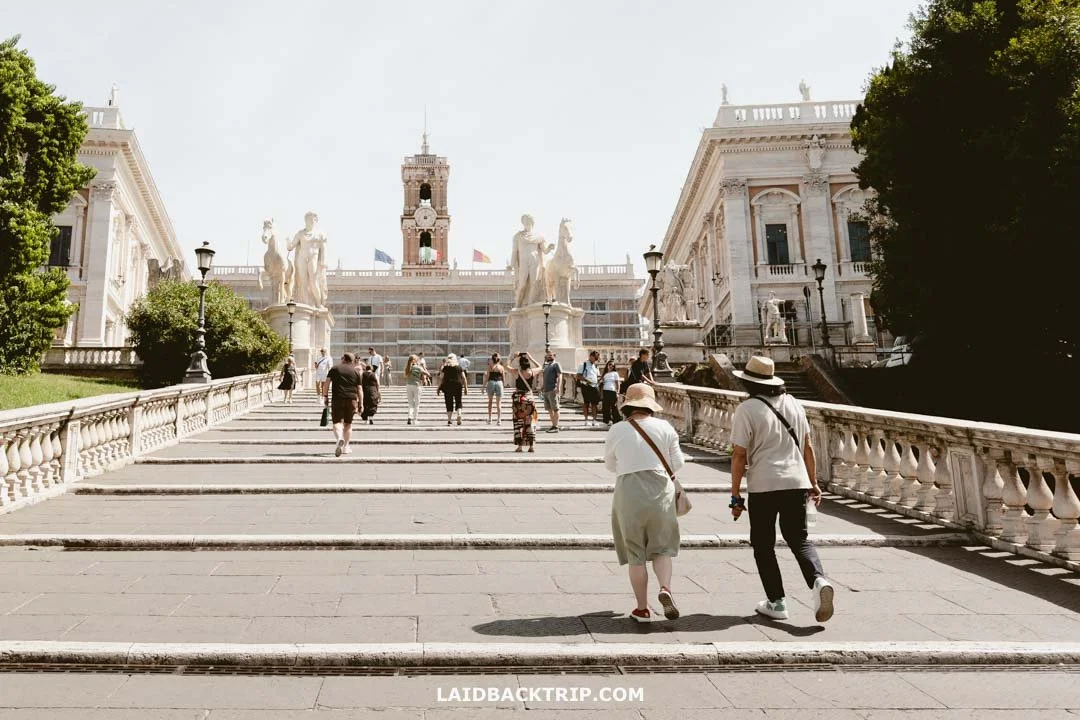
The Cordonata is a gently sloped ramped staircase that leads up to Piazza del Campidoglio, where museums sit.
Until the metro C line at Piazza Venezia opens, the nearest subway stop is Colosseo (B line), less than a kilometer from the Capitoline Museums. Piazza Venezia is also well connected by city buses. Even so, if you are staying in Rome's historic center, it is very easy to walk to the Capitoline Museums.
Opening Times of Capitoline Museums
The Capitoline Museums are open every day from 9:30 AM to 7:30 PM and close only on May 1 and December 25. The last admission is one hour before closing.
How Long to Spend at the Capitoline Museums in Rome
All in all, it took us about four hours to see everything we wanted in the Capitoline Museums, including some time wandering around the Piazza del Campidoglio and taking a break in the courtyard of the Palazzo dei Conservatori. Interestingly, we did not think much about timing before we left, since the Capitoline Museums were one of those places where time flew by, even though we are just casual history buffs.
Because we spent so much time here, we definitely got hungry. We had a quick snack beforehand, and after the museum, we went out for pasta, so we did not get to try the on-site museum cafe. We kept it in mind for next time, though, since we stayed longer than planned and were quite hungry by the end, but we had to keep moving because of our schedule.
We spent four hours in the expansive Capitoline Museums, and the time flew by effortlessly.
On any other day, we could definitely see ourselves spending even more time here, since everything was so interesting. But honestly, after four hours, it is hard to stay focused on what you are seeing. Three hours would work as well, but we have a feeling that anything less would make the visit feel rushed and full of compromises.

Visit St. Peter's Basilica to admire its magnificent Renaissance architecture, stunning dome, intricate mosaics, and Michelangelo's famous Pietà.