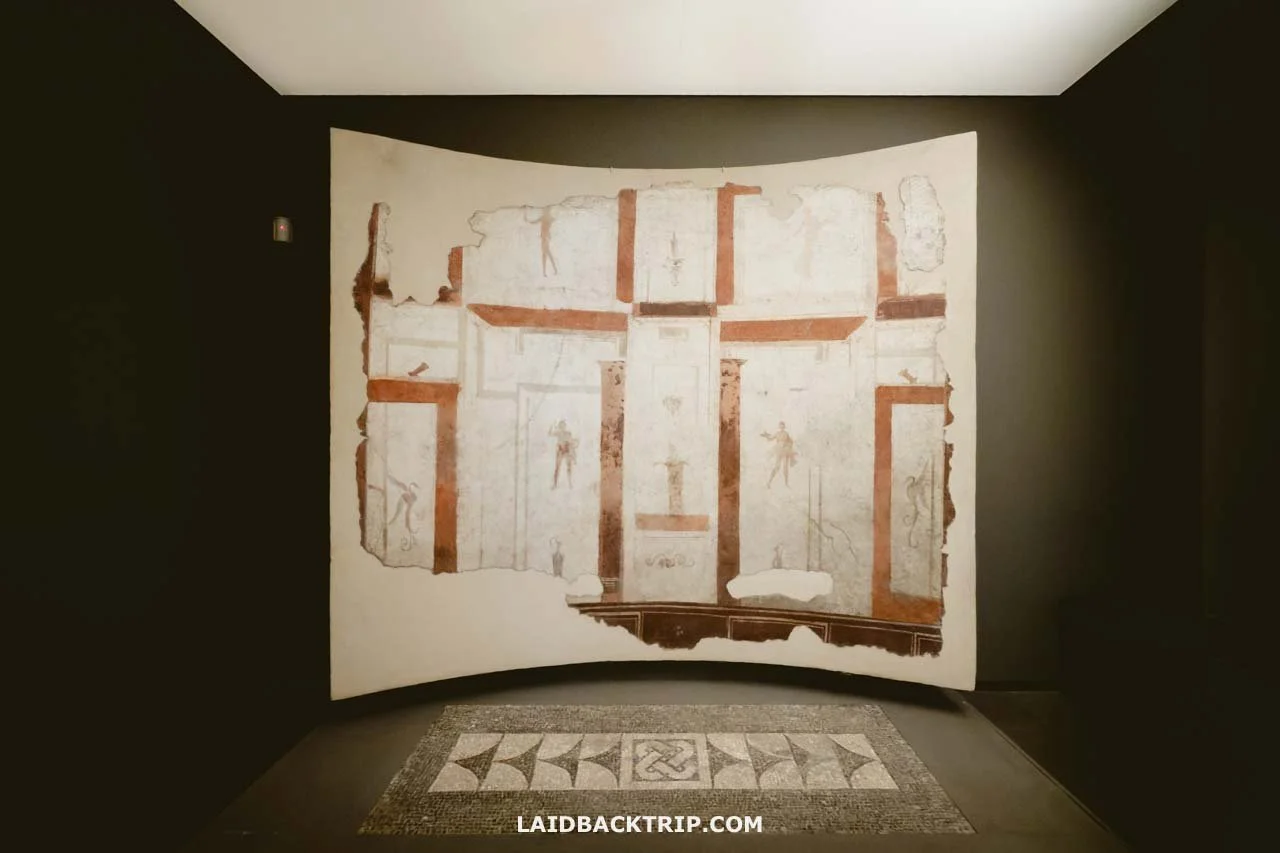
Is Palazzo Massimo Rome's best museum for ancient art? Let's find out!
Rome is full of amazing museums, and Palazzo Massimo is one of its hidden gems. That's what we think now, after our visit. Things were different at first, and our journey to this conclusion was a bit more difficult. For a good part of our time in Rome, it seemed we might not even make it to Palazzo Massimo at all.
Honestly, Palazzo Massimo wasn't even on our radar for our first trip to the Eternal City. It wasn't that we didn't find it appealing. We just didn't know about it at all. Since it was our first time in Rome, Lucie and I had already filled our itinerary with the top places like the Colosseum and the Roman Forum, so we hardly had any time left for lesser-known sites.
We actually began our journey to this museum at an entirely different location. When we visited the Baths of Diocletian, we discovered that our ticket also included entry to Palazzo Massimo and Palazzo Altemps. After we learned this, the person at the desk told us the museum was really nice, though we figured she'd say that anyway. However, that sparked our curiosity, so after quickly checking the official website to see what the museum was all about, we decided that if we had time, we'd stop by. Eventually, we did. So, here is how it went and what we saw inside.
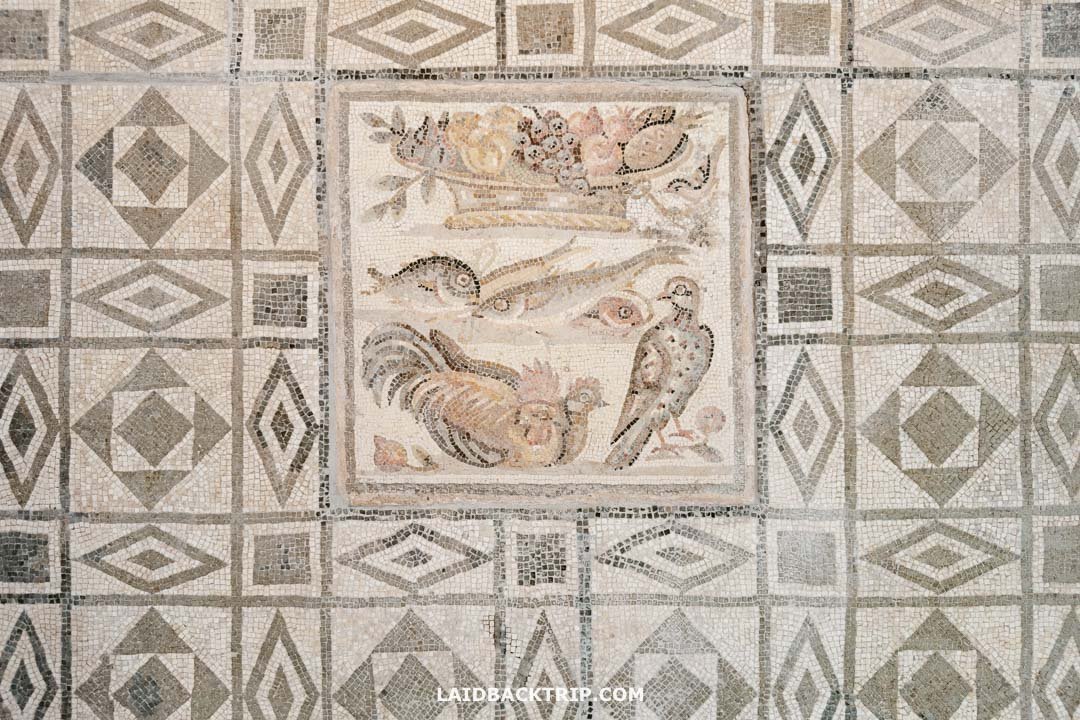
Roman mosaics were a big reason I was excited to visit Palazzo Massimo.
Things to See at Palazzo Massimo Museum
The Palazzo Massimo alle Terme museum occupies a grand, four-story, late 19th-century Neo-Renaissance palace that was rebuilt by Camillo Pistrucci for a Jesuit college. Today, it serves as the main branch of the National Roman Museum.
The museum spans four floors, but when we visited, the lowest floor was closed for technical reasons. Even with only three floors open to the public, there was plenty to see, with galleries full of sculptures, reliefs, frescoes, mosaics, stuccoes, and sarcophagi. The space felt modern and was easy to navigate, and since we arrived later in the afternoon, there were hardly any other visitors.
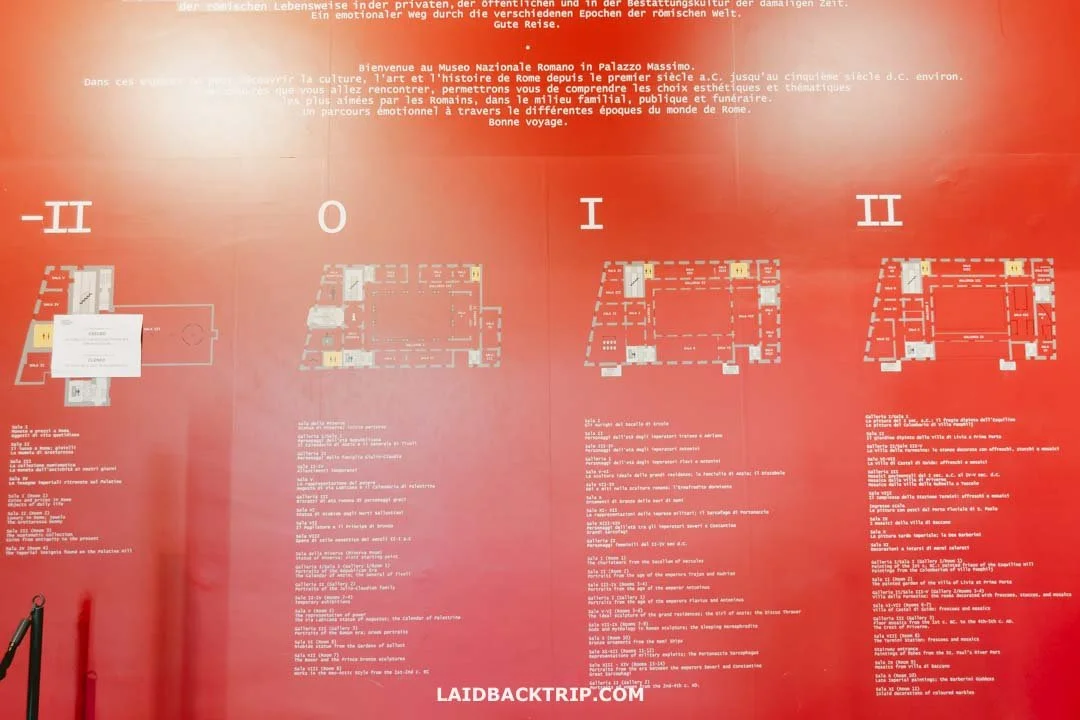
This museum map helped us easily navigate through the Palazzo Massimo.
Normally, we would have thought this was just because we arrived late, but we had already been in Rome for a few days, and this was not the first time it happened. Earlier that same day, we visited Palazzo Altemps, and it was the same story. The Baths of Diocletian were pretty much the same as well.
Second Floor of Palazzo Massimo
Since we were most interested in Roman paintings, frescoes, and mosaics, we headed straight to the highest floor. We absolutely loved the Houses of Augustus and Livia on Palatine Hill, so we figured this would be the section we'd enjoy the most. With limited time, we decided to focus here first and see how things went. It was a good plan, but it did have one downside, which I'll mention in a moment.
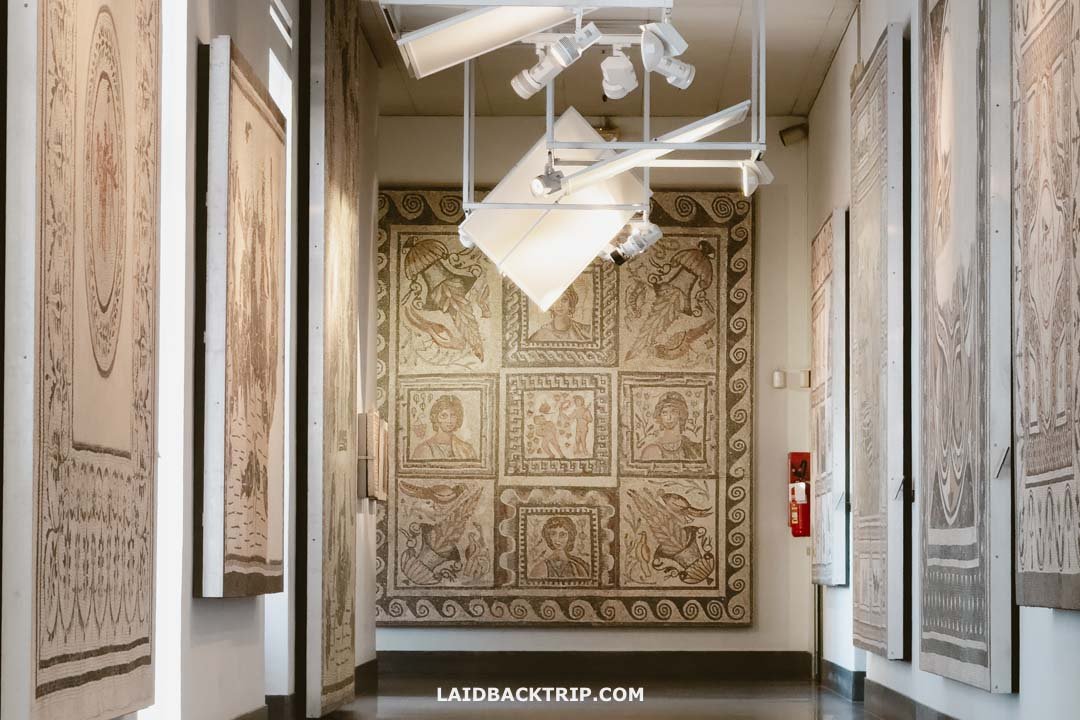
The second floor had a huge collection of incredible Roman mosaics.
As we wandered through the halls of the top floor, we saw an incredible mix of ancient art found not only in Rome but also in the surrounding areas. The mosaic section on this floor displayed a wide range of floor mosaics, from intricate geometric patterns to detailed scenes, or a bust of Dionysus, dating from the 1st century BCE to the 5th century CE.
Another highlight on this floor was the collection of frescoes from Villa Farnesina. These vibrant wall paintings and stuccos, featuring mythological themes and scenes from everyday life, are regarded as some of the best examples of Roman painting. They were amazing and, in many ways, reminded us of the Roman houses we had seen earlier on Palatine Hill.
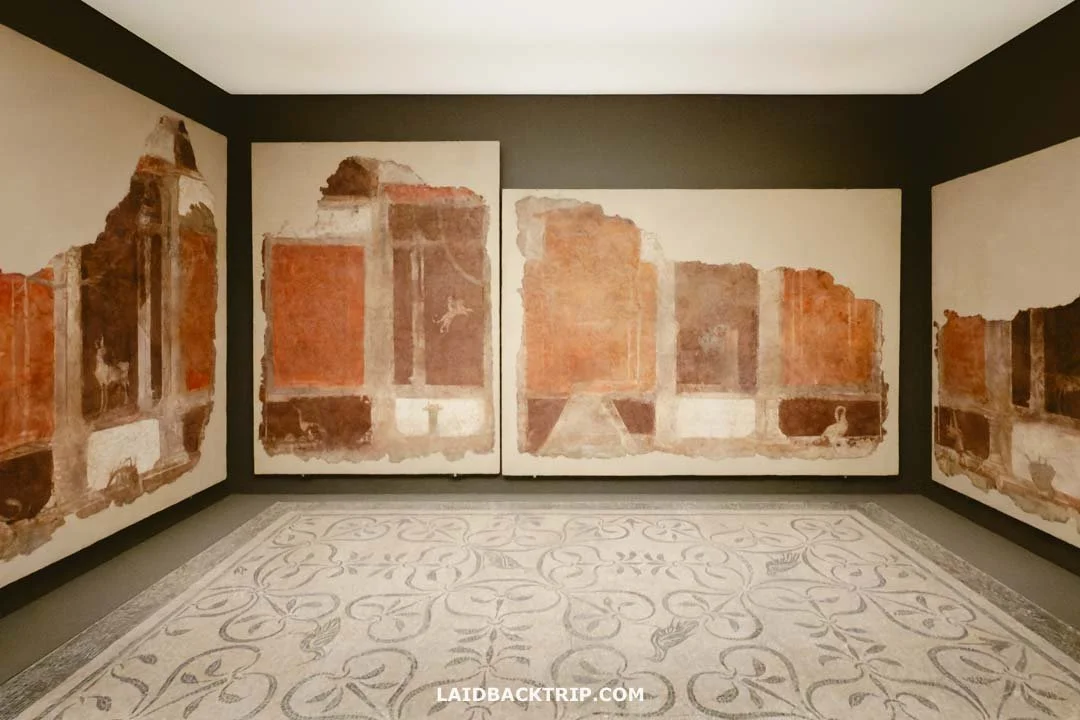
Villa Farnesina once sat on the Tiber River and was decorated with frescoes from the early Imperial Age.
For us, the highlight of Palazzo Massimo was probably the frescoes from the Villa of Livia, which were truly breathtaking. A full room has been recreated to show the incredibly realistic garden frescoes from the dining room of Livia's villa (wife of Emperor Augustus) at Prima Porta, just north of Rome. These paintings give the illusion of a lush, enclosed garden with birds, plants, and an open sky above. The entire scene, in many ways, brought to mind our trip to L'Orangerie, where Monet's Water Lilies are displayed.
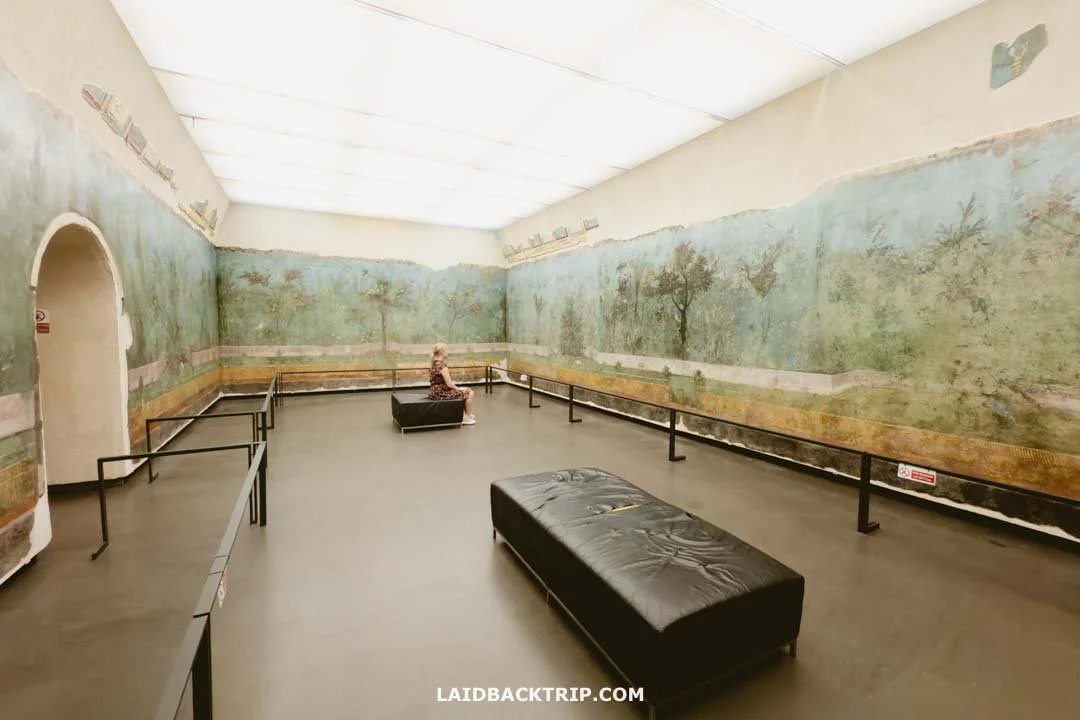
This room with frescoes from the Villa of Livia was simply breathtaking.
Of course, there were many differences between the two places. For example, this room was much smaller, and the Roman Second Style used in these paintings was very different from Monet's Impressionism. Still, the Roman paintings were over 2000 years old, and unlike the crowded L'Orangerie, we had them all to ourselves.
First Floor of Palazzo Massimo
The ground and first floors featured an impressive collection of Greek and Roman statues and portrait busts, showing the evolution of Roman sculpture. Unfortunately, we had less time for these than we would have liked, so we mostly managed to quickly walk through some sections of the first floor.
After that, we walked down to the first floor to keep exploring. This level featured Roman replicas of Greek masterpieces along with significant historical reliefs. Among all the works we saw here, one of the most famous ones was the Lancellotti Discobolus (Discus Thrower), which is regarded as one of the finest Roman marble copies of Myron's lost Greek bronze original.
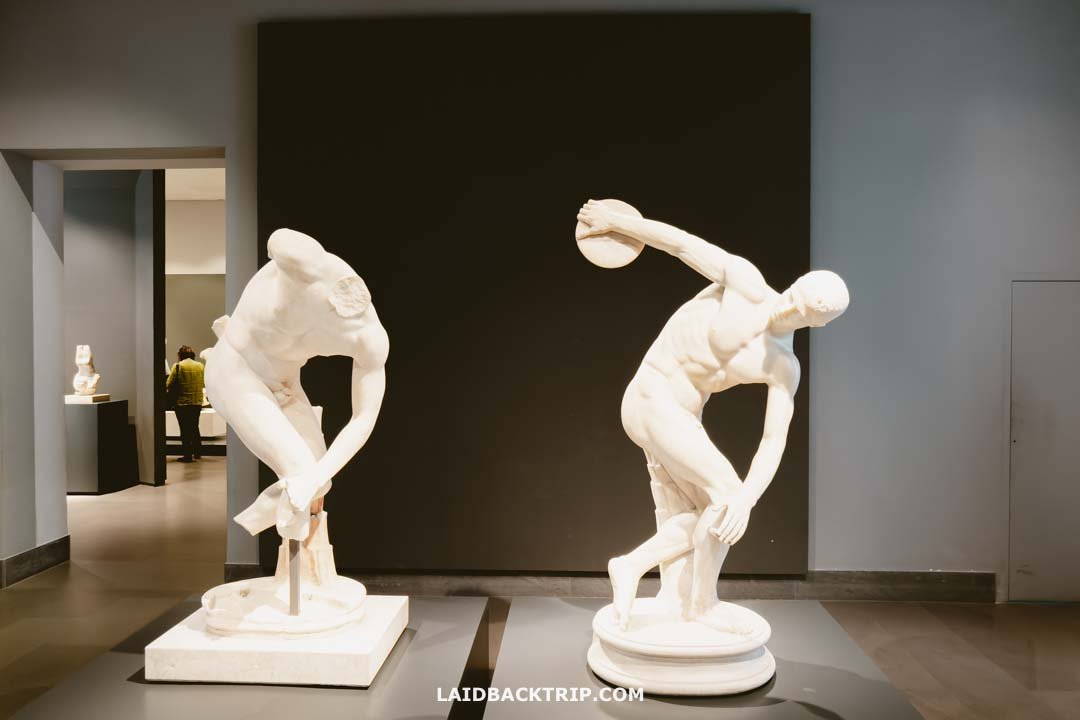
The Discobolus is an ancient sculpture that depicts a Greek athlete throwing a discus.
Another well-known sculpture here was the Sleeping Hermaphroditus. This marble copy of a Hellenistic original creates an illusion, as it is meant to look female at first glance, but a view from behind reveals male anatomy. Lucie quickly pointed out that we had seen this piece at the Louvre earlier this year. I had to dig deeper and think for a moment, but she was right. In Paris, we saw a version made by Lorenzo Bernini, which features the famous marble mattress.
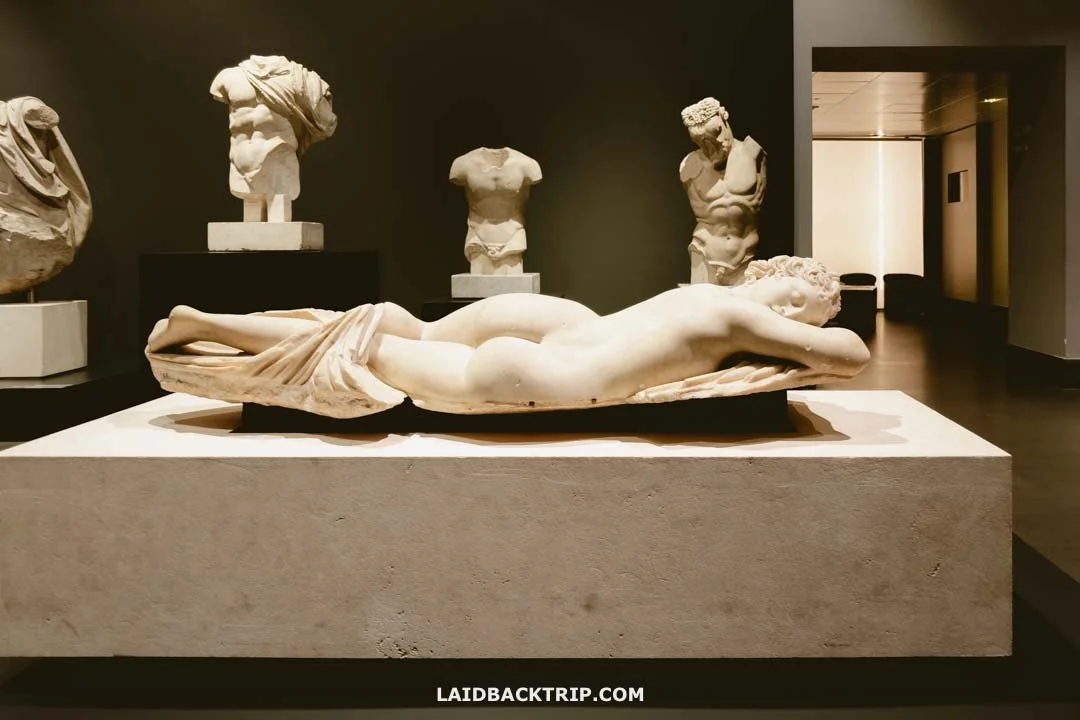
Palazzo Massimo has a Roman marble copy of the famed Hellenistic Sleeping Hermaphroditus.
My favorite piece on the first floor was the relief sculpture of the Portonaccio Sarcophagus, a beautifully carved Roman tomb that depicts a chaotic battle victory over barbarians. It was a bit hidden, but just incredible.
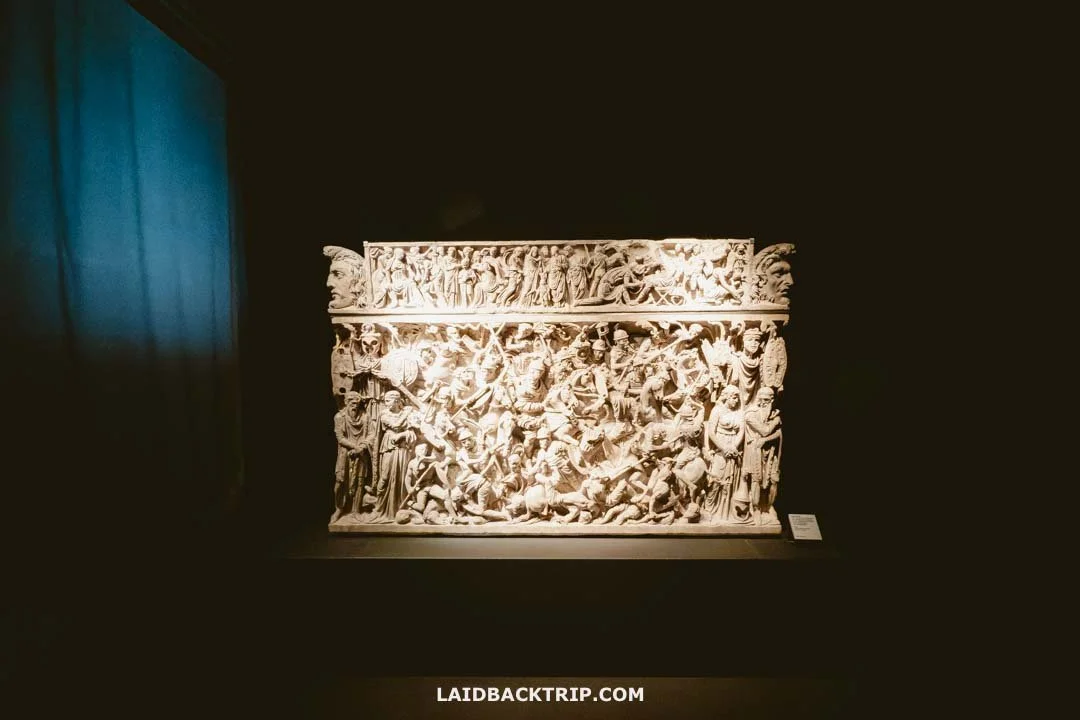
The relief detail on the Portonaccio Sarcophagus is just incredible.
We also find an interesting selection of busts and statues of Emperors and Empresses from the Flavian and Antonine dynasties on this floor, with figures like Trajan and Hadrian, along with statues of gods and goddesses. All of these pieces show the Roman love for collecting and imitating Greek culture.
Ground Floor of Palazzo Massimo
Sadly, we didn't get to see the ground floor, where the renowned bronze Boxer at Rest and the Hellenistic Prince were displayed. These sculptures are rare because bronze was once extremely valuable, and most artwork made from it ended up being melted down.
Although seeing them wasn't our top priority, we definitely wanted to check them out. Unfortunately, we arrived at the museum late and simply ran out of time. Since the ticket allowed only a single entry, we couldn't return the next day even if we had wanted to.
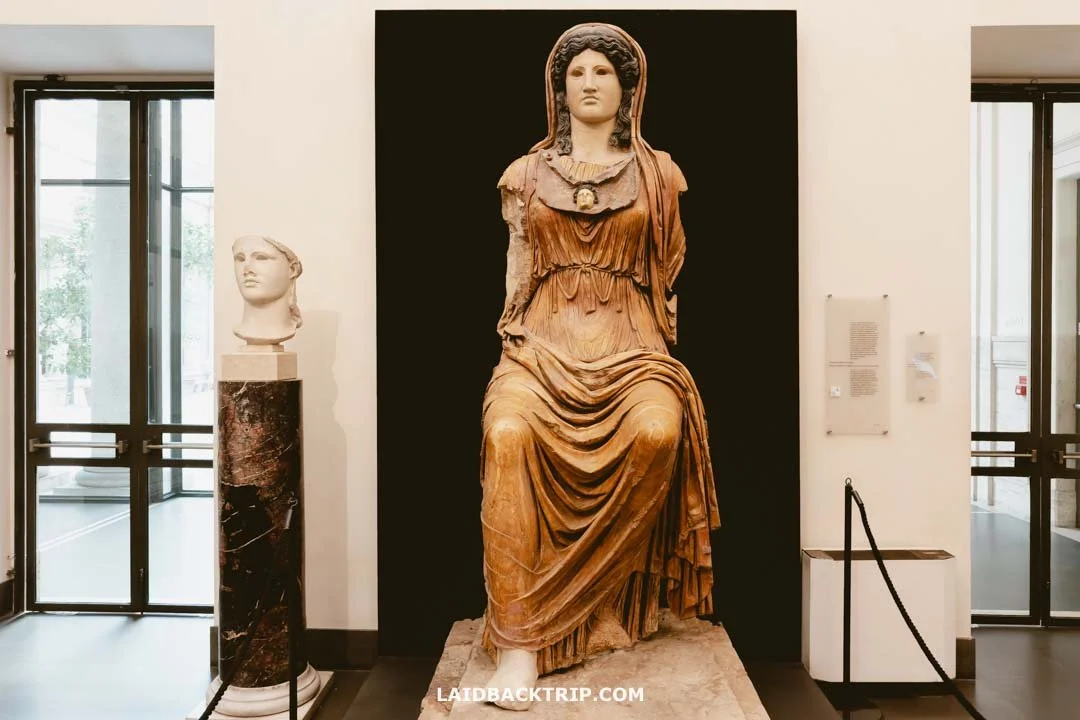
We did not get to see much of the ground floor because we did not set aside enough time for it.
Honestly, that wasn't really possible, as we already had plans to visit the lovely town of Tivoli the following day to see two UNESCO sites: Villa Adriana and Villa d'Este. But that's a story for another time.
Other highlights on the ground floor include Augustus as Pontifex Maximus and the General of Tivoli. There's also a gallery featuring busts of Republican and Early Imperial portraits. For folks interested in antiquity sculptures, both floors seemed to us like must-sees.
Basement Floor
As I said before, the basement, which held the collections of coins and jewelry, was closed, so we didn't really have to consider it. Honestly, I think we would have skipped that floor anyway, since what interested us most was upstairs. I'm not saying this area wouldn't be interesting, but the rest of the museum was already overwhelming, so I doubt we would have had the energy for this one.
And just like that, our tour of Palazzo Massimo came to an end. The whole experience was packed with pleasant surprises, and we were truly glad we managed to fit in a visit. The only thing we regretted was not planning more time here, but since we had been on our feet since early morning, I think we saw plenty for one day.
Was Palazzo Massimo Worth Visiting?
With all its ancient history and Roman art, Palazzo Massimo quickly became one of our favorite "less-famous" museums in Rome. Unlike some other attractions from this era that also include ruins (like Stadium of Domitian or Castel Sant'Angelo), this is simply a museum focused on Roman art, and the visit truly felt like we were in a classic museum setting. The only downside was that we couldn't stay longer, but that was really just because we didn't make enough time for it.
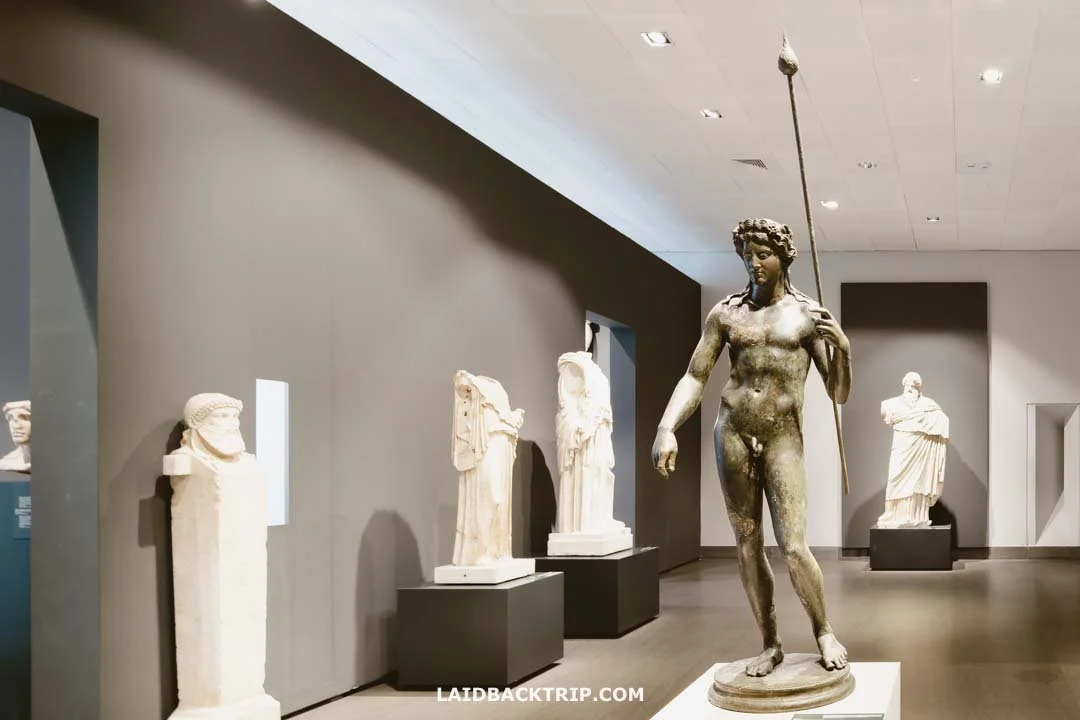
For anyone interested in ancient Roman art, Palazzo Massimo is a wonderful place to explore.
During our time in Rome, we saw plenty of sculptures, mosaics, and other Roman art, especially since we also visited the Capitoline Museums and Vatican Museums. Palazzo Massimo stood out as a bit different because it focused mainly on antiquity, making the experience feel much more consistent. What we loved most was being able to focus just on Roman times, without needing to switch over to Renaissance painters or Egyptian artifacts.
Getting to Palazzo Massimo
Palazzo Massimo sits on Largo di Villa Peretti, about halfway between Piazza della Repubblica and Termini Station. We stayed at Leonardo Boutique Hotel, just 700 meters from the museum, so we simply walked there. Termini station is served by both metro lines (A and B) and buses, which makes Palazzo Massimo really easy to reach by public transportation. Even from the Centro Storico, it's only 2.5 kilometers away, so walking is always a good choice.
Entry Fee to Palazzo Massimo
We paid €15 each for a standard adult ticket to Palazzo Massimo. At first, it seemed a bit expensive, but because it included two other museums, Terme di Diocleziano and Palazzo Altemps, and a small site called Aula Ottagona, it ended up being one of the best 15 euros we spent on our Rome trip. In the end, we saw all three main museums, so it was basically just €5 each. Not too bad for Lucie and Martin. Since Palazzo Massimo is part of the Italian State Museums, admission is free on the first Sunday of each month.
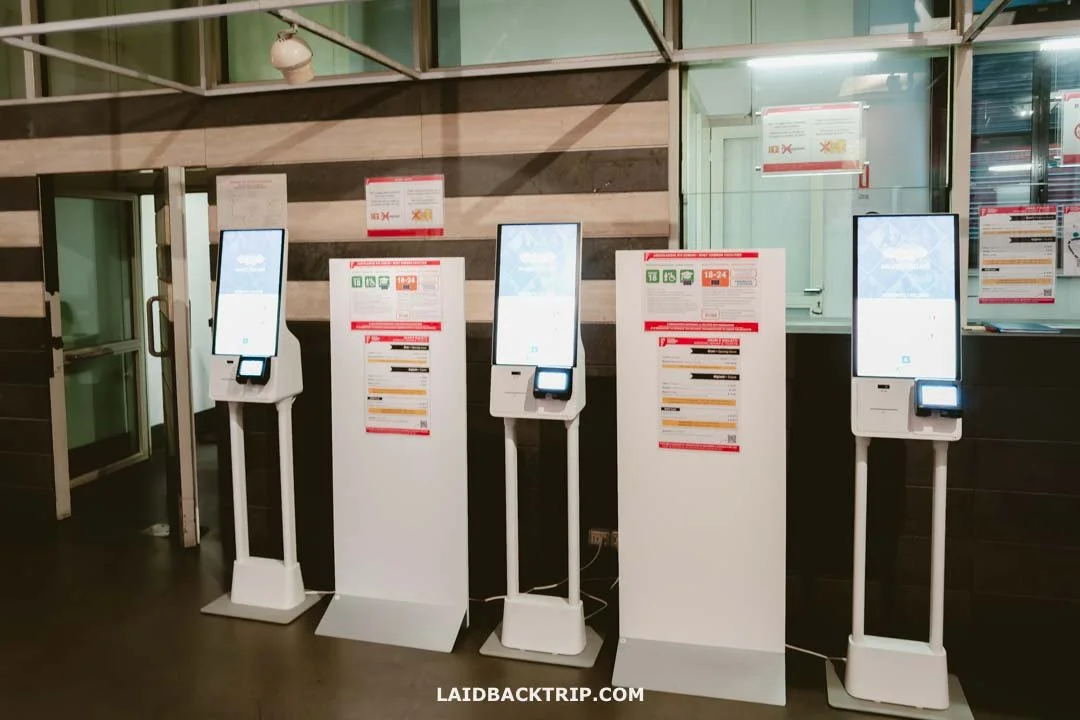
Palazzo Massimo had these ticket machines, like other sites under the National Roman Museum.
Since the ticket was valid for seven days from the first use, we could easily plan our visits to each site on different days. While we felt we could manage to see all three museums in a single day, it made more sense for us to spread the visits over several days.
We could buy tickets to Palazzo Massimo online through the official Musei Italiani website, but since there were no crowds at any of the museums, it was just as easy to get them at the ticket machines on site.
For instance, we picked up our tickets at the Baths of Diocletian without any trouble and presented them at the entrance to Palazzo Massimo when we got there. The only catch was that the ticket machines accepted credit cards only, though that was no problem for us.
Opening Hours
Palazzo Massimo is open from 9:30 AM to 7 PM, Tuesday through Sunday, with last admission an hour before closing. The museum is closed on Mondays. We visited on a weekday afternoon in September, and it was extremely quiet. Maybe it gets busier on a rainy weekend, but that wasn't the case for us.
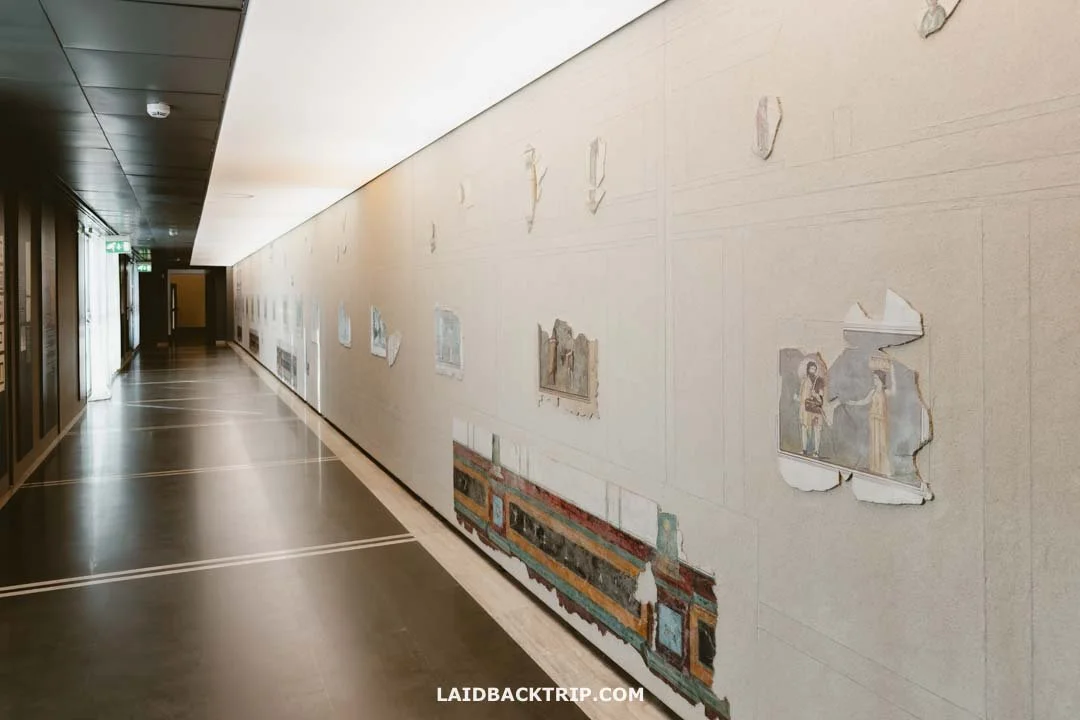
The museum stays open every day except Mondays.
Palazzo Massimo Guided Tour
We visited Palazzo Massimo independently, and it was one of the most straightforward museum experiences we've had while in Rome. The whole visit was simple, as the only thing we had to do was just follow the numbered rooms in order. There was no official guided tour available, so the only way to have a guide was to arrange for an outside guided tour like this one.
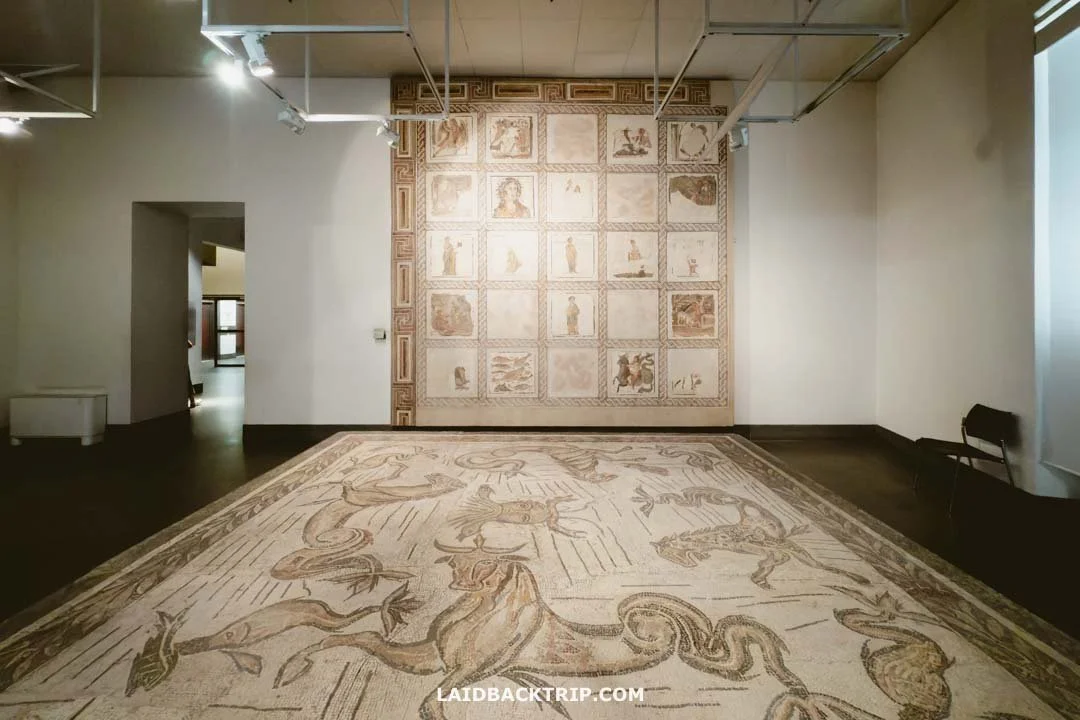
The Roman floor mosaics were definitely among the highlights we saw at Palazzo Massimo.
How Long We Spent at Palazzo Massimo
We were inside Palazzo Massimo for just about 90 minutes, but it wasn't because there was little to see. We just made it our last stop of the day and arrived later than we had hoped. In reality, our time actually exploring was even less, since we spent a few minutes settling in, figuring out the map, and using the restroom. To top it off, staff started ushering us out about 10 minutes before closing, just like they did at Villa Borghese.
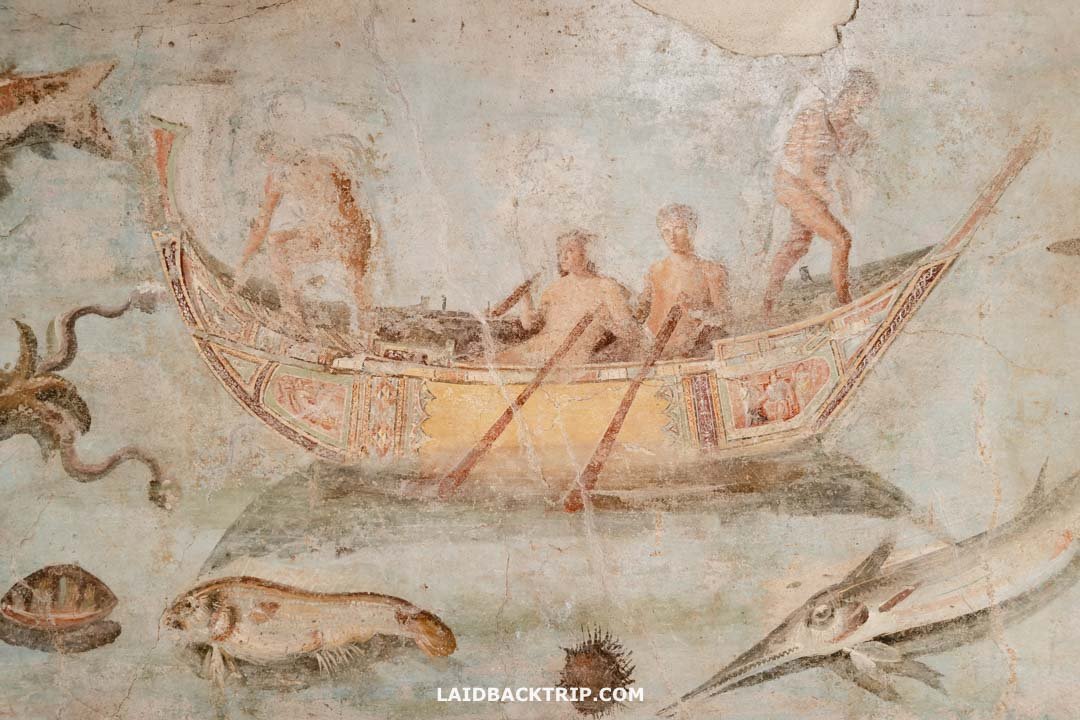
It takes at least a few hours to properly visit Palazzo Massimo.
Even though we saw plenty of ancient art in that hour and a half, it definitely wasn't enough time. After we left, we both agreed that two to three hours would have made the visit feel much less rushed. There was certainly enough art that deserved more of our attention, not to mention that we completely missed the ground floor with the famous Boxer sculpture.
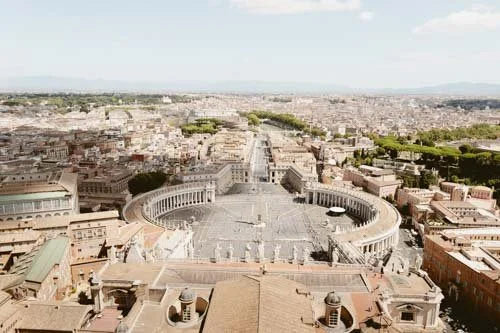

Climb to the top of St. Peter's Basilica's dome for breathtaking panoramic views across Vatican City and the beautiful city of Rome.