1 Week in Rome: Our Practical Itinerary
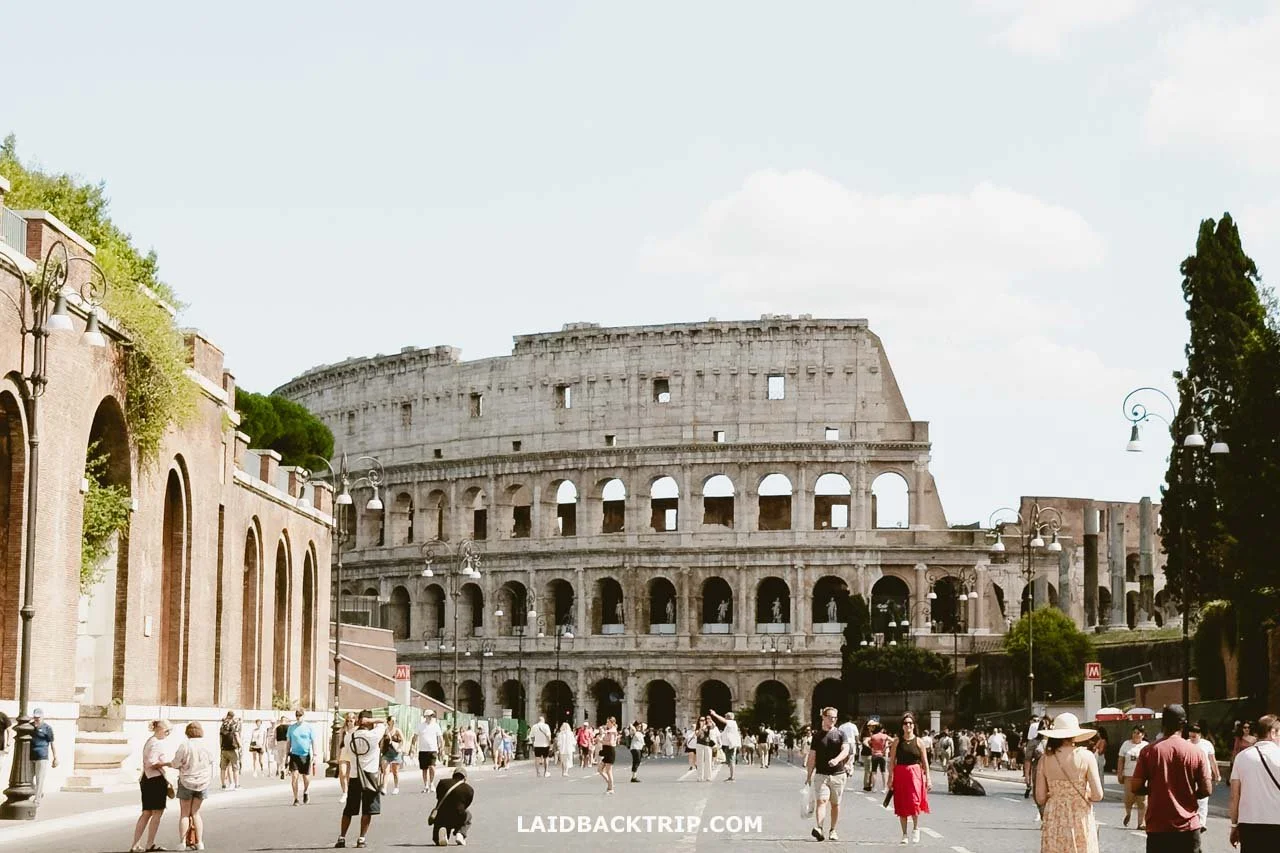
A week in Rome was one of those trips we’ll never forget. This is how we planned it and what we saw!
Technically, we spent nine days in Rome, but since the first and last days were arrival and departure days, with us landing in the afternoon and leaving in the morning, it really amounted to full seven days. That was a very generous amount of time for Rome, and we know that most people visiting the city will not have the same luxury of staying that long.
Nevertheless, for those who can stay in Rome for seven days, and it could definitely be six, eight, or something similar, this itinerary is a perfect fit. We were not sure whether we had overdone it, but looking back, we could have easily stayed for another week. Rome was just incredible! And I am saying that despite the fact that we definitely wanted to stay active and do a good amount of sightseeing, which meant that our days were pretty packed.
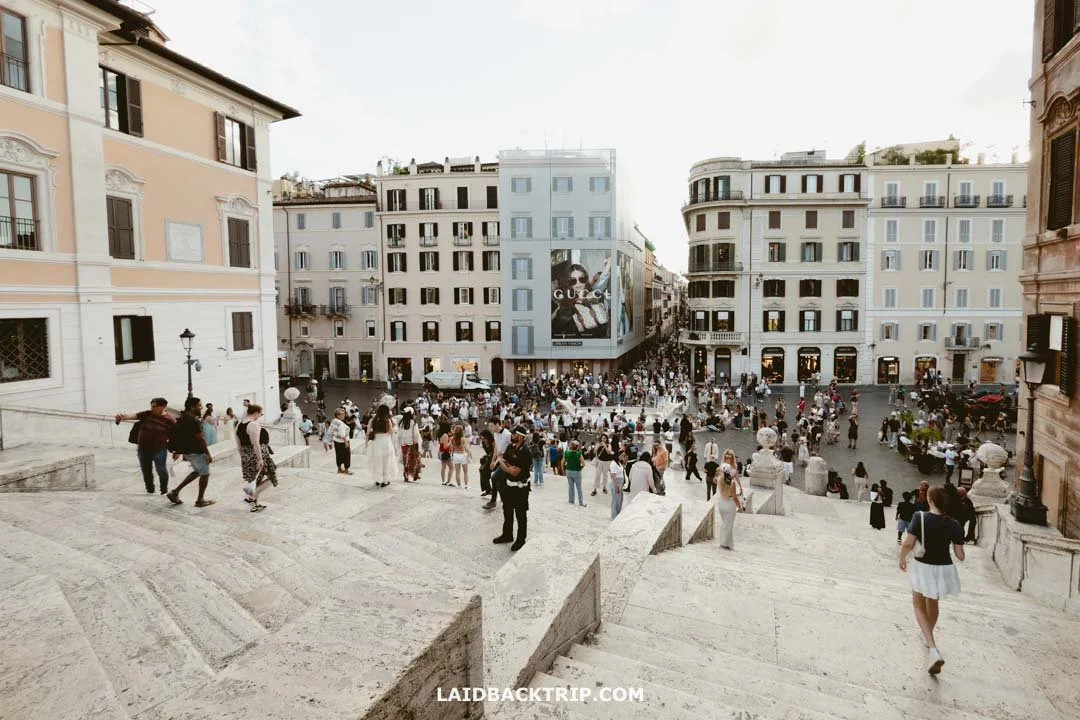
The iconic Spanish Steps were among the first places we explored during our visit to Rome.
Lately, we have been staying in places a bit longer than we used to, and we continued that tradition on our Rome trip as well. So this itinerary is really aimed at those who want to build a more intimate connection with the Eternal City and truly enjoy its incredible history, culture, and, of course, fantastic cuisine. We are not saying you will not enjoy Rome in two or three days, but in this case, more is definitely better. Rome is truly one of a kind.
I would also like to say right from the start that we really focused on history on this trip. Rome was once the center of the largest empire in the ancient world, at least in the Western world. After the fall of Rome, it slowly transformed through the rise of the papacy into the center of the Catholic Church. The best part is that the history is not dull, because it also brings with it amazing architecture, food, and a one-of-a-kind atmosphere. Happy planning!
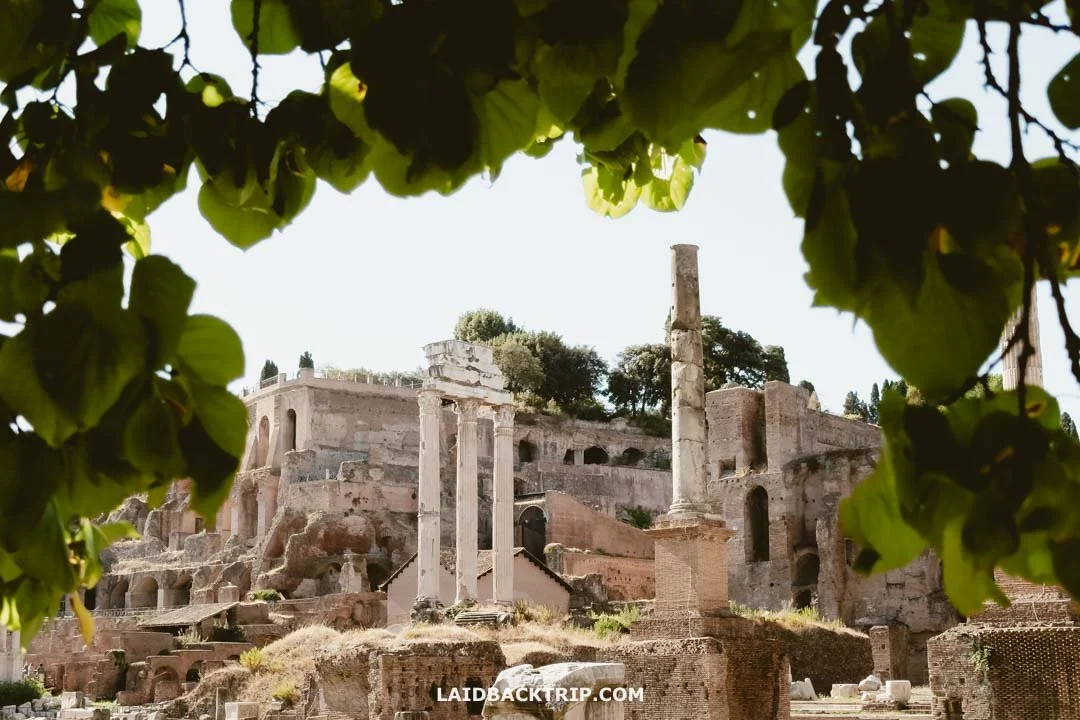
Rome is filled with archaeological sites from the Roman Empire era such as the Roman Forum.
Practical Tips for Planning Your Rome Itinerary
Before we dive in, I want to point out a few factors that affected the way we planned this itinerary. We tweaked our own trip into this final version, which is definitely more digestible for most people, simply because this was a more spontaneous trip than a carefully planned one, so we had to make some compromises that would not really make much sense for you.
For example, we visited Villa Borghese on our arrival day, but since we did not get into the Borghese Gallery, we went back on the very last day to try our luck again. So, technically, we went to the park in the late afternoon on Day 0 and saw the gallery in the evening on Day 7. Obviously, if you secure tickets in advance, then you should visit both places in a single visit, which is much more efficient than the way we did it.
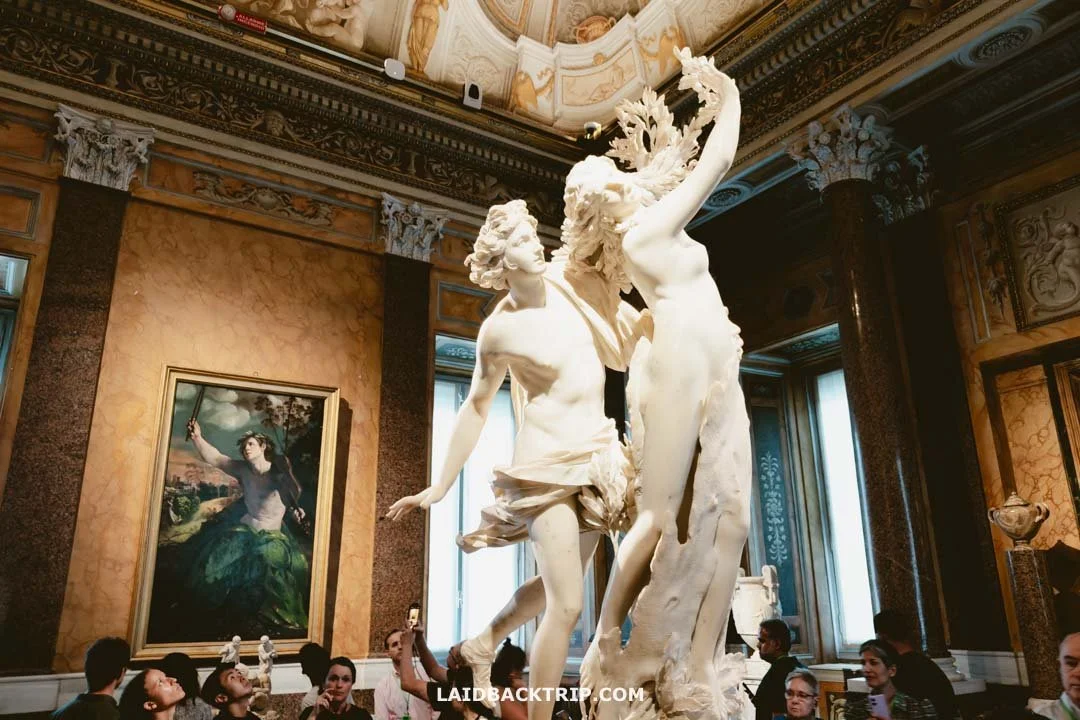
With seven days in Rome we were able to see top attractions like the Borghese Gallery as well as quieter sites.
We will point out some of the essentials below, but we also encourage you to read our guide for first-time visitors to Rome, where we discuss all of this in much more detail. Here, we just quickly go through the main things that had the biggest impact on the way we planned this itinerary.
Accommodation in Rome's City Center
Because we did not plan our Rome trip well in advance and decided to go somewhat spontaneously, most of the reasonably priced places with solid reviews and a good location were already booked. The issue was not that there were no options left, but that it was difficult to find one that would allow us to stay for eight nights, especially if we wanted to be near the Centro Storico, which we really did.
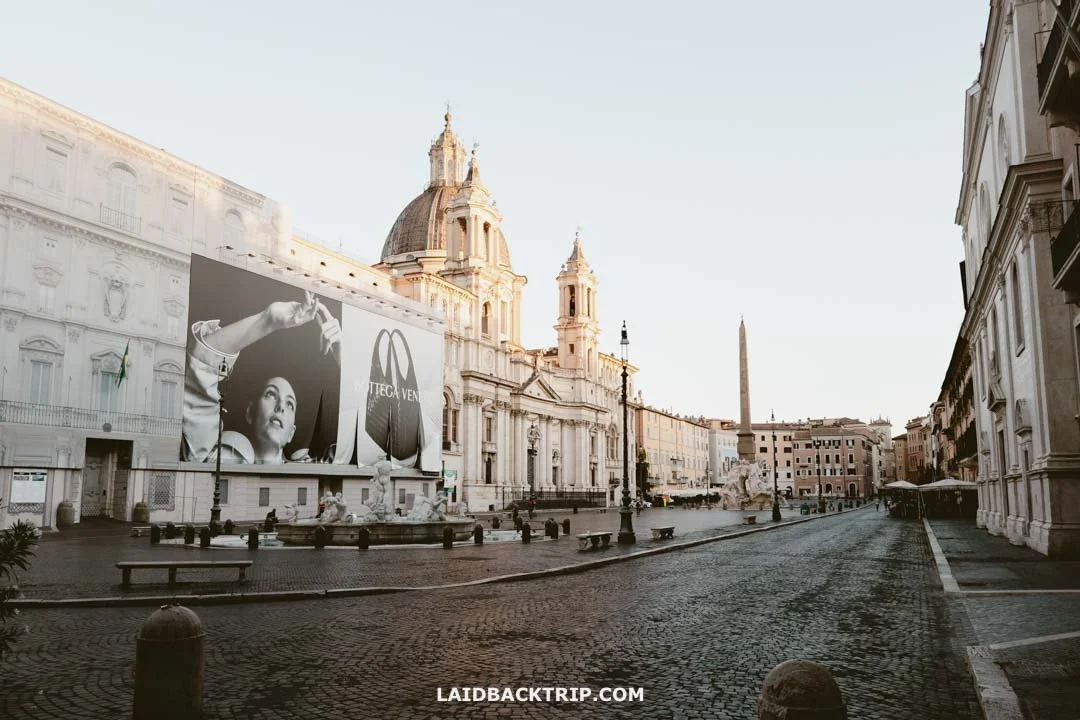
Since we stayed right in Rome's city center, we were able to enjoy popular spots like Piazza Navona without crowds.
A few really nice hotels were still available on the outskirts for great prices, including the Cardo Roma, Autograph Collection, but we felt that if there was one city where being centrally located really mattered, it was Rome.
We spent some time working this out and eventually decided that we would need to book two different hotels. The idea of staying four nights in one hotel and then moving to another hotel for another four nights actually worked well, because looking for a place for only four nights opened up a much larger pool of options. Obviously, if you book well in advance, you'll probably avoid this whole headache.
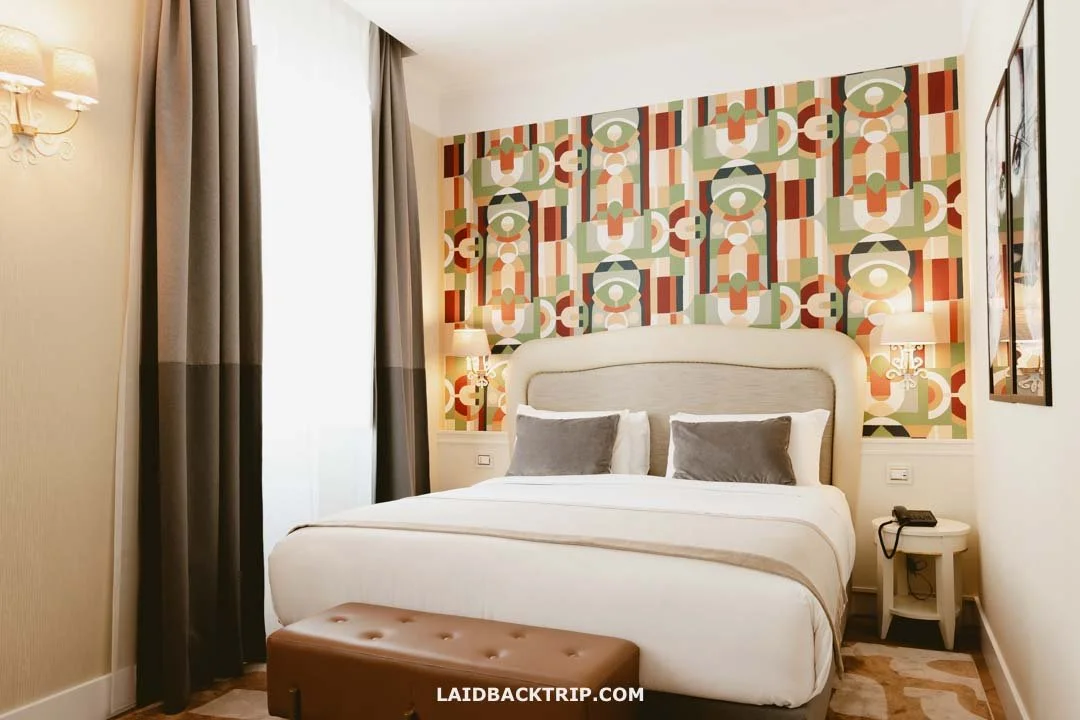
We stayed in a cozy hotel in central Rome, which allowed us to explore everything on foot.
We started out at Hotel Navona, a small hotel in the Centro Storico right next to the famous Piazza Navona. The location was hard to beat and gave us a great chance to explore Rome's historic neighborhoods and reach many of its most famous attractions on foot. For the second part of our stay, we moved to the Leonardo Boutique Hotel near Termini Station. While we were still in a very central area, with the Colosseum about a 10-minute walk away, we were also close to Rome's main train, metro, and bus station, which we used to visit a few places outside the historic center.
When to Visit Rome
Another thing that played a crucial role in this whole trip was that we visited in September, which is still a very hot summer month. Walking around the city in temperatures ranging between 30 and 35 degrees Celsius was definitely more challenging than the spring weather we experienced earlier this year in Paris. The big upside was that it was not quite as hot as it can be in July or August.
Another big factor was that the days still had plenty of daylight, which meant we could really take advantage of it. Since we usually left the hotel in the morning and came back in the evening, this made a big difference, especially compared to winter when the days are much shorter. And because sunsets and sunrises were at reasonable times (sunrise was around 6:30 AM and sunset around 7:45 PM), we actually managed to catch a few of them.
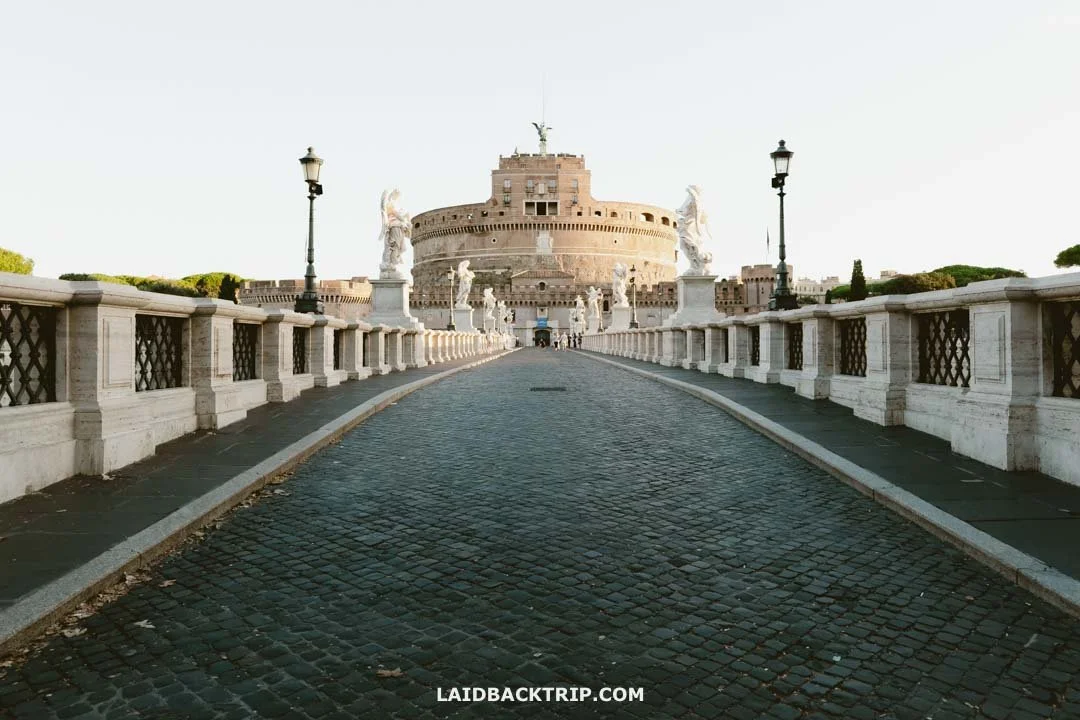
Early morning was our favorite time to explore some of Rome's most famous places like Castel Sant'Angelo.
I also want to say that even though the summer months bring crowds to Rome and the heat can be challenging, I was glad we chose this time of year. The hot weather really felt right for the Rome experience, although walking in the sun all day did make things more tiring. Even so, this is how we both imagined Rome, so it ended up working very well for us.
Tickets and Reservations
A big role in how we planned the days was also the attractions that were only accessible with a reservation. We had to buy tickets with timed entries to places like the Colosseum or Borghese Gallery (though that’s just a few to name, and there were obviously many more with the same rules), which was usually straightforward. The problem was that since we booked all the tickets basically just a few days in advance, a lot of the time slots that would fit our itinerary slightly better were already reserved. So we had to improvise in a few instances, but it was mostly okay, with only two exceptions.
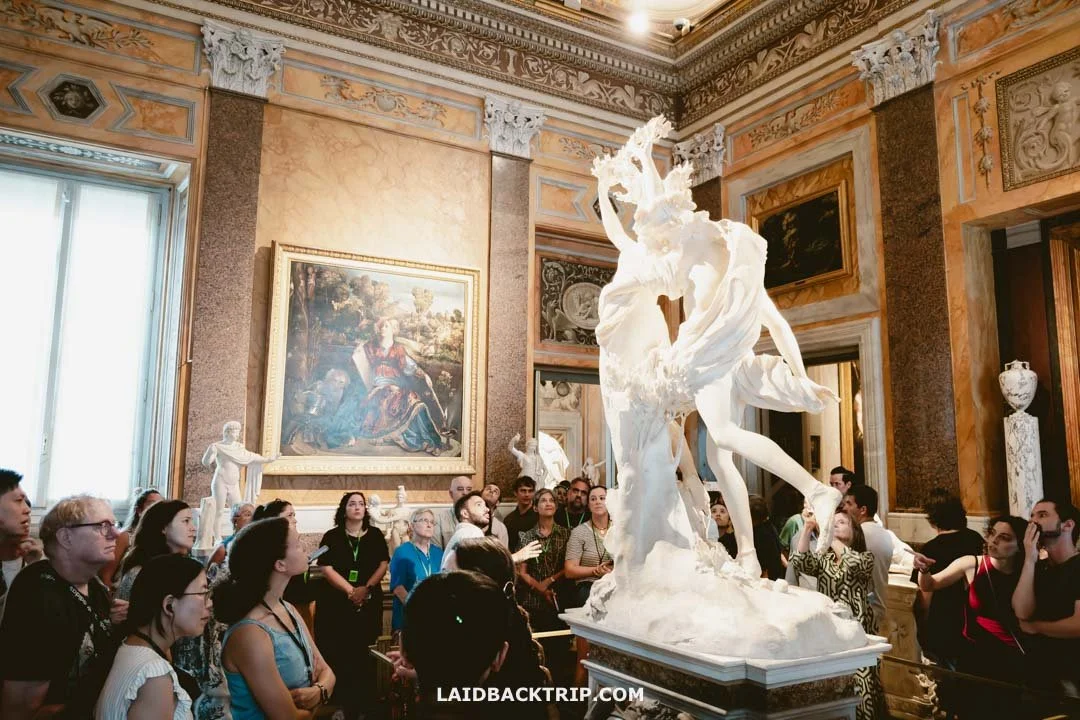
Some attractions like the Borghese Gallery require booking tickets well ahead.
First was the Borghese Gallery, where we eventually were able to get hold of tickets on the spot, and second was the Vatican Museums, where we had to go with a guided tour. There were a few places that we couldn’t get in simply because the tickets were already sold out, like the Attic in Colosseum or Domus Aurea. The only advice we can share with you when it comes to tickets to these places is the good-old book ahead of time. The main point is that while you might find our itinerary super helpful, chances are that exactly this could throw a wrench in the works, and you’ll be forced to completely redo it.
Getting Around Rome
Lastly, I’d like to say that since we picked a central location for our accommodation, we really didn’t have to worry about public transport or taxis. And even though we used the metro/bus combo a few times to reach Via Appia and for the Tivoli day trip, we pretty much covered the whole (central) Rome on foot. The city center was very walkable, and when everything was planned right, the distances between the attractions on our list were actually quite small.
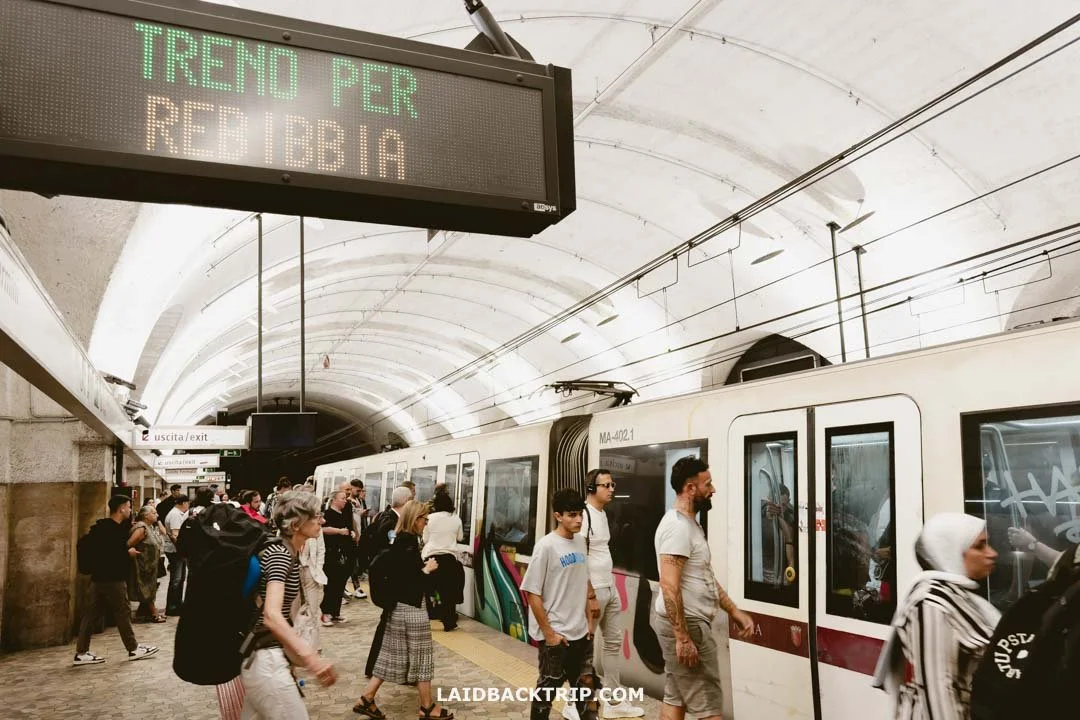
We used the metro (and bus) a few times but we mostly ended up walking everywhere in Rome.
The key to our success was that we mostly focused on one area each day. So when we did the Colosseum, we also visited the Roman Forum. When we went to Vatican City, we explored the museums, the big square, and the basilica in one go. It really sounds pretty obvious, but as I already talked about the tickets and timed entries, it might not be as easy to plan it this way.
How We Spent a Week in Rome
Now it is time to finally get into the itinerary. We spent seven full days in Rome, plus two extra days for our flights in and out of the city. Since we arrived in the afternoon, we were able to start exploring right away, which gave us what was essentially an extra half day. We have reflected this in the itinerary by suggesting a few optional sites throughout the post to give you more choices.
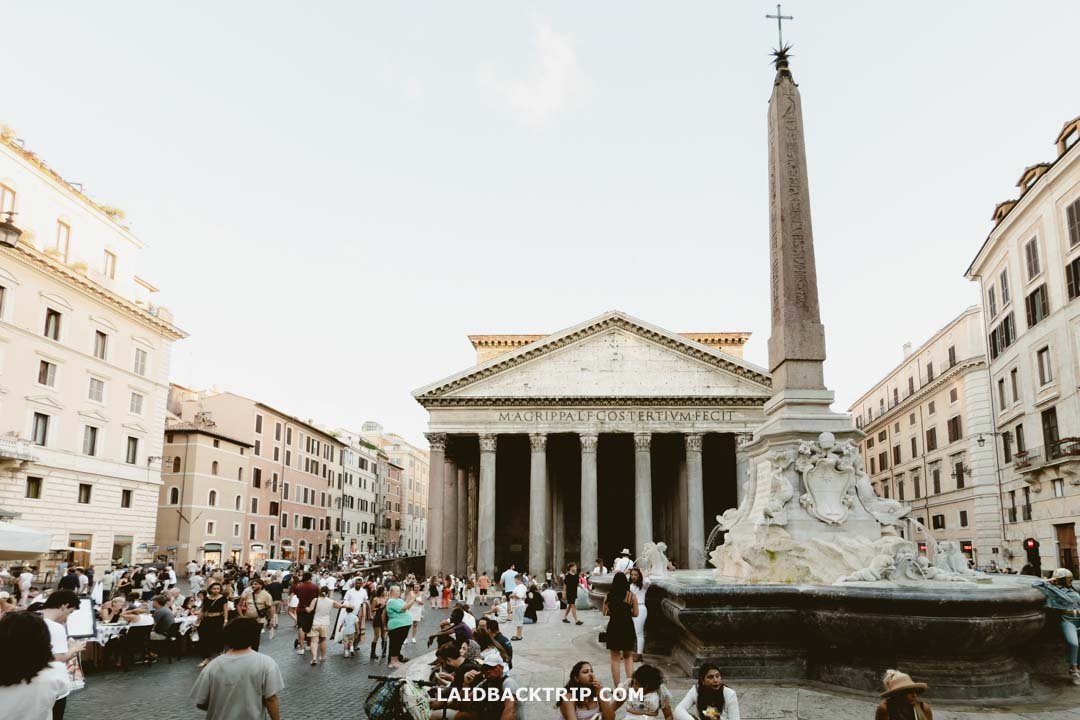
We loved exploring the sights and history of ancient Rome, especially places like the Pantheon you see here.
I had visited Rome before, but it had been so long that I only remembered bits and pieces. I recalled things like the Colosseum, the She Wolf statue, and walking across Ponte Sant'Angelo, but the details were gone. Because Lucie was seeing Rome for the first time, we planned this trip as if I were visiting for the first time as well. That means this itinerary covers all the main sights that every first-time visitor should see, along with plenty of smaller spots where you can get away from the crowds.
I also want to mention that even though we loved the famous landmarks, our favorite moments in Rome came from stepping off the beaten path and discovering places that most visitors do not get to see. Since we had so much time in the city (even though it still did not feel like enough!), we were able to explore quite a few of those hidden corners.
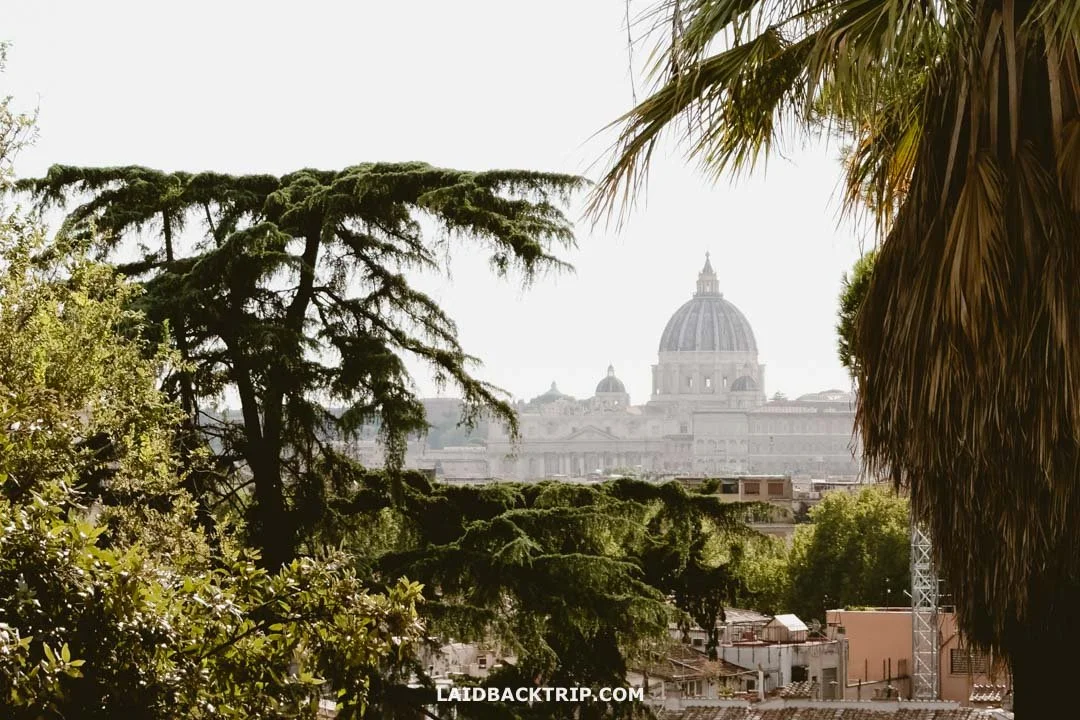
Rome was built on seven hills, so there was no shortage of amazing views.
Day 1: Castel Sant’Angelo, Gallery Borghese, Spanish Steps, Trevi Fountain, and Centro Storico
We planned this day as an introduction to Rome, so it included some of its biggest highlights like the Trevi Fountain and the Spanish Steps in the Centro Storico, along with Castel Sant'Angelo and the Borghese Gallery. We spent the morning at Castel Sant'Angelo and then moved to Villa Borghese to escape the heat.
Piazza del Popolo is a grand historic square in Rome's city center.
In the afternoon, it made sense to explore the historic center. The biggest challenge with this plan is getting Borghese Gallery tickets for the time you want. You can always adjust the day by visiting the gallery first, then the castle, or even saving one of them for another day. It all depends on which time slot you manage to book.
Castel Sant'Angelo: 2 Hours
Since we did not book any tickets for Castel Sant'Angelo and decided to buy them on the spot, our plan was to start with this attraction as early as possible. We arrived at the entrance right at opening time, and since there was practically no line, we got our tickets in just a few minutes. We actually came a bit earlier because we wanted to see (and take some photos of) Ponte Sant'Angelo, which, together with the towering rotunda, makes one of the most iconic photo spots in all of Rome.
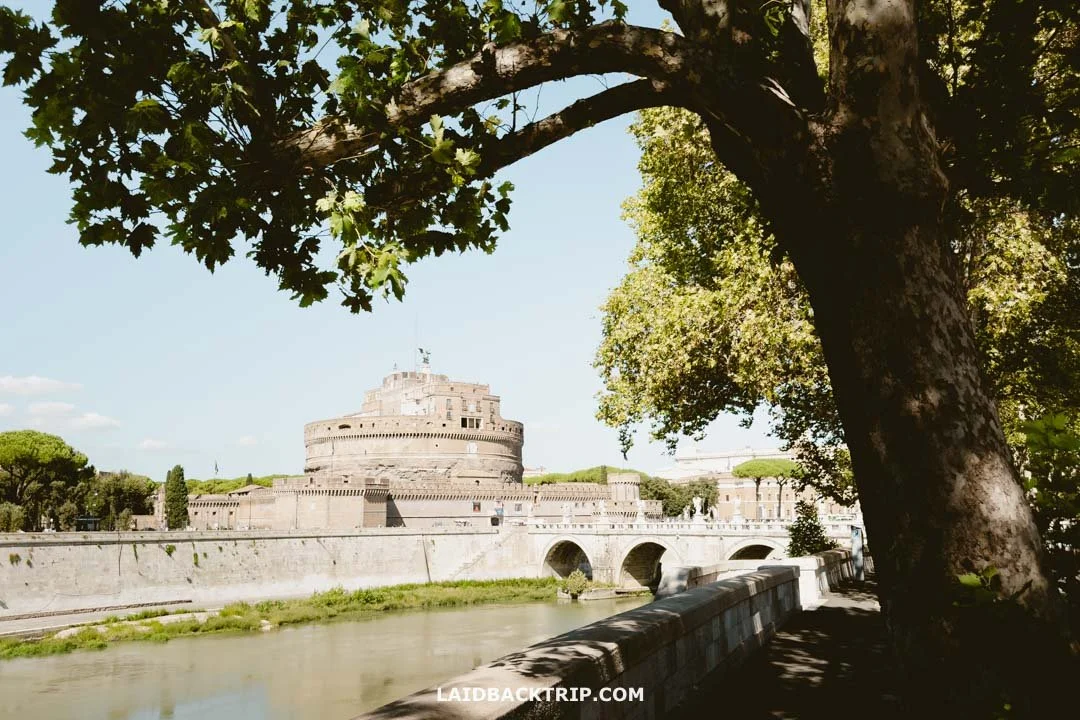
Castel Sant'Angelo is a 2nd century CE mausoleum that Emperor Hadrian built beside the Tiber River.
Castel Sant'Angelo was commissioned by Emperor Hadrian in the 2nd century CE to serve as his mausoleum. He also ordered the construction of the Aelian Bridge, since it was located on the other side of the Tiber River. In the fifth century CE, it was converted into a medieval fortress and eventually became a papal hideout in times of crisis. As we toured Castel Sant'Angelo on our own and slowly made our way to the upper levels, the ancient history was gradually replaced by the lavishly decorated rooms of the papal residence. The views from the fortress were also quite stunning. We started here around 9 AM and spent about two hours exploring.
Villa Borghese: 1 Hour
After finishing Castel Sant'Angelo, it was time to head to Villa Borghese. Along the way, we stopped at the Mausoleum of Augustus, which was not open, although you could visit the nearby Ara Pacis Museum if you are interested in this emperor, and the beautiful Piazza del Popolo, which was easily one of Rome's most impressive squares.
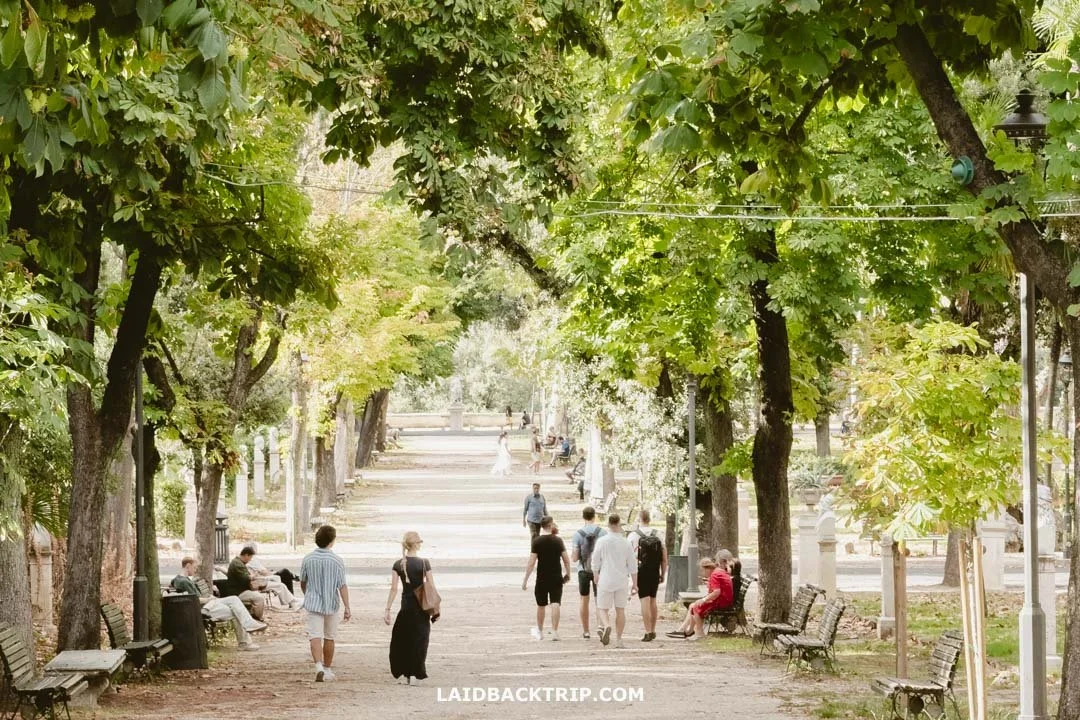
Villa Borghese is a huge public park ideal for walks.
From here, we continued up to Villa Borghese, a huge public park that is free to enter. We spent at least an hour walking around and discovering the park's beauty. The most beautiful part of the park was easily the Temple of Aesculapius on a small lake. Many people rented rowboats here, which we did not do, since you can get very close to the temple from the trail that circles the lake.
Gallery Borghese: 2 Hours
While the park itself was wonderful, our main goal here was the Borghese Gallery, which houses some of the finest Baroque and Renaissance art in all of Rome. We got to see 20 lavishly decorated rooms filled with paintings and sculptures by Bernini, Canova, and Caravaggio. The most beautiful room was the Mariano Rossi Hall, which featured an absolutely breathtaking ceiling fresco.
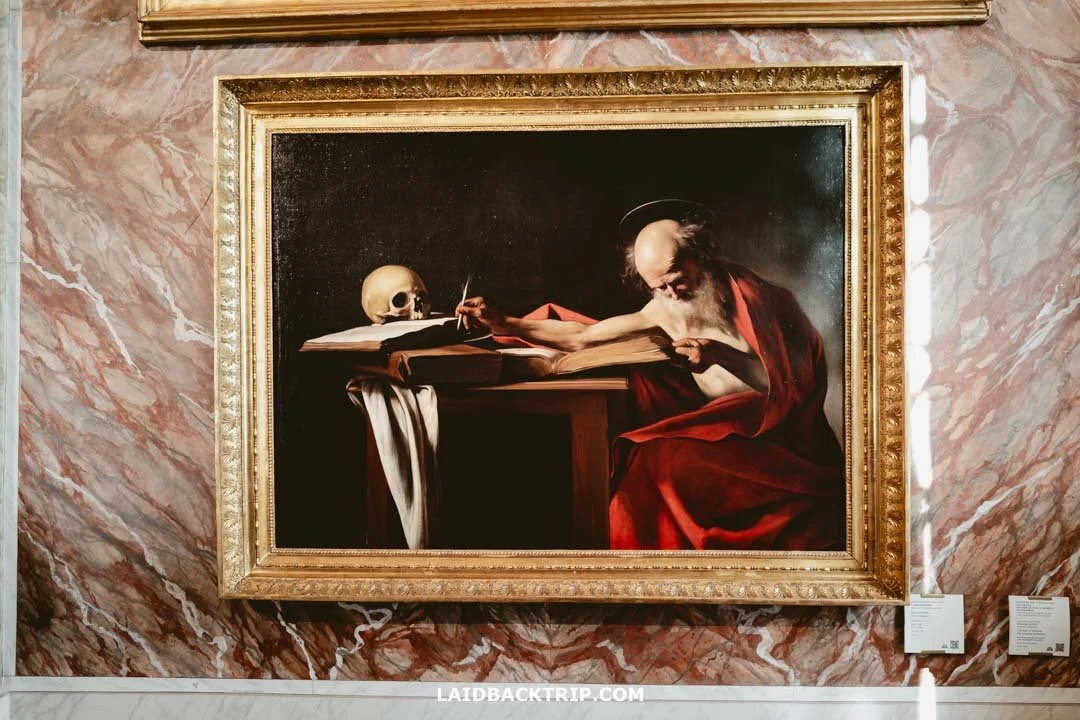
The collection of Caravaggio's paintings was easily the highlight of our visit to the Gallery Borghese.
A standard visit to the Borghese Gallery lasts two hours, which is also the maximum amount of time each visitor is allowed to stay, since the rooms are quite small. Our visit was a bit shorter because we had to wait in line to get last-minute tickets.
As mentioned earlier, we did not get into the Borghese Gallery on our first attempt because all the tickets for our dates were sold out. We eventually managed to buy tickets on the spot, but this is not a strategy we would recommend, as the number of tickets available is very limited. Since you are reading this well in advance, you should hopefully have enough time to book a time slot. If you do manage to get tickets, then it makes sense to see both the villa and the gallery in one visit.
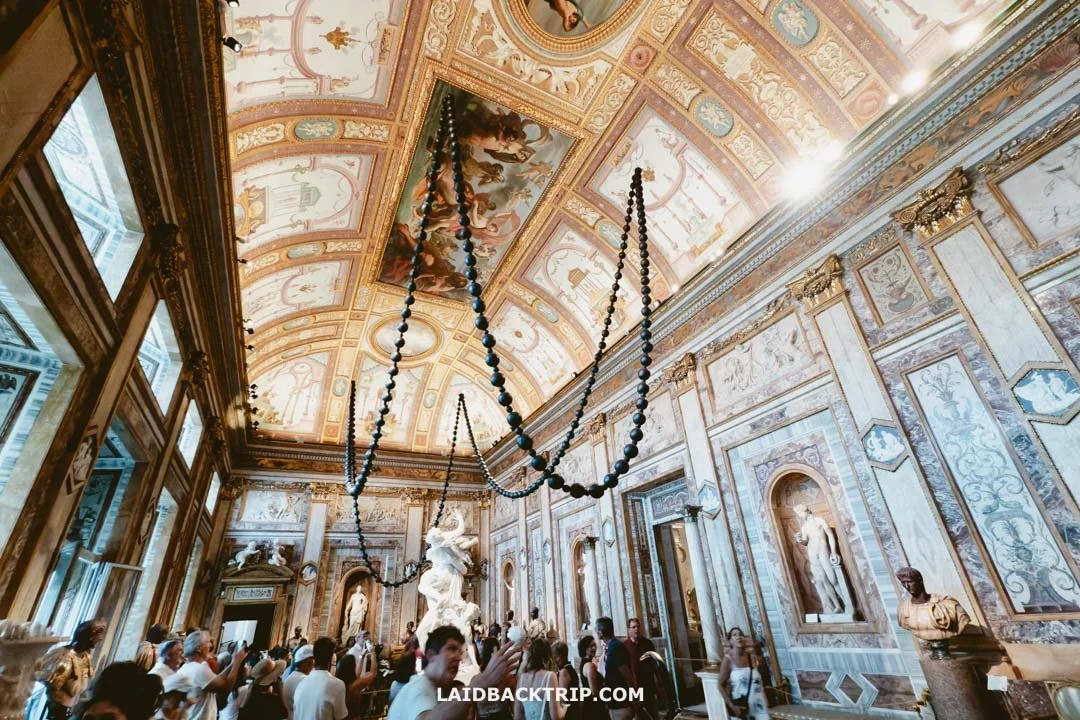
Borghese Gallery has lavishly decorated rooms.
Spanish Steps: 1 Hour
On the way back to the historic center, we stopped at the Spanish Steps, which are just south of the park and about a 20-minute walk from the Borghese Gallery. The Spanish Steps are one of Rome's most iconic locations, but it is good to know that this place is not only about the staircase itself.
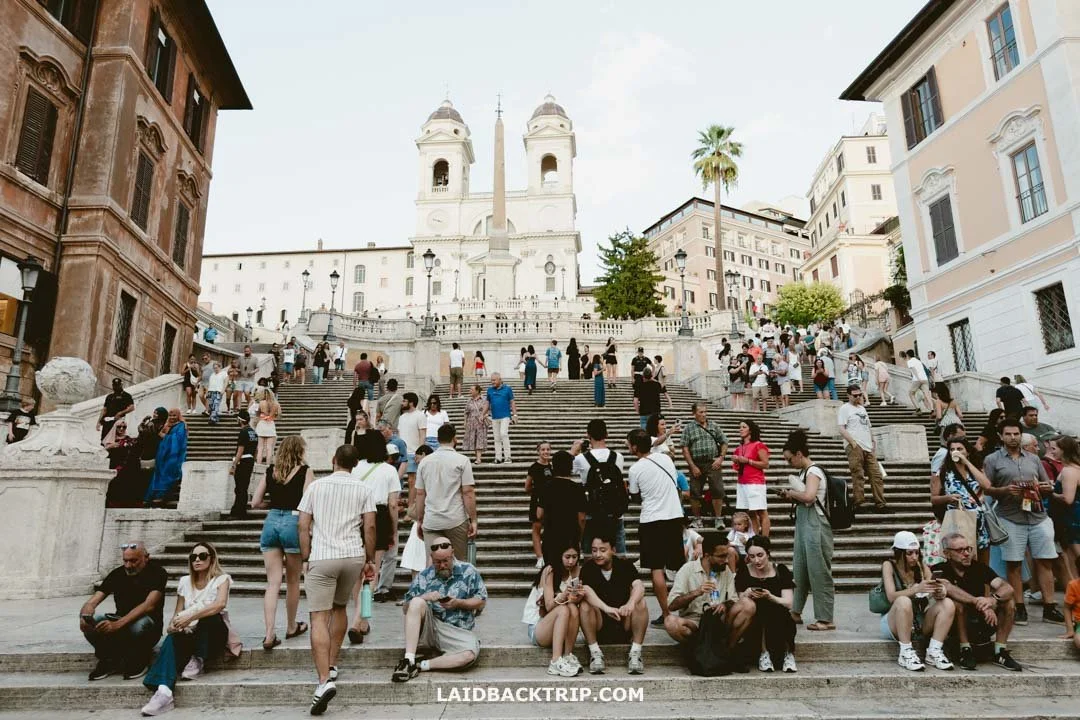
The Spanish Steps were one of the most crowded places we visited in Centro Storico.
Since we approached from Villa Borghese, we arrived at the top of the steps. We first went inside Trinita dei Monti, a small church from the Renaissance period. Then we enjoyed beautiful views of Rome from the small square between the church and the staircase before finally walking down the Spanish Steps into a much larger square with a lovely fountain.
We spent some time here simply watching the activity around us, with the only downside being that sitting on the steps is no longer allowed, so we had to keep moving. From here, we followed Via dei Condotti, Rome's best-known street for luxury shopping (we definitely did not buy anything here). It took us about an hour to explore the Spanish Steps and the surrounding area.
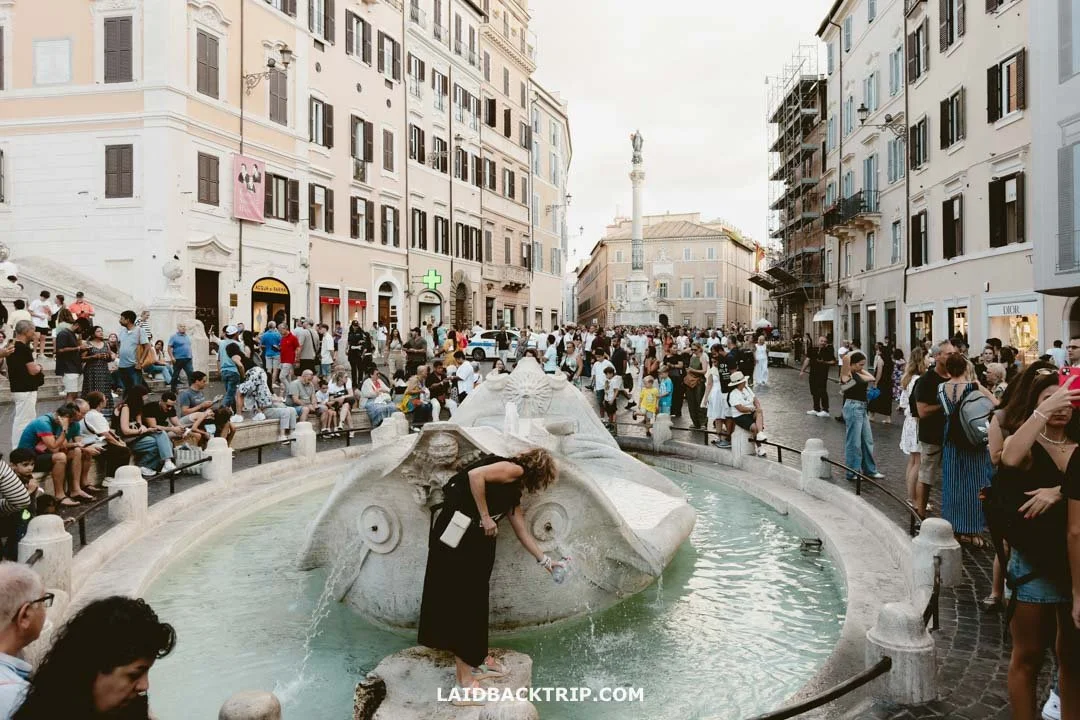
Piazza di Spagna at the foot of Spanish Steps features Bernini's stunning boat-shaped water fountain.
Trevi Fountain: 30-45 Minutes
From the Spanish Steps, the Trevi Fountain is about a 10-minute walk away. Trevi Fountain is one of the most famous fountains in the world, which makes it one of Rome's must-see attractions. Like the Spanish Steps, the Trevi Fountain was very crowded. Since we visited during the day, access to the base of the fountain was limited, so we waited in line for about 10 minutes to see it up close.
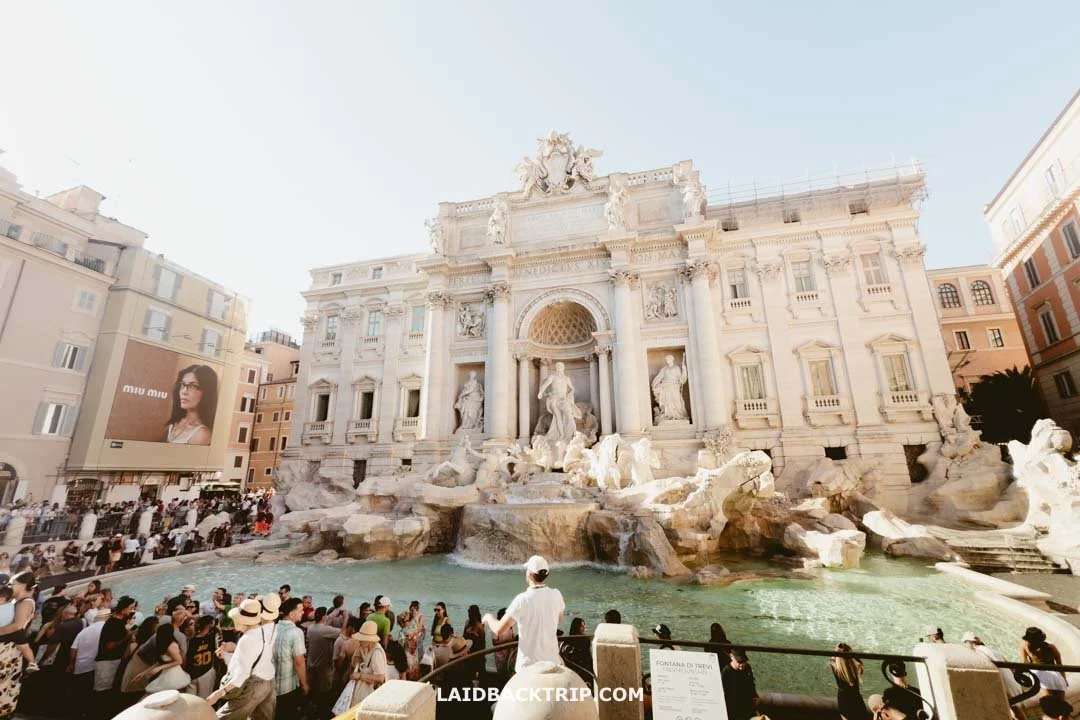
Trevi Fountain that we visited next is another of Rome's must sees.
The Trevi Fountain, which is fed by the Acqua Vergine aqueduct, was built in Baroque style in the 18th century and decorated with stunning statues, including the chariot-riding Oceanus with Tritons. The fountain is also famous for the tradition of tossing in a coin, which is supposed to guarantee that you will return to Rome. We forgot to bring coins, so hopefully, there is more to it than just that tradition, and we will make it back someday.
Centro Storico
In the evening, we wandered through the streets of Rome's historic center. Since we were staying in this area for the next four days, we took our time exploring with just a very rough plan. We saw the Temple of Hadrian, the Pantheon from the outside, since we planned to come back later for a proper visit, Largo di Torre Argentina, where Julius Caesar was murdered, as well as Piazza Navona and many churches. If you prefer a more organized plan, you can also take one of the evening walking tours.
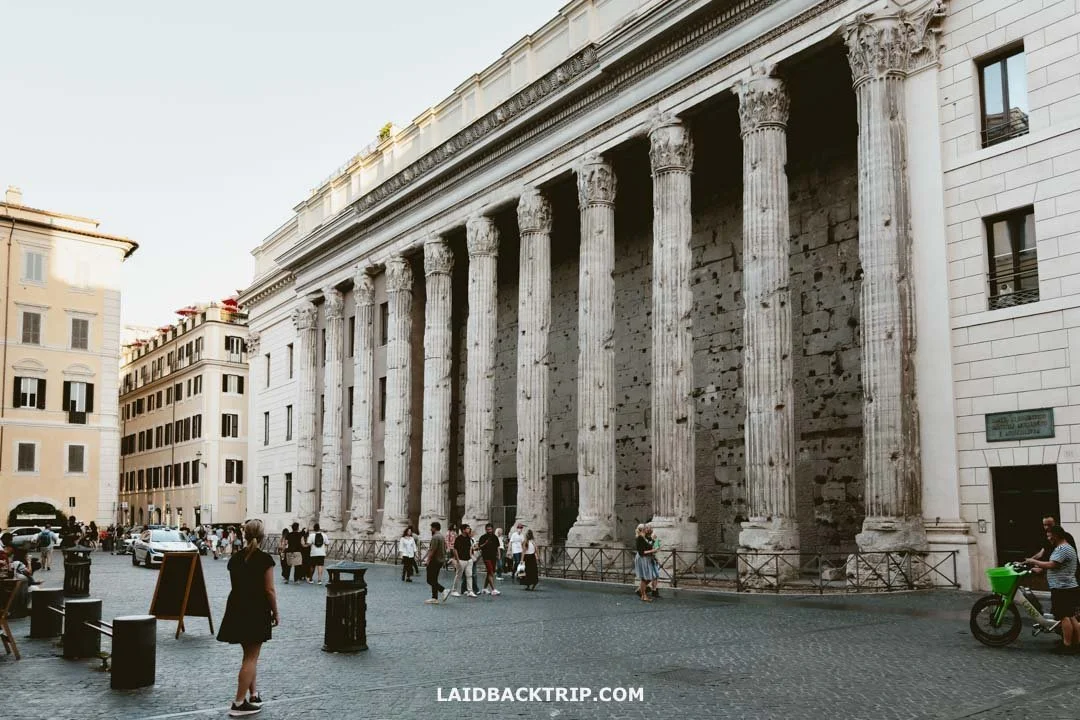
While there was not much to see inside the Temple of Hadrian from outside it remained one of the most striking structures in Centro Storico.
Day 2: Roman Forum, Colosseum, Circus Maximus, and Monument to Victor Emmanuel II
I had been in Rome almost 25 years ago, and both the Roman Forum and the Colosseum were the places that stayed with me the most. After all these years, I could not wait to revisit those iconic sites. I was especially curious because this time I would see them as an adult, not as a kid, and with such a long gap, I wondered what the visit would feel like, what had changed, and how much I would actually remember from that first trip.
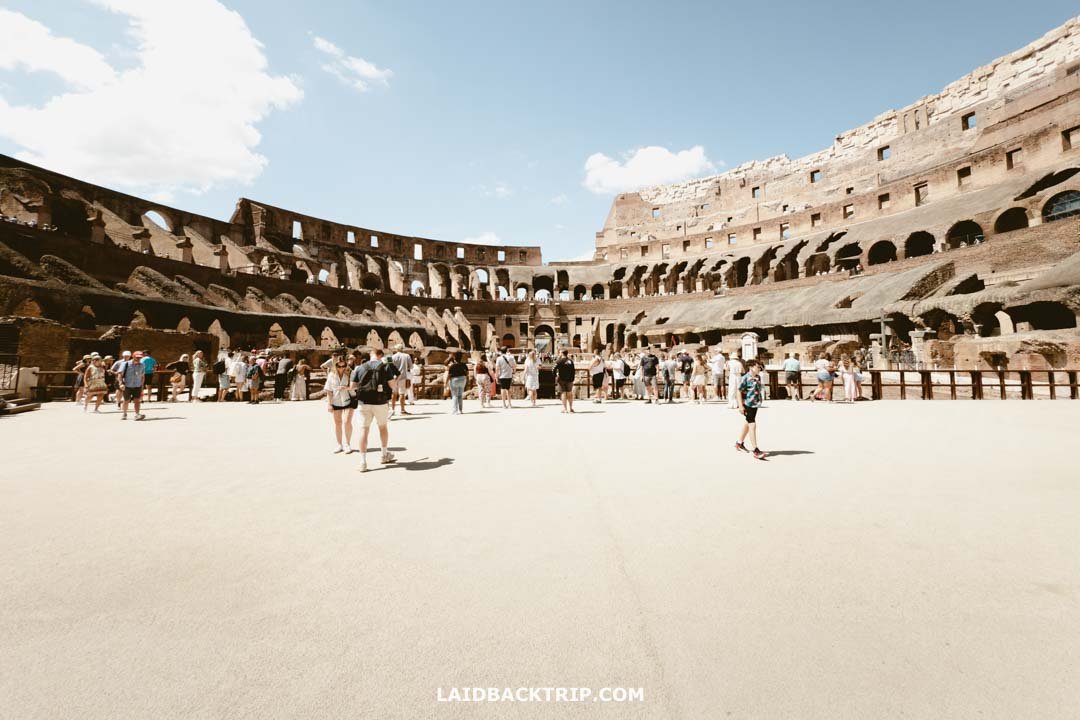
We couldn't wait to explore the legendary Colosseum!
The Roman Forum was once the most important place in the entire Roman world. This is where Romulus founded Rome in 753 BCE after killing his brother Remus. This is where a small kingdom became a republic after 250 years, and where, after another 500 years, it transformed into the mighty Roman Empire, the greatest power of its time in the western world. Since the Roman Forum was the administrative, religious, and commercial center, it truly was the heart of Rome. We could not wait to explore it, so we arrived first thing in the morning, aka 9 AM.
Roman Forum and Palatine Hill: 4-6 Hours
The Roman Forum consists of three interconnected areas: the Palatine Hill, the Roman Forum, and the Imperial Forum, all covered by one ticket. We bought the ticket that also included the SUPER Sites, which we highly recommend if you want to get the most out of the complex, since it includes several additional areas. We also wrote a complete guide to the Roman Forum, so make sure to check it out to get all the essentials for your visit.
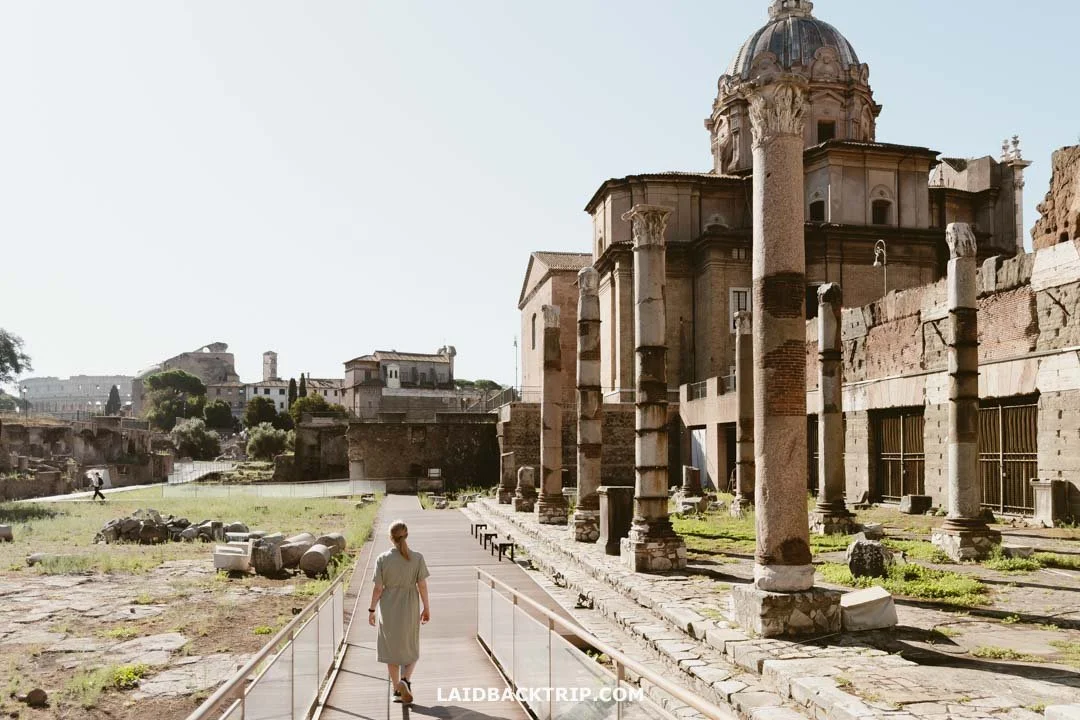
On our walk through the Roman Forum we saw the Forum of Caesar, constructed as an extension by Gaius Julius Caesar in 46 BC.
We started at the Imperial Forum because the entrance was closest to our hotel, and we also assumed there would be no line, which turned out to be true. The Imperial Forum was essentially an expansion of the Roman Forum when the original area became too crowded, making it the youngest part of the complex.
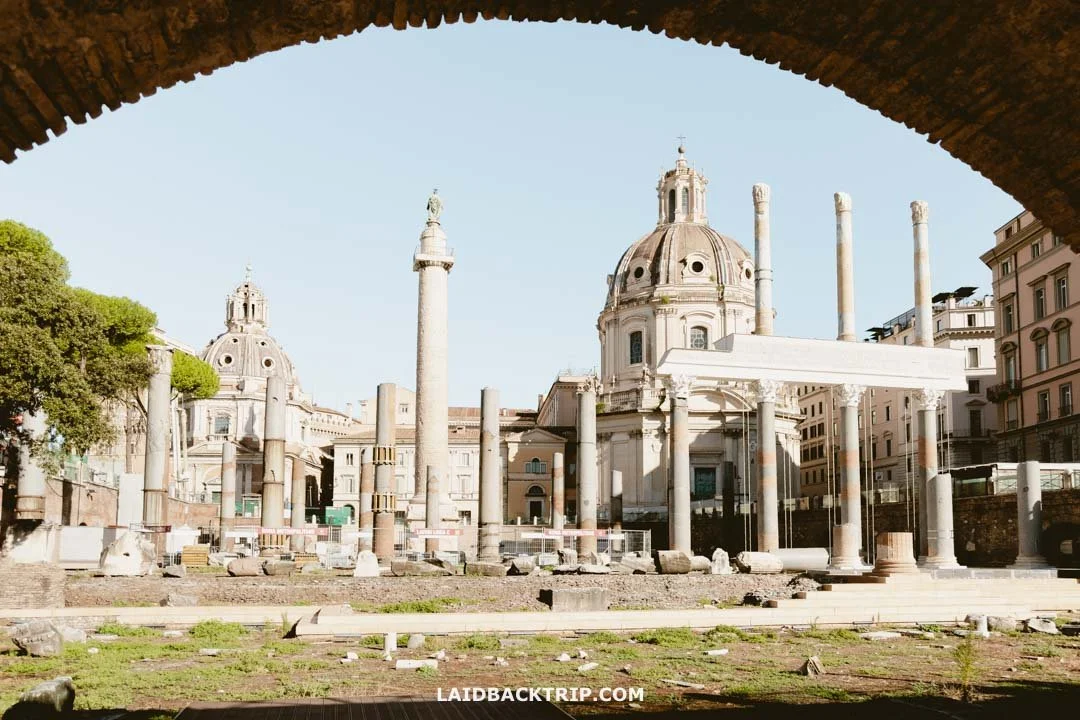
The Imperial Forums were added later by the most powerful Roman emperors.
Emperors such as Julius Caesar, Augustus, and Trajan built a series of public squares here with porticoes, temples, libraries, basilicas, markets, arches, and columns. The best preserved monument we saw was Trajan's Column, while most of the other structures are now in ruins, but it was still a fascinating look into this period of Roman history.
We then continued into the Roman Forum, which was once a busy center of political debate, court trials, religious rituals, trade, and grand processions. We started at the Curia Julia, the ancient Senate House and one of the SUPER Sites, and also one of the best preserved buildings in the complex. This part of the forum was filled with a mix of ancient structures in different states of preservation. We saw the Arch of Septimius Severus, the Temple of Saturn, the Temple of Vesta, the House of the Vestals, the Arch of Titus, and many more.
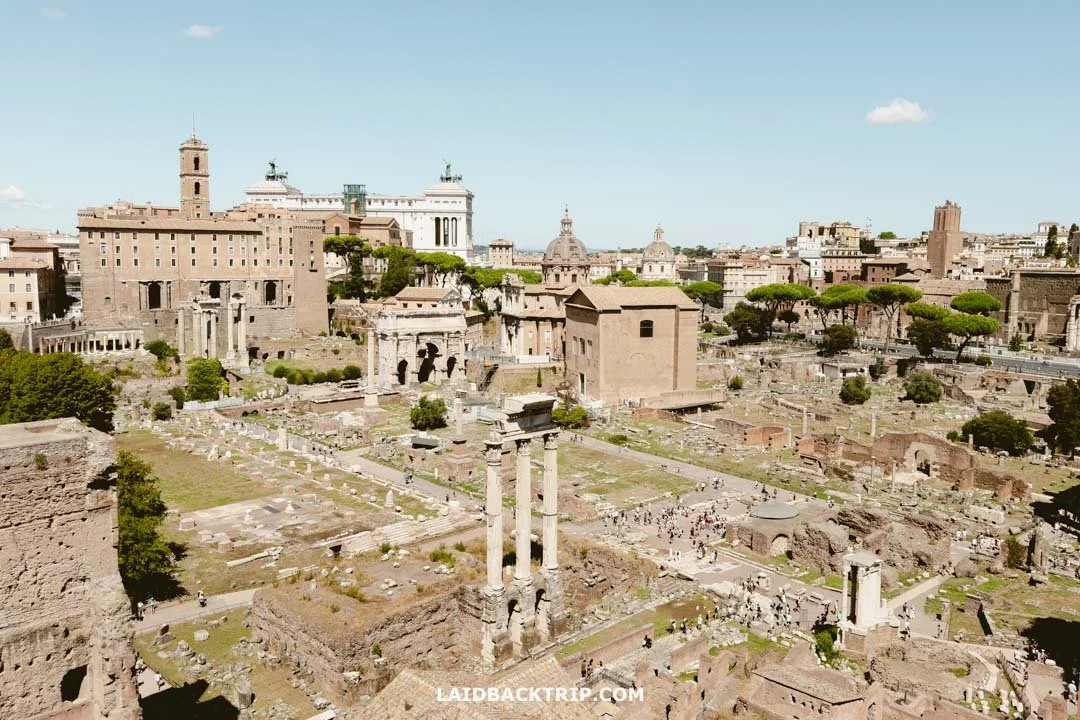
The Roman Forum was once the center of all ancient Rome.
Next, we headed up to Palatine Hill, the oldest part of the site where Rome began and where later emperors built their grand palaces. On the way up, we took the Domitian Ramp inside the Domus Tiberiana. This massive structure built into the hill was part of the palace of Emperor Tiberius. This area was recently beautifully restored and included two more SUPER Sites, Santa Maria Antiqua and the Domus Tiberiana Exhibition Hall, which we explored along the way.
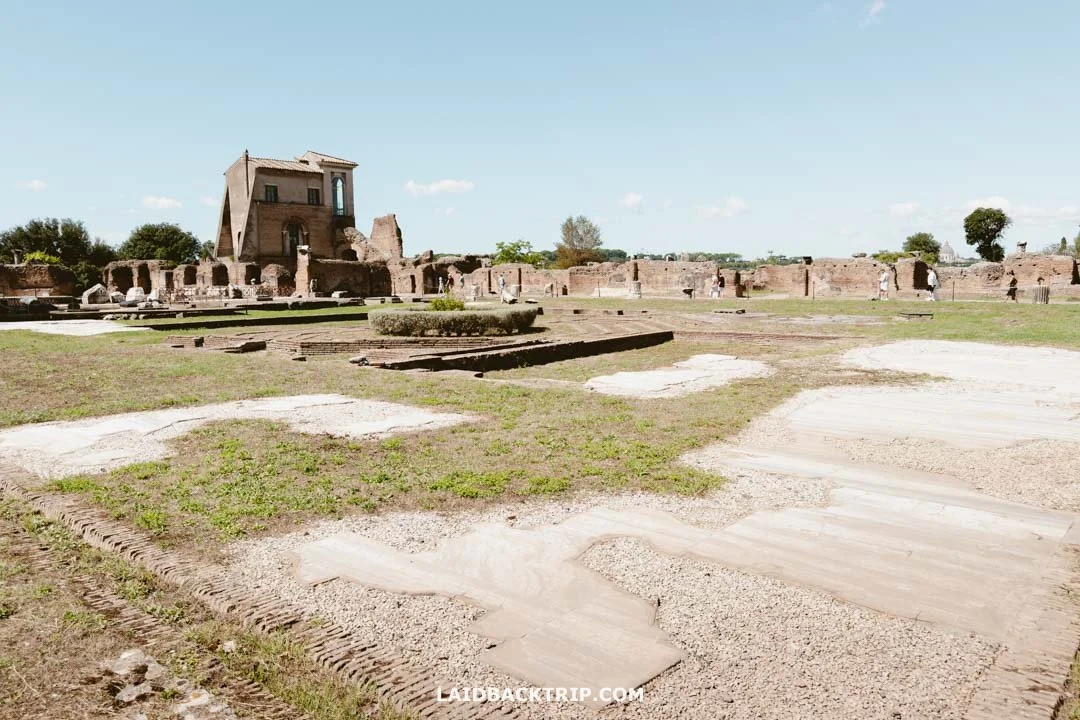
The top of the Palatine Hill was once built over imperial palaces of which very little remains today.
Unfortunately, not much remains of the palaces that once stood on top of Palatine Hill. Still, we were surprised to find the Houses of Augustus and Livia here, which, although modest, were the earliest of them. Inside, we found stunning frescoes in the Roman Second Style dating back to the 30s BCE. While the two houses were once one complex, today they are separate sites with different opening hours. We recommend reading our comprehensive guide on the Houses of Augustus and Livia for more details.
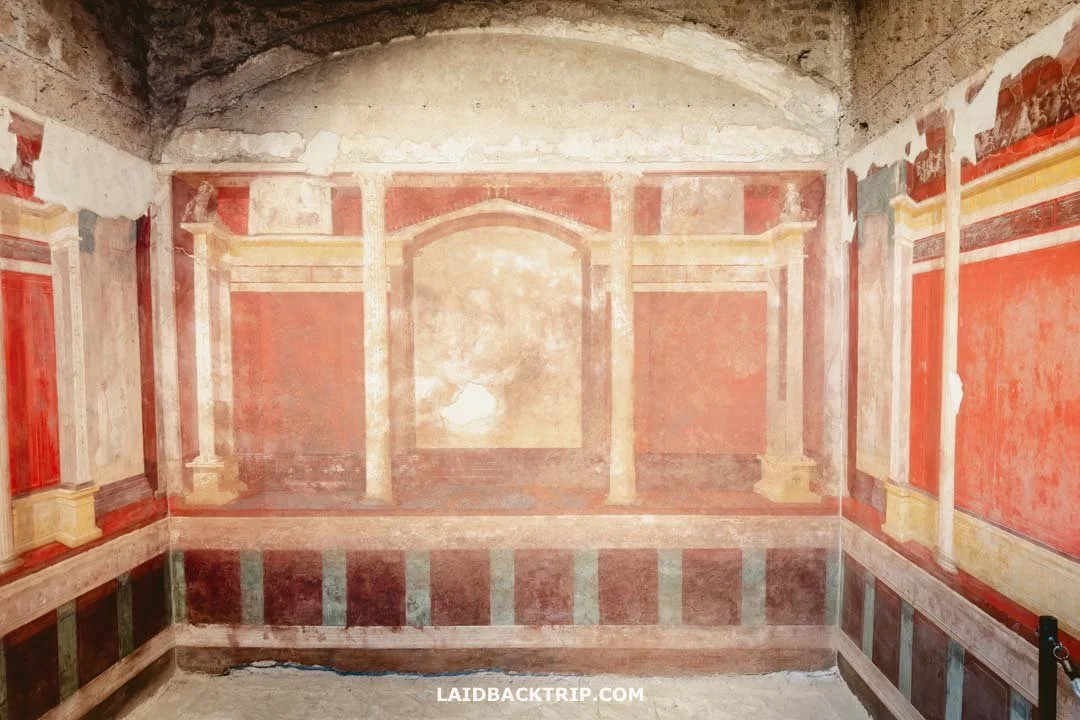
House of Augustus had frescoes more than 2000 years old.
We also visited several other places on Palatine Hill, including the Hut of Romulus, where the founder of Rome supposedly lived, the Farnese Gardens, the Palatine Stadium, the Aula Isiaca and Loggia Mattei, which is another SUPER Site, and the Palatine Museum, which we did not enter because we ran out of time.
We spent about four hours exploring the Roman Forum, mainly because we had a timed entry to the Colosseum at 1 PM. Otherwise, we could have stayed even longer. The complex is enormous, and while we saw all the major highlights, there was still much more to discover.
Colosseum: 2 Hours
In the afternoon, we headed to the Colosseum, Rome's most famous landmark. We walked there directly from the Roman Forum, which only took about two minutes since they are right next to each other. The Colosseum was built in the second half of the first century CE by Emperor Vespasian, completed by Emperor Titus, and later expanded by Emperor Domitian. It could hold up to 80,000 spectators and was used for gladiator fights and animal hunts.
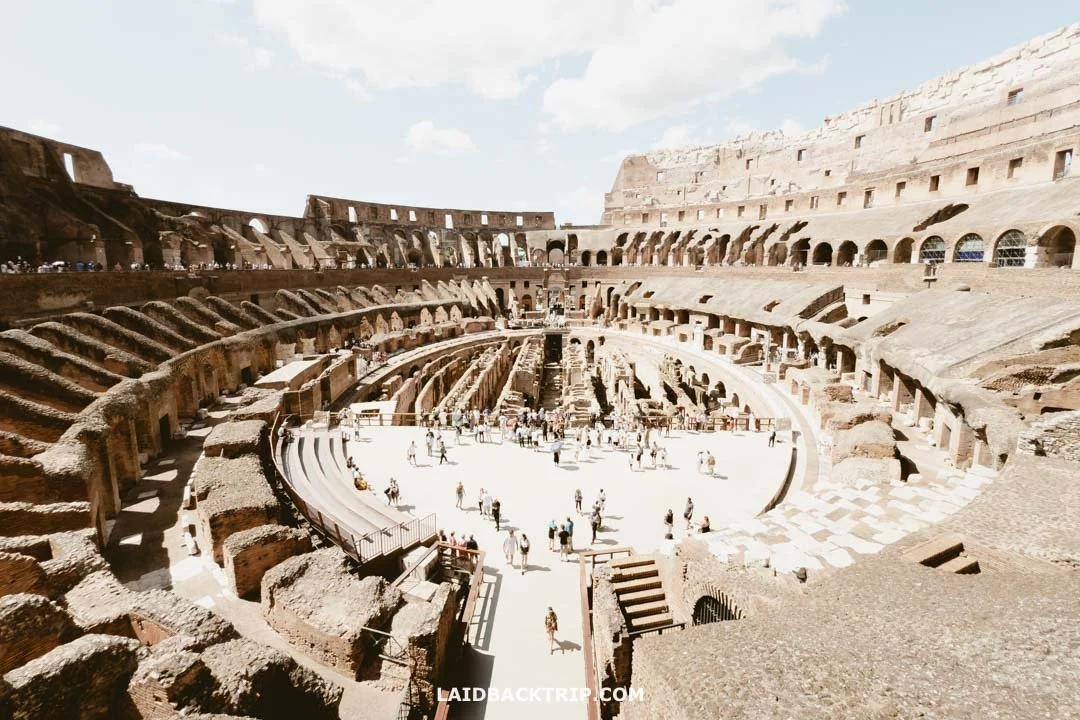
The Colosseum offered us one of the most classic looks of ancient Rome.
In addition to the standard visitor's route, the Colosseum has three special sections that require a more expensive ticket. These are the Underground Levels, where the performances were prepared, the Arena floor, where the events took place, and the Attic, which was used by poorer citizens and today offers the best panoramic views. We bought tickets for the Arena since the Underground and Attic only allow very limited numbers of visitors and were already sold out.
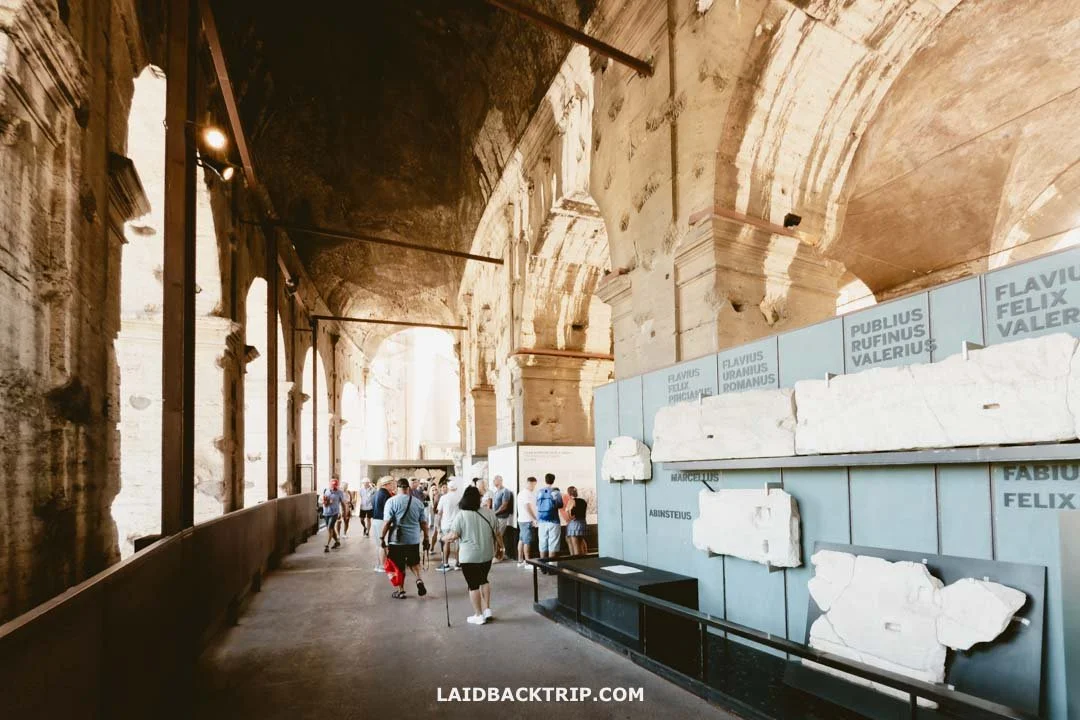
Walking inside the Colosseum was honestly a pretty special moment.
Via dei Fori Imperiali: 30 Minutes
Another great part of the day was that we happened to visit on a weekend when Via dei Fori Imperiali, the road connecting the two sites, was closed to traffic. Walking along it without cars was very enjoyable. In total, we spent over two hours at the Colosseum, followed by a stroll along the boulevard. Since we were quite tired, we then returned to our hotel to rest.
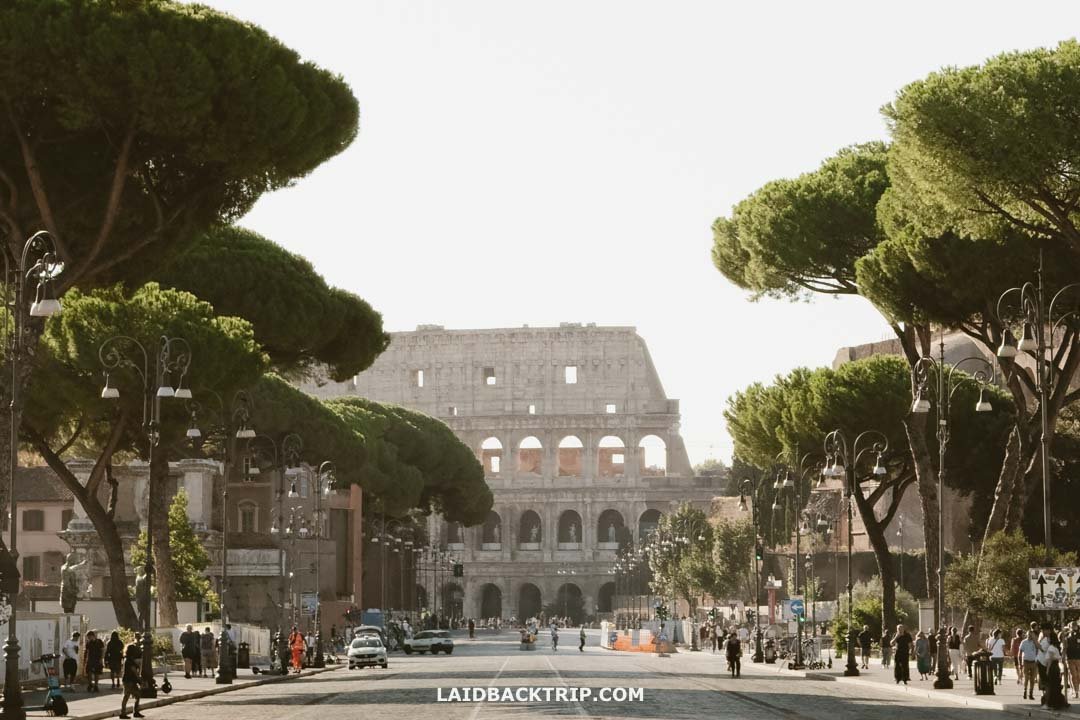
The wide boulevard cuts directly through the heart of ancient Imperial Forums.
Monument to Victor Emmanuel II: 30 Minutes
On the way back, we passed the gigantic Monument to Victor Emmanuel II, which dominates Piazza Venezia and is visible from much of Rome. This white marble monument, also known as the Altare della Patria, honors the first king of a unified Italy, features grand staircases, Corinthian columns, and the Tomb of the Unknown Soldier
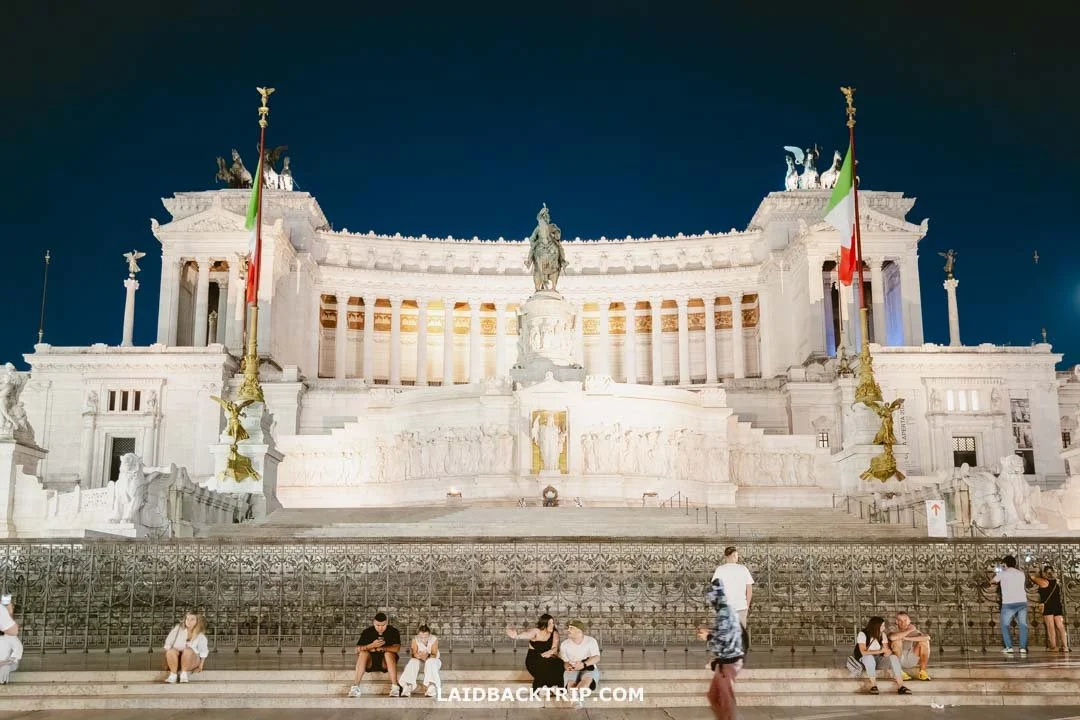
Monument to Victor Emmanuel II honors Italy's first king and national unification.
If you still have energy, you can go inside. There is a free entrance with security check from Piazza Venezia that takes you closer to the monument. There is also an option to go up to the top for views, but that part costs 18 euros, which we felt was not worth it.
Circus Maximus: 30 Minutes
In the evening, we returned to enjoy both the Roman Forum and the Colosseum at sunset and after dark. Before that, we made a short detour to the Circus Maximus.
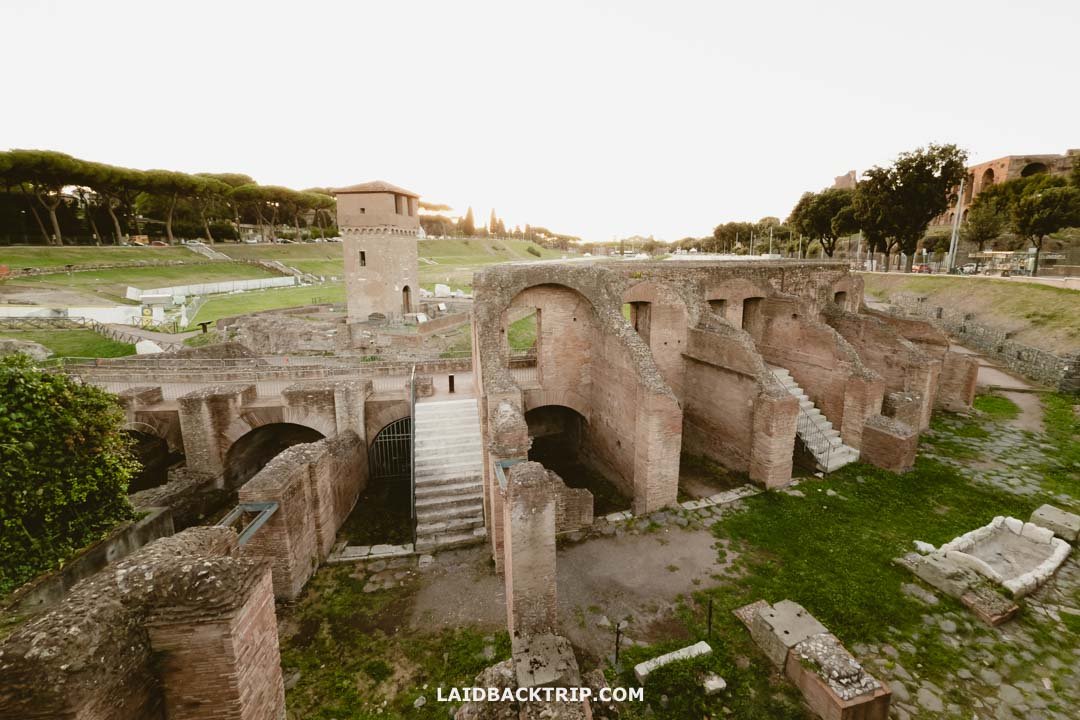
Circus Maximus was built as a stadium for chariot races and festivals.
Located in the valley between the Palatine and Aventine hills, the Circus Maximus was ancient Rome’s premier chariot racing stadium. At its peak, this massive arena could accommodate over 150,000 spectators who gathered for high speed chariot races and religious festivals. Today, it is essentially a huge public park that stretches for about 600 meters, and seeing its scale in person was truly impressive. There was a small museum on the eastern side of the site, but we did not visit it because it was closed.
Colosseum At Night
Then went back to the Colosseum to see it beautifully illuminated at night. The views from the nearby Colle Oppio Park were fantastic, though the park itself was a bit sketchy. We then walked along Via dei Fori Imperiali and enjoyed the wide boulevard without traffic and the views of the Roman Forum along the sides. You could also visit the Circus Maximus after the Colosseum and then walk back toward Piazza Venezia via Via del Teatro Marcello so you don't have to come back later.
World Nomads provides travel insurance for travelers to cover their trip essentials, including sports and adventure activities.
SafetyWing is affordable travel insurance for backpackers, long-term travelers, and digital nomads.
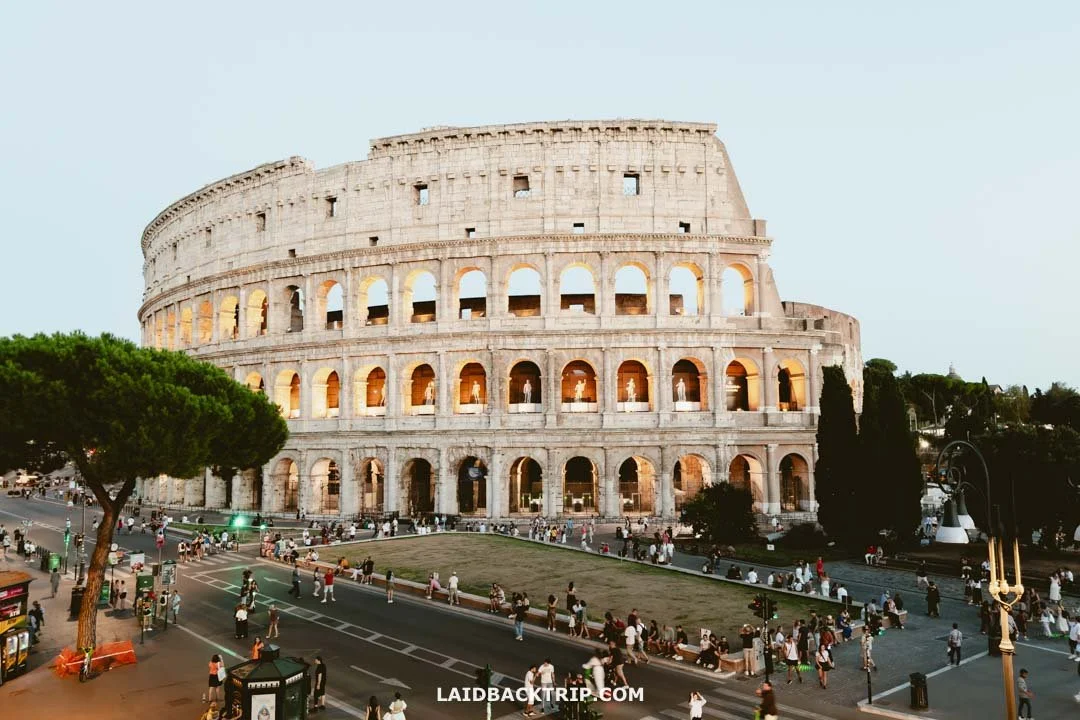
The Colosseum was just as incredible at night as it was during the day.
Day 3: Vatican City, St. Peter’s Basilica, and Vatican Museums
The following day was just as easy to organize as the one before, although we technically did not spend it in Rome. On the third day, we went to Vatican City, the smallest country in the world, the spiritual center of the Catholic Church, and the Pope's official residence. It was not really a big trip, because the Vatican is surrounded by Rome's city center, so for us, staying near Navona Square, it was only about a 20-minute walk.
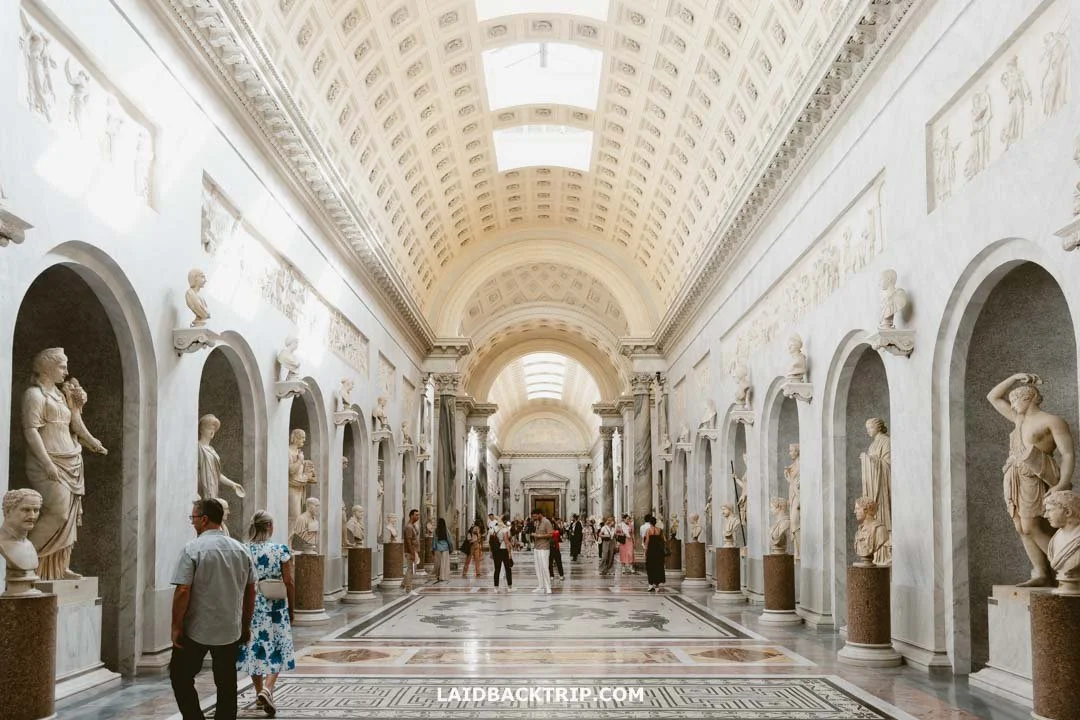
Despite being the smallest in the world it was really easy to spend most of the day in Vatican City.
Vatican Museums: 4 Hours
Since we booked an early morning time slot (8 AM) for the Vatican Museums, we once again walked across the empty Ponte Sant'Angelo and then followed the Vatican City walls to the museum entrance, which is technically on Viale Vaticano in Rome. Here we joined one of the three lines, the one for visitors with guided tours, and within a few minutes we met our guide, who greeted our group and gave us headphones so we could all hear her during the tour.
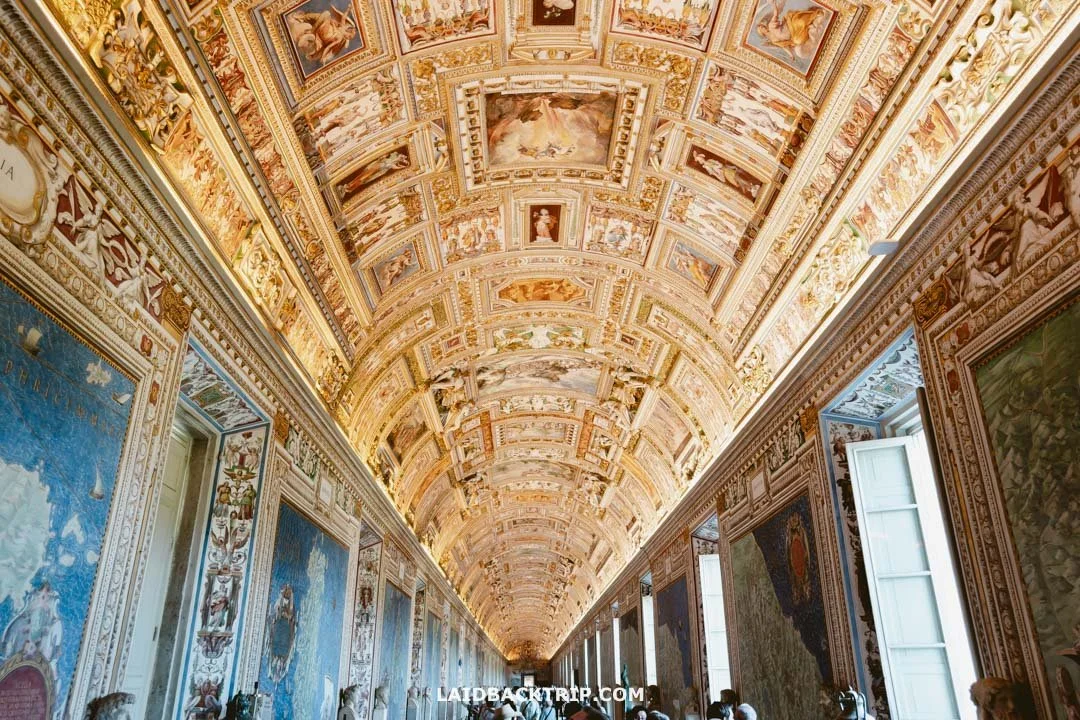
The Gallery of Maps was my favorite section of the whole Vatican Museums.
The Vatican Museums were absolutely incredible. And because we went with a guide this time, we did not have to worry about how to navigate the huge complex. We could simply focus on the artwork around us, which was refreshing since we usually visit museums on our own.
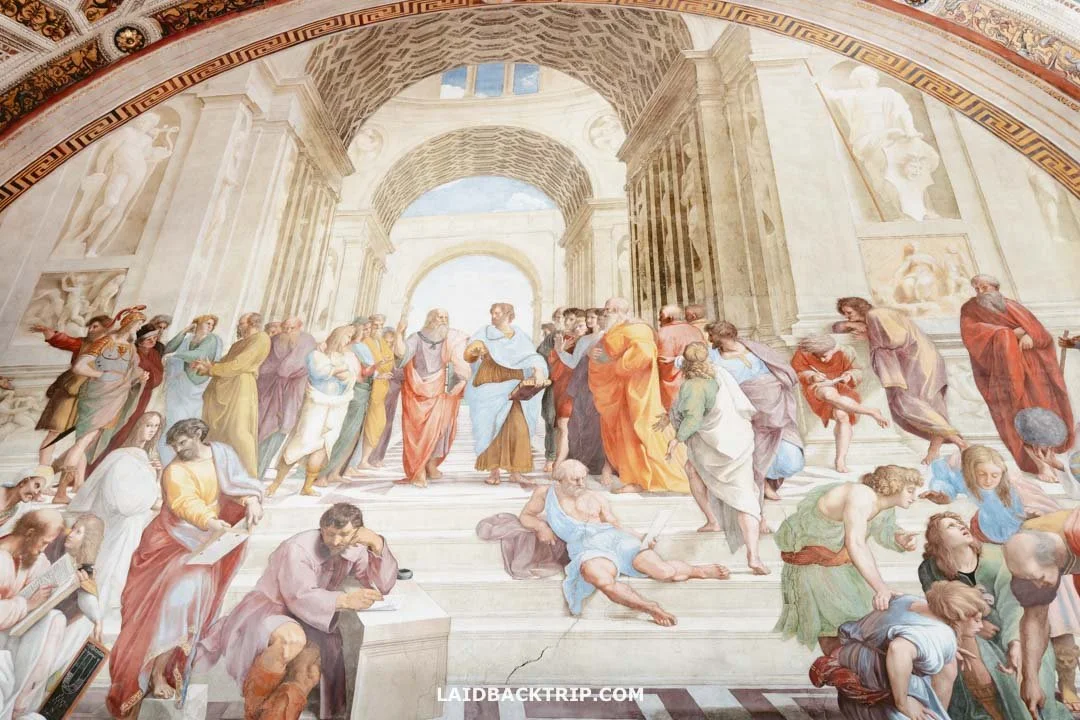
The four Raphael Rooms are famous for their frescoes painted by Raphael.
We slowly made our way through the museum, visiting the Pinecone Courtyard, the Pio Clementino Museum with its ancient sculptures, the Gallery of Tapestries and the Gallery of Candelabra, and the Gallery of Maps, a 120-meter-long corridor with detailed maps of Italy. We then continued into the Raphael Rooms and ended our tour in the Sistine Chapel, where we sat for a while after the guide left and admired Michelangelo's masterpiece.
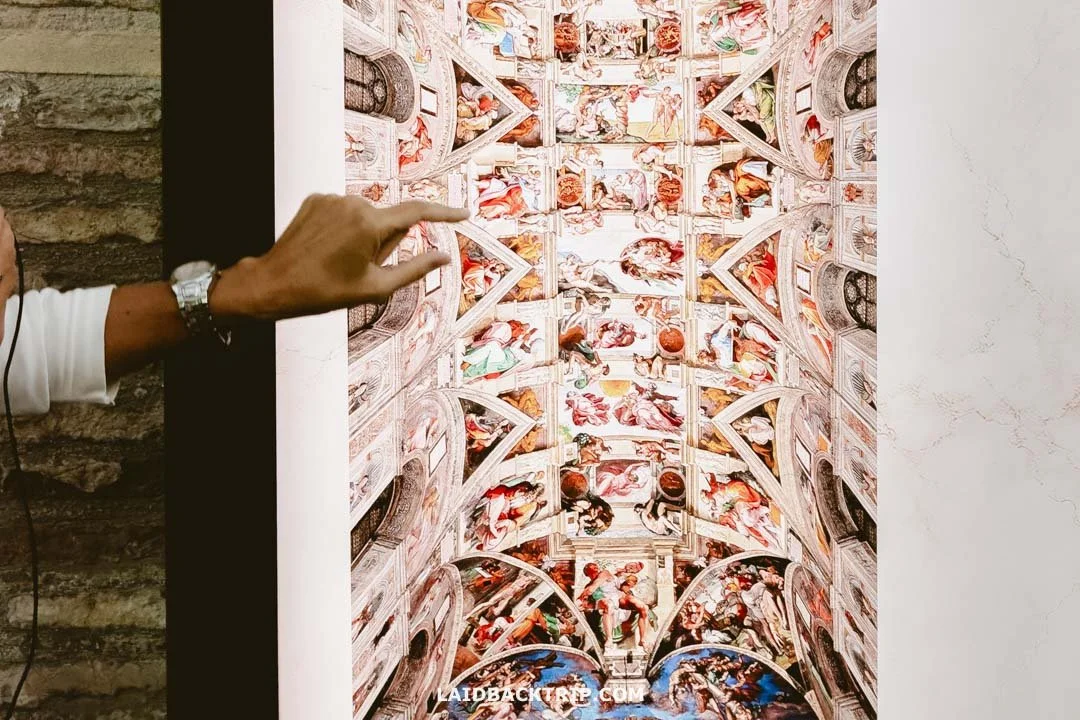
Since we toured the Sistine Chapel on our own our guide explained all the paintings beforehand.
After seeing so much, we took a break in the garden, eating our snacks while enjoying the quiet atmosphere and taking in everything we had just experienced. We could have stayed there for hours, but we had a timed entry for St. Peter's Basilica, so after a while we headed that way. Since we had a standard ticket without a guide, we had to return to St. Peter's Square (10-minute walk) and go through the security check. In the end, we spent just under four hours in the Vatican Museums.
St. Peter's Basilica: 3 Hours
There was no line when we visited, so within a few minutes, we entered St. Peter's Basilica, the largest church in the world. Entry to the basilica itself is free, but we bought a ticket that included the Dome Climb and the Papal Grottoes. We went into the grottoes first, where we saw the tombs of recent popes, including John Paul II and Benedict XVI.
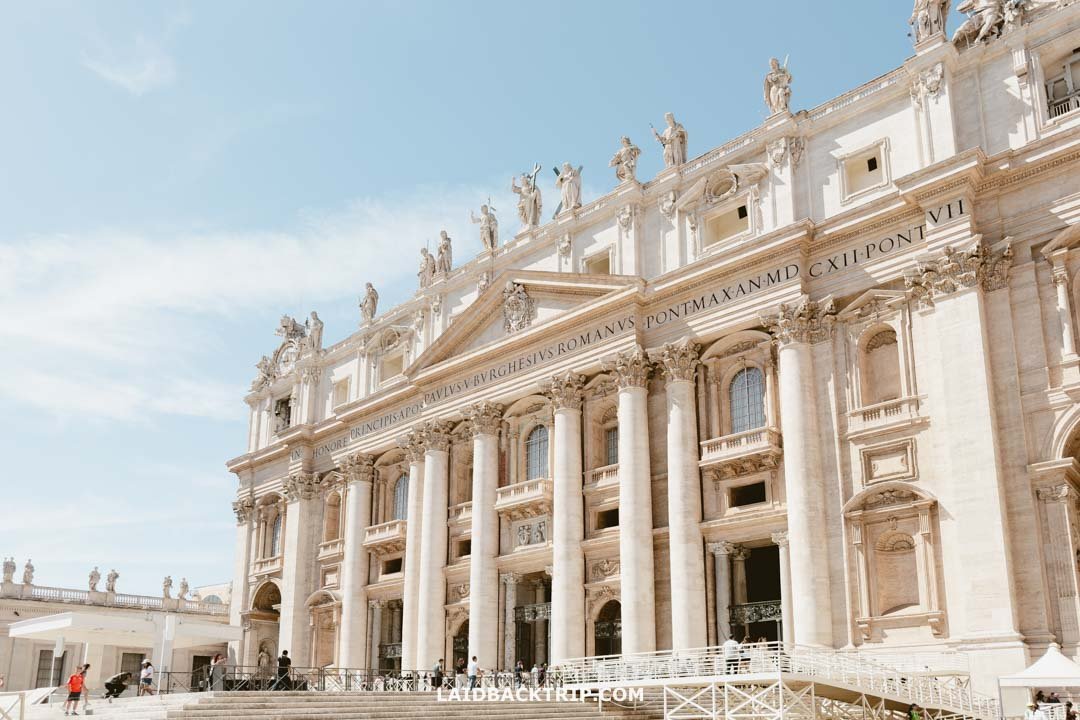
The facade of St. Peter's Basilica is lined with giant Corinthian columns.
We then climbed the stairs up to the main basilica level. We have seen many impressive churches during our travels in Europe, but nothing really prepares you for the moment you step inside St. Peter's. Even though I had been there years ago, it still felt overwhelming.
St. Peter's Basilica is enormous, and the scale of the building is impossible to describe. This is one of those places you have to see in person to truly understand how big it is. We spent a long time exploring while listening to the audio guide that came with our ticket (bring your own earbuds,). The most impressive feature for us was Bernini's St. Peter's Baldachin, a 30-meter-tall bronze canopy above the high altar and the tomb of St. Peter.
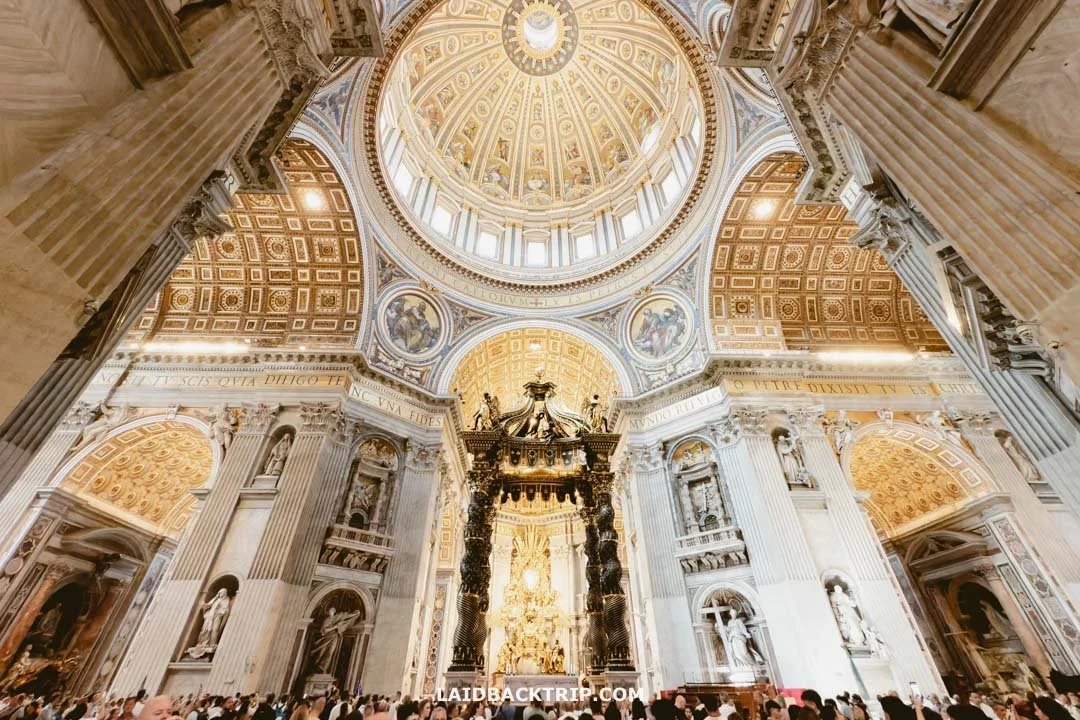
Inside St. Peter's Basilica was even more striking than the grand exterior of the church.
After finishing the ground level, we headed up into St. Peter's Dome. First, we climbed 231 steps to reach the inner balcony at the base of the dome. From there, we went out onto the basilica terrace and then climbed another 320 steps to reach the very top. Even though we were technically inside Vatican City, this was easily one of the best views of Rome. After that, we went back down to the basilica floor and then walked out into St. Peter's Square. To our surprise, we spent three hours in St. Peter's Basilica.
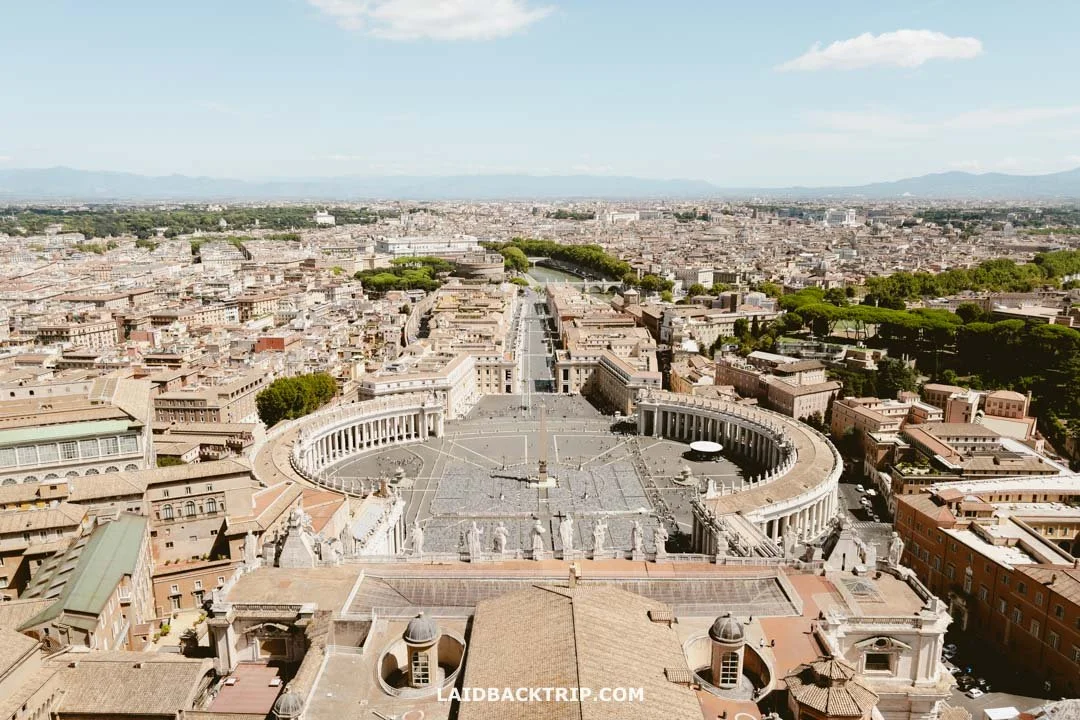
The view from the top of St. Peter's Basilica was definitely worth the climb.
St. Peter's Square: 1 Hour
St. Peter's Square is a massive plaza built to accommodate the crowds that gather for major religious events. The square, like the church, is enormous, and we spent time walking along its beautiful colonnades and looking at the stunning fountains and the ancient Egyptian obelisk in the center. We spent about an hour at St. Peter's Square, which included the walk back toward Rome via the Via della Conciliazione.
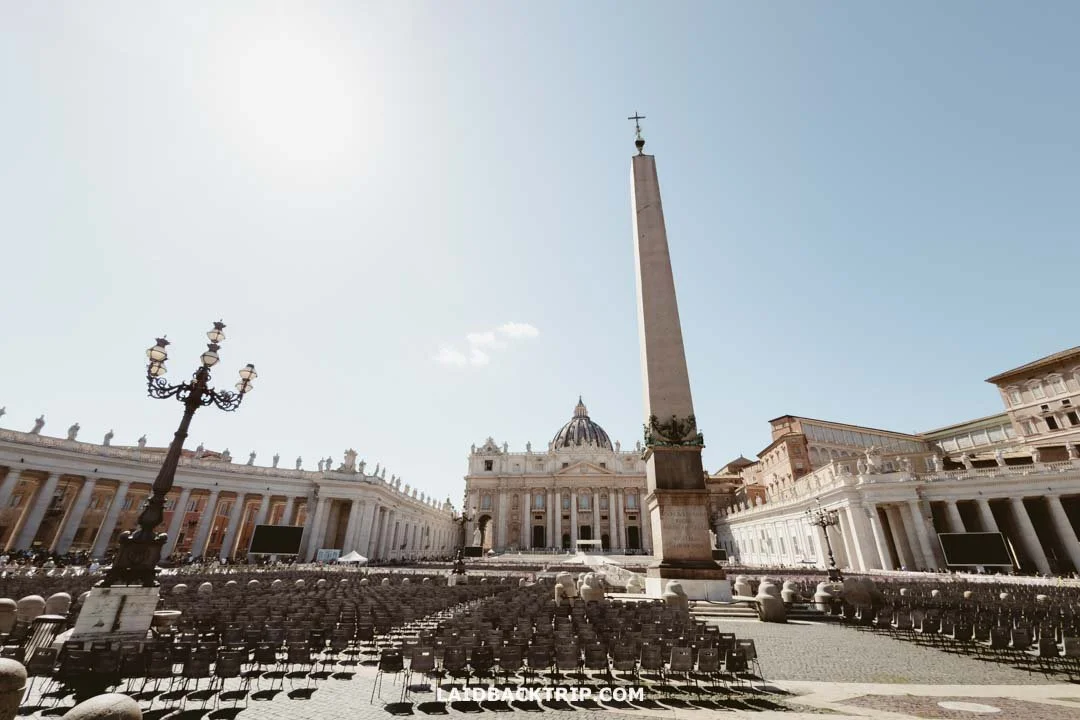
St. Peter's Square was enormous and it took us a good while to wander all the way around it.
If you plan it well, you can easily spend a full day in Vatican City. We made a small mistake by not allowing ourselves more time in the museums after the guided tour, but since we saw all the highlights, it was not a big issue for us. Still, we could have stayed longer, so do not make the same mistake.
Centro Storico
Since we left the Vatican in the afternoon, we still had the whole evening ahead of us. Once again, we wandered through the Centro Storico and visited places like the famous Campo de' Fiori and Teatro di Marcello. If you want to avoid the crowds and still have energy for one more museum, the Stadium of Domitian under Piazza Navona is also worth seeing.
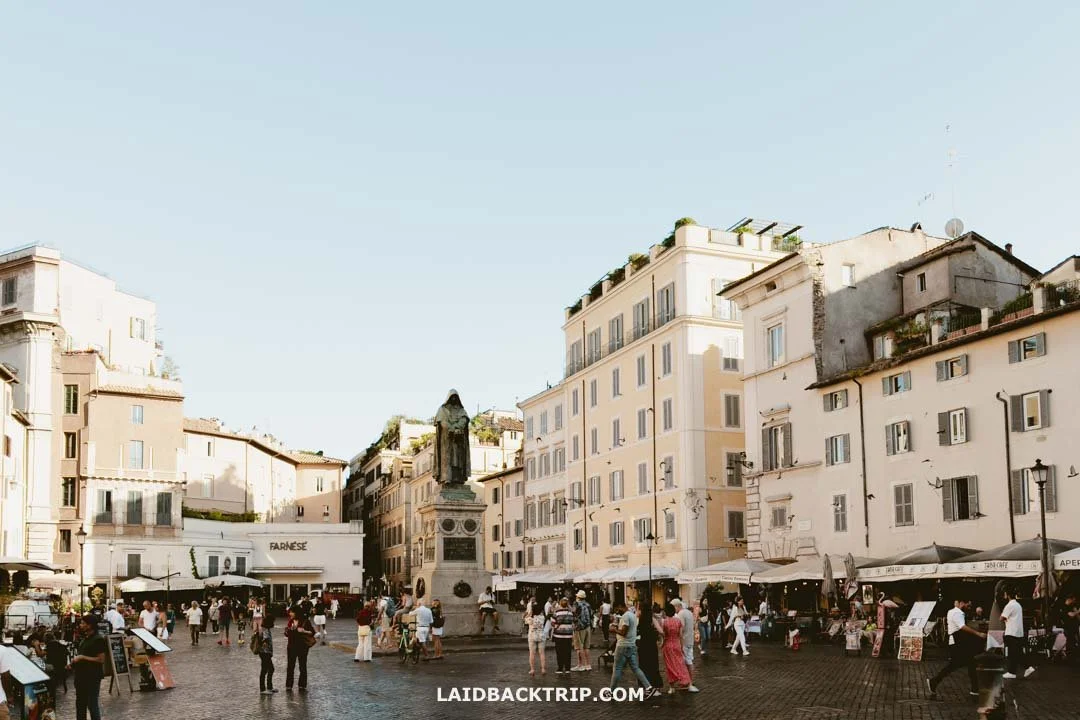
Since we arrived at Campo de' Fiori in the later afternoon there was no market running.
Day 4: Pantheon, Musei Capitolini, Baths of Diocletian, and Palazzo Massimo alle Terme
The fourth and fifth days were probably the trickiest for us to plan, because there was just so much to see and do in Rome, and with only one week set aside, it was not in our power to see everything we wanted. Again, we made a few small tweaks on these two days to make them work better.
So, we dedicated the fourth day mainly to museums, but we also visited the Pantheon and checked into another hotel in the afternoon. Once again, it was a very busy day for us, but at the same time, it was really interesting, so we did not mind at all.
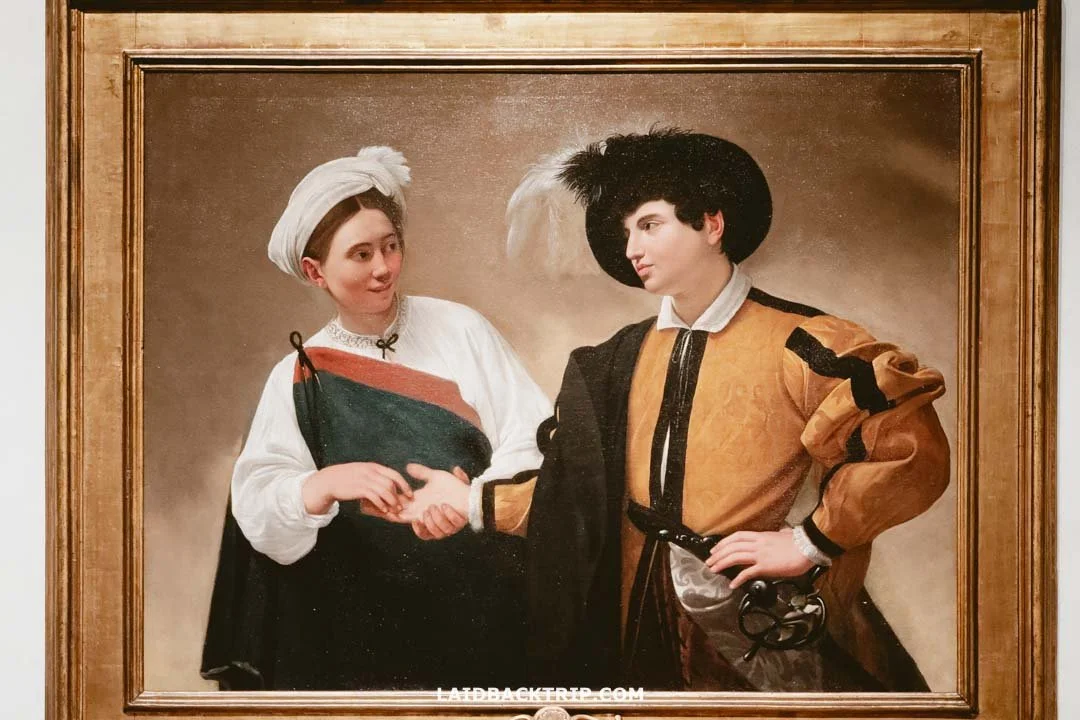
Since we planned to see the Capitoline Museums that day, we were really excited to see more of Caravaggio.
Pantheon: 45-60 Minutes
We stayed only about five minutes from the Pantheon and had already walked past it several times, but it was not until day four that we finally went inside. So we headed there first thing in the morning, around 9 AM, to get it done properly. The Pantheon is one of Rome's top sights for many reasons, but the main one is that the structure is still standing after nearly 2000 years.
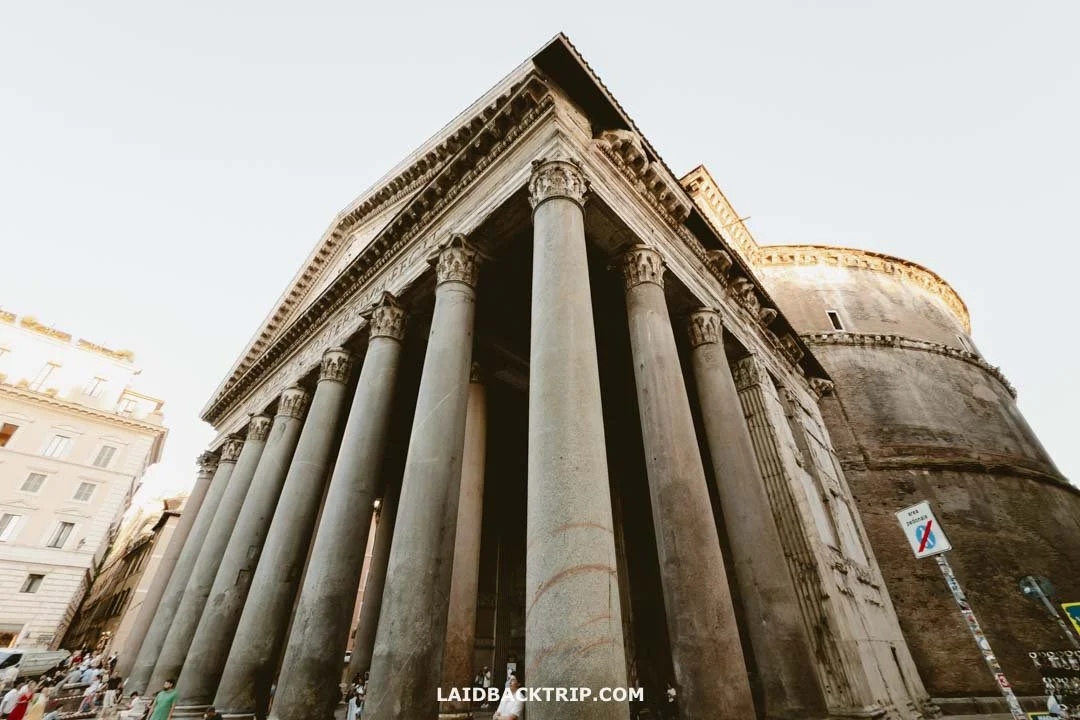
The Pantheon is one of the best‑preserved ancient structures still standing in Rome.
We did not book tickets in advance and bought them on the spot, which meant we had to wait in line for a few minutes, but nothing too bad. After walking through the huge portico with its 16 massive granite columns, we stepped inside the Pantheon. Right away, we looked up to admire the enormous dome with the oculus that lets the light in.
The dome is one of the great marvels of ancient Roman engineering, but there is a lot to see throughout the main hall as well. The Pantheon is so well preserved because it was turned into a church in the 7th century CE, which is why its official name is the Basilica of St. Mary and the Martyrs. Even in the morning, it was quite busy, but not overwhelming. In total, we spent about 45 minutes inside, plus a few minutes waiting in line.
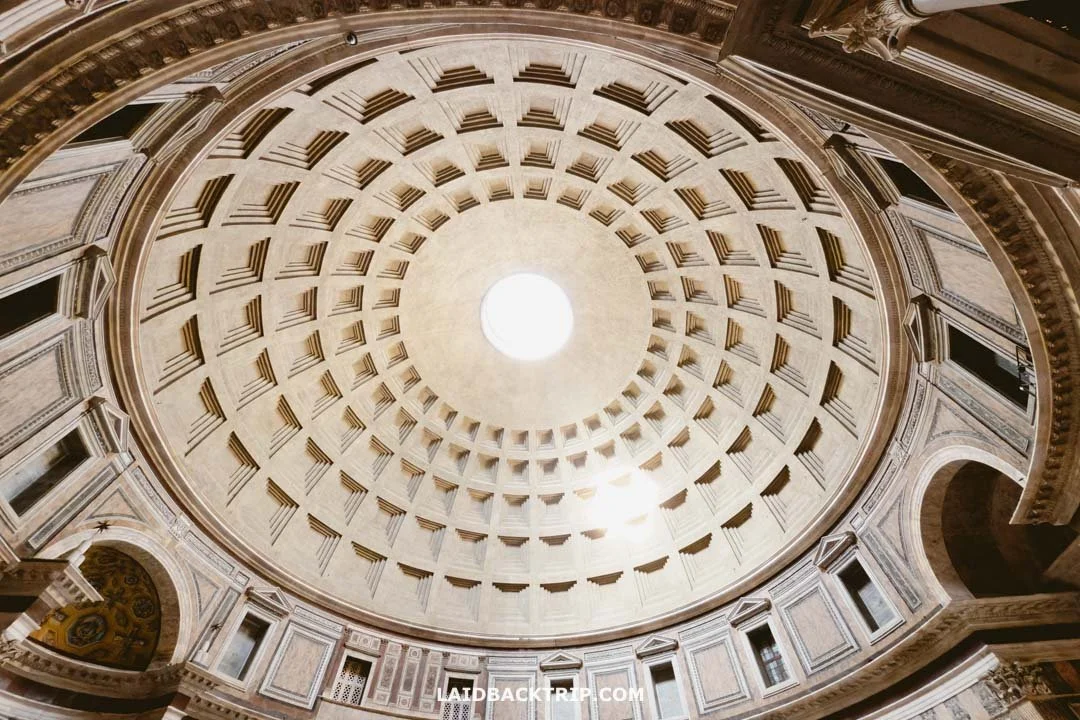
The Pantheon's dome is one of the true marvels of Roman engineering
Capitoline Museums: 4 Hours
After the Pantheon, we walked to the Capitoline Museums, where we spent a large part of the day. It was about a 10-minute walk, and before entering, we stopped by the nearby Basilica of Santa Maria in Aracoeli and then visited Piazza del Campidoglio, designed by Michelangelo Buonarroti. The square is surrounded by Palazzo Senatorio, Palazzo dei Conservatori, and Palazzo Nuovo, which together house the Capitoline Museums.
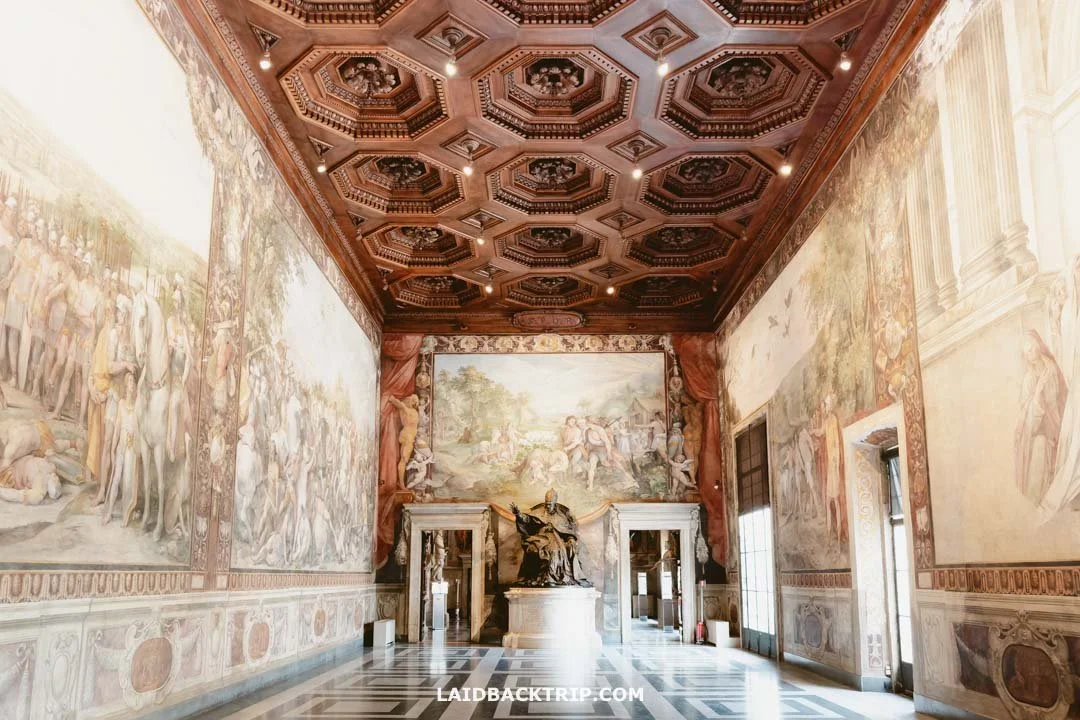
First we went to see the beautiful rooms of the Conservators' Apartment.
There was a lot to see, so we'll keep this part short and cover the details in our Capitoline Museums guide. Among the ancient artworks, we saw the famous Capitoline She Wolf, the Equestrian Statue of Marcus Aurelius, the Dying Gaul, and the Colossus of Constantine. There was also a gallery with paintings by Caravaggio and other masters, along with beautifully decorated rooms in the Conservators' Apartment. We also saw remains of the 6th century BCE Temple of Jupiter Optimus Maximus and parts of ancient Rome's official archive. We spent about four hours in the Capitoline Museums, but we easily could have stayed longer.
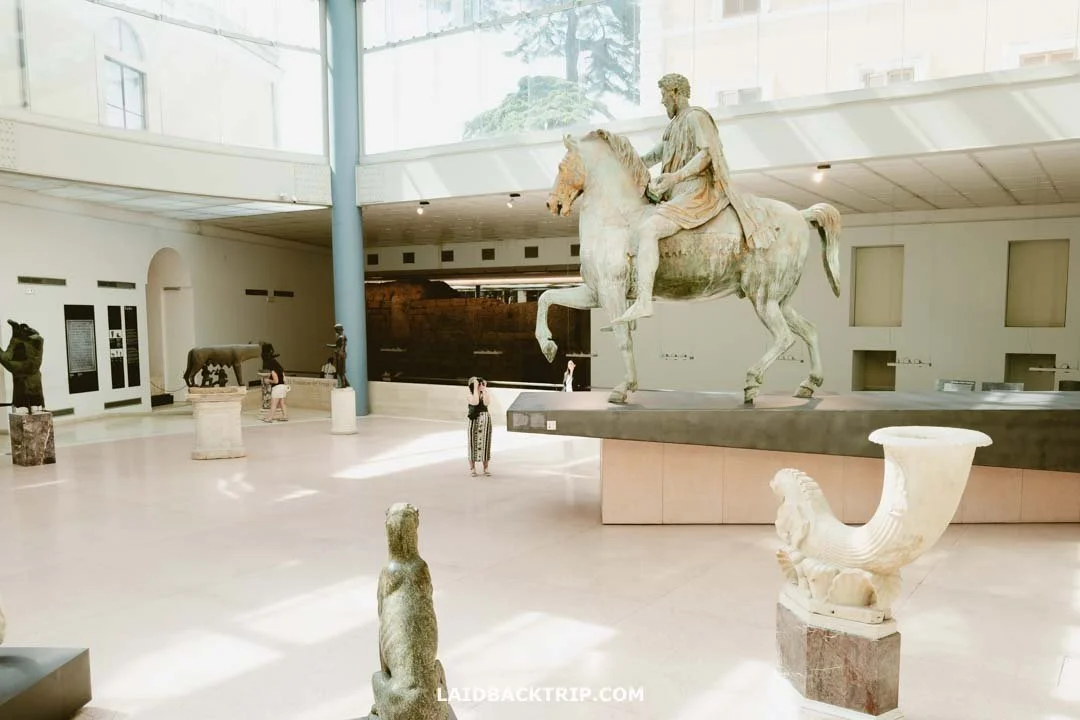
Lucie's favorite item in the Capitoline Museums was the Equestrian Statue of Marcus Aurelius.
Baths of Diocletian: 2 Hours and 30 Minutes
In the afternoon, we went back to our hotel, picked up our luggage, and headed to our new hotel in the Monti neighborhood. After checking in and taking a short but intense break, we walked to the nearby Baths of Diocletian. If you walk the whole way, it takes about 30 minutes. At this point, you have a choice. You can follow us to the largest bath complex ever built in the Roman world, or you can enjoy some free time in the Centro Storico or try some local food.
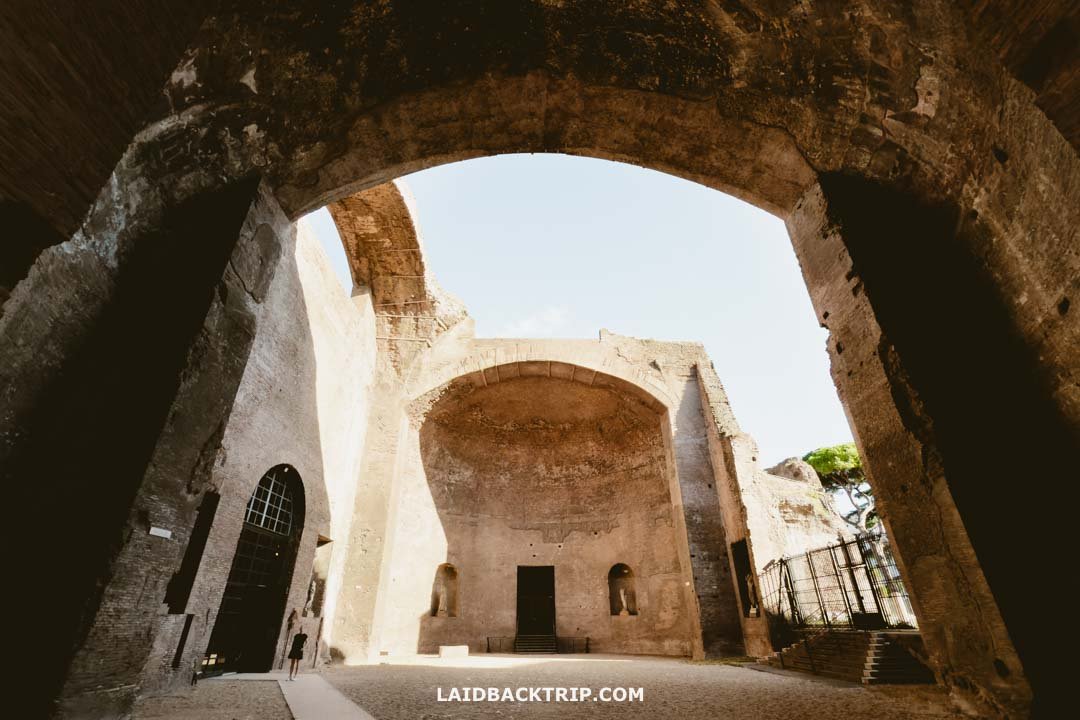
The Baths of Diocletian were the largest in Rome.
Built at the turn of the 3rd and 4th centuries CE, the Baths of Diocletian could accommodate up to 3,000 people at once. The complex was a big surprise for us in several ways. One of the biggest was that only a few enormous halls called aulas remain from the original structures. Over the centuries, much of the complex was built over by a large monastery, and the big halls were later used to store the city's food. When we visited the Baths of Diocletian, they were very quiet, which added a lot to the atmosphere.
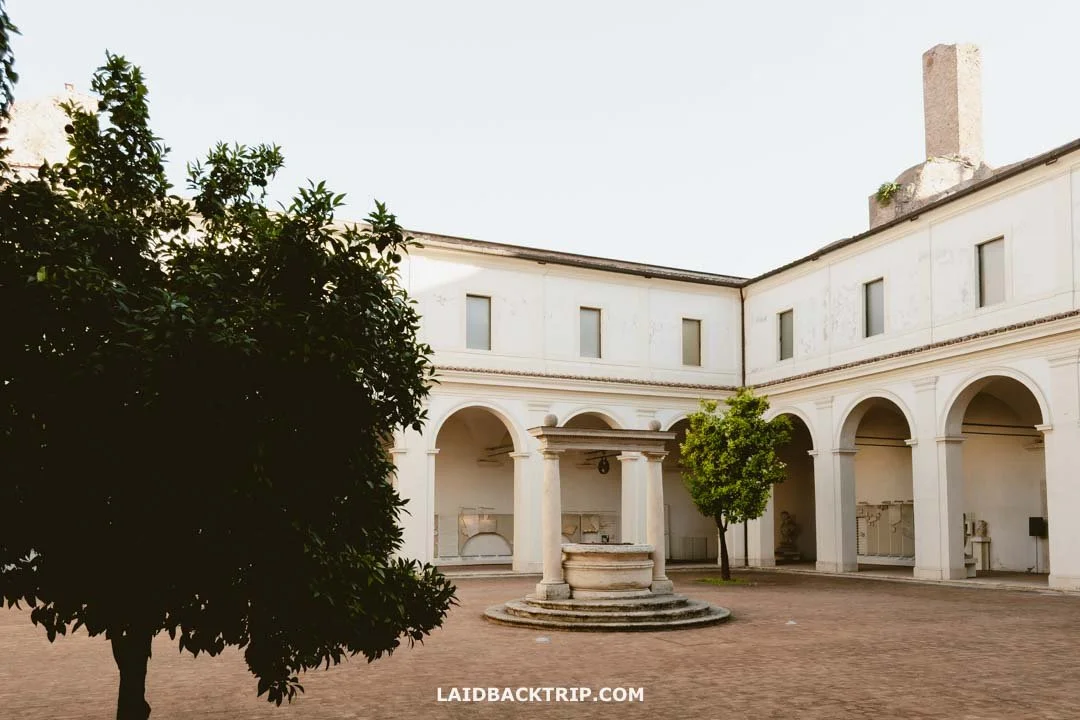
The Baths of Diocletian were rebuilt into a large monastery in the 16th century.
Another surprise was that the 15 euro ticket also included three additional sites, which made it a great deal. One more interesting detail is that because the baths were later incorporated into Christian buildings, the main frigidarium became part of the transept of the Basilica of St. Mary of the Angels and of the Martyrs, redesigned by Michelangelo. This church is not technically part of the baths complex and has free entry, so that is where we went next. Do not skip it, because its ceiling is truly impressive.
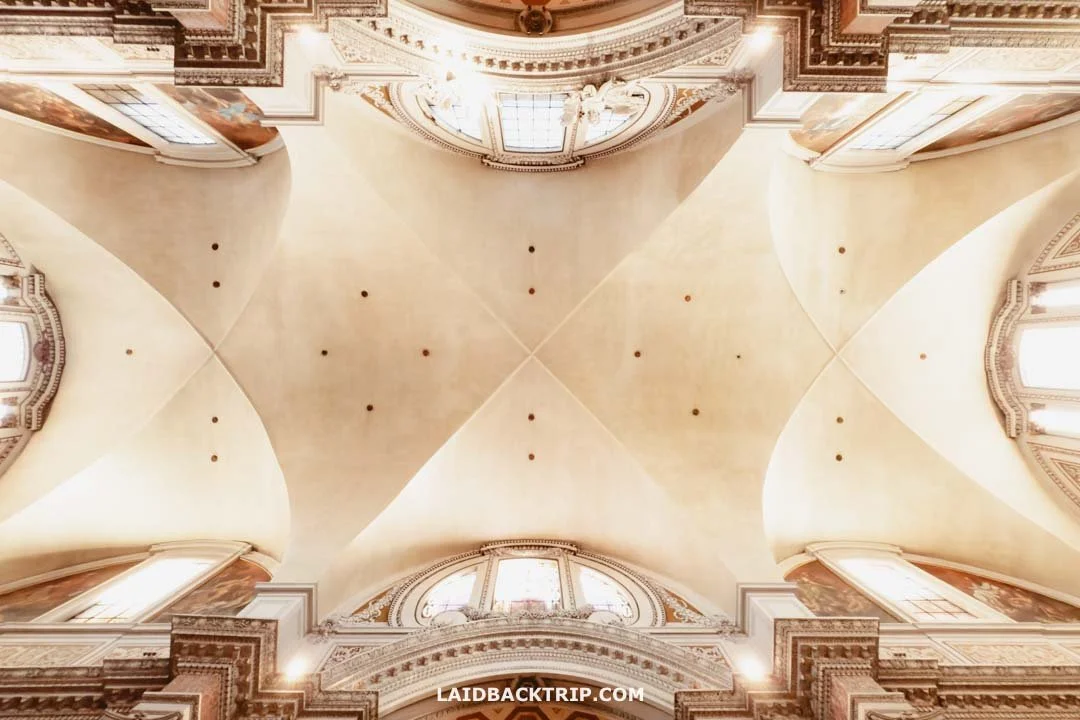
The ceiling of the Baths of Diocletian has survived to this day as part of the Basilica of St. Mary of the Angels and of the Martyrs.
Optional: Palazzo Massimo alle Terme: 2 Hours
Since we still had some time, we then went to the nearby Palazzo Massimo alle Terme. We did not know much about it, but since it was just across the street and included with our ticket, and we had about an hour before closing, Lucie suggested we go for it. If you are tired, there is no need to push yourself, since it has already been a long day, and you can always visit the next day.
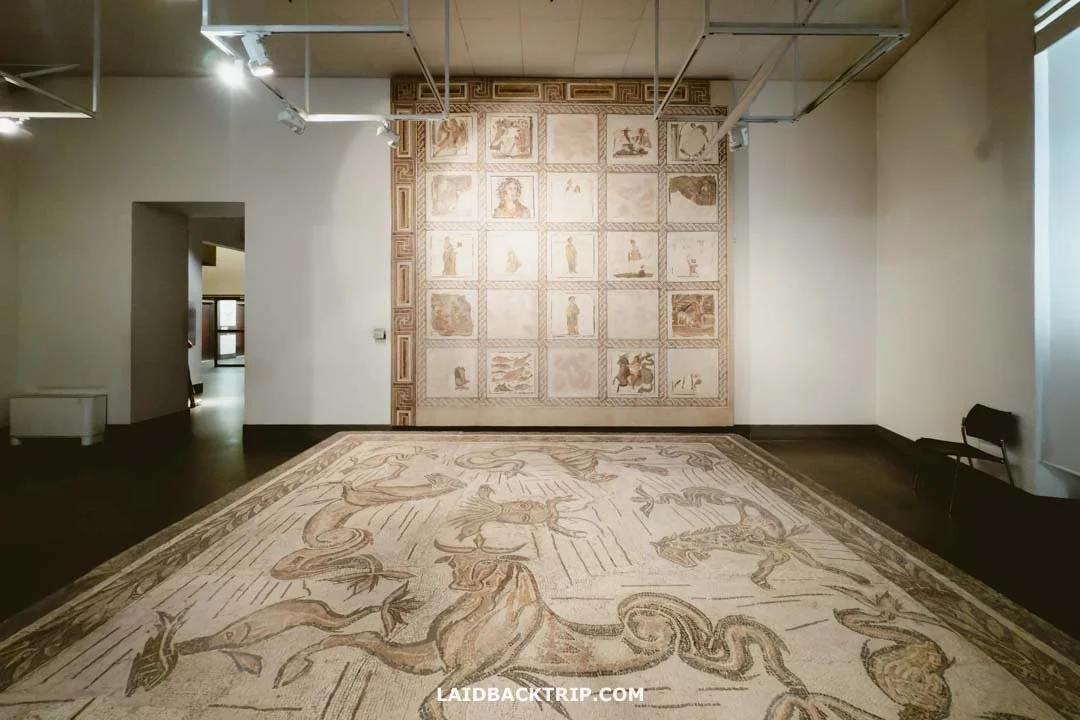
Palazzo Massimo alle Terme housed an impressive collection of ancient mosaics.
At that time of day, the museum was almost empty, which made the visit even better. Inside, we saw an incredible collection of Roman mosaics, beautifully frescoed rooms, and many ancient sculptures. If this sounds interesting to you, you can check out the highlights of Palazzo Massimo alle Terme. The hour we spent there was not nearly enough, and we wished we had arrived earlier, but that was not possible.
Optional: Palazzo Altemps: 90 Minutes
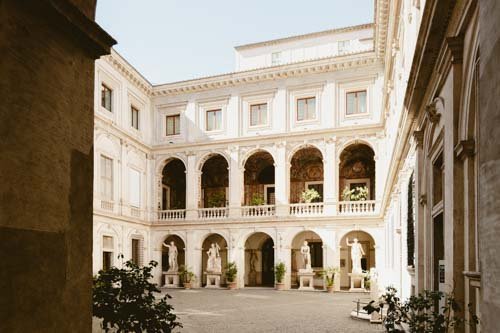
Just because we chose these museums does not mean you need to follow the same plan. Rome is full of fascinating museums. For example, we also liked Palazzo Altemps, a quiet Renaissance palace with interesting sculptures and beautifully decorated rooms. We missed several places simply because we did not have enough time, so you can always swap some of our stops for others that interest you more, such as Palazzo Doria Pamphilj or Palazzo Quirinale.
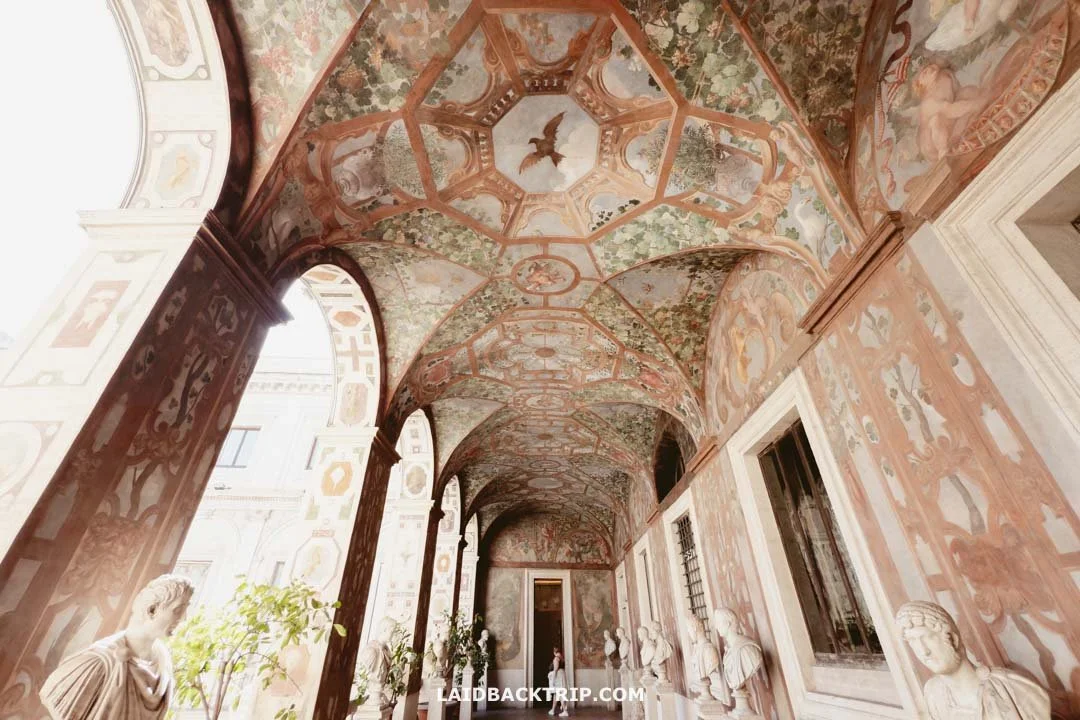
Palazzo Altemps is a beautiful Renaissance palace that we had almost entirely to ourselves.
Day 5: Basilica of San Giovanni in Laterano, Archbasilica of San Giovanni in Laterano, Baths of Caracalla, Mouth of Truth, and Trastevere
Over the previous days, we had already seen quite a few churches while walking around Rome, but today we visited a couple of the most famous ones. Our plan for the day was to walk to the Baths of Caracalla, which worked perfectly since we were staying in the Monti neighborhood, and both churches were on the way.
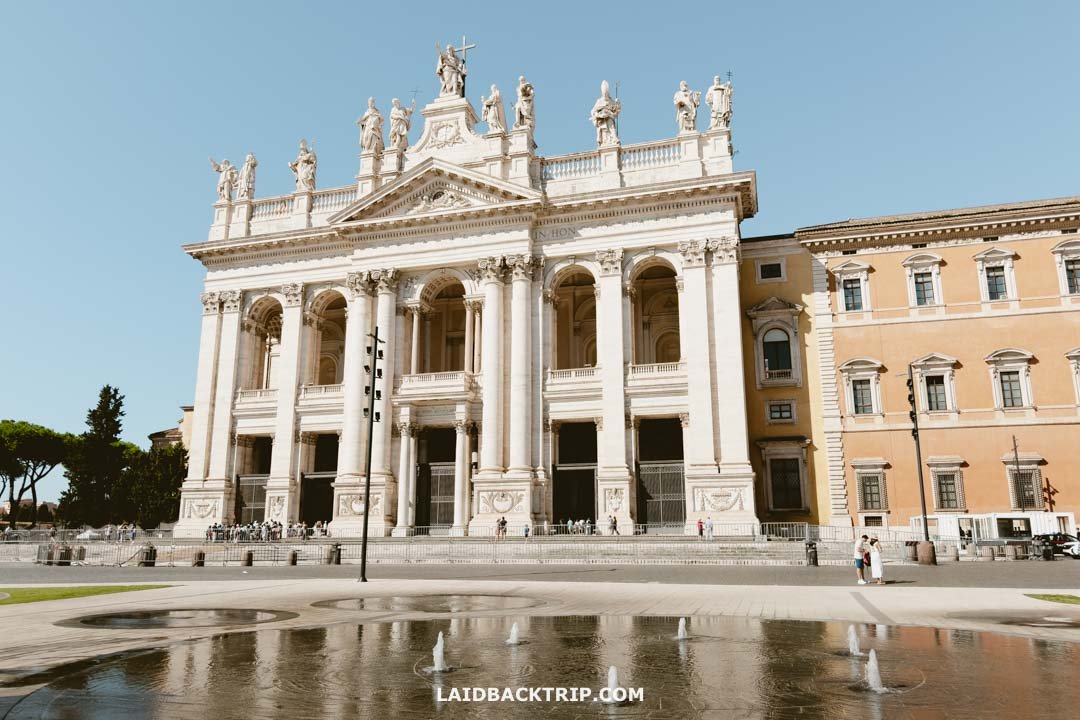
We started this day by exploring the important Papal basilicas.
Papal Basilica of Saint Mary Major: 30 Minutes
First, we went to the Papal Basilica of Saint Mary Major, which was about a 10-minute walk from our hotel. This church is one of the four major papal basilicas and also the largest church in Rome dedicated to the Virgin Mary. It houses the relic of the Holy Crib and the tomb of the legendary Baroque artist Gian Lorenzo Bernini, but the main highlight for us was the stunning ceiling, which is said to be gilded with the first gold brought by Christopher Columbus from the New World. We spent about 30 minutes there.
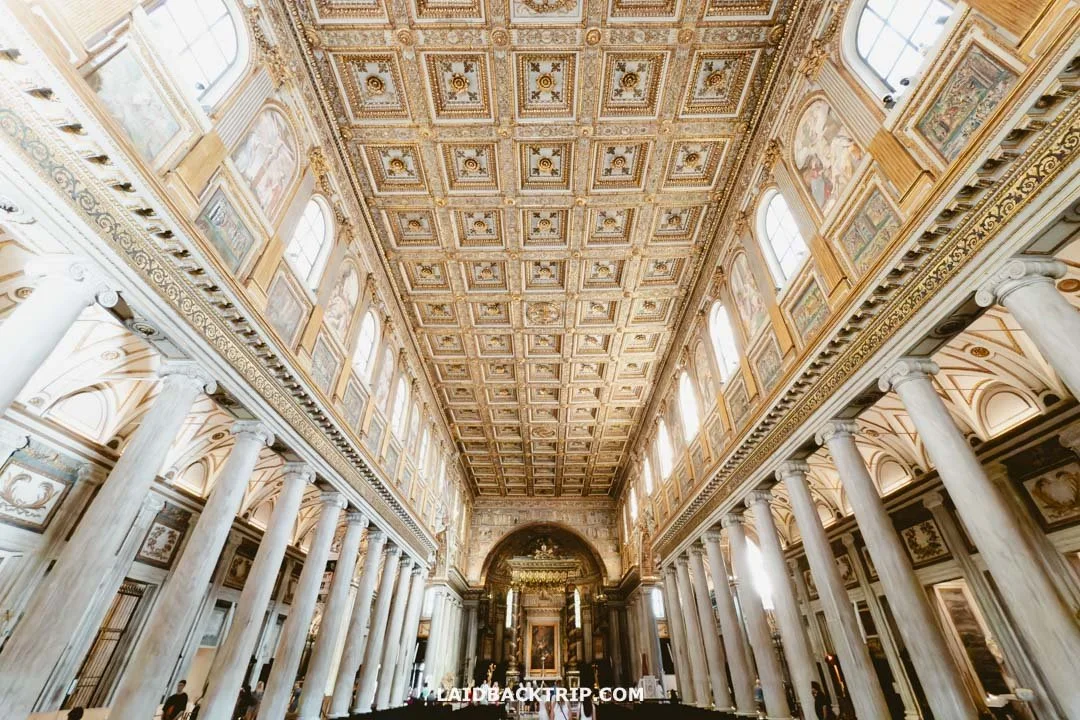
The ceiling at the Papal Basilica of Saint Mary Major was truly incredible.
Archbasilica of San Giovanni in Laterano: 40 Minutes
Next, we continued to the Archbasilica of San Giovanni in Laterano, another of the four papal basilicas. It was about a 15-minute walk, and we took Via Merulana, which is the most direct route, even though the busy road is not very scenic.
The Archbasilica of San Giovanni in Laterano is the oldest public church in the world and the official seat of the Pope, which makes it even more important than St. Peter's Basilica. The church has an impressive Baroque facade and a beautifully decorated interior. We spent around 40 minutes there before walking another 20 minutes to reach the Baths of Caracalla.
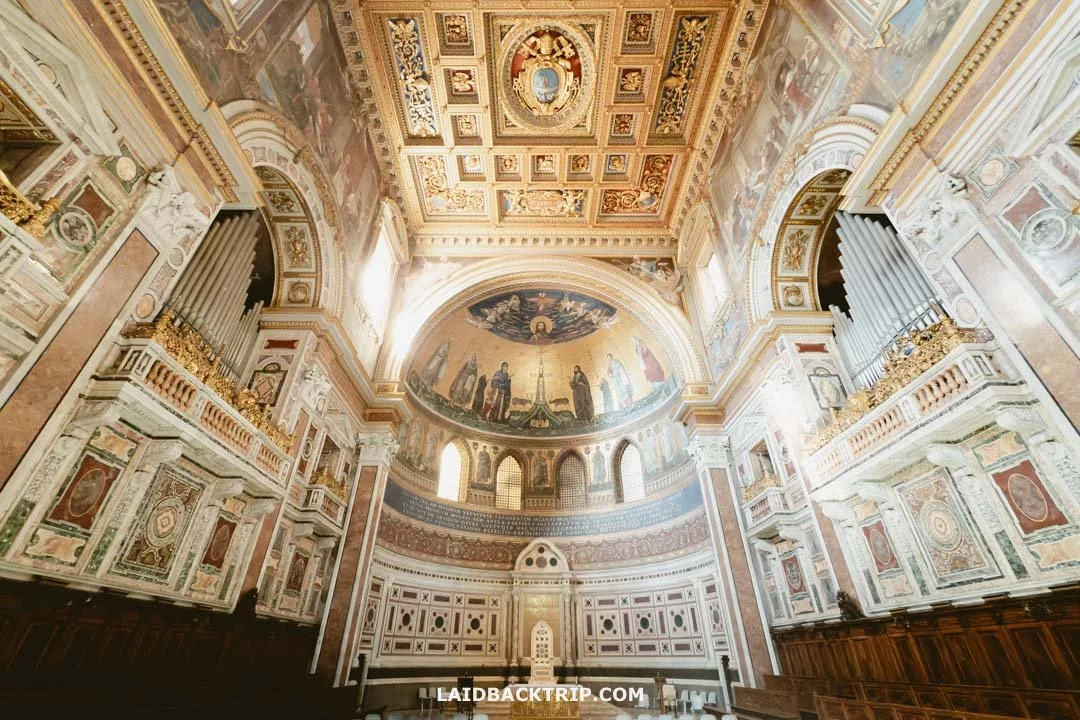
The Archbasilica of San Giovanni in Laterano is the head church for all Catholics.
Optional: Largo di Torre Argentina: 1 Hour
We also considered visiting Largo di Torre Argentina, the place where Julius Caesar was assassinated. It was tempting, but since we passed by this site almost every day on the way to our favorite pasta place and it is clearly visible from the street, we decided that was enough. If you are not interested in the churches, we also really enjoyed Trajan's Market near the Roman Forum.
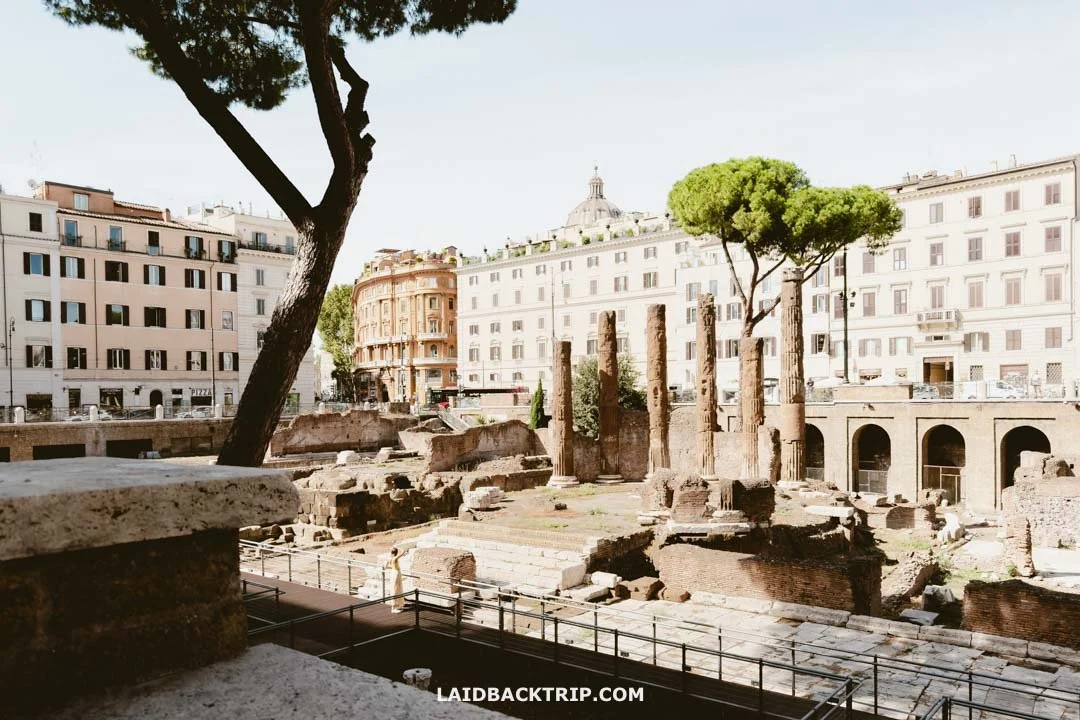
On the Ides of March in 44 BC, Julius Caesar was assassinated during a Senate session at the Curia of Pompey, today's Largo di Torre Argentina.
Optional: Trajan's Market: 2 Hours 30 Minutes
Trajan's Market is sometimes called the world's first shopping mall, although that is not entirely accurate, since it was mainly an administrative center for Trajan's Forum, with some shops as well. So it really comes down to whether you would rather explore more of ancient Rome at Trajan's Market or visit the papal churches.
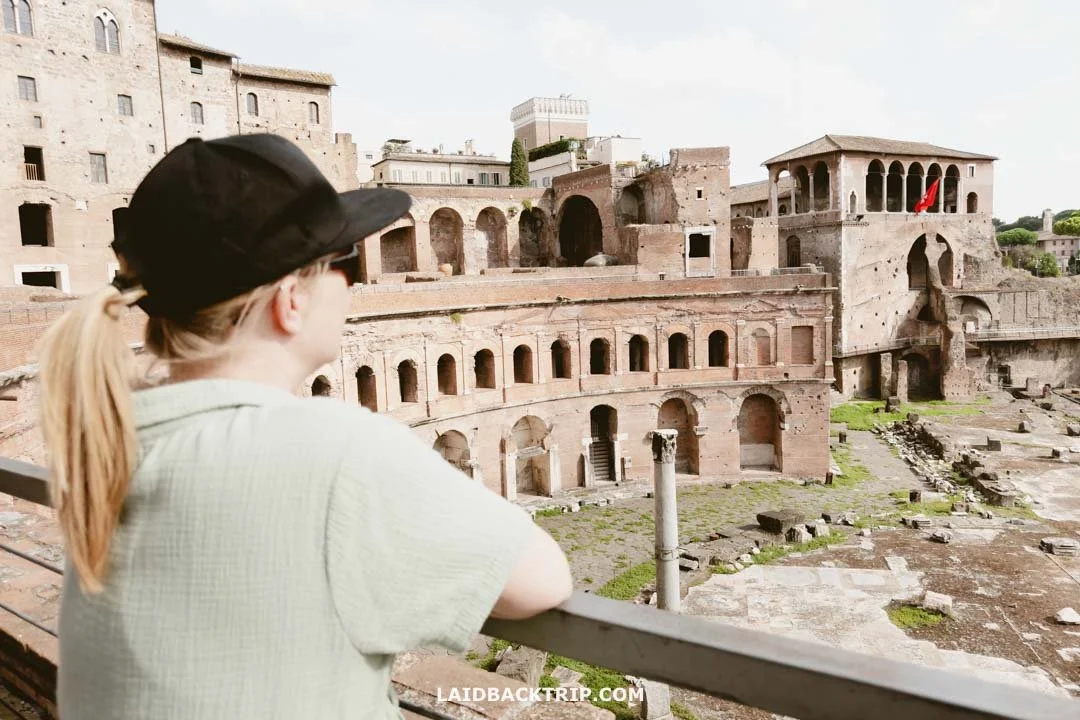
Despite being right next to the Imperial Forum, there were no tourists at Trajan's Market.
Baths of Caracalla: 3 Hours
Anyway, it was time to finally explore the Baths of Caracalla, a 3rd-century CE bath complex that was built by Emperor Septimius Severus and completed by Emperor Caracalla. After buying our tickets and spending a few minutes walking through the complex, we realized that, unlike the Baths of Diocletian we had visited the day before, this was a true Roman ruin with all the atmosphere that comes with it.
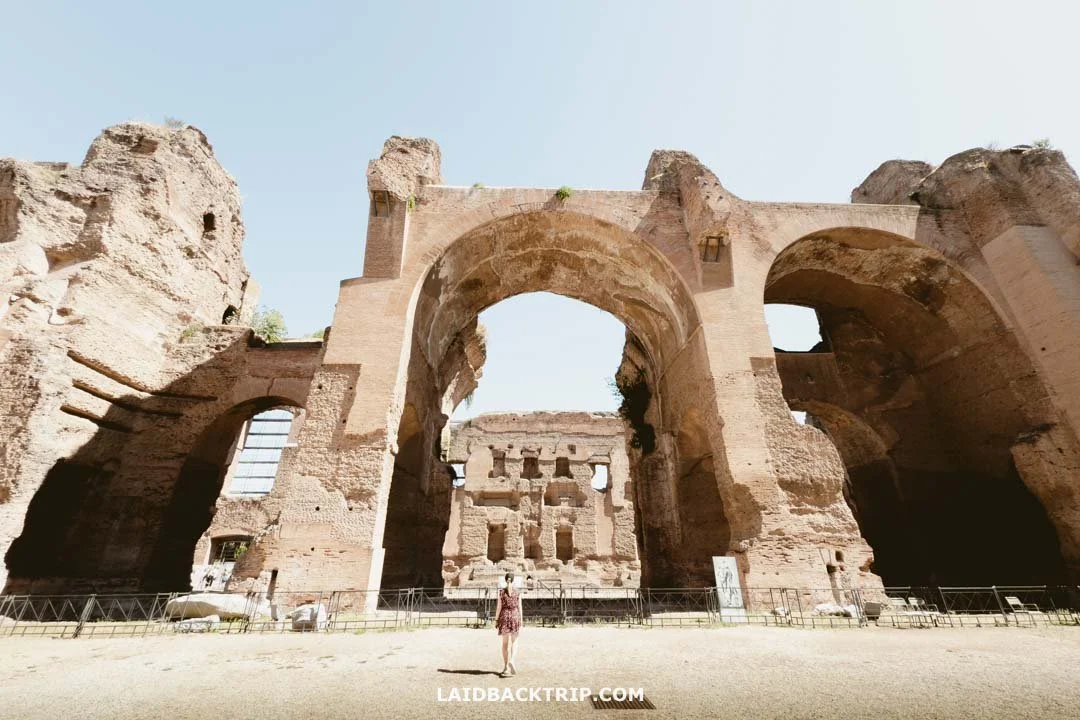
The Baths of Caracalla offered far more than hot pools, as they functioned as a bustling social center.
There were beautiful mosaics, towering brick walls, massive arches, and the foundations of an Olympic-sized outdoor pool. The main reason the baths were built (they could accommodate up to 1,600 people at the same time) was, unsurprisingly, hygiene. In addition to the baths, there was also a small museum with beautiful 2nd-century CE Roman paintings that were discovered in a mansion within the complex. We explored the site on our own and spent nearly three hours there.
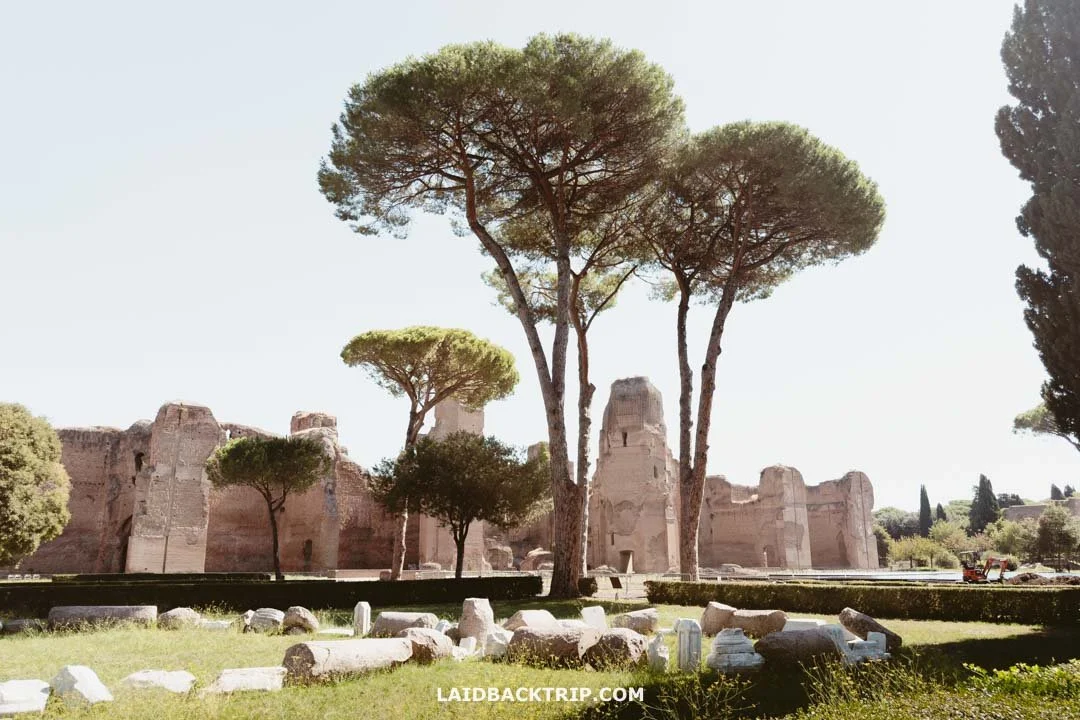
Compared with the busy ancient sites in central Rome, the Baths of Caracalla felt surprisingly peaceful.
Piazza della Bocca della Verita: 30 Minutes
We appeared on Piazza della Bocca della Verita, which is home to a couple of beautiful Roman temples, the Temple of Hercules Victor and Temple of Portunus, as well as the famous Mouth of Truth (Bocca della Verita). This ancient Roman marble mask will, according to a legend, bite off the hand of any liar who places their hand in its mouth. Since there was a huge line, we focused instead on the temples, which were without any crowd.
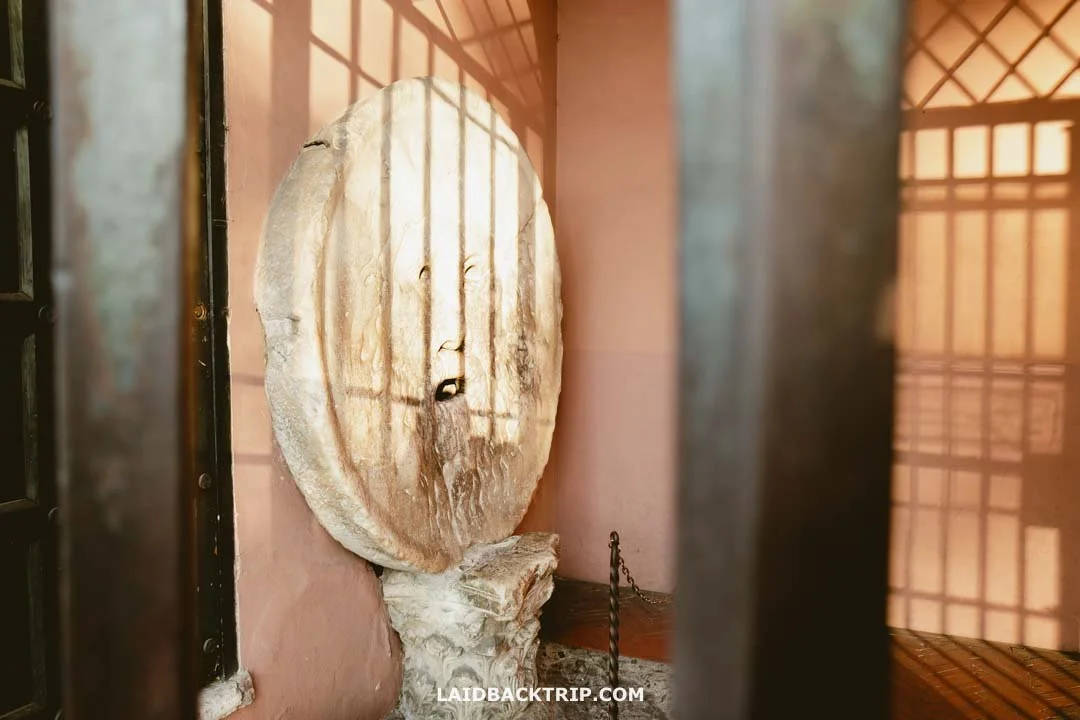
The second time we passed by the Mouth of Truth, it was too late and it was closed.
Although it was a bit of a detour, we walked all the way to Ponte Fabricio and crossed the Tiber to Trastevere on this bridge. It is probably the most beautiful bridge in Rome, and it is also the oldest one that has survived, so the extra walk was well worth it.
Trastevere: 2-4 Hours
We spent the late afternoon and evening in Trastevere, one of the most popular neighborhoods in Rome. It is one of those atmospheric areas, famous for its narrow alleyways and bohemian spirit, that is so popular with tourists. You can find some very well-known trattorias here, including a few that are so popular you have to wait in line to get a seat, but we mostly just enjoyed wandering around.
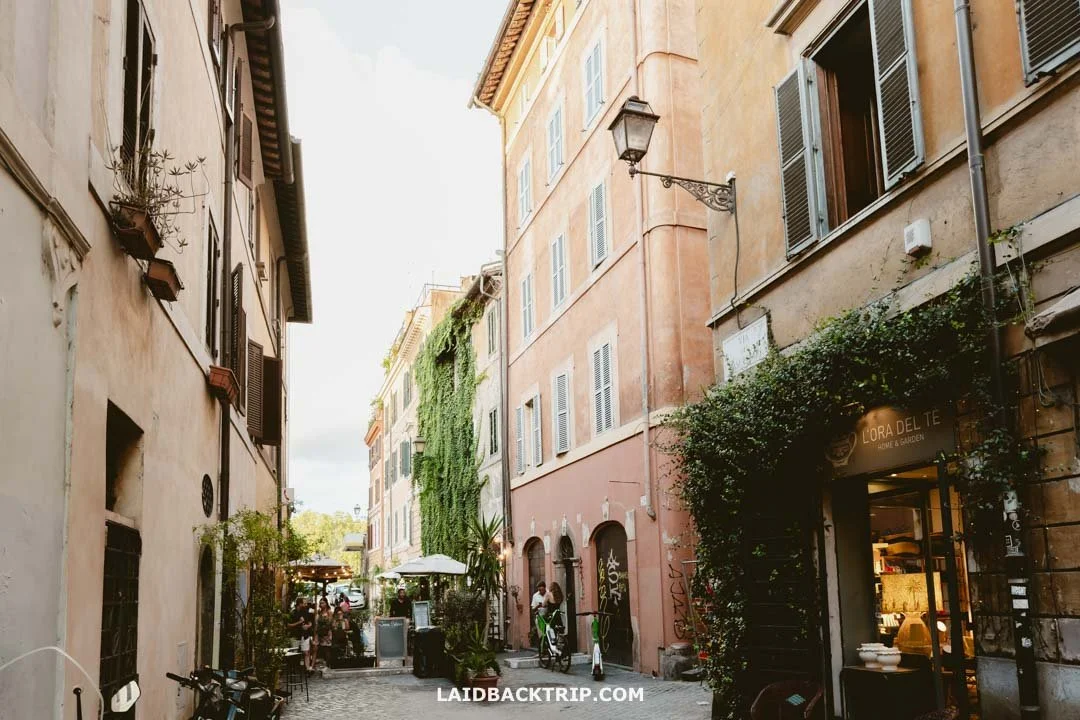
It was really easy to explore Trastevere on foot.
Like many neighborhoods in Rome, the main streets were extremely crowded, but once we turned onto side streets, it was easy to find quiet and picturesque corners without tourists. A good example was our visit to the Basilica of Santa Maria in Trastevere, which was very busy. On the way there, we stopped at the Chiesa di Santa Maria dell'Orto, which was completely quiet. The same was true for the streets, although Via della Lungaretta was definitely the most crowded.
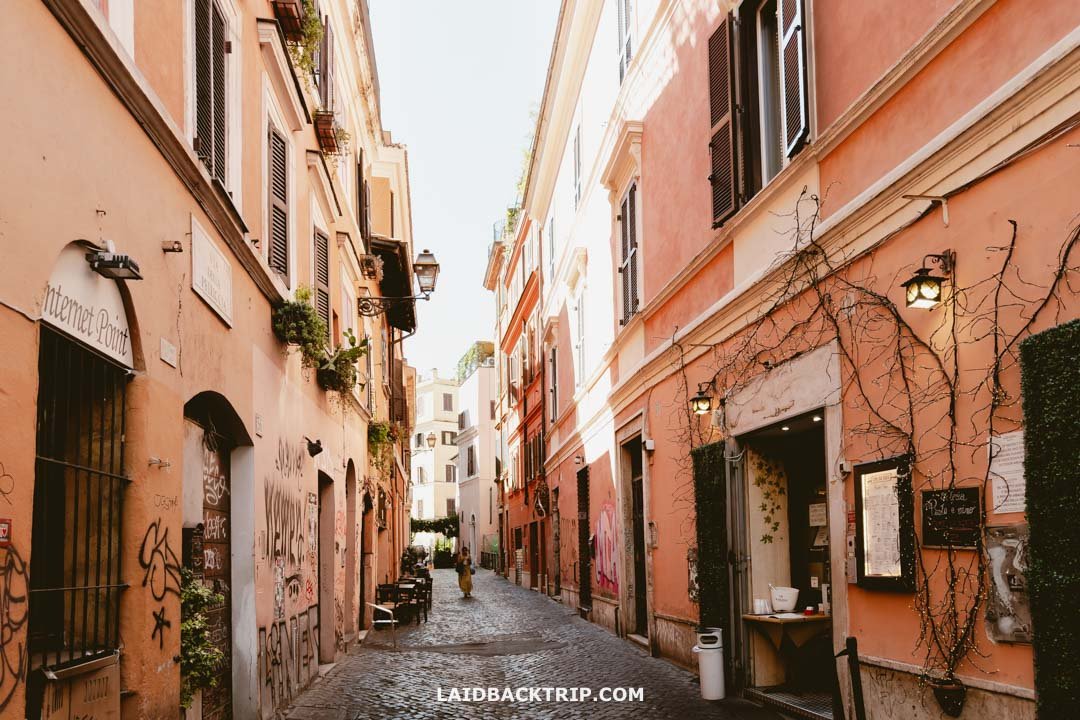
Trastevere was one of those neighborhoods that was such a joy to explore once we left the main tourist path.
Janiculum Hill: 1 Hour
We actually visited Trastevere twice. The first time, we mostly passed through as we made our way to watch the sunset from Janiculum Hill. This is completely optional, but we managed to walk up just in time to see it. While the viewpoint was nice, we honestly enjoyed the walk there even more. Either way, it was a great place to say goodbye to the day.
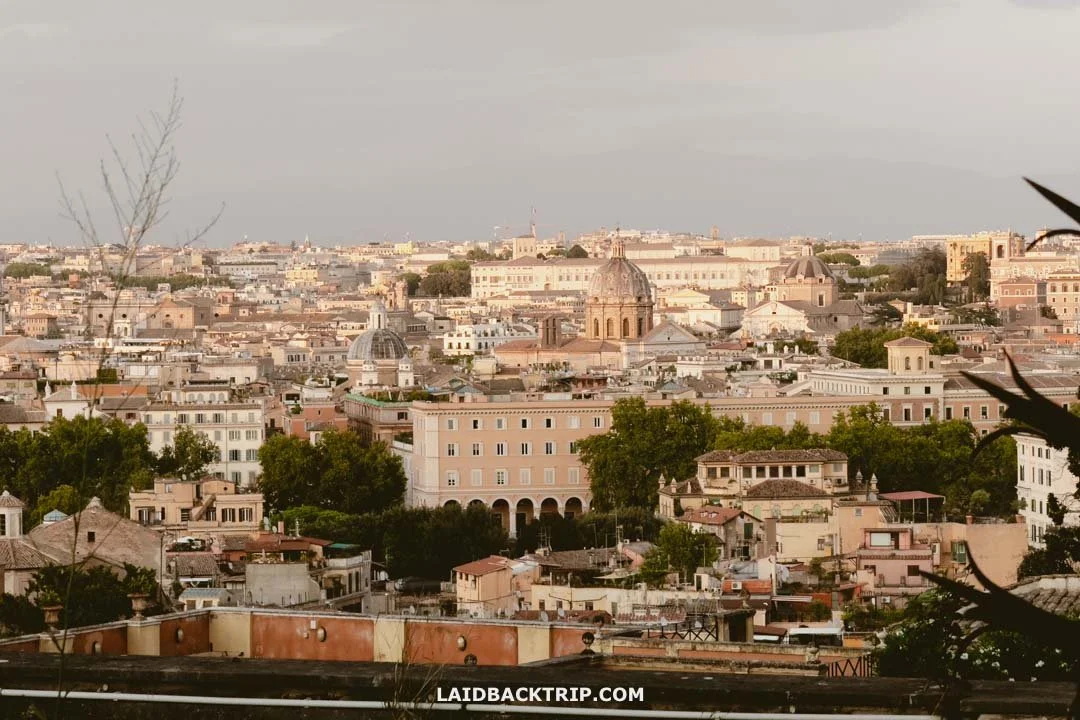
Watching a sunset from Janiculum Hill was a great way to end this busy day.
Day 6: A Day Trip to Tivoli
During the early stages of planning the trip, we had a lot of ideas about doing some trips from Rome. I wanted to go to Ostia Antica to see these ruins and the sea, while Lucie talked about Florence and Pompeii. We thought that with so much time for Rome, we would be able to pull off at least two or three day trips.
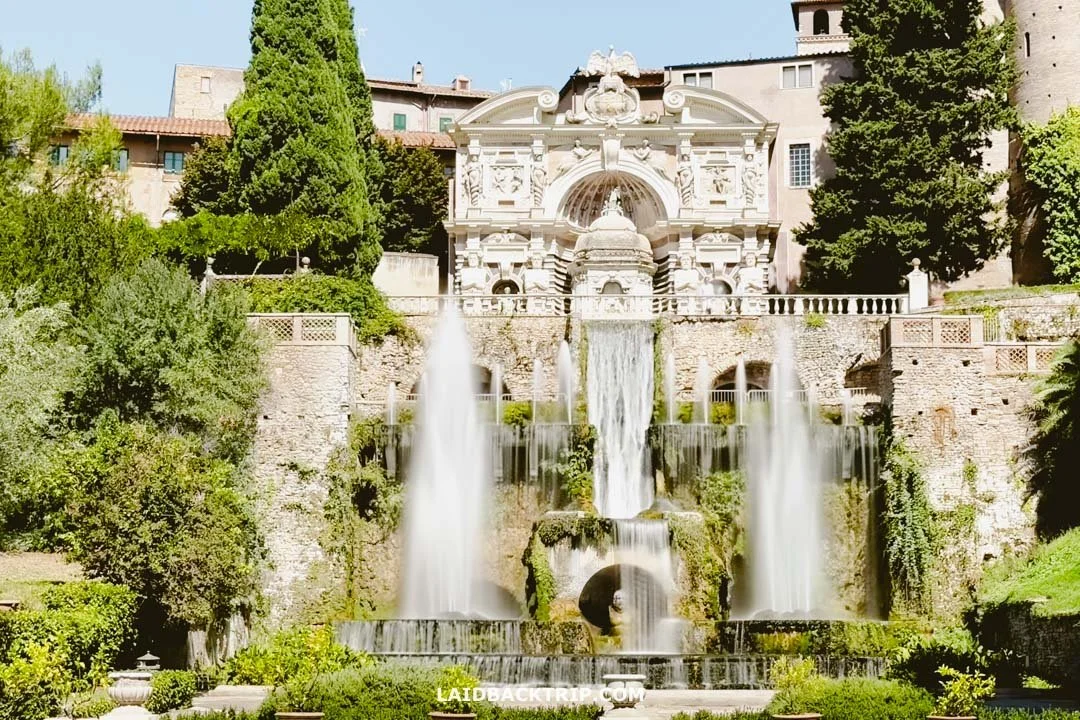
Of all the day trips from Rome, we picked Tivoli as our destination.
Not counting the Via Appia, which we did the next day (and which is still in Rome, albeit on its outskirts), there was so much to discover in Rome that we actually managed to fit only one proper day trip in our whole itinerary. We ultimately decided on the nearby Tivoli, a home to two UNESCO sites and one really picturesque town.
Tivoli was one of those places we had heard so much about, and I have to admit that whenever I hear about destinations like this, I tend to be a little skeptical. Often, they are close to a major city and crowded with tourists simply because they are easy to reach. But after visiting, I had to admit that Tivoli turned out to be one of the best day trips from Rome.
Villa Adriana: 3 Hours
On the morning of the sixth day, we took the metro from Termini to Ponte Mammolo, where we boarded a Cotral bus that took us to Tivoli, or in our case to one of its suburbs where Villa Adriana, also known as Hadrian's Villa, is located (it is about four kilometers from the town center). I really enjoyed the whole trip, and while the other places were great too, there was only one Villa Adriana, which quickly became my favorite spot in Tivoli.
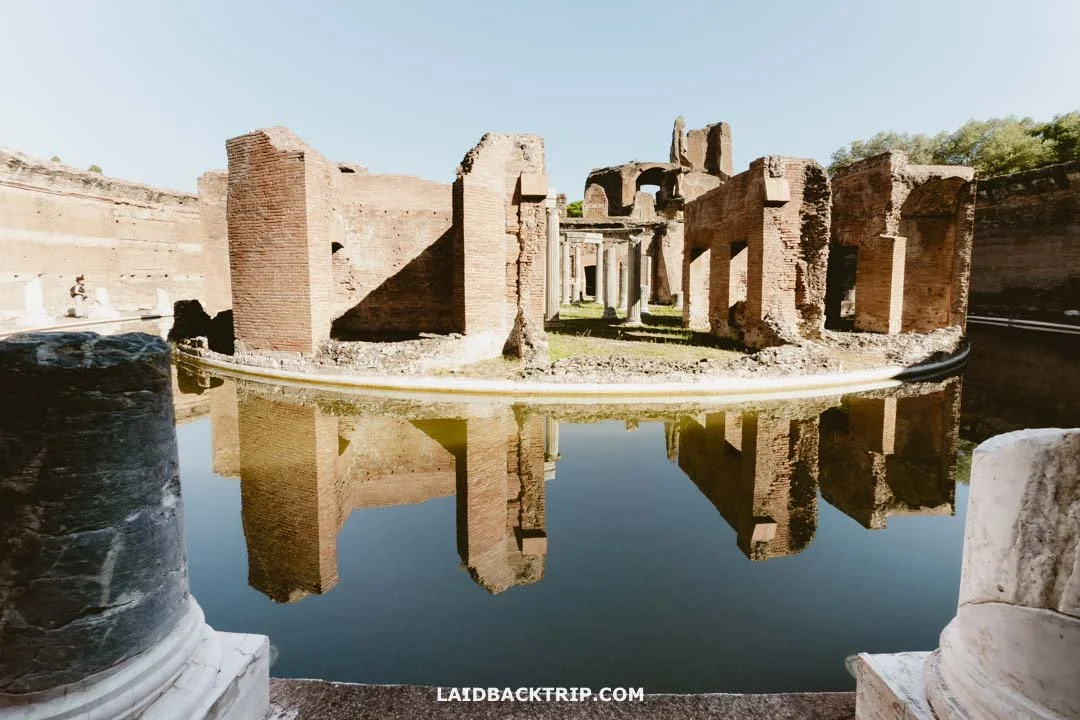
Emperor Hadrian used the Maritime Theater as a private retreat.
Villa Adriana, the first of the two UNESCO sites, was built by Emperor Hadrian in the second century CE. Because he was one of the greatest emperors of the Roman Empire, his summer residence was not just a large country estate, but pretty much a self-contained town with all the facilities an emperor would need.
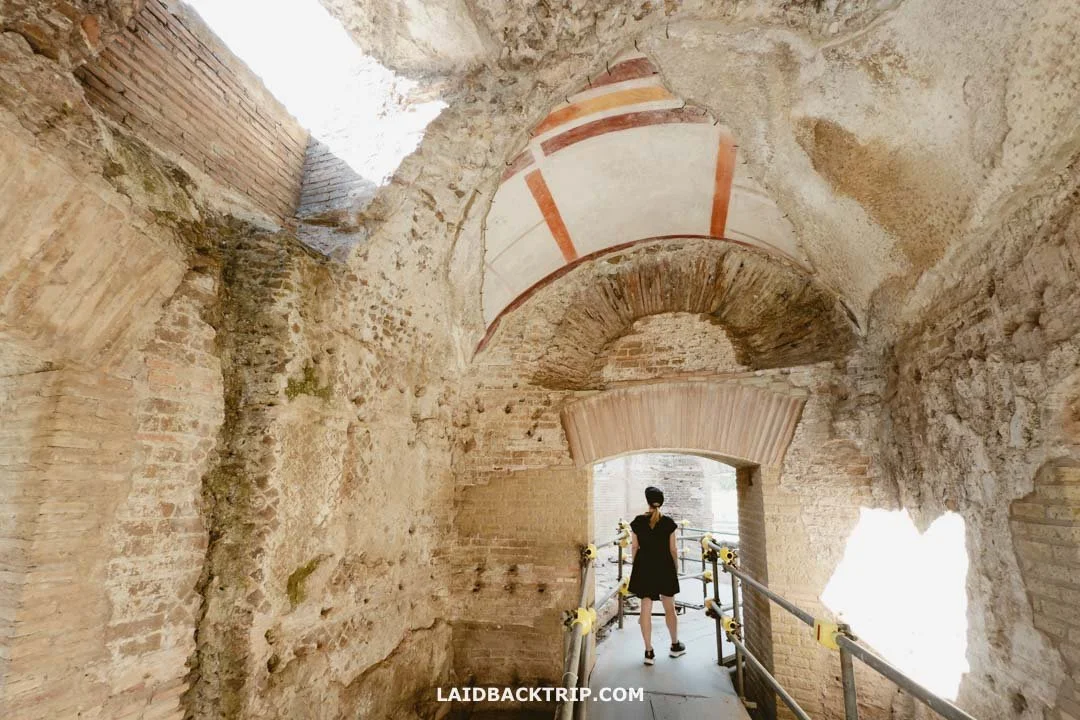
He also had his own private baths, which still contain some ancient frescoes.
Some of our favorite structures at Villa Adriana were the Maritime Theater, which was the emperor's private retreat, the Great Baths used by the staff, the Winter Palace, and the Pecile, a huge garden designed for walks. There was much more to see, and we made a detailed guide to Villa Adriana that covers all the highlights, so be sure to read it before you go.
The complex was enormous, and we spent most of the morning, about three hours, exploring the ruins. We would have liked to stay longer, but we still had more to see in Tivoli, so we had to move on. Lucie's favorite place in Tivoli was our next stop, Villa d'Este.
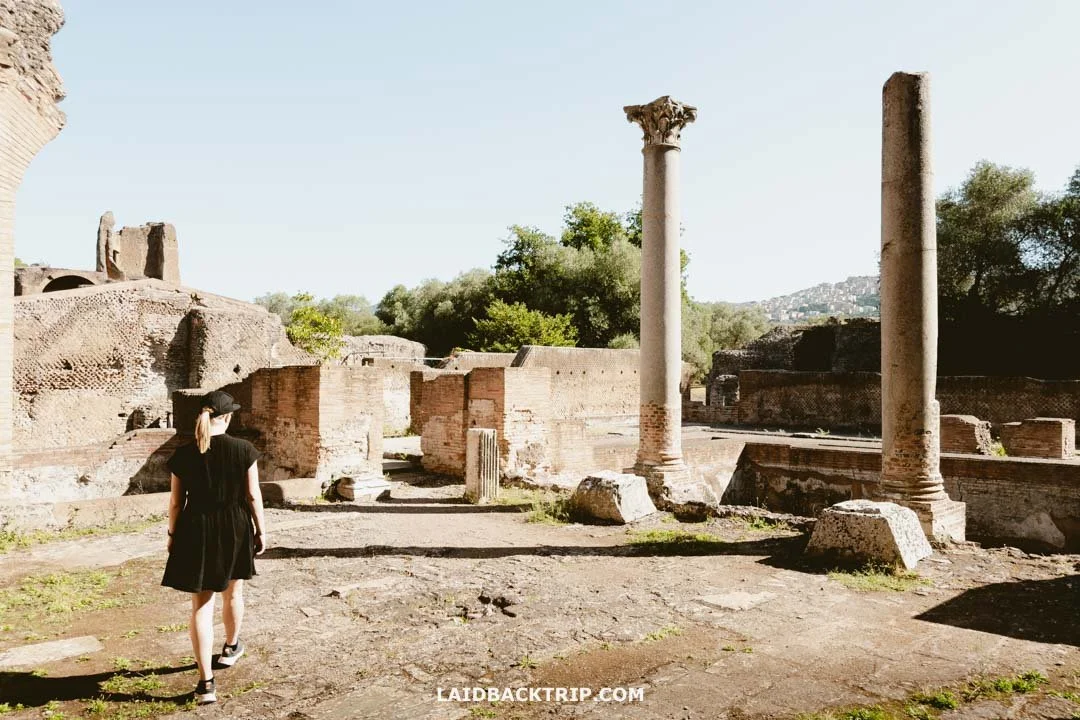
It was easy to explore Villa Adriana without a guide.
Villa d'Este: 2 hours
Since we did not want to walk for an hour along an exposed road, we took a bus back from Villa Adriana to Tivoli. After getting off at Piazza Giuseppe Garibaldi and grabbing a quick lunch at a nearby pizza place, it was only a short walk to Villa d'Este. In the morning, we explored the ancient side of Tivoli, and now it was time to step into the Renaissance.
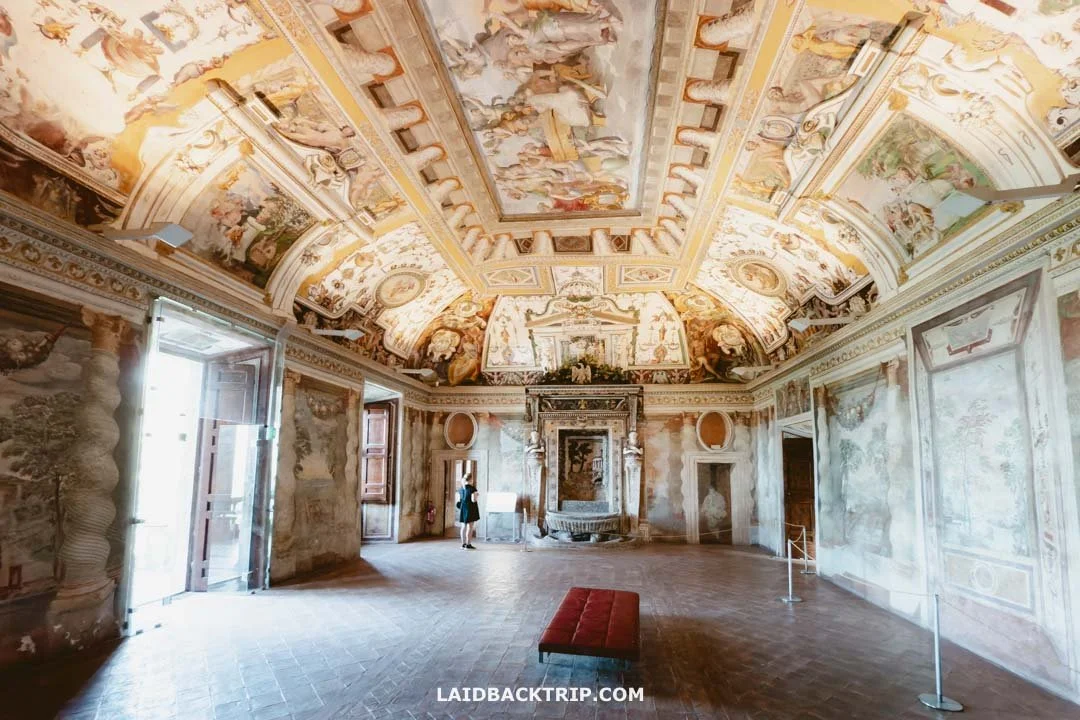
Cardinal Ippolito II d'Este lived in the villa for many years.
Villa d'Este, the second UNESCO site, was built in the 16th century by Cardinal Ippolito II d'Este, and it could not look more different from Villa Adriana. One reason is that Villa d'Este survived the centuries mostly intact, while the Roman site nearby was used by the cardinal as a source of building material.
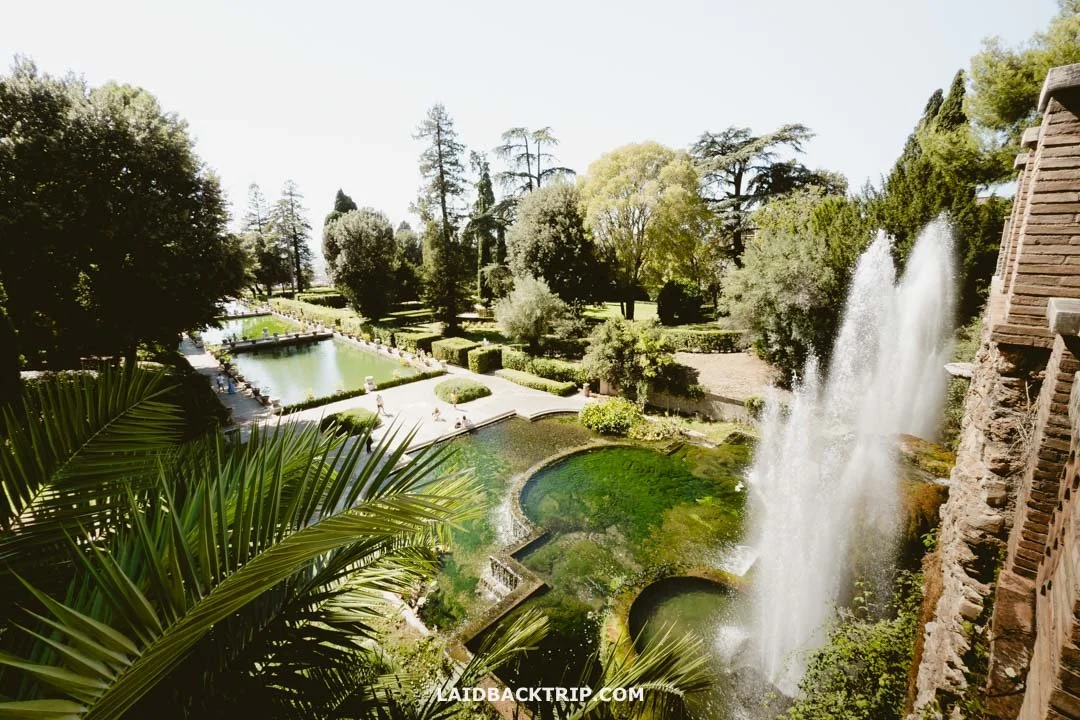
The highlight of Villa d'Este was the garden full of waterworks.
Even though there was no furniture, the rooms inside the palace were still covered with beautiful frescoes and paintings in the Renaissance Mannerist style. The stunning gardens were also still filled with working fountains and water features, supplied by a 600-meter underground channel that relies only on gravity. Once again, we made a guide to Villa d'Este, so make sure to check it out.
Tivoli Town
We spent about two hours there before heading into the town of Tivoli. Between Villa d'Este and Villa Gregoriana, we wandered through the medieval streets and alleys. The historic center of Tivoli was full of narrow streets and charming houses, and what we liked most was how easy it was to explore on foot.
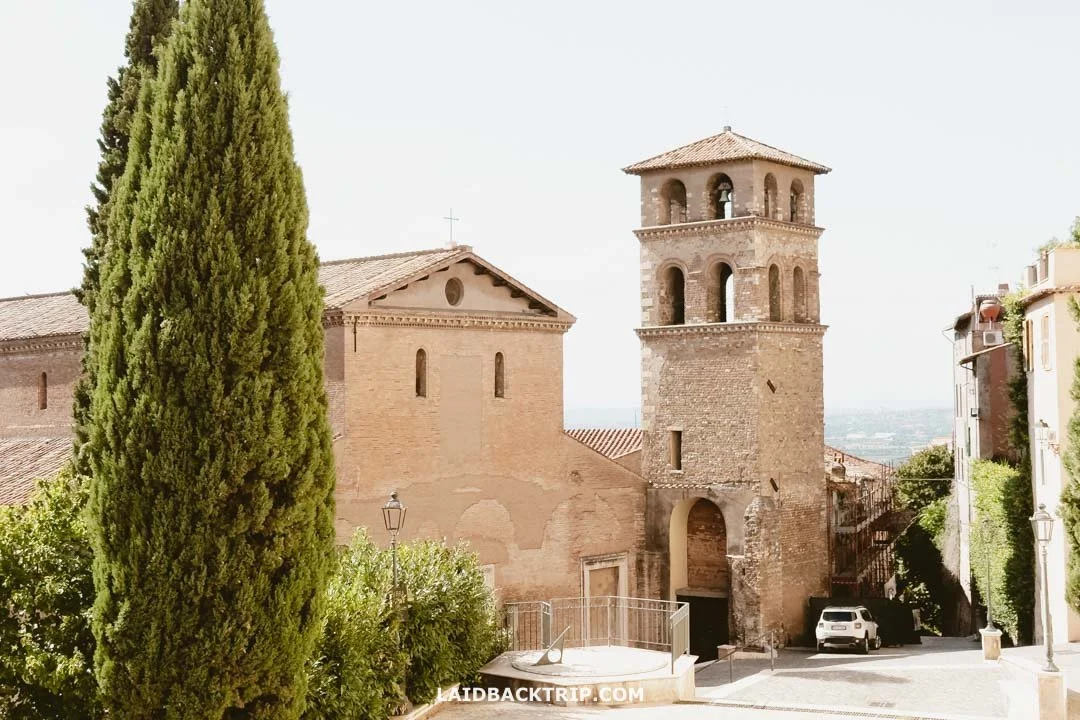
The town of Tivoli looked straight out of the postcards.
We visited on a quiet weekday in September, and while the main areas had some visitors, the rest of the town felt almost empty. I could not remember the last time we visited such a popular tourist town and had such a relaxed experience.
Villa Gregoriana: 1 Hour
Our final stop was Villa Gregoriana, which, despite its name, is really a beautiful park with a steep gorge, waterfalls, and caves. It takes about an hour to walk through, but it was an incredible walk. At first, I thought it would just be an ordinary park and that we would not have enough time for it. The second concern was the 10 euro entrance fee, which felt high for such a short visit after paying for the other two villas. In the end, though, we decided it would be a shame to skip it.
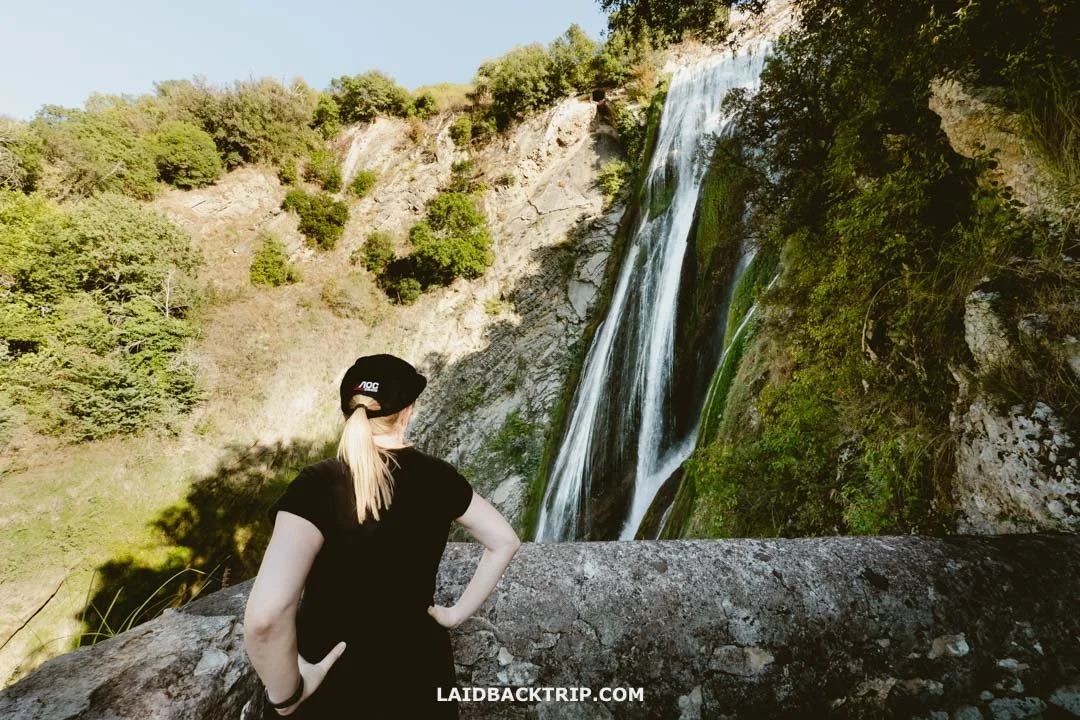
Lucie admiring the 120-meter cascade, the highest in Tivoli.
Along the trail, we saw the 120-meter Grand Cascade, which was created by redirecting the Aniene River to prevent flooding, and the Cave of the Sirens at the bottom of the Valley of Hell, carved by the river's original flow. There was much more to see, so be sure to check out our full guide to Villa Gregoriana.
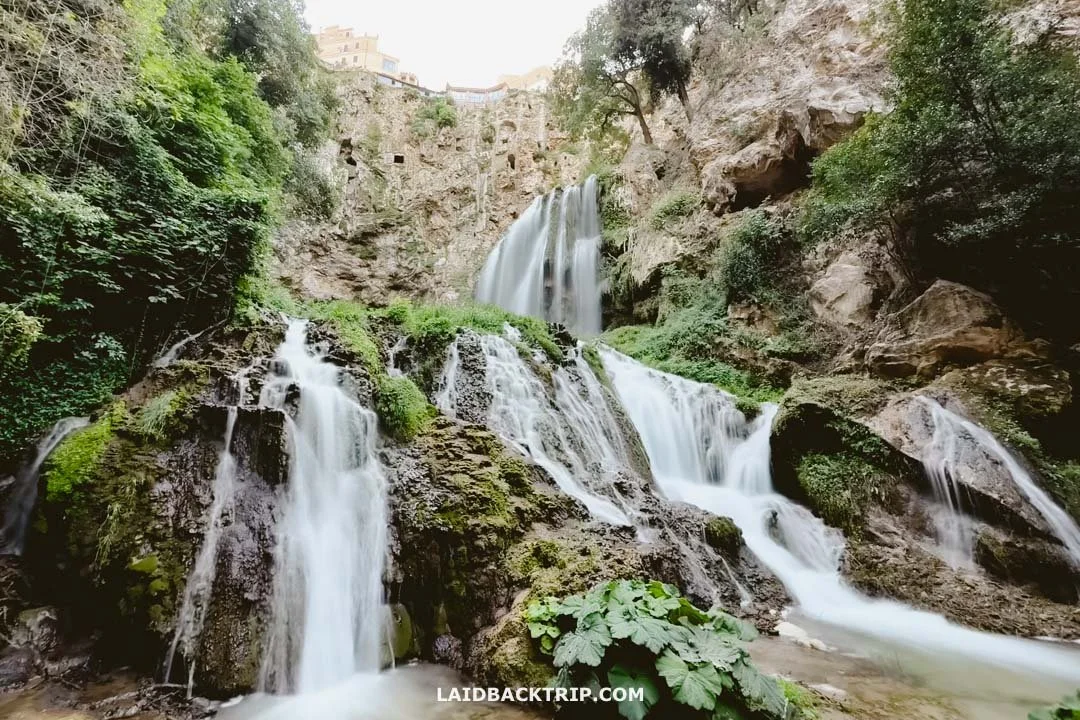
The hike to the bottom of this gorge under Tivoli town was pretty steep, but short.
In the evening, we walked back to Piazza Giuseppe Garibaldi and took the bus to Ponte Mammolo, where we returned to Rome. There was also the option of taking a scenic train ride, but the bus was more convenient for us that day.
Day 7: Via Appia Antica and Park of the Aqueducts
This was our last full day in Rome. Even though we were tempted to visit some famous places outside the city, we decided instead to take one final step back into Roman times and explore the Via Appia.
We had no idea what to expect, and I think I can speak for both of us when I say that we were not even sure whether we should have gone to Florence instead. In the end, those doubts were pointless because the Via Appia turned out to be a perfect place to say goodbye to Rome.
One of the best things about the Via Appia was that, despite being the most famous road of ancient Rome, it was much quieter than we expected. We were not alone, of course, but the number of visitors was fairly small. And I am not even talking about the historical sites along the road that required tickets, which truly felt like going off the beaten path.
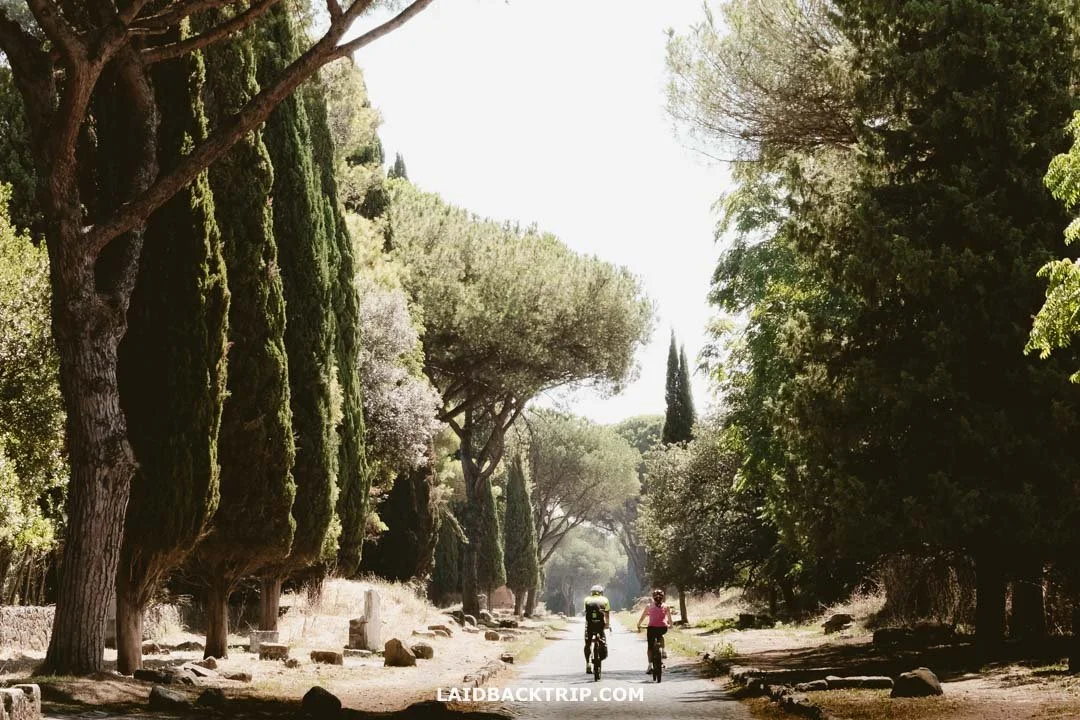
Via Appia served as our farewell to ancient Rome.
Park of the Aqueducts: 1 Hour
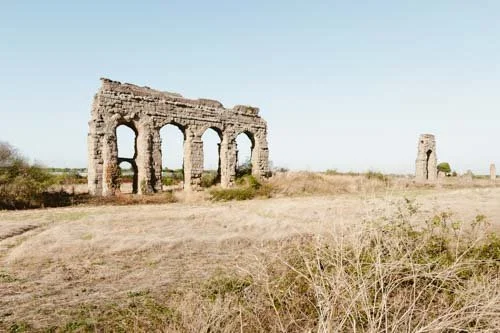
Although our main goal was to walk the Via Appia, we started the day in the nearby Park of the Aqueducts. In the morning, we took the metro from Termini and got off at Giulio Agricola station on Line A, then walked from there in under ten minutes. We wanted to see this public park because it contains remains of the Aqua Claudia from Roman times and the well-preserved Aqua Felice from the Renaissance, which still carries water today. We did a four-kilometer loop around the park to see its highlights, and then walked to Villa dei Quintili, where our journey along the Via Appia began.
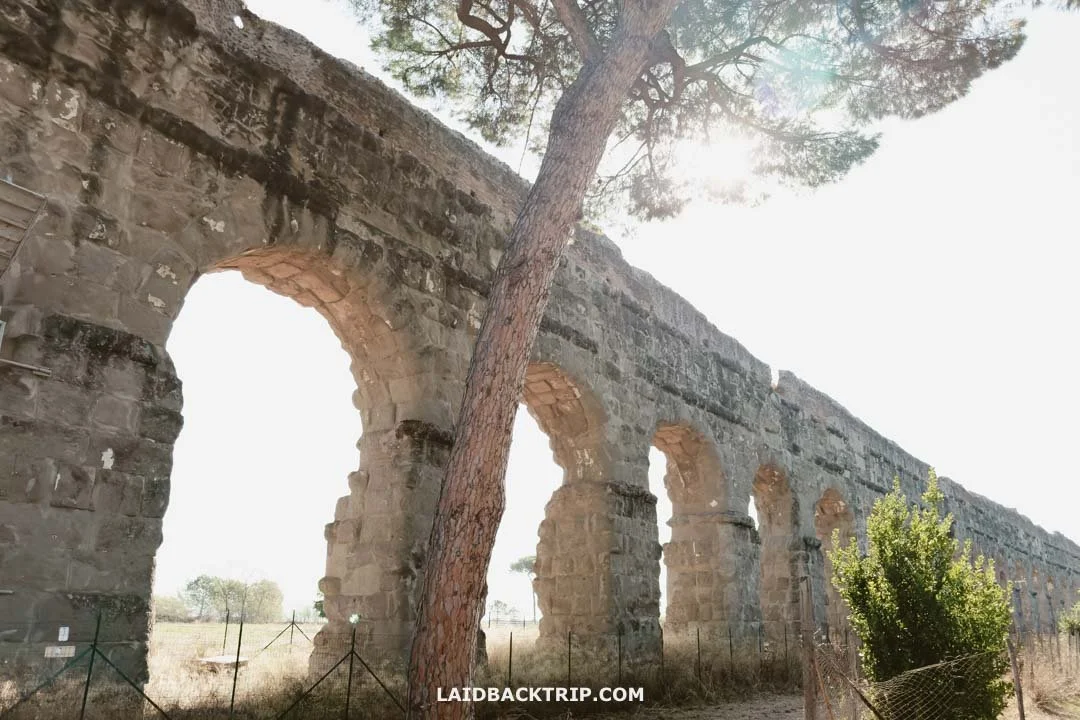
First, we visited the Park of the Aqueducts to see how Romans supplied the city with drinking water.
We spent most of the day exploring the Via Appia, and there was a lot to see. We covered the area on foot, which worked very well, although it looked like many visitors preferred to rent bikes. Cycling also seemed like a good option, especially for people who choose to take a guided tour.
Villa dei Quintili: 1 Hour
Our first stop was Villa dei Quintili, where we bought a 12 euro ticket. It turned out to be a great deal because it also included several other sites, three of which we visited later. This was the largest and most luxurious estate not only along the Via Appia but also in the Roman suburbs. It dates back to the second century CE and included thermal baths, a stadium, and a nymphaeum.
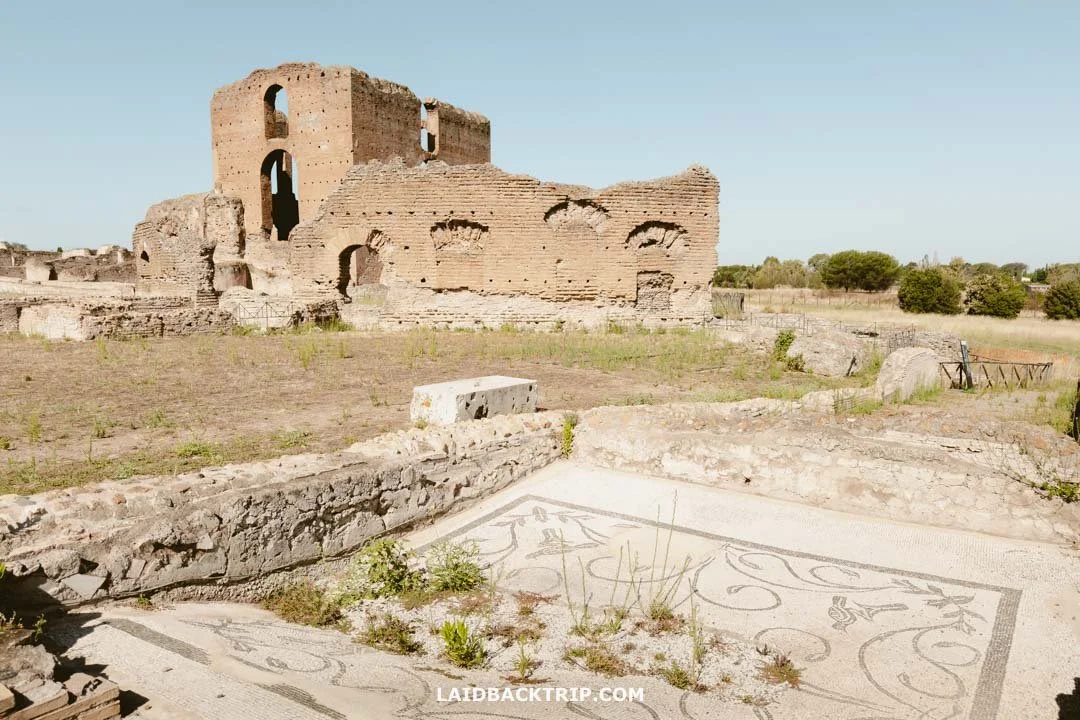
Villa dei Quintili was the largest Roman estate outside Rome.
Santa Maria Nova: 45 Minutes
Next, we visited nearby Santa Maria Nova, a quiet historical house set in a peaceful countryside landscape. It was originally built as a bath complex, later converted into an imperial guest house, and eventually became a medieval fortified farmhouse. Today, it holds a small museum that shows the long agricultural and residential history of the Appian Way, along with a short film about the road.
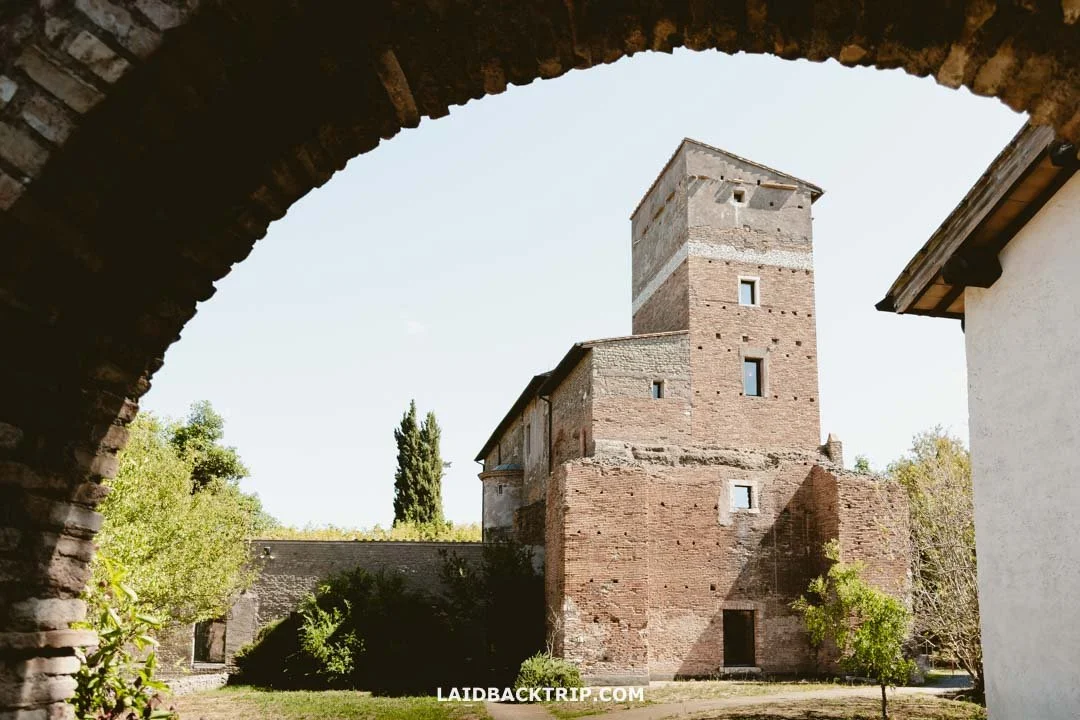
Santa Maria Nova also dates back to Roman times.
Via Appia: 2 Hours
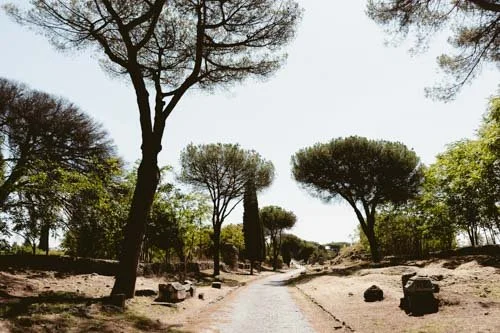
After that, we finally stepped onto the ancient road known as the Queen of Roads. At its height, it stretched for about 600 kilometers and connected Rome with the port city of Brindisi. It was built in the fourth century BCE as a military road and later used for trade, communication, and civilian travel. Walking along the large basalt stones lined with cypress and pine trees, ancient tombs, and monuments was a very special experience. Today, the best preserved section of the Via Appia stretches about 15 kilometers from Rome, although we walked only about one-fifth of that because that is where most of the sites are located.
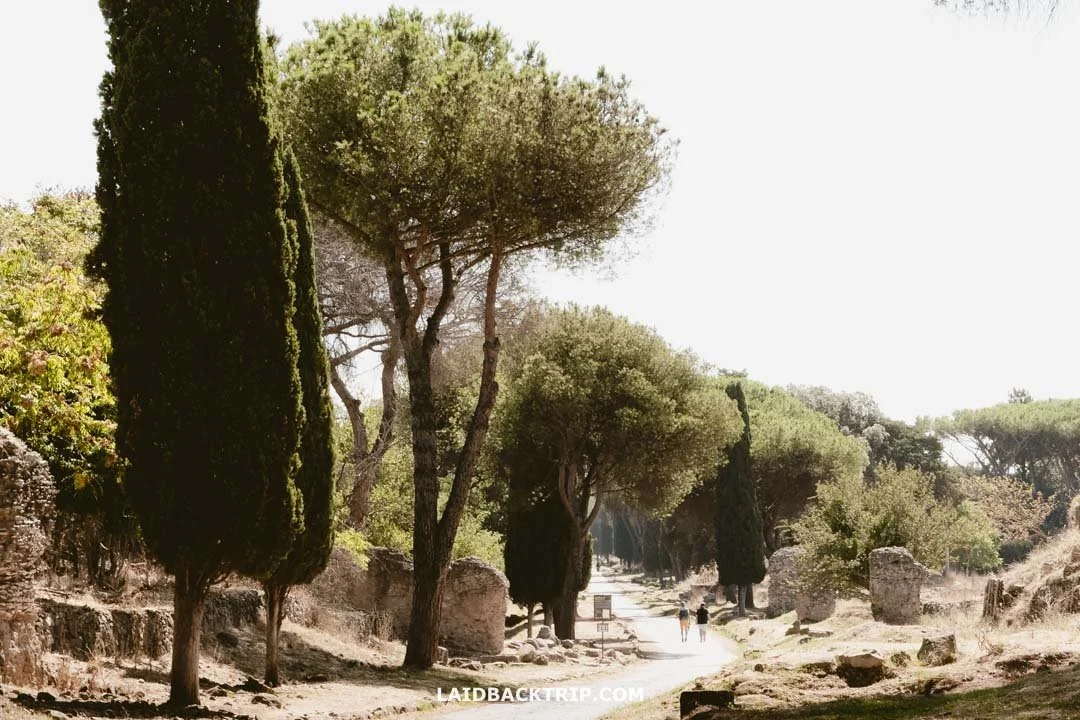
The Via Appia was the most important road of ancient Rome.
Capo di Bove: 30 Minutes
We then continued to Capo di Bove, another bath complex along the Via Appia. Not much remains of it, so we focused mainly on the beautiful villa in its quiet garden. Inside, we watched a short film about Antonio Cederna, the modern-day protector of the Appian Way. The country house area required a ticket, which we already had, while the ruins were free to see.
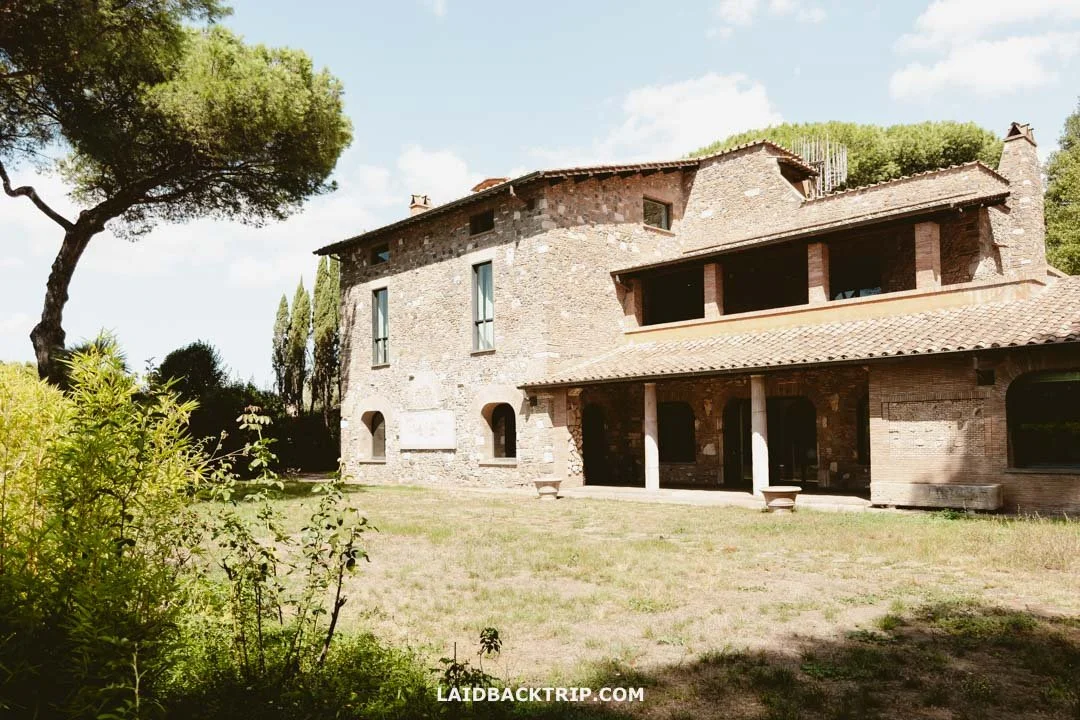
The outer walls at the villa at Capo di Bove are decorated with ancient fragments found on the Via Appia.
Mausoleum of Cecilia Metella: 30 Minutes
Just a short walk from there was the Mausoleum of Cecilia Metella, which was also included in our ticket. This ancient Roman tomb was later expanded and turned into a fortified residence.
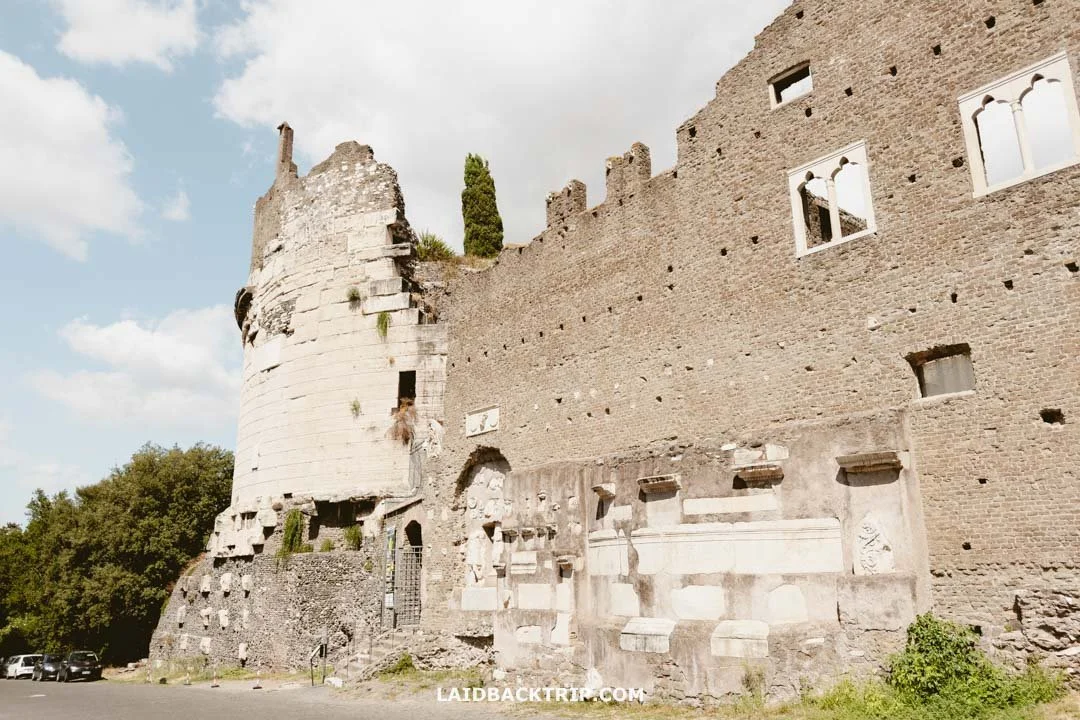
The Mausoleum of Cecilia Metella is an ancient Roman tomb.
Basilica of San Sebastiano: 20 Minutes
Our last stop was the Basilica of San Sebastiano, famous for its catacombs. We visited only the church because the catacombs required a separate ticket, and all the available time slots were already booked.
And that was our final day in Rome, not counting the flight home the next morning. I hope you enjoyed our itinerary, which you are free to follow or adapt however you like. As we mentioned at the beginning, some changes will always be necessary, since much depends on the dates and time slots you manage to book. If you have any questions, let us know in the comments section below!
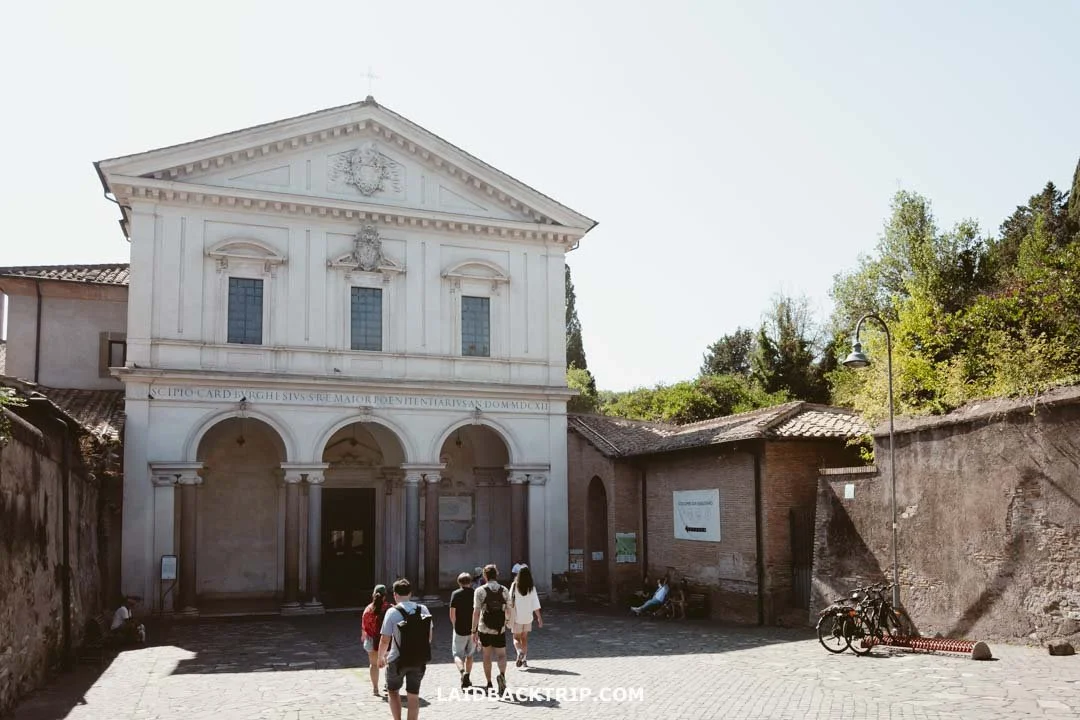
Our journey across the Via Appia ended at the Basilica of San Sebastiano.

Visit St. Peter's Basilica to admire its magnificent Renaissance architecture, stunning dome, intricate mosaics, and Michelangelo's famous Pietà.