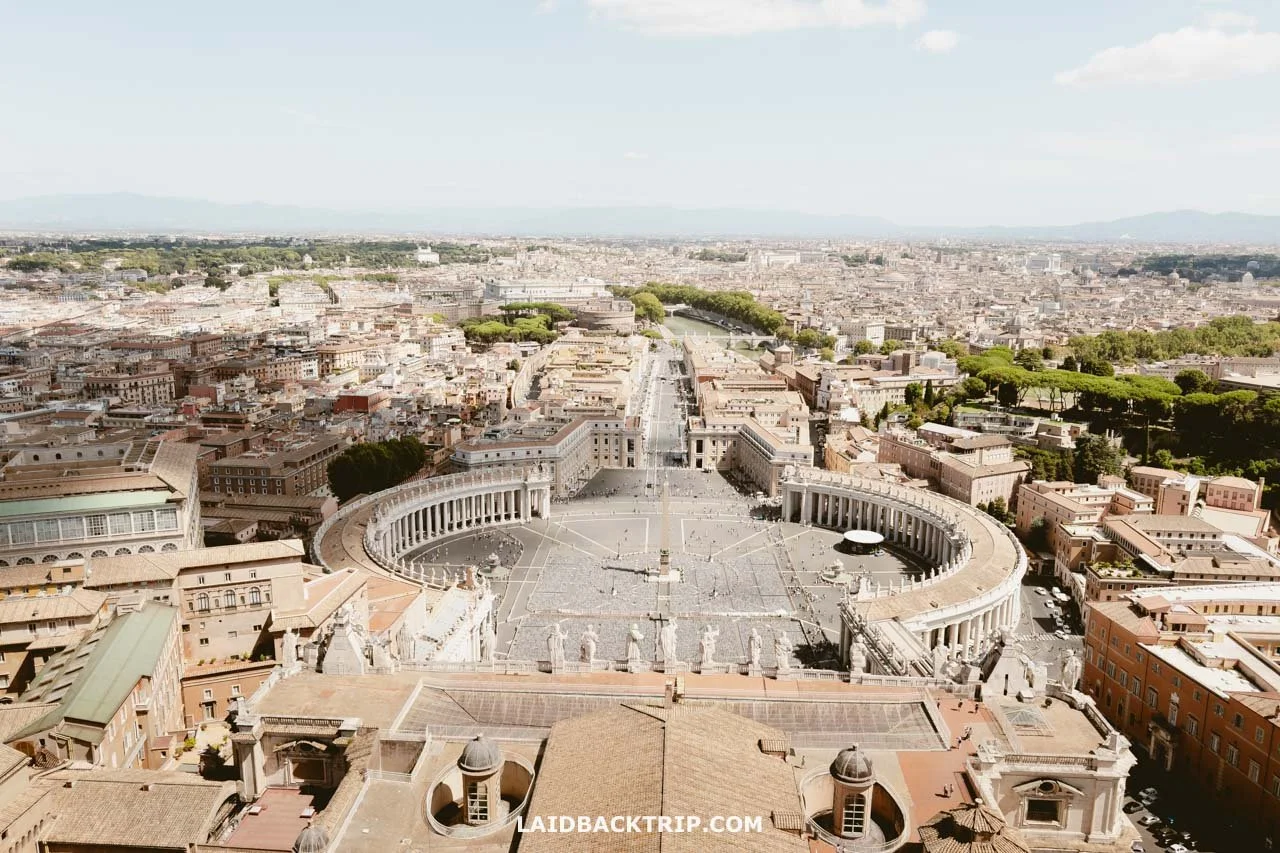
Visit with us the Vatican City and explore St. Peter’s Basilica, St. Peter’s Square and the Vatican Museums with the Sistine Chapel in one day.
Vatican City, the spiritual heart of Catholicism, is one of Rome's must-sees, and since we were staying in the Eternal City for nine days, it felt almost certain that we would end up there at some point. After visiting the 'mandatory' Colosseum and the Roman Forum, we decided there was no time to waste and headed to this tiny state, also known as the Holy See, for a first visit.
Since Vatican City is the smallest country in the world, it was surprisingly easy to plan our day there because there were really only three main things to do: St. Peter's Basilica, St. Peter's Square, and the Vatican Museums. There was never any doubt about what we wanted to see, but the real challenge was figuring out the best order to visit everything and how much time to spend at each place. The trickiest part of the day was that both the Vatican Museums and St. Peter's Basilica were extremely popular, required timed entries, and left us with limited flexibility overall.
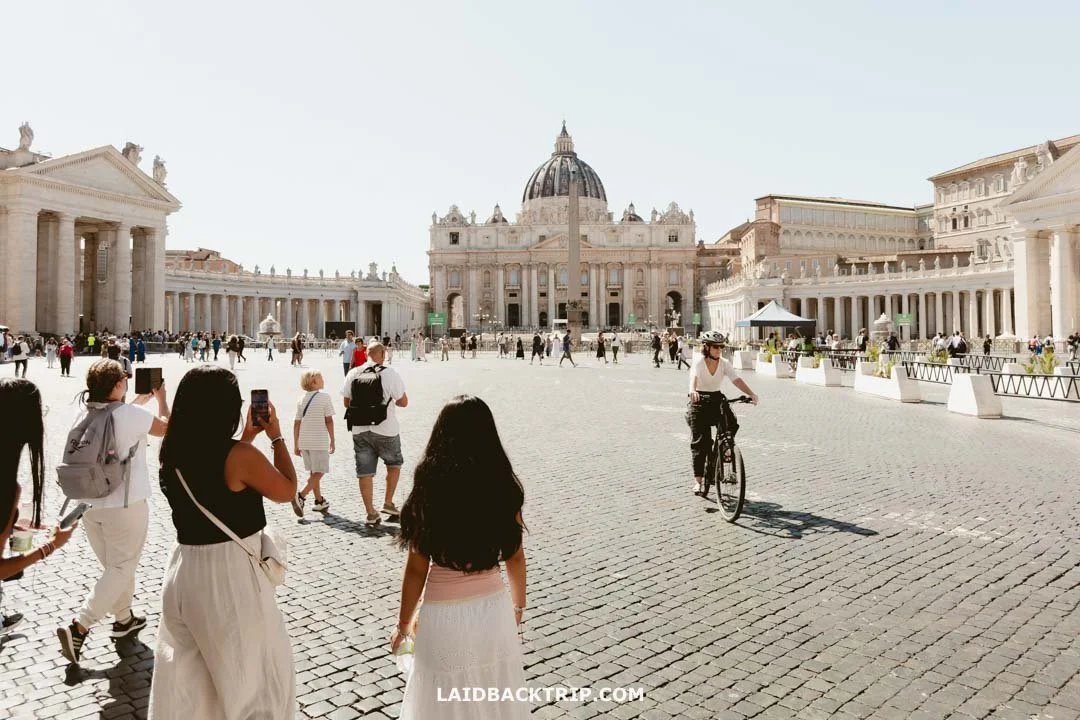
Vatican City is a sovereign city-state completely enclosed within Rome.
I had visited Vatican City more than 25 years ago, while Lucie was experiencing it for the first time. Since my visit was so long ago, I remembered only a few basics, which made the experience feel almost completely new again. I recalled the view from the top of St. Peter's Basilica dome, the Sistine Chapel paintings, the immense size of the church, and the iconic Swiss Guard. Beyond that, most details had faded away. And that's why we created this Vatican City guide, which focuses on rediscovering those details and everything we experienced during our day there.
Visiting the Vatican Museums in the Morning (4-6 Hours)
Our visit to Vatican City was largely influenced by the fact that regular admission tickets to the Vatican Museums were sold out for the entire week of our stay in Rome. As a result, the only option left for us was to book a guided tour, and after reviewing the remaining time slots, we chose to visit the Vatican Museums early in the morning. We are not exaggerating when we say early, as we booked the 8 AM tour scheduled right at opening time.
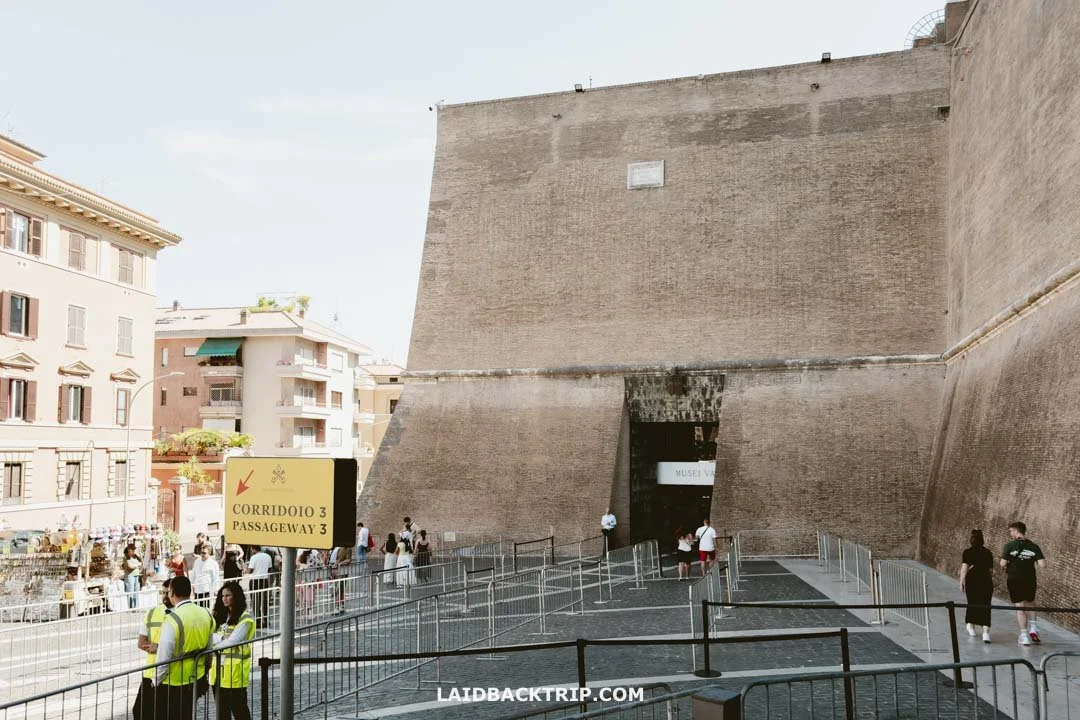
The Vatican Museums entrance was on the Rome side.
As one of the largest museums in the world, the Vatican Museums offer an overwhelming amount to see. Their collections include countless ancient artifacts and Renaissance masterpieces, along with expansive decorative galleries and modern and ethnological collections.
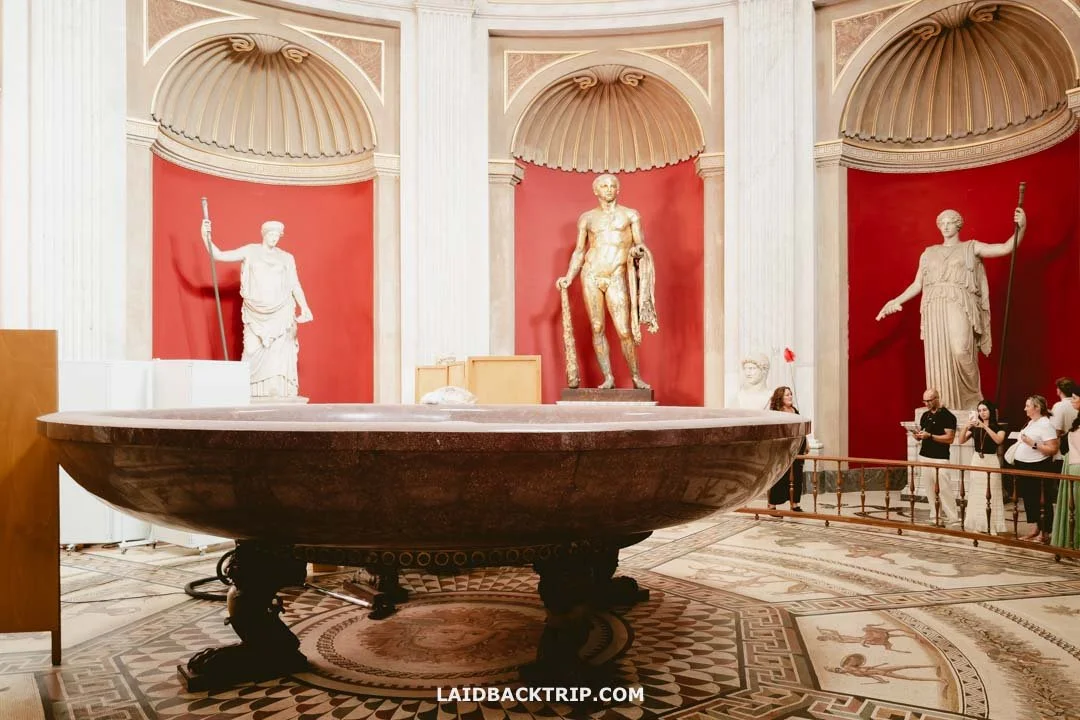
The famous Round Room was inspired by the Pantheon.
Although the guided tour lasted just over two hours, we managed to see an incredible amount in that time. Below, I will briefly outline everything we experienced in the Vatican Museums. I also strongly recommend reading our in-depth guide to the Vatican Museums and Sistine Chapel, which covers all the essential information for visitors.
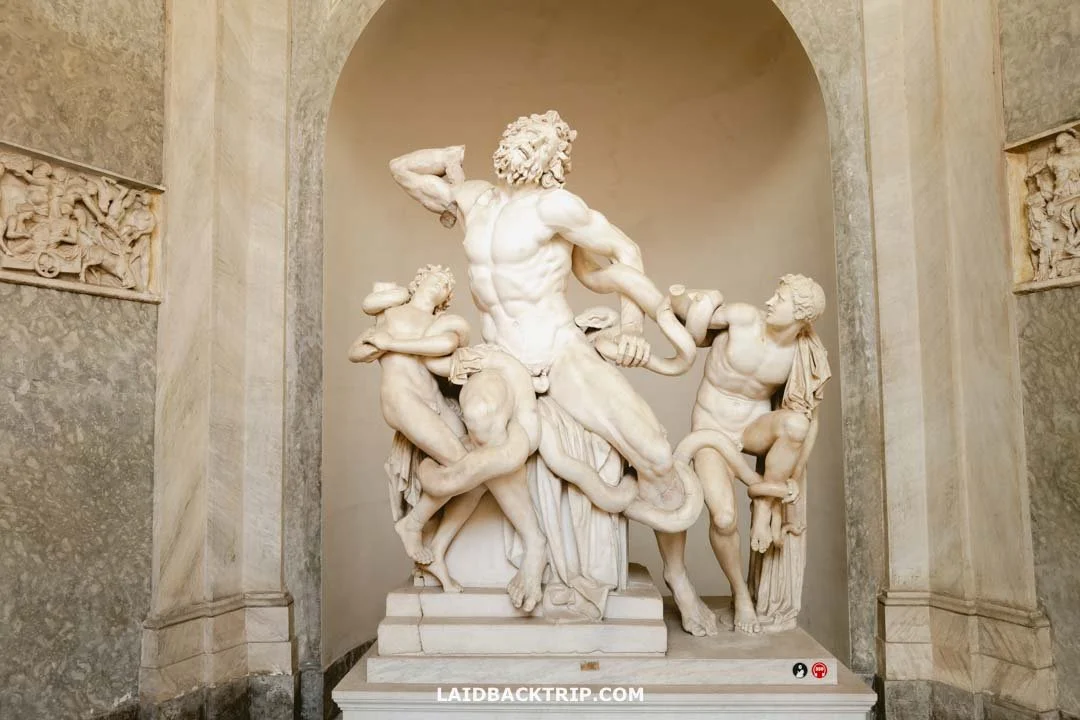
Laocoön is the most famous ancient statue in the Pio-Clementino Museum.
The first major section we visited was the Pio Clementino Museum, which features ancient sculptures such as the famous Laocoön and Apollo Belvedere. From there, we continued to the Gallery of Tapestries, where enormous Flemish weavings depict intricate biblical scenes. Next came the Gallery of Maps, featuring forty massive topographical frescoes showing 16th-century Italy beneath a richly gilded ceiling.
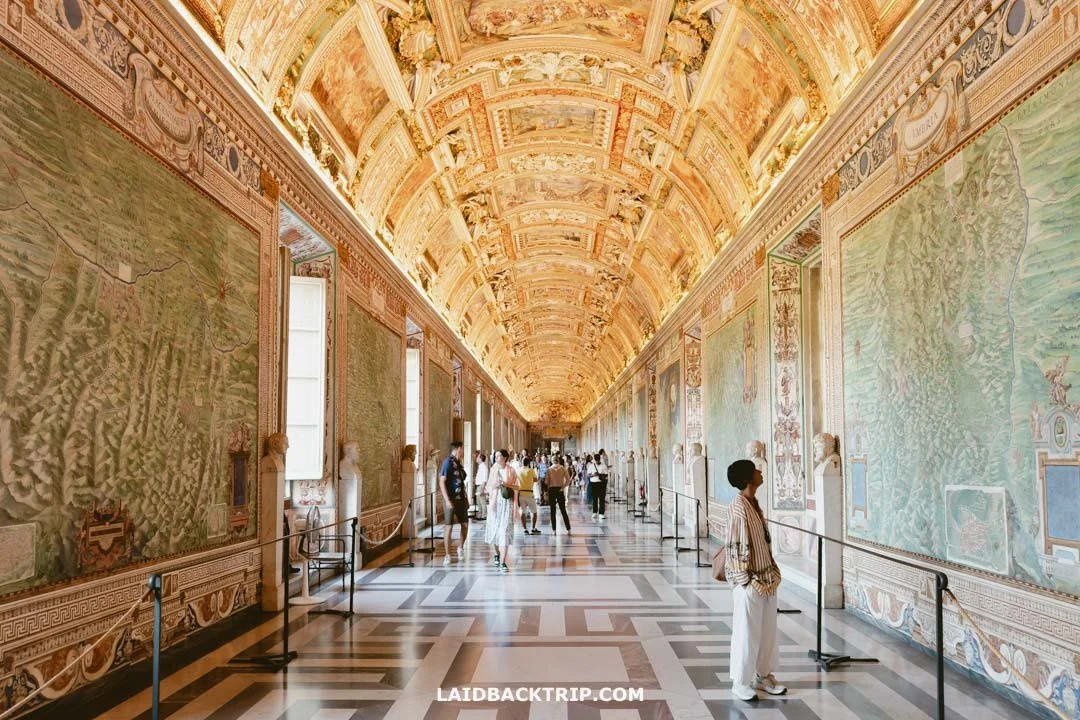
The Gallery of Maps was easily one of our favorite parts of the whole visit.
The absolute highlight was the Raphael Rooms, four papal apartments adorned with Raphael's breathtaking High Renaissance frescoes. We then moved on to the Borgia Apartment, a richly decorated private suite containing Pinturicchio frescoes alongside modern art pieces.
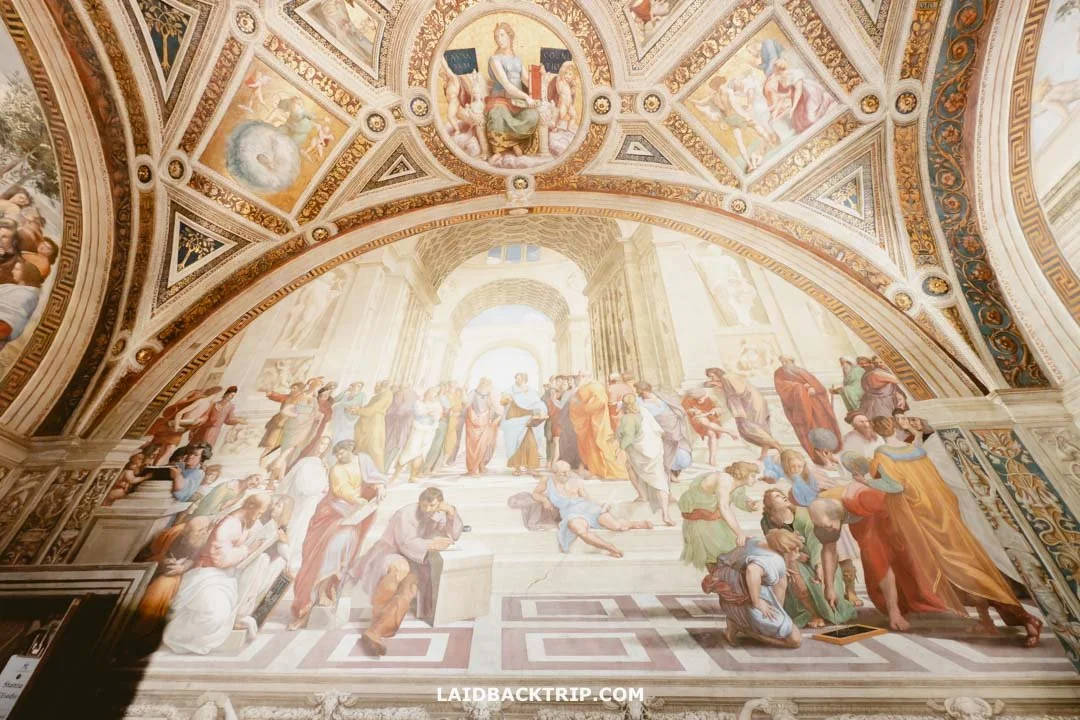
The frescoes in the Raphael Rooms were incredible.
Our tour concluded at the Sistine Chapel, which we visited independently since guided tours are not permitted inside, not even official ones like the tour we joined. Our guide had explained everything about the chapel at the beginning of the tour, however, so we arrived well prepared. The Sistine Chapel is a sacred papal chapel featuring Michelangelo's extraordinary Genesis ceiling and the monumental Last Judgment, widely considered the pinnacle of Renaissance art.
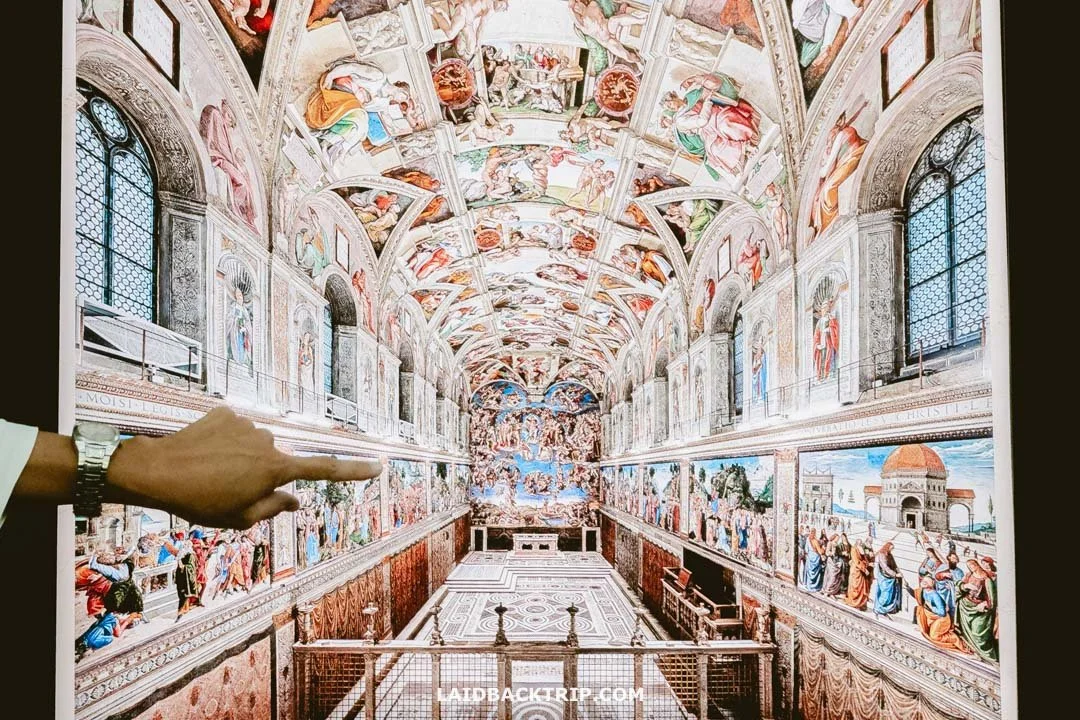
Since photos are not allowed inside the Sistine Chapel, I snapped this shot of an information display while our guide gave us the breakdown.
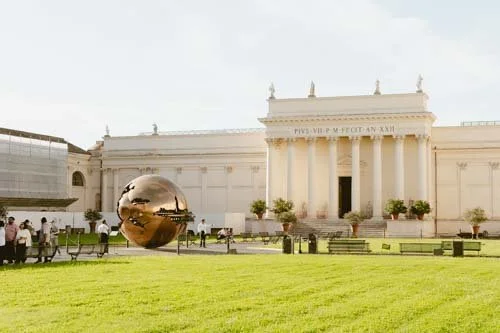
Visiting the Sistine Chapel was truly incredible and a perfect way to conclude the tour. That said, it was not the end of our visit, as we explored a few additional areas of the Vatican Museums and even took a short break at Giardino Quadrato before heading to our next stop, the iconic St. Peter's Basilica.
Our Tip: We felt very safe in Vatican City, though some spots were quite crowded. And wherever there are crowds, pickpockets can be a risk, so watch your belongings, even in the Holy See.
World Nomads provides travel insurance for travelers to cover their trip essentials, including sports and adventure activities.
SafetyWing is affordable travel insurance for backpackers, long-term travelers, and digital nomads.
Exploring the St. Peter's Basilica in the Afternoon (2-4 Hours)
From the Vatican Museums, we headed back along the Vatican Walls toward St. Peter's Square. As we approached the square, we followed the signs directing us to the line for visitors with reserved tickets, as there is also a separate line for those without tickets. Because we arrived slightly earlier than our assigned entry time, we were unsure whether we would be let in immediately or have to wait.
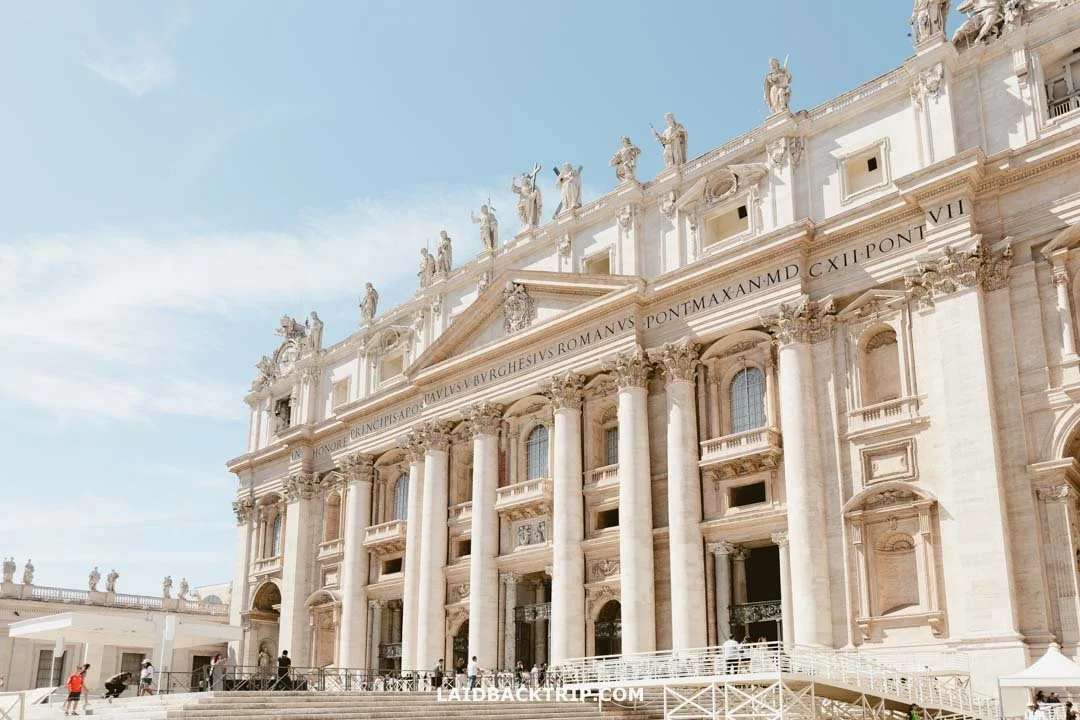
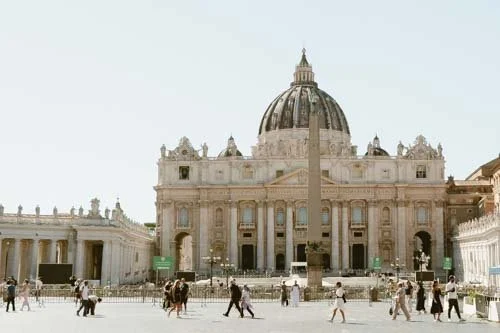
As we made our way toward the entrance, we could admire the monumental Baroque façade of the basilica.
However, there was no line at all that day, so we passed through the security check quickly and entered St. Peter's Basilica within minutes. To be precise, we first found ourselves in the Papal Grottoes, which house the tombs of modern popes including John Paul II and Benedict XVI. This underground section was fascinating and full of history, but like everyone else visiting, we were excited to move on and finally see St. Peter's Basilica itself.
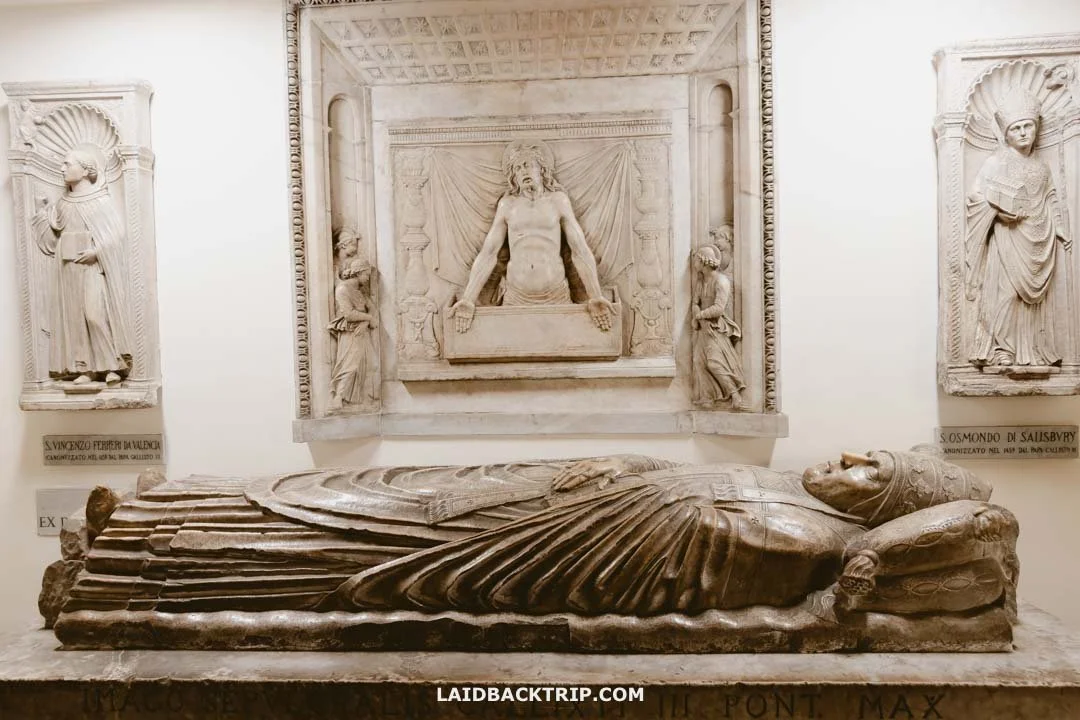
We entered the basilica through the Papal Grottoes.
Once we made our way out of the grottoes, we entered St. Peter's Basilica, the largest church in the world. Built between 1506 and 1626 over the tomb of Saint Peter, this monumental Renaissance church is simply incredible. Highlights inside include Michelangelo's towering dome, Bernini's richly detailed bronze Baldacchino, and the iconic Pietà sculpture. Beyond its stunning architecture, the basilica remains the spiritual center of Catholicism and one of the greatest achievements of Italian art and design.
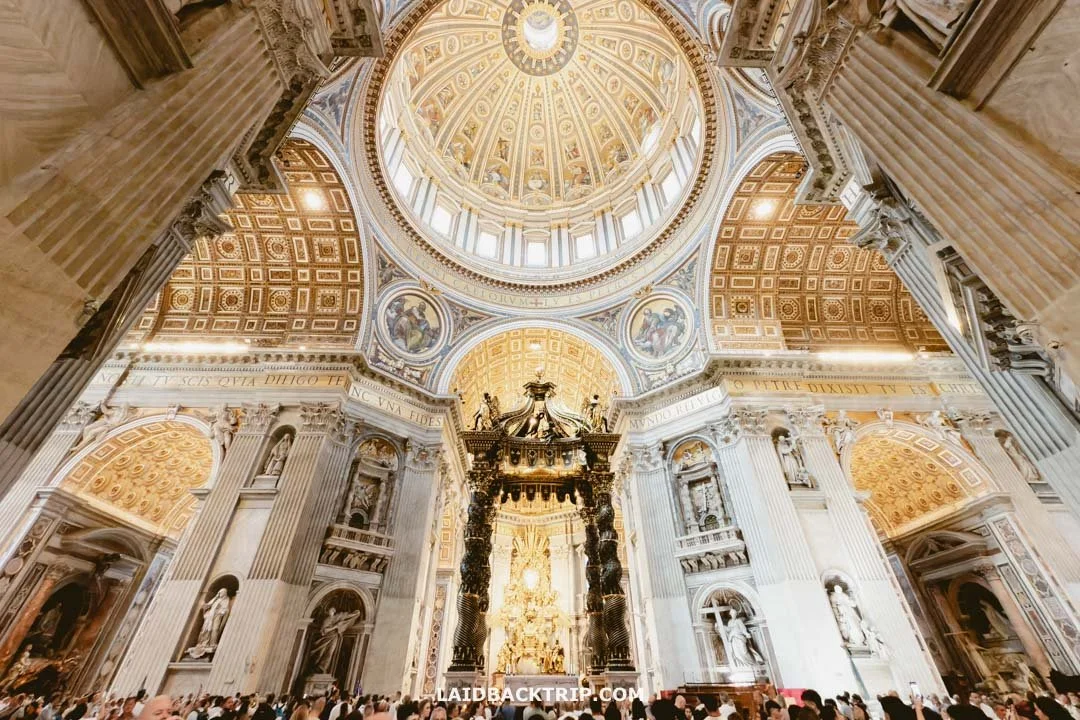
The columns of the bronze Baldacchino are 20 meters high, which really puts into perspective just how huge St. Peter's Basilica is.
Even after all the praise we could give to St. Peter's Basilica, it is still, at its core, a church, and as such, it is free to enter. If you want to visit St. Peter's Basilica for free, all you need to do is join the designated entry line at St. Peter's Square. The only downside is that entering this way allows you to see only the main church and not the dome, which was something we really wanted (mostly the dome, though). At the very least, visiting the dome felt like a must-do.
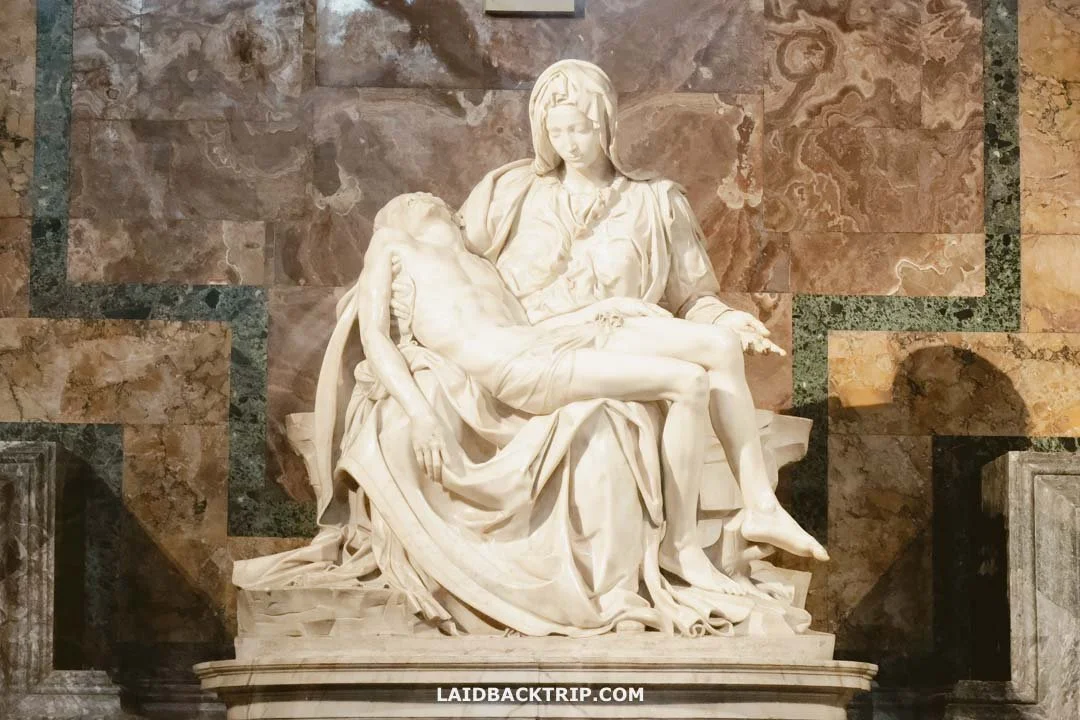
The Pietà by Michelangelo is a marble sculpture depicting Mary holding Jesus after the crucifixion.
So we booked a ticket to St. Peter's Basilica for €17, which included access to the basilica with a digital guide and entry to the dome via the stairs. We brought our own earbuds so we could easily listen to the guide on our phones. There was also an option to pay an extra €5 to take a lift up to the first inner dome terrace, but we did not mind getting a bit of extra exercise.
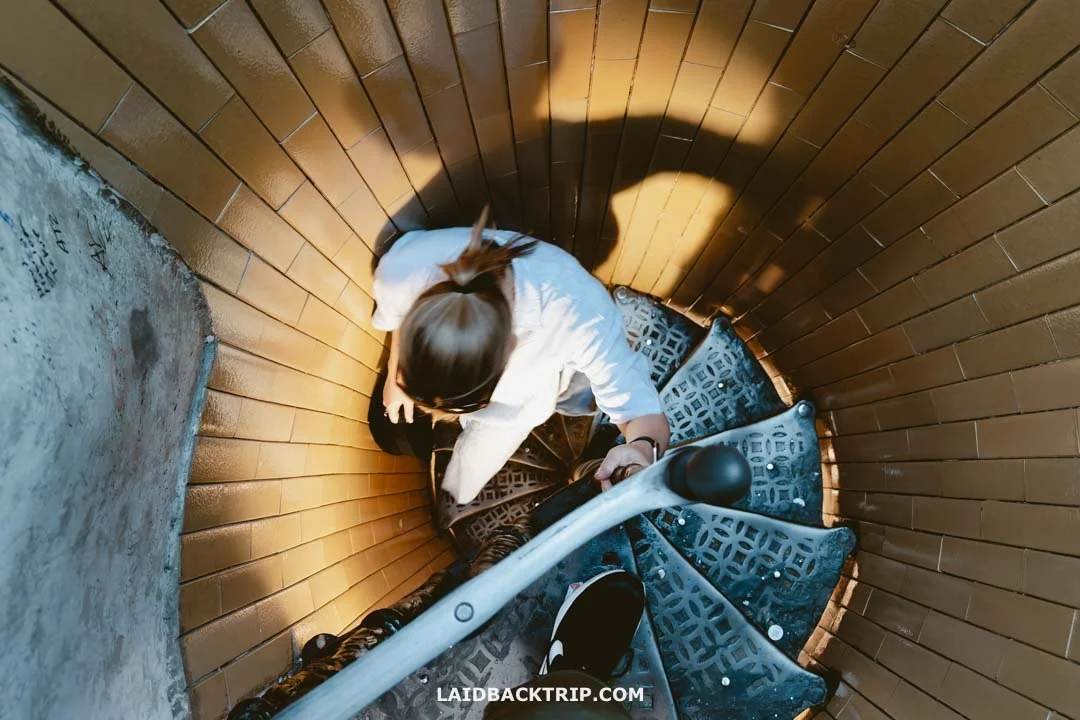
We had to climb all 551 steps to reach the top of St. Peter's Dome.
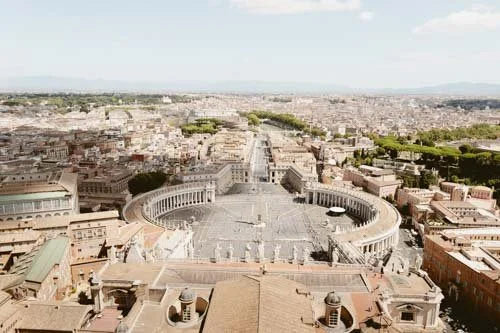
In our case, it meant climbing 551 steps to the top of St. Peter's Dome, but it was absolutely worth it because the views were simply breathtaking. From the top, we could see all of Vatican City, a large part of Rome, and even the Apennines on the horizon.
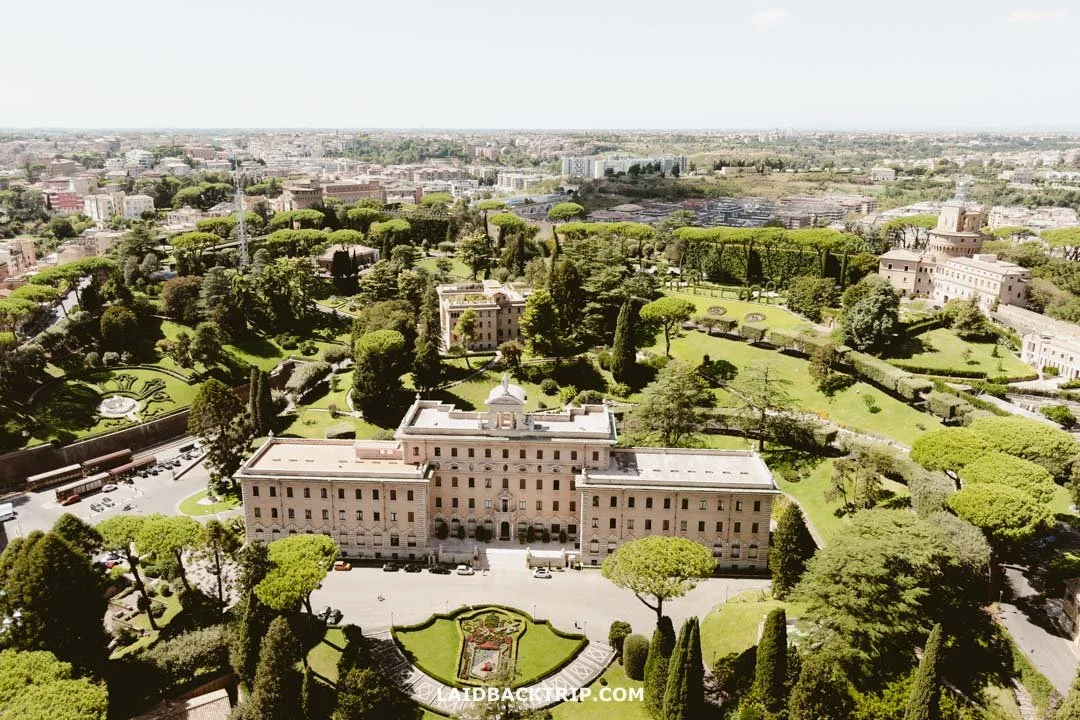
Apart from the iconic view I used for the main image, we enjoyed a fantastic view of the Vatican Gardens, covering the other half of Vatican City.
One of the most interesting things we learned about the decorations of St. Peter's Basilica was that many of the apparent paintings are actually detailed glass mosaics. Nearly every part of the church features gold leafed ceilings, marble statues, or papal tombs. Walking through the basilica felt like moving through a gigantic museum of High Renaissance and Baroque art.
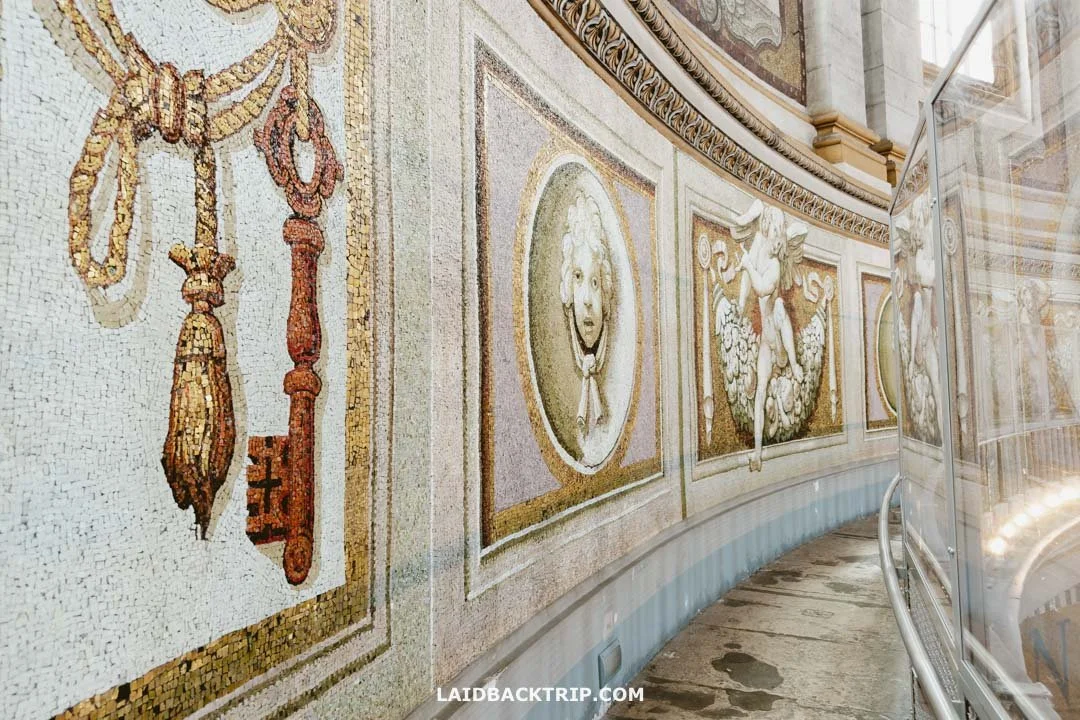
Almost all the artwork in St. Peter's consists of mosaics that, unlike oil paintings, do not fade over time.
By the time we left, we realized that we had spent three hours exploring the interior of St. Peter's Basilica, including the tombs and the dome. It was one of those places where time seemed to pass differently, as it truly did not feel like we had been inside for that long.
Wandering Around the St. Peter's Square (30-90 Minutes)
After seeing both the Vatican Museums and St. Peter's Basilica, it was finally time to take a closer look at St. Peter's Square. We had already caught a brief glimpse of it in the morning as we passed along its eastern edge on our way to the Vatican Museums. That experience was very short, though, as we had to keep moving to reach the museum entrance on time. Still, the usually busy square was quiet in the early hours, and the morning light created some really nice photo opportunities.
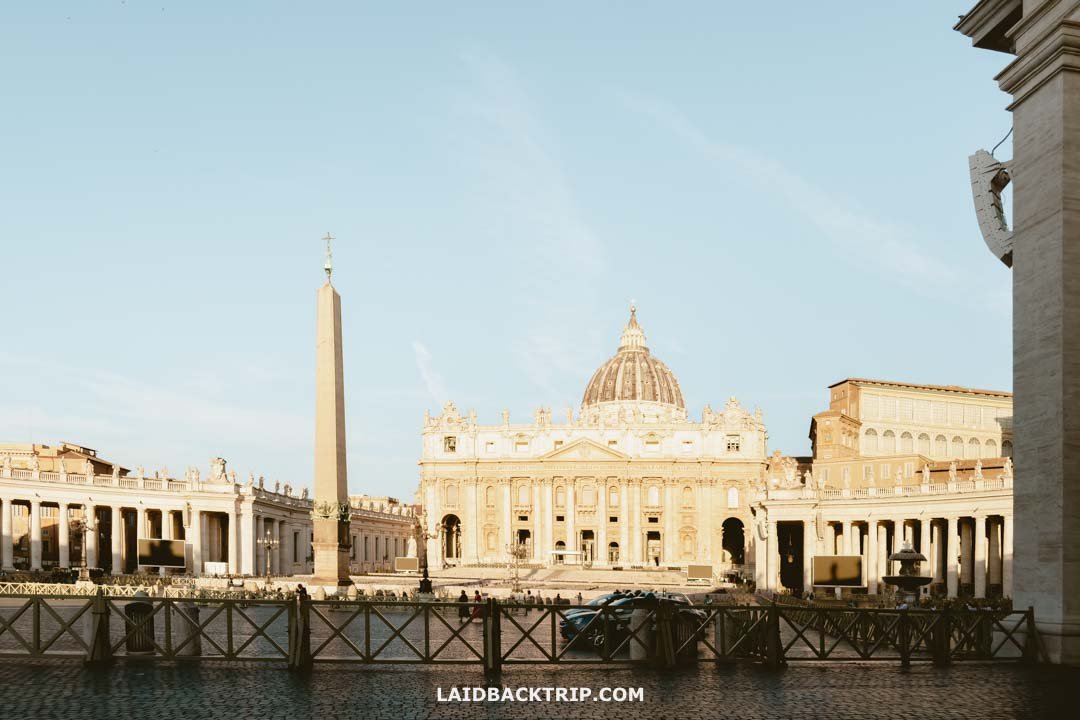
In the morning, St. Peter's Square was really peaceful and quiet.
We later returned to St. Peter's Square, but once again, the visit was brief, as this time we entered St. Peter's Basilica from its northern side . After entering the church, we climbed to the top of the dome, where we were rewarded with another stunning view of St. Peter's Square from above. Honestly, this ended up being one of my favorite views from our entire trip to Rome.
Eventually, we exited the church using the corridor that slowly leads down to St. Peter's Square. Just before reaching the cobblestone square, as we descended the steps, we noticed two members of the Swiss Guard standing to our right. They have protected the Pope and the Apostolic Palace since 1506, making them the oldest standing army in the world.
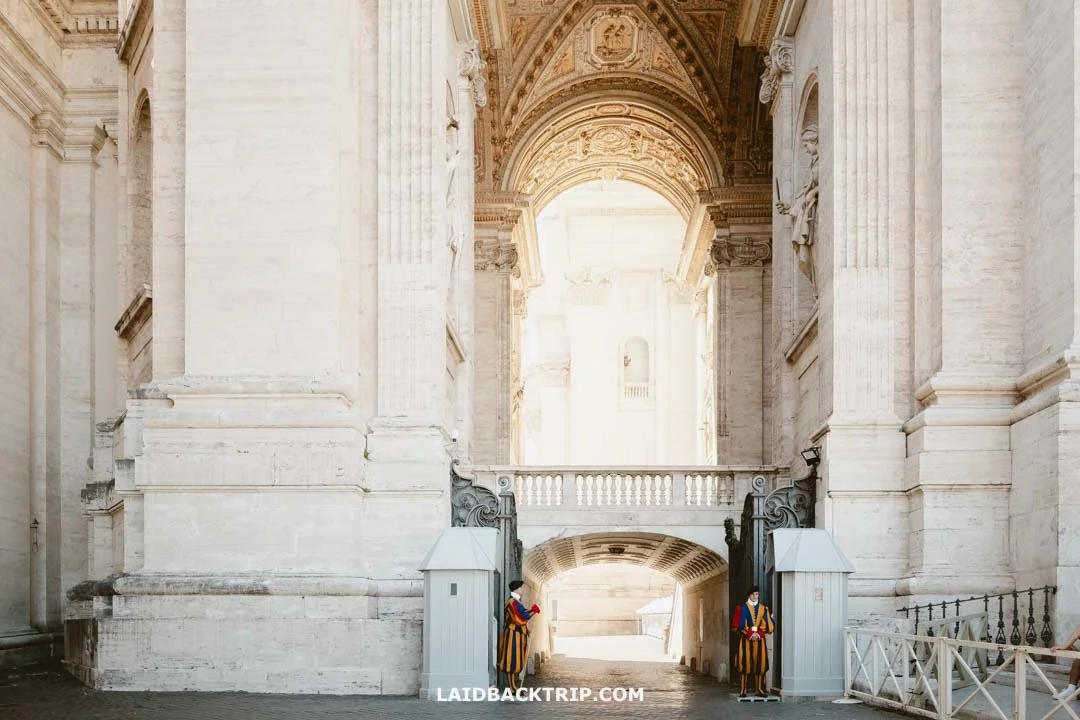
The Swiss Guard protects the Pope and Vatican City.
These elite soldiers are instantly recognizable by their colorful Renaissance-style uniforms and traditional halberds, which have become one of the symbols of the Vatican. To join the Swiss Guard, candidates must be single, Catholic, Swiss men under the age of 30 who have completed rigorous Swiss military training. While we do have traditional guards back home at Prague Castle, these guards are far more famous, and of course, we could not resist taking a few photos.
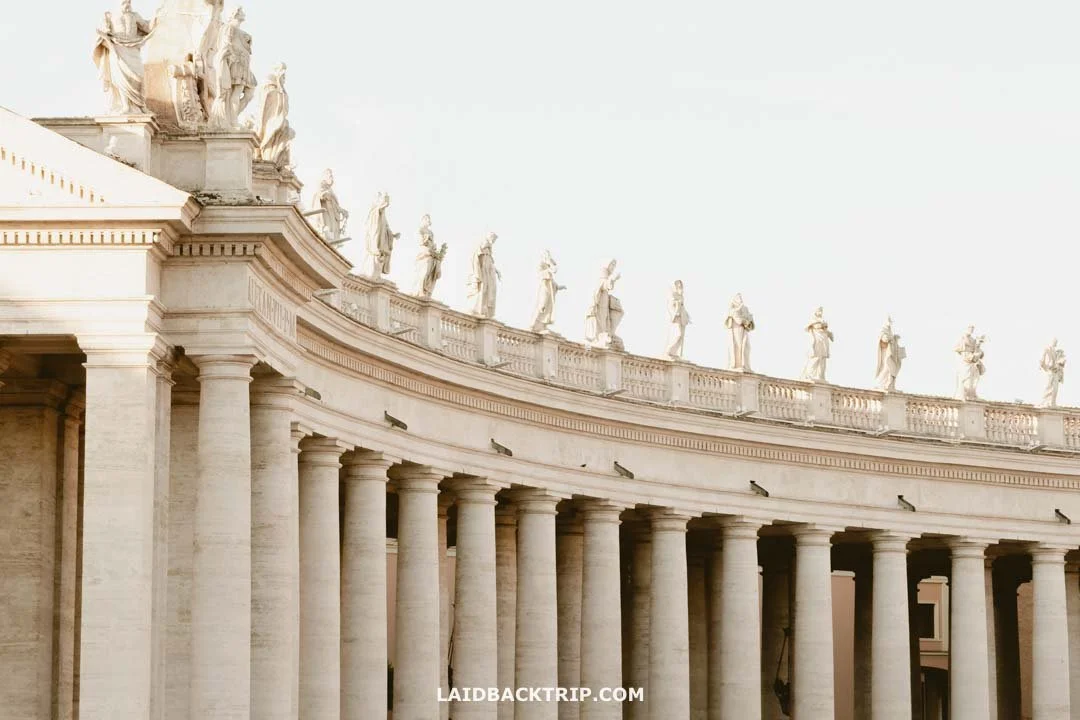
The Vatican Colonnade was stunning from every angle.
Once it was possible, we left the corridor and headed toward the Vatican Colonnade. Gian Lorenzo Bernini designed this stunning elliptical colonnade between 1656 and 1667 to frame St. Peter's Square. It features 284 thick Doric columns across four rows and 140 watchful statues of saints above. Like the church or the dome, the scale of this whole project is honestly mind-blowing to see in person.
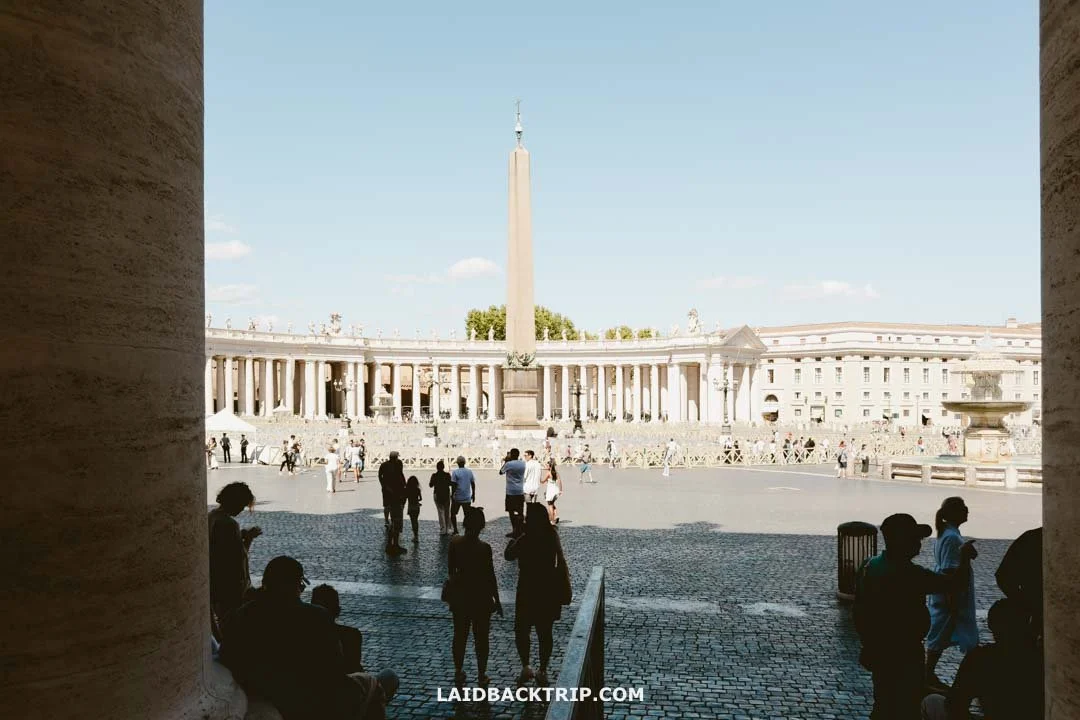
We took advantage of the shade provided by the colonnade to escape the scorching sun.
It was also shaded and turned out to be the perfect place to take a short break. It was the first real rest we had taken since visiting the Vatican Gardens, so it was very welcome. We ate a small snack, watched life go by, and enjoyed the moment. Since there were mostly tourists and pigeons around, we passed the time by counting the columns of the colonnade and taking a closer look at one of the two massive water fountains, known as the Twin Fountains.
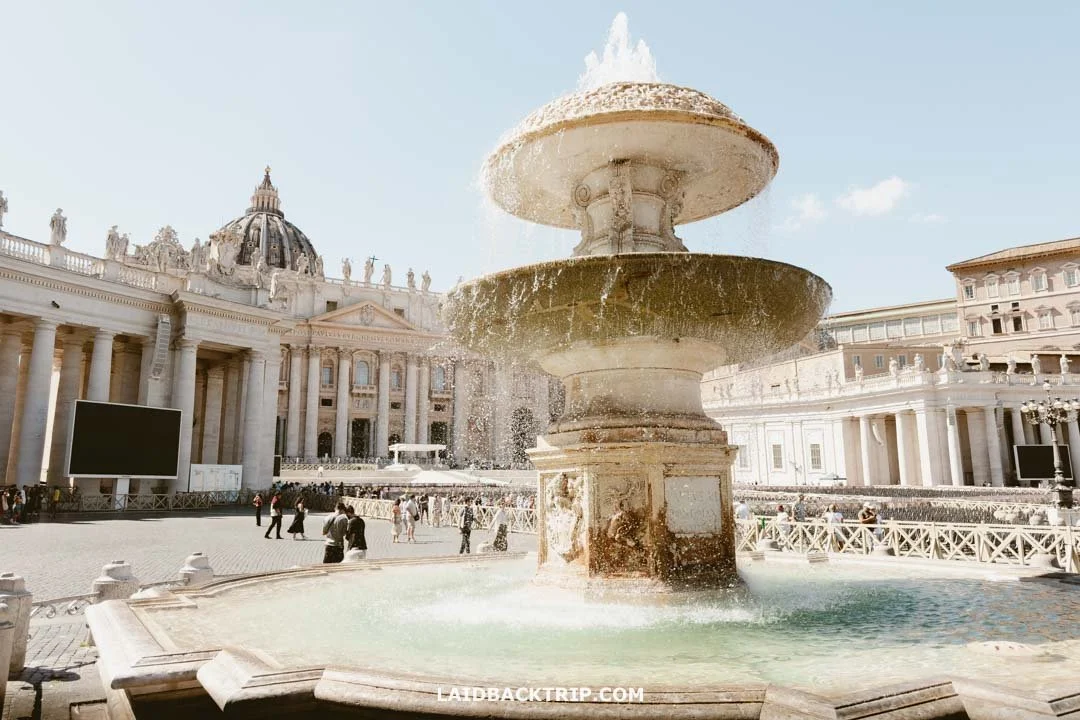
Although the fountains look identical, they were actually built about 50 years apart by two different architects, Maderno and Bernini.
When we were ready to continue, we passed by the new mobile Vatican post office, which was inaugurated in 2024. It is a great spot to send a postcard from Vatican City, at least if that is still something you do. We did not stop ourselves, but simply walked past it and headed toward the center of the square, where the iconic Vatican Obelisk stands.
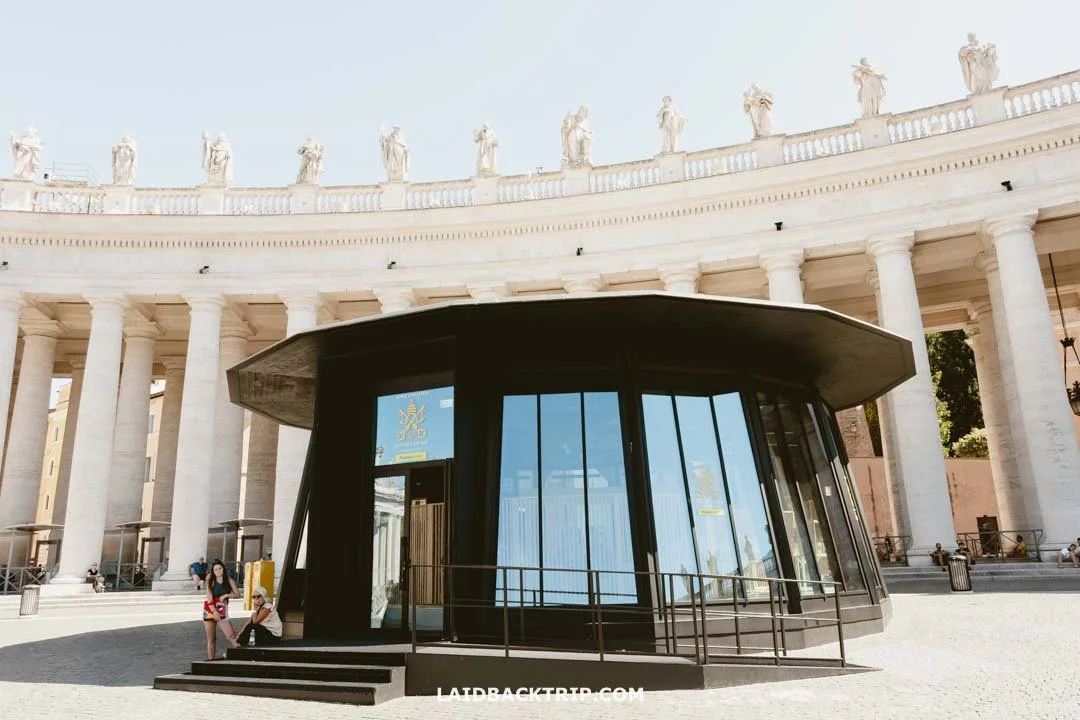
The Vatican post office has been in operation since 1929.
Made of red granite, the obelisk in St. Peter's Square is an ancient Egyptian monument that was brought to Rome by Emperor Caligula. It once stood at the center of the Circus of Nero, a Roman chariot racing arena where St. Peter was martyred and which once occupied a large part of what is now Vatican City.
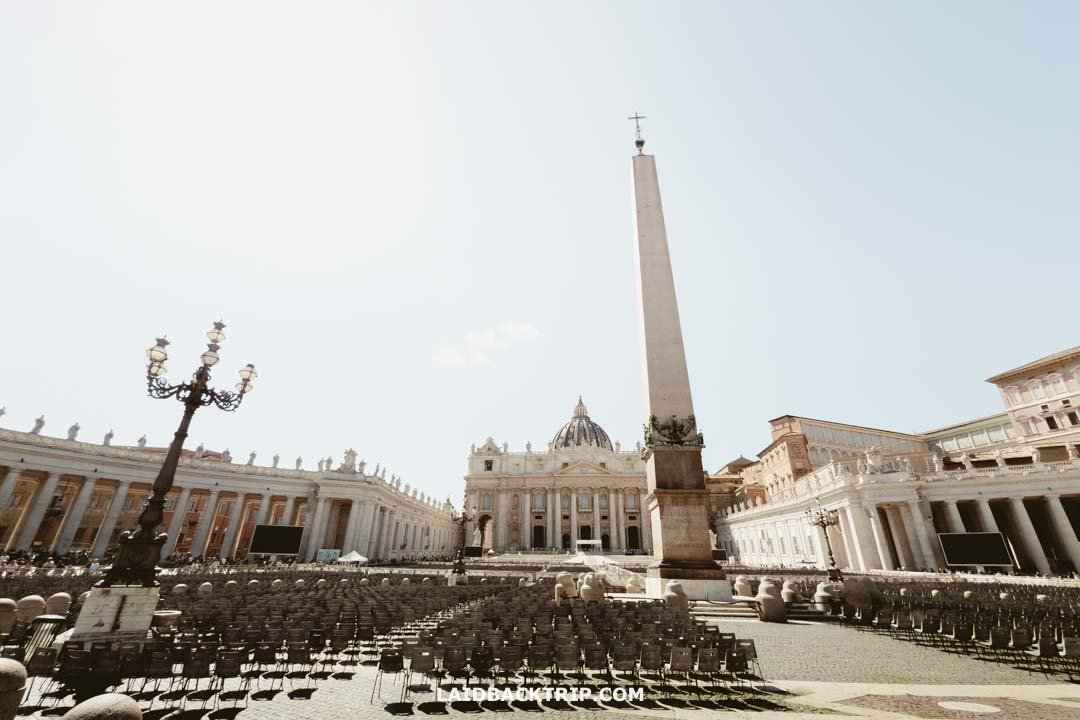
This was as close as we could get to the Vatican Obelisk on the day of our visit.
The obelisk rises nearly 40 meters tall, and although we could not reach its base since that area was closed off, it was still very impressive. We had already seen several obelisks in Rome, and even more recently in Paris, but this one felt different. That is because the Vatican Obelisk has no hieroglyphs at all.
Walking the Via della Conciliazione
And that was about it. We then headed toward Via della Conciliazione, and as we walked along it, we said goodbye to Vatican City and crossed back into Italy once again. This grand boulevard, which connects Castel Sant'Angelo with St. Peter's Square, was built between the 1930s and 1950s to symbolize the reconciliation between the Italian State and the Holy See.
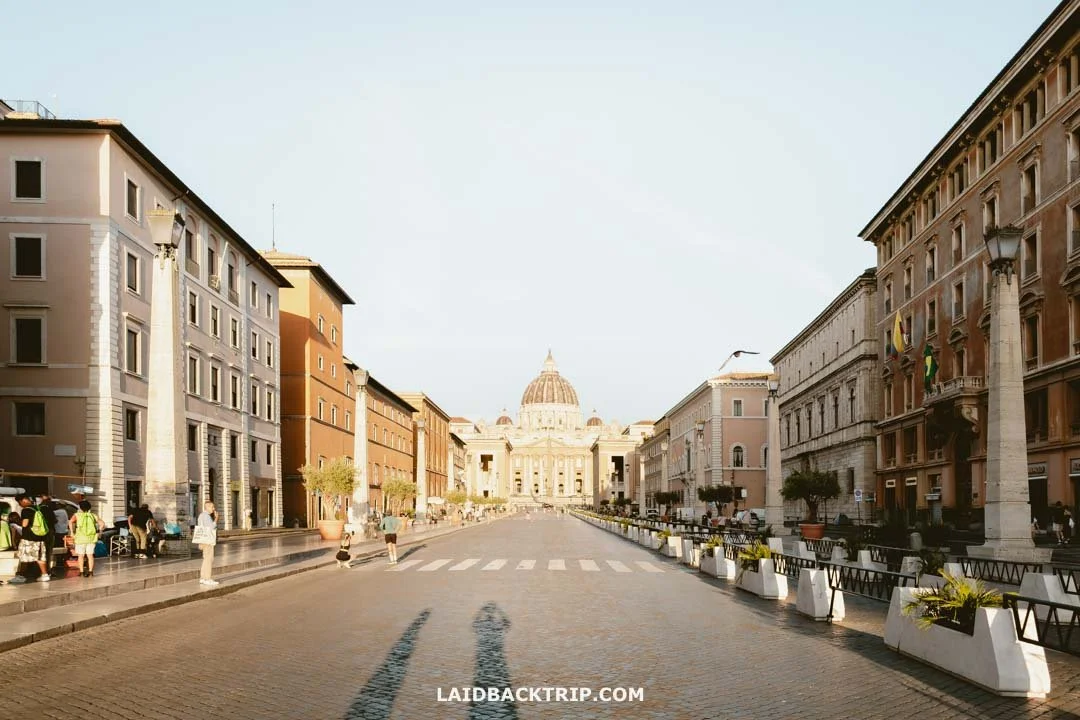
We walked along Via della Conciliazione both on our way into and out of Vatican City.
Interestingly, the area was not empty before construction began, and many buildings had to be demolished to make room for the street. Walking along such a wide avenue while knowing its history felt a bit strange, but the view of the boulevard with St. Peter's Basilica in the background was easily one of the most stunning sights in all of Rome.
When to Visit the Vatican City
During our visit, the most interesting thing about St. Peter's Square was that nearly half of it was closed off due to the 2025 Jubilee, which ran from Christmas Eve 2024 through Epiphany in January 2026. Several major back to back events had transformed the square into a massive open air venue.
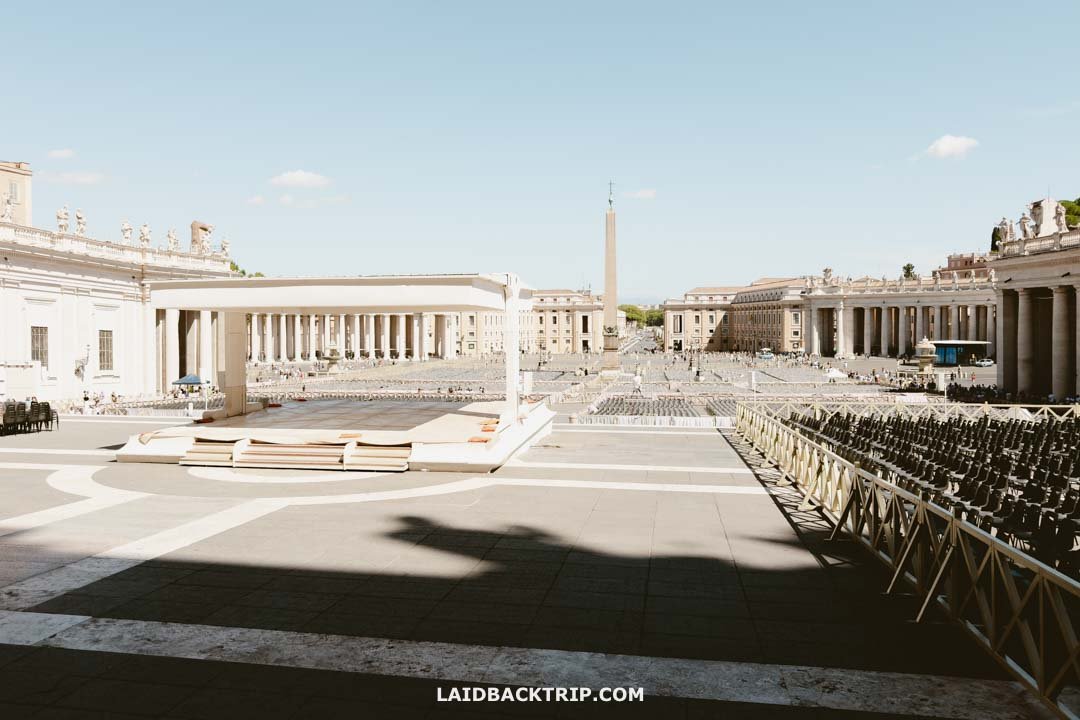
A large part of St. Peter's Square was closed off when we visited because of the Jubilee.
We happened to visit Vatican City in September on a day when everything was relatively calm, and aside from a large portion of the square being inaccessible, there were no other restrictions. Honestly, it was not a big deal at all, since we could still explore a large part of the square without any issues.
Since Vatican City is the center of the Catholic Church, there are many major events throughout the year that can affect a visit, so it is always a good idea to check the official calendar in advance.
Some events are planned many years ahead, such as Jubilee 2025, which was announced back in 2000 during the Great Jubilee by Pope John Paul II. Others are far more unexpected, like the conclave held earlier that year on May 7 and 8, 2025, to elect a new pope following the death of Pope Francis on April 21, 2025. For Christian pilgrims coming to pay their respects and witness the election of a new pope, this must have been one of the most extraordinary experiences of their lives.
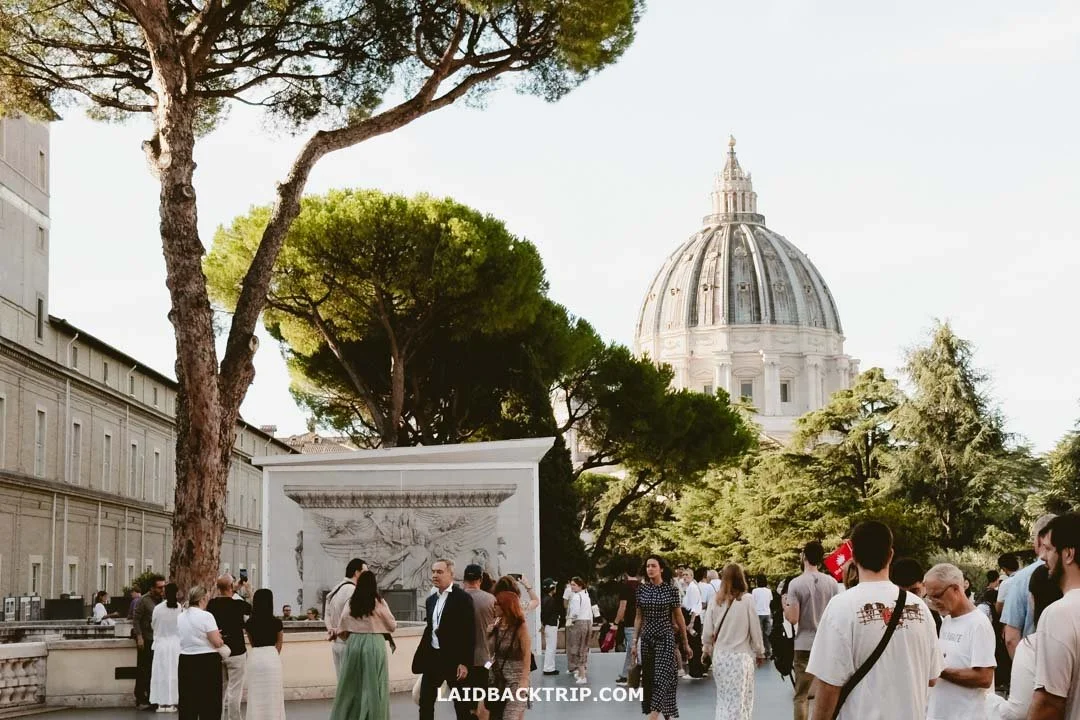
Even though the Vatican Museums were busy when we visited, we still had a great time exploring them.
For an average visitor like we were, however, these events usually come with a few downsides, including higher accommodation prices, crowded attractions throughout Rome, and restricted access to certain sites. A good example is the Sistine Chapel, which closes during a papal conclave until a new pope is elected. If you do want to see the Pope, though, the best time to visit Vatican City is during Papal Masses such as Christmas Eve, Easter Sunday, canonizations, or the Sunday Angelus.
Based on our own experience, it is also a good idea to secure tickets to the Vatican Museums well in advance, as we already mentioned earlier. This is especially important if you are visiting during the busy summer season, as we did. In our case, the situation ended with us paying for the most expensive ticket and touring the museum with a guide, which is something we do not usually do. You might not be as lucky, or you could end up having to book a private tour, which is often even more expensive.
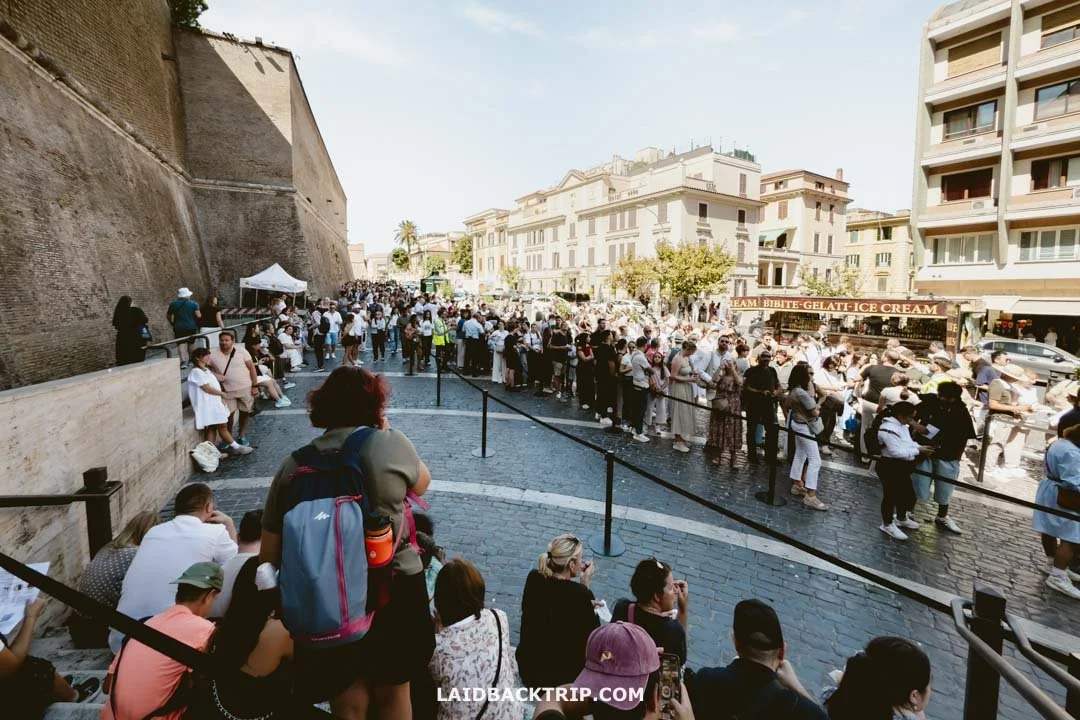
The Vatican Museums are known for long waiting times if you visit without a ticket.
Arriving at Vatican City early in the morning had another big advantage, as it allowed us to enjoy St. Peter's Square without crowds, at least for a short while. As mentioned earlier, it was not a particularly busy day overall, so the square stayed fairly calm even during the daytime. When we returned in the evening, though, the atmosphere was even more peaceful. If you want to experience Vatican City without crowds, visiting at night is clearly one of the best options.
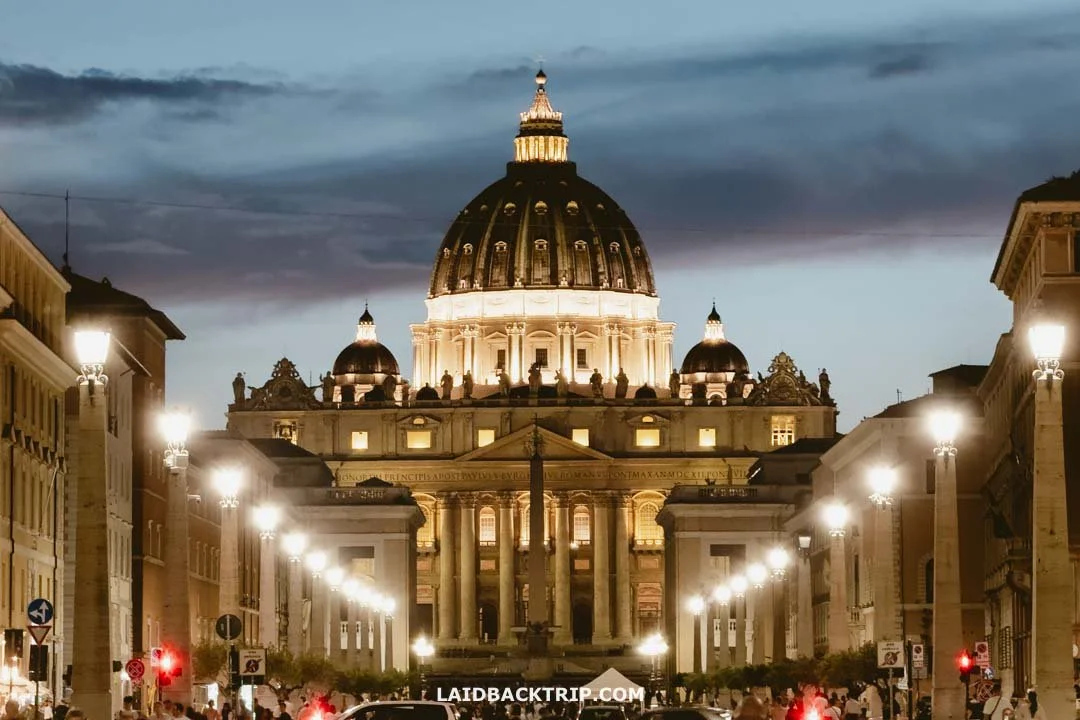
Vatican City looked just as stunning after dark as it did in the daytime.
Vatican Dress Code
Vatican City asks visitors to dress modestly at all major sites, including St. Peter's Basilica, the Vatican Museums, and the Sistine Chapel. The basic rule is simple. Shoulders and knees must be covered, and security takes this seriously. We had seen similar rules in Rome's churches, but everything we read suggested the Vatican was a little stricter.
This becomes a real challenge in the summer. When we visited, it was about 33 Celsius, so we had to plan our outfits carefully. We wanted to be respectful, but we also did not want to roast in the heat.
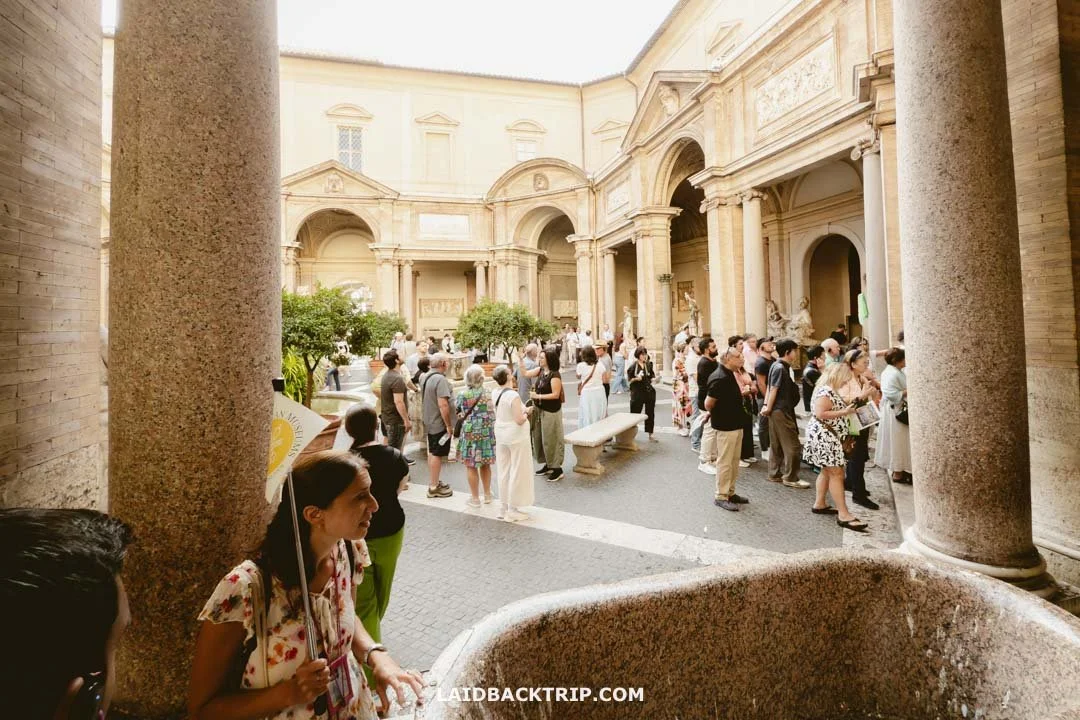
Here is a photo I took in the Vatican Museums that gives an idea of how some of the visitors were dressed there.
Lucie had it pretty easy. She wore her favorite summer dress with sleeves. I went with a light T-shirt and my trusty convertible pants. Since it was already hot early in the day, I wore them as shorts that ended right at the knee and kept the lower-leg pieces in my daypack. The setup worked great.
Because of the heat, we saw plenty of people with shorts or skirts above the knee or sleeveless tops. From what we could tell, security did not mind as long as people looked reasonably dressed. No mini skirts, no offensive graphics, no hats inside. We have been to places where the rules were enforced much more strictly, like the Dome of the Rock on the Temple Mount or Jamek Mosque in Kuala Lumpur, and St. Peter's Basilica felt much more relaxed in comparison.
Getting to the Vatican City
Because we were staying just around the corner from Piazza Navona, roughly 1.8 kilometers from Vatican City, walking there felt like the most natural option. The walk from Rome's Centro Storico to Vatican City took about 20 minutes and was incredibly scenic. Since we were heading out early in the morning, Lucie suggested a small detour to Castel Sant'Angelo so we could see the famous Ponte Sant'Angelo without the crowds. This made our walk closer to 2 kilometers and stretched it to around 30 minutes, but we enjoyed every bit of it.
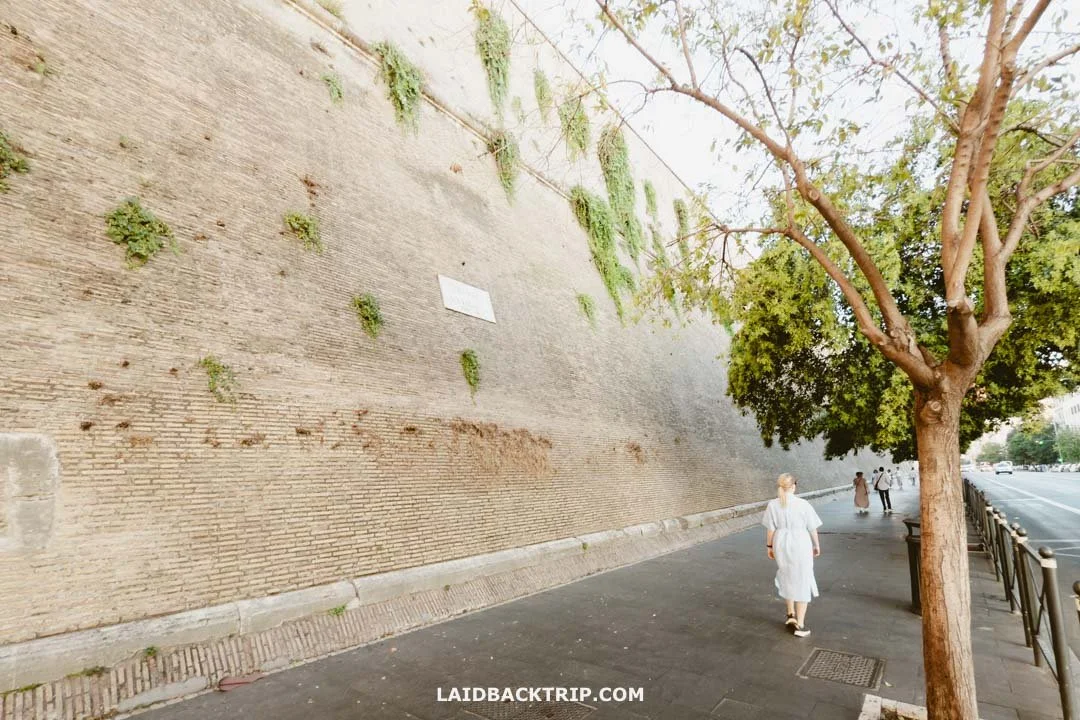
Most of Vatican City is hidden behind these massive stone walls.
Had we stayed farther from the city center, the Ottaviano metro station would have been a convenient option, as it sits about 500 meters from the Vatican Museums and around 850 meters from St. Peter's Square. Another option would have been taking a tram or bus to Piazza del Risorgimento, which is only about 300 meters from Vatican City. In our situation, though, using public transportation to reach the Holy See simply did not make much sense. Obviously, every hop on hop off tour also includes the Vatican City on their itinerary.
Crossing the Border to Vatican City from Rome
Vatican City is entirely enclosed by Rome and has two main access points. The main entrance is at the end of Via della Conciliazione, which continues into Piazza Papa Pio XII and opens directly onto St. Peter's Square. This is the entrance we used early in the morning, and in reality, it is the route most tourists take when entering Vatican City.
Since we planned to start our day at the Vatican Museums, we left Vatican City shortly after arriving, crossed back into Rome, and walked along the Vatican Walls all the way to the museum entrance. The Vatican Museums function as the second entry point to Vatican City and are accessed from Viale Vaticano on the northern side of Rome.
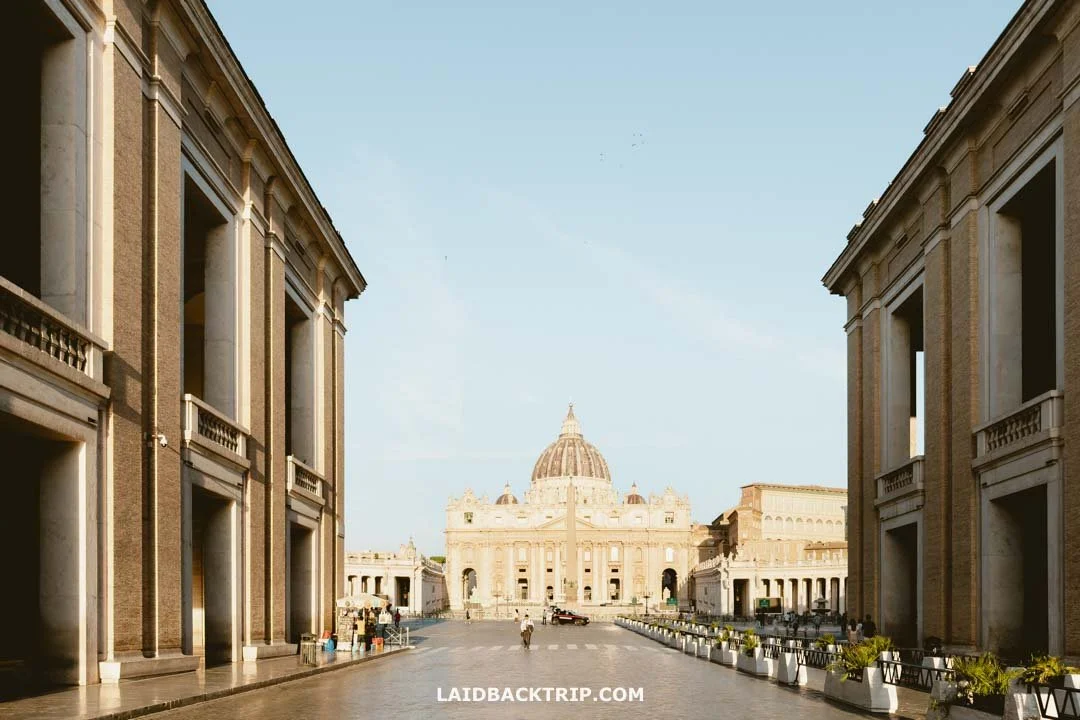
This is what the 'border' between Italy and Vatican City looks like.
There is no formal border control, so traveling between Italy and Vatican City is as simple as crossing the street. An interesting detail is that because Vatican City can only be entered through Italy, it does not operate its own visa policy and instead follows the Schengen Area visa rules. For us, traveling from Czechia, this meant that bringing our ID was sufficient to enter Italy. Of course, this situation can be very different depending on your country of origin, so it is always important to check the entry requirements in advance.
How Much Time to Spend in the Vatican City
The hardest part, as usual, was figuring out whether a single day in Vatican City would be enough. Since we were staying only about a 20-minute walk away, though, we did not mind the idea of returning if we missed something. While we technically managed to see everything we had planned in one day, we did eventually come back later in the trip to enjoy Vatican City in the evening, since we had not stayed until dark on our first visit. Seeing St. Peter's Basilica, along with the square and Via della Conciliazione, after dark was definitely worth it.
At first, we thought we would spend more time in the Vatican Museums, but once we learned that the guided tour covered the highlights in just a couple of hours, we realized we did not really need a full day there. We had no idea how much time we would spend in St. Peter’s Basilica, since it was hard to estimate how long someone could really spend inside a church. To our surprise, we spent quite a lot of time there, and it was definitely more than we initially expected.
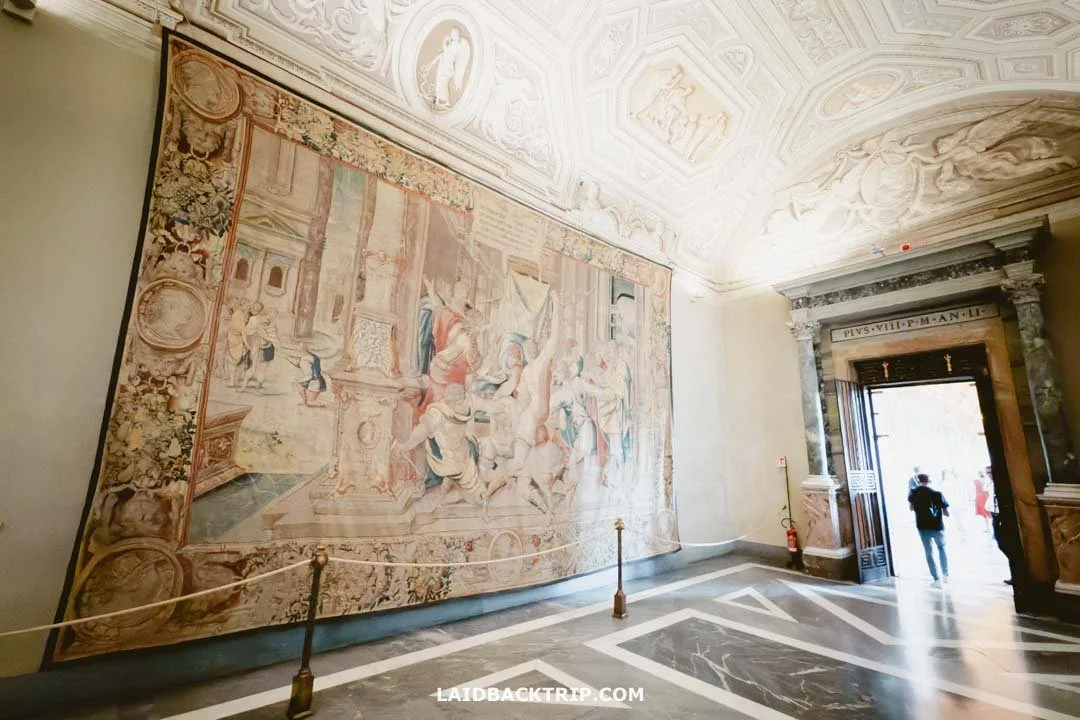
You can easily spend an entire day exploring the Vatican Museums.
All in all, we spent about an hour walking to and from Vatican City, over four hours in the Vatican Museums, more than three hours in St. Peter’s Basilica, and roughly an hour in St. Peter’s Square. Of course, this also included some extra time, like waiting in line for the Vatican Museums, since we had to arrive 30 minutes before the tour started.
In the end, our visit lasted almost 10 hours, which I would consider a full day. It was a long day, and we were quite tired by the end. If we had stayed in the Vatican Museums for six hours as we originally planned, it could easily have turned into a 12-hour visit, which would have been even more exhausting.
Hotels in the Vatican City and Nearby
Since we knew we would be visiting Vatican City in the first half of our trip, we were tempted to stay nearby. It was a small surprise to discover that there really aren't any hotels inside Vatican City itself, at least for regular visitors. The closest accommodation we could find was Residenza Paolo VI, which is literally just across the road from St. Peter's Square, though Palazzo Cardinal Cesi on Via della Conciliazione was also only a short walk away.
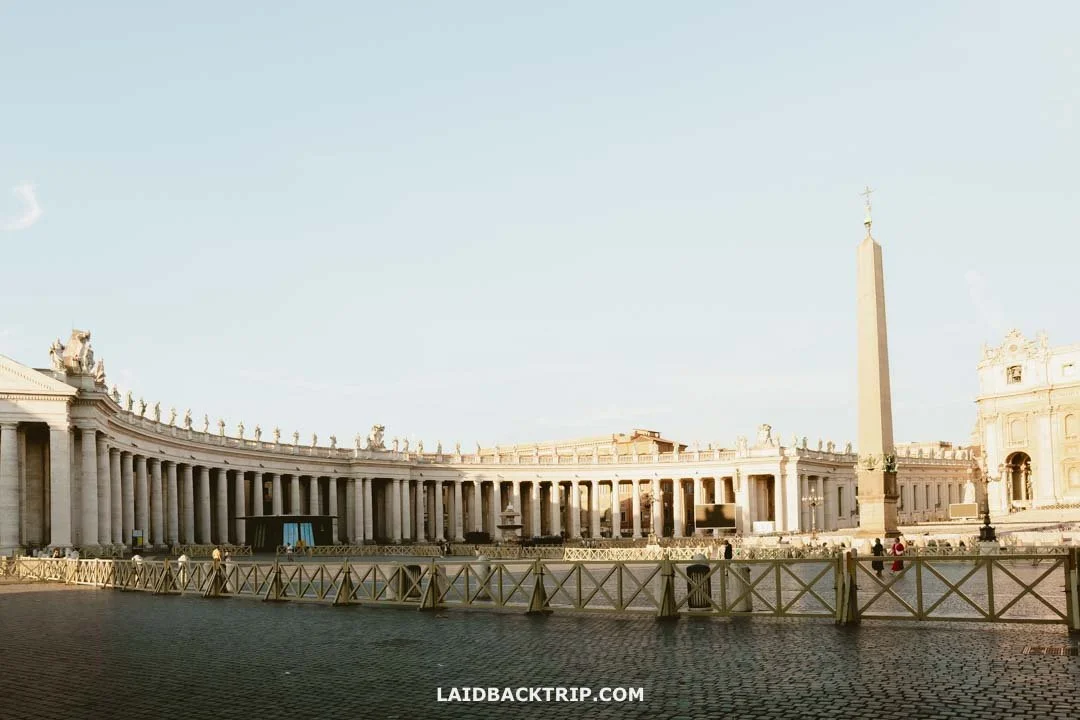
There are no hotels inside Vatican City.
We also knew that right next to Vatican City is the charming Prati neighborhood, which is considered one of Rome’s best areas to stay in. It was a very tempting idea, and we liked a few hotels there, such as NH Collection Roma Giustiniano or Twentyone Hotel, but in the end, we decided to stay in the Centro Storico to get the full “classic Rome” experience. We chose a small place called Hotel Navona, which was just a short walk from the famous square of the same name.
What We Saw in Rome After the Vatican City
In the late afternoon, we returned to our hotel for a well-deserved break. Later, we wandered through Centro Storico and eventually saw the Pantheon and Trevi Fountain, and then headed back to the Piazza Navona. On this evening, it was really just about the walk, so we only saw them from the outside, but we definitely came back later and made time to check them out properly as we went inside each of them.
And that was just the beginning (technically, we were already three days into our Rome trip, but that’s beside the point). If you’ve enjoyed following our journey around Vatican City, we also recommend checking out our comprehensive 7-day Rome itinerary, which pairs perfectly with a visit to the Holy See.

Climb to the top of St. Peter's Basilica's dome for breathtaking panoramic views across Vatican City and the beautiful city of Rome.