Are you looking for quick tips for the best day trips from Prague? You've come to the right place!
As locals, we honestly believe that Prague is one of the most beautiful cities in the world. The capital of the Czech Republic, right in the heart of Europe, is packed with history, incredible medieval architecture, and plenty of mythical tales and legends. It's also our home. We could go on about how amazing Prague is, but today we want to show you something different, because the capital isn't the only beautiful place we have here.
For all kinds of reasons, most visitors to the Czech Republic end up seeing only Prague. For them, it's Prague and nothing else. And while most people really enjoy their time in our city, they skip the rest of the country entirely before rushing off to Vienna, Munich, or another nearby city to repeat the same pattern. We think this needs to change, because other places in our country deserve attention too. Luckily, we can do something about it.
The easiest way is to show you some amazing places just outside Prague. This way, you can see beautiful spots while staying in one place, without switching hotels every day. All you really need to do is add a few days to your itinerary, whether you're planning to see Prague in a day or have three days here. I know it's easier said than done, but I hope that by the end of this post, the idea is already set in your mind.
My favorite part is that I picked places that are not only easy to visit from Prague in a single day, but also help you learn more about Czechia. As I said, our country is more than just the capital. This list Lucie and I put together feels like a highlight reel of Czechia, though centered around Prague. On this journey, we'll explore majestic medieval castles, wander through a rock city, hike in a paradise, step into somber WW2 history, enjoy some spa time, visit a few UNESCO sites, and of course, have one or two Pilseners. Let's dive in.
Terezín Memorial
What has been the most eye‑opening travel experience you've ever had? For us, a trip to the Terezín Memorial is somewhere at the very top of the list. Terezín, also known as Theresienstadt, sits about an hour north of Prague. It was built as a star-shaped fortress between 1780 and 1790 to protect the Bohemian Kingdom against Prussian troops during a month‑long war between Austria and Prussia, also known as the Seven Weeks' War. Later on, Terezín served as a prison, and fast forward to the 20th century, during World War I, the fortress became a prison for political prisoners.
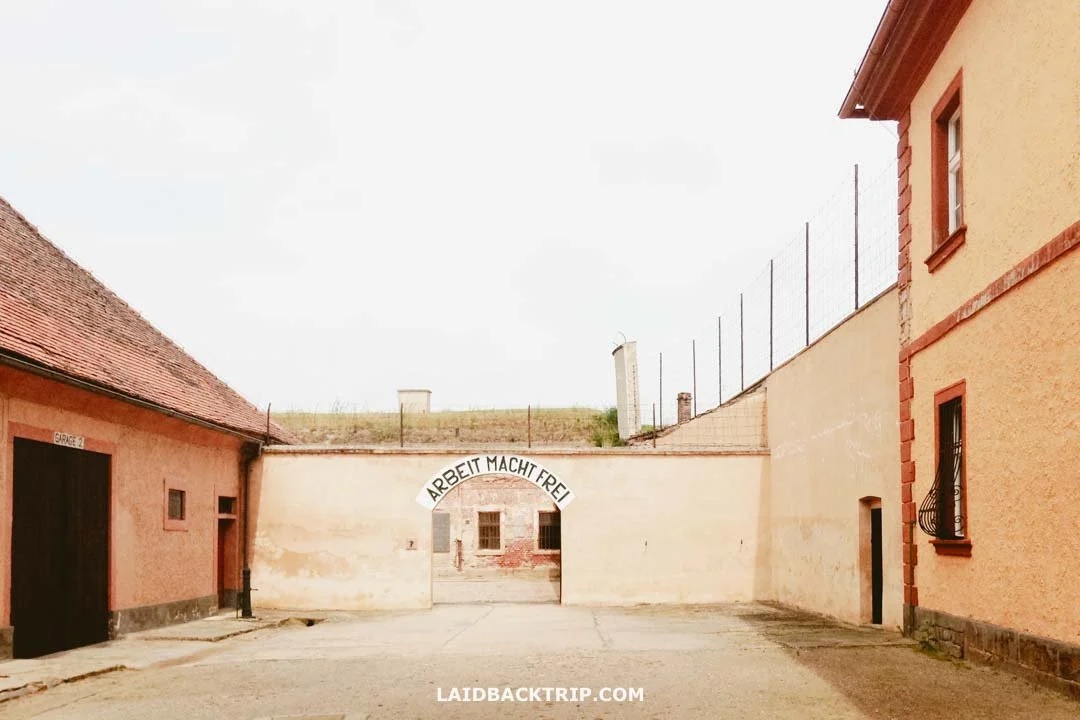
Terezín Memorial is a somber journey into the Czech history of World War II.
But the true horrors were still ahead. In 1940, Nazi Germany turned Terezín into a ghetto and transit camp. Even though Terezín was not an extermination camp but a Jewish Settlement Area and a Propaganda Ghetto, about 35,000 people died here within a few years, as the living conditions were simply inhumane. Because of this, it's often referred to as a concentration camp, similar to the ones that were built with that intention.
Terezín is split into two major areas. The first one is the Small Fortress (Malá pevnost), which served as a brutal Gestapo political prison. Here you'll find the original barracks, the administrative buildings, and the harrowing execution grounds. This is the part where you need a ticket. Outside its walls lies the National Cemetery, with thousands of graves.
The second area is the Main Fortress (Velká pevnost), which is the actual town of Terezín. Today it functions as a normal town, but during World War II, this was the Jewish ghetto. Here you'll find the Ghetto Museum and the Magdeburg Barracks, and of course, a central square with a church, grocery stores, Hotel Memorial, and residential houses standing right next to these memorial sites.
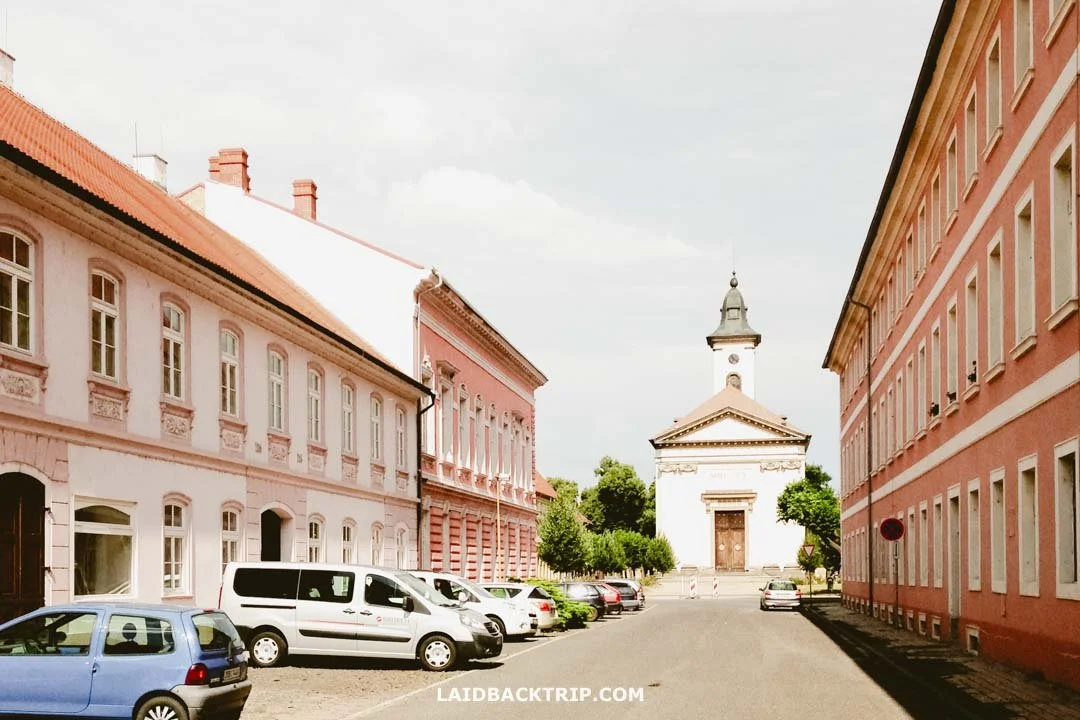
The Main Fortress that served once as a Jewish ghetto is now a regular part of the town of Terezín.
If this is your first time in Europe and you've never visited a place like this, you really should change that. And I genuinely mean that. Over the years, we've been to Dachau, Mauthausen, and Auschwitz‑Birkenau. Each place felt more somber than the last. But for us, because Terezín is in our own country, the experience hit even harder. Even after all these years, the story of this fortress remains incredibly powerful and offers a strong learning experience for anyone willing to engage with it.
How to Get to Terezín
It takes about an hour to get from Prague to Terezín, no matter whether you take a bus, train, or car. The easiest way to get there is by joining a tour, which has the advantage of not only skipping the transportation hassle but also visiting with a guide. A direct regional bus 413 runs from Letňany to Terezín, while the direct train departs from Praha Hlavní nádraží and stops at Bohušovice nad Ohří. From there, it's a 3‑kilometer walk along the Ohře River to Terezín.
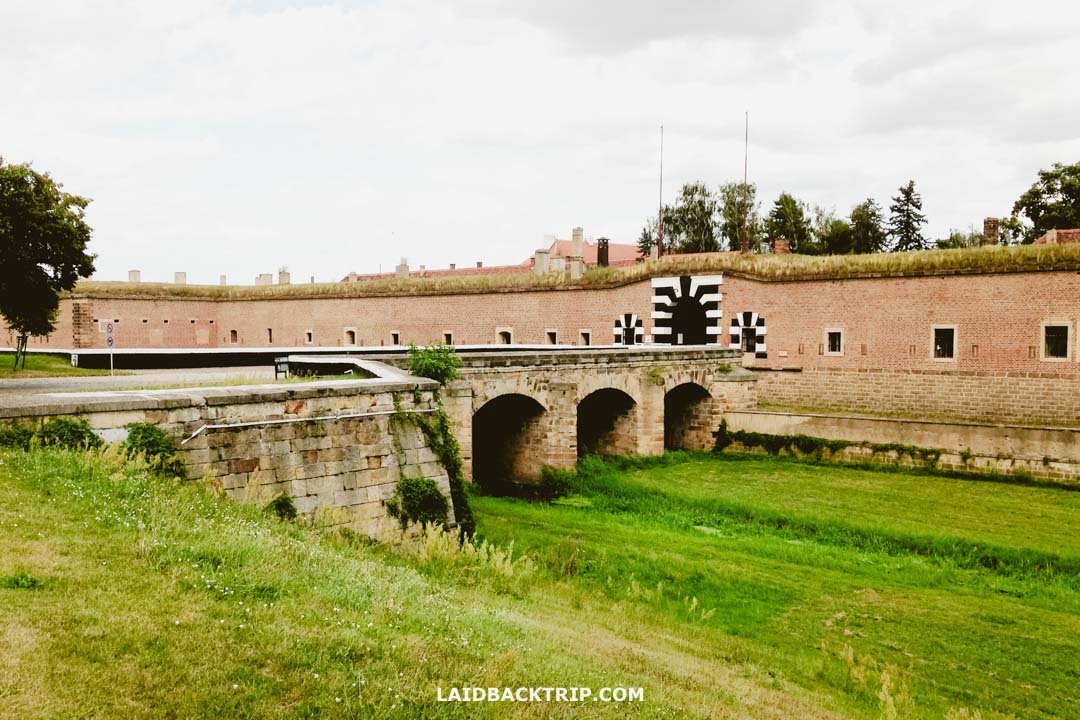
The Small Fortress in Terezín, a former Gestapo prison, is a section of the memorial that requires a paid ticket for entry.
Bohemian Paradise (Český ráj)
At the beginning of the post, I told you that I would take you hiking in paradise, and I wasn't lying. Because we really do have one here in Czechia. Bohemian Paradise is a landscape protected area and a UNESCO Geopark filled with sandstone towers, rock cities, beautiful castles, deep ravines, dense forests, awesome trails, and one bearded bandit (that part I kept secret on purpose).
But don't worry. The bandit, Rumcajs, is only a fictional Robin Hood‑like character from a popular Czech children's animated TV show, so you probably won't meet him there (unless you're really unlucky), but everything else I've mentioned is true.
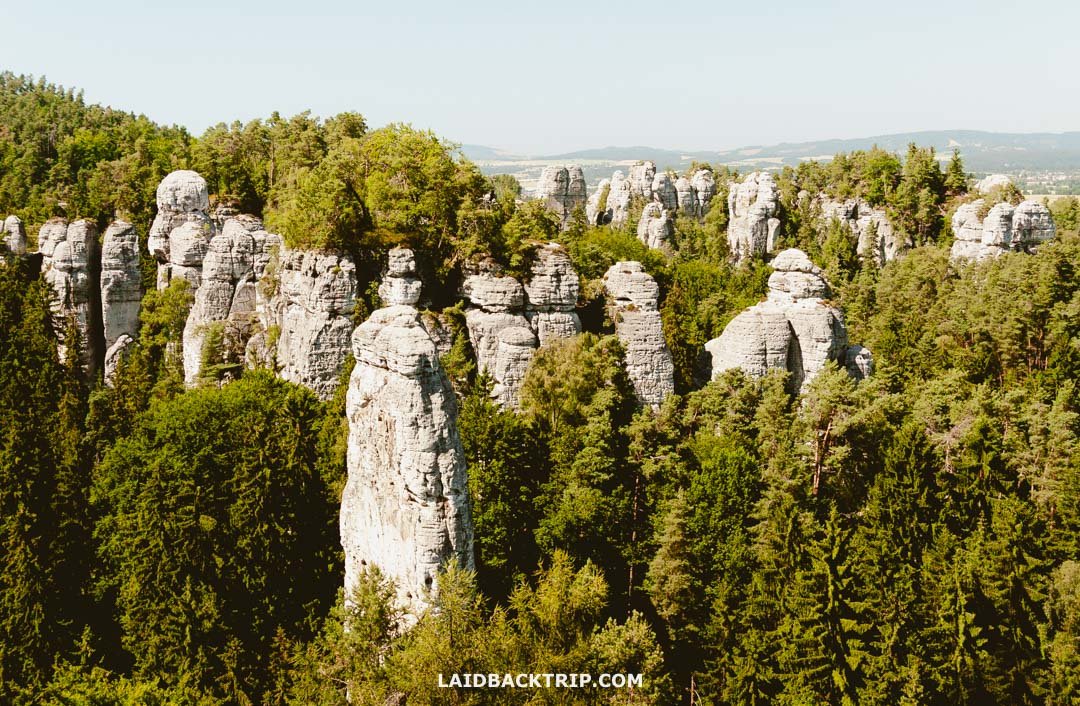
Na Kapelu is my favorite viewpoint in all of Bohemian Paradise.
The region is mostly known for its unique rock formations, which are simply stunning, and there are many places where you can see them. The most famous ones are called Prachovské skály, but Drábské světničky and Hruboskalské skalní město are worth seeing too. All of these sites are best explored by hiking, which is easier here since we are far from any high mountains, although you can spot Krkonoše in the distance on a clear day.
There's more to see in the Bohemian Paradise than just nature, though. If you want to see more Czech castles, you'll have a blast here. You should visit the Kost Castle, known for its characteristic White Tower, or one of the symbols of Bohemian Paradise, Trosky Castle, which is technically a ruin, though it's absolutely incredible. And Hrubá Skála Castle is like something out of a fairy tale. There are also charming towns and villages scattered around the region that pair perfectly with the nature and castles and make you feel like you're truly in a Czech paradise.
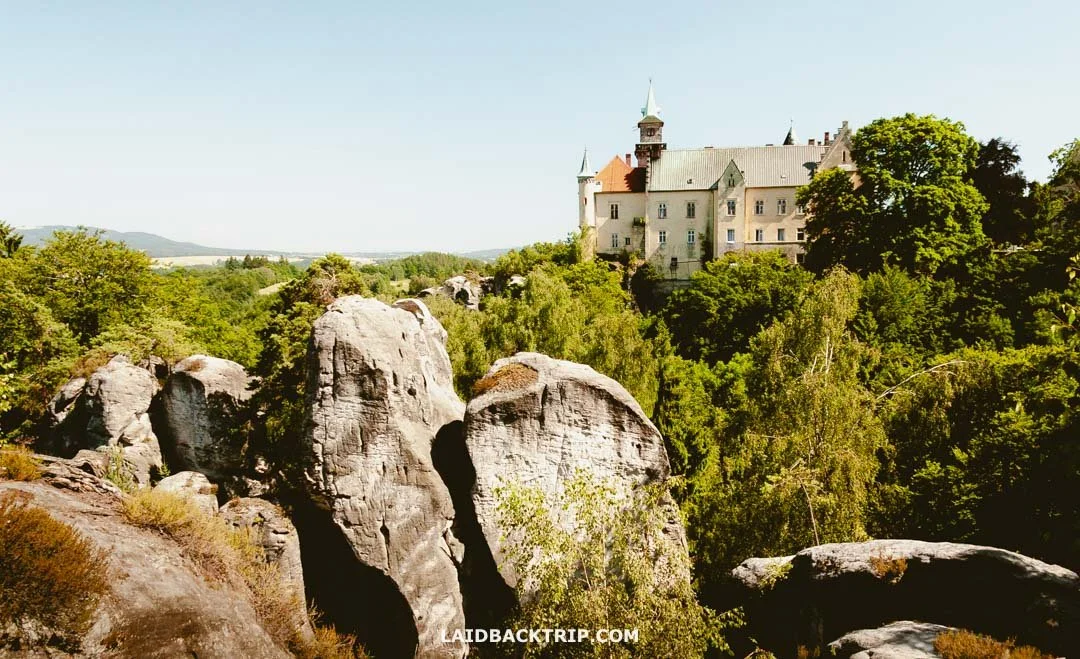
Hrubá Skála is one of the must‑see castles in Bohemian Paradise.
The first time we visited Bohemian Paradise together with Lucie was on a very frugal camping trip years and years ago, and many things went wrong on that little adventure. But we have only the fondest memories of this incredible place. Those memories, like when you go camping and "someone" forgets a sleeping bag at home, stay with you forever. At least he (ups) made up for it by picking a spot for the tent right by the pond, so we could get friendly with the local family of mosquitoes and enjoy the cold coming off the water during the night.
Even though Bohemian Paradise isn't visited much by foreigners, it's a super popular place among locals who love to come here on weekends, holidays, and during the summer. If you have more time, and if you can choose when you visit the Czech Republic, we recommend staying at least one night in the area during the summer, which is our favorite time to see the Bohemian Paradise.
There are some nice campgrounds here, so we usually go camping, but there are also some lovely guesthouses, summer houses, and hotels like Hotel Tammel or Hotel reStart if you don't feel that adventurous or didn't bring a tent and other camping gear with you. That's definitely something you won't find on any Prague packing list, not even ours.
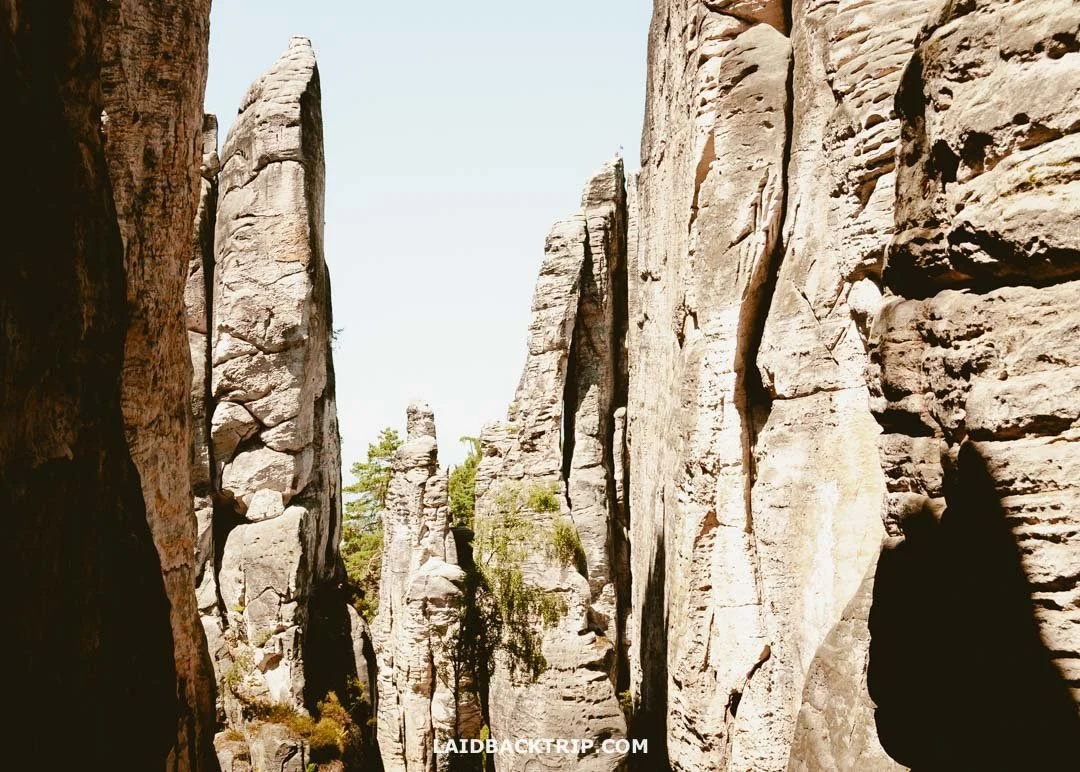
Known for its dramatic rock formations, Prachovské skály is the best‑known area in all of Bohemian Paradise.
How to Get to Bohemian Paradise
It's not that easy to explore the Bohemian Paradise without your own transport, since the places we talked about aren't exactly next to each other. For example, Hrubá skála Castle and Prachovské skály are almost 20 kilometers apart.
For day trippers from Prague, the easiest way to visit the Bohemian Paradise is either by car, so you can easily move between its most famous spots, or, even better, by taking a tour. And while public transport does exist here, Jičín and Turnov are still about two hours from Prague, so this is one time when we'd really stick with the tour option.
Český Krumlov
While Český Krumlov is a bit farther from Prague than some of these trips, there's no way I wouldn't put it on this list. When I said earlier that foreign tourists mostly spend their time in Czechia exploring Prague, the one exception they often make is this very town. One reason is that it's easy to add as a stop for people coming to Prague from Salzburg or Hallstatt, and even from Munich or Vienna. But it's really the beauty of this town and its UNESCO status that make them do so.
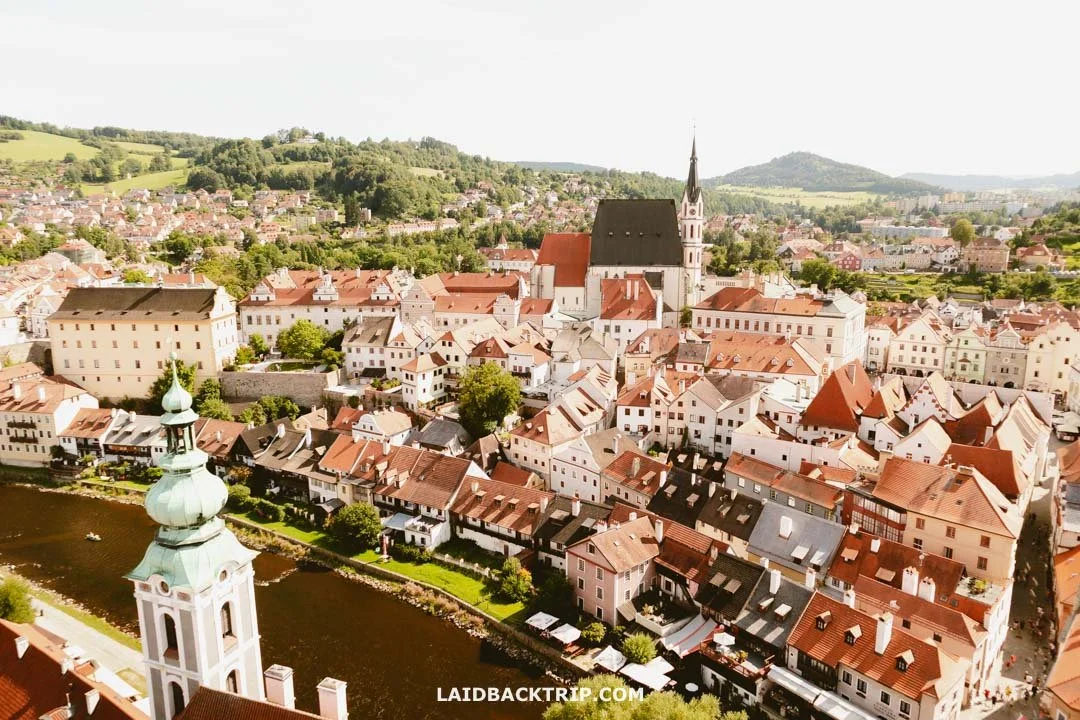
Český Krumlov is super popular with foreign tourists.
Of all the places on this list, Český Krumlov is definitely the most famous among foreign visitors. This small town in South Bohemia became incredibly popular over the years for the exact reasons I just mentioned, but we can't blame anyone for putting this little gem on their itinerary. The hilly setting of the town is striking, as are the views of the deep valley with the meandering Vltava River cutting through it. And the picturesque historic center, with a gorgeous castle perched on a cliff, makes the whole scene look like a postcard.
The centerpiece of the town is the State Castle and Chateau Český Krumlov, featuring a climbable round tower, the picturesque Cloak Bridge, an 18th‑century Baroque theater, and beautiful gardens with a unique Revolving Theater. Below the castle is the charming Latrán district, from which you can cross the Vltava River to the UNESCO‑listed Old Town with the beautiful Church of St. Vitus, the Egon Schiele Art Centrum, and cobblestone streets.
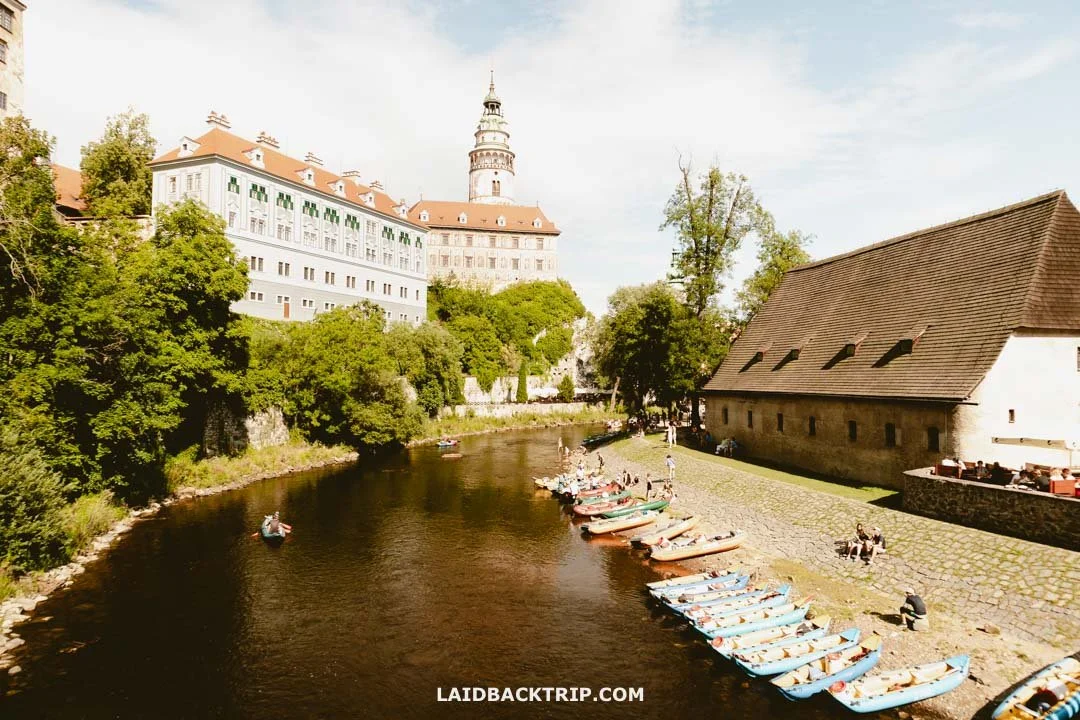
Český Krumlov Castle is a mix of Gothic, Renaissance, and Baroque architecture.
We've been to Český Krumlov more times than we can count, on school rafting trips, with our parents, or just the two of us. And no matter how often we return, the historic town center still amazes us with how stunning it is.
Since it takes about five to six hours to travel to Český Krumlov and back from Prague, be prepared for a full‑day trip. I know this post is about day trips, but it might be worth staying overnight either at Hotel Mlýn or Pension Ametyst to enjoy the peaceful atmosphere after the day‑trippers leave, because the town can get really crowded in peak season, especially with Asian bus tours and locals.
Plus, staying longer in South Bohemia gives you a chance to explore more interesting places along the way, like Tábor (the Hussite town) or České Budějovice (the biggest city in the region), both easily reached by train since they're on the same route.
By the way, we also recommend including nearby Holašovice, a charming UNESCO village with traditional Czech rural architecture, in your day itinerary. It's a really interesting stop, completely different from everything you've seen so far. Without a car, this one is tough to visit, so the only option that makes sense is taking a tour that combines both places from Prague.
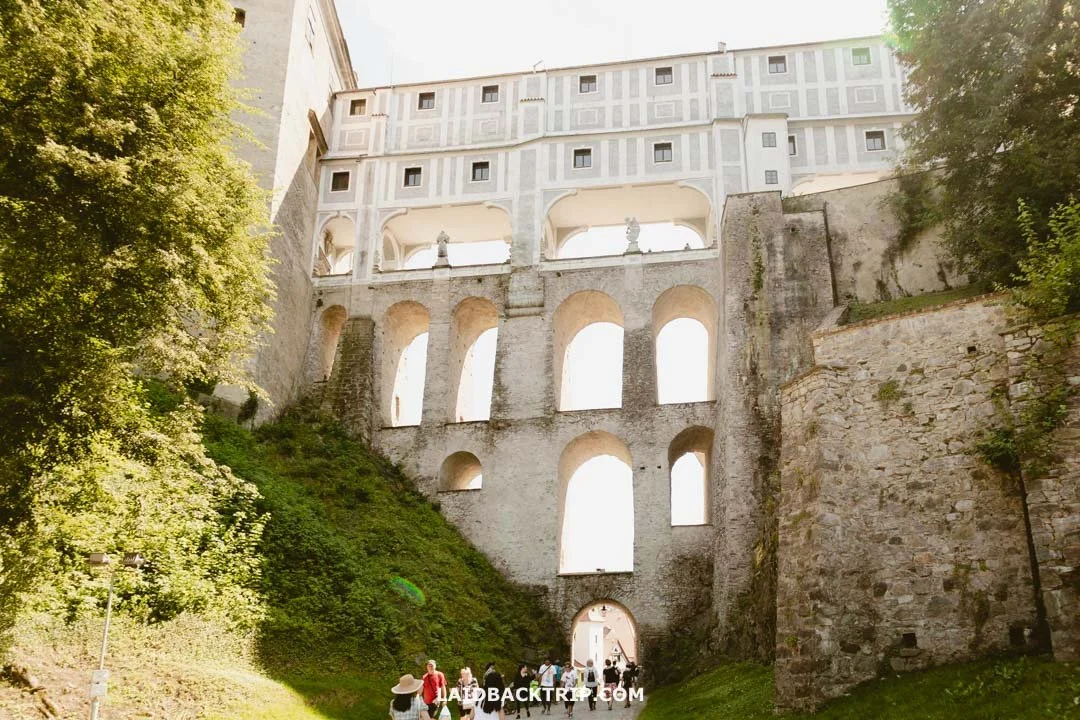
The Cloak Bridge is a three-story arched bridge connecting the fourth and fifth courtyards of the castle.
How to Get to Český Krumlov
From Prague, getting to Český Krumlov on your own is not difficult, but it takes about two and a half hours, whether you take a direct bus or a train with a change in České Budějovice, both departing from Praha hlavní nádraží. Driving is faster, but of course, you need to rent a car first, which adds some extra time. You can also take a tour to Český Krumlov if you want to focus on sightseeing and visit the castle with a guide.
Telč and Třebíč
For the next trip from Prague, I chose Telč and Třebíč, located in the Vysočina Region. These are two separate towns, although very close to each other, so it really makes sense to visit both in one go. Telč is often considered one of the most beautiful towns in the Czech Republic, while Třebíč is home to a well‑preserved Jewish Quarter and Jewish Cemetery.
Both towns earned a place on the UNESCO World Heritage Site list, and they can be visited easily from Prague with a tour or even independently, though that option can be a bit challenging and better suited for seasoned travelers. But more on that later. First, let's talk about what makes these towns so special and why they're worth seeing.
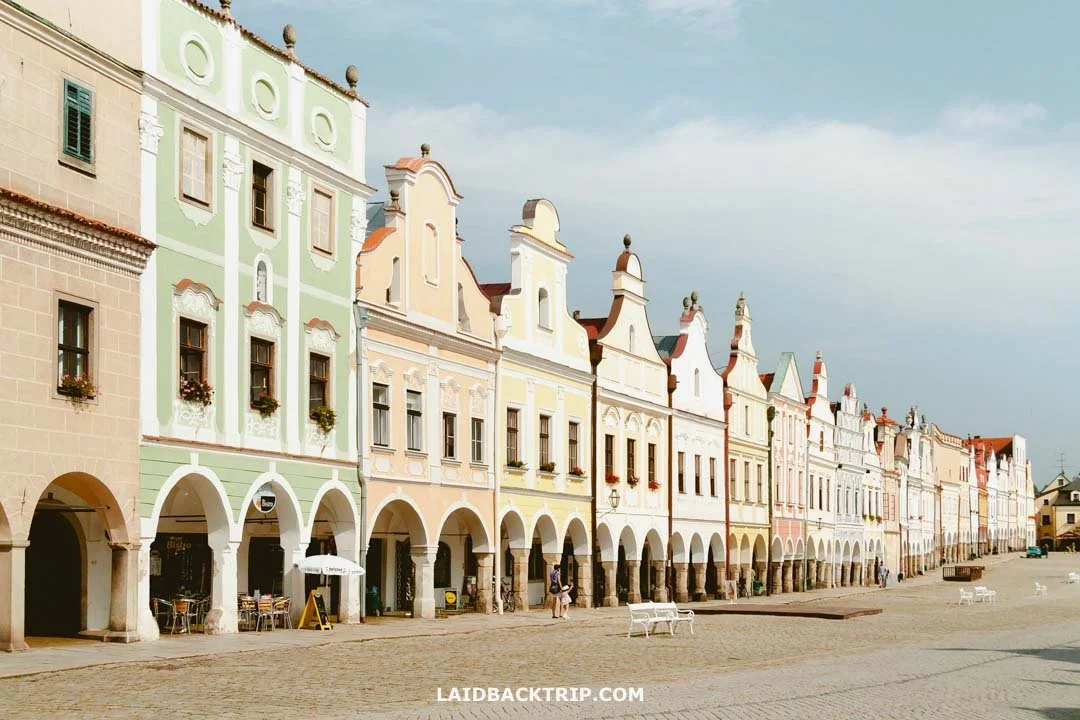
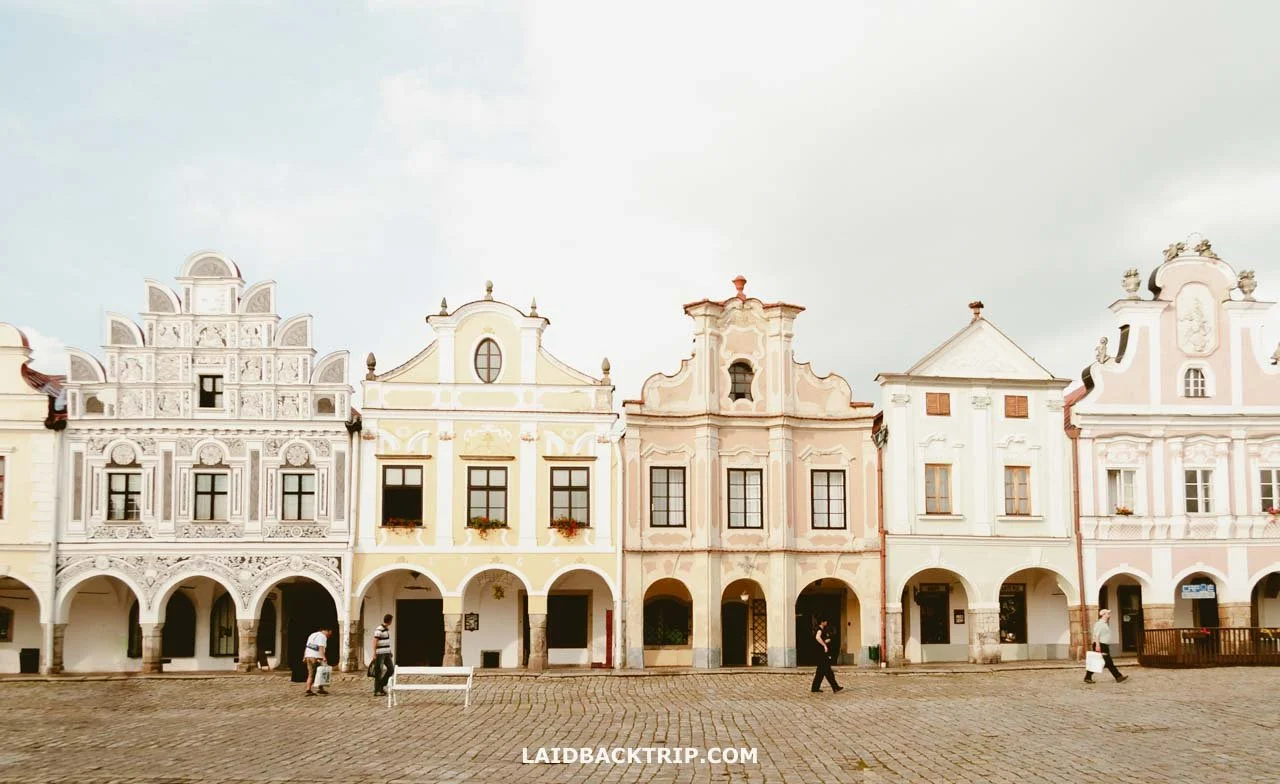
The houses lining the main square in Telč are one of Czechia's Renaissance gems.
The historic part of Telč is all about well‑preserved Renaissance and Baroque architecture, beautifully decorated facades, and one big, stunning square. I know it might sound strange to drag you all the way from Prague just to see a plaza, but it's really that incredible.
Named after a local nobleman who lived here in the 16th century, Zacharias of Hradec Square (Náměstí Zachariáše z Hradce) is lined with a unique set of colorful and ornamented townhouses, archways, and galleries. Each house has high gables and ornate arcades, yet no two facades are identical, creating a picture‑postcard scene, no matter how cliché that sounds. It's very different from Old Town Square and way less crowded.
The first time we came here with Lucie, we got caught in a huge thunderstorm and spent quite a while hiding under one of the archways, but the sunset that followed made the whole place feel completely magical. It was a shame we couldn't stay that day, as the square has some great options like Hotel U Černého orla and Penzion Telč No. 20.
Afterward, don't miss the 16th‑century Telč Chateau, just a short walk from the square. It's a jewel of Moravian Renaissance architecture with interesting interiors and a beautiful park that looks its best in early summer. Also, be sure to climb the tower for amazing views of the town, which is surrounded by large ponds that once served as defensive moats.
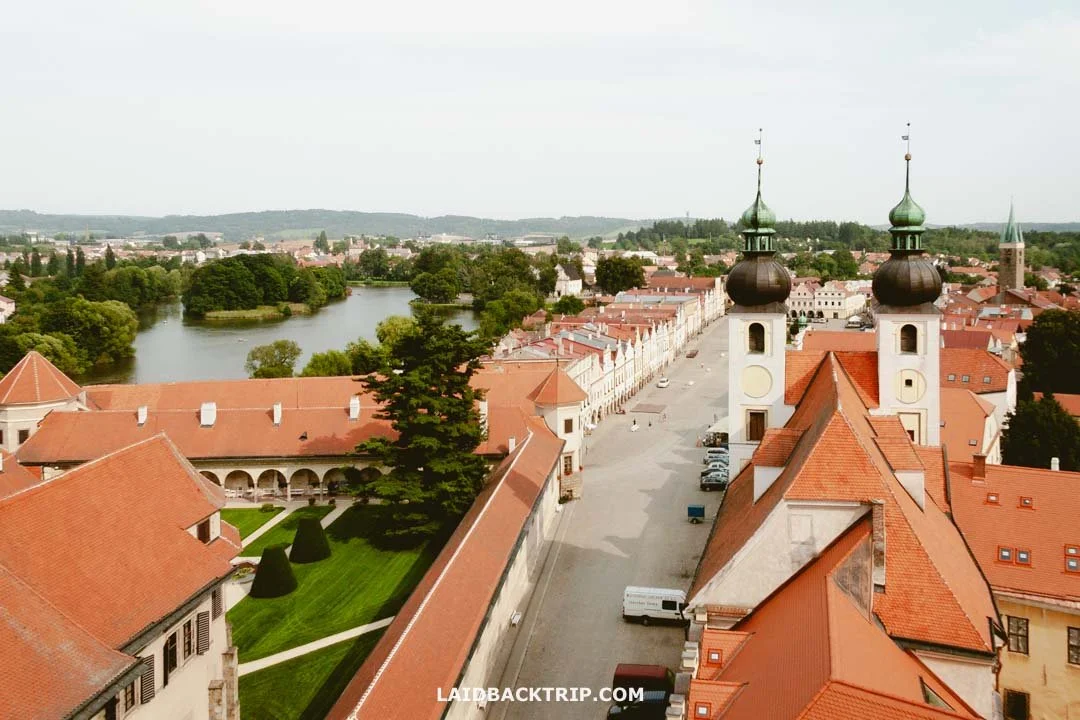
The views of Telč from the late Romanesque tower are pretty amazing.
Třebíč lies on both banks of the Jihlava River and is one of Czechia's lesser‑known gems. Its historic center is all about old architecture, history, and centuries of coexistence between Jewish and Christian communities. The first mention of Třebíč dates back to 1101, when the Benedictine Monastery was founded here, though the first official record comes from 1277. The Jewish Quarter was established in the 16th century, although Jews had lived here even earlier.
Start by exploring the Jewish Quarter, because walking through its narrow lanes and arched passages really feels like stepping back in time. The quarter has two synagogues (the Front and Rear Synagogues), the Rabbi's House, Seligmann Bauer's House, Subak's Tannery, a German school, and even a poorhouse.
And if you'd rather turn this day trip into a two-day adventure, you can stay either at Hotel Joseph 1699 or Apartmány u Synagogy right in the Jewish Quarter.
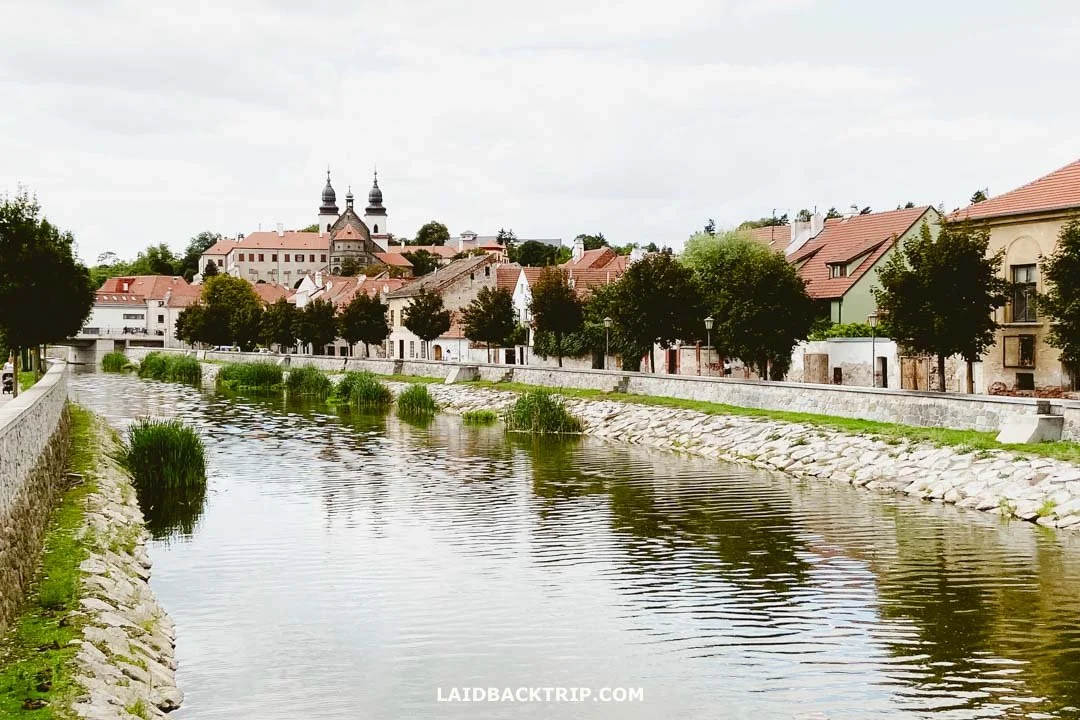
The Jewish Quarter sits on the left bank of the Jihlava River, as does St. Procopius Basilica, which towers above it.
A five‑minute walk north takes you to the Jewish Cemetery, with around 3,000 tombstones, making it one of the largest in the Czech Republic. Even though the quarter is small, it's well‑preserved and restored, and absolutely worth visiting, as there aren't many places like this, not just in Czechia but anywhere outside Israel.
Right next to the Jewish Quarter stands the St. Procopius Basilica, a masterpiece of Romanesque‑Gothic architecture. That's where you should head next. Built into a Benedictine monastery in the 13th century, it features a stunning stone‑carved entrance, a beautiful nave, and a rare crypt.
The crypt is one of the most valuable parts of the basilica, with 50 decorated columns and half‑columns and original wooden ceiling supports that are more than 700 years old. Next to the nave is the Abbot's Chapel, which contains original Gothic paintings. Just make sure to check the schedule first, as the basilica is usually accessible only with a guide.
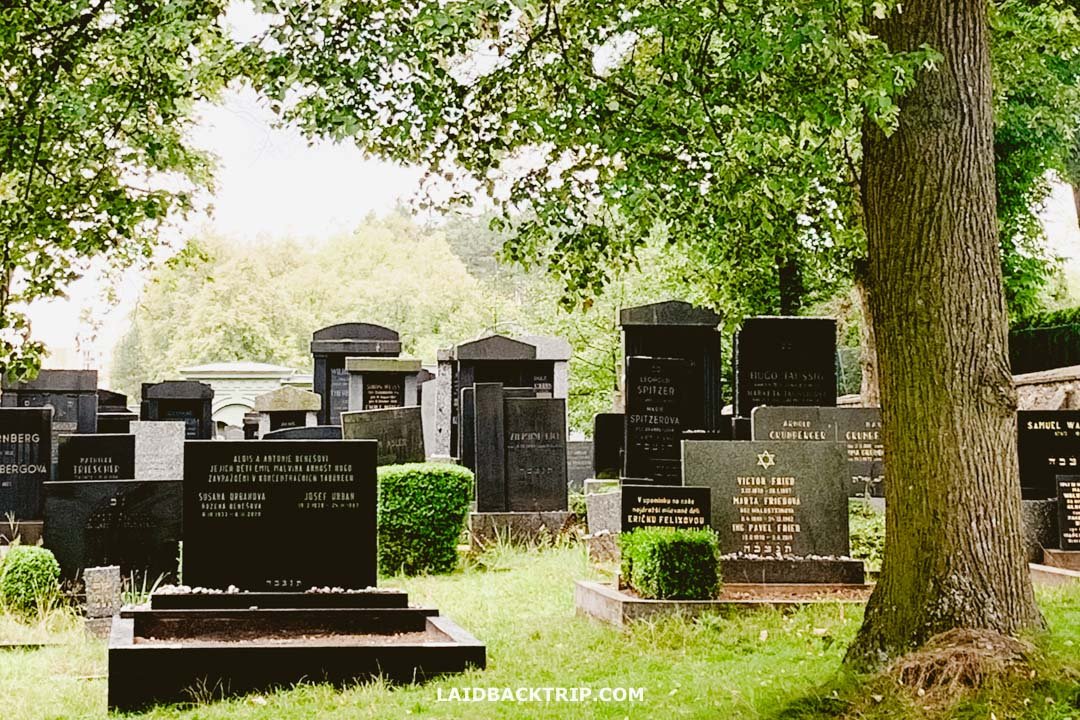
The Jewish cemetery is just outside Třebíč's Jewish Quarter.
Before heading back to Prague or returning to nearby Telč, if you're doing the trip the way we suggest below, make sure to stop at Charles Square, one of the largest town squares in the Czech Republic, featuring the ornate Painted House with its beautiful sgraffito facade. And for panoramic views, you can climb the Town Tower attached to St. Martin's Church.
How to Get to Telč and Třebíč
Telč is a 2‑hour drive from Prague, and it takes another 30 minutes by car to reach Třebíč. You'll need to rent a car or join an organized tour, because getting there by public transport would be too much of a hassle this time. Otherwise, you'd probably have to focus on just one town, which would be a shame.
Using public transport from Prague to reach either Telč or Třebíč makes more sense only if you plan to stay overnight, since traveling between the two takes quite a bit of time. A direct bus runs from Prague's Florenc station to Třebíč, so it's easier to visit this town first. The ride takes about two and a half hours. From Třebíč, you'd need to take another bus to Telč, which adds about 30 to 45 minutes depending on the connection. Getting from Telč back to Prague is a bit more complicated, as you need to change buses in Jihlava before returning to Florenc. The return trip takes almost three hours. As I said, taking a tour really makes the most sense here.
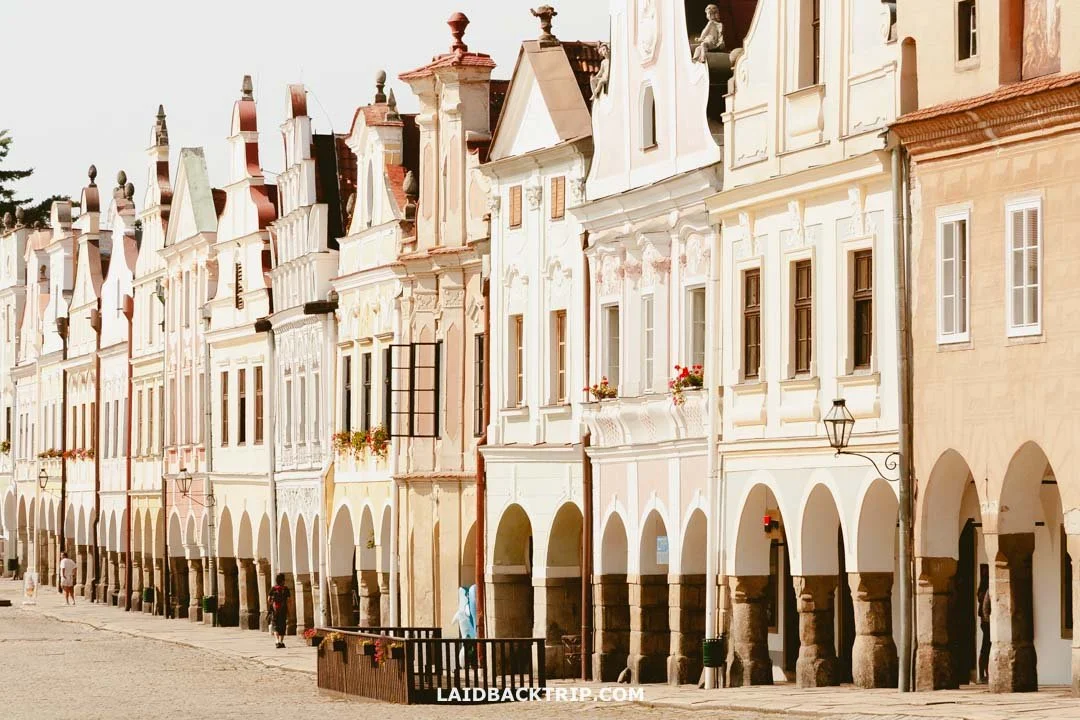
The houses on Telč's Zachariáš of Hradec Square look beautiful from every angle.
Karlovy Vary
I know that exploring Prague can be overwhelming, because there's simply so much to see. If you feel the same, then I'd suggest visiting one of our spa towns, where time just moves more slowly. If that sounds tempting, you can't go wrong with Karlovy Vary, the most famous spa town in the Czech Republic, which also happens to be fairly easy to visit from Prague on a day trip. I'm not going to pretend the town is without tourists, quite the opposite, but it's definitely less hectic than the capital.
And what can you expect from Karlovy Vary, which was, according to legend, founded in 1370 by Emperor Charles IV? It's the combination of healing spa treatments, thermal springs, gorgeous architecture, elegant colonnades, and beautiful surroundings. But it's really the thermal springs that draw so many people here. There are 15 main springs and dozens of smaller ones not accessible to the public, all believed to have healing effects on digestive and metabolic issues. The most impressive is the Vřídlo (Sprudel), a geyser that shoots 72°C water up to 12 meters high inside a modern glass pavilion.
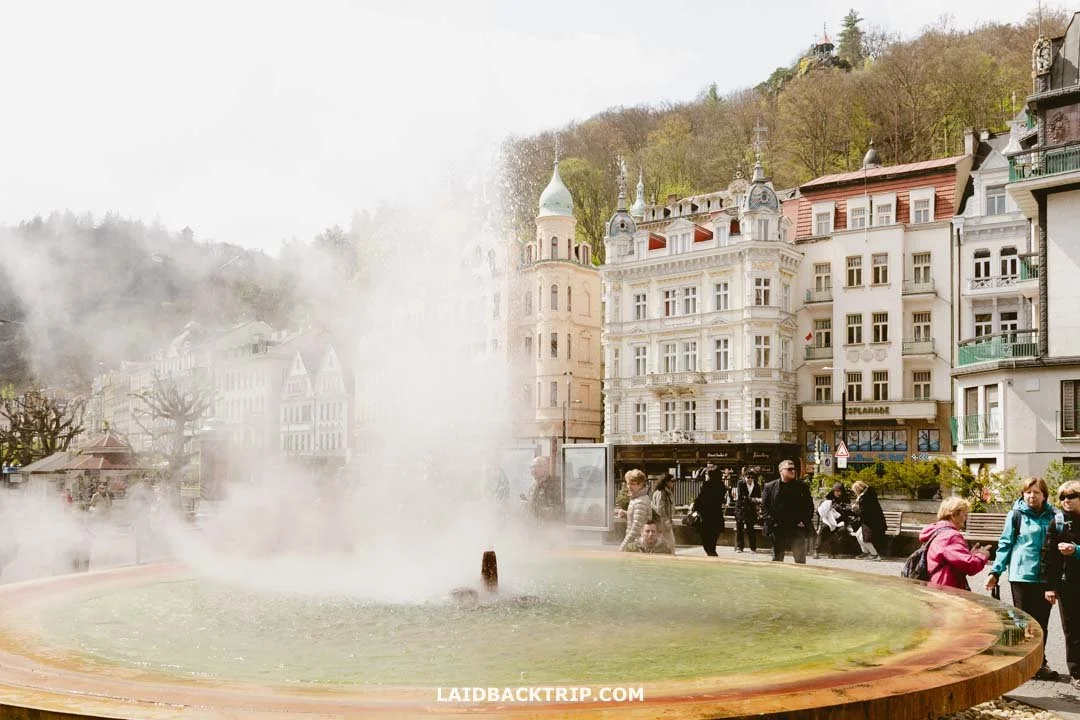
The Vřídlo fountain sits just outside the colonnade.
The city's architecture is defined by elegant Neoclassical and Art Nouveau colonnades, with the most famous being the Mill Colonnade (Mlýnská kolonáda), with its 124 Corinthian columns, and the wooden Market Colonnade (Tržní kolonáda). Beyond the springs, the Diana Observation Tower offers panoramic views of the town and is accessible by a historic funicular. Karlovy Vary is also home to Becherovka, a well‑known herbal liqueur you can learn about in the Jan Becher Museum.
The city's architecture is defined by elegant Neoclassical and Art Nouveau colonnades, with the most famous being the Mill Colonnade (Mlýnská kolonáda), with its 124 Corinthian columns, and the wooden Market Colonnade (Tržní kolonáda). Beyond the springs, the Diana Observation Tower offers panoramic views of the town and is accessible by a historic funicular. Karlovy Vary is also home to Becherovka, a well‑known herbal liqueur you can learn about in the Jan Becher Museum.
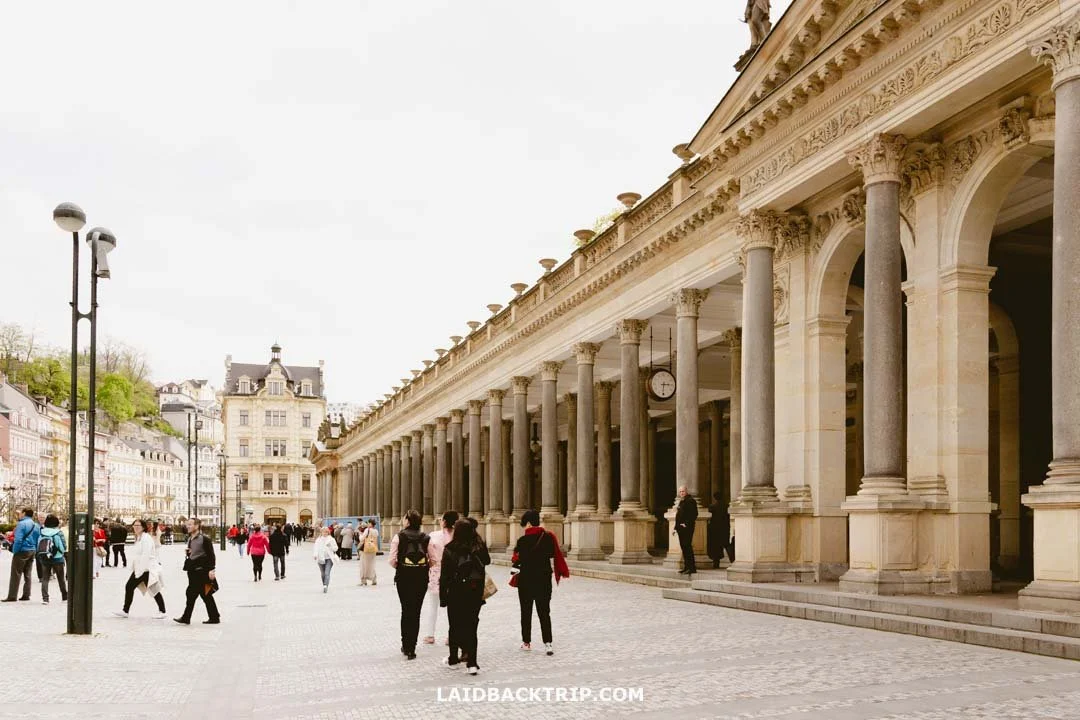
Mill Colonnade is the most beautiful colonnade in Karlovy Vary.
Every year at the beginning of July, Karlovy Vary hosts the biggest film festival in the Czech Republic (and Central Europe), and the city becomes a home for film lovers for a whole week. It's an amazing experience if you come for the movies, an overnight stay at Grandhotel Pupp, and the chance to spot Hollywood celebrities, but if you're here just for the spa town, we'd definitely avoid that week.
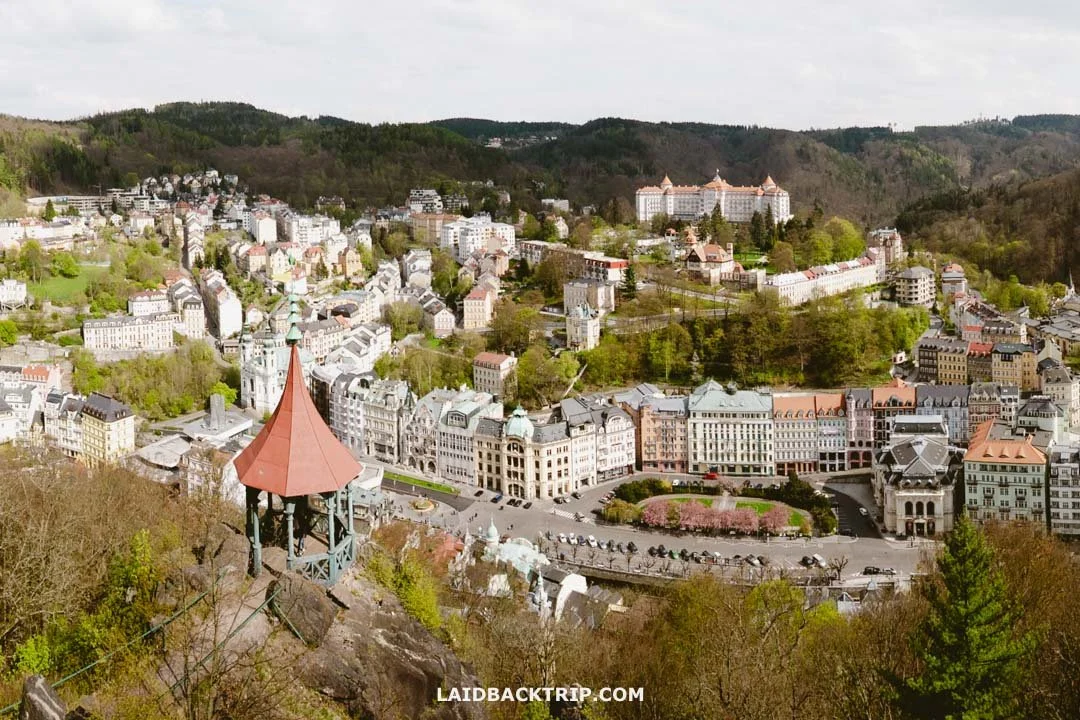
Karlovy Vary isn't just about hot springs and spa treatments, as the town also has some great walking trails
When you're in town, don't forget to buy a spa cup (lázeňský pohárek), a uniquely shaped porcelain cup used to drink mineral water from the springs. It's a classic tradition in Czech spa towns and makes a great souvenir. By the way, this region has more spa towns like Mariánské Lázně and Františkovy Lázně, and while I have to admit we like them a bit more because they're more laid‑back and less crowded, we'd still recommend Karlovy Vary for first‑timers.
How to Get to Karlovy Vary
Karlovy Vary lies in the western corner of the Czech Republic near the German border, and it takes a little over two hours to get there from Prague. If you want to go from Prague to Karlovy Vary on your own, your best option is to take a direct bus from Florenc or Hradčanská, since the trains on this route are slow, unless you prefer to drive the 120‑kilometer stretch. As this is the most famous spa town in Czechia, there are also plenty of tours to Karlovy Vary departing from Prague every day.
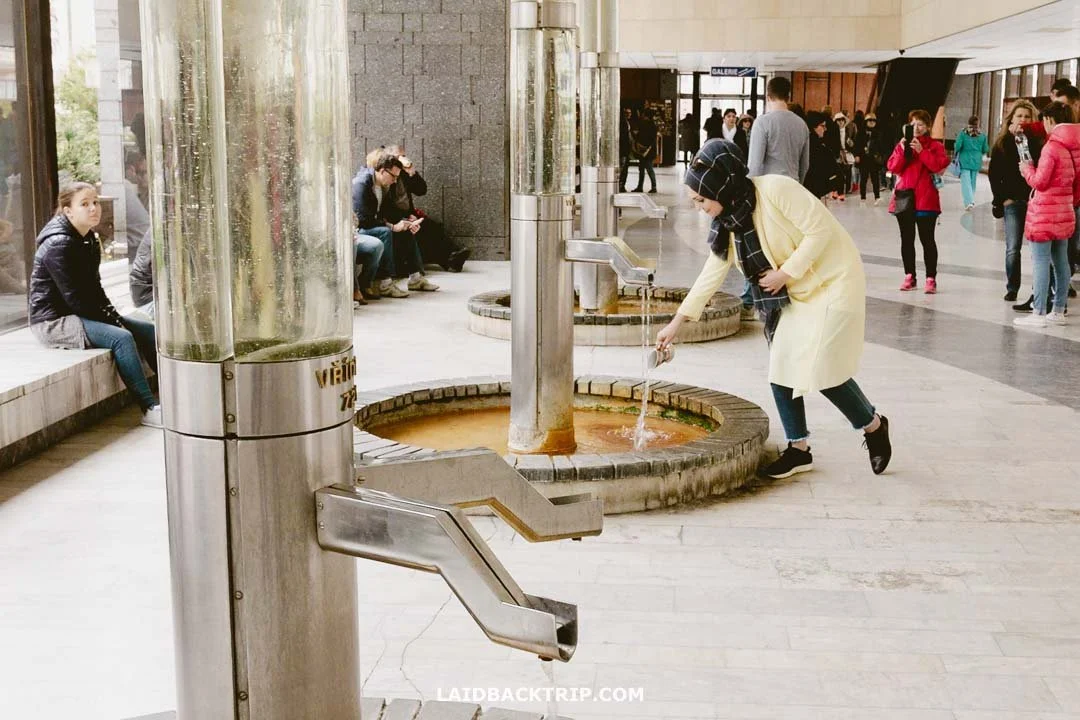
The mineral water from the Vřídlo hot spring has a very distinctive taste.
Kutná Hora
If you're really not sure which day trip to pick from this list, I'd say go to Kutná Hora. I'm not entirely sure what it was about this small town, but I somehow found the whole trip there the most relaxing. And I know I just talked about a spa town a moment ago. But Kutná Hora offers that kind of experience where you forget about everything else and simply enjoy its beauty. And its history, of course. Plus, it's really easy to reach from Prague.
In the Middle Ages, Kutná Hora was known as the treasury of the Czech Kingdom. Famous for its silver ore mines and minting coins (Groschen), it quickly became one of the most important towns of the era, even competing economically with the capital, Prague. The name of the city comes from two Czech words: 'kutat', which roughly translates to mining, and 'hora', which means mountain. Put them together, and you get Kutná Hora.
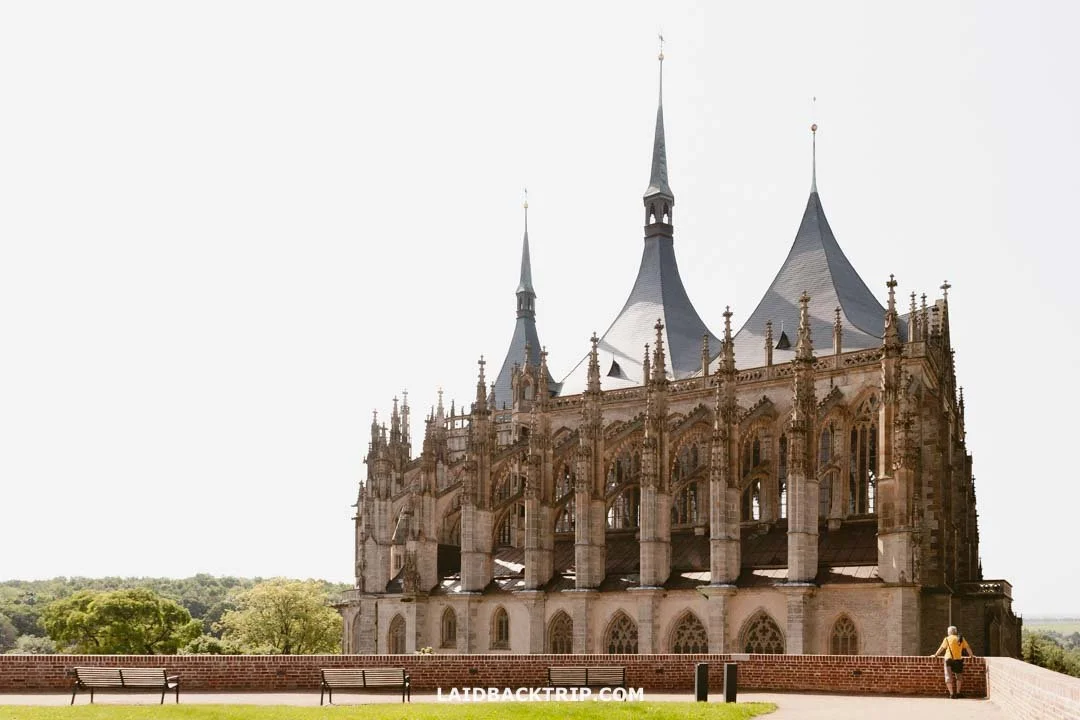
St. Barbara's Church is just as stunning on the inside as it is on the outside.
So what should you expect from Kutná Hora, a UNESCO World Heritage site sitting less than 70 kilometers east of Prague? The most famous place to see is St. Barbara's Church (Chrám svaté Barbory), named after the patron saint of miners. This 14th‑century Gothic church perched on a hill has breathtaking interiors and rare medieval frescoes with mining themes, making it one of the most iconic churches in the Czech Republic.
Once you're done with the church, stroll down Barborská Street, a terrace lined with Jesuit college statues that offers stunning views of the valley below (and of the church if you turn around). Then wander through the historic core of the town, visit the mining museum, and learn everything about the history of Kutná Hora. The Italian Court, a former royal residence and mint where the famous Prague Groschen was struck, is a must‑see, as is the Czech Museum of Silver, which includes a walk through an actual medieval mine.
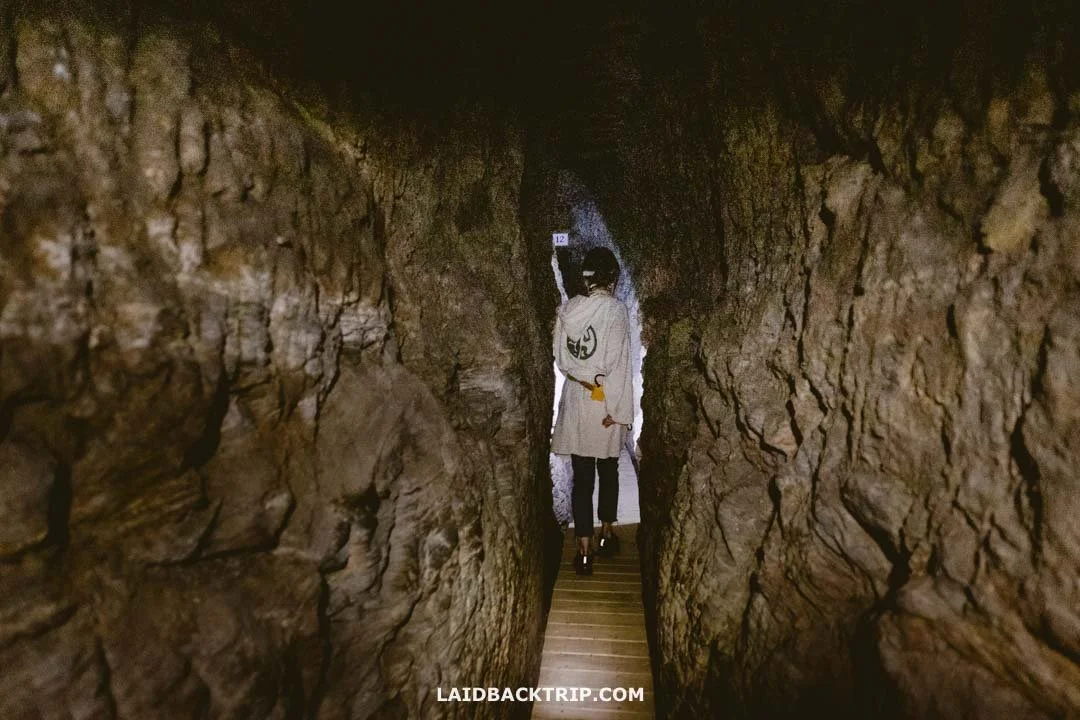
Touring the medieval silver mine was definitely one of the highlights of Kutná Hora for us.
Another reason to visit Kutná Hora is the fascinating church in the nearby village of Sedlec. Yes, we're talking about the famous Sedlec Ossuary, which holds a collection of 40,000 bones and skeletons and is called the Bone Church for that very reason. A short walk from here is the Church of the Assumption of Our Lady and Saint John the Baptist, another Gothic gem. Sedlec is just over two kilometers from Kutná Hora, and you can either walk or take a train. Or follow in our footsteps and rent a bike, which makes traveling between both sites much quicker.
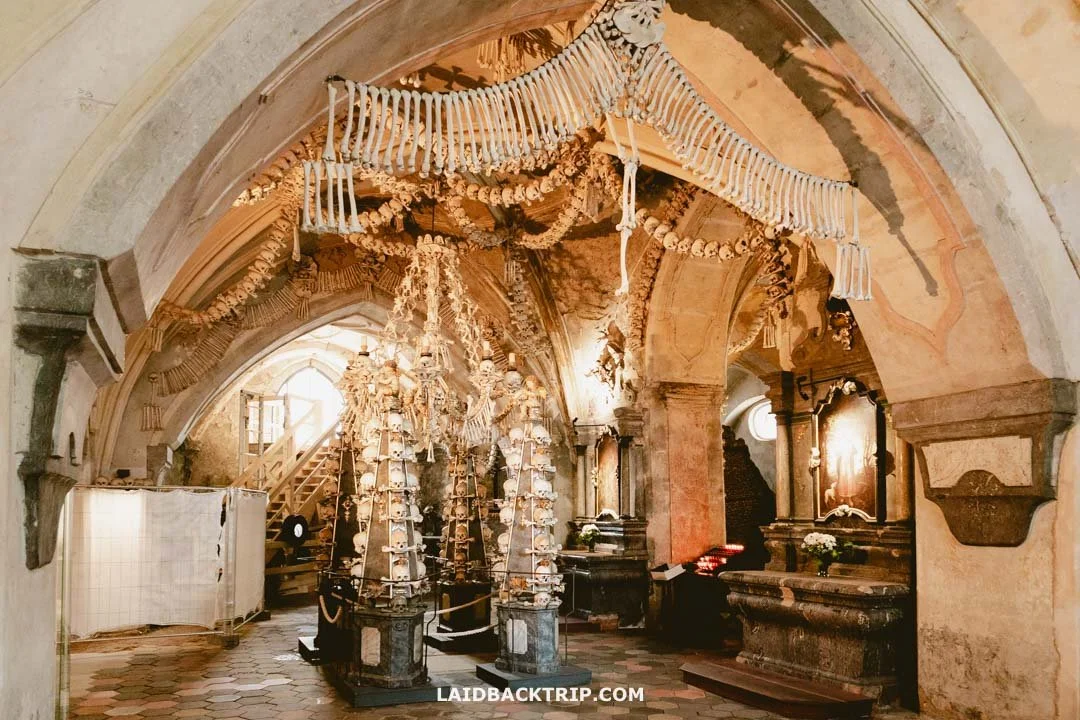
The Bone Church in nearby Sedlec is another highlight of this day trip.
In other words, you might end up spending a full day in Kutná Hora, especially if you visit Sedlec, so take it slow and enjoy it. We also visited the nearby Romanesque Church of St. James the Greater in Jakub, but that one is mostly for travelers who want to get off the beaten path. We saw all the main sights in a day, but if you'd prefer to stay the night, Hotel Mědínek and Hotel U Kata are popular local options.
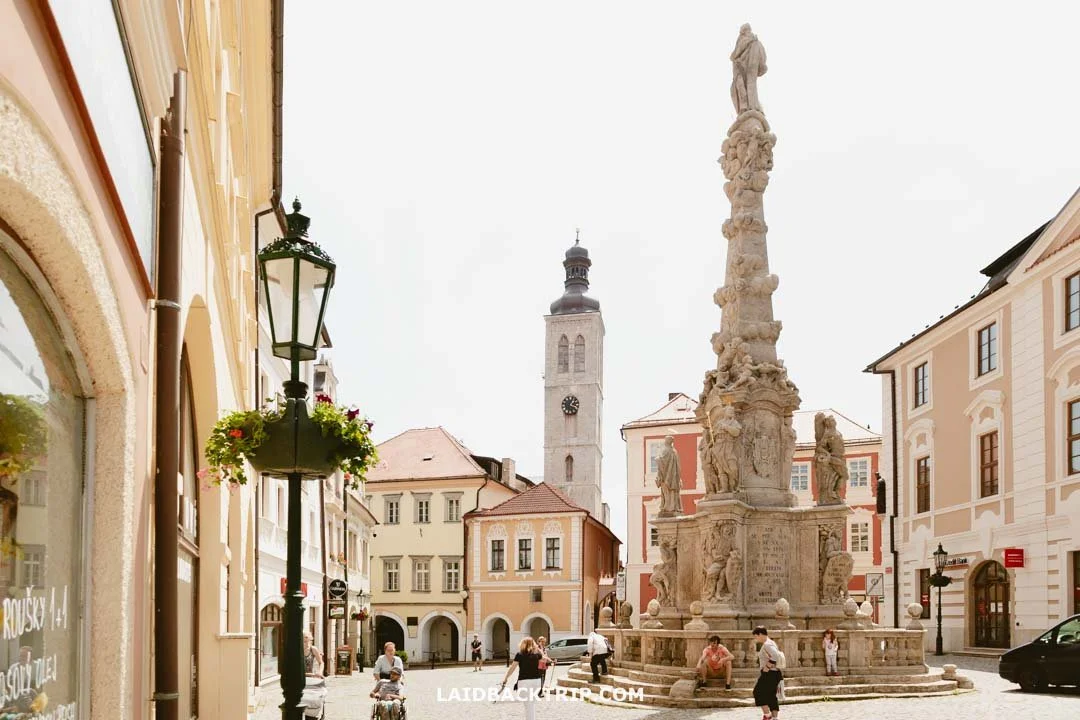
Kutná Hora's historic center is just gorgeous and easy to explore on foot.
How to Get to Kutná Hora
A direct train from Praha hlavní nádraží is the quickest option for getting to Kutná Hora if you want to do the whole trip on your own. The journey takes about 50 minutes, although the train only runs about every two hours. There's also the option to change to another train or bus in nearby Kolín, but that route takes slightly longer. If you're thinking about driving, it takes roughly 50 minutes to travel between the two places. The easiest way to get to Kutná Hora is with a tour, and the added bonus is that you get to explore all its highlights with a guide.
Karlštejn Castle (Karlštejn)
If you ask any Czech person, including us, what the most famous castle in the country is, you're going to hear the answer Karlštejn quite often. Obviously, since we're based in Prague, you have to tour Prague Castle first, but once you're done, you really should head out of the city and explore Karlštejn next. Czechia is home to some of the most beautiful castles in the world, and this medieval gem is right at the top of that list.
In 1348, the King of Bohemia and Holy Roman Emperor Charles IV founded Karlštejn Castle not as a residential palace but as a place to safeguard the Imperial Regalia and store the Bohemian crown jewels (today you can see a replica there). Over the centuries, Karlštejn survived major sieges by the Hussites in 1422 and by Swedish forces during the Thirty Years' War. The crown jewels were eventually moved to Prague and Vienna for safety. Today, the castle is one of the most popular attractions in Czechia.
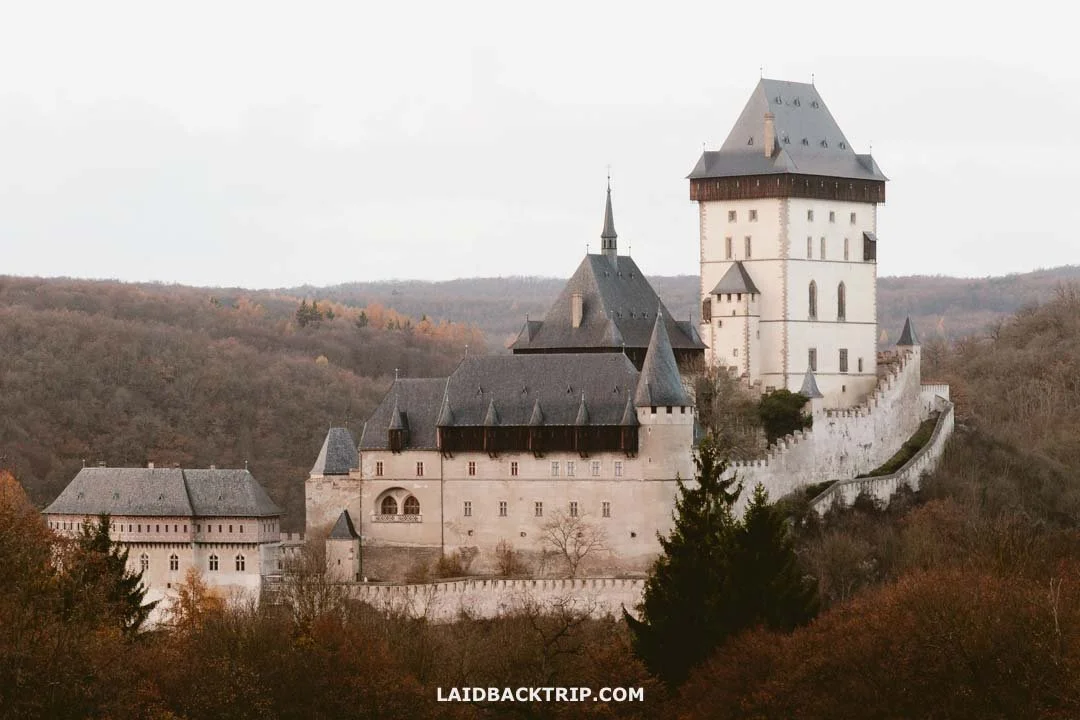
For me, Karlštejn is the most beautiful castle in the Czech Republic.
Karlštejn, dominated by the Great Tower, stands on a rocky hill about 300 meters above sea level and rises above the valley and forested hills like an impenetrable fortress. From the village, it's about 1.2 kilometers to the castle, and the last stretch is a steep uphill walk. If you enjoy hiking, there are some beautiful trails in the area as well. As one of the most iconic Czech landmarks, Karlštejn is extremely popular among locals and has appeared in many movies and historical novels.
The basic tour takes you through the Imperial Residence of Charles IV and serves as a great introduction to the castle. The good news is that it's also available in English. Then there's the Karlštejn Castle Chapels tour, usually chosen by locals who have already visited before (also available in English). The final type of tour lets you explore almost the entire castle, including areas that are normally inaccessible, but it's quite pricey and usually sells out unless you book well in advance.
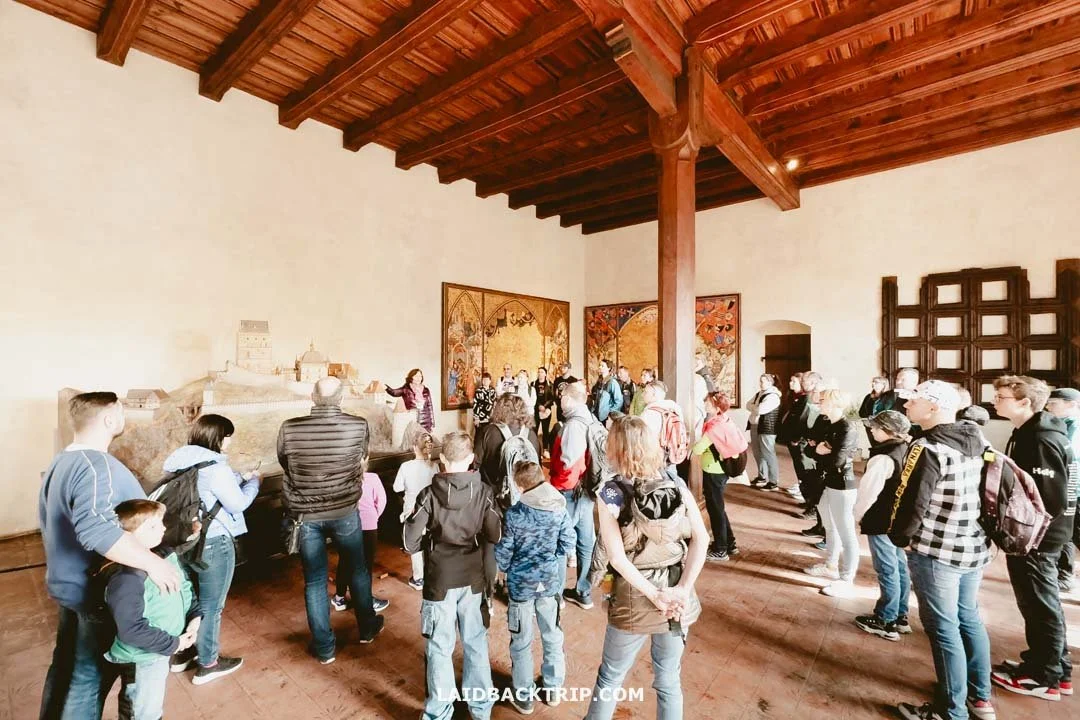
The guided tour is a great way to get an introduction to Karlštejn Castle.
Of course, Karlštejn isn't the only must‑visit castle in the country. There are many incredible castles scattered across Czechia. Some of our favorites are Hluboká nad Vltavou Castle in South Bohemia, Lednice Chateau in South Moravia, and Křivoklát Castle in Central Bohemia. But since Karlštejn is the easiest to visit from Prague, we'd start there and see how much you enjoy Czech castles before exploring further.
How to Get to Karlštejn
My favorite part about Karlštejn is how easy it is to reach from Prague by train. A train leaves from Praha hlavní nádraží every 30 minutes, and the whole journey takes around 40 minutes. Once you arrive in Karlštejn, the castle is about two kilometers from the train station, so you can easily walk the rest of the way.
Of course, an even easier option is taking a tour to Karlštejn. It isn't as necessary here as it is for other spots on this list, on the other hand, most tours also stop at the nearby Koněprusy Caves or other sites. The village is small but has some nice accommodations, like Hotel Karlštejn, in case you want to take a break from the capital.
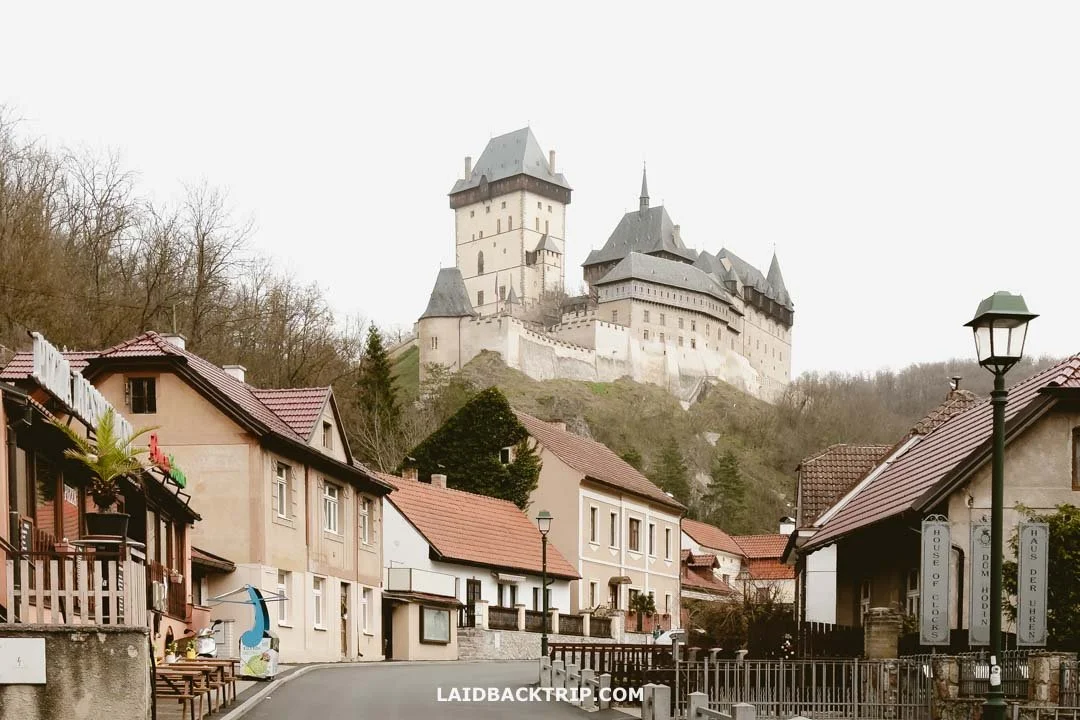
It's a nice walk from the village up to Karlštejn Castle, which towers above it.
Bohemian Switzerland National Park (Národní park České Švýcarsko)
Bohemian Switzerland (sometimes called Czech Switzerland) is, in my opinion, the most picturesque national park we have in the Czech Republic. Drive only two hours north from the Czech capital, and you'll arrive in a natural heaven filled with amazing rock formations, deep canyons, narrow gorges, rolling hills, traditional architecture, and great hiking trails. So if you're already tired of the crowds at sites like Charles Bridge, this is the perfect escape from the hectic city.
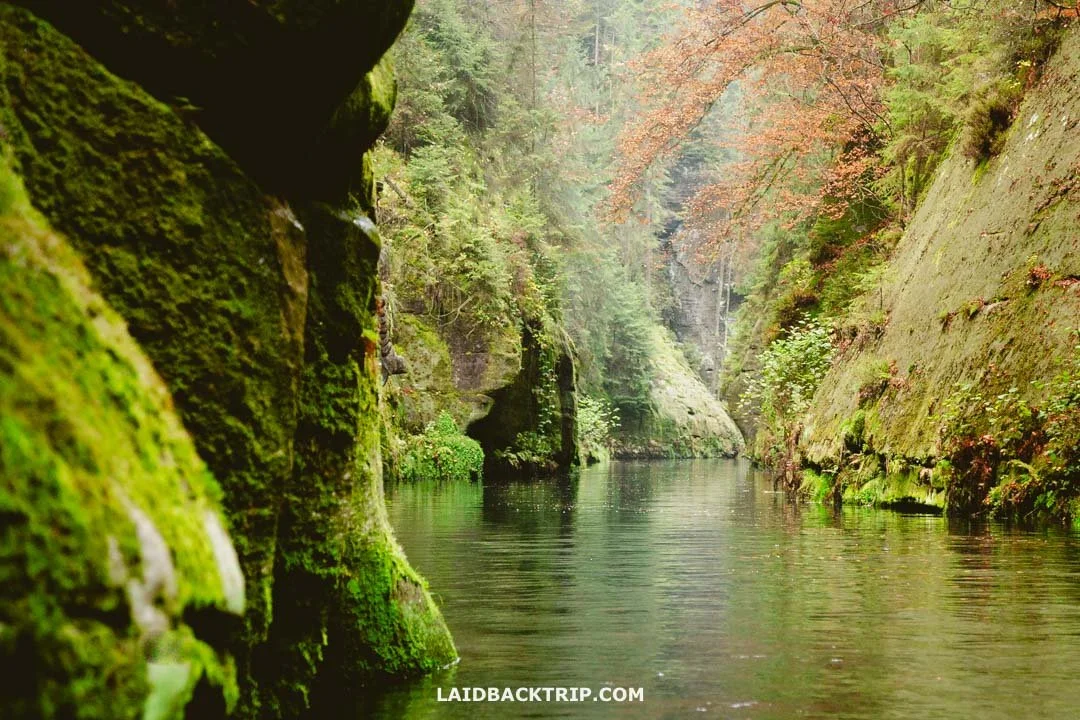
A boat ride through the Wild Gorge isn't very long, but for us, it was one of the highlights of our trip to Bohemian Switzerland.
Bohemian Switzerland NP is best explored on foot, since almost all of its scenic viewpoints are accessible only by one of the many hiking trails. And because this isn't a high mountain range like Krkonoše or Jeseníky, the trails aren't that difficult but are incredibly beautiful, making it an ideal destination even for less experienced hikers. While we love the hiking itself, we strongly recommend taking a boat trip through the incredible Edmund and Wild Gorges.
World Nomads provides travel insurance for travelers to cover their trip essentials, including sports and adventure activities.
SafetyWing is affordable travel insurance for backpackers, long-term travelers, and digital nomads.
The main highlight of Bohemian Switzerland is Pravčická brána, the largest sandstone arch in Europe. This unique natural bridge has a span of 26.5 meters and stands 16 meters high, which is why it's considered one of the greatest natural treasures in the Czech Republic. It's the symbol of the park and a place you absolutely shouldn't miss.
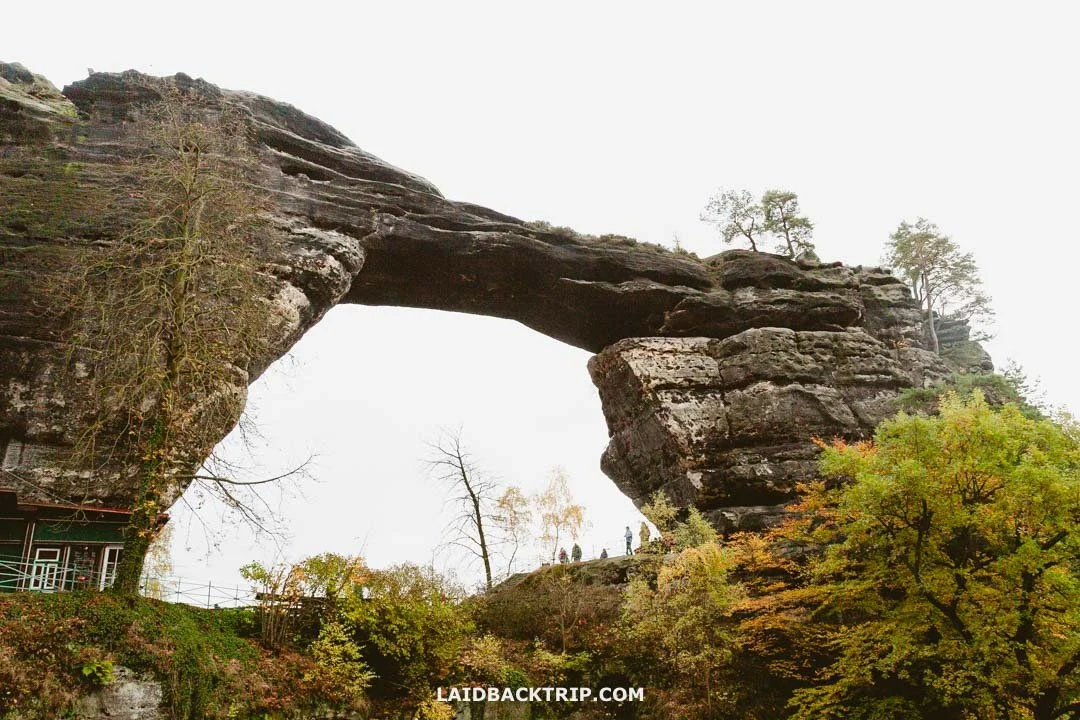
Pravčická brána is the symbol of Bohemian Switzerland.
You can also visit the northern Saxon part of the national park, which lies just across the border in Germany. You'll need more time for this, and one day probably won't be enough (we can guarantee it really won't). The highlights of Saxon Switzerland include the Bastei Bridge, a stone bridge linking several massive rock formations, Königstein Fortress, a huge hilltop fortification, the jagged Schrammsteine rocks, and the historic Kirnitzschtal Tramway.
This national park is an all‑year‑round destination, but we think Bohemian Switzerland is at its most beautiful in autumn. It's the time when the foliage changes color and the landscape turns into a palette of fall shades. The park is home to deer, falcons, bats, and owls, and you might spot some of them if you start hiking early, which is also a great way to avoid the crowds, especially in summer. The incredible landscapes attract not only tourists but also filmmakers, and several scenes from The Chronicles of Narnia and Carnival Row were shot here.
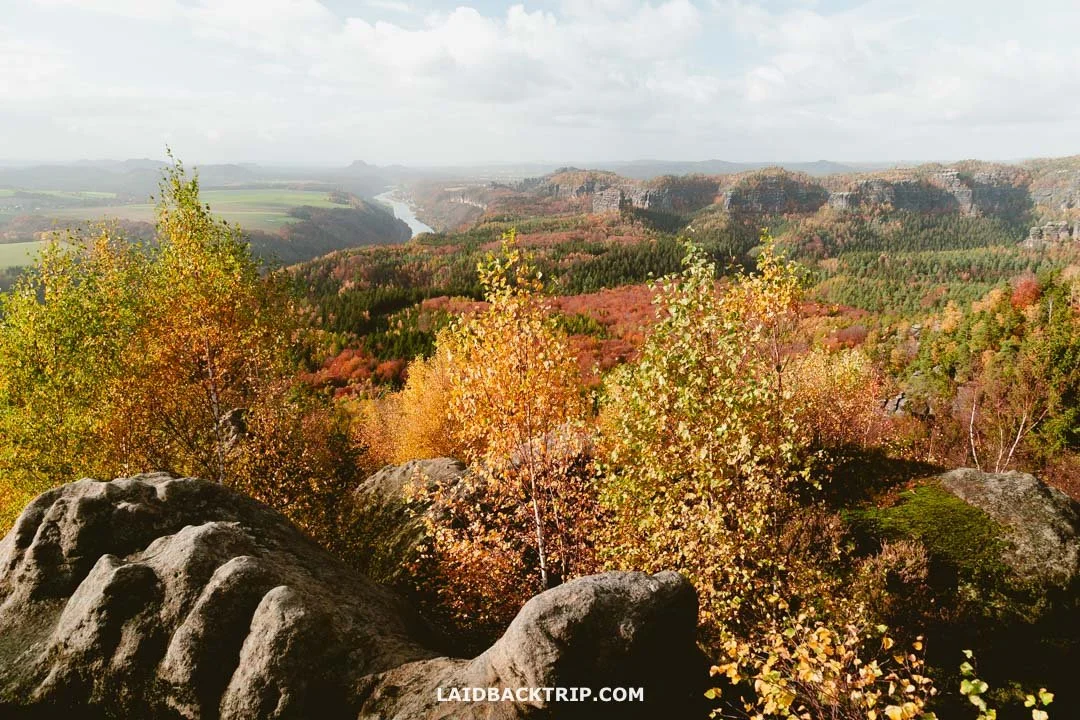
Bohemian Switzerland is just spectacular when the autumn colors arrive.
In 2022, a devastating fire damaged a large part of Bohemian and Saxon Switzerland, and many trails were closed. As of 2026, not everything is open yet, but the situation is improving quickly. Nature has shown how incredibly fast it can recover even from the worst events. If you've visited Bohemian or Saxon Switzerland recently, let us know in the comments below how your experience was.
How to Get to Bohemian Switzerland
Bohemian Switzerland is one of those places that, while you can reach it on your own, is probably best visited on a guided tour. The park itself is relatively small (compared to Šumava, for instance), but exploring both parts takes some proper planning. If you want to use public transport, we would probably take a train from Prague to Děčín and then continue by bus to Hřensko. The whole trip takes about two hours one way. Hřensko is a tourist village with many accommodations, such as Wellness Hotel Praha, for those who want more time to explore the area.
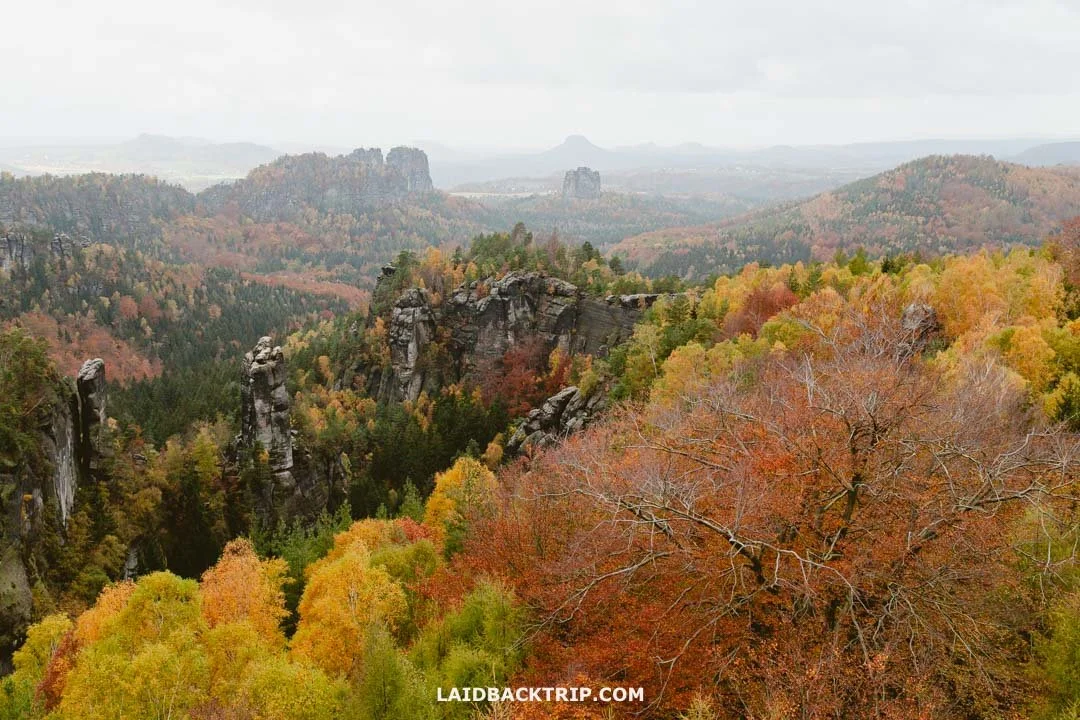
Saxon Switzerland is just as stunning as the area on the Czech side of the national park.
Pilsen (Plzeň)
You can't leave Czechia without visiting a brewery, and there's no better place to go than the birthplace of lager beer, Pilsen. I know, I saved the best for last. But even if beer isn't really your thing, you can focus on the more everyday sights like the cathedral, puppet museum, synagogue, or the historic underground, because Pilsen is absolutely worth seeing on its own. We'll start with the beer, though.
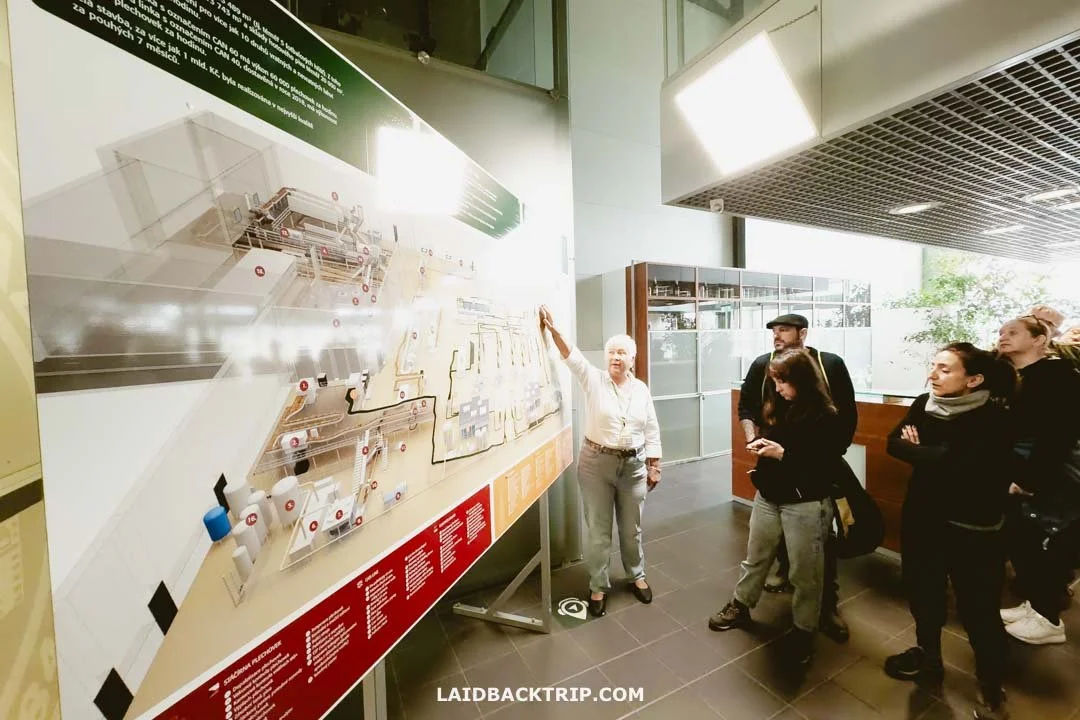
We also had to do the tour of the Pilsner Urquell brewery.
By a decree from King Wenceslaus II (who also officially founded the city in 1295), residents were allowed to brew beer in Pilsen. The problem was that they brewed it in a very uneducated way, and the results were not great, to put it mildly. The quality fluctuated from batch to batch for centuries until everything changed in 1842, when a German master brewer created a new type of beer, the iconic Pilsner lager.
Today, the city is home to Czechia's most famous and popular brewery. And yes, there's the Pilsner Urquell Experience in Prague, but it's nowhere near as good as visiting the place where the beer is actually brewed. Not that long ago, we took a tour of the Pilsner Urquell brewery, and it was really great. The bottling plant was huge, the brewhouse was fascinating, the historic cellars were impressive, and the beer tasting was fun too.
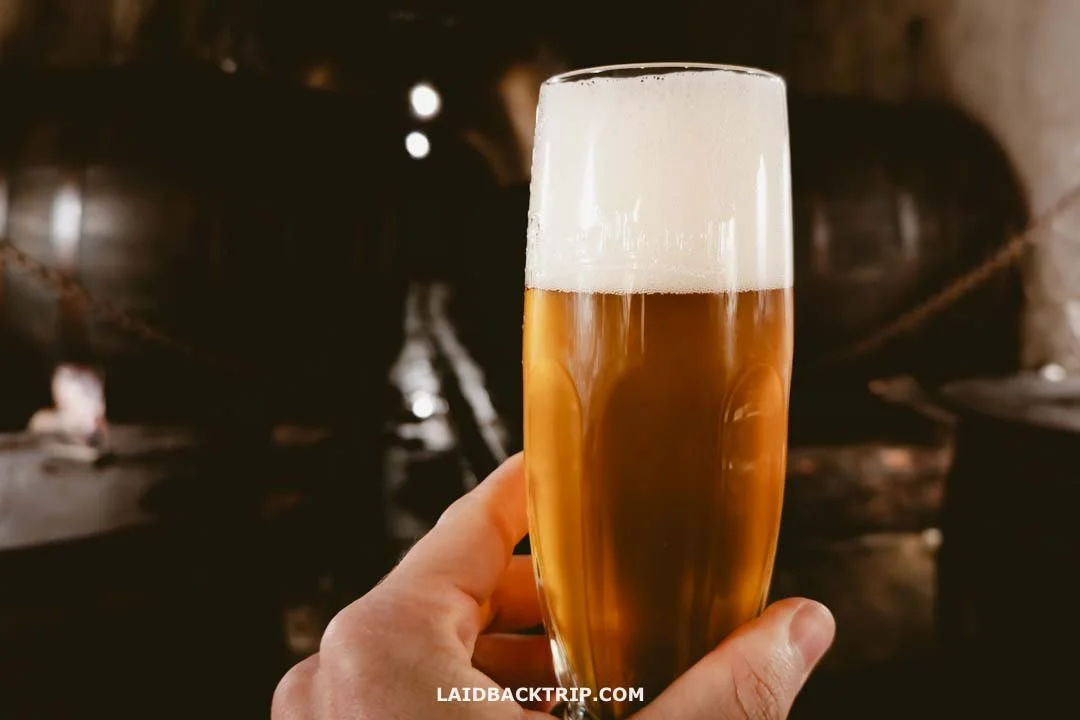
The beer tasting in Pilsner Urquell's historic cellar was a fun experience.
As I said, the city has much more to offer than just beer, so you can easily spend a full day exploring. So what is there to see and do in Pilsen? The historical center is very compact, and when we visited, we explored the whole area on foot. Visit the Cathedral of St. Bartholomew, the Great Synagogue (the second largest in Europe), the Renaissance Town Hall, the historic underground network, and of course the brewery.
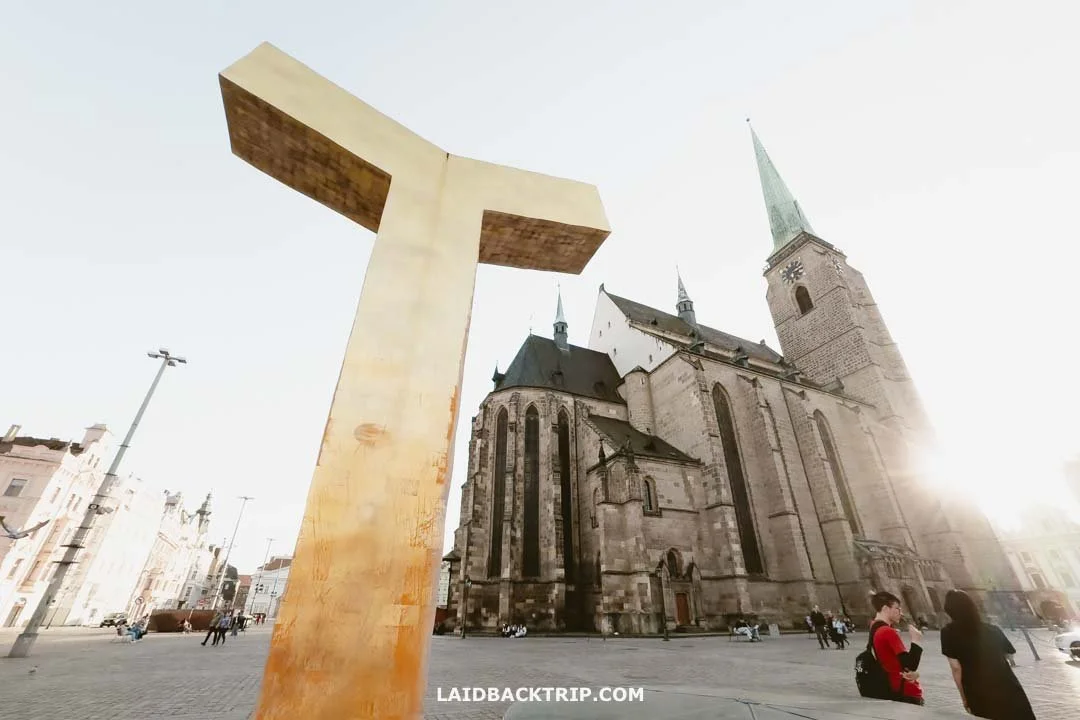
The Cathedral of St. Bartholomew is definitely one of Pilsen's must-sees.
And by the time you're done, you're never far from a pub serving the local golden treasure. Pilsen also has interesting museums like the Patton Memorial, the Puppet Museum, and Techmania, and it hosts plenty of cultural events. If you think one day isn't enough to see everything, you can find great accommodations here, such as Courtyard by Marriott Pilsen and Hotel Continental.
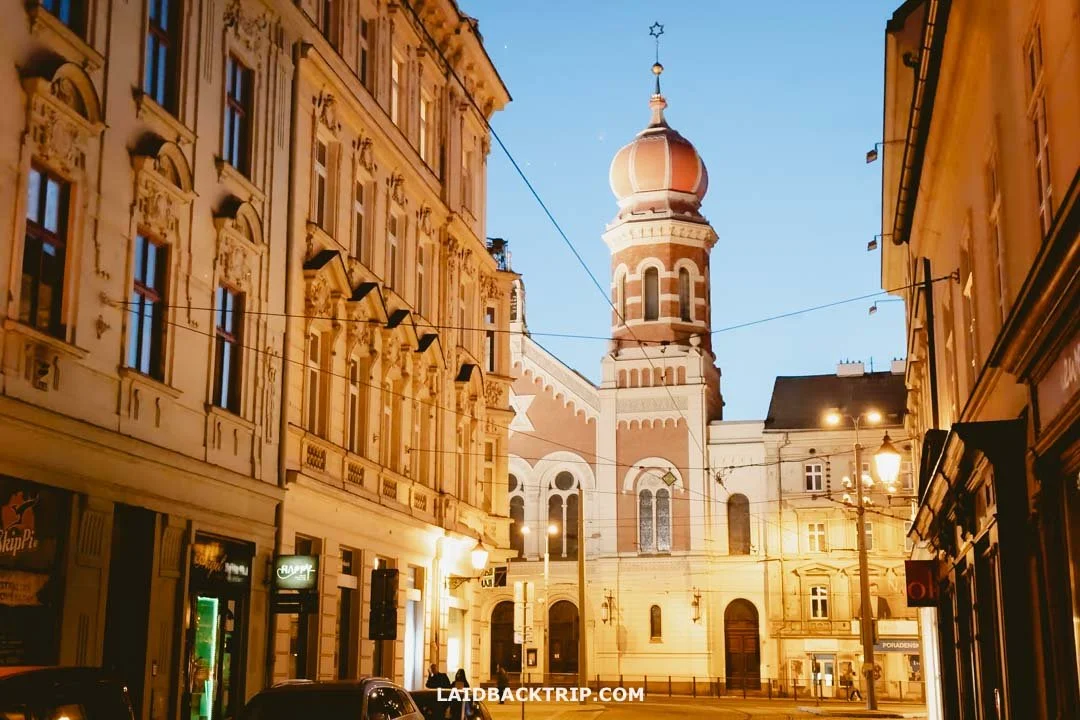
Pilsen's Great Synagogue is actually one of the largest in Europe.
How to Get to Pilsen
Pilsen is just under 100 kilometers west of Prague, and you can easily take a bus or train from the capital to get there on your own. The journey takes about 90 minutes, and even less by car along the D5. There's also the option to take a tour from Prague to Pilsen if you don't want to deal with the planning part.