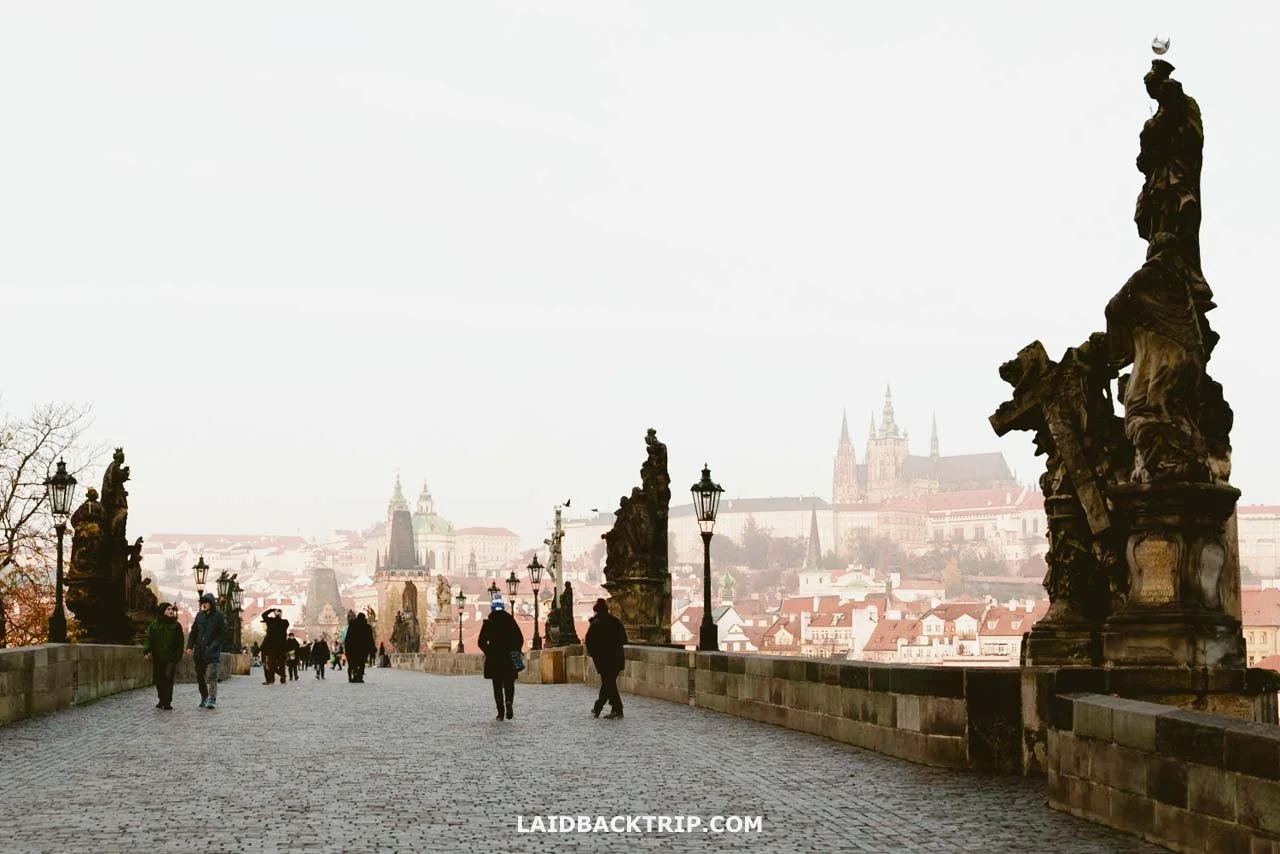
As locals, we've put together all the essentials for a smooth visit to Charles Bridge.
Even though the Charles Bridge is one of the most famous attractions in Prague and we've seen it thousands of times, every time we walk across it still feels pretty special to us. There's no other bridge in Prague, or anywhere in Czechia, with the same atmosphere. And while the days when we could show up here early in the morning without worrying about crowds are long gone, we still find ourselves coming here pretty often.
To be fair, Prague as a whole wasn't nearly as popular during our college years as it is now, so it's not just that 14th-century stone bridge that changed. Even so, it's not just us who feel this way. No matter who comes to visit us in Prague, whether it's family or friends, they almost always want to see Charles Bridge too. And it's the same for pretty much every first-time visitor to the city.
Built in the 14th century, Charles Bridge is a 516-meter-long and 9.5-meter-wide stone bridge that spans the Vltava River and links two well-known Prague districts, Old Town and Lesser Town. The worn cobblestones and iconic views make it one of the most famous sights in Prague, so it's easy to understand why we think you shouldn't miss it while exploring the Czech capital.
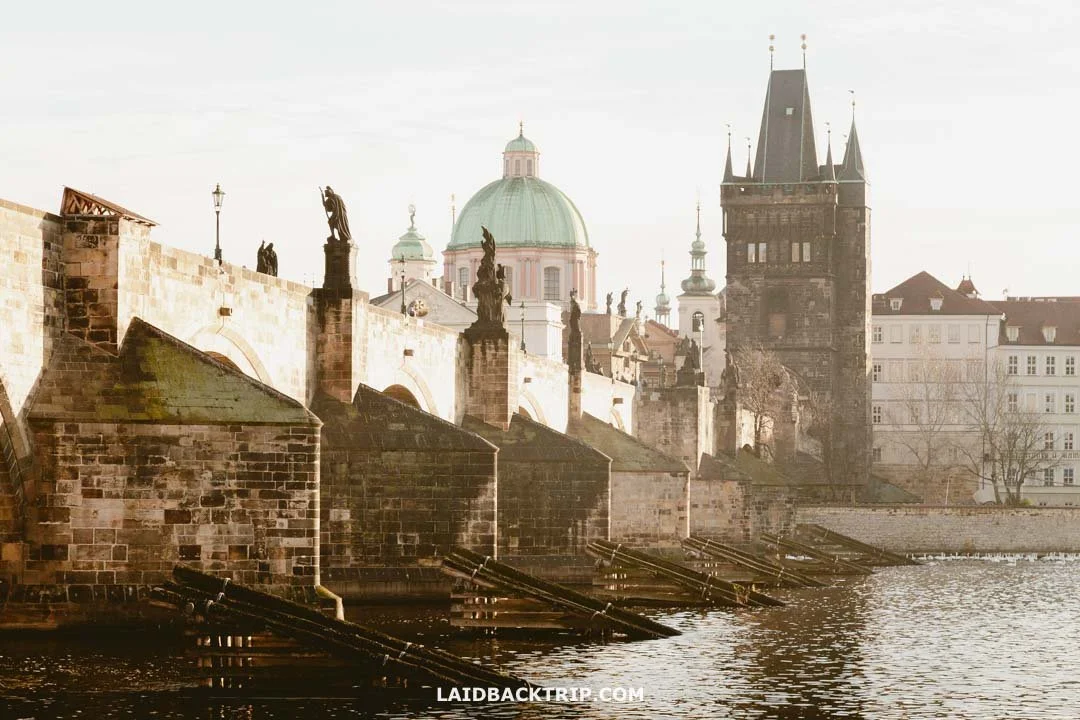
There aren't many places in Prague more beautiful than Charles Bridge.
Since we come here a lot, we know that a first visit to Charles Bridge can feel a bit overwhelming. Honestly, it still is for us locals, even after crossing it countless times. The bridge is incredibly beautiful and perfect for a slow walk, especially since it's been a pedestrian zone for years. At the same time, it's almost always crowded with tourists, so the walk might not be as relaxed as you would expect. And because crowds attract pickpockets and the usual tourist scams, it's better to come prepared and know what to expect so you can enjoy your visit to Charles Bridge as much as possible.
The History of Charles Bridge Starts in 1357
Prague was founded in the 9th century and became an important city in the region by the end of the 10th century. What we know now is that a wooden bridge stood a bit north of the current Charles Bridge as early as the 10th century. But it was prone to flooding, and it didn't survive the great flood of 1157, which completely destroyed it.
Later, during the reign of King Vladislav II, the first stone bridge was built here and became known as Judith Bridge, named after his wife. Even though it was sturdier than the wooden one, it didn't last more than two centuries. In 1342, a catastrophic flood destroyed Judith Bridge, which at the time was the only stone bridge in the kingdom.
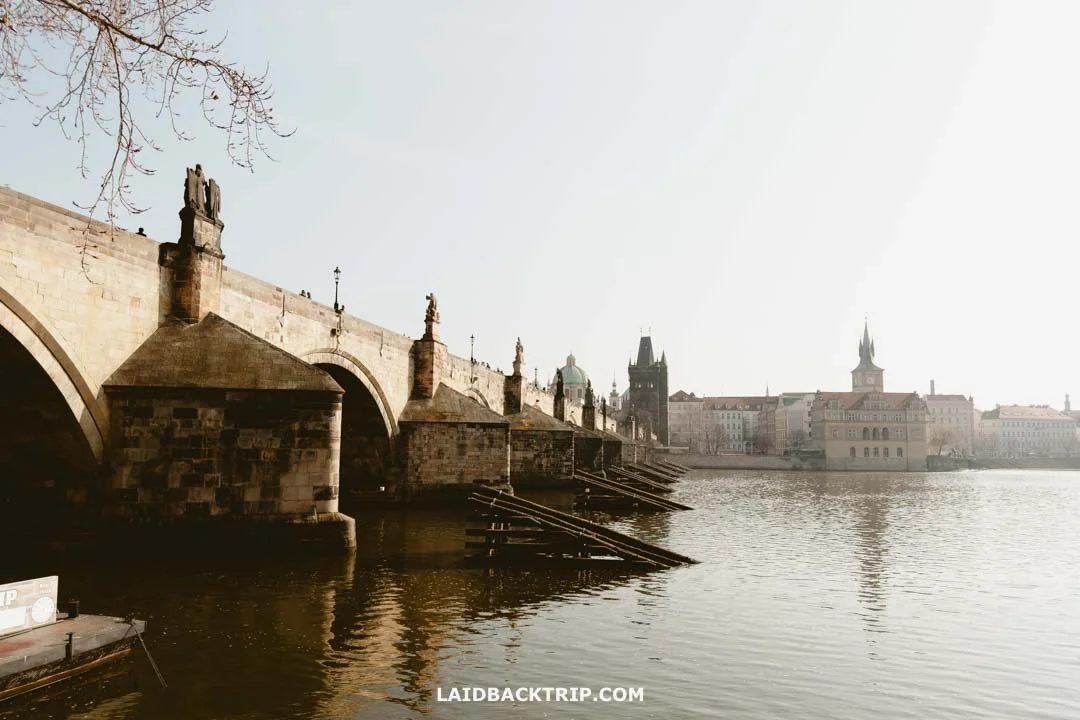
Charles Bridge was built by Charles IV in 1357.
Prague urgently needed a new crossing between Old Town and Lesser Town, so in 1357, the new king, Charles IV, ordered the construction of a replacement. It was originally called Stone Bridge and only gained the name Charles Bridge in the 19th century. Six hundred years ago, the Bohemian Kingdom thrived under Charles IV, and many of Prague's most important buildings were created during his reign. Along with this bridge, Charles University and St. Vitus Cathedral were founded, and outside the city, he commissioned Karlštejn, one of Prague's best day trips.
Charles Bridge also has its fair share of legends, like the one claiming that construction began exactly at 5:31 on July 9th, 1357, a numerical sequence calculated by royal astronomers that reads the same from both ends: 1-3-5-7-9-7-5-3-1. Interestingly, the bridge wasn't completed until 1402, almost 50 years later. Another old myth, later debunked by scientists, said that builders added eggs to the mortar as a secret ingredient to make the structure stronger. What they did find, though, were traces of wine and milk in the mixture.
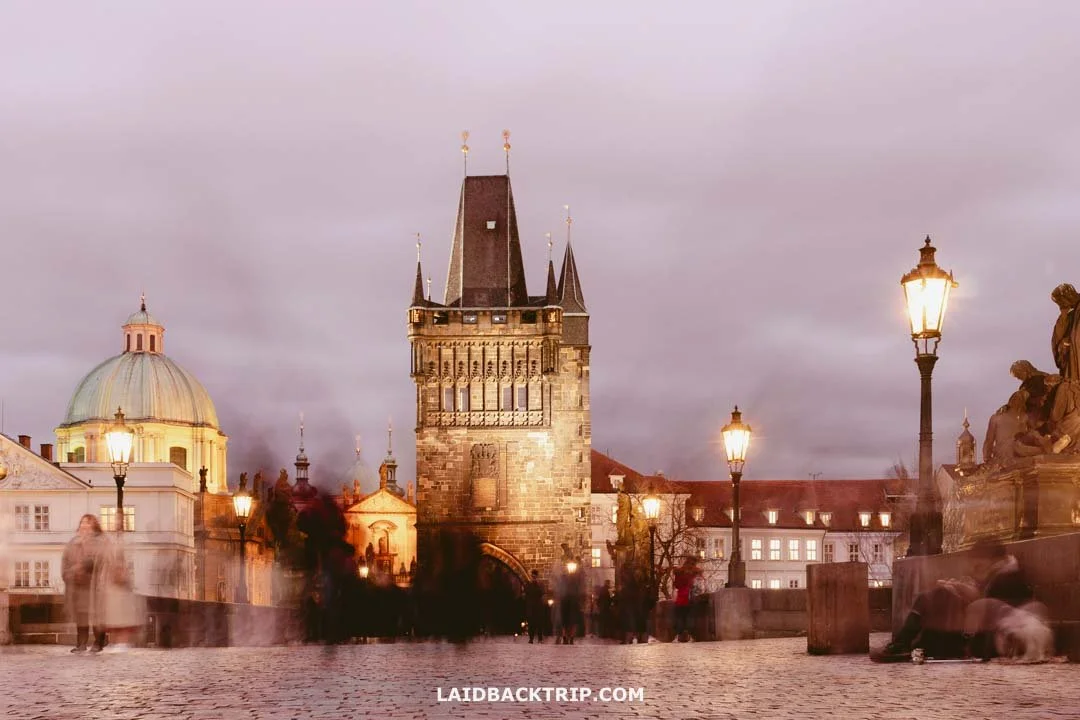
For nearly five centuries, Charles Bridge was the only way to cross the Vltava in the capital.
As mentioned earlier, the bridge was known as Stone Bridge (or Prague Bridge) until 1870, when it was renamed Charles Bridge in honor of the greatest ruler of the Bohemian Kingdom and the emperor of the Holy Roman Empire. Until 1841, it was also the only stone crossing between the two sides of the river, before a new bridge was built, now known as the Legion Bridge. Over the centuries, Charles Bridge suffered heavy damage several times, but it has survived everything thrown at it.
At the end of the 19th century, horse trams were allowed to cross the bridge, and later they were replaced by fully electric trams with a unique design using special tracks. Soon, architects realized the trams were too heavy and were damaging the bridge, so they replaced them with buses. Finally, in 1965, traffic on the bridge was banned, and today we can enjoy it free of cars. Every time we come here and see how many people visit Charles Bridge every day, it's one of those wild reminders of how much times have changed.
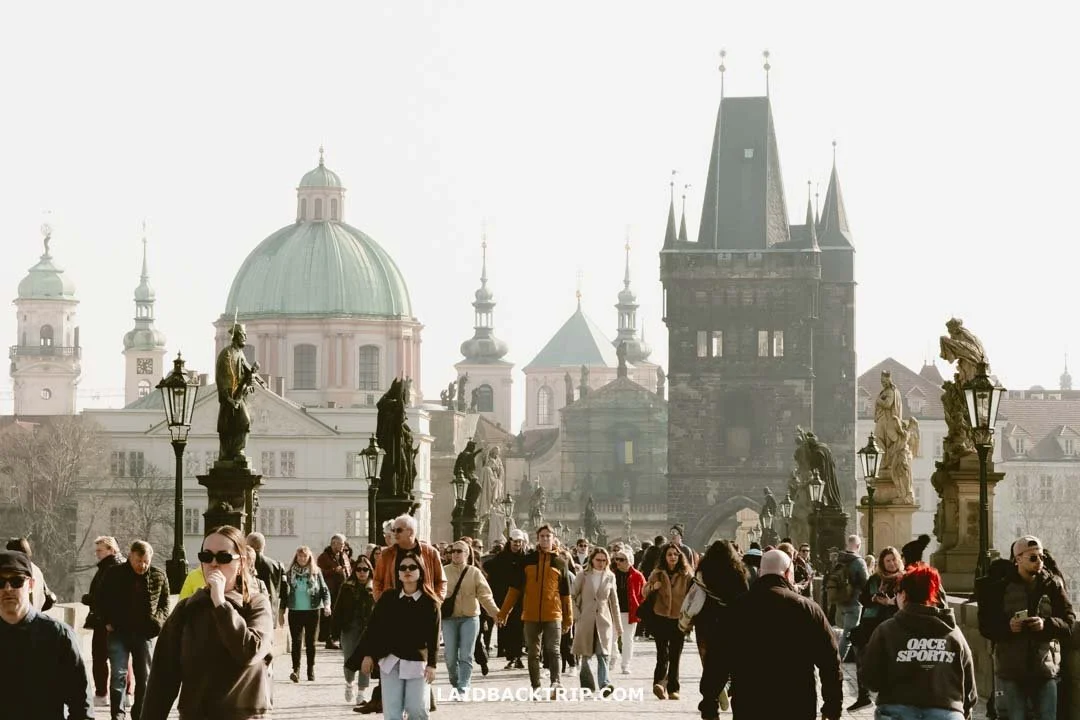
Charles Bridge is now open only to pedestrians.
Today, almost 13 million tourists visit Charles Bridge every year, making it one of the most popular places we have here in Prague. Whether you plan to spend three days in the city, as we usually recommend, or just zoom through the capital in a day, you'll end up seeing this iconic stone bridge. And by the way, it's also popular among Hollywood productions, and scenes from films and TV shows like Mission: Impossible, Carnival Row, or Spider-Man: Far From Home were shot right on Charles Bridge. By the way, the oldest stone bridge in Czechia isn't this one but the one in the charming town of Písek.
Charles Bridge Is Lined with 30 Statues
Charles Bridge is lined with 30 beautiful Baroque statues, and the two rows of saints and patron saints create a kind of open-air gallery that makes the bridge incredibly photogenic. I'm definitely not the only one who thinks the statues are one of the main reasons Charles Bridge is so appealing to visitors.
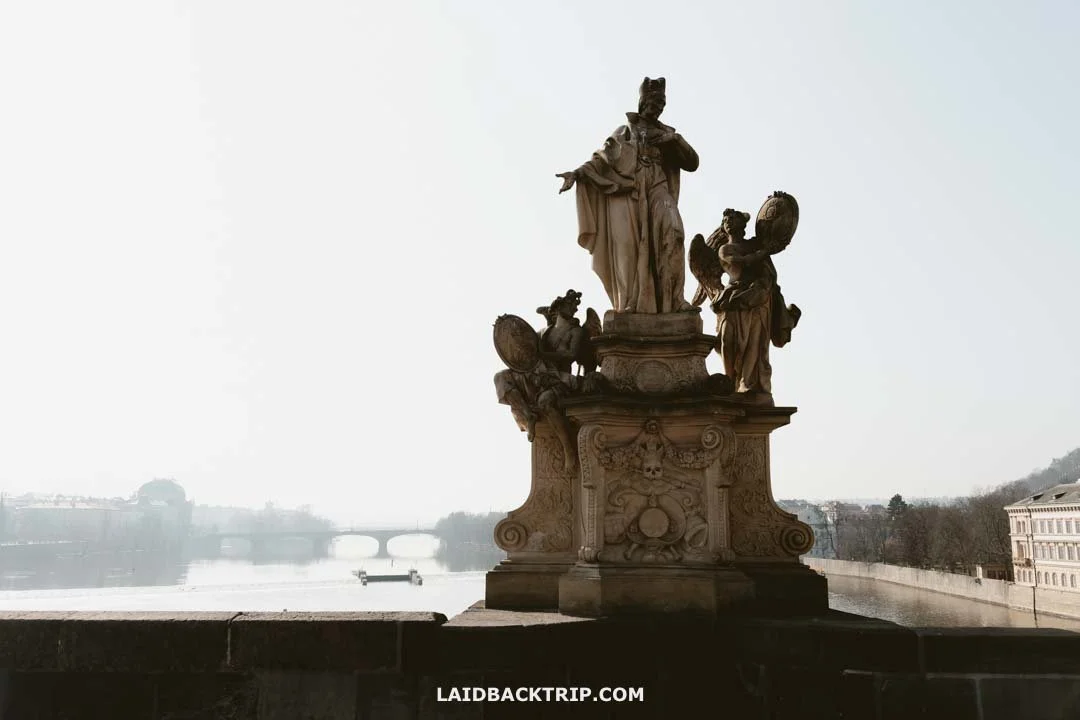
Charles Bridge is famous for being adorned with 30 Baroque statues.
I remember when we traveled to Bavaria and visited Regensburg, which has a gorgeous stone bridge of its own. It's actually older than Charles Bridge and even inspired it, but it had only a handful of statues, and that difference really stood out to me, especially when I add the Prague Castle panorama into the mix.
Together with the old-style street lamps and the medieval towers in the distance, the statues give the bridge its unique atmosphere, which makes every visit feel special. As I mentioned, even we locals never stop being impressed. The statues weren't part of the original bridge and were added more than 300 years later, around the turn of the 17th and 18th centuries, with a few more added in the 19th and 20th centuries.
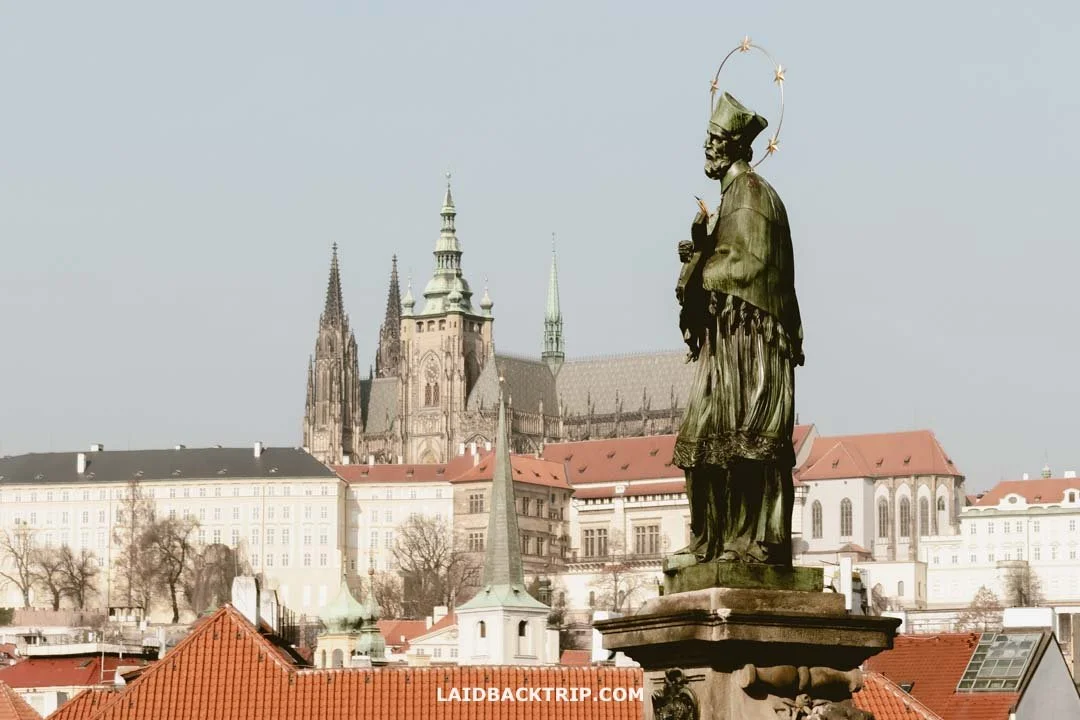
One of my favorite views from Charles Bridge includes the statue of St. John of Nepomuk and Prague Castle in the background.
We won't talk about all 30 statues you can admire along the way, since we're not history experts, but we do want to mention some of the most notable and most famous ones on Charles Bridge. One of the most prominent sculptors, Jan Brokoff, created the statue of St. John of Nepomuk, one of the most well-known and popular statues on the bridge. According to an old legend, touching it brings luck. The statue of St. Luthgard, sculpted by Matthias Braun, is probably the most valuable one on the bridge, and the Crucifix and Calvary has a really interesting story behind it.
There's also the statue of the knight Bruncvík, which is worth mentioning, though it's best seen from Kampa since it sits on the support pillar below the bridge. And by the way, sightseeing cruises are a great way to see it and the whole Charles Bridge from a different angle.
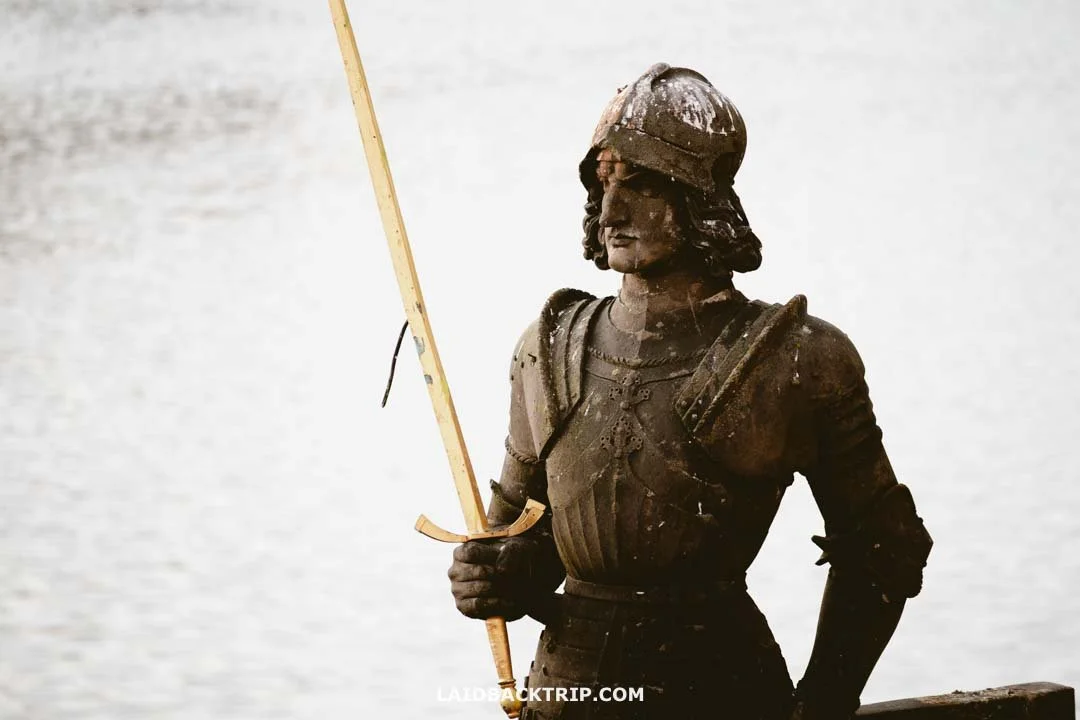
The statue of Knight Bruncvík isn't on the bridge itself but on the pillar just below it.
Because many statues were carved from sandstone, centuries of weather, time, and vandalism eventually led to most of them being replaced with replicas. You can find the originals in the Lapidarium (part of the National Museum) or in Gorlice at Vyšehrad. By the way, the historic lamps are gas-lit, which becomes especially charming during Advent when lamplighters manually light them (the rest of the year it's automatic). It's a popular thing to watch at Charles Bridge, but you need to be there around 4 PM at that time of year.
Our tip: Prague has plenty of old statues, but the modern Head of Franz Kafka near Národní Street is a pretty cool one to check out, too.
You Can Visit Charles Bridge for Free
One of our favorite things is that there's no entry fee to Charles Bridge at the moment, so we can cross it anytime, whether it's late at night, early in the morning, or in the middle of the day. It's definitely one of the main reasons why we come here so often, since it doesn't cost a single dime, and we hope it stays that way in the foreseeable future (unlike Trevi Fountain, for instance).
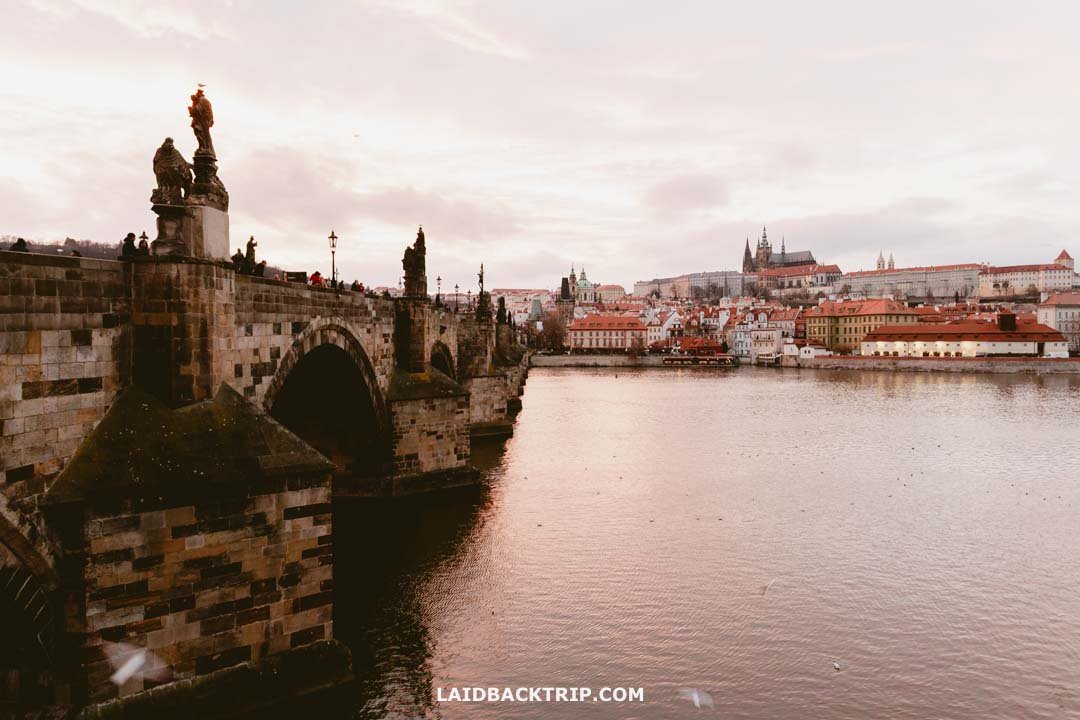
Charles Bridge is still completely free to visit.
The fun fact is that the construction of the bridge was so expensive that a bridge toll was collected at Charles Bridge from the Middle Ages until 1815, when it was abolished by Francis II, the last Holy Roman Emperor. The idea of bringing the entry fee back has been discussed a few times in the past, especially as tourism grew, and even though there was plenty of debate, Charles Bridge remains free to cross (as tons of other free sites in Prague).
Another interesting bit of history is that when the new Prague bridges were built in the 19th and early 20th century, they all had tolls until 1925, except Charles Bridge, which stayed free during that time and earned the nickname the "bridge of the poor."
Charles Bridge Has Two Towers
The famous panorama of Charles Bridge would never be complete without its towers, which you find at each end of the bridge. Since you have to pass through them to actually enter Charles Bridge, they serve as the official entrance to the site. And if you're interested, you can visit the towers on both ends, but keep in mind that each one has a separate entry fee. The ticket to Old Town Bridge Tower is 250 CZK, and it costs 200 CZK to visit Lesser Town Bridge Tower. They also offer a combo ticket for 340 CZK if you want to see both for a reduced price, though we found it a bit expensive for what it offers.
Old Town Bridge Tower
The more popular of the two is the Gothic Old Town Bridge Tower, since it faces Prague Castle, which means you'll get arguably a more beautiful view from the top.
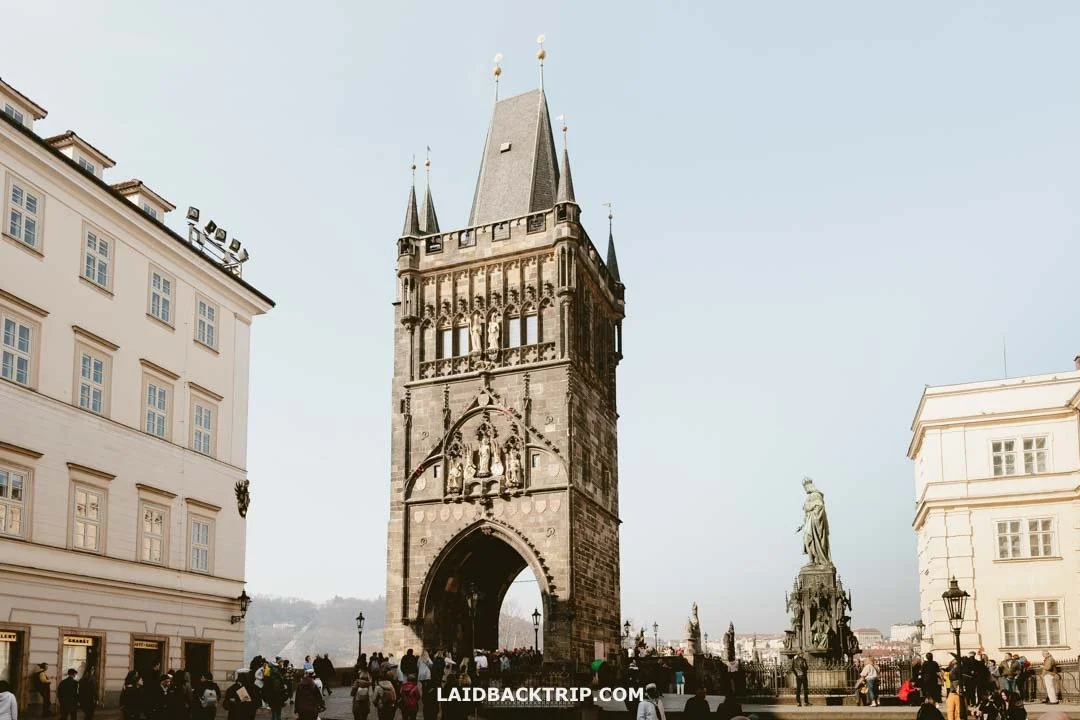
Old Town Bridge Tower was designed by the architect Petr Parléř.
Lesser Town Bridge Tower
The Lesser Town Bridge Tower is usually less crowded, which can be a nice bonus. Another interesting detail is that the Lesser Town Bridge Tower actually consists of two towers connected by a walkway. The smaller tower is the only surviving structure from Judith Bridge and was once decorated with Romanesque reliefs. Later, the taller tower was added under King George of Poděbrady in 1464.
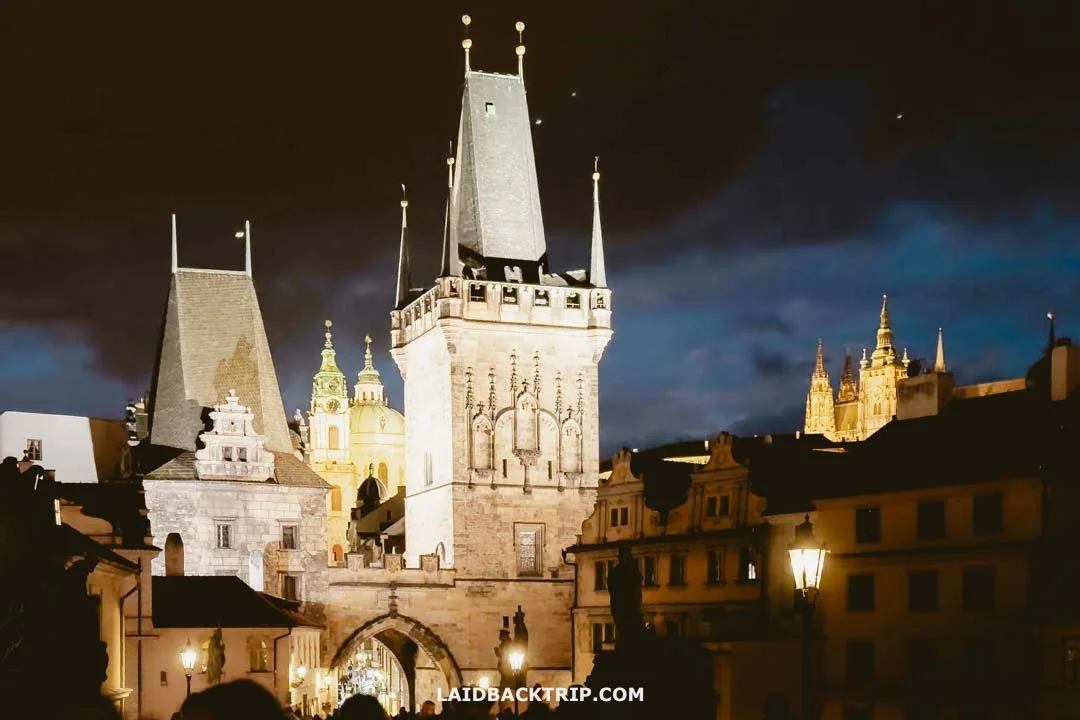
The Lesser Town Bridge Tower is actually a pair of towers, and the lower one is older than the bridge itself.
Charles Bridge Museum
By the way, there's also a Charles Bridge Museum at Křižovnické náměstí, which offers more information about the bridge. They even have a combo ticket with a sightseeing cruise, which looks like a fun way to explore this area.
It Takes About 30 Minutes to See the Charles Bridge
I've crossed Charles Bridge in everything from quick five-minute walks to sunrise photo trips that kept me there for at least a couple of hours. But those numbers don't really help much, so I checked the timestamps on the photos from the last time Lucie and I took a slow Sunday walk through the historic center, and we spent just over 20 minutes on the bridge. For anyone visiting for the first time, I'd say that 20 to 40 minutes is a pretty realistic estimate.
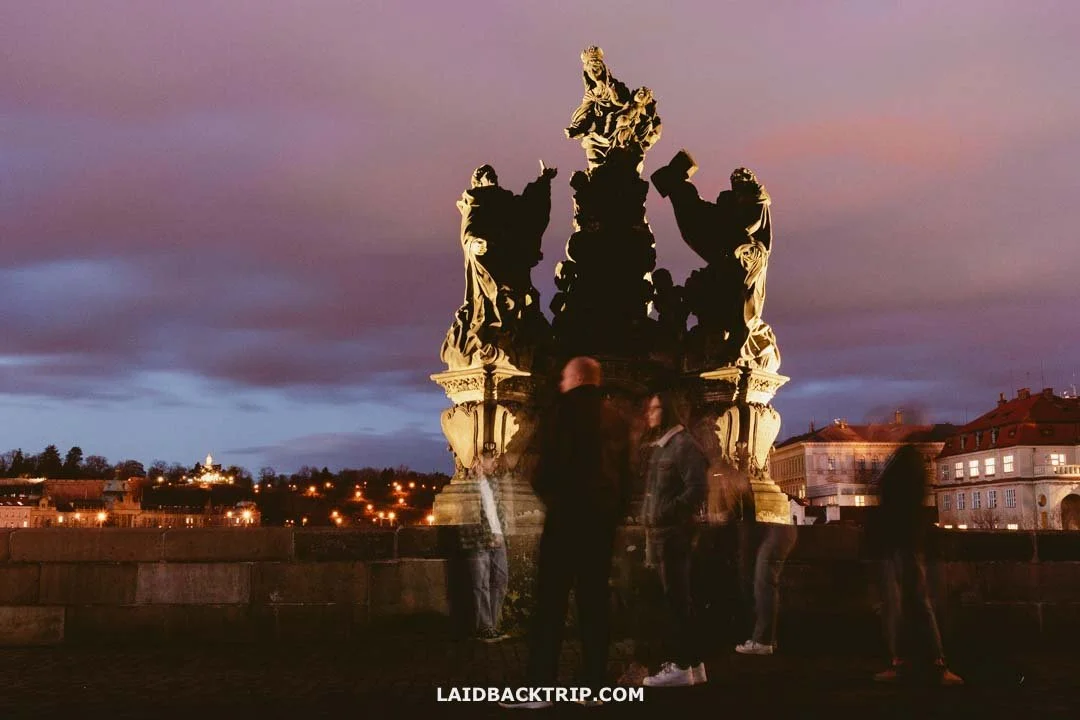
Exploring all 30 statues on the bridge will definitely take more than just half an hour.
Where to Stay Near Charles Bridge
If you're tempted to stay in a place with a view of Charles Bridge, you actually have a few options. On the Lesser Town side, there's Hotel Čertovka and Hotel U 3 Pštrosů. Both sit right by the bridge, though the views are limited. For a truly spectacular view of Charles Bridge, the only real option is the super luxurious Four Seasons Hotel on the Old Town side. It's gorgeous, but super pricey.
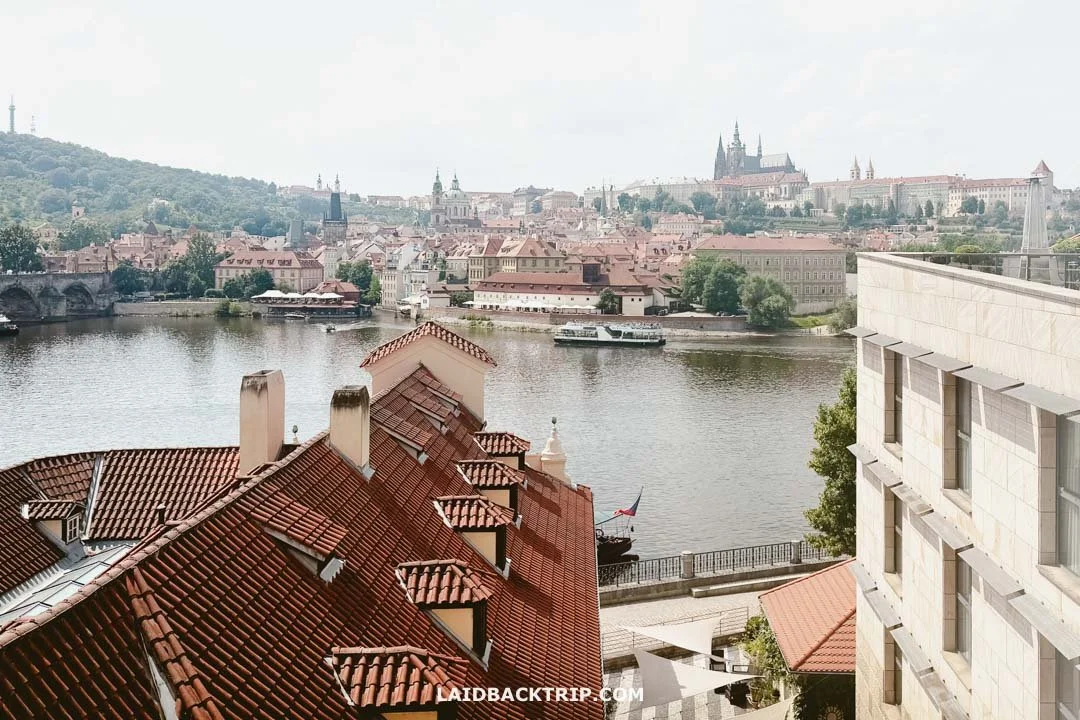
From the Four Seasons Hotel, you can see both Charles Bridge and Prague Castle.
Watch Out for Pickpockets at Charles Bridge
After being there so many times, we think Charles Bridge is like Prague itself, about as safe as a heavily visited tourist attraction can be, no matter if it's day or night. Still, the sheer number of people attracts pickpockets, so you need to watch your belongings at all times, and you should be completely fine.
What we do to avoid being pickpocketed on Charles Bridge is pretty simple. We keep our wallets stored safely and never leave our phones in our back pockets. We usually don't carry a daypack, but if you do, and it feels like the crowd is getting too dense, it's smart not to keep anything valuable in the front pockets unless your pack has anti-theft features.
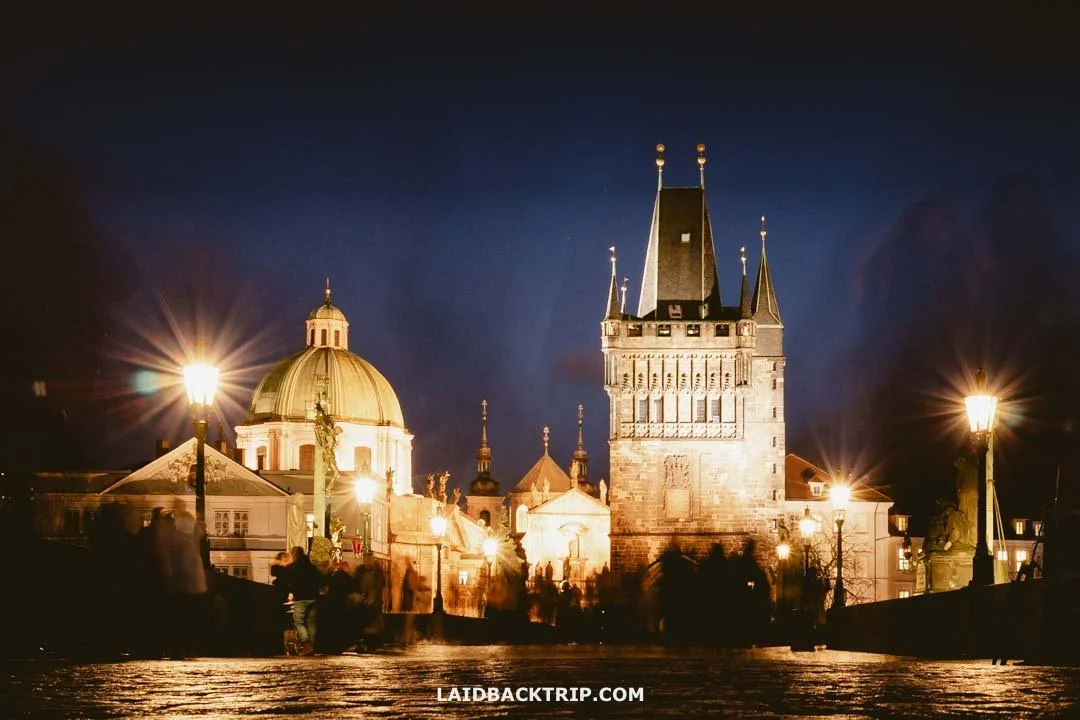
While Charles Bridge is very safe, even at night, I still keep an eye out for pickpockets.
I've been to Charles Bridge after dark many times, and the worst thing I ever saw was, on a few occasions, a big group of drunk tourists (mostly later at night, to be fair). Like everyone else around, I minded my own business, and they mostly did too, though I wasn't entirely sure a few of them knew where they were. Apart from being loud as hell, they didn't do anything that made me feel unsafe. But I'm not going to pretend it was the most pleasant experience for everyone nearby.
I've been to Charles Bridge after dark many times, and the worst thing I ever saw was, on a few occasions, a big group of drunk tourists (mostly later at night, to be fair). Like everyone else around, I minded my own business, and they mostly did too, though I wasn't entirely sure a few of them knew where they were. Apart from being loud as hell, they didn't do anything that made me feel unsafe. But I'm not going to pretend it was the most pleasant experience for everyone nearby.
World Nomads provides travel insurance for travelers to cover their trip essentials, including sports and adventure activities.
SafetyWing is affordable travel insurance for backpackers, long-term travelers, and digital nomads.
"Beggars" on Charles Bridge Are Not What They Seem
As you walk across Charles Bridge, you will notice a number of "beggars" (the same goes for Karlova Street and similar spots), but I would be very cautious about them. This bridge is a prime location packed with "rich" tourists, and most of the people you see begging there are part of organized groups rather than individuals in need.
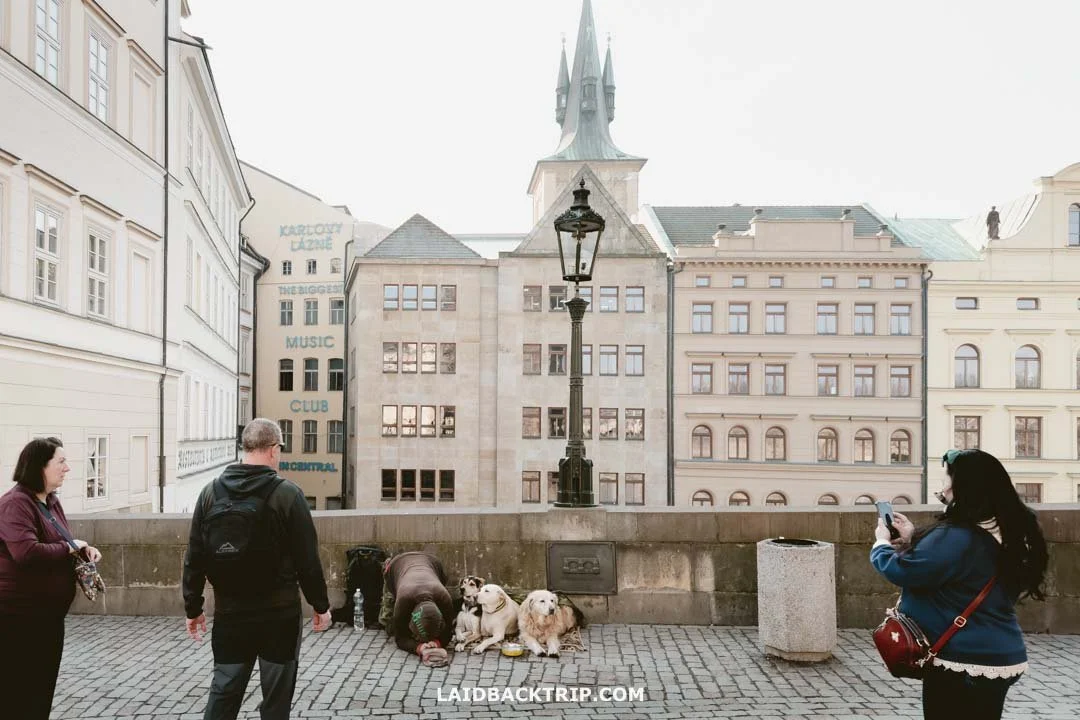
One of the classic Charles Bridge scams is the guy asking for money with cute dogs.
They usually set up a dramatic scene, like a man kneeling with (clean and nice) dogs (tucked under a blanket for extra effect in cold weather), or a woman with a sign full of sad stories about her children, often with a puppy or two nearby for maximum effect. They work mainly on Charles Bridge because that is where the crowds are, but I have seen them in other busy areas on my daily commute through the city center. In the end, it is your money (and I know exactly what I would do with mine), but if you think you are helping someone in real need, Charles Bridge is not the place.
Charles Bridge Has All Kinds of Artists
Charles Bridge is not only full of tourists, but there are also all kinds of artists, from musicians to painters. The painters usually sell very colorful paintings of magical Prague, do quick portraits, or sketch tacky caricatures, and the musicians play either popular covers or their own thing (with a very wide range of quality, I would add). All artists must rent a designated spot on Charles Bridge and have a permit displayed publicly, so if you decide to buy something, at least you know it is legitimate (I will not get into how easy it is to fake a permit).
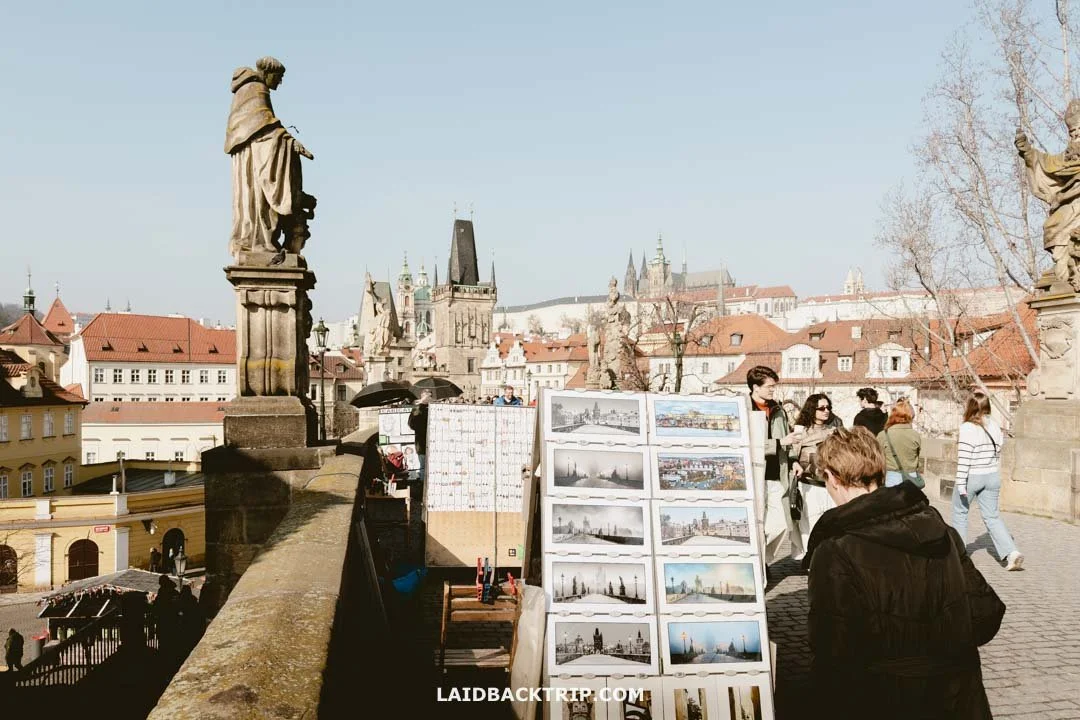
Charles Bridge has plenty of artists selling souvenirs, from paintings to photographs.
As a local, I have never bought anything here for obvious reasons, but if you want a small souvenir, just know you will pay more than it is worth, since the prices are higher simply because you are standing on the famous bridge. That said, some of the older style paintings are genuinely nice, and definitely better than the fake absinthe and other so-called traditional souvenirs you see in all the odd little shops around Old Town.
Getting to Charles Bridge is Easy
It is actually very easy to get to Charles Bridge since it sits right in the heart of Prague's historic center. The important thing to know is that there are three entry points to the bridge. We usually start our walk across Charles Bridge from the east side at Křižovnické náměstí. To get there, we either walk from Wenceslas Square or take a tram to Staroměstská or Karlovy lázně.

Staroměstská is like a three‑minute walk from Charles Bridge.
Getting off the tram at Karlovy lázně is more convenient if you are coming from the south, for example, if you have been to Vyšehrad or the Dancing House. Staroměstská, which is a bit north of the bridge, also has a metro station on the Green A Line, so it is easy to reach from pretty much anywhere in Prague. If you are not staying near Charles Bridge but somewhere like Diplomat Hotel or Stages Hotel, Staroměstská is the best option by metro.
The route that starts at Wenceslas Square (or Peace Square) and leads through Old Town Square and then Karlova Street is probably the most popular one, especially if you are staying in Old Town or New Town. Since Karlova Street is not a wide boulevard but a fairly narrow street, it gets extremely crowded, and we prefer to avoid it whenever we can (especially because it is packed with touristy stuff).
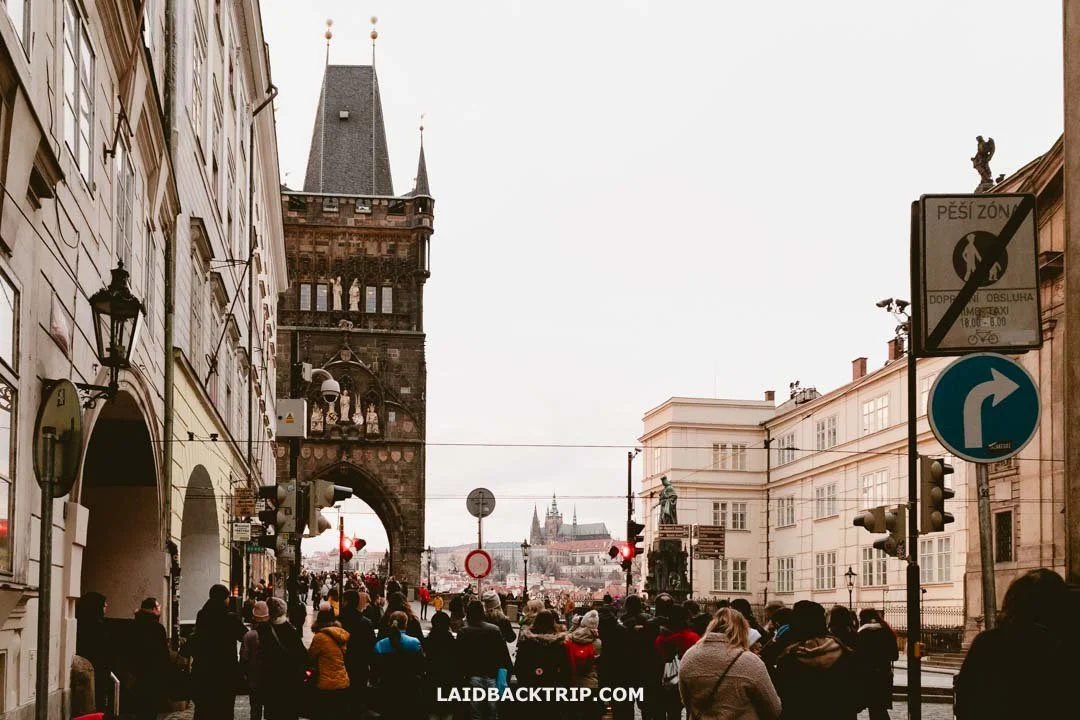
Most people reach Charles Bridge via Karlova Street, following the old Royal Route that Czech rulers used on their way to coronation.
If you want to reach Charles Bridge from the opposite side, take a tram to Malostranské náměstí and walk toward Mostecká Street, where you will find the entrance to the bridge. If we are coming from this direction, it usually means we are returning from Prague Castle, walking down Nerudova or Thunovská Street before reaching Malostranské náměstí. The hop on hop off buses usually make a stop at Malostranské náměstí as well.
The last and somewhat hidden entry point is at the west end of Charles Bridge, the side facing Prague Castle. Right at that spot (GPS coordinates: 50.08681, 14.40875), there is a beautiful staircase leading to and from Na Kampě, a small square on Kampa. It is a great shortcut if you want to explore this charming island, but we do not use it that often, since when we are on Charles Bridge, we usually head straight toward Prague Castle.
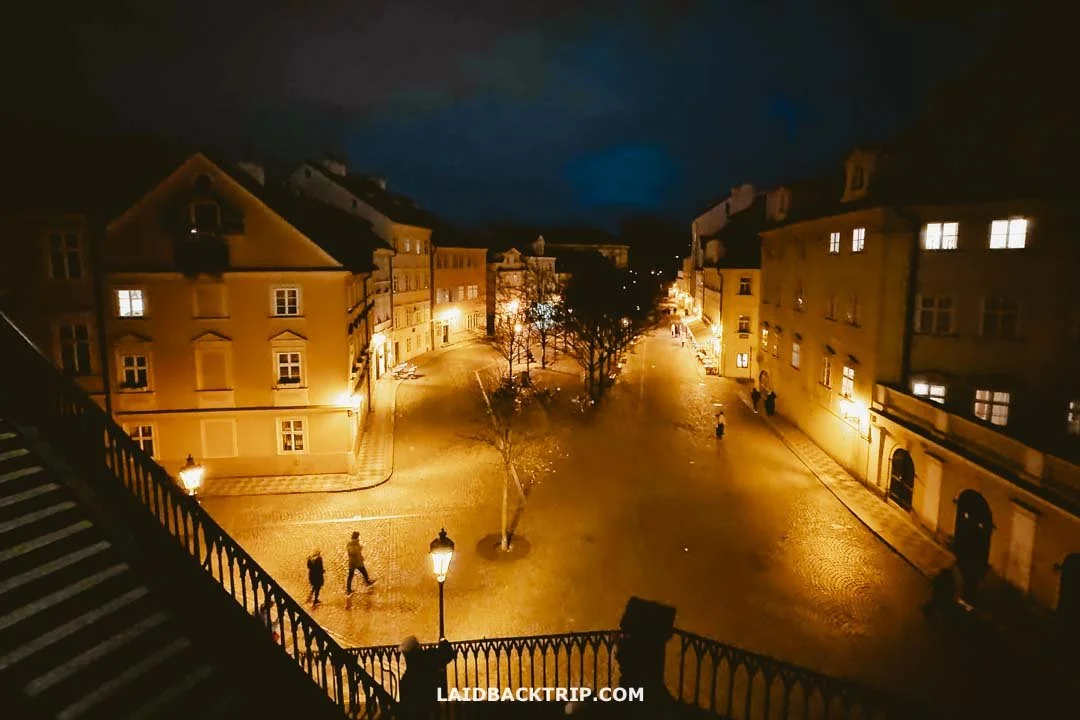
This staircase takes you from Charles Bridge to Kampa.
Charles Bridge Is Always Crowded in Summer
If you ask us whether Charles Bridge is overcrowded, then our honest answer would be yes, it really is, at least if you visit on a nice day. Being a top tourist attraction in a super popular European city has its downsides, and overtourism is definitely one of them. And since this stone bridge is not just an isolated sight but a main artery between two of Prague's biggest sights, Astronomical Clock and Prague Castle, pretty much every tourist who comes to our city will cross it at some point.
The situation is the worst in Prague's high season during the summer months (mostly June and July, though the big crowds show up already in May), when the constant flow of tourists never seems to stop. But again, that is expected, since Charles Bridge is one of Prague's top sights.
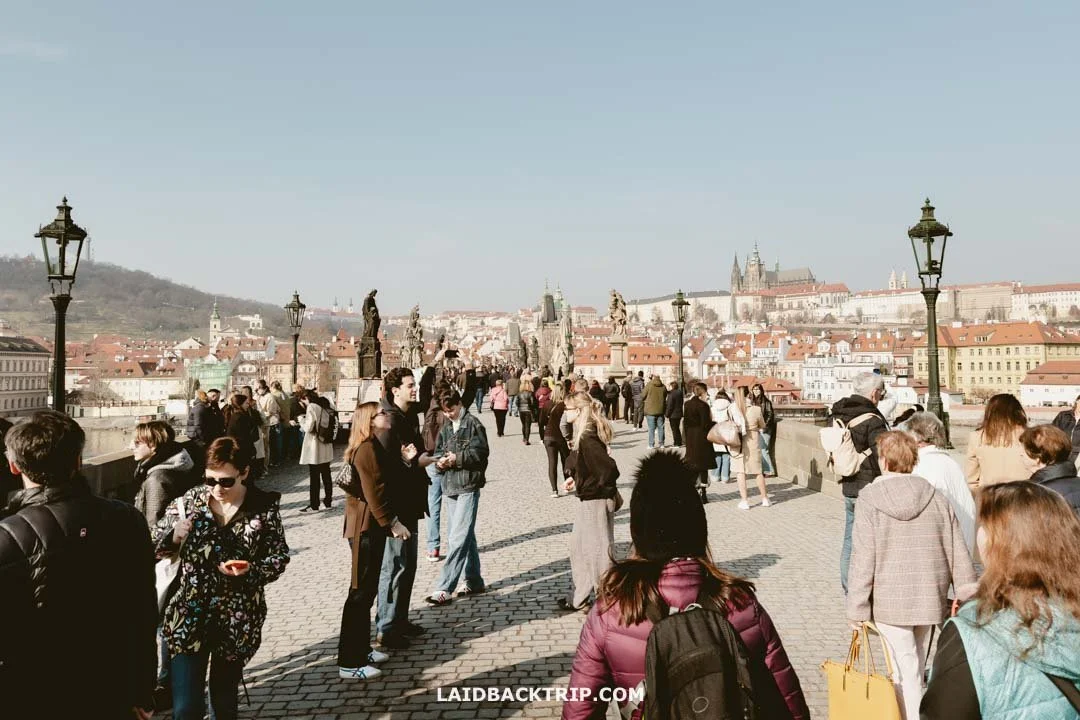
Charles Bridge stays busy during the day pretty much any time of the year these days.
Honestly, this is when we also avoid not only the bridge but the whole historic center. As locals, we do not find it enjoyable, simply because we can visit any other time when things calm down. And if I happen to be in the area for something other than sightseeing, I definitely use either Mánesův Most or Most Legií instead.
But as I said, it is not always up to us, because sometimes we come here with family or friends. And whenever we visit during this period, or even when it is just Lucie and me on a busy day, we mentally prepare for the crowds and take Charles Bridge as it is. We walk slowly, enjoy the moment, and try not to think about the mass of people around us. Of course, there have been a few times when even that did not work as smoothly as we hoped, simply because the crowd was that heavy, but most of the time it is manageable, and this simple mindset helps.
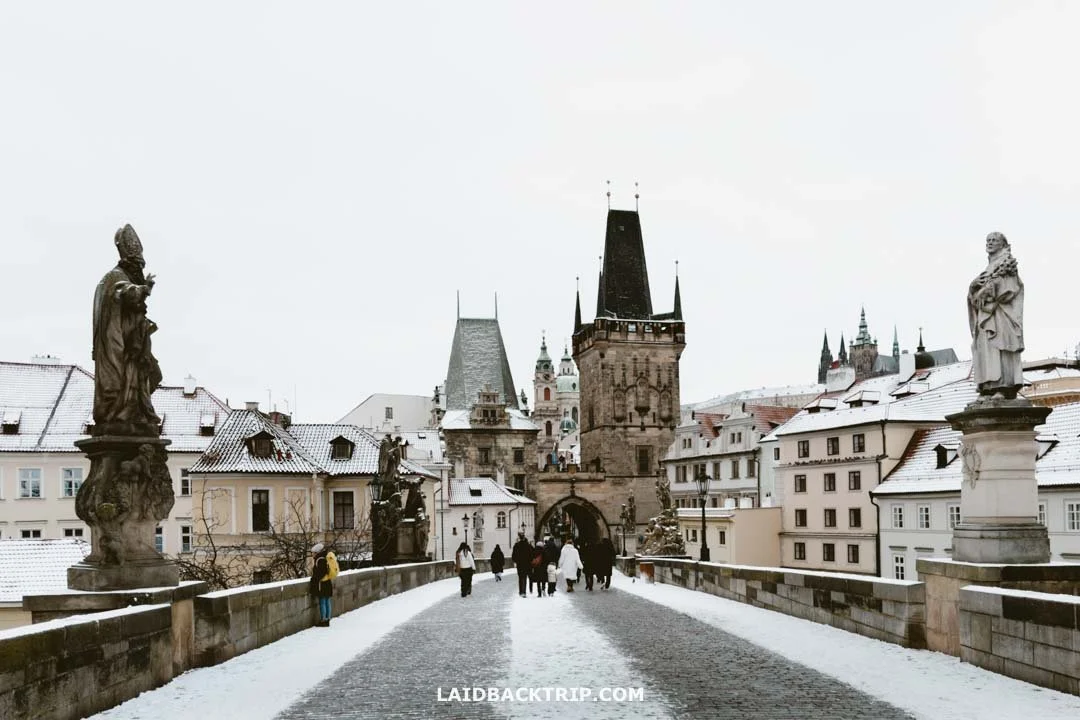
We love coming to Charles Bridge in winter because it's quieter.
So our only advice is to lower your expectations, because you will definitely not be alone on the bridge unless you come super early in the morning or in the off-season on a day with poor weather. The best thing you can do is enjoy the walk and the beautiful views despite the crowds. If you have already been to other popular European destinations like Paris or Rome, you know exactly what to expect. We have been to crowded sites like the Colosseum or the Eiffel Tower, and the same approach worked there for us too, because the situation is pretty similar everywhere.
Whenever we want to avoid the crowds on Charles Bridge, we have to convince ourselves to get up early. If I want to take nice photos, that means arriving before sunrise. In December, sunrise can be as late as 8 AM (and by then, people are already there), while in June it can be as early as 4:50 AM. These are the sunrise times at Charles Bridge, which means I have to be there even earlier, and that definitely requires some extra persuasion if I want Lucie to join me.
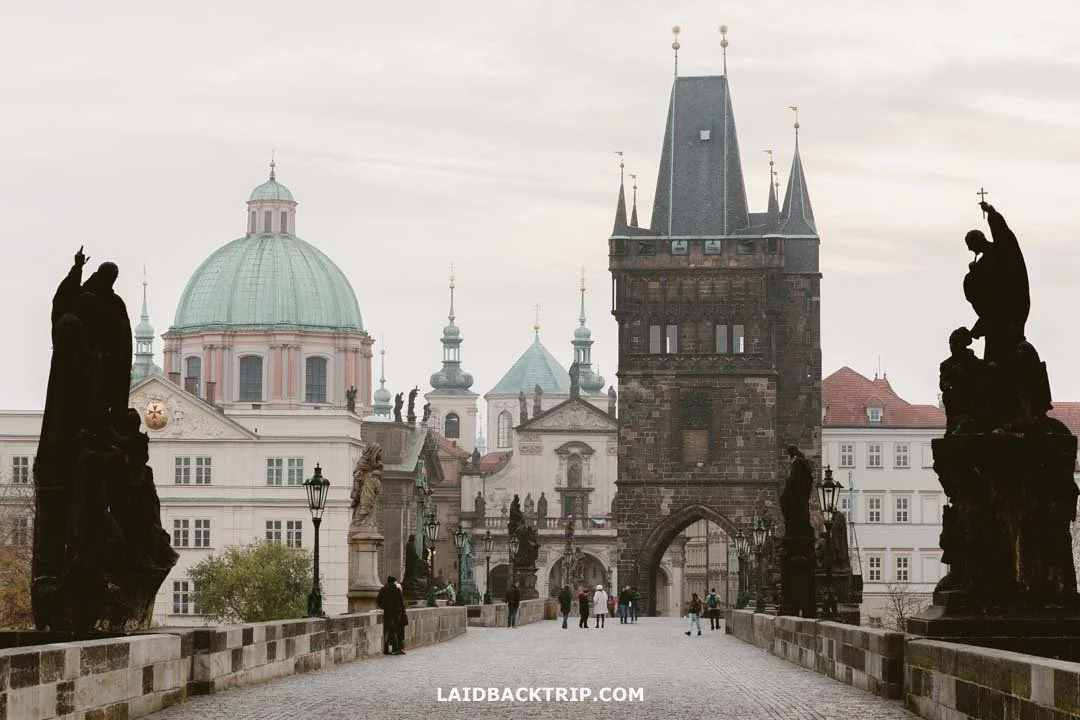
Early mornings are pretty much the only time of the day to see Charles Bridge without big crowds.
I have seen some generic advice saying to come late, but as a local, I can tell you that late means really late at night. In the evening, the bridge usually stays busy. And while Charles Bridge is also one of Prague's best sunset spot, that is exactly why it is packed at that time of day. It is simply much easier to come here at sunset than to wake up before dawn.
Even though we live in Prague and can visit Charles Bridge whenever we want, we usually wait for the winter months, because that is when it is quietest, even during the day. Our favorite times to see Charles Bridge are around November and February, especially on gloomy days when tourists tend to stay in their hotel rooms longer, waiting for the weather to improve.
I am not saying that the best time to see Charles Bridge without crowds is during a rainy January morning, but honestly, that is probably the most realistic scenario. And don't forget that all of December is packed in Prague because of its famous Christmas markets.