Czechia Travel Guide
Things to Do & Planning Tips & Itinerary
Everything You Need to Know Before You Visit Czechia
Situated in Central Europe, Czechia (or the Czech Republic) is a landlocked country rich in history and culture. And because it sits right in the middle of the continent, we often call it the heart of Europe. It has a big international airport (PRG) so it's incredibly easy to reach from all over the world by plane and also by car if you're coming from mainland Europe.
It's best known for its stunning capital, Prague, medieval castles, historic architecture, relaxing spa towns, ice hockey, and the best beer in the world. The official currency in Czechia is the Czech koruna (CZK), the population is around 10.5 million, and with almost 79 thousand square kilometers, it's a medium sized country.
Czechia is also our home. This is where we were born, where we live, and where we spend much of our free time traveling. A first trip to Czechia is incredibly easy as our country is safe, compact, easy to get around, and mostly without any travel challenges you might encounter elsewhere. We may be biased, but we really think it's one of the best places to start exploring Europe.
Practical Tips for Visiting Czechia
Getting Around the Country
Getting around Czechia is easy thanks to its reliable public transportation network. Because the country is relatively compact, most destinations can be reached within a few hours, whether you travel by train, bus, or car. Tickets are generally affordable, and you can usually book them online through transport operators.
Trains connect major cities such as Prague, Brno, and Ostrava with smaller towns, and we use them whenever we can instead of driving. While we all like to complain about delays, the truth is that trains are generally comfortable, affordable, and reliable.
Buses reach smaller towns, villages, and rural destinations, so they might be your only option for getting to some places you want to visit. Since we have a car, we rarely take buses ourselves, but for travelers, they're often the best way to reach destinations that aren't connected by rail.
Renting a car is useful for exploring castles, national parks, countryside villages, and remote attractions at your own pace. From our local perspective, driving in Czechia is very easy. Just remember that you'll need an electronic vignette for toll roads and that traffic can be frustrating in larger cities.
In cities, extensive tram, bus, and trolleybus networks make getting around easy. Prague also has a metro system. Even we locals rarely drive around the capital because public transportation is simply more convenient and helps avoid traffic jams.
As most visitors focus on Prague first, there are also plenty of tours available to destinations outside the capital. If you're short on time, we'd argue this is one of the easiest ways to explore Czechia. Once you leave Prague and base yourself elsewhere, however, finding organized tours becomes much less common.
Accommodation
Czechia offers accommodations for every budget, from affordable hostels and guesthouses to boutique hotels, countryside cottages, and luxury spa resorts. While prices have been rising every year, hotels in Czechia are still generally cheaper than in many European countries west of our border.
As the country's most popular destination, Prague has by far the widest selection of accommodations, ranging from large chain hotels and boutique properties to hostels and modern apartments. Smaller towns usually have a hotel or two, and the rest of accommodations come in the form of family-run pensions and guesthouses.
Prices are generally lower outside Prague and during the quieter seasons. Be sure to book early if you're traveling during summer, Christmas market season, long weekends, or major festivals. As locals, we often do the same, which allows us to stay in some of the country's most popular destinations for much less.
Currency, ATMs & Payments Methods
Czechia uses the Czech koruna (CZK), not the euro. Credit and debit cards, as well as contactless mobile payments such as Apple Pay and Google Pay, are accepted almost everywhere, including tourist attractions, parking lots, public transportation, restaurants, and shops. As a local, I honestly can't remember the last time I paid for something in cash.
That said, some places still accept cash only. We usually avoid them, but as a visitor, you might not always have that choice, so we'd recommend carrying around 1,000 CZK in cash just in case. And by the way, tipping in Czechia isn't required. It's customary to leave around 5-10% but only if you receive great service.
Also, try to avoid non-bank ATMs such as Euronet whenever possible. We only use ATMs operated by major banks like Česká spořitelna, ČSOB, Raiffeisenbank, or Komerční banka. The same goes for currency exchange offices with hidden fees and poor exchange rates. When using an ATM or paying by card, always choose to be charged in CZK and decline Dynamic Currency Conversion (DCC). This helps you avoid unfavorable exchange rates and unnecessary markup fees.
Staying Safe
Czechia is consistently ranked among the safest countries in the world, with low rates of violent crime. Because of that, we feel very safe in our own country, whether we're out during the day or at night. Still, I know it can feel a bit different when you're arriving somewhere as a visitor and don't yet know what to expect.
The main concern for travelers is petty theft, particularly pickpocketing. This is most common in Prague's busiest tourist areas, such as Old Town Square, Charles Bridge, and on public transportation. As always, keep your valuables secure and stay aware of your surroundings.
It's also a good idea to use ride-sharing apps or official taxi stands instead of hailing taxis on the street. And since we're world leaders in beer consumption, don't overdo it while you're here. In case of an emergency, call 112.
Prague: Things to Do & Trip Planning
Over the years, Czechia has become one of the world's most popular travel destinations. And it's really just because of Prague. Even now, most international visitors come here just to see the capital. Because we actually live here, we know firsthand that it's one of the most beautiful cities in the world and can understand why so many people want to stay as long as possible. So, we'll start the journey here.
Prague Itinerary
The good news is that a first visit to Prague is incredibly easy, too. With a population of around 1.4 million, the city is large enough to keep you busy for days, yet compact enough that it never feels overwhelming. We think 3 days in Prague is the ideal amount of time, giving you enough time to see the major sights while also discovering a few hidden gems. That said, we know not everyone has that much time, which is why we've also put together a 1-day Prague itinerary that focuses just on very best the city has to offer.
Best Time to Visit Prague
Before booking your flights, it's also important to figure out when to visit Prague. Spring and fall are among the most popular seasons because you can avoid the summer heat and winter cold, and the city looks absolutely stunning at both times of the year. Simply, any time between May and September is generally a great time to visit. If your trip coincides with one of Prague's summer heat waves, make sure your hotel has air-conditioned rooms.
Prague in Winter
You can also visit Prague in winter, although the season comes with a few drawbacks, such as fewer daylight hours and colder weather. The reward is a quieter atmosphere and fewer crowds across the tourist center. The main exception is December, when the Prague Christmas Markets attract huge numbers of visitors and the city becomes much busier. At the same time of the year, another popular date is Prague's New Year's Eve. Since winter temperatures can be surprisingly low, it's also worth checking what to include on your Prague's winter packing list, so the cold doesn't catch you off guard.
Accommodation in Prague
Now would also be a good time to decide where to stay in Prague. Think about whether you'd rather be based right in the heart of the historic center, in one of the quieter residential neighborhoods nearby, or farther from the center where accommodations are often cheaper. Our personal favorite is the New Town because it has some great hotels and puts most of Prague's top attractions within easy walking distance.
Staying Safe in Prague
Now that we're at the practical stuff, we should also mention that Prague is safe, at least as a city of this size can be. While the city is undeniably beautiful, the good safety situation is one of the main reasons it has become so popular with tourists. It's safe both during the day and at night. Still, pickpockets occasionally target crowded attractions and public transportation, so don't completely let your guard down in these areas.
Like in any other major city, you may come across a few travel scams in Prague, but avoiding them is usually just a matter of using common sense. Stick to reputable taxi apps, don't exchange money on the street, and use ATMs operated by well-known banks. Lastly, it's worth mentioning that Czechia has excellent water quality, so it's perfectly safe to drink tap water in Prague. We drink it every day, and there's no reason tourists shouldn't do the same.
Getting Around Prague
If you're flying to Prague, you'll arrive at Václav Havel Prague Aiport. Getting from the airport to the city center is straightforward and takes a little over 30 minutes, whether you choose public transportation or a taxi. Again, using Prague's public transport is incredibly easy, not only because it's affordable but also because it's one of the best in the world. Our favorite way to get around is the Prague's metro, as it's the fastest way to travel across the city and super reliable.
Prague's Must-Do's
The City of a Hundred Spires is truly one of a kind, and we know how lucky we are to call it home. On your first visit, we think it's best to focus on the best things to do in Prague to experience the city's incredible history and architecture. Then check out our list of Prague must‑sees for inspiration on what to do in the city beyond the main attractions. And because we're budget travelers at heart, we also have to share our list of Prague's free attactions so you can keep your travel budget in check.
Prague's Iconic Landmarks
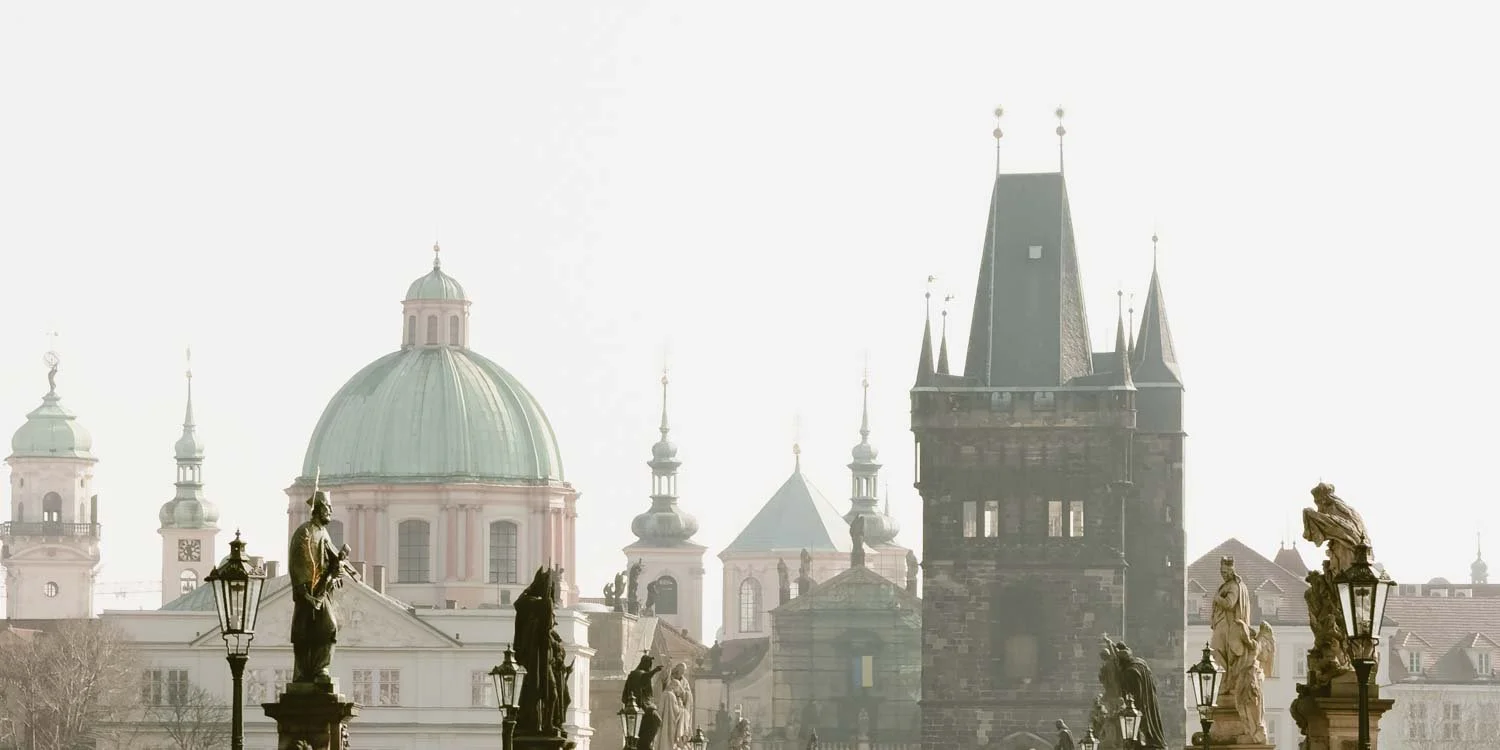
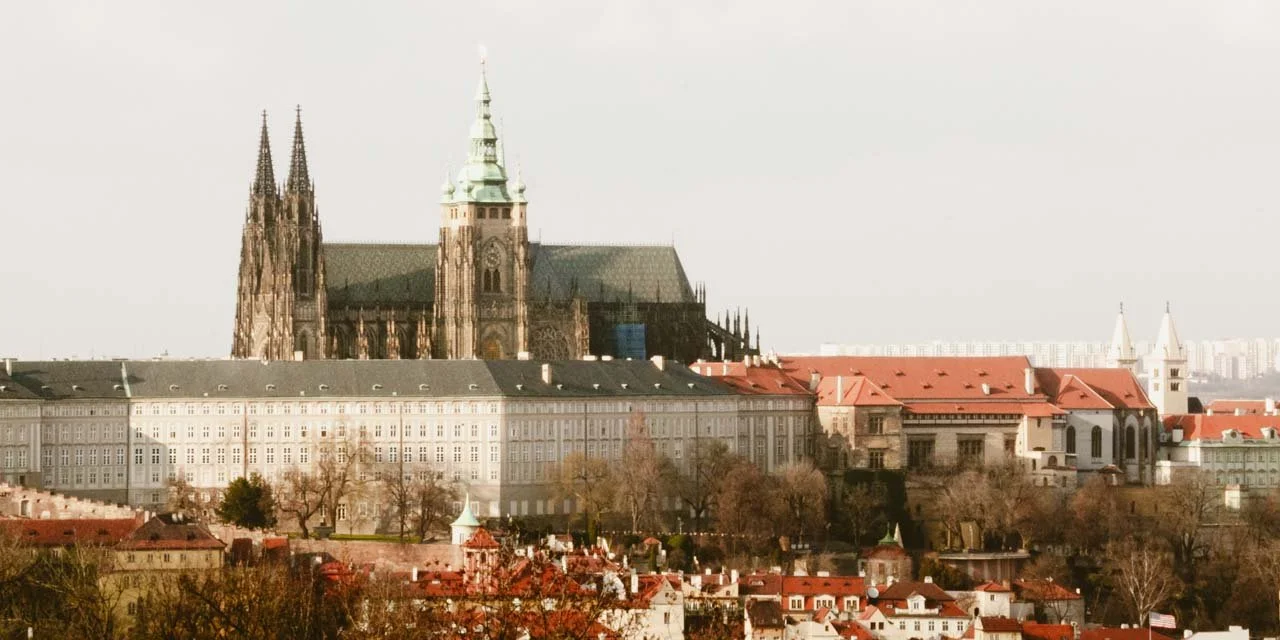
First, we'd start with Prague Castle, one of the most famous castle complexes in the world. Since it sits atop a hill overlooking the city, there are several ways to get to Prague Castle. Then, we'd definitely walk across Charles Bridge, Prague's most famous historic landmark, which once formed part of the Royal Route used during kings' coronation processions. And finally, there's the Old Town Square, home to beautiful historic buildings, museums, churches, and the world-famous Prague Astronomical Clock.
These are just the city's most famous sights, but there's so much more to see. You can admire the Art Nouveau architecture of the Municipal House, check out the modern Franz Kafka Head, a rotating sculpture dedicated to one of Prague's most famous natives, or spend hours exploring the Prague's National Museum. And once you've had your fill of history and sightseeing, head to Petrin Hill or Vyšehrad for charming walks and spectacular views over the city. Don't worry, though, the latter is packed with history as well.
Things to Do in Czechia
There is simply so much to see in Prague that it can feel as though you could spend your entire vacation there without ever leaving the city. And we'll completely understand if you decide to stay in the capital and enjoy everything it has to offer. But hopefully, we'll inspire you to see more of Czechia because it's definitely worth it.
As locals, we know that the rest of Czechia is every bit as beautiful as Prague, and those who venture beyond the well-trodden path get a chance to see just how fascinating our country really is. We know that because it was the first place Lucie and I traveled together after we met what feels like eons ago. And we still explore it whenever we can, whether on laid-back day trips from Prague or longer vacations.
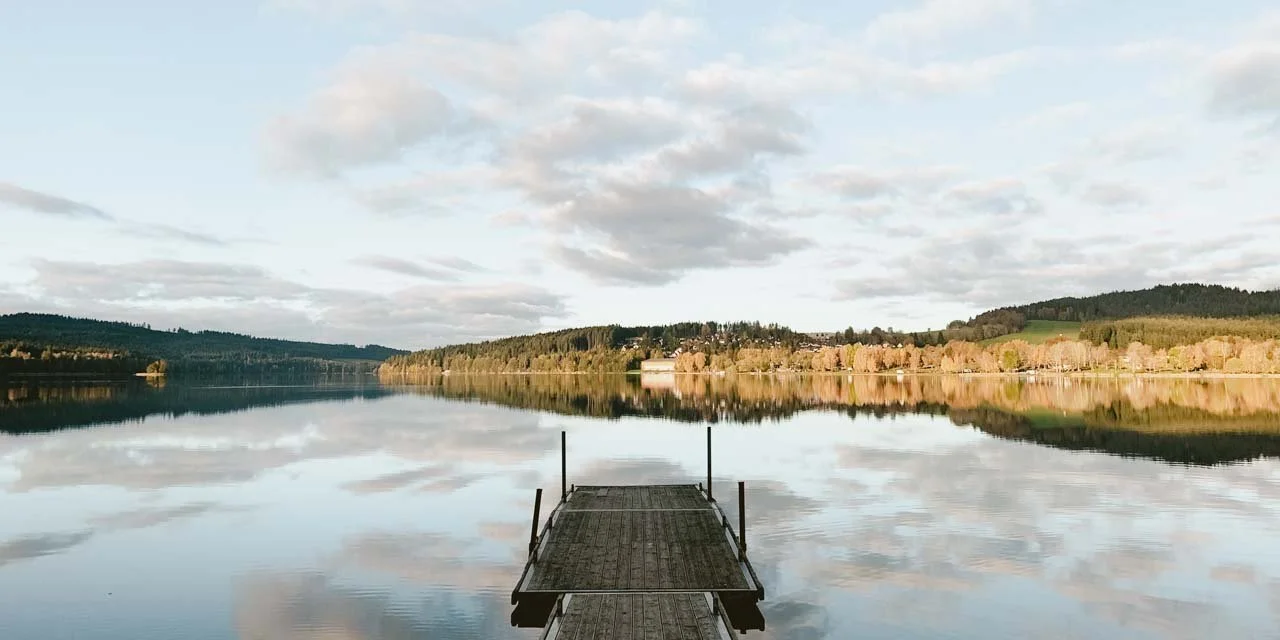
During those journeys, we've explored Czechia's other major cities, such as Brno and Olomouc, as well as the picturesque towns and villages scattered across the country. We've hiked in Bohemian Switzerland and the Jeseníky Mountains, climbed Sněžka in both summer and winter, gone camping in Šumava and Bohemian Paradise, road-tripped through South Bohemia and the Plzeň Region, spent summers at Lipno Reservoir, and skied in the Krkonoše Mountains.
We backpacked across South Moravia, visited countless museums, castles, and historic sites, toured the Moravian Karst, sampled beer at the Pilsner Urquell Brewery, biked across the Beskydy Mountains, canoed down the Vltava River, and enjoyed the relaxing atmosphere of our spa towns. Simply, there's a lot to see and do in Czechia.
I definitely won't list all our experiences because we'd be here for quite a while. These are just some of the highlights from our travels around Czechia, and they're really only the tip of the iceberg. My favorite part about all those adventures, no matter how big or small, is that every trip taught us something new about our home country. And even though we've already seen many of Czechia's must-see places and hidden gems, we still have plenty left to explore.
Our Czechia bucket list feels almost endless because we're constantly discovering new places we'd love to visit one day. Through the travel guides we've created about our country, we want to show you how easy it is to plan a visit to Prague and, hopefully, inspire you to explore some of Czechia's other beautiful corners so you can stay a little longer.
Czechia's Cities, Towns & Villages
When it comes to big cities, we have to start with Ostrava. Once known as the "Black Heart of Czechia," the city has a strong industrial heritage, rich coal-mining history, and a unique regional identity. And because Lucie still has relatives there, we visit quite often. With plenty of things to do in Ostrava, it's always a really fun trip for us.
Our next tip would be a trip to Tábor, one of South Bohemia's hidden gems and also our hometown. Founded in the 15th century, it's known for its Hussite heritage, medieval streets, and underground tunnels. It's often overlooked by international visitors, but we think it's definitely worth adding to your itinerary.
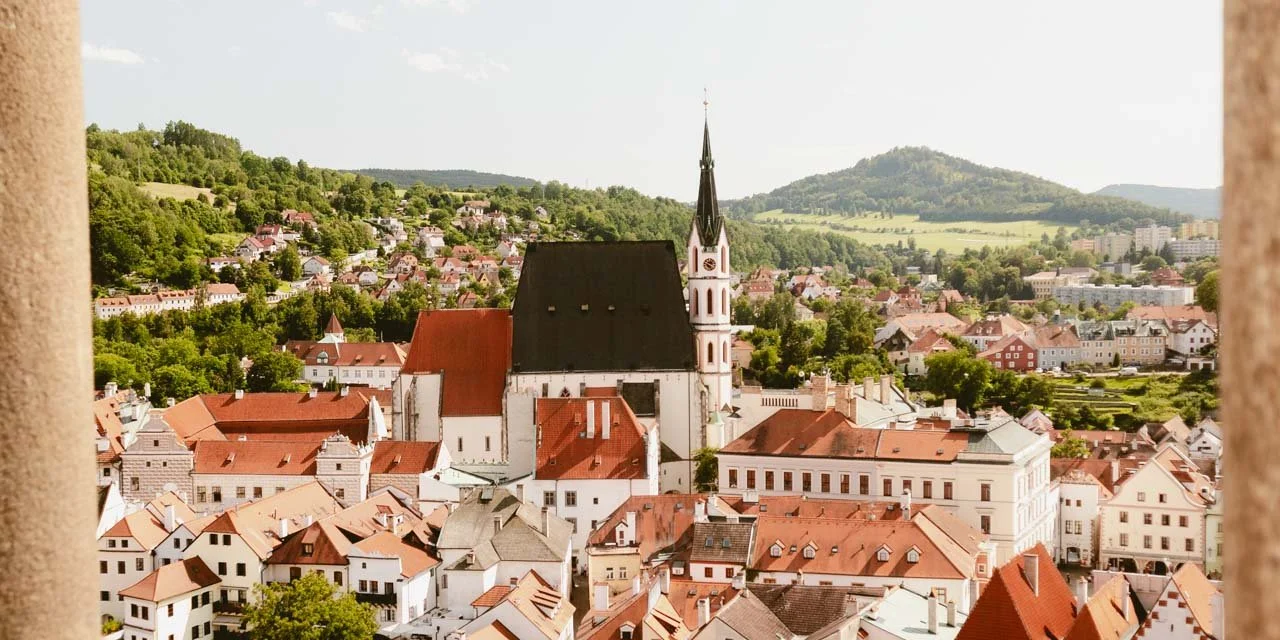
Next up is a visit to Český Krumlov, arguably the most beautiful town in Czechia. It's famous for its 13th-century castle, Renaissance tower, unique Baroque theater, and charming historic center wrapped around a bend of the Vltava River, creating one of the country's most recognizable townscapes. It's incredibly popular with big tour groups and the only way to avoid them is to get to Český Krumlov on your own and spend a night there after the day-trippers leave.
The next Czech gem we'd explore is Kutná Hora. This small town near Prague is famous for its silver-mining heritage, St. Barbara's Cathedral, beautiful historic center, and Sedlec Ossuary, better known as the Bone Church. Simply put, there are plenty of things to do in Kutná Hora, and it's really easy to spend a full day here. Most visitors arrive on a tour, but we can show you that getting to Kutná Hora from Prague on your own is just as easy.
So far, we've done quite a bit of sightseeing and had a few busy days. We think that slowing down for a while might be a good idea. And for that, we'll visit Karlovy Vary, Czechia's most famous spa town. It's known for its hot mineral springs, elegant colonnades, spa treatments, and charming atmosphere. We still haven't made it to the Karlovy Vary International Film Festival, which takes place here every summer, but hopefully one day we will.
So far, we've talked about pretty common travel experiences, but if you'd like to see something different, it's time to make a trip to Holašovice. This traditional South Bohemian village is famous for its well-preserved Baroque farmhouses and ornate gables built in the 18th and 19th centuries. It's a perfect example of rural architecture, which earned it UNESCO World Heritage status.
After visiting a small village, it's time to explore České Budějovice, South Bohemia's largest city. Founded in 1265 by Přemysl Otakar II, it's known for its large main square lined with Baroque and Renaissance houses, the Black Tower, and the Budweiser Budvar Brewery, where the famous Czech lager has been brewed since 1895.
While in South Bohemia, we can also visit Písek, a historic town famous for its 13th-century stone bridge, one of the oldest in Central Europe and even older than Charles Bridge. It has a pleasant small-town atmosphere, a beautiful historic center, and a long gold-mining heritage.
Czechia's Castles
Czechia is dotted with castles, and over the years, we've had the chance to visit quite a few of them. They range from early Romanesque fortresses, medieval Gothic castles, and hilltop ruins to Renaissance residences and elegant Baroque châteaux. There are so many of them that Czechia is often nicknamed the Land of Castles. For us, visiting Czech castles is not just about admiring impressive architecture, but also about learning more about the history of our country dating back to medieval times.
Czechia's most famous castle is, without any doubt, Prague Castle. This historic fortress complex, with its stunning architecture, royal palaces, beautiful gardens, and breathtaking views over the city, is the highlight of many visits to our country. But we've already talked about it earlier, so now it's time to look beyond the capital.
The funny thing is that if you asked me the same question, I'd probably say that Karlštejn Castle is actually the most famous, at least when I think of the classic medieval fortress our country is known for. It was built by Charles IV to protect the royal treasures and is now one of the most popular places to visit in Czechia.
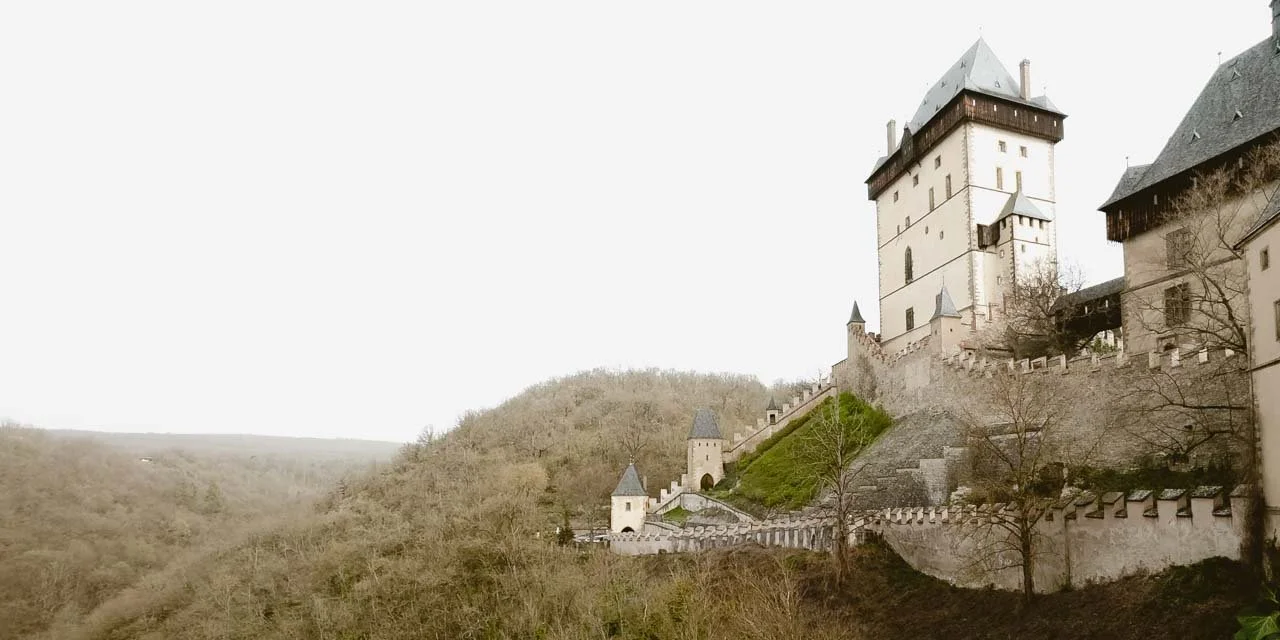
Orlík Castle is another fascinating place to visit. Originally a Gothic royal fortress, it was later transformed into a Neo-Gothic residence by the Schwarzenberg family and now overlooks the vast Orlík Reservoir. Its guided tour is one of our favorites, and the surrounding area features several lovely hiking trails. The views alone are worth the trip.
Sitting on a rocky promontory where the Vltava and Otava rivers meet, Zvíkov Castle is one of those places that is well known among locals but still flies under the radar for many international visitors. If you want to get off the beaten path while admiring beautiful Gothic architecture and medieval frescoes, this castle is well worth a visit.
Of all the castles on this list, Hluboká Castle is by far the one we've visited the most. This romantic Neo-Gothic château, famous for its white façade and ornate interiors, is not only one of the most recognizable castles in Czechia but also home to beautiful landscaped gardens that we never get tired of walking through. And because this place is truly incredible, we even put together a guide on getting to Hluboká Castle.